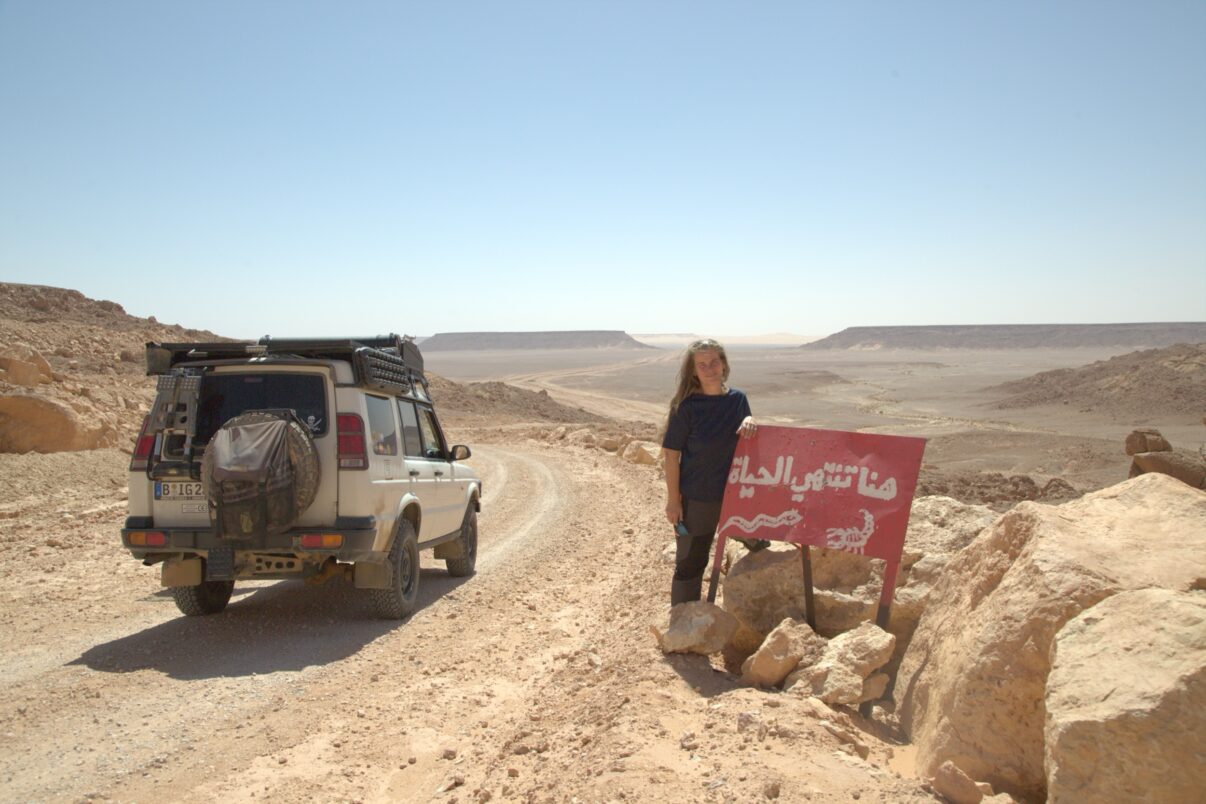

Alone in a Land Rover, with no fixed plan: Melanie drives overland from Morocco to Tunisia. Through Mauritania’s desert alongside the longest train in the world, with a police escort right across Algeria and on foot past three checkpoints to the tomb of Tin Hinan. Sandstorms, a travel companion who leaves her standing in the desert, broken bolts and, again and again, people who become friends for life. A journey that turns out completely different from what was planned. And yet exactly right.
I’m Melanie, I’ve lived in my vehicle full-time for three years, and from January 2026 to April 2026 I drove all on my own and with practically no fixed plan from Morocco to Tunisia, overland, in my Land Rover Discovery 2. I always work on the move and am therefore free to organise my own time.
How does anyone come up with an idea like this?
How does anyone come up with an idea like this? On some days I ask myself that too. There are a few different answers.
1. A Land Rover is, after all, an off-roader. So far it had barely been used. Africa and the desert had always been at the back of my mind, but without really knowing what that means or what goes on there. I was in Morocco once, 30 years ago, I’d seen travel reports and met other travellers at Globetrotter meet-ups. It can’t be all that hard, was often my thought. A bit of recklessness and cockiness in there too.
2. I love real challenges. If Africa, then not where all the overlanders apparently head or pass through right now: towards South Africa. I wanted something different, something hardly anyone does. So I grabbed the map and settled on North Africa. It was meant to be Morocco to Egypt. But that’s too much for a first time, and it became Morocco to Tunisia. The decision only came at the start of December 2025, on a beach near Barcelona in Spain. I was on my way to Germany to visit friends and spend the holidays. So it turned into a little trip-planning session at the same time. What I really needed wasn’t clear to me.
The preparation
I’m good at writing lists, organising and making plans. Part one was to check on Google where you can actually go. Morocco, Algeria, no luck, the border is closed. So Mauritania it is. Where’s a border crossing there? Is it open, what do I need? A Google search and a few Facebook stories later, the route was set. In January I want to drive off-road through Morocco on the Trans Moroccan Trail, then along the railway line through Mauritania past the Eye of the Sahara, and then through Algeria to the Tassili mountains. Tunisia then barely mattered, just an endpoint to reach the ferry to Italy. An important inspiration for this trip is the Danish woman Henriette, known as “Fortheloveofwheels” on Facebook and Instagram.
In the end a lot came out differently, but exactly as it was meant to. I drove the route, not quite as planned, but I made it and am now sitting on the ferry to Civitavecchia in Italy writing this travel report.
The decision to make the trip was taken in Barcelona on the beach, shortly before my flight to Germany to visit friends and family there. Then, once in Germany, I looked at what spare parts I might need and what else could be useful, and shopped busily on the classifieds and at off-road shops. In the end the service parts I took along, like the air and diesel filters, were the most important. My stock of diesel additive ran out, and one spare part I gave away in Algeria. I definitely made good use of the compressor, and the diesel cans too. I should have prepared more on the subject of navigation, but apart from a lot of apps and a tablet I paid it very little, very naive attention. That will change.
On the paperwork side I got myself a second passport with the help of AI (ChatGPT). That wasn’t so hard at all. I applied for it at a citizens’ office in southern Germany and got the express version in four days. My reason at the office: I travel a lot. The AI drafted the covering letter. I then sent the passport to a visa agency and applied for an Algerian visa, with a little trick. For a long time I didn’t know whether I’d get the visa. I set off anyway. And on Facebook I got in touch with a campsite in Morocco that lay on the route, to have the second passport with the visa sent there, just in case. Jane from the Walhalla Camp in Morocco near Azilal helped straight away. The camp is absolutely recommended.
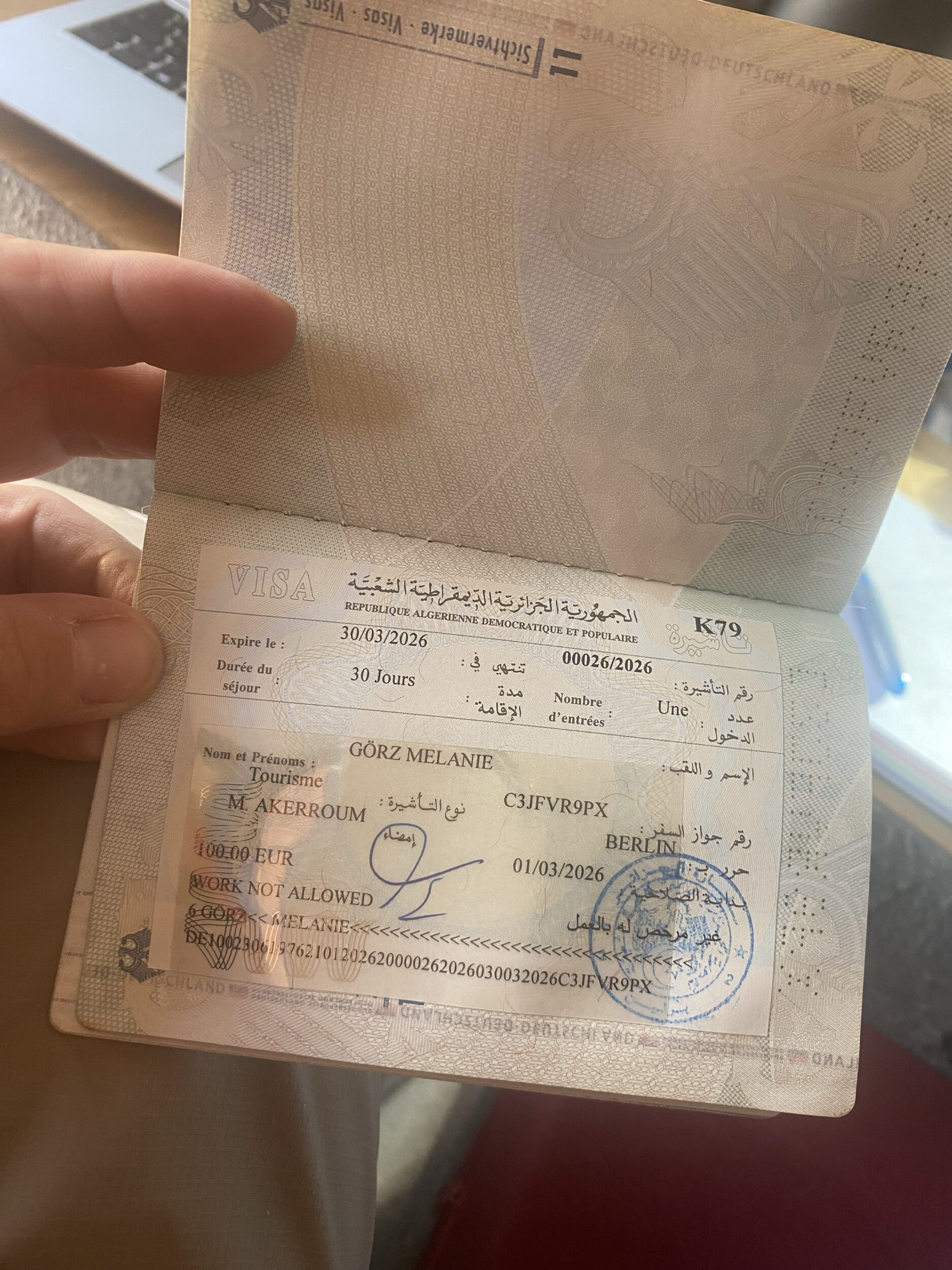 Das Visum für Algerien
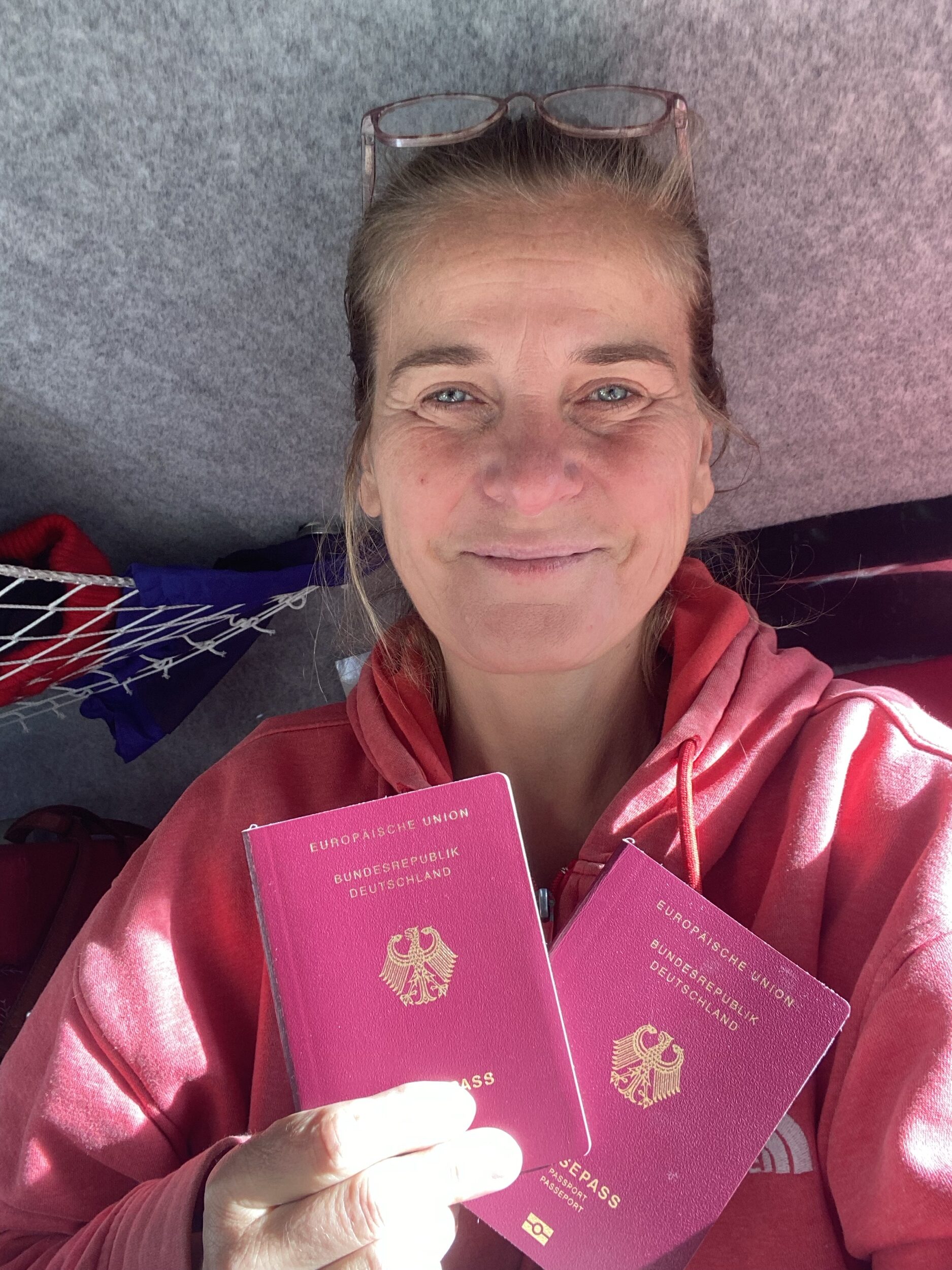 Zwei Pässe, das Visum ist angekommen
After Christmas, back to Barcelona by plane. The car was there waiting for me. The parts I’d bought followed by post to Spain. In Spain I then spent a few more days at the finca of my dear friend Nicole and did some work ahead. I do live in my Disco and work online on the move. I was still very relaxed, and messaged a few people so as not to drive the whole route alone. I never wanted that for a single moment, but it just doesn’t always work out. On Facebook, in overlander and travel groups, I struck lucky, and on the Pistenkuh website too. Thanks for that great offer on your website, you purple travel pros :-).
Off at last, with obstacles
Then came the day it was supposed to begin. Goodbyes, all tanks filled with water, plenty of food loaded into the car, and after 100 km the Disco suddenly makes odd noises. I thought I was imagining it. So I looked for help, contacted workshops, nobody had time or, above all, any clue about the car. In the end a real Disco 2 pro near Algeciras helped me. A German who lives there and offers a mobile workshop service and really knows the vehicle. Problem fixed in 10 minutes. I was really afraid the trip couldn’t happen. It was only a broken bolt. Always these little niggles, but when it comes to staying calm about the car, I still had some learning to do.
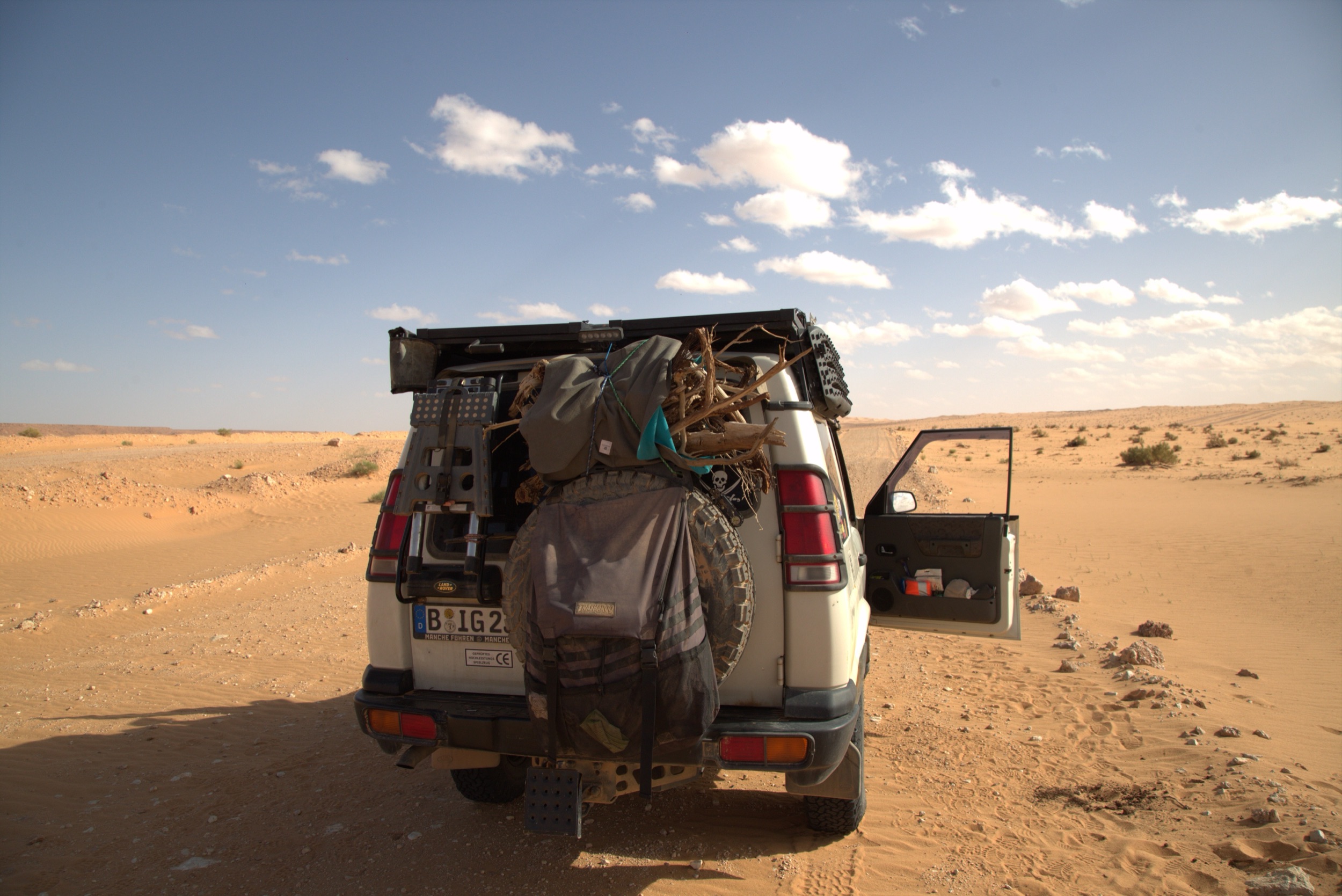
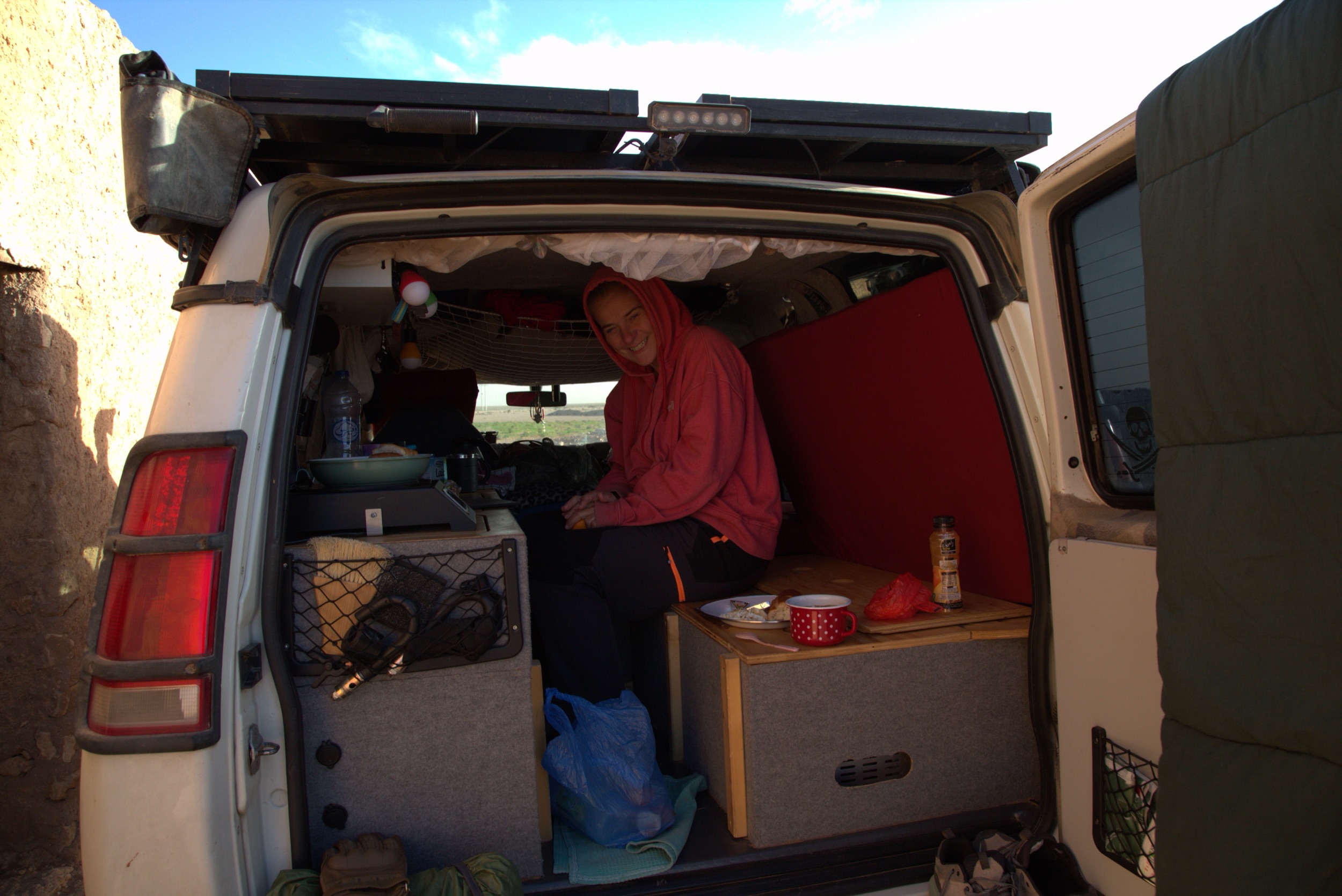 Im Auto, das tägliche Chaos
Then, in really bad weather, to the ferry at Algeciras in southern Spain and from there to Tanger Med. I bought the ticket from Carlos. Online would have been just as good, but in that weather the ticket office at least knew straight away which ferry was running and which wasn’t. It was storm season in the Strait of Gibraltar. I arrived in Morocco on 26 January 2026 without much trouble at the port, and the weather there wasn’t any better. By the way, I had my green insurance card, which includes Morocco (Bavaria Direkt insurance), and otherwise wasn’t checked much. In Morocco I’d wanted to drive the TMT, but in that weather… first heading east towards the Algerian border. I didn’t want to drive the Atlantic-coast route, and I’d arranged to meet Gerti and Peter to do a bit of off-roading together. I’d found the two of them via Pistenkuh. And because of the trouble with the car I had far less time than planned.
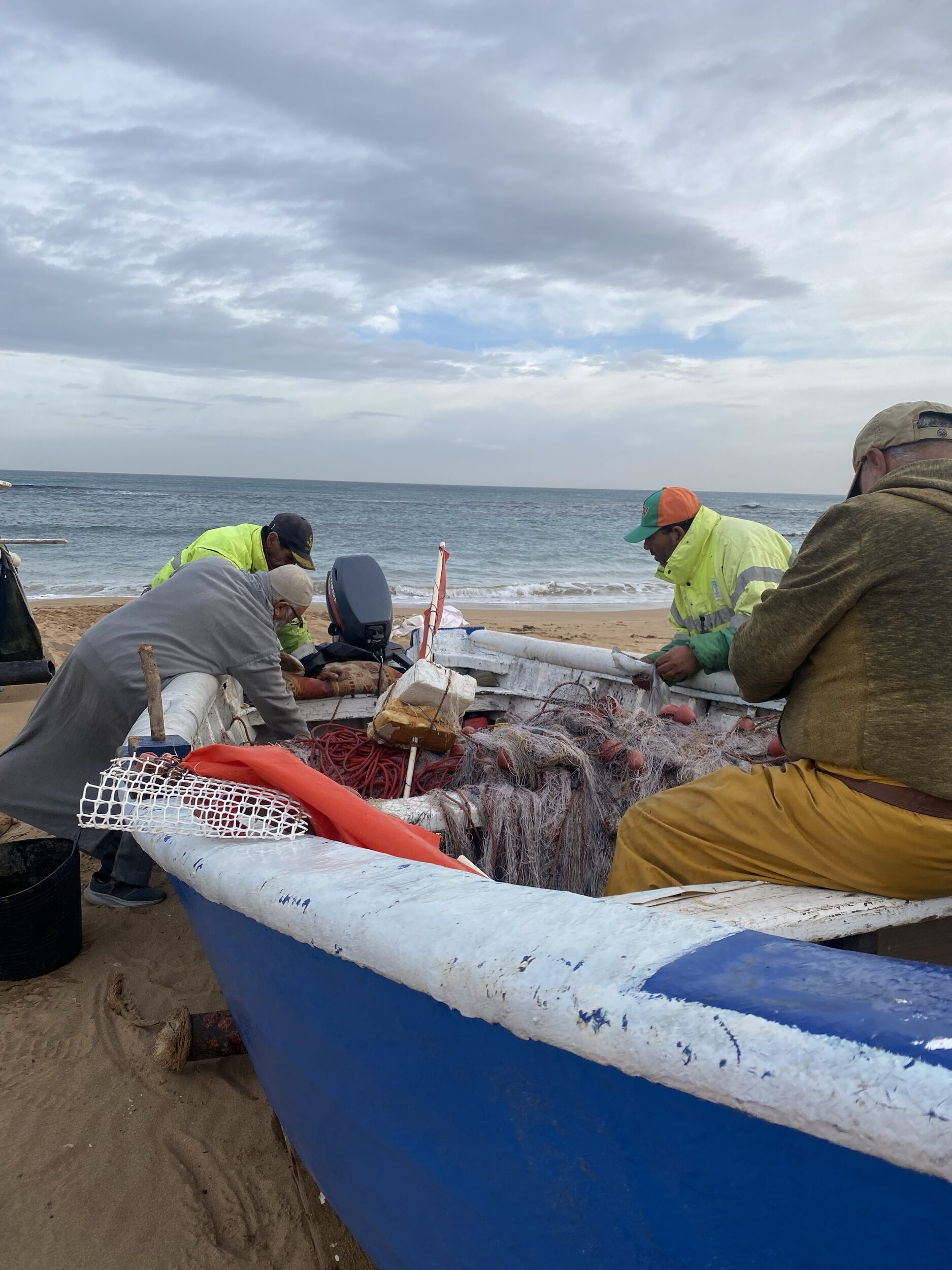 Marokko: Küste bei Nador
Morocco: sandstorm, off-road and an important call
Morocco with those two lovely travel companions was really beautiful. A proper sandstorm as a welcome, a bit of off-road with a small rescue, Peter had slipped off with his Ford and I got to help him. Oases and souks, cooking and eating together. Away from too much tourist bustle, a lovely country. I gave the Sahara in Morocco a miss. I think I was a little afraid. I had wonderful experiences with the few people I met there and will certainly drive to Morocco again. With more time and hopefully good company again. I also had the car serviced in Zagora. Since I knew little about Mauritania, that suited me fine, and Ali’s garage did a great job. And then a call came from the Algerian embassy in Berlin. An interview about the visa application. I found it very interesting that I was called personally. What work I do? Why I travel alone? Why four weeks, and so on? I didn’t give away what I was really planning. I’d booked a so-called package tour to Algiers. And then the visa was confirmed, I was over the moon and celebrated, and then I cancelled the package tour again. Now I could pick up the passport at the Moroccan campsite and drive on. What really awaited me, or what I was actually up to, still wasn’t clear to me.
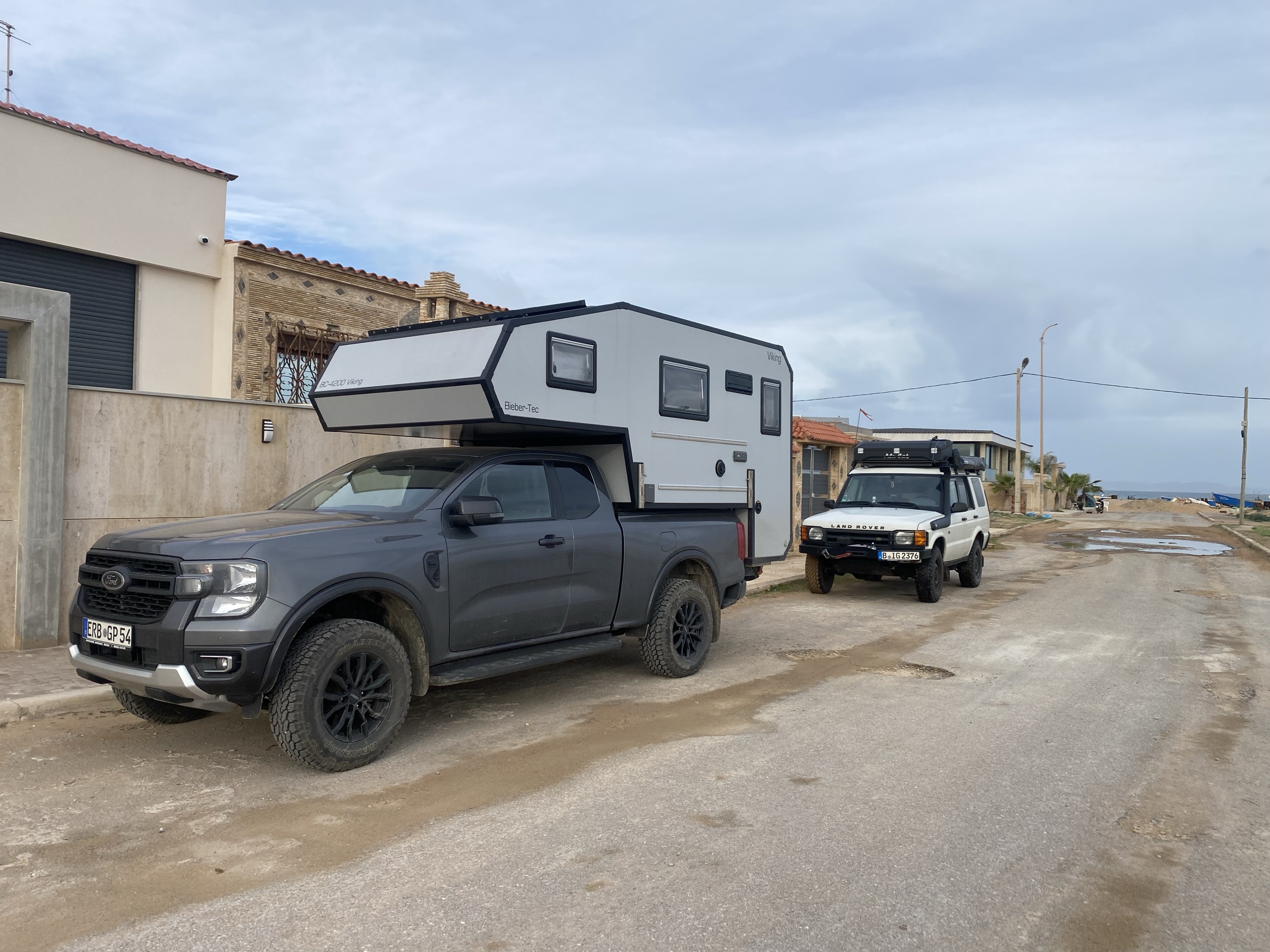 Ankunft bei Gerti und Peter nähe Nador
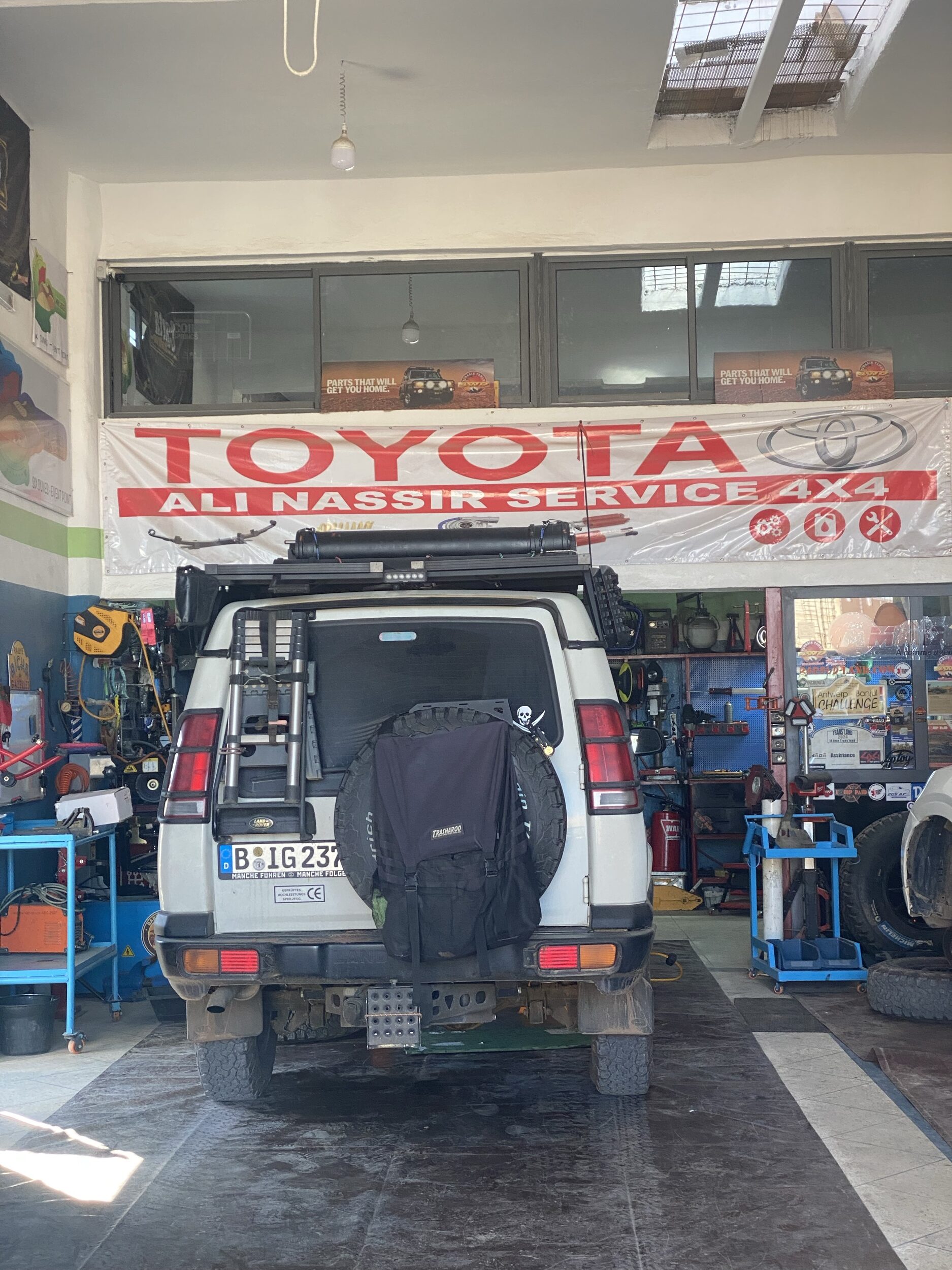 Zagora: Service fürs Auto, nichts kaputt
After a week the passport was with Jane at the camp, and the drive there over roads wrecked by bad weather was a real off-road driving lesson. 150 km through mud, scree and rivers. It took me eight hours. Other roads I’d tried before were completely closed and I had hardly any choice left. The camp lies in the Atlas mountains and I was coming from the east, from the border with Algeria. But in the end it all worked out and I drove on alone towards the south, towards the sea, towards the Western Sahara region, towards Mauritania. My visa for Algeria was fixed for 1 to 30 March, and sadly I had hardly any time to spare for Mauritania.
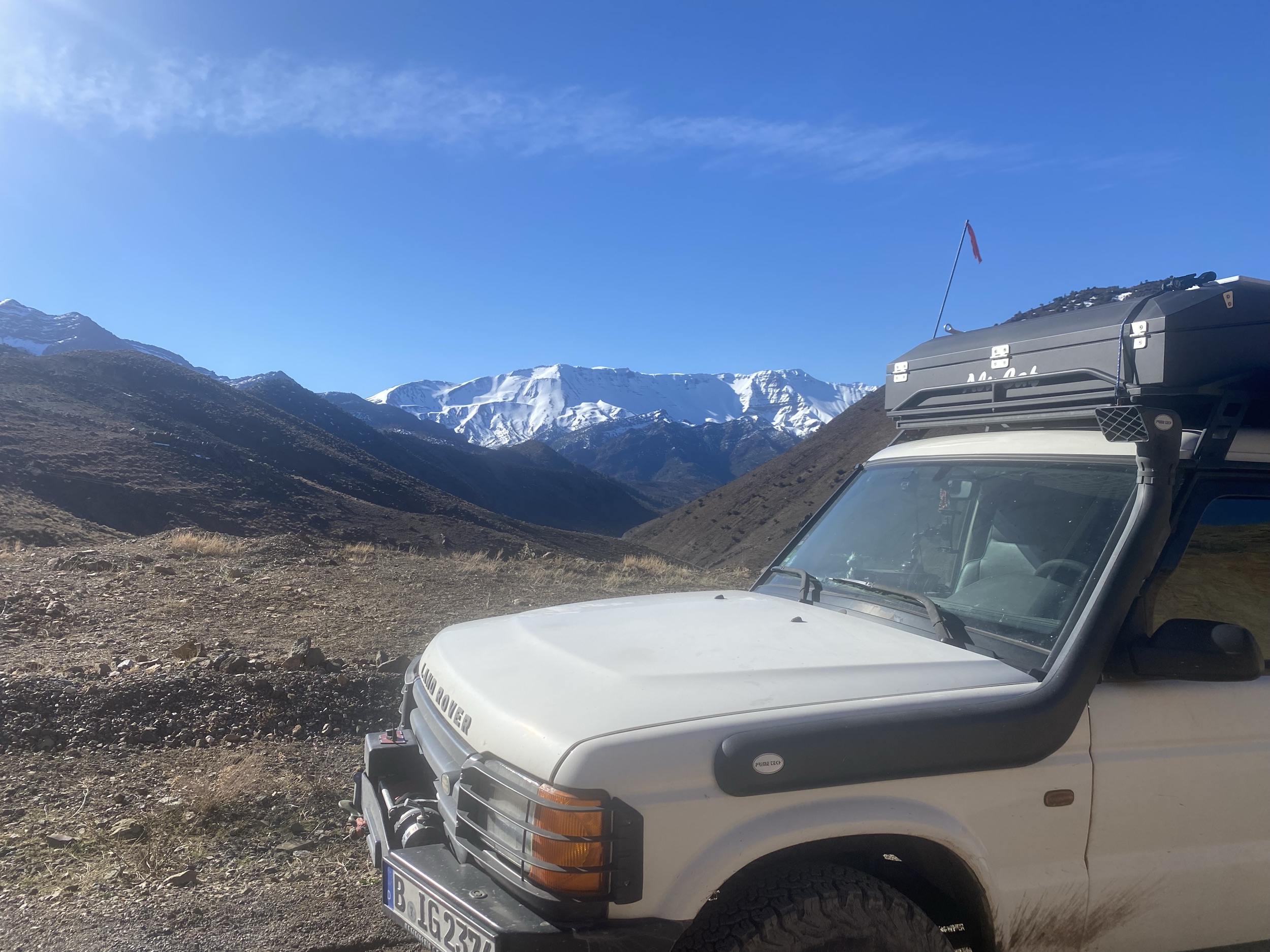 Marokko: Atlas-Gebirge
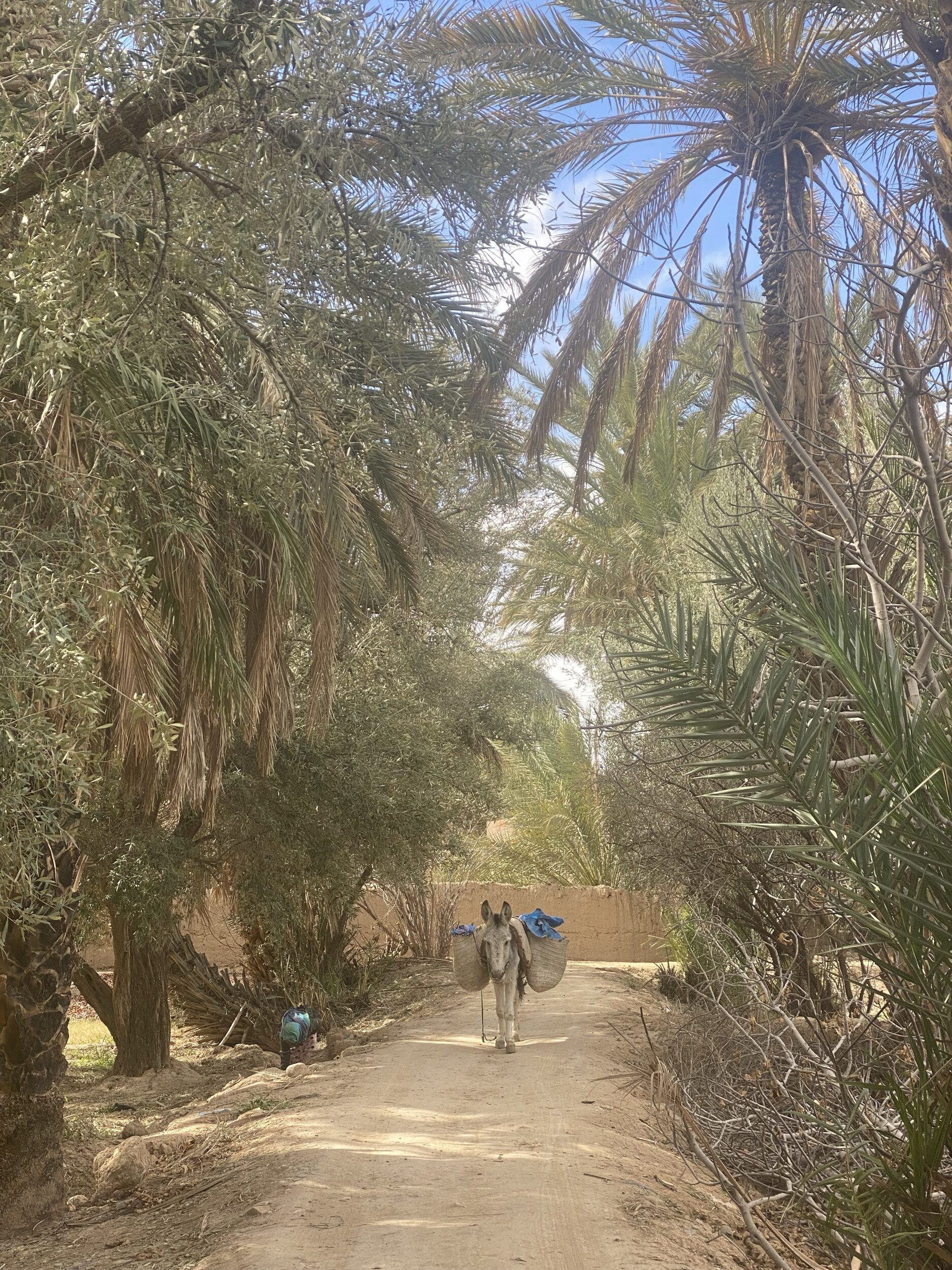 Guelmim: Altstadt-Tour
The weather got better, warmer, but it was often windy too. Unfamiliar and tiring on some days. I’d arranged to drive through Mauritania with a Portuguese man from a Facebook off-road group, and just before the Mauritanian border to meet Jürgen W. S., whom I already knew in person, to get tips for Mauritania. Jürgen is a real off-road travel pro with his crazy dog Castor and was a great help to me. He recommended a so-called fixer for the border into Mauritania and, above all, a local contact in Mauritania who speaks German and who would later be a real lifesaver.
Mauritania: along the railway through the desert
The border was a bit of a culture shock. Leaving Morocco on 14 February 2026 was easy. A few stamps, papers and a scanner. What for, I wasn’t sure. And then to the Mauritanian border post, not even a road. Sand and rocks and rubbish and broken-down vehicles. The post itself chaotic and very military. The fixer got me through it really quickly and I’d hire him again. Stamps, passports, money changing, fingerprints and car insurance. My Portuguese companion had picked someone at the border as a helper. That worked too. The Portuguese, a man of about 70 with a fairly new Mitsubishi pick-up and a roof tent on the bed, was not an easy companion. I’d been spoiled by the lovely time with Gerti and Peter.
First of all to the Villa Maguela in Nouadhibou, to Viktor. A sheltered guesthouse for every kind of traveller. Sleeping in peace after a whole day at the border, a shower, and the next day a good meal in company. A really lovely place and good acquaintances. Someone gave me a lucky charm. And then off we went towards the railway line. Through the desert alongside the longest iron-ore train in the world, from Nouadhibou to Zouérat. I’d never really been in sand before. Luckily it was fairly easy at first. Along the line there are a few villages, half abandoned, buried under sand, and a couple of very beautiful monoliths that were worth a visit. The wind was always part of the deal. First a full tank again. Honestly: I was scared stiff. I was afraid. Letting air out of the tyres and pretending everything was fine. The Portuguese was experienced, but not a good teacher. Somehow, with an overnight stay in the village of Inal, we reached the Ben Amera and Aïcha monoliths. Wonderful. It was very windy and the mood was slowly tipping over. A roof tent with no alternative is not an easy set-up in the desert when it’s windy almost every day. I spoke my mind once, and then he was gone, the Portuguese. He simply left me standing there. Knowing I don’t cope well on my own. Now I had a problem. Afraid and alone again. Then I remembered Jürgen. Of course he could help, and I then drove, more badly than well, to the next monolith, “Aïcha”. On the way I met Ute from Berlin, found a camp and spent a night in a sandstorm at Aïcha. I wasn’t doing well. Groups of tourists turned up and were far from pleasant. I didn’t want to ask whether I could tag along. I was embarrassed and needed to calm down first. I found a guide online and then “hired” him. In the end, of course, a washout. An old man with no clue and a broken-down car. With the help of Didi, the contact Jürgen had given me, I somehow made it to Atar and also managed to get rid of the guide again. It takes all sorts. But the Bab Sahara Camp in Atar was great. Lovely people, conversations, sleeping in peace, shopping and plans for moving on.
Even if I didn’t manage everything on my own, I did find help on my own. Looked for solutions and accepted them. Always got my car moving forward on my own. In Mauritania, Didi was my saviour. In the end I drove behind a taxi to the Algerian border. Quite simple. Or not. At Paris-Dakar rally speed through Mauritanian no-man’s-land. And then I was even there three days too early, on 26 February 2026. What a laugh.
Waiting three days right in front of the border wasn’t an option, and surely suspicious to the border guards too. So I just set off. Leaving Mauritania was easy. Entering Algeria was friendly but a little time-consuming. A transit visa was issued, just like that. Nothing is impossible. My Algerian contact was phoned, that was all. No guide, no agency.
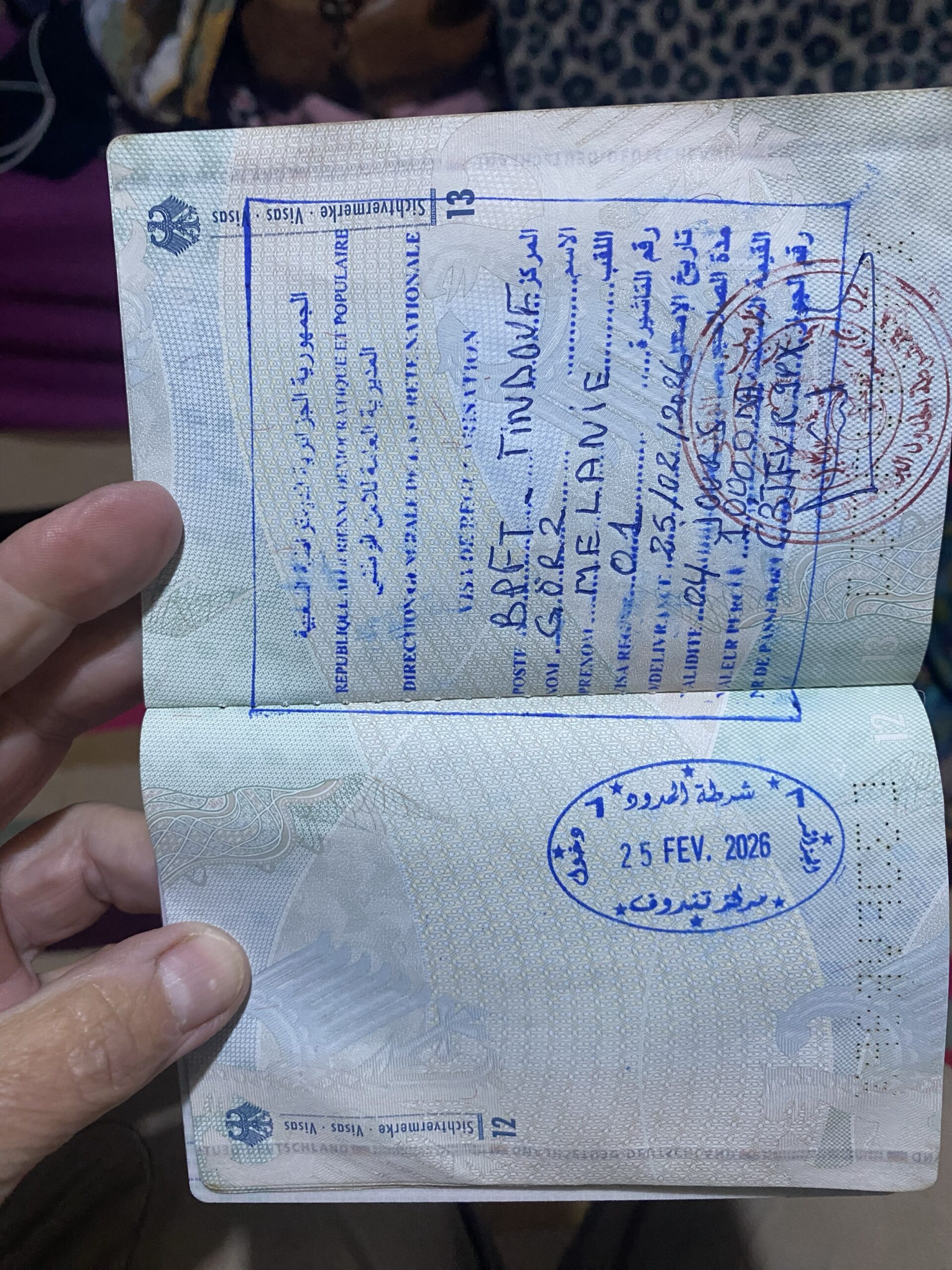 Algerien: das Transit-Visum an der Grenze
Algeria: the real goal
And then I was in Algeria. The real goal of this trip. Four weeks lay ahead of me.
My route was a mix of Instagram pictures, strangers’ travel reports on Facebook and Google Maps. So really great foundations. I’d managed to get a few sporadic Algerian contacts, and then this woman, Samira, who says she wants to drive into the desert with me and that I shouldn’t worry about anything. A mistake. Communicating with her in English was ok, but scant. Details about the route or costs, none. I went along with it, since I had nothing else planned anyway.
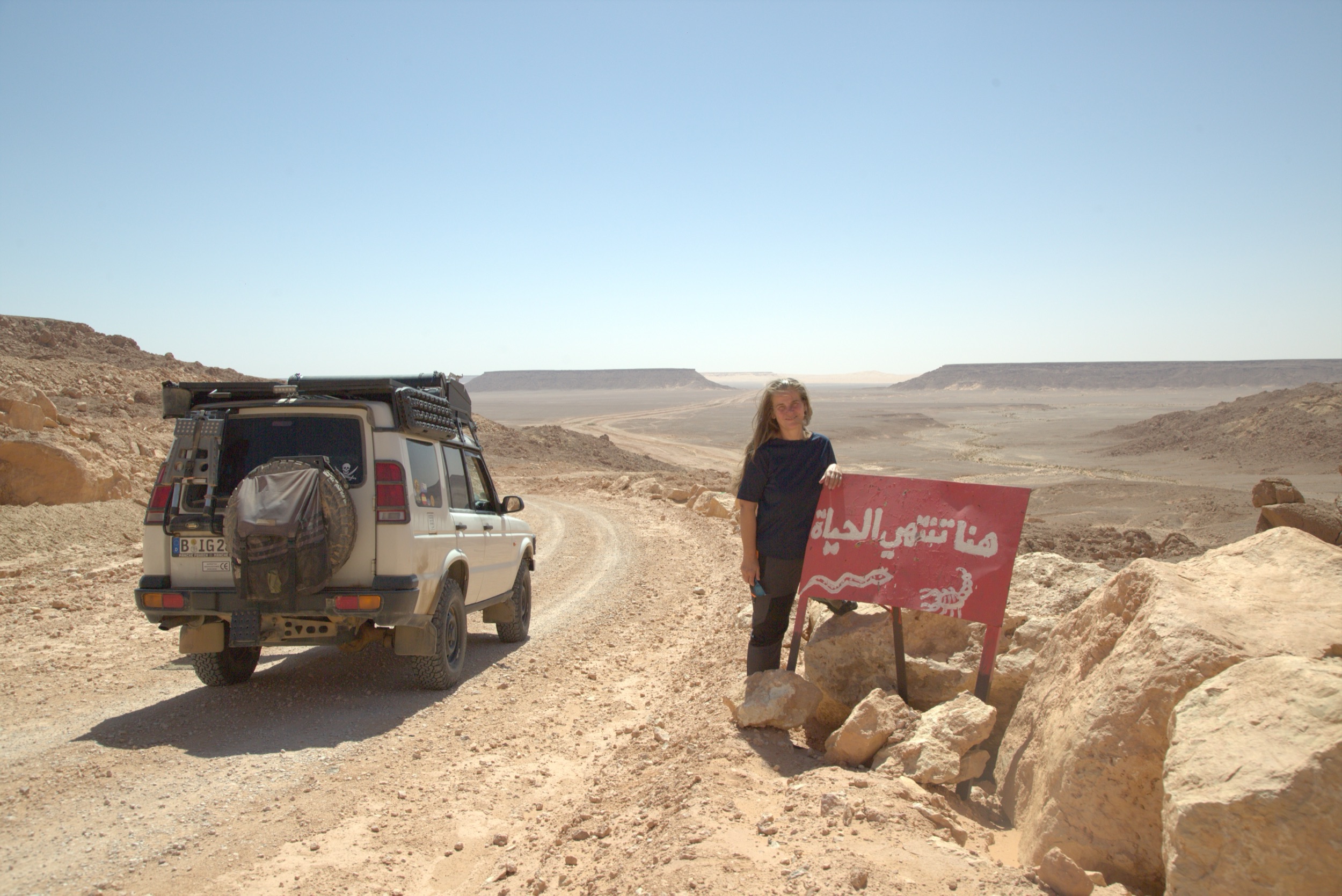
But first came a friendly, helpful police escort from the Algerian border to Zouérat, to the hotel. They helped with refuelling and almost tucked me into bed. Zouérat is a fairly large, modern town and has everything you need. Unlike Mauritania, completely different. The hotel was full of Spaniards from a congress and I could change money at reception. Oh yes, it was Ramadan, of course, for almost 10 days by then. In Algeria that means you’re invited everywhere to break the fast at dinner, in the hotel too. So a nice meal, a shower and off to bed. In the morning I simply set off north, because otherwise there are few alternatives for driving on there. The first police checkpoint intercepted me and then organised the escort as far as Taghit, my next destination. Driving with the police definitely takes patience, but the men are nice and are only doing their job.
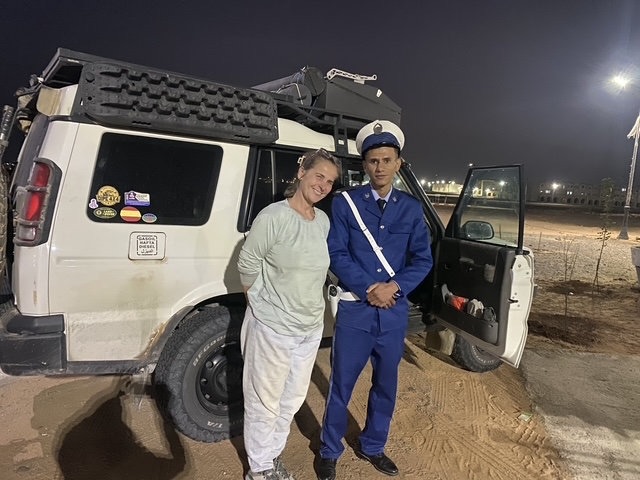 Die Polizei, immer nett
Almost always I only named places, and that was apparently enough. There were few hotels, so I took whichever one. I’d booked or reserved or at least researched nothing at all. I’ve got my car, which I sleep in, I thought. But in Algeria that wasn’t an option at first. 1,000 km of nothing but road, always straight ahead to Taghit, into an expensive, cold, empty hotel and, again, just sleep. Many kilometres. At breakfast a few Italian tourists for company. The next day, contact with this woman and the search for a place to sleep in town. Somewhere out in the open was out of the question, I simply didn’t know where to go and there was nothing but sand around me. So a camp. But it’s Ramadan, everything closed, hardly anyone about. Luckily it worked out, I managed to reach someone via WhatsApp and stayed four days. Sleeping again, eating well, cooking for myself, working and looking after the car and, above all, hiding from the sandstorm that was brewing again. The search for a car wash, by the way, was in vain. Luckily I could shop. Cheap, supermarkets and weekly markets were open and there were no tourist prices.
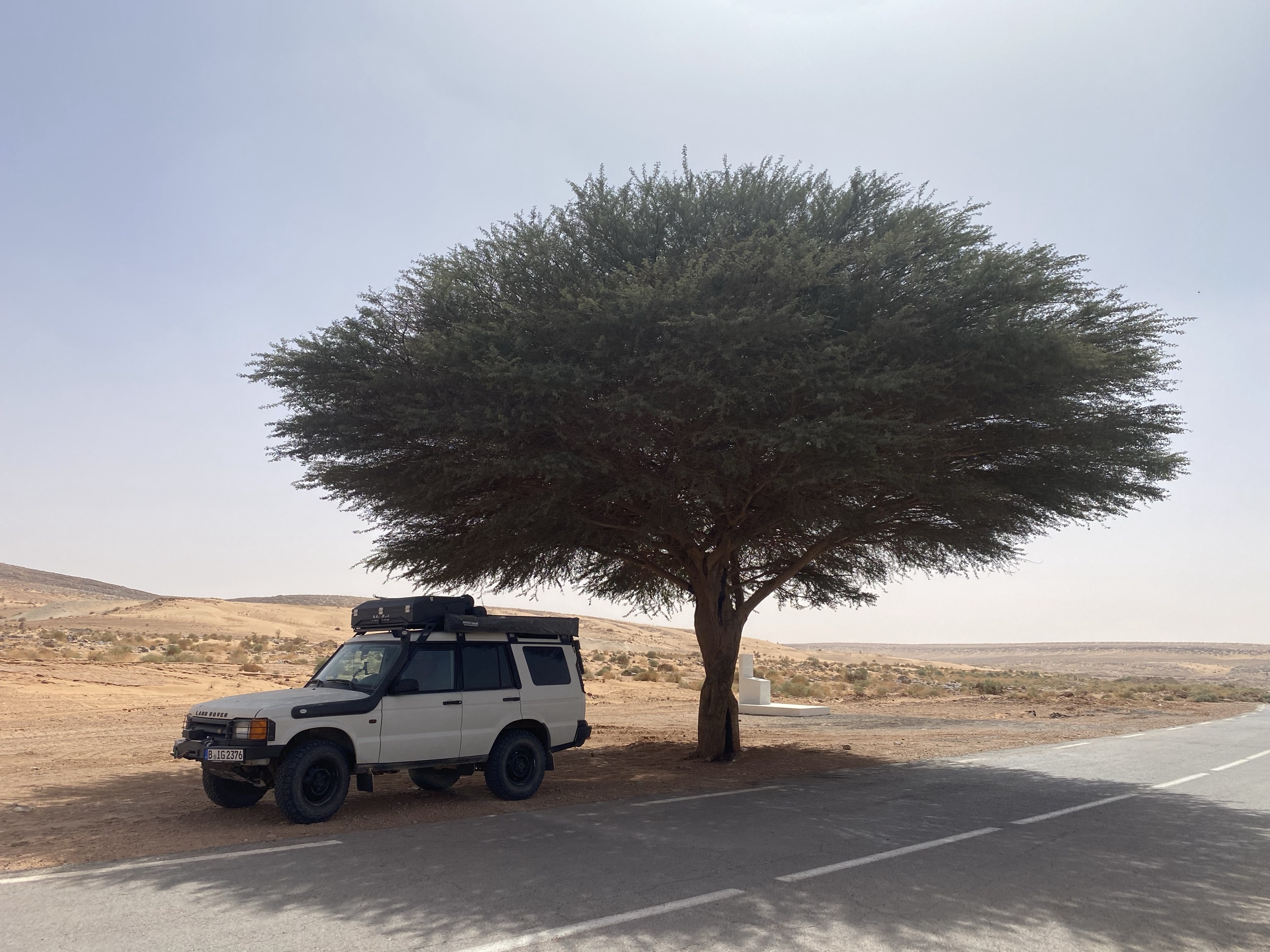 Algerien: das Tal von Taghit
I also made a trip to Beni Abbès and into the valley and the ksar of Taghit. All on my own and very relaxed. There was far more to see than I’d thought. And then this woman, Samira, was supposed to drive with me to the Tassili mountains, right in the south of Algeria, an Instagram dream.
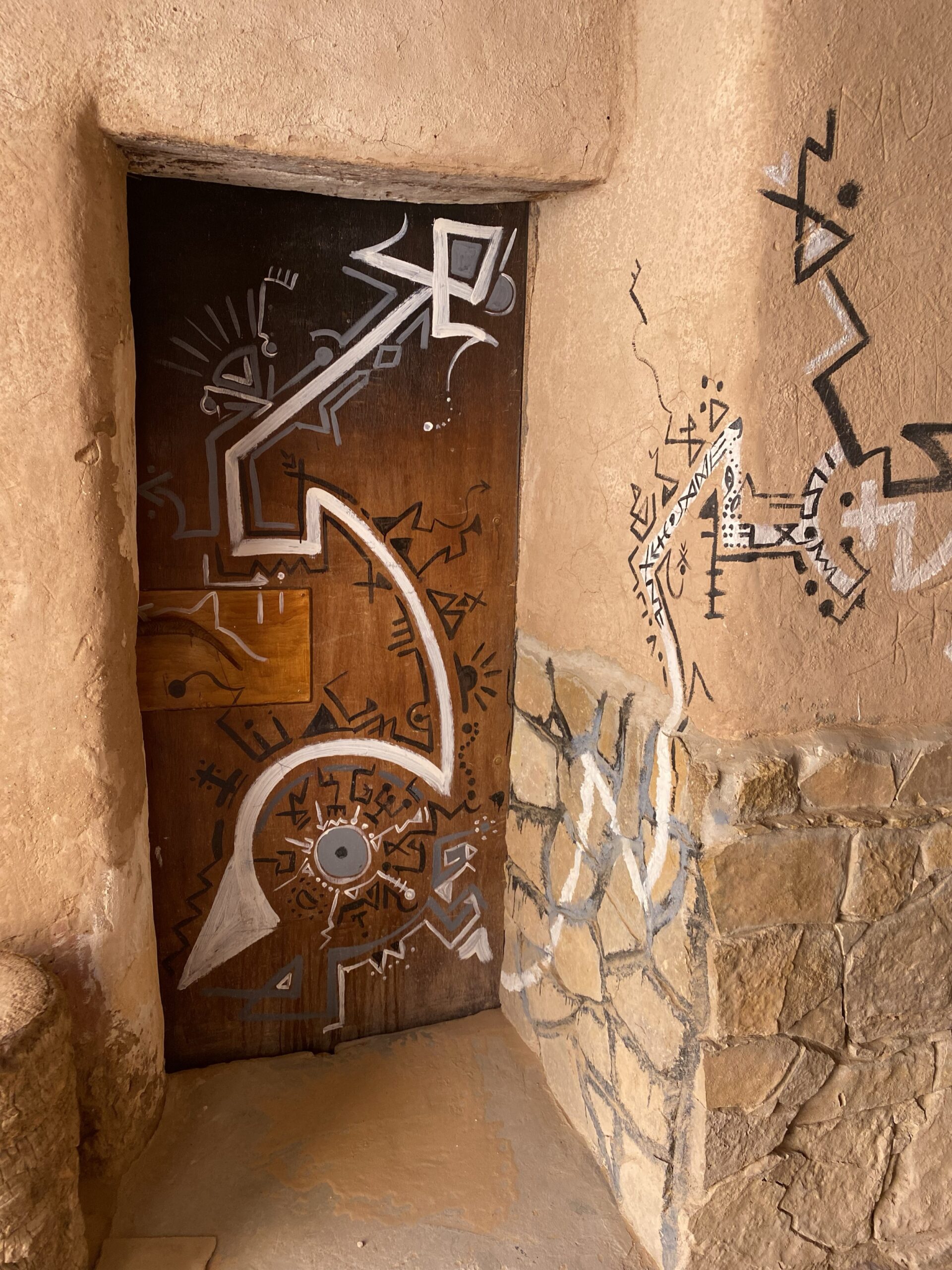 Taghit: Altstadt (Ksar)
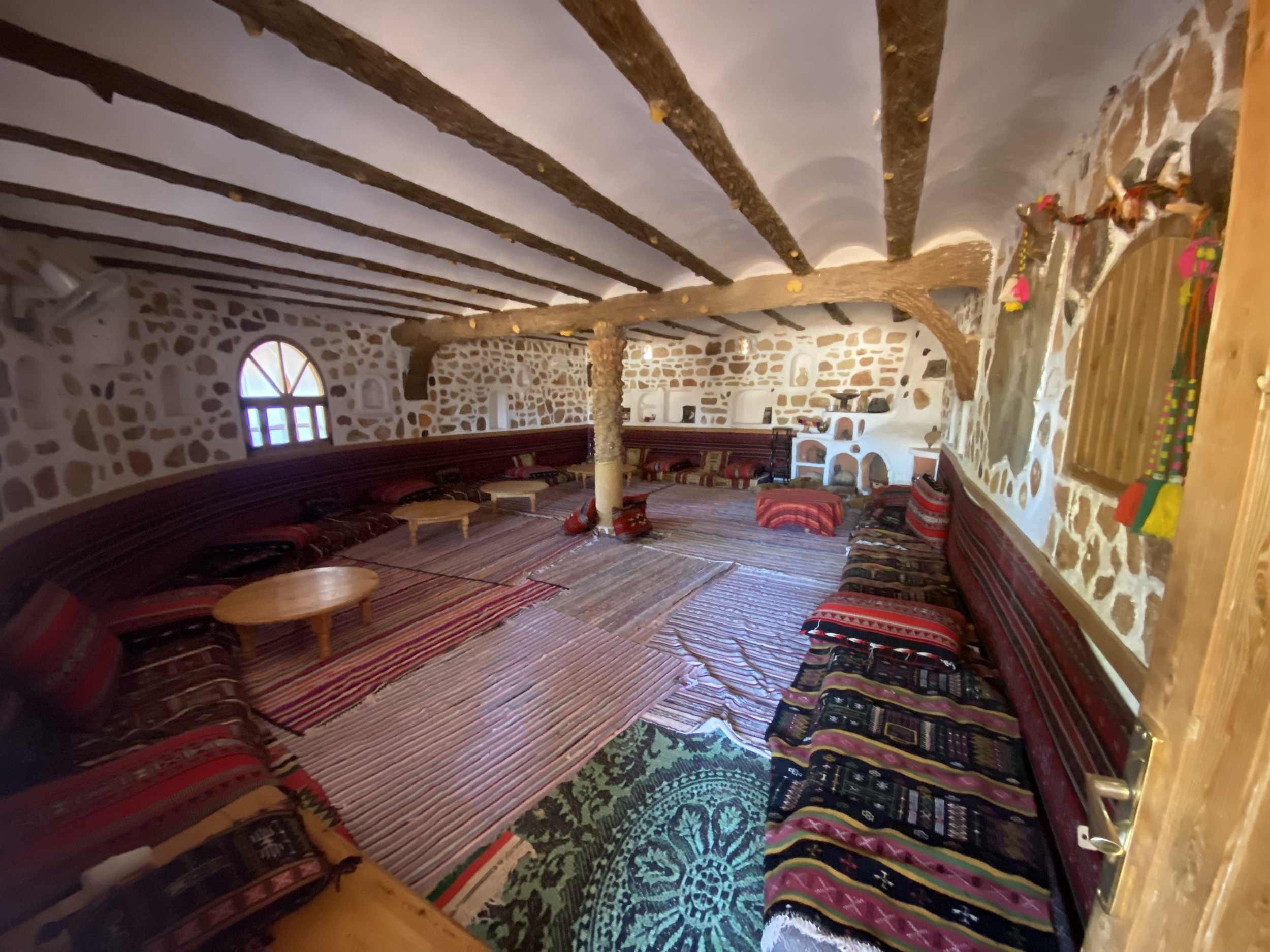 Camp bei Metlili
With Samira towards Tassili and Djanet
She’d spoken of her car, but then came by plane and had to ride along with me. So first make room in the car. And where to sleep then? It was all very strange and unclear. We drove north from place to place: via Timimoun to Ghardaïa, to Hassi Messaoud and then to Illizi. The last stop was Djanet. We had to drive from place to place and look for accommodation, since she’d prepared nothing, reserved nothing and researched nothing either. Most of the time we were accompanied by police escorts, whom she then talked to. All the men were nice and friendly, but the accommodation in the cheap, poor hotels in town, as well as the really, really long stretches and driving days, took a serious toll on me. There were many days spent only in the car: just driving, eating something in the evening, sleeping a little and driving on. This woman’s company became a burden, but she was surely also helpful at times in getting past certain checkpoints, since she carried a travel company’s papers and we could thus reach Djanet without trouble.
Getting to Djanet directly as a tourist is only possible with a guide from Illizi. There at the latest you have to be picked up or expected. There are surely routes to avoid police checks and to drive into the Tassili-Hoggar mountains alone too, but I didn’t know those yet. So we reached Djanet and stayed with a family who are friends of hers. These people are a Tuareg family: well-off, with a nice house, cars and many children. It was still Ramadan.
I was warmly welcomed. In the evening a place to sleep was prepared for me, and finally the planned trip into the Tassili and the desert was discussed. Finally the subject of the route came up on the ground. The subject of money came up and how it should all work. Bit by bit it became clear to me that she didn’t understand what needs I have as a traveller, what I had in mind, and everything turned out really, really difficult for me. While she organised papers, I made a trip into town on my own, could drive as far as the next village, where I found a really, really great French guesthouse, at which I could make a contact and will surely plan my trips and stays there next time. During the town tour through Djanet I was at some point stopped by the police. They accompanied me. I could see the old town, a park, and was then taken straight back to the front door of this woman and her friends. But the police here too were, as always, very, very friendly, very helpful and even accompanied me on the tour of the town.
Moving around this place on my own was therefore only possible if I simply set off without asking and without saying what I was doing. After much back and forth and negotiation, four or five days in the desert were agreed, with what was apparently a standard route, standard equipment and so on.
None of it really matched my wishes and ideas, but I was there, had paid, and so it was meant to begin. For me it was actually important not to do a typical tourist tour and to have as few people along as possible, so as to simply enjoy the place. But that wasn’t possible. It was a bunch of young people with little experience who simply set off with me, drove typical tourist routes, thousands of worn-out tracks and trails in the desert, reeling off the standard programme. It wasn’t nice. Nor was it respected that I wanted only a few people along. In the end there were five people in that pick-up, me alone in my car.
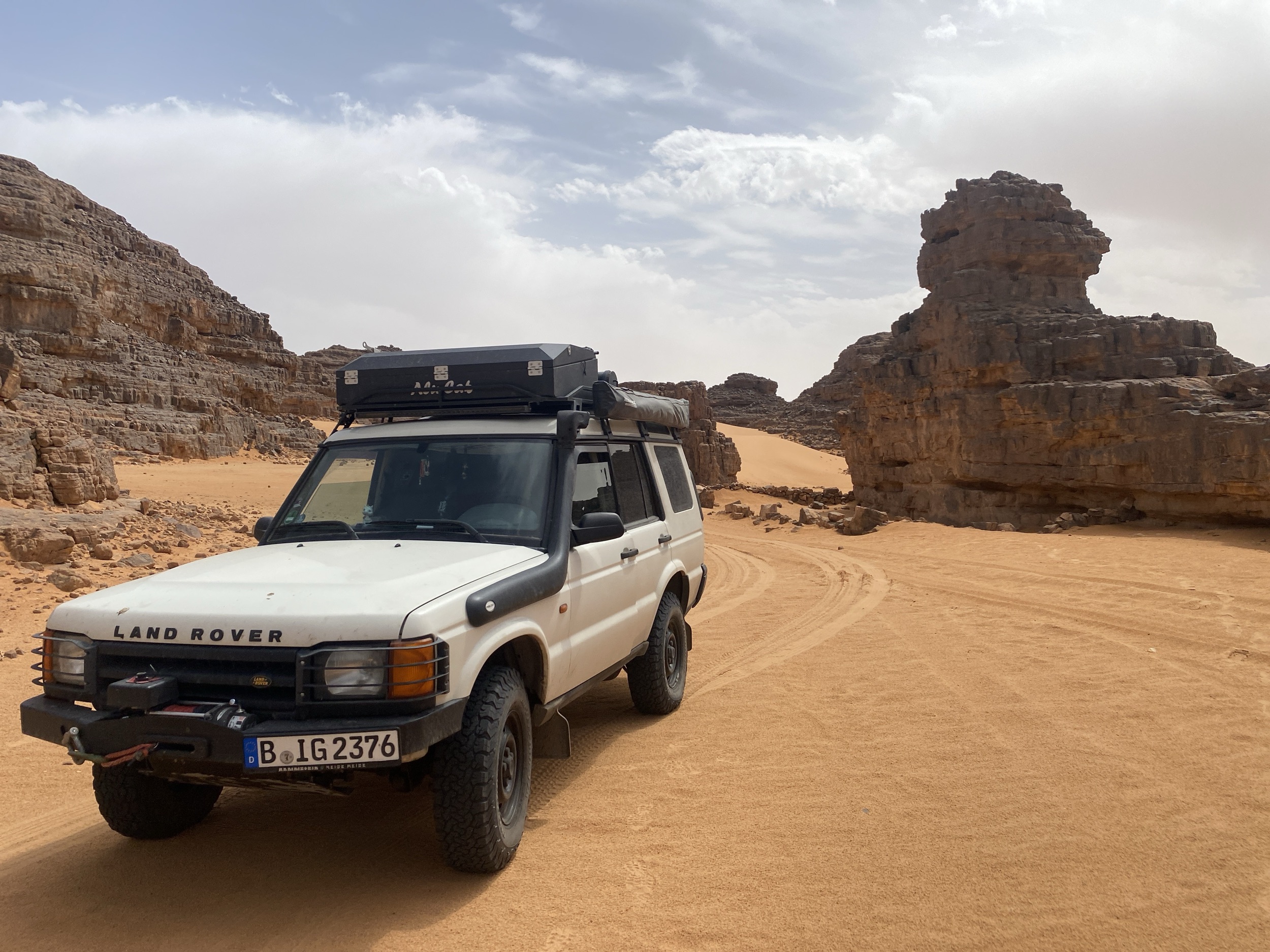 Algerien: Tassili
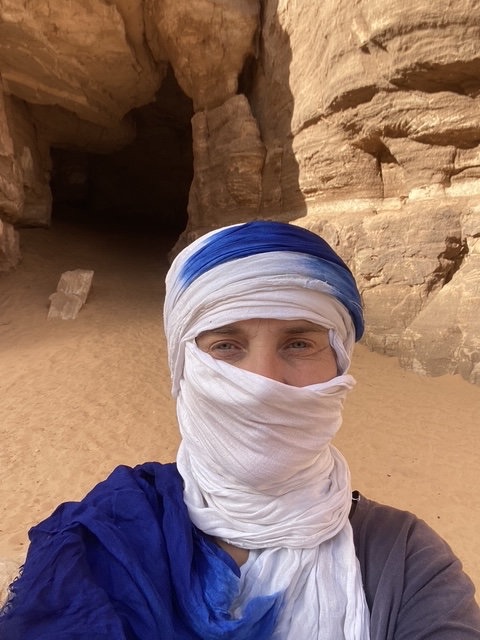 Ich als Touareg im Tassili
In the evenings, camps were pitched, right in the wind, completely pointless. Food was cooked for me, even though I didn’t want to eat anything, and I felt uneasy and in the wrong place at the wrong time.
It was still Ramadan.
On the third day I ended this tour, after there were problems with the diesel. I think a guide and travel companion should know where to get supplies, or should have vehicles with full tanks. None of this was the case. My things were then also interfered with, and for me the tour was over. By that point I no longer cared about the money at all. I packed my car, drove into town and of course had to justify to the police why I’d simply left my guide standing in the desert. In the end I was allowed to drive back to Illizi under escort, took a hotel there, spent a night and the next morning, all on my own, no one wanting anything from me, no escort, no accompaniment, drove north again, to Hassi Messaoud. There I could spend a night in a very nice hotel and then it was on to the town of Ghardaïa.
Ghardaïa: new friends, Hamza and Mohamed
In Ghardaïa I had a contact from Facebook: Hamza. He first organised a camp for me, where I could stand for free in the car park, shower, do laundry and spend a few nights without any trouble.
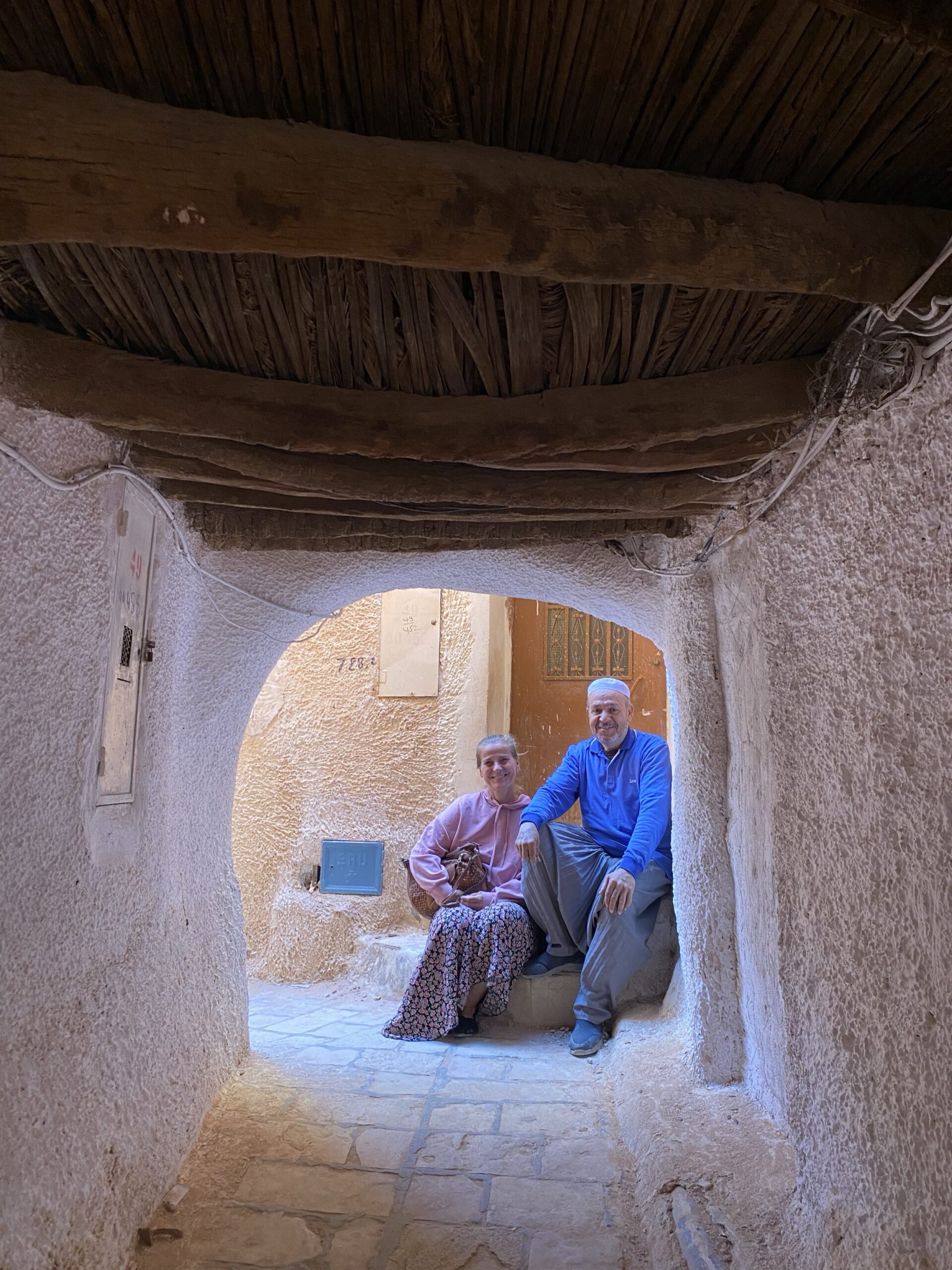 Ghardaïa: Altstadt mit Guide
Hamza then came by to talk to me about what I’d like to do and to apologise that I’d had such a bad experience in his country.
In the end I was invited to his family’s home, could leave my car there and, above all, could meet my next contact from Facebook, namely Mohamed.
Mohamed is a young geologist writing his doctoral thesis, who had contacted me to spend a few days together in the desert in Algeria. It helped him to work on his thesis and do fieldwork. It could help me to find places I’d never have found alone, because he is an absolute navigation genius and knows his country like the back of his hand.
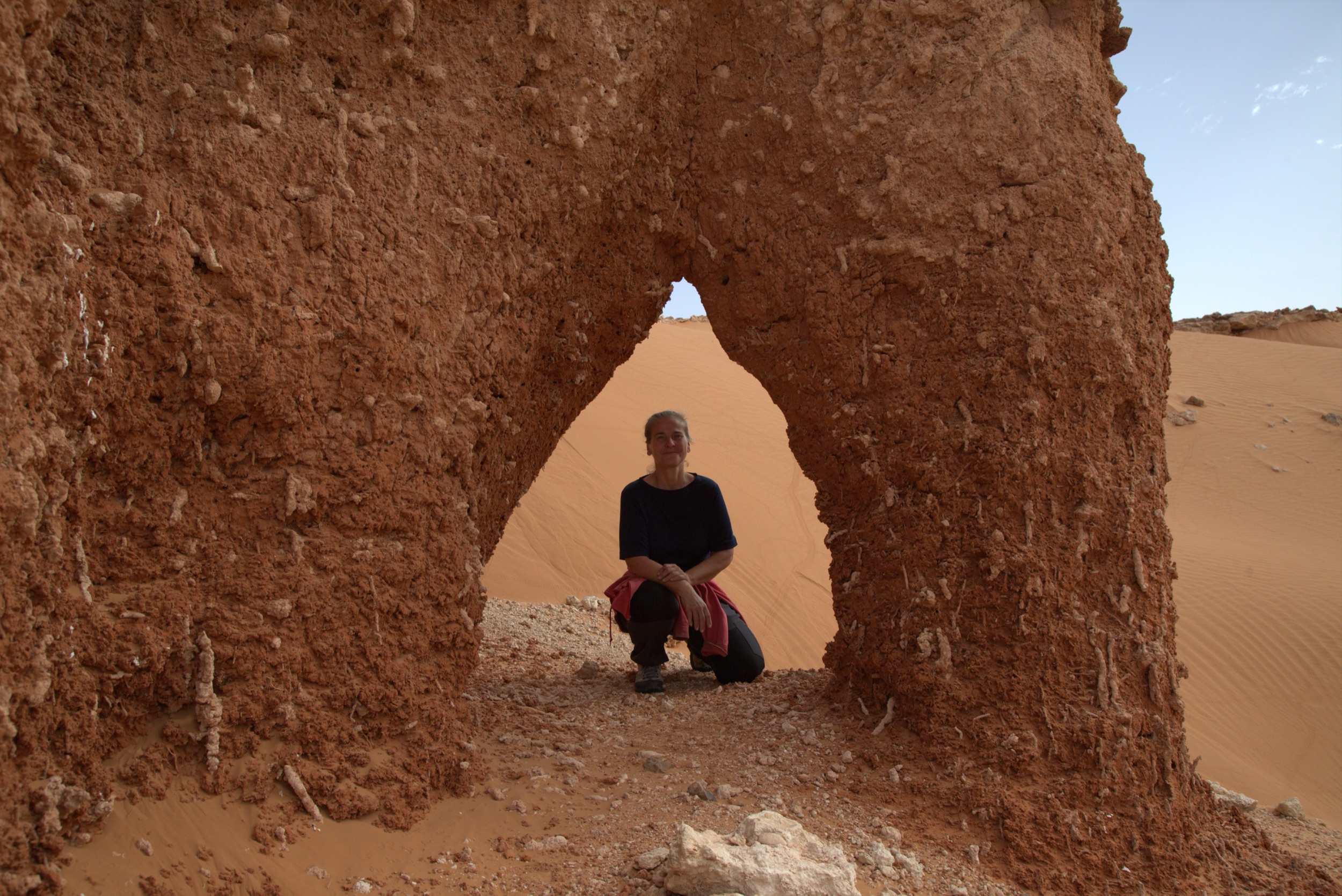
So for many days I was out on the road with Mohamed. He had his tent, I had my car, and we drove quite freely, without checkpoints, around Ghardaïa to a crater, visited old French forts, as far as Brezina at the reservoir, the old town. It was a really great tour. We got on well. I saw a lot. I drove deep into the great Grand Erg Occidental desert on a large track for working machinery. And we had a wonderful time.
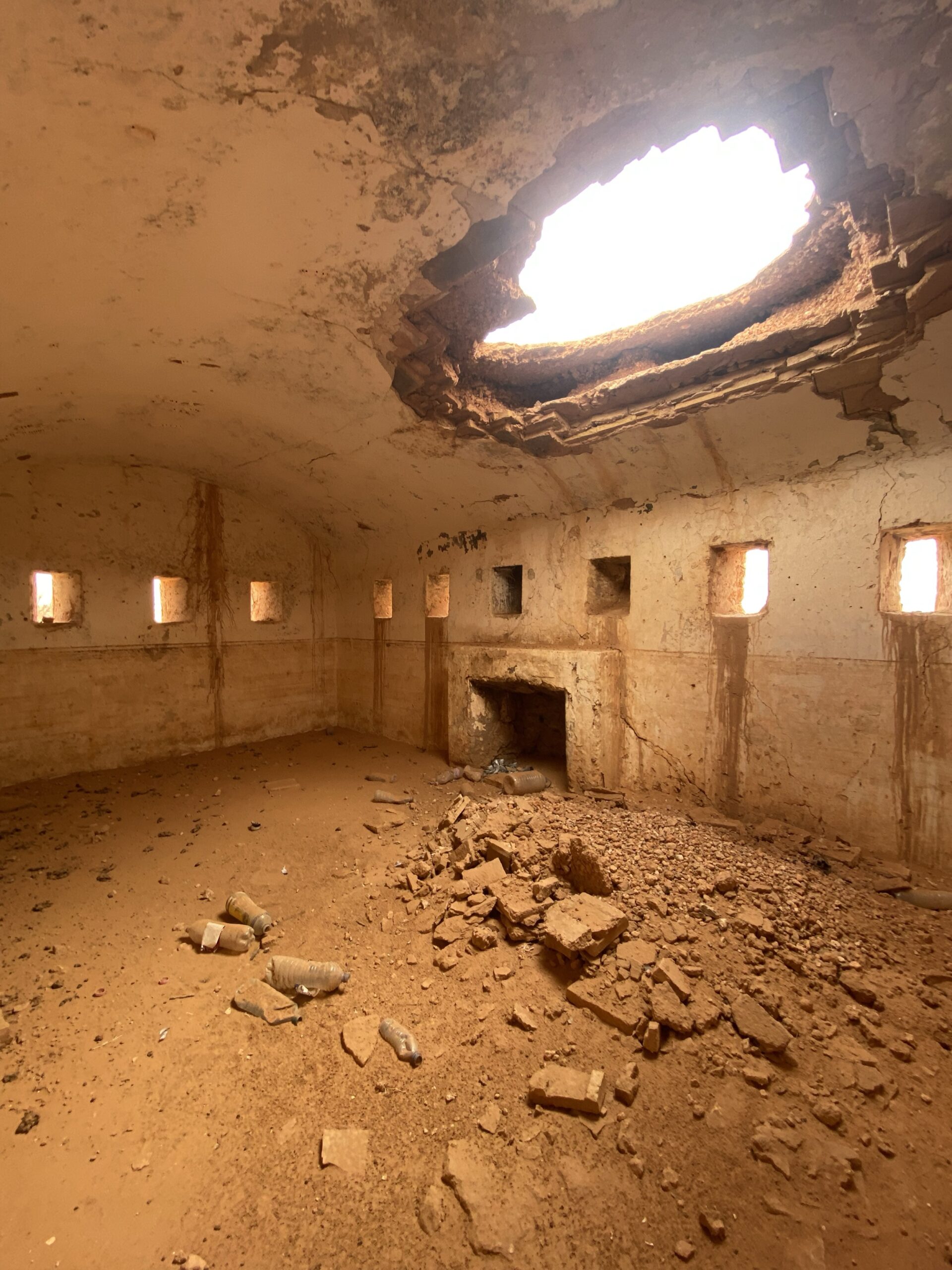 Alte französische Festung von innen
 Eingang zur Wüste Gran Erg Occidental
 Der See Mahfoura
 Eine Holzsammlerin
After that it was back to Hamza, to his house and his family. We did a tour into the desert there and spent the night under the stars. A day or two of rest, laundry and planning what to do with the last remaining days in Algeria. I would have liked to drive to Tamanrasset by car and see the remaining sights there, especially the Assekrem and also the little chapel of Charles de Foucauld. But the days were getting rather tight. So Hamza suggested: “We’ll book a flight for you and for Mohamed.” An acquaintance of Hamza’s who lives there was to drive us around a bit in a hire car, which I paid for. No sooner said than done. So we flew together to Tamanrasset.
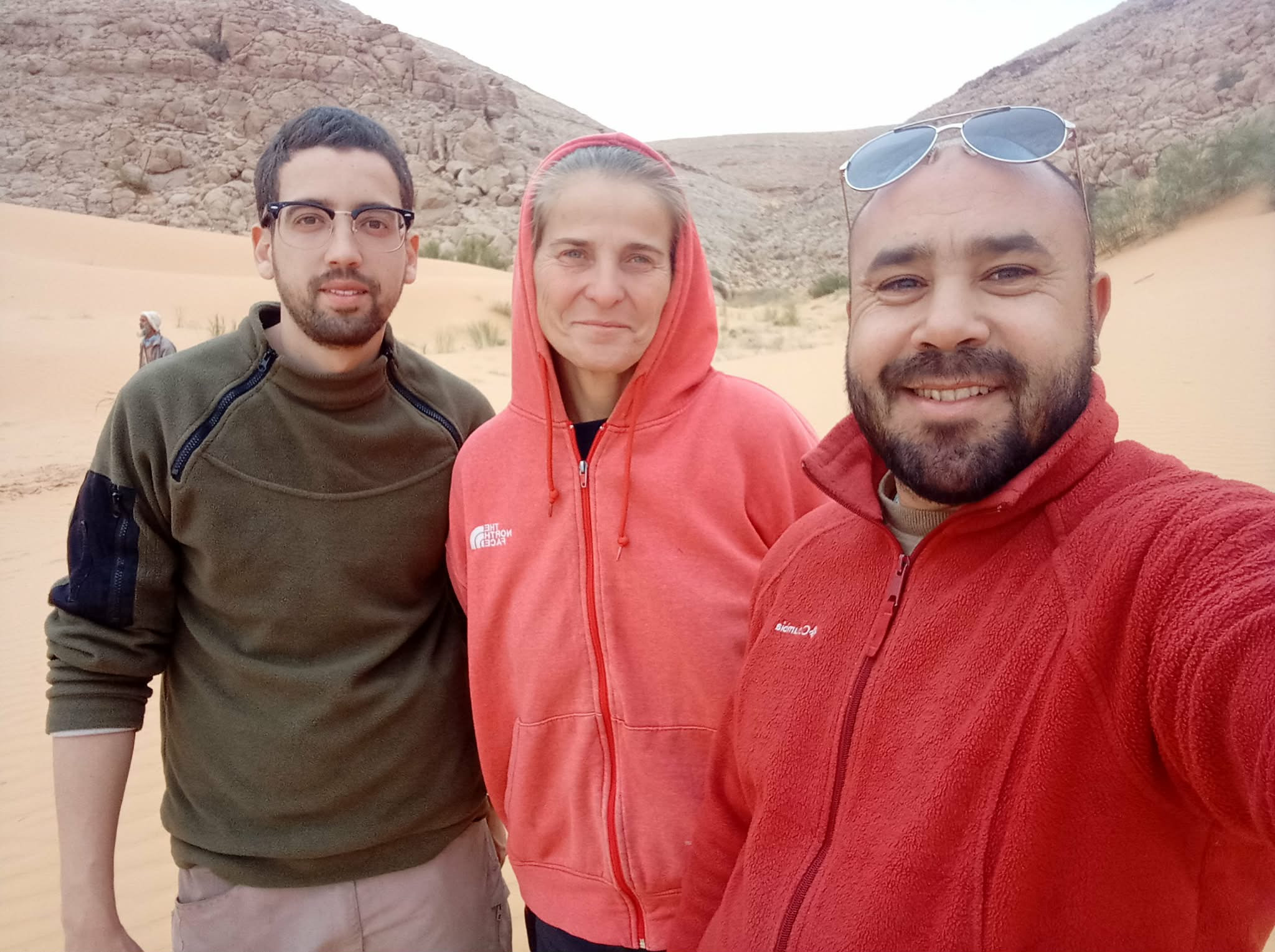 Mohamed und Hamza
Tamanrasset and my greatest adventure
Of course we were met by the police at the airport there too. And although the route was only ten minutes, we had to wait for an escort and were taken to the house of his friend Nuri.
Nuri had organised a vehicle and was supposed to show us the sights typical of the area. He went to the police to register everything and got no permission. Nuri was a friendly guy who lived there in Tamanrasset and owned a small shop. There was a great dinner with a tea ceremony, Ramadan was now over by then, and we could look around the place. Sadly the excursions came to nothing. I still had to pay for the car, and I wasn’t entirely happy with the whole situation there. Because the police then also forbade me from staying privately at Nuri’s house. Which means: off to a hotel. I got more and more grumpy and bad-tempered and dissatisfied, because I’d lost so very many days. Especially since I’d assumed that Hamza and Nuri knew what was needed to get permission to be driven to those sights.
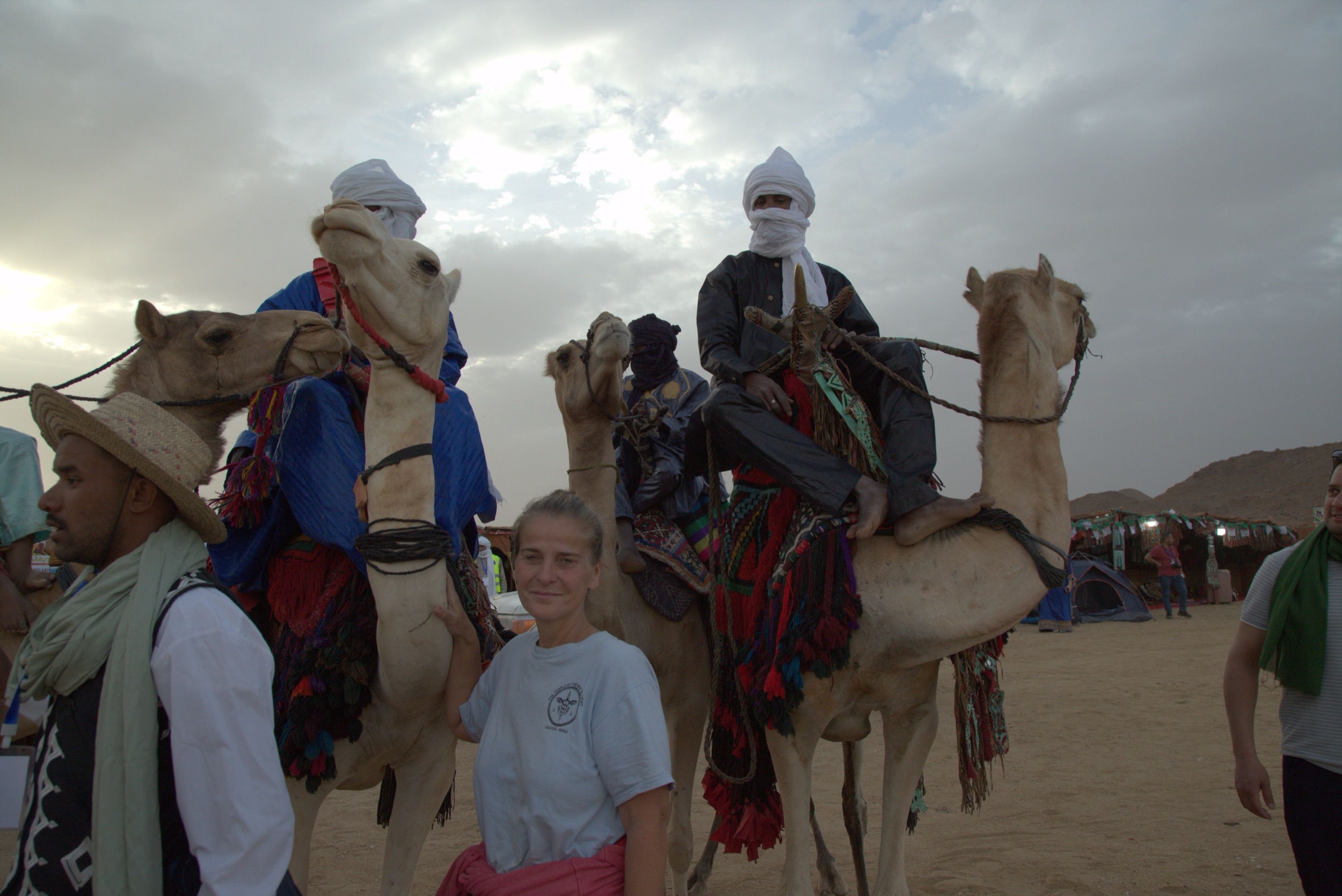 Tamanrasset: Festival
Of course they didn’t know, but they certainly meant well.
In the end I had a few very nice contacts at the hotel. A French couple who’d booked a tour there were out with their guide in his car. I was really annoyed.
So I embarked on what was probably my truly greatest adventure on this trip. Not recommended for imitation.
Very early in the morning, nothing was planned, I dressed inconspicuously, took my little hiking backpack, packed water, some money, my phone and a power bank, and walked to one of the nearest sights, namely the tomb of the Tuareg woman Tin Hinan. It was supposed to be about 100 kilometres. Early in the morning I walked through an empty Tamanrasset. No one looked at me. I’d put my hood up. It wasn’t warm. Sometimes it even drizzled a little.
And I simply walked out of the town, saw a few police checkpoints from afar. Around one checkpoint I just walked round the back. There were many trodden paths, donkey paths, probably also paths of refugees who move through Algeria from Mali and Niger. And that was exactly my speculation: that I wouldn’t be noticed, since from a distance I could have passed for a refugee with my odd outfit. At the next checkpoint I couldn’t walk around. Everything was too big and fenced off. So I simply walked straight through it. Head down, hood up, backpack. Don’t think, don’t look, and it worked. That’s how I left three police checkpoints behind me and finally reached the airport, or rather a petrol station right next to the airport.
There it was quite normal to take a private taxi or hitch a ride to the next place. That’s common practice among the locals there. And that’s exactly what I then did. I found a local taxi that took me to the next stop for a small amount, where the turn-off to the tomb of Tin Hinan was. There too, of course, there was another very large checkpoint. I stopped in the taxi, got out a few metres before it and walked a wide loop around the checkpoint. Then there was actually a little stretch of road ahead of me, along which I strolled on and held my thumb into the wind.
A vehicle with young men from the next town stopped, quite surprised at who I was and where I wanted to go, spoke a little French, a little English, and took me right to the door of the tomb of Tin Hinan. They were super friendly and I had a great conversation. As always on the whole trip, they were friendly people with nothing bad in mind. Everyone was helpful and friendly. My gut feeling didn’t deceive me a single time.
Then I had enough time to look at the tomb in peace and take photos. Luckily the door of the site was open. Oddly, though, it was also quite busy. And then I saw three big coaches coming in the distance. And of course: they were Algerian tourists. I’d already seen these young people the day before at a festival in Tamanrasset and had even spoken with some of them. They were organising a tourist event there. Of course they recognised me and were pleased to see me, took pictures and even did a few interviews for Algerian internet. In the end, of course, their guide and the police became aware of me too and weren’t particularly thrilled, but here again very, very friendly. I rode with the young people in their coach to the next stop. They invited me to eat there and then it was back to Tamanrasset. There the police delivered me properly to my hotel with the request not to leave it alone again. On the way, by the way, I had to nip to the toilet and the coach driver accidentally forgot me. But the police escort then picked me up again.
It was actually a funny adventure with a happy ending. I couldn’t have imagined it better.
Across the border into Tunisia
And the next day we flew back to Ghardaïa by plane. There I could take my car back, return Mohamed to the bus station, because Mohamed was from the city of Oran and had to slowly head home too. I then drove from Ghardaïa to the border with Tunisia over country roads, little short cuts and back routes. I drove straight to the border crossing between Algeria and Tunisia. The place there is called Hazoua. Normally you probably get a police escort too, but they overlooked me. From Ghardaïa to Hazoua I could drive along country roads quite comfortably on my own and enjoy the wonderful landscape.
I’d actually wanted to take a break before the border, but I didn’t find a good place to spend the night, did some more shopping, used up my Algerian money and then drove straight to the border post.
The border official was of course surprised and asked me about my travel group, about my guide, and I said: “No, I don’t have anything like that. I left all of them behind in Ghardaïa.” He couldn’t quite understand it, but since I was leaving the country, he didn’t really mind either.
He also asked me for a biro so he could do his job. We laughed and after about two hours, because of a shift change, I could then leave Algeria. By the way, on leaving you still have to pay 1,000 dinars for a stamp there, worth knowing. I also think it’s always good to catch a time of day when no one really feels like working. To enter Algeria from Tunisia at this crossing, you can only get in if you have a local guide waiting for you. I found that out there.
And then I was in Tunisia.
The Tunisian border post wanted to know where I was going, and I gave a campsite right behind the border. That was enough for him and the crossing took about seven minutes.
I got a customs paper and could drive on. It was already late at night. I drove to the campsite and of course there was no one there, so I simply parked in front of the door. At that moment I really didn’t care. It looked quiet and Tunisia is a very touristy country.
The next day I actually set off on an exploratory tour straight away and played tourist, visited typical Star Wars film locations. At some I was lucky and it was quiet. At some it was already too late and it got loud and crowded. I drove the Rommel track from top to bottom, brushed off many tour guides on the way there and reached a small camp right at the end of the Rommel track, where I stayed a few days with Ali at his eco-campsite CAPRAPICTI near Metlaoui.
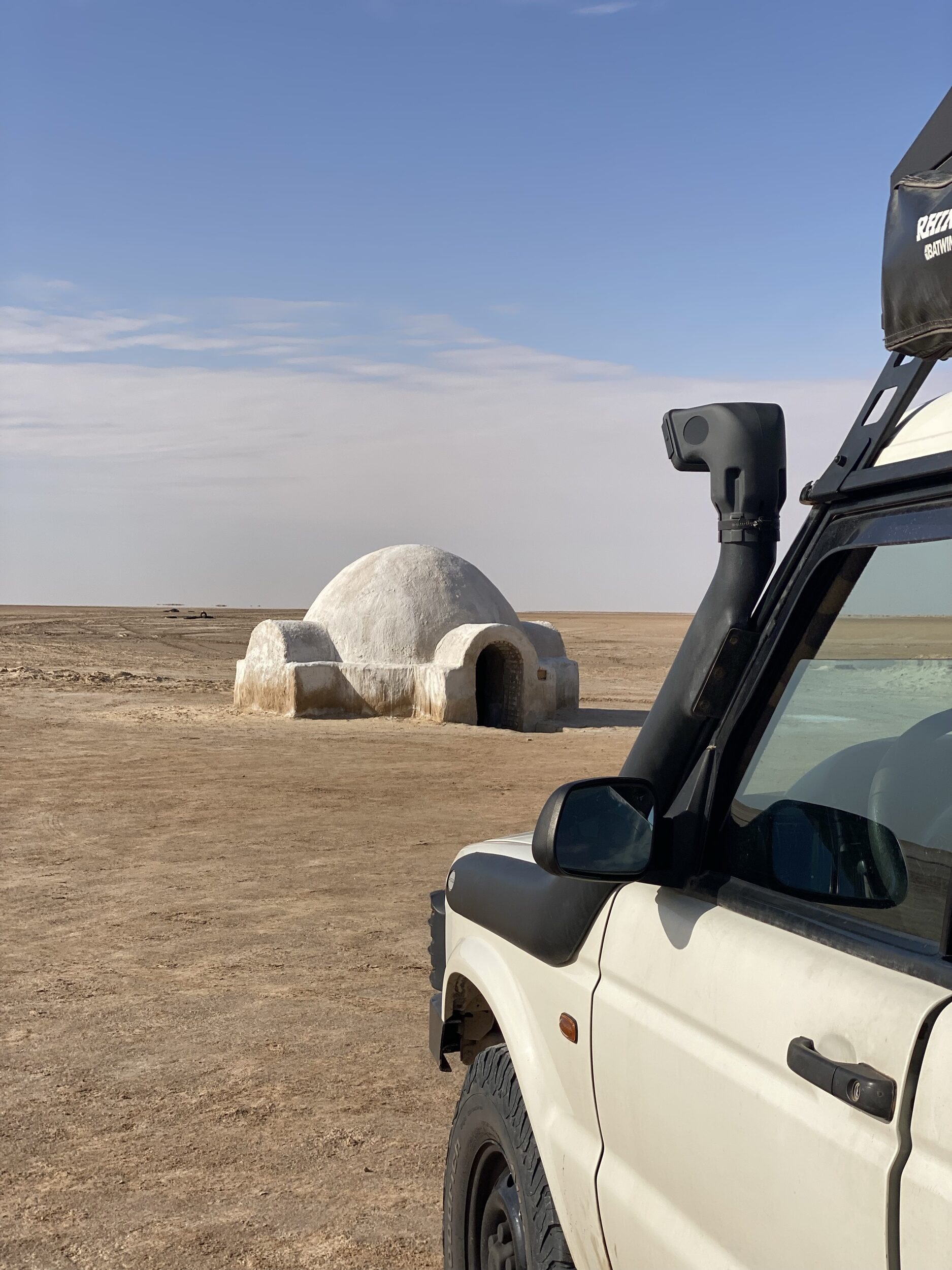 Star-Wars-Kulisse bei Nefta
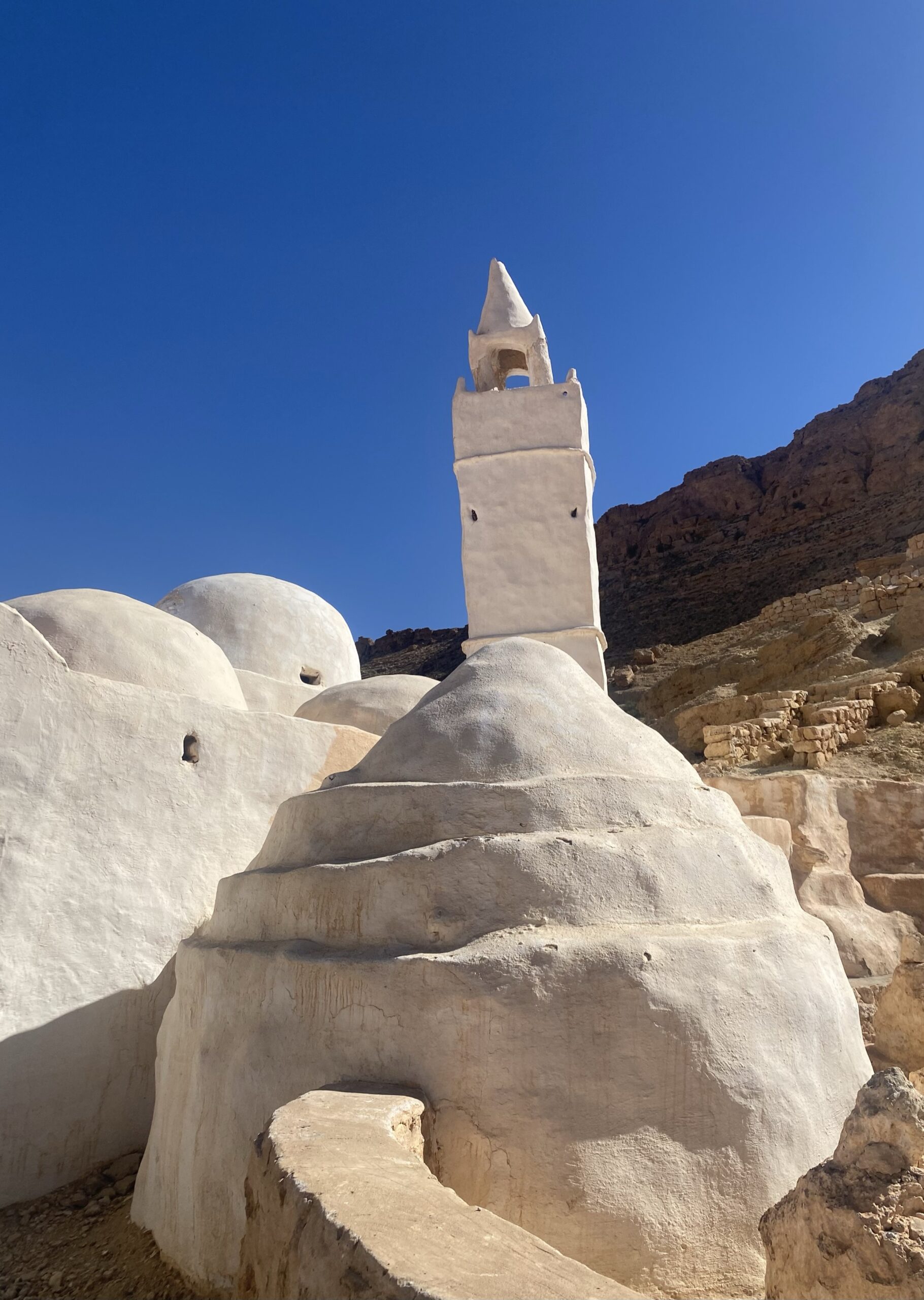 Bei Chenini: Moschee der Sieben Schläfer
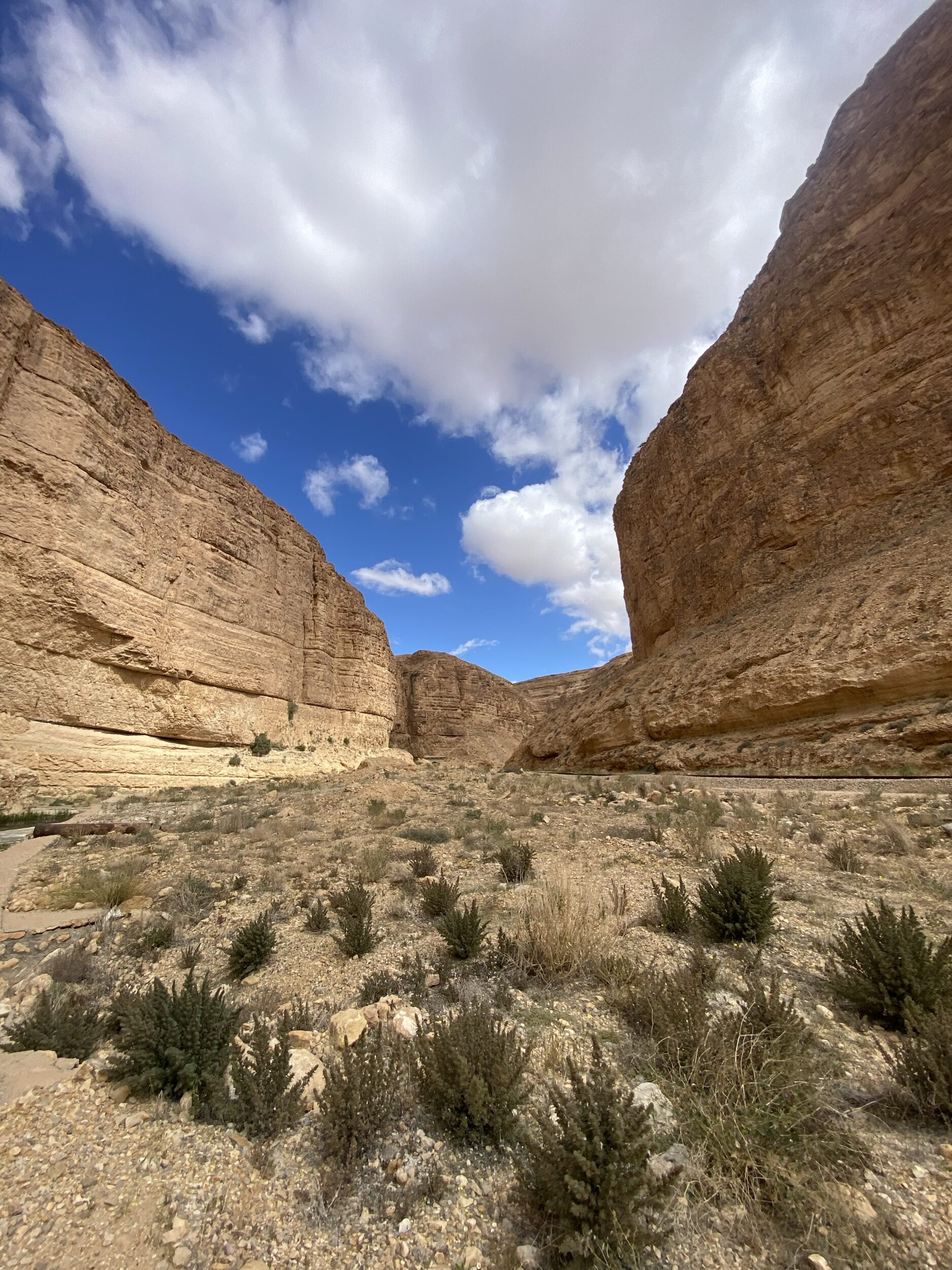 Die Schlucht (Gorges)
It was absolutely great. Ali is a great guy. He even took me along to a Tunisian wedding.
Into the desert: the lost lake
Well, and then it was finally properly into the desert. I drove to Douz to organise a group there to drive into the desert with, since I had no experience, or at least not enough, and definitely didn’t want to drive alone. First I went to the Cinderella campsite, a really lovely campsite. Sadly there was little going on there at the time and all the groups were already coming back from the desert. So I regularly drove to the other campsite in town, the so-called Camping Club Desert. There was quite a bit more going on and at some point I moved there too, so as not to keep driving back and forth. I got lots of contacts from lots of people, for guides, locals and leaders, but none of it convinced me. Above all because I actually wanted to join a small group, and the offers at the time were correspondingly very poor.
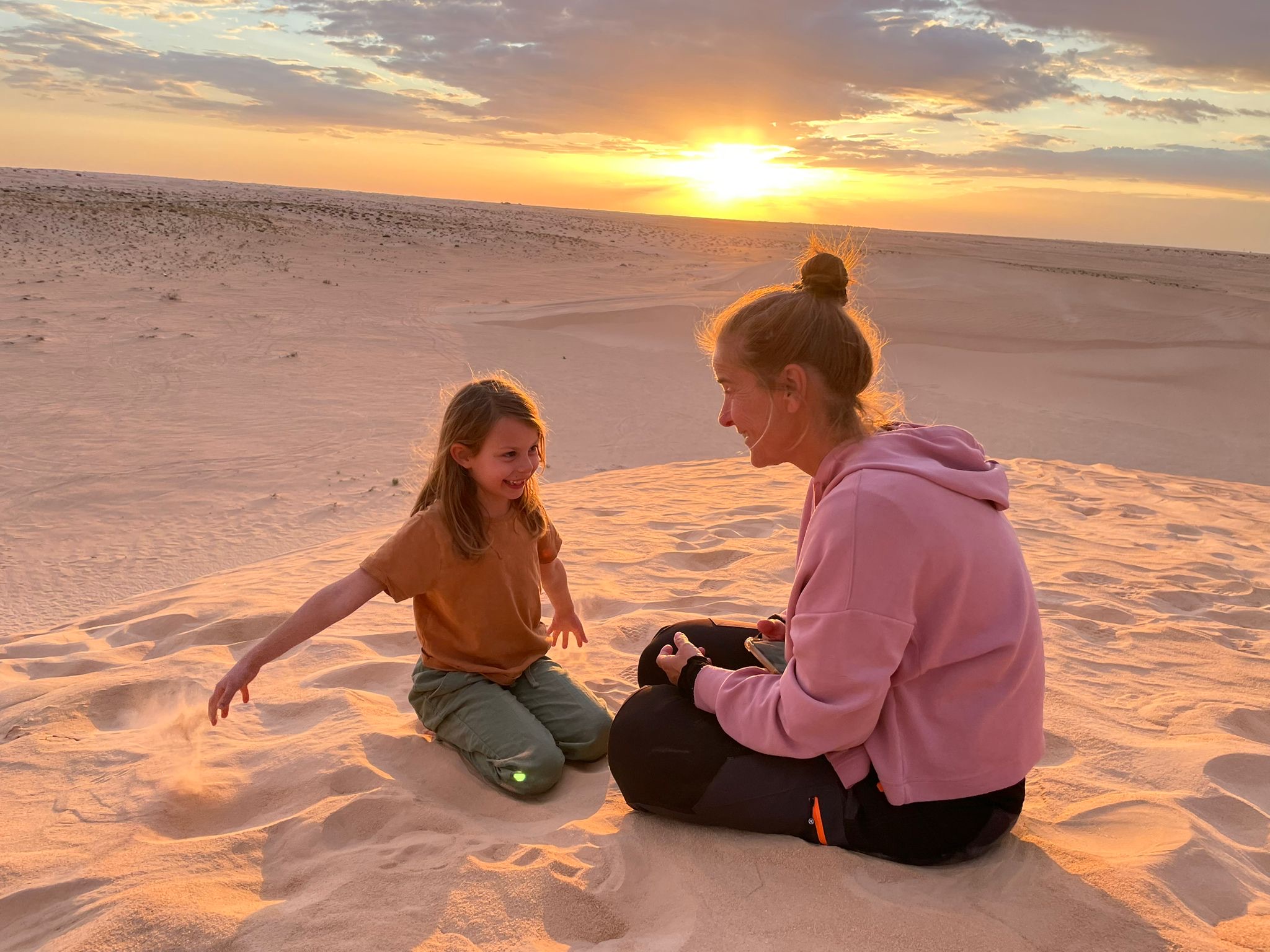 Bei Douz: Probefahrt in der Wüste
The next day, I was actually already almost a little desperate, I met a Swiss couple, Irene and Tom, who’d booked a desert tour with their great travel Toyota. And I asked: “Can’t I just come along and we split the cost?” And of course they said yes straight away. I’d found the perfect desert travel partners, and the campsite had of course organised the best guide they had accordingly. We set off the very next day.
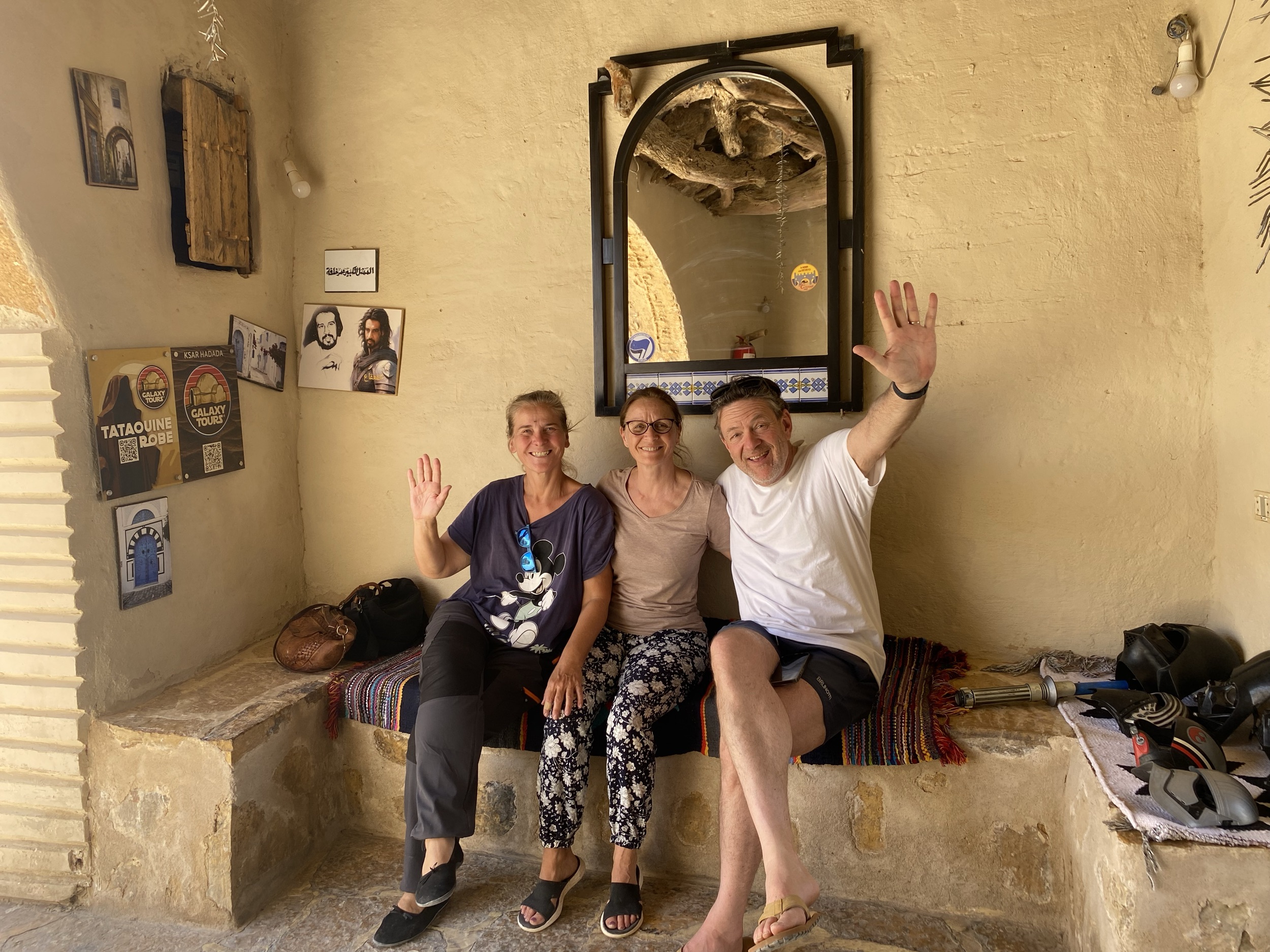 Mit Irene und Tom
At midday Walid picked us up and drove with us for three days to the lost lake. I’d never in my life thought I’d manage it. And above all, I’d never thought it would be so easy.
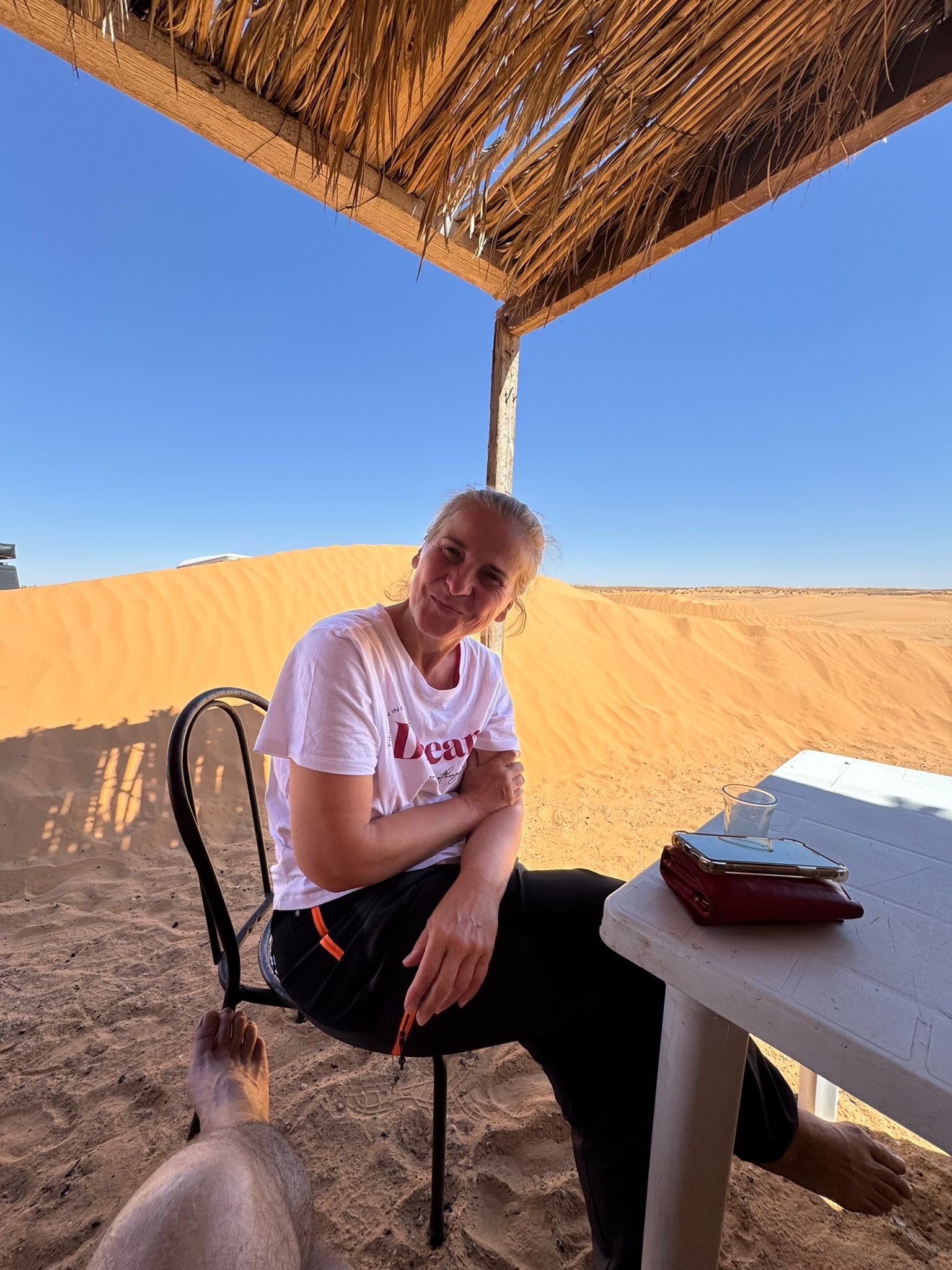 Auf dem Weg zum verlorenen See
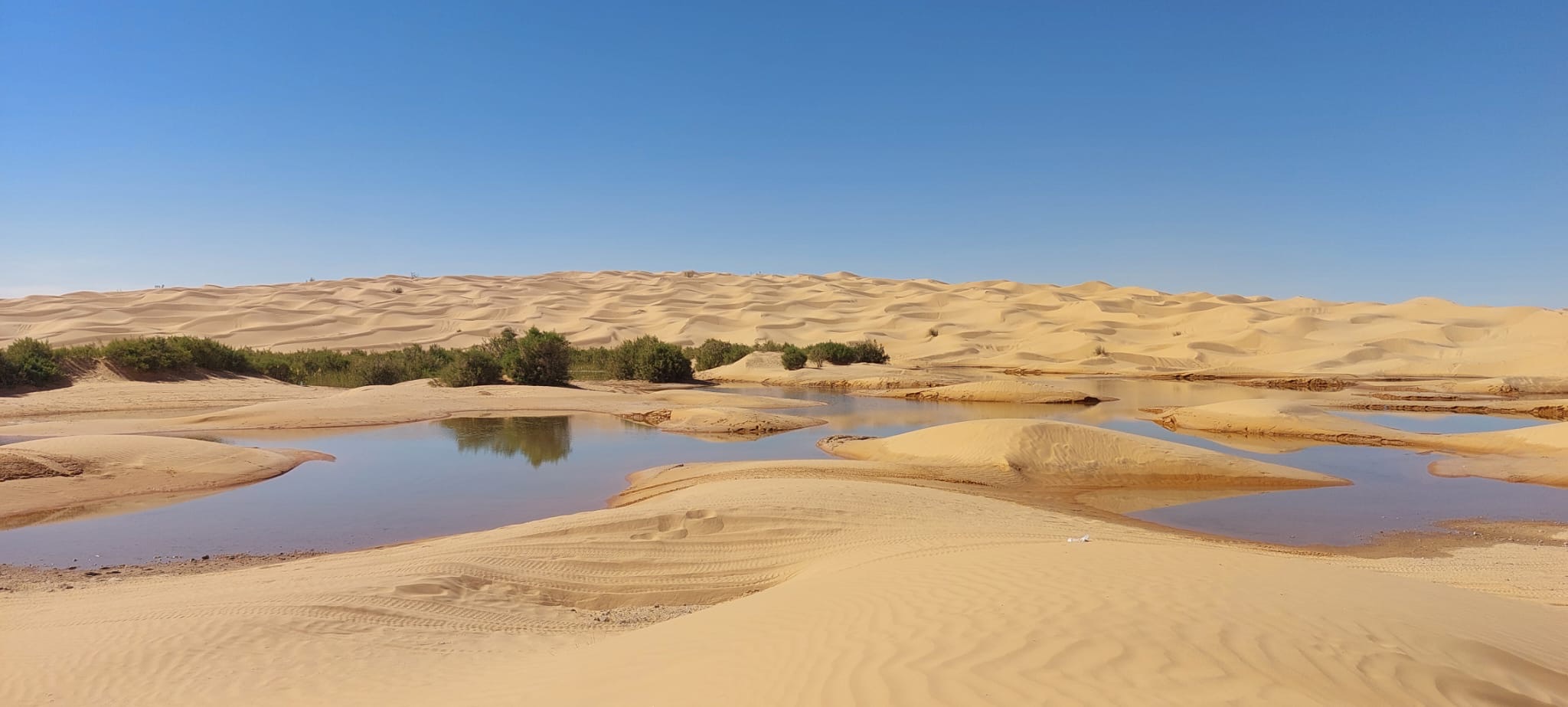 Am verlorenen See angekommen
I’d had a tiny bit of desert experience before, but he did it so well and we had such a good time that I arrived happily at the lake and in the end drove on with Irene and Tom to the oasis of Ksar Ghilane, where our tour was over again already.
I’d say I now have a bit of desert experience and I liked it incredibly. I’d also drive alone any time now. I know my way around better now, know what I have to watch out for. But of course it’s always much nicer in company. For me it meant saying goodbye again. The two of them wanted to stay a bit longer in the desert, drive on a little on their own.
Farewell and conclusion
And by then I’d booked my ferry back to Italy for 14 April. I was tired. Almost 18,000 kilometres now lay behind me and somehow I had the feeling I needed a break from travelling.
So I looked at a few more typical Star Wars sights, visited a few towns and drove straight to Tunis for the ferry.
For me, Tunisia was a very lovely and positive surprise. Meant only as a country to pass through, I had wonderful encounters there with great people who will now be my friends for the rest of my life.
And with that the trip came to an end on 14 April 2026.
I stood at the ferry in Tunis in bad weather. The weather was just as bad when I set off in Algeciras for Tanger Med, and I thought: is it over already? It went so quickly. It was so easy. Now I’m here. I think I should come back.
The desert is waiting for me.