
On 1 August 1951, Toyota showed the Jeep BJ to the public for the first time. Exactly 75 years later to the day, I was standing in the Toyota Collection in Cologne, surrounded by Land Cruisers spanning several decades and several countries. Read on for what the off-road day at the Toyota Collection was like, why Toyota lost its very first contract with the Land Cruiser and still went on to become a legend, and what the new Toyota Hilux can do as a mild hybrid and as an EV.
Off-road day at the Toyota Collection: Land Cruisers from all over Europe
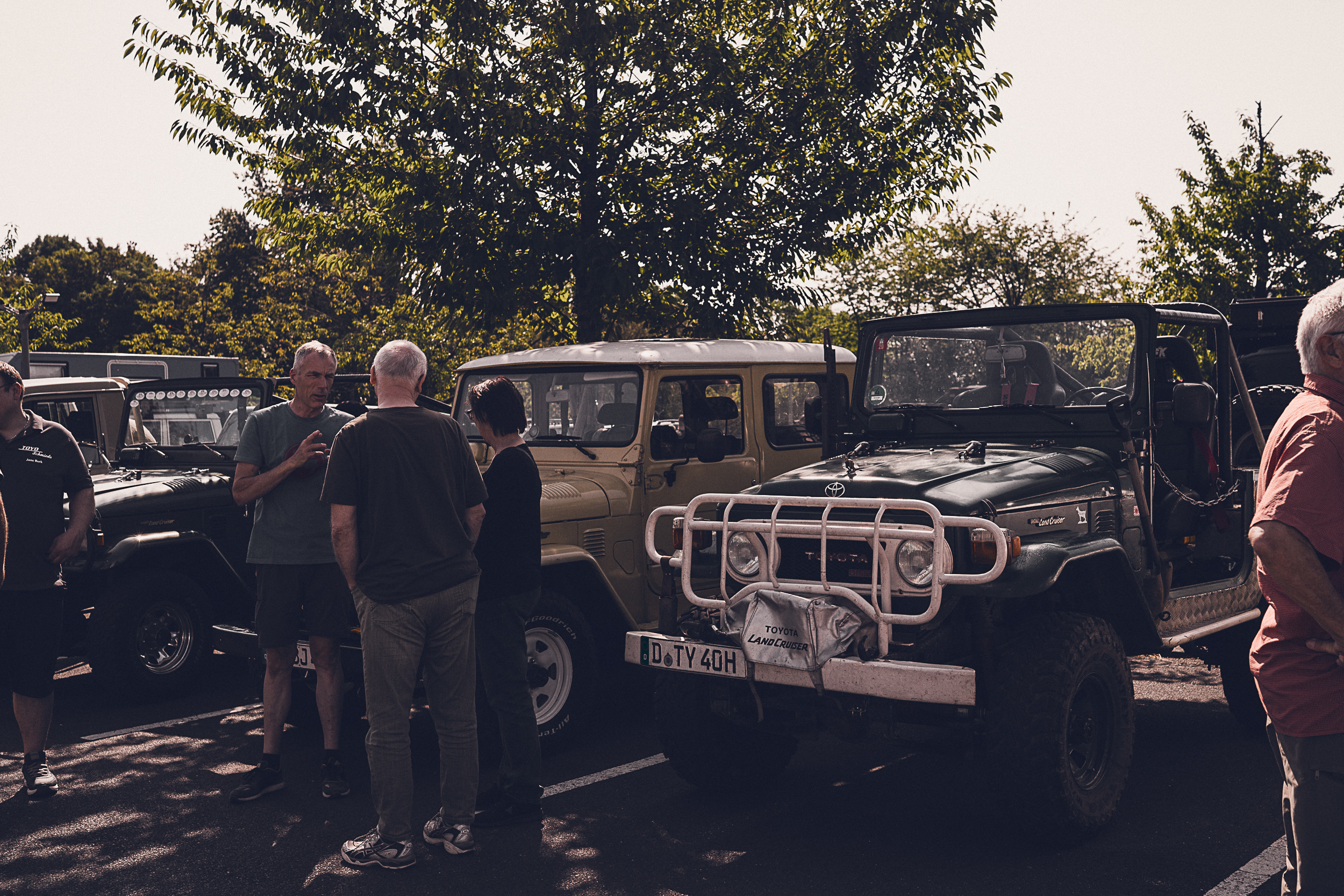
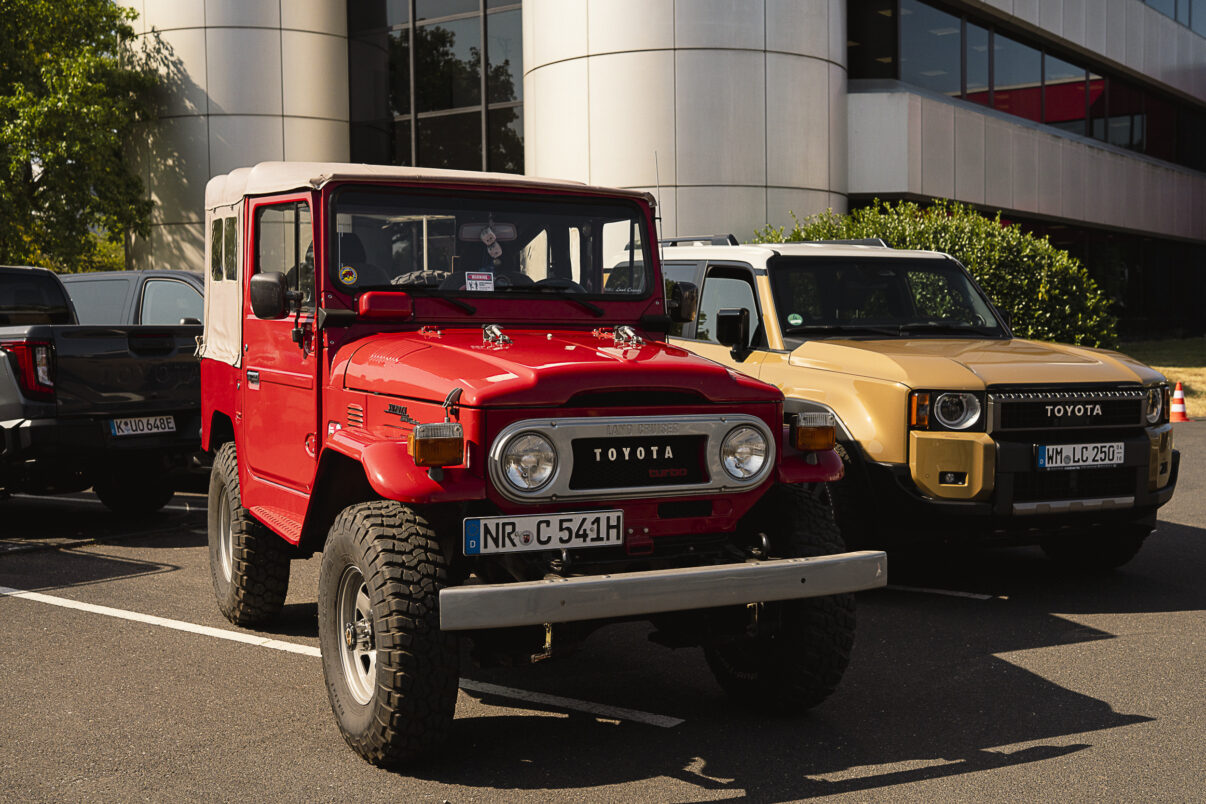
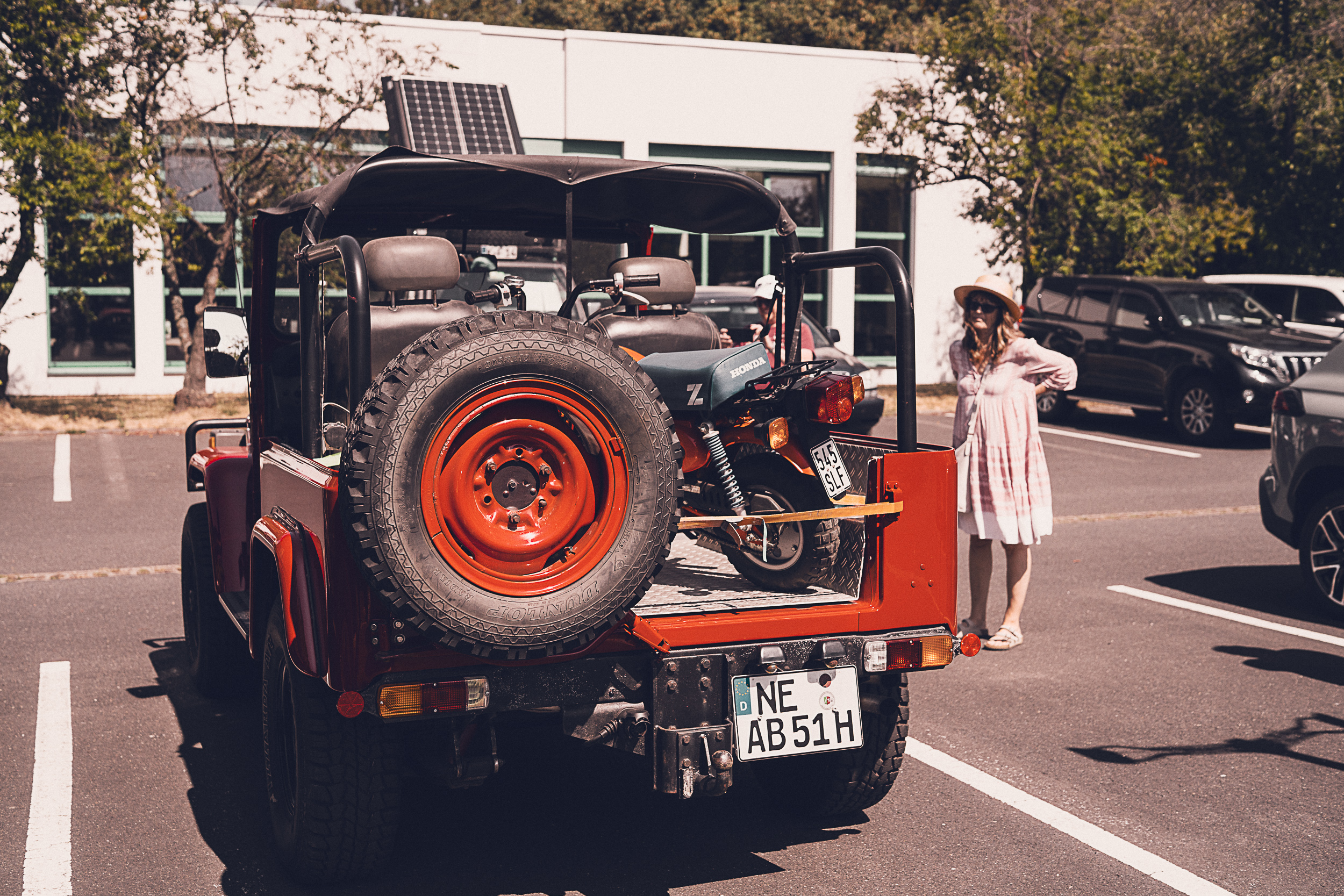
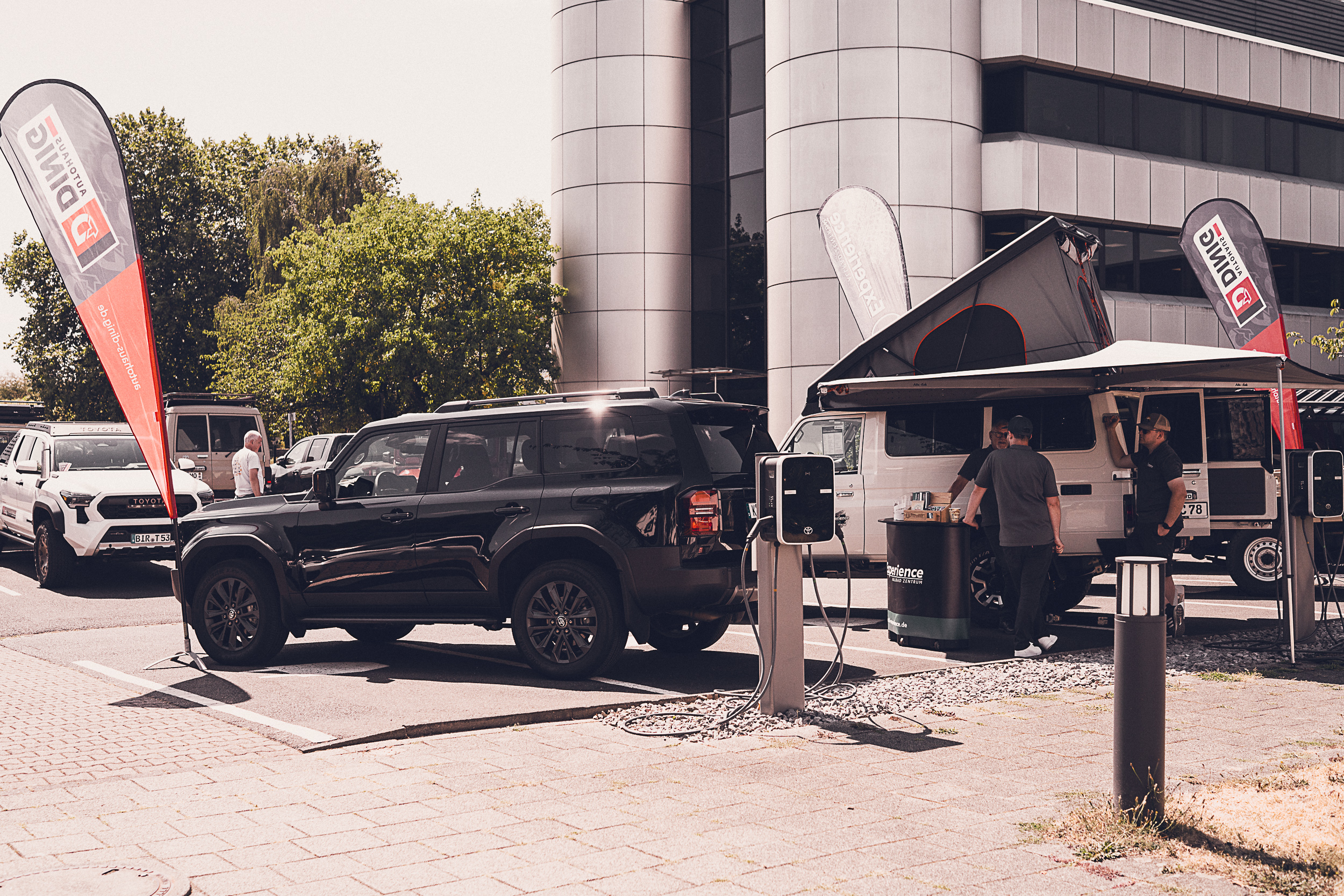
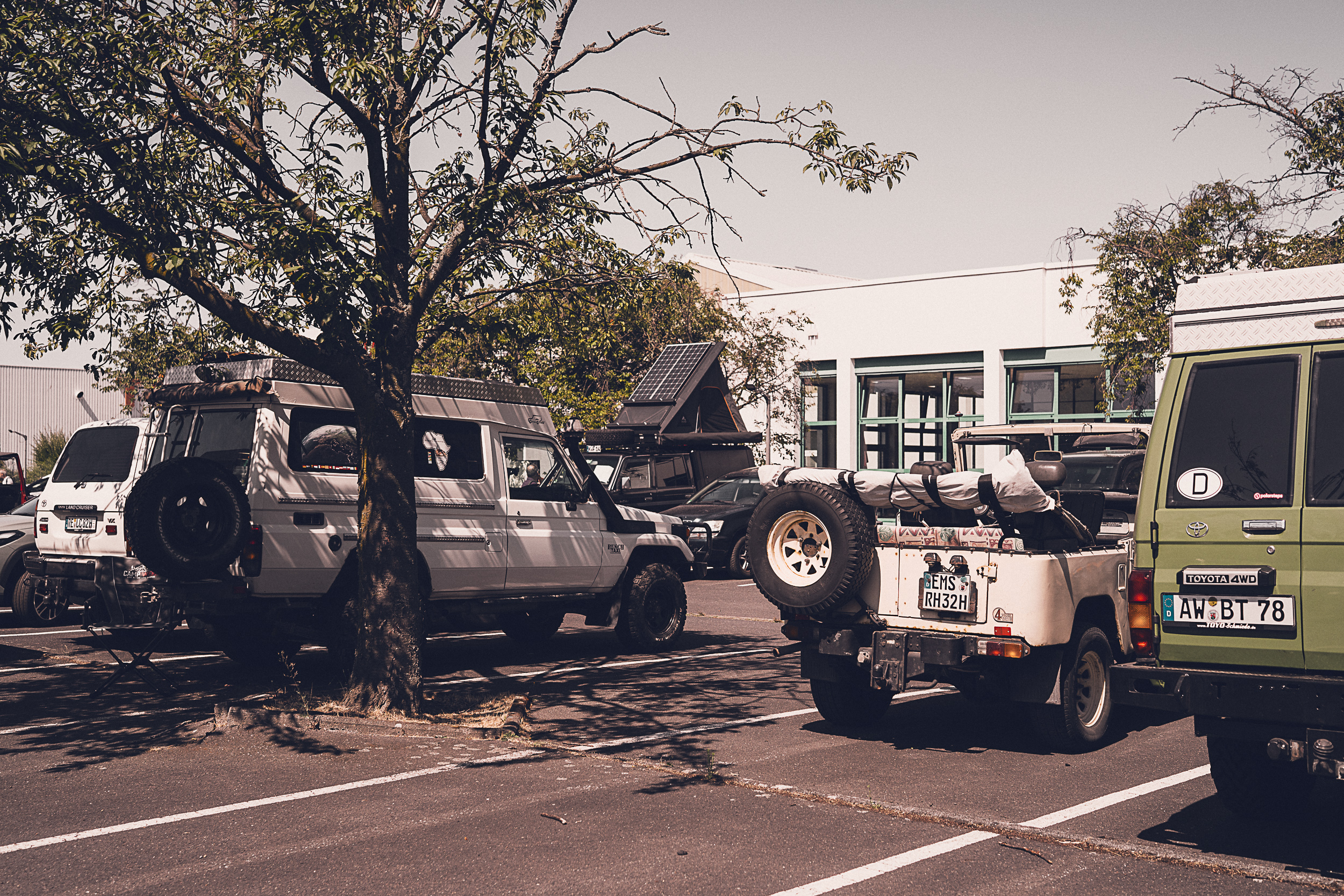
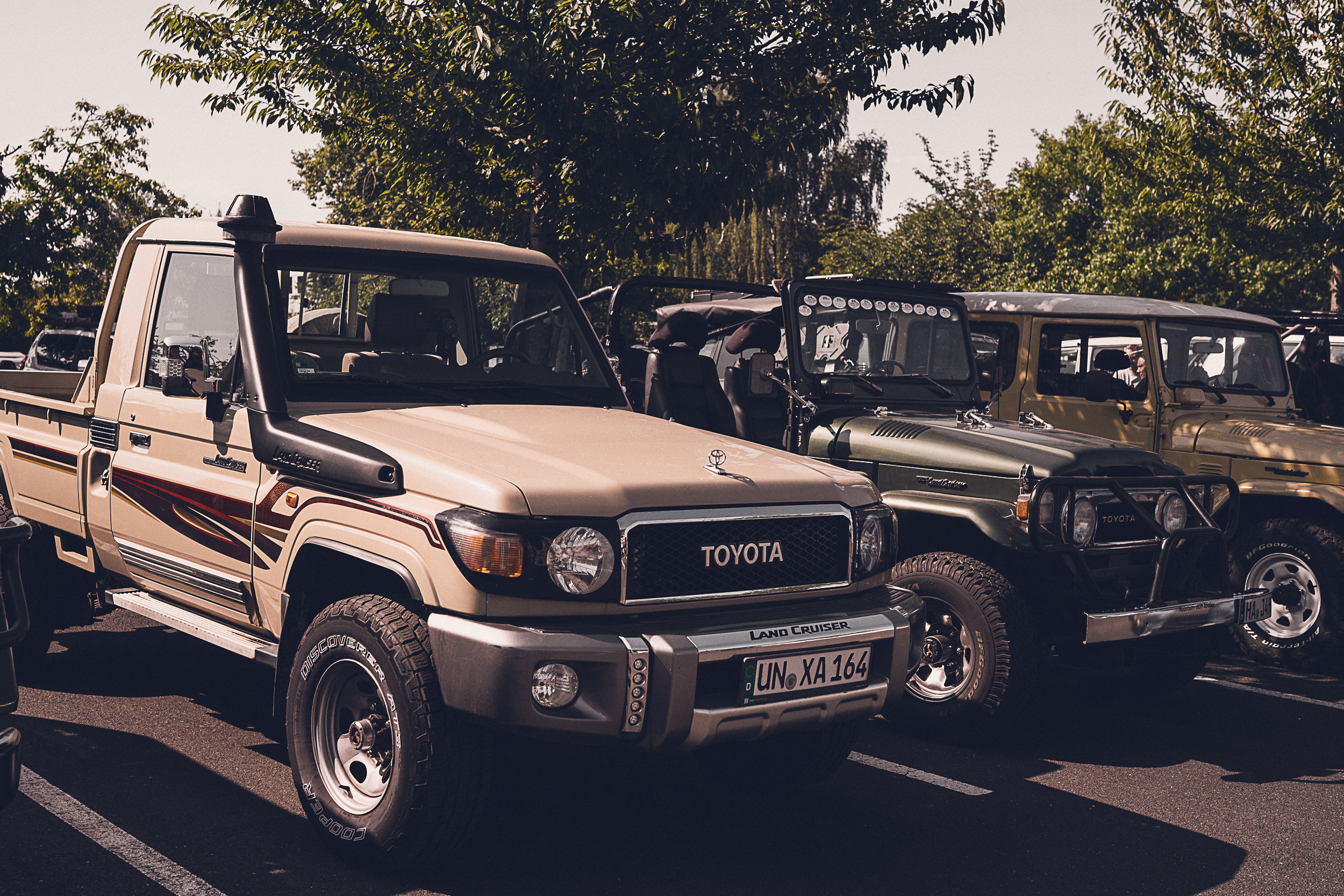
Anyone who turned up in a Toyota off-roader got a spot right at the front, and a good many people took them up on that, some coming from the Netherlands and Belgium. For some visitors that meant a few hundred kilometres of driving for a single morning among like-minded folk. In return, the car park had the whole history of the Land Cruiser lined up: open J4s with soft tops, a BJ42 from Tübingen, an LJ73, Buschtaxi conversions with roof tents and aluminium boxes, an HZJ78 with LED spotlights and a factory-fresh 70-series pickup with a snorkel. Probably no coincidence that a new Land Cruiser 250 was parked off to one side right next to a red J4, with a good 50 years sitting between the two.
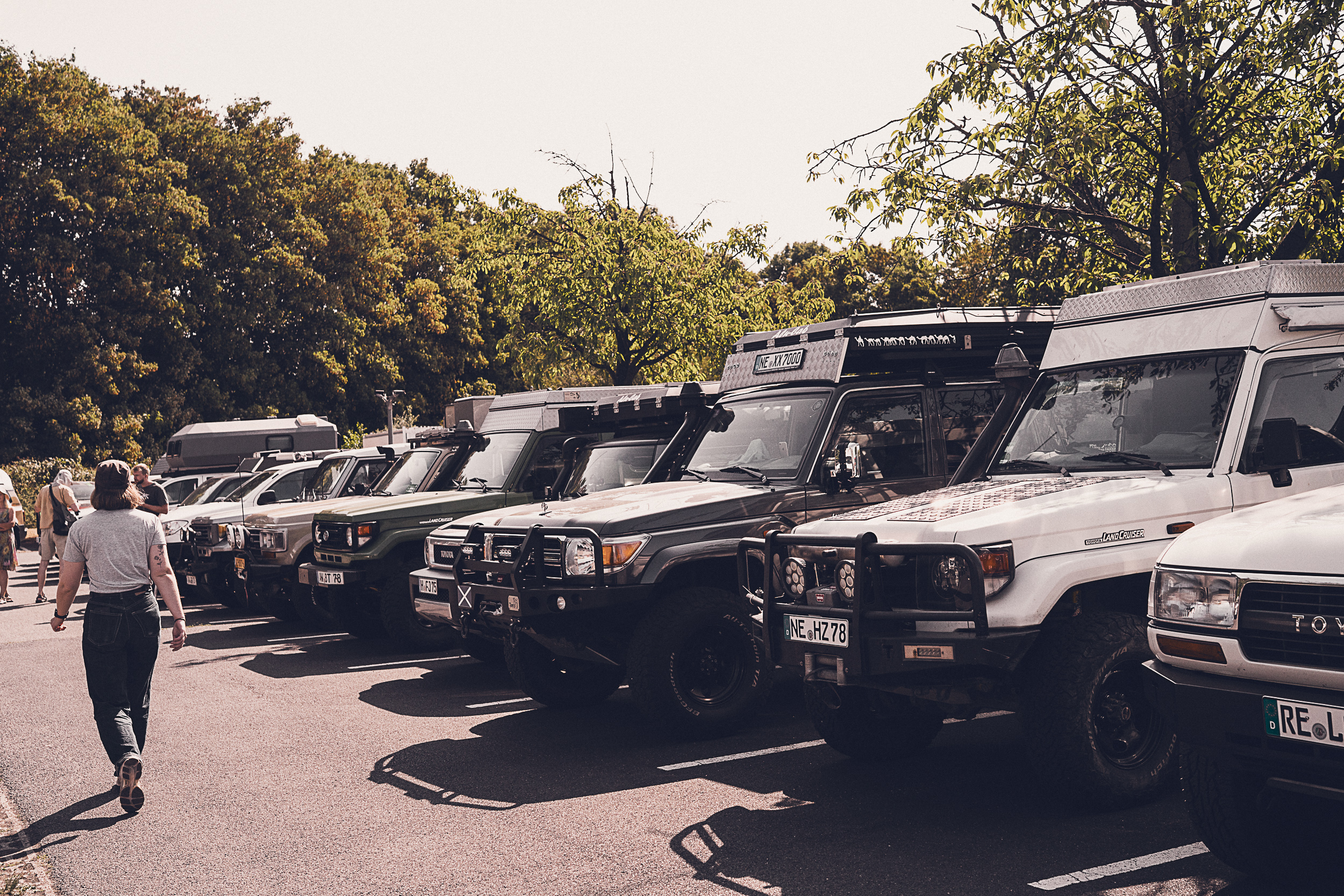
One detail jumped out as I walked around: a lot of owners have reserved personalised plates to match their model. LC 80, TY 40, BJ 42, HZ 78, LJ 730. You could practically read the whole model range off the number plates and know what you were looking at before you’d even reached the car. That eye for detail is exactly what makes days like this: you wander around the cars, get chatting, and spot something on every other vehicle that you’ve never seen before.
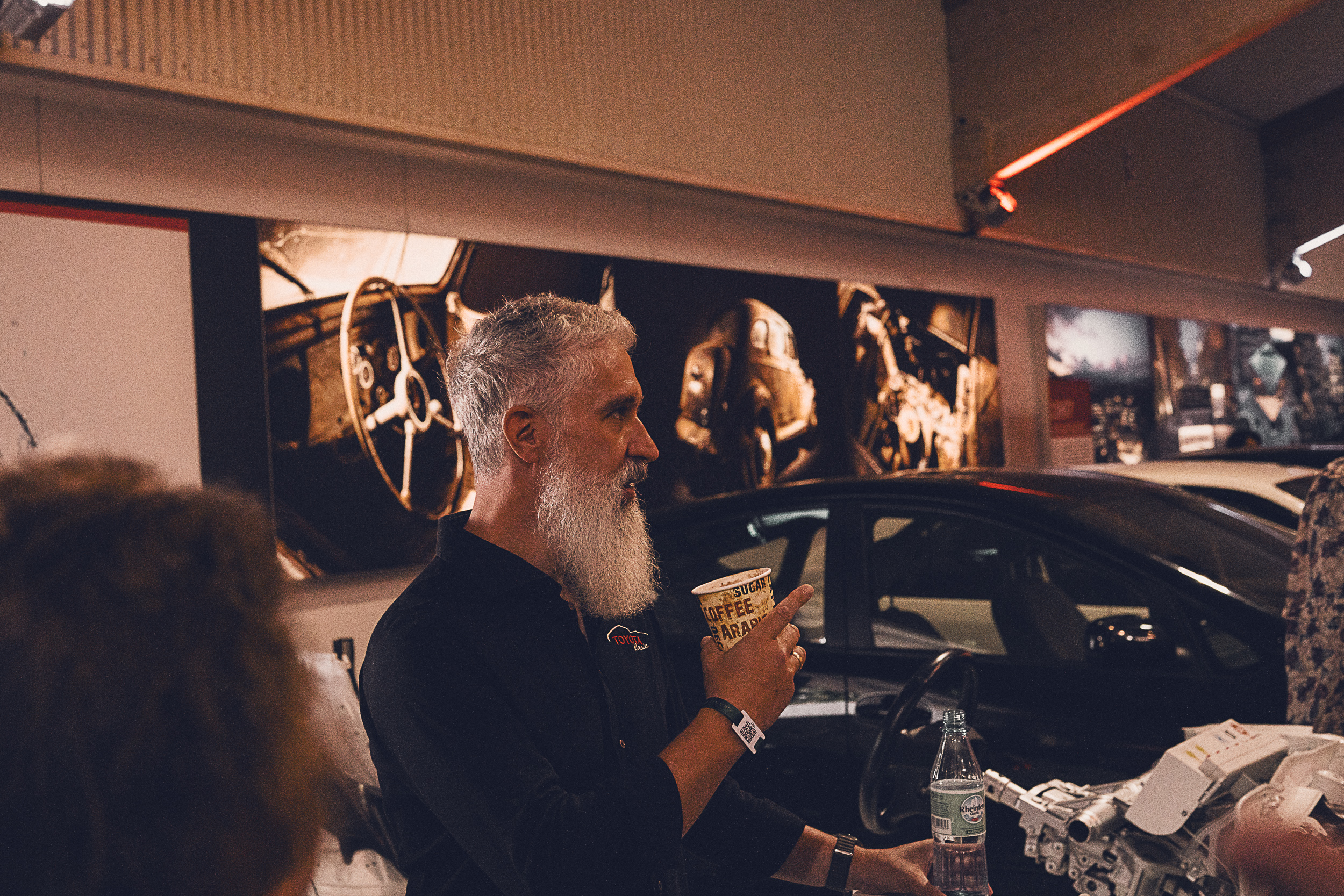
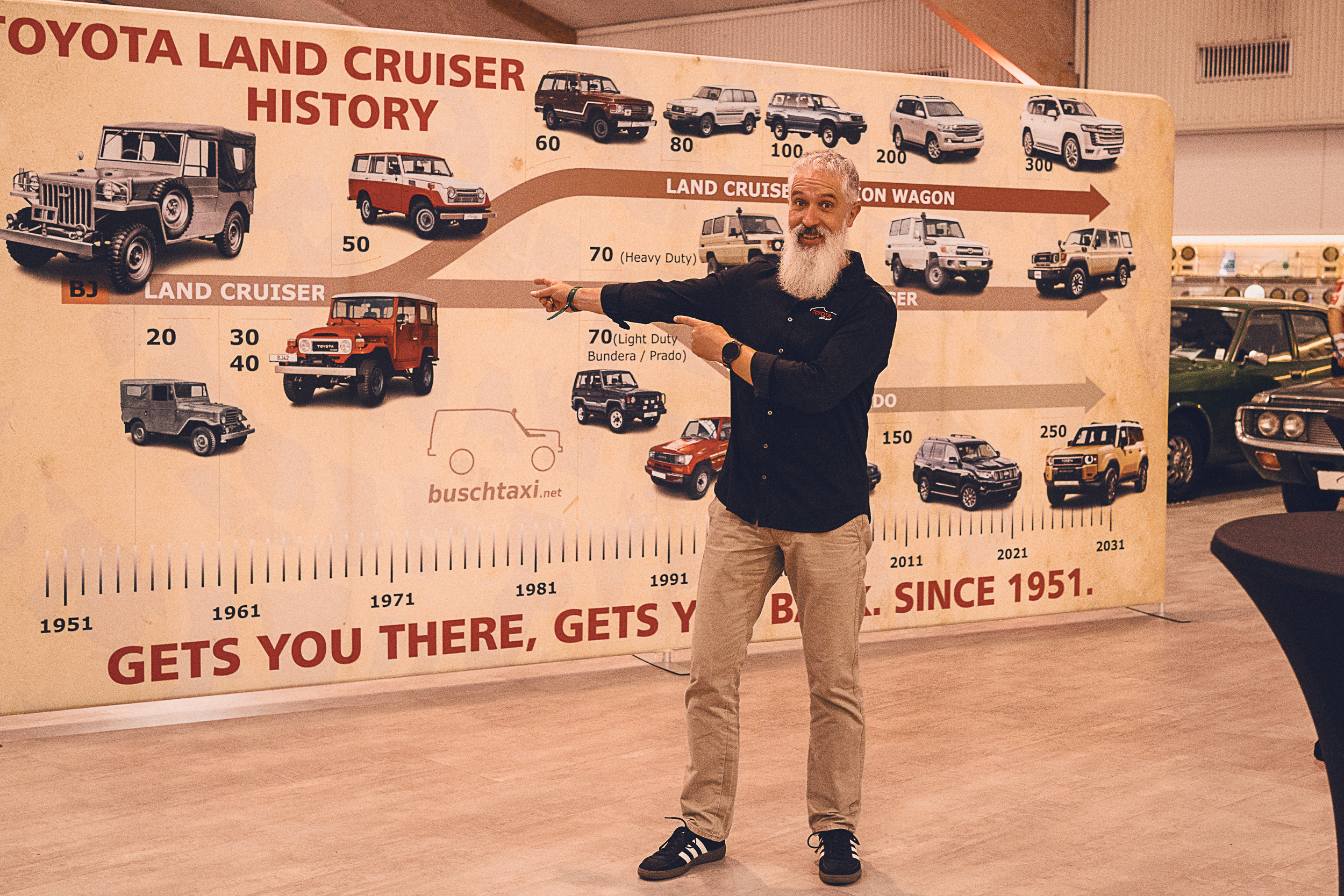
Alexander Wohlfarth, who runs Buschtaxi.net, led the tour and told the story of the Toyota Collection and the Land Cruiser along the way. One highlight of the collection: a Land Cruiser FJ60 with a famous first owner. The car belonged to Roger Moore, who drove it in Switzerland. And as a base version at that, with cloth seats and the F engine.
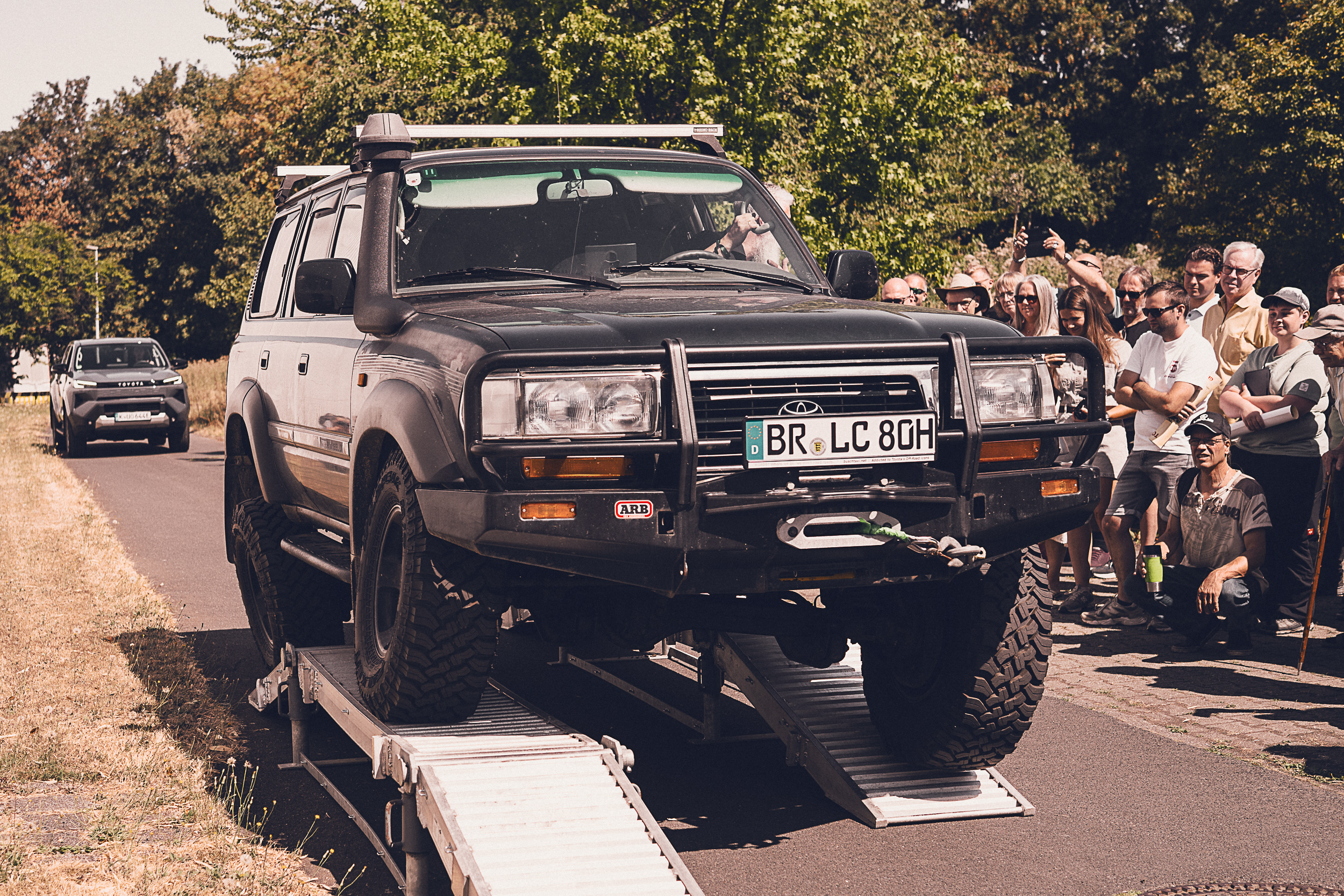
Articulation ramp: Land Cruiser J8 meets the electric Hilux
Up on the articulation ramp, Wohlfarth then explained how off-road tech worked back then and how it works today. First a Land Cruiser J8 climbed onto the ramp. On the 80-series he could nicely show what a diff lock does when a wheel is left hanging in the air: it forces both wheels on an axle to turn at the same speed, so the wheel still touching the ground keeps pushing you along.
After that, the new fully electric Hilux drove up the same ramp and solved the same problem electronically: when a wheel hangs in the air, the electronics pick up the wheelspin, brake the freely spinning wheel on purpose and send the power to where there’s traction instead. Two vehicles, 30 years apart, both make it to the top. It’s just that the ways they get there could hardly be more different.
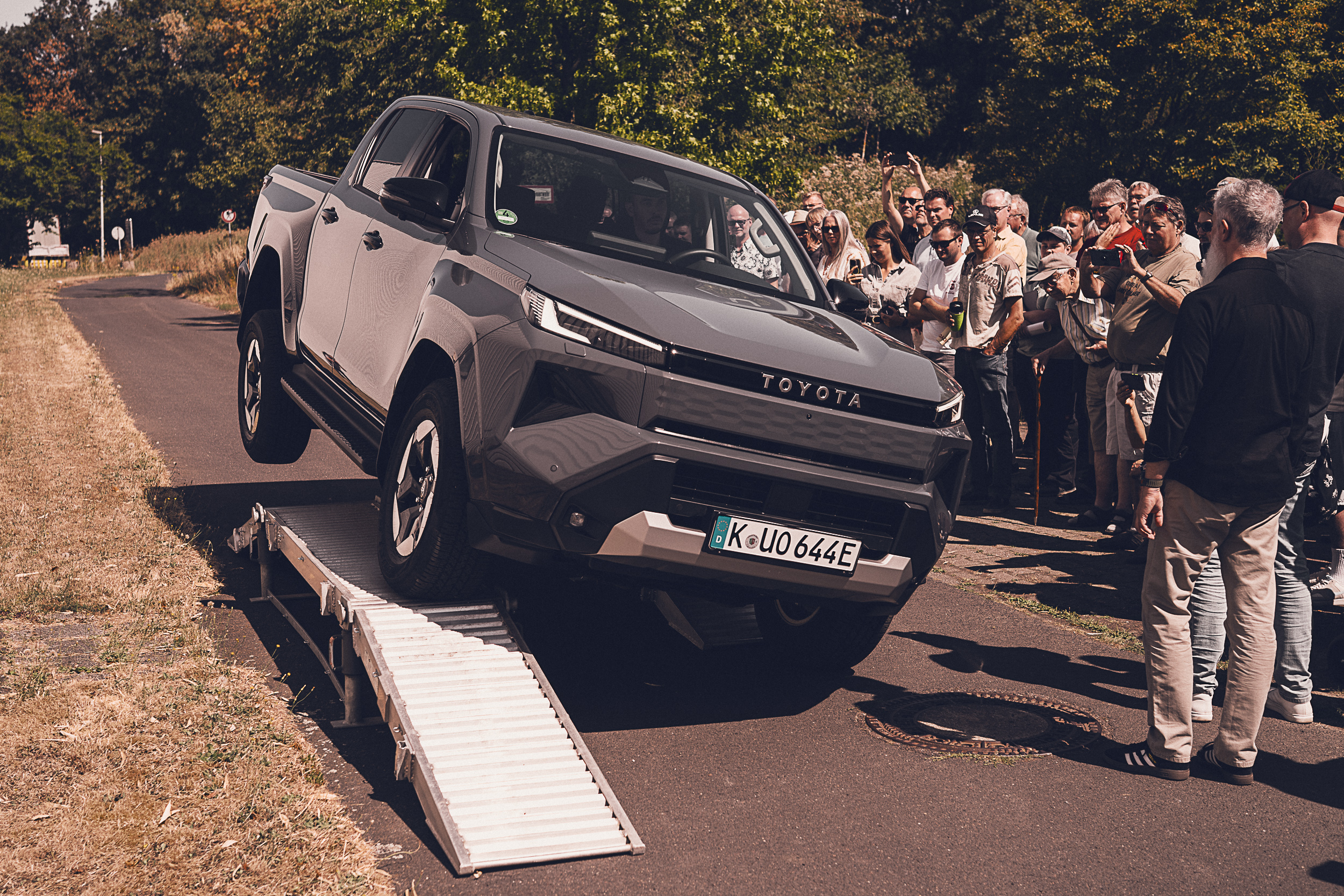
75 years of the Toyota Land Cruiser: from a lost contract to a legend
To understand how the Land Cruiser came to be, let’s jump back to post-war Japan for a moment. The country had opened up only a few decades earlier, after centuries of isolation, and then industrialised at breakneck speed. After the Second World War the USA was the occupying power, and once the Korean War broke out in 1950, Japan was meant to build up police forces again. Following a tender to that end, Toyota and Nissan each developed their own vehicles: Toyota the Jeep BJ, Nissan the 4W60, the ancestor of the Patrol. Mitsubishi was already building the Willys Jeep under licence anyway.
The Toyota BJ was reckoned to be tougher than the licence-built Jeep, and plenty of people were taken with it. Mitsubishi got the contract all the same. Its vehicle was a known quantity, the spare-parts supply was sorted, and the risk was low. For Toyota it looked like a bitter setback at first. In hindsight, though, it was a stroke of luck, because it freed Toyota from all the official red tape and let them develop the BJ for the civilian market. And that became the foundation for 75 years of success.
Mount Fuji and the temple steps: how the Land Cruiser made its name
Hanji Umehara, who led development of the BJ, was convinced his car was a match for any Jeep. And he knew how to prove it. In July 1951, test driver Ichiro Taira drove the BJ up to the fifth station in three hours, then fought his way another six hours over trackless scree to the sixth. No vehicle had ever made it that high before. The Japanese police were so taken with it that they ended up ordering the BJ as a patrol car after all. The contract that had slipped through Toyota’s fingers earlier came good in a roundabout way.
The BJ’s developers showed their ingenuity one more time to market the car. There’s a legend that in early Japan a rider supposedly rode up the extremely steep steps of the Atago shrine in Tokyo on horseback to bring the shogun a plum branch. That’s exactly what Toyota wanted to recreate with the Land Cruiser. When the team went to scout the Atago shrine, though, they found the handrails were in the way. So they switched to a similar stone staircase at Mt. Fudo in Okazaki and drove up it and back down again. Anyone who pulls a stunt like that with their own product really believes in it.
The Land Cruiser’s model lines: from workhorse to model family
In 1954 the BJ got its final name: Land Cruiser. Willys had complained about the “Toyota Jeep” label, and Umehara was after a name that wouldn’t have to hide behind Jeep or Land Rover. Fun fact: the J for Jeep has stuck around to this day.
What really made the Land Cruiser world-famous was the J4, built from 1960 and arriving in Germany in 1976. When people think of the Land Cruiser, the J4 is mostly what comes to mind. It was designed as a pure workhorse, tough and no-nonsense, if neither comfortable nor roomy.
But customers in the USA in particular wanted more than a rolling work machine. So in 1967 Toyota kicked off a second line with the J5: the comfortable station wagons, which later became the J6, the 80, the 100, the 200 and today’s 300. To many people the 80 is still the benchmark. In 1984 came the second split: the J7 was available either as a Heavy Duty for fleets, aid organisations and hard graft, or as a comfier Light Duty version with coil springs. In 1996 that comfort line struck out on its own as the Prado.
That three-way split still stands today: the J7 as the classic workhorse, the big station wagons that are often out on the road in armoured form, and the Prado as the smaller Land Cruiser. In Germany, Toyota officially only sells the Prado, badged here as the Land Cruiser 250. All in all, Toyota has built around 14 million Land Cruisers in 75 years. The car runs in 170 countries, works for NGOs in Africa, hauls fishing nets in the Gulf and sits in collectors’ hands in Cologne. Not a bad career for a car that lost its first contract.
The new Toyota Hilux: mild-hybrid diesel and the electric Hilux
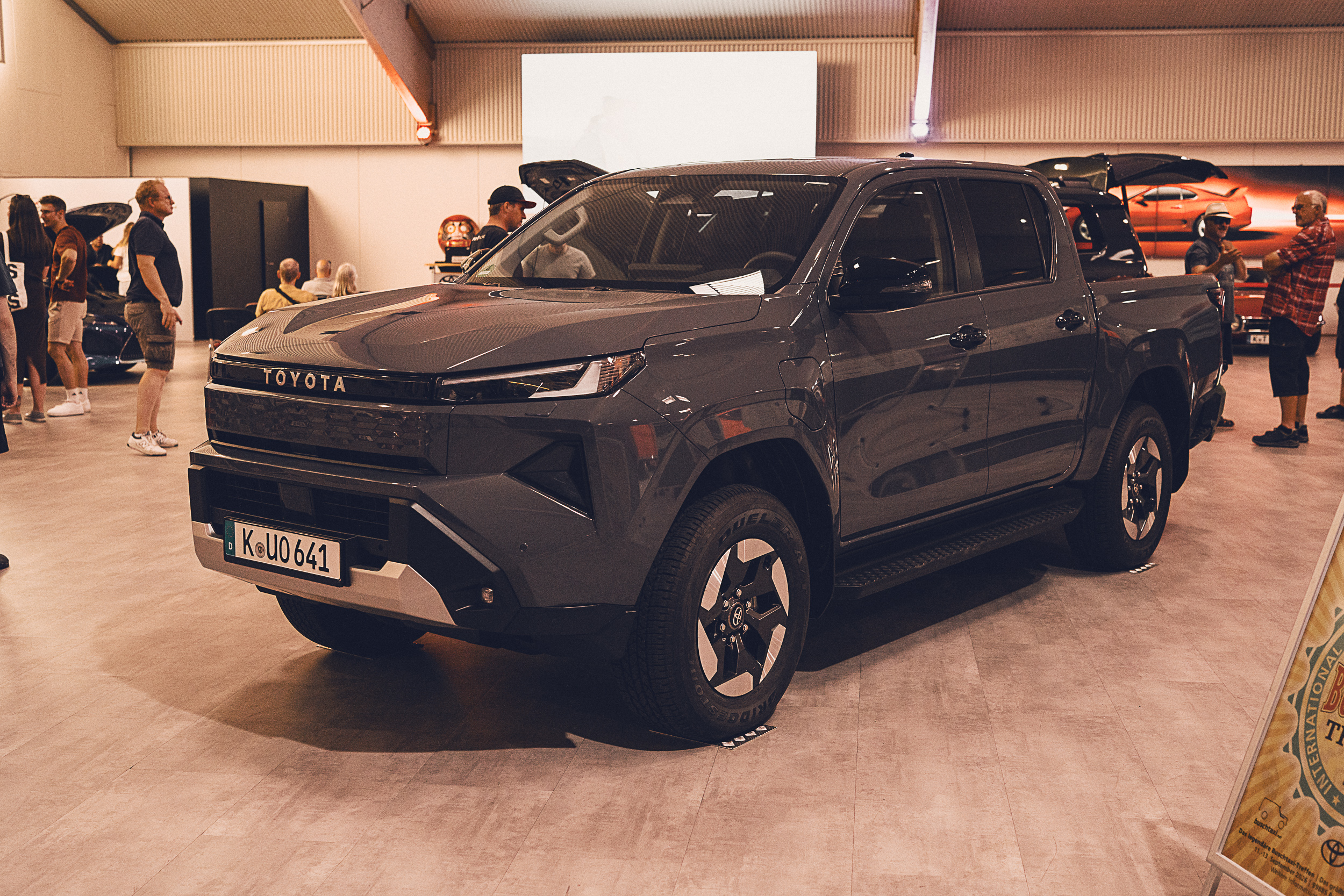
Alongside the classics, the Collection also showed off the new Hilux generation that day, and it comes in two drivetrain flavours. The 2.8-litre diesel now runs as a 48-volt mild hybrid. That means an electric motor lends a hand when pulling away and accelerating, but the diesel Hilux doesn’t run on electricity alone. Off-road, the very linear power delivery of the electric motor helps, say when you need to feather the throttle uphill on a loose surface. The small battery sits protected under the rear bench, and the system charges it itself.
The fully electric Hilux is the more exciting newcomer. Two independent electric motors drive the axles, and the 59 kWh battery sits in the ladder frame, shielded from water and knocks. That’s why its wading depth of 70 centimetres is identical to the diesel’s. The range of around 255 kilometres does show who the electric Hilux is meant for, though: commercial customers with manageable daily distances, at airports or on works sites, for example. For the big overlanding trip, the diesel is still the first choice.
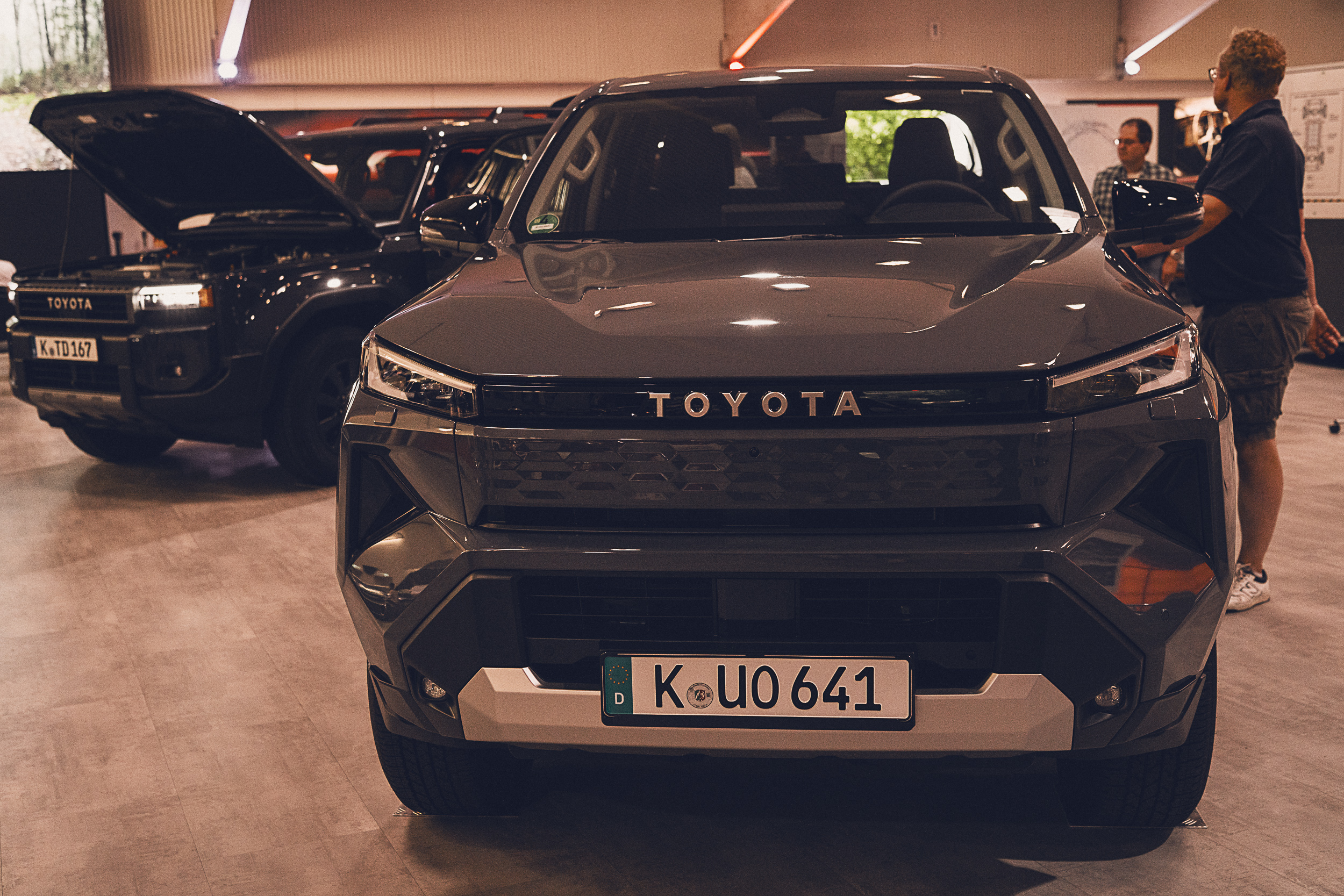
Both versions get electric power steering in place of the old hydraulic setup. Off-road that means no more steering kickback, and you need a lot less muscle when manoeuvring. Both Hilux versions can already be ordered, the first EVs are sitting at dealers, and the mild hybrid follows in the coming weeks.
Next stop: the Buschtaxi meet
After the tour, a lot of visitors stood around in the sun for a while, wandered around the cars and talked shop about the vehicles, the engines and their travels. And the anniversary year rolls on: in September, Ohrdruf Castle in Thuringia hosts the 23rd Buschtaxi meet, the world’s biggest Land Cruiser gathering, with well over 1,000 off-roaders expected. Toyota plans to show the new diesel Hilux there too. We’ll be there as well, giving a talk on recovery gear. We’re looking forward to seeing you.