

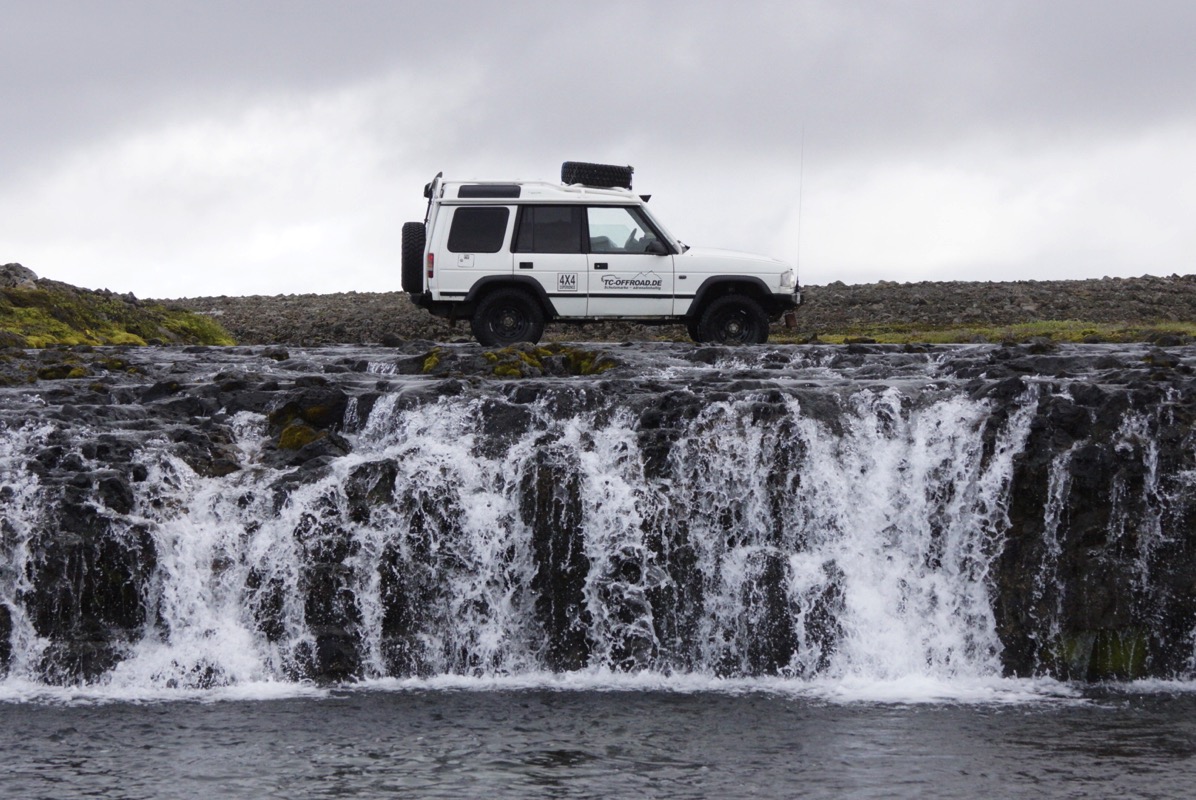

Fording is surely the biggest challenge for the off-road driver. A mistake while crossing a river can have fatal consequences for people and vehicle. Michael Ortner of 4×4-Experience, an Iceland expert and experienced off-road tour operator, explains what to watch out for when fording.
A river is not just a river. In Iceland especially, off-road drivers have to distinguish between ordinary rivers and glacial rivers. Glacial rivers are easy to identify by their milky colour. Their bed is often hard or impossible to make out and their depth impossible to judge. Something every driver should also know: because of the meltwater, glacial rivers can have different water levels over the course of the day. As a rule they carry less water in the morning, so glacial rivers are best crossed early in the day.
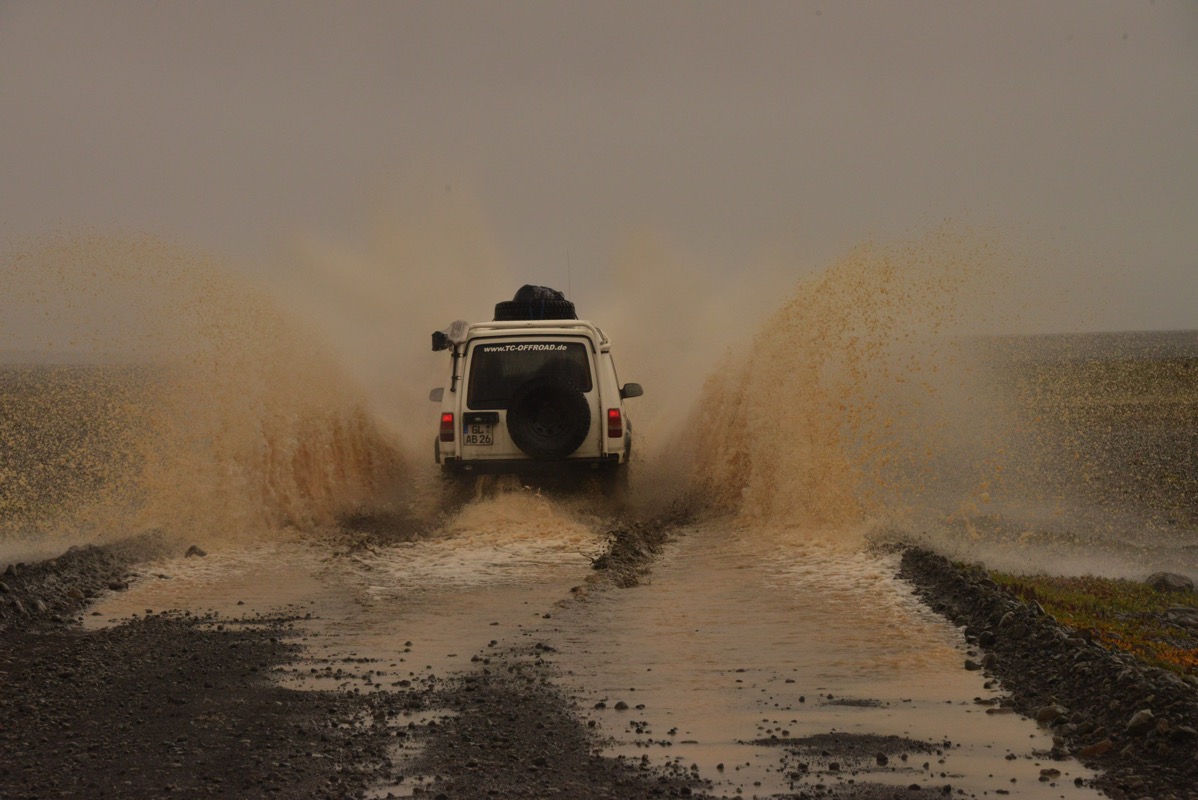 Driving through a river too fast. Nice to look at in the photo, but not a good idea for deeper rivers.
Rivers change from year to year and from day to day
Rivers that could be driven through without trouble last holiday can look completely different again the next summer. The weather has a big influence on the depth and flow speed, especially of glacial rivers. A tip for always staying up to date: in the highlands the huts are a good opportunity to compare notes with other travellers about the route and to ask the hut wardens or a ranger on the spot about the condition of the planned route.
The vehicle has to be prepared accordingly
The rangers have a good eye for the state of the terrain, and for the vehicles’ abilities too. Some rivers can only be crossed with “big jeeps”, which in Iceland means the monstrously kitted-out four-wheel drives.
Most rivers, though, can be tackled with “smaller”, suitably equipped four-wheel-drive vehicles too. A snorkel is a must, however, as is sealing off the rest of the engine’s air intake. Fuse boxes and engine control units, if fitted, should be protected from the incoming water. The engine control unit can either be moved to a higher spot, packed into watertight boxes or at least protected with a moisture-protection spray like Wetprotect. Other key questions are: are the tank breather, the axle breathers and the exhaust hose of the night heater high enough?
Always check the conditions on the spot
Even if the vehicle is well prepared and the driver thoroughly informed about the road situation, the vehicle should never be driven through a river without an on-the-spot check. Before fording it’s absolutely necessary to get out and first get an overview. Where do I drive in, where do I come out again? Rivers change their course and tyre tracks can be misleading. After the first quick assessment it gets serious: checking the depth and nature of the riverbed.
A simple way to gauge the situation is to throw a stone into the water. If you hear no impact, the river could be dangerously deep. If an impact is audible, with a bit of experience you can guess the depth from the sound. In the end, though, only the person who first wades through the river is on the safe side. For many rivers in Iceland, waders are needed for that because of their depth. As a rough rule of thumb: if I don’t dare wade through a river, I shouldn’t drive through it either.
Set off with the waders
When wading through rivers, caution is of course called for, because waders are not without danger. If the river’s current is too strong, it’s easy to lose the ground under your feet. Air can then collect in the waders and, in the worst case, the person exploring ends up drifting in the water legs-up. For just such a case, it’s advisable to have a knife within reach to cut the waders open. That should have been practised once or twice on land beforehand.
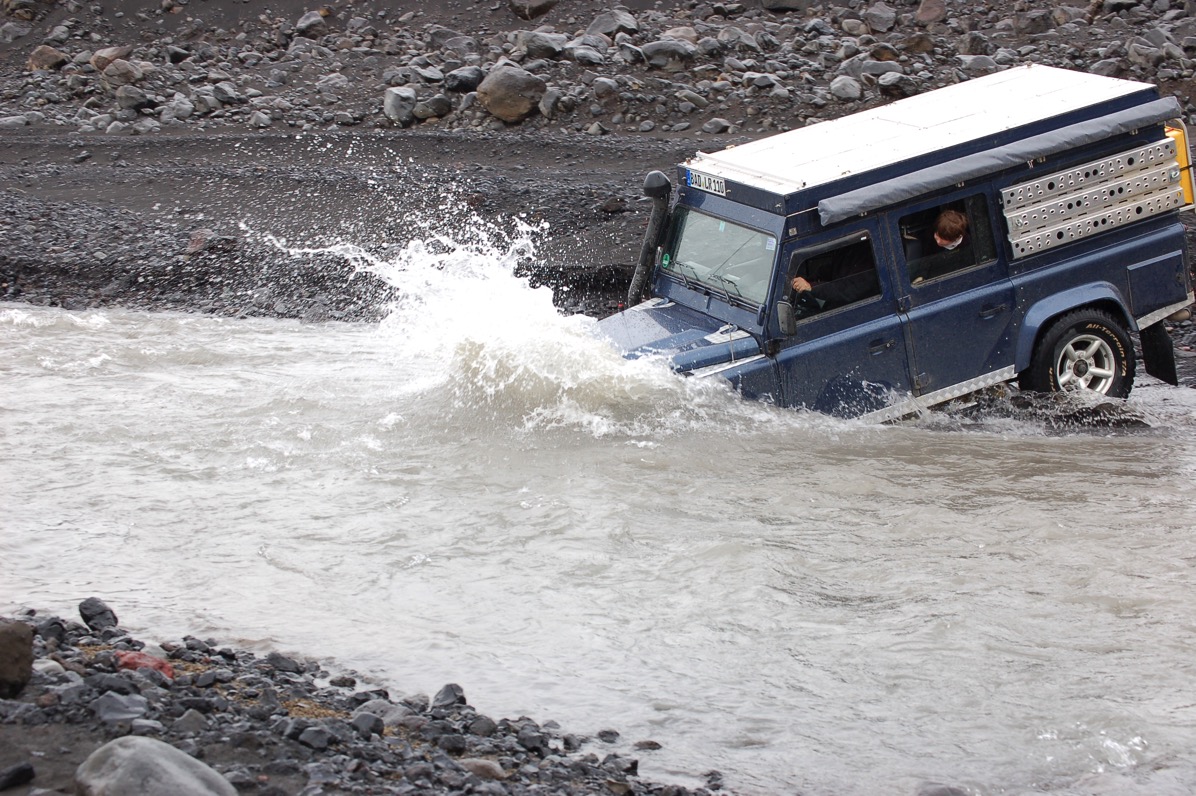 Proper fording has to be learned. Here a participant of the 4×4-Experience in Iceland.
The crossing
Once you’ve formed a picture of the river’s depth, current and bed, you engage four-wheel drive if needed, the low range and the diff locks, and drive through the river in second gear, angling slightly downstream in a curve. Very important: while fording, never stop or change gear, but drive slowly yet steadily, so as not to be overtaken by your own bow wave.
Alone is possible, in pairs is better
If possible, tours of this kind should not be driven alone. A second vehicle, with a recovery strap or a winch, gives extra safety in case the river crossing doesn’t go to plan. A single vehicle with a winch would be no use in Iceland for lack of trees. Anyone travelling alone should wait at fords until another vehicle comes by.
In the event that a vehicle gets stuck in the river despite all the safety measures, don’t switch the engine off, so that no water enters through the exhaust. Open windows and doors quickly to stop the vehicle from floating up and being swept away. And hope for rescue, if there’s no other vehicle along.
Conclusion: In the Icelandic highlands, bridges are rare or non-existent, so a river crossing is necessary in many places. Crossing rivers can be extremely dangerous. There are rivers in Iceland, such as the Krossá in Thórsmörk, where several fatal accidents have already happened. Glacial rivers in particular are an unpredictable force of nature, which every driver should approach with the utmost respect. No one should drive into a river carelessly. Safety has to come first. Plenty of people have turned back at one ford or another, which is no disgrace at all.
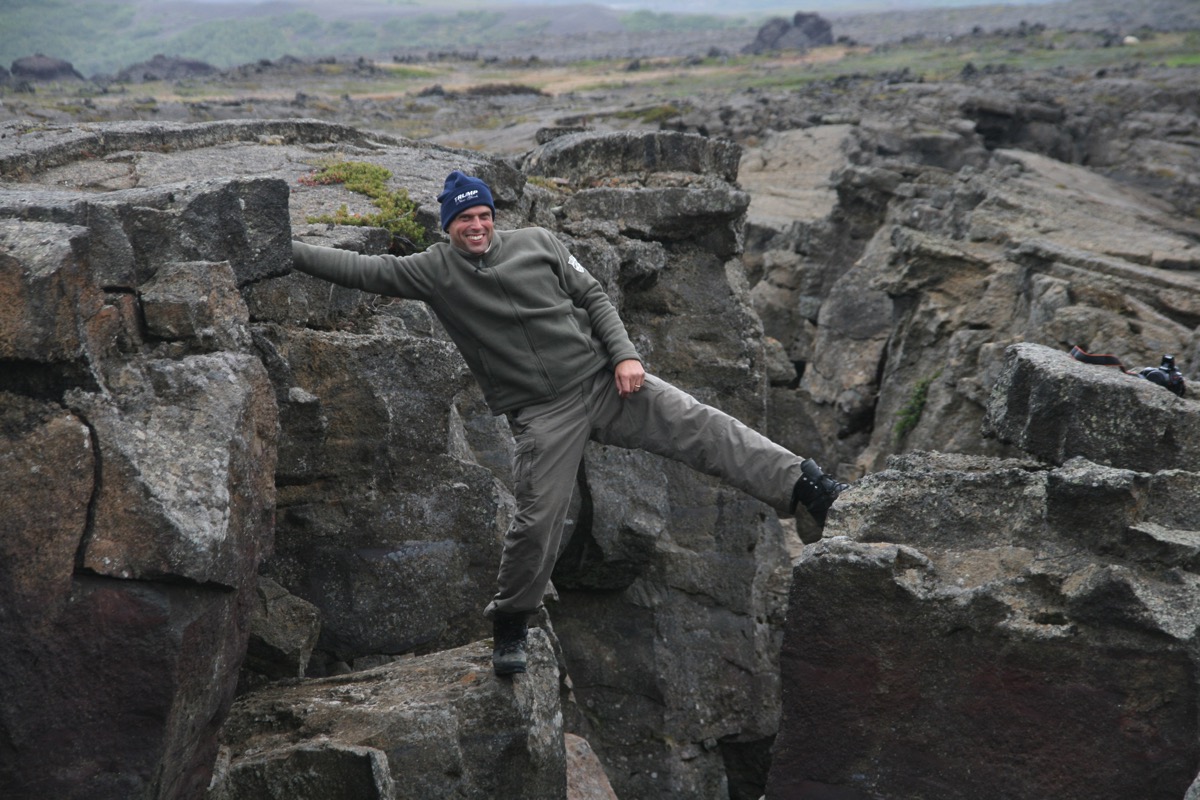 Michael Ortner of 4×4-Experience
Photos: © Michael Ortner, 4×4-Experience