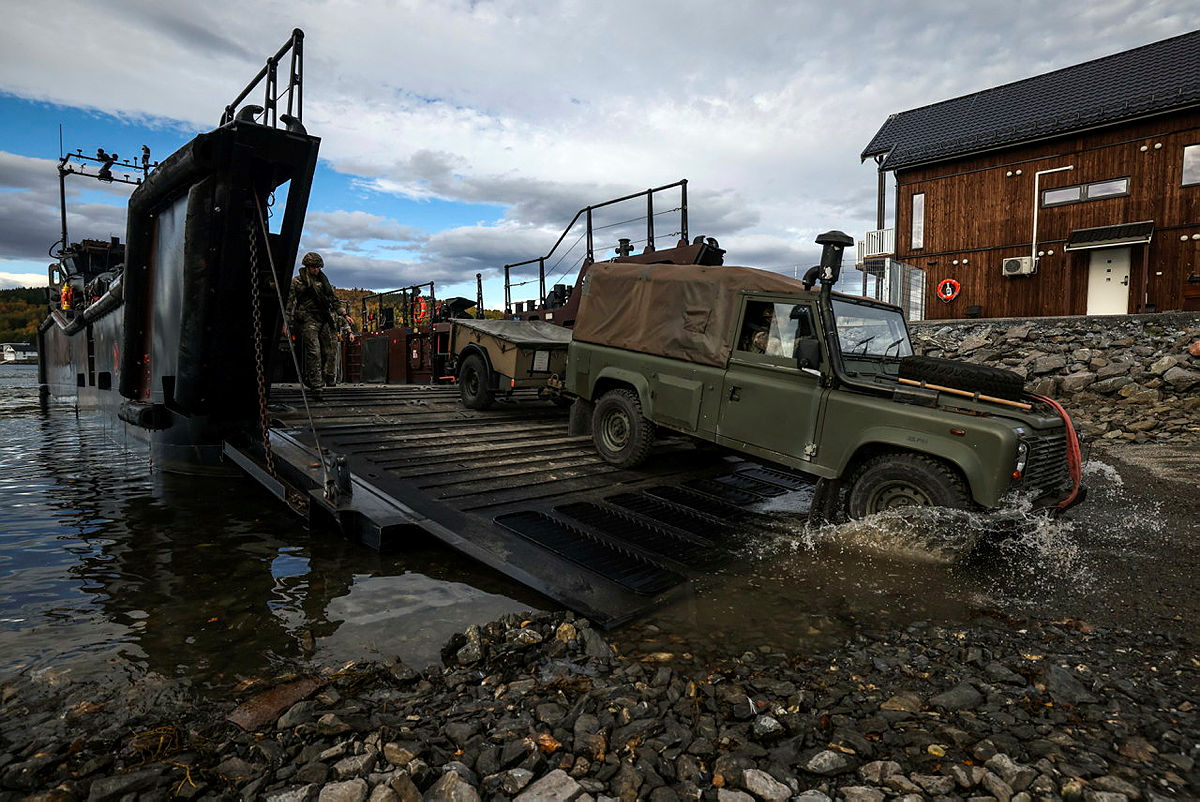

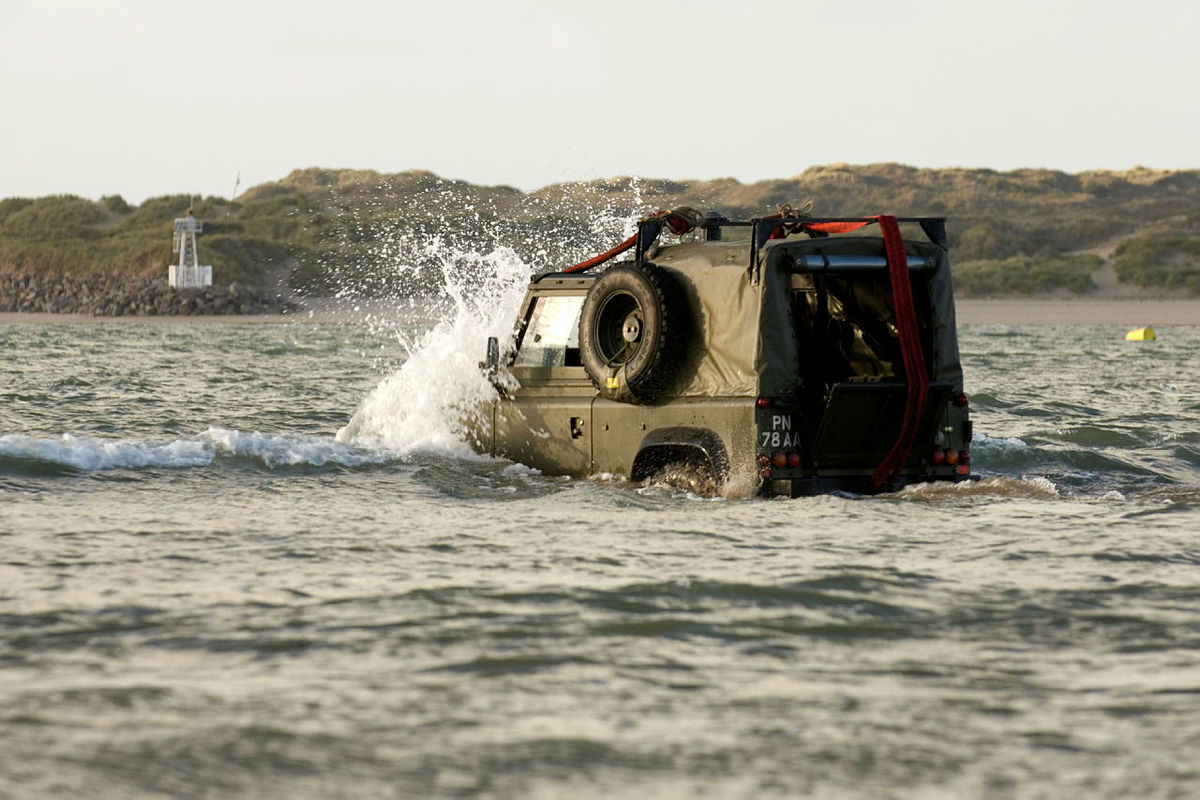

It grew out of a military off-roader, and it became a military vehicle itself. We are talking about the Land Rover, more precisely the Defender and all its predecessors. But now it is over. The British Army is retiring all of its Land Rovers. The market will be pleased.
For 70 years the Land Rover served in the British Army, first the Series models 1 to 3, then as the Ninety, One Ten and One Two Seven, and finally as the Defender. From the standard model to the specially adapted, hard-wearing Wolf. On top came special models, like the 101 Forward Control, originally sold only to the military, or the Lightweight. The Land Rover came onto the market in 1948, joined the army in 1950, and now it has to make way for a successor.
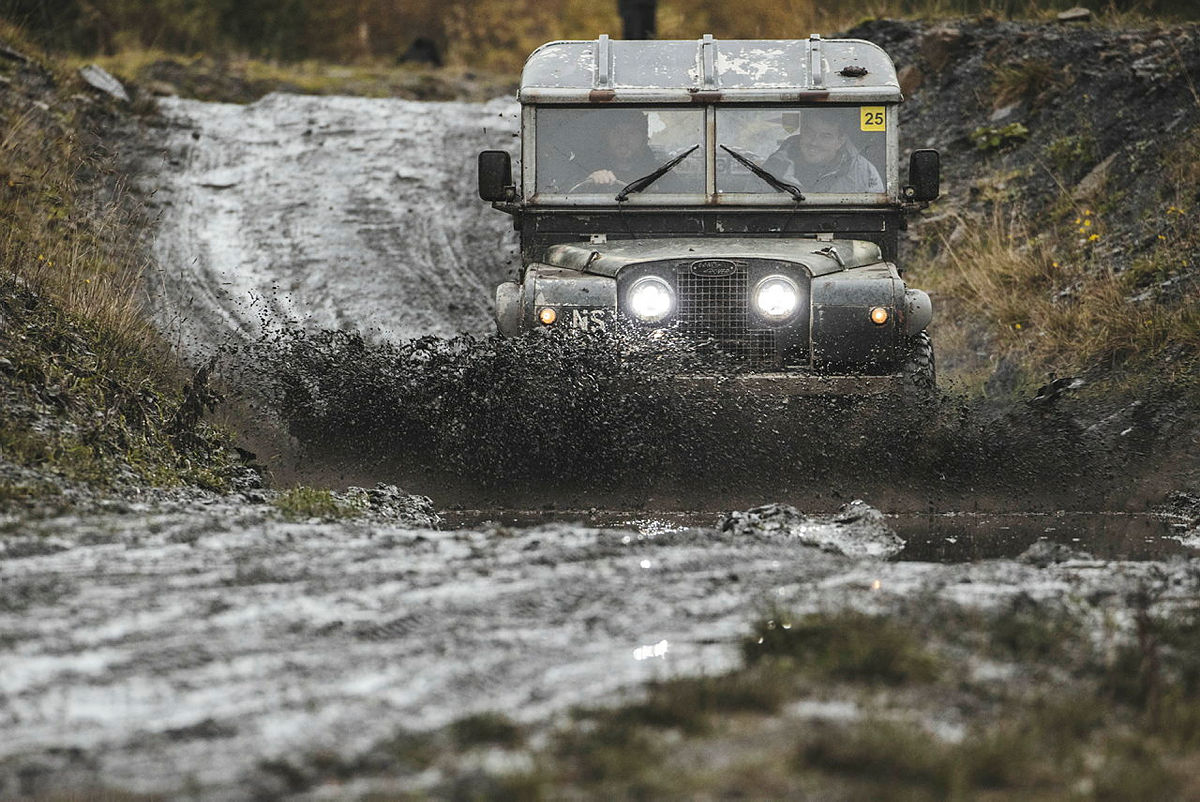
Around 5,000 vehicles still in service
Recently a good 5,000 vehicles were still in service. They are due to disappear by 2030, and a successor has to be found by then. Yesterday, on 19 March 2026, a kind of farewell ceremony was actually held, honouring their loyal service. Luke Pollard, Minister of State at the Ministry of Defence, thanked the Land Rover: “The Land Rover and British Army share an incredible history and the image of a Landy in Army livery is truly iconic. As we look ahead to the future of light mobility vehicles, it is fitting to pay tribute to this extraordinary fleet that has served our Armed Forces so faithfully. I’m firing the starting gun on the replacement vehicle competition, seeking to put a modern vehicle in the hands of our personnel.”
Versatile in use
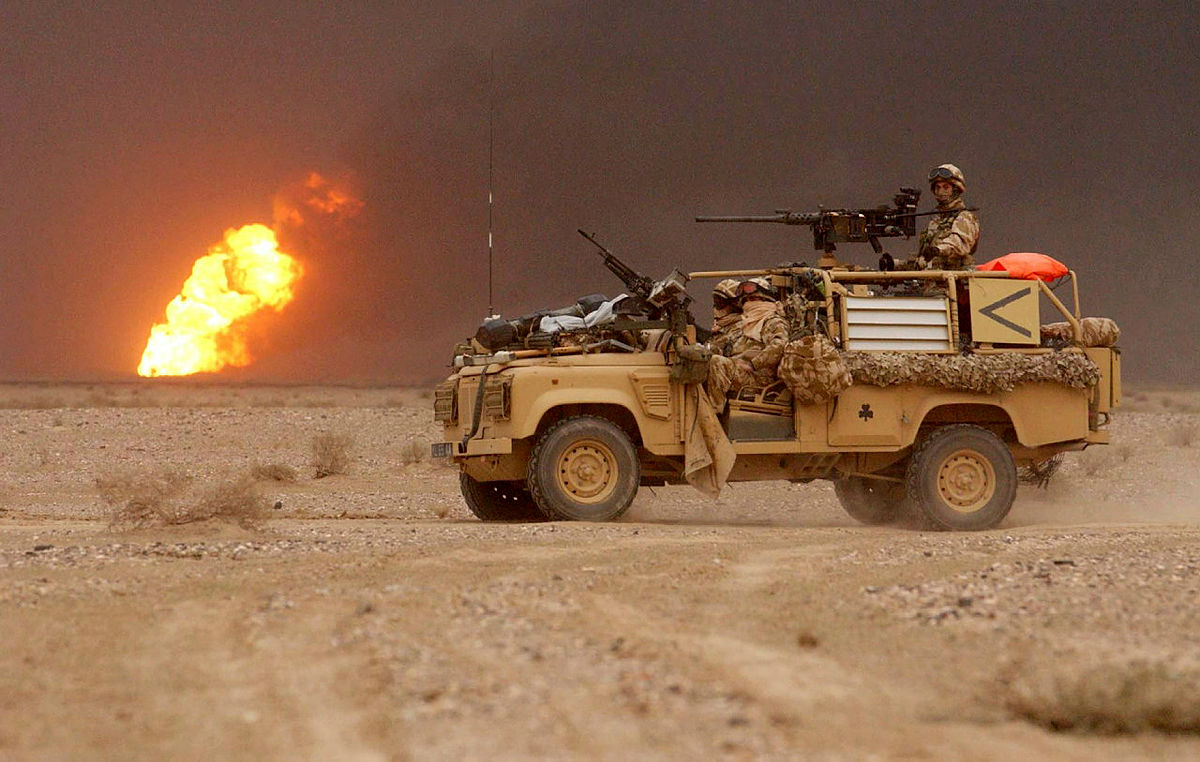
The Land Rover was once advertised as the most universal car in the world, “The most versatile vehicle”. You could see that clearly in the army. From the ordinary transport vehicle to ambulance versions, tow trucks, radio cars, weapons carriers and special vehicles like the famous “Pink Panther”, the Landy lent its chassis to just about everything.
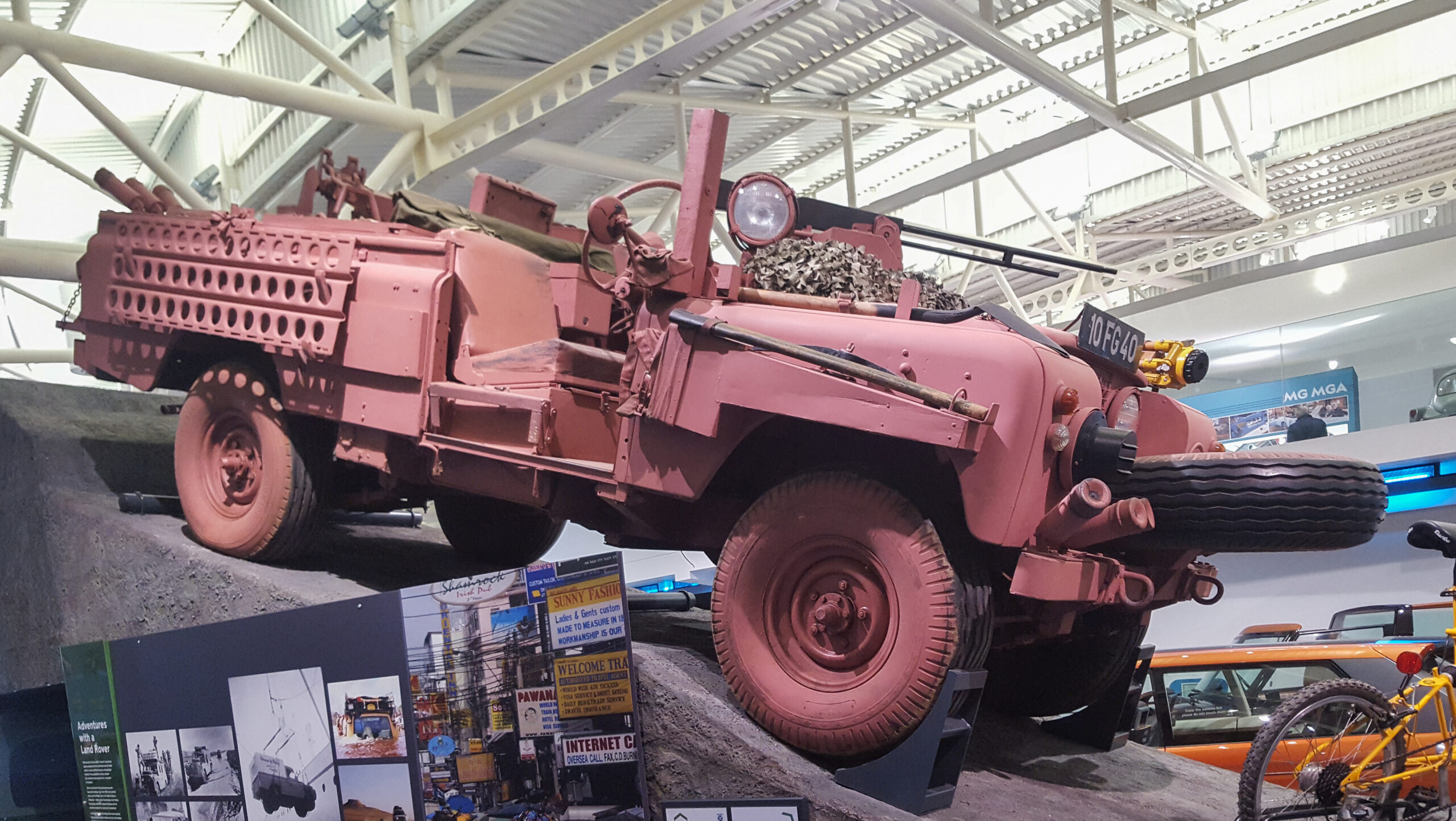
It could be carried by aircraft and even dropped from them in flight, hanging from four parachutes, and it could swim as an amphibious vehicle. Mostly on four wheels, sometimes on six, in Australia even on tracks, it dug its way through any terrain. There has hardly been another vehicle in history whose basic platform was adapted to so many different purposes as the Land Rover.
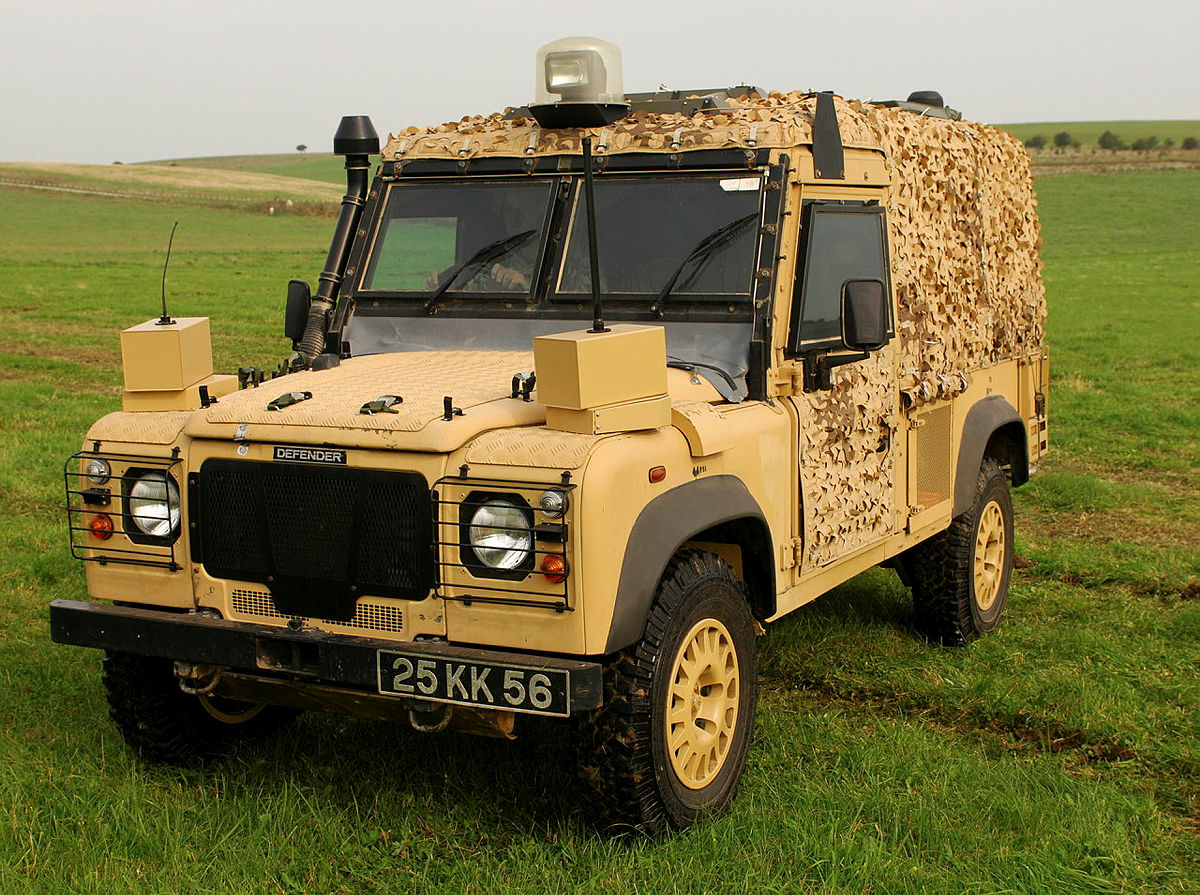
The army relied on standard models, only lightly modified, which ran as GS, “General Service”. Then there were radio vehicles, recognisable by the FFR marking or the older FFW marking, “Fitted for Radio / Fitted for Wireless”, and further variants like the ACV, “Armoured Command Vehicle”. They were based on the normal Land Rovers, converted and adapted, and some versions were exclusive to the military, like the Land Rover Series 2a and 3 Lightweight or the 101 Forward Control.
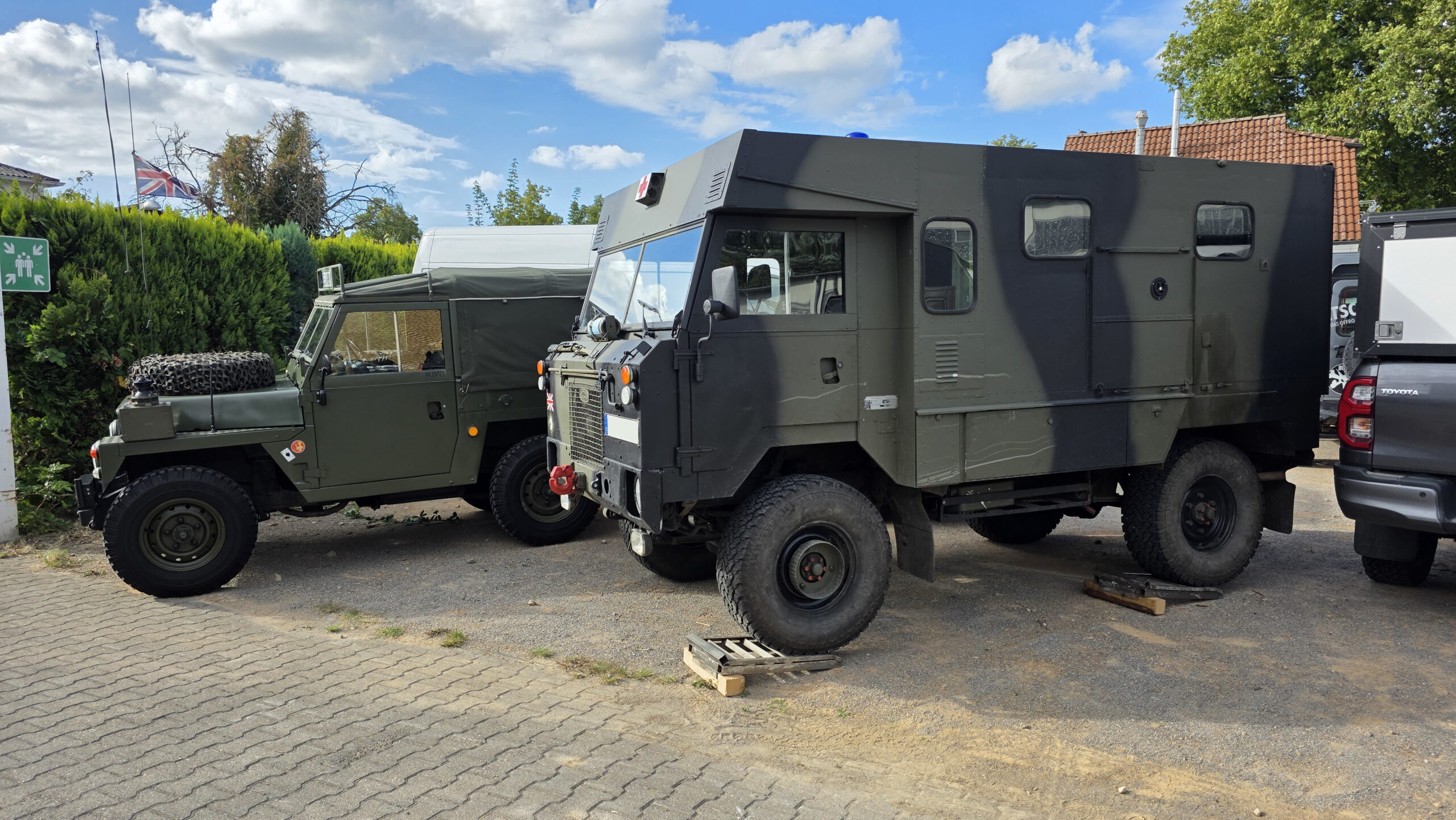
We have already presented a few former military vehicles here at Matsch&Piste. There is the Range Rover TACR Mk2a and our own 101 Forward Control.
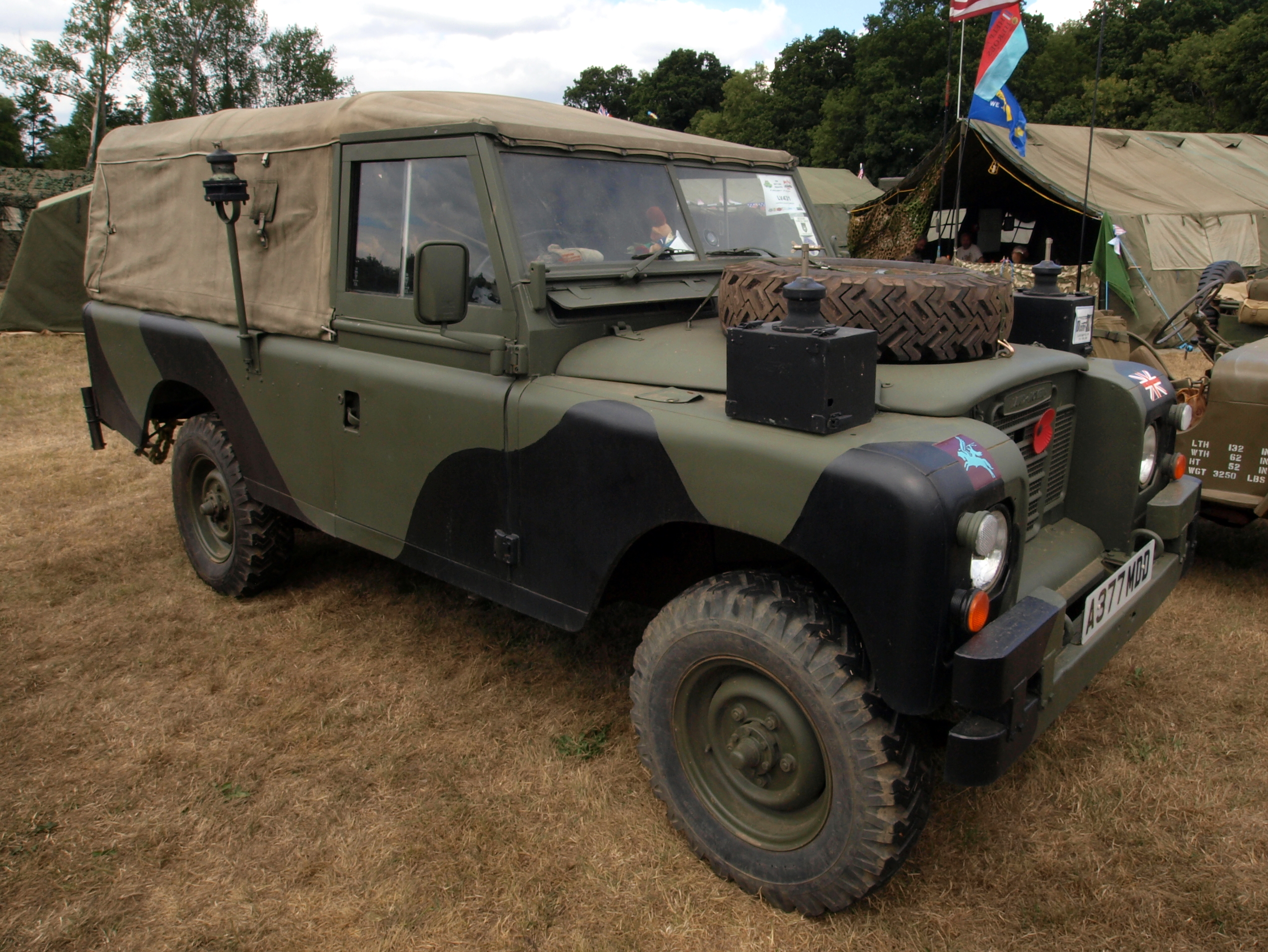
Fans, take note: vehicles are coming onto the market
The retired vehicles should delight the fan scene. This is probably the last chance to get hold of these cars. The tougher Wolf and the ambulances especially should find grateful buyers. Ambulances are very popular as a base for travel vehicles. The question remains whether they can only be bought in the UK, or whether the individual garrisons will release them in their respective countries.