

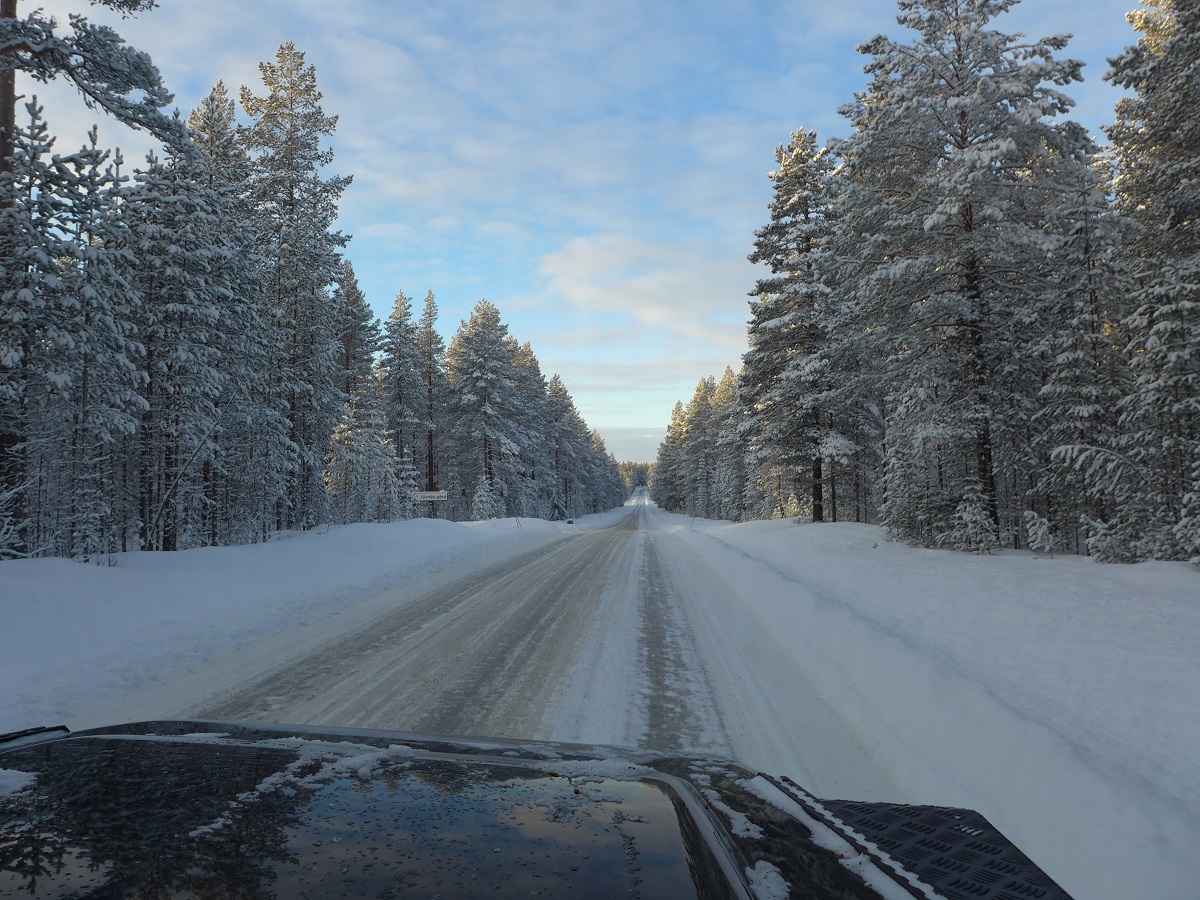

If your off-roader is also used in wintry conditions, you need winter tyres. But what is there to consider around the right tyres? And what has proven itself in practice? That’s what this short overview on the subject of winter tyres for off-roaders is about.
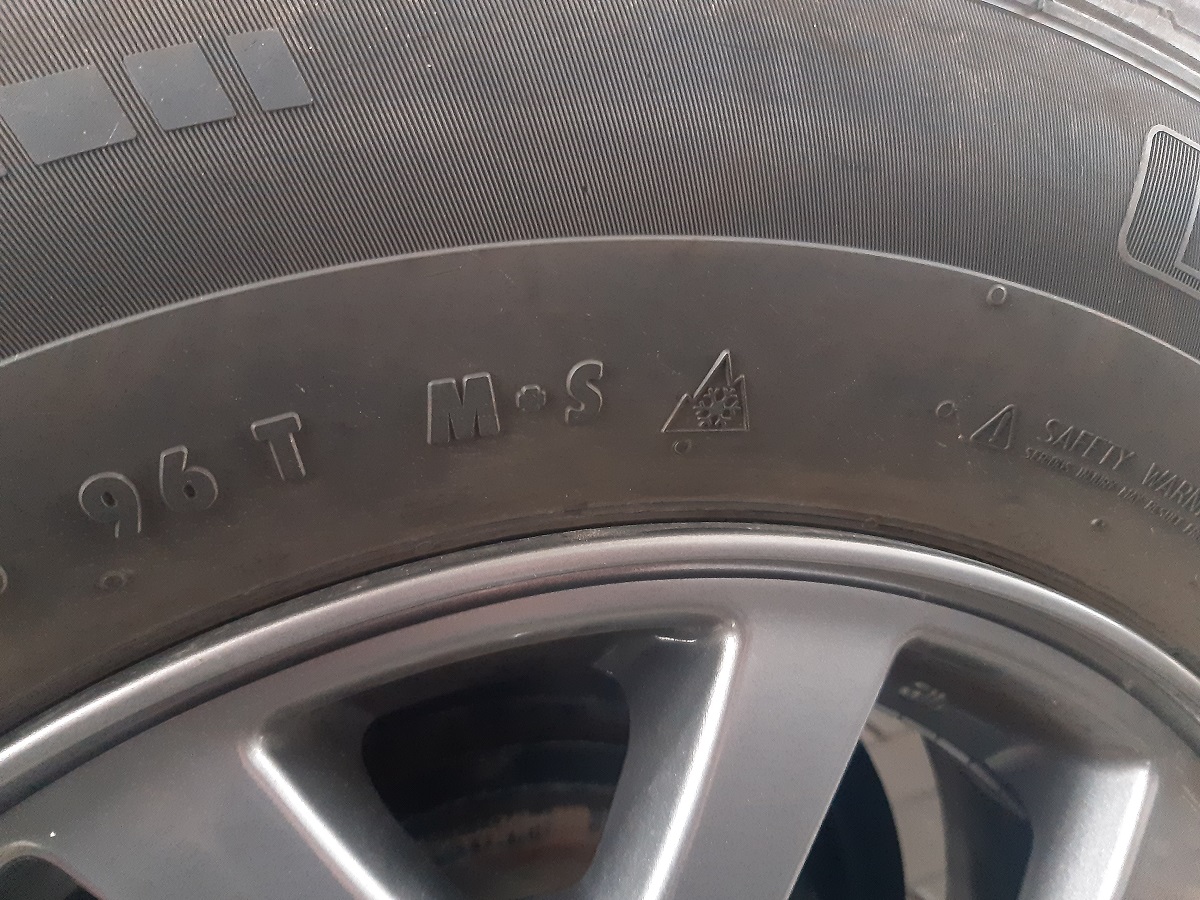
Caution is always advised with the mud-terrain tyres popular on many off-roaders (with the M+S marking). This marking by no means stands for good winter suitability in itself. Depending on the tyre, these coarsely treaded tyres already fail on a wet road. At the latest, however, they fail in icy road conditions.
Likewise, all-terrain tyres are often not sufficient in wintry conditions. This means you should always equip your off-roader with genuine winter tyres in winter conditions. Only then can you travel safely on snow and slippery roads. After all, enough tests and practice have confirmed this. But let’s take a closer look at the subject of winter tyres for off-roaders.
What the law says
The rule of thumb of using winter tyres from O for October to E for Easter is in everyone’s head. But it has no legal relevance. Because in Germany there is no general winter-tyre requirement. In Germany, winter tyres are mandatory depending on the situation, namely in slush, black ice, frost and snow. Anyone who doesn’t comply risks a fine of 60 euros or more if others are obstructed. A point in the central register in Flensburg is also incurred.
Incidentally, the vehicle keeper also faces a fine and a point for violations. If unsuitable tyres are the cause of an accident, the insurer may, in individual cases, reduce its payout on grounds of gross negligence. There are exceptions, for example for motorcycles and agricultural vehicles.
Let’s take a quick look at the rules in some neighbouring and travel countries
The rules vary greatly. Violations are often dealt with far higher penalties than in Germany. A few examples:
- In Austria a winter-tyre requirement applies in wintry road conditions, namely from 1 November to 15 April. A snow-chain requirement can additionally be ordered by signage.
- In Italy and France the winter-tyre requirement is not regulated uniformly nationwide. A winter-tyre requirement can be indicated by signage. In South Tyrol winter tyres are mandatory from 15 Nov to 15 Apr. There is also a separate rule for the Brenner motorway. Incidentally, since 1 Nov 2021 there is a further peculiarity in France. There, a permanent winter-tyre requirement applies in various regions between 1 Nov and 31 Mar. These regions include the Alps, Pyrenees, Vosges, the Jura and Massif Central, and Corsica – all of them popular travel regions.
- In Norway, on the other hand, there is no general winter-tyre requirement for vehicles up to 3.5 t permissible total weight. However, vehicles with summer tyres must be equipped with snow chains on wintry roads. The minimum tread depth for winter tyres is 3 mm for vehicles up to 3.5 t permissible total weight. There is a winter-tyre requirement for heavier vehicles, and then the tread must even be at least 5 mm. Added to this are regional and date-dependent peculiarities.
- In Finland the winter-tyre requirement from 1 Nov to 31 Mar even applies to braked trailers.
These few examples and extracts show how differently the winter-tyre requirement is regulated in Europe alone. Please check the currently valid rules for the respective travel country beforehand.
You’ll find further traffic regulations, including on the winter-tyre requirement in individual countries, on the pages of the German motoring club ADAC. TÜV Nord also has a short guide on winter tyres.
Regardless of any winter-tyre requirement, you should always travel with the right equipment in wintry conditions. The potential damage from an accident can quickly be far greater than the cost of a high-quality set of winter tyres and appropriate winter equipment.
Special features and construction of a winter tyre
You recognise winter tyres by the Alpine symbol. This symbol is a mountain pictogram combined with a snowflake. It is mandatory for all winter tyres made from 1 January 2018. There is a transition period stating that, until 30 September 2024, tyres with an M+S marking count as winter-capable, provided they were made by 31 December 2017.
Of course, the legal minimum tread depth of 1.6 mm also applies to winter tyres. For safety reasons, experts often recommend a minimum tread depth of at least four millimetres. Furthermore, you should make sure your tyres are not too old, because with age the rubber compound hardens and grip drops noticeably. This is naturally especially noticeable at low winter temperatures. The ADAC recommends that tyres should only be used up to an age of ten years.
Winter tyres are developed specifically for wintry conditions. Their soft rubber compound, combined with a special tread, provides decent grip, especially at low temperatures. You’ve surely noticed the so-called sipes of a winter-tyre tread. These, essentially numerous cuts in the tread, provide better grip and drainage of water.
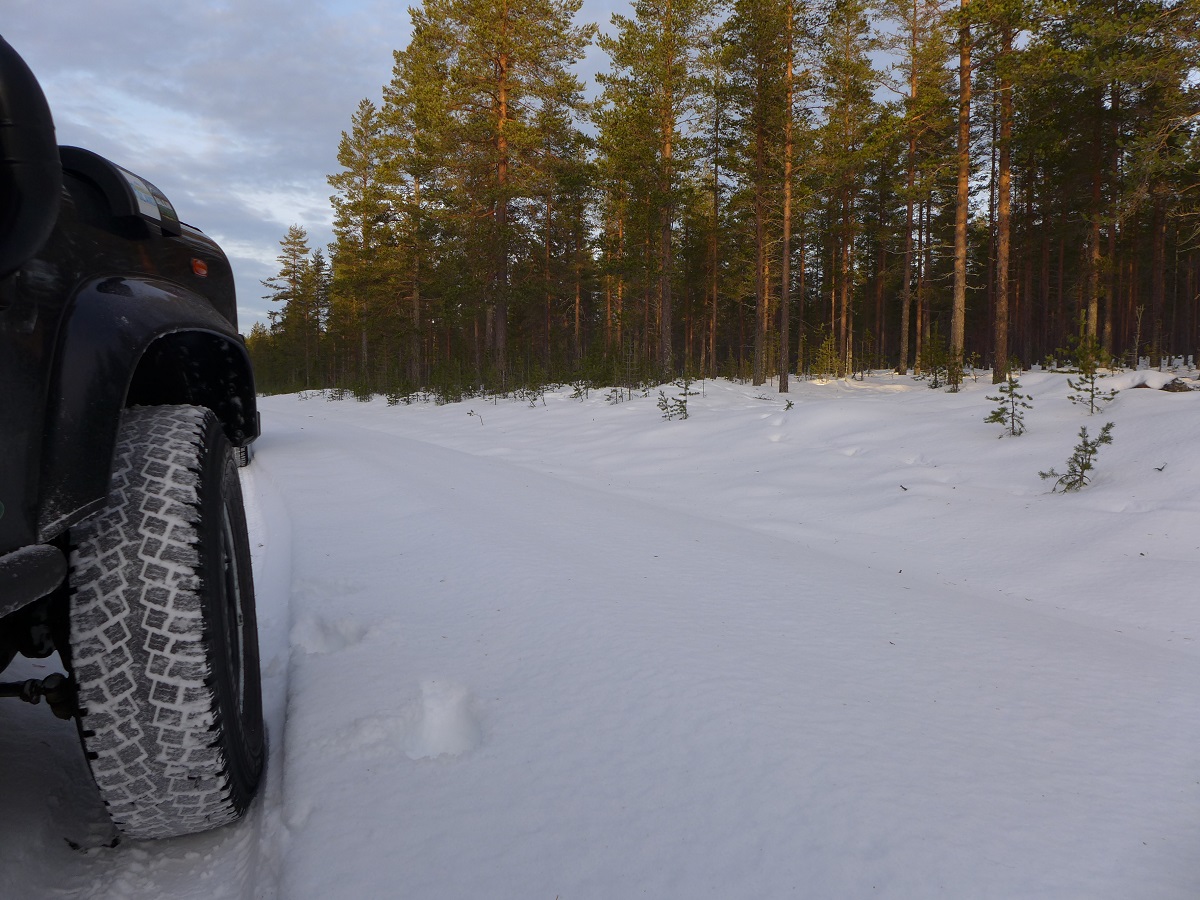
A special case, still practised above all in the Nordic countries, is so-called siping. Here the sipes mentioned above are cut into the tyres by hand. This is done above all for vehicles for which no suitable winter tyres exist. But siping is also popular there among off-roaders.

Snow chains and spikes
So good „genuine“ winter tyres for off-roaders should be a given in wintry conditions. In addition, for road use it makes sense to carry high-quality, quickly fitted snow chains. For a heavy off-roader, something a bit better is quite in order here. Please also check the notes in your owner’s manual and the vehicle documents, and of course familiarise yourself with the rules on using snow chains in your destination area.

Practical tip: it’s best to practise fitting the snow chains at home in the warm. In the cold and driving snow it can otherwise become a fiddly business. Please remember your work gloves and your safety, especially when fitting the snow chains at the roadside.

With this combination of winter tyres for off-roaders and snow chains, you are very well prepared for most wintry road situations.
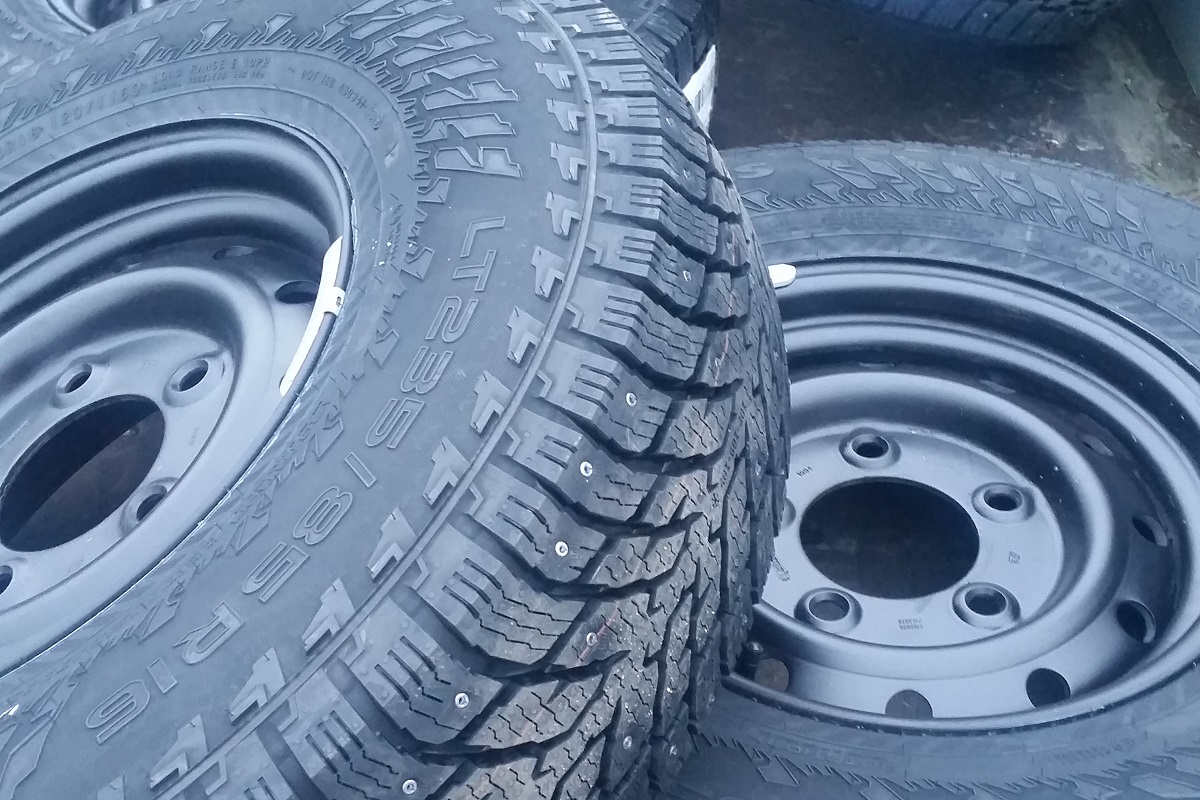
If you undertake a winter trip, for example to the Nordic countries, you’ll come across the topic of spikes there at the latest. On the often icy roads in Norway, for example, and road conditions that change quickly depending on the weather, the combination of winter tyres and snow chains can become laborious. Anyone who has once driven on studded winter tyres doesn’t want to be without them again. Studded winter tyres also offer considerably more safety and thus more relaxed driving.
No longer permitted in Germany for a long time, spikes are everyday in the Nordic winter. For travellers this naturally requires a little more logistical effort. It is probably only worthwhile after several winter trips to the north. There are precise rules for their use in the Scandinavian countries too: use is limited to certain periods, usually November to March or April, and some cities charge a special fee for passing through on studded tyres. In Russia, when using spikes you have to indicate this with a special sticker at the rear. Please check the respective rules in your travel area.
Traction and recovery aids
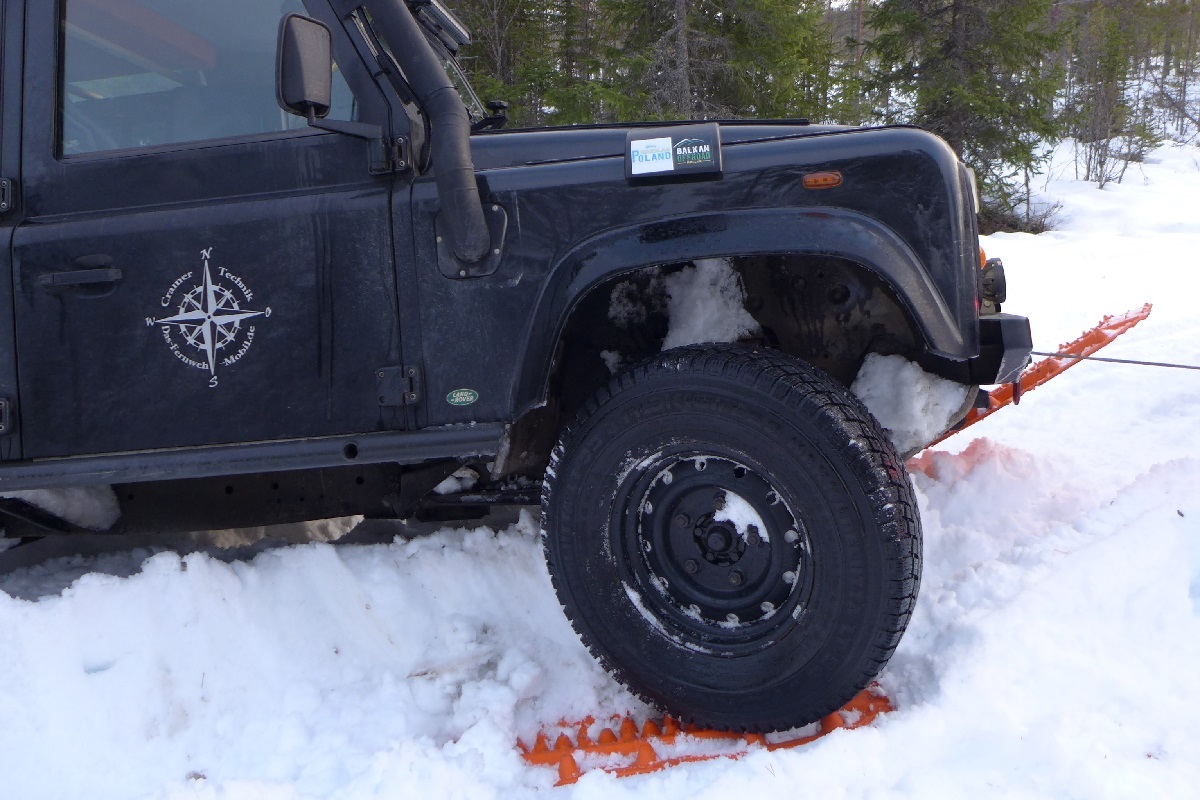
In addition to winter tyres for off-roaders, various traction aids that you already know from the off-road world can be used in winter too. Take care with plastic recovery boards; not every product tolerates freezing temperatures.
Preparing for winter
In principle, being on the road in winter requires a little more planning and preparation. A thorough stocktake of your equipment is also important, because depending on the destination, additional equipment is advisable or required.
Beyond that, there are numerous ways to prepare well for the cold so you can then also enjoy the beautiful winter landscapes. If you’d like to find out more, take a look at the tips on off-road travel in winter and on preparing your vehicle for winter.
Drive carefully and arrive safely at your destination!
© Photos: Peter Schille, Björn Eldracher