

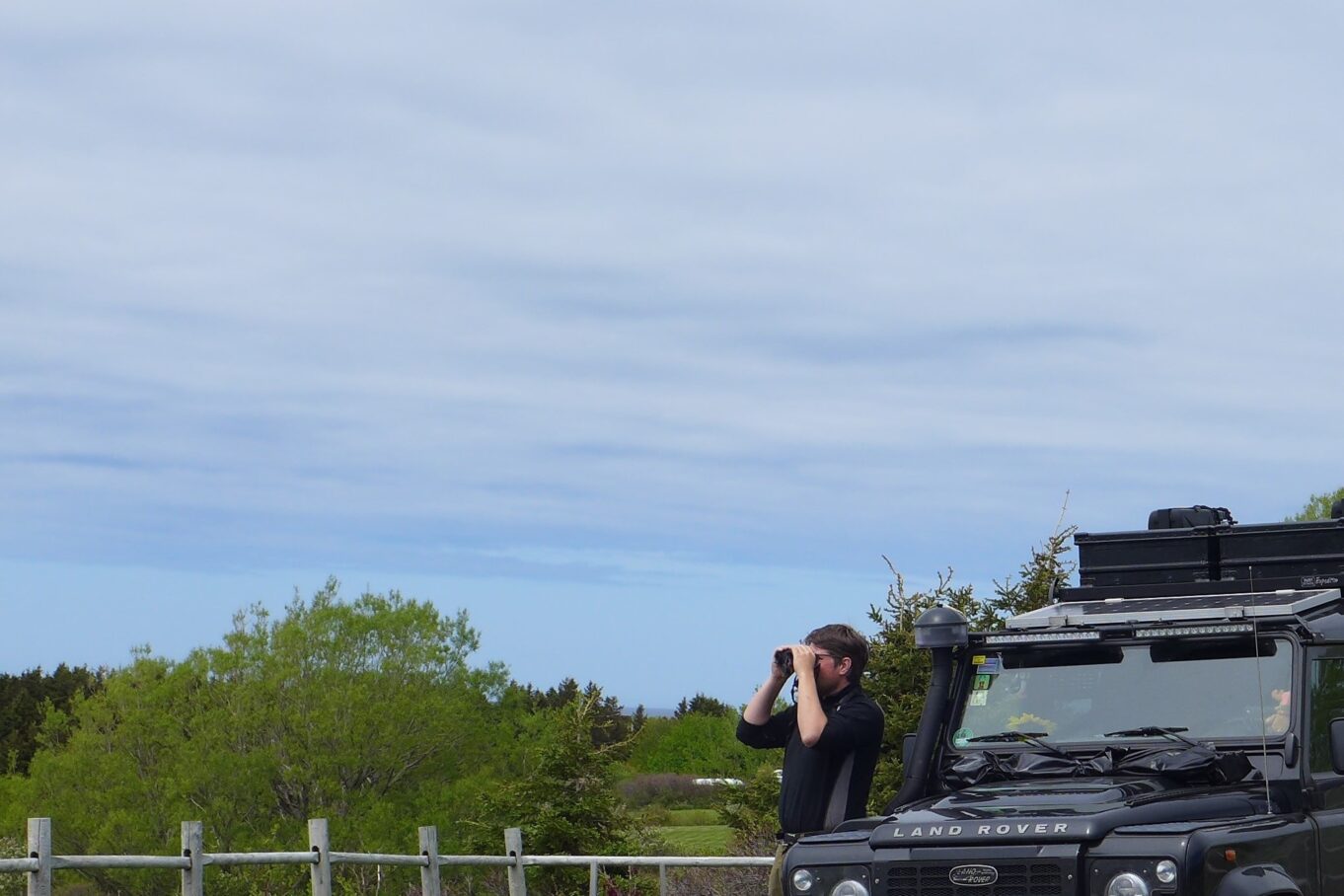

10×42, 8×30, 7×50, magnification, lens diameter, light-gathering power, field of view and twilight factor? The figures on binoculars often look confusing at first glance, and not every pair suits every purpose equally well. All these properties can affect the price and, of course, how useful the binoculars actually are. We show you what to look out for when choosing, and which binoculars work well for the off-road trip.
You all know the feeling. You take the ferry to your holiday destination and there’s something interesting on the horizon, but you can’t quite make it out. Or birdsong wakes you up. You peer out of the roof tent, but what’s that funny little owl right up there in the fir? You’ve found a great pitch, and at dusk an animal appears at the edge of the clearing. What is it? Better look for another spot after all? In all these situations, a pair of binoculars is a genuinely useful thing to have.
Key terms, briefly explained
Let’s start with the magnification. You’ll often read figures like 10×42 or 8×30 or 7×50 and others. But what does that actually mean? The first number tells you the magnification. That’s obviously a crucial value when choosing your binoculars. Example: 10×42. Here the magnification is tenfold, meaning the bear 100 metres away on the clearing looks to you through the binoculars as though it were only 10 metres off. Pretty close. So you see it ten times larger, and pick up more detail too. Naturally we’d now want as much magnification as possible. But the higher the magnification, the harder it gets to hold the binoculars steady. That spoils the view, which is why binoculars usually top out at around twelvefold. If you want more than that, or even a variable magnification, we move into telescope territory. More on that later.
The second number is the lens diameter
More precisely, the diameter of the front lens in millimetres. This is also called the objective. Easy to remember, because the objective faces the object you’re watching. The bigger this lens, the more light can enter the binoculars. That’s an advantage in poor light in particular. But watch out, a bigger lens also makes your binoculars heavier. And a large objective on its own is no guarantee of good light sensitivity. The materials used are just as decisive for light transmission. Sometimes you’ll find the transmission value in the technical data of the binoculars. It tells you how much light reaches the eye after being absorbed by the optics. It’s given as a percentage. On good binoculars this value can easily sit above 80 percent.
The twilight factor often quoted here plays more of a minor role in the choice, since it’s a purely mathematical figure based on the magnification and the lens diameter.
Binoculars for the off-road trip: this matters too
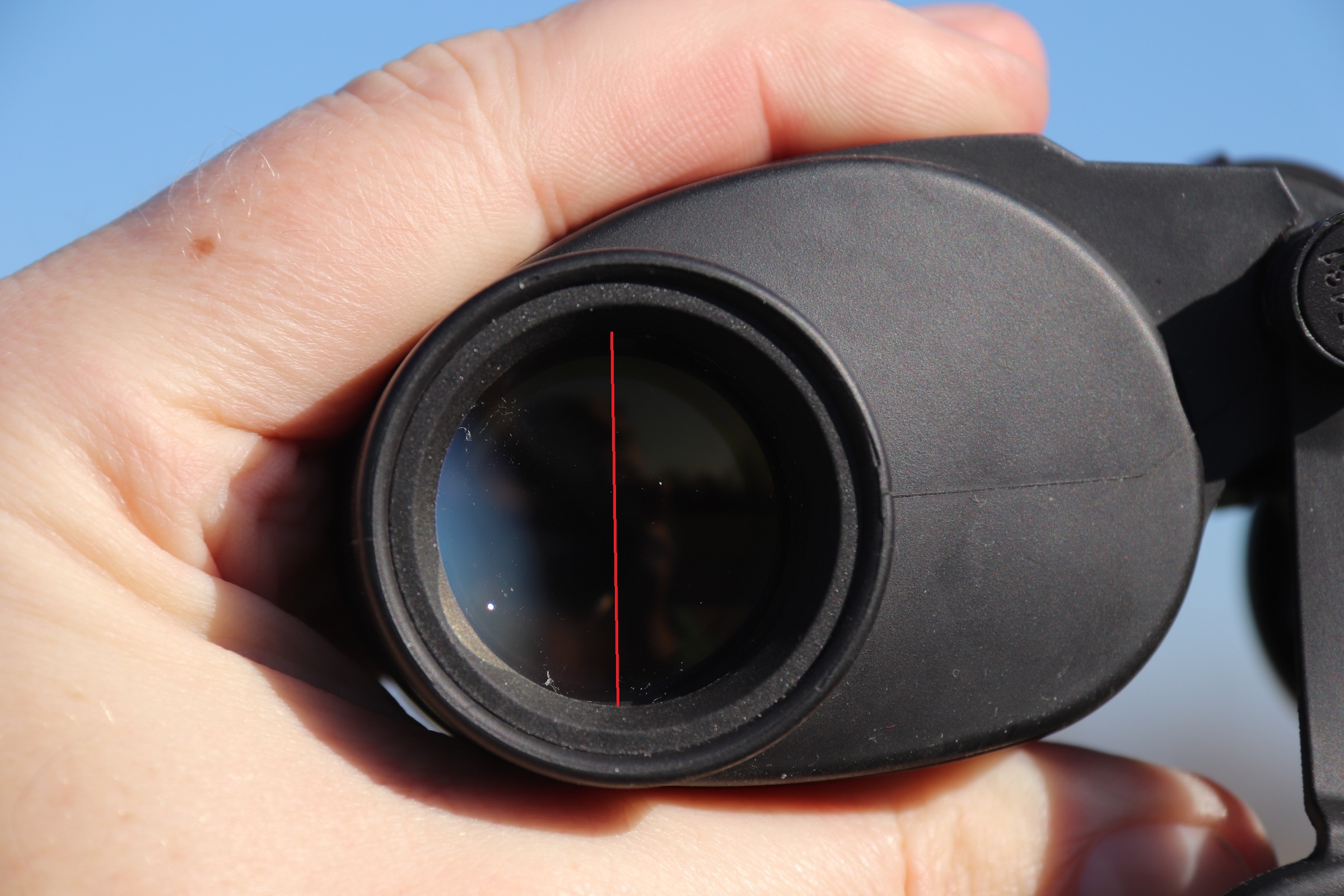
Also important here is the size of the exit pupil, the other side of the binoculars. Also called the eyepiece. The exit pupil is basically the light-exit area of the binoculars. You can spot it by looking at the eyepiece from a little distance away. This is where it’s decided how much light reaches your eyes. The exit pupil should be as large as possible, at least as large as the viewer’s own pupil, because only then can all the light reach the eye usefully and make the image as bright as possible. A value of at least four millimetres is usually mentioned here. You can also work out the exit pupil size by dividing the objective diameter by the magnification. Using the 10×42 example from the start, you get an exit pupil size of 4.2. An adult’s pupil is about two to four millimetres in normal light, and larger in the dark.
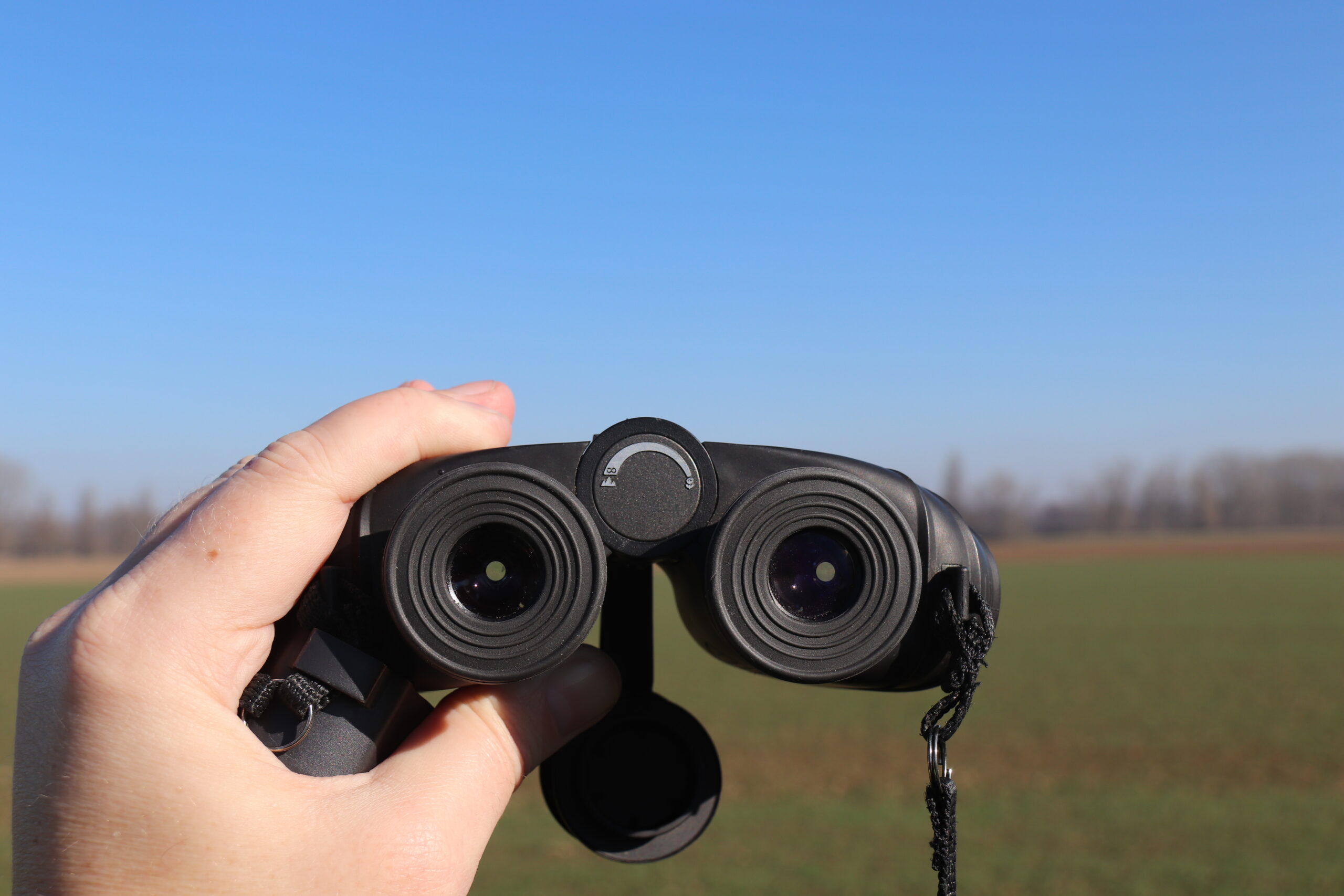
The benefit of a very large exit pupil can also shrink depending on the viewer. As we age, the pupil’s ability to widen in the dark declines, so a viewer may not be able to make use of a large exit pupil at all.
 Practical tip: getting the binoculars set up right matters too. By pulling them apart or pushing them together you match them to the distance between your eyes. Set correctly, the two images merge into a single round picture.
More decisive values for the choice
Another purely mathematical, but not uninteresting figure concerns the light-gathering power. The higher it is, the better the binoculars cope at dusk. You can work this figure out by dividing the objective diameter by the magnification and then squaring the result. Sticking with our 10×42 example, we get a light-gathering power of around 18. But again, watch out: it’s a theoretical figure, and the materials used and the quality of the binoculars are just as decisive for the actual dusk performance. The quality of the optics also drives factors like high edge sharpness, high detail resolution and colour fidelity. This is exactly where you’ll notice big price differences between binoculars.

If you want to watch animals as unnoticed as possible, the field of view of the binoculars takes on real importance. The field of view describes the area in which, without moving your head, you can follow a moving object just by looking through the binoculars. With as large a field of view as possible you naturally get a better overview and can sometimes spot things faster. The field of view also depends on other properties of the binoculars. Binoculars with low magnification have a larger field of view than ones with high magnification. A compromise. Manufacturers usually give the field of view at a distance of one thousand metres, so for example 150 m at 1,000 m. That means at an observation distance of 200 m you’re left with a field of view of just 30 metres.
These binoculars are worth considering
Compact binoculars are a bit bigger and tougher than opera glasses and usually have a magnification of 8 or 10 plus an objective diameter of around 10 to 20 mm. A compact pair like this, for example this Quick View from the well-known outfitter Globetrotter*, is small and light and fits into (almost) any bag, so you can easily have it with you everywhere. For very simple daytime viewing with good brightness they’re usually plenty. Even among compact binoculars you’ll see enormous price ranges.
The most popular are probably so-called universal binoculars, like this Steiner Safari Ultrasharp* with tenfold magnification and a 30 mm objective diameter. Universal binoculars usually come with values such as 8×30, 10×30, 8×40, 10×42 or 10×50 and suit daytime viewing as well as more limited visibility. They’re bigger and, at around 800 grams, heavier than compact or pocket binoculars, but still easy to carry, easy to take on a hike and easy to stow in the off-roader.
Special forms, usually a bit bigger again, are dedicated glasses for bird or wildlife watching, of the kind hunters use, for example. These are often very high quality and have high light transmission, which makes them good at dusk too. Marine binoculars often come with extra functions like a compass, bearing options and range-finding. They also have lower magnifications since, as you’ll remember, they can be held steadier that way, which is better on a moving boat or ship.
For stargazing, so-called large binoculars are often used. They stand out with very high light-gathering power and very high magnifications. High-quality optics matter for looking at the night sky too, as only these can render the bright light sources against the dark background of space without distortion. One special form is the spotting scope. Spotting scopes are monocular telescopes often used in nature watching or surveillance.
Even more tips for the choice
Before buying, think carefully about what you want to watch. If the binoculars are just there for the odd curious look at what’s on the horizon, a fairly simple product is enough. If you want to watch animals, birds for example, you should go for a higher-quality pair with good magnification and a good field of view. And if you want to look at the stars, good light-gathering power is a must.
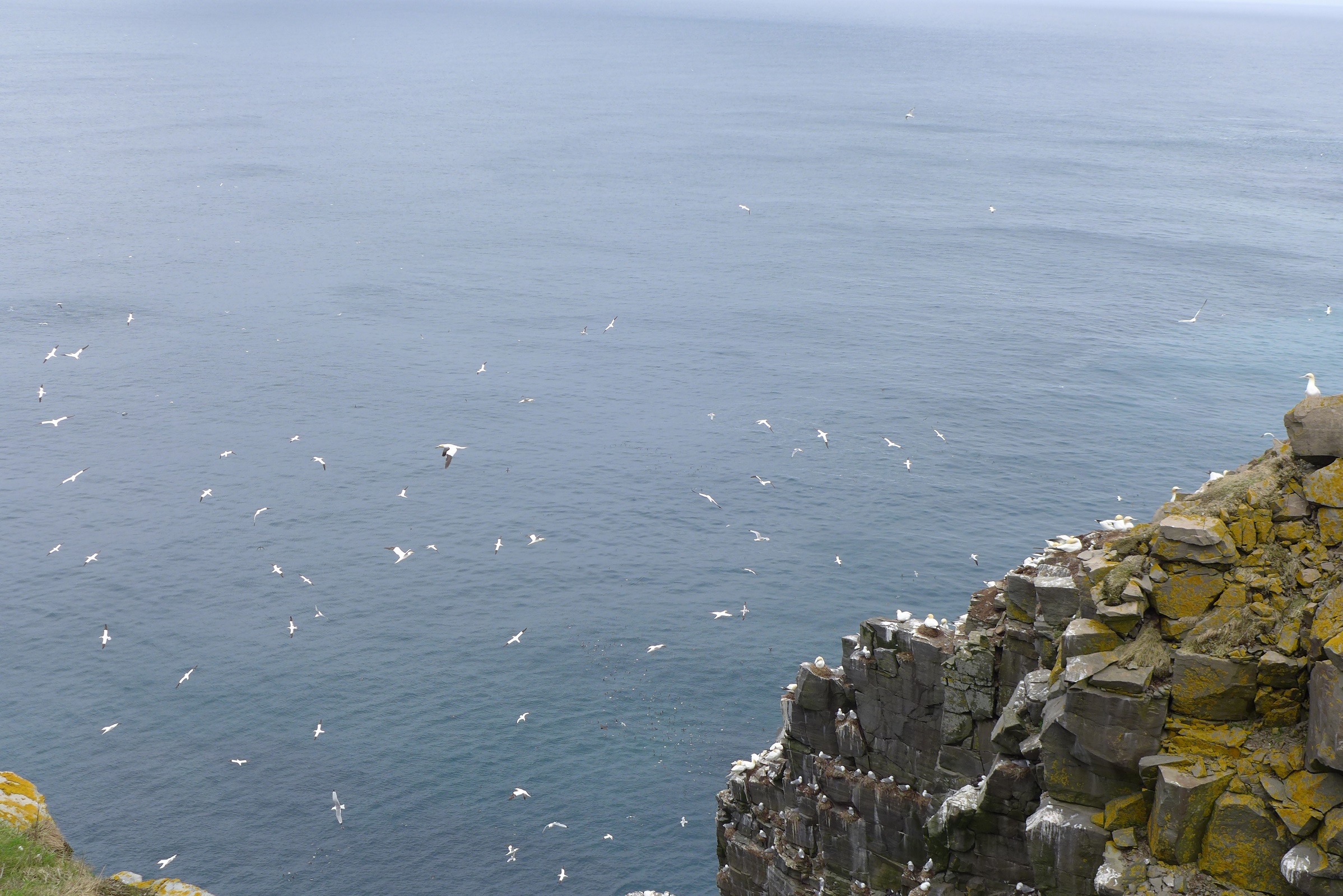
Practical tip: to see a sharp image, the right adjustment matters. Two functions come into play here. Focusing via the central adjustment, and the dioptre adjustment on the eyepiece. You look through your binoculars and cover the eyepiece with the dioptre ring. Now you bring the image into focus with the central wheel (focusing). Then cover that eyepiece, look through the one with the dioptre adjustment, and fine-tune with the eyepiece compensation. That’s it. From now on you can work with this setting and only need to adjust the focus.
There are also binoculars with a dioptre adjustment on both eyepieces, and variants in the focusing. Then the setup has to be done a little differently than described above.
A few tips for glasses wearers
The dioptre adjustment is of course helpful for glasses wearers. It lets you compensate for your vision deficiency up to a certain degree (best to check the specifications, this often ends at 4 dpt) and use the binoculars without glasses (as long as there’s no major astigmatism, that works quite well). That can make sense if, for example, you’re out in cold or damp conditions where glasses easily fog up. If you use the binoculars with glasses, you should make sure when choosing that the eyecups fold down or come off. This is usually done with the traditional and well-working rubber eyecups, though there are other variants too. Best of all is to try out what suits you better when buying. In any case, especially with vision problems, it makes sense to go for high-quality binoculars, since they can at least compensate for part of the deficiency.
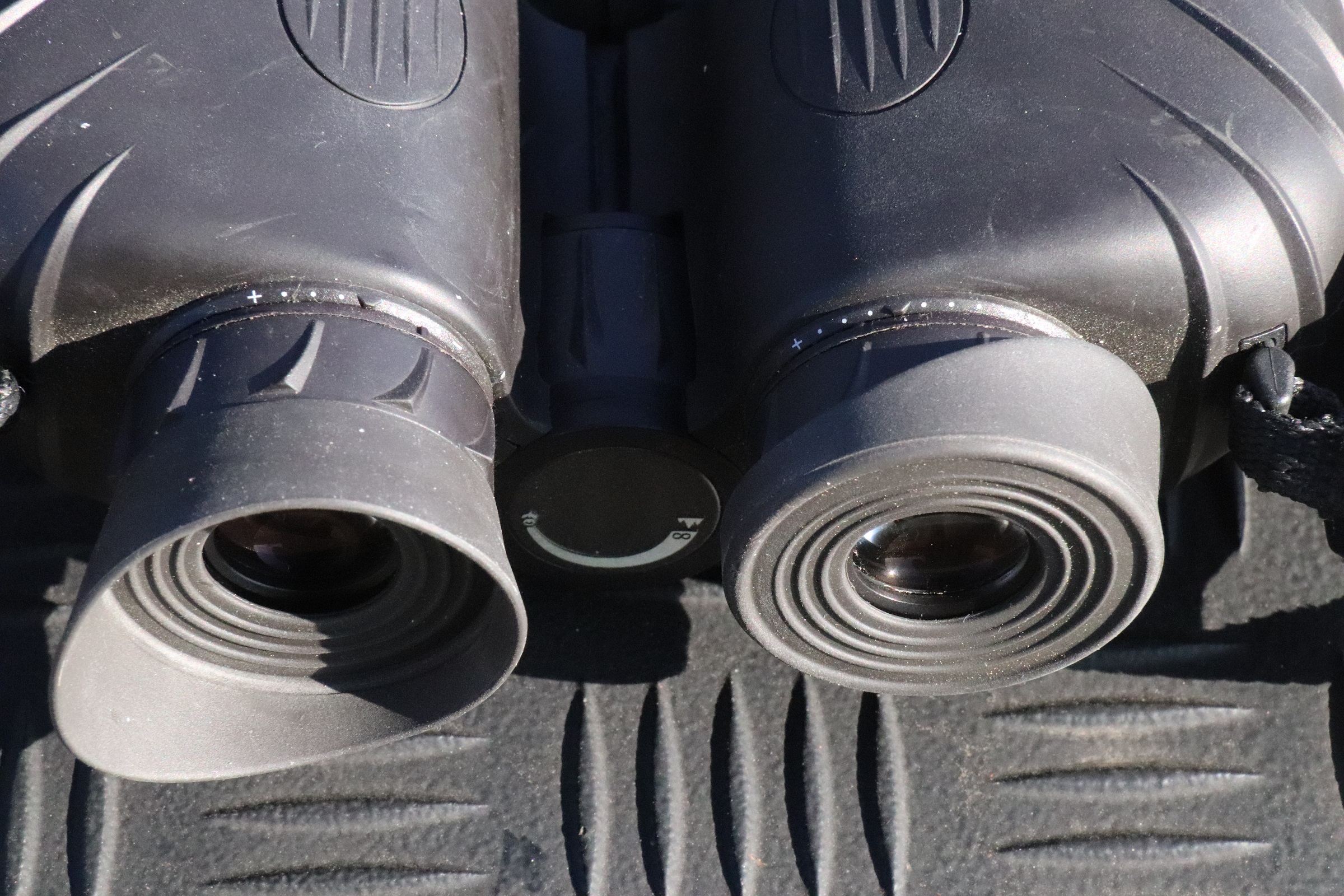
Try it out before buying and pay attention to the right eye distance and a large enough field of view.
What else to watch with binoculars for the off-road trip
On bumpy, dusty tracks in the off-roader, binoculars are of course exposed to a fair bit and have to take some punishment. When buying, look for a sturdy housing, and a good bag is part of it too. Today’s binoculars already put up with quite a lot. Stow them with their protective caps in a good bag and they’re basically well protected against knocks and dust. Often a shoulder bag comes with the binoculars when you buy them. If you want them handy yet packed away on a hike, a belt bag like this binocular bag from Fjällräven* is a good option. You can clean your binoculars much like a camera with a lens brush, blower and microfibre cloth* so as not to damage the optics. The rubber slip-on covers, just like the door seals on your off-roader, also need regular cleaning and care, for example with a rubber-care stick or talc.
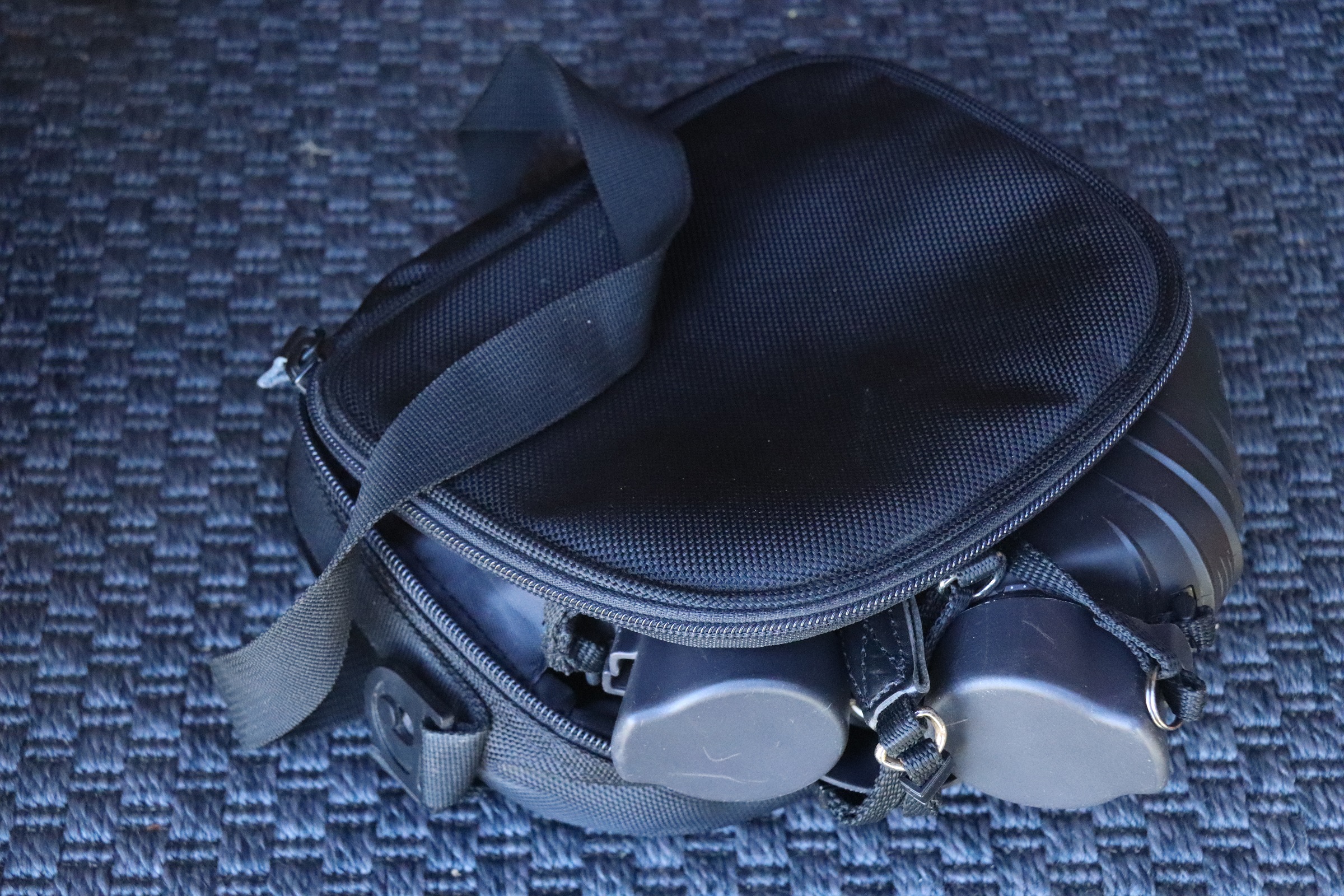
Good binoculars are often waterproof and gas-filled, which stops them fogging up under strong temperature swings.
Accessories for binoculars for the off-road trip
Besides various carry and storage bags, you can get further accessories in specialist shops. These include handy carry or floating straps, and cleaning sets. And even tripods are available for binoculars. These suit stargazing, for example. Anyone who’s ever seen the incredibly beautiful night sky in the mountains or even the desert can well understand what an exciting thing that can be.
Do you enjoy taking photos? For spotting scopes there are photo adapters for digital SLR cameras. And since, as we know, there’s nothing that doesn’t exist, you can even get smartphone adapters for binoculars these days.
Even more recommendations for the choice
Ideal would be a combination of a simple compact pair and a higher-quality one. The compact or pocket binoculars can, as the name says, always be with you in your jacket pocket or rucksack. Always handy, they make simple viewing possible, on a ferry crossing or the like. For watching wildlife and similar you’ll need to dig a bit deeper into your pockets. In the end you have to make compromises with binoculars too.
For around €300 to €350 you get good universal binoculars you can enjoy for a long time. Worth considering here are binoculars with a magnification of 8 to 10 and an objective diameter of 25 to 42 mm, maybe larger for poor light. Upwards there’s of course almost no price limit, and the viewer usually notices the higher quality of a pair of binoculars quickly. Because high-quality optics show clearly in the image quality. So buying a pricier pair is entirely justified for the right use. And for some people binoculars certainly aren’t just a functional object. Quality manufacturers give long warranties and often offer a repair service on top.
The author himself has used a Steiner universal pair* for many years, with eightfold magnification on a 30 mm objective, a 120-metre field of view (at 1,000 m) and a waterproof, tough, rubber-armoured housing in fairly compact dimensions. It has proven a good all-rounder on trips. Thanks to the compact dimensions and a manageable weight of around 800 grams, it’s always stowed within reach in the vehicle and can easily be taken along on a hike.
Try before you buy
It’s important to hold binoculars in your hands before buying. We recommend trying them out first. The ergonomics matter too, and what one person finds comfortable can be awkward for another. Pay attention to the handling as well. A higher weight stabilises the binoculars and lets you hold them steadier in your hands.
By the way, you’ll find plenty more gear tips for your off-road trip here at Matsch&Piste.
*Affiliate links: if you like the products and order them through the affiliate link, we get a small commission. It doesn’t cost you a cent more, but we’re really pleased about your contribution to our free magazine.