

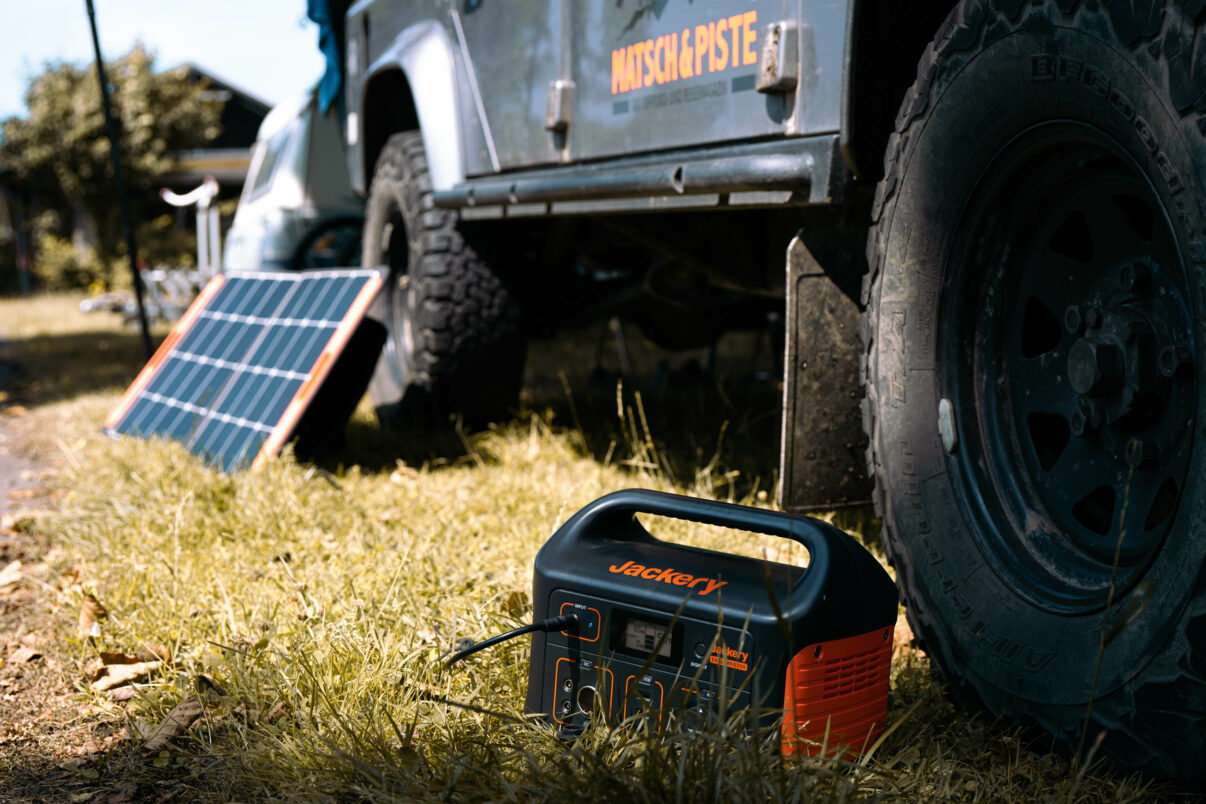

ADVERTISEMENT: When you’re out and about as much as we are, at shows, on trips and above all off the beaten track, far from the nearest socket, power is not a luxury but often essential. Running a cool box, charging phones or running a computer, the demands are high and varied. We tested the Jackery Explorer 500 for six months and came away convinced.
Powerful, fairly light and quiet
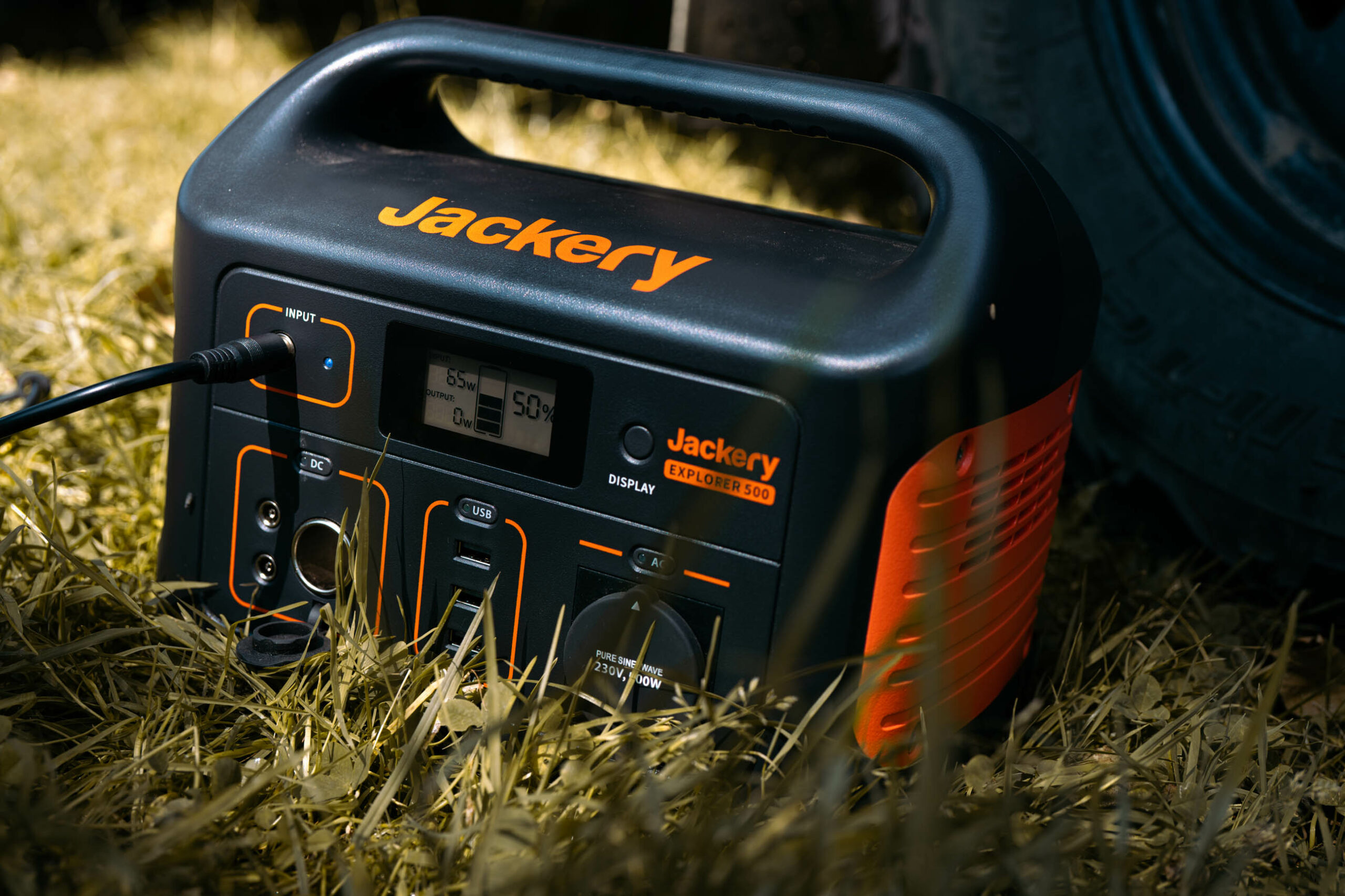
First the basics: the Jackery Explorer 500 has a capacity of 518 Wh, stored in a lithium-ion battery, and it also has a 500 watt inverter. That even handles short peaks of up to 1000 W. At 6 kilograms the power station is really a lightweight in its class, which makes it ideal for travelling. Its fan is also extremely quiet at 37.9 dB; I honestly couldn’t say I ever heard it at all.
A versatile battery box
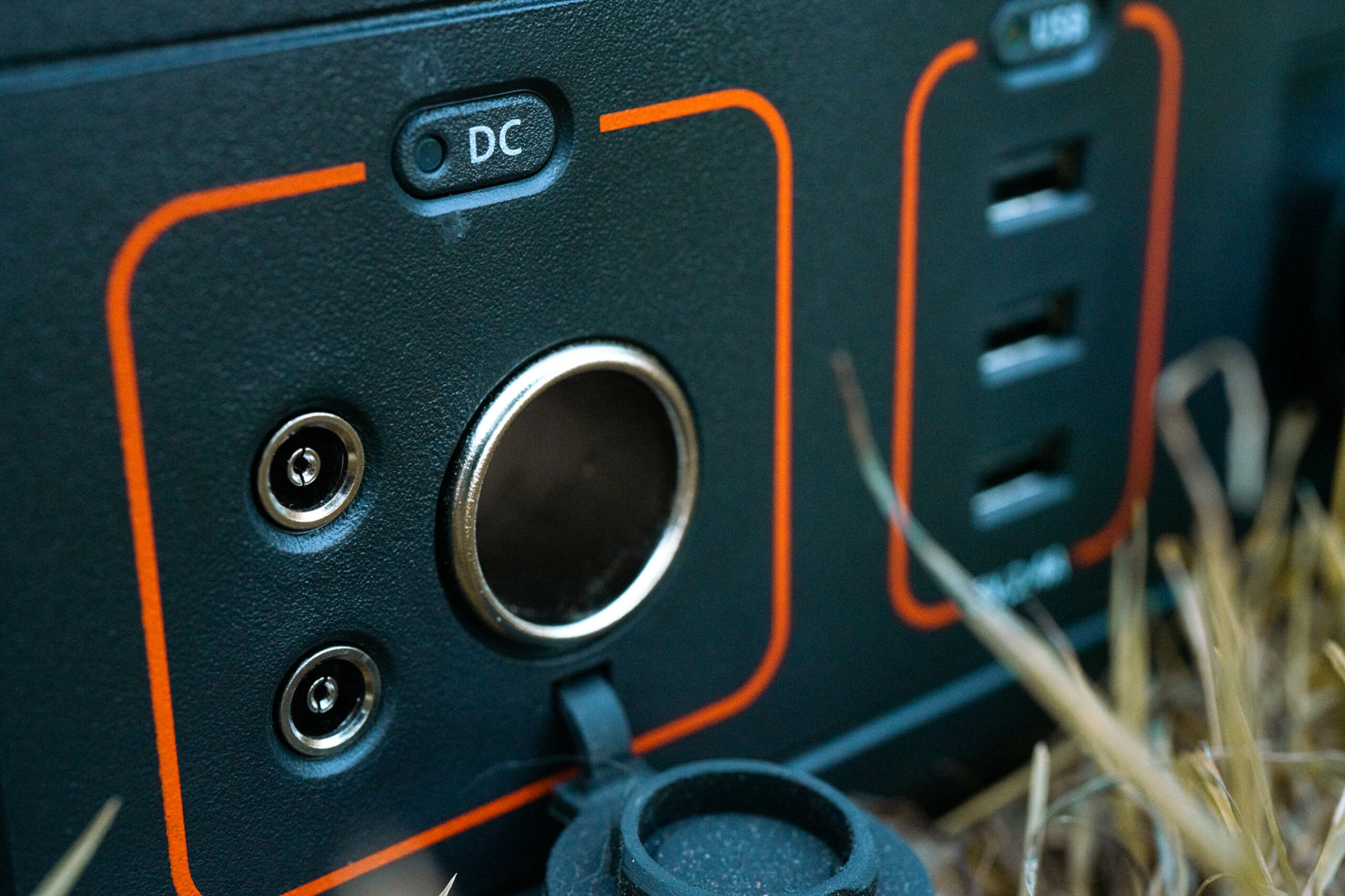
What really won me over with the Jackery Explorer 500 is how versatile it is. It has 1 normal socket, 2 DC connectors, 1 12-volt cigarette-lighter socket and 3 USB-A ports. That meant I could charge or run several devices at once. From my phone to my laptop to the cool box, the Jackery 500 is a powerhouse.
When we were at the Abenteuer&Allrad, for example, we ran the cool box off the Jackery for three days without having to recharge it, and charged phones and my computer at the same time. We actually depended on the Jackery there, because shortly before that our second battery had given up after years of service.
Good performance and a long life
The performance in the Jackery 500’s specs is considerable, even if we didn’t test it that way, because we don’t do that out on the road anyway. But at home we ran the TV off it for three days as a test. For the sake of completeness, though, I wanted to mention it. It can run a TV (60 W) for 7.5 hours, a projector (100 W) for 4.5 hours or a coffee machine (500 W) for 0.8 hours. In other words, if you wanted to, you could take your household with you and run it off the Jackery.
The Jackery is said to still have 80 percent of its original battery capacity after 500 charge cycles. So far the battery is still fresh. In fact, 500 to 800 charge cycles are normal for this kind of battery, though it always depends on the charging current and the depth of discharge, of course.
Charged and ready wherever you are
The charging options won me over as well. You can charge the power station in many ways: with a solar panel, via a car socket or at the 220 V mains. We charged the Jackery in the car, at the mains and, when it was sunny, with the solar panels.
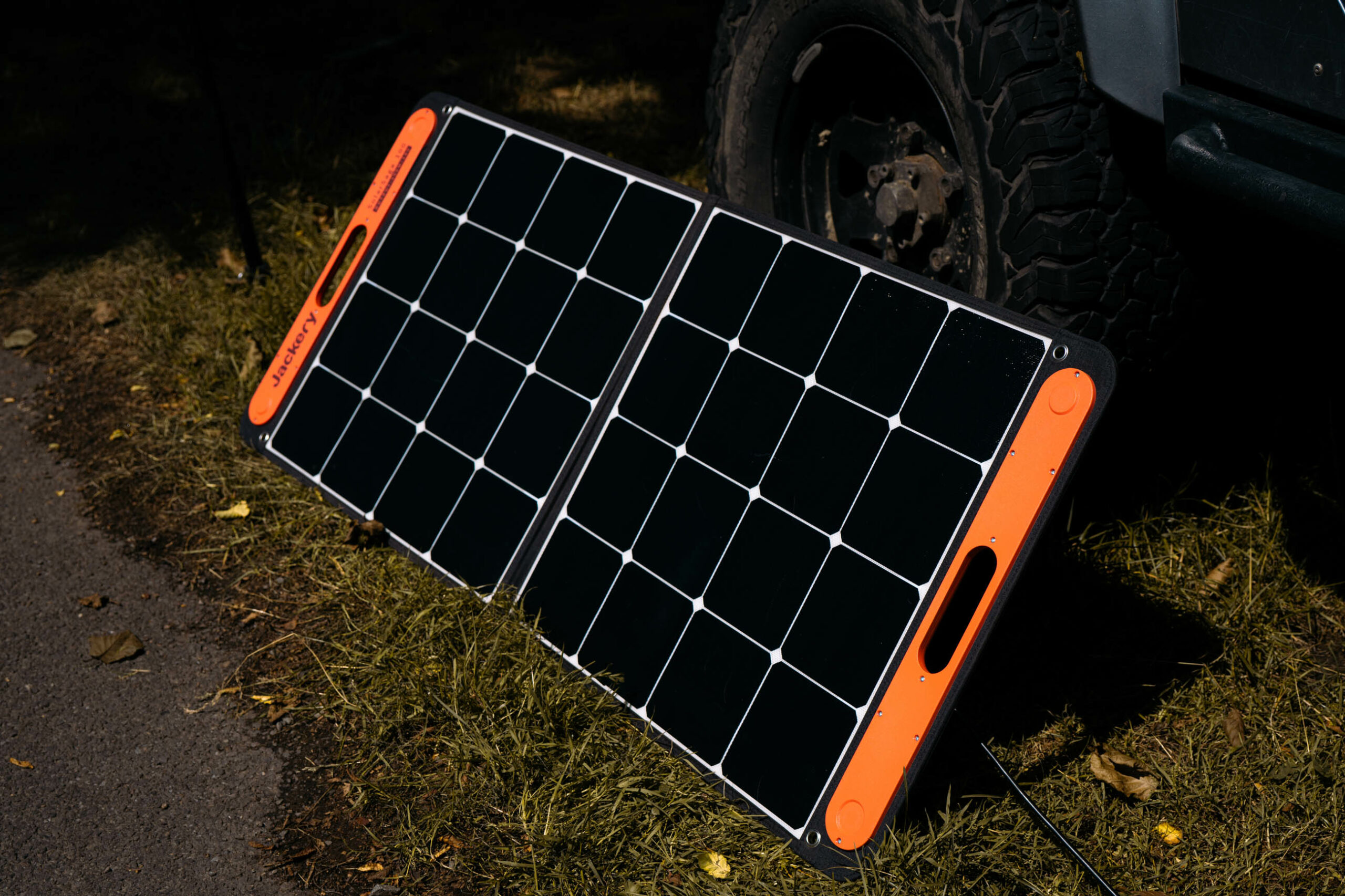
Depending on the charging method and the state of discharge, it takes different amounts of time to fully charge the Jackery again. With the solar panel, well aligned, we usually had an input of 70 Ah; at the mains and on the car battery while driving the input was around 92 Ah. To fully charge it with the solar panel you need 9.5 hours, on the car and at the mains about 7.5 hours. Though I never charged the Jackery completely from empty to full while driving or with the solar cells, and at the 220 V mains mostly overnight. The charging cables are included.
Safety and environmental awareness
Safety is another strong point of the Jackery Explorer 500. Thanks to the smart BMS (Battery Management System) and the pure sine wave inverter, the devices are always supplied with stable power. The modern temperature sensors also make the power station suitable for extreme weather. That means you can run it without trouble from -10 to 40 degrees.
A nice touch is that the Jackery 500 comes in a kind of cool bag, so you can leave it standing in the bag in a warm car without it taking any harm.
The power station is also environmentally friendly. It gives off no fumes and burns no fuel, and if you charge it with the solar cells you are even using green electricity.

The only thing I found truly pointless was the torch on the side. Somehow I can’t picture anyone walking around with the 6 kilo Jackery in hand, using it as a light. The only sensible use for the light would be to help me find the Jackery straight away during a power cut at home, when it’s dark. But otherwise?
Verdict
The bottom line: the Jackery Explorer 500 power station has saved us more than once. For space reasons our dual-battery system only has a small capacity, and on longer stops it is empty after a short time. With its high capacity, its versatility and its long life, I rate it a reliable, sturdy companion that also takes up little room. Even now that the second battery works again, I would genuinely take the Jackery 500 along once more. Just in case, and for long stops.
Where to get it:
Jackery Explorer 500 with solar panels (Amazon)*
Jackery Explorer 500 without solar panels (Amazon)*
*Disclaimer: The Jackery was provided to us free of charge for the test, and we’re pleased that we get to keep it. (I’ve genuinely grown fond of it.) We also link to Amazon, which means we get a small commission from Amazon if you buy something through this link. If you want to roll your eyes now, go ahead. But please bear in mind that you don’t pay a cent for Matsch&Piste and we provide all our articles free of charge. And we’re really chuffed if you support us.
© Photos: Nik Woithon