
Compared with a permanently installed winch, a hand puller has some advantages, but also disadvantages. But what if there were a hand puller that avoids many of these disadvantages and amplifies the advantages? Then it’s the Hooist from Relleumdesign.
Hand pullers are used in many places, especially in forestry and rescue work. But in the off-road world too they can play to their strengths. Three of the biggest advantages are that, unlike a winch, they and their weight don’t have to be carried around all the time, they can be rigged around the vehicle with no effort, and the price. The disadvantages are that they too need a place, which is often in or on the vehicle, their limited pulling force at a still-manageable size, and their short pulling distance, since 30 or 50 metres of steel cable usually can’t just be stowed away. And, well, real, sweat-inducing manual work is involved.
Good thing Relleumdesign took on the hand puller and eliminated some of these disadvantages, with the Relleumdesign Hooist.
Two principles combined: the Relleumdesign Hooist
What do we do with a winch when the pulling force isn’t enough, the cable needs relieving, or very precise work is required? Exactly, we use a snatch block to build a block and tackle. But with one pulley that only works against your own vehicle. To pull another vehicle using the block-and-tackle principle, more pulleys have to be used.
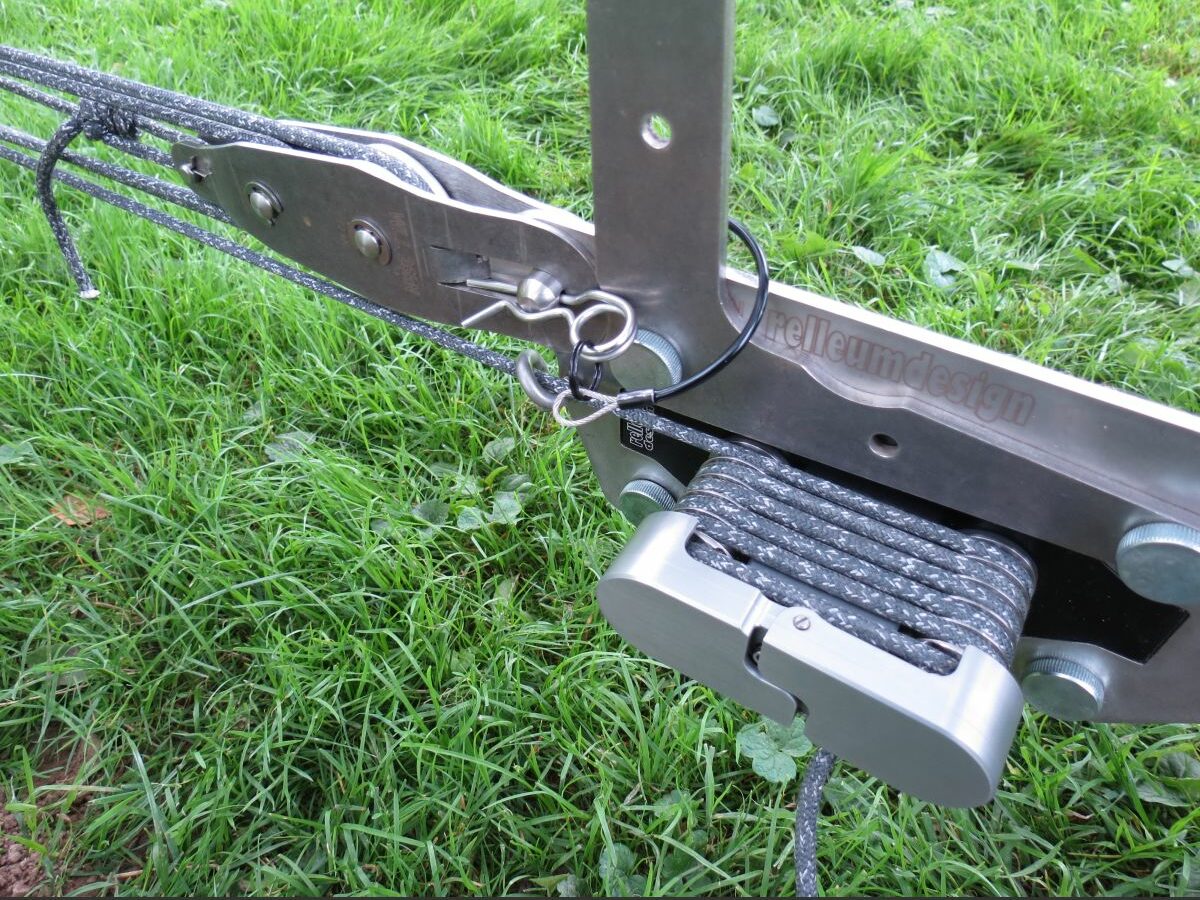
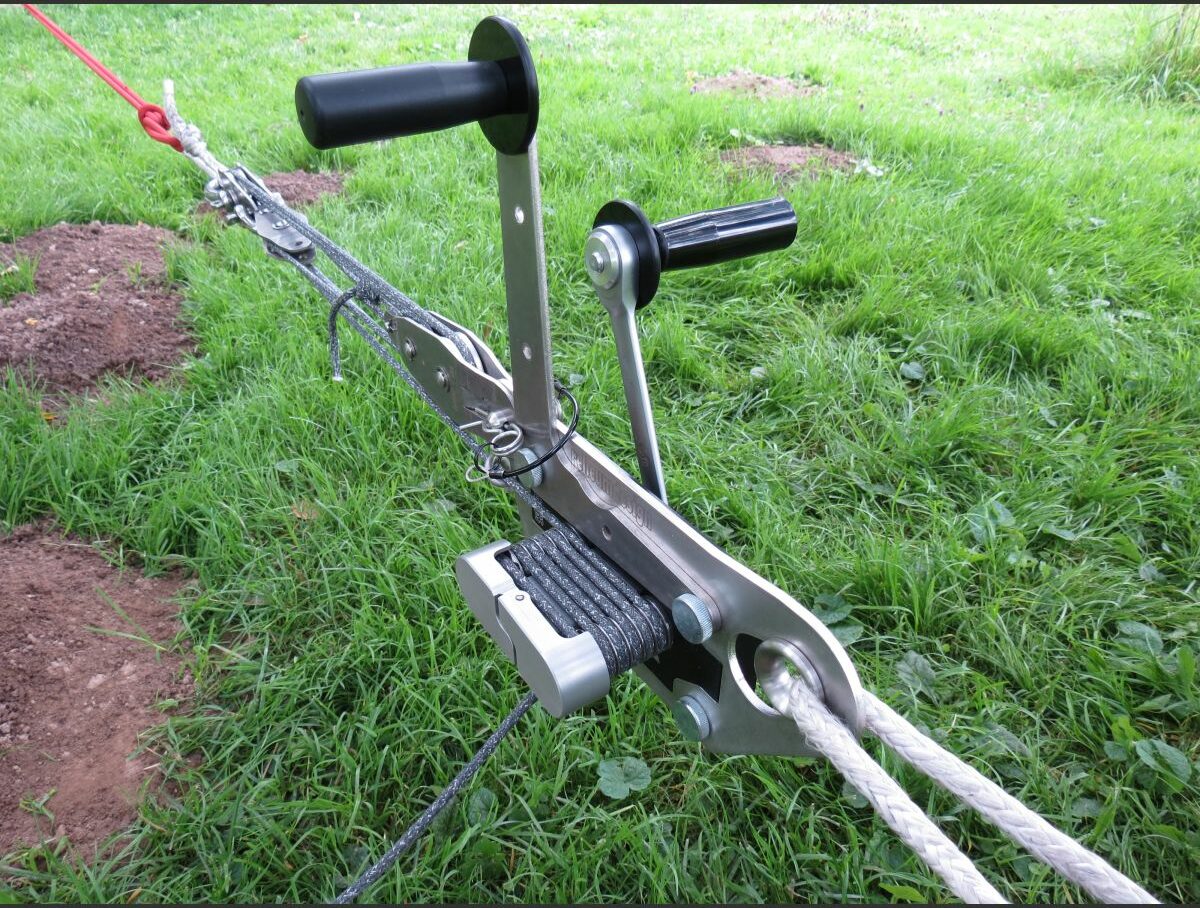
With the Hooist, the block-and-tackle principle is already built in. So, with a light, compact design weighing just 2 to 4 kg, it achieves a pulling force of up to 3 t. This pulling force is also available continuously, unlike a winch, where the full pulling force is only available on the bottom layer.
To pull those 3 t, just 20 kg of hand force is needed. Gone are the days when hand pullers were operated with longer and longer levers. So 1 t can easily be pulled with two fingers and the small ratchet lever. Anyone who’s impatient can also use a cordless drill with a 17 mm socket to operate the hand puller. To keep the resistance in the system as low as possible, all snatch blocks have double bearings. They also have sealing lips that protect against dirt getting in.
Jamming of the cable layers also can’t happen with the Hooist. That is a very unwanted effect with winches, which leads to shock loads in the cable and can cause it to snap.
Lowering is child’s play
Controlled lowering of loads is also done with only the slightest hand force. Built into the Hooist are double-capstan grooved rollers that brake the cable by their own friction, without the cable chafing against itself. The grooves themselves act like cooling fins and prevent the synthetic rope from heating up. That protects the material and ensures long durability. The friction value can be set yourself: the more grooves are used, the easier the load is to hold.
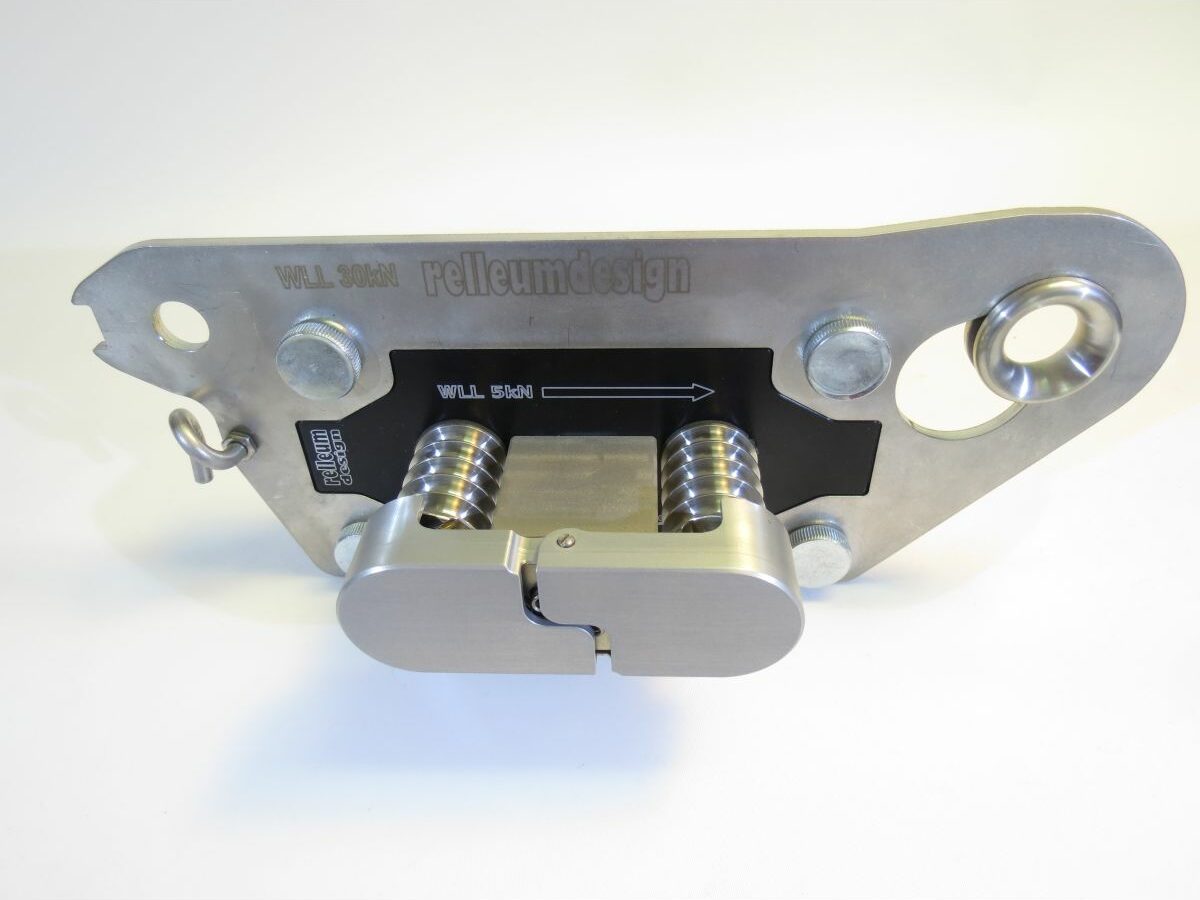
What’s included with the Relleumdesign Hooist hand puller
- Hooist core unit (with 5 kN pulling force) on a 3 t carrier plate
- 2 blocks each with 2 pulleys + shackles pre-assembled, connecting bolt with 2 split pins
- Ratchet crank with a rotating cross handle
- Support handle with a fixed cross handle
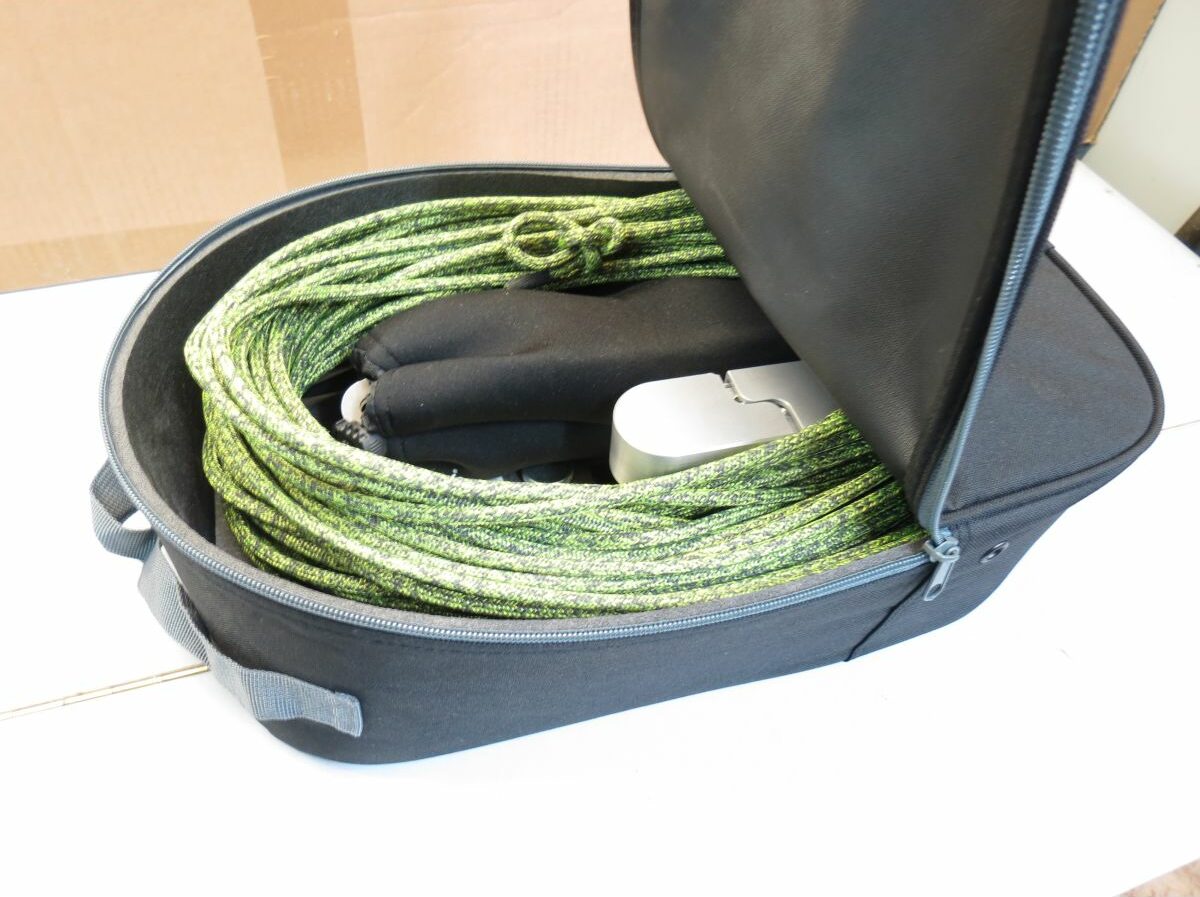
- padded bag + neoprene bag for the blocks
- No cable, please order separately! One end with a bowline knot, a fixed cable eye in preparation
The set is supplied in a matching carry bag in which all the parts can be stowed neatly.
If you want to find out more about the Hooist or other Relleumdesign products, take a look at Dirk Müller-Paul of Relleumdesign: relleum.design.
© Photos: Relleumdesign