
Rims are a far broader topic than you’d think at a glance. Everyone has at least four of them on their car, but hardly anyone knows much more about them than that the rim is round and sits between the tyre and the axle. We’re about to change that with our Wheel Rims 101.
The market has become too big and too sprawling by now to keep a full overview. It was different about fifteen years ago, when there simply weren’t that many different rims yet.
Here, in our Wheel Rims 101, I want to give you an insight into the technical side of the rim topic. Since there’s no arguing about design and taste, as we know, I’ll leave that side out. Though of course I have favourite rims too. More on that later.
On every rim you’ll find all sorts of markings that hold the rim’s most important technical data.
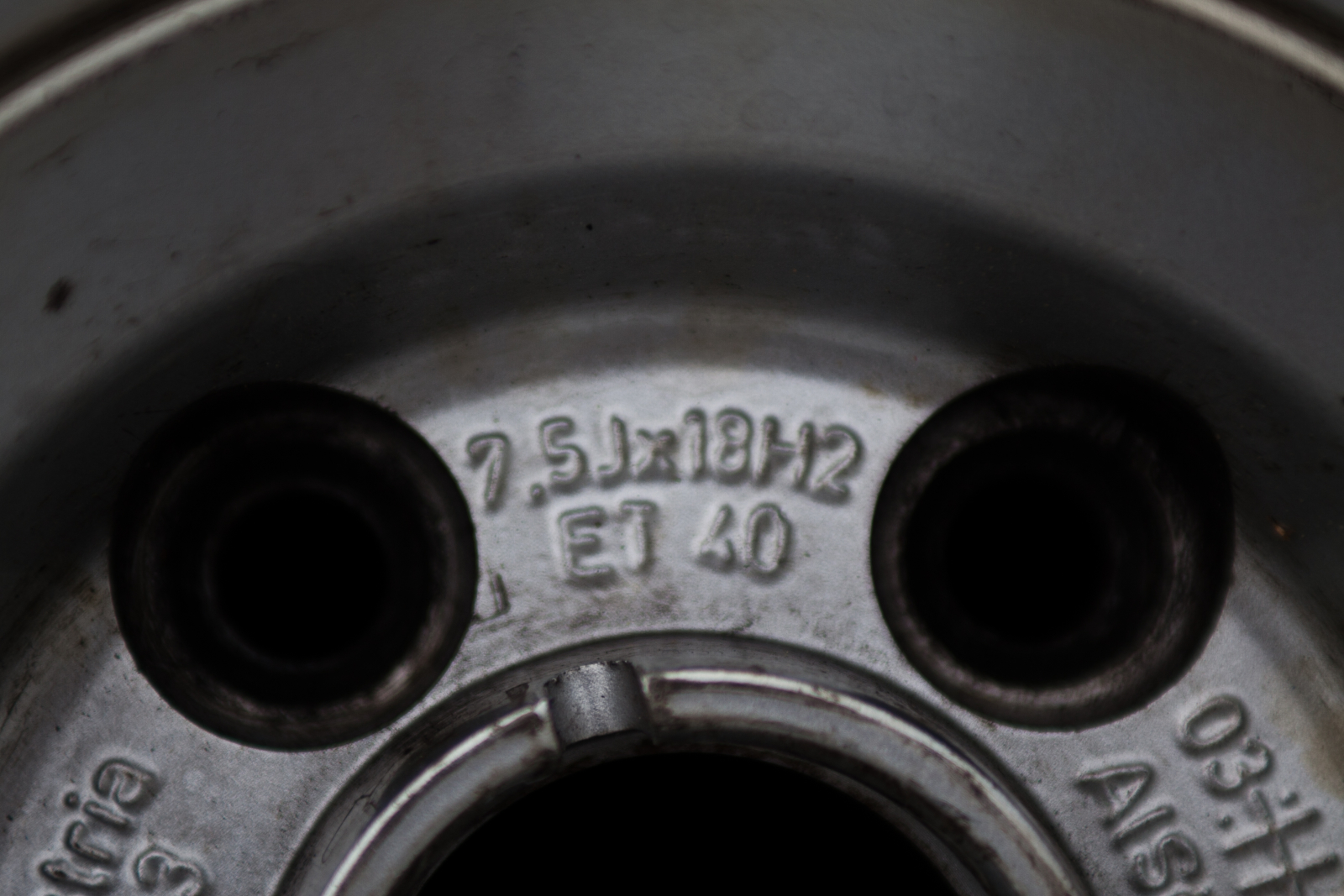
Wheel Rims 101: the individual data on the rim
In this section we shed some light on it. A typical marking reads, for example, 7.5Jx18 H2 ET40. Let’s take this marking and go through what it tells us.
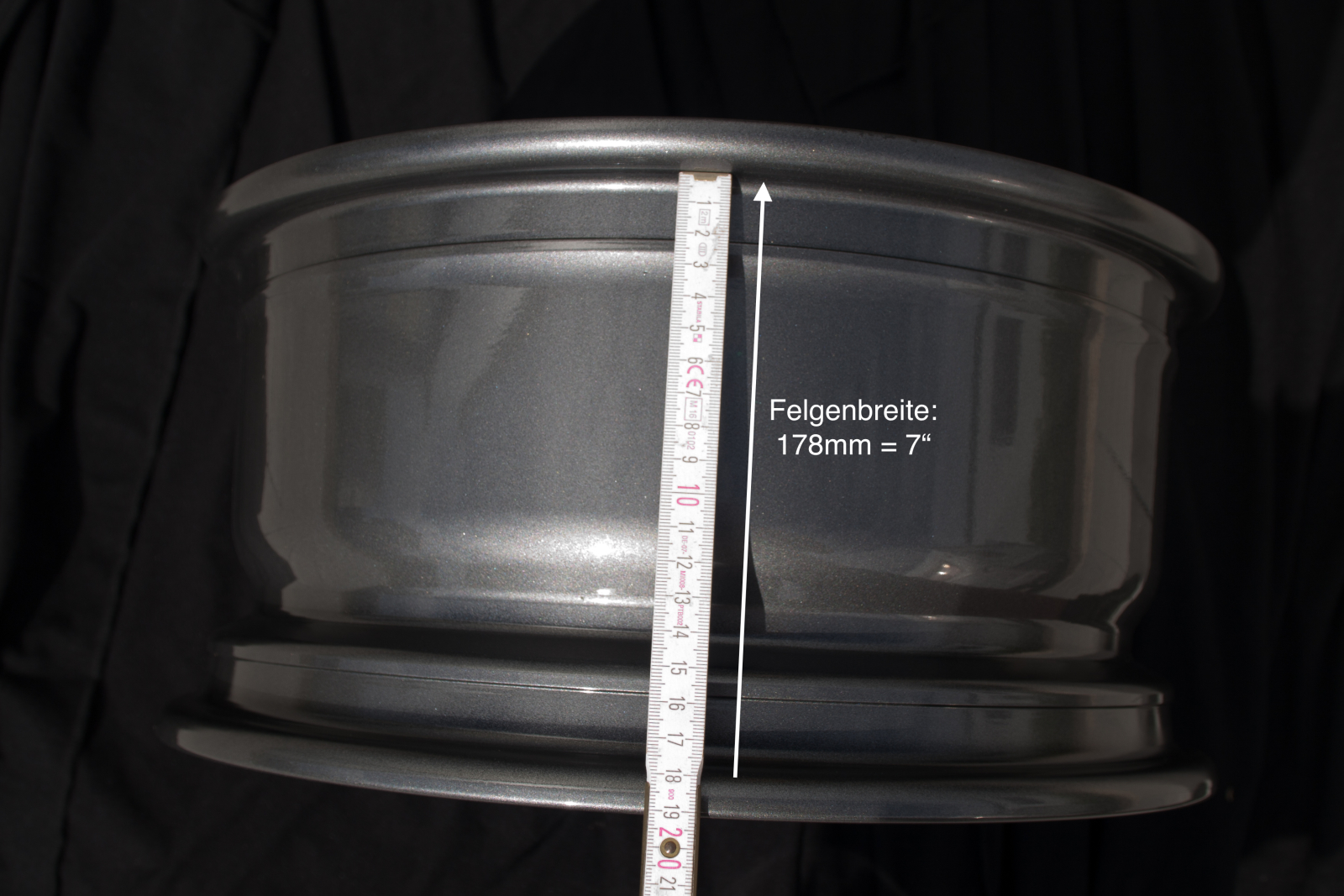
Rim width
7.5 is the rim width in inches, measured between the rim flanges.
Type of rim flange
The shape of the rim flange is marked with a letter. J in this case is a passenger-car rim. In the off-road world you usually only find the shapes J and JJ.

The various suffix letters for the rim-flange profiles:
- A – bicycle, motorcycle, mopeds, light trucks, trucks, forklifts
- B – passenger car (rim width: 6 inches)
- D – bicycle, motorcycle, mopeds, light trucks, trucks, forklifts
- E – truck
- F – truck
- G – truck
- H – truck
- J – passenger car
- JJ – 4×4
- P, K – classic vehicles such as Jaguar or Bentley
- S, T, V, W – commercial vehicle
Rim diameter
18 in our example of 7.5Jx18 H2 ET40 is the rim diameter, also measured in inches.
Hump
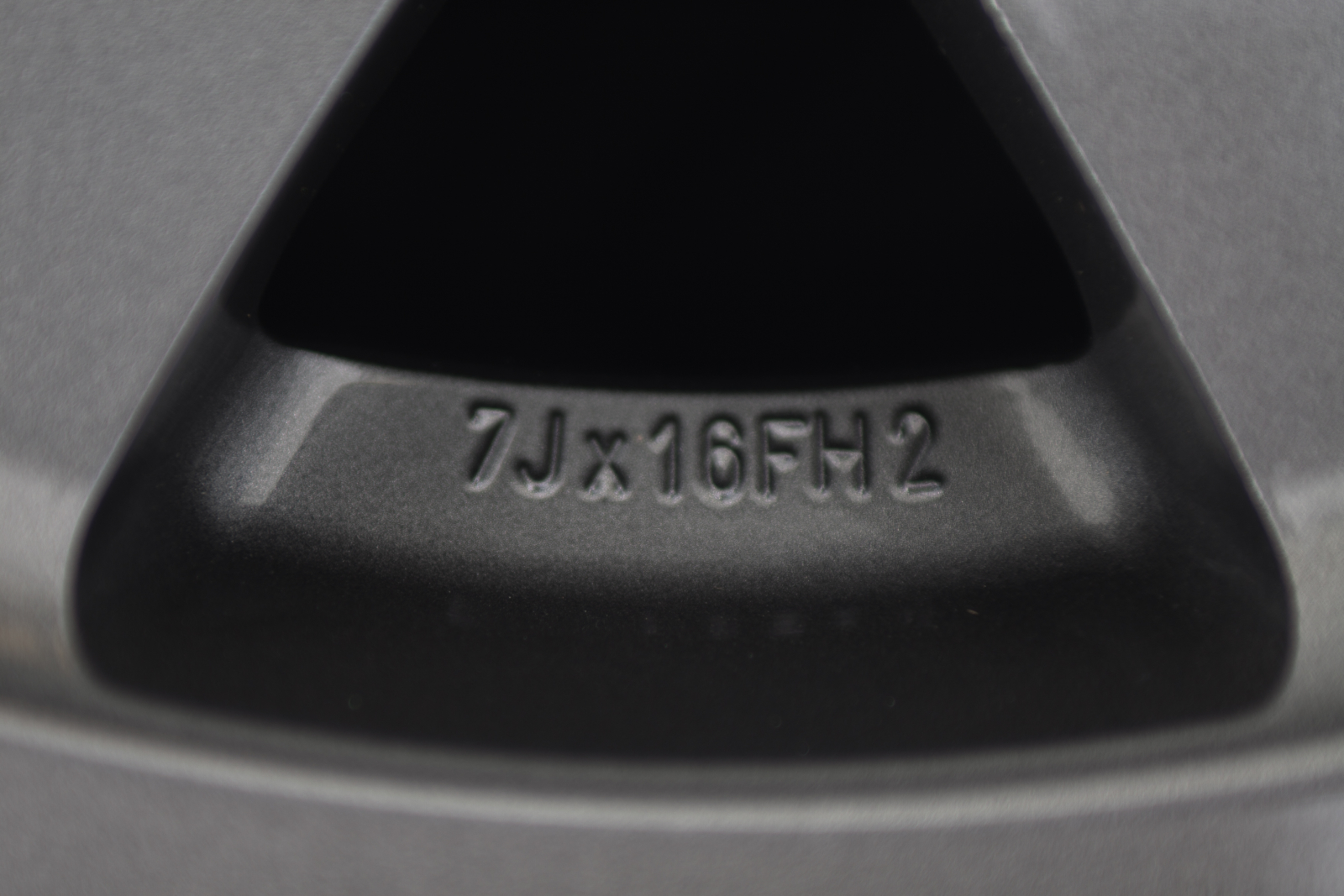
H2 is the designation for the so-called hump, the bead ridge on the rim edge that seals the tyre against the rim. H2 means a double hump in this case, typical for tubeless rims. The single hump “H” is used, for example, on rims that have to be run with tubes.
H2 rims can also be used with a tube; H rims must never be run without a tube, because firstly the seal to the rim flange isn’t there and secondly the rim bed isn’t necessarily airtight. The valve-hole diameters differ too: H has a small diameter, H2 a large one. You can buy plastic adapter rings that centre the tube valve in the large hole of the tubeless rim and protect it against dirt getting in.
- H – hump
- H2 – double hump
- FH – flat hump
- FH2 – flat double hump (as on the EvoCorse Dakar, for example)
- EH2 – extended hump
- EH2+ – extended hump +
Offset
ET40 denotes the so-called offset, here 40 mm. The offset is the distance from the centre of the rim bed to the contact face between rim and wheel hub. ET0 means the rim centre runs exactly in line with the contact face of the brake drum or disc. ET40 means this rim sits 40 mm further in. A rim with ET10, for example, lets the wheel sit 30 mm further out than with ET40. The whole vehicle thus gains 60 mm of track width.
There are also rims with a negative offset, denoted for example as ET -20. Accordingly the tyre centre then sits 20 mm further out than the hub face, and the track width increases even more.

Load rating
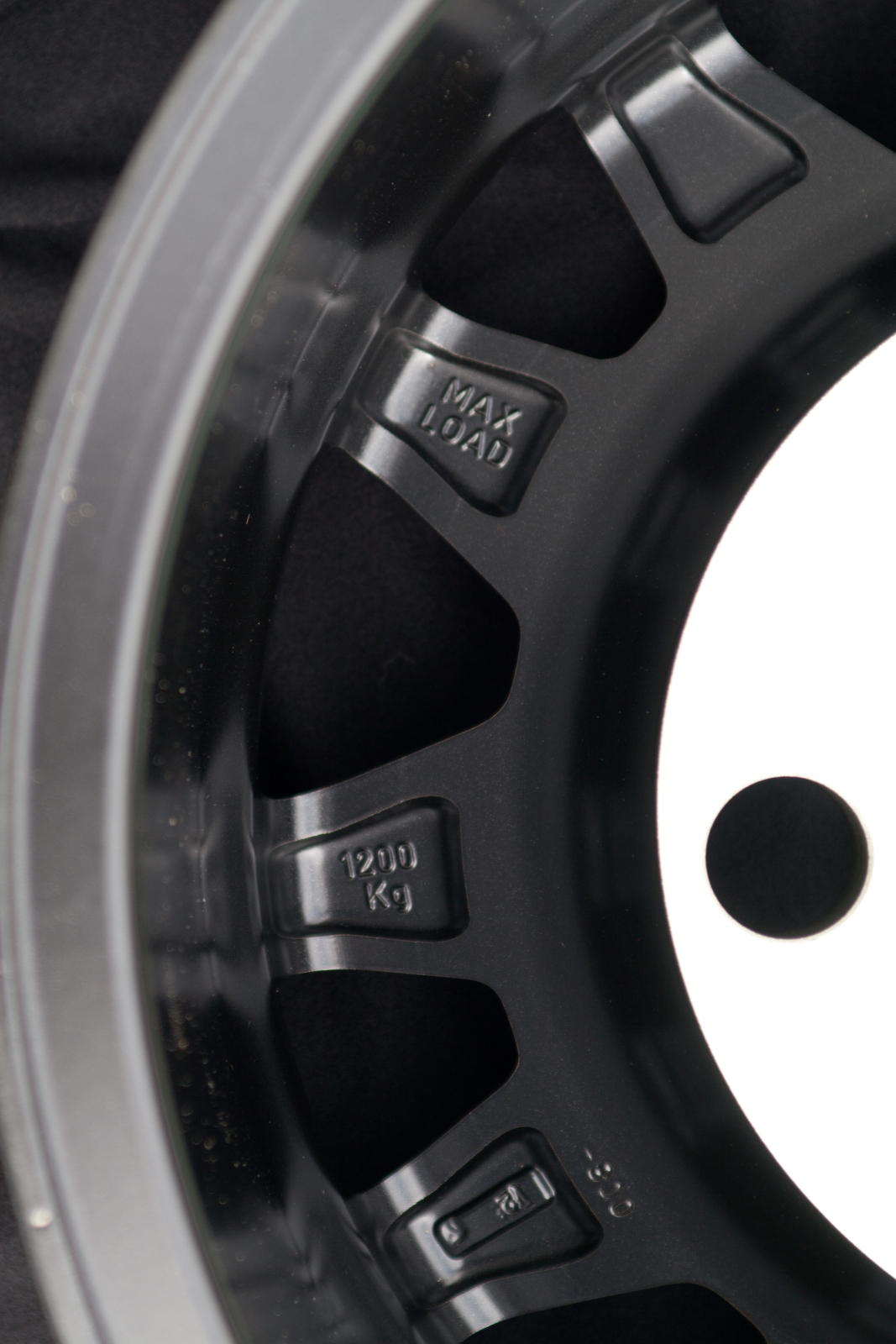
Another important parameter is the rim’s load rating. Unfortunately it’s only rarely noted on the rim. If it is, then usually on the inside on one of the spokes. Otherwise it’s noted in the relevant certificate that belongs to the rim, or can be requested from the manufacturer. At VW, for example, there are load-rating certificates for their high-volume rims.
The load-rating certificate is essential for a TÜV registration. Every rim has to carry at least half the axle load entered in the vehicle papers. Here’s the cast-in load rating on an EvoCorse Dakar rim:
Bolt pattern
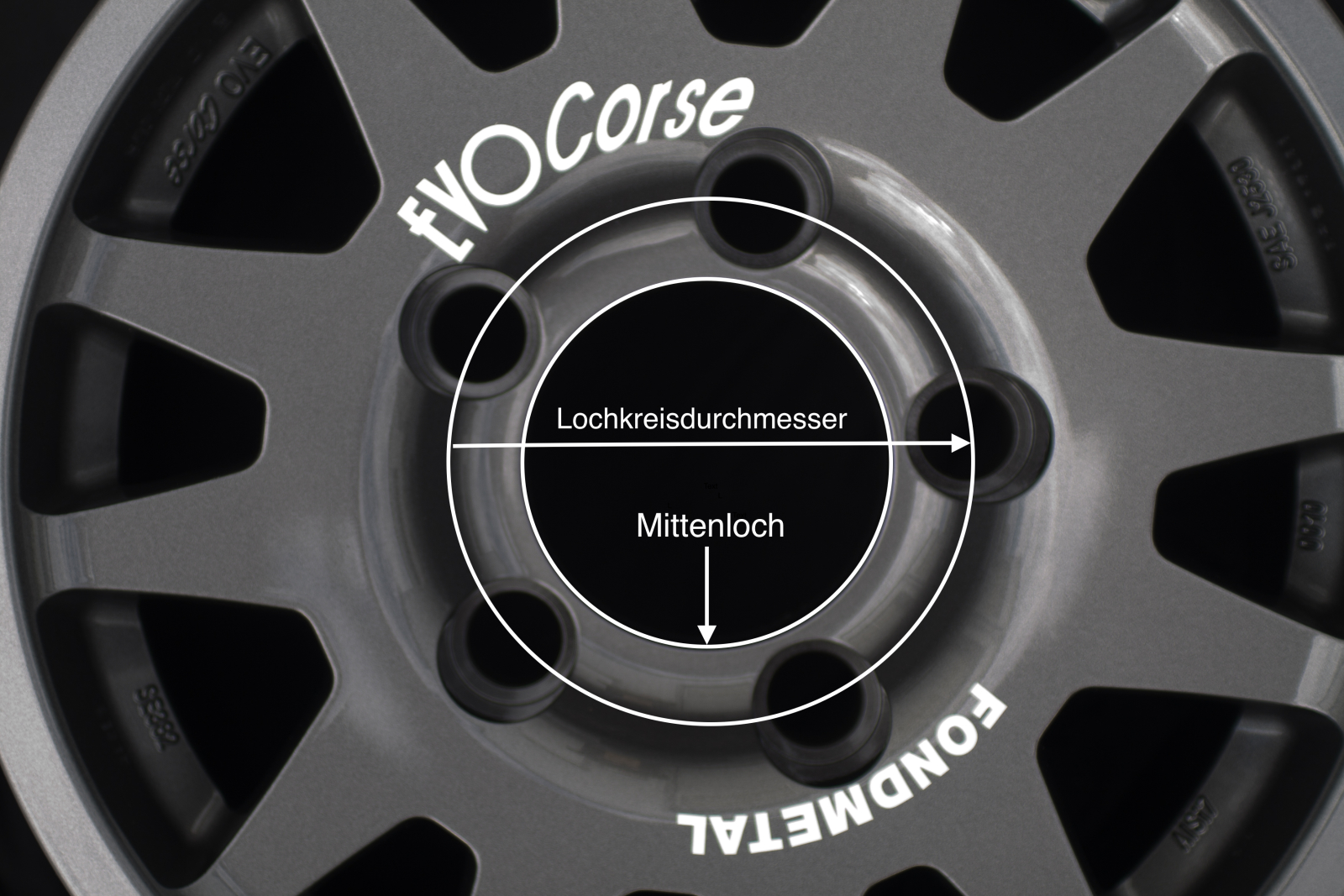
The bolt pattern “LK” comprises the diameter of an imaginary circle in millimetres that runs through all the hole centres, plus the number of fixing holes.
Common bolt patterns are, for example, 4×100, 5×120, 5×150, 5×165.1, 6×139.7.
The centre bore
This figure is the last important measurement, which determines whether the rim can even be fitted onto the hub. Rims with too large a centre bore do fit over the hub, but they lack the necessary centring that makes the rim run true. For that you can buy plastic centring rings as accessories, a genuinely worthwhile investment.
That’s exactly the true-running problem with all Land Rover rims, which are usually only centred via the wheel bolts. Once loosened and bolted back up, you never hit the starting position again.
Bolting the rim on
Every rim is bolted to the vehicle, either with wheel nuts or wheel bolts. That the thread has to be long enough and have the right diameter and pitch should be clear to everyone. But one sticking point is the taper of the fastening. Common ones are cone seat and ball seat. Which type you use depends on the chosen rim, not on the vehicle it’s to be fitted to. Here it’s advisable to use the bolts or nuts supplied with the respective rims.
Seen from left to right: cone seat, ball seat, Land Rover alloy-rim nut:
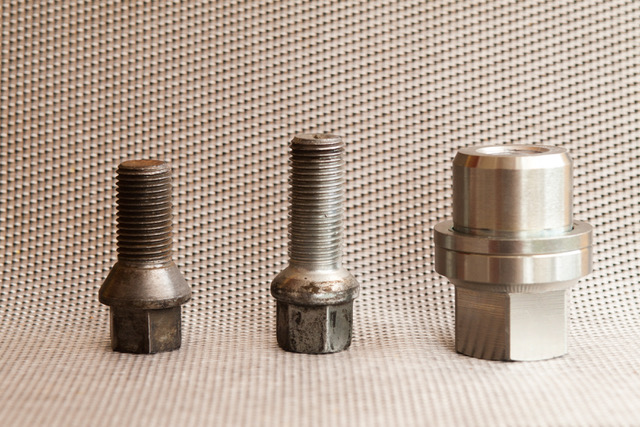
A special case is the wheel nuts Land Rover uses for original alloy rims. There, because of the cylindrical guide in the bore hole, you can’t use any other wheel nuts.
Rim material
All sorts of materials are used for rims. That ranges from the classic and mostly cheap steel rim, through the popular alloy rims that spread widely thanks especially to visual tuning, to materials mainly common in racing.
Steel rims
These are mostly found on basic trim levels. Their advantages are the low purchase price and the fact that they rarely actually break. Under rough treatment they mostly just bend and can be knocked back into more or less the right shape in any bush workshop by brute force, and welded up in a pinch too. They’re also less prone to damage when mounting tyres with tyre levers out on the trail.
Their only real drawbacks are the high weight and the tendency to rust.
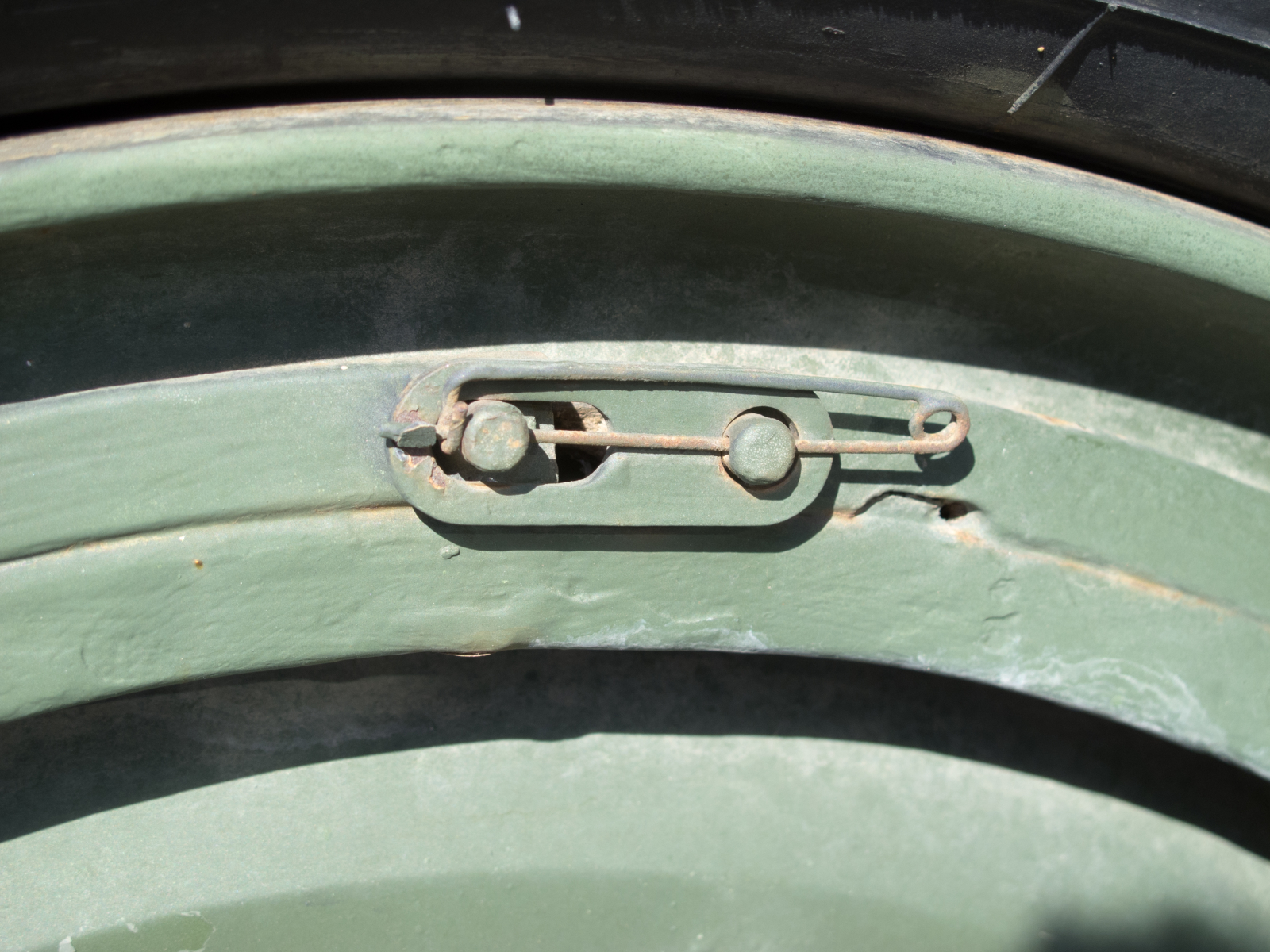
A special design of steel rim is the so-called split-ring rim. You now only find these on trucks, old Toyota J4 and Land Rover Series vehicles. Here, to change the tyre, the split ring that sits on the outside in the rim bed is removed and the tyre pulled off the rim without any further tools. That sounds simple at first, but it can be life-threatening if this 16-inch or 20-inch steel ring flies off around your ears during removal.
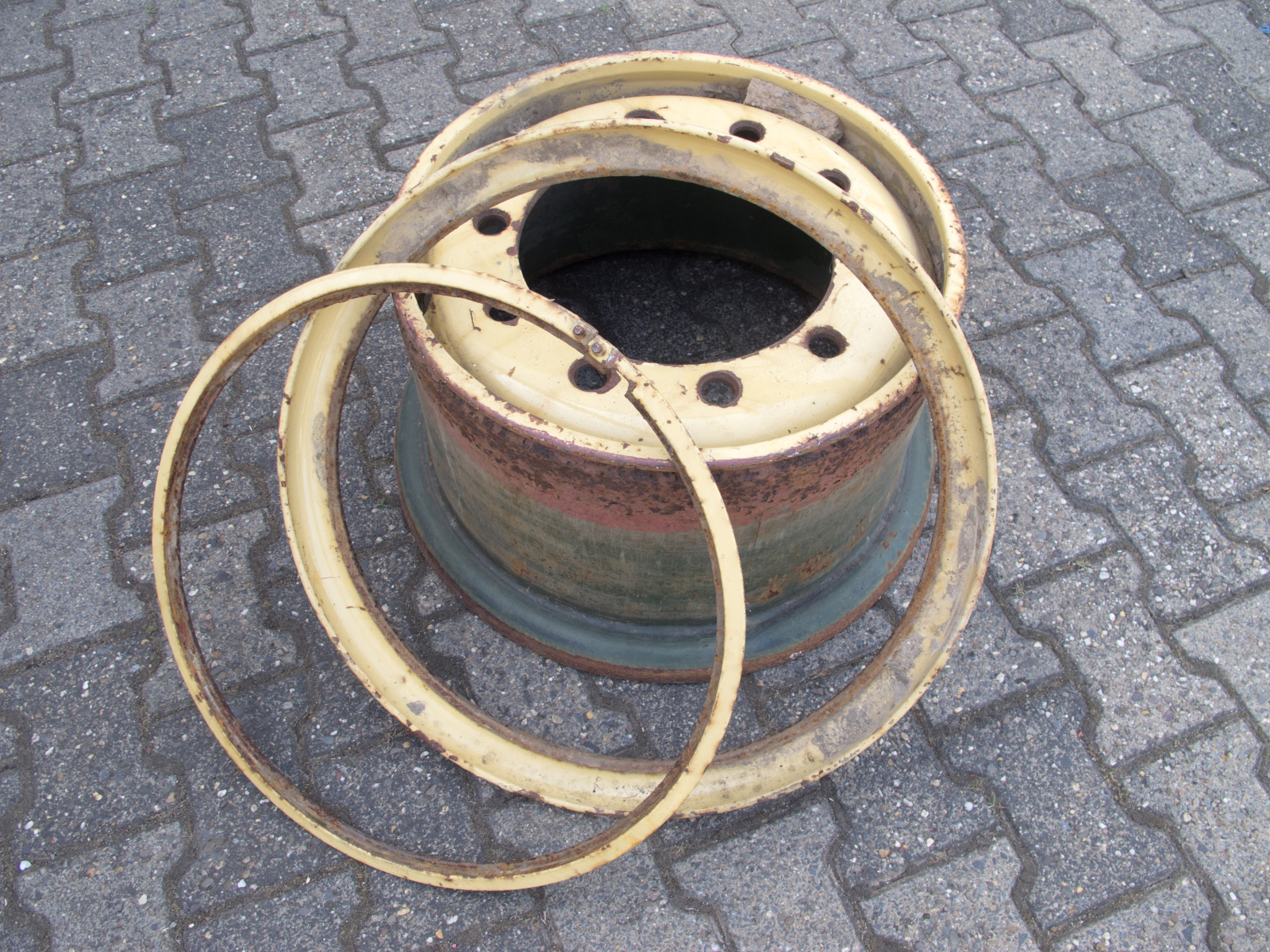
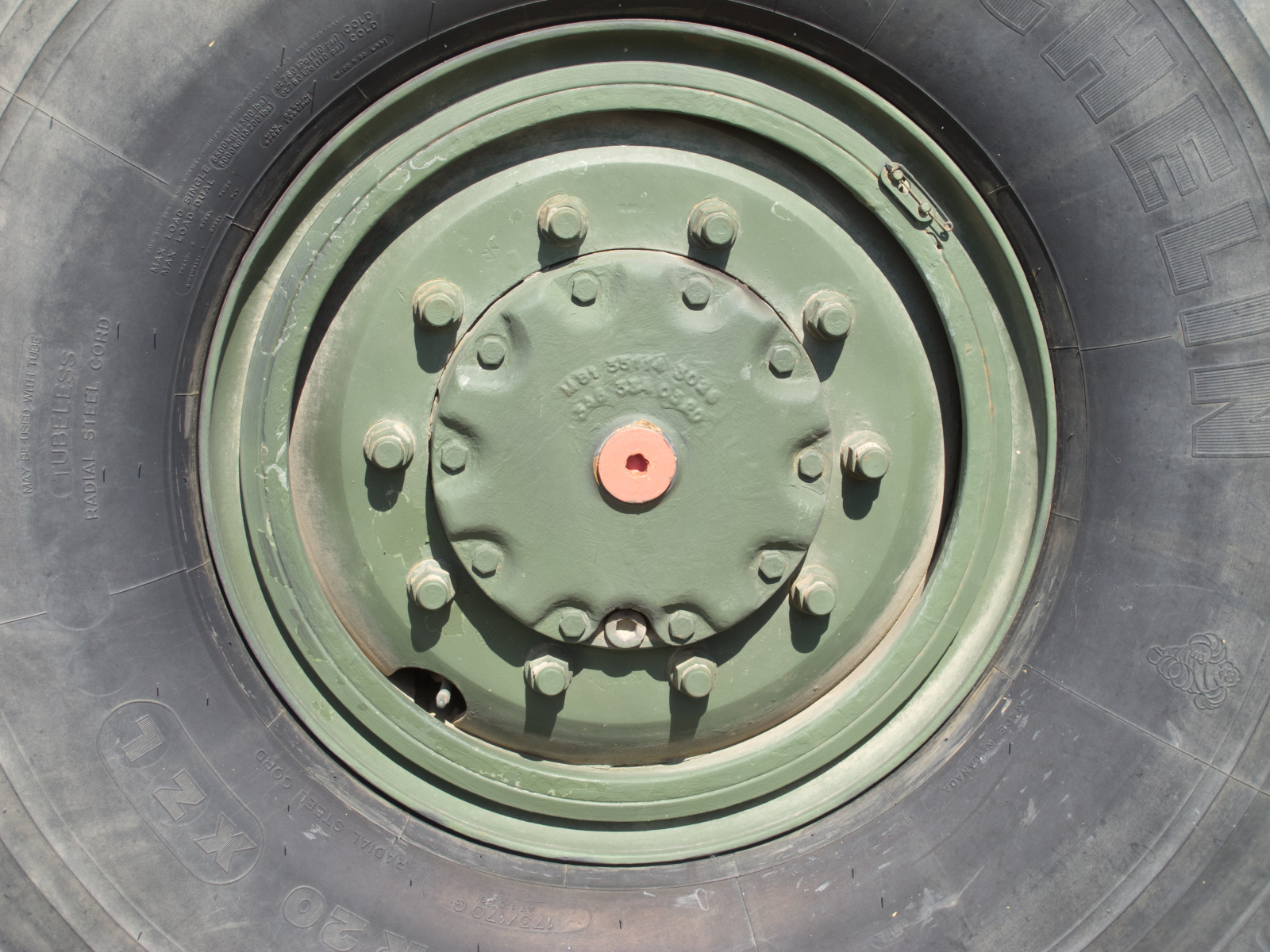
I know of a case where an incorrectly seated split ring came off a truck while driving and the tyre carcass rattled off into oncoming traffic. Maybe the safety clip was missing too, that can’t be traced now. So you absolutely have to watch out for that if you use rims like these.
Aluminium
This light metal is the most common material for rims these days. Above all it offers manufacturers a great many advantages. Designs are possible that can’t be realised in steel. On top of that, alloy rims are light and cheap to produce.
The raw material is always an aluminium-magnesium alloy with a low magnesium content. With aluminium rims, though, there are much larger differences in quality and durability than with steel rims.
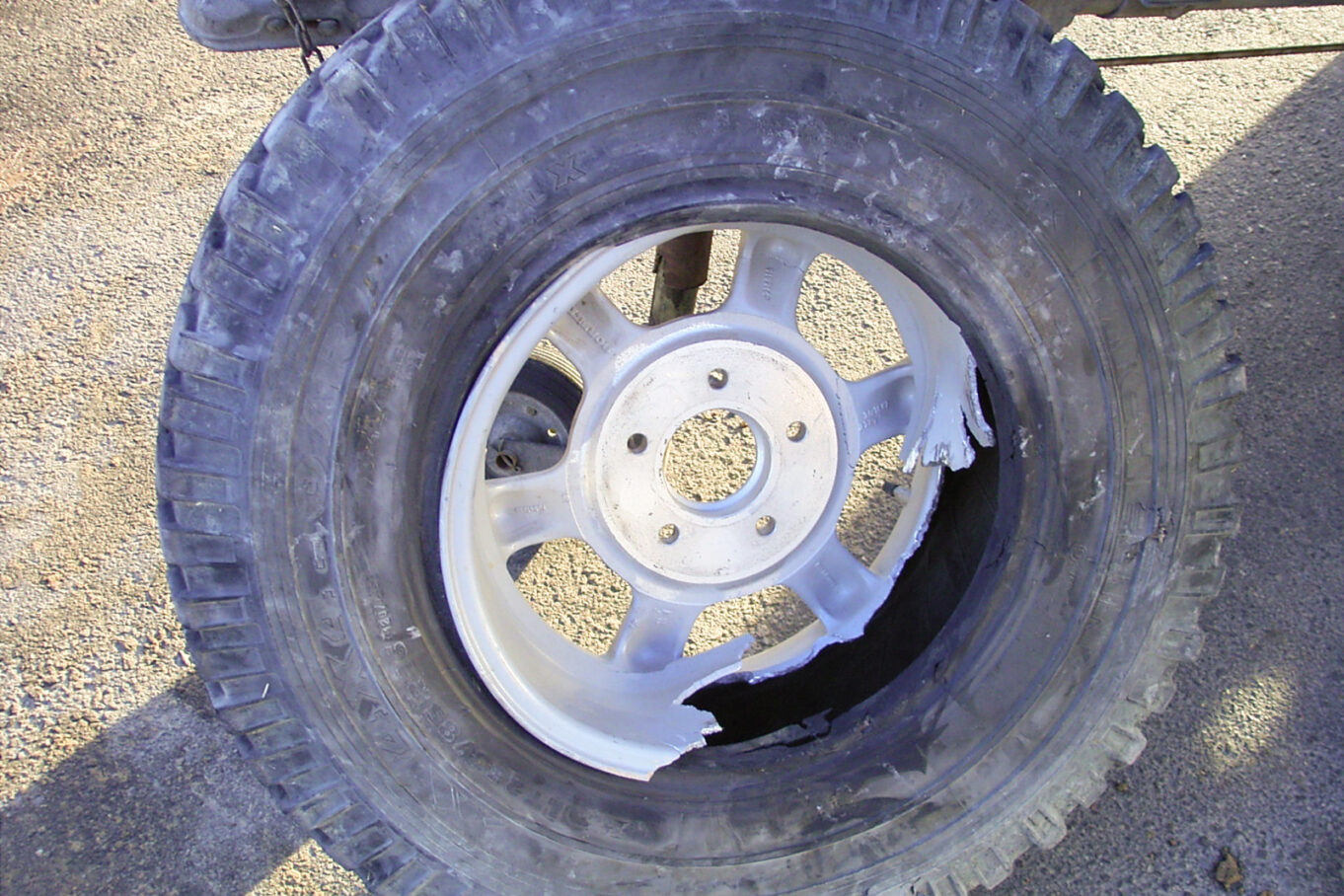
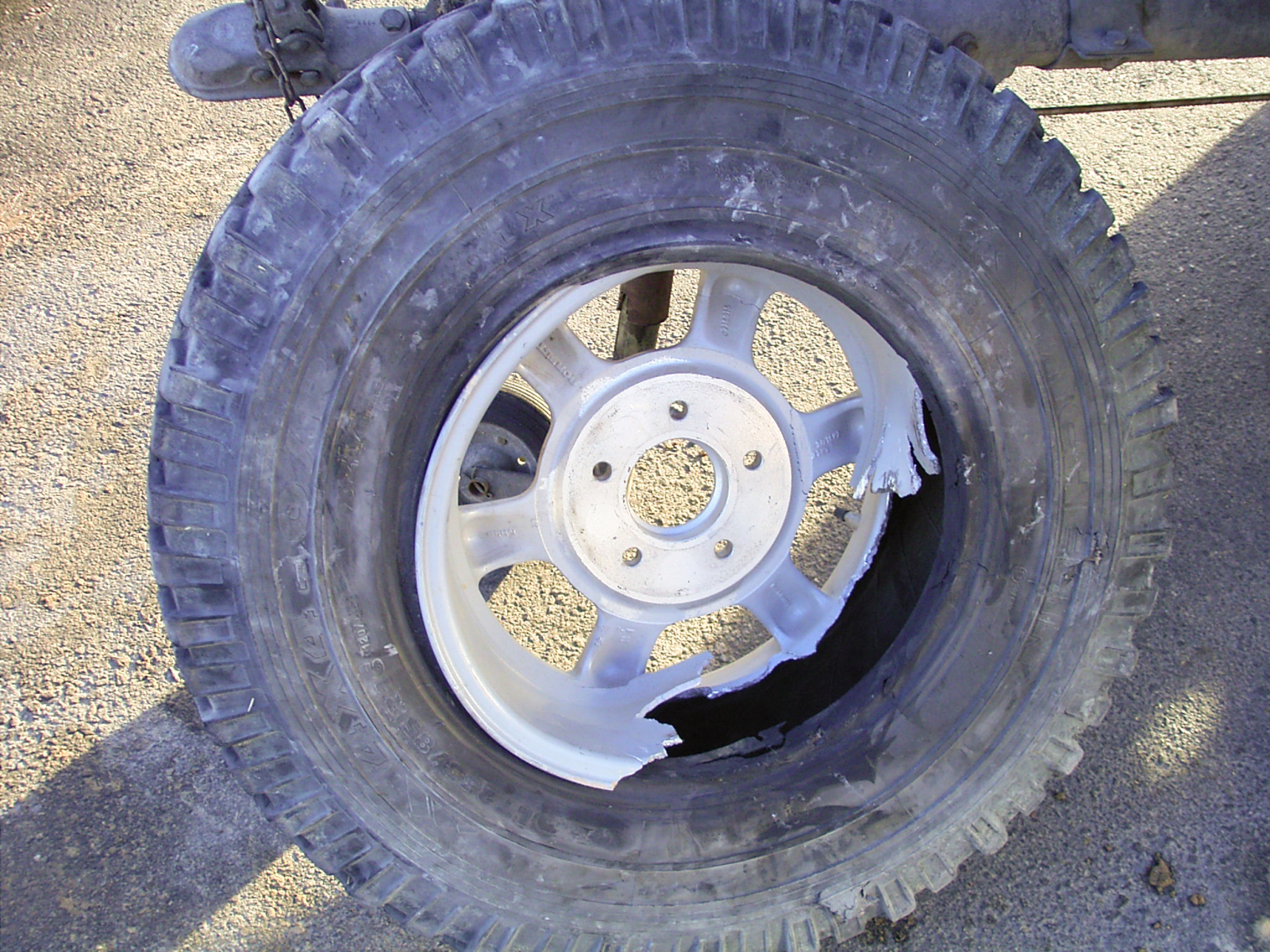
A cheap alloy rim can shatter into several pieces from a single impact, even if the stated load rating is enough for the vehicle in question. A high-quality rim mostly just bends and can get the vehicle to its destination with an out-of-round wheel. A repair with a hammer is out of the question on the trail. Straightening with heat and a hydraulic press is entirely possible with the right experience, though. Even so, a rim like that belongs off the road once home.
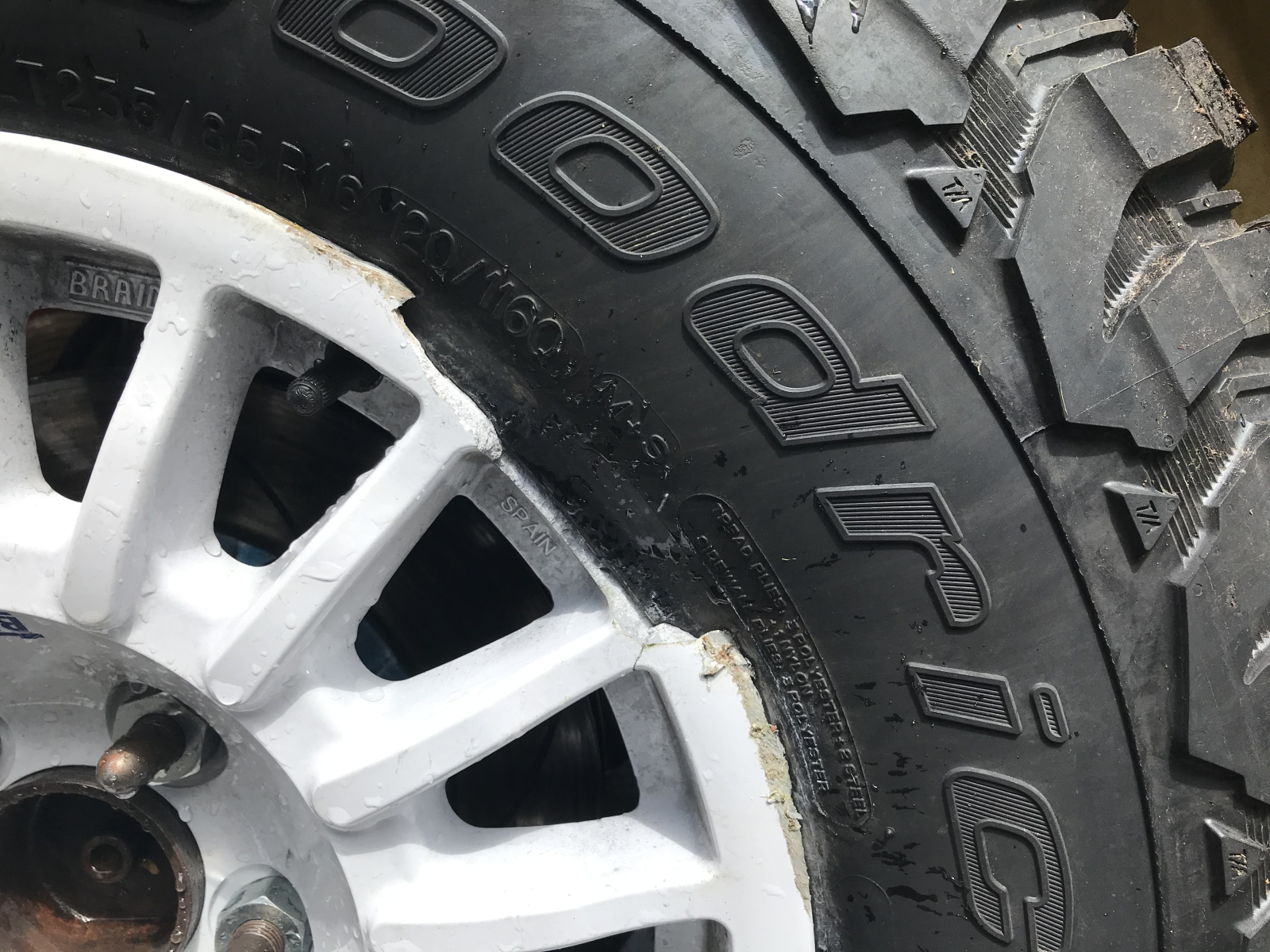
This is a Braid motorsport rim we hit an oak stump a metre across standing in the grass with at 140 km/h. The difference in the degree of damage compared to the next rim is very clear to see, the tyre didn’t even lose any air.
By contrast, this is how a cheap alloy rim can look after a slightly too brisk run through a cross-gully.
Magnesium
Magnesium essentially has the same properties as aluminium; magnesium rims are also made from an aluminium-magnesium alloy, but with a much higher magnesium content. The advantage is a clear weight saving over alloy rims, the drawback is the high susceptibility to corrosion. If there’s more than just surface damage in the protective paint, the corrosion eats its way unnoticed deep into the material and the rim can break apart as if from nowhere.
It wouldn’t be the first time a mechanic at a race or rally is hit by flying rim fragments. Magnesium rims are mainly used in motorsport, where the service life and the cost of replacement play a minor role.
So my urgent advice: keep your hands off used magnesium rims, unless they’ve been X-rayed!
Carbon
I only want to mention this material for the sake of completeness. Carbon rims are used exclusively on formula cars and motorcycles, are extremely light and extremely brittle. You’ll therefore never find them on four-wheel-drive vehicles.
Further rim designs
Beadlock rim
On this kind of rim the outer tyre bead is clamped against the rim from the outside with a so-called beadlock ring and bolted. The advantage of this mounting method is that the tyre can be run at low pressure without jumping off the rim when steering. Pressures below half a bar are possible long-term. Only the outer tyre sidewall is secured.
Experience has shown, though, that in 95% of cases the tyre jumps off the rim on the outside. A pressure loss from driving over stones with the inner tyre sidewall is still possible, however, if very rare.
This here is a beadlock rim from a professionally built South Racing CanAm that won the Dakar.
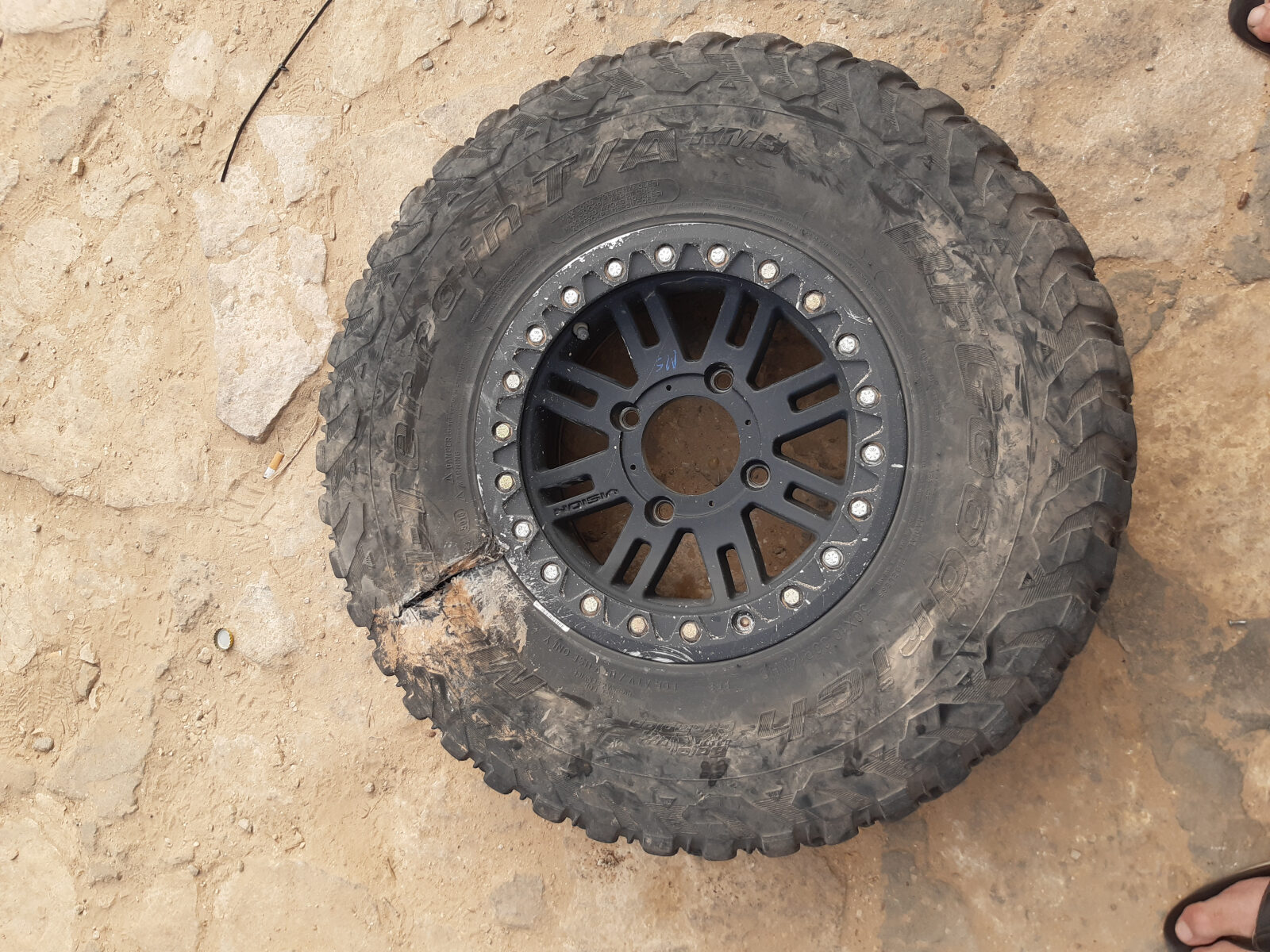
On the buggies, beadlock rims are allowed under the rules, unlike on the cars.
On the rims in beadlock look that are cropping up more and more often at the moment, the tyre is mounted classically between the rim flanges as on a passenger car. The bolted ring largely has a visual function and could, from a technical point of view, simply be left off.
Double beadlock
Double beadlock is the tool of choice for extreme off-road driving. The best-known representatives of this type are the American Hutchinson rims and the wheels of the German army’s Fuchs armoured reconnaissance vehicle. The latter are mounted with a passion on MAN-KAT rally vehicles. Both are military developments that are very similar visually and technically. The principle relies on a so-called run-flat ring of rubber sitting in the splittable rim.
On current Dakar race trucks the run-flat ring is a two-part bolted steel ring that allows better heat dissipation than the rubber ring. This ring is exactly as wide as the rim bed and presses both the inner and the outer tyre sidewall against the rim flange from the inside. The tyre can’t jump off the rim even with no pressure at all, hence the name run-flat ring. A normal rubber tyre, though, will break down into its components after a short time with no pressure at all, from the friction heat that builds up. The military runs Kevlar-reinforced tyres that stay driveable even after being shot at.

Staun beadlock
This isn’t a rim type but a kind of inflatable run-flat ring that can be fitted in any rim you like. The only requirement is an additional bore hole for a second tyre valve. The run-flat ring is basically an ordinary rubber tube that’s stopped from unfolding properly by a jacket of textile material. It’s filled to 4 bar via its own valve and only builds up a few centimetres. The remaining air chamber can then be pumped up to the desired tyre pressure via a second valve. The advantages of this system are that the tyre stays driveable for a little while even with a complete pressure loss and that no special rims are needed. The drawbacks are very slow deflation and inflation, and the lack of road-legal approval.
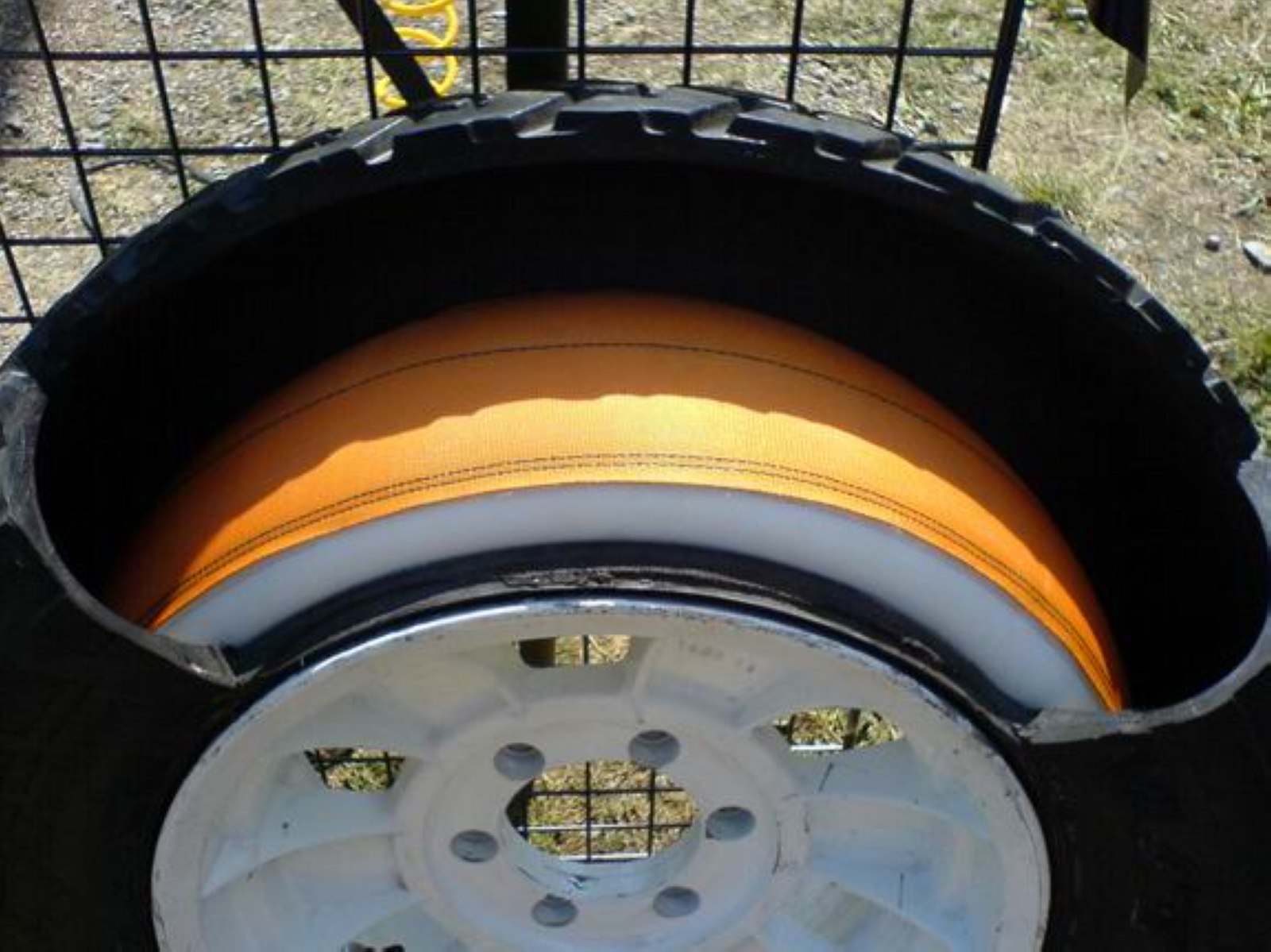
Common to all beadlock systems are the enormous mounting effort and the extremely poor true-running of the finished wheel.
On a 16-inch beadlock rim, balancing weights of 200 g and more are no rarity. For comparison: a conventionally mounted tyre on an intact rim gets by with 20 g to 50 g.
So what has the whole story of Wheel Rims 101 actually given us?
We’ve summed up the technical properties of rims, and all the important differences can now be read up on one page. So everyone can now decide for themselves which rim type seems sensible for their own car, or understand what’s actually fitted to their own car.
If it’s purely about looks, the choice is of course huge. For more specialised uses the choice inevitably gets smaller. In general you can’t go wrong with a steel rim on trips either.
If it has to be aluminium rims that are stable and reliable, then besides the expensive Hutchinson rims there’s really no way past the motorsport rims from EvoCorse or Braid. On top of that, with these rims the tyre, mounted with tyre soap, only jumps into the hump at around 8 bar. And it sits just as firmly on the rim afterwards. The design comes from the fact that beadlocks are banned in the World Cup. We’ve never had a tyre jump off a rim like that at one bar of tyre pressure in the sand.
Anyone who’s dutifully read Wheel Rims 101 to the end, I’ll let in on my favourite rim too: as the keen reader won’t be surprised to hear, it’s the Dakar-Zero from EvoCorse. In my opinion one of the most stable rims on the market and, looks-wise, my clear favourite. On more or less any car.
About the author: Hans-Christian Maurer, or “H.-C.” as everyone knows him, is a trained electrical engineer and qualified marine navigator. He’s been active in off-road since the late 1980s and, to this day, still with the same people. At the start without a driving licence and with a DKW Munga or 404 Unimog from army surplus for a few hundred Deutschmarks. Later he switched, for their outstanding off-road ability, to dirt-cheap Range Rover V8s to be found on every corner. The things were pretty much wrecked in droves out in the terrain.
At some point the pure off-road bashing got too monotonous for him, and he and his friends set off for North Africa in Land Rovers. That’s where the rest of the story takes its course: long-distance trips criss-crossing North Africa (here’s a travel report) and encounters with the Paris-Dakar rally had them building ever more extreme travel vehicles. Finally, in the mid-1990s, they got into marathon rally sport, in which he’s more active today than ever. Sadly he’s the only one left from the old clique who still does it actively. Be it as co-driver on the Dakar and various amateur and World Cup events, or as a technical scrutineer at the G.O.R.M. Some may know him from there too.
Together with long-time Dakar competitor Brigitte Reitbauer he recently founded the company Offroad-Partner. There they deal with both racing and long-distance travel vehicles. In autumn, for example, the two will be at the Five Mountains Tour and will support participants with help and advice before and during the event.
Rim FAQ
What is the rim width?
What do the letters J or JJ mean?
What is the offset?
Steel, alloy or magnesium as rim material?
What is a beadlock rim?
© Photos: H.-C. Maurer