

Last year we hadn’t managed to drive the Wild Atlantic Way (WAW) in Ireland to the end. So in 2024 we came back. We stopped near Doolin in 2023, and that’s where we picked up again this year. A road trip in two stages that was worth it in every respect. Come with us on the second part of the journey.
You can read the first part of our Wild Atlantic Way road trip here: WAW – Part 1.
We’d saved the exact point near Doolin (52.919735 -9.342928) where our trip ended last year in the sat nav. And that’s exactly where we started again. From now on we once more follow the WAW signs heading north. In a good mood and in the best of weather we head towards Doolin. That was the northernmost place we’d reached in 2014 with the Landyfriends, so we already knew it. We knew there was a campsite there and a bar with good food and live music: Fitzpatrick’s Bar.
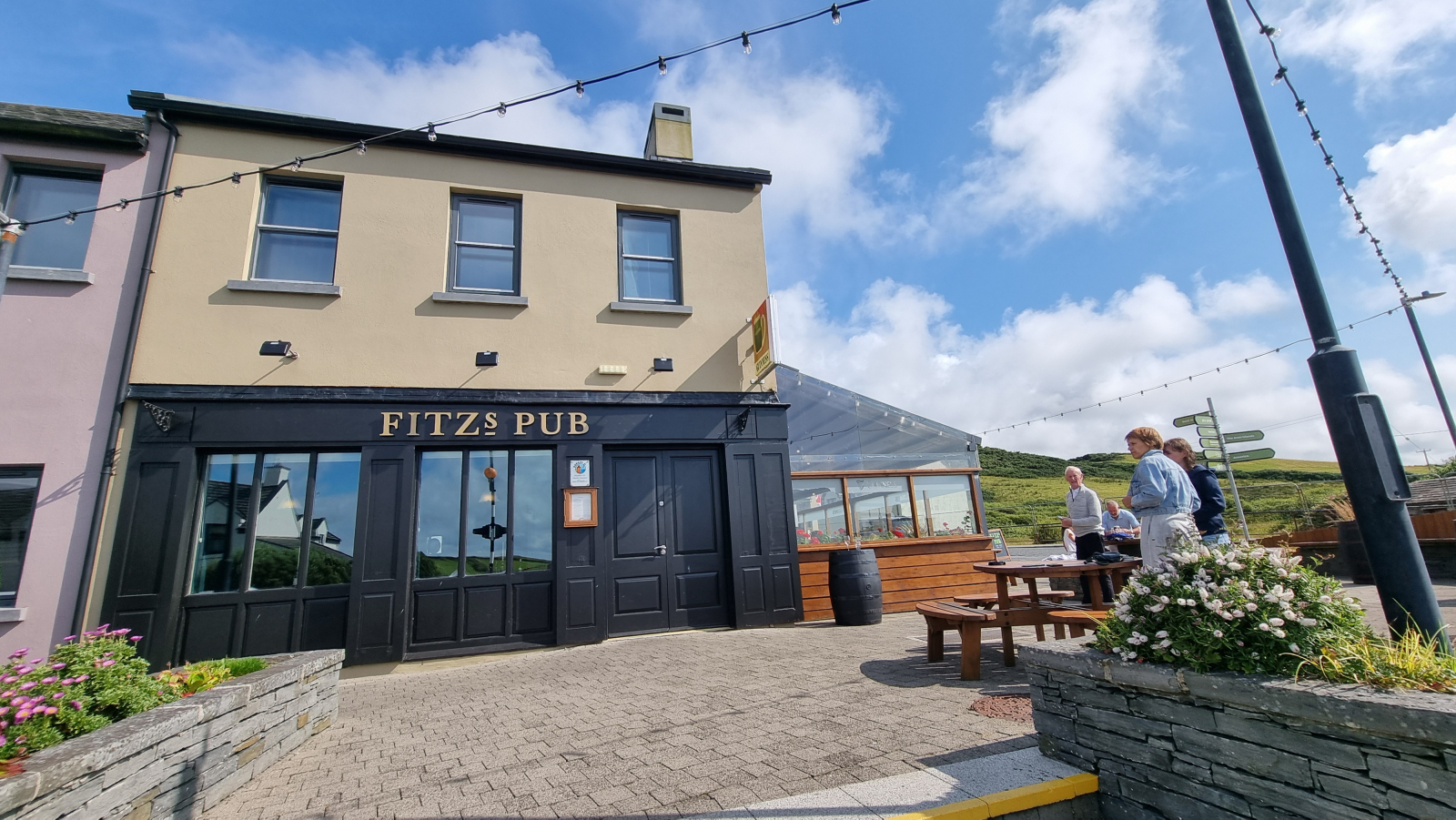
That was our destination for today; here we want to let the day wind down with a real Irish whiskey and Irish music. It was a good decision. At lunchtime we tried the fish and chips, in the evening the drinks. The guests gathered early, mainly people from the area. And it’s completely fine if the lady in tracksuit bottoms and fluffy slippers just pops over. Why not? We really like that easy-going way.
Past the Burren once more, towards Galway
The Wild Atlantic Way takes us along the edge of the Burren, right along the sea. We’d been here in 2015 too. Now we’re on a different route that offers yet other perspectives on this karst landscape. It’s characterised by the many knee-high, rectangular clints that make up the karst. The Burren is criss-crossed by numerous paths and roads that here and there reveal little oases. We, however, are travelling right along the coast, and again and again there are lovely spots where it’s worth stopping to enjoy the view out to sea.
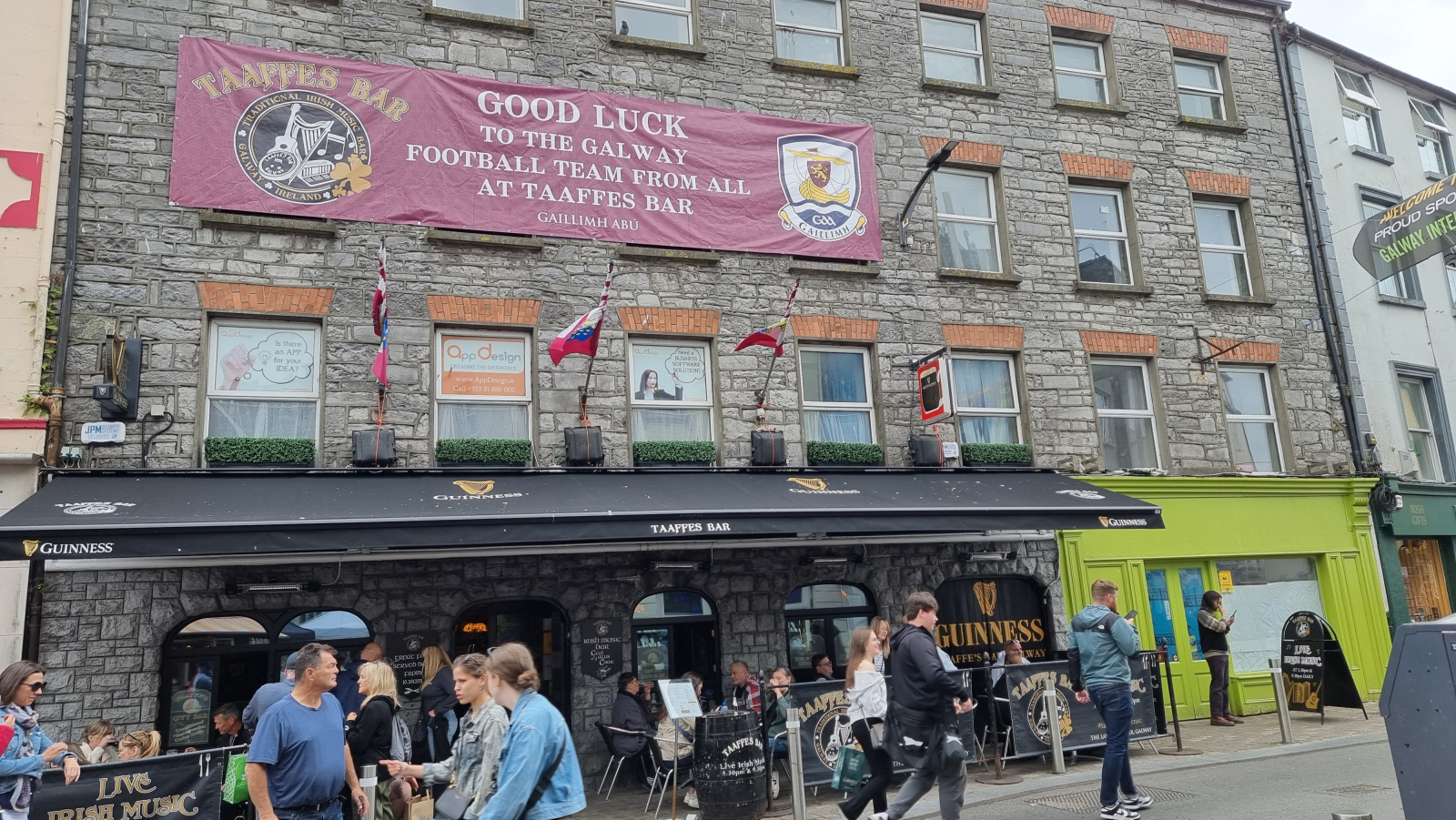
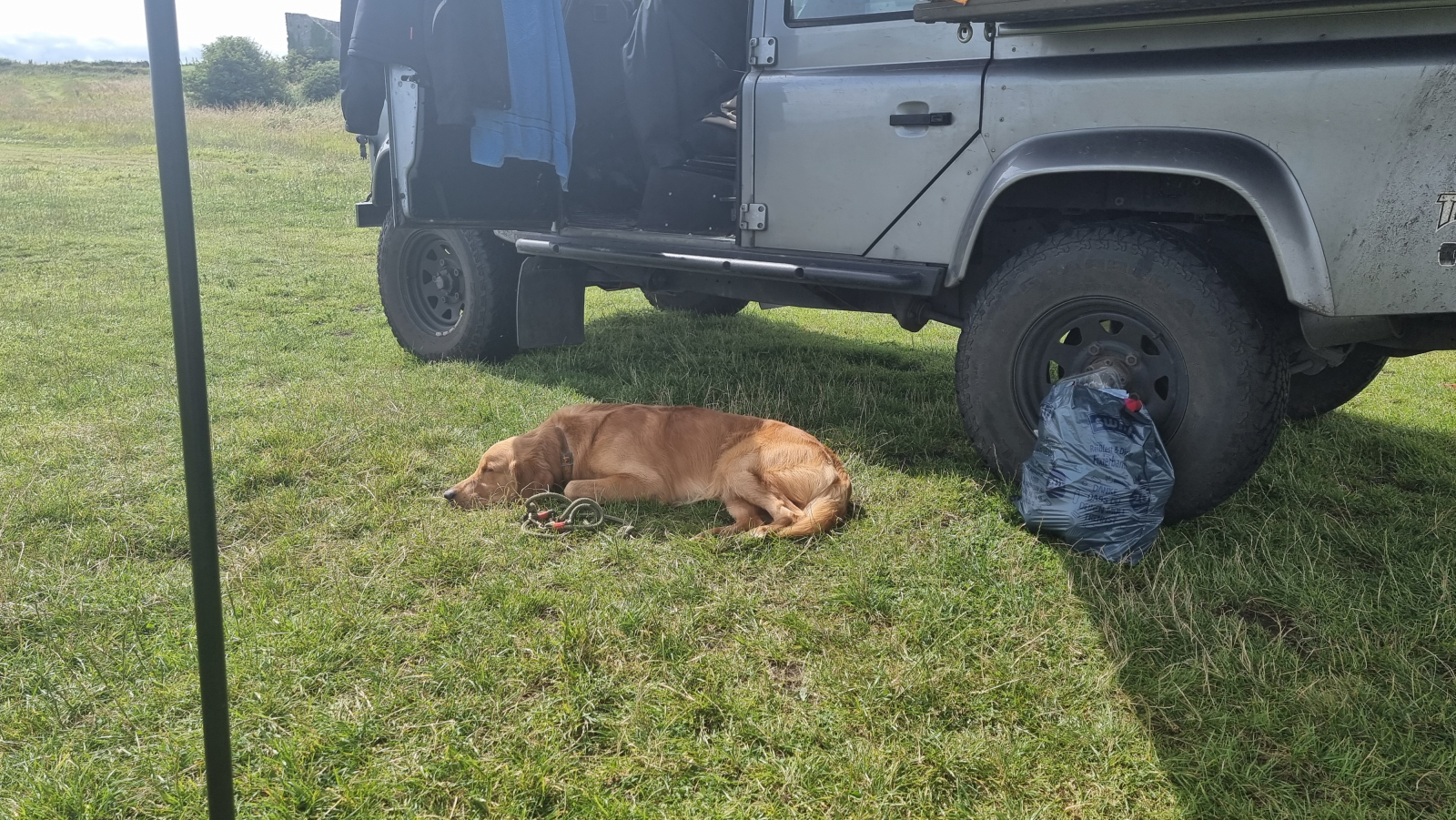
The actual destination for the day, though, is Galway, the musical heart of Ireland. We quickly found a car park at the harbour and then walked to High Street and Shop Street. The pedestrian zone was decorated with colourful bunting, the little shops and colourful houses to the left and right and a lively bustle all around. Small cafés and bars invited us to linger, and from the doorways came now the tempting smell of tasty food, sometimes a mix of different soaps and fragrances. Slowly hunger made itself felt and we found „Taaffes“, a bar known for its music. With our editorial dog Guinness along, it didn’t take long for the first conversations to start. The dog opens hearts, and we were very often spoken to about him. Motto: „He’s so cuuuuute“, hashtag #sweetdog.
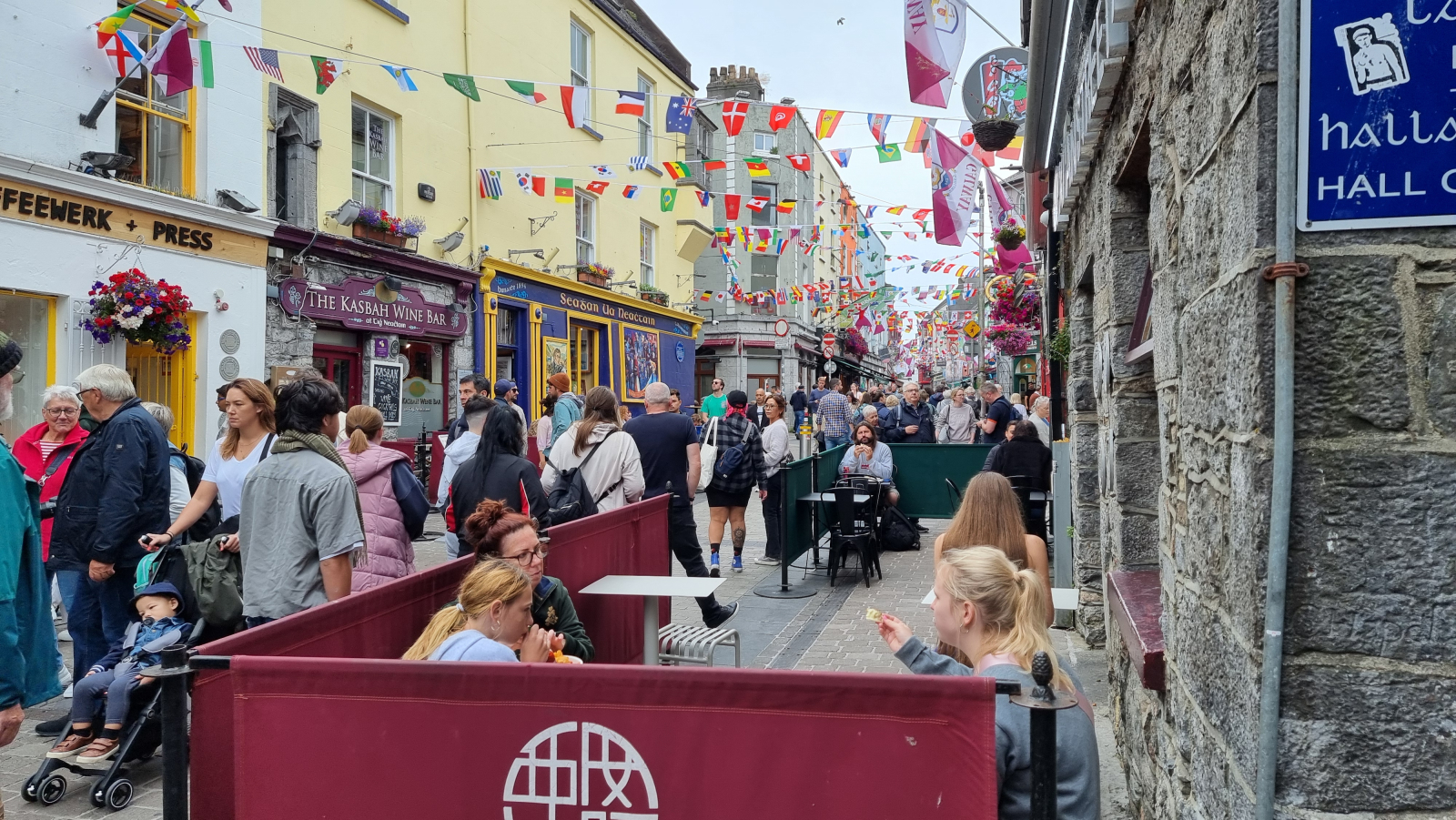
Further along Shop Street the number of buskers rose sharply. This seems to be the music mile here. African sounds mixed with Irish lyrics, folk, young and old people, everyone giving it their best. Again and again we stopped and listened to these talents, soaking up the whole atmosphere.
Time passed quickly like that. We were able to pick up a few tips and pointers about the lovely landscapes still awaiting us to the north. It was time to find a spot for the night, and we set off back to the car.
The secret of the pitches
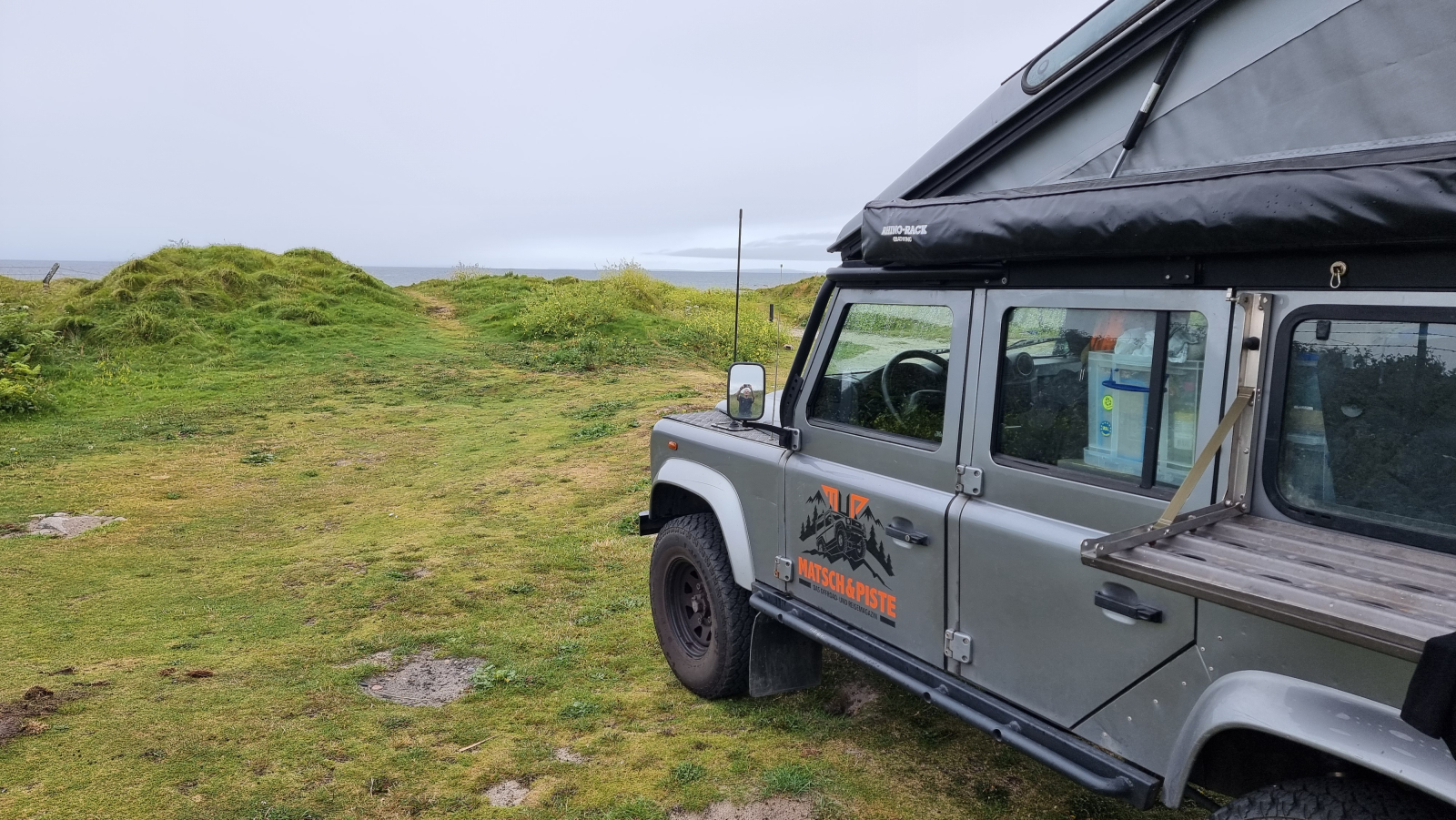
The Irish love to swim, and in any weather and at any hour. So we found out that little turn-offs keep leading to small or large beaches and bays. At the end of them there are often smaller car parks. That’s where the Irish meet for a communal swim. Every now and then these places are very good for spending a night. No one minded; we were always greeted in a friendly way, and not seldom a little conversation developed.
Just past Galway we spot such a place for the first time. People come until late in the evening to jump into the water for another 20 minutes and then drive off again. Slowly everything calms down and we too retreat into our car. The next morning Nik just goes for it. Despite the cold, damp weather and fog, she goes to the beach for a swim. I follow shortly after, and a few Irish people are already there too. Together we do a few laps and only then notice that there really are a whole lot of jellyfish here. We’ll see them quite often. A little cooled off, but with the circulation nicely going, we continue our journey.
Food
Connemara Smokehouse
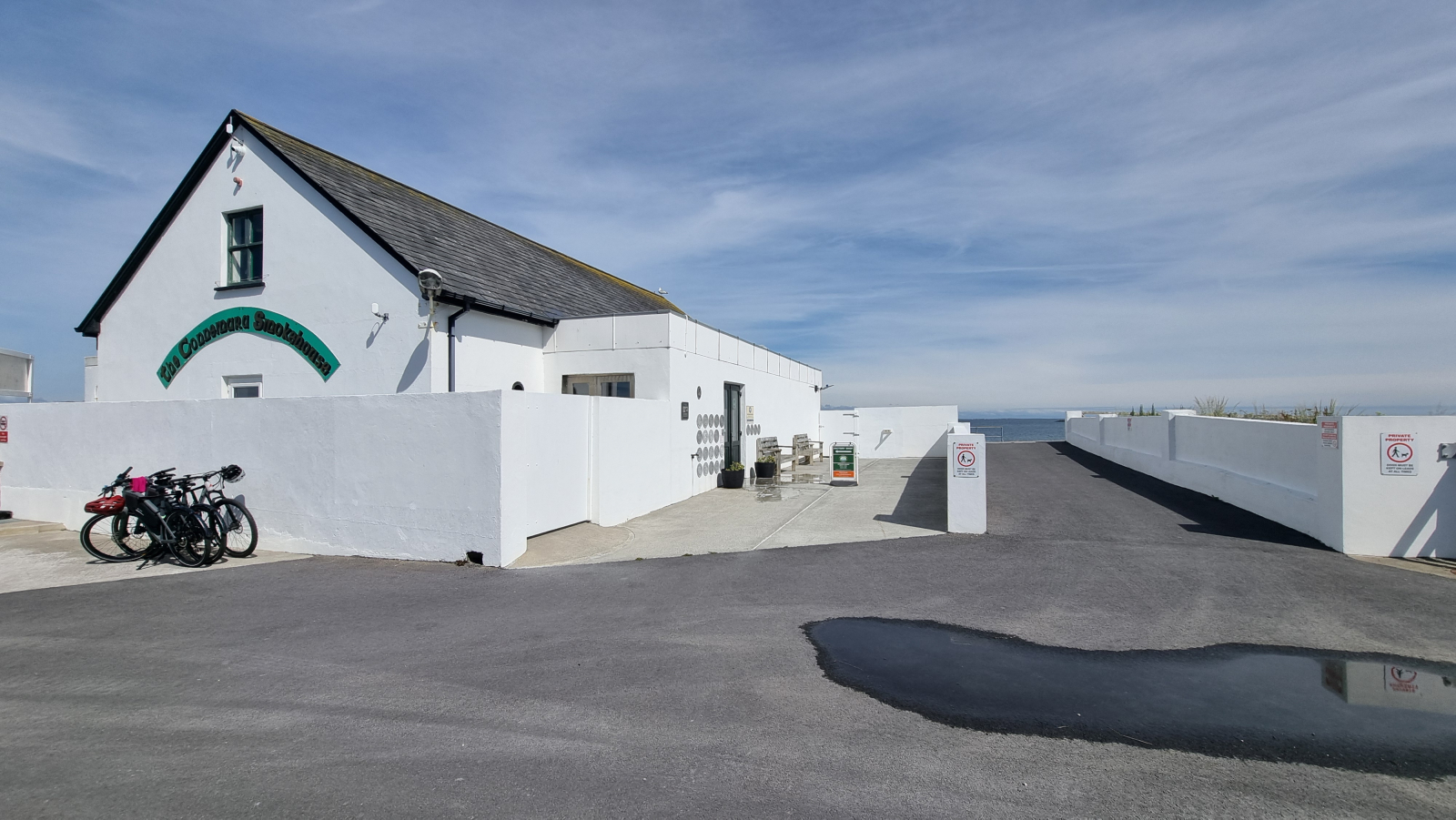
Of course we also want to treat ourselves to some good food. We had a few chances for that. The highlight would surely be the Connemara Smokehouse. Here the salmon and mackerel caught with their own boats are practically refined. Whether peppered, honeyed or plain, you get very tasty smoked fish. A member of staff will explain it all to you in detail on request. How the fish is caught and processed. In the attached café you can have a bite after your shopping and enjoy the view out to sea.
Fish and chips
I’m a big fan of fish and chips. At every opportunity that came up I „tested“ it. Well, I’m no culinary expert, so I don’t rate individual flavours or aromas, the composition and presentation, no, with me it’s simpler. „Tastes good“ or „doesn’t taste good“ has to do. The latter I never had to encounter, and I especially liked it at „The Olde Castle Bar“ right opposite Dunvegan Castle.
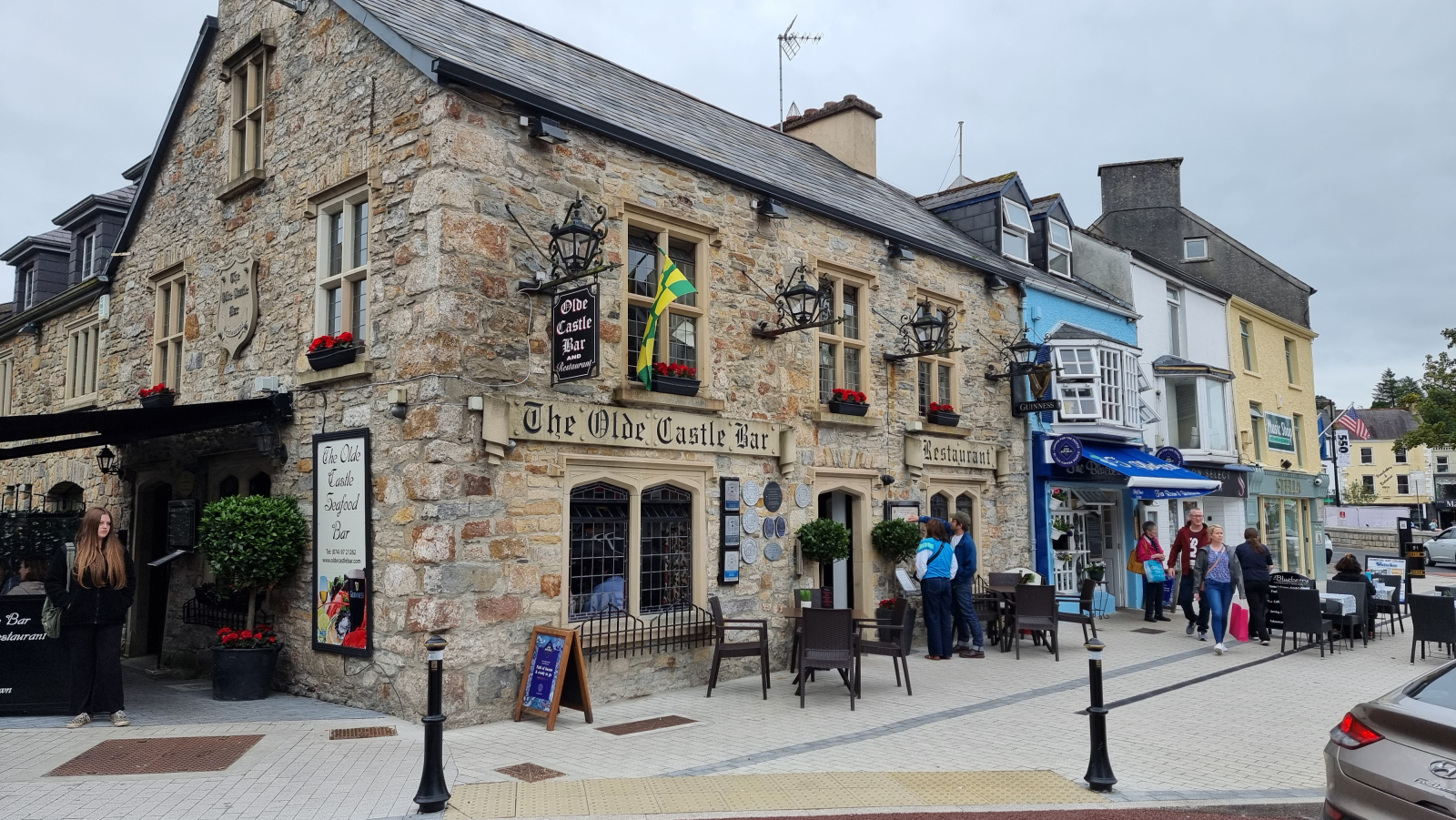
While we had to skip the castle, because, unlike what the signs said, the dog wasn’t allowed in (reason: people might get a fright), I’d go and eat in the bar again any time.
A second good address was the „An File Bar“ in Westport. Centrally located, I was able to enjoy a very good fish and chips here.
Omey Island
On we go along the WAW. About halfway along today’s stretch, which takes us to Achill Island, lies Omey Beach. It’s a beach, but also a road. At first we were puzzled at how matter-of-factly the cars simply drive through the shallow water here. On closer inspection and after a bit of research, we found out that this is the only access to Omey Island, which can only be driven at low tide. Honestly, I’d spare my car this recurring saltwater bath. But that’s just how it is.
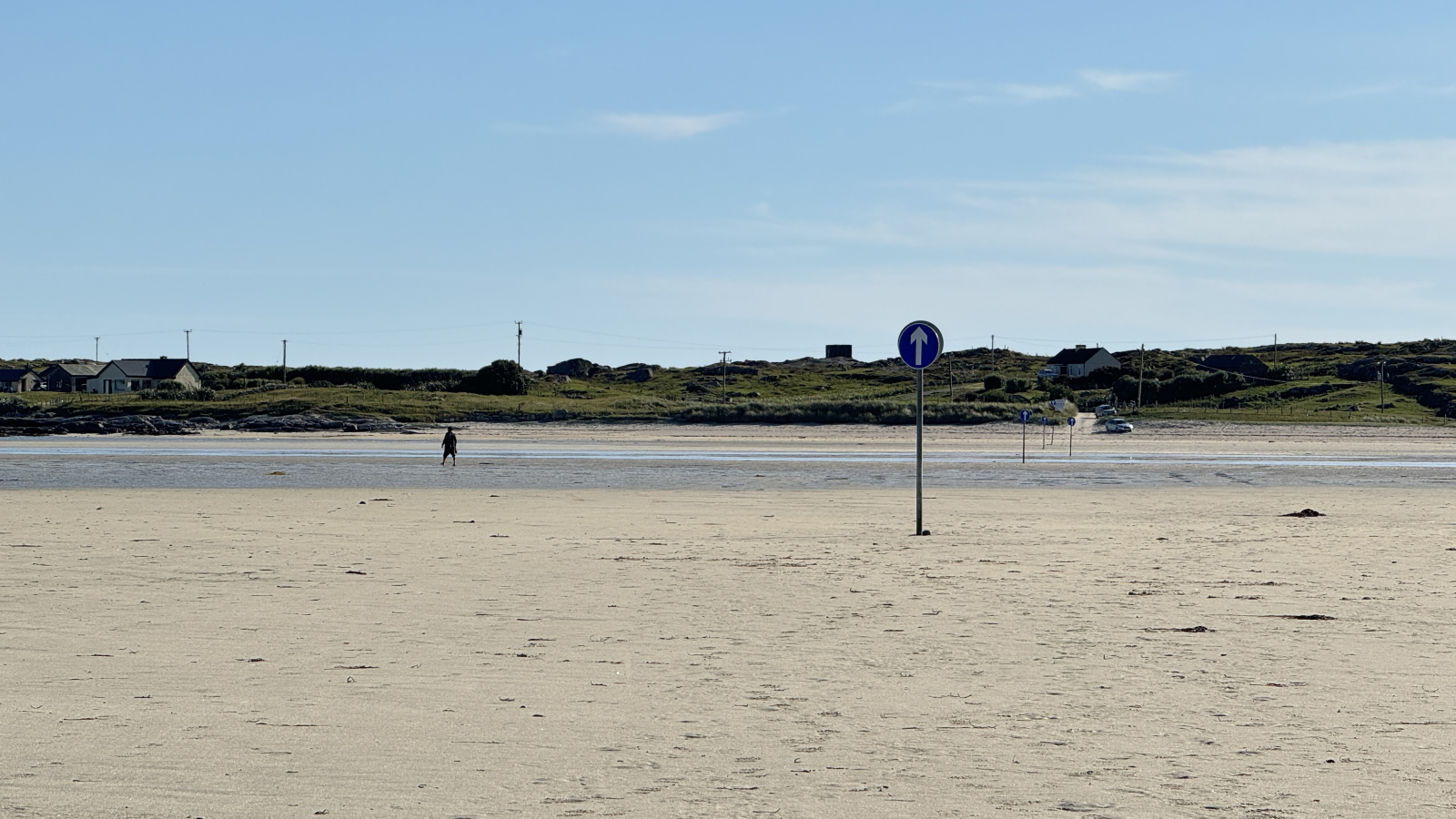
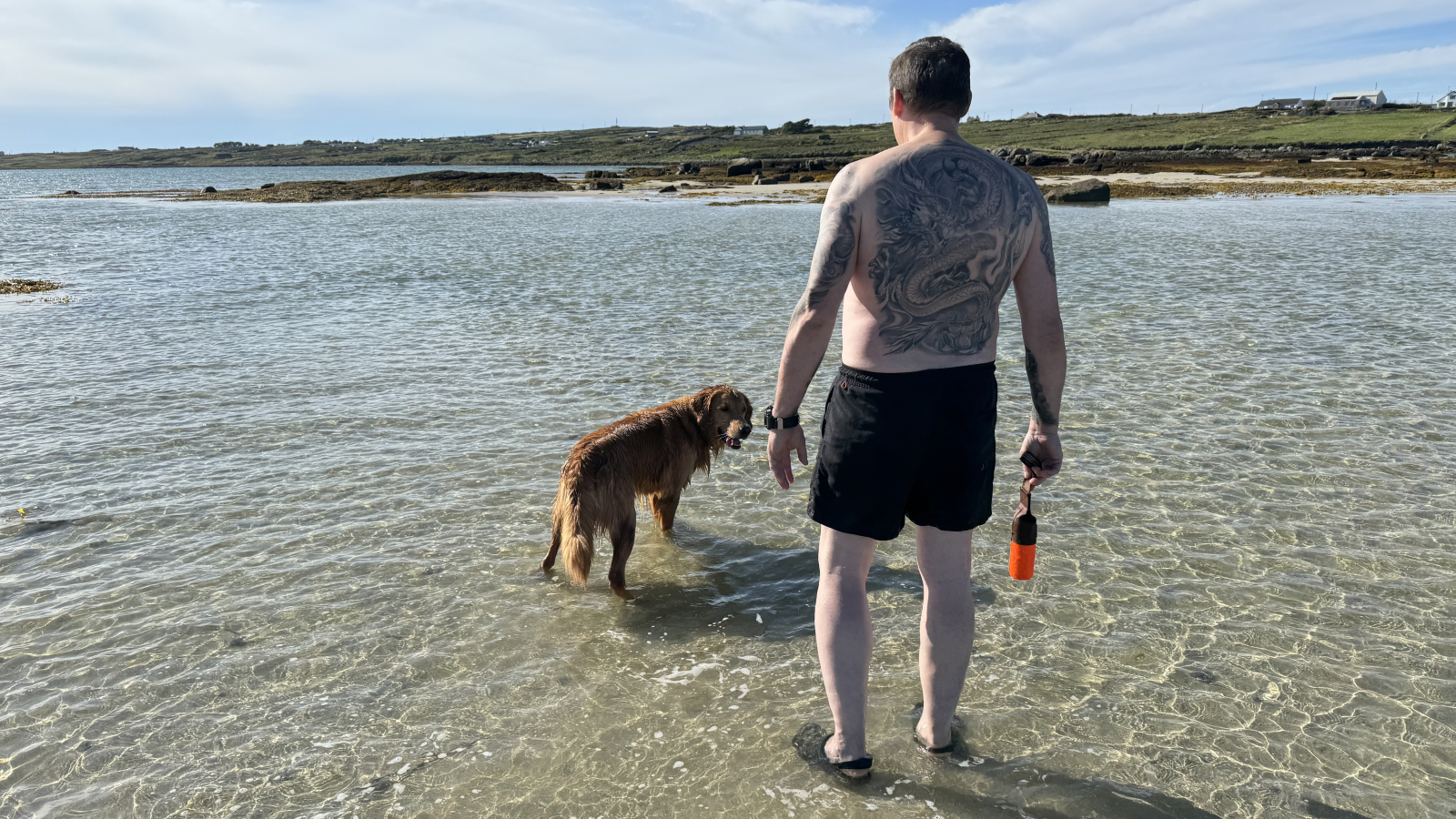
Apart from the cars wading to the island, this is an absolutely excellent place to romp about with Guinness in the water. The beach is wide, clean and everywhere there are shallow pools. Here the dog can run and romp far, fast and safely. As we have the best weather, it’s now „swim shorts on“ and we take an extensive playtime. Although, Guinness can’t be worn out. The water baby just doesn’t seem to get enough, but at some point we do have to move on.
Beaches
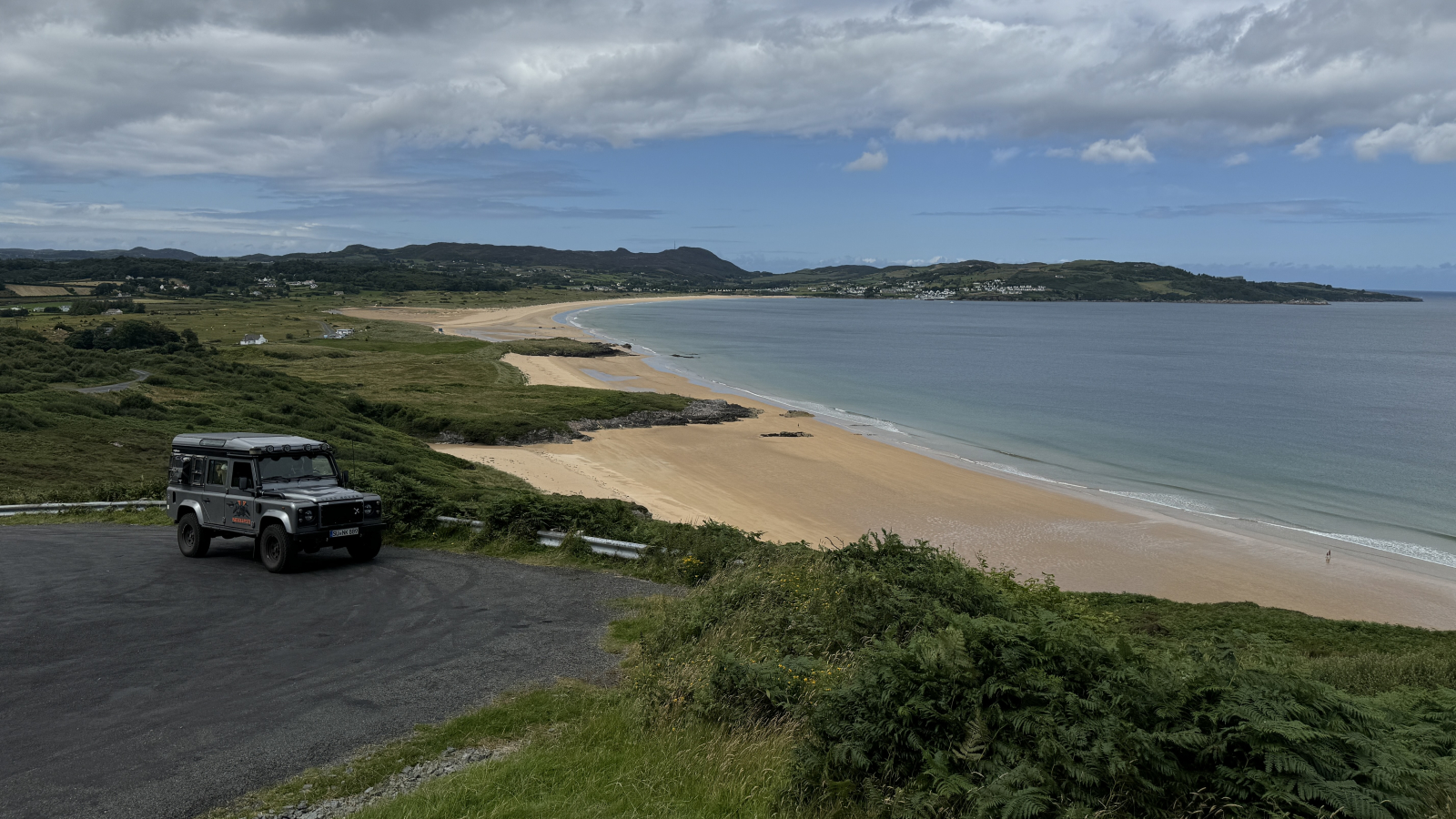
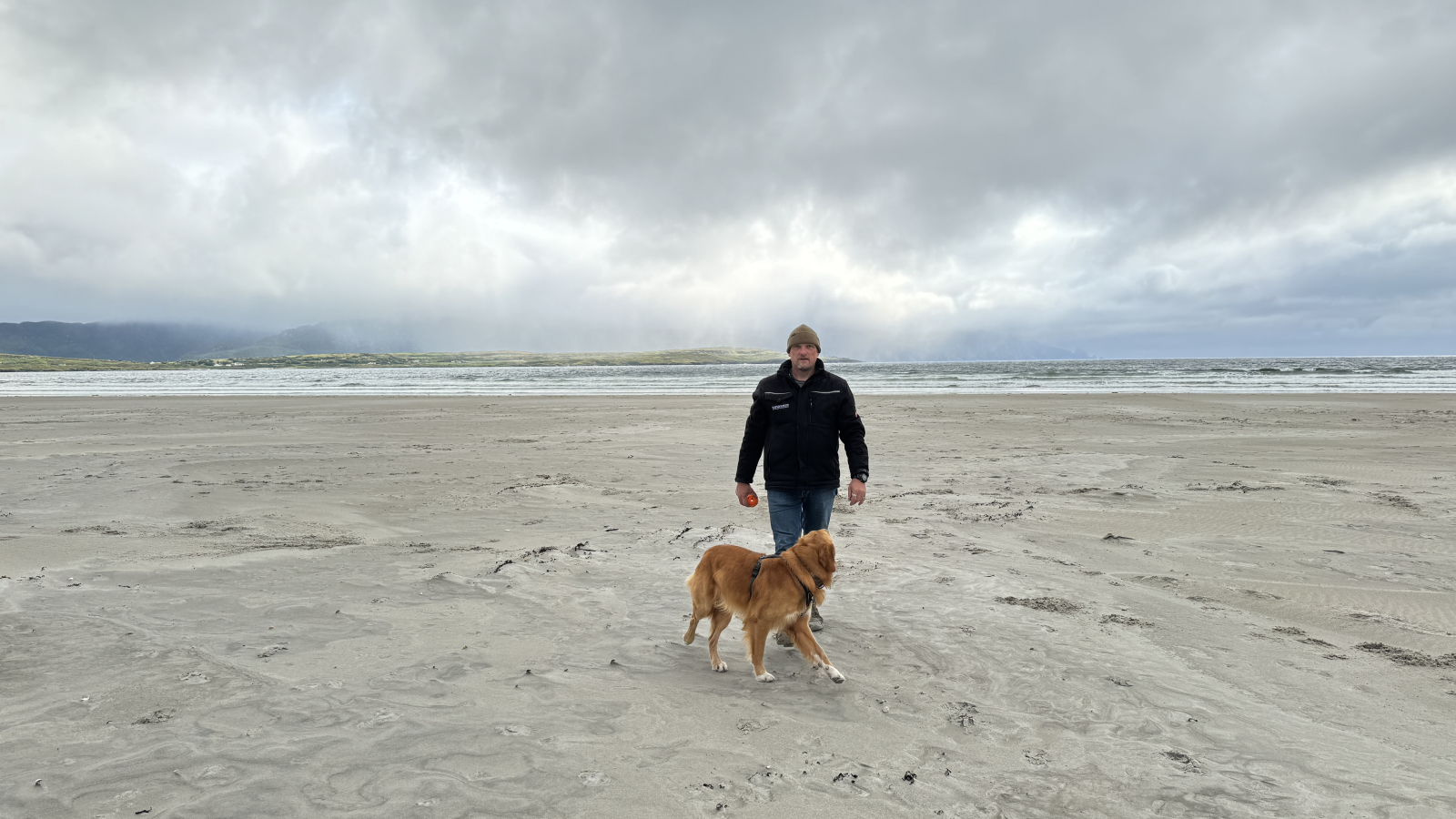
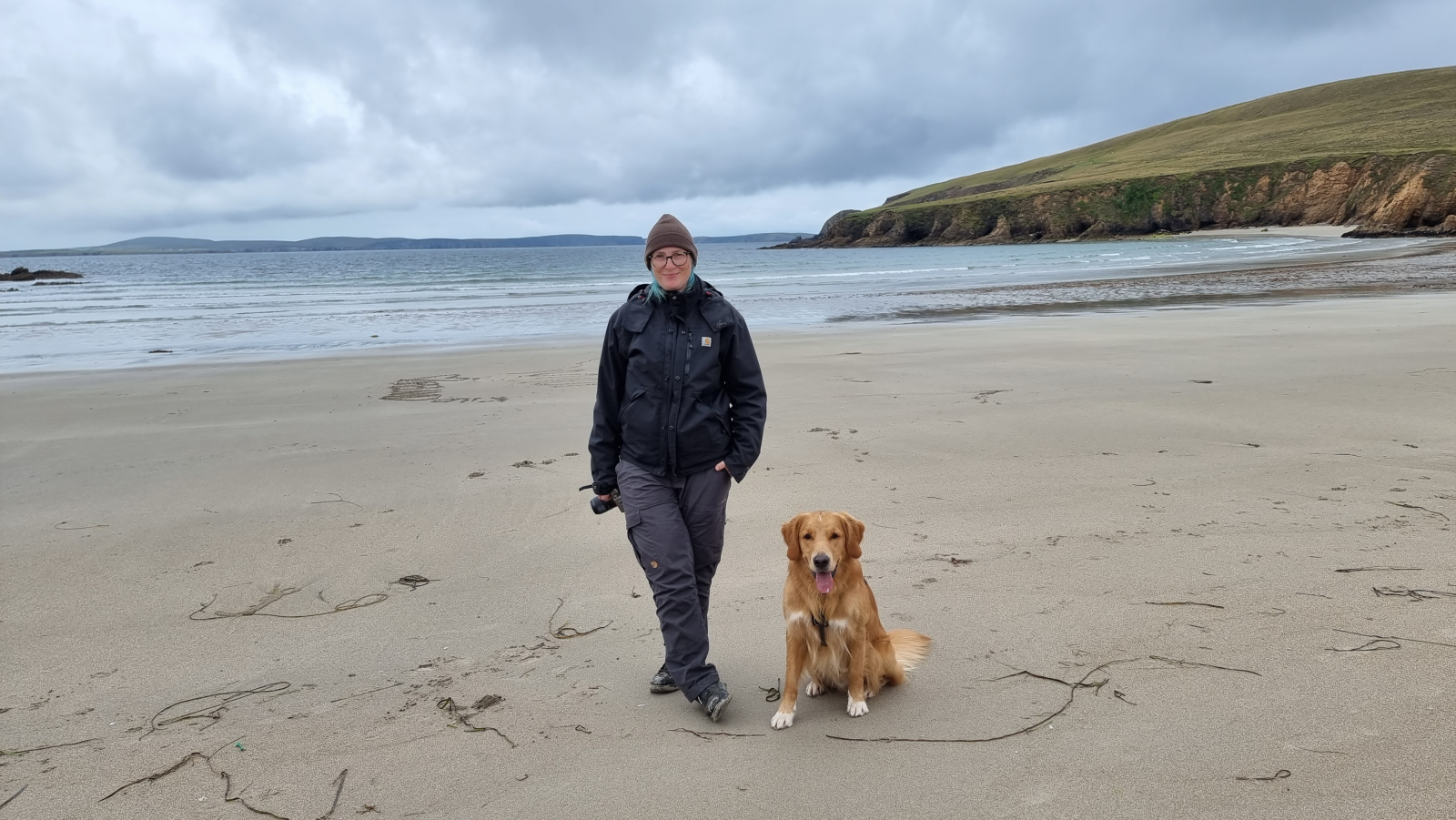
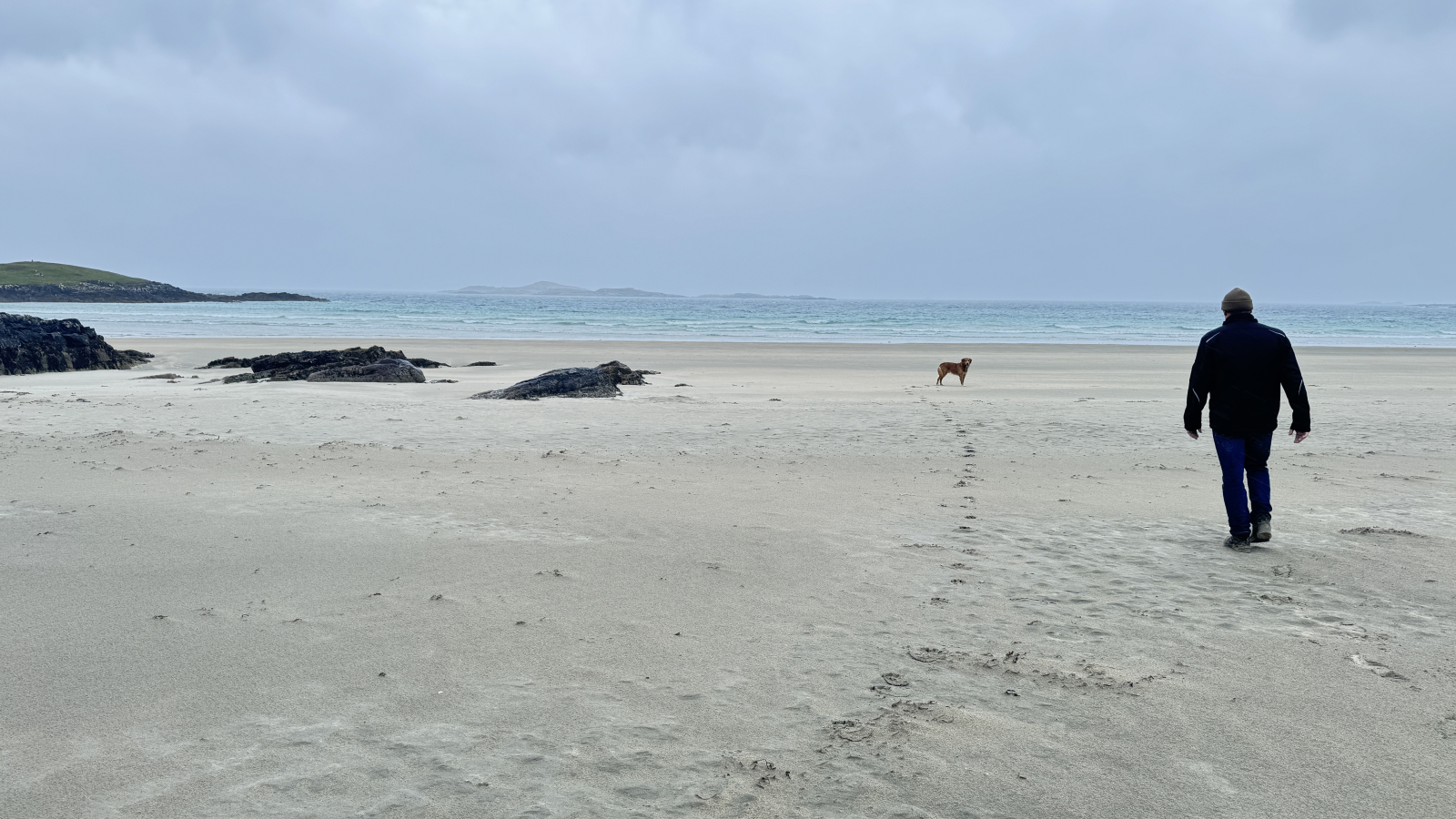
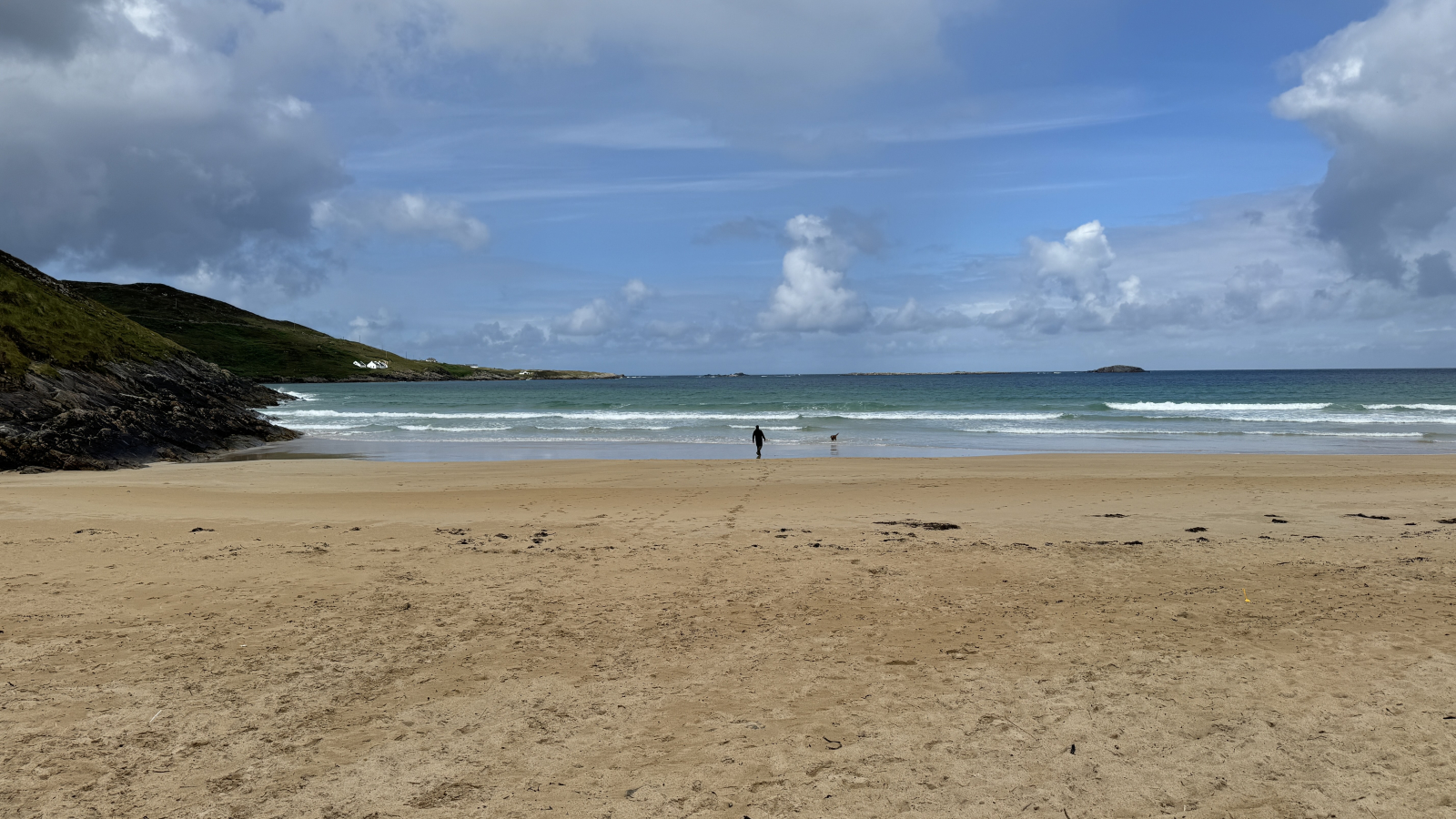
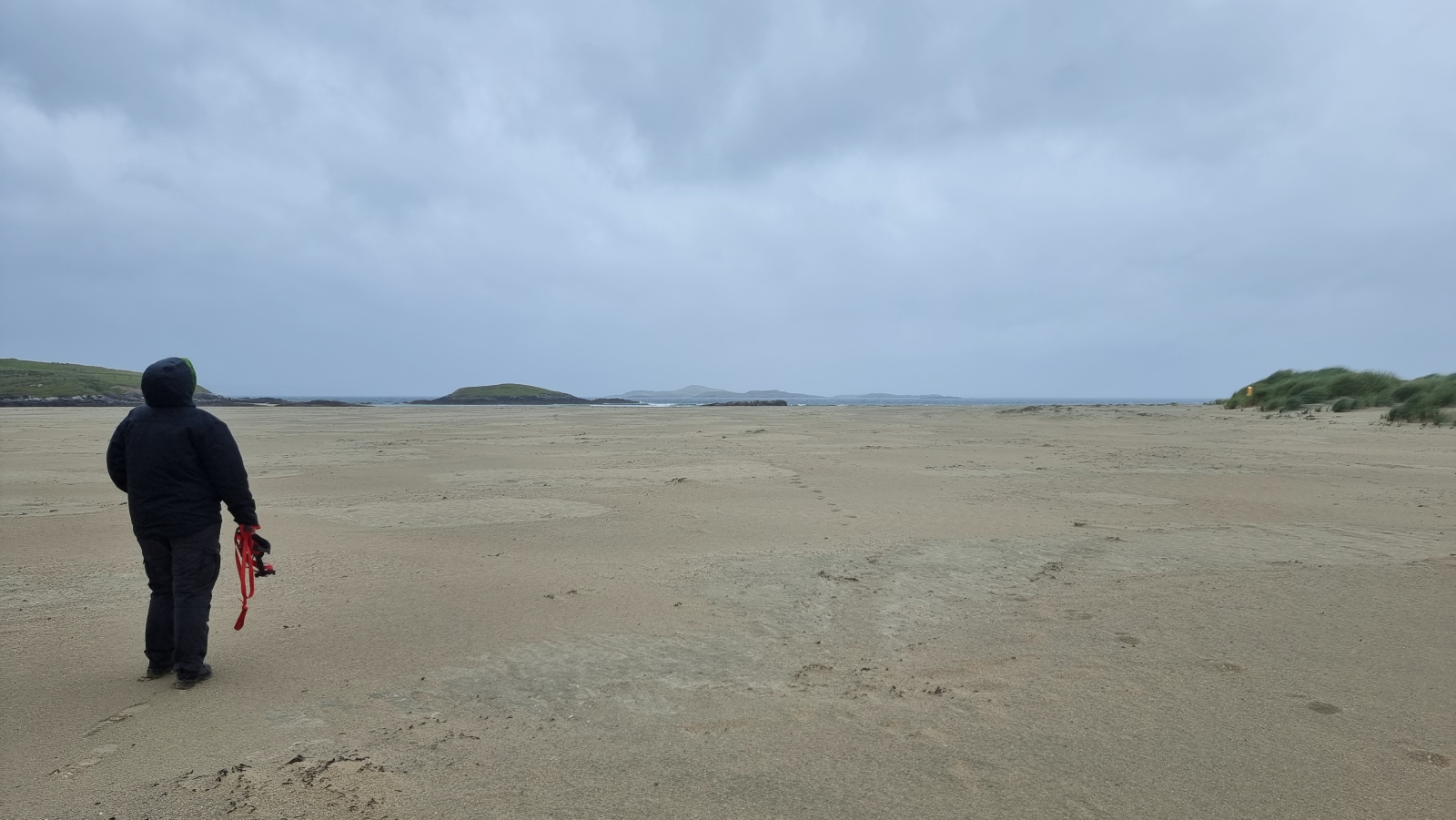
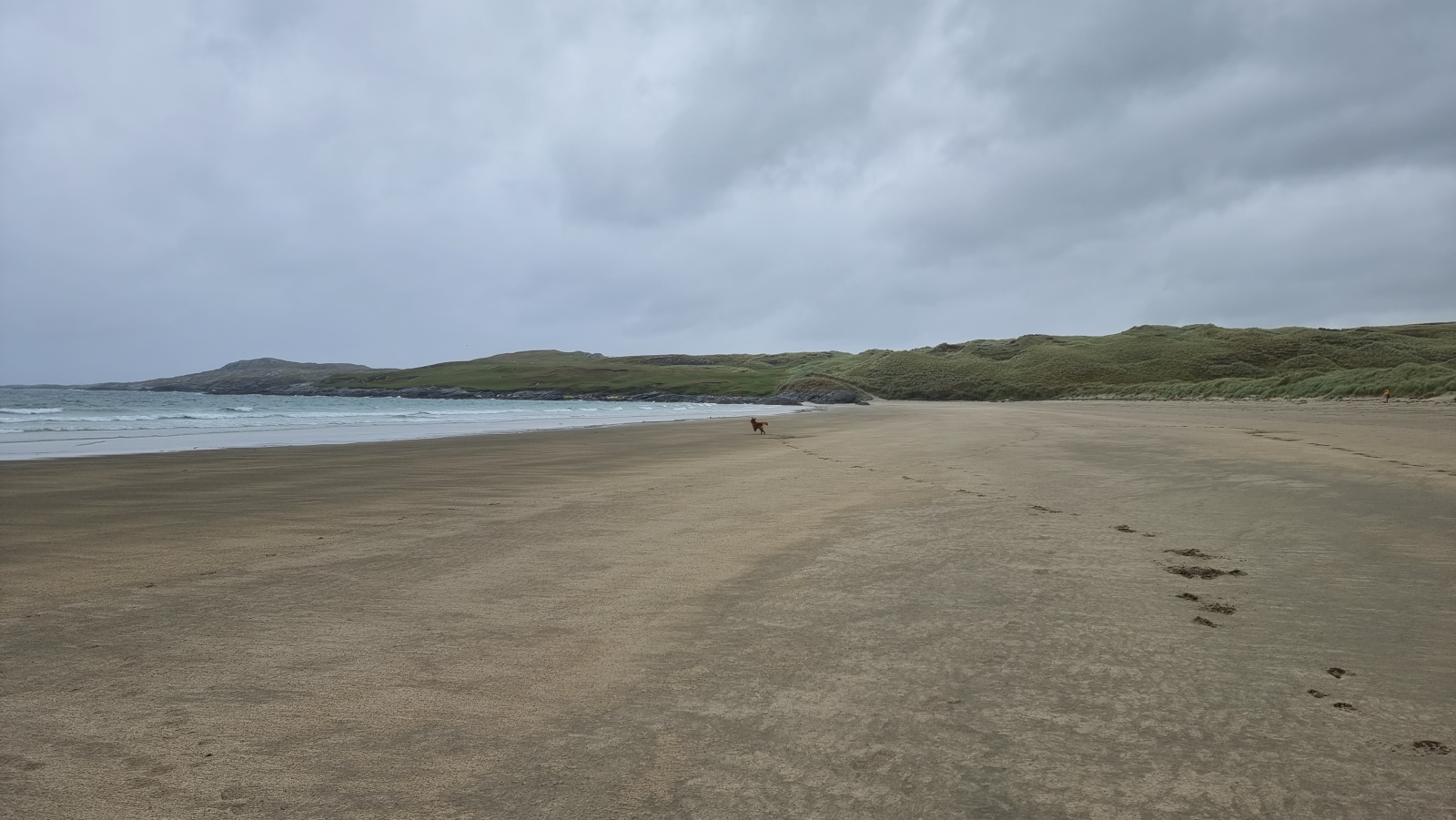
We don’t have a single recommendation, but the further north we came, the more lovely small and large sandy beaches we saw. I could have stopped at every one to go swimming with the dog. Mostly they were empty or there were only a few people about. And that in July. We also noticed how very clean they were.

Beaches and the water
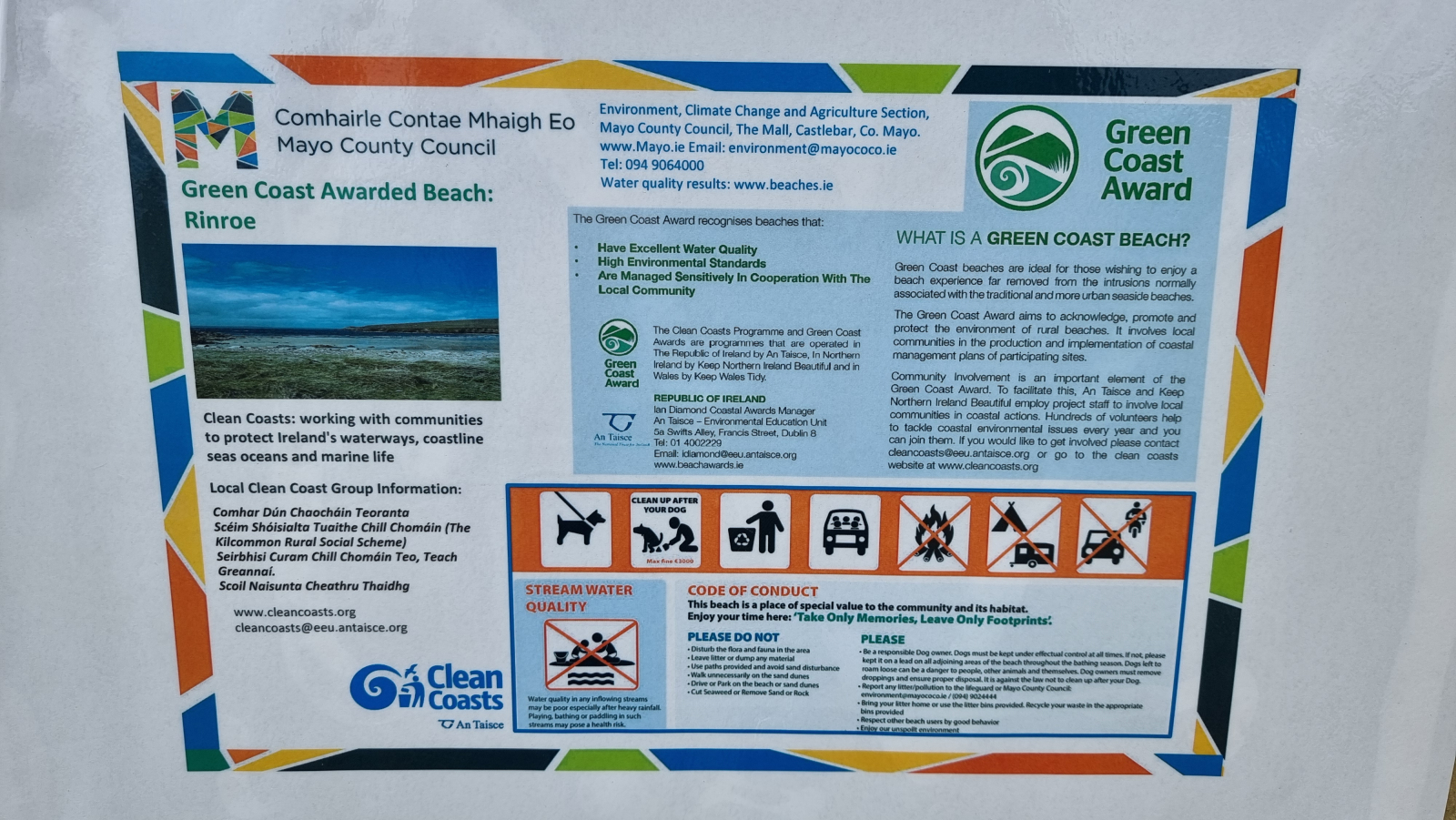
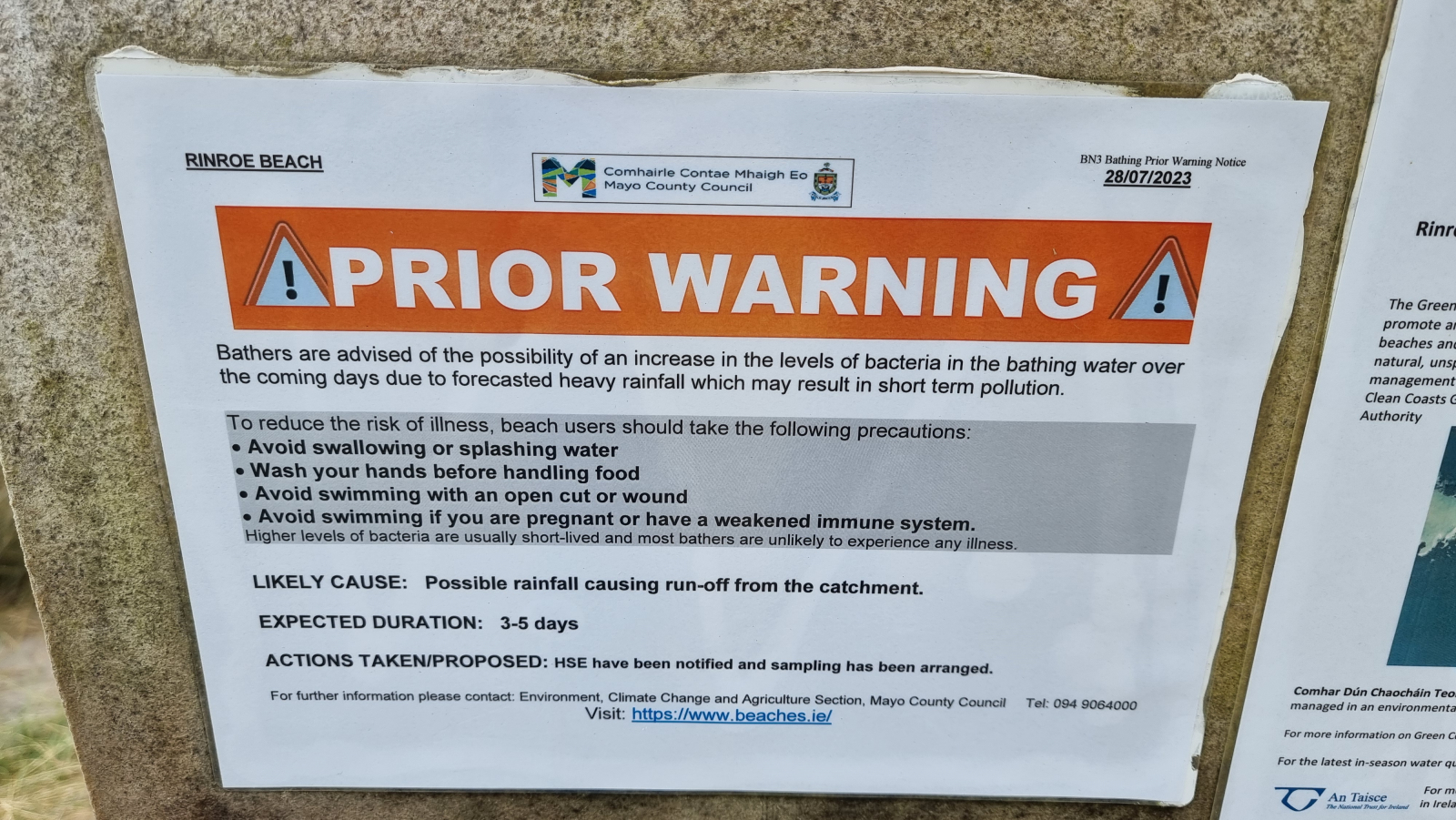
Of course, not everything is always sunshine in Ireland either. On some beaches there are recurring problems with bacteria-laden water. The cause is intensive livestock farming. The animals’ leavings are washed into the water, especially across the beaches. Bays tend to suffer more from it, as the water exchange there happens more slowly. The rain washes the urine and dung out of the ground, picks up the bacteria, gathers under the loose pasture soil and runs across the beach into the sea as a more or less large trickle.
Livestock farming rose sharply after the milk quotas were dropped in 2015. The herd grew by 40% to around 1.63 million dairy cows. With the rest of the stock there are 7 million cattle in Ireland. Milk production has risen by 37%. On top of that there are nearly 4 million sheep. Through fertilising and faeces, that puts the entire water system under enormous pressure. Against that stand 6.8 billion euros in export earnings from the dairy industry alone.
There are plans and measures to curb the pollution, but it’s assumed that a good 40% of the farms don’t meet them, or only insufficiently.
Cleggan Cliffs
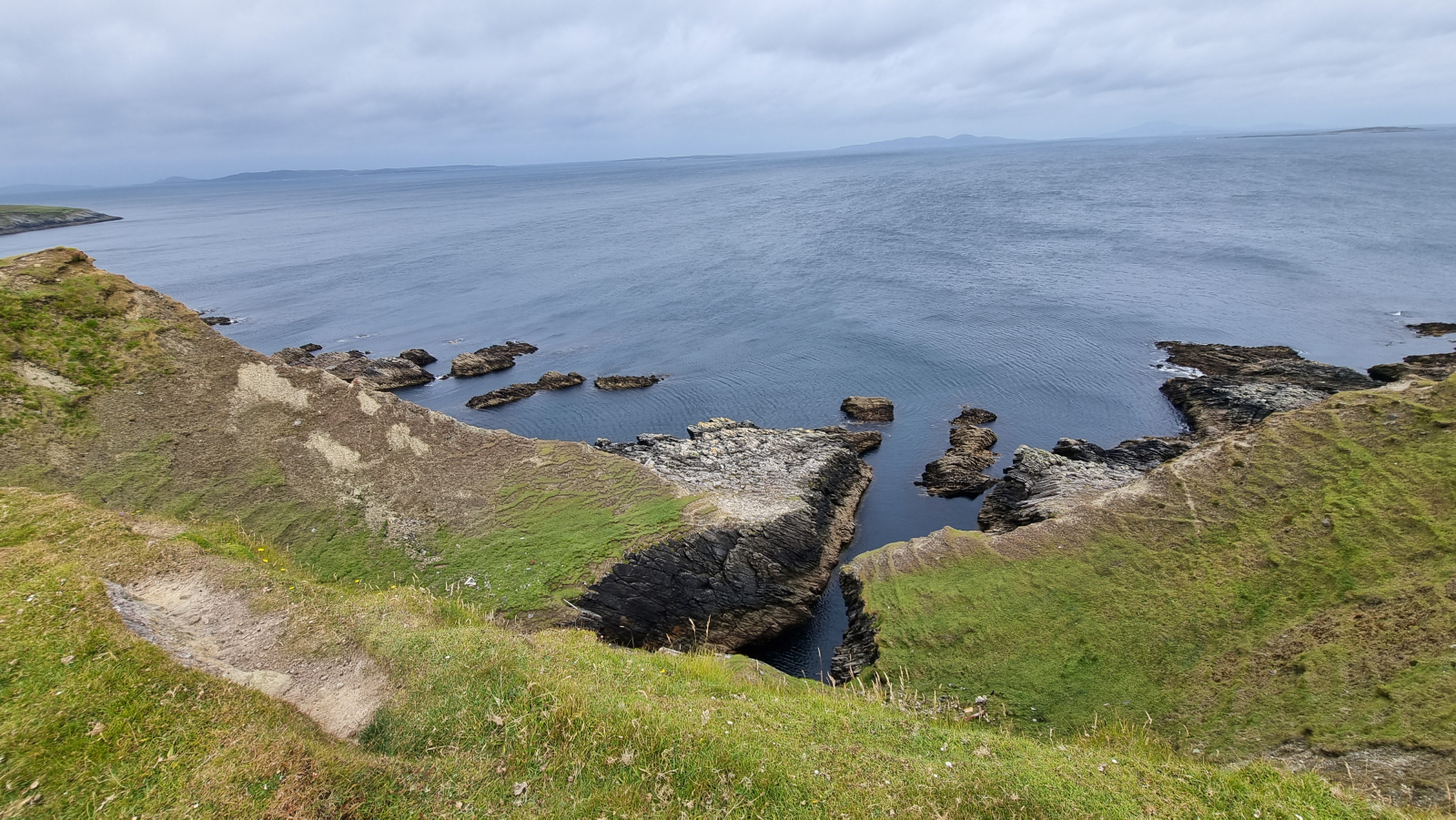
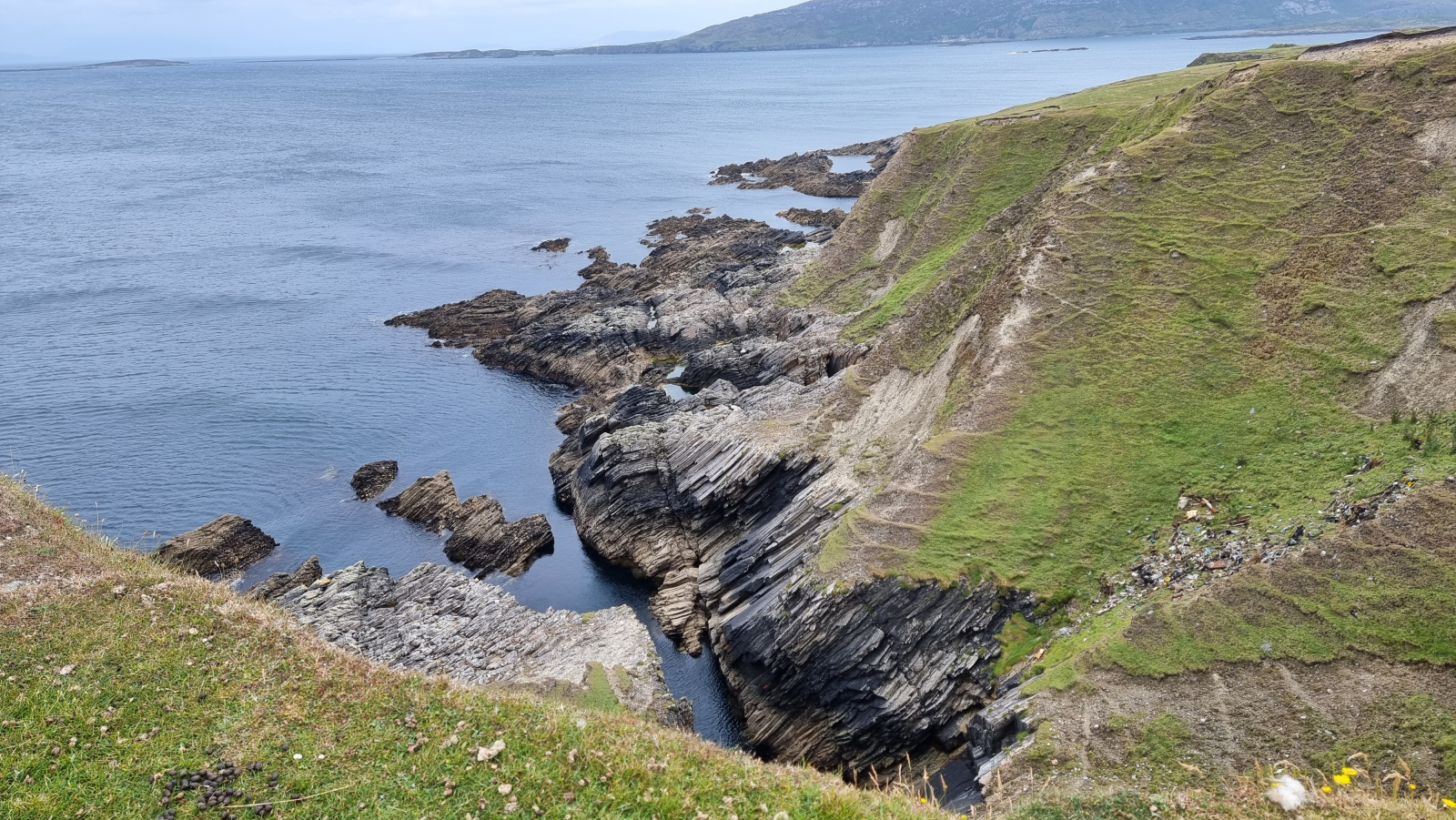
A little off the Wild Atlantic Way, and reachable only through pasture gates and along a field track, lie the Cleggan Cliffs. Here we can catch another spectacular view of Ireland’s rugged rocky coast and the sea. Anyone who loves such moments should drive out here.
On the famine trail on the R335
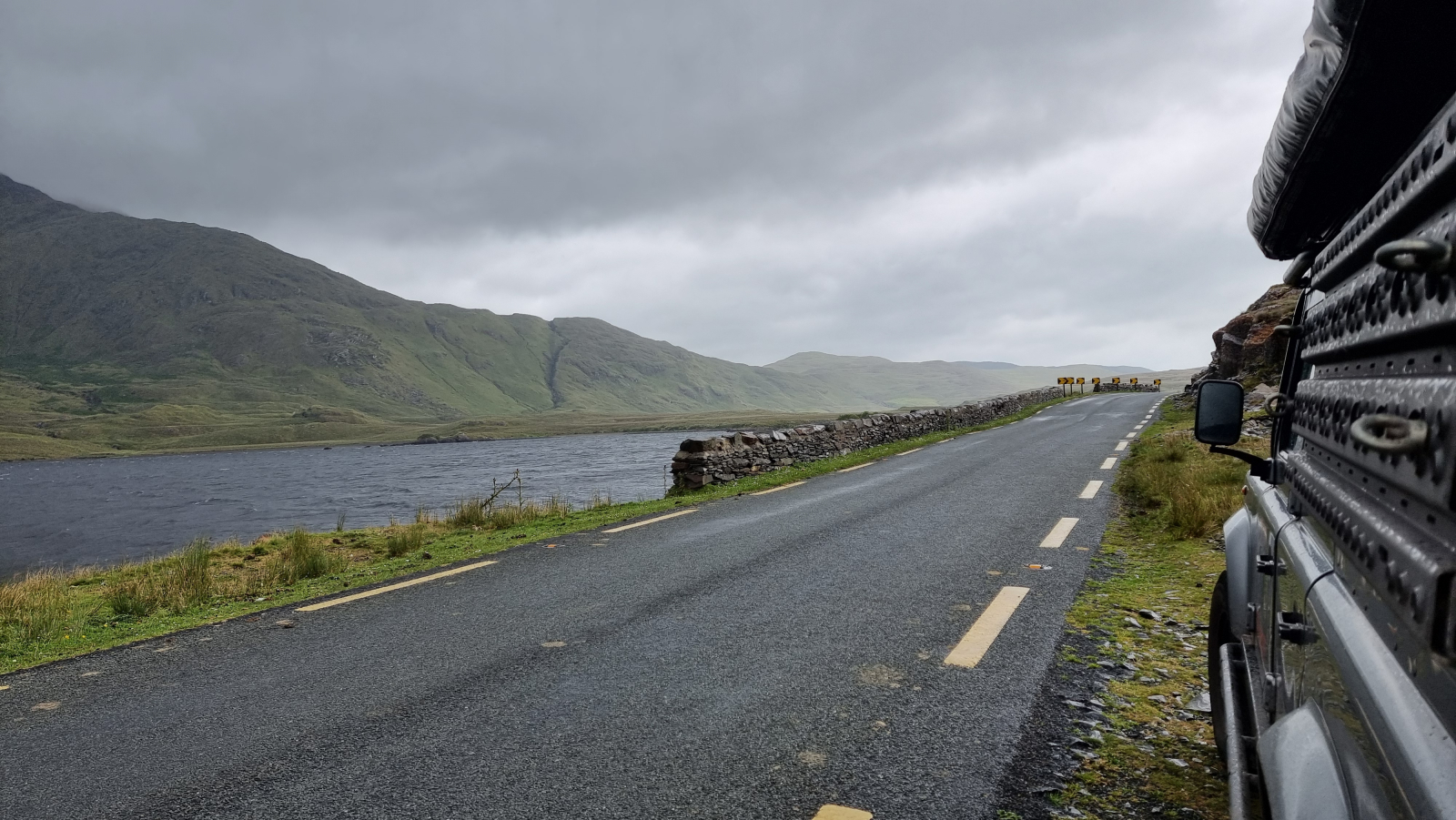
Today the weather isn’t so friendly. It suits a scenically very beautiful stretch with a tragic history. Along the R335 from Aasleagh Bridge to the Bundorragha River and beyond, during the Great Famine in Ireland a good 600 people trekked to Louisburgh to look for food and beg for help. The representatives of the local authorities, well fed, refused help and sent the people back. Through hunger and cold, many people died on this route, and quite a few were buried on the spot where they died.
Today there’s nothing to see of it, but the weather, which back then was probably comparatively still good, lets you sense even so what torment and hardship it must have meant. We glide silently along the new, lovely tarmac road and let the fjord and the mountains work on us.
Our next destination promises more joy, despite the rain: Silver Strand. Another one of those numerous empty, white and absolutely clean beaches in Ireland. In the north especially there are plenty of them. It’s clear what happens here! Our weatherproof Guinness demands his daily game. So he gets it, after all we’re completely alone. Whether that’s down to the weather or hardly anyone else is here anyway, we don’t know.
A stormy night
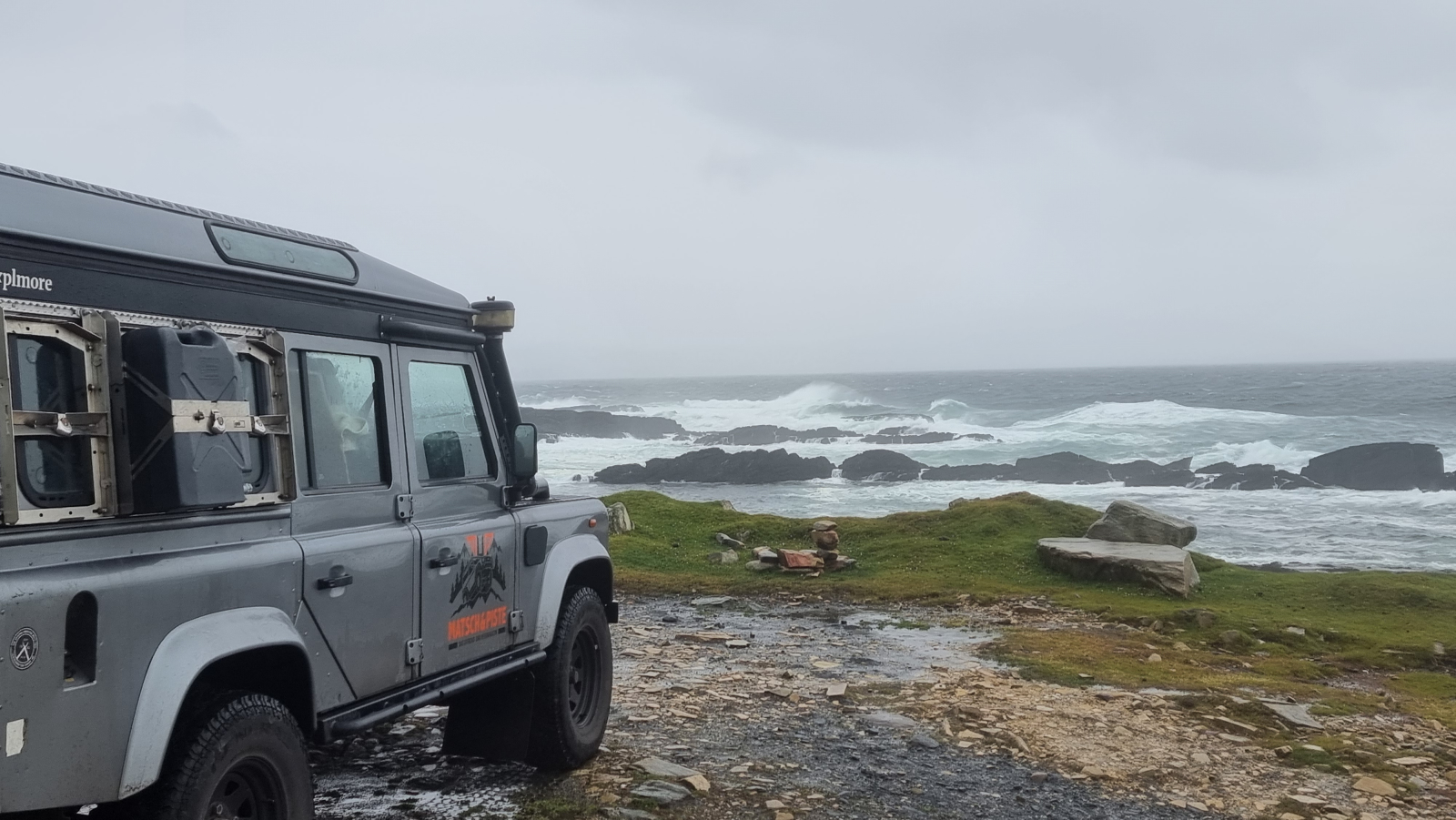
We leave Louisburgh, Westport and Newport behind us. The weather didn’t get any better and it’s time to find a spot for the night. Normally we then look for something cosy and sheltered. Not this time, though. We opt for an exposed little spot right by the sea, near the surf, unprotected from wind and rain. But we don’t care. We eat a few cold things while still sitting in the driver’s and passenger’s seats, then we fold up the roof and disappear upstairs. Just don’t stay out in the open too long. The wind whips the rain and spray into our faces too hard. Every uncovered spot is instantly wet and clammy. Will we last the whole night here?
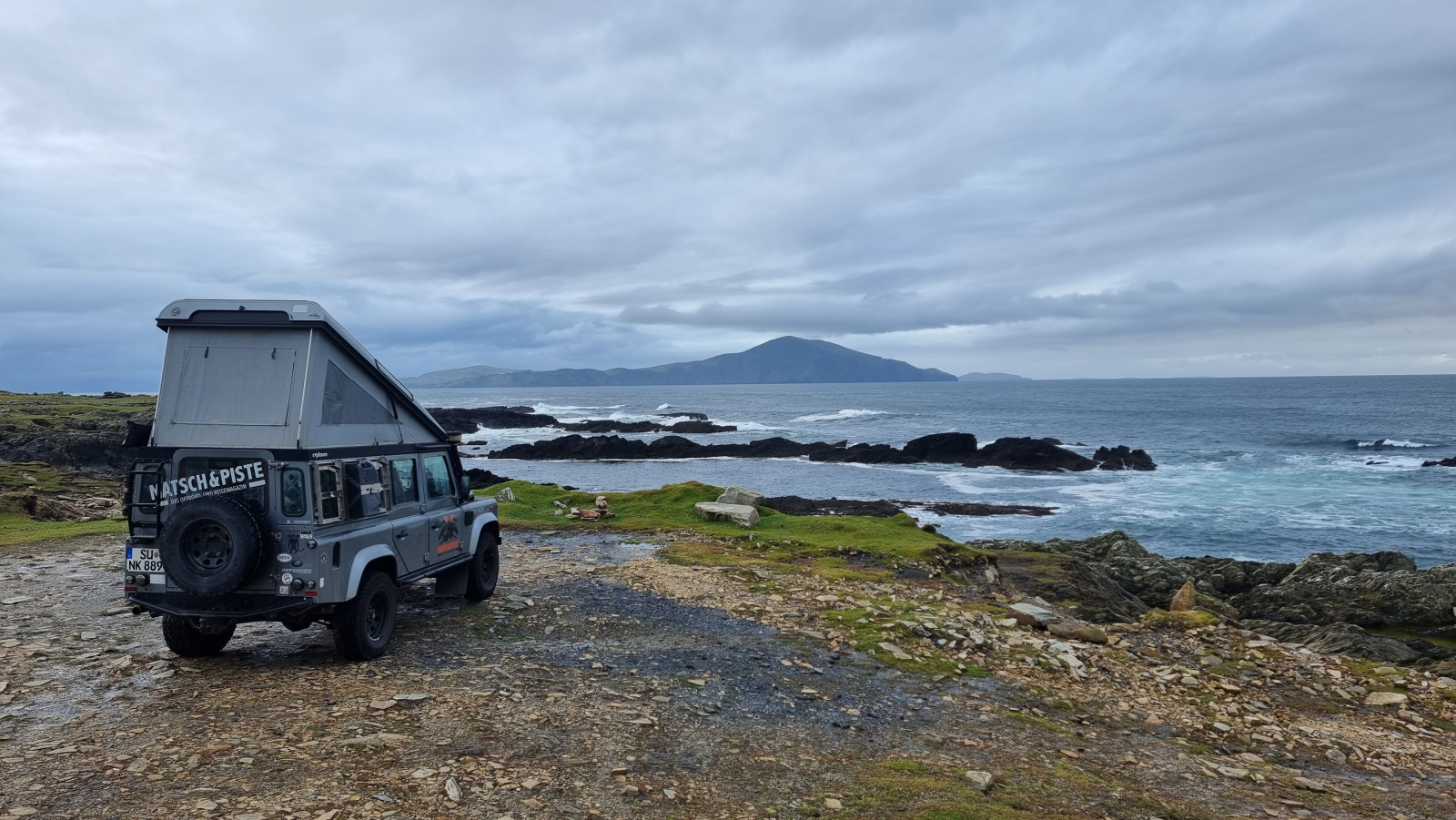
Irish whiskey
We wake up. No, our bones aren’t stiff and we’re not cold either. The weather has calmed down. It’s cloudy and windy, Ireland, right? But I wouldn’t call that bad weather now. A quick bite eaten and on we go. The WAW takes us to the Achill Island Distillery on Achill Island.
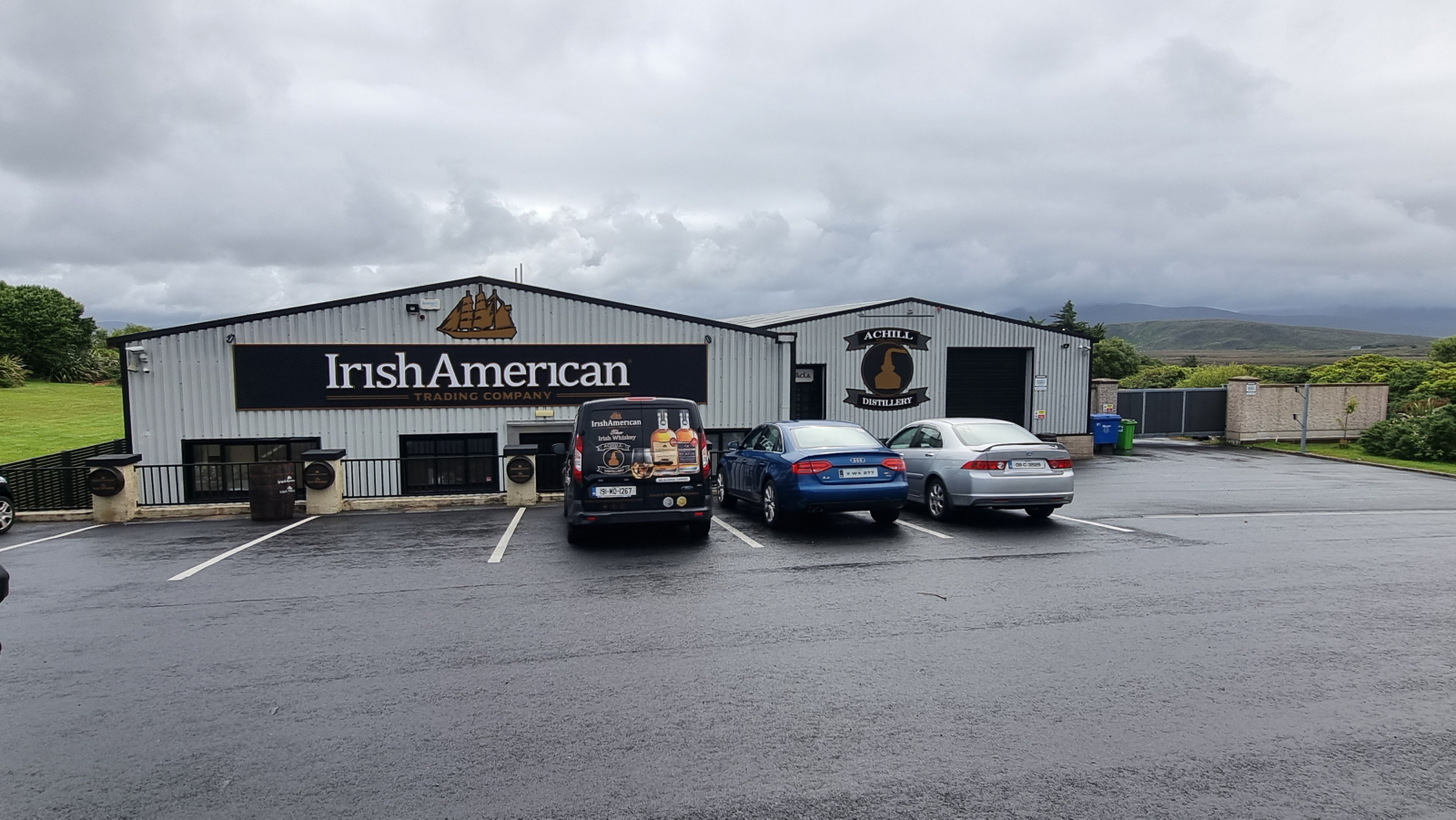
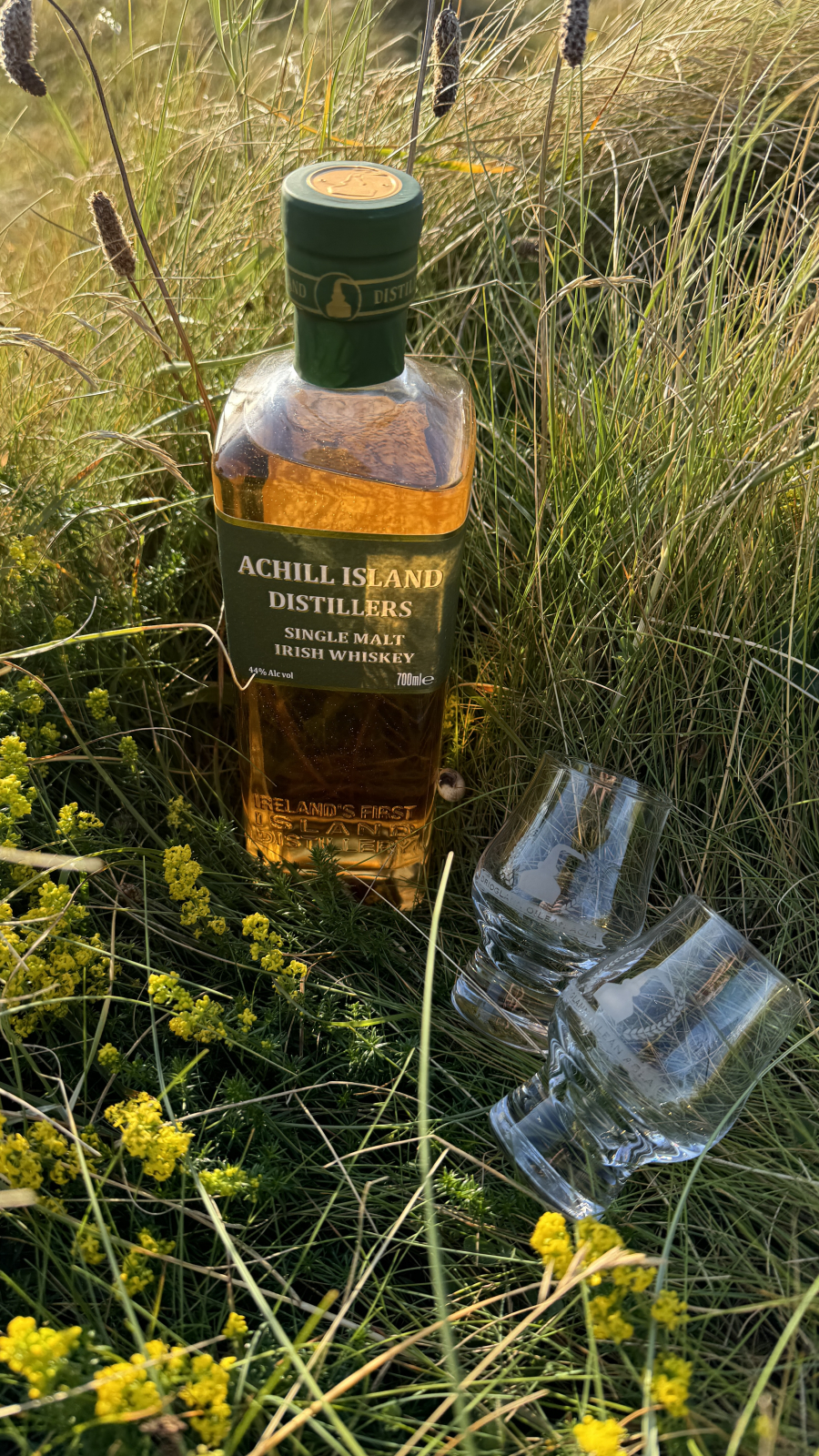
As we happen to be the only visitors, they take a lot of time for us. We get a tour and learn a great deal that’s interesting about the whiskey business and the start of a new distillery. There are quite a few of them in Ireland now. The spirits companies are rediscovering this old whiskey land just now, and money is being invested. Old distilleries are reopening, new ones being built. Until the first of their own bottlings have matured, they bridge the gap with blends.
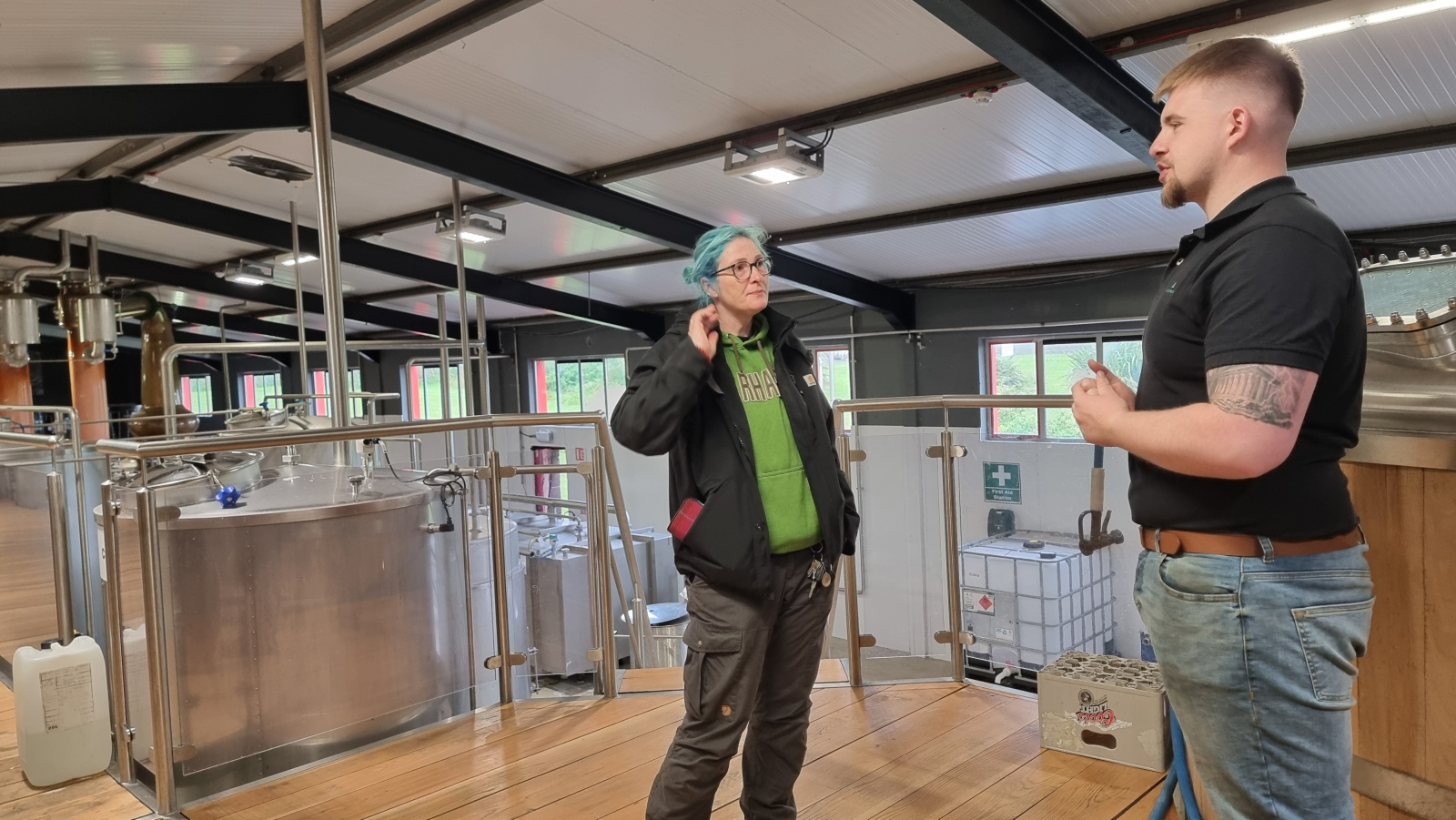
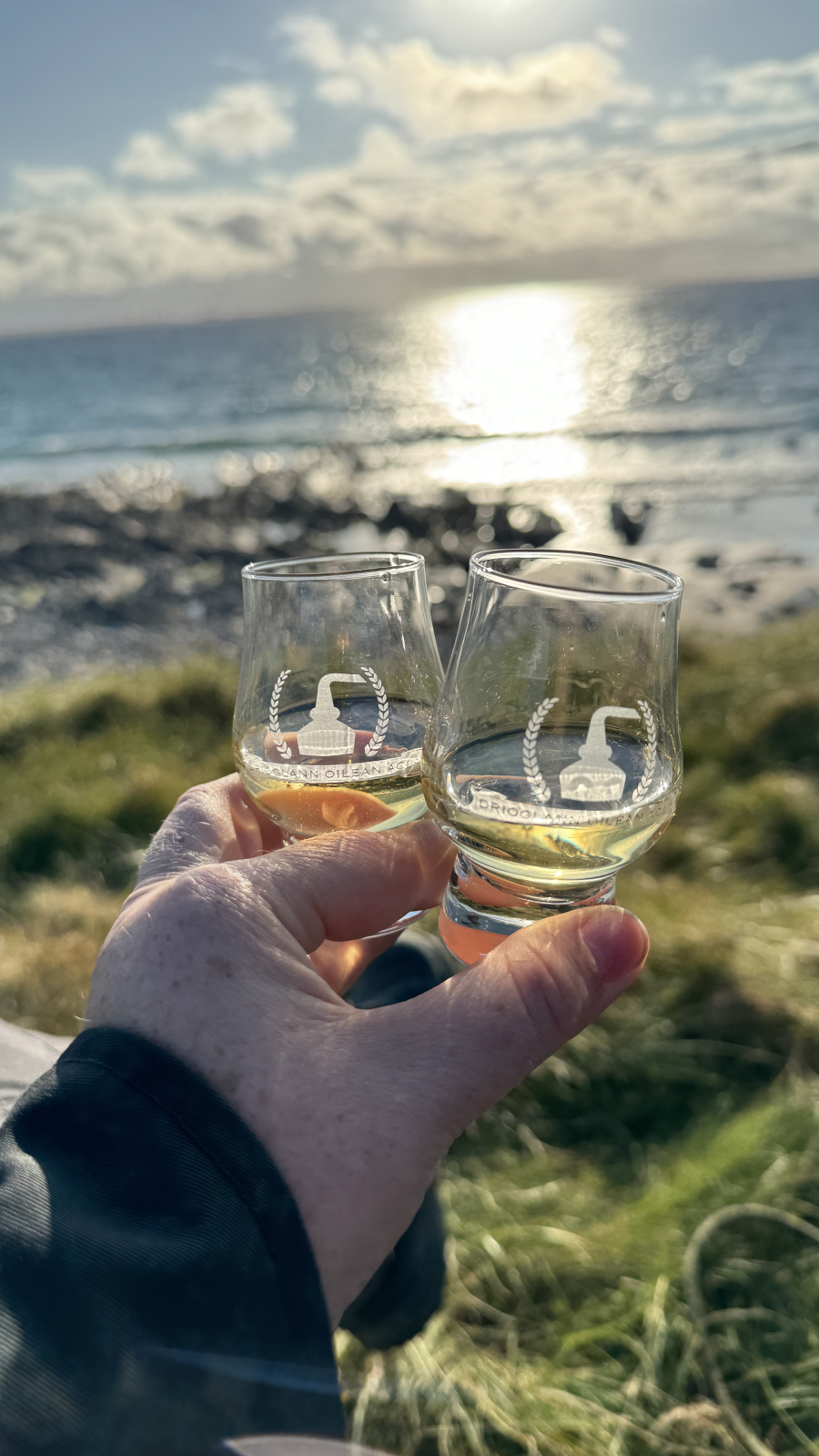
Of course we taste, and buy a little too. What can I say about it, other than that we liked it very much, and so a „Sláinte“!
Keem & Keel Bay
Keem Bay had been talked up to us. Lovely road, lovely beach. True, too. Only, sadly, very heavily frequented and off-limits to dogs. A shame. We turn straight back. No one need regret that, because we’ll get to see plenty of lovely and far less crowded beaches.
On the way to Keem Bay we pass another large beach: Keel Bay. Since the dog hasn’t had his game yet today, of course, we stop and entertain our faithful companion appropriately. More flat sandy beach, wide flat water, perfect.
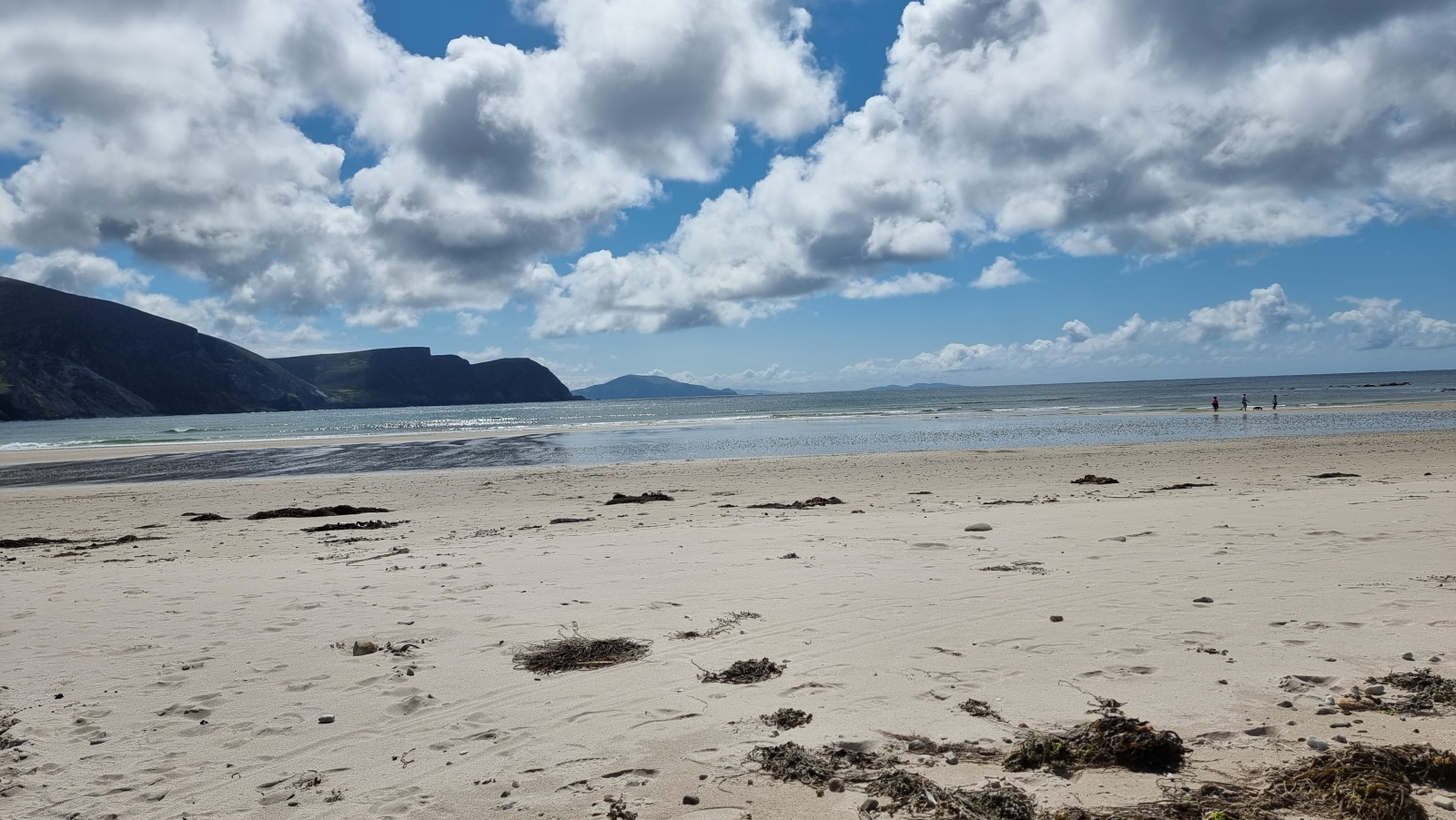
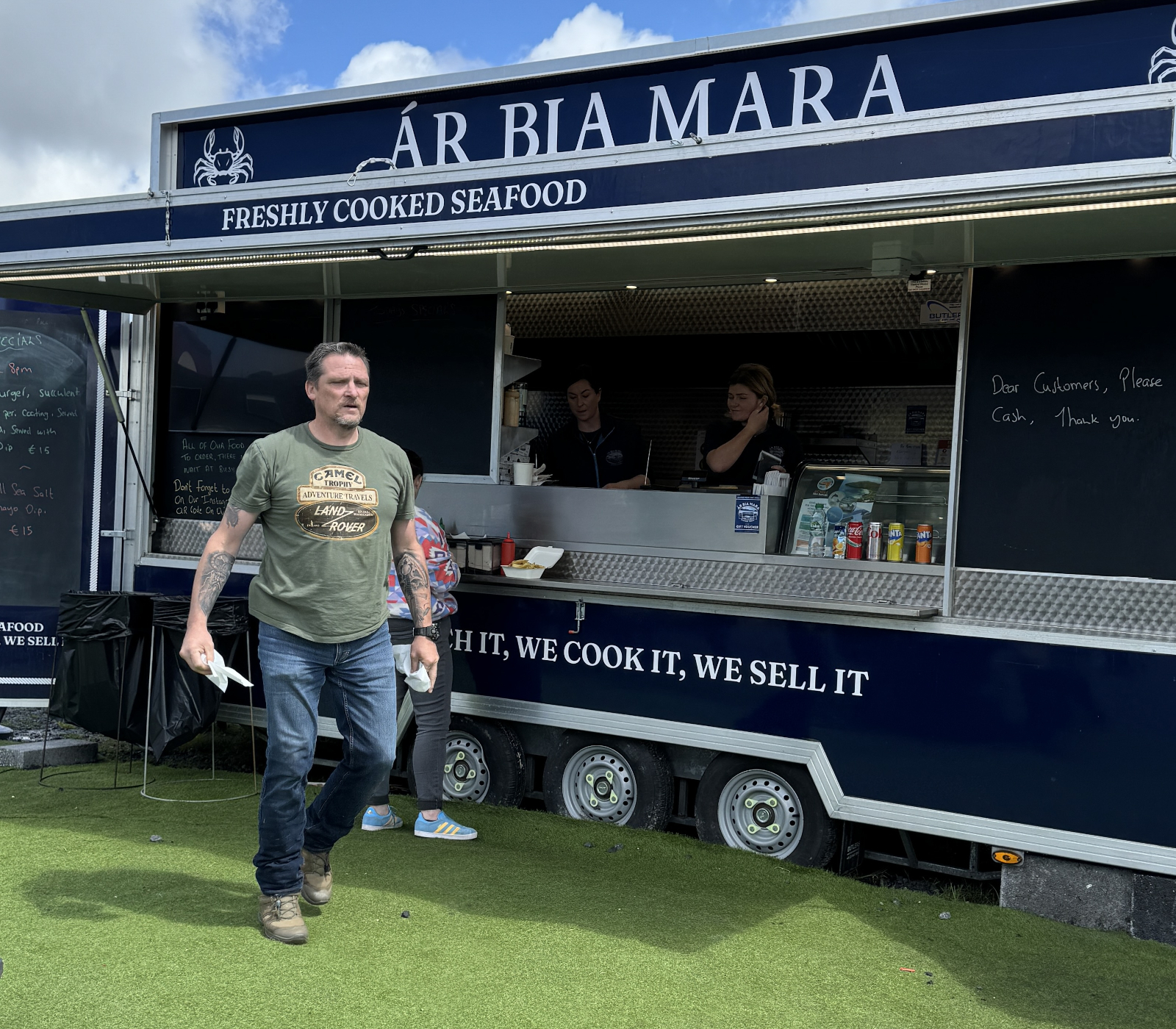
And as a crowning finish there’s fresh fish at the food truck of Ár Bia Mara. For me in the form of fish and chips. The family business has its own fishing boat. The food is excellent and fresh.
Ballycroy National Park
For lovers of hiking, who don’t shy away from difficult and strenuous routes or who seek solitude, the Ballycroy National Park is recommended. From there you can start small and large walks through the national park. All the info on that is available at the visitor and information centre, including a small café and restaurant.
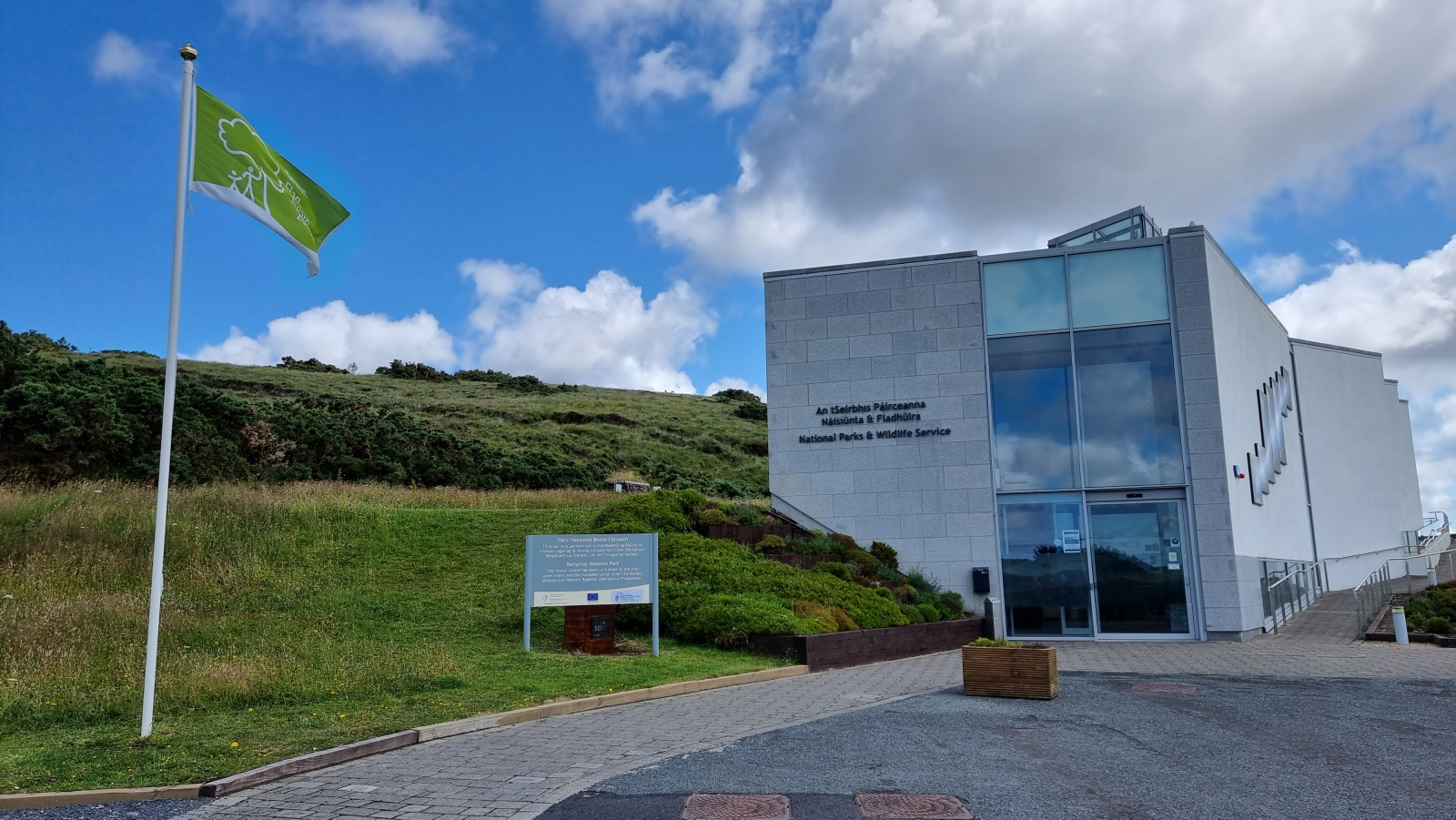
Here you can also learn something about life in Ireland, how turf is cut and processed. The latter is still done today. If you drive the WAW, you’ll see a number of such harvesting areas. Commercial turf extraction is banned for climate protection, but in the private sector there are still a good 1,200 turf cutters winning the fuel.
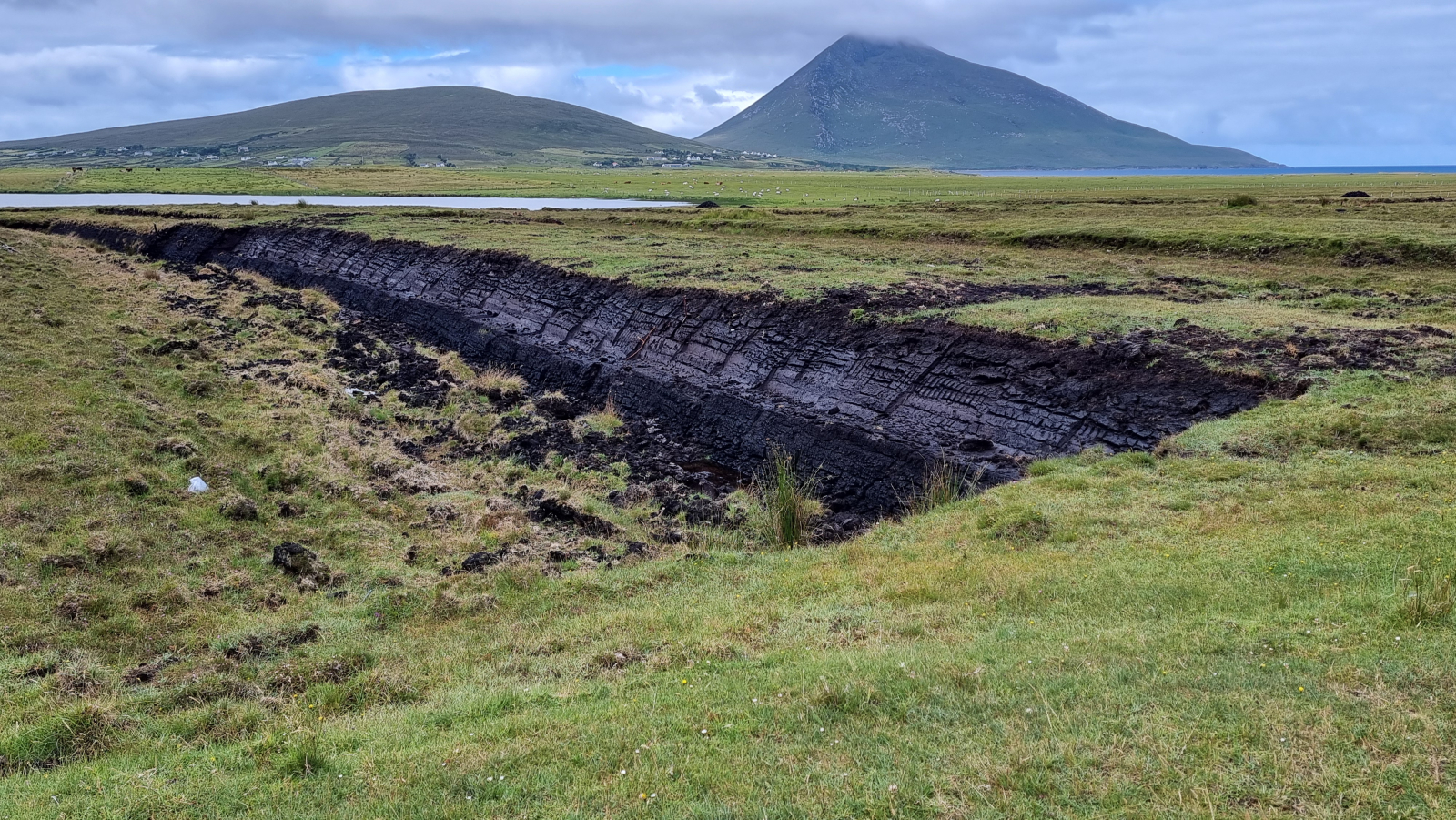
Besides the poor CO2 balance of harvesting and burning it, there’s another problem from the extraction. The ground shifts when the large harvesting holes appear. That causes the earth to give way sideways, so that roads keep sinking or water pipes and the like get damaged.
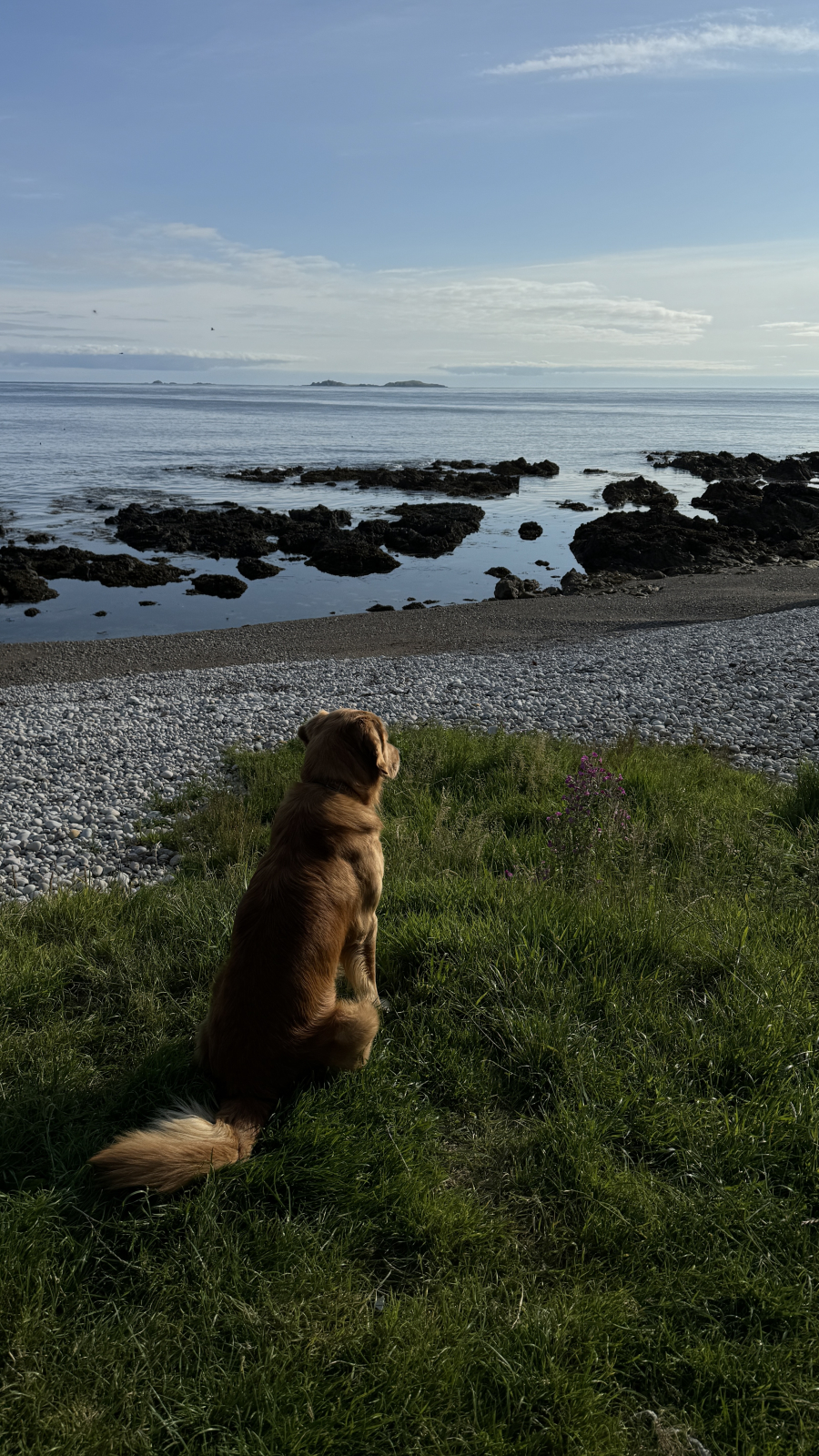
Today’s sleeping spot is again right by the sea. We’ve found a place above a small beach. As the weather is good, once Guinness has been allowed a bit more of a romp in the water, we get the chairs out. It’s high time to test the local speciality we’ve just acquired. We enjoy a little sip of the Achill Distillery whiskey.
Spouting holes
On the Wild Atlantic Way there are two spots worth seeing in quick succession, out of which, in the right weather, the water shoots up in fountains. Both are WAW points, so if you strictly stick to visiting them all, you’ll pass them anyway.
The first is DÚN NA mBÓ. A small one right by the road, you’re there in no time. It’s a former observation and defence post.
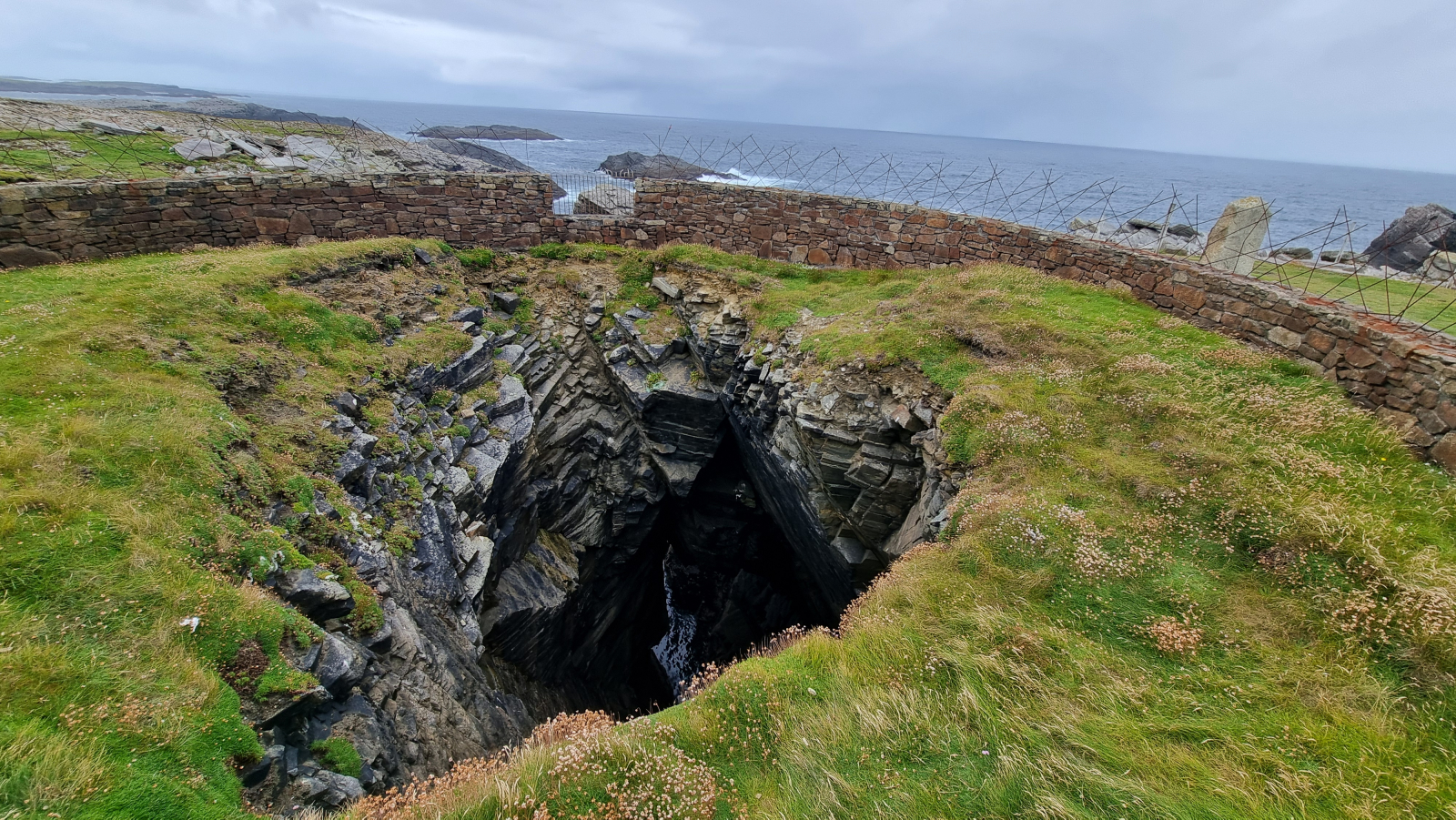
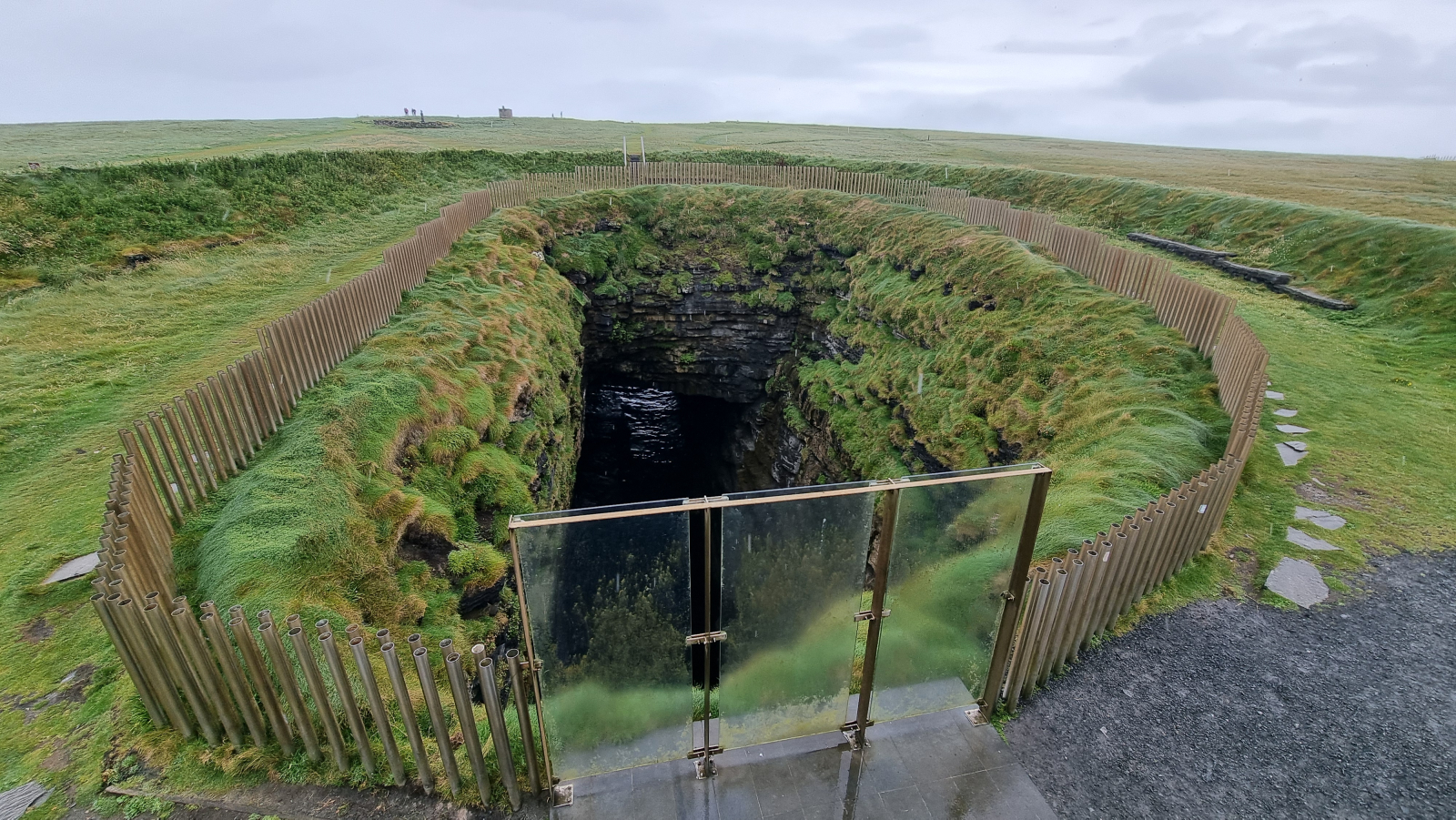
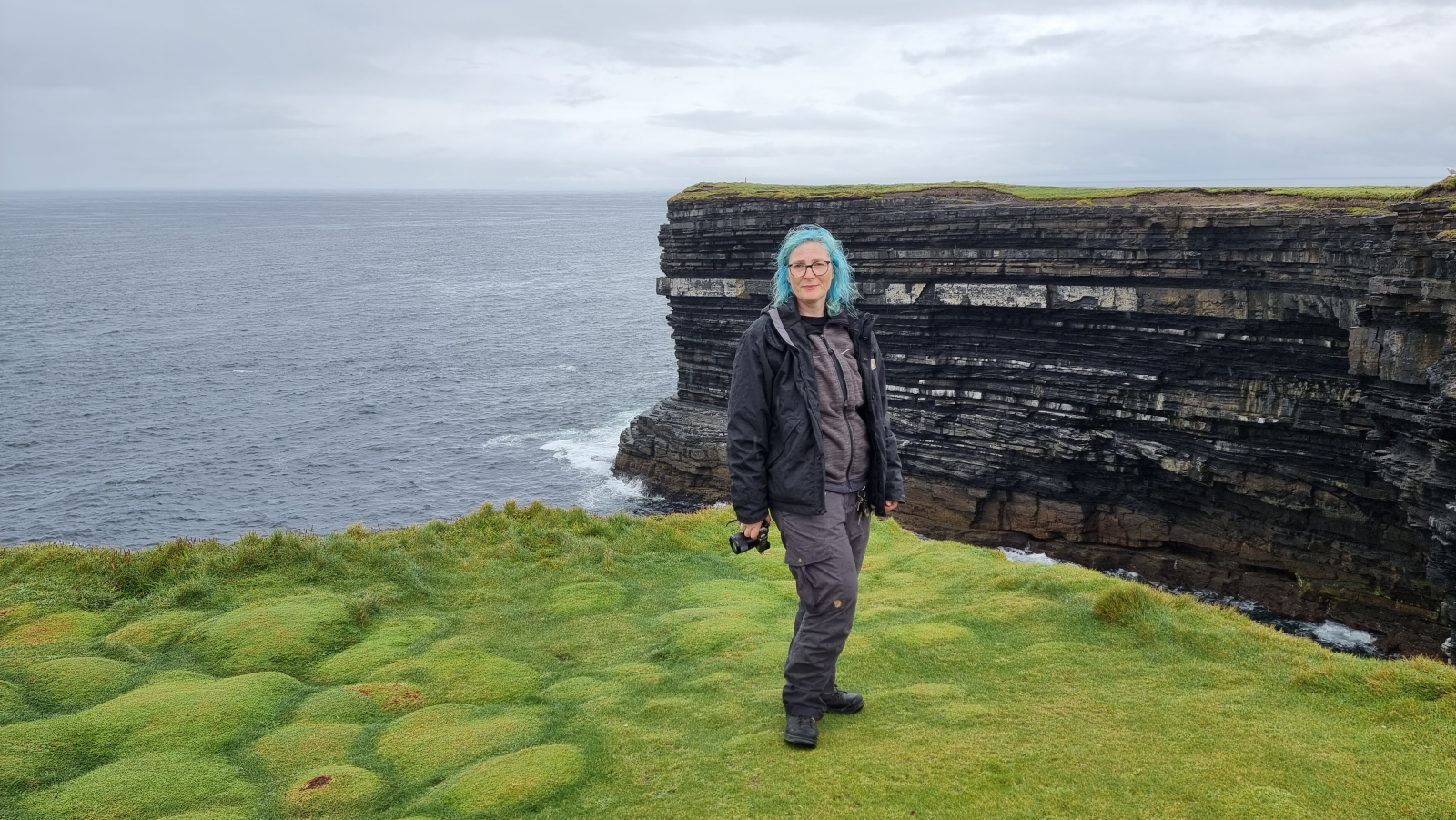
The other, Downpatrick Head, is reachable via a short walk. It’s creepier there. We enter the area at our own risk, as it’s marked as fragile. The hole is much further from the cliffs, it’s far larger, and a bigger installation with a splash guard has been built around it. There’s also a little hut here, from which, during the war, a lookout was kept for enemy ships and submarines. It must have been a lonely job.
Rosserk Abbey
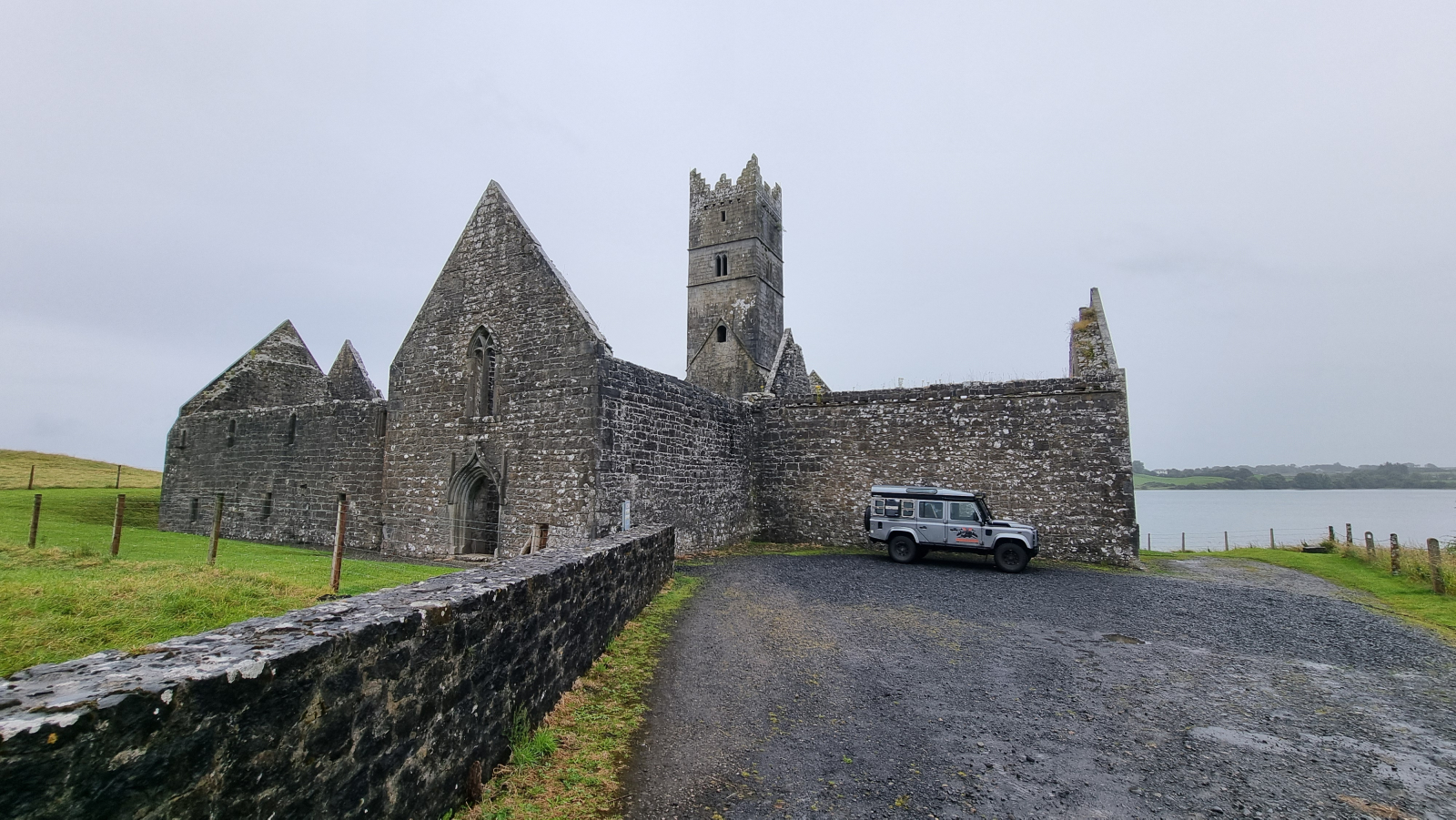
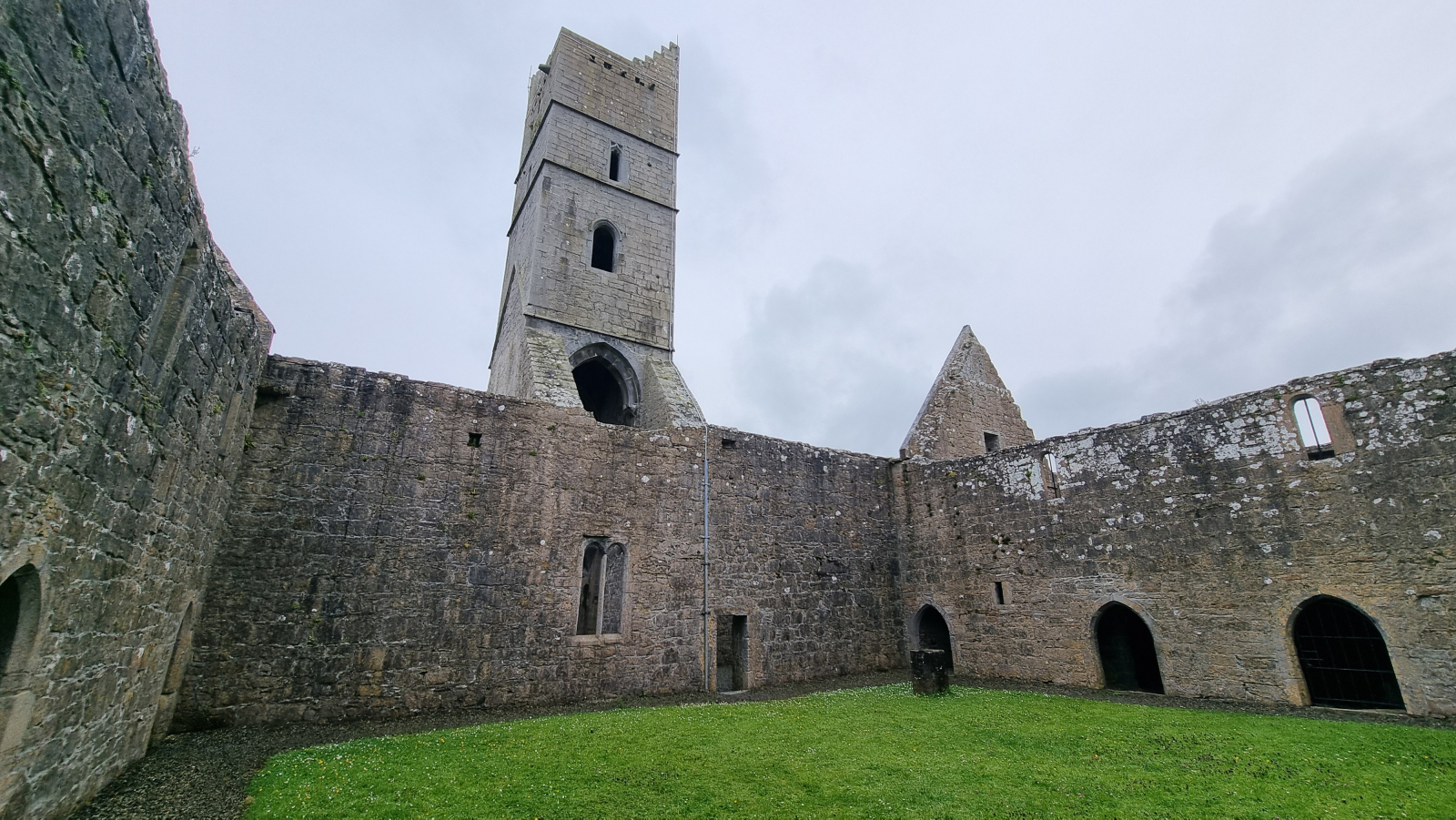
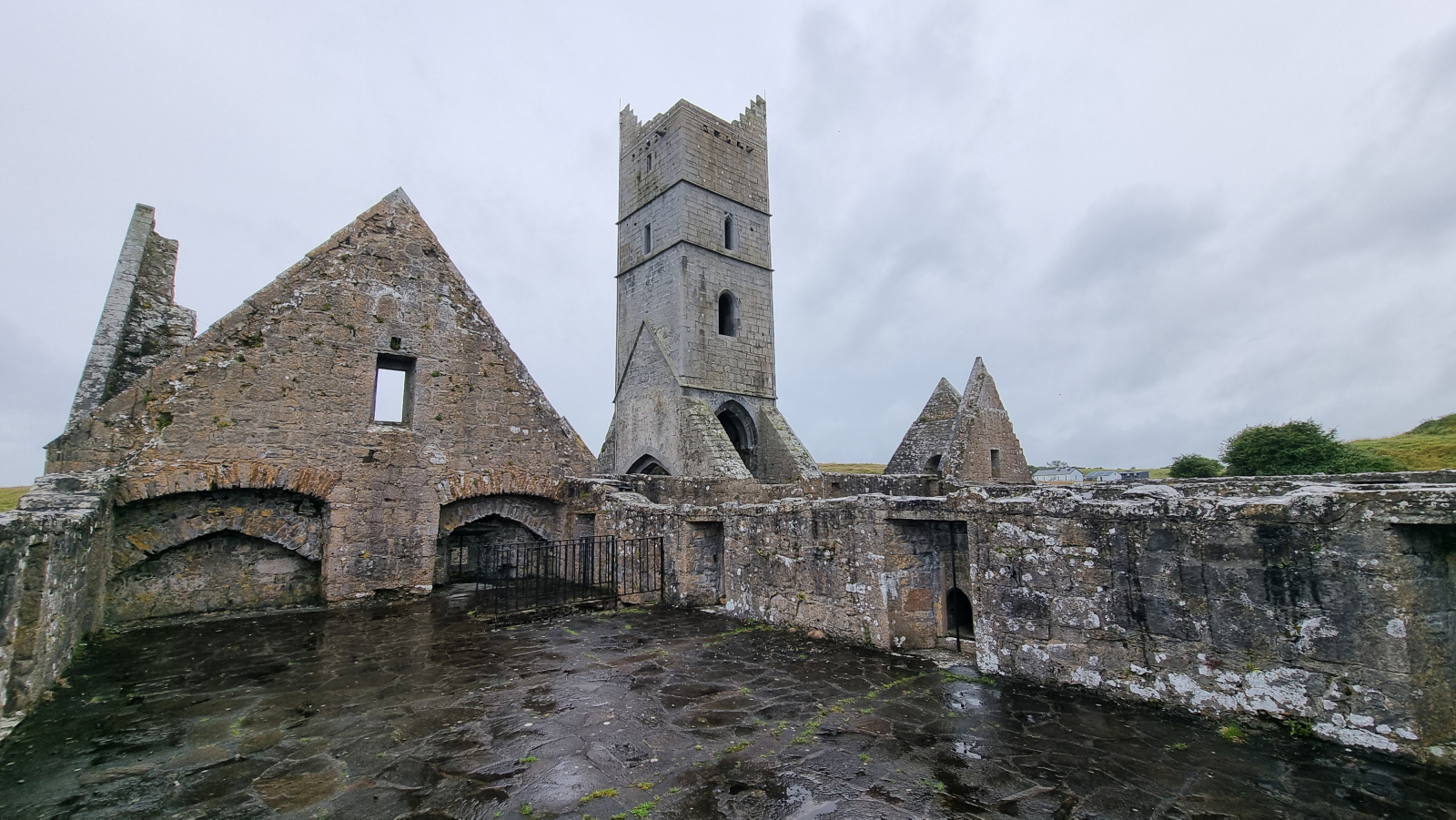
Ireland is full of ruins. Ones of more recent date and really old ones. Rosserk Abbey belongs to the latter and is very well preserved. After all, it was built around 1400. We stroll through the walls. We get a very good impression of how such buildings were put together. Where there were wooden floors or ceilings. How it was heated and all that. It’s worth seeing, do visit it.
Belleek Castle
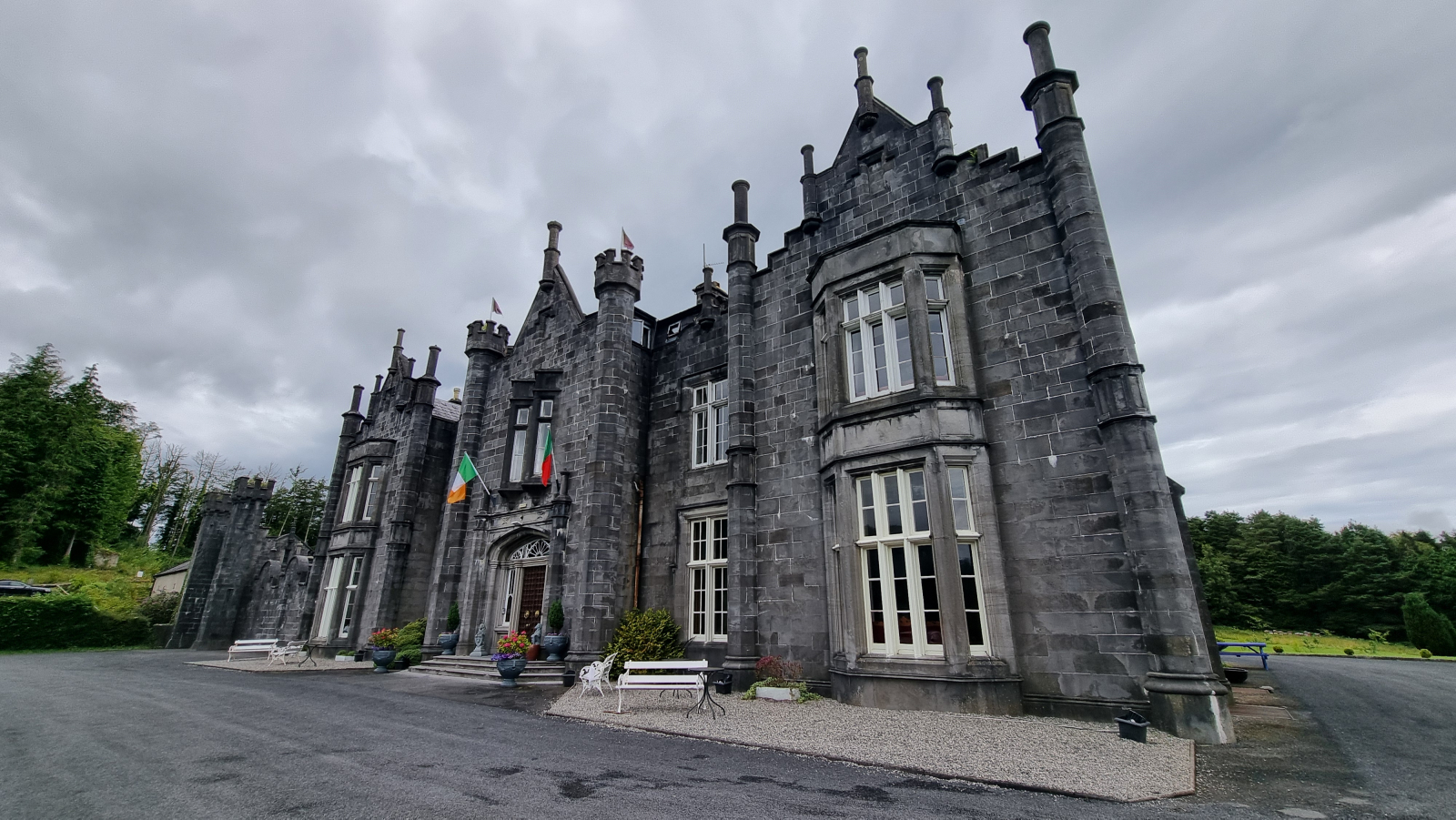
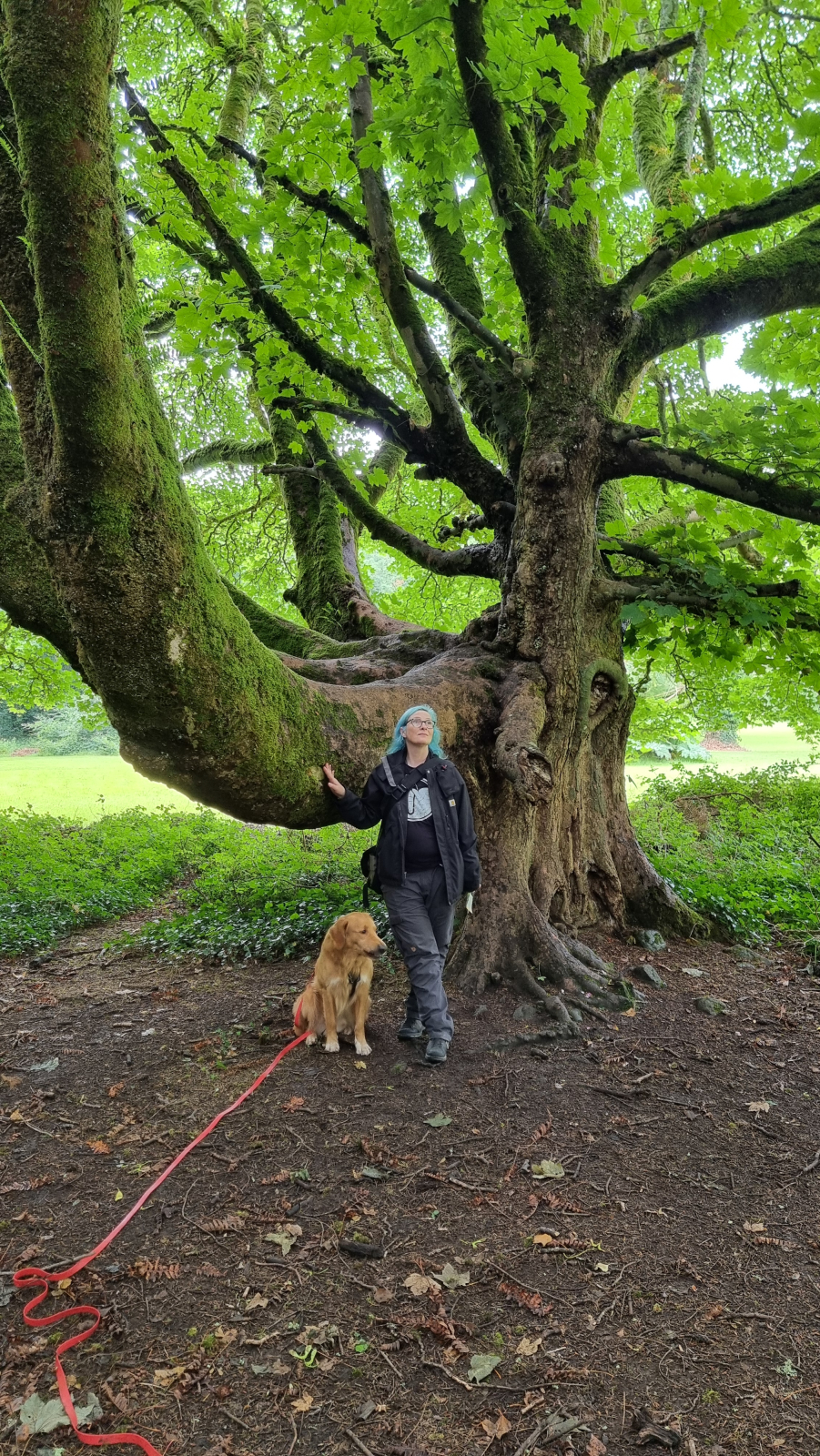
Because we’re in the area, we take a look at Belleek Castle and its park. The builder, Sir Francis Knox-Gore, was clearly a great lover of animals and nature. He imported trees and planted them there. There’s even a patch of woodland where fairies live. Their little houses hang everywhere.
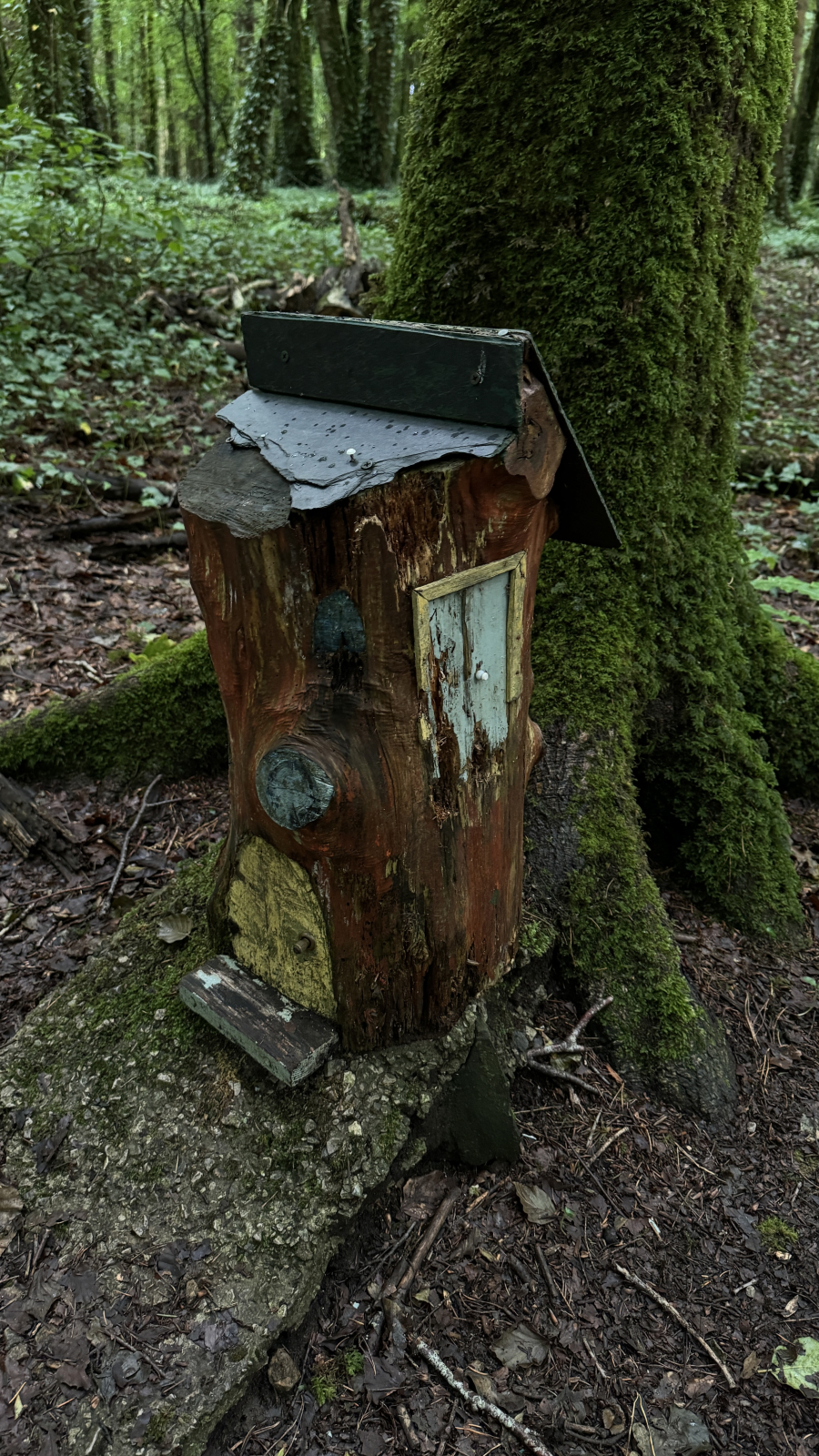
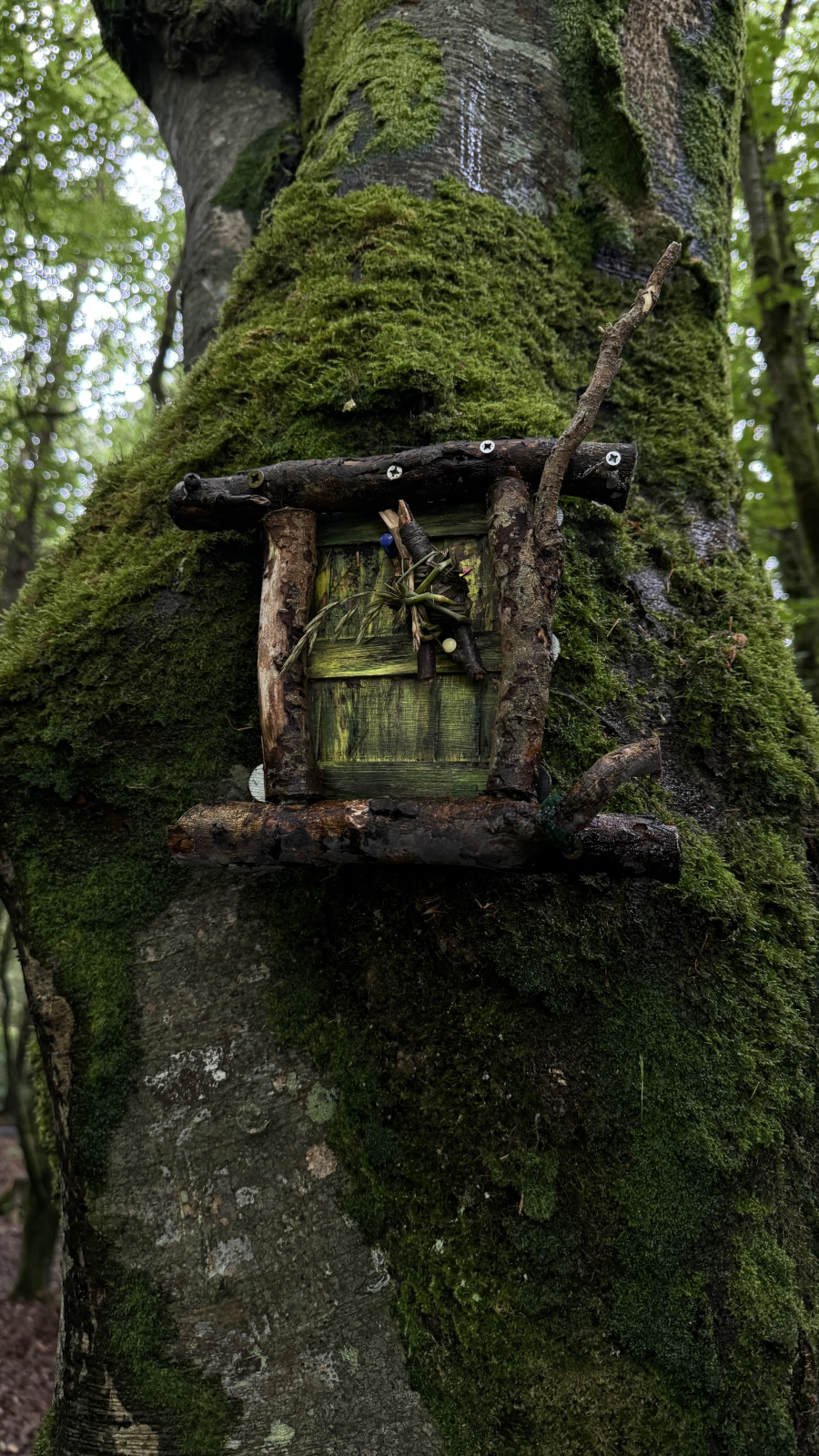
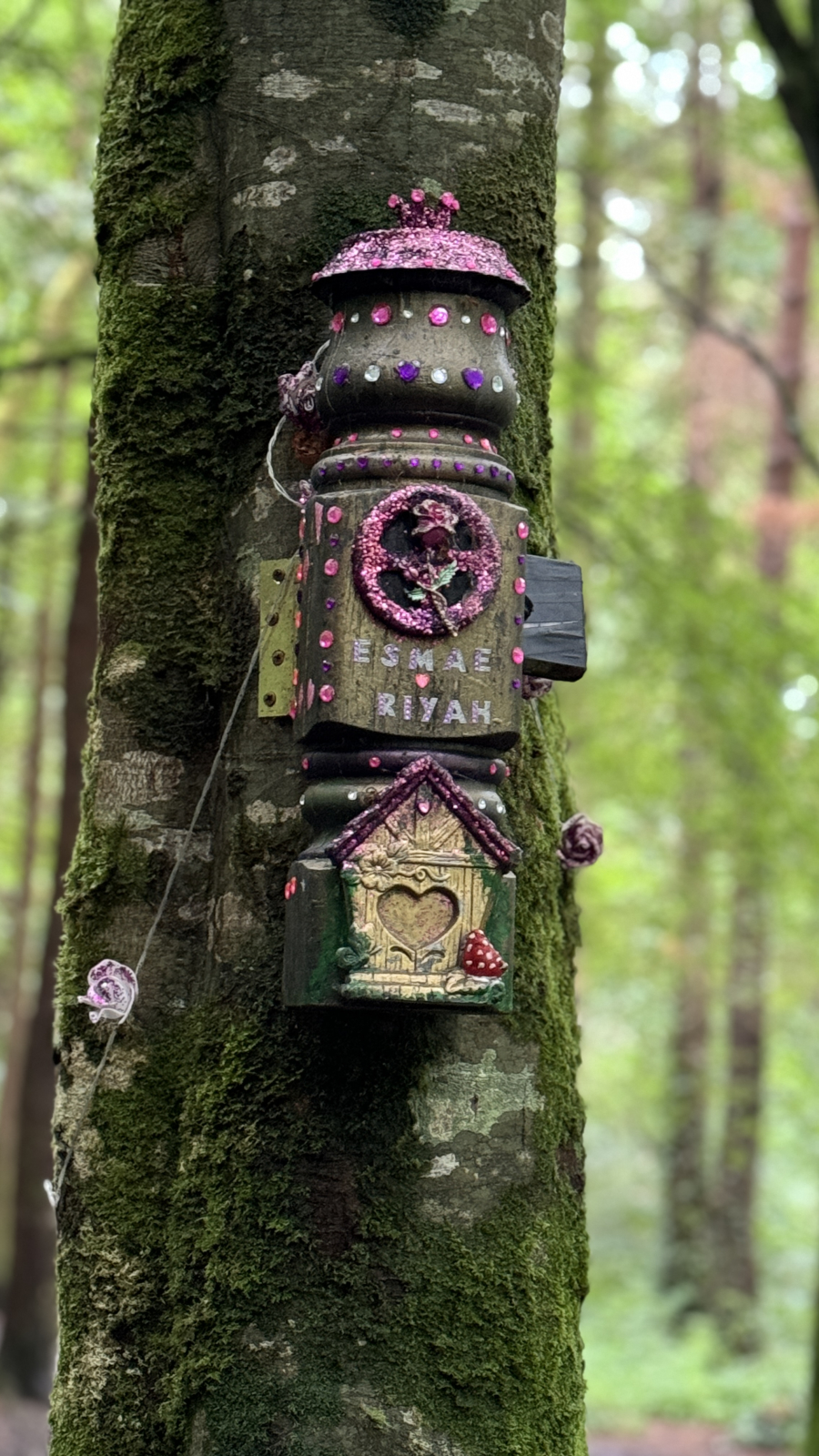
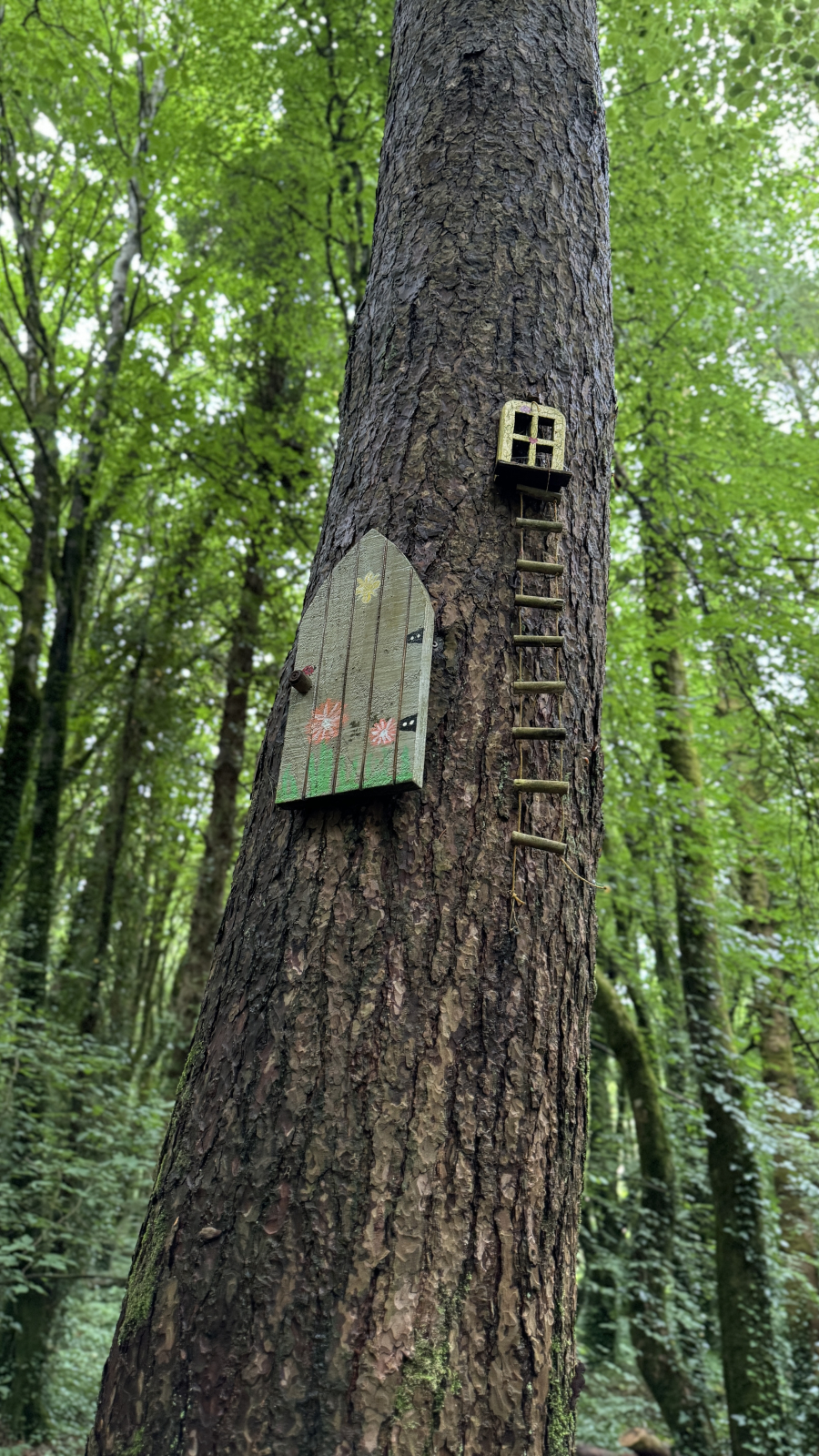
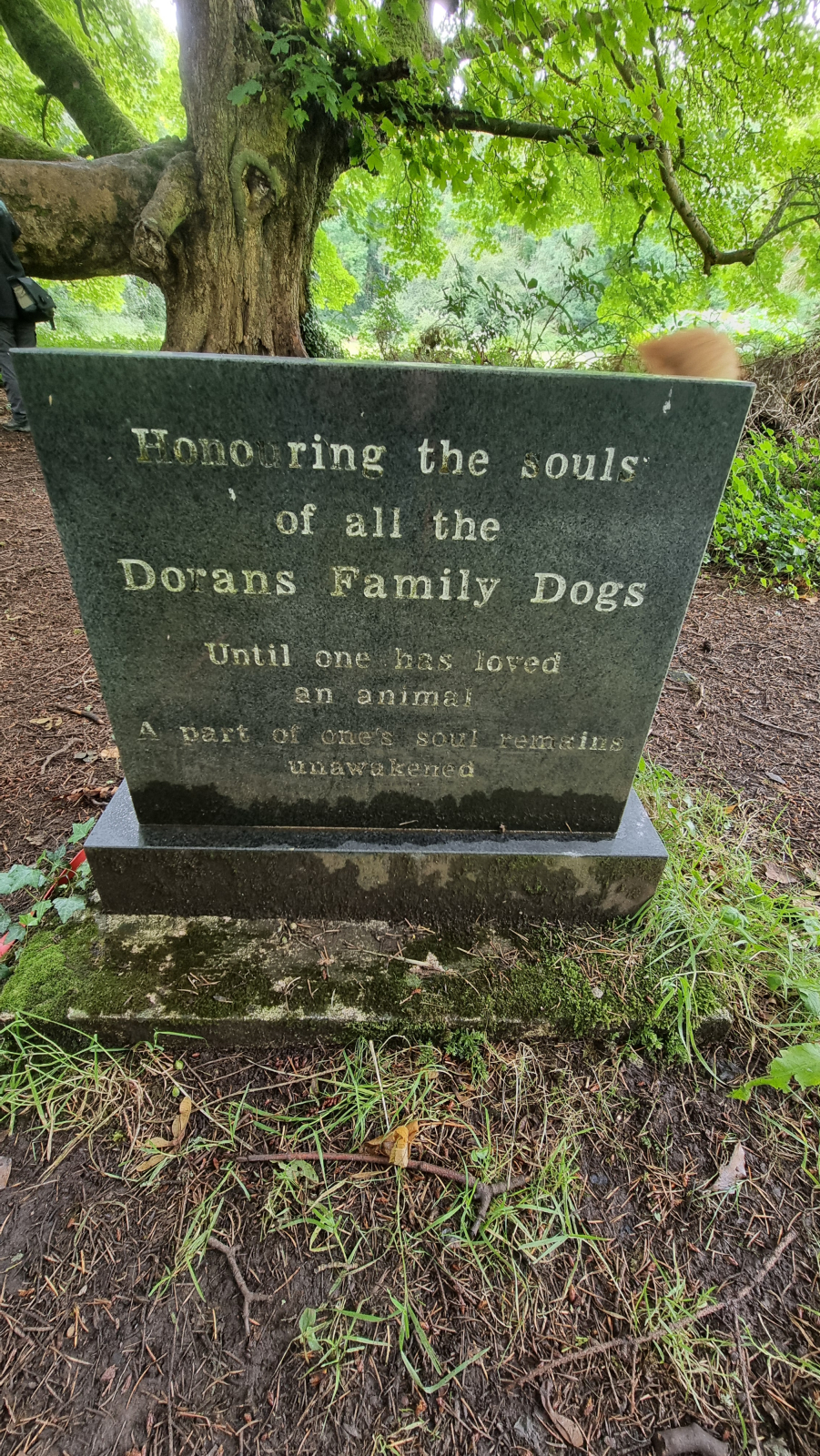
As we approach the main house, today a hotel, from the north-east, we see a few very impressive trees. And we find a dog’s grave, which points to the former owner’s love of animals.
Catching our breath
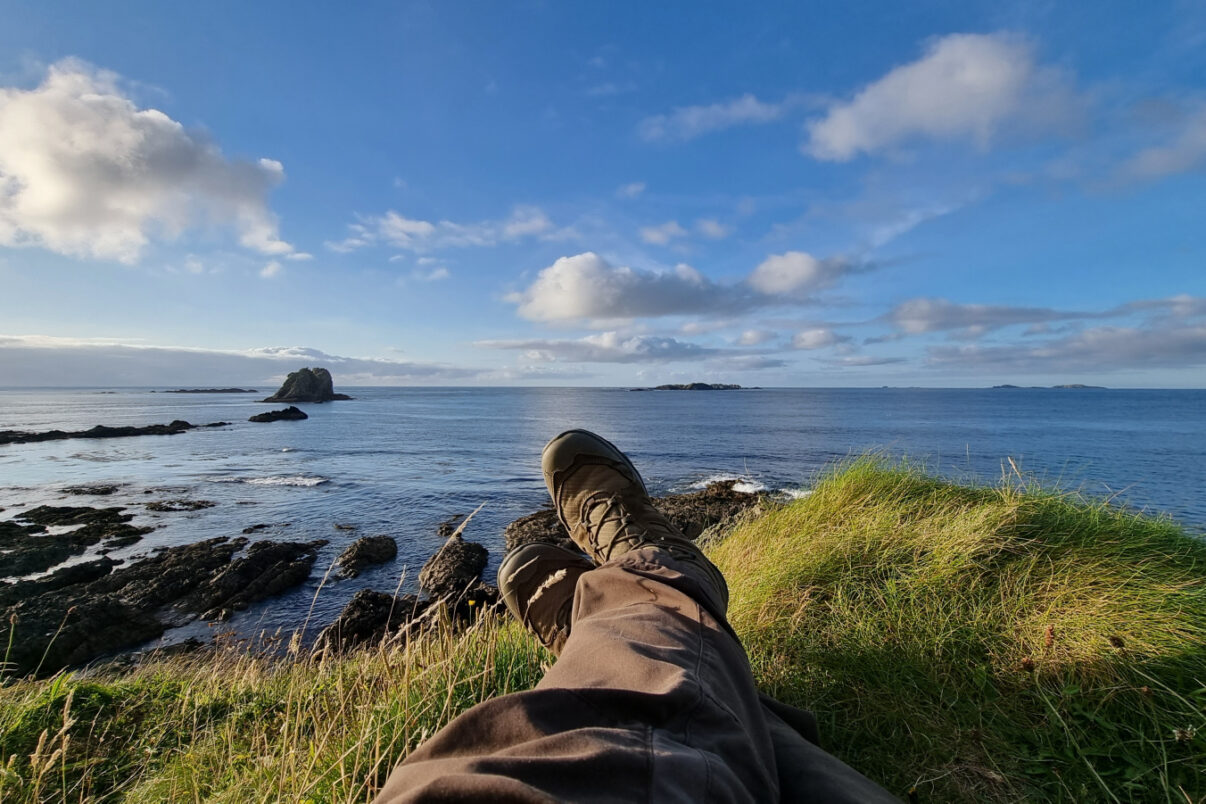
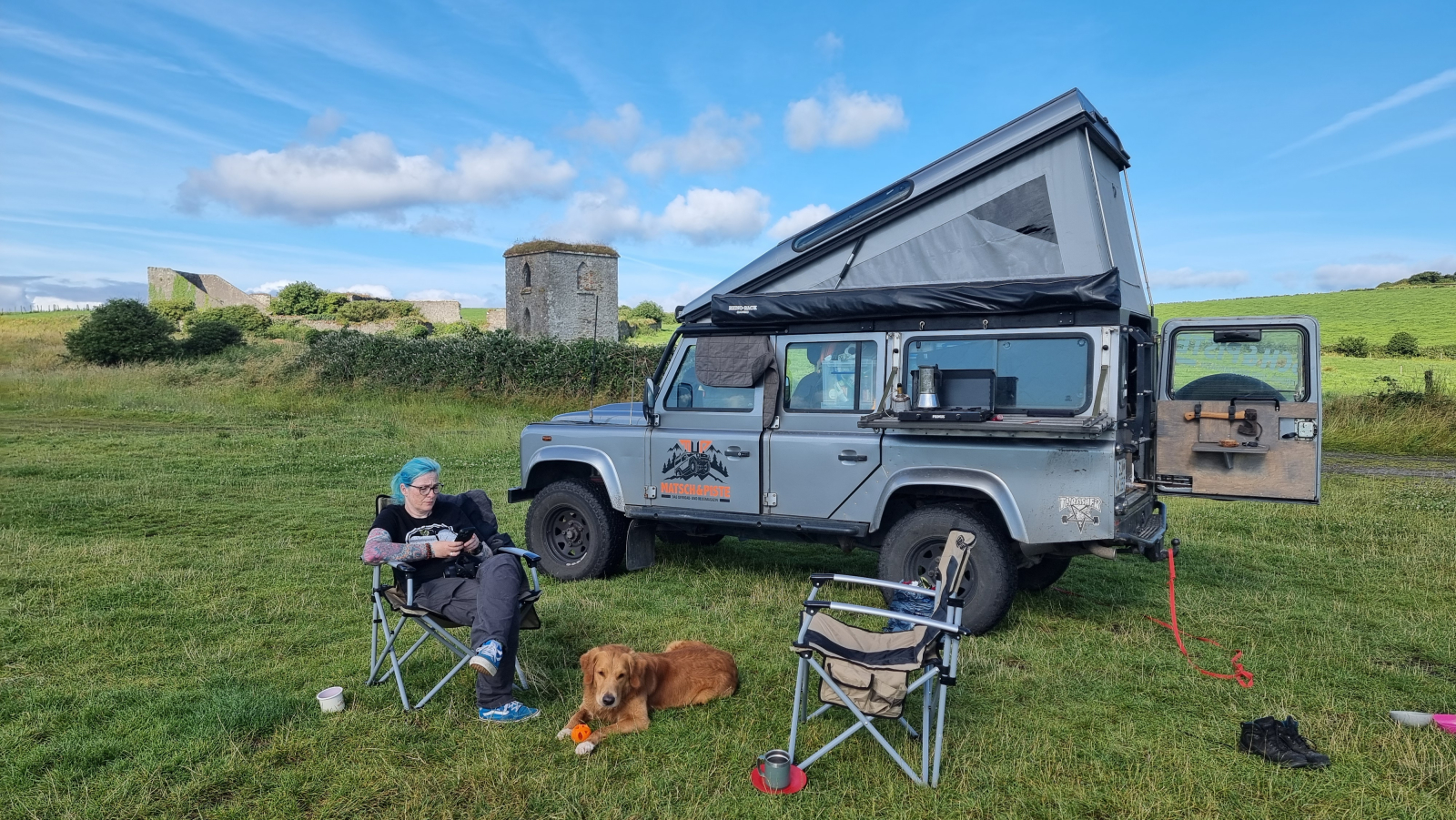
We like today’s overnight spot north of Sligo so much that we simply stay put here for a whole day. One family comes by to swim a full five (!) times, sometimes with, sometimes without grandma and grandpa. It’s only 100 metres to the water. People keep themselves fit. We simply enjoy the quiet spot, read, take a little afternoon nap or romp about with the dog. No one minds.
Circular walk at Benwiskin South Top
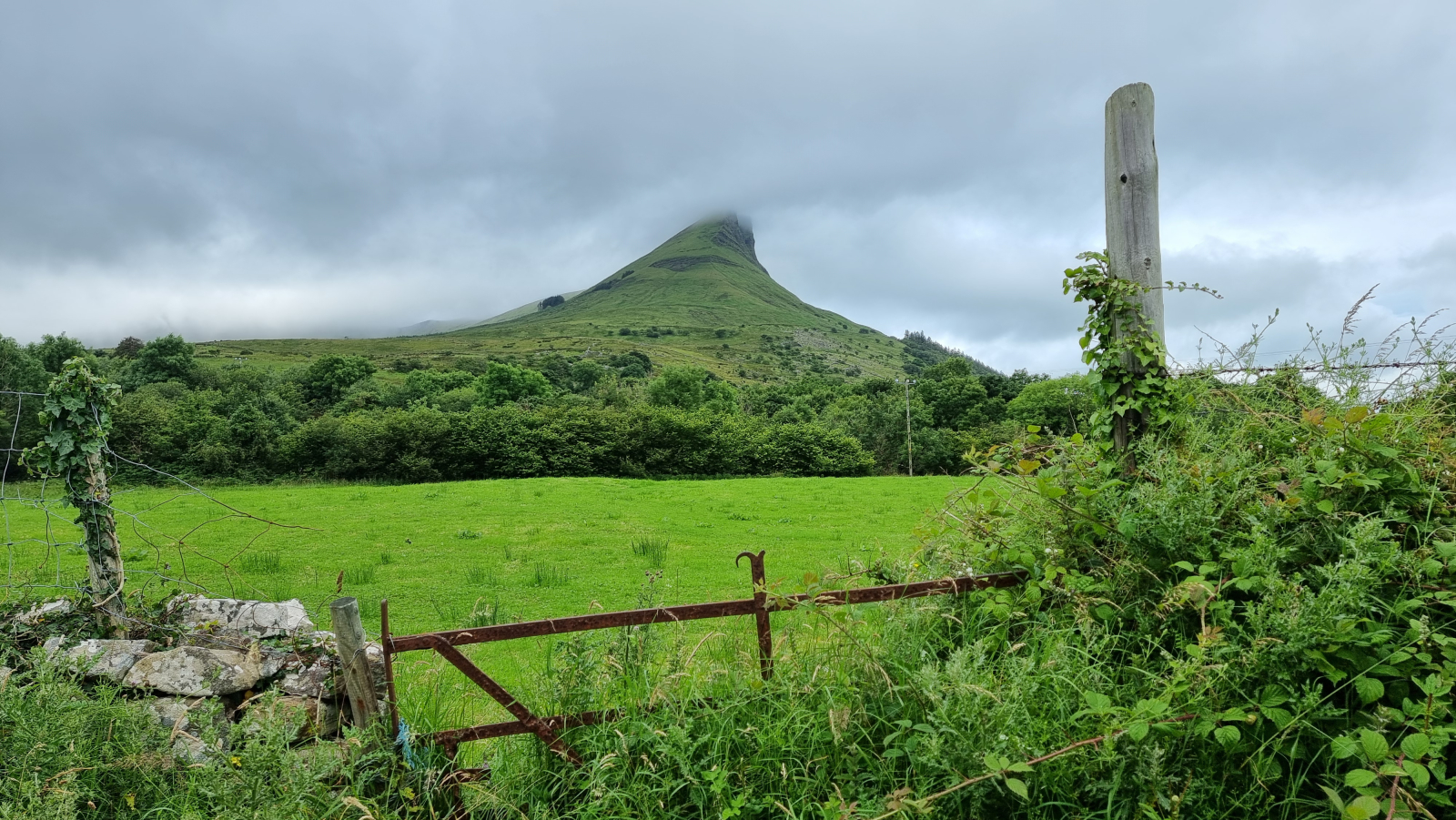
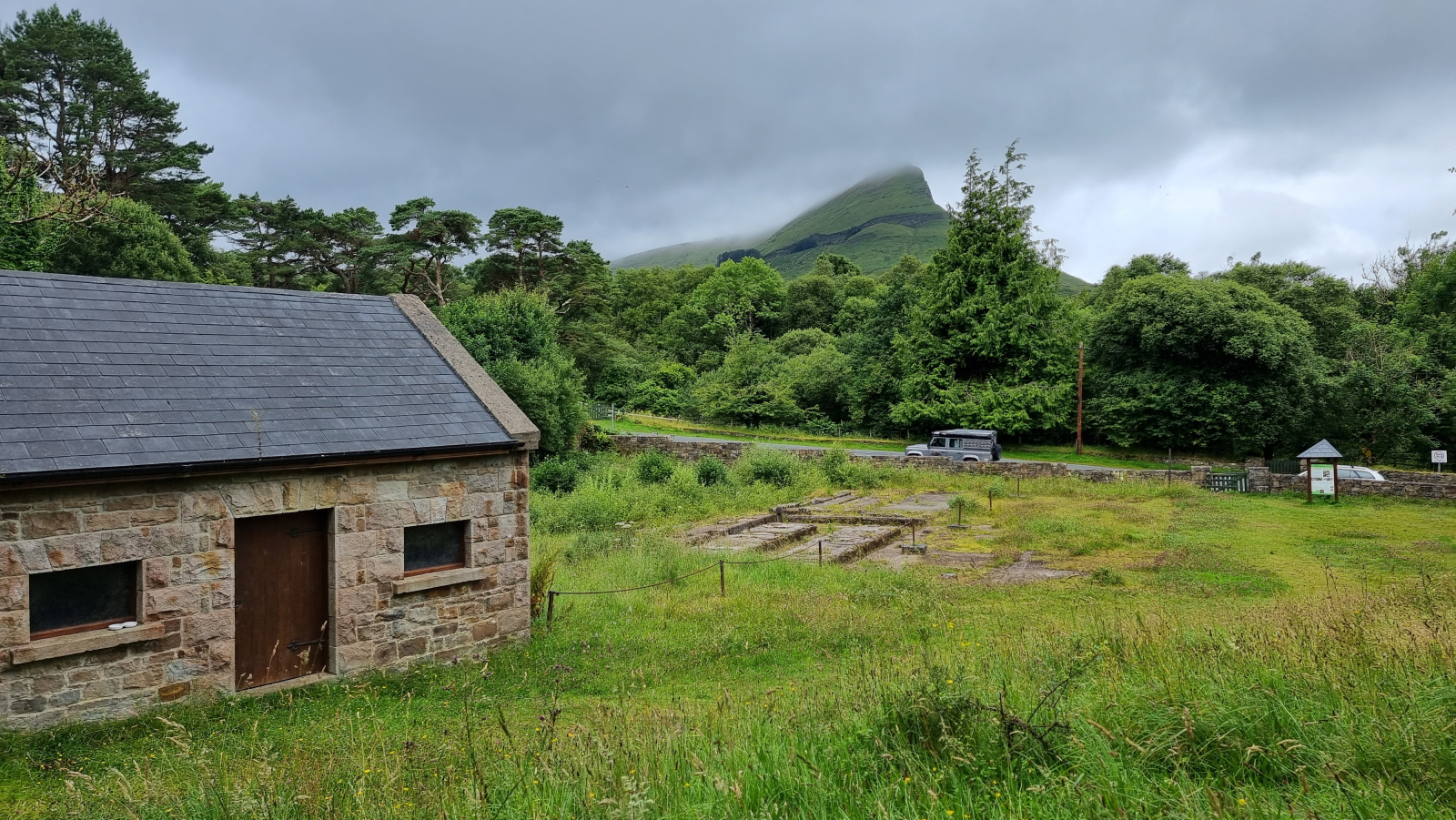
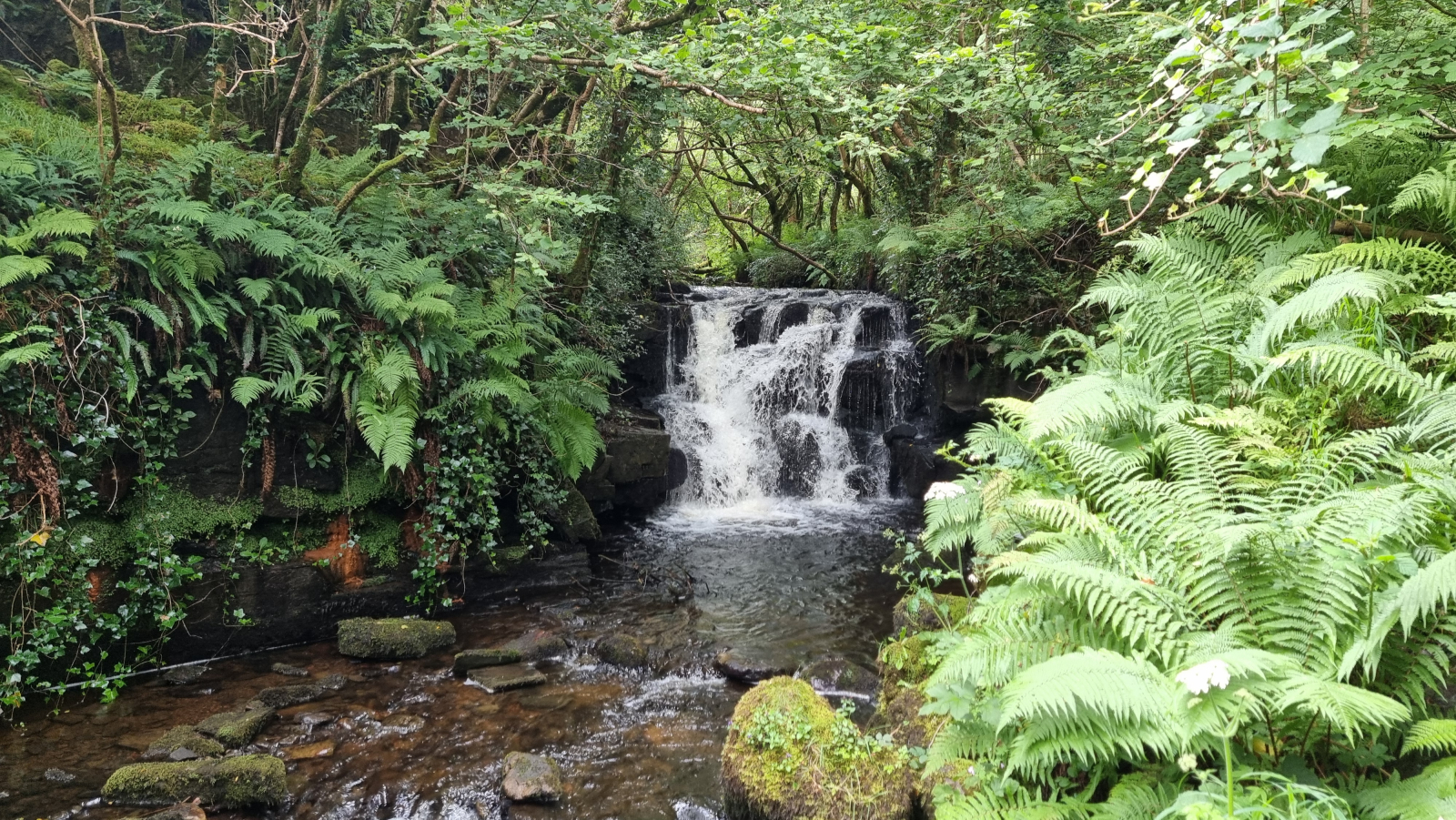
A scenically very lovely circular walk passes one of the not-highest mountains in Ireland, Benwiskin South Top. It ranks 550th among Ireland’s highest places. Still. Maybe one day you can seriously impress someone with that knowledge. We take the circular route on our wheels. At the start of the eastern route lie the remains of the Baryte Mill. Behind it there’s a small, worthwhile circular walk. Fairies live here too, so be nice and quiet.
Today we make it to just above Ardara. Slowly the end of the Wild Atlantic Way comes into focus. Slowly. From now on we make sure we’re keeping to our schedule, because we want to reach the end. We have to reach the end. That’s the plan!
Highlight campsite
The next day takes us further north, along the coast. The frequency of lonely, white sandy beaches rises. Perhaps it’s the Irish’s good fortune that the weather is unsettled, otherwise mainland Europe might overrun these beaches. Mallorca would be nothing against it. Of course Guinness is allowed to leave his paw prints. Only with the swimming are we careful; today there are many jellyfish to be seen. Compass jellyfish in particular, which can cause quite some discomfort.
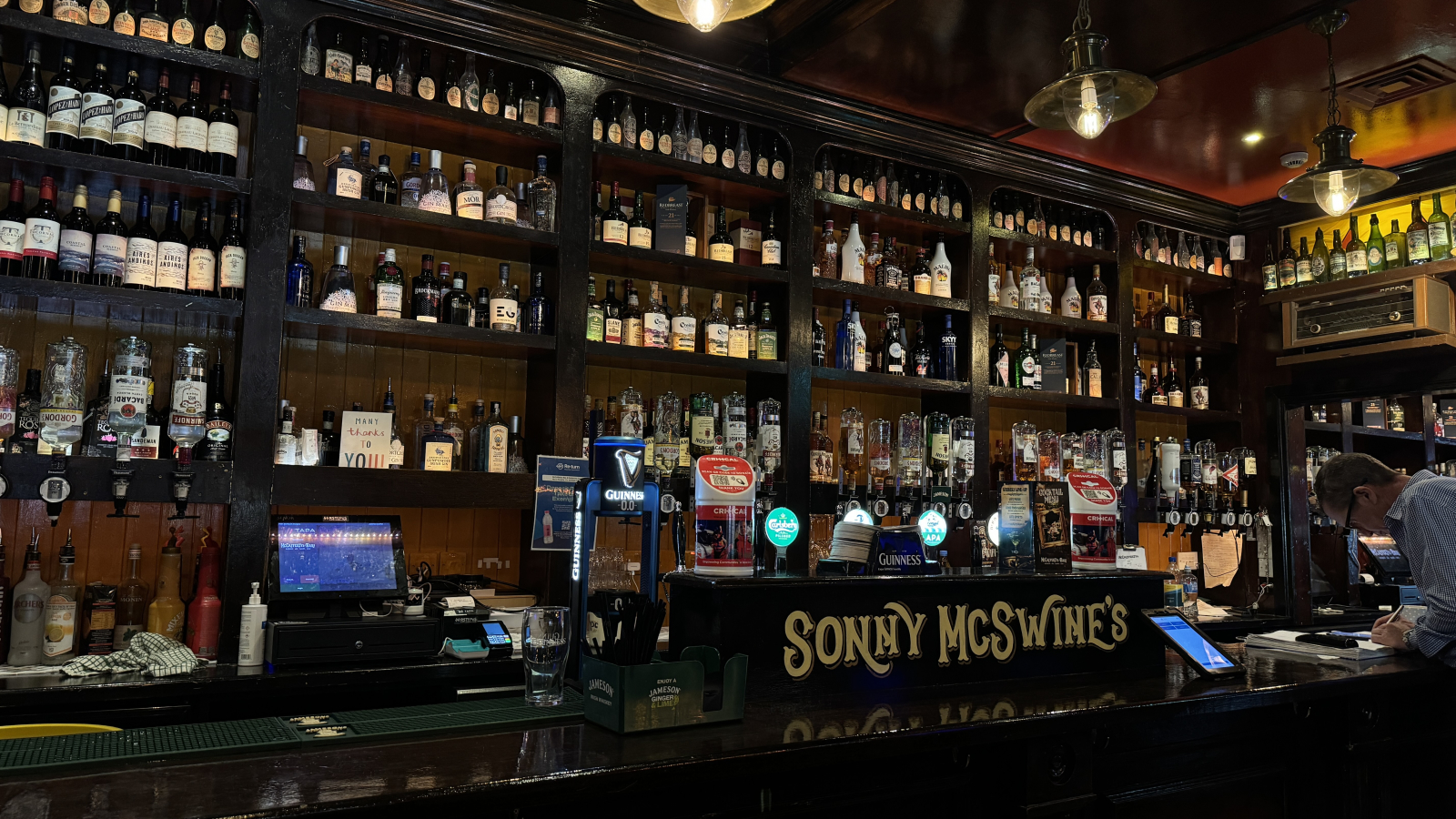
We have lunch at McCafferty’s Bar in Dungloe. Here we feel at ease straight away. The bar is decorated quite colourfully and somehow brings old and new together. Besides all the old props, flat screens hang showing the current sports programme. Here, for once, I try fish and chips and find it good.
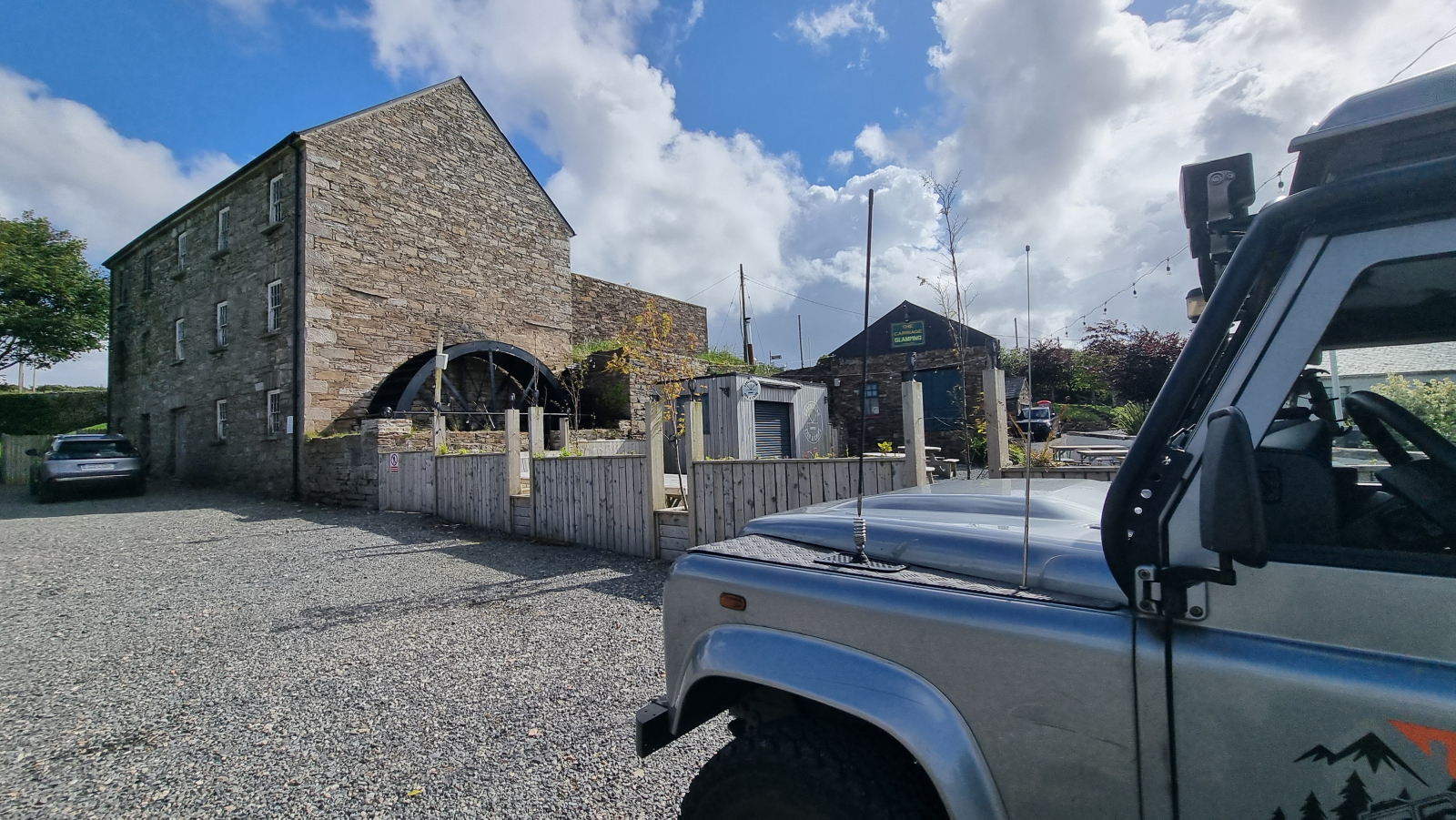
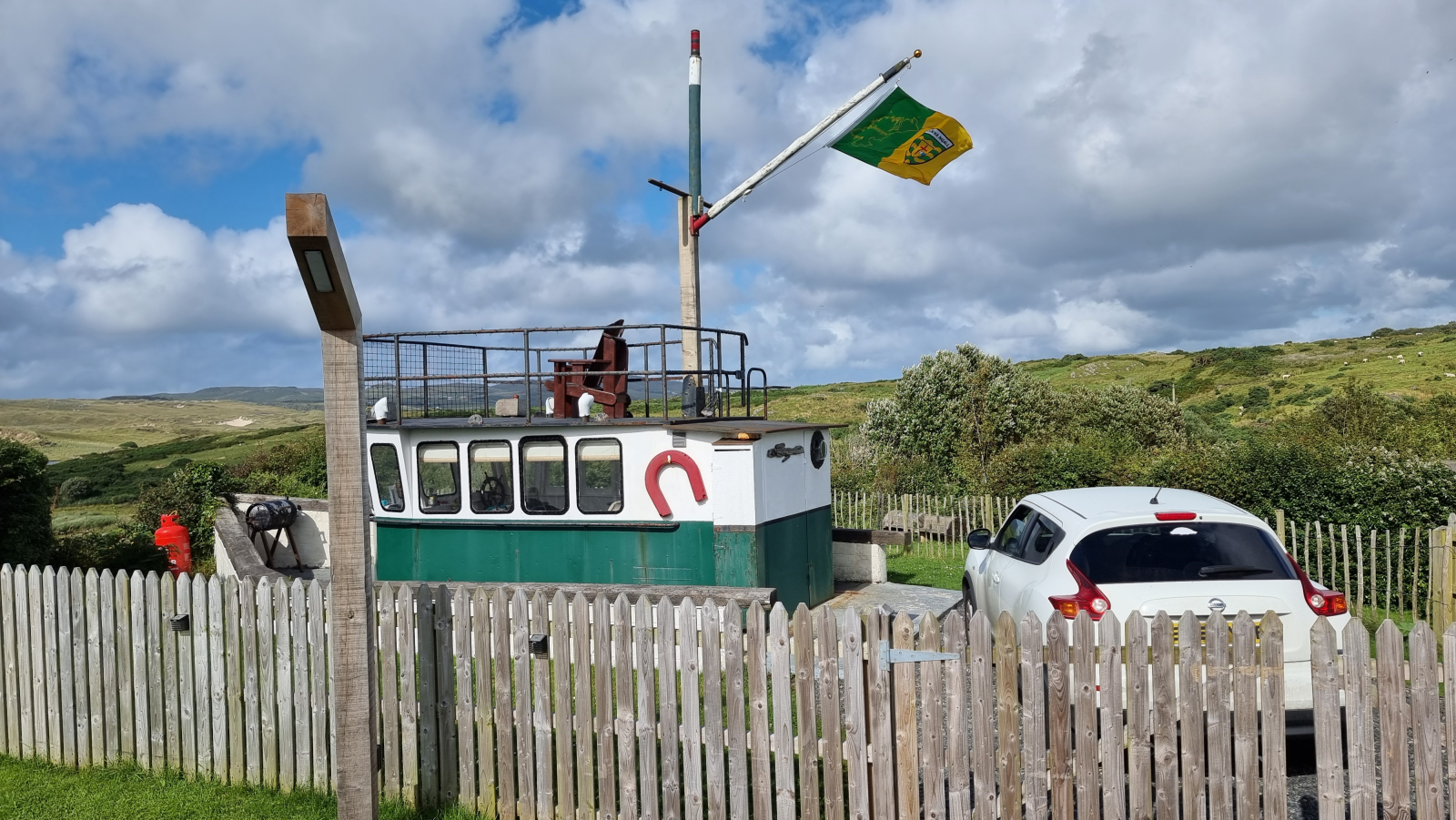
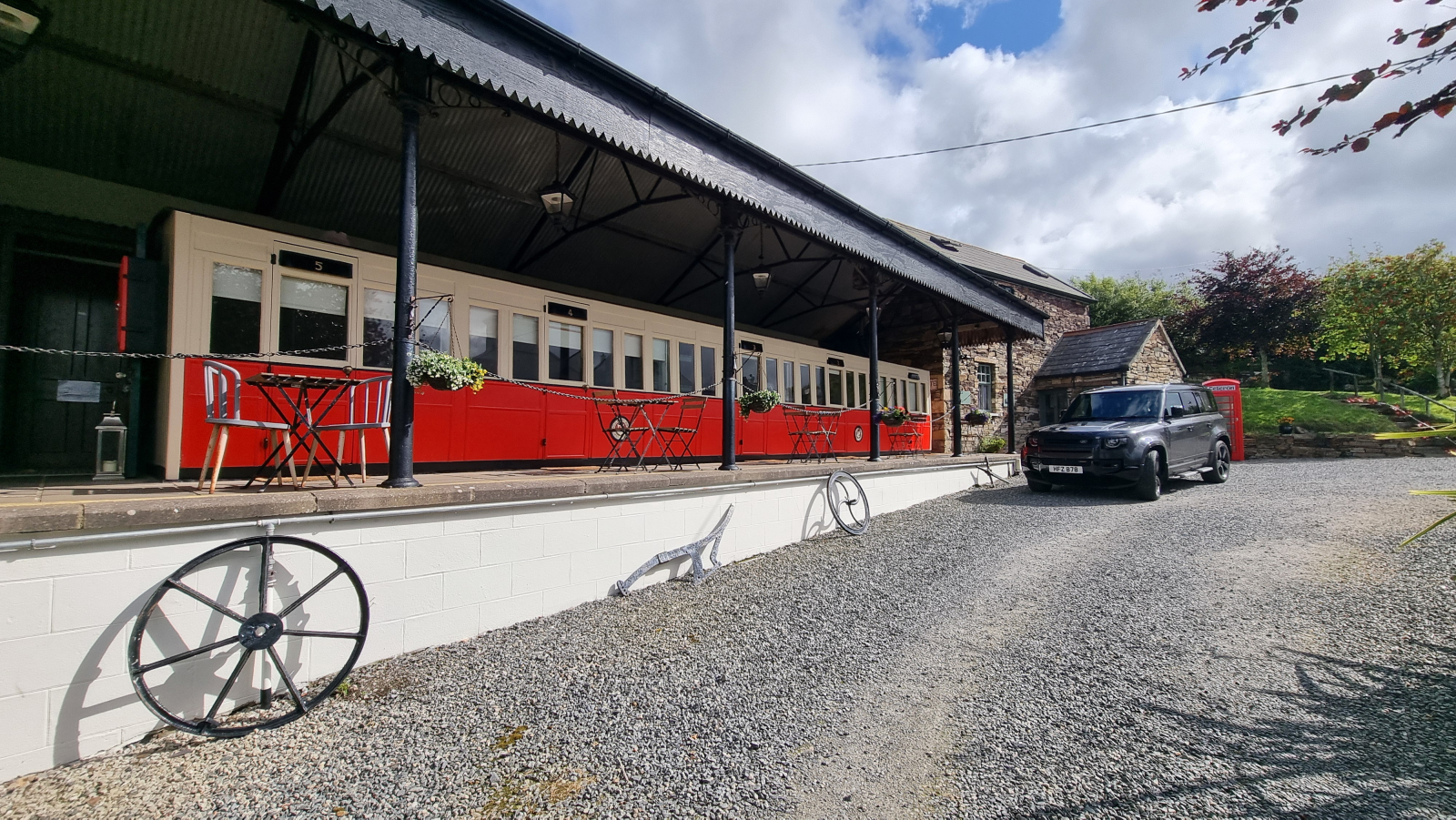
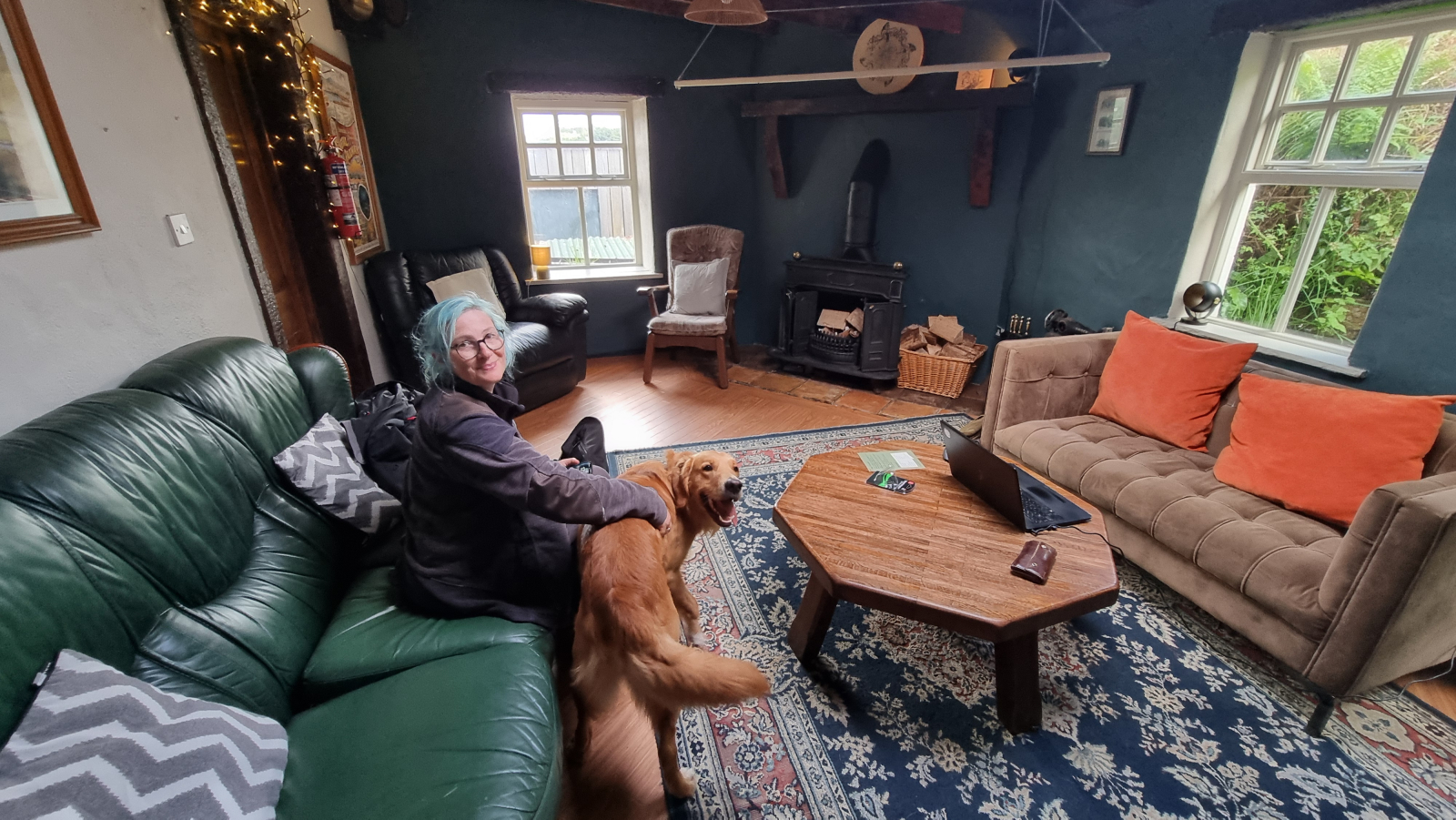
Towards the end of the day Nik tracks down the Corcreggan Mill campsite, which is special. They call themselves a glamping site here, but we wouldn’t call it that. More like lovely, well kept and tasteful. In the main house of the old watermill there are self-catering rooms. Anyone who prefers more of a youth-hostel feel can move into the railway carriage that stands right next to the mill. This is probably where what was milled used to be loaded. There’s also a large communal kitchen and a room with a fireplace. Self-service and honesty apply. On the grounds there’s also a small boat done up as a room, and a little higher up there are pitches for motorhomes.
Fort Dunree
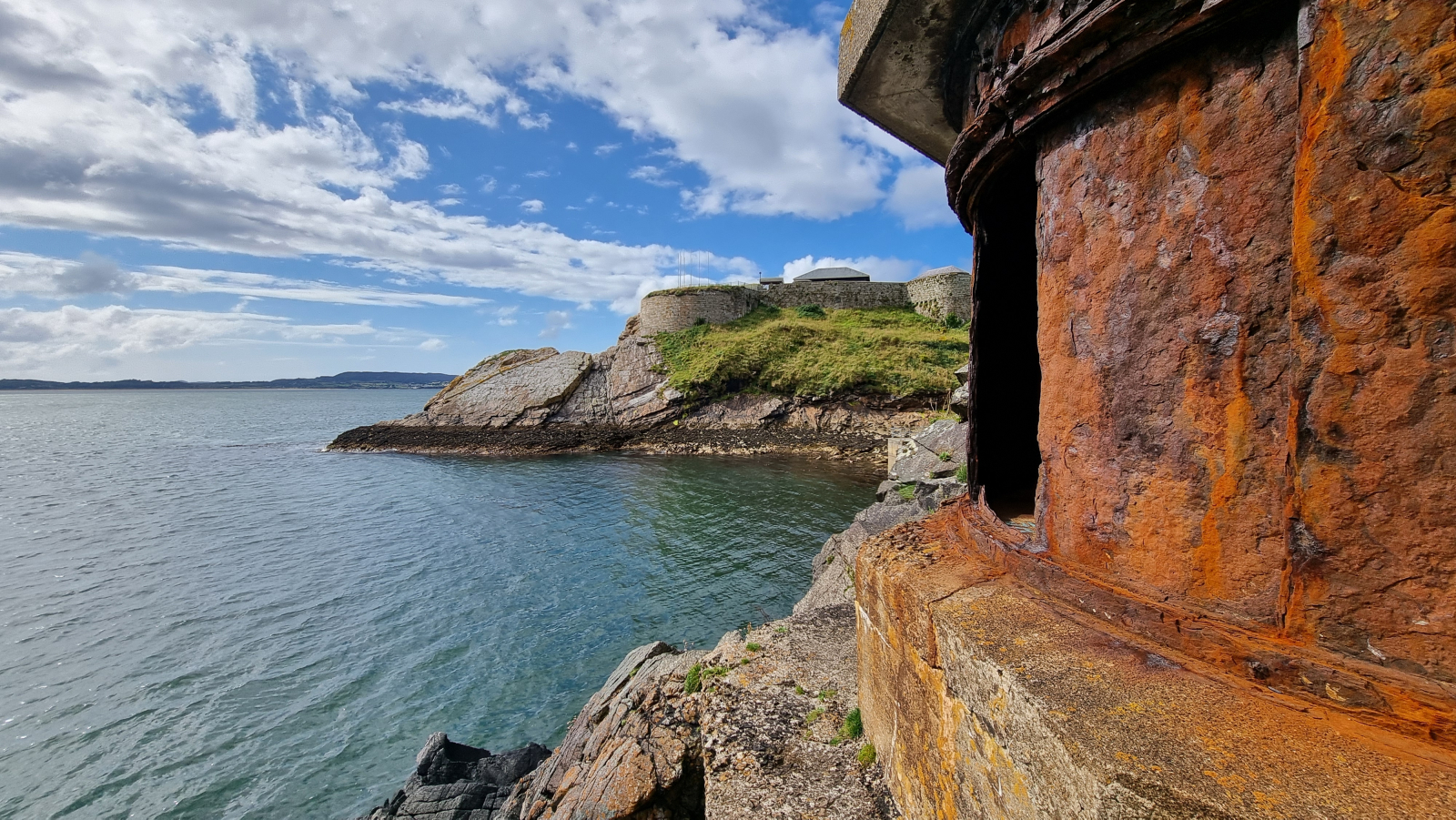
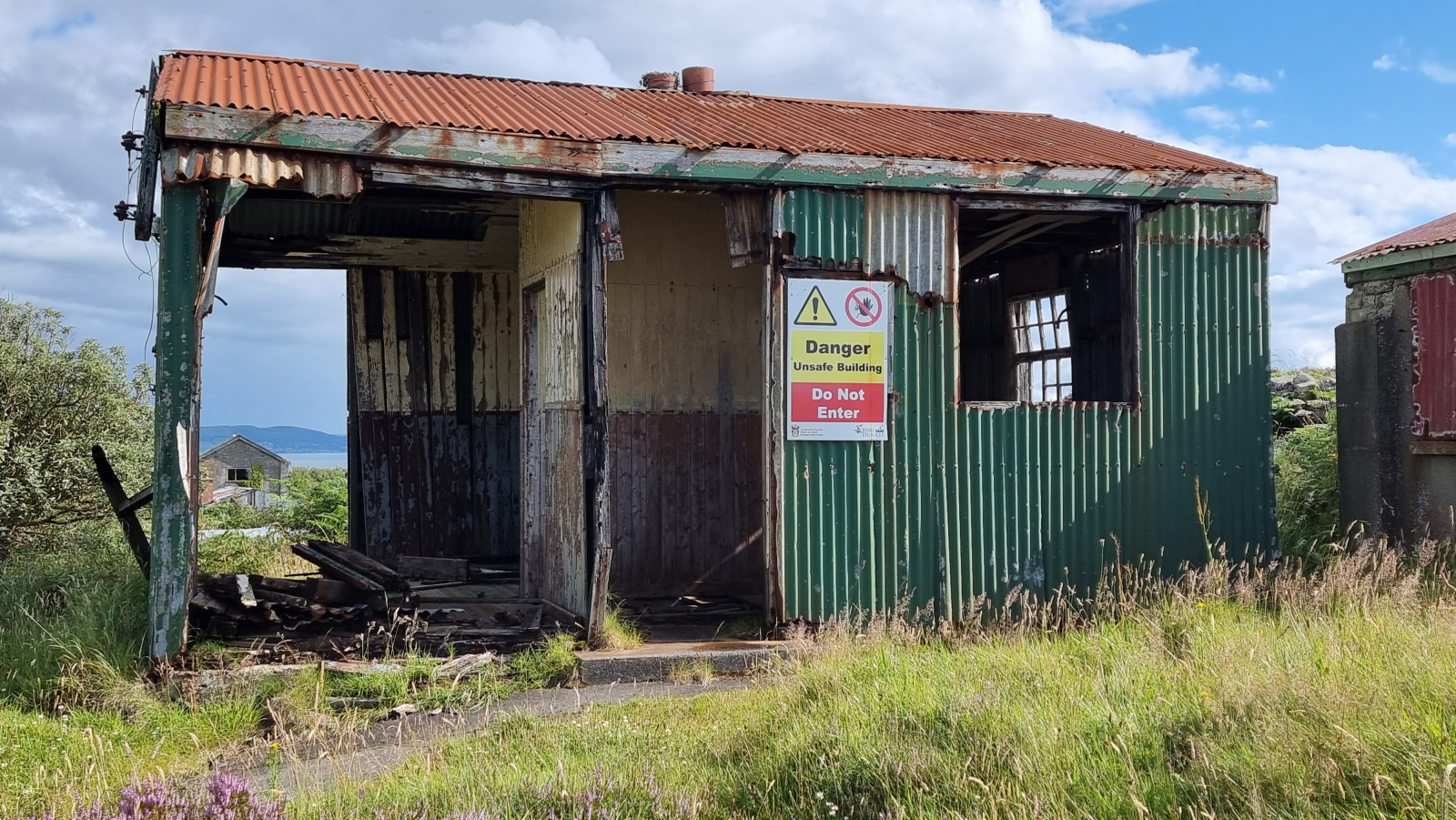
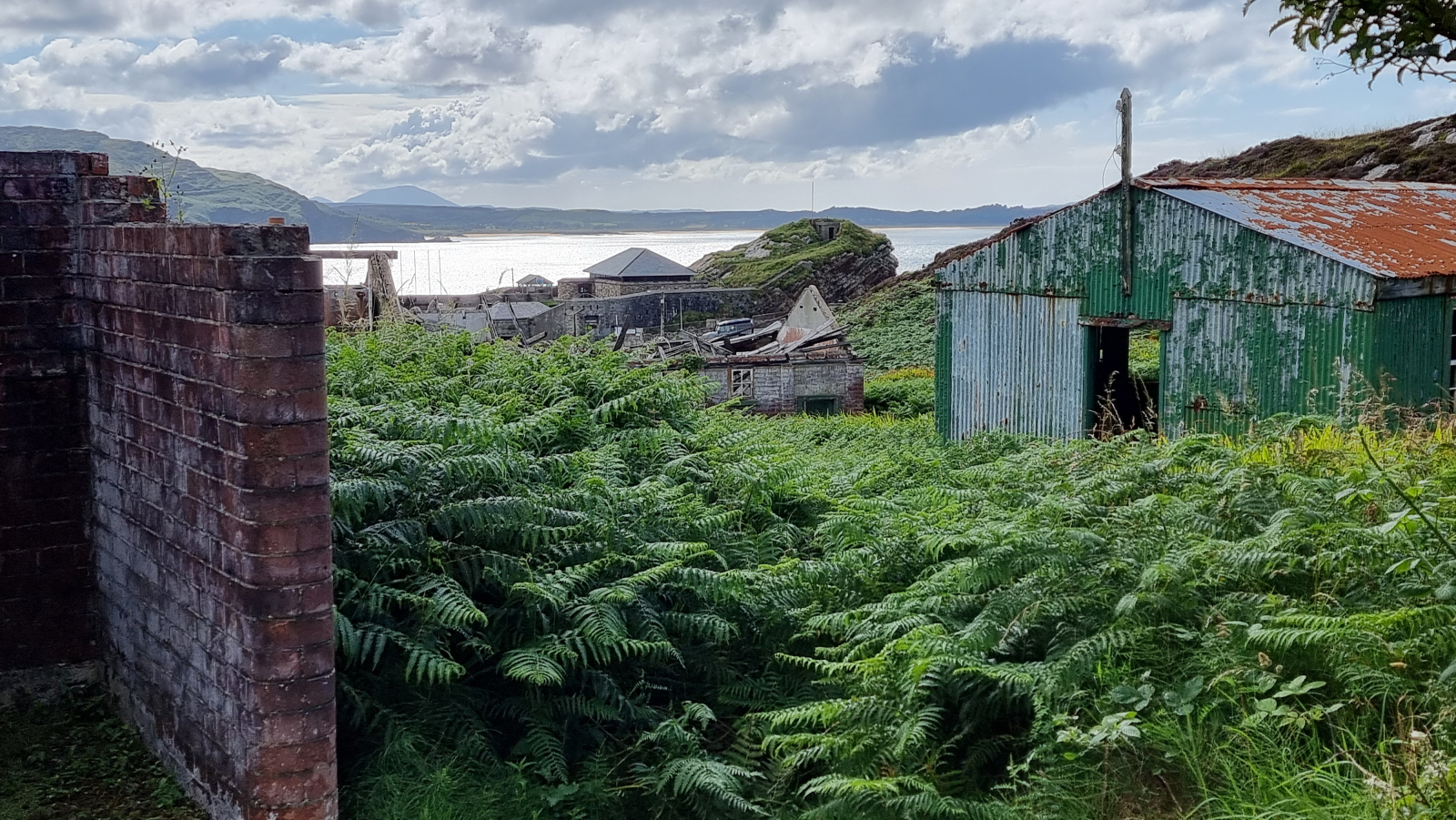
We drive to the old Fort Dunree, which was still in use until 1990. Latterly as a military training facility. Its history goes back to 1812. Together with Fort Knockalla opposite, it guarded the entrance to Lough Swilly, which reaches up to Letterkenny. Sadly we only arrived shortly before 4pm and everything had already closed, so we can’t take a tour. Some of the grounds can be walked, though. Above all we look at the old, decayed barracks. How quickly nature takes everything back.
Malin Head
The northernmost point of Ireland is of course unavoidable. For us and for others. It’s busy here to match. It’s astonishing how many really do want to drive the very last metre up to the old watchtower by car, even though there’s a car park below the tower. We pull over a bit and take up a lookout position below the watchtower. Whales, sharks and dolphins are said to often be seen here. But sadly we spot nothing. We now feel that we’ll manage our plan, to drive the Wild Atlantic Way to the very end. For some the end is right here, at Malin Head. Not for us, though. We want to carry on until the official sign comes. But it feels as if the journey ends here.
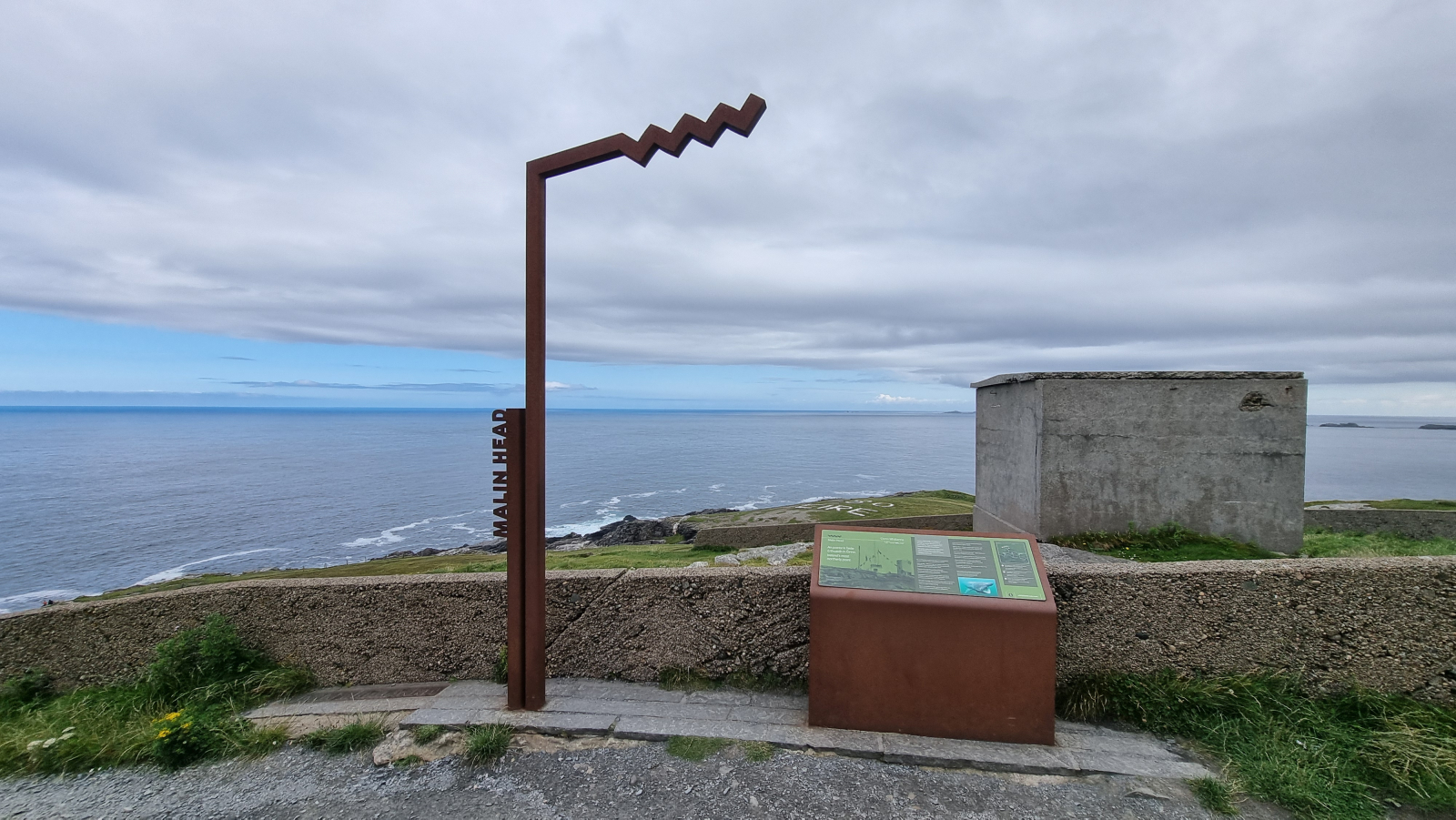
We leave Malin Head. Nik has spotted a small beach about 1.5 km away. We drive there and immediately decide that this will be our overnight spot. But first we have to finish the WAW. We drive on, but in our heads we’ve already closed the tour book.
And indeed we still have to drive as far as Muff to finally reach the longed-for sign. We’ve done it and fall into each other’s arms. We drink in the moment of happiness to the full. Now it’s a matter of going back to the lovely spot. Should we really do that? Turn around and drive the 25 kilometres again? For a moment we hesitate. But then we drive back. Who knows what it’s good for?
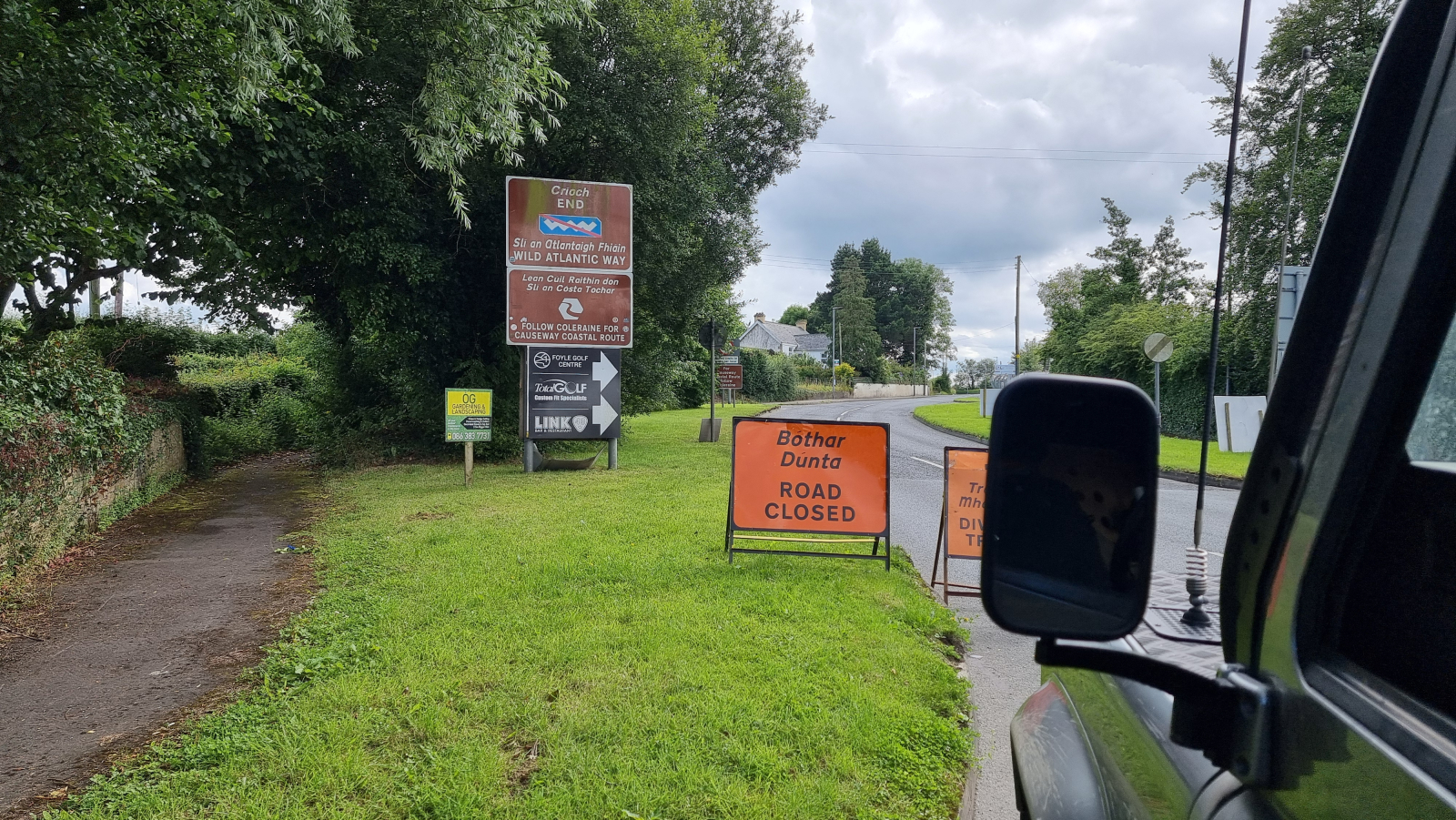
The last overnight stop, with a surprise
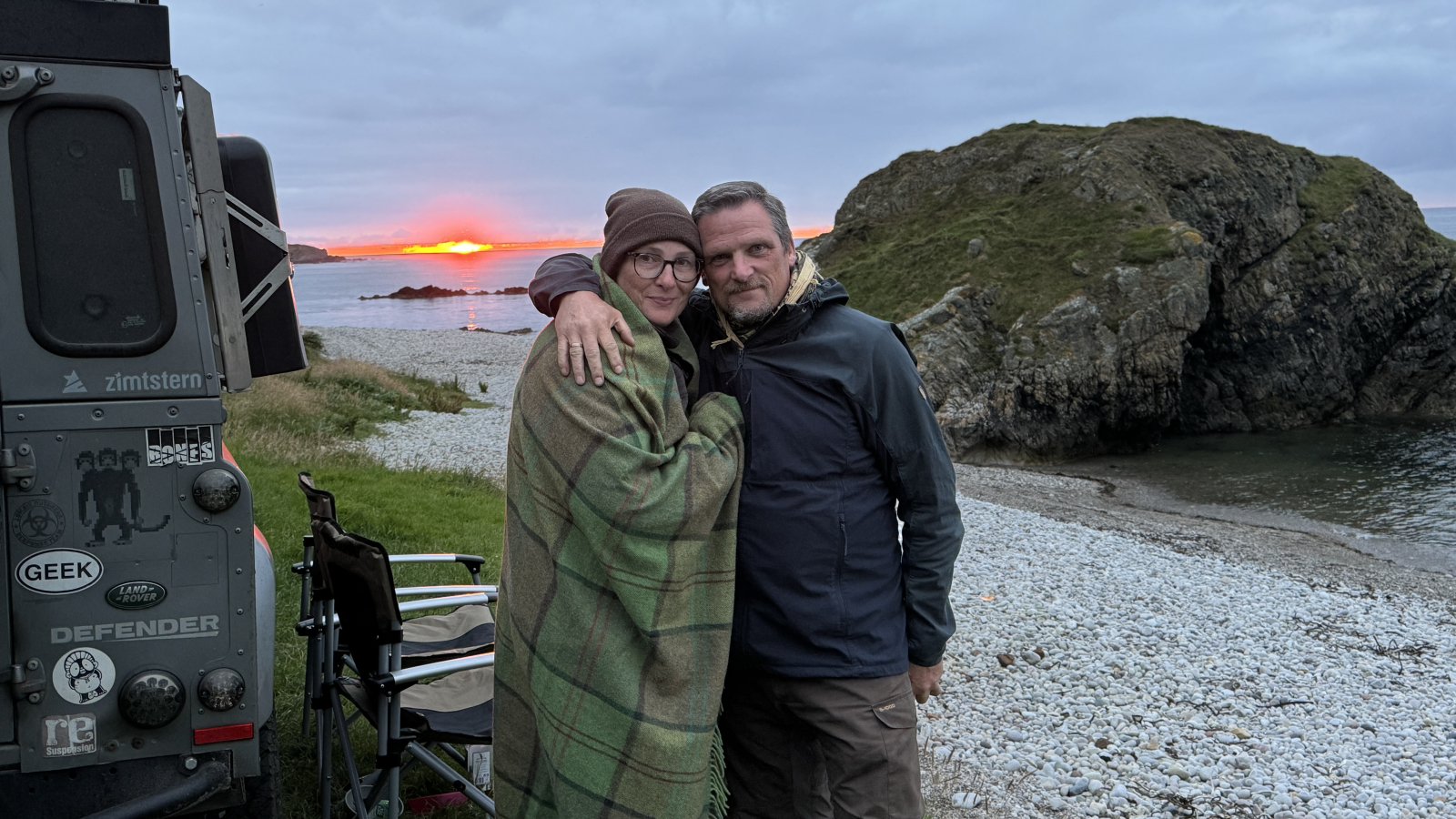
Happy and exhausted, we reach our little private pitch next to an old ruined church. The weather is glorious and we enjoy the whole scene. We stand well sheltered below a few high rock faces, in front of us the shingle beach and the sea. In the evening we keep a lookout for sharks, whales and dolphins. We stare our eyes out of our heads. But nothing. Well, that’s not quite true. All evening three seals laze in the water in front of us. Again and again they stick their heads out of the water for minutes at a time and just drift like that. Well, seals at least. When it gets dark, we disappear into the pop-top roof and fall asleep with a smile.
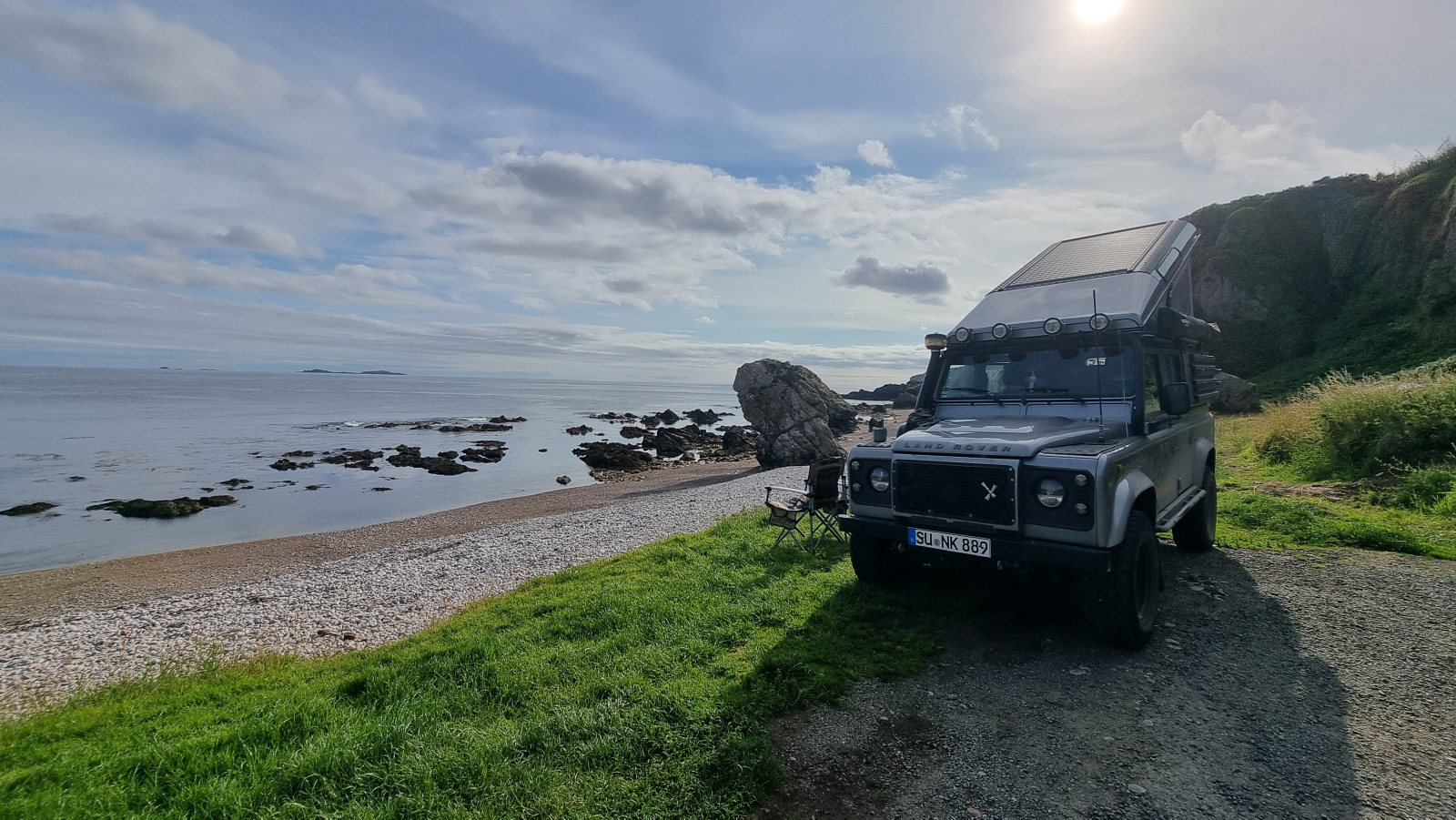
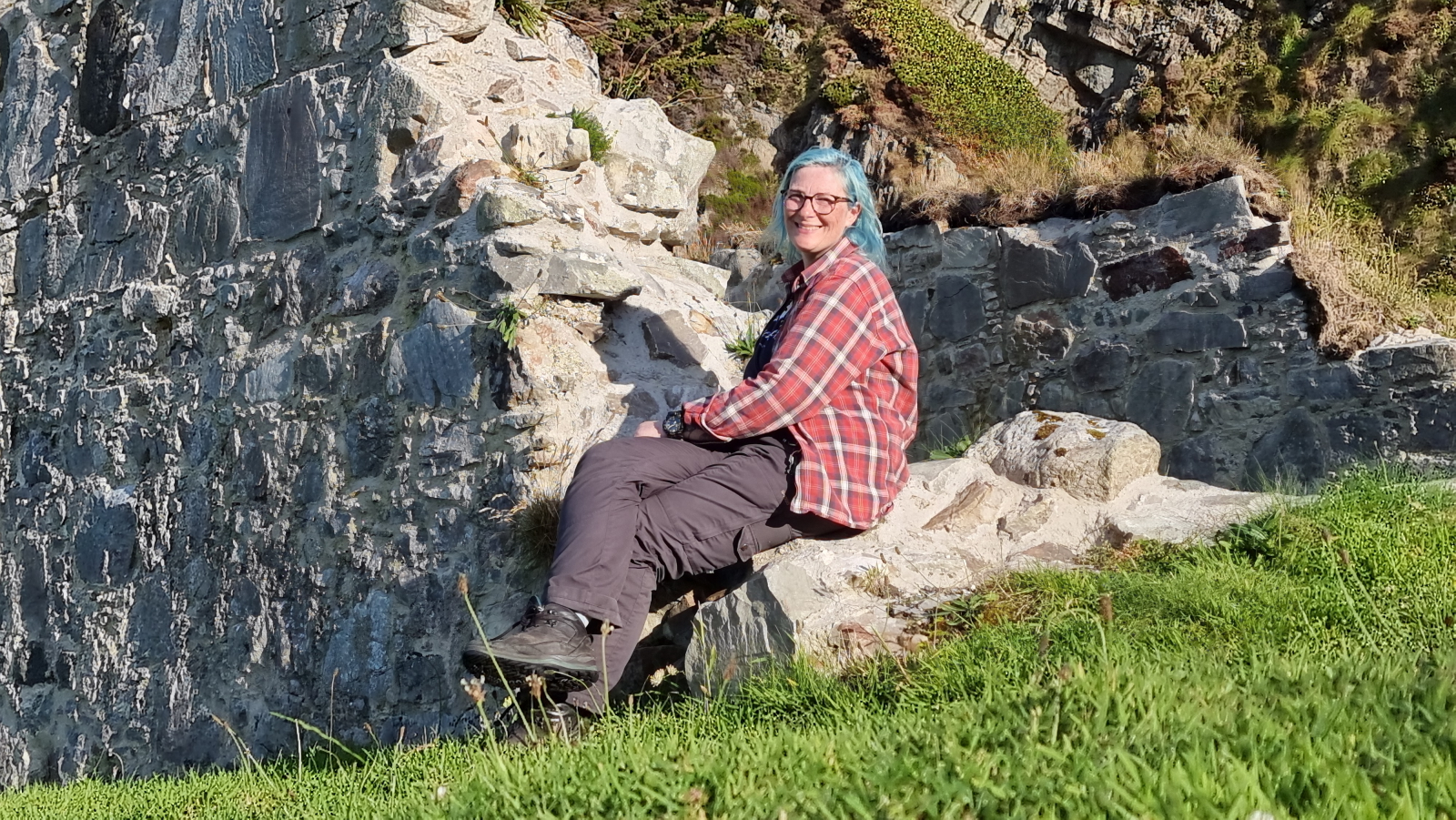
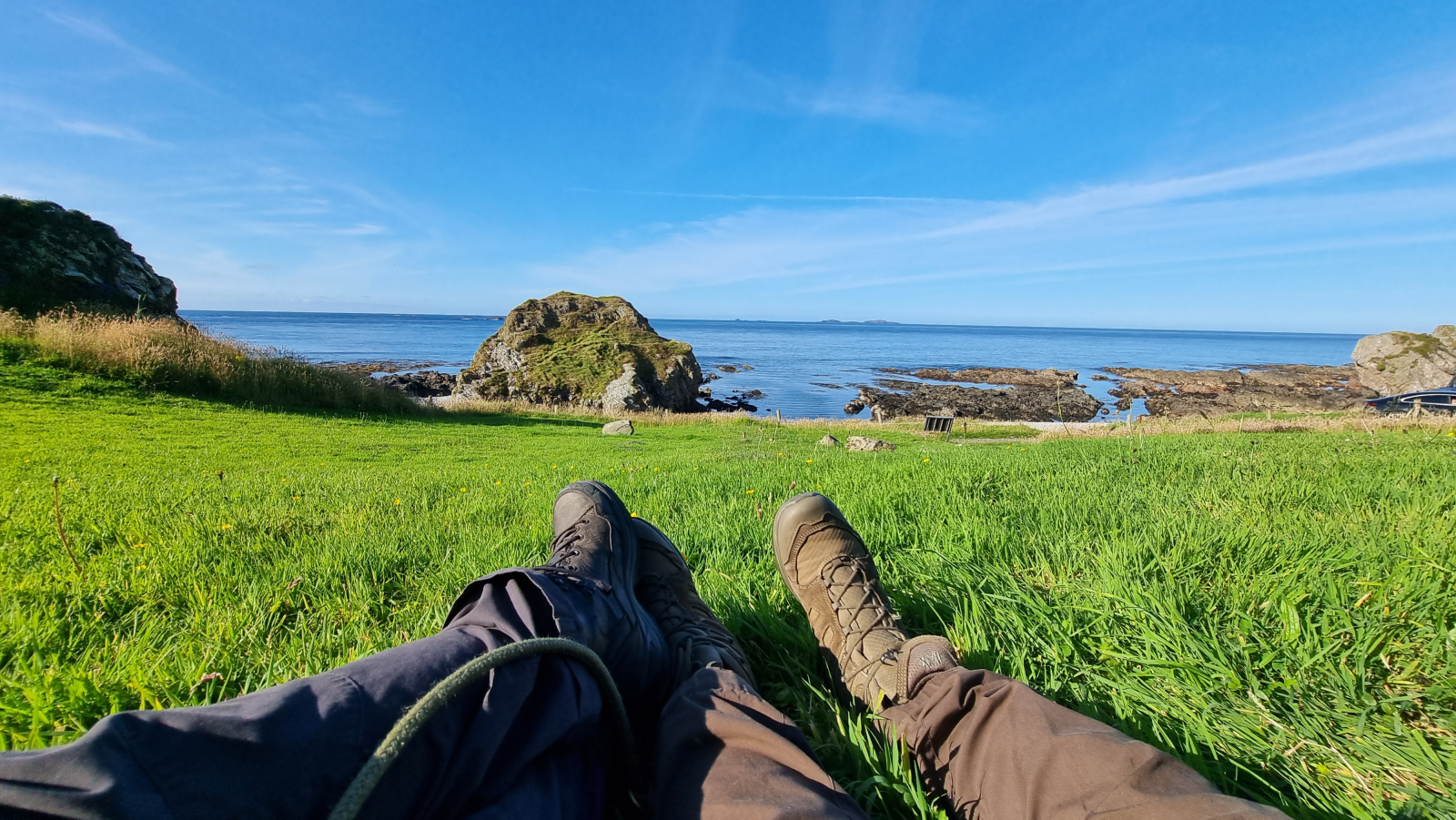
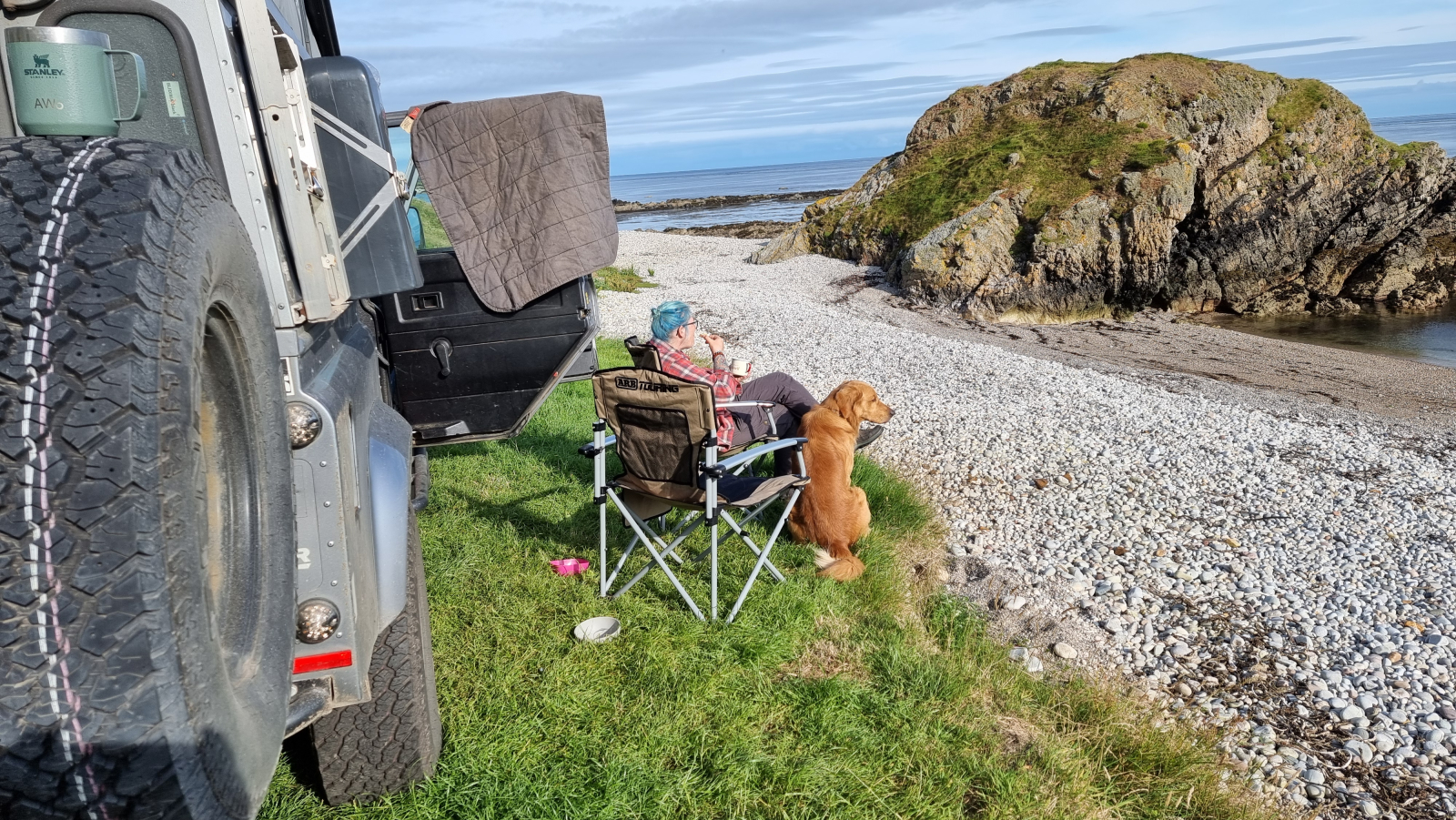
Today is departure day! Even so, we won’t be done out of a quiet breakfast. Nik wanted to have a look around the old church, I sit in front of the car with my second cup of coffee and gaze out to sea again. There! There’s something! Quickly grab the binoculars and, sure enough. A whole school of dolphins comes swimming along. Excited, I call Nik over so she doesn’t miss the lively creatures. They seem to be in a playful mood; twice they even do little jumps, as you can see in the video. Incredible! We can’t believe it. At the very last moment we still get this gift.
The little Wild Atlantic Way guide
The WAW can only be travelled by following the signs; a sat nav isn’t needed for it. We’ve put together a little guide for you on how it’s done.
The start and end points
Both the start and the end of the WAW are clearly marked with a sign. You do have to search for it yourself, that’s part of the fun.
The signposts
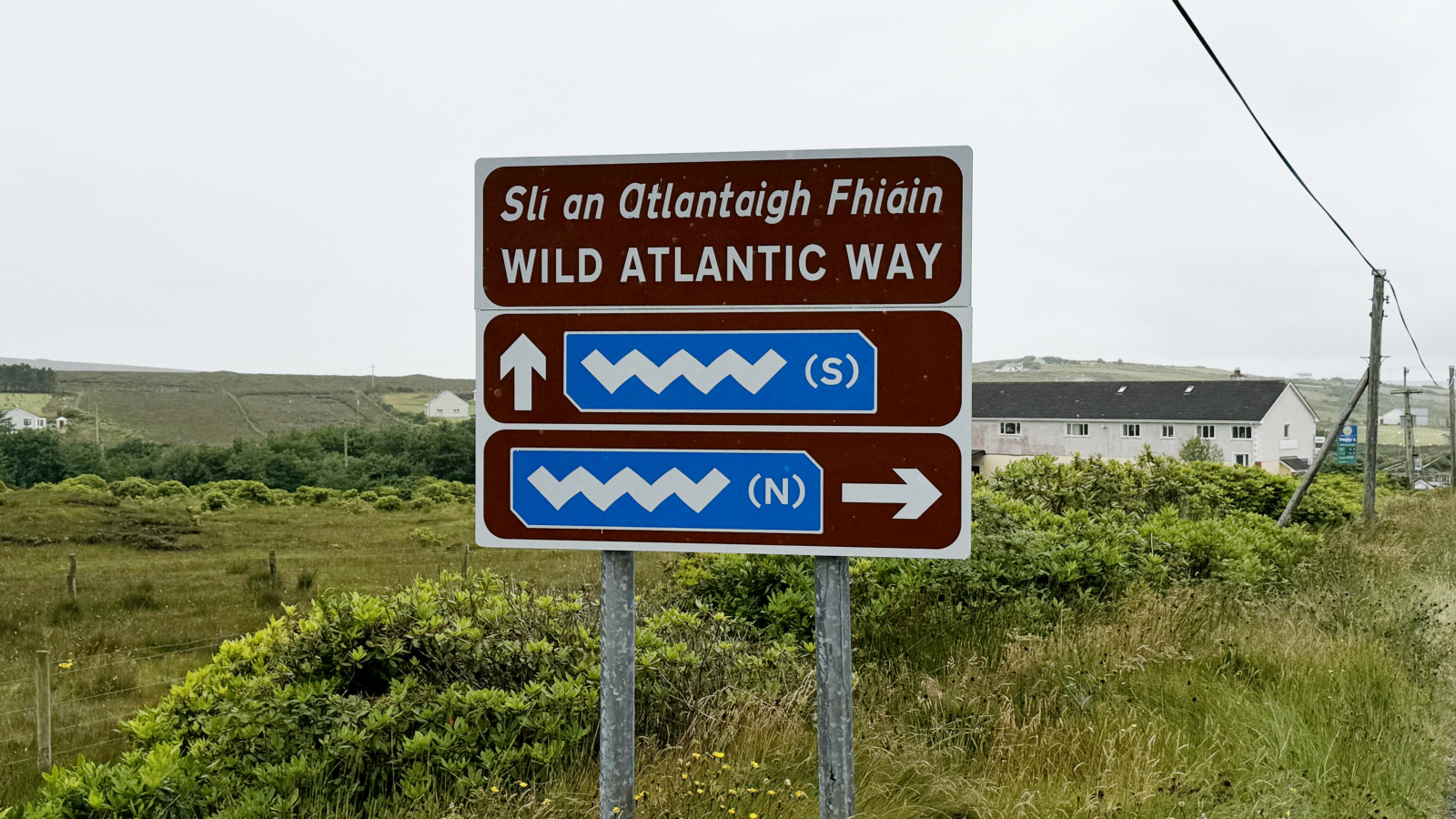
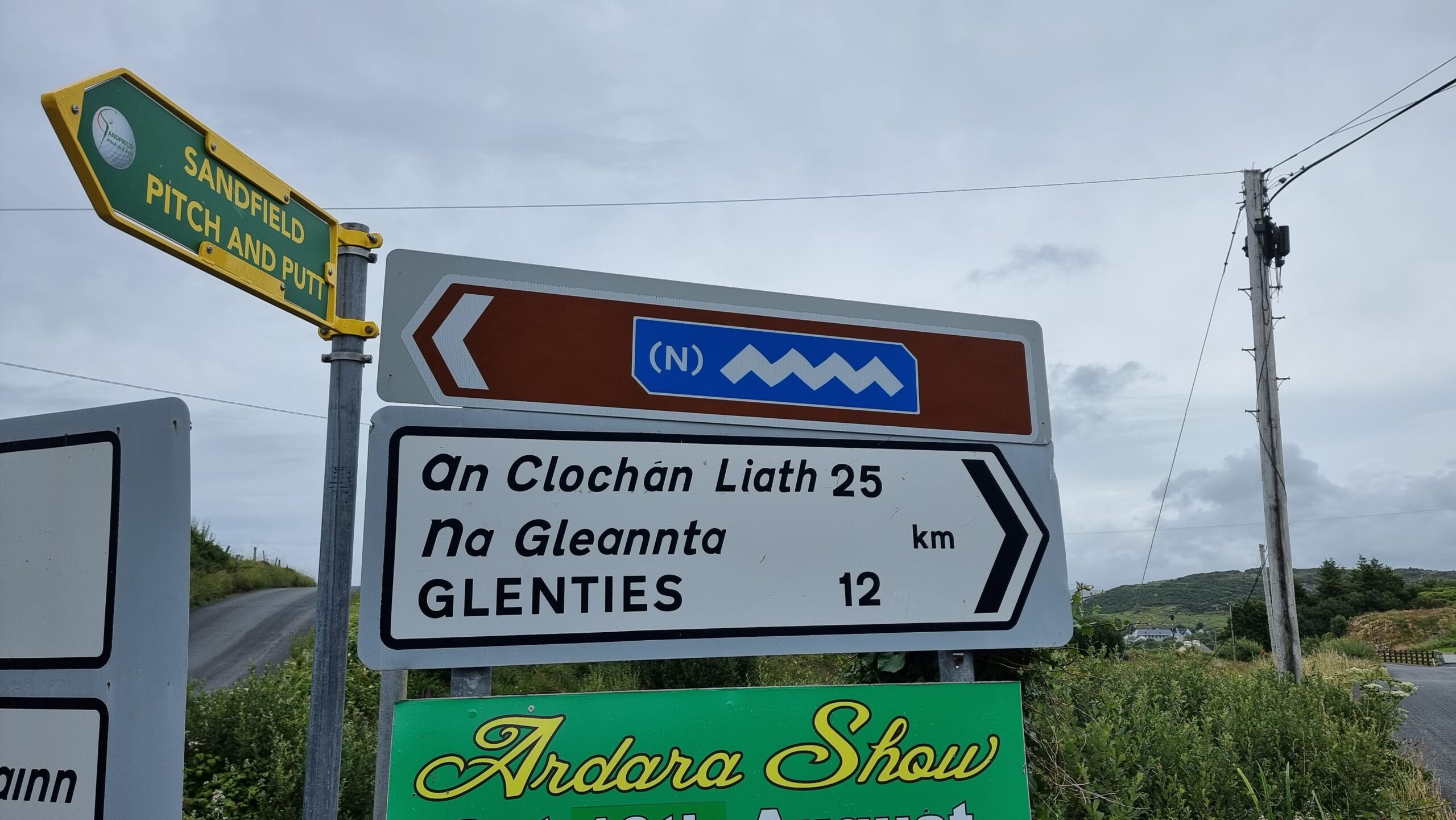
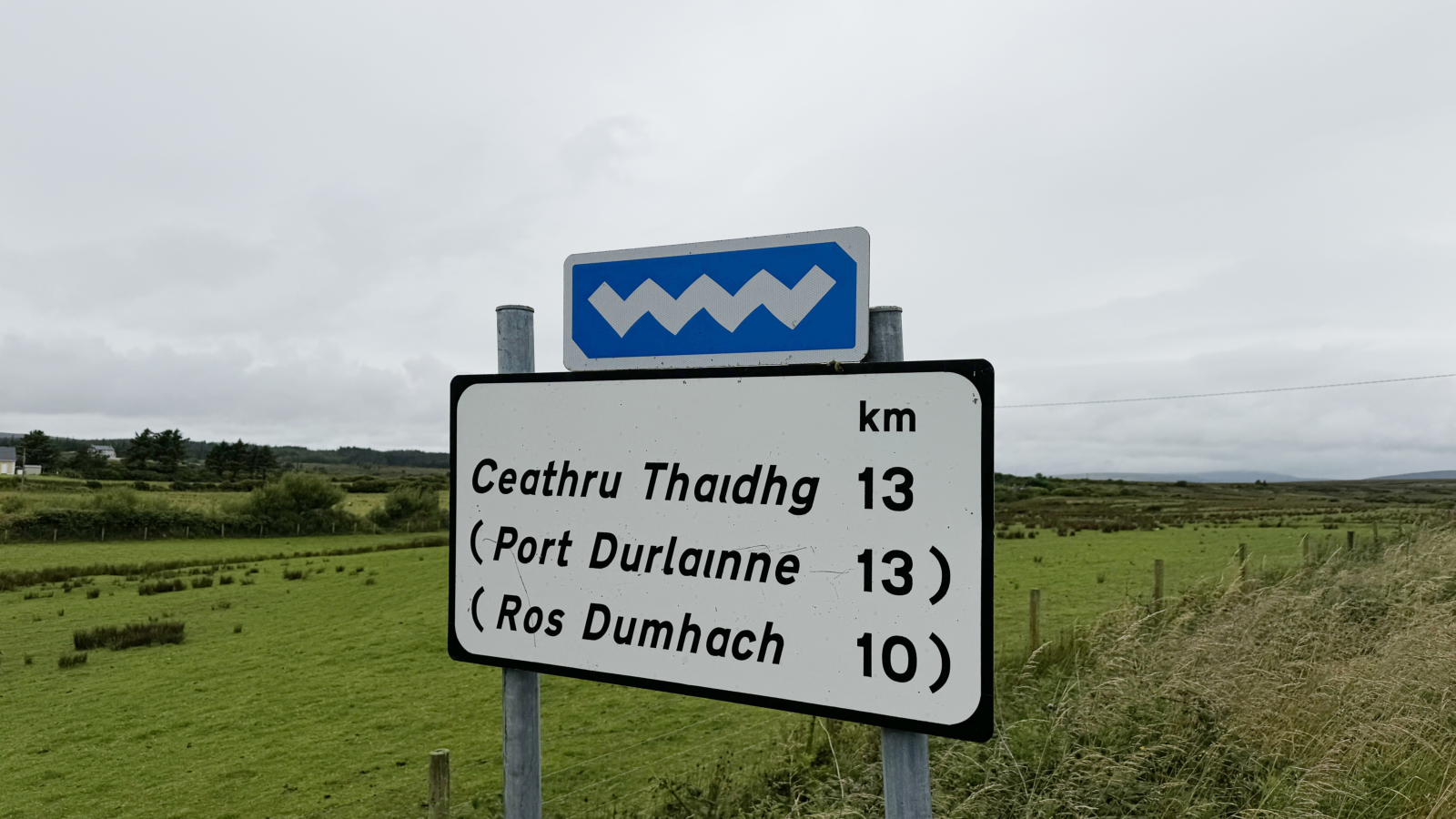
Along the route, direction signs follow at short intervals, showing exactly which way to go. At the start you decided whether it’s south to north or north to south, though we clearly recommend the former, especially in holiday season. Then you simply always follow the signs for that direction, either always the signs with the „N“ from the south or always the signs with the „S“ from the north.
You normally see these signs when you join the WAW from somewhere, so when you’re not yet on it.
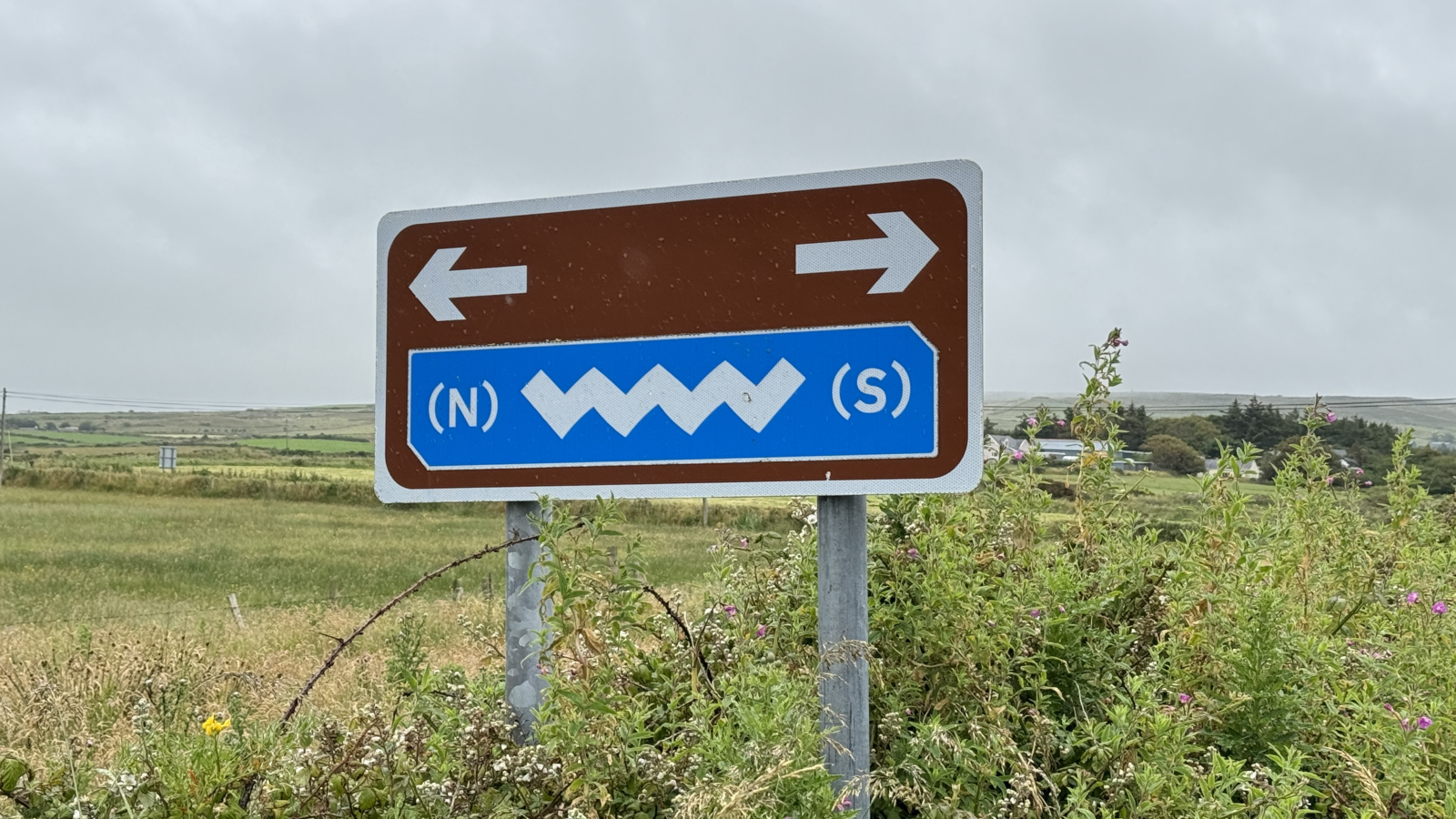
While you move along the WAW in one direction, small signs at regular intervals show you that you’re still on track.
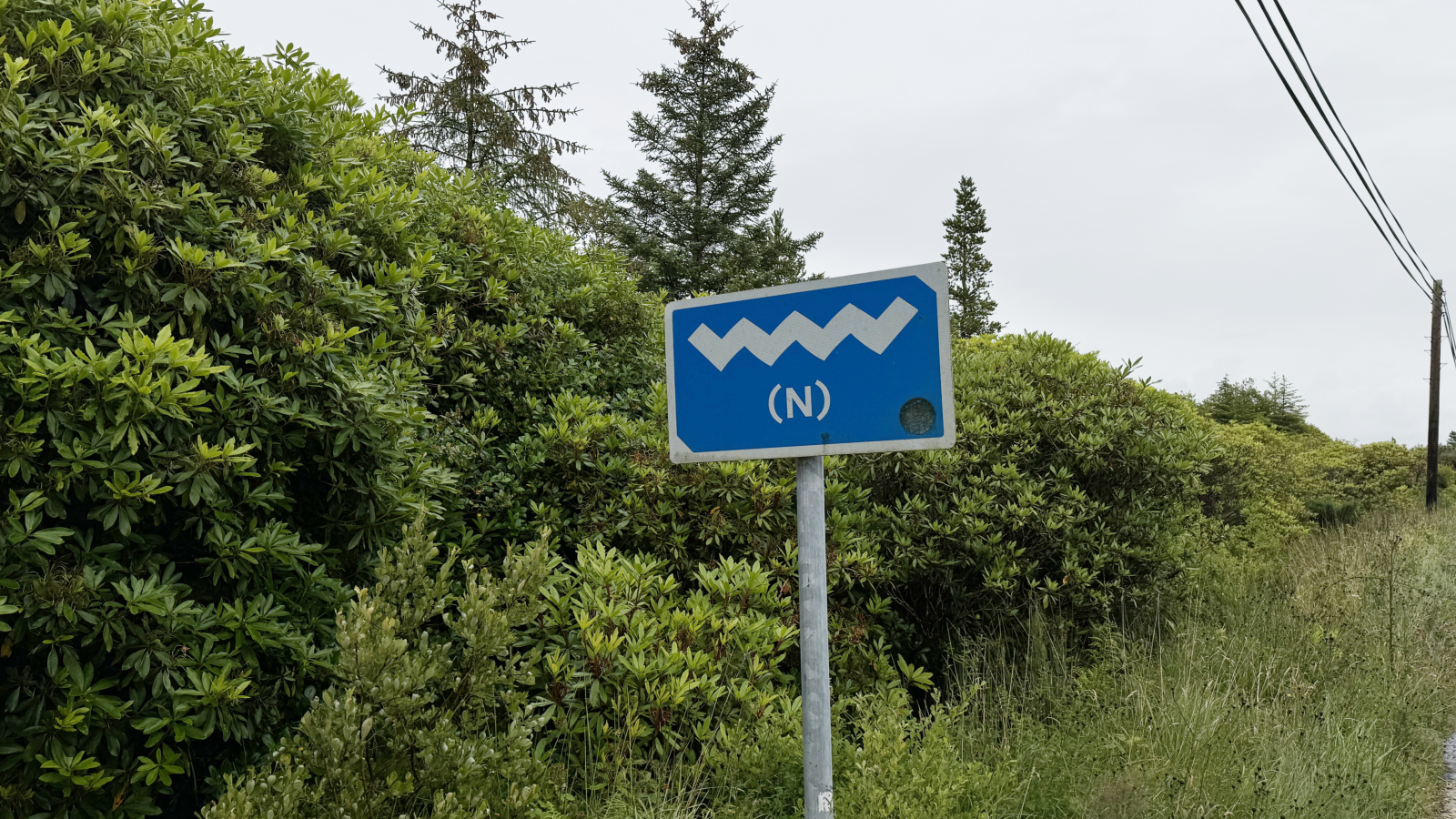
At junctions on the WAW, from your perspective you mostly only see the sign that leads you onward in your direction.
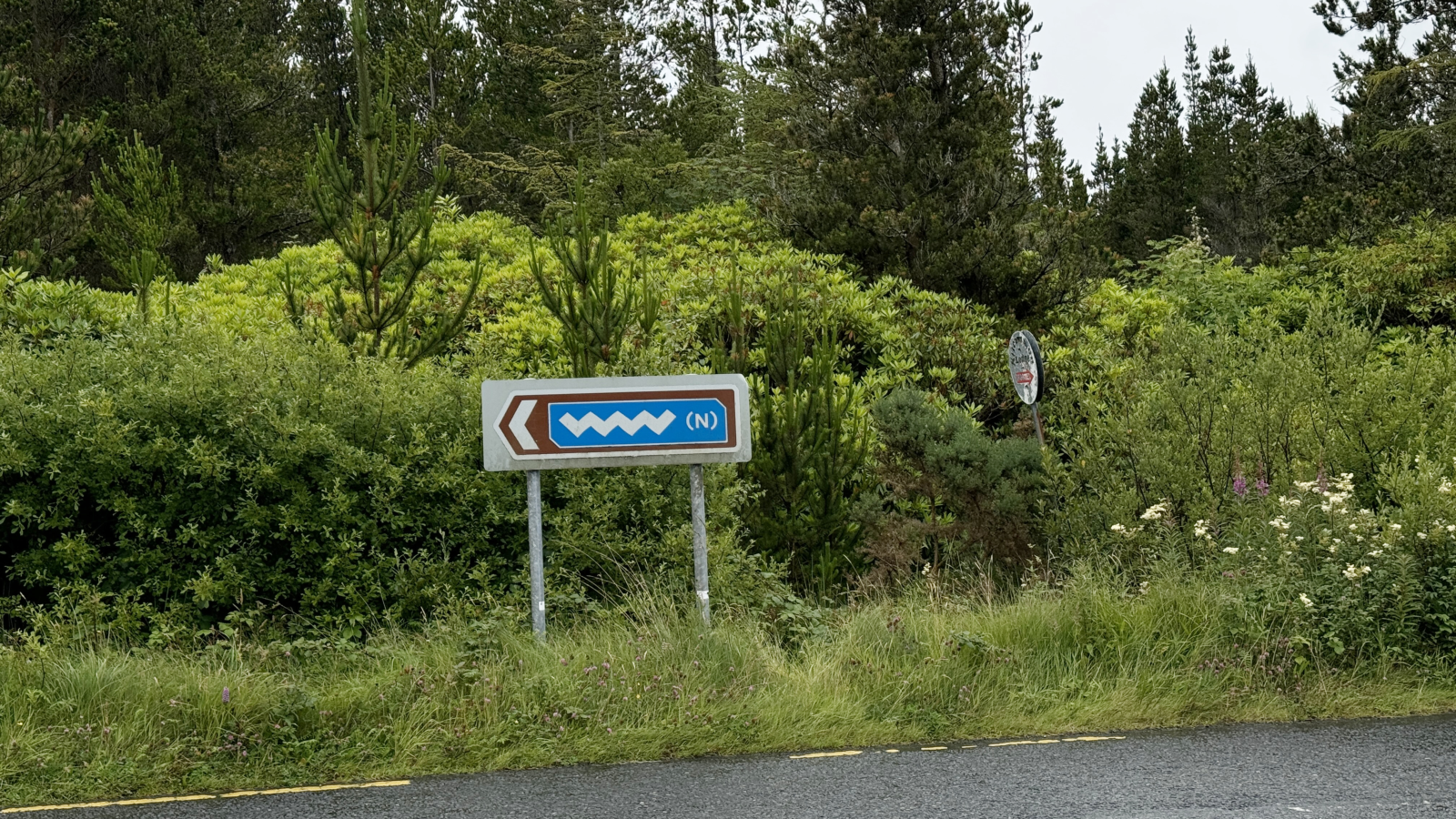
Watch out for turned signs
That exists too! Signs where the direction letter (N or S) is right, but the WAW symbol is upside down. Here some clever villagers probably thought, why should all the traffic and the tourists drive past our place? Let’s just turn the sign around and everyone comes to us as well. We saw that a few times on the trip. On closer inspection it was clearly visible that the sign had simply been turned 180°. But you can also tell by the fact that follow-up signs fail to appear, or you come to a spot with WAW signs where you’ve already been.
Scenic points and special spots
Along the WAW there are special places again and again; these can be museums, beaches or other interesting points. They’re marked with their own signs.
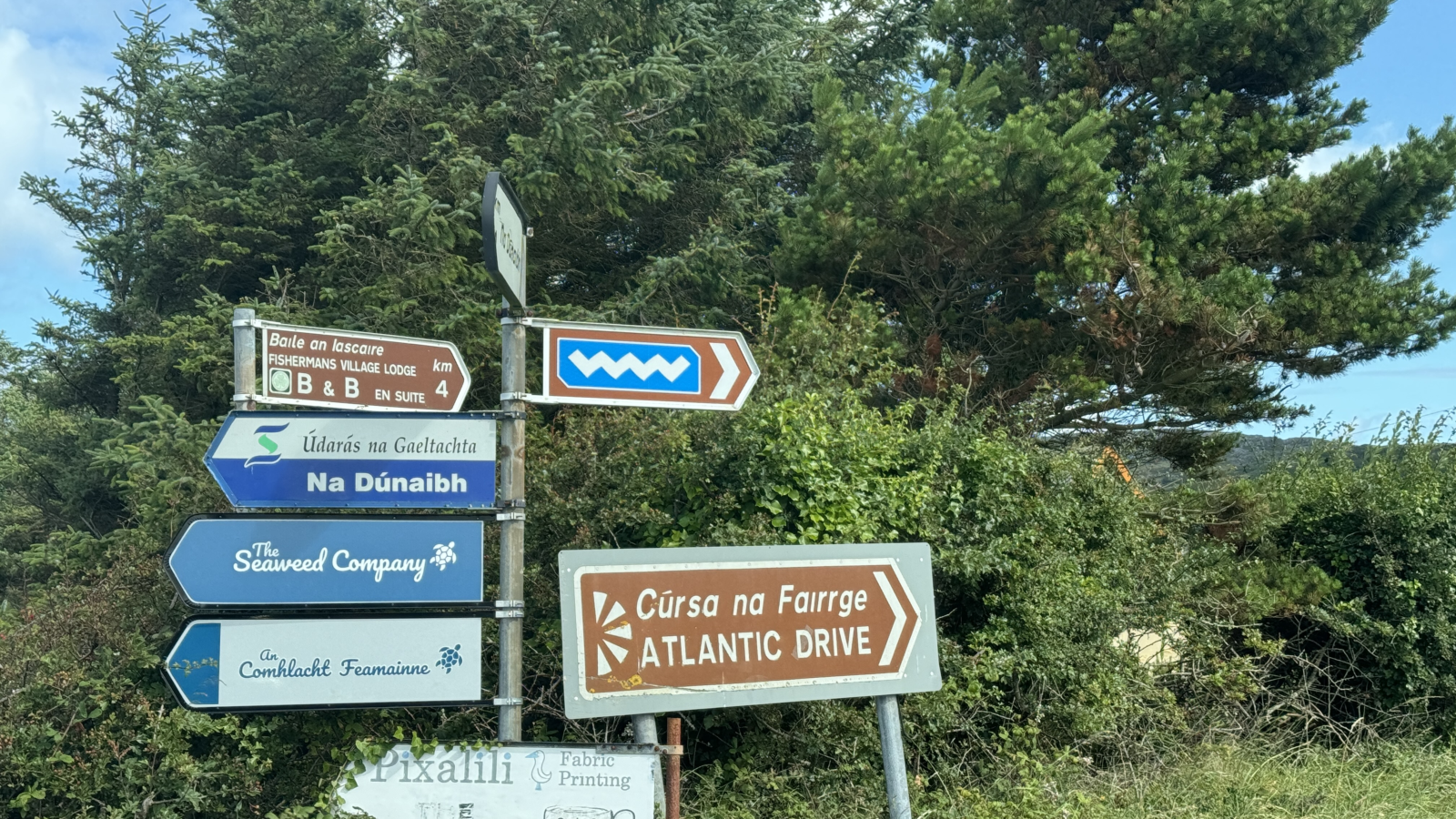
The routes to such points are either circular or long dead ends. At the end it’s a case of turning around and back onto the WAW. That you’re still on the right track there is shown by a simple sign with the WAW symbol, without the direction letters „N“ or „S“.
You can read the first part of our Wild Atlantic Way road trip here: WAW – Part 1.
Nik, Awo and Guinness, with the pain of parting: