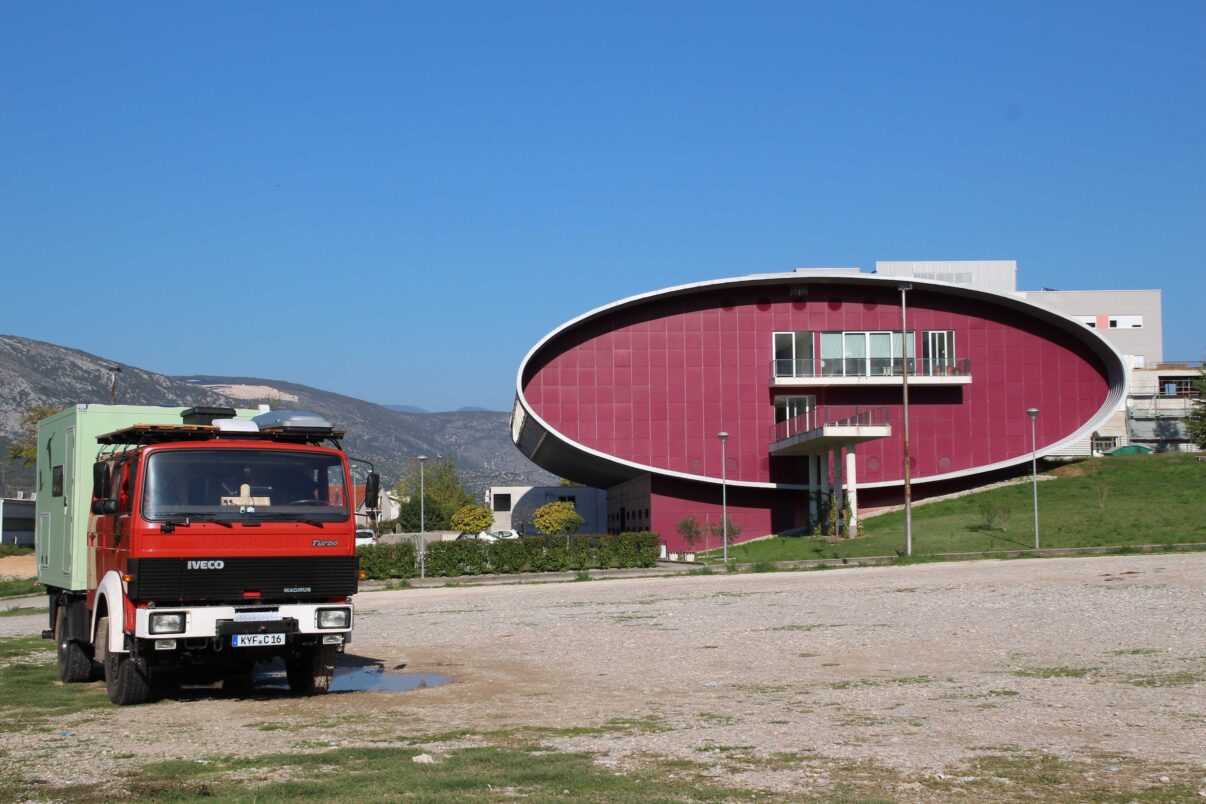

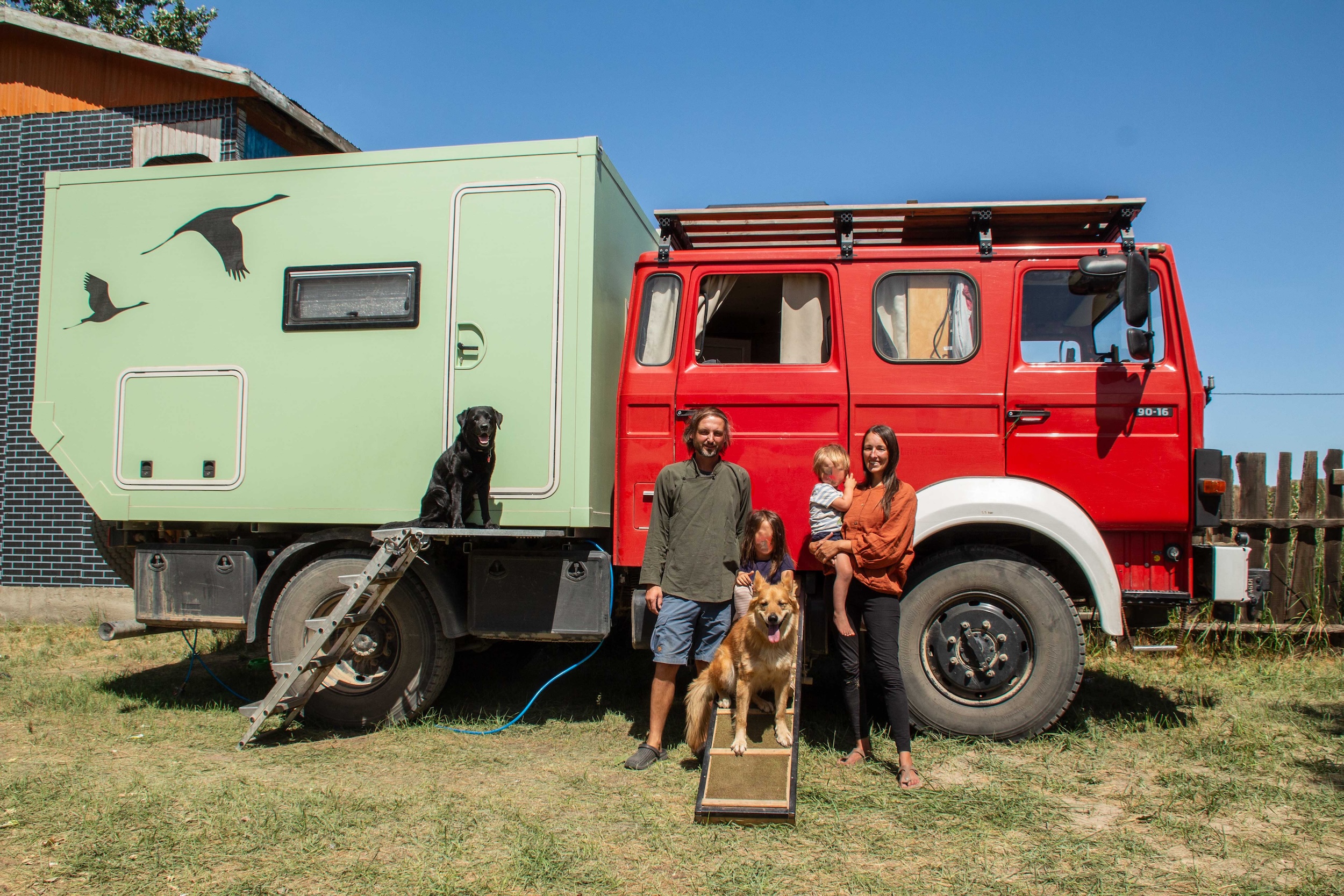
The day of departure is now a good year ago. Back then it was a big dream, shadowed by doubts and the question of whether the goal was really within reach. Today it’s clear: Alex, his wife and their two children pulled it off. In their old Iveco 90-16 fire engine they drove all the way to Mongolia. Together, with two dogs on board. A year on the road meant highs and lows, moments at the very edge of what you can take, and moments that get under your skin. Tears of joy, of fear and of exhaustion were part of it, just as much as moments of pure happiness and wonder. A journey that shows what happens when you have the courage to really set off. You can read the brilliant travel report here with us now.
The day we set off
The alarm goes at 6:30 again, a daily ritual for several months now. Even though I only got to bed around 1am. That too, ritualised for weeks. But this morning is different: the fire engine, our new home, is fully converted, everything is packed and ready to roll. Yet in the workshops, in the yard and in my father’s house, all the traces of the last weeks and months are still there and have to be cleared away so we can set off on our journey with a clear conscience.
At some point the moment comes, the engine roars into life, everyone hugs one more time, goodbye tears roll and then we roll too. Out of the yard, out of our small village in northern Thuringia, off into the wide world in the fire engine. Barely 15 minutes later we hear a question from our daughter we’d never heard from her before: “Are we finally there yet?” And not just once: the question came up several times within the first 30 kilometres of our trip. Always in a seriously fed-up tone. She simply doesn’t want to be strapped into her child seat any more.
The day of departure is a good year ago by now. And in the meantime, what we only dreamed of back then, but many a time thought we’d never reach, has happened: with our vehicle, an old Iveco 90-16 fire engine, we made it to Mongolia. A year with many highs and lows, with tears of joy, of fear, of pain, and many moments of happiness and wonder. Plenty broke on the adventurous roads of Central Asia: on the truck, on the living box, on our bodies, and more than once we questioned the point of the whole trip. But the good moments outweighed it and kept us driving on, kept our eyes and hearts open for new and exciting places, experiences and encounters.
Every beginning is hard, a start full of breakdowns
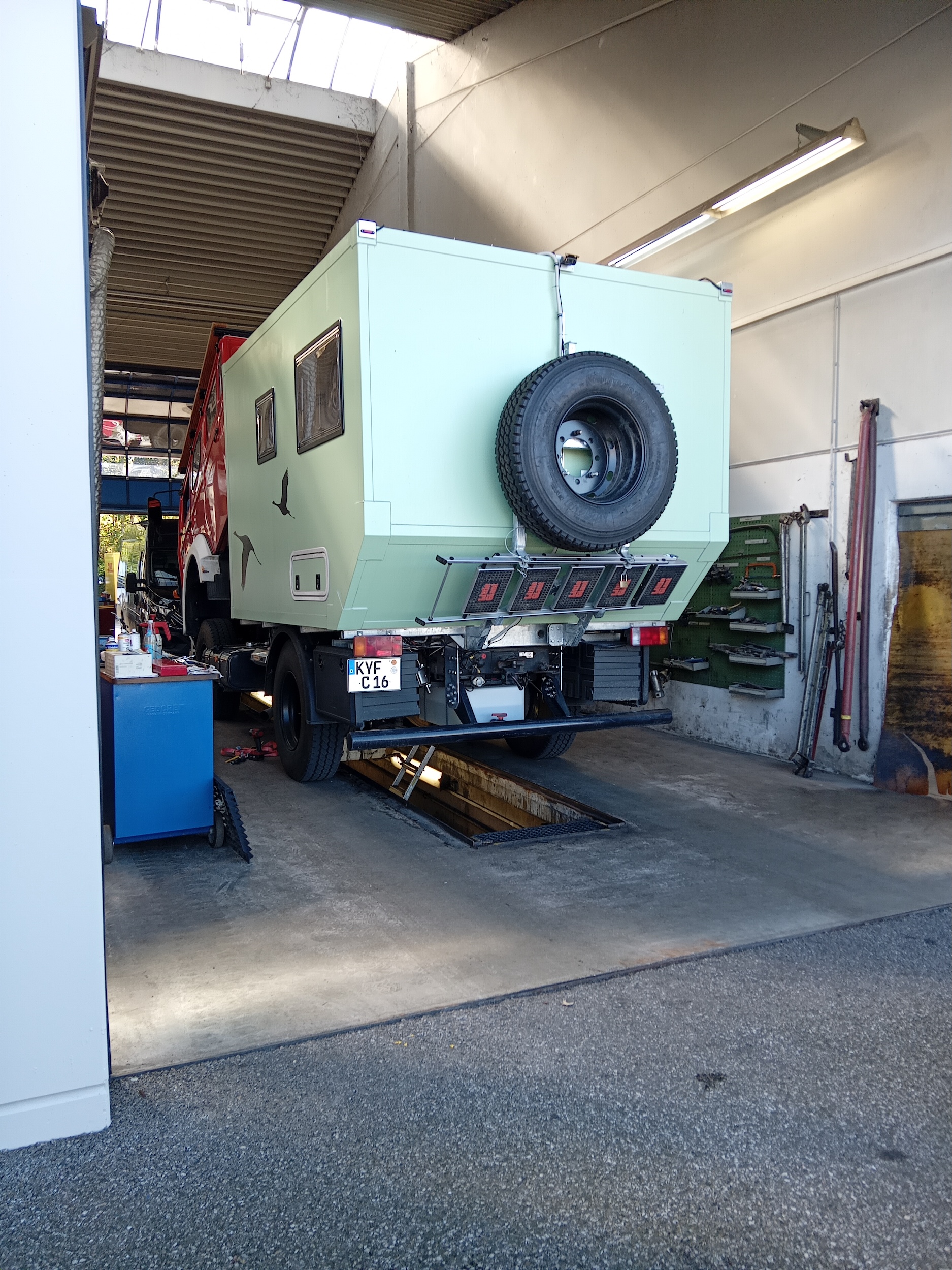
Just 600 kilometres and four days after our start from a small village in Thuringia, the truck stands dead in a sharp left-hand bend. We’re just short of the Austrian border. Nothing works any more and I can’t breathe any life back into it. Even the police have noticed us. “Is this going to take much longer? You can’t stop here! It’s dangerous!” As if that isn’t obvious to me already, with the sweat running down my face anyway. Luckily they drive straight on. But the truck has to be towed. The diesel pump is broken, as it turns out later.
That same night Elva has an attack of breathlessness. She wakes in a panic, screaming, and it takes a lot of calm and care before we get her halfway settled and she finally falls asleep again. We don’t feel entirely at ease, though. And anyway, does any of this make sense, what we’re planning here? We wanted to go to Mongolia and we haven’t even made it out of Germany! Luckily Elva is better the next day, and the vehicle is quickly fixed too. We see a paediatrician all the same. It’s croup, and we get an emergency medicine for the worst case, in case another attack comes.
Sightseeing in Croatia
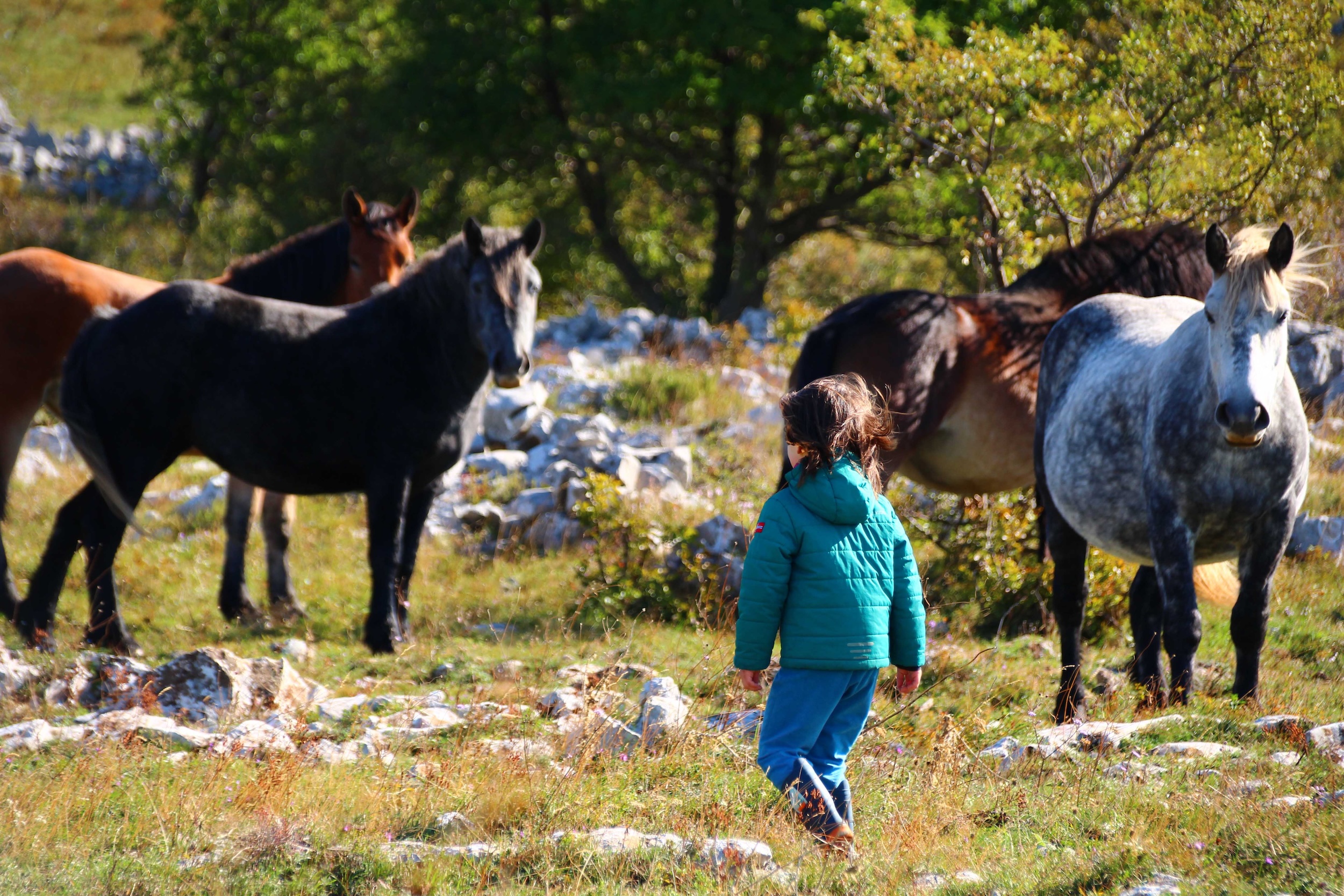
We more or less leave Austria and Slovenia behind and head first into the Croatian mountains. There are said to be wild horses there. After a long, bone-shaking stretch of track we find a perfect spot to recover, especially for our horse-mad girl. The surprise is all the greater when, the next morning, a herd of wild horses really is grazing around our vehicle.
Of course we also make a detour to Krka National Park, famous for its waterfalls. More of an insider tip, though, is the Kudin Most na Krupi. It’s a bridge over a hundred metres long, made of twelve cantilever arches spanning the river Krupa. To see it we first have to climb down a steep slope, because the river and the bridge sit in a deep, drawn-out canyon. But the effort pays off. We’re taken by surprise by old craftsmanship in an enchanting setting.
The truck plays up again
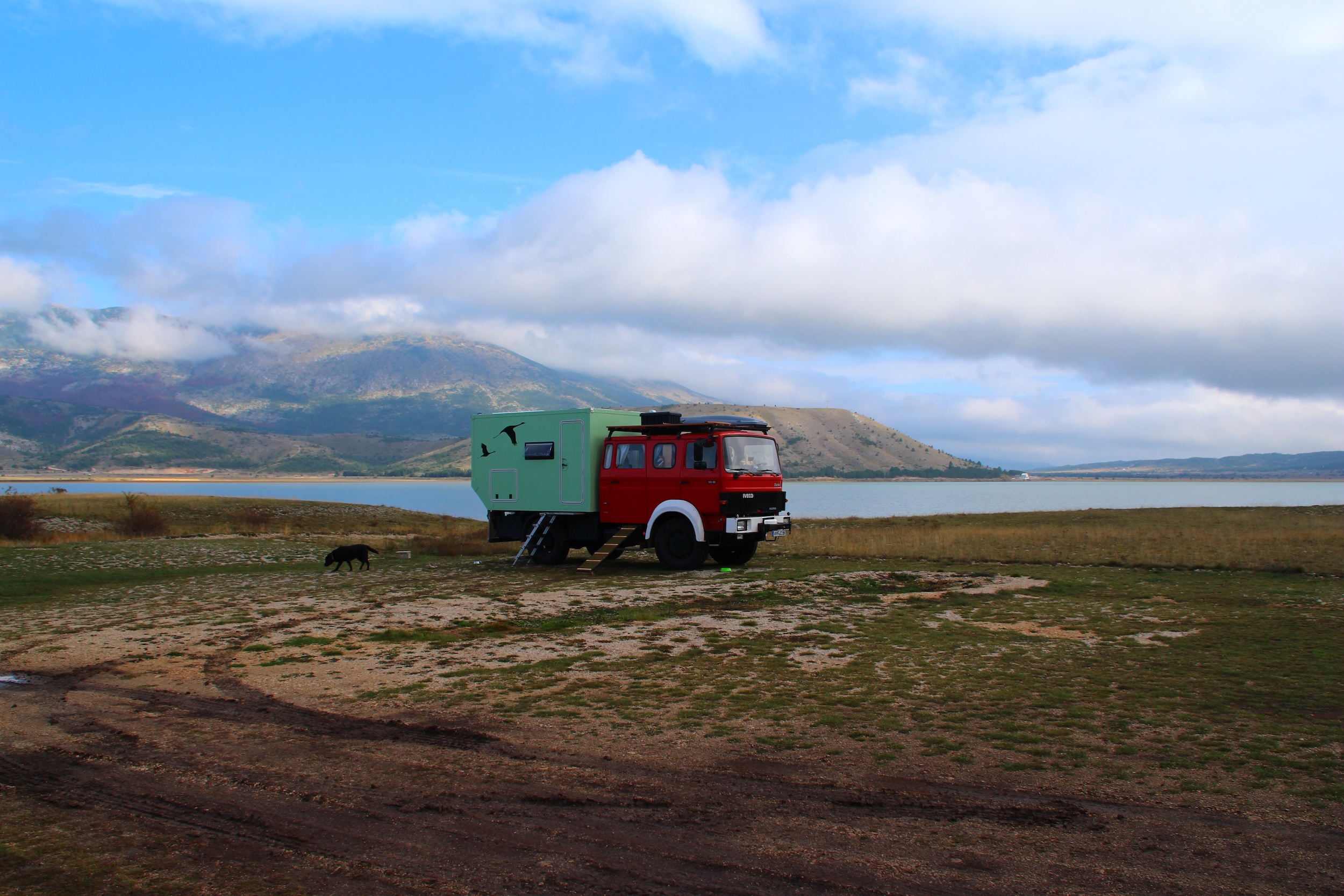
By now we’ve got used to driving the truck, the shock of the costly tow is forgotten and driving is nothing but fun. Time, then, for a detour into Bosnia and Herzegovina, into Blidinje Nature Park to be precise. But our vehicle has other ideas. On the last climb just before a campsite, dull metallic knocks ring out, followed by a brief loss of power. Several looks under the vehicle reveal no damage. Only the noise, sounding at regular intervals, won’t go away.
The cold sweat of fear is back on my forehead. To be safe we pull over at the roadside. My “mechanic brother-in-law” on the phone runs me through every idea I can check, but even after three hours I find nothing. In the meantime a passing car stops and the driver speaks to me: “Do you have a problem? Can I help?” I explain the situation, at which he makes a quick call, then holds out a slip of paper and says: “Here’s the number of a friend. He has a workshop and would help you.”
Reverently I carry the precious slip of paper straight to the cab and what do I see? The lever that switches between off-road and road gears is in the middle position, so the gears in the gearbox can’t mesh properly. Annoyingly the lever sits in an awkward spot next to the driver’s seat, so now and then on the trip my camera strap catches on it and shifts it. From now on, checking the lever is part of the daily routine. With success: to this day it hasn’t slipped out of position while driving again.
And once more it’s our child who suffers
Two days later we suffer a different, far worse setback. It’s 10pm, we’re parked in the middle of nowhere in Bosnia on a lonely country road and are actually getting ready for bed. Only Elva takes it into her head to look out of the cabin door. She stumbles and falls head first to the ground. With a big bump on her head and complaining of pain in her arm, we get her back into the vehicle and shortly afterwards head for the nearest hospital. Sadly they can’t help us there, as they have no X-ray machine. We have to go to Mostar, the next bigger town. That means a drive of about two hours. There a nurse is at our side straight away, explaining and showing us everything. An hour later Elva is allowed to leave the hospital with her arm in plaster. The arm is broken. It’s our 16th day on the road! What else is going to happen?
Pulling the cord in Croatia, a break from the break
We drive back to Croatia and check into a campsite. This kind of travel, or rather this kind of accommodation, really doesn’t suit us at all. But it’s high time to pull the cord, to simply take a holiday and let Elva’s arm rest. For us grown-ups too it’s time to take some time. Time to come down, to rethink and plan the trip, and to recover from all the strain.
Montenegro’s national parks
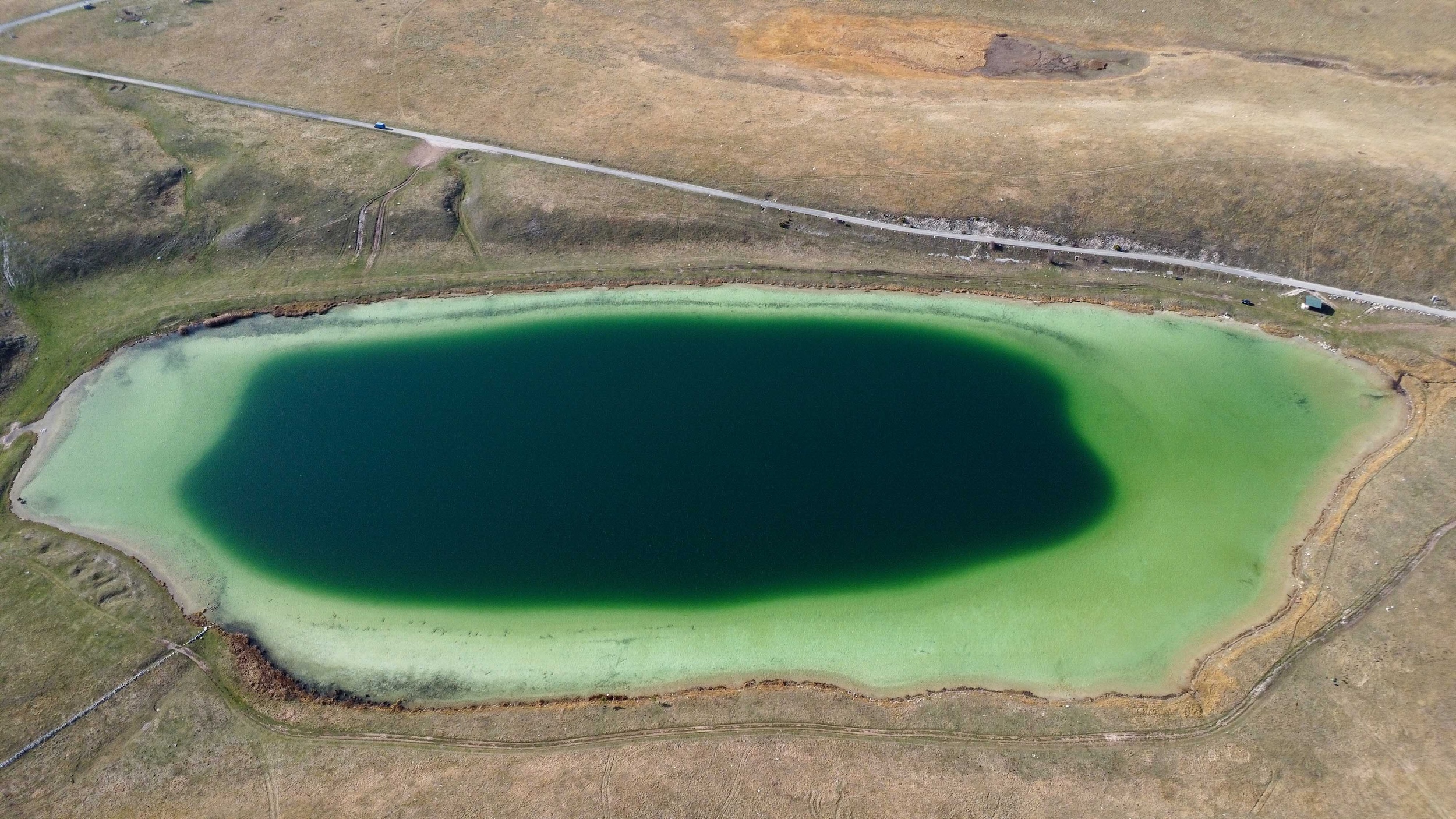
A week later we start the engine again and travel towards Montenegro. The small country almost invites you to do a round trip. Via Kotor and the wonderful Biogradska Gora National Park we drive to Durmitor National Park and finally, past Podgorica, on to Albania. The national parks have plenty of natural wonders to offer and are definitely worth the trip.
Warm feet and cold feet in Albania
Albania is holiday time again for us. We spend a lot of time on the beaches, with another travelling family. To finish we visit the Lengarica Canyon. An imposing arched bridge marks the gateway to a genuinely exciting adventure hike, and not just for the kids! At the start the canyon is still fairly wide and we can mostly wade alongside the river, sometimes through it. We warm our chilled feet now and then in the (many) hot springs. Later, though, the gorge gets narrower and narrower, until in the end you can touch both sides of the roughly 100 metre high rock walls at the same time with outstretched arms.
Because of the narrowness the river gets ever narrower too, and so deeper. When we’re standing thigh-deep in the cold water, we turn back and warm up once more, at length, in the pleasantly warm springs.
Greece, of warmth and Christmas angels
The first thing that catches our eye in Greece is the decorated shop windows. The Christmas season has begun, in the towns the fairy lights twinkle and the colourful Christmas trees shine. It gets cosier in our truck too. Fitting the mood, we visit the Meteora monasteries.
In Thessaloniki we park over the first Advent weekend at “Zampetas”, a specialist camping and caravan shop. Travellers are welcome there and may park their vehicle for free and use water and electricity (also free). It’s pure chance that we come to this spot at a time when a severe-weather warning is issued for the region. A heavy storm sweeps across the country, causing major damage and devastation, above all on Rhodes. The fire engine gets a real shaking too, but is spared. We’re hugely relieved not to be standing somewhere alone, but so well sheltered.
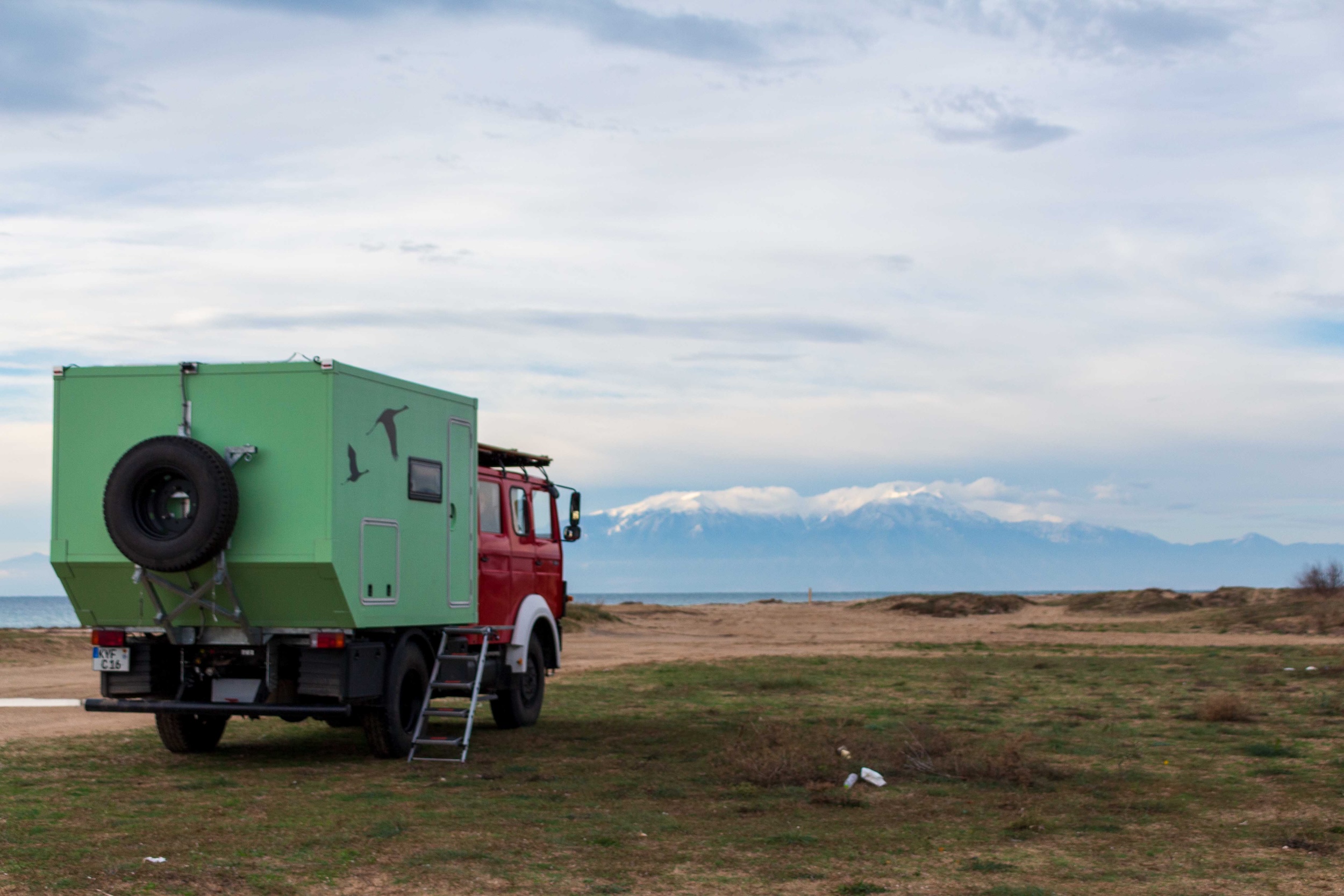
Epanomi Beach is a popular spot among travellers and in the summer months probably pretty overrun. No wonder, because the long beach, the old shipwreck, the view of Olympus and the long, tapering headland really are something special.
We enjoy the sights too, but our personal highlight is Dimitrios. A local who jogs past every day during our eight-day stay and always stops for a quick chat. He usually only has a little time, because his mission is to look after the beach’s stray dogs. But Dimitrios speaks a bit of German and invites us for a glass of wine. Except he doesn’t just bring a bottle of wine, but a whole buffet of homemade food. For a whole afternoon we lose ourselves in deep conversation and nibble on Greek specialities.
During the last days of Advent we explore Sithonia, the “middle finger” of the Chalkidiki peninsula. More or less by chance, on a hike, we discover the little mountain village of Parthenonas. Long abandoned, it has been brought back to life in recent years by a handful of people. The coming weekend there’s a small Christmas market, to which a villager invites us.
Two days later we’re back in the village. The streets are lit by thousands of lights, which in turn bathe the old stone houses in a pleasantly warm glow. Stalls offer up a few treats, a live band sets a high-spirited mood and even Father Christmas welcomes the festival’s youngest visitors. For the holidays we’ve found a spot on a hilltop. We’re standing near the town of Sykia.
All the surrounding hills have been opened up with tarmac roads, meant to become the access routes to thousands of houses. But only the roads were ever built. Here and there stand a few houses, some of them empty. From where we are we enjoy a panoramic view of the surroundings, the sea and above all Mount Athos, on the opposite, identically named finger of Chalkidiki.
Right on cue for Christmas Eve we spot three white dots in the distance, moving slowly towards us. When they reach our fire engine they turn out to be three snow-white dogs, who stay close by for the rest of our stay. For the children it’s immediately clear: “They’re the Christmas angels!” It was probably them, too, who put the presents in the vehicle while we were out on a little walk.
Turkey: of bread, yoghurt and new friendships
We cross the border into Turkey on the third day of the new year. About 100 km north of Izmir, we’re allowed to park for several days at the small organic farm “Idamera”. The owners Gudrun and Ferrit open their gates to our vehicle, and their hearts to us. For a few days we’re part of the family, learning plenty about the farm, the growing and the circular way of working they practise. The family tries to grow and process as much food as possible themselves. As little as possible is meant to come from outside. We’re allowed to lend a hand straight away with the fieldwork.
A big highlight for Elva was milking the cows. After Ferrit has explained everything important to her, she’s even allowed to put the milking cups on herself. From then on she stands ready, on time, every morning and evening to milk and feed the animals.
So that caring for the animals isn’t just work but relaxation too, a glass of whisky between the hay and straw can’t be missing. Gudrun bakes her tasty bread herself as well. As a parting gift she gave us a “starter” and the matching recipe. Ever since, every two weeks our vehicle smells like a bakery.
Back to hospital, but this time only visiting
From the farm our route takes us via the limestone terraces of Pamukkale to “Iztuzu Beach” near Dalyan in the south-west of the country. Lovely for this special place, but sadly sad for nature, is that the turtle beach, as it’s also called, is one of the few litter-free spots we’ll see. The cleanliness has a reason: every year the big sea turtles return to their birthplace to lay their own eggs here.
The beach is still open to tourists, but only during the day. From 7pm all vehicles and people have to be out of the bay. The turtle hospital, also on the beach, is worth a visit. It’s the only one in the whole country and has made it its mission to nurse injured animals and to teach the public about the way of life and the protection of the armoured giants.
A hotel manager who herds goats
A few weeks later, on another beach, we get to know Alim. The goatherd worked for years in a senior position in the tourism industry before he packed in his job and now earns his living with his goats. Stress, an unhealthy diet and little real human contact made him rethink. He too tries to make as much food as possible himself. From him we learn how simple it is to make yoghurt. And after he got us 5 litres of fresh milk and a cup full of yoghurt cultures from a local farmer, fresh yoghurt joins fresh bread in our vehicle.
The right place at the right time, new friendships
But we don’t want to become dairy farmers just yet, and drive on towards Adana. On the beach at Taşucu we meet Benni, Ebru and their daughter Sila (names changed). Benni comes from Germany, his wife Ebru from Adana. The family lives and works in a converted truck. The contact comes at exactly the right time, because our Russian visas, applied for in Germany, are ready and can be sent to Turkey. Until now we had no delivery address. Now they can kindly be sent to Ebru’s parents in Adana. They’ll go on to pull us out of a tight spot. Rita and Franz, a couple from Austria, we also meet on this beach. They too will come to matter greatly on our trip. But more on that later.
A workshop visit in the mechanics’ quarter
First, though, a new problem on our vehicle needs fixing. For a while now a bit of oil has been leaking at the rear wheels. The cause is easily found. The shaft seals are leaking. Getting new ones isn’t so simple. The ones bought in Germany can’t just be shipped to Turkey, and finding spare parts here is tricky because of the language barrier. But with Ebru’s help we’ll manage to source a replacement. She’s also the one who takes me to the “mechanics’ quarter of Adana”, as she calls it.
With the term “mechanics’ quarter” she hasn’t exaggerated in the slightest. In this quarter we dive straight into the world of spare parts, street workshops and repair artists. Metallic tapping, hammering and clanging, the shrill screech of angle grinders cutting through sheet metal, fill the air. The sounds melt into a melody all of their own and give the quarter its particular soundtrack. The smell of oil, grease and old tyres hangs in the air. Now and then drifts of exhaust fumes and cut metal join it. Men with oil-smeared faces lug heavy gear around, heave big tyres onto axles or set off a firework of flying sparks.
A relative of Ebru’s finally put us in touch with the right shop. When we arrive there, the right shaft seals are held out to us straight away. When I ask the price I’m only met with a friendly smile. “It’s for free,” as Ebru translates for me. “A gift from the house.” Later Ebru adds, by way of explanation: “I have a friend who has a friend who has a friend, and among friends you help each other!”
An employee of the seal shop bundles us into his company car and drives us to a truck workshop. Because that one has no capacity left for us, we try two more before reaching the one willing to take on the repair. Two hours later the new seals are fitted and we can drive on to our next adventure with a clear conscience:
Of deep caves and giant penises
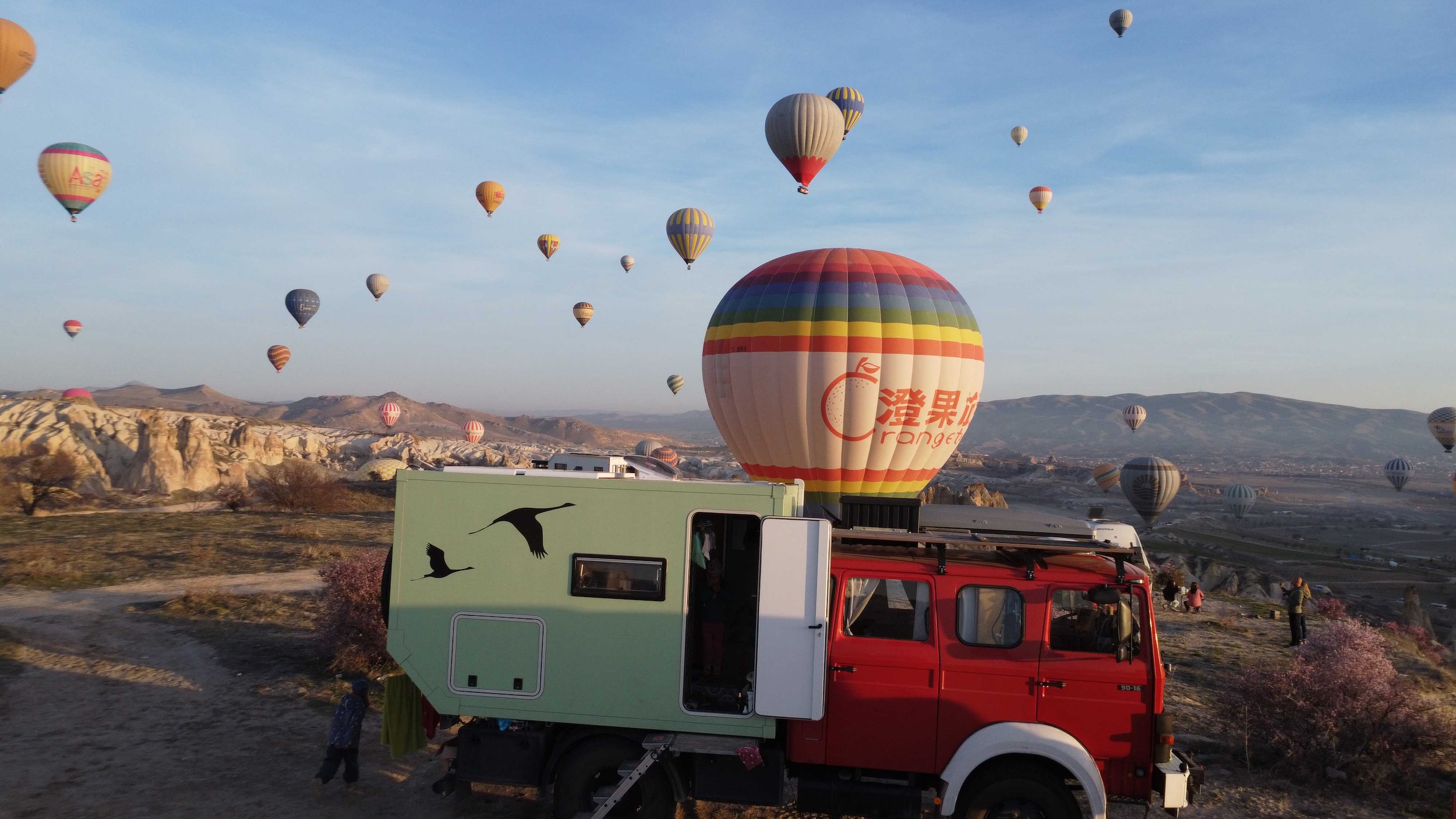
Cappadocia! After many kilometres, mostly through flat, fairly barren lowland, we reach Göreme and find ourselves in the middle of Cappadocia’s natural beauty. The unique rock formations cast their spell on us at once. The contrast with the landscape we’ve just crossed is too great. Too great, as well, is the risk of causing an accident, which is why we quickly look for a place to park. With everything there is to take in, I’m simply driving too slowly, and the others’ overtaking manoeuvres are getting too risky. At the spot we can finally feast our eyes on all the rock formations.
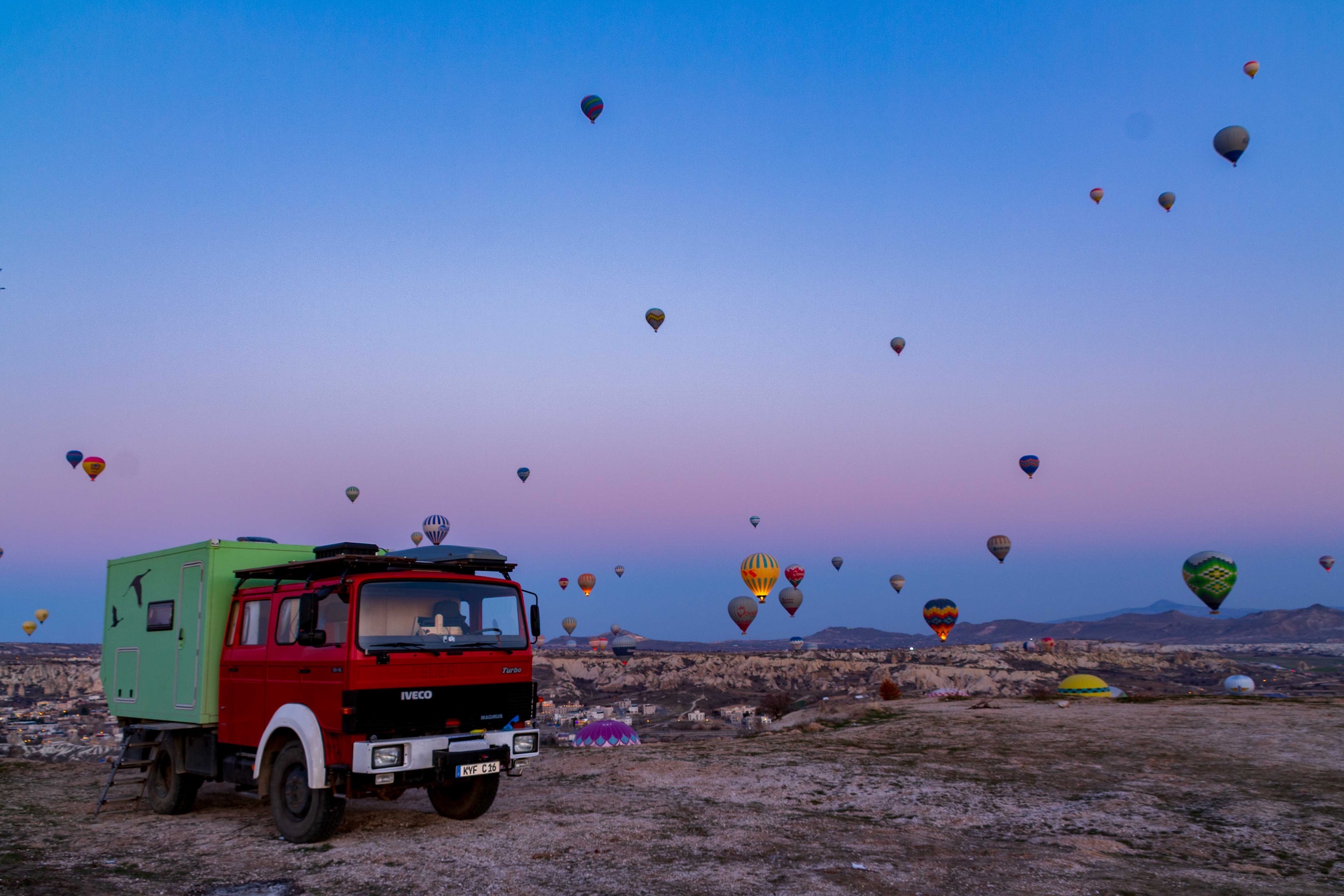
At the pitch, a rise with a good view over the surroundings, a few other travellers are already standing. From them we learn that we have to get up early if we don’t want to miss the special spectacle. Following their advice, we set an alarm for the first time in months and actually manage, warmly dressed, to be standing in front of our vehicle at half past six on the dot. Even though we know beforehand what to expect, the sight takes our breath away once again. In the valley below us an army of hot-air balloons spreads out between the stone columns. Janine counts more than 80 of them, drifting up into the sky between and above the stone columns and fairy chimneys, casting their spell over everyone watching.
But Cappadocia is far more than the hot-air balloons and the stone “giant penises”. The various valleys with their bizarre rock formations and their many caves are a real invitation to explore. Together with another family we’ve got to know here, and with whom we’ll spend the next few weeks, we set off on a tour of discovery.
The first Christians cut homes, chapels and passageways into the soft tuff stone. Some of them hundreds of metres long, they’re still freely accessible. A paradise for our children, and for us. In places, armed with head torches, we squeeze on all fours through the low, narrow passages.
What happens next …
While we’re sweating in Cappadocia at temperatures of around 20 to 30 degrees, Turkey sends us off towards Georgia with frosty temperatures and snowfall. We’re also saying goodbye to our first big stage of the journey. And we’re looking ahead with excitement to the second stage, the “Stan countries”. We’re dreading the drive through Russia a little, though. What awaited us, which setbacks, encounters and experiences came our way, will be told in the second part.
Contact Alex Güldenzopf:
Email: feuerwehrreise@web.de