

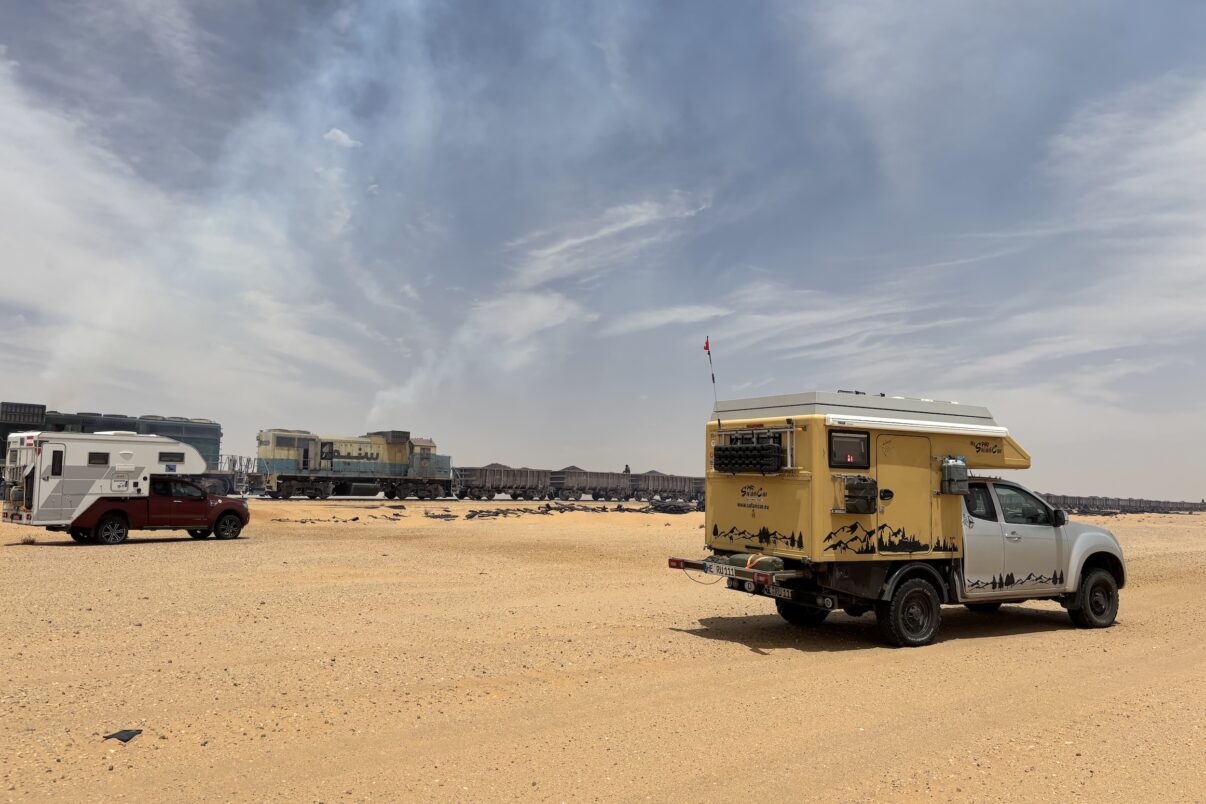

An adventure into the heart of Africa: Claus and Renate, the organisers behind the SafariCar project, had already gathered plenty of experience travelling through North Africa. After successful tours through Tunisia and Morocco, they dreamed of pushing even deeper into the African continent. Their new vision: a journey to Mauritania, the gateway to the West African desert.
The long road of planning
The idea for this trip came about five years ago. But the road to making it happen was anything but easy. First the coronavirus pandemic put our plans on ice. Travel restrictions and uncertainty made any long-term planning impossible. No sooner did the pandemic seem to be over than the Foreign Office issued a travel warning for parts of North and West Africa, which raised the risk considerably. Even so, we held on to our dream. With patience and persistence we put years into the research, into preparing our 4×4 and into gathering information on routes, security situations and cultural particularities.
The plans for Mauritania take shape
In spring 2025 it was finally meant to begin. Our planned route led first from Germany to Italy, to Genoa to be precise. From there we wanted to drive the 4×4 onto the ferry to Tangier in Morocco. From Tangier the journey would carry on over land, first right across Morocco, before we crossed the border into Mauritania. The endless expanses of the Sahara, the cultural variety and the warmth of the people along the way promised unforgettable experiences.
A travelling group comes together
What made this trip special was that we wouldn’t be on the road alone. Our enthusiasm for the adventure had got around, and soon like-minded people from Austria and Belgium turned up who wanted to join the expedition.
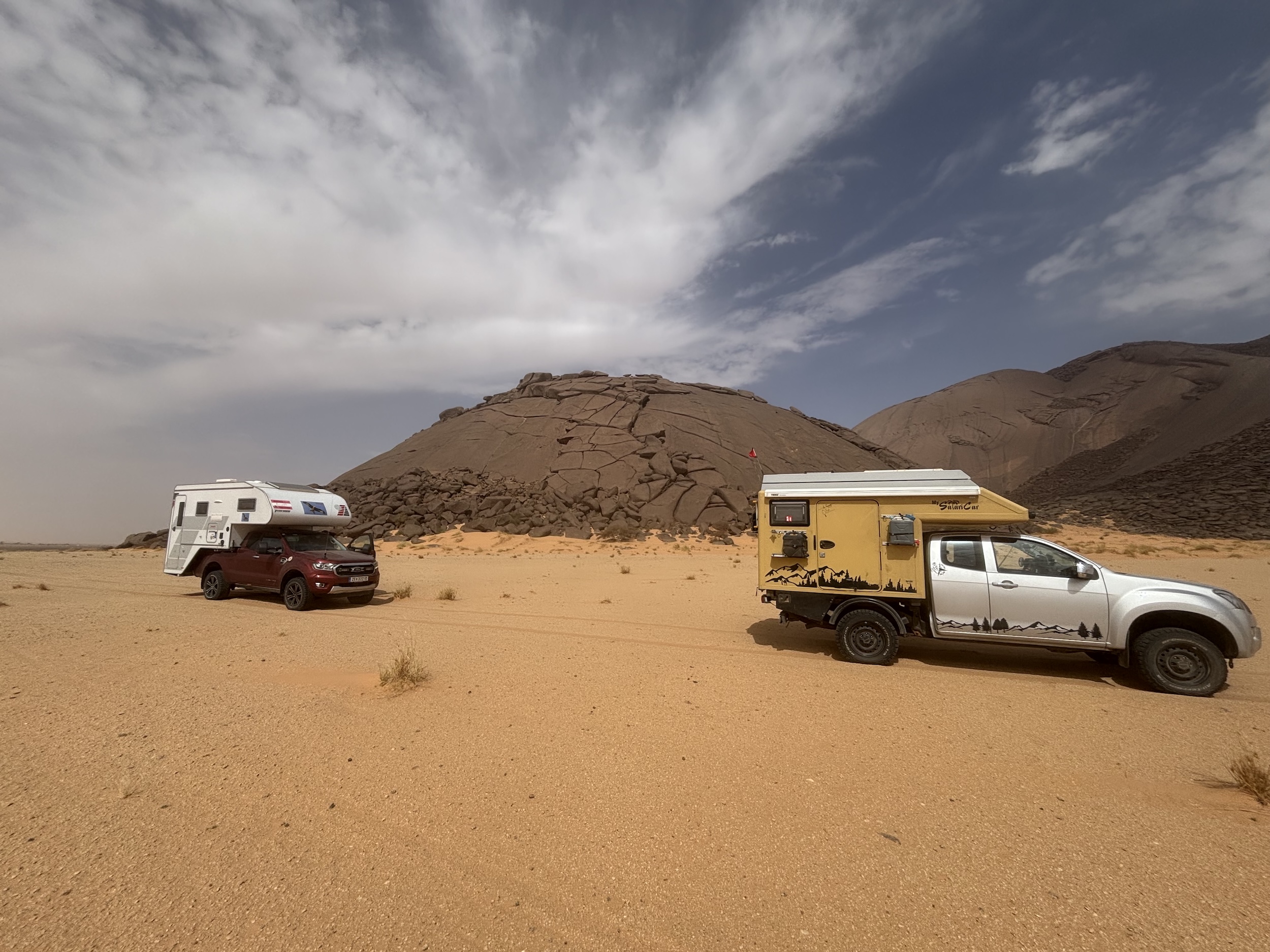
Together we made up a colourful mix of experienced travellers heading out in several 4x4s. The preparation covered not just the technical kit on the vehicles, but also planning the stages, the supply stops and the places to stay overnight.
Why an off-road trip to Mauritania?
For many travellers Mauritania is an insider tip. The country stands out for its natural variety: from the wide sand dunes of the Sahara, to the historic caravan town of Chinguetti, to the lively markets of the capital Nouakchott. It also offers cultural insights into the life of the nomads and the history of the trans-Saharan trade routes.
The countdown to the Mauritania trip is running
With the spring 2025 start in sight, the preparations went into overdrive. The vehicles were checked and kitted out once more, the routes were finalised, and we kept in regular contact to settle every detail. For us one thing was certain: this trip would become a highlight of our travels so far, and proof that patience, planning and a sense of community make almost any adventure possible. So much for the theory. Now to the practice.
The start of the Mauritania trip
Then the Mauritania trip began with the question: Where on earth were we? On another planet? In another universe? No, it was just the continent of Africa. Country: Mauritania.
After Tunisia and Morocco we wanted to dive one step deeper into the African continent. This year it worked out.
Mauritania is one of the poorest countries on earth. It’s a republic, true, but 3,000 families rule the country.
Half the people are illiterate. Slavery was only abolished a few years ago, but it still exists on a small scale. Unbelievable.
It’s a country with the biggest “nothing”. You drive for hours and see no people, no village. Nothing. To the left and right of the road, or rather the track, there’s nothing. Only sand and stones.
Unlike Morocco, there are no street cafés where you can sit and watch the world go by. And you won’t get a beer either.
The people
When you do meet people, the rule is: the poorer they are, the more hospitable they are. Mauritania probably has the highest share of Mercedes 190 D anywhere.
There’s no roadworthiness test in Mauritania, so the cars run until they eventually fall apart. A drive through a bigger town is always an adventure.
It’s not just people crossing the roads every which way, no, there are goats and sheep too. If need be, people stop in the third lane to have a little natter. There’s no getting through. But nobody gets worked up about it. And when a driver wants to pull away, he pulls away. No telling if a car is coming. A glance in the mirror is out of the question. How could he, when there is no mirror.
The visa for Mauritania
Our trip began with the news that from now on the visa has to be applied for “digitally”. Except you have to present the visa in printed form on entry. What madness, the complications are programmed in from the start.
And that’s exactly how it went. Some of our group got the digital visa, some with the wrong date and the rest not at all.
We then called on a fixer for help. Even so, we still had to wait two days at the border. Then we were in the country and unwound at the cult auberge “Villa Maguela” in Nouadhibou.
Now 460 kilometres along the famous iron ore railway lay ahead of us. Loaded up with enough water and diesel, we headed off into the nothing already mentioned.
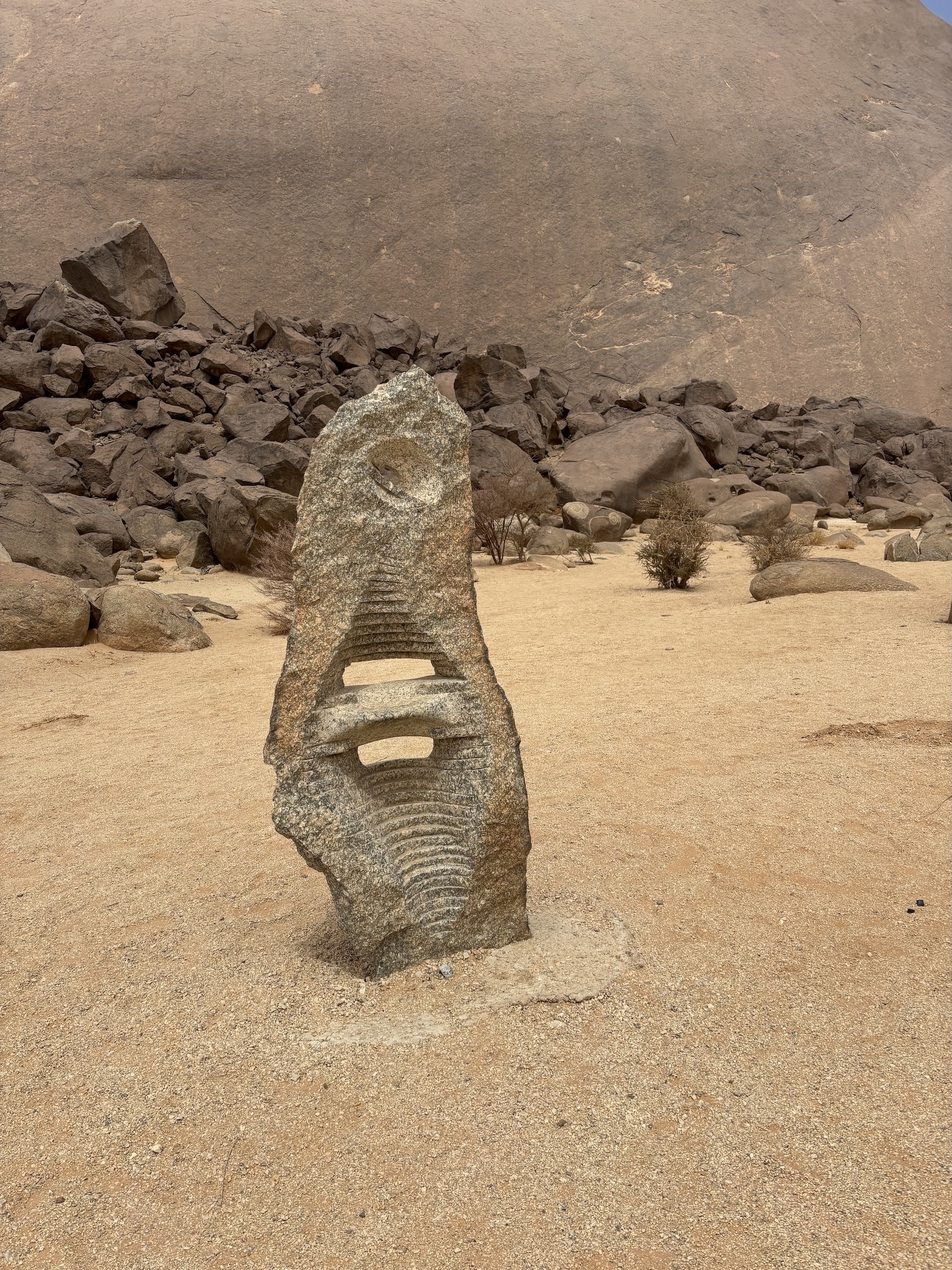
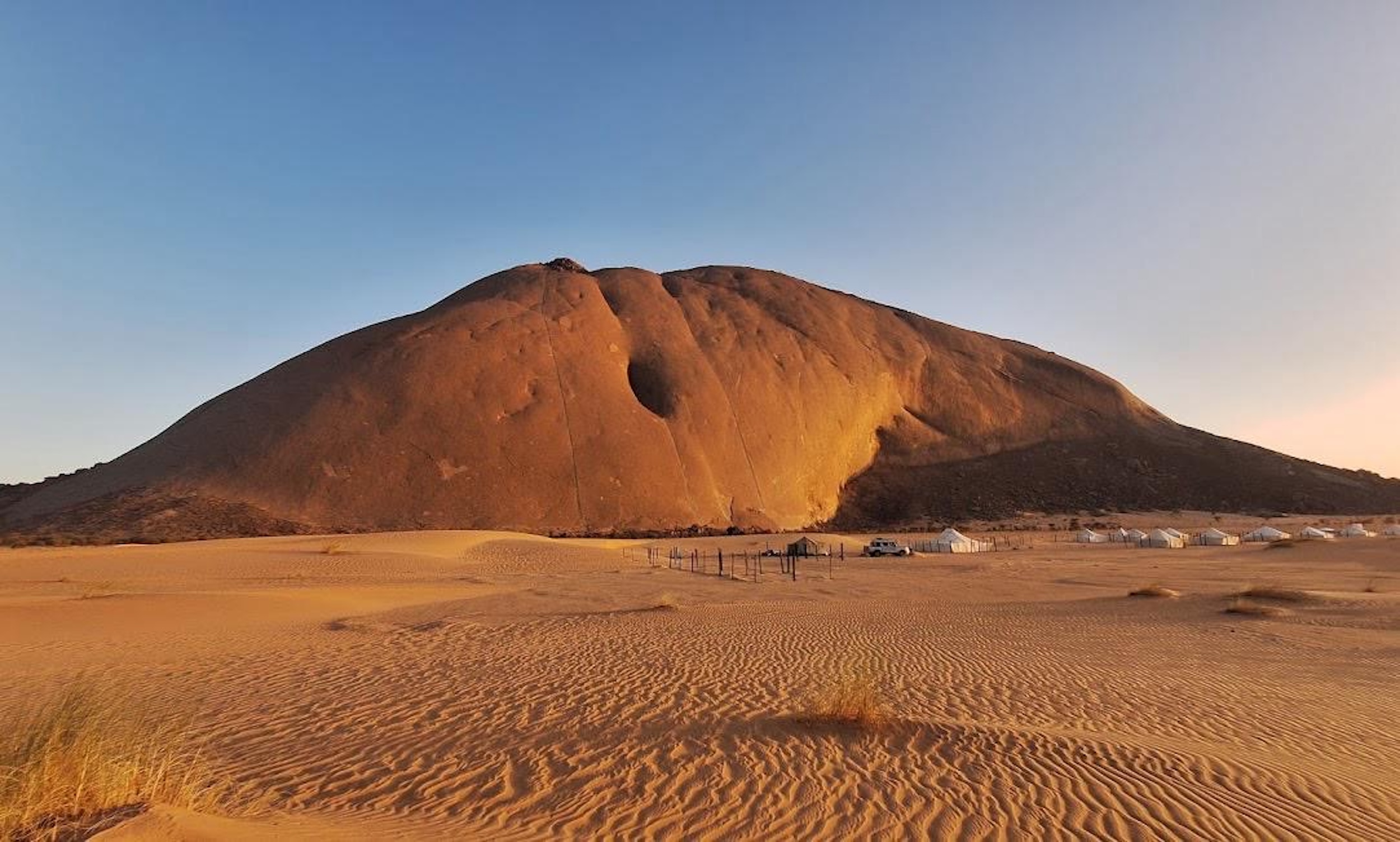
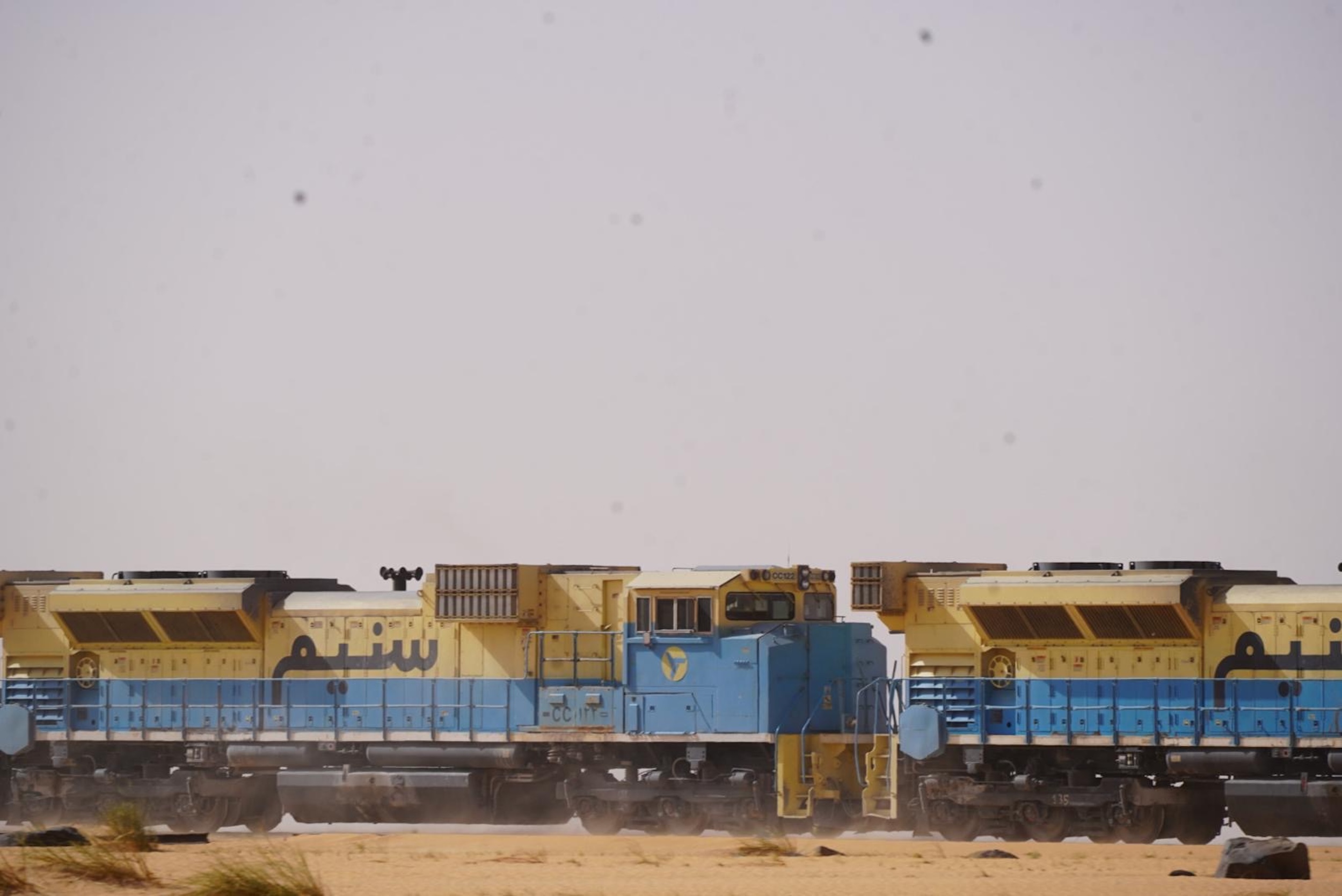
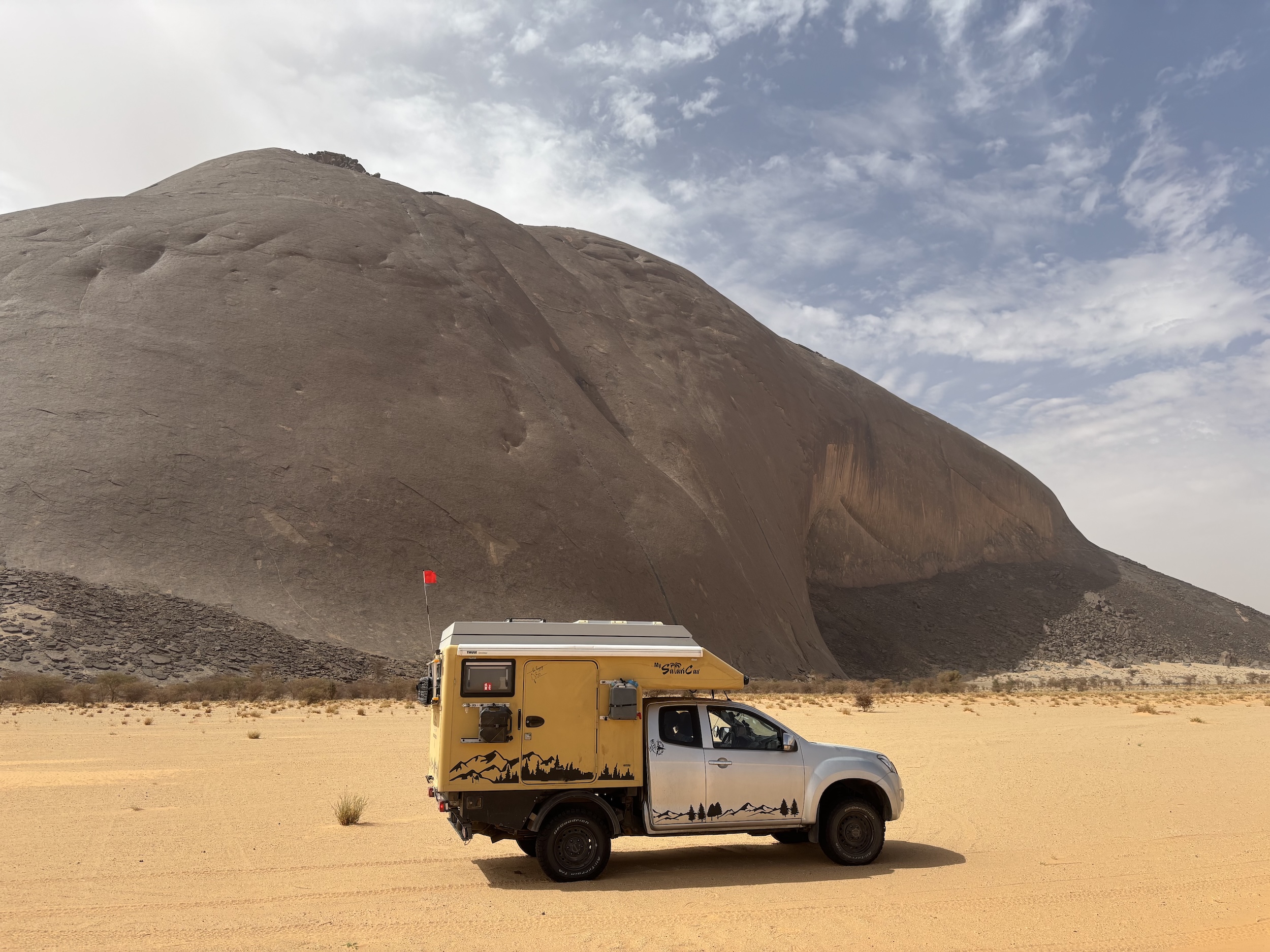
Again and again we saw the train. With around 250 wagons it’s 3 kilometres long. At the end of the route the next highlight was waiting for us. The two monoliths Ben Amira and Aïcha. Ben Amira is the largest after Ayers Rock.
What Douz is to Tunisia, Atar is to Mauritania. The cult spot for adventurers. From there we went on to the two towns of Chinguetti and Ouadane. Both World Heritage Sites and doomed to be swallowed by the sand.
A rare spectacle, freshwater crocodiles in Mauritania
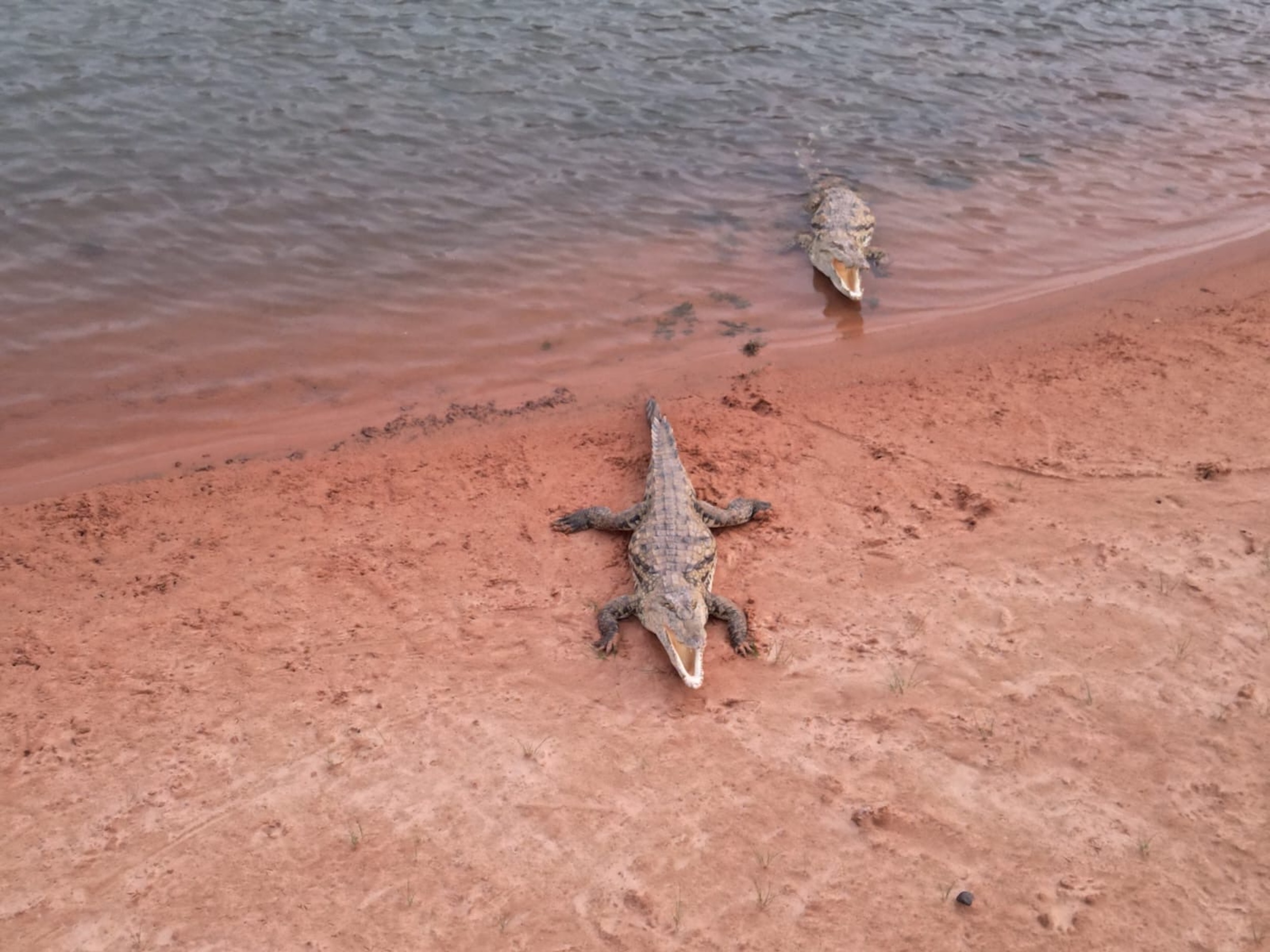
And then there was something else exciting: some of Mauritania’s few freshwater crocodiles live, among other places, in Matmâta. The start of the track was hard to find. Lower the tyre pressure again and follow the details from the “Pistenkuh“. Not always easy, because the constant wind keeps wiping away the tracks.
Even though we’d been longing for warmth, 48 to 52 degrees and a hot wind were pretty fierce. I’ve never drunk so much water in my life. After a sweat-soaked march we finally saw them, the crocodiles.
The next goal was the river Senegal. The border river to the country of Senegal. Here we reached the southernmost point of our trip in Mauritania. Here we were 5,500 kilometres from home. Now the Atlantic lay to our left and to our right, once again, the famous nothing. And all of that over a length of 1,500 kilometres. On one stretch of 300 kilometres there wasn’t a single village. Out here only about every 20 minutes did a car come the other way.
We spent the last few days a little more relaxed, sightseeing in Morocco. After two months the ferry brought us back from Tangier to Genoa.
Our verdict on Mauritania:
Mauritania, that’s where you feel Africa. You have to dial down your needs. Everything is simple or improvised. But it works.
Mauritania was my last big destination, I’d thought. During the tour through Mauritania the others kept pressing me to organise the trip over the Pamir Highway one more time. And so, after coming back from Mauritania, I retreated to my office and got the “Pamir Highway 2026” ready.
Text by: Claus Ruhe.
Contact Claus and Renate / the SafariCar project
Website https://www.safaricar.eu