

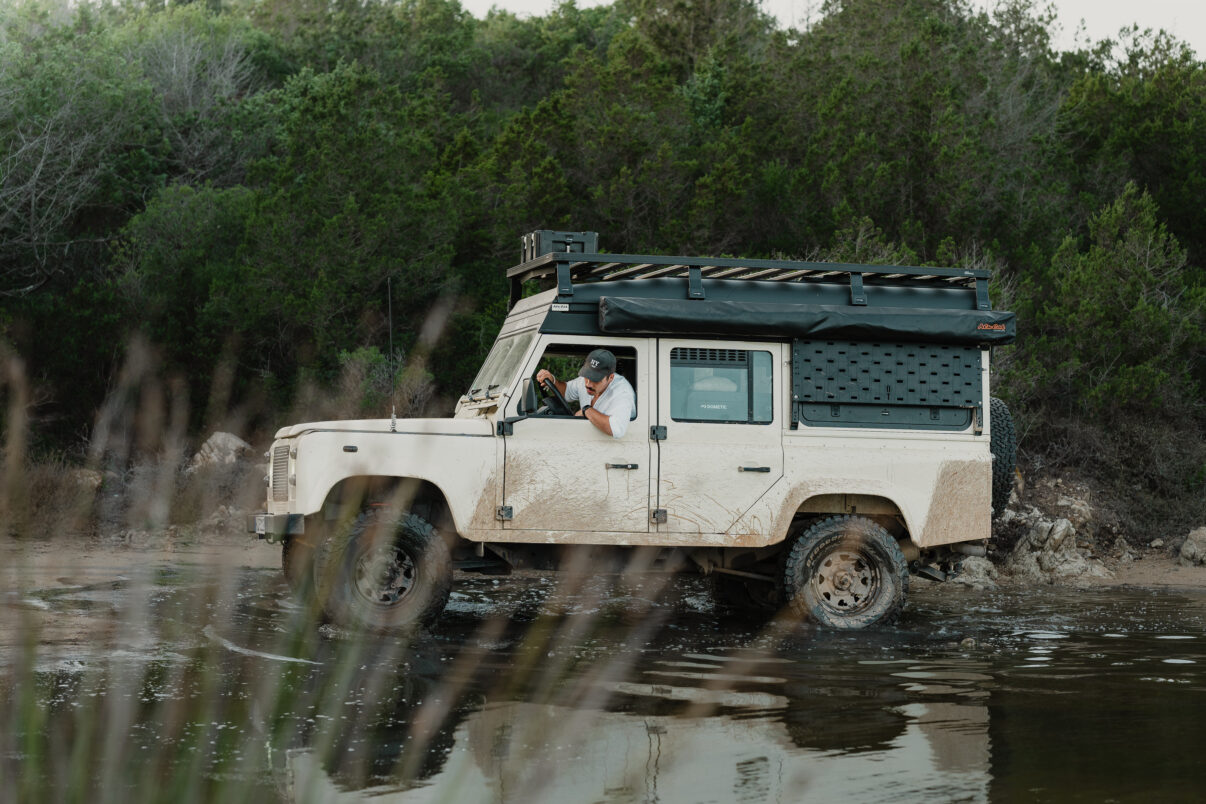

Yasemin and Tobi restored their Defender Knut completely by themselves and did the conversion themselves too. Today they use him for trips and short getaways. Why they chose a Defender of all things as a travel vehicle, what conversions they made and what they’d do differently with the knowledge they have today, they tell us in the interview.
Please introduce yourselves briefly.
We’re Yasemin and Tobi (Tobi_Bdx on Instagram). Yasemin trained as a wholesale and foreign trade clerk, I’m a trained chef. Until 2023 we were both in classic employment and organised our everyday lives between job and hobby. Back in 2017 Yasemin started sharing her everyday life in equestrian sport on social media and taking her community along with her.
Alongside downhill riding, I myself fell more and more in love with photography and videography. What started as a little pastime quickly became a field I constantly wanted to get better at, and I haven’t stopped learning to this day.
We met in 2018 and very quickly realised how well our hobbies go together. Over time we focused more and more on building up Yasemin’s Instagram account. First for fun, then because we could earn some money on the side with it.
2023 was then the year a lot of things turned around. By then we had enough income to risk the step into self-employment and build a freer life for ourselves. One of our first big jobs was a seven-week documentary trip to Ghana. On the way back we were treated so badly over a claim for a lost suitcase that we decided: we won’t be flying for the next few years.
Out of that grew the wish to buy a Defender. A car I’d first really taken notice of years before at a family gathering.
With the purchase of the British 4×4, our adventure really began. We didn’t want a simple camper, we wanted our camper. A vehicle that keeps the British charm and still suits us. So we started in September 2023: we took our Landy Knut apart, freed the parts from rust, painted and overhauled him and, over nine months, put him back together piece by piece. And when he was finally finished, we set off in him on our first big trip, heading for Sweden and Norway.
What vehicle do you have and why did you choose it?
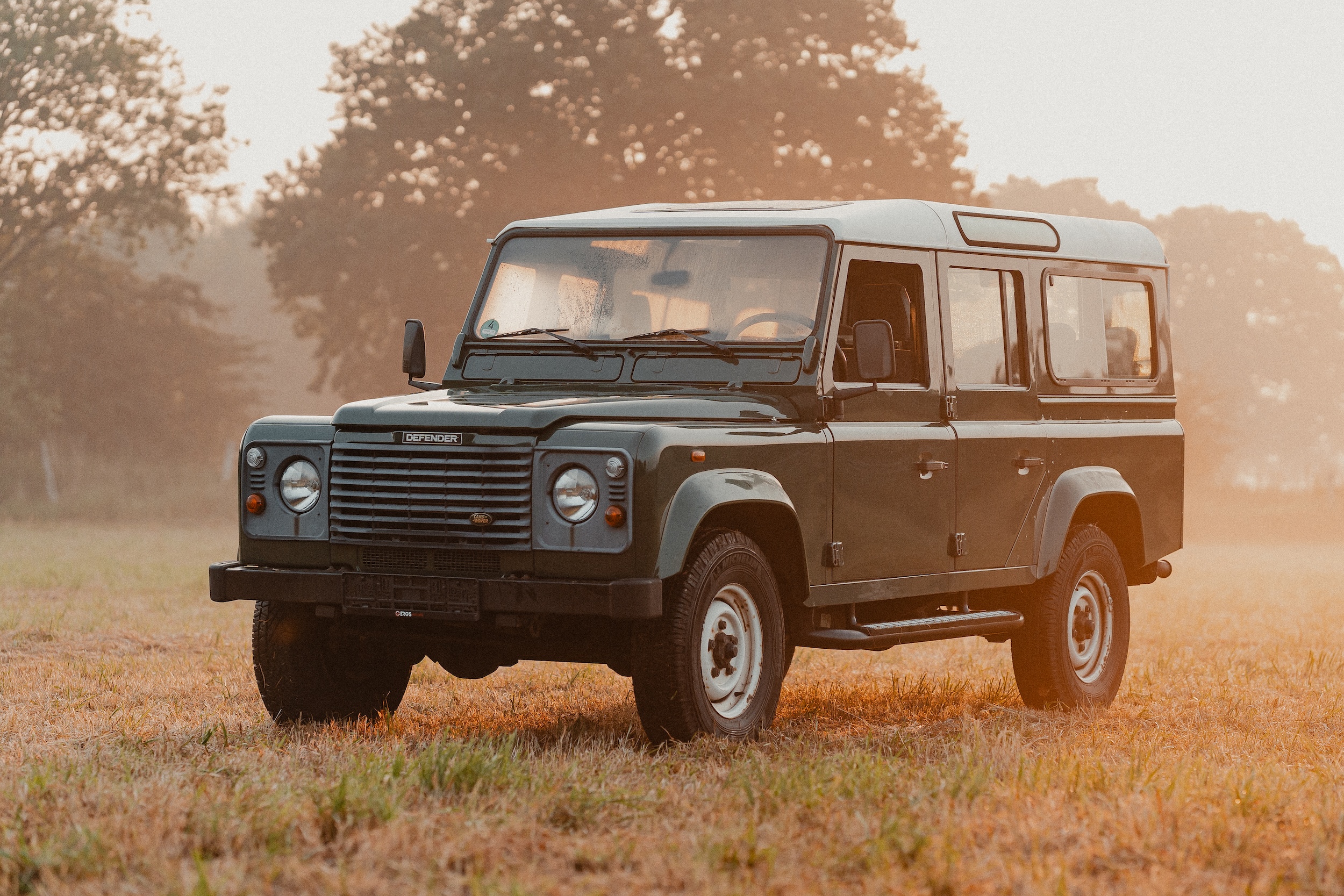
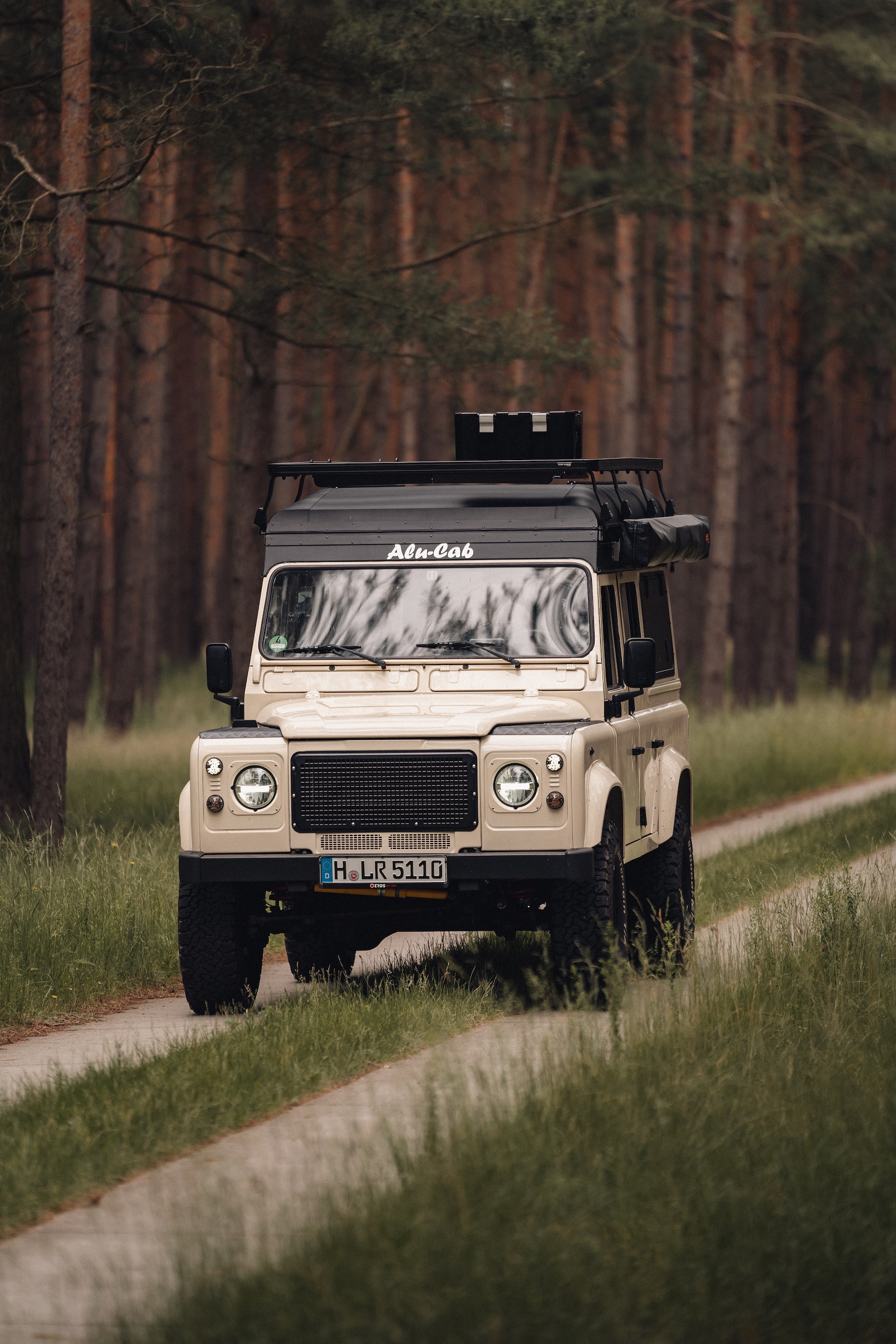
Knut is a Defender TD5 P15 from 2005. Originally he was painted in classic Belize Green (LRC.756). When we bought him he was still completely in original condition. Nothing bodged, nothing painted over. Simply an original Defender.
We chose Knut because he’d only had one single previous owner. She drove him mostly day-to-day and on long stretches, so he hadn’t been thrashed over hill and dale. On top of that the car had stood in a garage all its life, and you could tell. Sure, he had a few rust spots. A Defender without them would almost be suspicious, but overall everything was in astonishingly good condition.
For us the Defender stands for freedom. For the feeling of setting off and simply getting anywhere you want to be. Added to that, this car is built so simply that you can service almost everything yourself, as long as you’re not totally cack-handed. The build of the Defender is a bit reminiscent of Lego, and that’s exactly what makes conversions so pleasant.
But the most important point was probably this: he looks damned good. And he’s incredibly well documented. Whatever question you have, somebody on the net has already asked and answered it. On top of that there are countless ways to extend the car or convert it completely.
You restored the Defender completely. What else did you change on the vehicle?
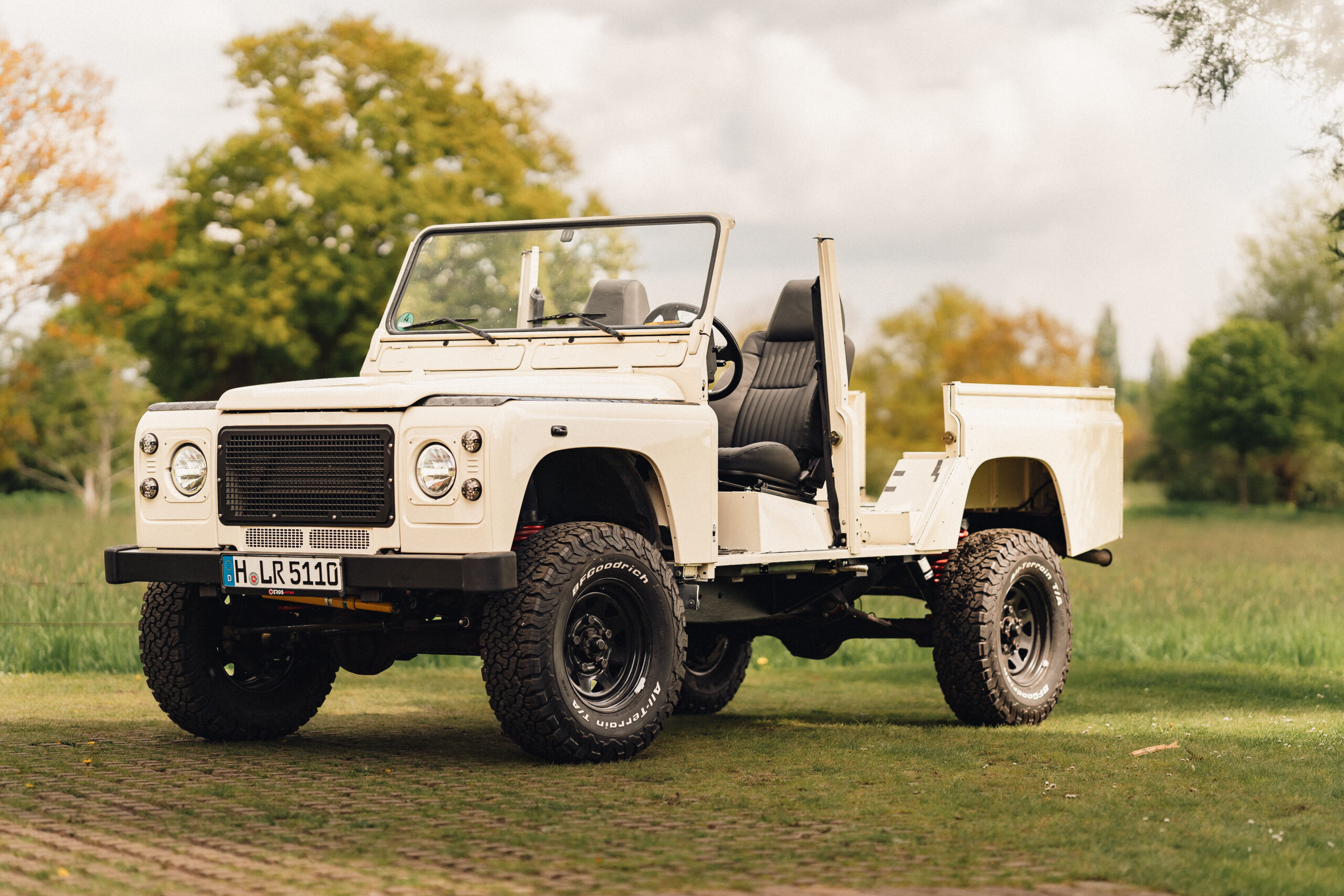
A complete list would probably be longer than the rest of the interview, because during the restoration of the Defender we actually had almost everything in our hands at one point and mostly renewed it straight away.
For example, there isn’t a single standard bolt left anywhere in the whole body. I swapped every bolt for stainless steel and also gave them a special coating so no contact corrosion forms.
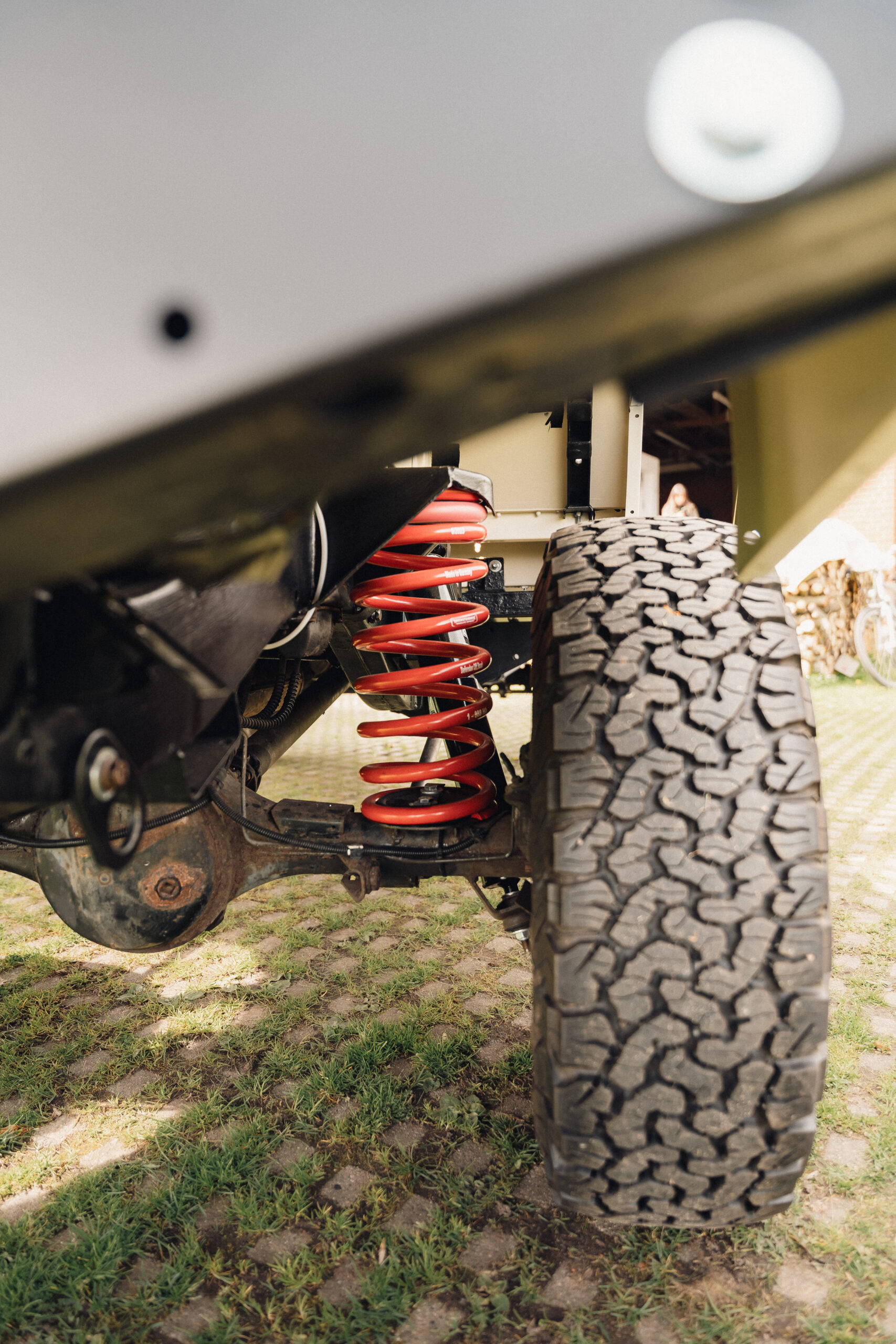
Technically too we optimised a lot. The transfer box now has an ATB differential from Ashcroft, and we replaced the original suspension with a TREKFINDER setup. And so it goes on: an AluCab pop-top roof, new seats from ExmoorTrim, LED headlights … piece by piece the car arrived, technically speaking, in 2023.
One thing above all is important to us: since we bought him, Knut hasn’t seen the inside of a workshop. Yasemin and I have taken every bolt, every component and every decision into our own hands. And that’s exactly what makes us incredibly proud.
Did you do the conversion yourselves, and what was the aim of it?
Yes, we did the interior conversion ourselves too. It’s not perfect, but for us it’s just right. With a lot of brainpower and plenty of weighing things up, we tried to make the conversion as functional as possible.
Getting cosiness and efficiency under one roof isn’t all that easy. Even so, we managed it and with our Mark I conversion found a solution we can live with well. Mark II is meant to come about over the next few years, optimised then and with all the things we’ve learned in the meantime.
Our aim was to use every centimetre sensibly, so we’d have enough storage space on the road and still keep the car tidy. That in particular is enormously important to us. On trips a lot becomes easier when the vehicle is tidy and the things you need every day are always in the same place. That thought shaped the interior conversion at its core.
At the moment we use the car as a pure two-seater, together with our dog Ivy. Even so, we’ve already planned it so that a third seat can be fitted later, in case any little ones come along one day.
How did you go about the planning and the build?
Before we got started, we looked at loads of conversions at Defender meet-ups and fairs. On YouTube we watched what felt like every video that had anything to do with Defender conversions. After that we had a rough feel for what might work for us, and then we just started. A lot of it we decided, adapted or completely rethought along the way. It was less a perfect build plan and more a process in which, step by step, we saw what made sense for us.
What materials did you use and which cabinets/built-ins did you build?
We decided on a pure wooden build and used 9 mm phenolic-coated plywood for it. Rugged, easy to work with and ideal for the Defender. External metal hinges were important to us, because they’re sturdy and can be locked without any fuss. That keeps everything safely stowed, even when things get rougher on the road.
Where do you sleep in the vehicle and how did you solve the sleeping area?
One of the most important purchases for us was the AluCab Icarus pop-top roof. In my opinion it’s one of the best pop-top roofs for the Defender on the market. The build quality is top and even after two years of use I haven’t found anything to criticise. The fitting impressed me especially: the pop-top comes completely pre-assembled, you basically put it on the Defender as a finished unit, it could hardly be easier.
And as for everyday life: we sleep brilliantly in it. In colder regions the roof keeps the warmth in the tent astonishingly well, which boosts the sleeping comfort enormously. If it gets warm, on the other hand, we simply open the big windows and get a proper through-draught. For us the roof works reliably in every situation.
Do you cook inside or outside? What do you most like to use for cooking, and do you have a favourite recipe?
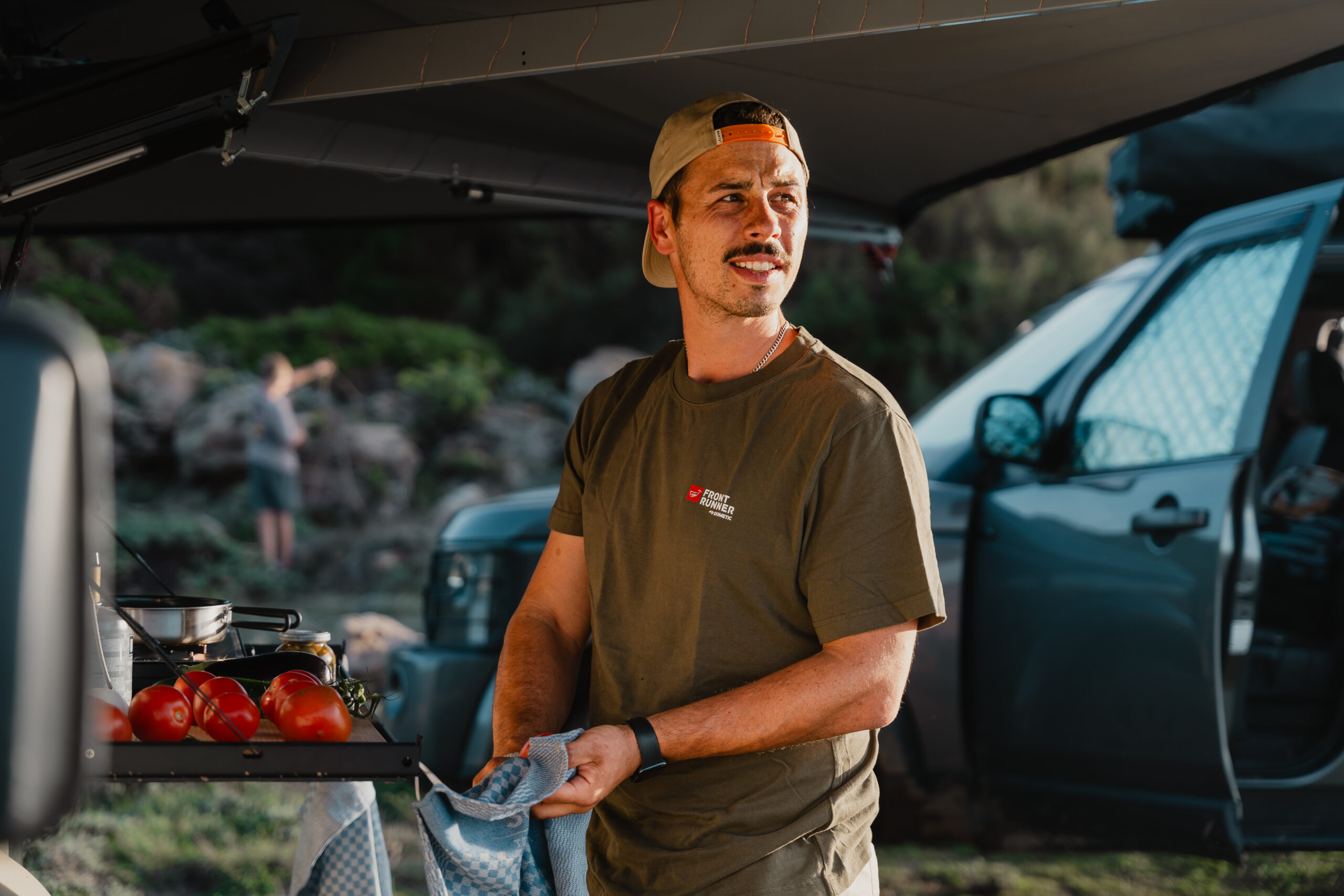
We set up our cooking kit on the driver’s side. At the rear of the car we have a fold-down table that lowers, on which we can cook anything we fancy with our Primus gas stove. If the weather turns nasty, we have a 270 degree awning from AluCab. From the start we planned it so that everything is within reach on the driver’s side and we don’t have to keep walking round the car.
Right behind the driver’s seat sits our 45 litre cool box from Dometic. We swapped the rear side window for a Gullwing window from Front Runner. Behind it we get straight to our interior build, and that’s where we’ve stowed everything we need for cooking.
We don’t have a favourite dish. As a trained chef I try to cook regionally and seasonally on our trips and to try out the cuisine of whichever country we’re in. In Sweden, for example, there was Köttbullar, in Norway freshly caught fish, and on other evenings homemade pasta with a creamy rigatoni sauce and prawns is on the menu, ideally with a glass of red wine.
What’s special about your conversion?
That’s not so easy to answer. If I had to sum it up in one point, then probably like this: we managed to build our conversion so that on the road we have almost everything we use at home too. A shower, a separating toilet, a cosy place to sleep and enough storage so nothing flies around. Basically we’ve created ourselves a small, functional home on four wheels.
How long did the conversion take?
Once the planning was in place, we built for nine days straight. It was important to us that the conversion stays modular and consists of three separate elements. That way we can take something out or adapt it at any time, without having to tear the whole interior apart again.
How much did the conversion cost, roughly?
The conversion itself cost us about 1,600 euros, plus around 4,500 euros for the electrics. And that part in particular is perhaps the most interesting: in the rear area we fitted 3 USB A/C sockets and a 230 V socket. Everything is supplied by a 150 Ah lithium battery from Super B. We can charge it three ways, either via shore power, via solar or simply while driving.
What’s still on your to-do list?
Maybe a winch. But I’m not yet sure about that, because a lot of people who have one either never use it or only very rarely. So we’re taking our time with that.
Where have you already been with your vehicle? And for how long?
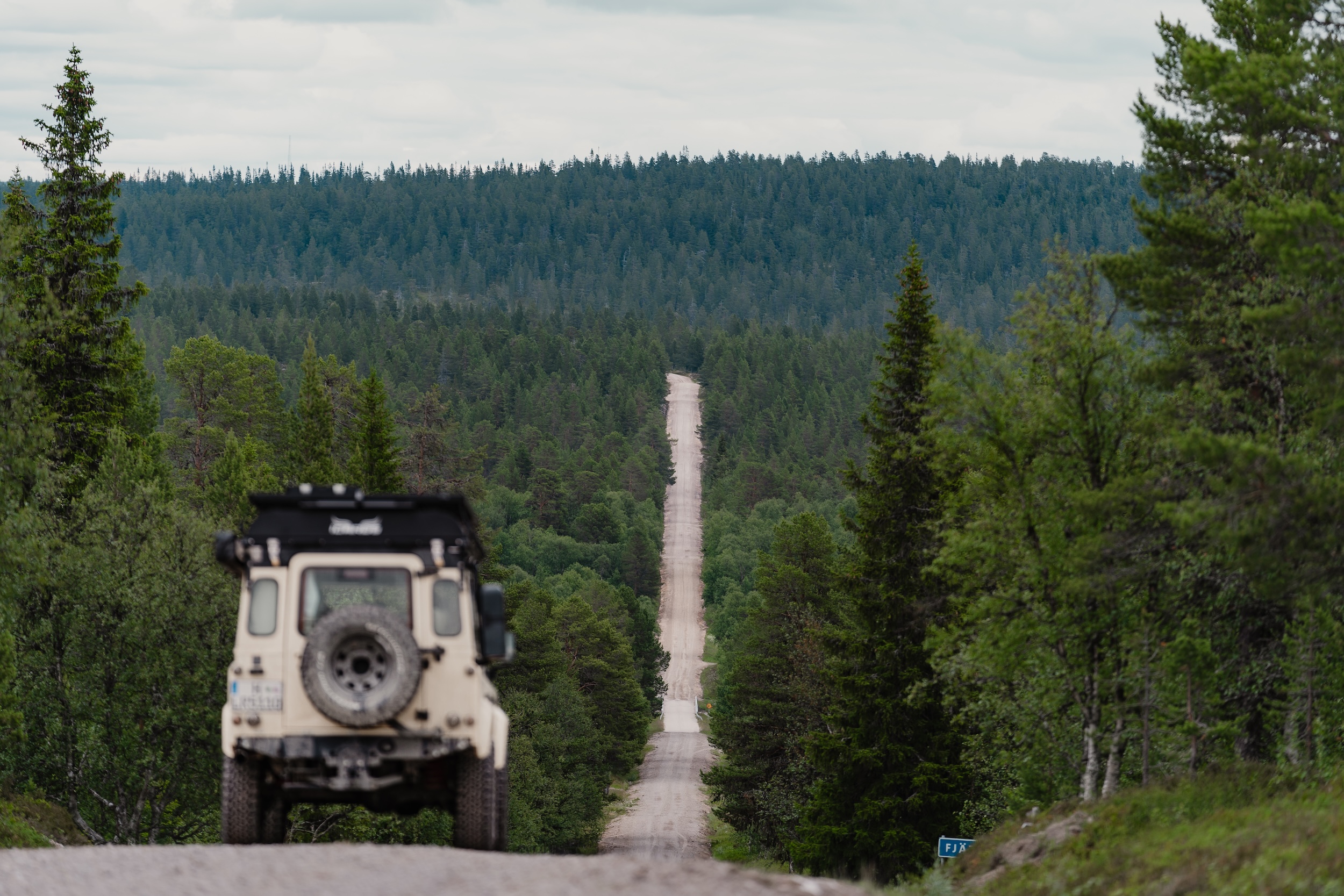
Our first trip went north. Via Sweden we drove up to the Lofoten Islands in Norway, that was our first holiday. It’s stuck firmly in my memory, as I really loved the vastness of those Nordic countries. We took 6 weeks for the trip.
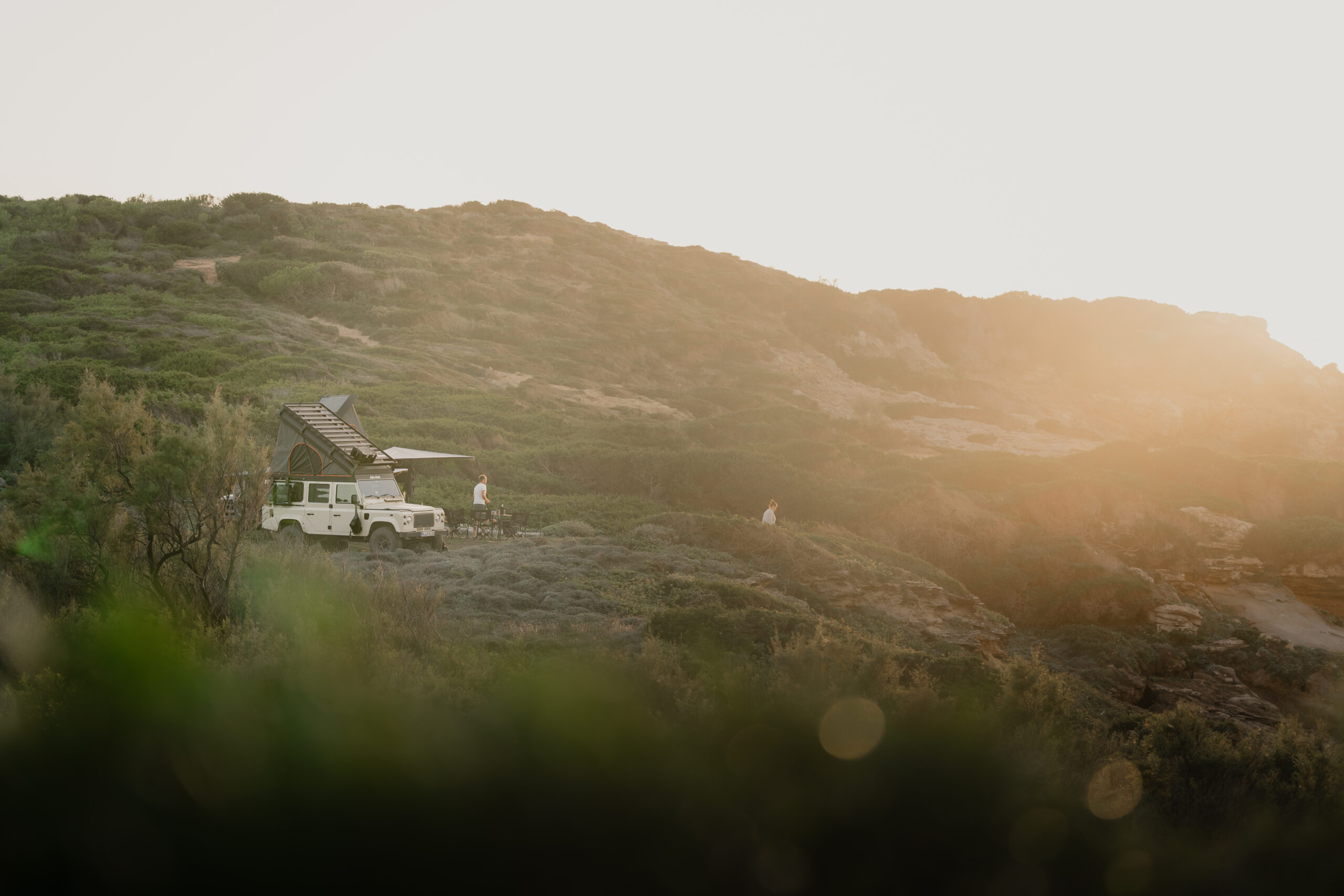
After that we headed to central Italy for 4.5 weeks. Via Venice we went to Tuscany, where a fair bit of wine was drunk. Finally we were on Sardinia, where the odd off-road adventure was waiting for us.
And the last trip so far was the south of France, for two weeks we let ourselves be enchanted by this beautiful region. Tasty cheese, breathtaking rivers and warm temperatures, it really was a successful trip.
What are your next travel destinations?
Next it’ll probably head north again. Via Poland towards Finland would be a lovely trip for me, but the Balkans sound very tempting to me too. So we’re still undecided.
What are the three most important things you wouldn’t want to do without on your travels?
Our Bialetti coffee maker is clearly one of them, without it we don’t even get going in the morning. Then the solar shower from Decathlon, which has often saved our day on the road. And a well-planned route that still stays flexible enough that we can spontaneously try something out or take a turning.
What did you specially buy that turned out to be completely useless in the end?
Actually it’s so far only the portable solar bag, as we carry enough energy to stay self-sufficient for seven days. But since we mostly move on after 2 to 3 days, our auxiliary battery is always above 50% capacity, and it then charges back up to 100% within the first hour on the track. So we’ve never had the solar bag in use.
If you restored or converted the Defender again: what would you do differently, or are you completely happy?
This question would really need an article of its own, because the more you build, the more you learn. Knut is pretty much perfect for our purposes by now, but with the knowledge I have today I’d look more closely at a few spots and just do some things more cleanly, above all visually. One example is the ladder frame. Today I’d firstly swap it straight away for a galvanised one, and secondly seal it with Brantho Korrux from the tin instead of rolling it on. The result simply looks tidier.
With the knowledge I have today I’d also love to build up a 90 TD5 completely from scratch again, as a daily driver so to speak. Baby blue with a light soft top would be a nice idea. In doing so I’d replace a lot of parts with galvanised components from the start, so you’re left in peace for the next few decades.
Where can people find you online?
YouTube: ThisisBdx
Instagram: Tobi_Bdx
Instagram: Yasemin.Bdx