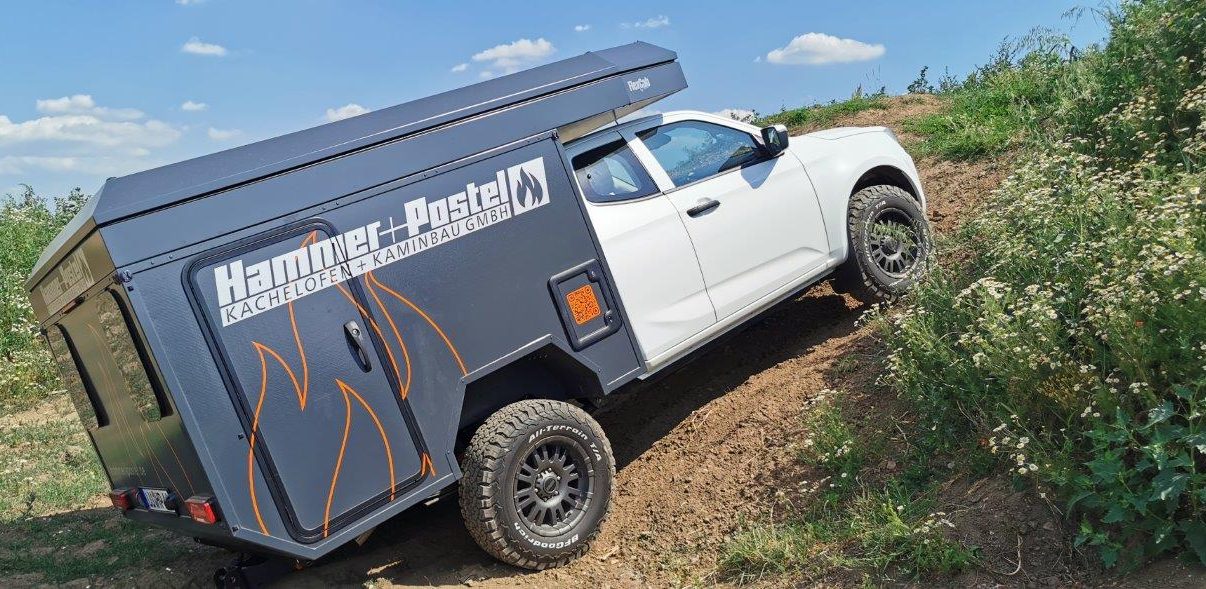

A true craftsman does not shy away from a project, he tackles it. Peter Postel did not want to compromise on what he wanted from a camper cabin, so he set about building his own. The result is well worth seeing. Thought through and well executed, the stove builder presents his FlexCab cabin on an Isuzu D-MAX.
Peter Postel, a builder of fireplaces and tiled stoves, and his son Tobias had wanted an off-road vehicle and a build project for a while. At first the focus was on either a Toyota Land Cruiser or a Land Rover Defender, but the market offered only the overpriced or the disappointing, or both. Since a roof tent was not an option either, the choice fell on a pick-up. The two did their research and came to the Isuzu D-MAX LS Spacecab 1.9 TDI automatic with selectable four-wheel drive and a rear locker, built in 2023. In their eyes the vehicle was to be had at a fair price. It is considered reliable. The base was found.
Now a cabin is needed
The vehicle is here, now it is on to the living quarters. The decision fell on building a cabin from scratch. The reason was that the range of ready-made cabins on the market did not match what Peter was looking for. In his eyes they were either too heavy, too big, too luxurious, overloaded with technology or not fit for off-road use. As a sailor he had already understood very precisely what matters to him: light, sturdy, reliable and simple. So for the seasoned craftsman it was clear: he had to make his Isuzu D-MAX cabin himself.
Do it yourself
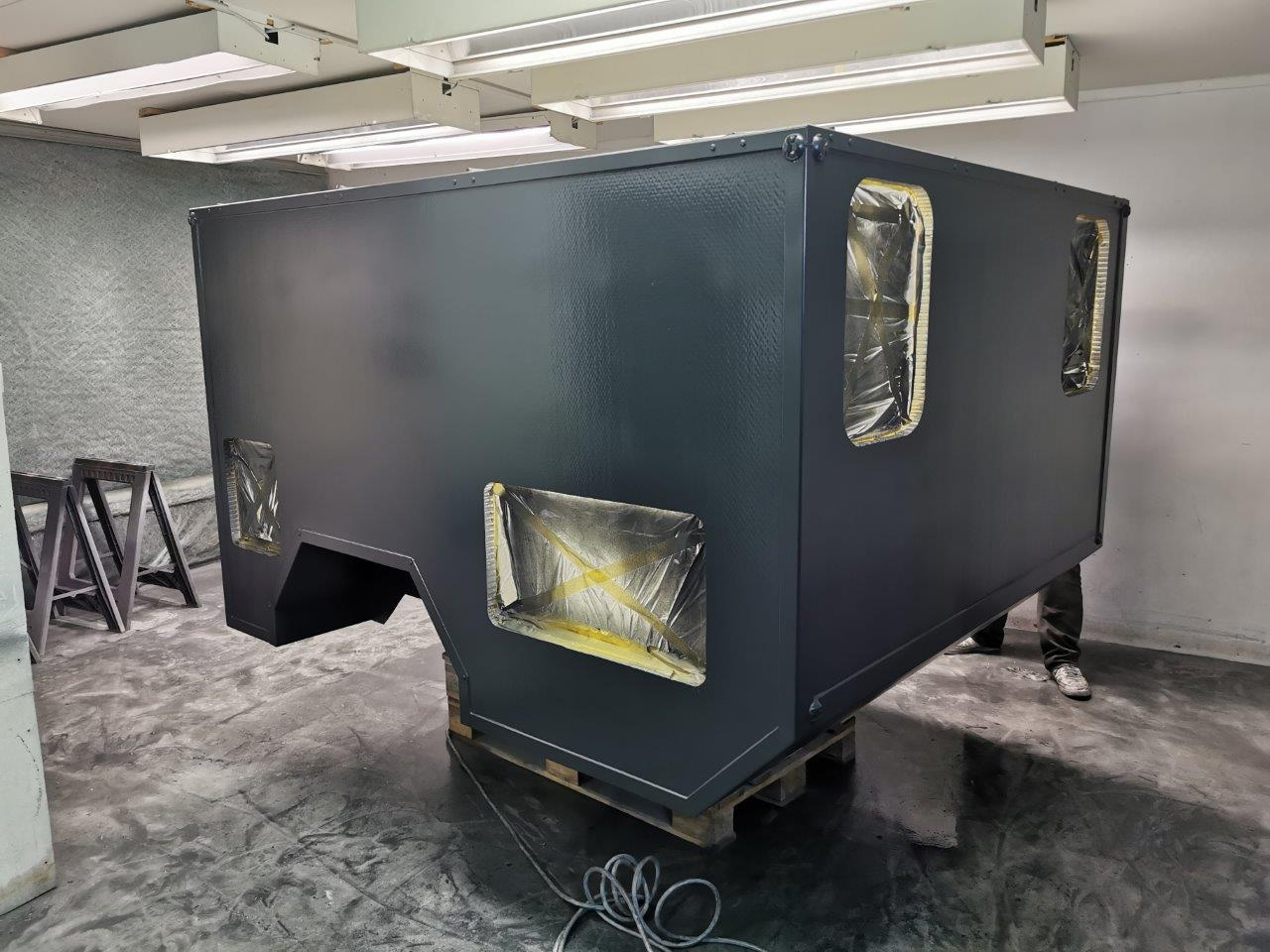
At the start came the choice of material. Peter Postel picked Monopan, a material fairly often used in cabin building. It is made of glass-fibre-reinforced polypropylene in a honeycomb construction. It also stands out for its high sturdiness at the lowest weight. It is flexible and lasts for good. The material was bonded, which makes it stiffer but keeps enough flexibility to go along with the vehicle’s movements and twisting. After being worked, the Monopan panels were coated with a two-component PU lacquer.
Further accessories were then sourced from various places. The aluminium parts came from the local metalworker. The tent fabric and the upholstery came from the saddler, and finally there were a few linear actuators.
Approach and construction
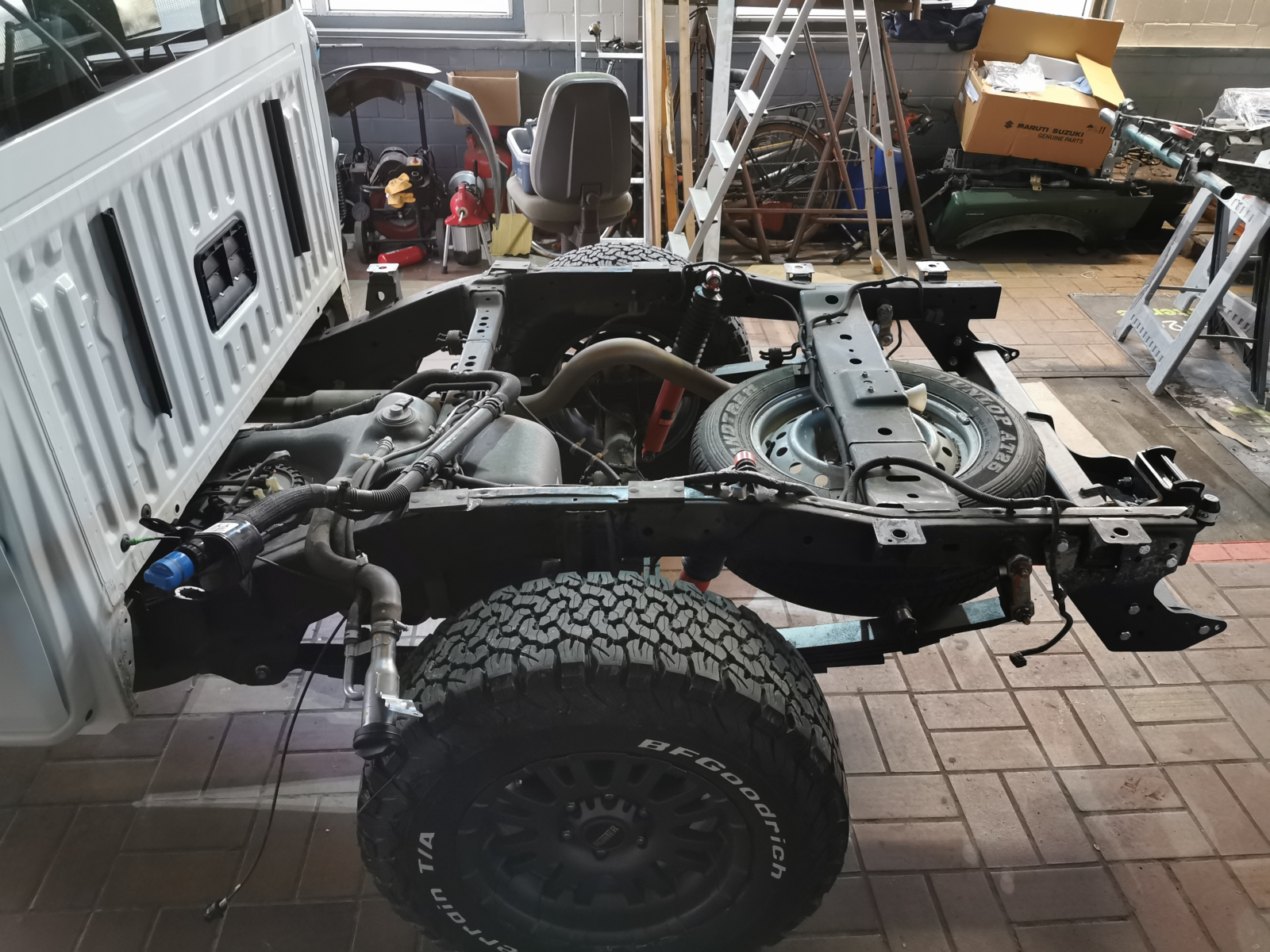
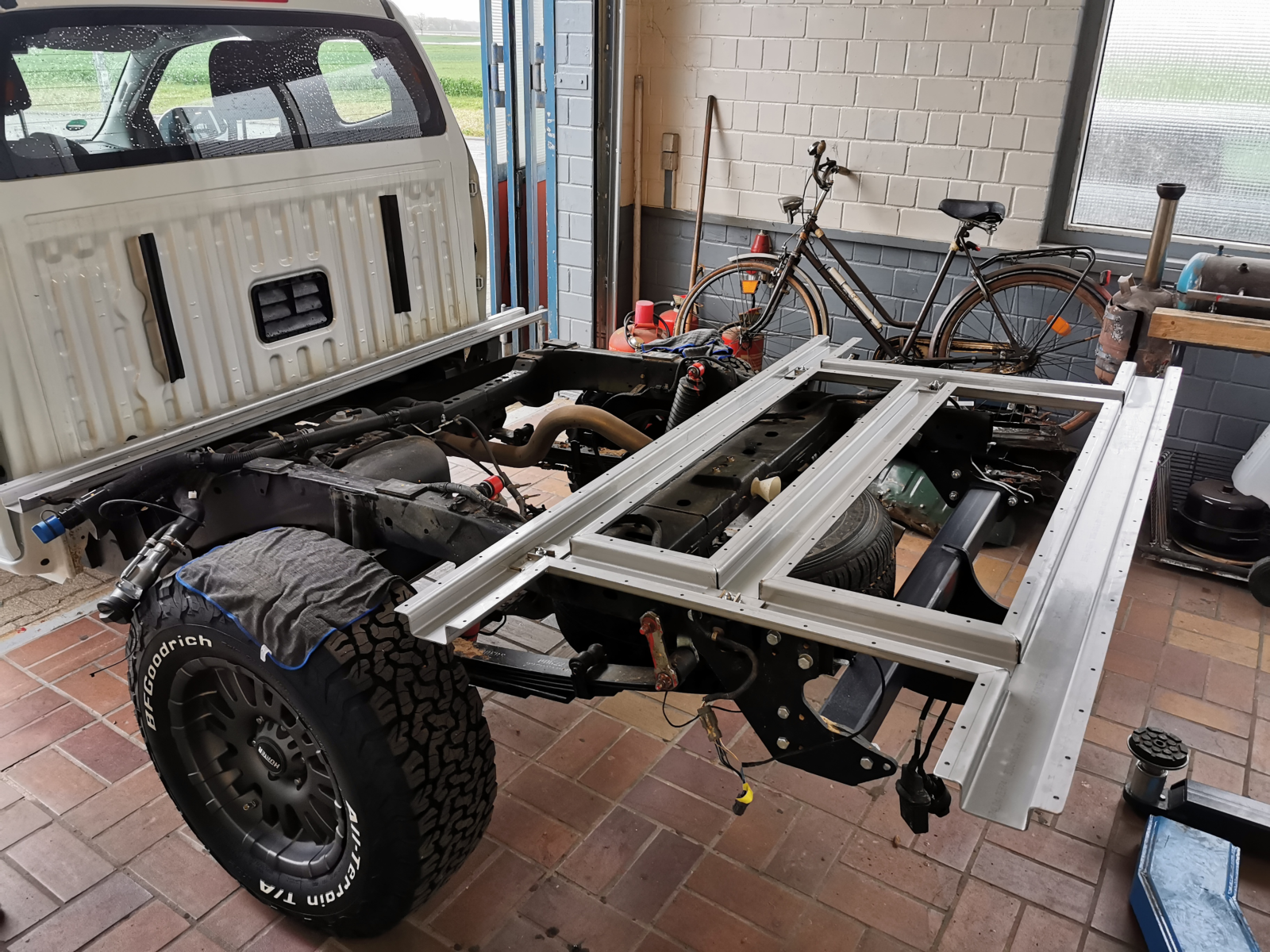
As the base of the whole cabin, a metalworker welded a folded stainless-steel frame, 4 mm thick, made to measure. The cabin was set on top, and its floor is also made of Monopan. The 30 mm Monopan panels were cut to size with a circular saw and a jigsaw, the corners bonded with polymer adhesive and reinforced from the inside in the corners with 30 x 30 x 2 mm aluminium angles. The two of them riveted over 400 waterproof special rivets into the cabin. On the outside, 60 x 60 x 3 mm aluminium angles were also fitted to protect the outer edges. These protect the edges in collisions with tree trunks or the like by spreading the pressure over a larger area. They also added considerably to the sturdy look.
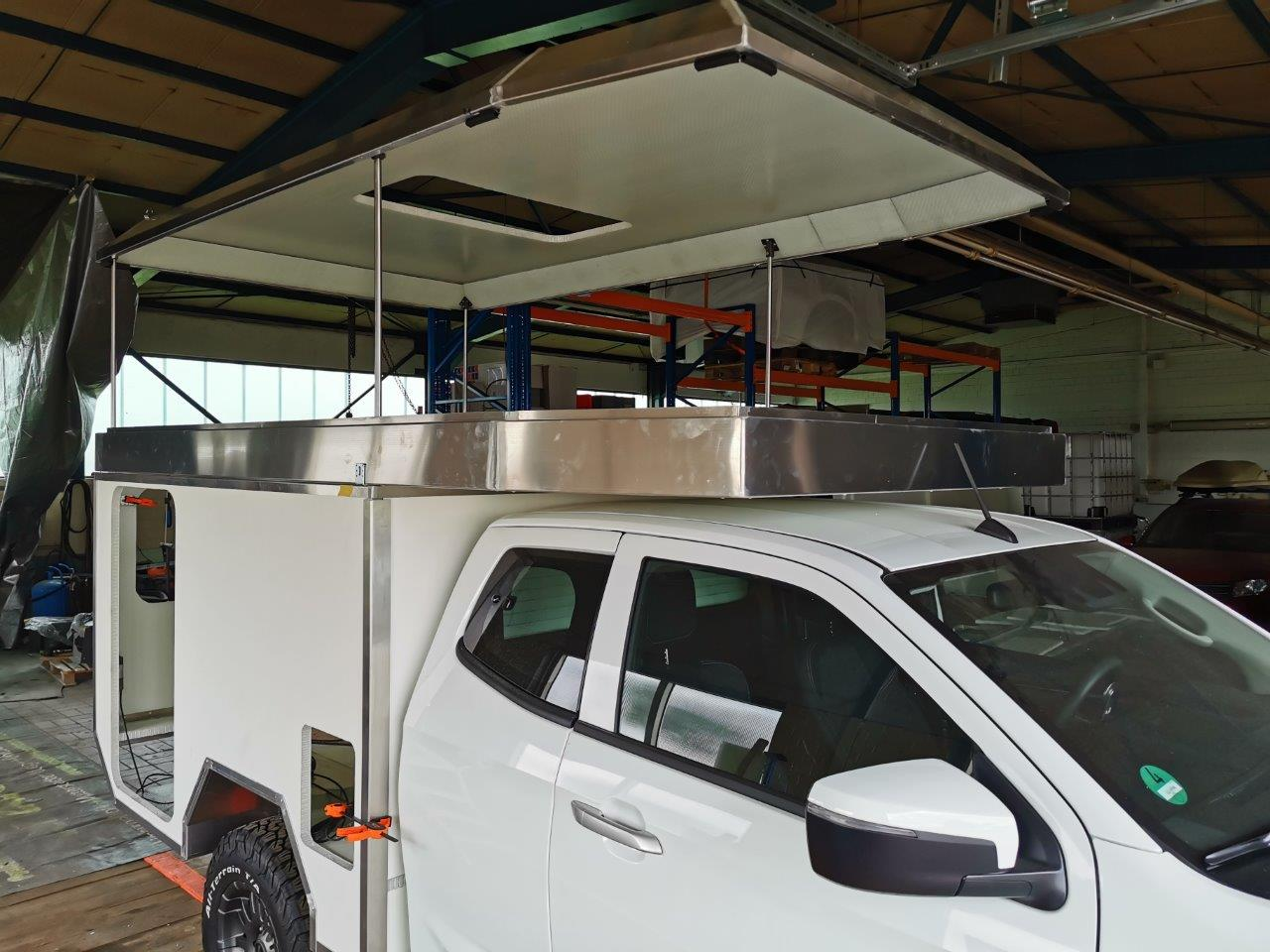
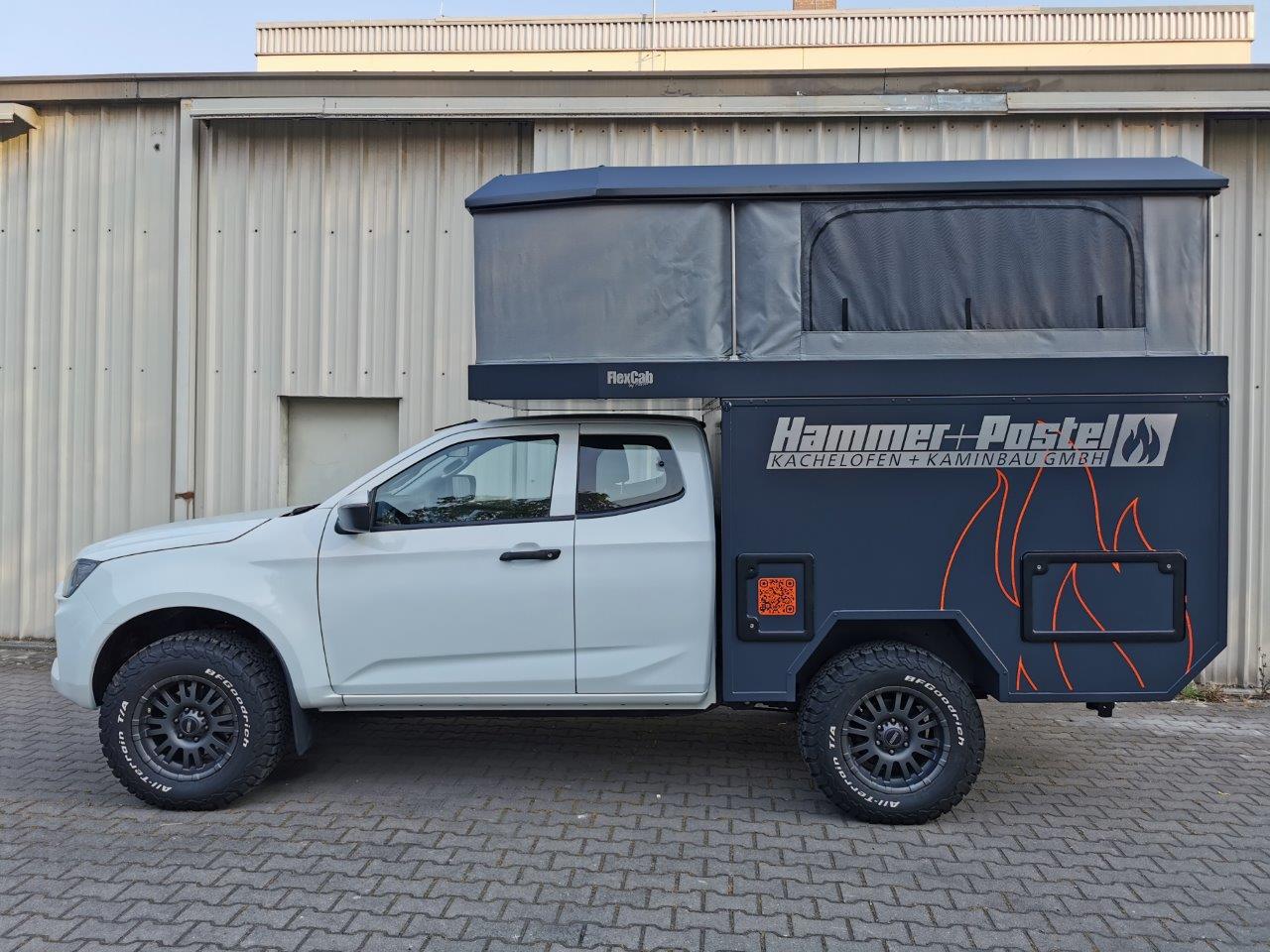
The roof is designed as a pop-top with a small over-cab section. The frames needed for this were folded from 2 mm aluminium and also welded. Between the pop-top frame and the roof, the tent tarpaulin of breathable yacht fabric was fitted, and the specially made lifting mechanism with end stops mounted. The linear motors are controlled by a wired or wireless remote. The lifting force is 200 kg each, which in theory allows a roof load of 800 kg. Should problems arise, the lifting mechanism can, if needed, be operated with a cordless drill.
The clever bit: two variants on one base
Particularly interesting is the concept behind it: while the cabin stays the same, the pop-top can also be swapped for a fixed lid. That reduces the interior to two sleeping berths and gives up sitting and standing height. In return, the vehicle is only 2.05 metres tall and quite capable of parking and going into underground car parks.
Should the cabin ever need to come off the vehicle, that takes only a few steps. You just have to undo six screws and two plug connectors, and the vehicle stands there again with its bare load bed. At the Postels’ a forklift is used for this. A lifting frame could also be put together quickly, though it does not exist yet. The charming thing about that would be that the cabin stays fully usable while set down.
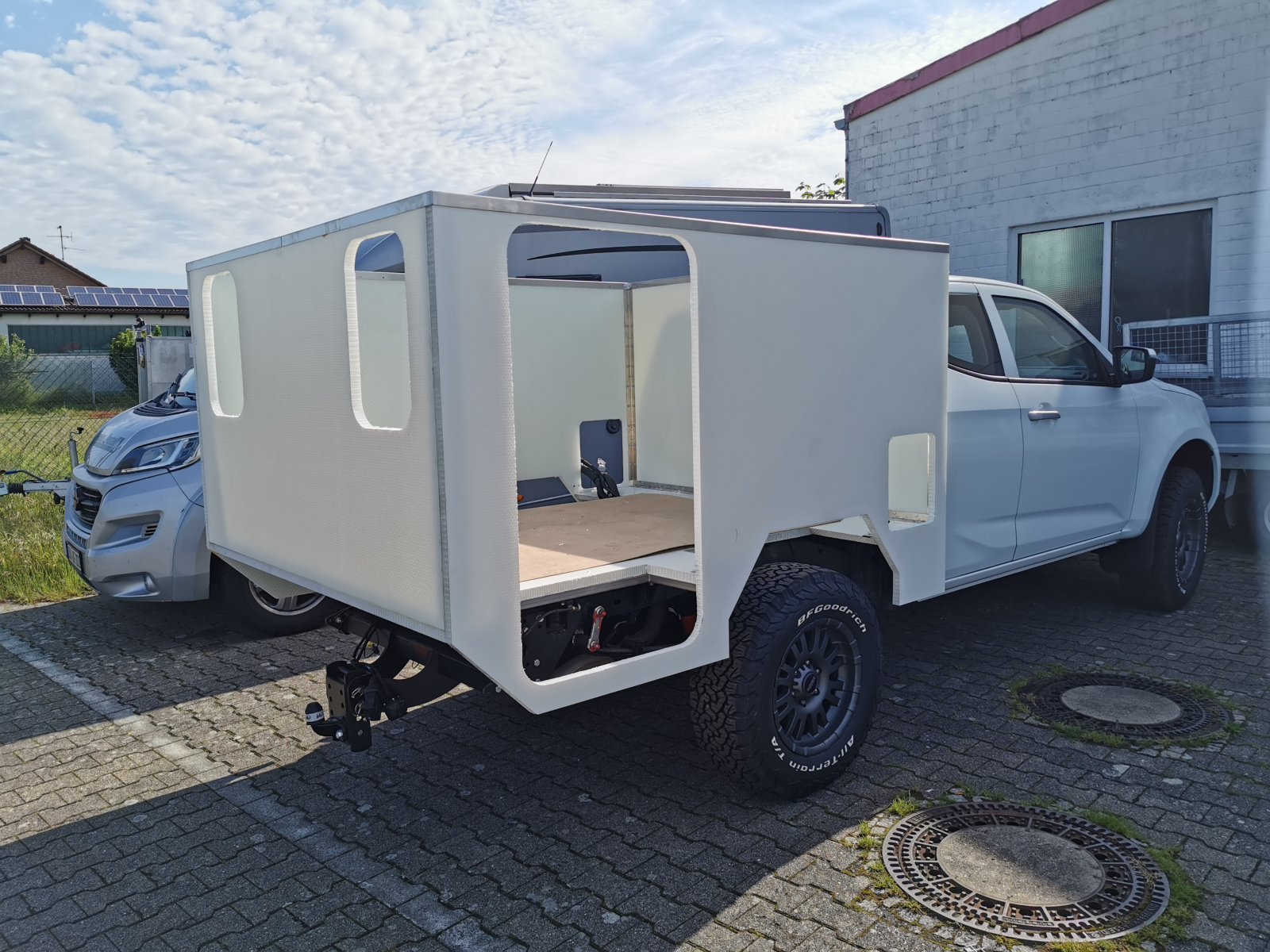
Even though Peter himself will probably never use this variant, the idea of doing it appealed to him, which he paid for with extra effort in planning and building. But who knows whether it might not pay off in the end after all. It is conceivable, for example, to use the low variant with an adapted interior and a lid as a mobile workshop. In any case, he now always has the choice: the vehicle without a cabin in its original state, with a minimised, low cabin and a fixed lid, or in the comfort version with a pop-top.
The interior
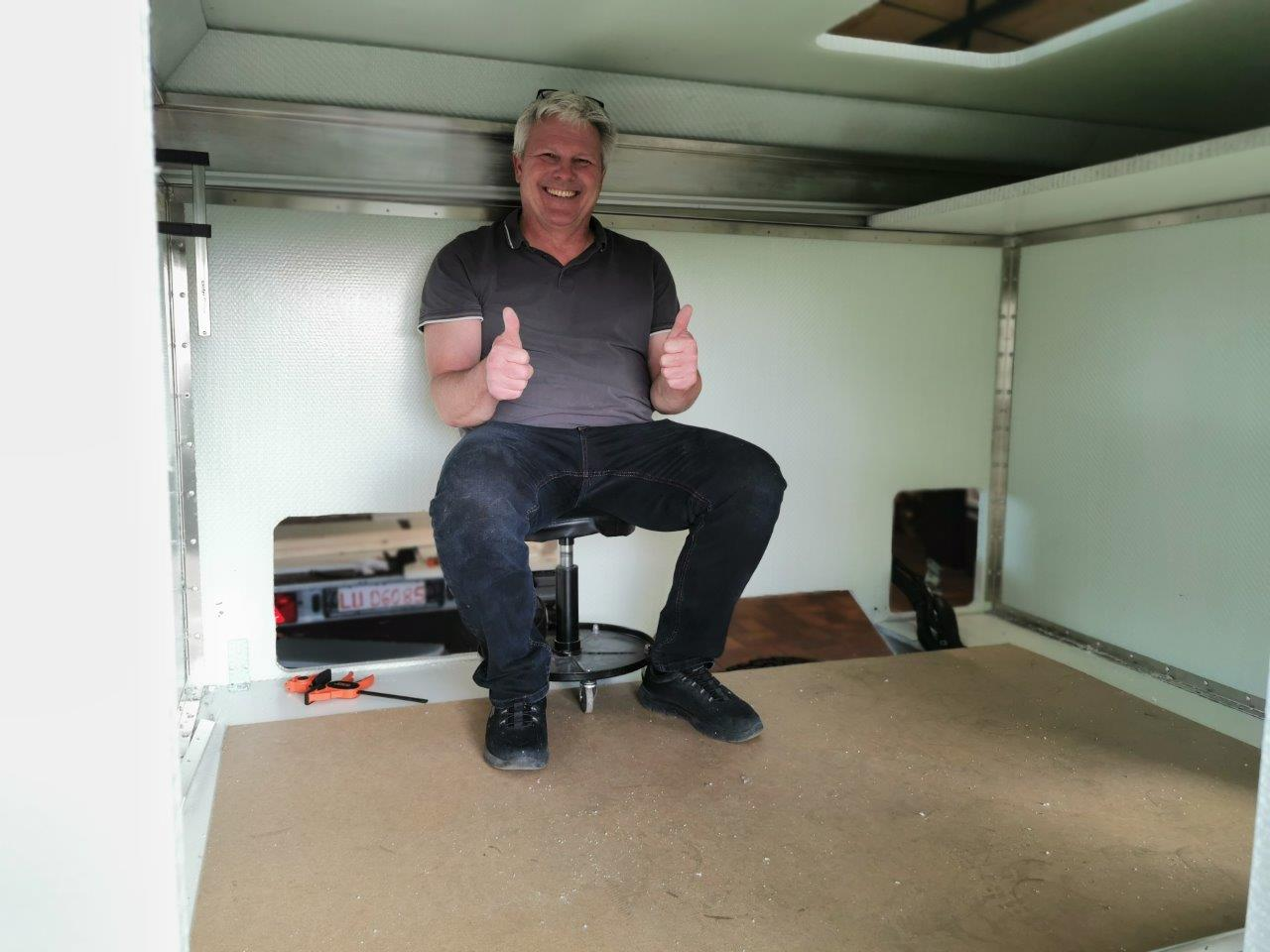
The inside is made of Monopan too, with the visible surfaces 20 mm thick and the edges again fitted with aluminium profiles. For the drawers, Euro boxes with turn latches were used. The toilet for emergencies is from Boxio. Sleeping is on foam mattresses with removable microfibre covers. As for space, even with the cabin closed, four people can sit and two can sleep comfortably.
All in all, building the cabin took a good three and a half months from the first drawings to the finish. The work was done either in the evenings or at weekends. At the start in February 2023, the goal was to be ready for the Abenteuer & Allrad show and the Five Mountains tour.
The costs
In total the costs for the self-build project add up to a good 22,000 to 24,000 euro. That includes the electrical installation and appliances, as well as extra items like an alternator, an Autoterm heater and a Victron battery management system.
Life in and around the cabin
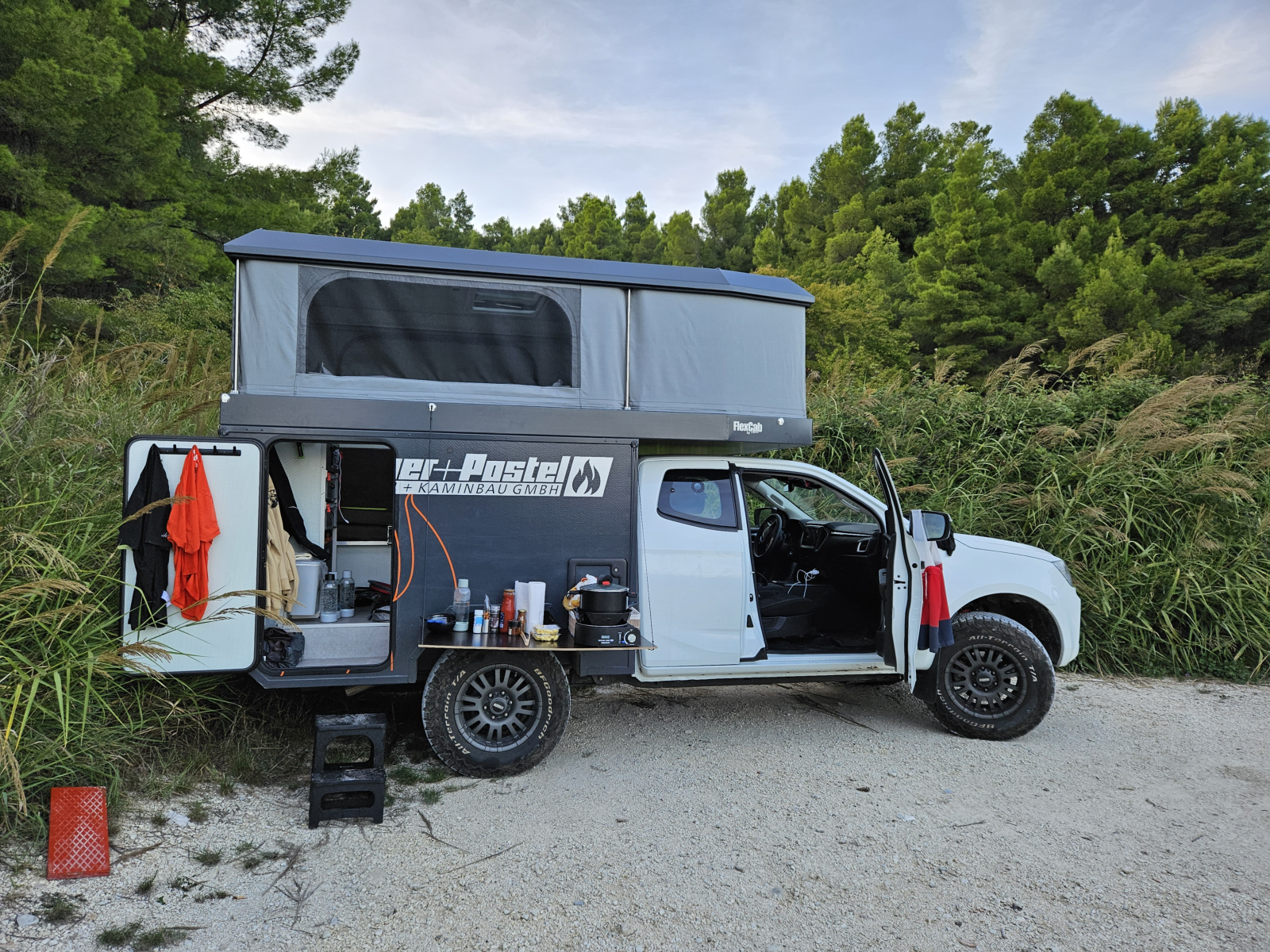
Beyond all the technical things, your own cabin should of course also make for a pleasant stay. Cooking is a key part of that. Peter Postel thought ahead here too and planned for a mobile cartridge stove. So, depending on the mood and the weather, meals can be prepared either inside or outside.
Modifications to the Isuzu D-MAX
To carry the cabin and boost the Isuzu’s off-road abilities, Peter Postel also made changes to the vehicle. The suspension was swapped for a Pedders lift kit with a higher load rating. At the front the load capacity was raised by 70 kg, at the rear by 300 kg. For the tyres the choice fell on BF Goodrich AT in 265/70 R17 on Hurter 9×17 ET 30 wheels.
As further accessories there were plastic sand ladders, a set of recovery gear and a compressor. But the stove builder is not finished with that. An Ironman winch bumper and a skid plate are already on order. Both will still have to win the approval of an inspection body with an individual certification.
Trips the Isuzu D-MAX cabin has completed
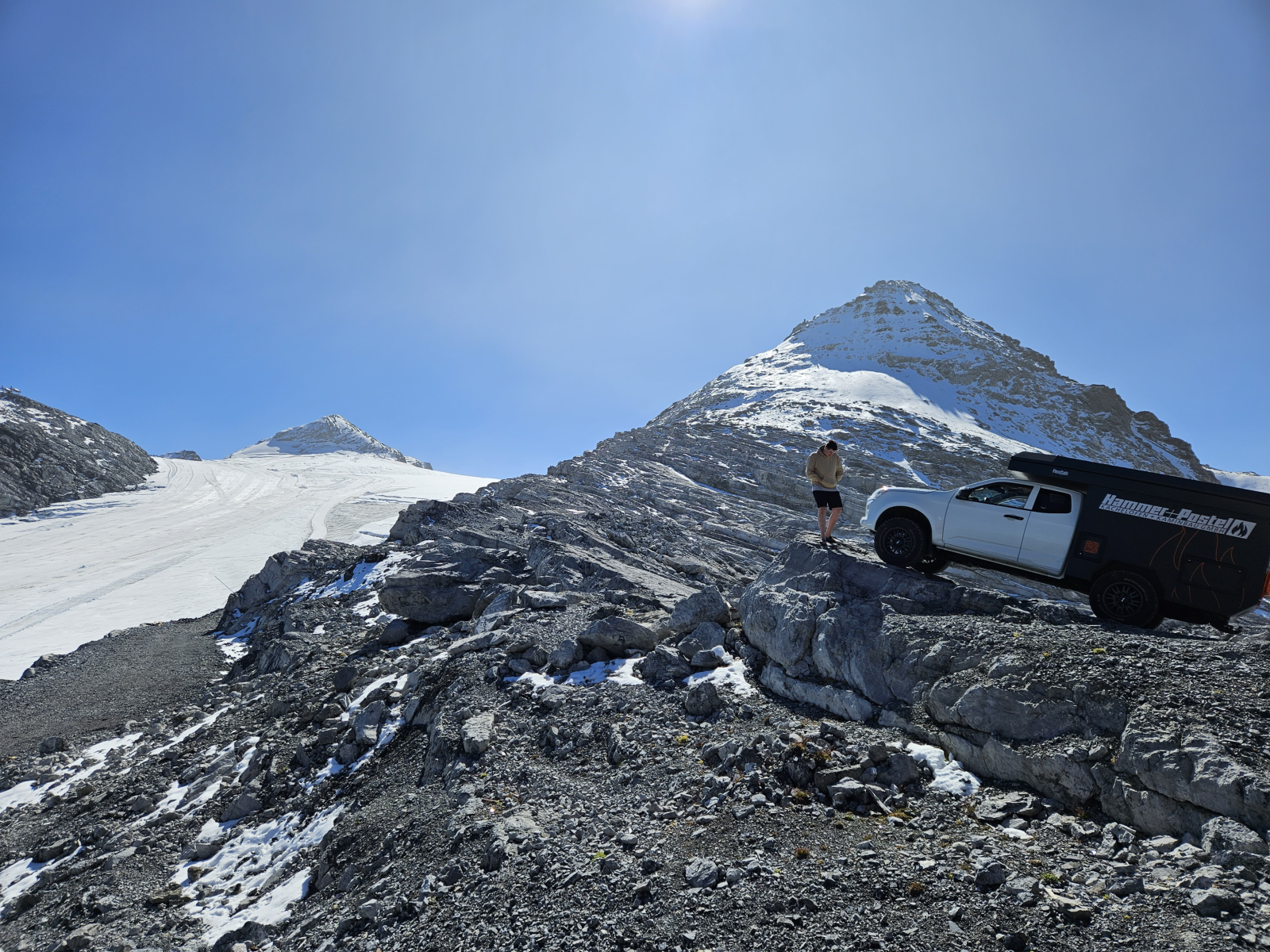
Once the work is done, the result has to be tested. Its premiere was the 10-day Five Mountains tour, #5MT. After that the vehicle also saw Italy, and its off-road abilities were proven over several weekends in off-road parks. The work could be admired at a D-MAX meet and at the Abenteuer & Allrad show.
And what else matters to you?
Top of the list of what matters most to Peter Postel on the road is reliability. Followed by the vehicle’s strong ability off-road. That sounds very much like active travel, so it is no surprise that, to balance it out, peace and recovery rank highly. That is why plenty of attention is paid to sleeping comfort in his Isuzu D-MAX cabin too. Peter defines that for himself with a large sleeping area of 210 x 180 mm. On top of that, everything that can be operated has to be easy, functional and simple. When the vehicle is parked up, it should be quick and easy to switch from driving to living and sleeping mode.
An elaborate 270-degree awning was left out. Instead there is a simple microfibre tarp with 2 aluminium poles and a few cords. That way everything is quick and easy to handle.
Will the Isuzu D-MAX cabin stay a one-off?
The question most readers will now be asking is whether Peter Postel will build and offer the cabin, which he has christened the FlexCab, for others? He cannot and will not answer that yet. The project was meant for his own use, and the master craftsman earns his crust with stove building, after all. Even so, all his skill and professionalism went into the result. Well, the decision has not been made yet, or as Peter Postel would put it: “Never say never.”
© Photos: Peter Postel