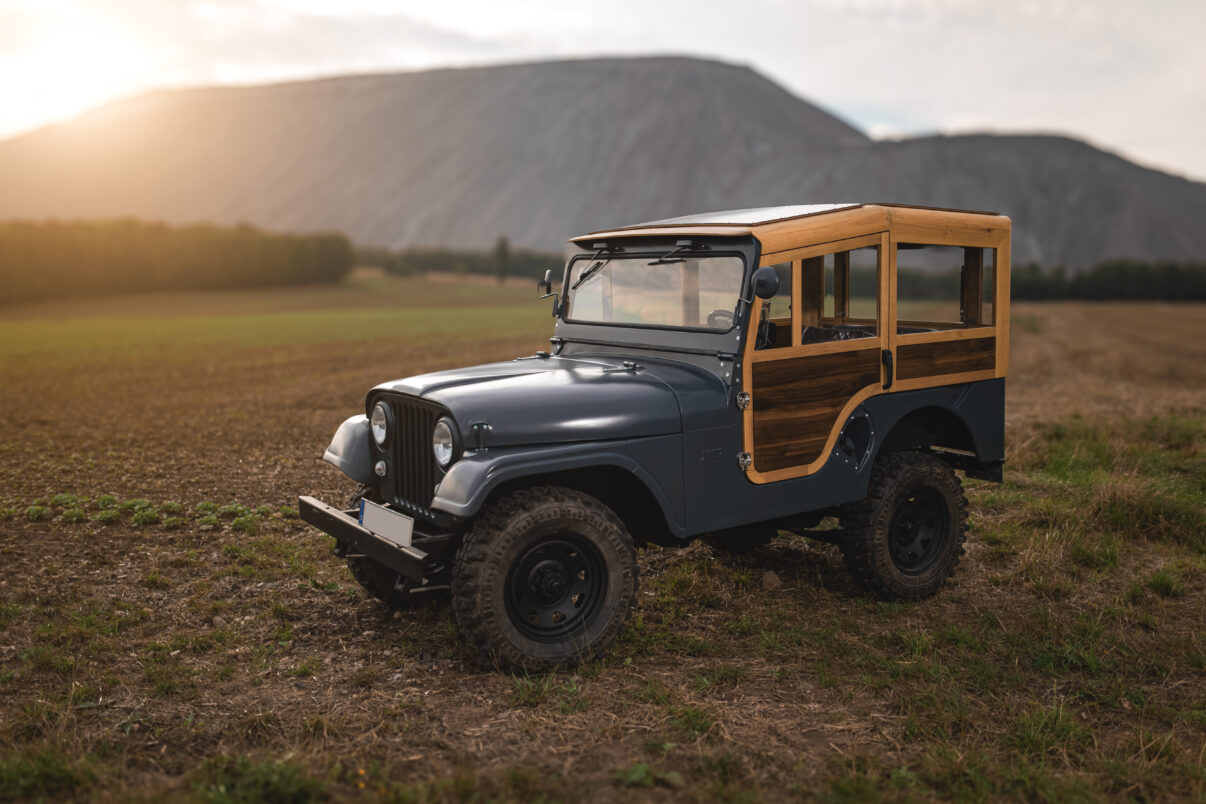

In our Vehicles section we have already shown you many great off-roaders. Today a very special vehicle joins them. This full restoration of a Kaiser CJ5 is a treat for the eyes, and it is technically perfectly built and still often out working too.
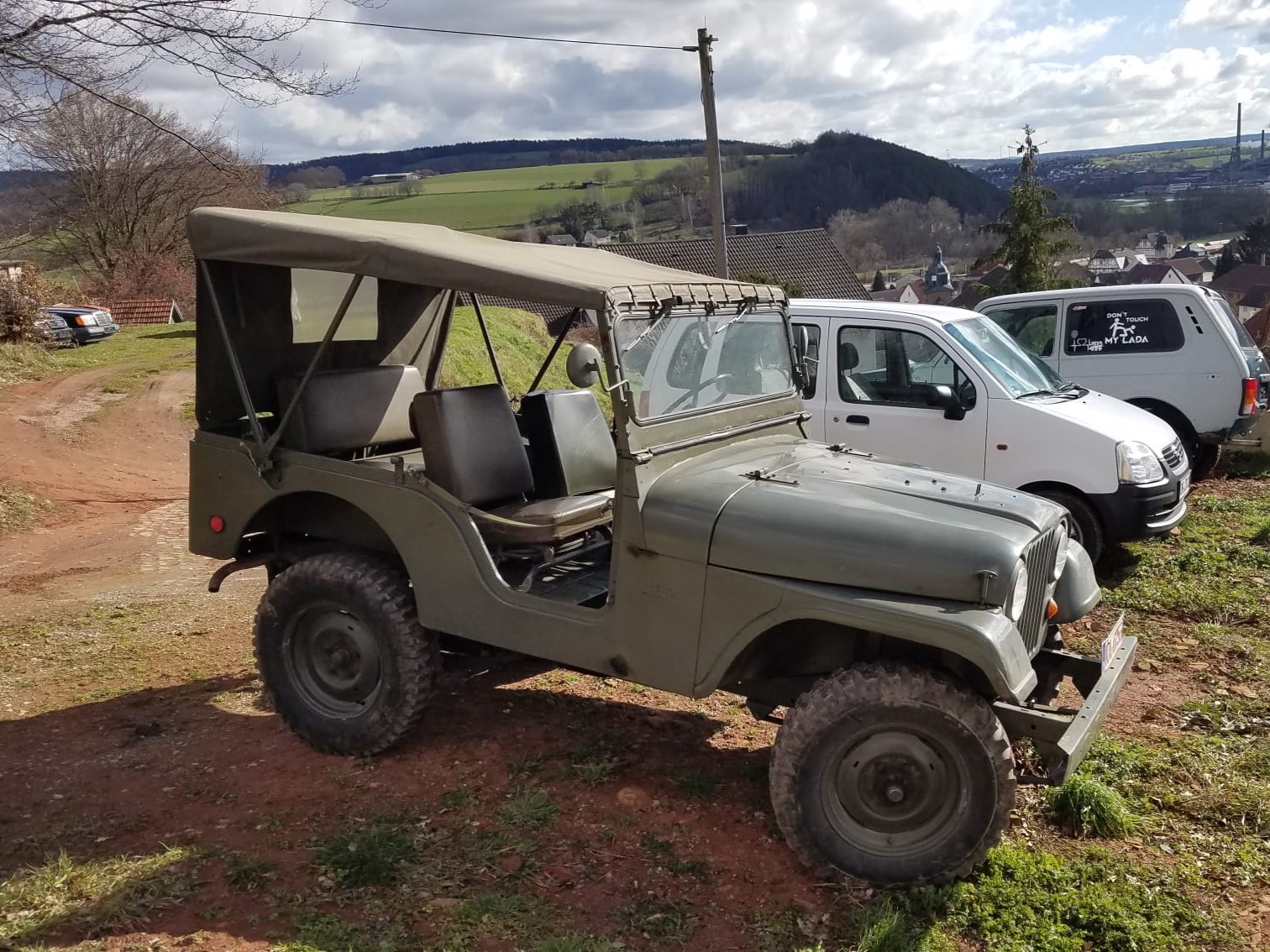
This Kaiser CJ5 first saw the light of day in 1968. Built in the USA, used by the military in Switzerland and today at work in forestry, this vehicle already has an eventful history behind it. Now the Jeep has been restored and modified from the ground up so it can be used daily again.
The vehicle has an interesting origin and history
The Jeep story began in 1944 with the CJ2 from Willys Overland, the “Willys Jeep”. Modifications and further developments followed. In 1953 the manufacturer Willys Overland Motors was sold to Kaiser Motors, and the vehicles were sold under the company name Willys Motor Company, later the Kaiser Jeep Corporation. In 1954 the Kaiser CJ5 appeared, of which there was also a military version, the M38A1.
The vehicle shown here originally came from the Swiss Army. Hold on, Jeeps in the Swiss Army, and why then a CJ, a “Civilian Jeep”? The vehicle, built in 1968, was imported into Switzerland along with 299 of its kind. This was done, because of export restrictions, still as a civilian vehicle. In Switzerland it was modified for military use and served from then on as an off-road personnel car. Later it passed into private ownership.
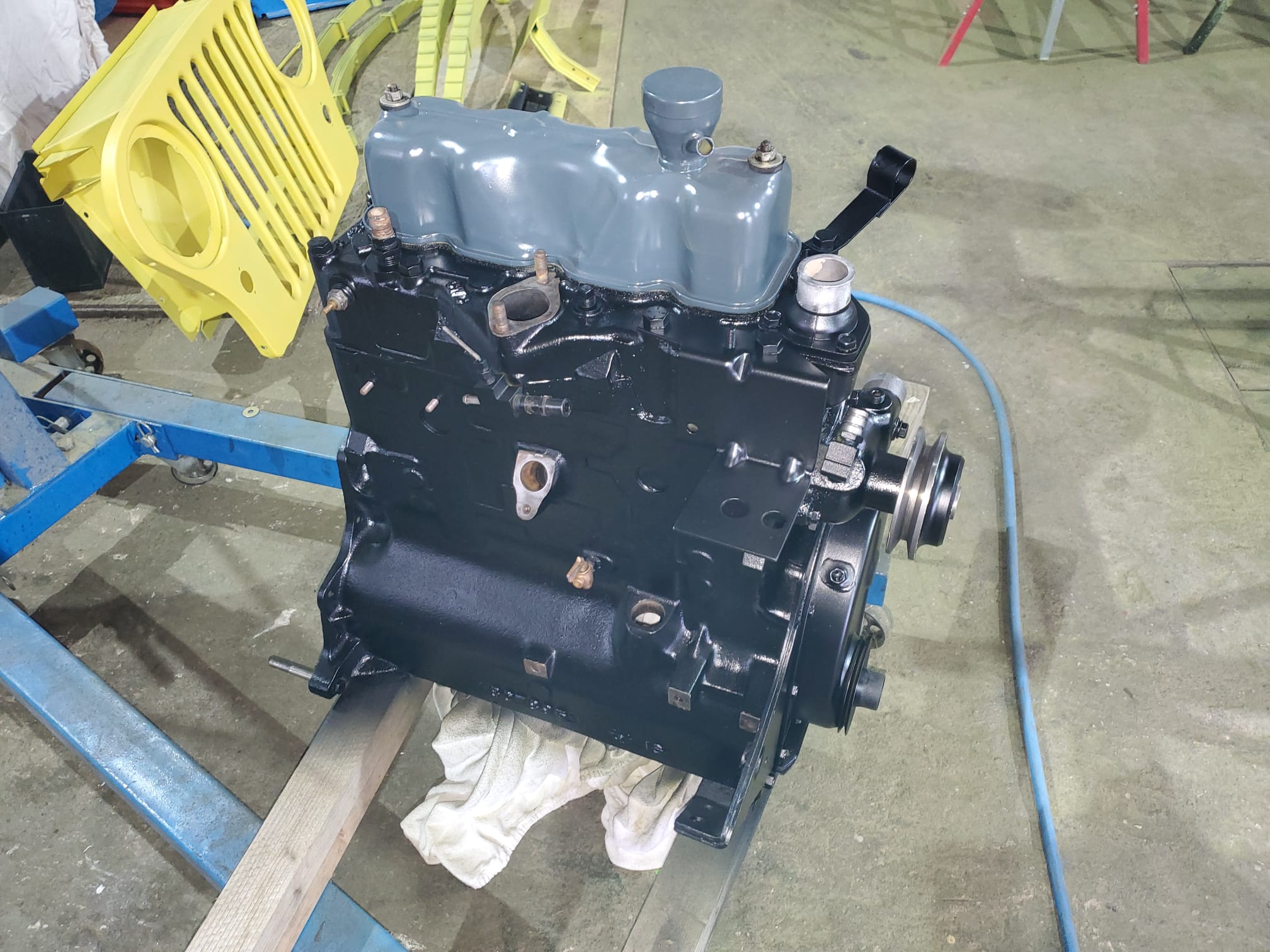
It is powered by a four-cylinder four-stroke petrol engine. From around 2.2 litres of displacement the carburettor engine draws a respectable 76 hp and 158 Nm of torque. That is quite decent, considering the year the vehicle was built and its low kerb weight of just 1.1 tonnes. It uses a 3-speed manual gearbox along with a low range and a selectable front axle. A proven concept.
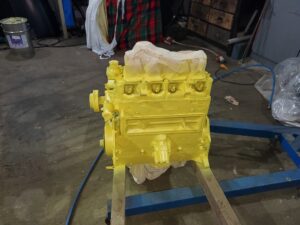
Since the engine and gearbox had covered less than 80,000 km at the time of the restoration, they were left unopened. Only bolt-on parts were replaced, and the engine cleaned, painted and retuned.
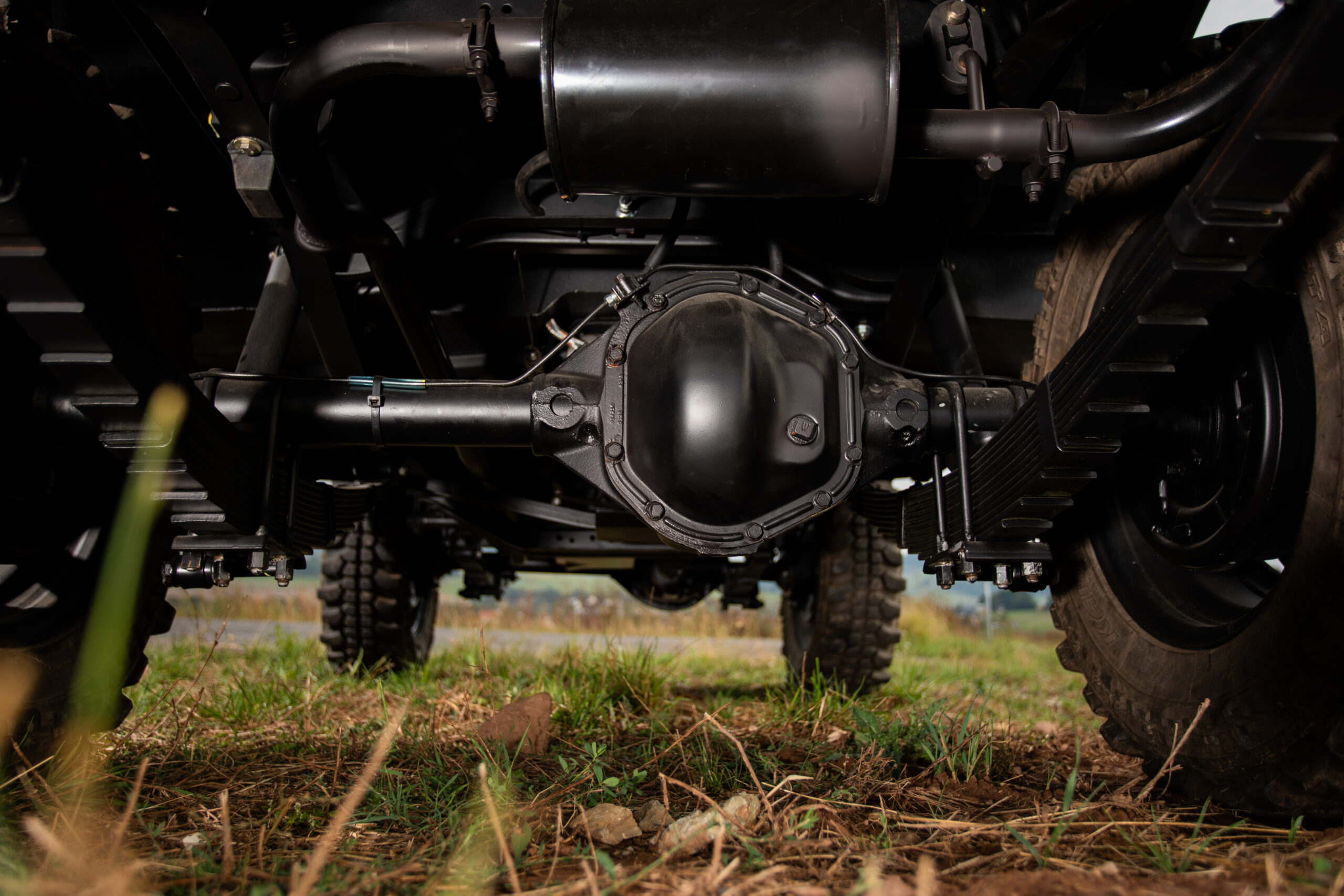
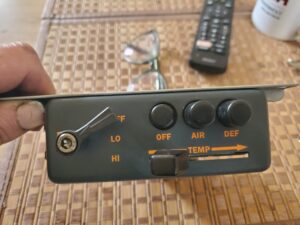
This Kaiser Jeep has, straight from the factory, the sturdier Dana 44 rear axle that is popular in many builds, a more stable chassis and even a heater on board. The latter is particularly important, since this vehicle, as mentioned, is driven almost daily by its current owner, Wolfgang, and is used in forestry.
The full Kaiser CJ5 restoration by Andy Beddong
Some of you know Andy Beddong, whose real name is Andreas Korbach, from the Niva scene. There, but also beyond it, he is known for functional builds at a high technical level. He came to the Niva more or less by chance, since a few years ago he was looking for a sturdy, nimble site vehicle for building his new workshop hall. That, by the way, is also where his nickname comes from, since the hall is built of solid concrete. Well, and you can already guess it, the Niva of course had to be modified straight away, the story took its course, and so today at bsp-center in Philippsthal, East Hesse, you can get off-road builds and more. With this full Kaiser CJ5 restoration, Andreas got a very special project. Wolfgang had at first wanted to have a Lada Niva converted for forestry, but Andreas came along with the suggestion of simply restoring the Kaiser CJ5.
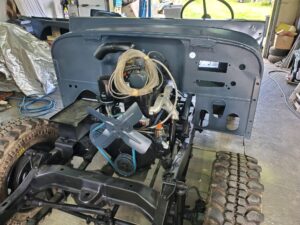
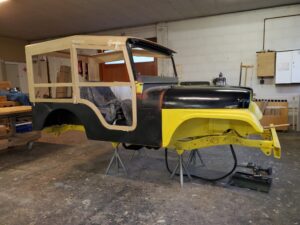
No sooner said than done. He first restored the Kaiser Jeep from the ground up. A good year went into this work until the Jeep was in perfect technical condition again, so that it can probably do its job for another 50 years.
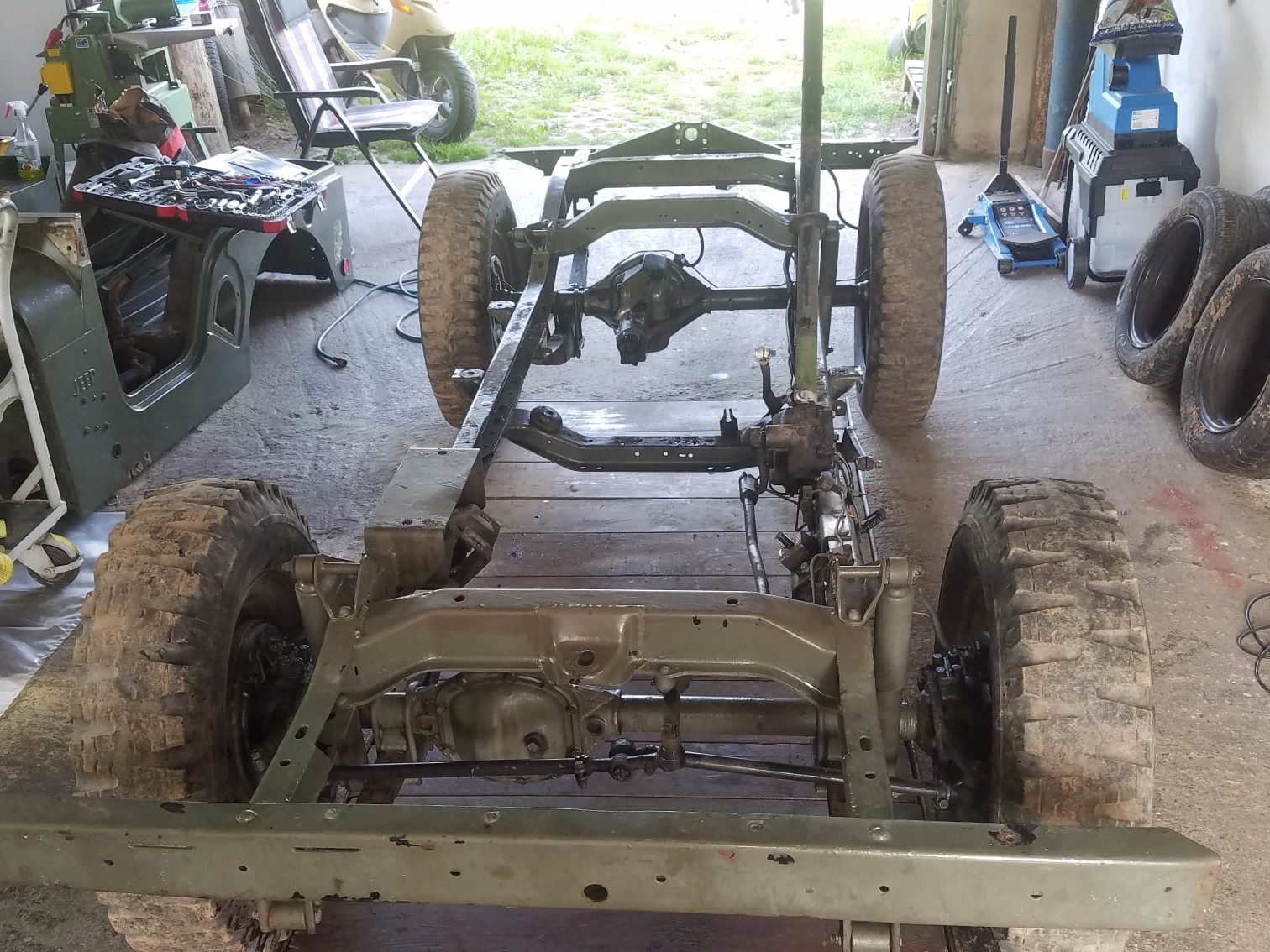
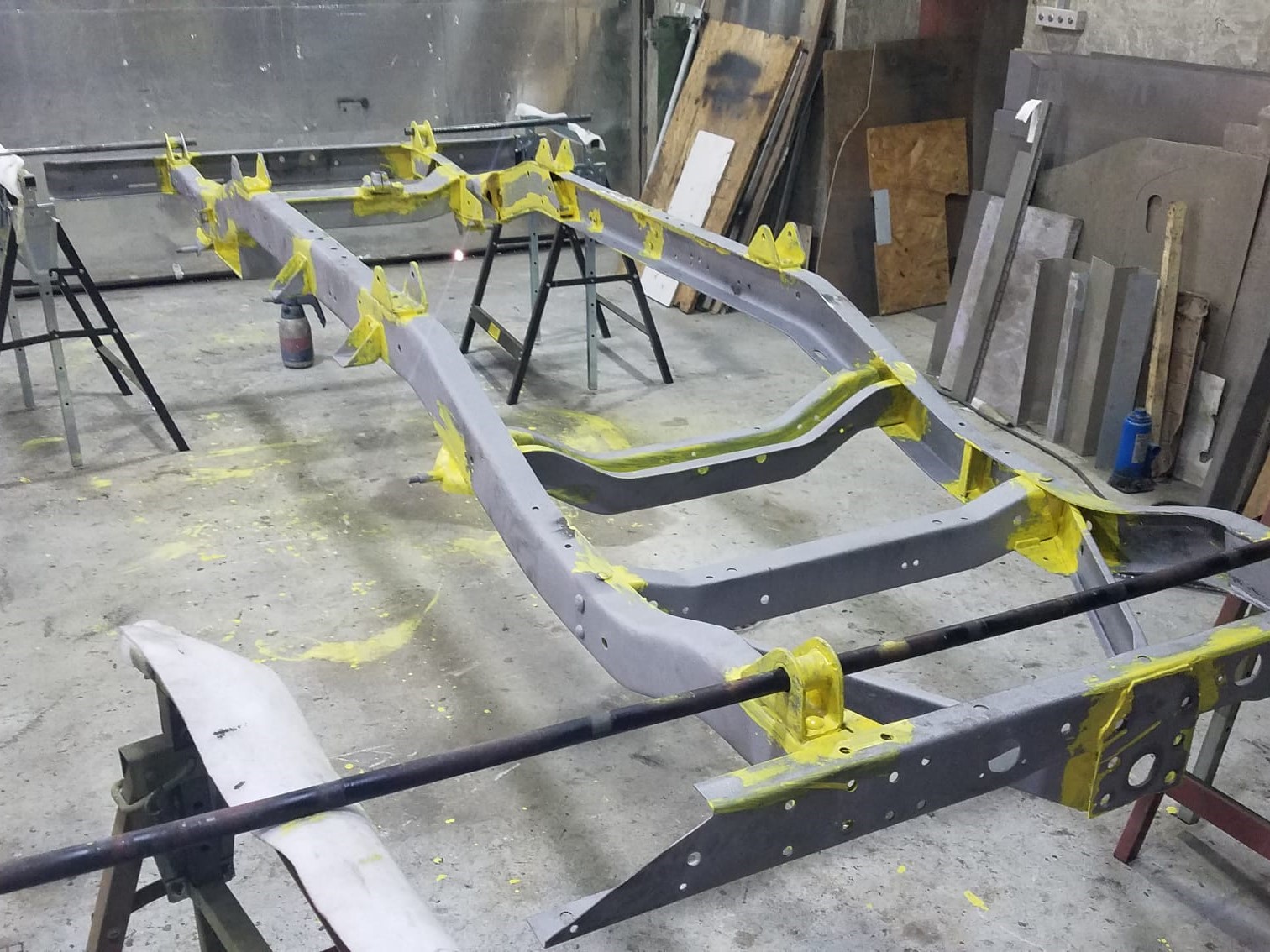
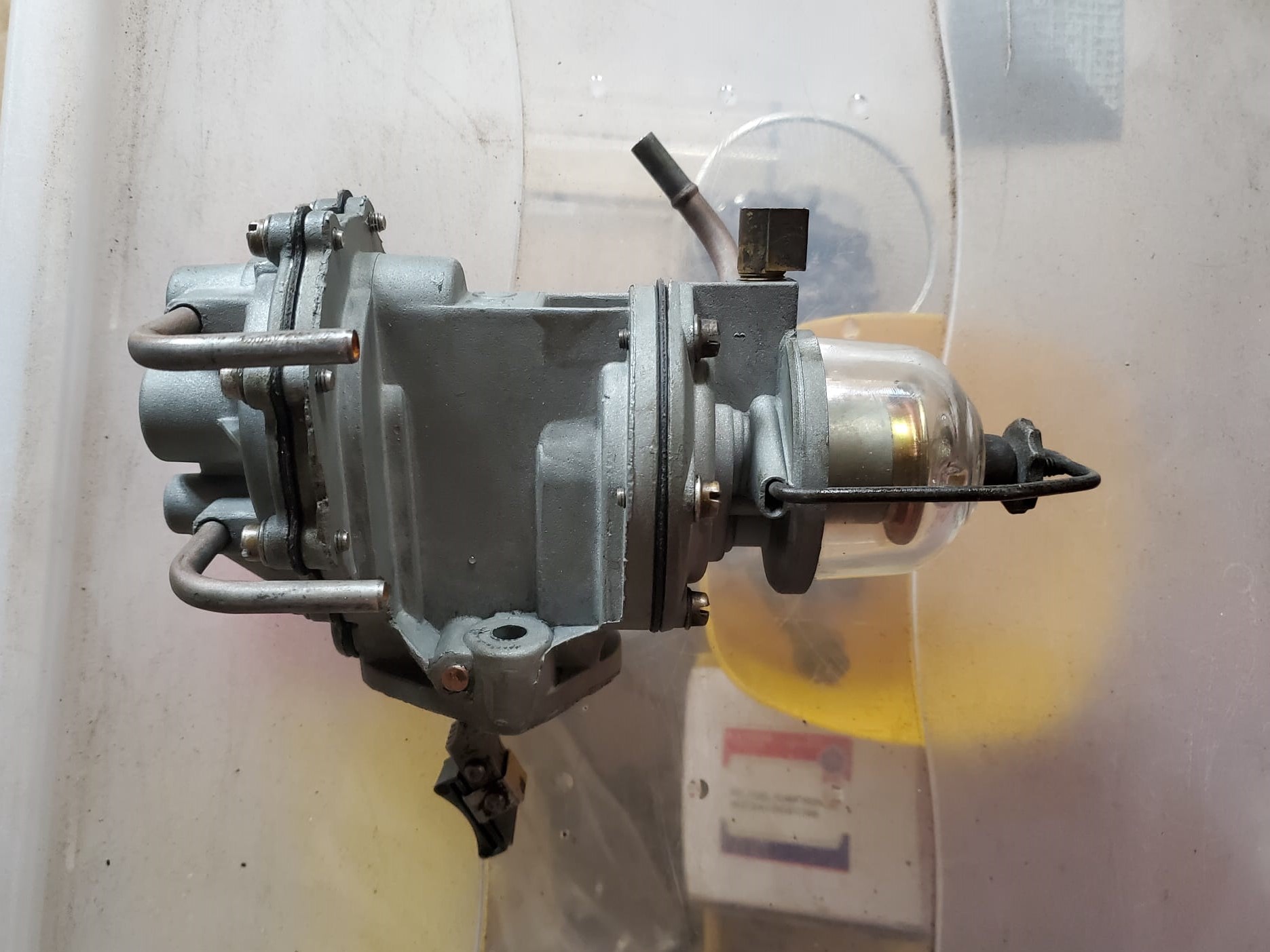
This full restoration set Andreas some particular challenges. For one thing because the Jeep has a few technical quirks, and for another because, not least owing to the vehicle’s age, not all spare parts are always easy to get hold of. During the restoration, for example, the fuel pump had to be overhauled. The quirk of the fuel pump in this Jeep is that it is combined as one component with a vacuum pump. Among other things, that drives the wiper arms, and for this very vacuum pump the diaphragm needed was no longer available. So a lot of mechanical skill was called for.
A new original radiator was just as hard to track down. The original was simply repaired expertly instead.
A few useful modifications were also made
The owner’s brief was clear. The vehicle was not to become a car for the collection or for show, but to go back to work in forestry. So it got a few sensible technical modifications too.
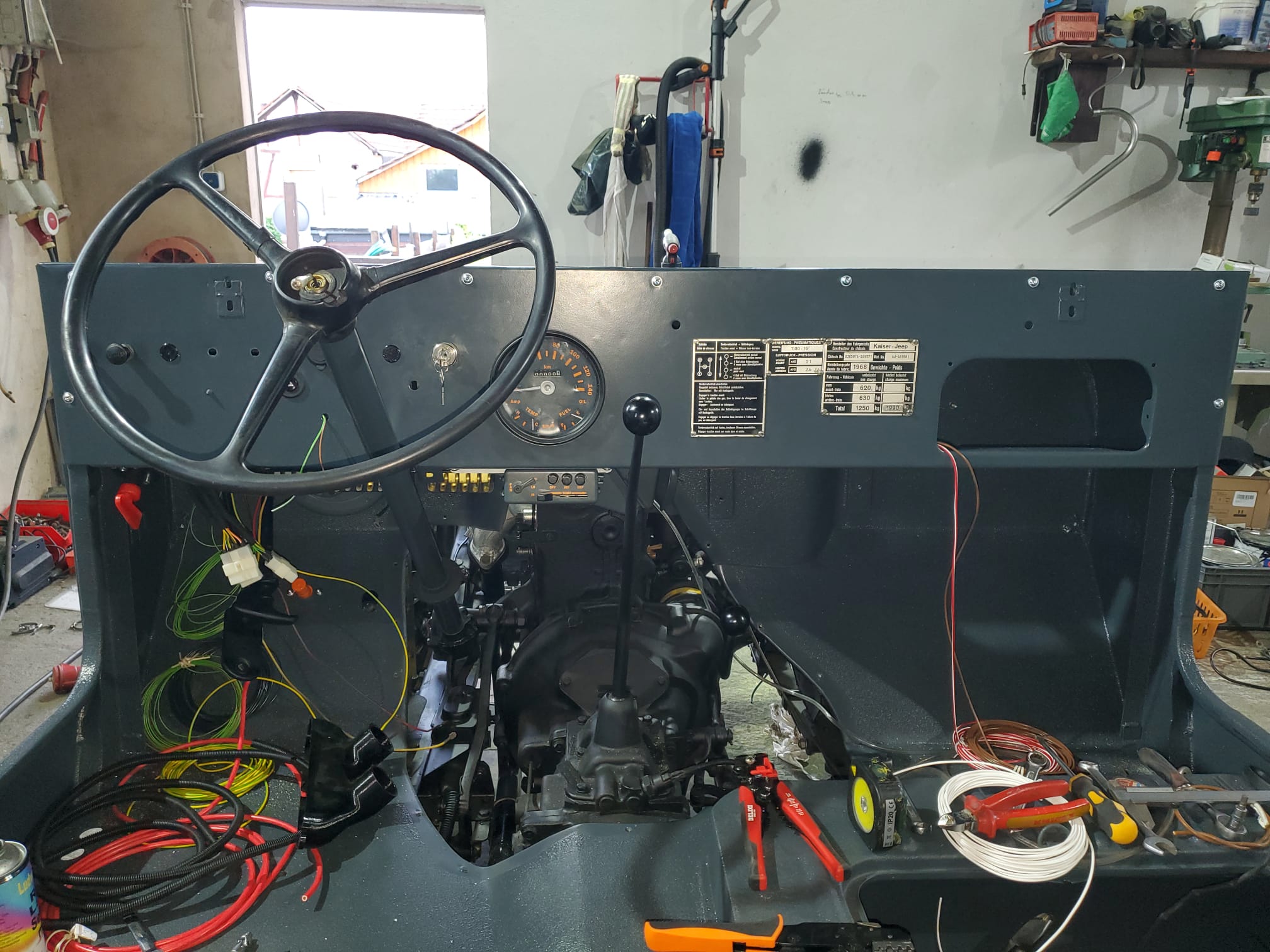
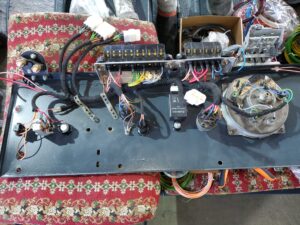
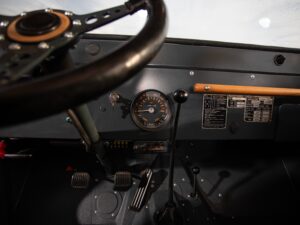
The wiring harness, which had of course aged badly and become basically unusable, Andreas Korbach rebuilt completely. In doing so, he also brought it up to the current technical standard we know today. Fuses were fitted, a safety plus for the vehicle and the owner. On top of that come things that are handy and useful for everyday life, and so 12-volt and USB sockets round off the new electrical setup.
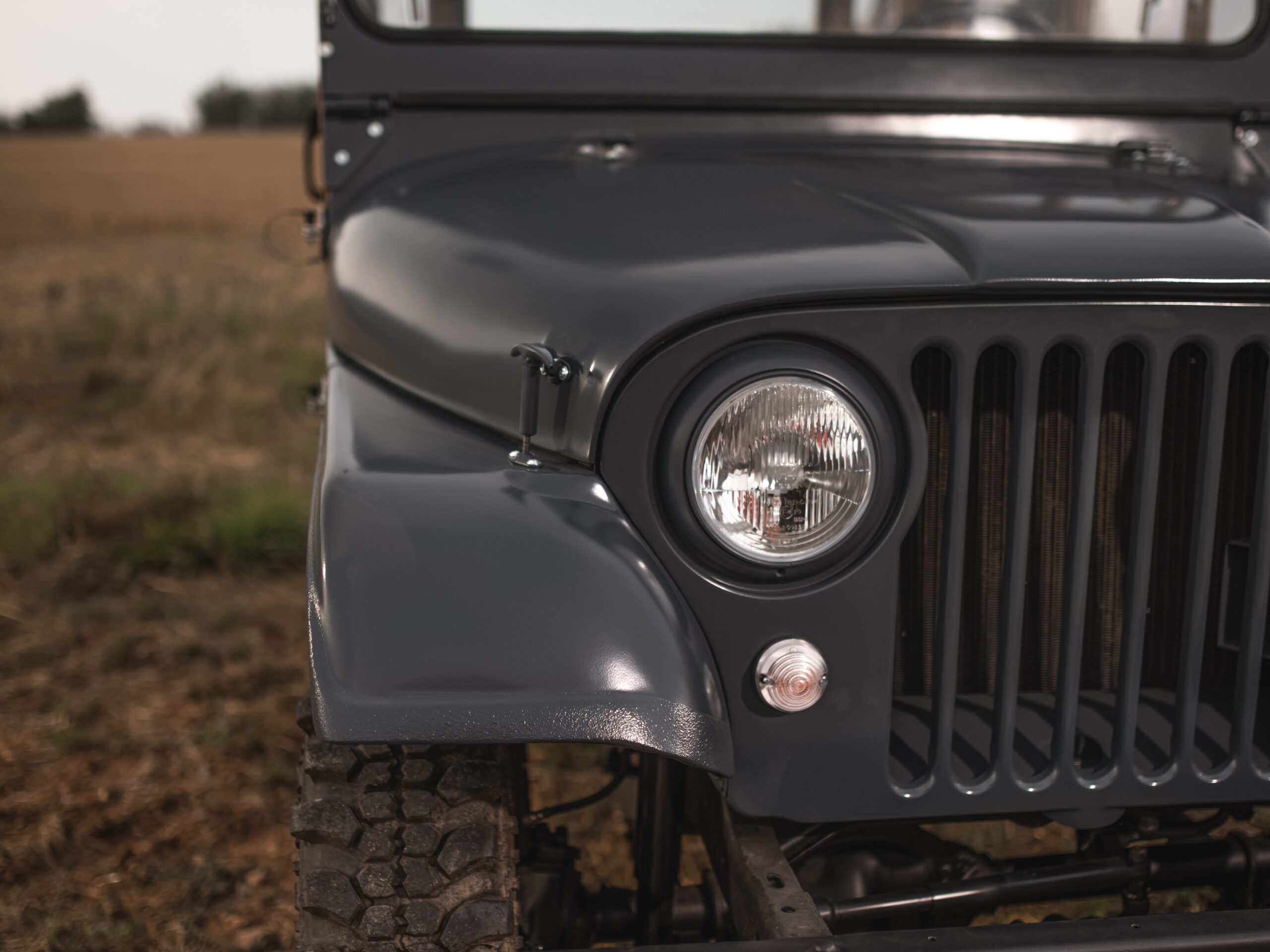
Since Andreas was already working on the electrics, he modernised the lighting at the same time and treated the Kaiser Jeep to new H4 headlights. This keeps the classic look with little effort and yet gains another plus in safety and, on top of that, better illumination. There were also new sidelights and indicators. For those he reached into the parts shelf of another maker of classic off-road vehicles. For another component, too, a different maker was called for in the interest of practicality, and so the interior mirror with integrated cabin light from a Volga made its way into the Jeep. The Jeep now also has a new reversing light, which is now actually switched, as you know it from modern vehicles, by engaging reverse gear at the gearbox.
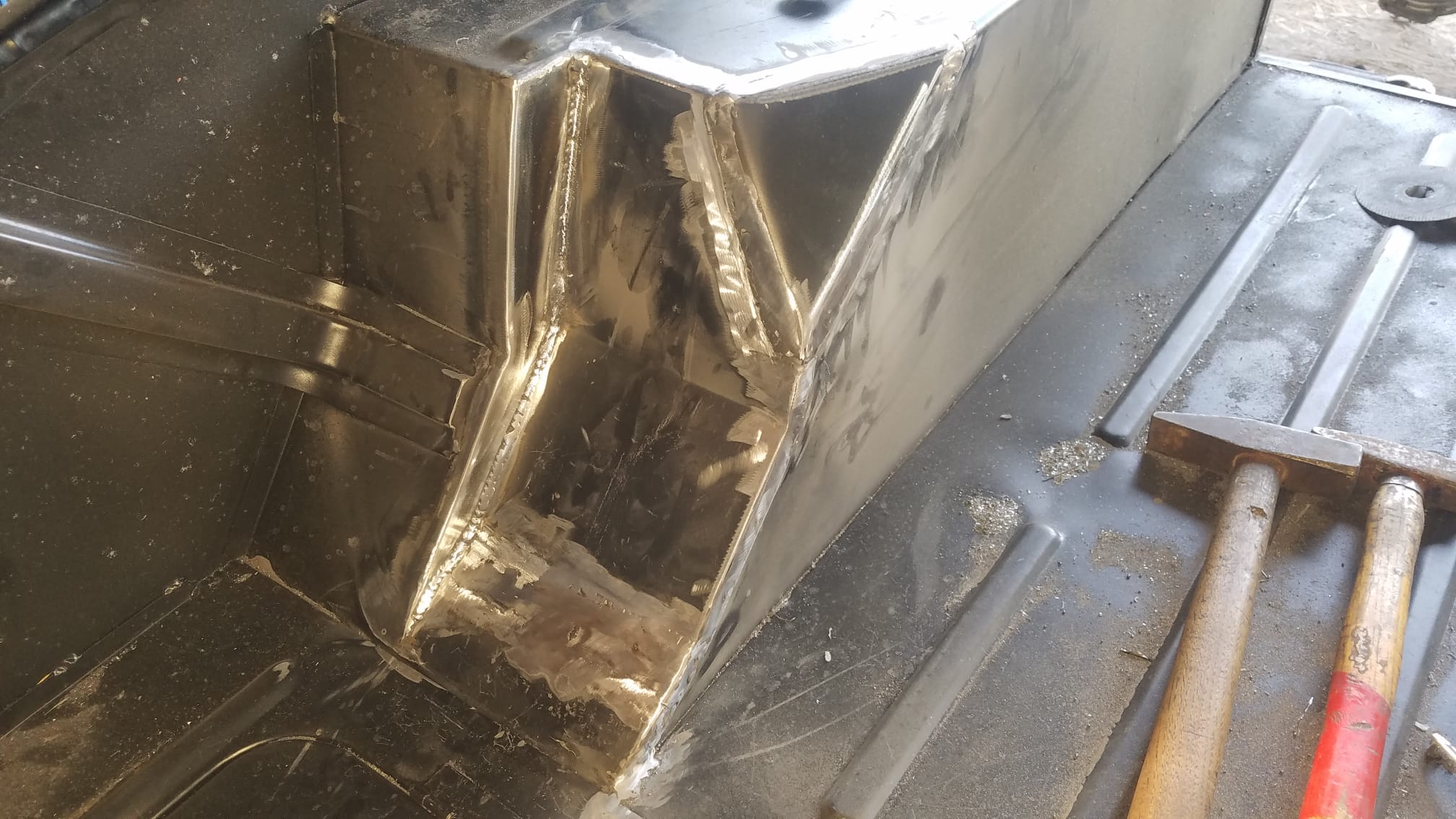
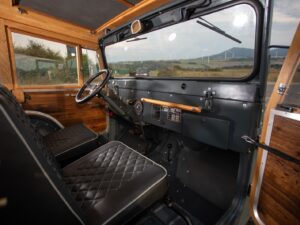
A bigger sub-project was then the interior. It was to be more everyday-friendly. That concerns above all the amount of room. The wheel arches are modified and moved back, so that a bit more room is created for driver and passenger. The Jeep now also has a seat adjuster.
The wish for a steering damper was also met. The amount of room in this vehicle is fairly tight at the front axle, though, and so once again some tinkering was needed. In the end a steering damper from an E-Class found its place in the Jeep. It is small in its dimensions, does its job perfectly and is also a low-cost solution.
On top of all these modifications comes another eye-catcher, and not just visually.
The oak hardtop is a real eye-catcher
Since only simple soft-tops are available for the Jeep, and things can get uncomfortable working in the forest, another solution was needed.
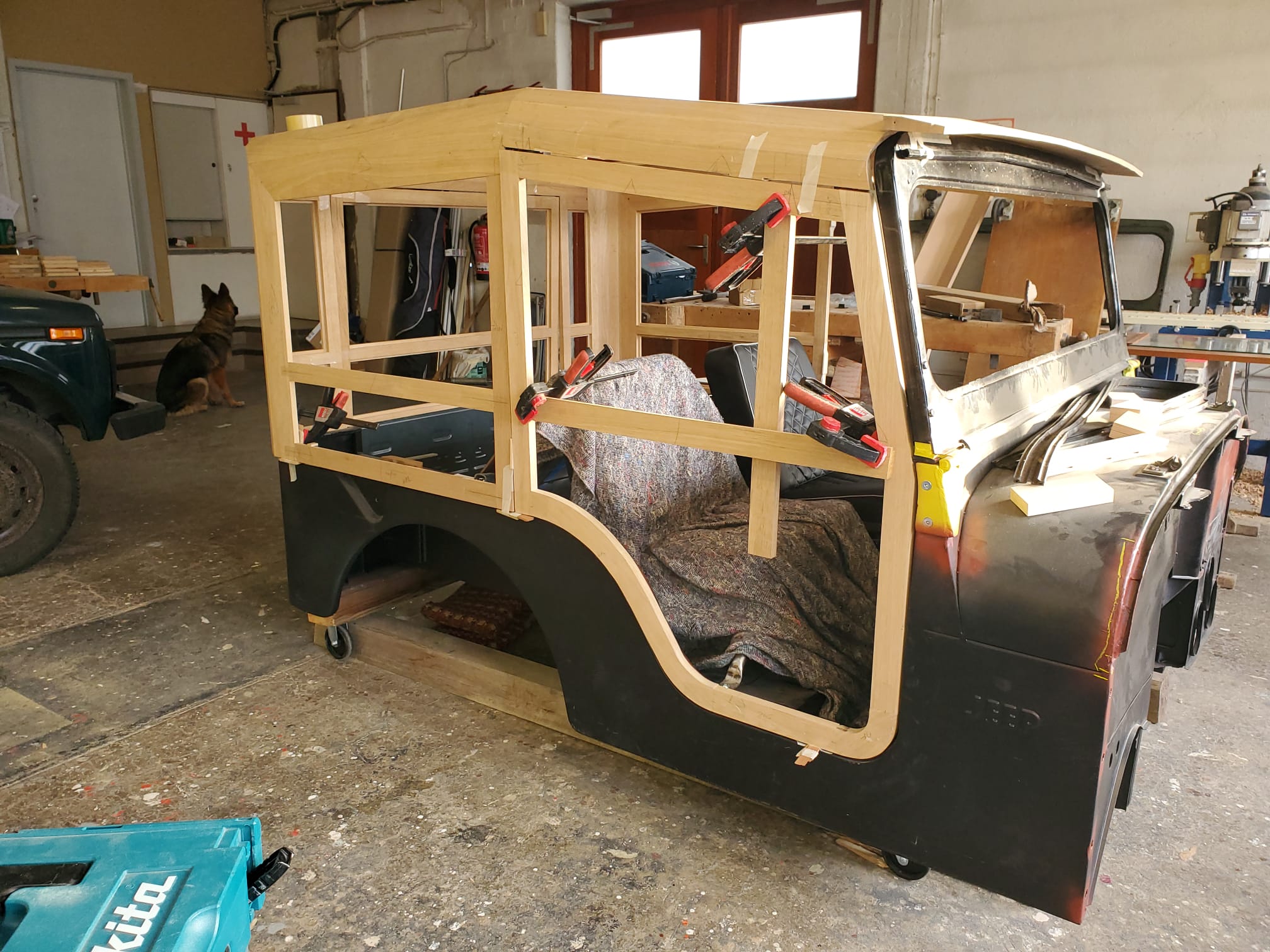
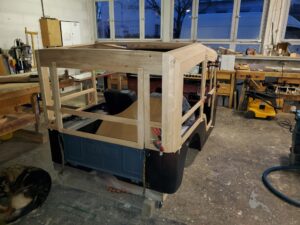
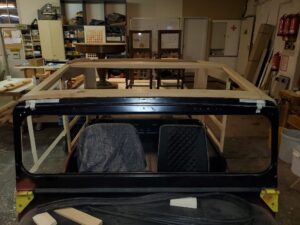
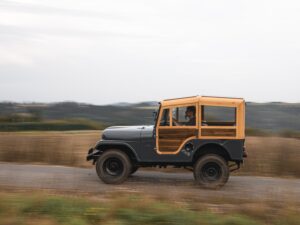
From the forest it is not far to timber, and so for building a hardtop the choice fell on exactly that material. How fitting. Together with joiner Alexander Lohr, a beautiful hardtop was created for the full Kaiser CJ5 restoration. The basic construction is of oak, and not veneered but solid wood, with the inserts of so-called fumed oak. For this the material is gassed with ammonia. The result is a lovely colouring of the wood, and with it a great contrast, and the wood also becomes less brittle, more resistant and sturdier. Exactly the right thing for this vehicle.
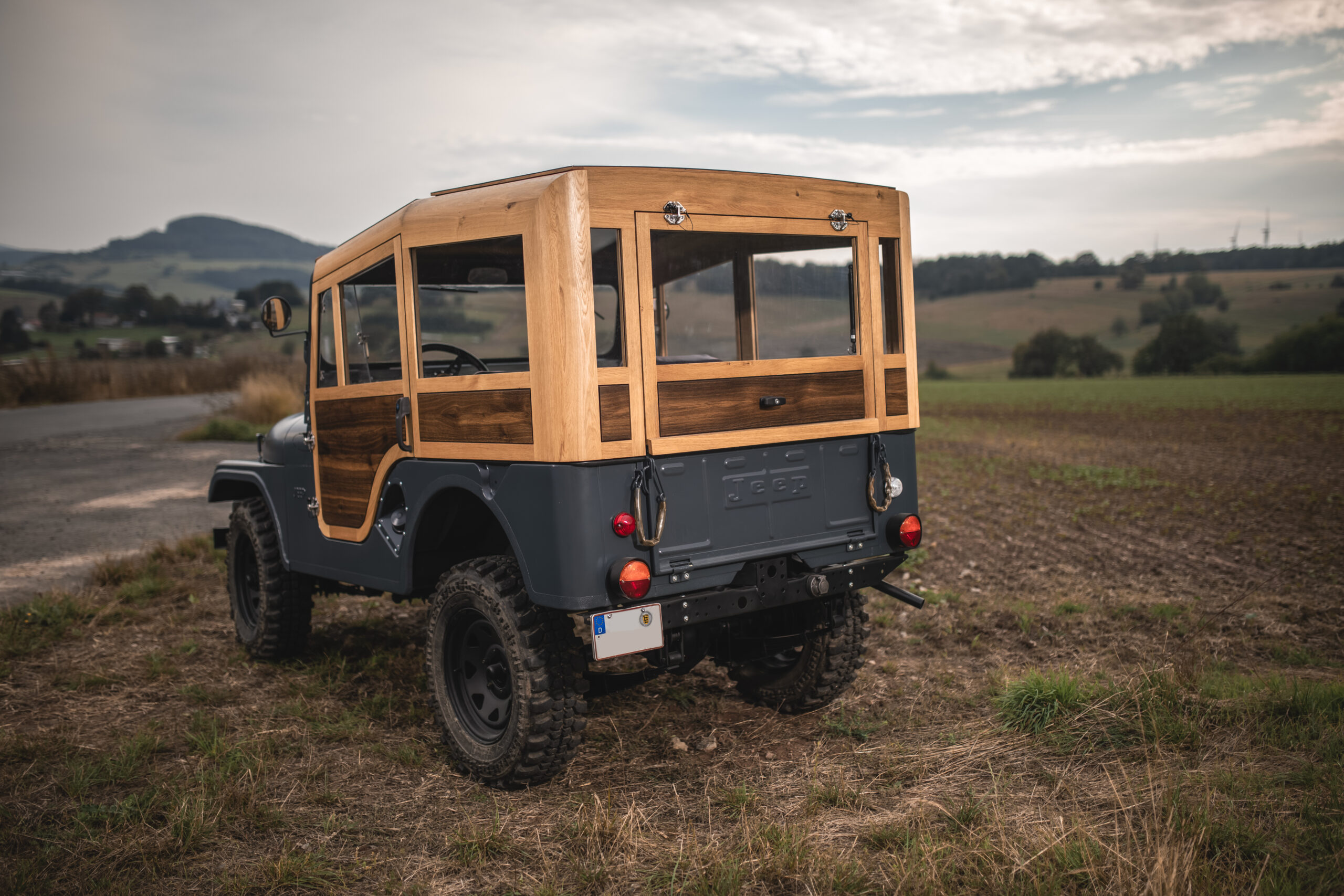
Fitting the wooden hardtop is genuine handwork, since, you can already guess it, even on such an old Jeep not all the measurements are quite exact. Numerous adjustments were needed. In total, countless hours of work went into this build alone.
The current owner came into contact with off-road vehicles from earliest childhood
Wolfgang grew up at the foot of the Black Forest. The family home, with an attached forestry business, lay in the woods, and so off-road-capable vehicles were a necessity. In the early days, quite classically, a Unimog and a Lada Niva. Both had a formative effect on him. At 16 Wolfgang was already competing in the German off-road championship, and he has stayed loyal to the Unimog to this day, being a driving instructor for the manufacturer, and perhaps one or two of you have taken the passenger seat next to him at the Unimog Museum in Gaggenau.
But Wolfgang has also always been a Jeep fan. He got to call several Hotchkiss and, the original, a Willys Jeep, as well as a Mahindra, his own. They all had one thing in common: they were fairly cramped inside, and so he had always had an eye on bigger Jeeps like the CJ5. This one then came as a Kaiser CJ5. And as a tractor substitute for the forest, at that. At the time it was acquired from the armoury out of Swiss Army stocks, this vehicle was already 30 years old.
After around 20 years of forestry use, the Jeep by now a proud 50 years old, a decision had to be made. Sell or restore. Wolfgang remembered his youth, and so the choice for a new vehicle concept fell at first on the Niva. It was to be extensively converted for forestry work. That was the point where Andreas Korbach came into play. And you already know the rest of the story.
We wish the owner many more great experiences with this successful vehicle
After its full restoration and modification, the Jeep is lovely to look at, and it is functional too. The vehicle is well worth seeing and shows that an off-road vehicle can be technically flawless, a treat for the eyes and everyday-capable, a workhorse, all at once.
And here are a few photos of the full Kaiser CJ5 restoration
You can find more photos of this full Kaiser CJ5 restoration and other builds by Andreas Korbach on Instagram at Andy Beddong.
© Photos: Andreas Korbach, Kai Schneidewind