

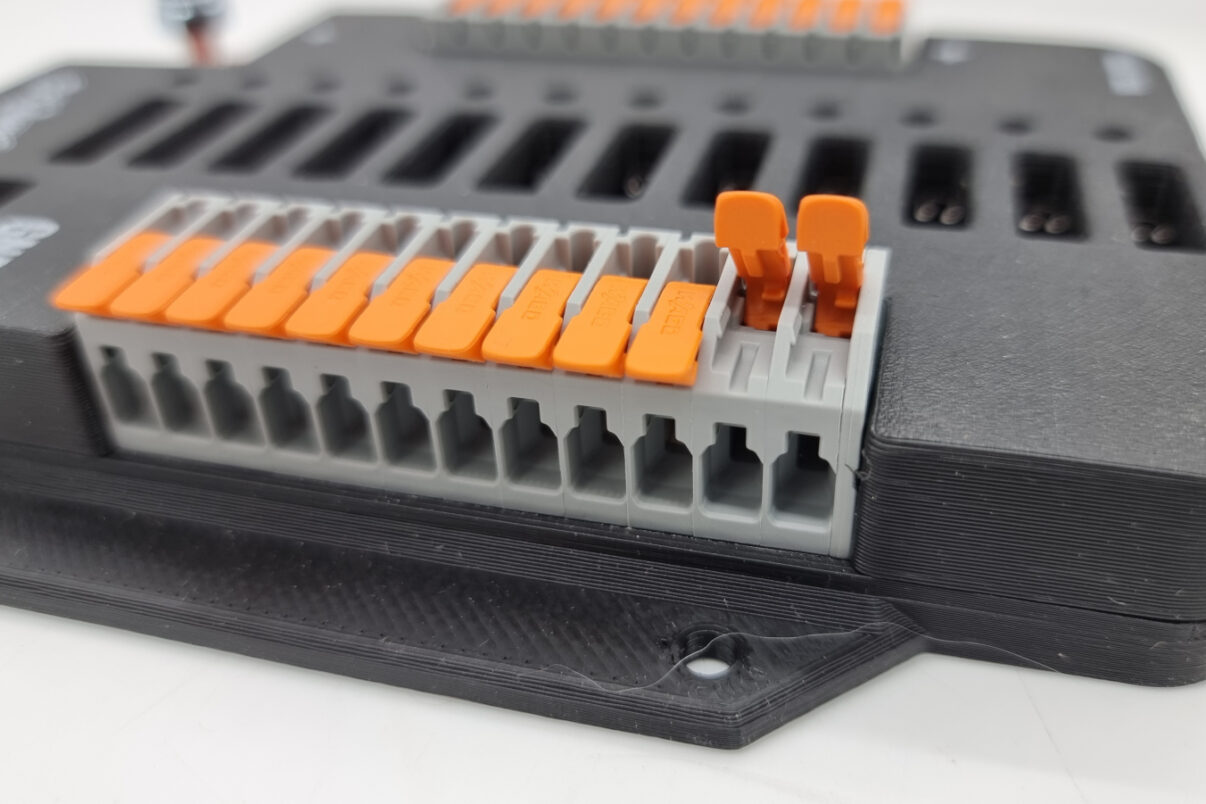

Who doesn’t know the popular WAGO terminal? Originally meant for house wiring, it has found its way into vehicles too. It isn’t right everywhere there, but for interior builds it’s perfect. Now this simple system is available as a fuse distributor with a WAGO terminal.
In vehicle building, only stranded conductors may be used, because unlike rigid conductors they don’t tend to break. That repeatedly leaves vehicle builders and DIY enthusiasts with the problem: how do I extend a cable or make connections? Done properly, you then have to extend with a butt connector or fit a suitable contact. Both are done by crimping. Crimping in turn needs the right tool, which isn’t always cheap to get. And there are so many different crimp types and sizes that a few more crimping pliers may be needed.
You can read more in our article on crimping and connecting: Crimping done right.
WAGO, the solution!?
What a blessing the well-known WAGO terminal is here. It can and may clamp stranded conductors, which isn’t the case with other terminal systems. Normally only rigid conductors may be clamped, because the strands can give and the screw-based clamp (a chocolate-block connector, say) then works loose. Not so with the WAGO terminal. It’s spring-loaded and so keeps the clamping pressure up. With it you can create extensions and distributions beautifully. It comes in 1:1, 2, 3 and 5 versions.
What wasn’t possible until now, though, was making a connection to a fuse distributor with it. At the latest here you had to crimp a contact again. The BlueSea fuse distributors are a good example, requiring round cable lugs.
The FUSY fuse distributor with a WAGO terminal
That’s now possible too. With the FUSY fuse distributor you can now do your fusing with ATO blade fuses and your distribution via a WAGO terminal. All you need is a wire stripper or similar. The stripped end is then simply clamped to the fuse distributor via a WAGO connection, and done!
As an extra help, the distributors with more than one fuse have a status LED for each connection, so you can quickly spot a blown fuse. That lets you set up your device distribution and fusing quickly and safely in your cabin or vehicle interior.
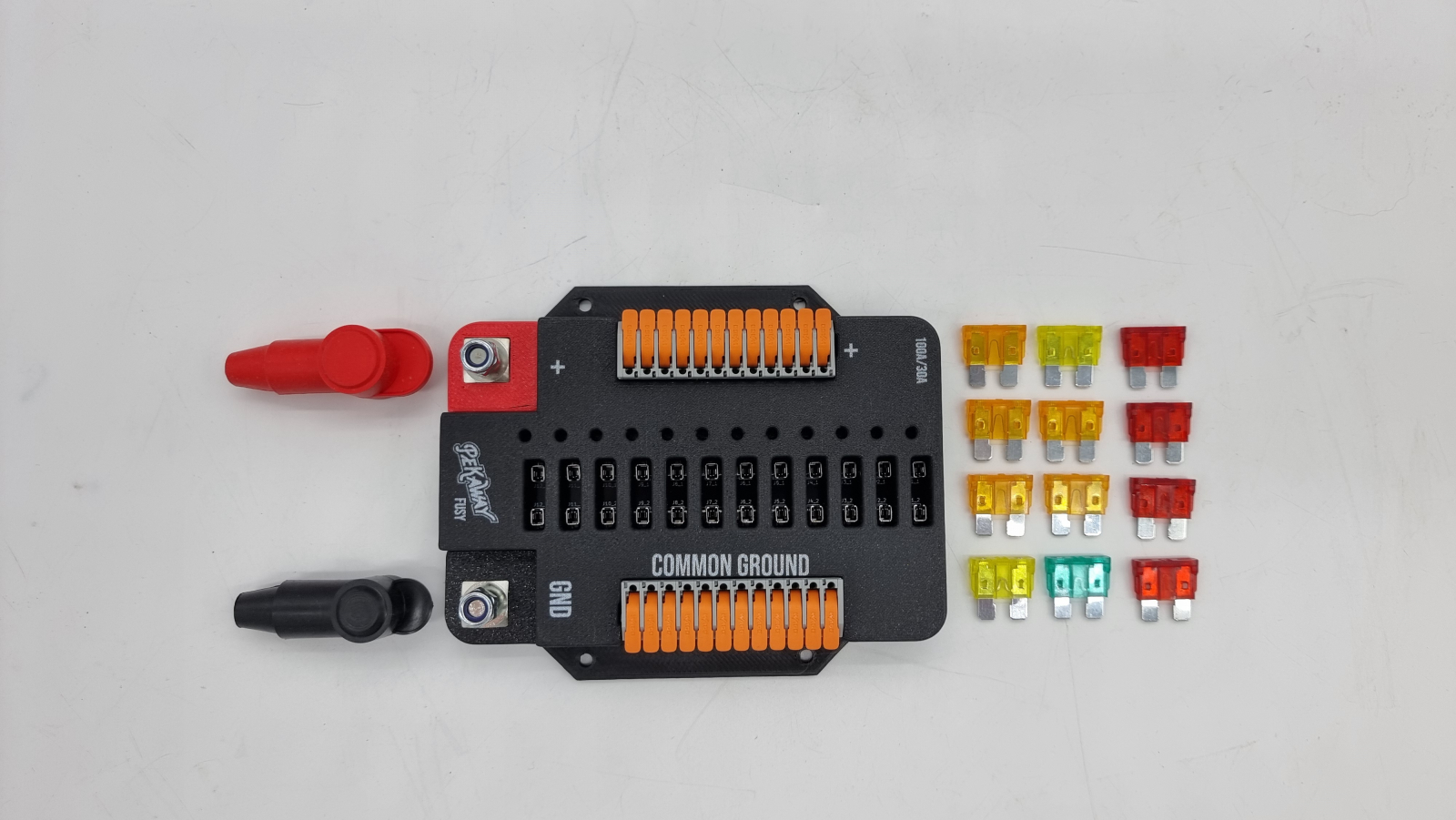
Several versions available
The distributors come in various versions. Except the Micro version, they all have an earth connection too. You can use it to return the load’s earth. That’s needed when there’s no earth point on the vehicle in your installation. In general it’s also advisable not to use the vehicle earth, since it’s prone to grime and interference, which encourages corrosion and can cause problems if you’re set up with a starter and a leisure battery. Battery monitoring is easier this way too.
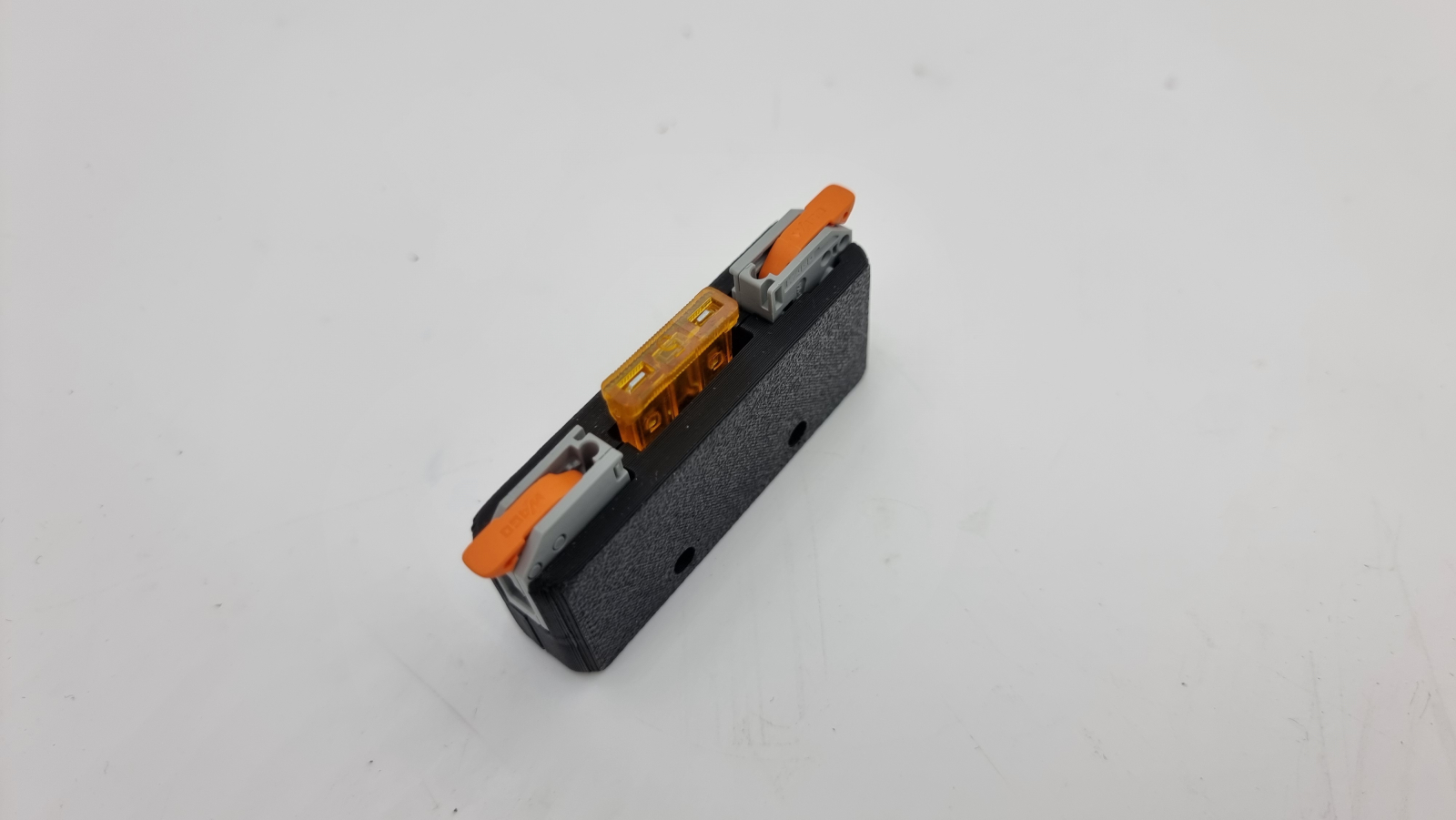
- FUSY Micro: this is an inline cable fuse. There’s one input and one output, with the fuse in between.
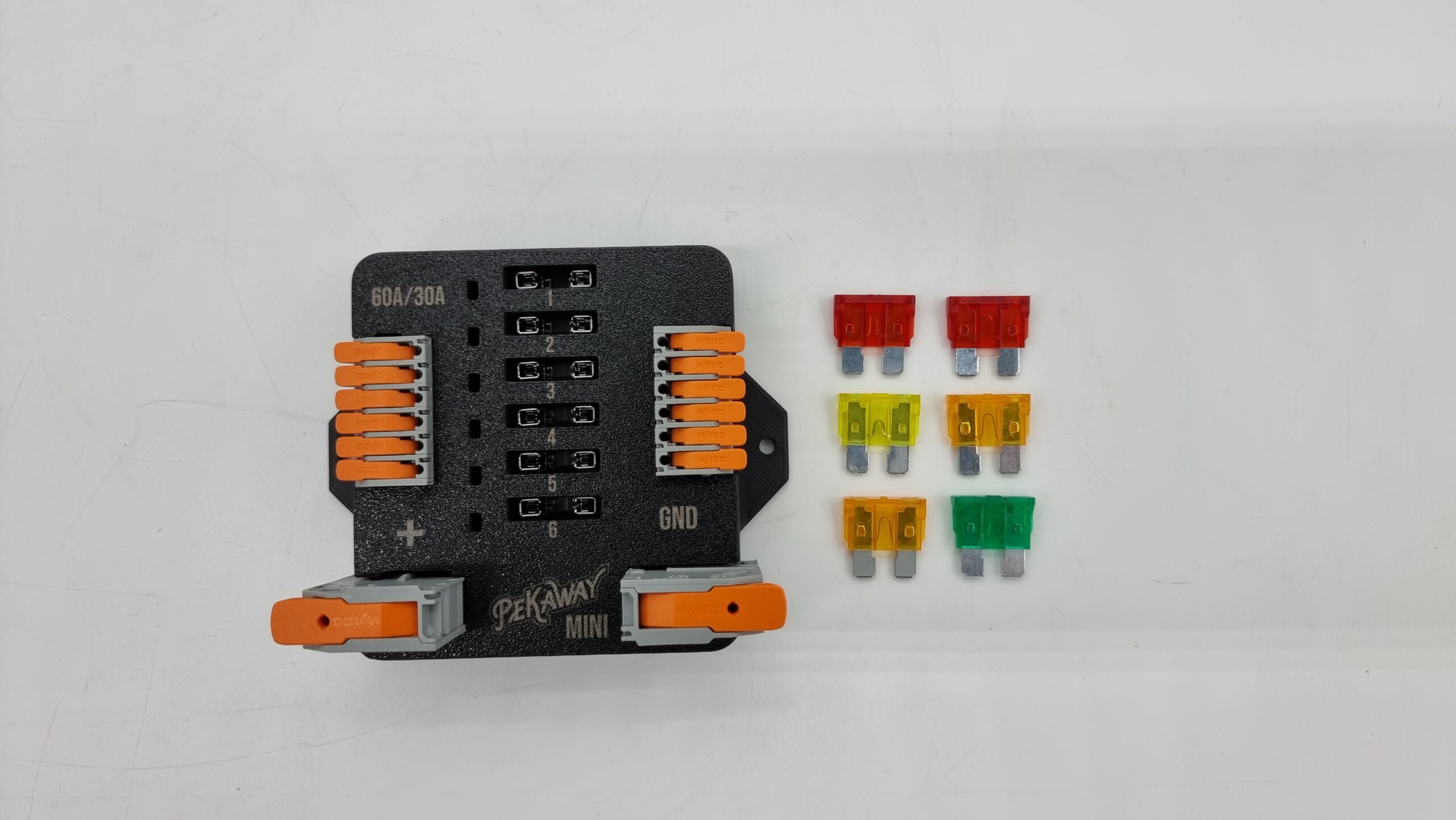
- FUSY Mini: a 6-way distributor with an earth connection. The power feed and the earth connection are also done via WAGO terminals.
- FUSY 100: a 12-way distributor with an earth connection. Because of the higher possible currents, the power feed and earth connection use screw contacts. Here the connection may have to be crimped. The distribution runs via the WAGO terminals.
The clamping range is 0.4 to 4 mm2. Each individual connection can take up to 30 amps. On the FUSY Mini the simultaneous maximum load is 60 amps, on the FUSY 100 it’s 100 amps. The Mini and 100 also have a status LED that makes a failed connection easy to spot.
Where to buy: Scheinwerfer LUXX
Price: 9.90 to 99.90 euro incl. VAT.
Note: As a rule, non-crimped connections like the WAGO terminal should only be used in dry areas. They aren’t suitable for mounting outside the vehicle interior or cabin, as they don’t make waterproof connections. Water can then get into cables and possibly devices via capillary action.
© Photos: Draussenliebe GmbH