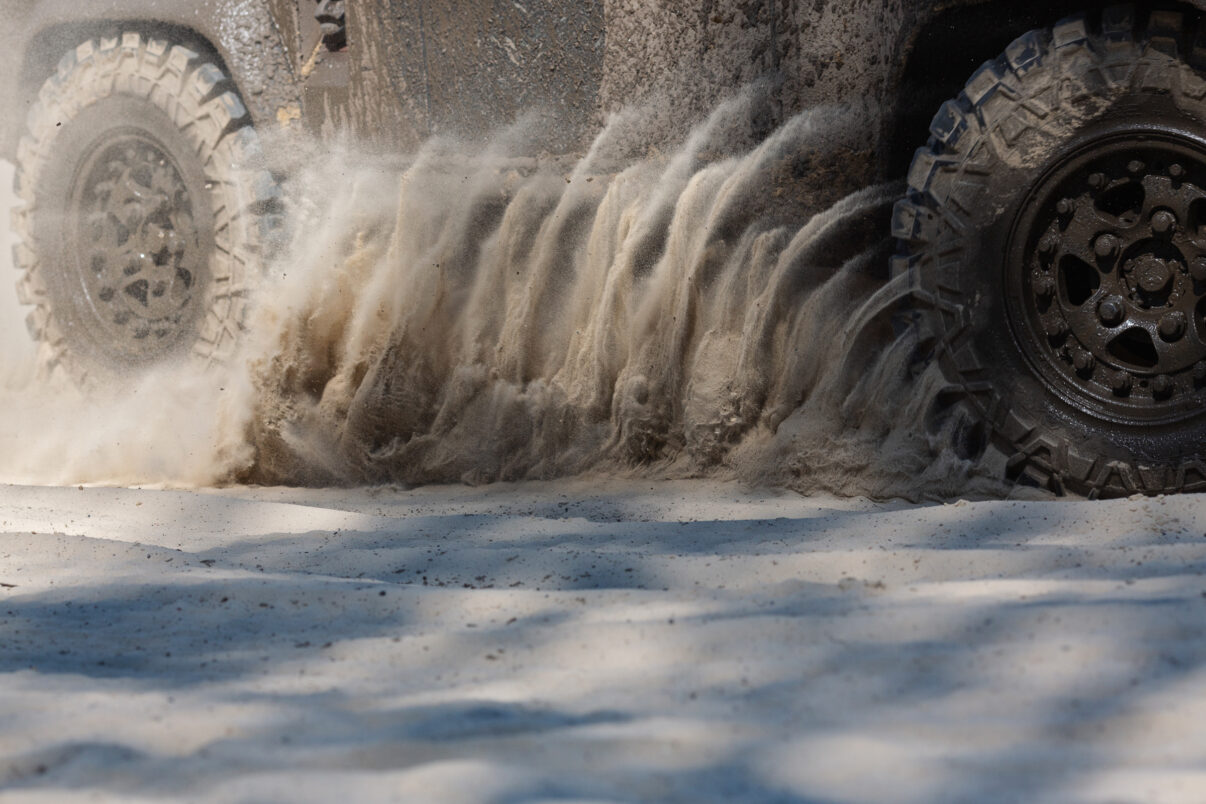

The new EURO 7 emissions limits take effect at the end of 2026. The term exhaust limits now falls short, because brake and tyre wear are taken into account too. Many people are now asking what this means for them, especially at the German MOT.
In July 1992 the first uniform exhaust emissions rules within the European Union started, EURO 1. From an environmental view it’s quite a success story, with 90% of the nitrogen oxides and particulates from new vehicles cut over the good 34 years since. Now EURO 7 is on the doorstep, and it can fairly be seen as a major expansion. It now also takes in the particles from brake and tyre wear, which means electric and fuel-cell vehicles fall under the limits too.
But as so often, simple isn’t an option, so there are again numerous deadlines, which also differ between exhaust, brake and tyre wear.
When the EURO 7 limits start
From when do the rules of regulation 2024/1257, generally called EURO 7, apply? As always, you have to tell apart type approval by the maker and registration of the vehicle for road use by the owner. On top of that comes the difference between exhaust and brake emissions and tyre wear.
EURO 7 applies to the vehicle maker and its light cars and commercial vehicles (vehicle classes M1 and N1) from 29 November 2026. A year later, from 29 November 2027, EURO 7 also applies to first registration for road use by the vehicle owner. Heavy commercial vehicles and buses (vehicle classes M2, M3, N2 and N3) are affected on the maker’s side from 29 May 2028 and at registration from 29 May 2029.
These dates concern the exhaust figures and brake wear. For tyres there are different deadlines. The full rules and figures are in regulation VO (EU) 2024/1257. The EURO 6 limits are in regulation 715/2007.
Which exhaust limits apply with EURO 7
The nitrogen oxide and exhaust particulate limits stay the same as EURO 6 for cars and light commercials (M1, N1). But the particulate limits now apply to all petrol vehicles, whereas before they only applied to direct-injection engines. The particle size measured also drops from 23 to 10 nanometres thanks to technical improvements in the measuring kit, so more particles will be captured in future.
Differences between EURO 6 and EURO 7, vehicle class M1
| Pollutant | EURO 6e petrol/diesel | EURO 7 |
|---|---|---|
| Nitrogen oxides NOx | 60 / 80 mg/KM | 60 / 80 mg/KM |
| Carbon monoxide CO | 1.000 / 500 mg/KM | 1.500 / 500 mg/KM |
| Particle number PN | 6 x 10¹¹ from 23 nm (PN23) | 6 x 10¹¹ from 10 nm (PN10) |
| Particle mass | 4,5 mg/km | 4,5 mg/km |
Differences between EURO 6 and EURO 7, vehicle class N1 I (kerb weight up to 1,280 kg)
| Pollutant | EURO 6e petrol/diesel | EURO 7 |
|---|---|---|
| Nitrogen oxides NOx | 60 / 80 mg/KM | 60 / 80 mg/KM |
| Carbon monoxide CO | 1.000 / 500 mg/KM | 1.500 / 500 mg/KM |
| Particle number PN | 6 x 10¹¹ from 23 nm (PN23) | 6 x 10¹¹ from 10 nm (PN10) |
| Particle mass | 4,5 mg/km | 4,5 mg/km |
Differences between EURO 6 and EURO 7, vehicle class N1 II (kerb weight from 1,280 kg to 1,735 kg)
| Pollutant | EURO 6e petrol/diesel | EURO 7 |
|---|---|---|
| Nitrogen oxides NOx | 75 / 105 mg/KM | 75 / 105 mg/KM |
| Carbon monoxide CO | 1.810 / 630 mg/KM | 1.810 / 630 mg/KM |
| Particle number PN | 6 x 10¹¹ from 23 nm (PN23) | 6 x 10¹¹ from 10 nm (PN10) |
| Particle mass | 4,5 mg/km | 4,5 mg/km |
Differences between EURO 6 and EURO 7, vehicle class N1 III (kerb weight from 1,735 kg to 3,500 kg)
| Pollutant | EURO 6e petrol/diesel | EURO 7 |
|---|---|---|
| Nitrogen oxides NOx | 82 / 125 mg/KM | 82 / 125 mg/KM |
| Carbon monoxide CO | 2.270 / 740 mg/KM | 2.270 / 740 mg/KM |
| Particle number PN | 6 x 10¹¹ from 23 nm (PN23) | 6 x 10¹¹ from 10 nm (PN10) |
| Particle mass | 4,5 mg/km | 4,5 mg/km |
EURO 7 and off-road tyres
The question we naturally ask ourselves is whether EURO 7 has consequences for off-road tyres. MT tyres in particular often have softer rubber compounds that wear faster.
Here you first have to draw a distinction. While EURO 7 applies to the whole vehicle, tyres come with more generous deadlines. For off-road vehicles, the tyre types that mainly matter here are C1 (cars, SUVs) and C2 (light commercials). C2 tyres in Europe often carry the “LT” marking for “Light Truck”.
Type C1 tyres only have to meet the limits set in EURO 7 from 1 July 2028. Tyres that don’t meet these requirements then may no longer be registered from 1 July 2030 and no longer sold from 30 June 2032.
For type C2 the dates are 1 April 2030 and 1 April 2032, with the sales stop from 1 April 2034. In practice this means a new vehicle from 2027, registered under EURO 7, may still have tyres that don’t yet meet the EURO 7 requirements. In short, while the EURO 7 exhaust standards and brake emissions already bite on the dates named above, there are longer deadlines for tyres.
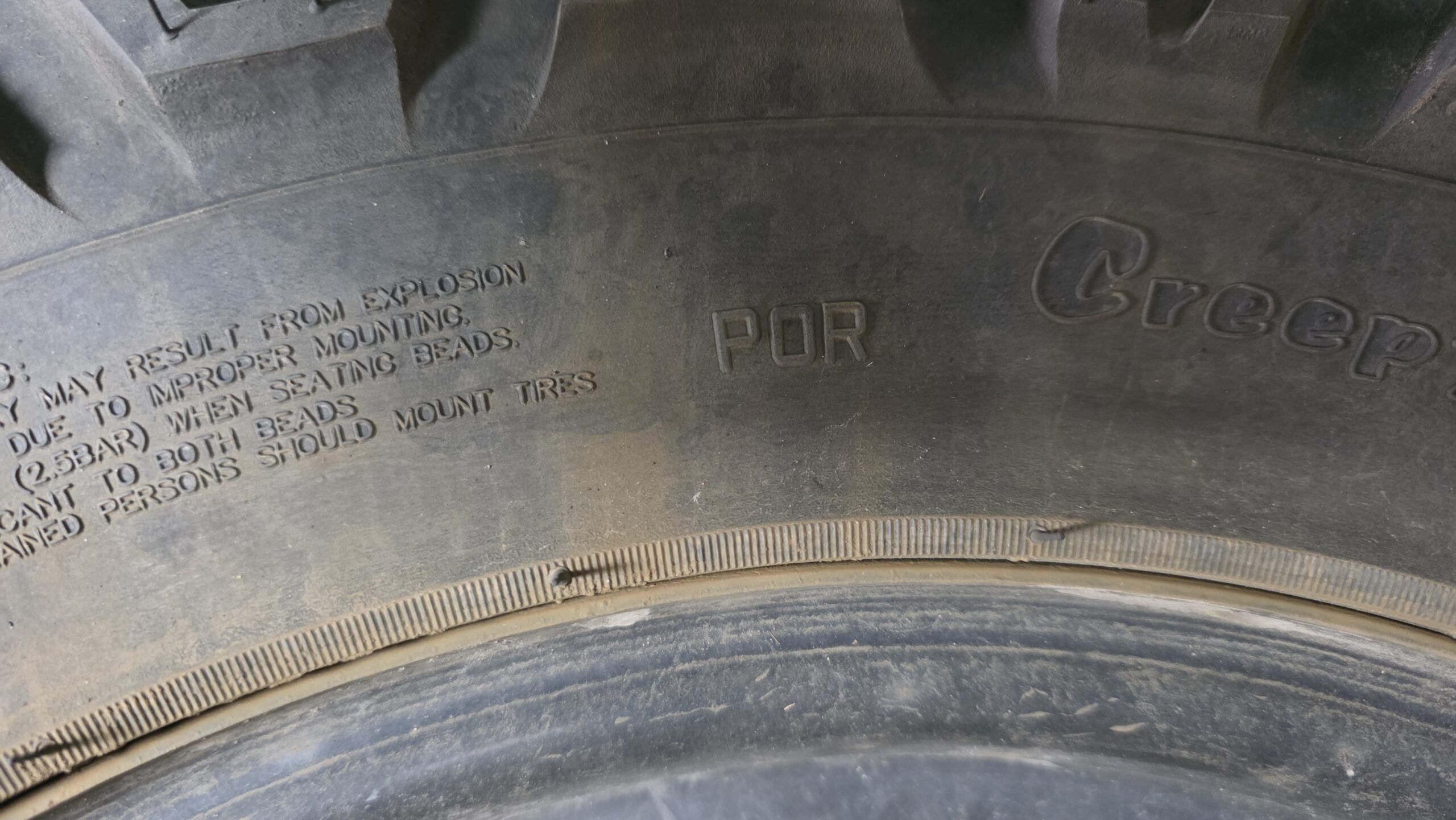
POR tyres stay exempt
The EURO 7 regulation refers here to the tyre definitions of UN-ECE R117, which also governs the noise emissions and wet grip of tyres. The good news is that pure off-road tyres, for example with the POR (Professional Off-Road) marking, are exempt from the rule. These are tyres for “hard off-road use”, in the words of the rule, that have to meet the following criteria: for class C1 and C2 tyres, a negative tread ratio of more than 35% (the gaps between the tread blocks), a minimum tread depth of 11 millimetres and a top speed rating of “Q” or lower (max. 160 km/h). That should apply to many MT tyres.
AT tyres could lose off-road ability
With ATs it gets trickier. They’re likely to get tamer over time, because it gets steadily harder for the tyre makers to meet the limits. It remains to be seen how the 50:50 AT tyres that we off-roaders like to use will develop. Market figures are hard to come by, because as AT tyres they vanish into the 4×4 and SUV statistics and aren’t recorded separately as off-road tyres by the associations at all. The segment grew recently, but that’s down to the rising number of SUVs, which tend to use more road-biased AT tyres, often in a usage ratio of 60:40 or 70:30 road to off-road. What’s clear, though, is that the pressure on the tyre makers is growing from several sides.
What the tyre makers say
When we asked various tyre makers, the response was very modest. They don’t really want to show their hand. They can’t say anything yet about how Euro 7 will affect AT tyres, is the line. It’s too early, but they’re sure the tyres will meet all the requirements, including the conflicting, complex demands of a tyre fit for off-road.
How is wear measured in practice?
At the moment it doesn’t look like this will become part of the regular German MOT. That would be a costly, involved undertaking. The proof already has to come from the maker of the tyres and brake pads, so the tester only has to check the make and type, or some kind of marking, and assess the condition of the brakes and tyres.
For the makers themselves, the proof methods aren’t fully settled yet either. For tyres it’s heading towards a road test, where the tyre weight is measured before and after a test drive and compared with the figures of a reference tyre. For brakes there’s to be a test rig with a closed container around the wheel, in which the wear is captured and measured. For now, capturing the emissions refers to global UN regulation 24.
Batteries go on the test bench too
With EURO 7 the minimum lifespan for the traction batteries of electric vehicles becomes a topic. The batteries have to still reach 80% of their original capacity after five years or 100,000 kilometres driven. After eight years or 160,000 kilometres the figure is fixed at 72%.