

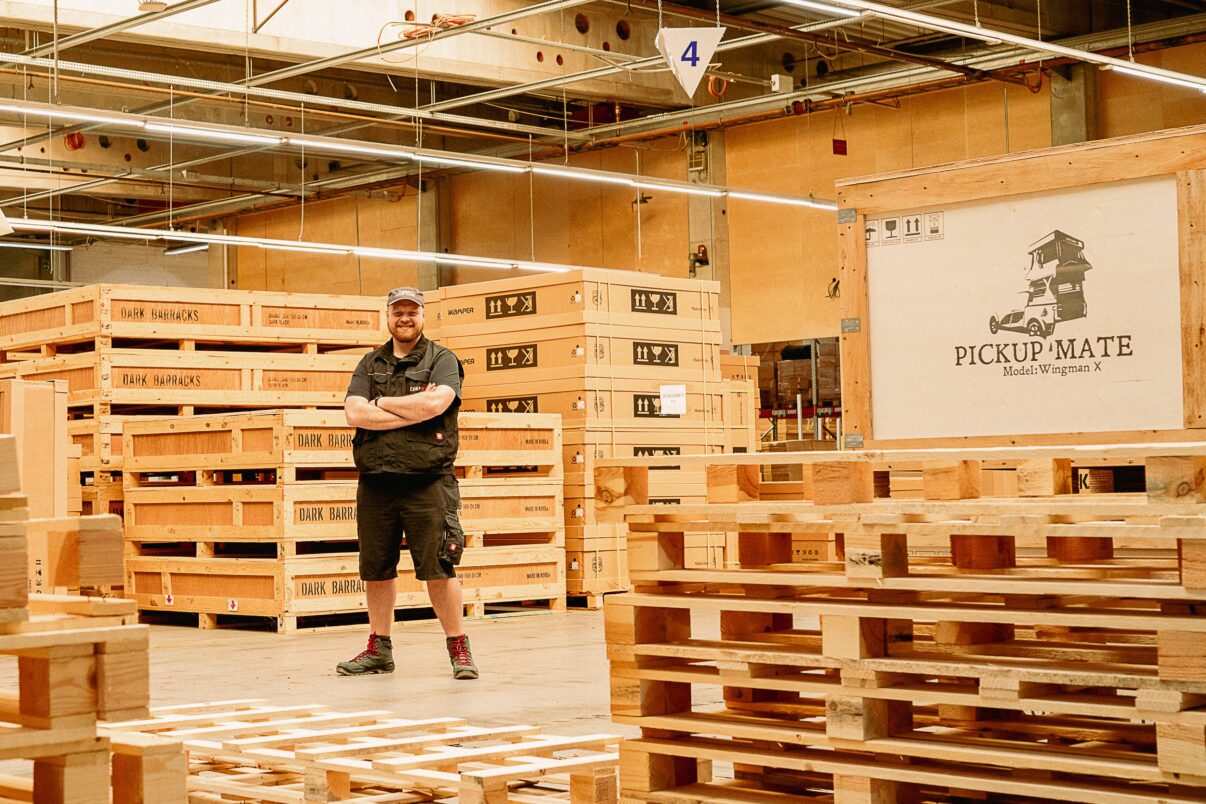

Advertisement: Michael Krämer founded Campwerk almost 17 years ago, and he still gets excited about every problem he gets to solve. We talked to him about good processes, his biggest flop and why a properly roasted chicken makes him really happy. And if he had to start all over again, he’d probably build a rocket.
Tell us how you came up with the idea of selling tent trailers.
Selling them? First I had to build them, invent them even, and that was the harder part. I actually come from a completely different direction. I trained as a computer scientist, then spent ten years in feature films doing visual effects for the cinema.
Then the financial crisis reached us late, because the projects always took so long to finance up front, and I switched to advertising. There I had to retouch split ends out of hair for a shampoo company, plus a few other jobs I didn’t enjoy one bit.
And because I’d built up so much overtime, I started something of my own and wanted to go camping with a tent trailer. I’ve always been a tinkerer and nothing on the market grabbed me, so I decided to build a trailer myself.
I’d always had something to do with importing. I started my first business at 16, and my dad still had to come with me to register it, because I wanted to sell light-up ballpoint pens on eBay. Someone had given me one, I thought it was really cool, and as a teenager I went on to sell thousands of those pens on eBay for more than five euros each.
Of course I first went online, still in the dial-up days, to see where you could get something like that. And the nice thing is, if you don’t know how it’s done but you’re willing and up for it, you’ll find a way. So I found a supplier in Asia, wrote to them in bad English and bought my first 100 pens, sent by air freight back then. Imagine what that cost! But I managed to sell them and made my money with them. I even went to trade fairs and got my first experience of exhibiting.
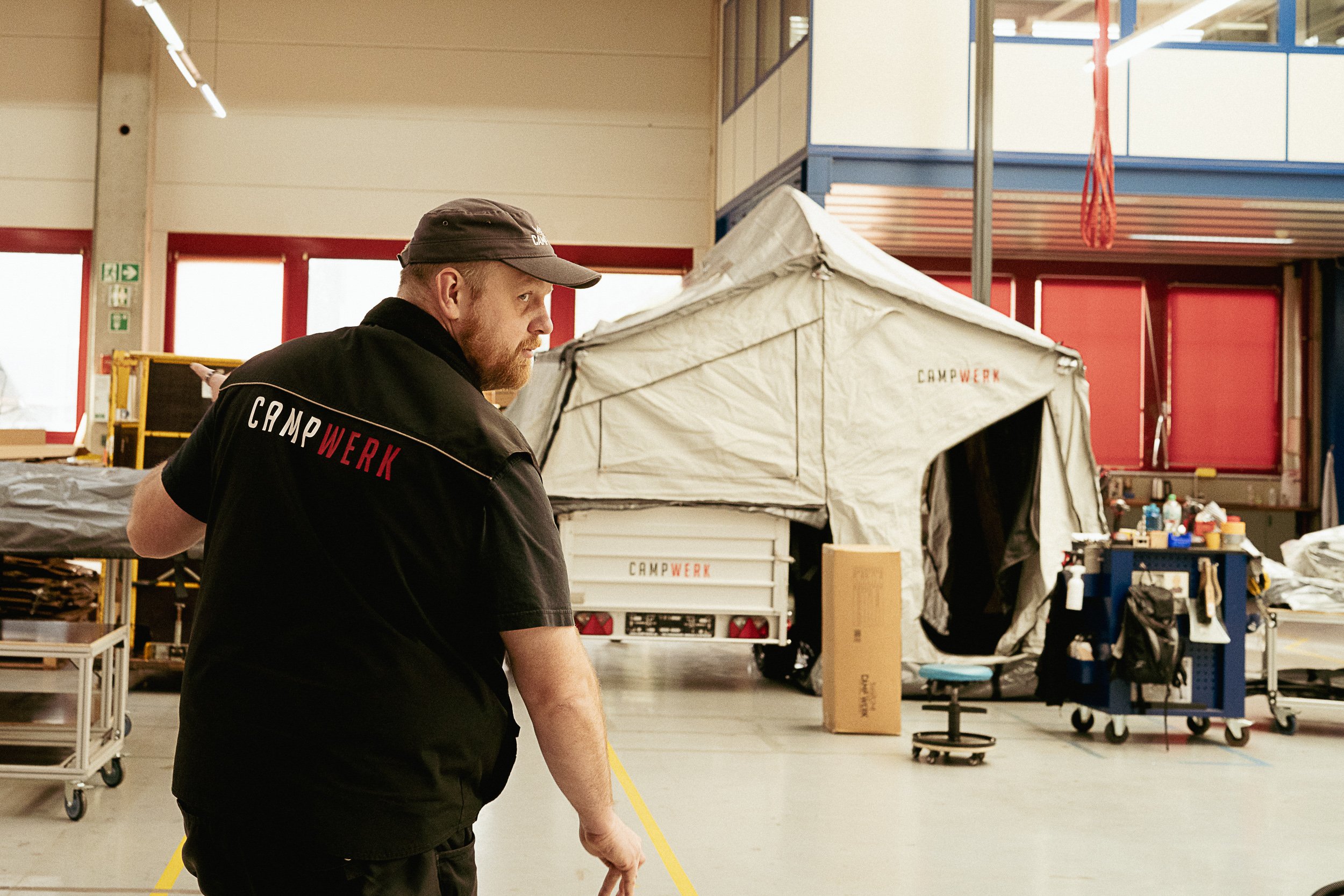
Back to the trailer. I thought, where could you get a tent like that made? Maybe something like it already exists? So I looked in Australia, because that’s where this way of camping comes from. I found a manufacturer there, had the tent imported and fitted it to my trailer. And being a media designer, of course I had the idea of putting out a brochure, maybe someone else would fancy one too. One thing led to another and I took my finished trailer to a trade fair.
Back then I assumed we wouldn’t sell tent trailers at all, only the materials, and people would build them themselves. I naively said: Great, I’ll probably sell ten of these trailer tents a year. But at the fair people practically stormed my stand and I sold 20 finished tent trailers, not kits. Only I had just the one trailer, and neither the space to build them nor the money to pay for them up front. So I took my handwritten orders to the bank, and they actually financed it.
The bank loan was in place. What happened next?
But then I had a tough decision to make. Do I carry on with media design or do I go into camping? Around that time a friend of mine emigrated to New Zealand and was looking for visual effects people for The Hobbit, a project everybody wanted to work on. A once-in-a-lifetime chance. So do you step into the thing you’ve known inside out for eight years, emigrating included? Or do you turn your side business into your full-time job? In the end my wife and I decided to build this business here.
So I rented a former drinks warehouse with 400 square metres and turned all my friends into employees. And then I got to build this company for 16 years, next year we’ll be in our 17th. That’s crazy. We’ve had five locations, five homes. We were in Mülheim at several sites and moved to Bochum because we’d got too big. Then Bochum got too small. Now we’re here in Velbert, in a building of our own.
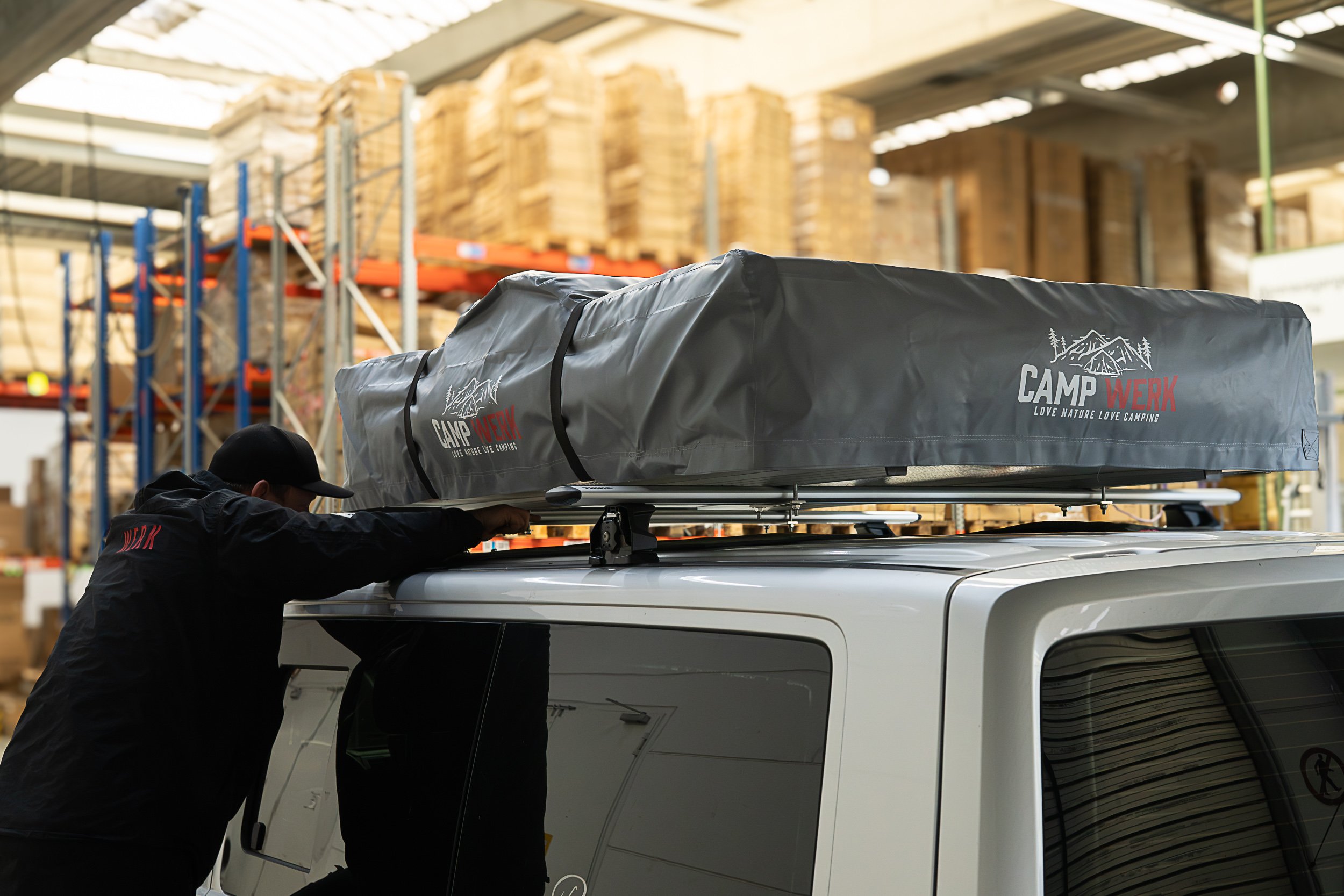
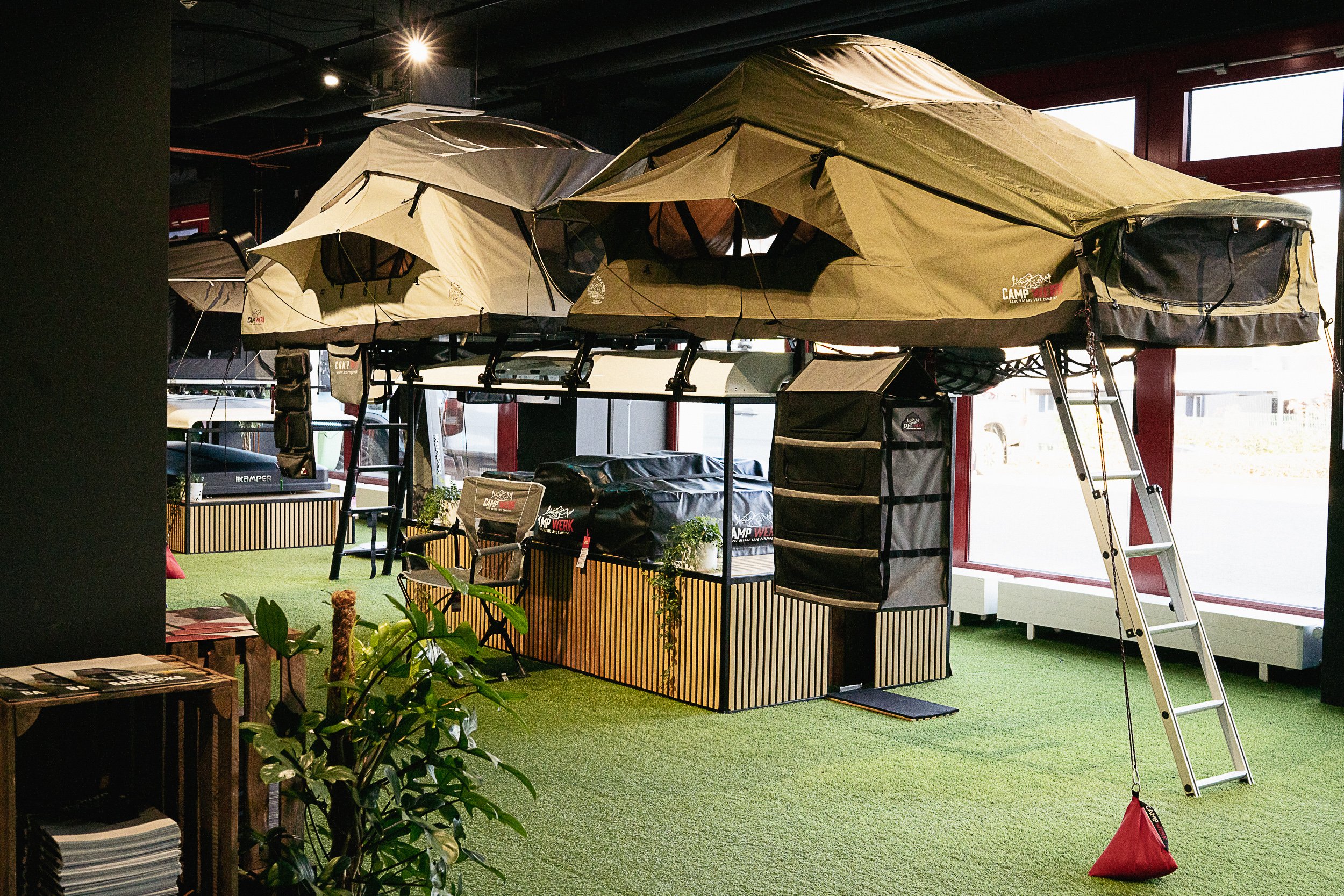
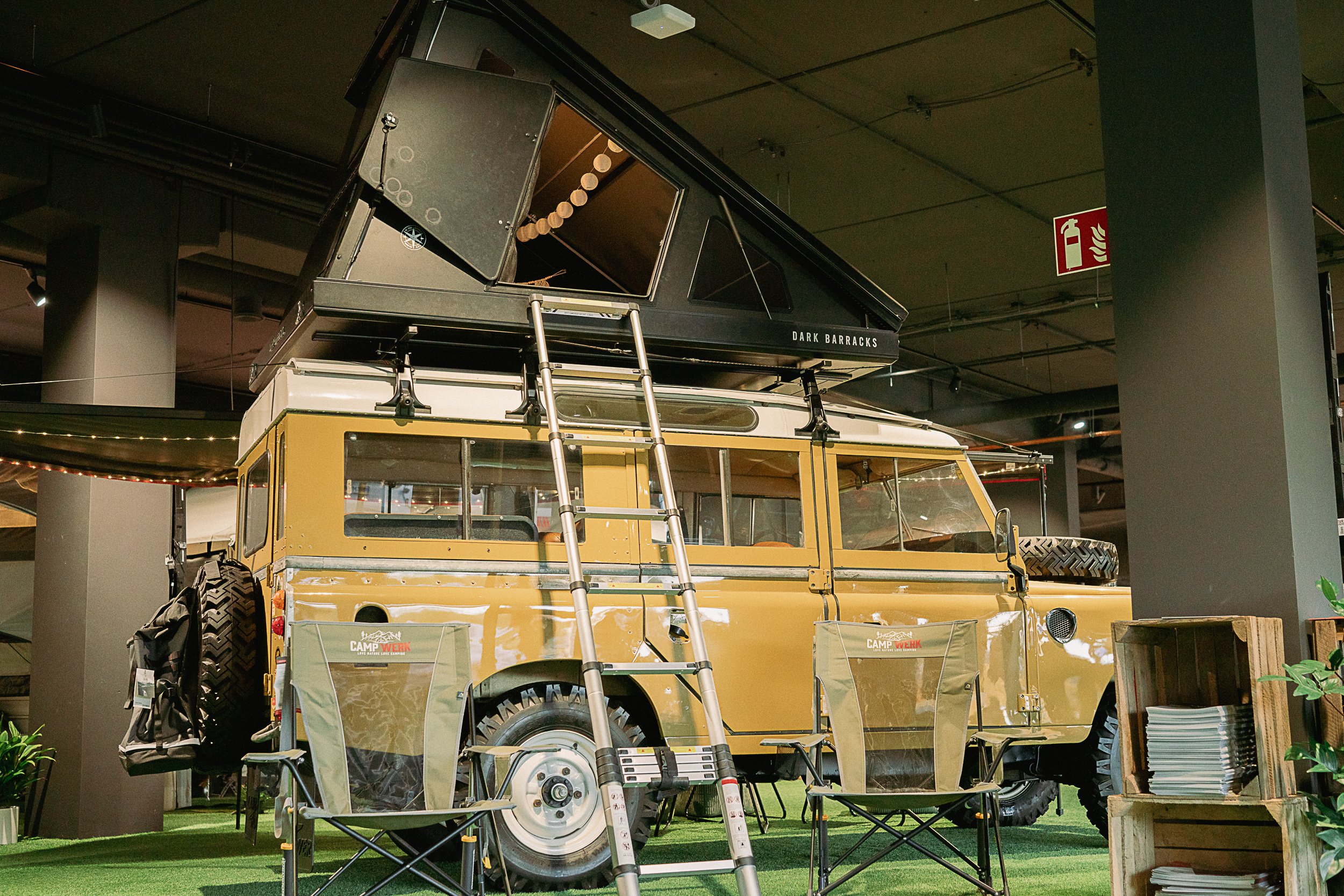
Roof tents came along fairly early, but the main idea was always tent trailers, off-road trailers and cargo trailers. Roof tents really got going for us in 2018, when we added iKamper to our range, the world’s first hybrid roof tent. I saw the tent in its Kickstarter campaign and said: I want that. I was an early backer, one of the first, and got in touch with them directly to say I’d love to bring them to Germany.
Let’s go back to the roots for a moment. That first tent trailer, what was it like?
We’d imported an Australian tent, because the Australian market was much further along than we were, put it on a trailer and decided it was crap. The way you set it up was awful. In most tents you stand hunched over, but I’m tall and broad, I need space.
So I went straight to the Asian manufacturer, because it was clear this wasn’t going to be a one-off. How do you get a manufacturer to make a small run of trailer tents with you that don’t end up a disaster? So I called the supplier and told them I’d like to change it. Naively they said yes, but they had no idea what they were letting themselves in for with me.
Okay, these days they’re grateful. I redesigned the whole tent, in Photoshop of all things, because that was a tool I knew inside out. I made drawings. They’d say things like, I need this longer, or this pole is pointless, I’ll leave it out. That’s how I turned into a sort of engineer myself. Why does the seam have to be there? How on earth do I get a waterproof roof window into my tent? The roof window was in there from the start, because I wanted to let the light in. I had to learn so much, try it out and improve it until it worked. Now I know 4,000 ways it doesn’t work, but I also know a few ways that work really well.
Was it just a trailer and a tent, or did it have a kitchen too?
I always wanted a tent trailer with a kitchen, with electrics, with all the bits. But first you had to source all of it, and it came from lots of different suppliers. And Australia drives on the left. If you build a kitchen there, it opens to the left, not the right. All of that had to be changed first, so the tent folds out onto the pavement at the roadside and not into the road.
I still remember building our first off-road trailer, it was a stainless steel box and an absolute monster. We built three of those, never again. But my motto to this day is to never give up when something doesn’t work. Work out what went wrong and keep trying and tweaking until it does.
You moved into the new hall in Velbert three years ago. Do you remember how it all started in your first drinks warehouse?
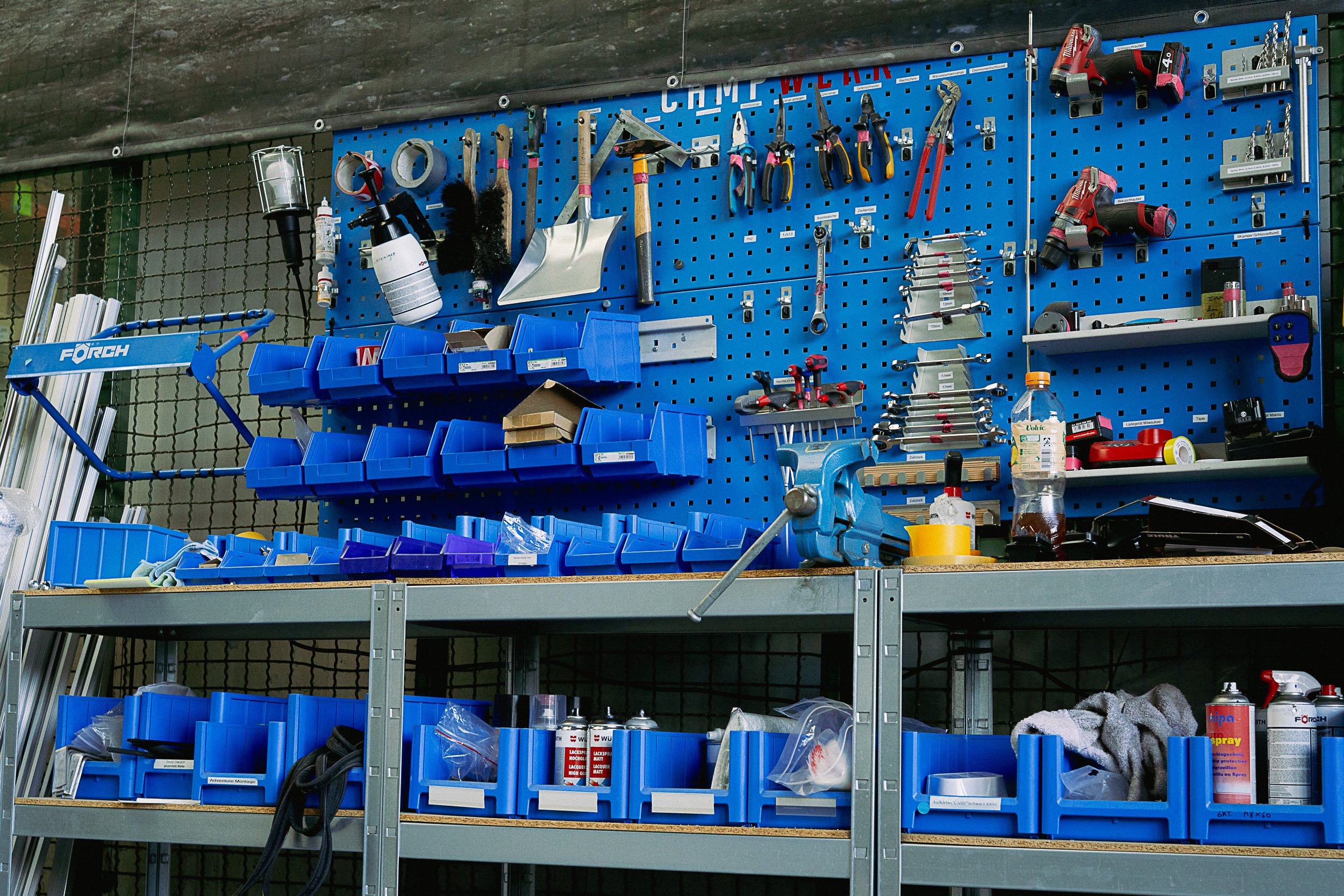
In the first hall we did everything. That’s when I first had to think about what a workshop should look like, a showroom, an office. The office was the size of this table, and I sat in it with a little hatch like a ticket booth to look out of. Pretty funny, really.
Then I thought about how to get it into series production, because now I had to build several trailers. Apparently I was very good at setting up workflows and processes, because the team took over production very quickly. Meanwhile I had to look after sales and marketing, after all I’d just founded a company and suddenly had wages and responsibility, and that’s a lot easier when you’ve got orders coming in.
You’re an IT guy, and you’d think people like that don’t much enjoy trade fairs. But trade fairs were always really important to you, weren’t they?
I may have trained in IT, but I’m interested in everything. Everything. One day I want to build a wind turbine. There’s no reason for it, I just want to do it. Huge, heavy on the tech, everyone says you’re mad. That’s the kind of thing I love.
And for me, trade fairs were always about one question, how do I reach people? Back then nobody bought such expensive products online, it all happened at trade fairs. We didn’t have an online shop until 2020, for any of our products.
Then in 2020 something happened that changed an awful lot. At that point we were doing up to 35 trade fairs a year. On 16 March, my birthday, we were in the middle of setting up at the Berlin fair when it was cancelled, along with every other fair. Overnight my entire sales channel was gone, and it was the only one I had.
I’m probably the only person who says: That’s brilliant. Because I had to find a solution, and that’s what I’m good at. So you clear everything you know out of the way and start thinking from scratch about what you can do now. It was a really great time for us, because we learned so much. We sold products over the phone, because that was the only point of contact left. We knew people didn’t want to sleep in a strange bed any more, only in their own. We did that really well, with Click & Collect and booked appointments, and we still do it today. Even if you want to visit one of our showrooms in Schwarzenbek, Halle (Saale), Rommelsried near Augsburg, Dörzbach near Stuttgart or Tynaarlo in the Netherlands, you need to book an appointment first.
16, almost 17 years of Campwerk, you’ve been through a lot. Tell us about one of your best moments.
There are lots of moments full of pride, but also awe. You’ve just walked through the hall with me. You can imagine the cost and effort behind buying a hall like this and fitting it out. That I get to do this, that it actually worked out, makes me really proud. And when I’m standing in one of those exhibition halls at the Caravan Salon and can say: You know what? My hall is bigger. Then you stand there and think, that’s pretty wild, and at the same time it fills you with a huge amount of awe.
I never thought Campwerk would get this big. And what I always love is how happy our customers are. They come back to the trade fair and tell us about their great holidays. And how many couples have gone on honeymoon with our roof tents or tent trailers! Easily more than 20 in the last 16 years. For us, that’s the best thing of all.
With every one of our sites I said, this is the last one, it won’t get any bigger. I’ve had seven sites now and said it every time. So I’m never saying never. I’ve got some pretty crazy ideas, too.
And the not-so-great moments?
I didn’t expect the camping industry to be such a tough one. Not everyone plays fair, and that’s annoying and sometimes it hurts a bit too. We don’t want to play like that, so we stay out of it.
If we’re talking about wild times, Covid was intense. Changing everything was the biggest risk we’d ever taken, and thank God it turned out well. But saying we’re going all in, I’m risking everything I’ve built, jobs included, that was intense. I always have a staff photo from the Christmas party hanging in my office. It hangs there for an important reason, because whenever I make a decision, I have to remember this is their bread and butter. A stupid decision I make now can affect them. That’s why I get tougher when we’re attacked. Then I fight like a bear. It’s not about my ego, I couldn’t care less about that.
Because really I’m one of those very cheerful, positive people. There’s one sentence that matters a lot to me in my life: Happiness is a choice. Just as important is the one from General Patton: A good plan today is better than a perfect plan tomorrow. A lot of business owners could take that to heart. I’m always nice and happy with everyone. If that isn’t returned, I don’t really care, because I’m still happy. I don’t let that kind of thing rub off on me.
Covid was still the most stressful time, because on top of changing everything you had the question: How do you get this sorted? How do you keep people apart in production? I don’t need that again. It would be nice to have a few quiet, boring years without any crises.
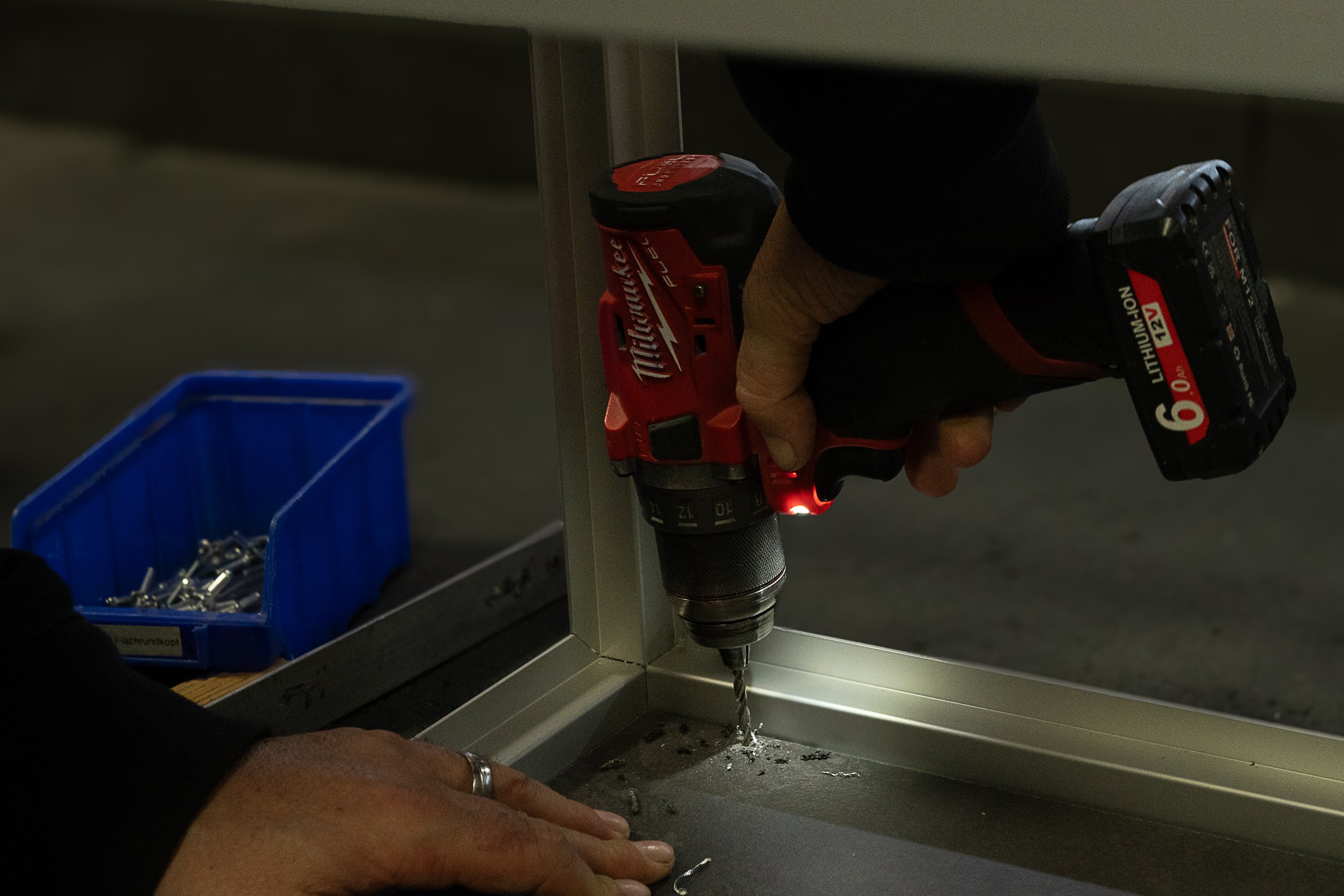
What are you working on at Campwerk right now?
I don’t work in the business, I work on the business. Otherwise we’d never have got this big. Honestly, for the last nine months I’ve been working on ideas for how we deal with people holding back on spending. Germany isn’t doing well right now, you have to be honest about that. How do we handle next year, what happens the year after? That’s my job, making sure everyone here has work to do.
I don’t have to explain to anyone how to fit a roof tent, the people here are much better at it than me. When you start here, you get access to a training course two weeks beforehand, where I explain where the loo is, where the light switches are, how to use the coffee machine, why you have to clean it and how often. I try to use training videos like that for almost every area, right down to what happens if the power goes off.
We started doing that shortly after Covid, when we realised it’s much easier to record something once than to have someone looking over a person’s shoulder. And because I’m interested in so many things, I’ve brought in lots of coaches over the years, one for every area of work.
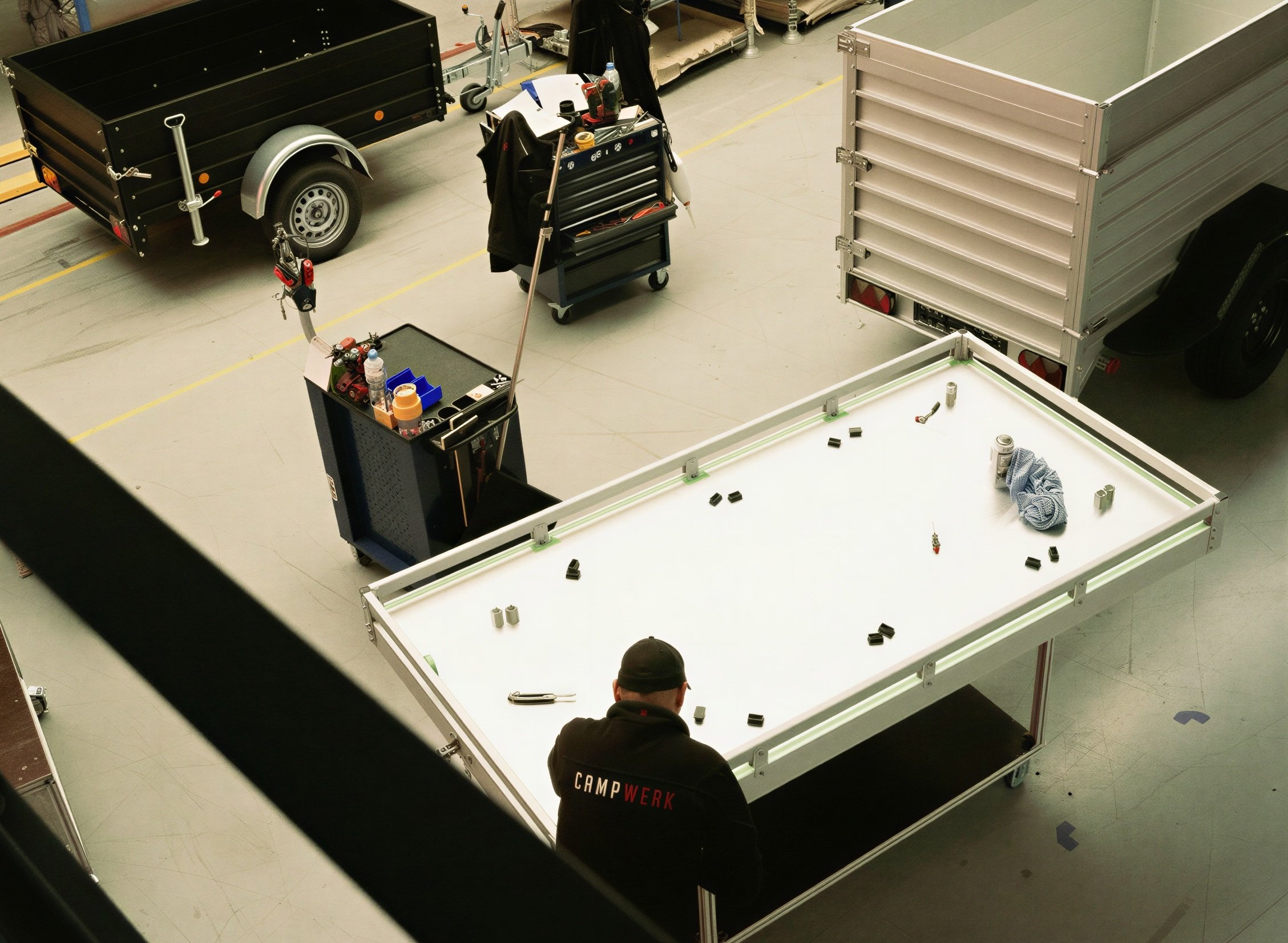
What happens here on site? Can you see a product go from sketch to finished part?
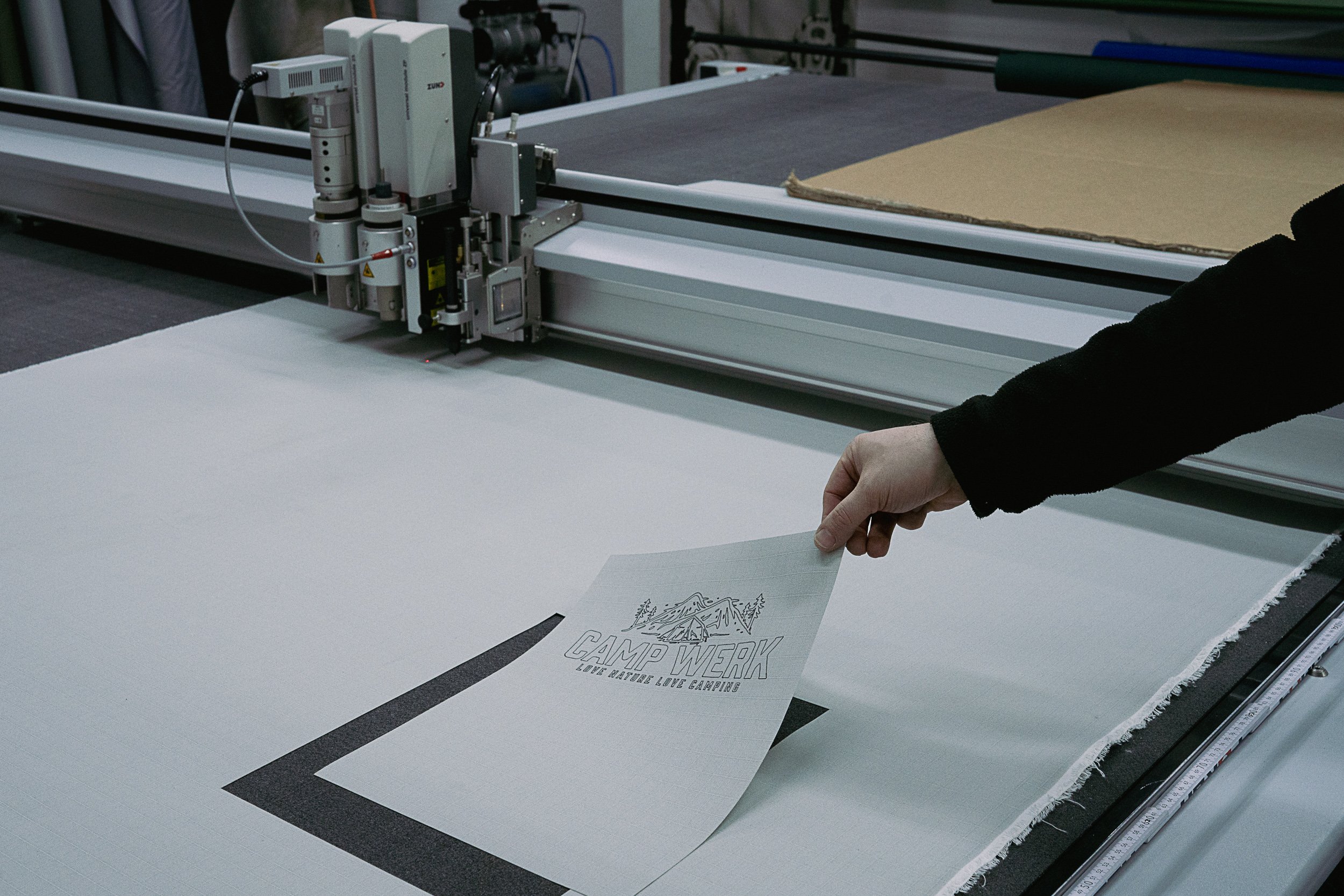
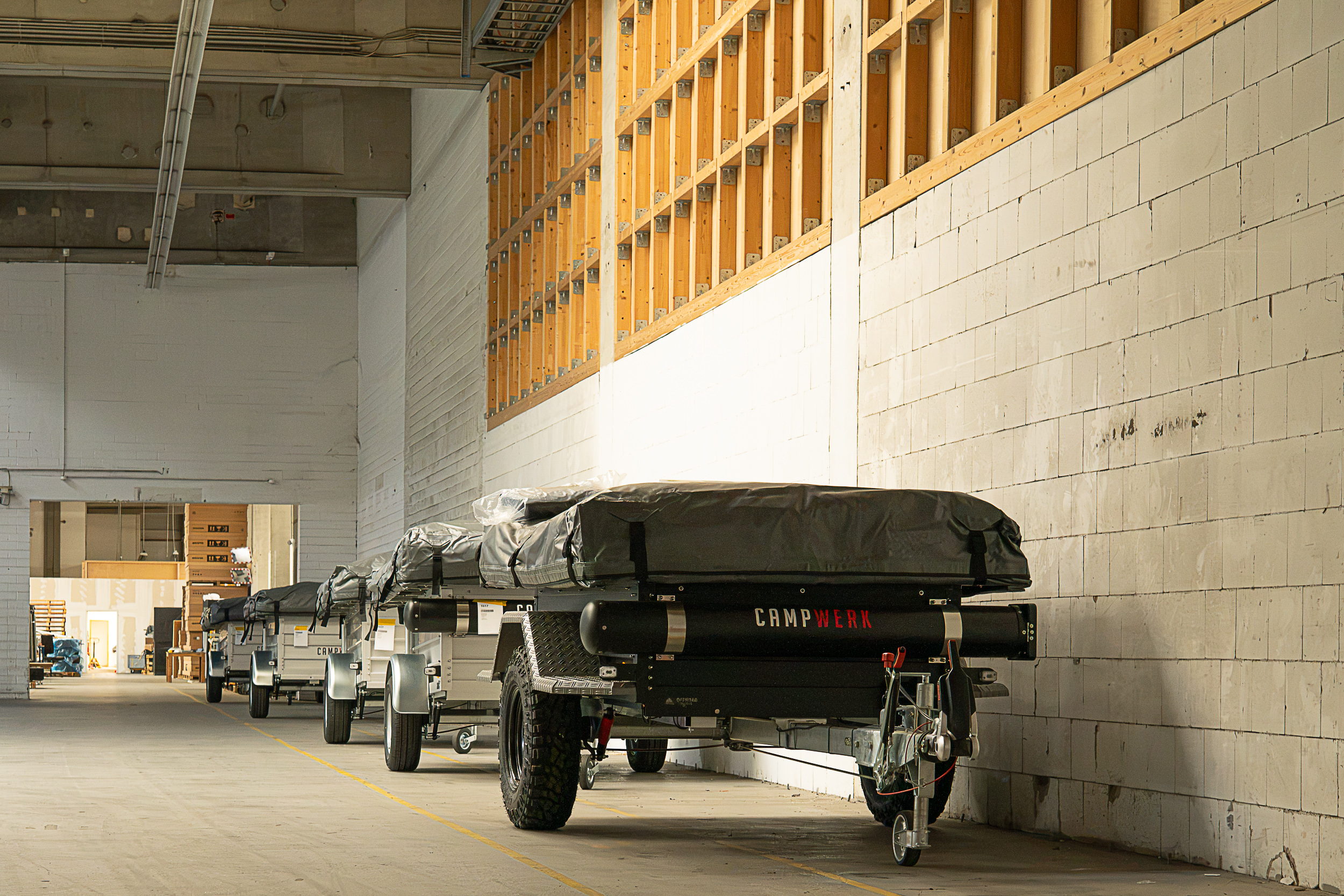
We do everything here, Velbert is our main site. Showroom, the whole back office with order planning, production, customer communication, trade fair planning, the vehicle fleet. Marketing is all here too, we make all our videos ourselves. Production is upstairs, that’s where we build the tent trailers and fit the roof tents. We can build up to six trailers a day. We also have a sewing room for small runs and prototypes. Development always comes partly from my own pen. We have a huge pool of ideas and have put a lot of work into protecting them right from the start. We hold lots of patents for new technologies that we can bring out bit by bit.
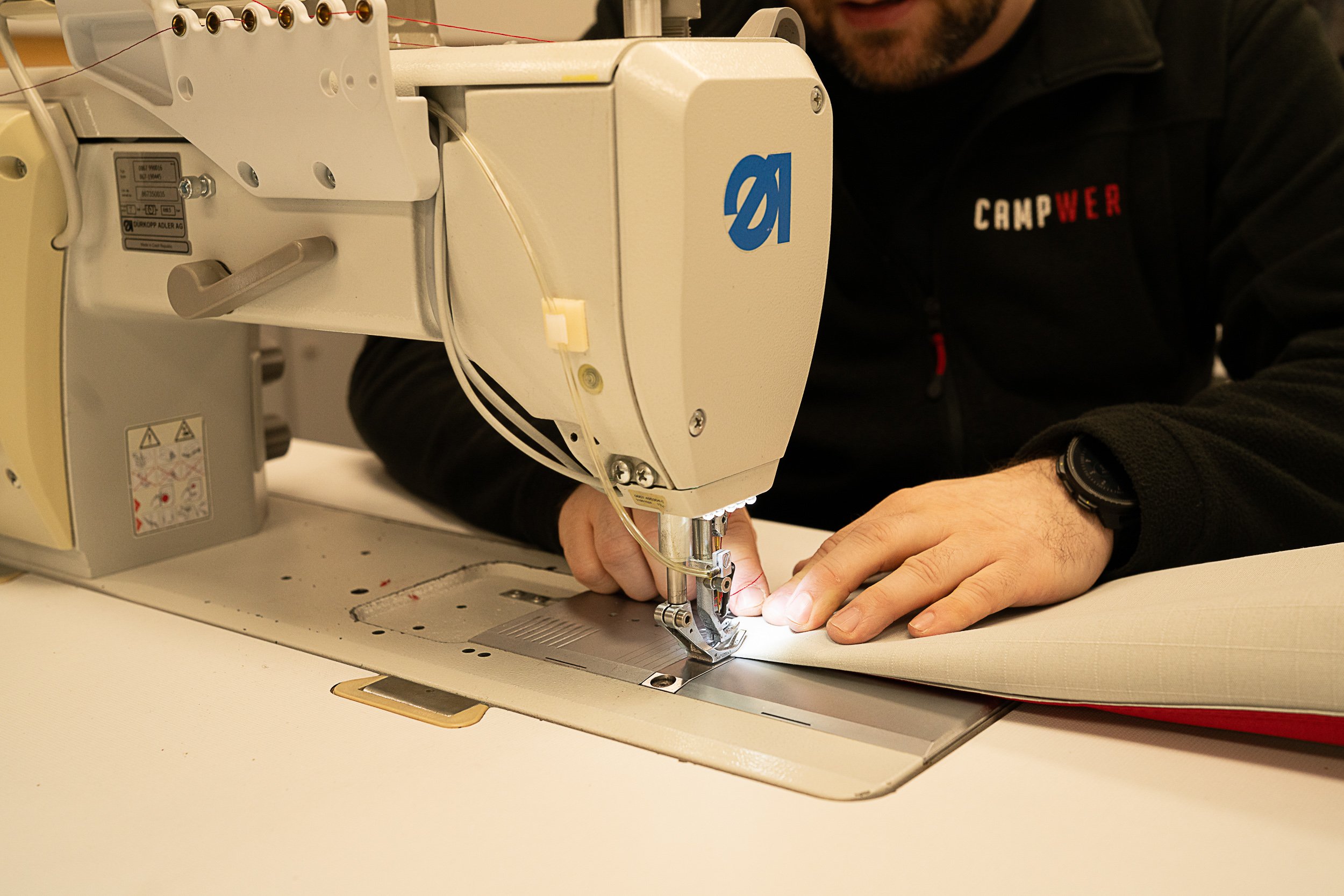
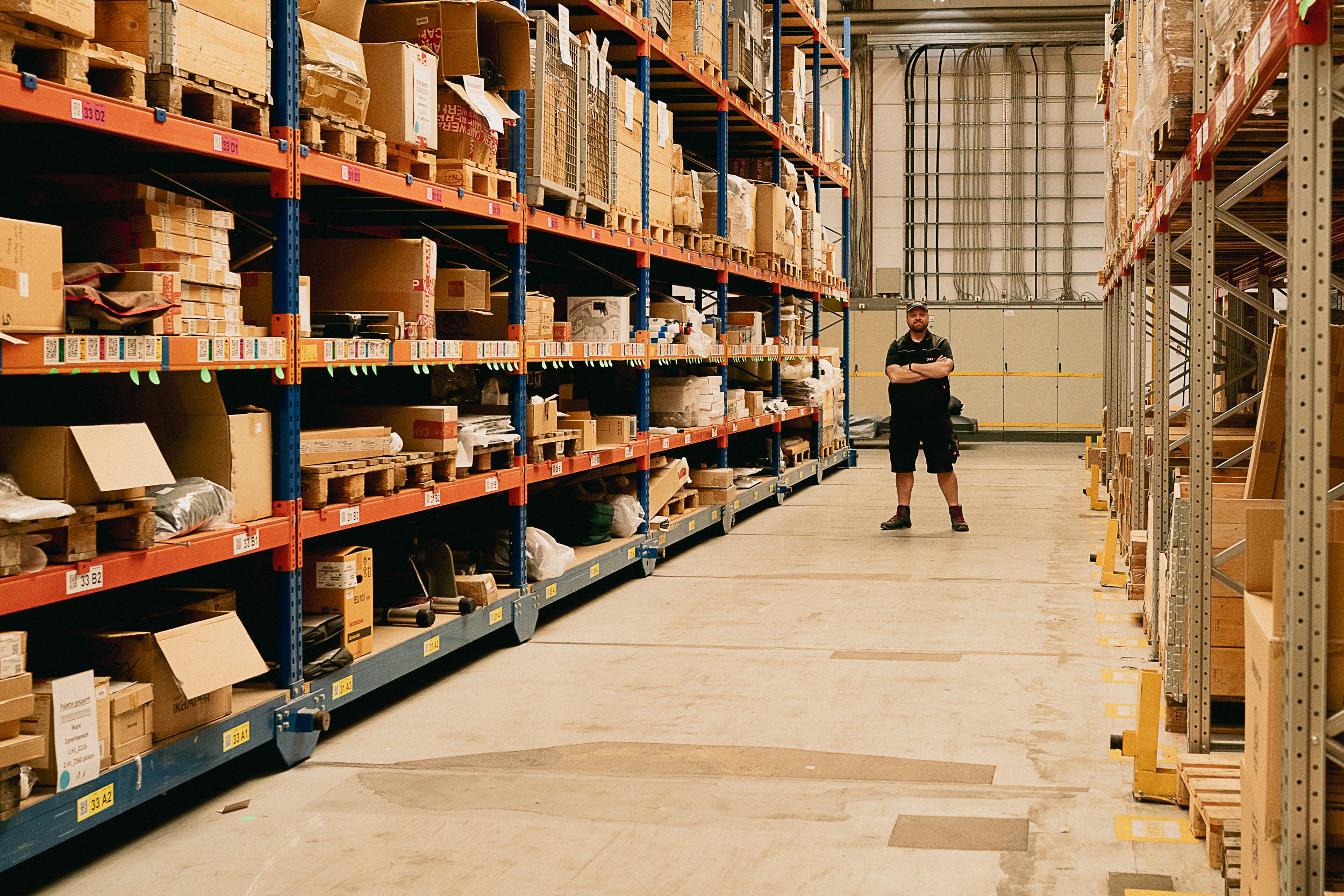
We do development and production in-house, and we run storage and logistics completely ourselves as well. Our warehouse covers 10,000 square metres and is set up for big roof tents. We also handle fulfilment for other companies.
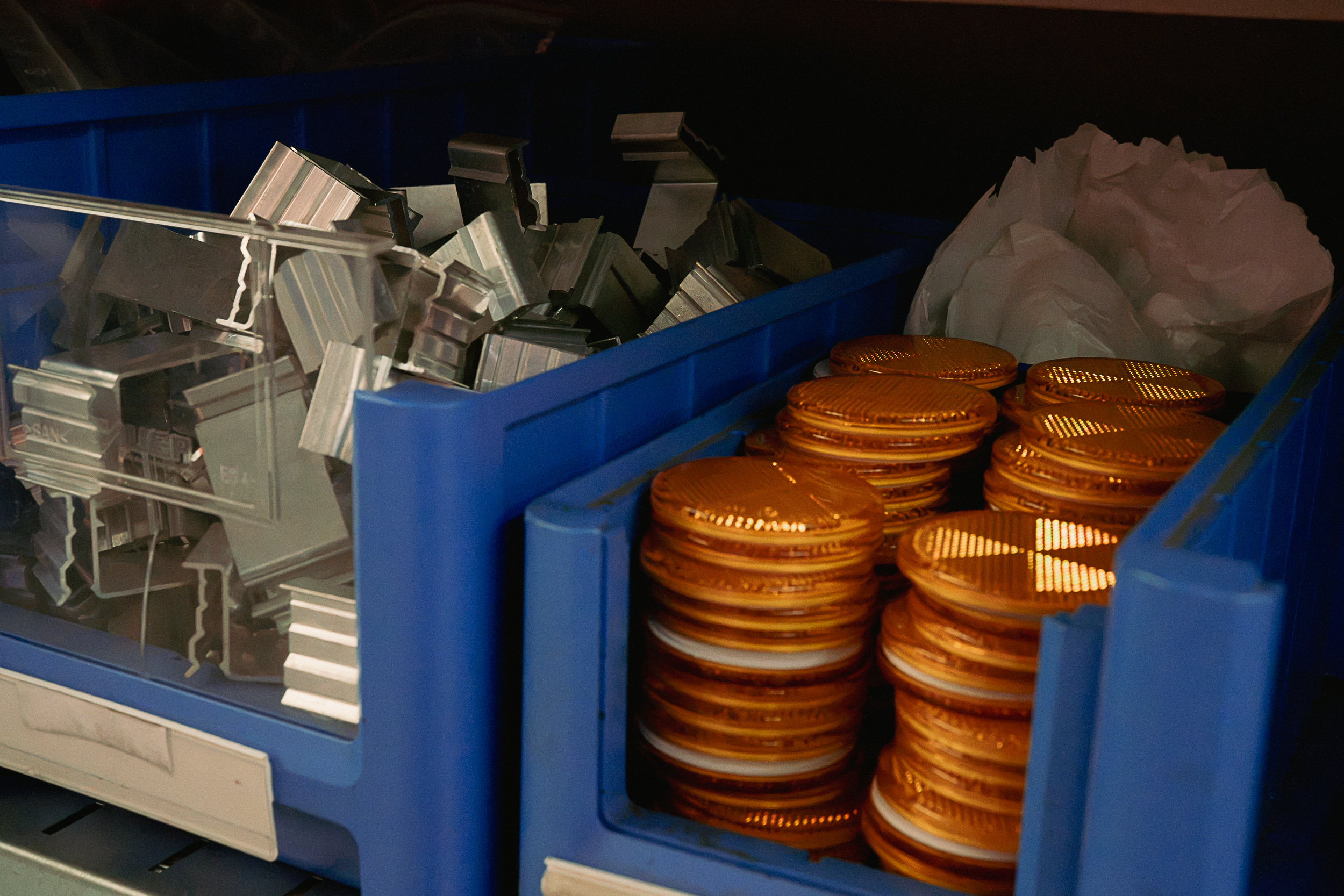
We do as much as we can ourselves, right down to the profiles for our kitchens, which we put together ourselves, and we mill the door panels ourselves too. And we’ve got several 3D printers in-house for trying things out.
And do you travel to Asia a lot yourself?
Not at all. I don’t like flying that long, because I’m tall and broad. Even business class isn’t made for a 1.90-metre giant like me. It’s always a centimetre too short. I think I’ve only been twice. But we have people on the ground. Every tent gets an external inspection in Asia, against a very clear checklist, a bit like our videos. Pay special attention to this corner, it has to be like this, otherwise they need to fix it. We did that right from the start, so we found ways for me not to have to do it myself.
We work with lots of different suppliers, and with very long-standing, loyal ones. They specialise, some in fold-out tents, some in hard-shell tents. In the end it comes down to quality, for example how you drill a hole so there are no sharp edges. After 16 years I’ve seen it all. I know how a ladder like that works without ever having wanted to know. And that’s the downside of production in Asia, because the solutions that come on their own aren’t always good. You have to make up for that with your own know-how. The tents all look the same, but they aren’t. There are loads of little details in there you don’t spot at first glance.
Which product did you have in your range that you thought would be a massive hit, and it turned out to be the opposite?
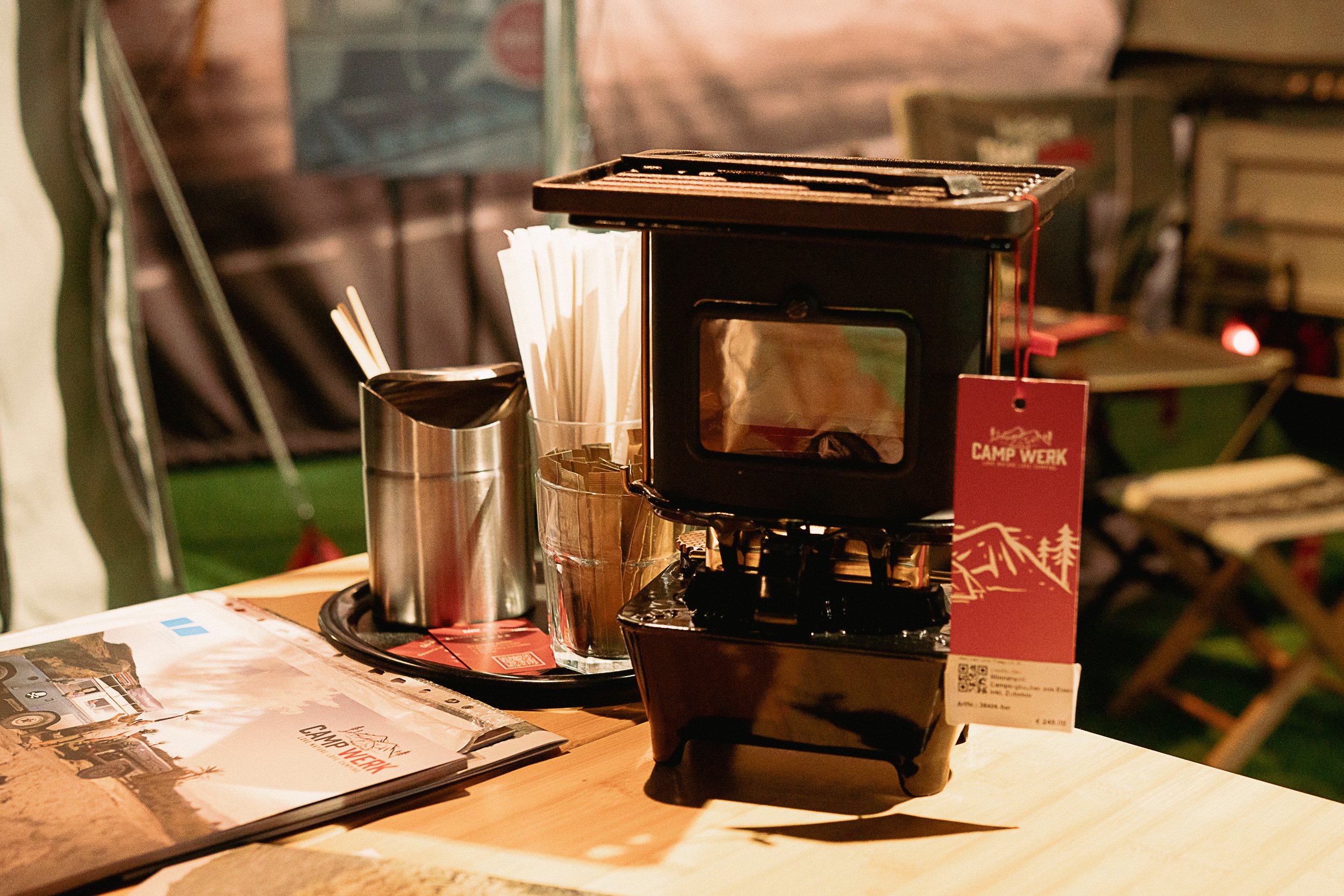
There’s one standing over there, a paraffin stove. It has the most beautiful flame in the world, and on top you can put a pan or the grill plate, a nice steak on it, really hot. A seriously cool piece of kit, really well made. But customers aren’t willing to pay the price. I completely underestimated that, I’ll be honest. Now we’re selling it below cost, because we’ve still got 800 of them. It was a passion project. I really had to fight to get distribution in the first place. When you see the thing, you’ll say one hundred percent: Cool, I want one. But not at the price it has to sell for. It’s my biggest loss so far, because it hurts emotionally too. It’s worth every cent, just not to everyone, my beautiful paraffin stove.
What matters to you in your products?
If I had to pick one thing: simplicity. It matters to me that it’s easy to use and quick. The second is comfort, but only after simplicity. If you can’t put the thing up quickly and easily, you’ll never get to enjoy the comfort. The third factor is looks. I don’t want an ugly product. Even if I don’t look like it, I care how things look. I always try to make products a little bit sexy too.
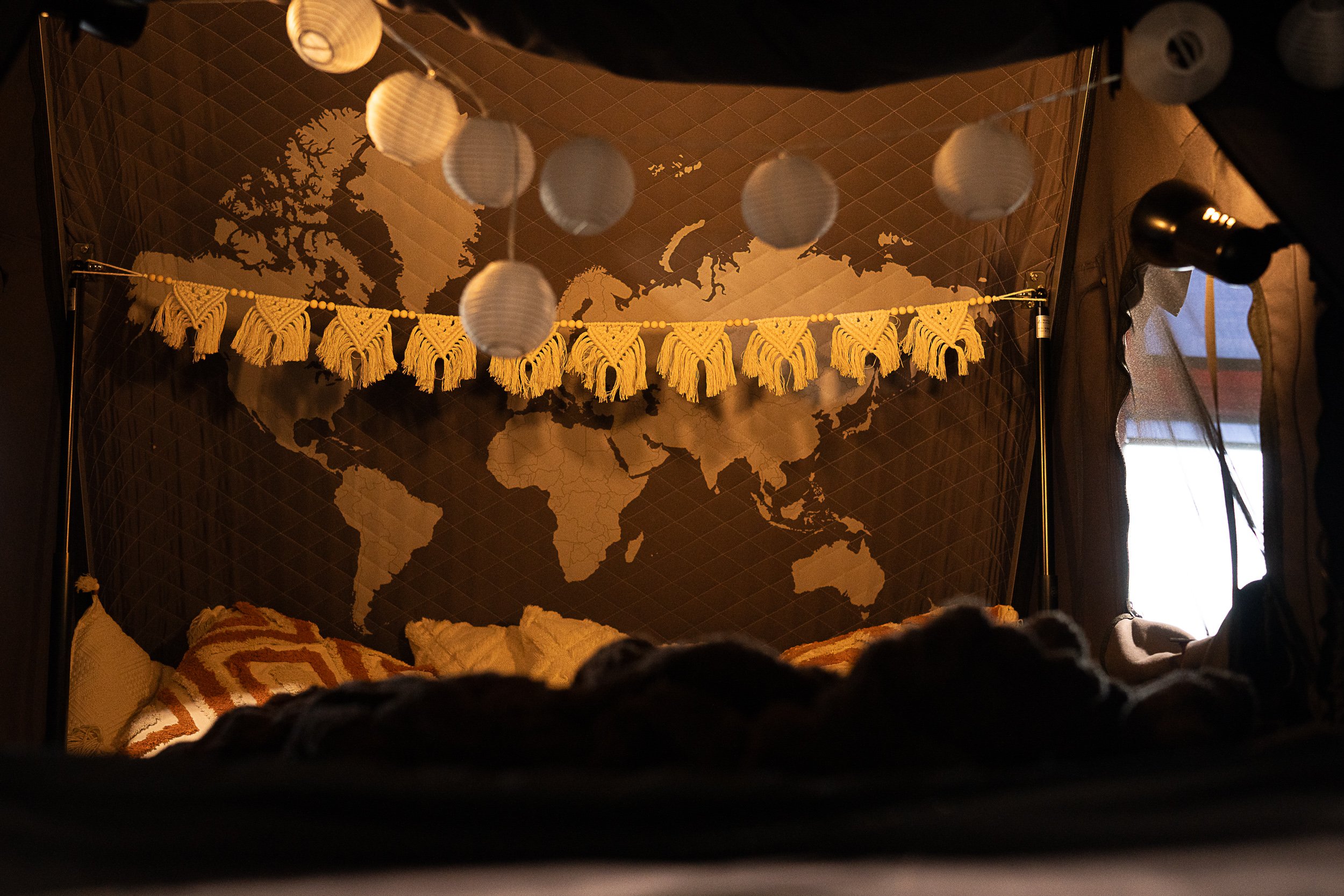
With our new tent you look in and see this starry sky up there. So many people lie in our tents, look up at that starry sky and dream. Building that in was a really good decision. Or in the iKamper, there’s a world map inside. People sit there so often and say, look, that’s where we are right now.
What sets you apart from other companies in the industry?
Look, at Campwerk we’ve been working on one thing for 16 years. How can you travel really well with your own vehicle? These days we’re more than 40 people here in Velbert on around 14,000 square metres. Around 10,000 of those are just for production and logistics. We work with around 300 suppliers in Germany and many more in Europe and around the world. That’s quite something when I look at what we’ve built over the years.
Of course these days you can also just source a ready-made tent from one of those bargain platforms, slap your colour and logo on it, generate a few pretty pictures with AI, and on Instagram it looks like a global brand.
But developing a really good product and being able to back it up with proper service takes a bit more than that. We think things over, tinker and sometimes let our imaginations run wild. We draw our own patterns, sew, build prototypes and try out completely new techniques. And sure, sometimes things go wrong. With some ideas we looked at the first prototype and thought: Okay, that sounded better on paper. Others have turned into completely new technologies and even patents.
Like I said earlier, by now we know an awful lot of ways it doesn’t work. But that means we also know plenty that works really well, and that experience helps us make our products better every day.
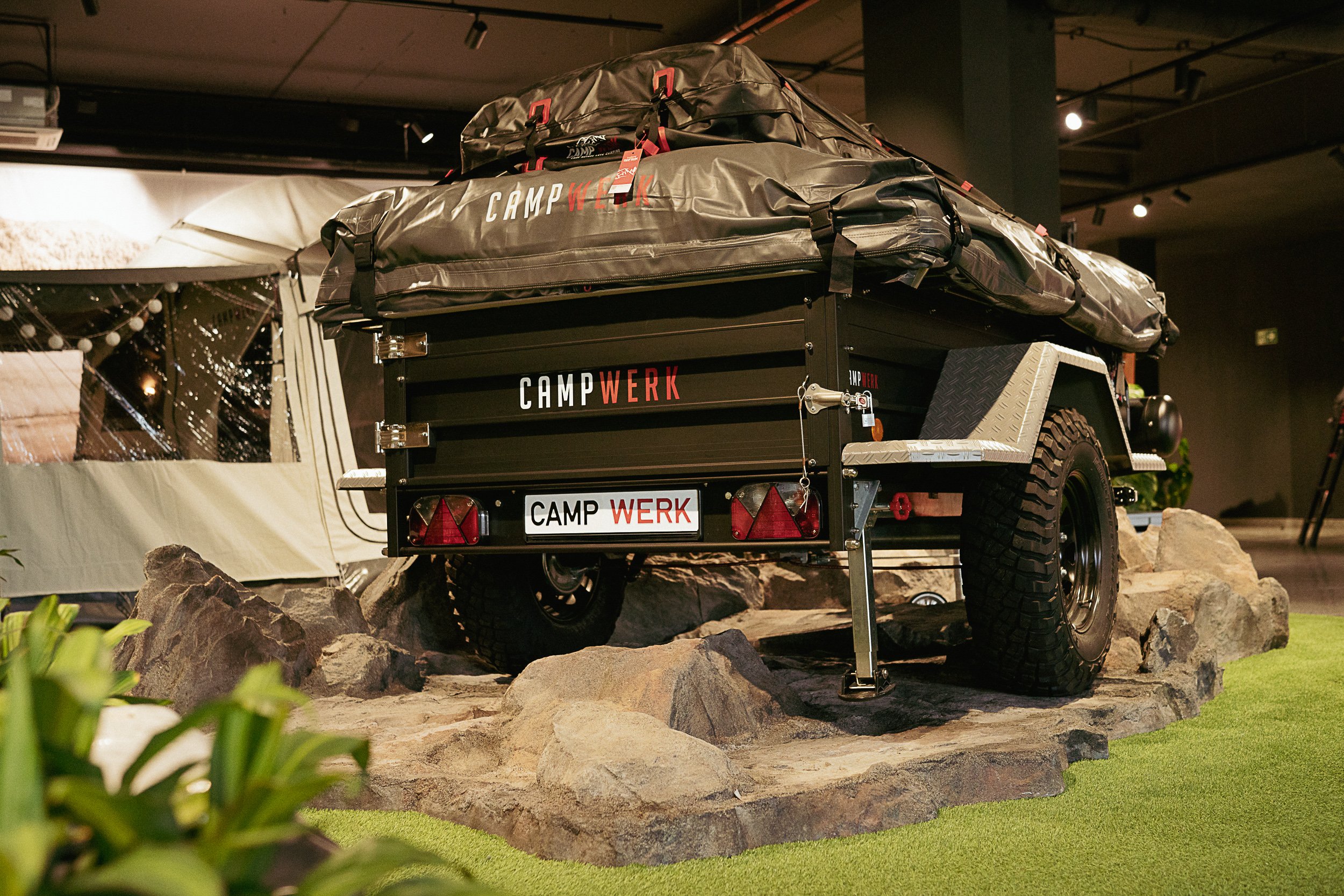
You can see what having our own production means with our tent trailers. We build every trailer to order here, they don’t come off a shelf. You want a black off-road model with a big tent and a bike rack? Or an on-road one with a smaller tent but with a kitchen? Or you’d rather start without and add things later? You put together what you need for your trips, and that’s how we build it for you. And with our roof tents too, our range is so big that we’ve got the right one for pretty much every kind of trip.
What’s your personal secret to success? What does it take to be an entrepreneur?
It’s really simple, you have to believe in an idea, want to make it happen and then stick with it. Persistence is everything. And I love problems. As an entrepreneur you need that attitude: Great, I’ve got something else I get to solve.
My biggest hobby is solving problems, in every area. If you manage, as an entrepreneur, to think in a way where there are only challenges left, then you’ve got nothing to fight any more. Everything is great, every last bit of rubbish. You have to train yourself to think like that, and at some point it’s the only way you think. Then the problem is that people don’t understand how you think. Why aren’t you getting worked up? I always think: Great, something’s broken. Great, something’s going wrong. Brilliant, a new regulation. It’s an inner attitude, and you have to develop it.
For me, being physically there isn’t necessary if you’ve got good processes. If a problem crops up, the process is crap. Then it needs rethinking. Some people say, if I’m not there, nothing works. But I say, then the process is crap. The basic fear of handing over responsibility is the reason most entrepreneurs never grow. You have to let go sometimes and let others make mistakes. Even a bad process is better than no process. I’ve built a great team. I solve any problem when someone comes to me, but they solve lots of things completely without me. And that leaves me free to look after the strategy.
You started with tent trailers, then came iKamper, and now, brand new, pick-up cabins. Where is this all heading, what’s your vision?
I can’t tell you a hundred percent, because the vision changes from day to day, week to week, month to month. I never thought I’d make pick-up camper cabins. I didn’t think I’d make roof tents back then either. It has to be fun, and that comes overnight. There’s no ten-year plan. Growth is always a topic of course, abroad too. But that’s not so easy, an English website doesn’t cut it. And we’re going through a difficult time in the world right now, and getting through a crisis like that is work too.
We did van conversions for small vehicles once and stopped again because it was too much work. But I could imagine building a proper motorhome of our own one day. A folding motorhome, maybe. I’ve got thousands of ideas for that. But what’s cool and different on the market? It always has to have something nobody else has, that’s very important to me.
But I don’t want to commit. Maybe next week I’ll say, you know what, I’ve got a really cool idea, let’s build a swimming pool for roof tent customers. We even developed a roof tent slide once, so you can slide out instead of climbing down the ladder. Ideas aren’t the issue, our pool of ideas is huge.
If you were starting over, in any industry, what kind of company would you set up?
Well, I’ve got a few companies already. I set up a dog company and a property company. I built a solar plant, that’s a business too. I’m planning to build a battery storage system because we produce too much power. I bought a timber-framed house and properly renovated it. You can see property makes me happy.
I wanted to buy a rotisserie chicken stand, but sadly it didn’t work out. So if anyone wants to do something nice for me: roast chicken. Not from the deep fryer, I mean properly roasted chicken. For me, that’s the best thing there is.
I’ve got loads of ideas and I’m up for doing a thousand things. I’m not scared any more. Of course I was when I started. I’ve already told you about the wind turbine. But importing accessories doesn’t excite me any more. What excites me are things that supposedly can’t be done. I love it when people say, that won’t work, you can’t do that, it doesn’t work. So once more, my advice to founders. Never listen to other people. Close friends and acquaintances especially are terrible advisers when it comes to running a business.
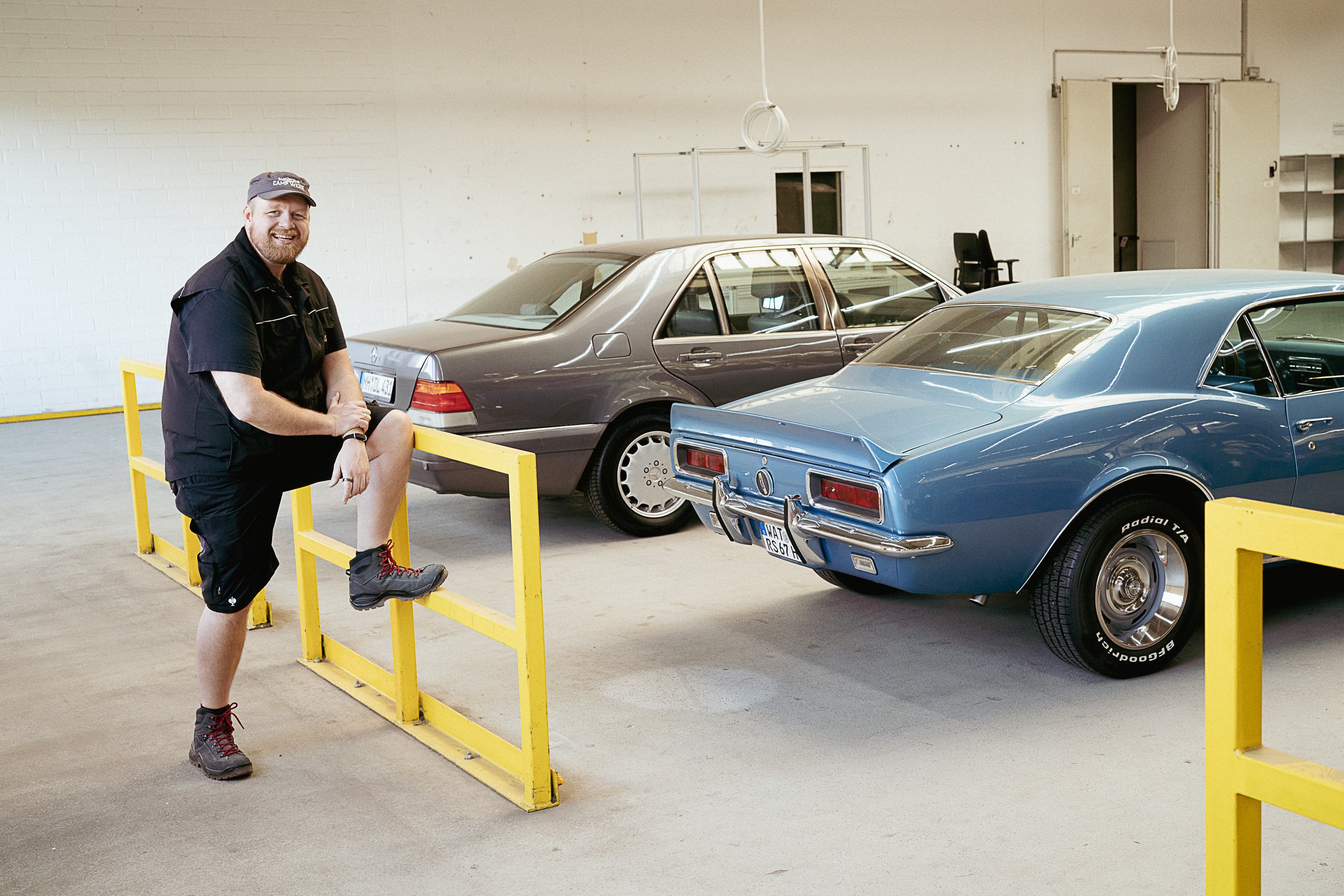
I have a notepad where I write down every business idea. It’s a big one, there are a thousand ideas on it. From a bottle opener to how to keep a swimming pond clean.
I love solving problems, and sometimes I see problems at other companies where I think, I could solve that in five minutes, well, maybe ten. But then you first have to get inside people’s heads so they understand it and actually want to do things differently.
I know I could build a rocket. I could sit down, determined, and say, I want to understand this, I want to try it, I want to do it. I’m not afraid of anything. Because big projects are much, much more exciting than small ones.