
Advertisement: Taubenreuther let us take a look behind the scenes, into their development department and into the new warehouse in Kulmbach, which they built to last for the next 60 years.
Most of you know Taubenreuther from Kulmbach as an off-road outfitter and the importer of Warn, ARB, Old Man Emu, Rhino-Rack and quite a few more. What many people don’t know is that Taubenreuther develops a large part of its own products, like underbody protection, winch mounting kits and even springs, and has them made to its own designs. You rarely get to see how they do it, though. We did. We got to look inside the development department and walk through the brand-new warehouse the company has just moved into.
Real Taubenreuther products start life in the development department
The development department is one of the hearts of the company, because this is where new parts take shape with modern technology. Over the last few years Taubenreuther has put a lot of money into 3D printing. They use it for prototypes, but also for finished parts that are handy to have and that you won’t find off the shelf anywhere.
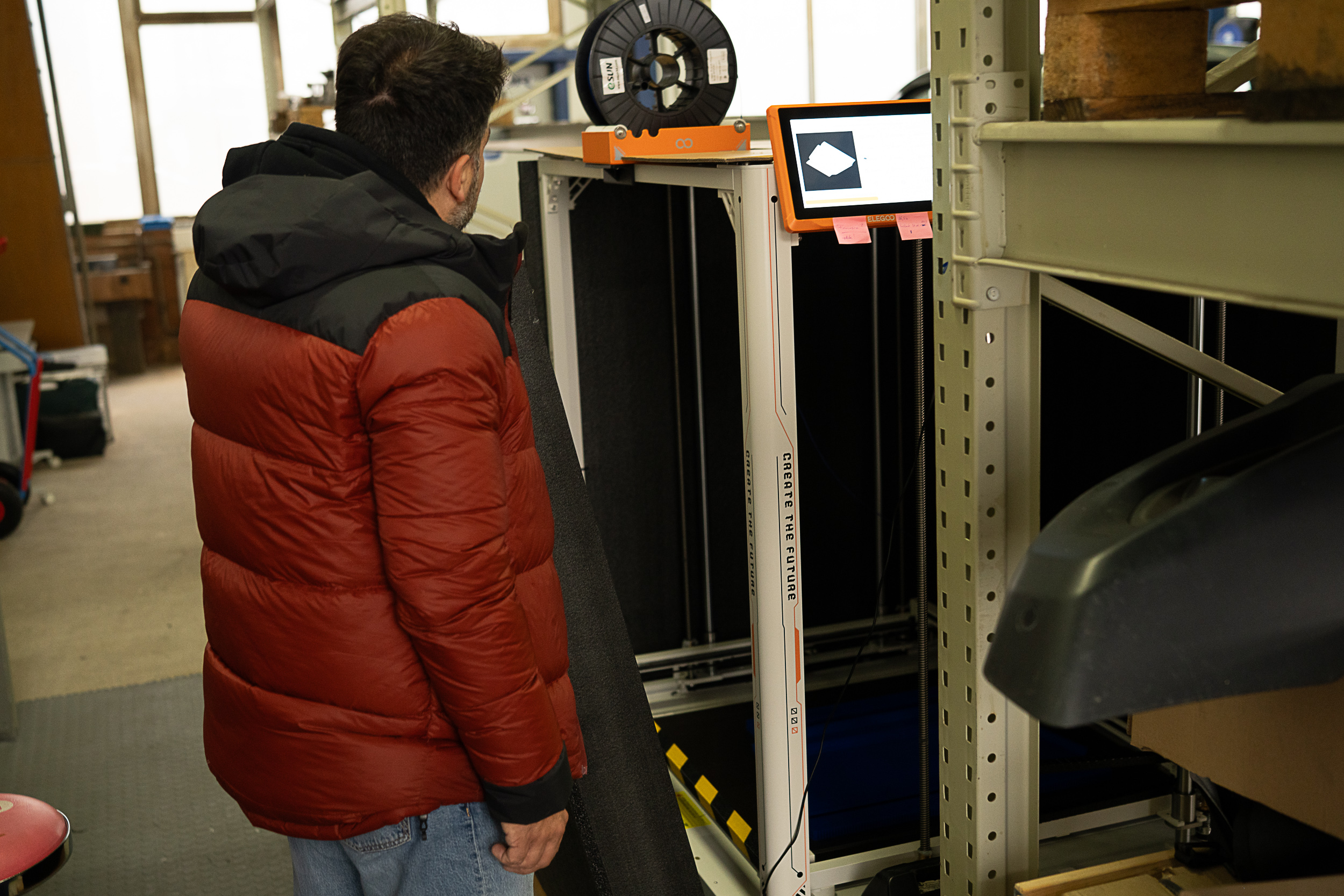 New 3D printer at Taubenreuther
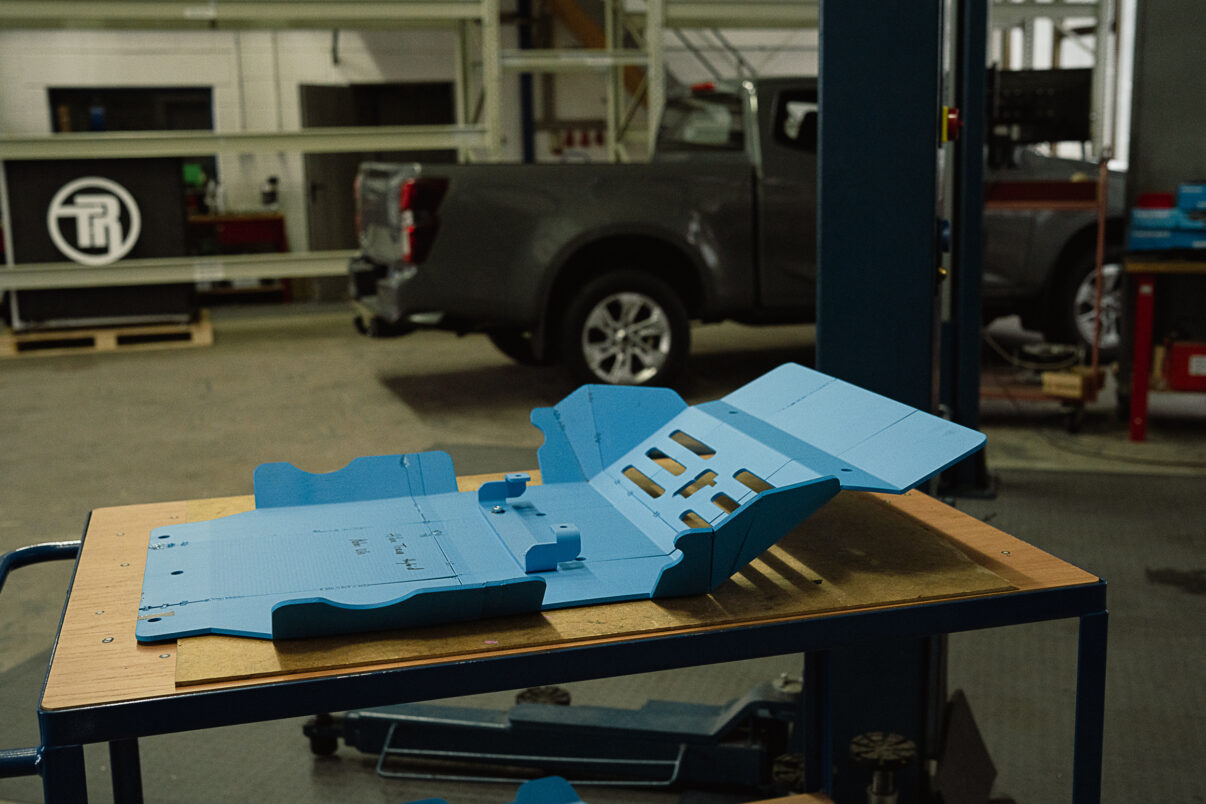
Being able to make parts or prototypes in-house matters a lot in special vehicle building too, because it lets you come up with the right solution quickly and try it out straight away. In the past a sample went to a steel fabricator and, depending on how complex it was, came back after up to eight weeks. With their own 3D printers it now takes just a few hours until a part is ready and the developers can try it on the vehicle.
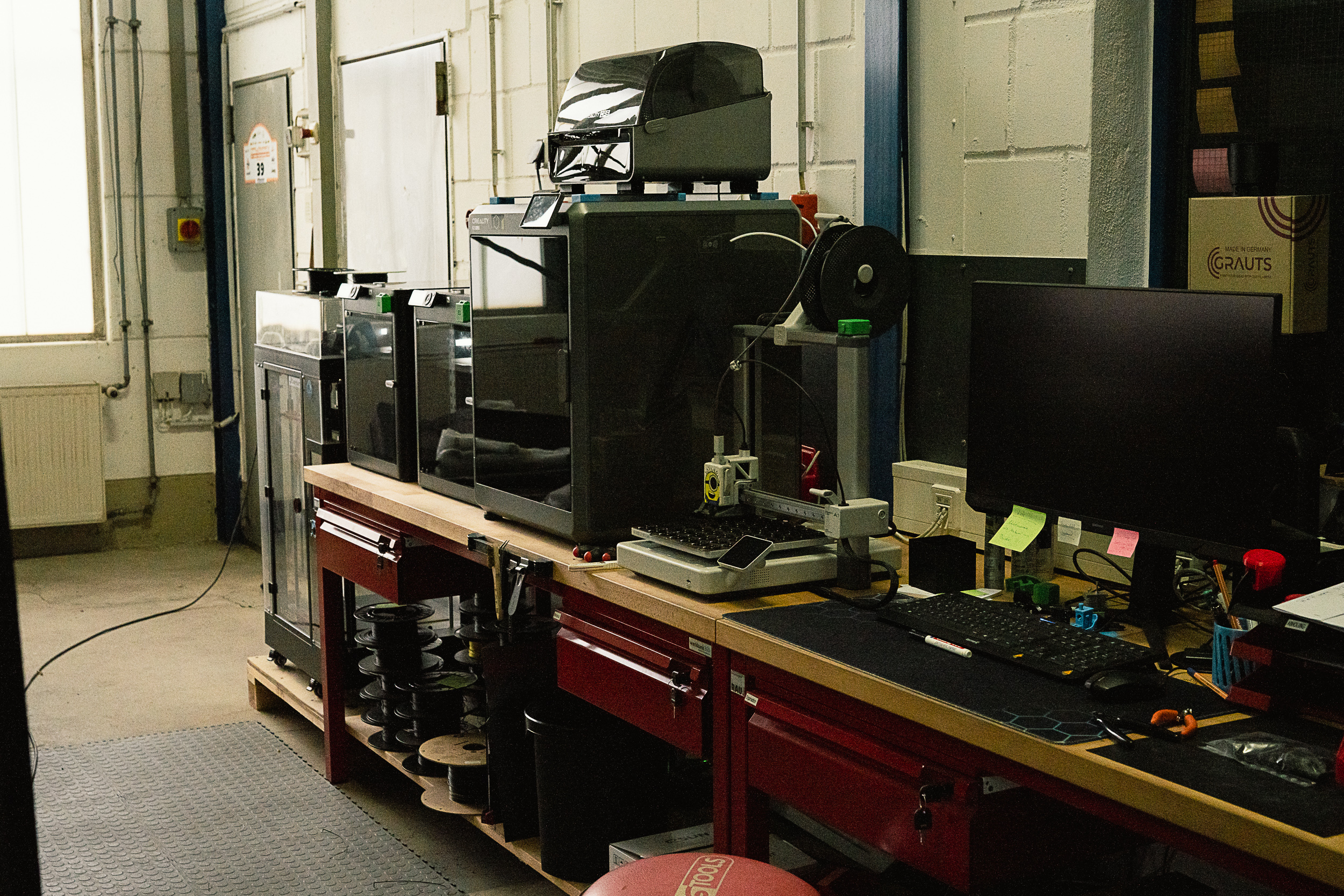 Several 3D printers in the Taubenreuther development department
Before anyone can design a part, though, the team strips the vehicle down in-house, scans it with a handheld 3D scanner and measures everything. Then they design the part on screen in a CAD program and send the data to the in-house 3D printer.
Building prototypes in the development department
A big new 3D printer gives the team one key advantage. Parts they used to print in several pieces and then glue together now come out in one piece. That saves work steps and avoids the small inaccuracies you always get when you put pieces together. A part that size can keep the printer busy for a whole day, but in the end it fits even more precisely.
From prototype to tested product
On the printed prototype the team checks whether everything fits and nothing gets in the way. The small details are often where the tricky bits show up. Only once everything sits exactly as planned do they have the first prototypes made in metal.
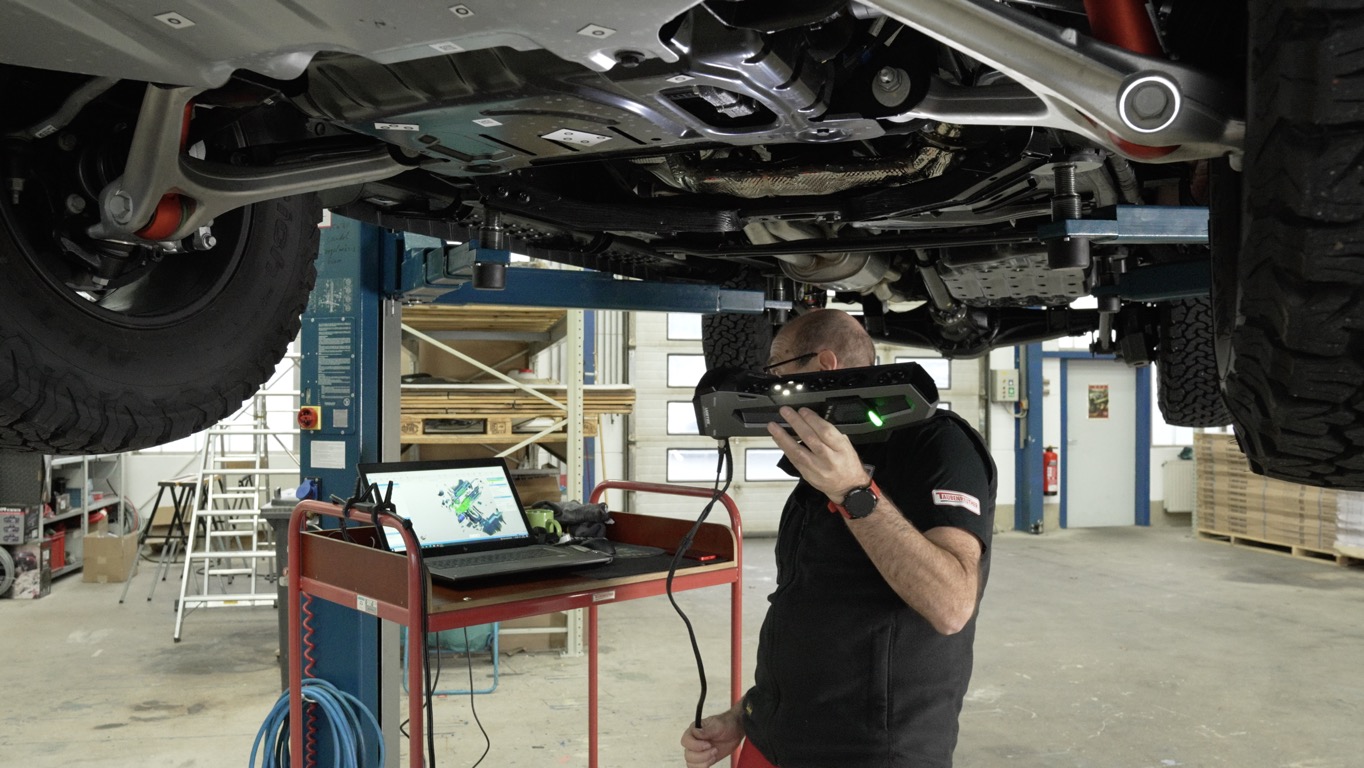 3D scan in the Taubenreuther development department
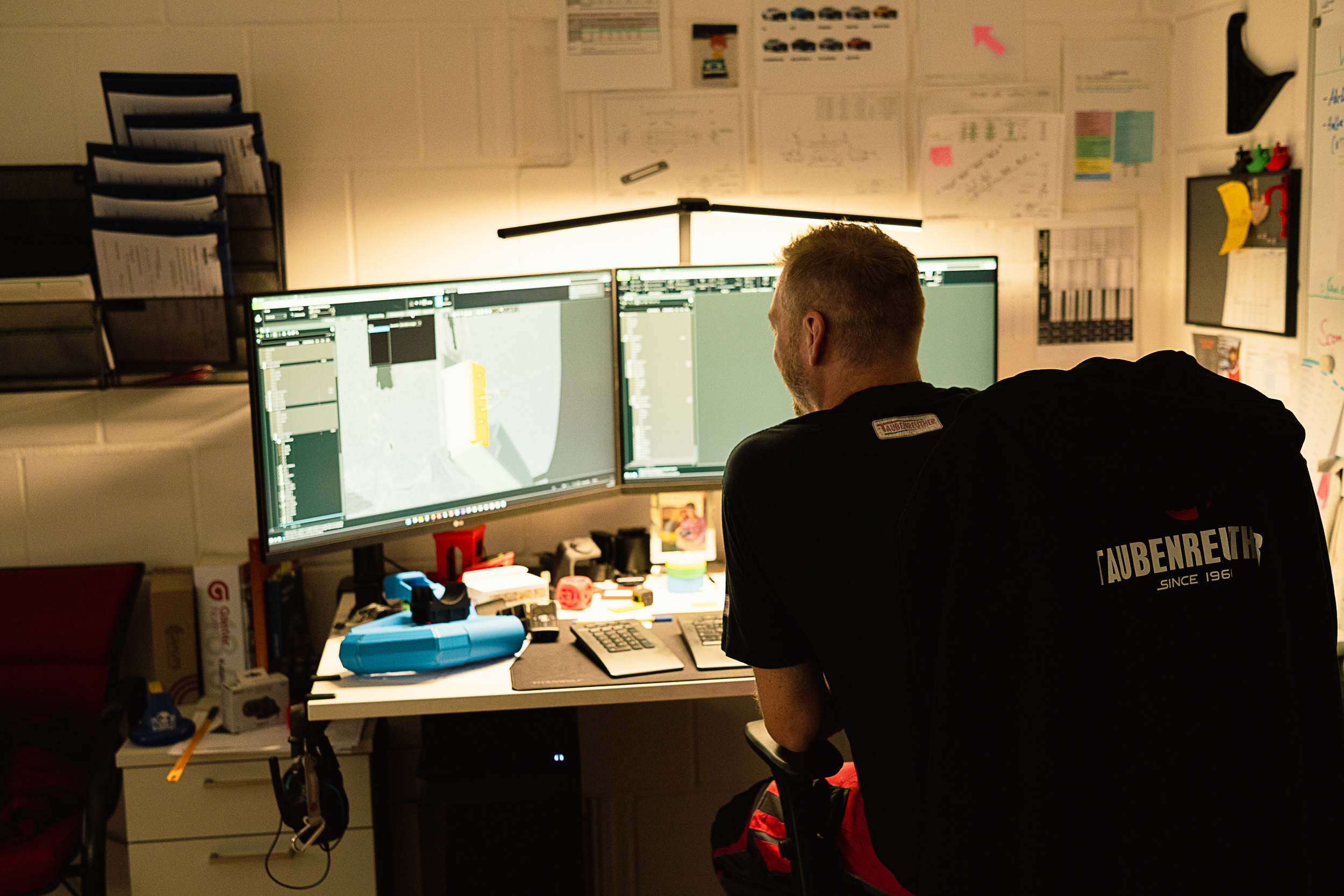 The team creates the CAD data in-house, based on scanned vehicles.
Depending on the product, a local metalwork company either makes the finished product right away or, as with winch mounting kits, first builds another prototype. The Taubenreuther development team runs various tests on that prototype. Pull tests are one example. They show whether the mounting kit and the mounting points on the vehicle can actually take the real loads.
The team also works out which winches suit the vehicle and the mounting kit. A winch may fit on paper, but that doesn’t mean the vehicle and the mounting can handle its pulling force.
Once the tests are done, Taubenreuther takes the product to TÜV, the German testing body, and has them write a test report for it. With that report, the drawings and the test documentation, they then go to the KBA, Germany’s Federal Motor Transport Authority, to get the part type approval. With that approval you can have the product entered in your vehicle papers at your local inspection body.
A new warehouse for the next 60 years
The second part of our visit takes us to Taubenreuther’s second site in Kulmbach. This is where the development department and part of the warehouse already were, and since recently a completely new building stands here too.
The reason for building it is simple. The warehouse at Taubenreuther’s main site had long been too small, so the company rented extra space at various places, and over time that became inefficient. Staff constantly had to drive out to these outside stores to fetch goods, which meant they needed extra vans. All of that ate up a huge amount of time. At some point the system got too complicated and, of course, too expensive.
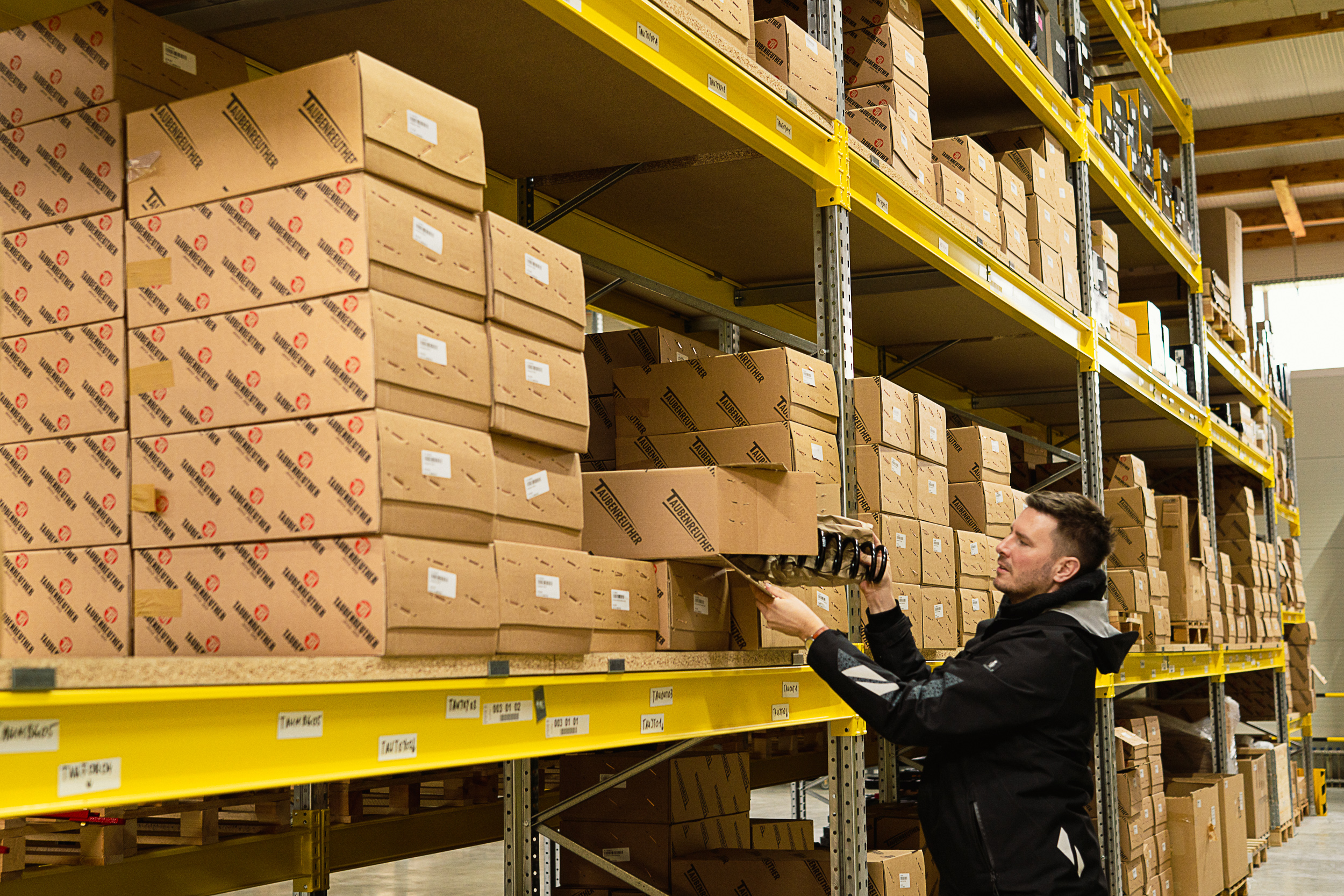 Taubenreuther’s own springs for various vehicles such as the Dacia Bigster, now neatly stored together in the new warehouse
So the company brought the whole warehouse together in one place, at the development department’s site, where a large part of the stock already lived. On the free plot next to it they planned a new building to modern standards. What mattered most to Taubenreuther were short walking distances, a pleasant place to work for the team and good storage for the products. Deliveries still come in through the existing unheated hall. That’s where staff take in shipments from all over the world, from Rhino-Rack or RSI for example, and pre-sort them by shelf row before the goods move on into the heated warehouse.
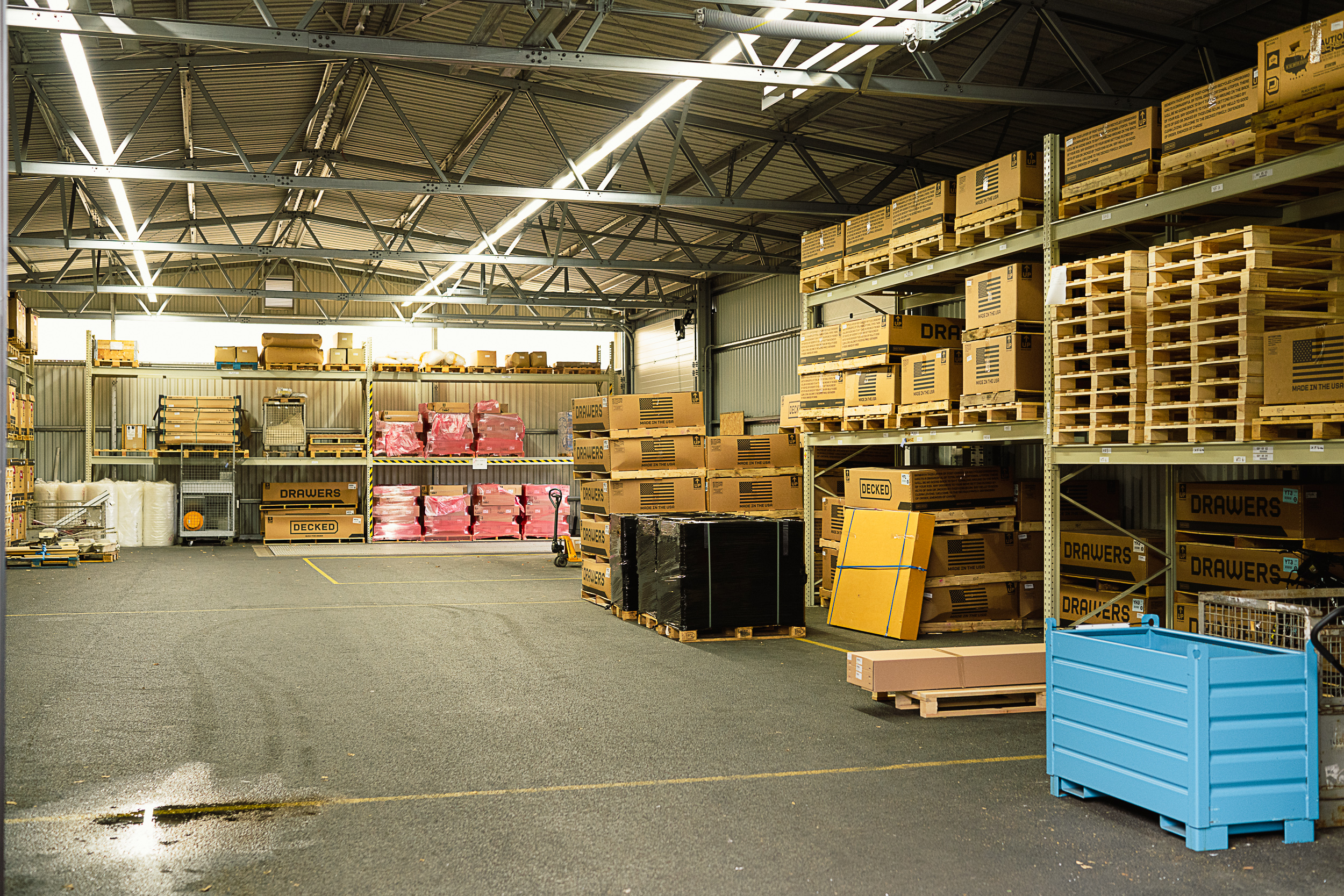 The unheated hall, where staff take in and pre-sort the suppliers’ containers.
The architect put a lot of thought into the environmental side. Heat comes from concrete core activation, a kind of underfloor heating set into the concrete and fed by heat pumps. A solar system is on its way too. And at the doors, an air curtain makes sure as little heat as possible escapes when they open.
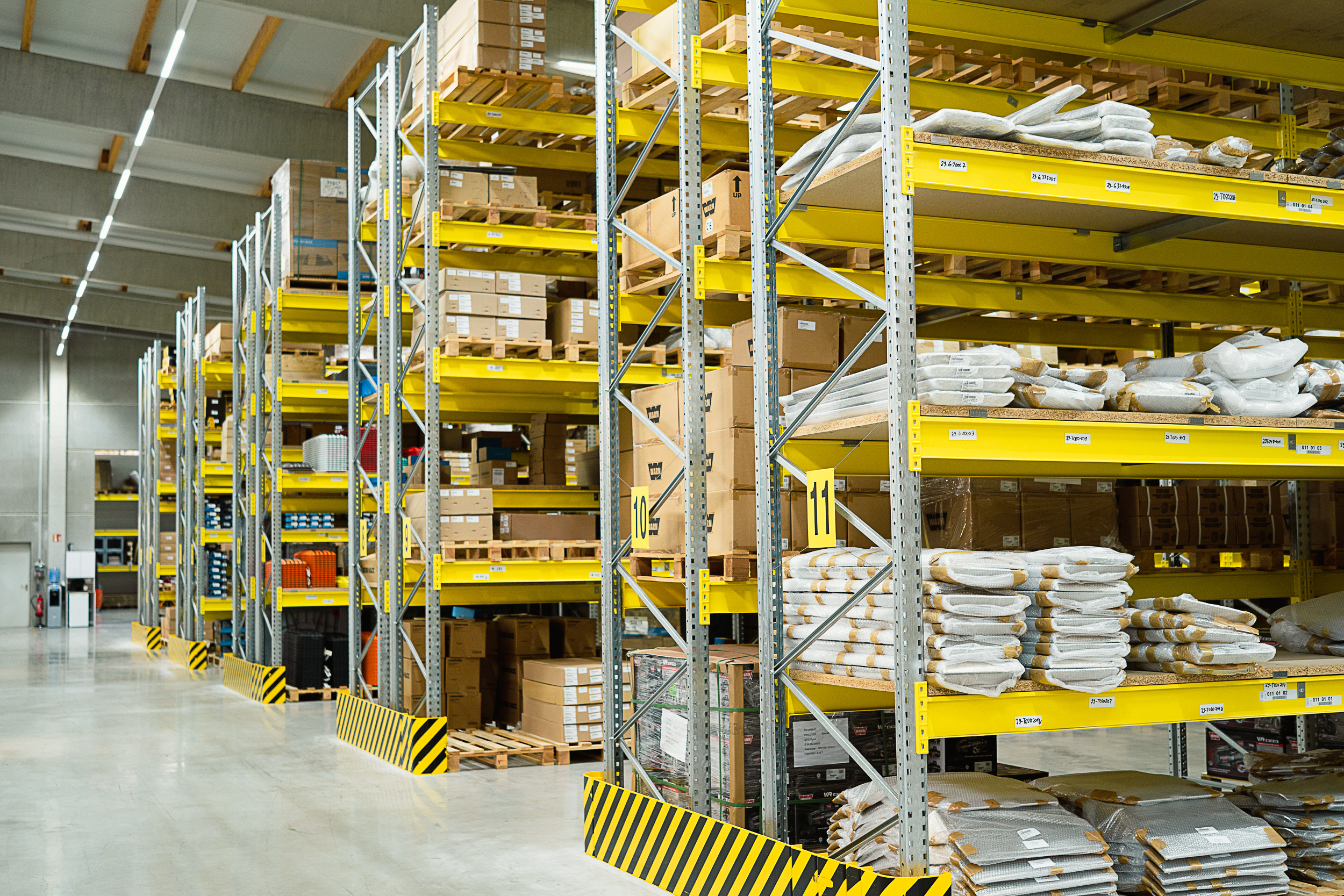 Taubenreuther’s new warehouse, built to the latest environmental standards
The logistics side got a fresh start as well, with new forklifts and handling equipment, better routes and a modernised shipping area. There, a camera and scale system photographs, measures and weighs every parcel, so you can always trace what went out in which shipment.
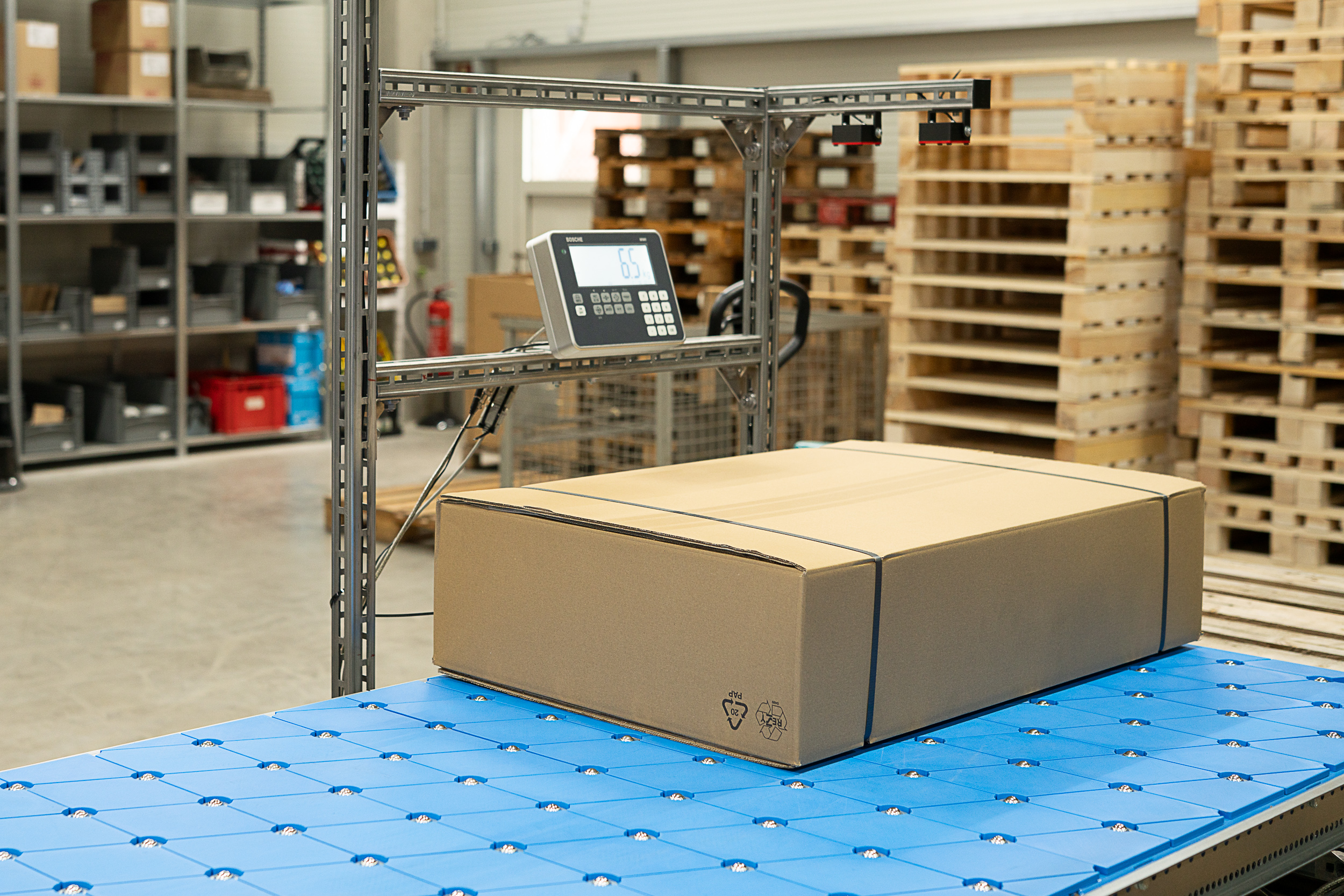 Parcel logistics and packing with the latest technology
“This building isn’t made for five or six years. It’s for the next 60 years of Taubenreuther,” says Bernd Taubenreuther. So the new building is no short-term project. Together with the development department, it shows clearly where the company wants to go: faster, more efficient and with plenty of room for whatever comes next.
You’ll find more about Taubenreuther at taubenreuther.de.
60 Years of Taubenreuther: Mud, Fire and a Family That Just Won’t Give Up