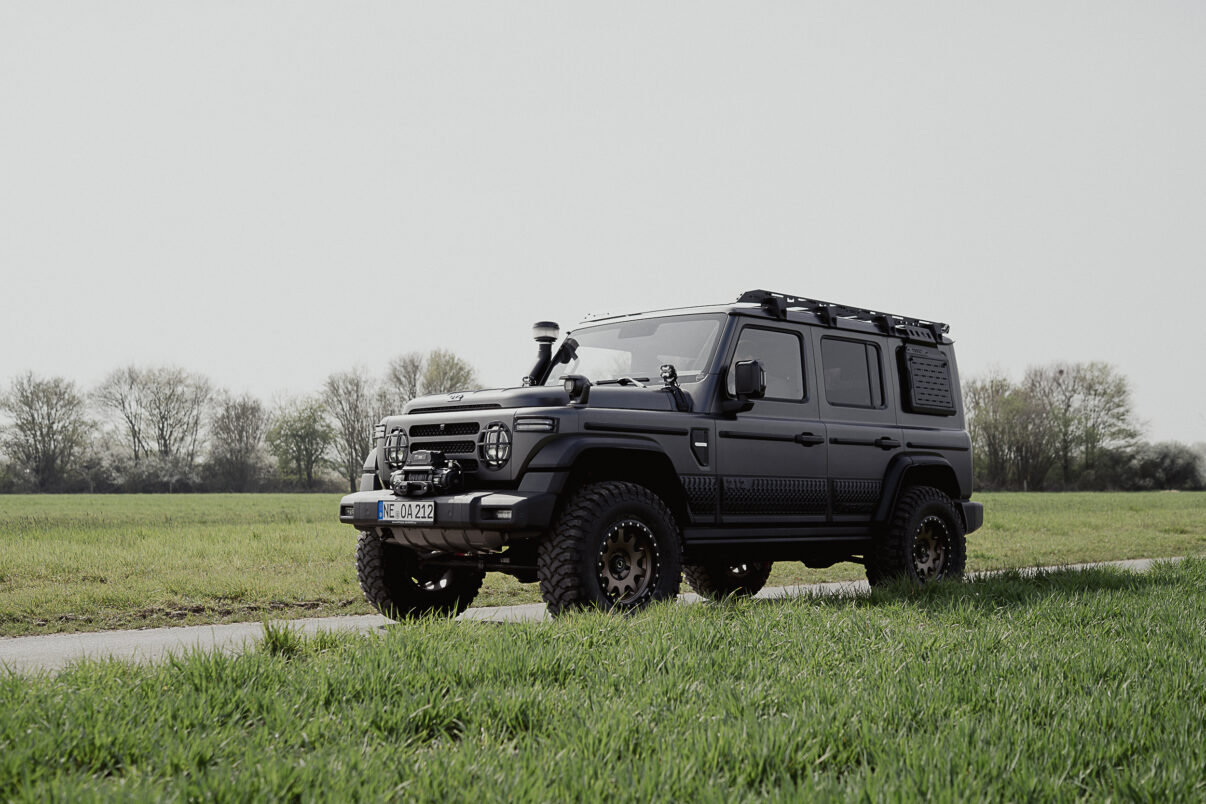

Here comes a challenge from China. The BAW 212 wants to be an old-school 4×4, but to do some things better than its equally new rivals. The Ineos Grenadier, the Jeep Wrangler and the Ford Bronco especially are likely on its list. With a starting price of not even 40,000 euro, it will get the scene’s attention in any case. But is a cheap offer enough to make a mark?
Before the Ineos Grenadier came onto the market, it looked as though real off-roaders were dying out in Europe. So the 4×4 from Hambach was awaited longingly. But even after more than four years, the registration figures for the French-British machine look rather modest. Certainly not because of its off-road abilities, but because of the value for money, quality issues and poor service from the maker. Lately the Ford Bronco has also offered an alternative in this price class. Now a genuine price-buster joins them, one that yields nothing to the Grenadier in its claim to be old-school: the BAW 212 from China.
The good news is: real off-roaders do seem to have a future in Germany after all. In the USA, where the 4×4 market keeps growing, the Ford Bronco is currently winning hearts and wrestling with the Jeep Wrangler for the top spot. The Grenadier has its biggest market there, even if it sits pretty much at the bottom compared with all the others, with plenty of room to grow.
Who had China on their radar there? Hardly anyone. From there we tend to expect electric vehicles. Yet you only have to bear in mind that Mercedes too has started building combustion engines for the world market with Geely, and a joint venture with BAIC already does this for the Chinese market. China no longer needs to hide when it comes to high technology. Now the Middle Kingdom is setting out to please the 4×4 market too. The BAW 212 wants to be an off-roader exactly as customers want it: usable every day and capable off-road. What makes you sit up: the starting price is just under 40,000 euro.
For that you get an old-school off-roader, at least within the limits of what is legally possible today. That is: a ladder frame, live axles, mechanical part-time four-wheel drive and mechanical diff locks in both axles. On top sits a clear, boxy body typical of off-roaders, whose interior is invitingly comfortable.
A child of several parents
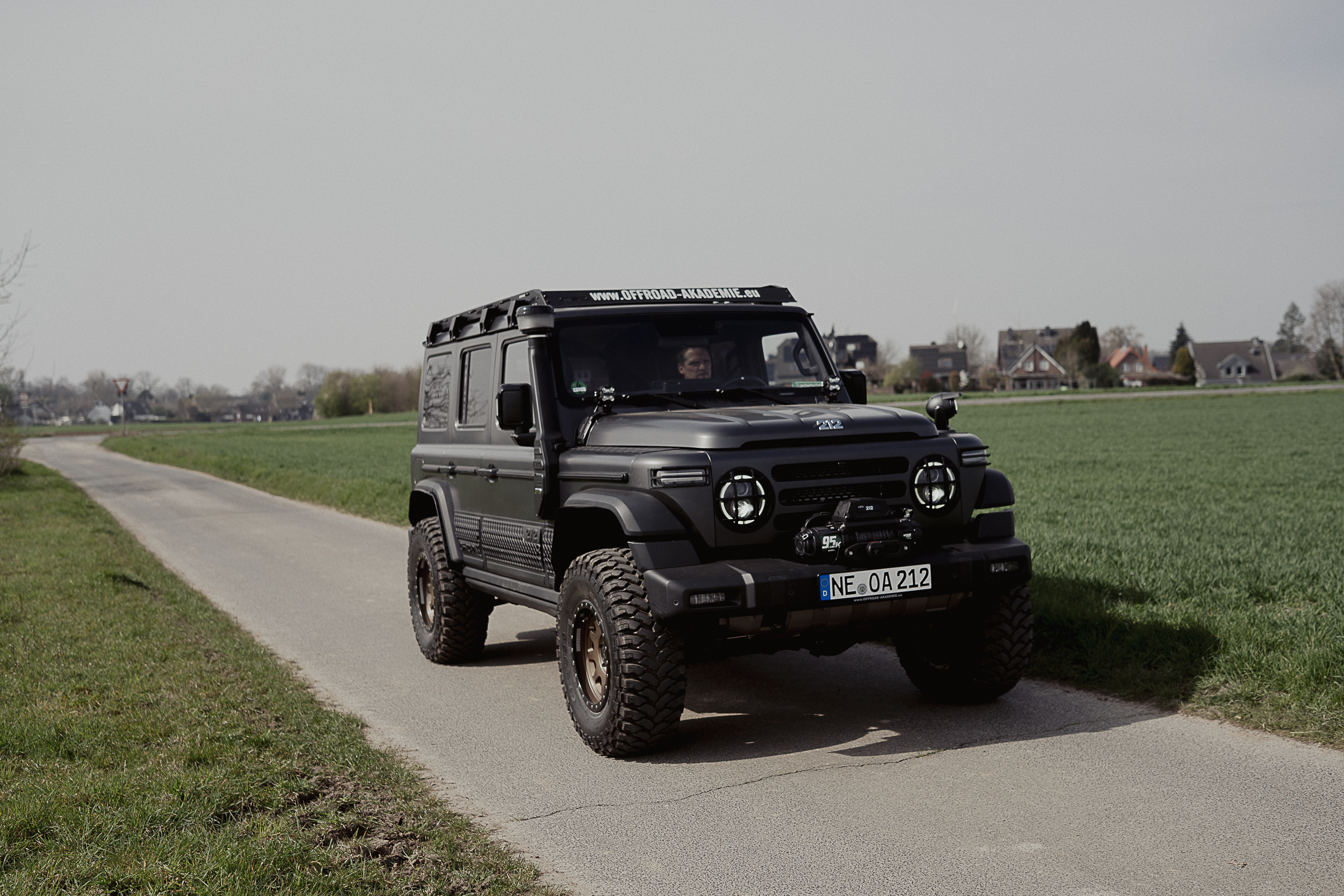
A look from the outside does not quite give away who stood godfather here. A shoulder like the Land Rover Defender’s, a rear door without a spoiler and a large door drawn up to the roof like the G-Class’s, a front like a Jeep, headlights set inwards, separate wings, and the grille recalls the UAZ Hunter. Which brings us to its closest relative: the UAZ-469, later the UAZ Hunter. So at least the front still gives off the charm of Soviet off-roaders, which, unlike Western vehicles, always looked a little sad. Next to that, the BAW 212 comes across noticeably more self-assured.
A look under the vehicle shows that cues were taken from the Jeep Wrangler too, which gives hope for very good off-road ability. They have the same axle concept and a four-link front axle that articulates very well. So there are now three vehicles on the market that use this axle concept: the BAW 212, the Jeep Wrangler and the Ineos Grenadier.
The proven and the unknown
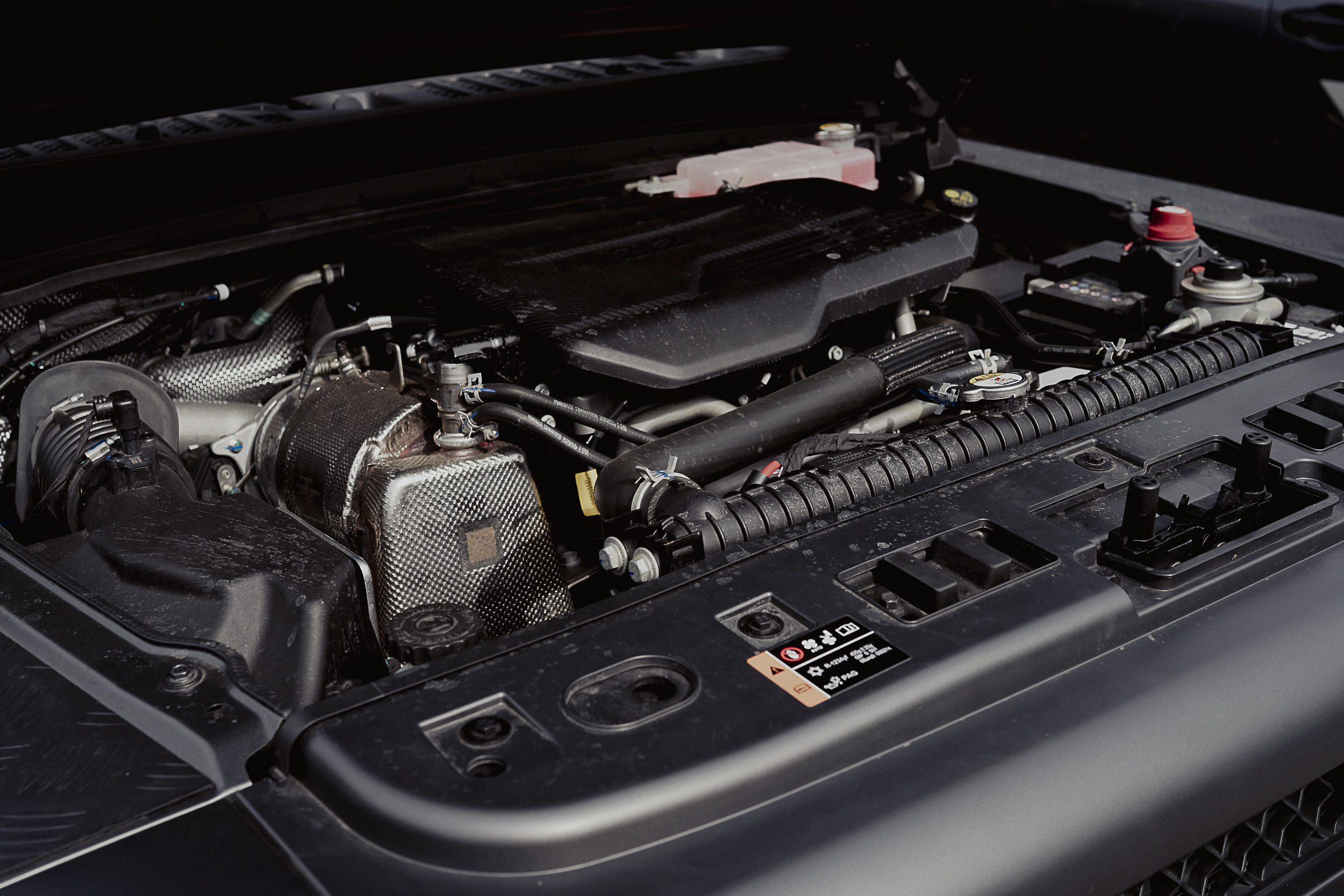
The diesel is a 2.0-litre turbodiesel with 122 kW (165 hp) and 410 Nm, presumably from the Chinese maker Dongfeng, which has a long partnership with Cummins. That is absolutely enough to move the car, which weighs between 2,255 and 2,640 kg. For the gearbox, an 8-speed ZF automatic is used, with a Borg-Warner low-range and transfer case flanged on. The four-wheel drive can be engaged electrically. The tyres start, as you choose, with 265/70 R17, 265/65 R18 or 275/55 R19 wheels, shod with AT off-road tyres from BF Goodrich, Hankook, Kumho or Falken.
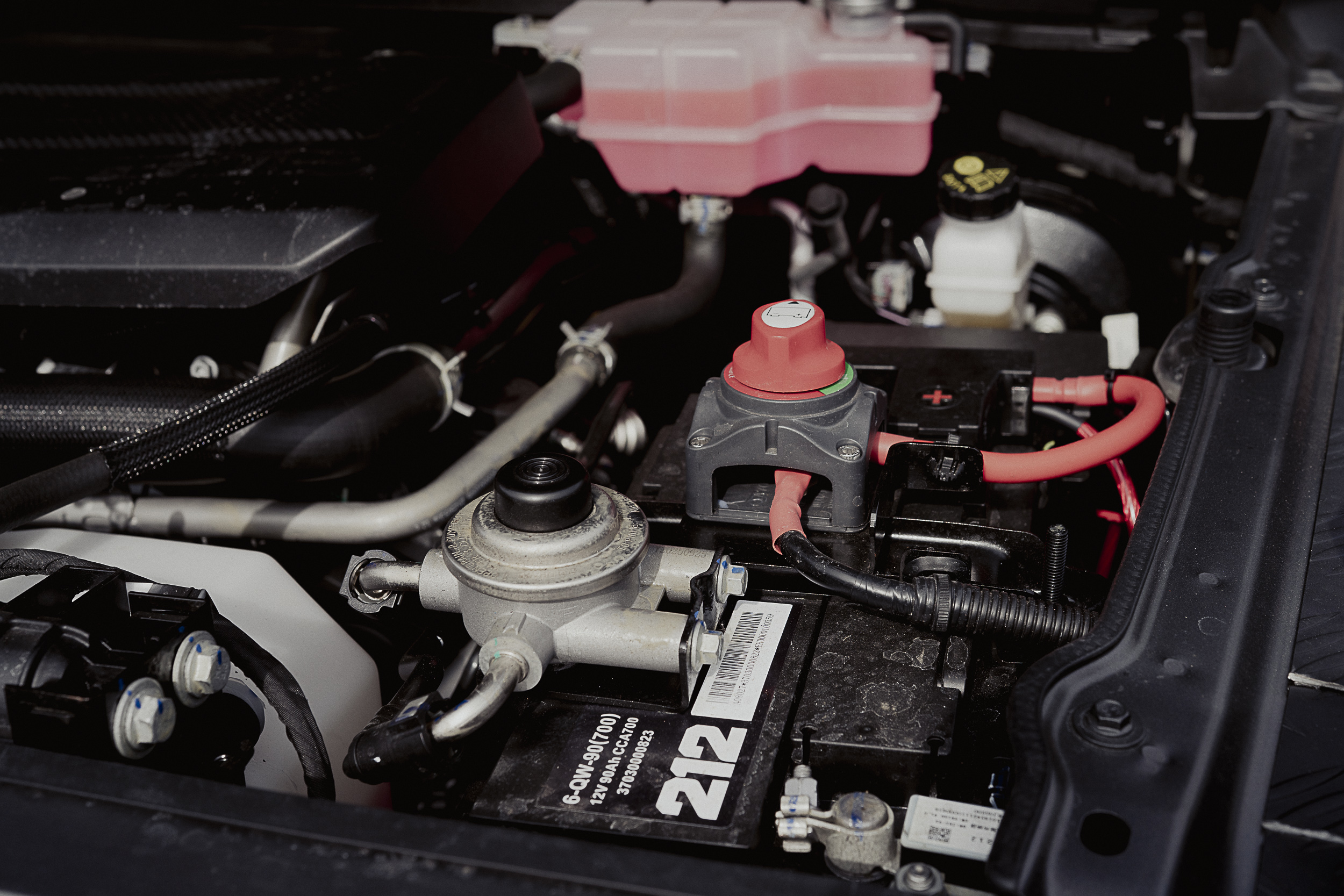
After opening the bonnet, I was immediately reminded of our former Isuzu D-MAX and our Toyota Hilux. There is order in the engine bay, no chaos. Everything is neatly routed and fixed. It is a joy to see something like this. Sadly, on the BAW 212 too, the room to get a spanner in is limited. There are worse examples, but here and there you will still have to break your forearm twice beforehand to get around every corner.
It’s the drivetrain, stupid!
To quote the 4×4 expert Tom Sheppard, a former RAF pilot who has completed several expeditions and first crossings: the drivetrain is the decisive component of an off-roader. Here BAW has done a thorough job on its 212. In both the concept and the sizing. Everything looks very solid and inspires confidence.
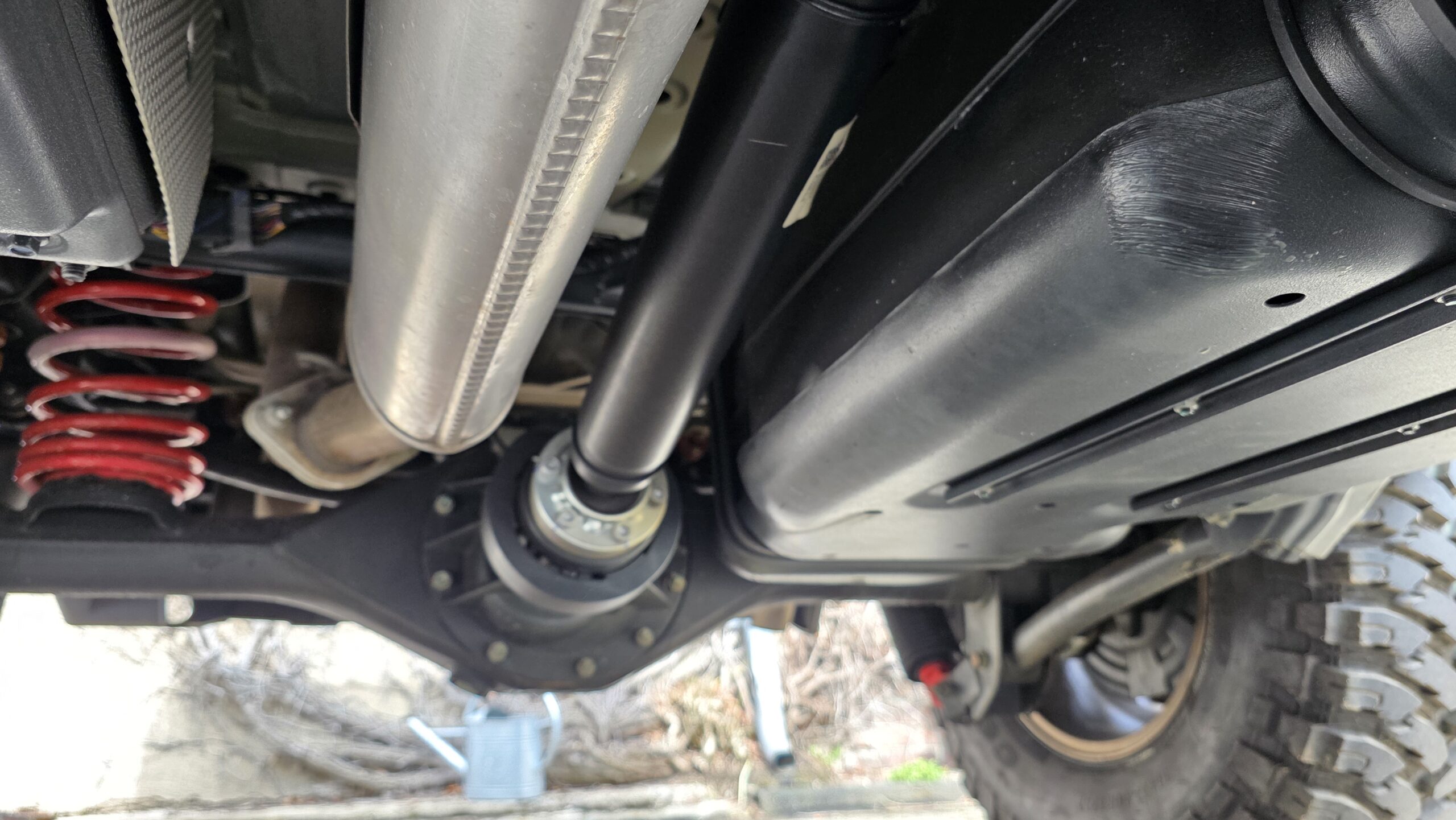
The always-driven rear axle is fed by a propshaft with CV joints (constant-velocity joints) and an axle that looks very similar to those from Dana.
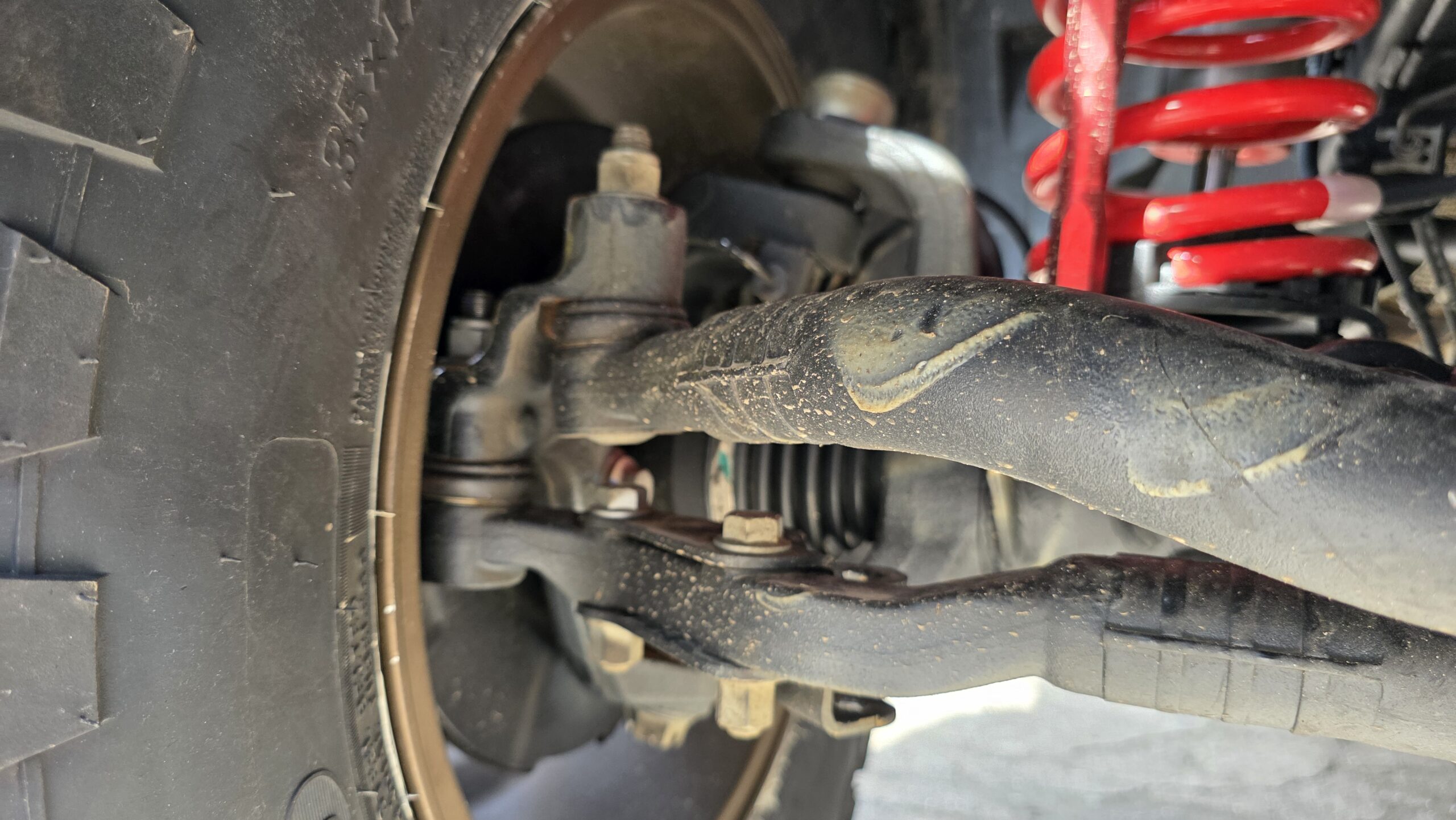
A propshaft with universal joints runs to the front axle. The front wheels also have universal joints. The axles contain electrically engaged mechanical 100% diff locks. To protect against damage, a warning comes on from 40 km/h with the rear diff lock engaged, and the front one is also deactivated automatically. The front axle is also reinforced. The four-link suspension stands for a high degree of articulation.
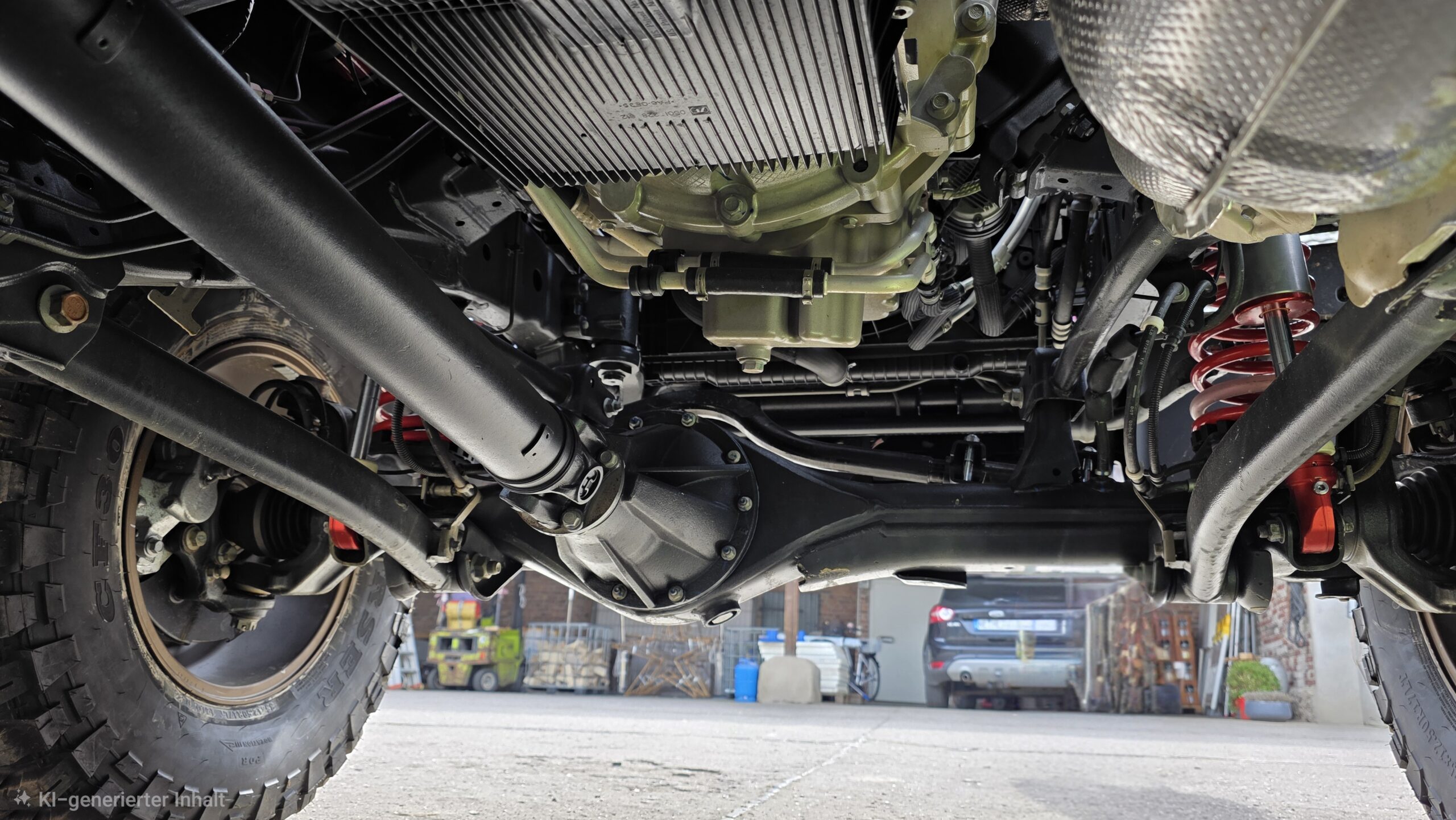
Otherwise it is quite tidy here, everything in its place. That is good to see. The vulnerable plastic parts, like the tank or the bottom of the ZF automatic, the accessory market will soon know how to protect. Rust prevention is likely to be a topic future owners should tackle early too.
Alongside the legally required assistance systems, there are the usual off-road aids. Traction control and hill-start and hill-descent control.
Good outside, good inside too
The exterior of the BAW 212 already looks good. That carries on inside. Where some makers continue with imitation-leather plastic in the interior, the BAW 212 has lightly padded synthetic leather and stitching on almost every surface. The displays are crisp and easy to read. Sadly, in my opinion at least, there are no classic instruments any more. A development that I, for one, very much regret.
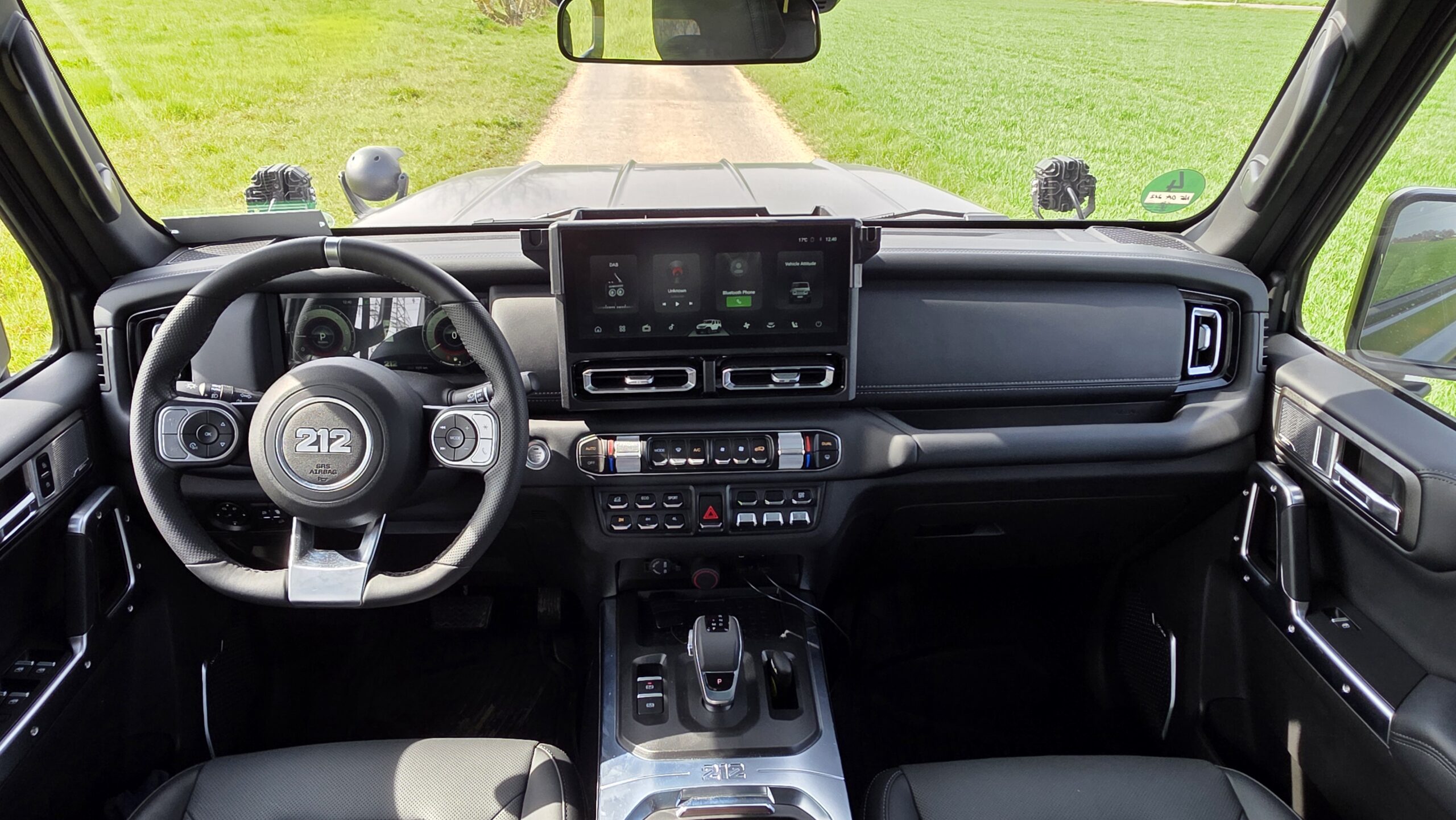
The fittings and trim give off a sturdy stainless-steel look, and little screws make it feel solidly engineered. That is good to see. The interior does not look empty, with ridiculous warning lights instead of proper gauges behind the wheel, but nor is it too cluttered or fussy. The displays in front of the driver are clear, tidy and easy to read. The gear selector gate is just as it is with the ZF gearbox.
You keep finding clever little solutions, like the extra trays on the transmission tunnel. There are several charging options, USB (front and rear) and the classic 10-amp socket in the centre console. The sun visors have illuminated mirrors.
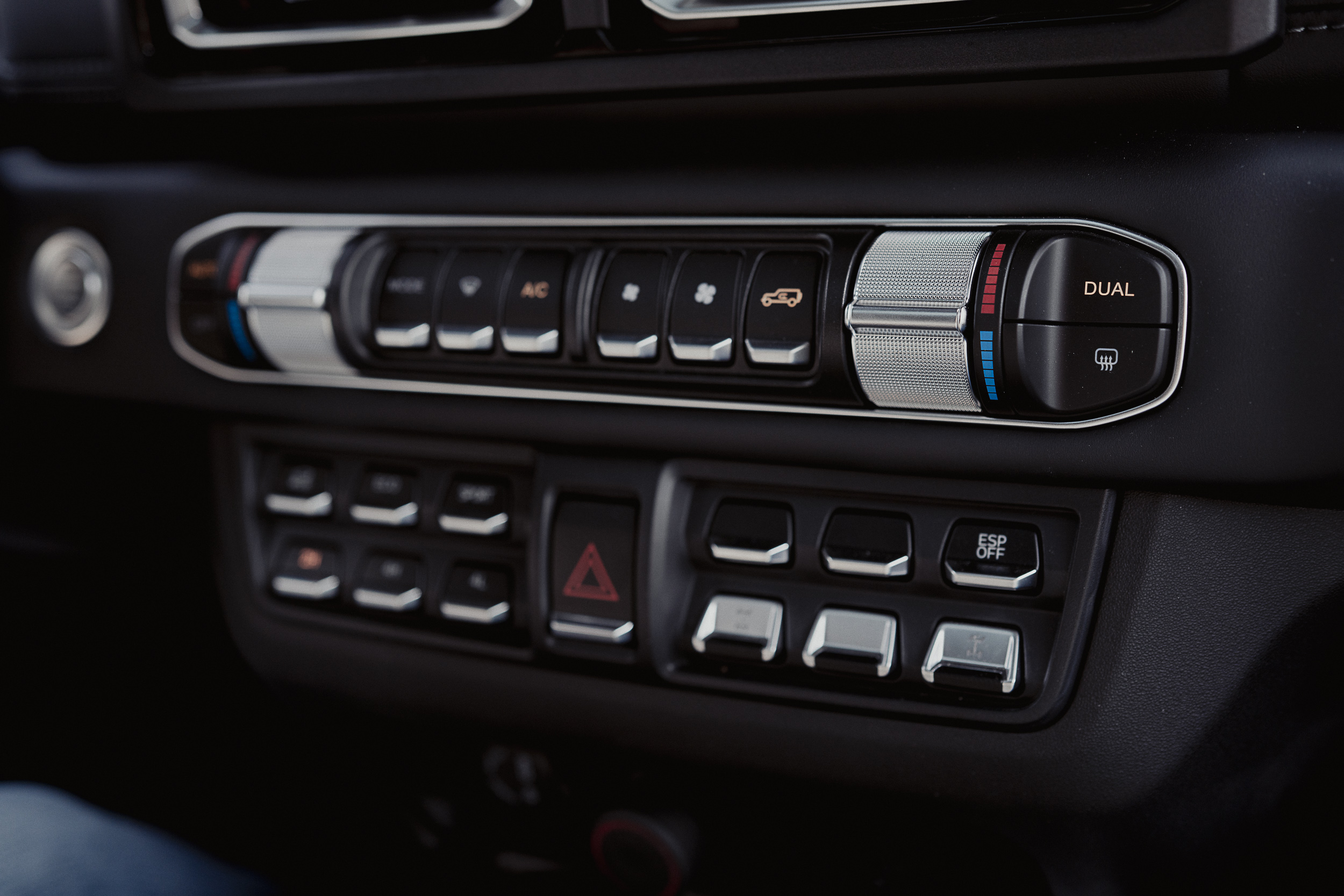
The main functions for the lights, wipers, heating and air conditioning, windows and driving modes are all operated with toggle switches and levers that are easy to reach and can be used safely even with cold fingers or gloves. They do not feel cheap either, or as though they will snap off any moment.
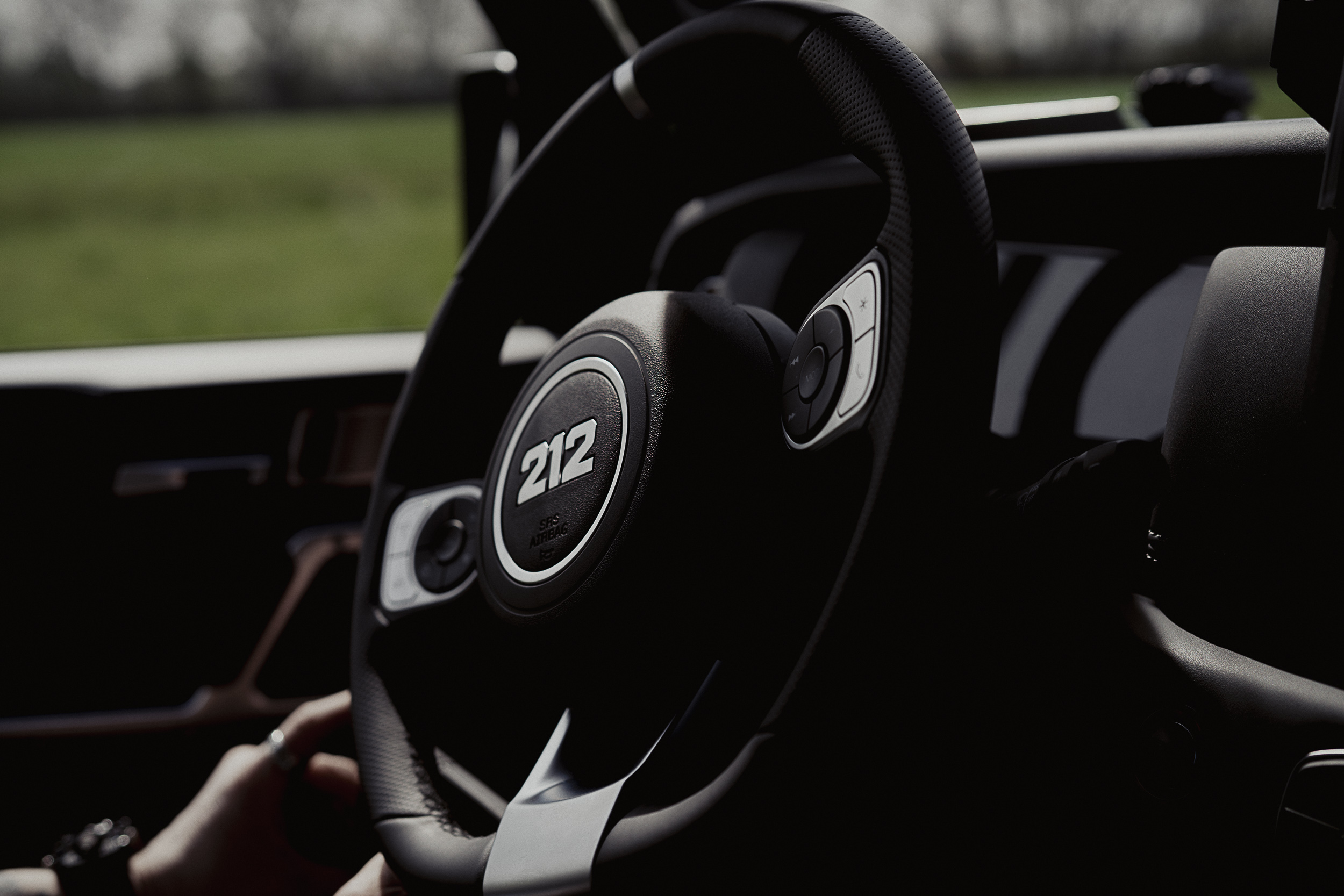
Also very pleasant, the steering wheel is not overloaded with functions. It offers the usual functions these days: volume control, hands-free and scrolling. There are no paddle shifters. You might miss those, since they are helpful off-road, but it is no real shortcoming.
The rear
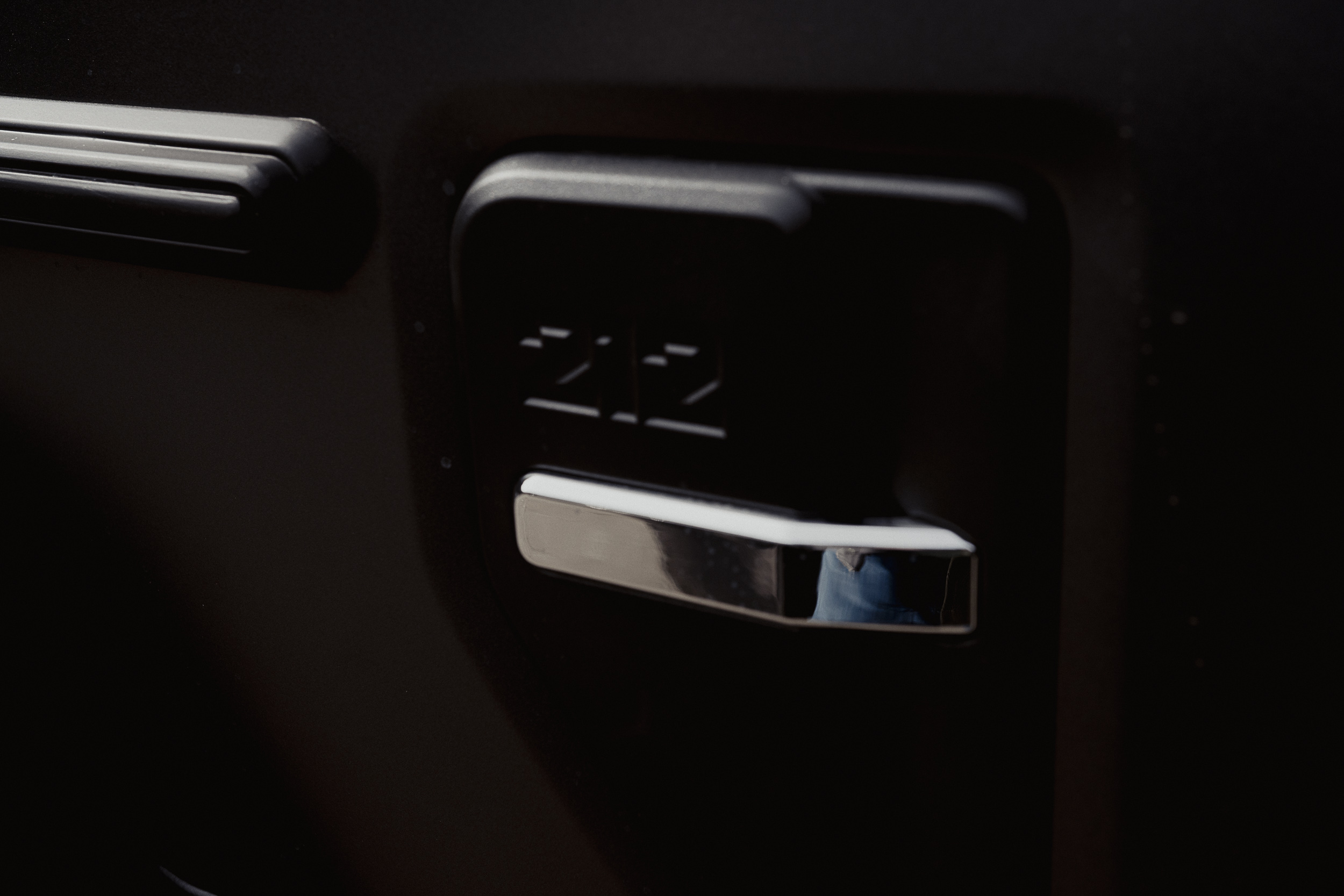
The rear door opens across the full load width. Unfortunately the hinges are on the right, so in right-hand traffic you always have to walk around the whole door if you do not want to step out into the road. At the bottom of the door there is a damper that can be locked. That way you secure the door against slamming shut unintentionally, a clever detail.
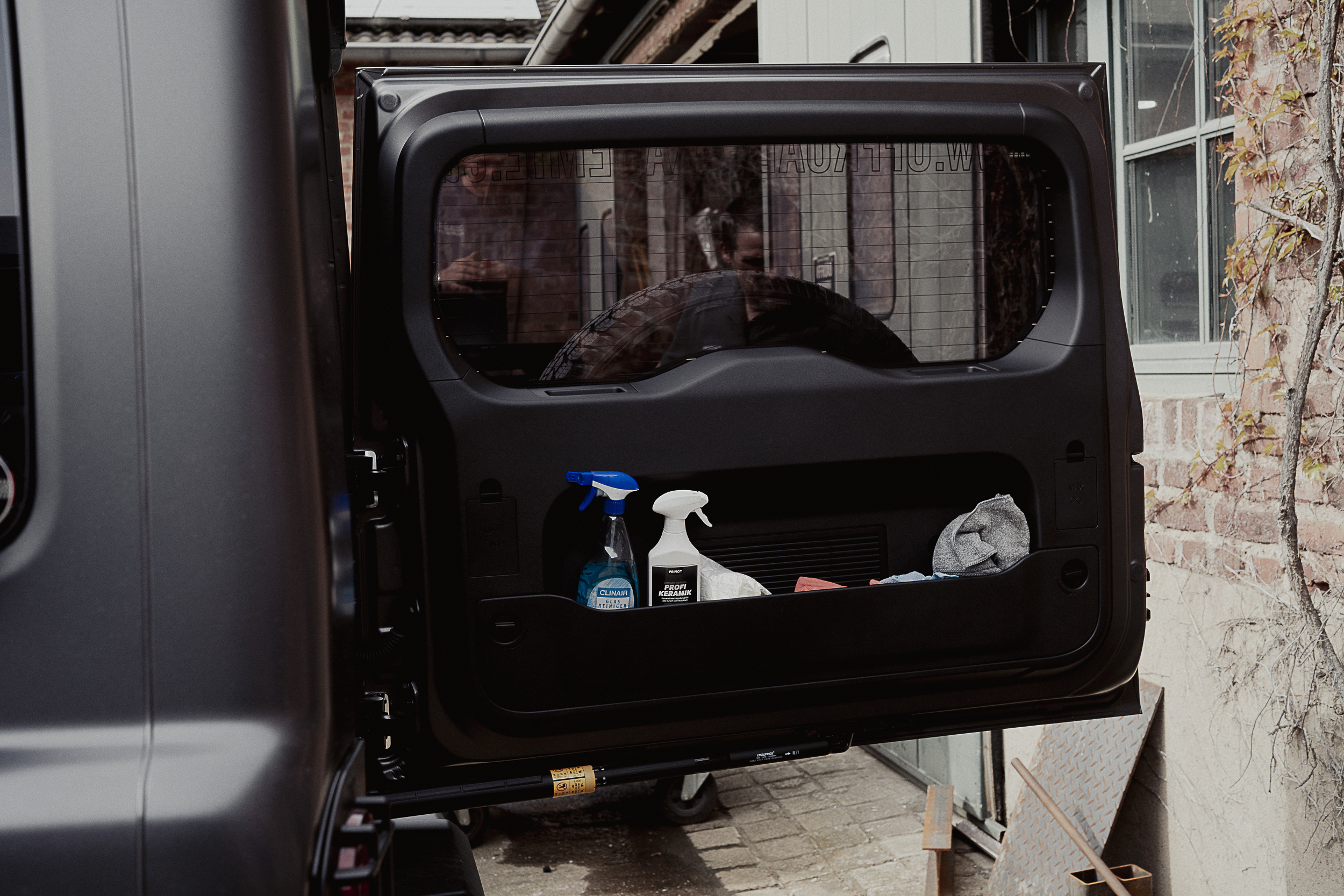
The possible 385 kg payload has to fit in a comparatively small space of 359 litres at the rear with the rear bench up. Folded down, you have 1,200 litres available.
Comfort features
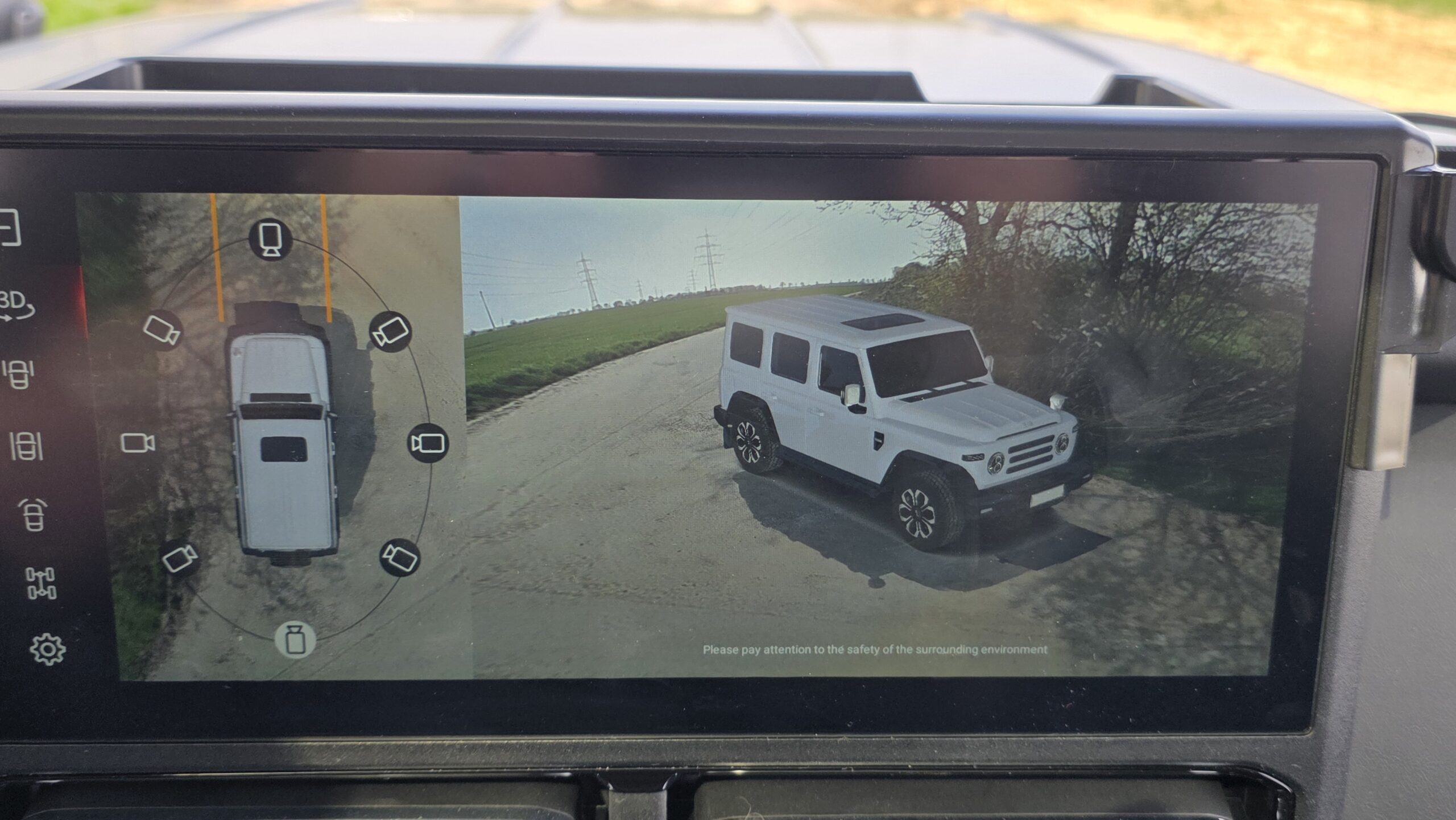
I am not someone who sets much store by big gadgets on a vehicle, but here and there there are some genuinely useful things. And I have to write about them anyway. What especially caught my eye is the 360-degree surround-view function. A computer stitches together the images from the cameras, puts a 3D model of the vehicle in the middle and so creates an outside view of the vehicle. That is genuinely helpful, and you can position the “external” camera wherever you like.
Driving the BAW 212
Sadly we have not yet had the chance to take the BAW 212 off-road. On the road, though, it was already fun. Granted, as the driver of a Land Rover Defender, just about any other vehicle with more power can win me over, but the BAW 212 drives well and briskly. Even with sport mode switched on, the g-forces stay within limits, but it is not sluggish either. We already know the ZF gearbox from other vehicles, and in the BAW it shifts neatly and calmly. For my taste, not too nervous either.
The steering demanded extra attention at first, being very direct and quick to respond. You are already turning into the bend before the body confirms the bend with a slight nod. That said, our test vehicle no longer had the factory suspension fitted, but an aftermarket setup already. After a short time getting used to it, it gave good feedback from the surface.
For the lighting, LED headlights and lamps are used all round.
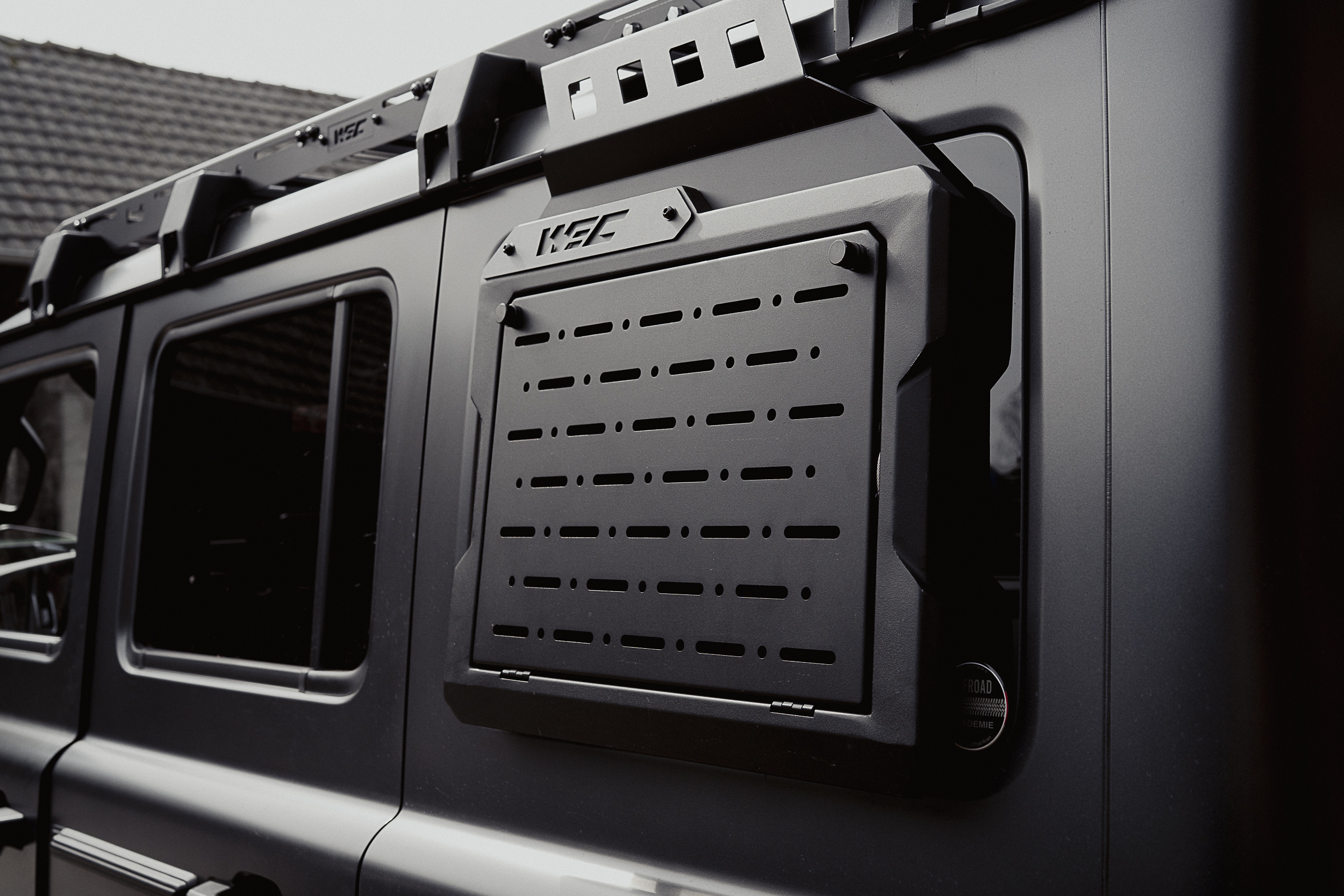
And the aftermarket in general… that is now getting going too. Suppliers like Taubenreuther, horntools and others are already working on accessories.
Standard: a winch
As the icing on the cake, the BAW 212 comes with a 4.3 t winch with synthetic rope. It even has the strongly recommended emergency-stop switch. The remote comes in a little bag, so everything can be stowed away neatly.
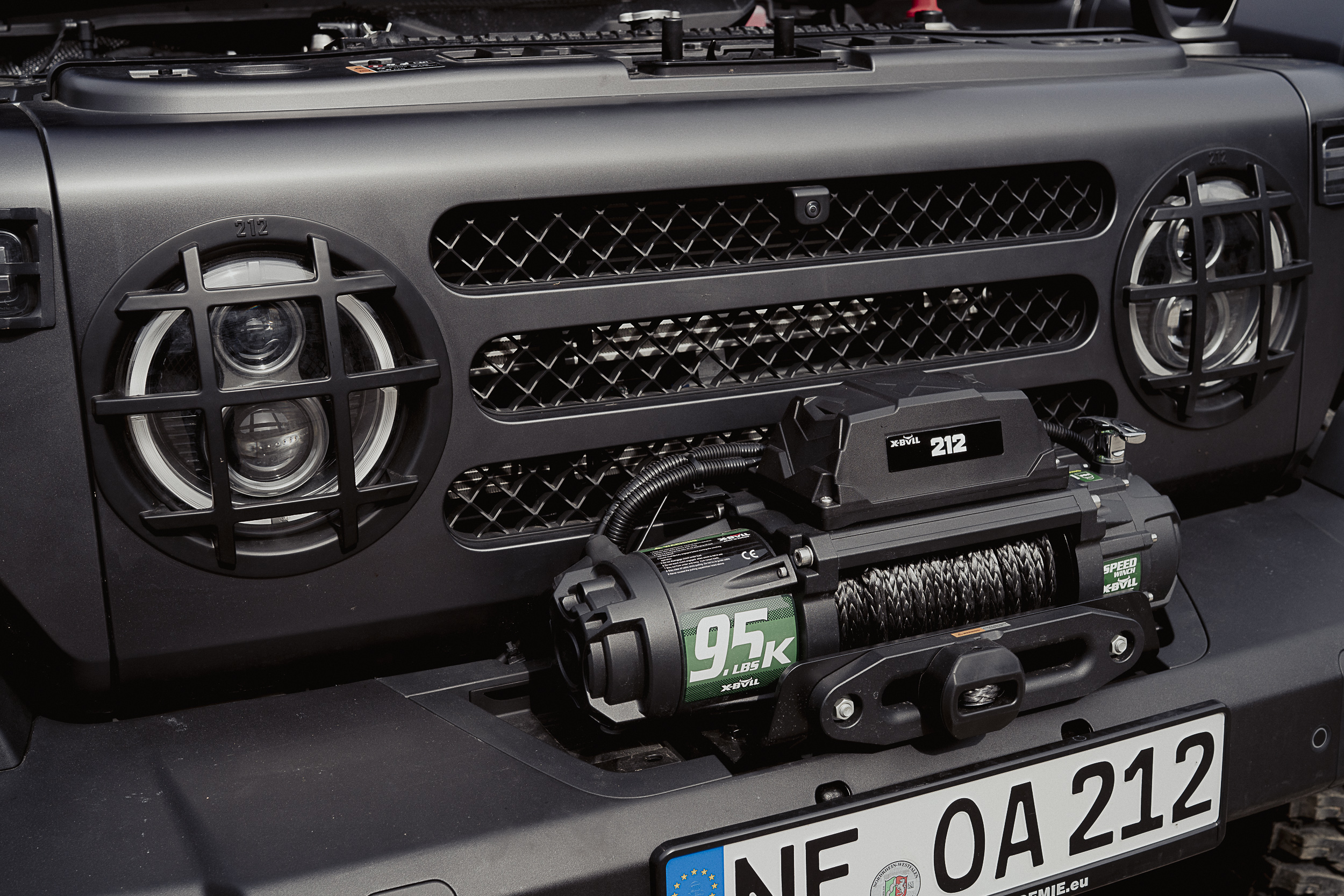
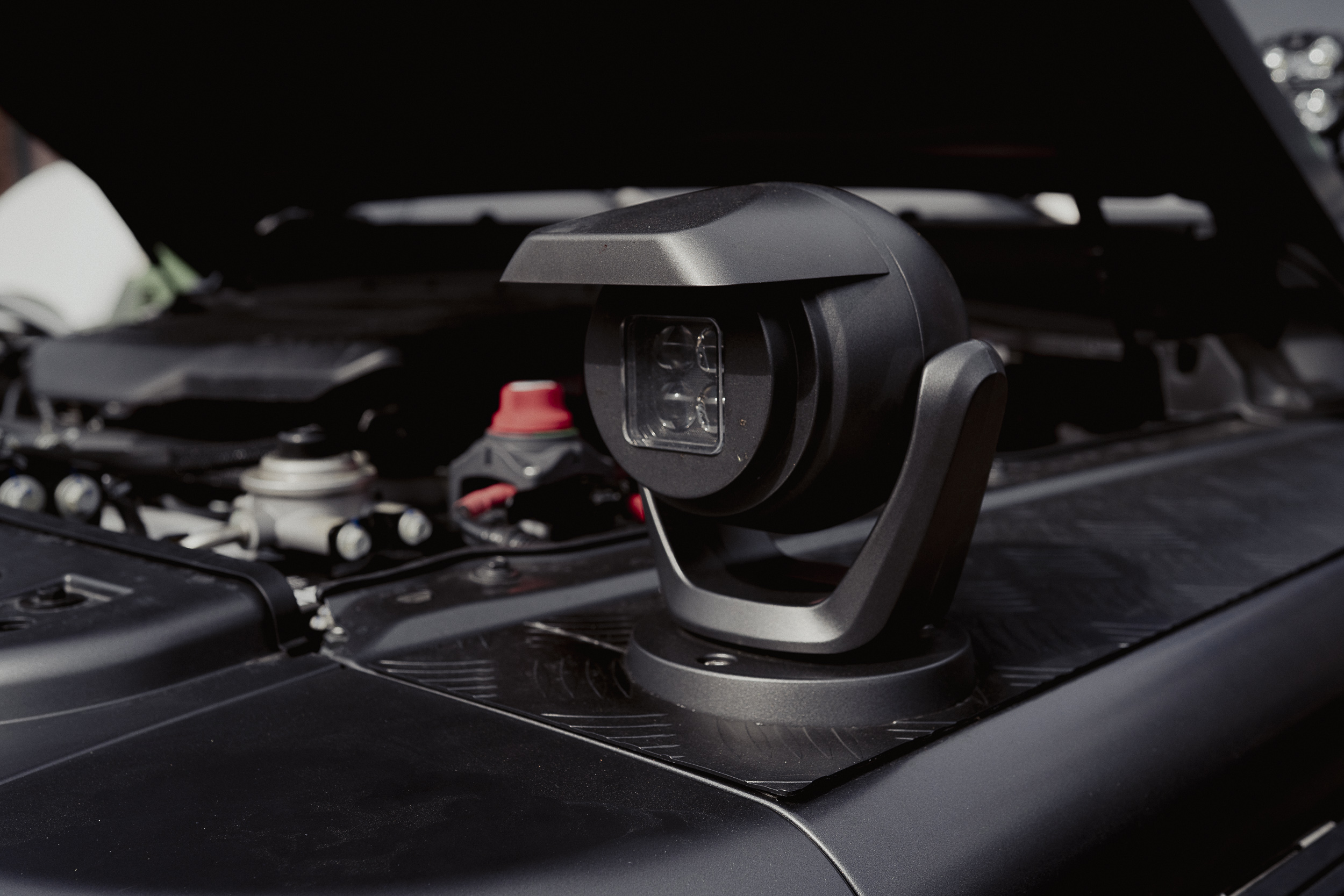
The small LED searchlight also seems a bit anachronistic, and off-road it might collect a bit of botany now and then. But never mind, a small nod to its military origins and to the UAZ-469. It remains to be seen whether it proves its worth. In the translated manuals, at any rate, it is still labelled an “anti-aircraft light”.
The BAW 212 specifications compared
| Feature | BAW 212 (T01) | Jeep Wrangler JLU (Rubicon) | Ineos Grenadier |
|---|---|---|---|
| Dimensions & weights | |||
| Length (mm) | 4,705 | 4,882 | 4,896 (incl. spare wheel) |
| Width (mm) | 1,895 | 1,894 | 1,930 (without mirrors) |
| Height (mm) | 1,936 | 1,848 – 1,901 | 2,036 |
| Wheelbase (mm) | 2,860 | 3,008 | 2,922 |
| Kerb weight (kg) | approx. 2,150 | approx. 2,100 – 2,400 (depending on engine) | approx. 2,700 – 2,800 |
| Off-road ability | |||
| Approach/departure angle | 40° / 36° | 43.9° / 37.0° | 35.5° / 36.1° |
| Ramp angle | 26° | 22.6° | 28.2° |
| Ground clearance (mm) | 235 | 252 – 274 | 264 |
| Gradeability | 100% (45°) | 100% (45°) | 100% (45°) |
| Side tilt (max.) | approx. 35° – 40° | approx. 30° – 35° | 45° |
| Wading depth (mm) | 650 – 690 | 760 | 800 |
I was a little disappointed by the towing capacity, but not surprised, since here too the car stands in the tradition of the Jeep Wrangler. 2.5 t braked, 750 kg unbraked, with a meagre 100 kg nose weight. Unfortunately the vehicle also has an electric parking brake, which likes to cause problems here and there. It is not required, but to meet the demands of emergency brake assist, distance control, auto-hold and so on, an electric parking brake is needed.
The BAW 212 is a veteran
While the BAW is currently washing over to Europe along with all the other Chinese brands, in China itself it has long been the bread-and-butter off-roader of the armed forces. When relations between China and the then Soviet Union deteriorated in the early 1960s, China looked for a replacement for the Russian GAZ-69, which later led to the UAZ-469.
Then in 1965 production of the BJ 212, also Beijing 212, began, as the successor to the BJ 210 and BJ 211. Back then there were only prototypes of the UAZ-469, but the visual closeness to the UAZ-469 produced a few years later is unmistakable. Later the vehicle was also strongly influenced by the American Jeep, which shows clearly in the BAW 212 TD01. The vehicles were initially built with Soviet components, like the engine from the Russian GAZ-21, which was then replaced by BAW’s own copy (Beijing Automobile Works, formerly BJ Beijing Jeep).
Numerous variants and successor models appeared in the years between 1965 and 2024, when the BAW 212 came onto the market, and which has also been available in Germany since summer 2025. In 1983 a joint venture came about between BAW and AMC, which at that time built the predecessor of the Jeep Wrangler, the CJ-7 and the CJ-8. For the then BJ 212, BAW was able to draw on a 2.5-litre engine and the gearbox. This joint venture brought a considerable modernisation of the ageing BJ 212.
Support with room for improvement
While, according to Indimo Automotive GmbH, around 150 dealers in Germany sell and service the BAW 212, there is apparently still no official German manual. Online, committed owners already share translated manuals and workshop manuals, but properly translated versions are still missing. So the small searchlight on the left wing is still called an “anti-aircraft light”. The brand is being built up in Germany and Europe, and it remains to be seen how quickly, and in what quality, service and customer support develop.
The verdict on the BAW 212
If we set aside where the Western world currently stands in relation to China, we see a vehicle that is a challenge to all other off-roaders. A starting price of under 40,000 euro, at the equipment level, the feel and the quality the BAW 212 shows, at least as a new vehicle, there is nothing comparable on the market.
If the vehicle still stands so fine in three to five years, a few other makers had better watch out. If the service keeps up, and the spare-parts availability, and the car proves its quality, then it is a new player on the field to be reckoned with.
In the end it has to prove itself and show that it deserves trust and market share. Here BAW could become a real headache. An old brand, if unknown here, with experience in off-roaders. On top, half the price of one of the technically comparable models, the Grenadier, Wrangler and Bronco, with not much less good performance, once you set aside the mediocre towing capacity. If the other disciplines, the quality and the accessory market keep up with the vehicle, it could become a runaway success and a strong raider in others’ traditional territory across the board.
Through its price, it can show whether off-roaders in Germany really are a shrinking niche, or whether the current range between full-size off-roaders for over 70,000 euro and the Suzuki Jimny for under 40,000 euro is missing something, and the vehicles miss customers’ taste or wallet. The success of the Suzuki Jimny suggests the market is there.
But there is a “but”. The only flaw, if you want to call it that, that I could make out is its origin. It remains to be seen whether the BAW 212 will suffer under a patriotism bonus, any future tariffs, the political mood or the ever-feared quality problems of Chinese products. Here I see the unknown factor that will only show over time.
Our thanks go to Thomas Claßen, Offroad Akademie, who provided the vehicle.