

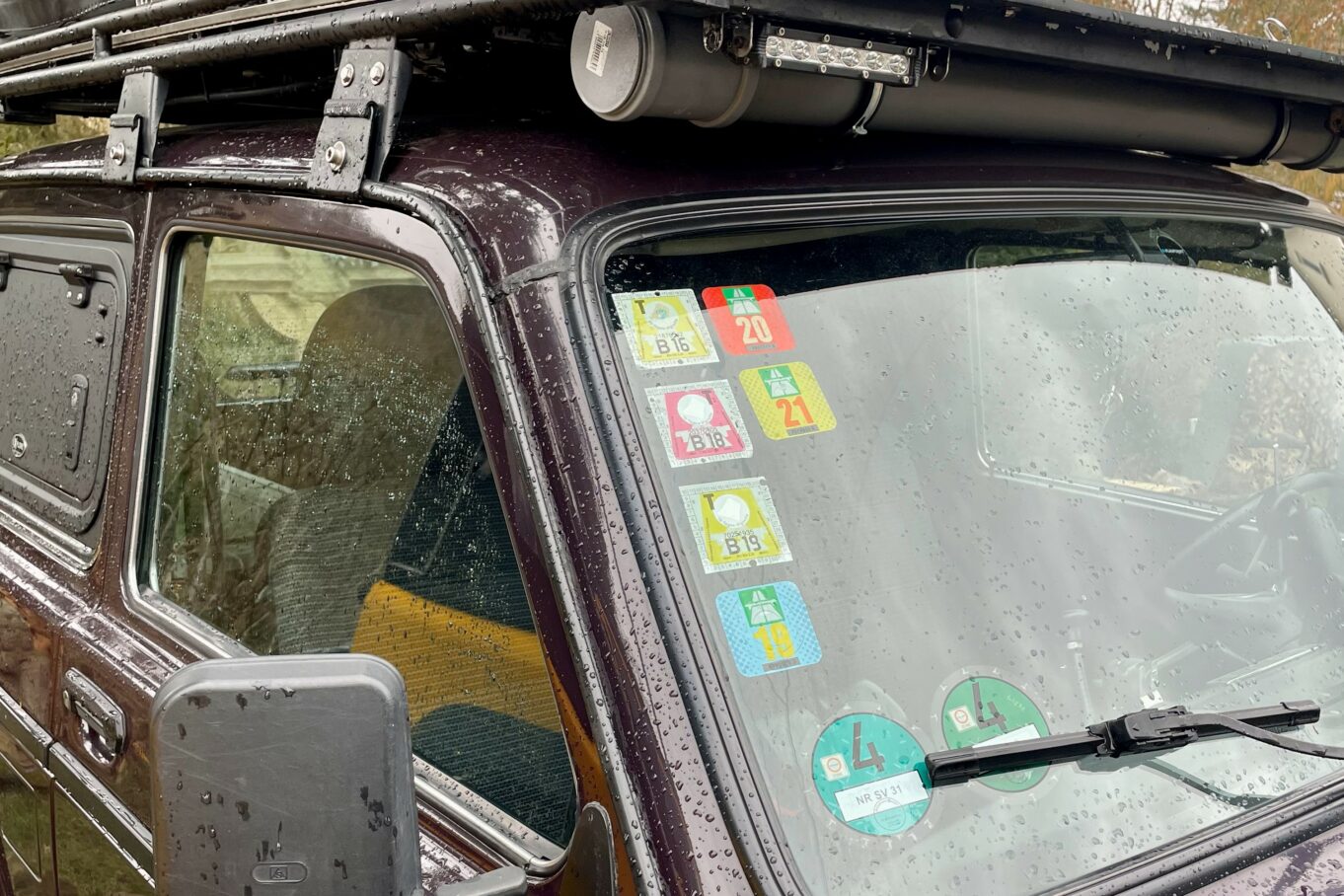

Road tolls in Europe. Even if, as an off-road traveller, you naturally prefer to be out and about away from surfaced roads, you’ll surely use motorways and expressways at least on the way to and from the destination. And sometimes road user charges are due for that.
There are a great many toll rules and vignette systems in Europe. We’ll attempt an overview anyway. In doing so we focus on popular destinations for off-road travellers with off-road vehicles up to 3.5 tonnes gross weight.
Let’s start our little road-toll and vignette tour in Central Europe
Germany
In Germany we are largely toll-free. There is a general motorway toll only for commercial goods traffic, for vehicles and vehicle combinations from a gross weight of 7.5 tonnes. On the motorways you’ll surely have seen the control gantries that monitor toll payment. On the main roads, blue columns are used. Don’t worry, this isn’t a speed camera, but only a control column for the truck toll.
There are still a few small local exceptions to the general toll exemption for other traffic, for example tunnels and car shuttle trains where user charges are due.
Austria
In Austria there is a general toll on motorways and expressways for all vehicles up to 3.5 tonnes gross weight. To pay the road user charge you can choose between the familiar sticker vignette and a digital version. There are annual, two-month and 10-day vignettes. The vignette is tied to the number plate. Anyone using an interchangeable plate in Austria has the advantage, with the digital vignette, that it can even be used for up to three vehicles.
The sticker version is usually available at the last filling stations and service areas before the border, or in advance, for example from the ADAC. You get the digital vignette from ASFINAG. That is an infrastructure company responsible for building and running the motorways and expressways in Austria. You get the vignettes there in the online shop or through ASFINAG’s app.
The important thing is that you either have a valid sticker vignette properly attached to your vehicle (and not just carry it) or the digital vignette is registered to the vehicle you’re travelling in. You have to do both before you drive on a toll road. The possible penalties for breaches are high.
On some Alpine routes there is also a so-called section toll. This is paid separately for the section in question; the vignette mentioned doesn’t apply here. You can pay the tickets for using these routes at the toll station (cash or card) or buy them in the operator’s online shop mentioned above. There are also ASFINAG sales points and machines. One example is the Großglockner High Alpine Road, which is very worthwhile for the scenery.
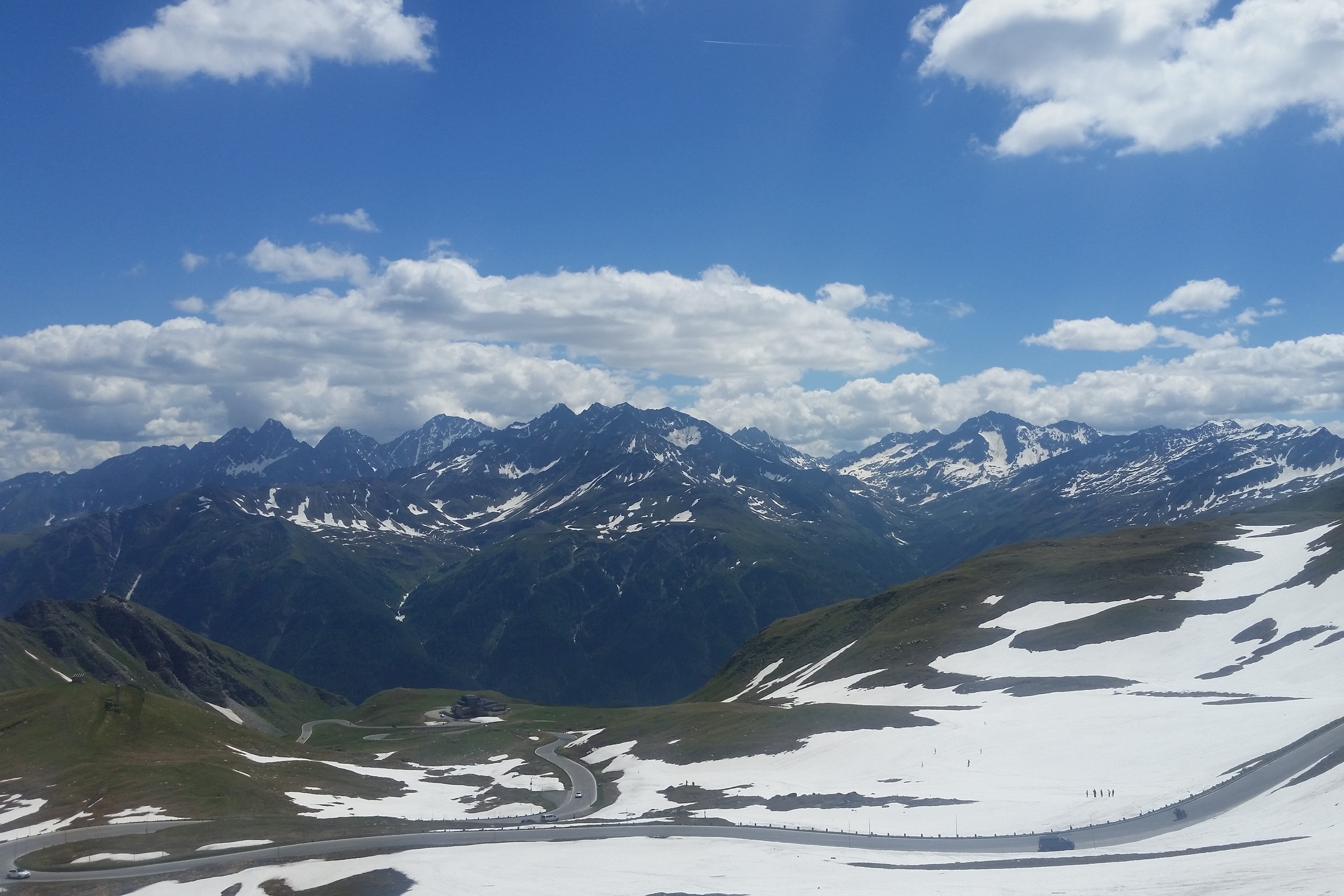
 Practical tip: watch the validity when buying. ASFINAG points out on its website, for example, that digital vignettes/tickets are only valid at the earliest 18 days from the date of purchase if you buy them as a consumer (consumer protection and right of withdrawal). If the vignette is meant to be valid straight away, it’s better to buy it at one of the sales points.
Conversely, there are a few toll-free routes, and various subscriptions too, for example for commuters and frequent drivers.
For vehicles over 3.5 tonnes gross weight, a distance-based toll applies in Austria. For that a separate device is needed for the vehicle, for example the so-called Go-Box.
Switzerland
For your vehicle up to 3.5 tonnes gross weight you need a vignette on Swiss motorways and semi-motorways. Such a vignette costs you a one-off 40 Swiss francs, so about €40 as of March 2023, and is valid from 1 December of one year to the end of January the following year. It comes as a sticker and, in future, an electronic vignette. There are also toll-free routes, so it’s best to always be well informed before setting off, for example on this digital map.
For heavier vehicles there is a distance-based toll in Switzerland too. You pay this so-called heavy vehicle charge with the Via App or in the Via Portal.
France
In France road tolls are widespread. The motorway network in France is run by various companies. They charge a road user fee on many routes. Some routes, often around cities, are free. The cost is based on a combination of the distance covered and the category your vehicle falls into. In some cases you pay the toll as a flat rate for a section, or you have to take a ticket at a toll station which is read again at the end of the section or at the exit, and you pay for the distance. Payment is made in the classic way at a toll booth. At these toll booths you can now often pay contactless by credit card, so the annoying fumbling with cash is no longer needed.
You can save yourself the stop at the toll booths if you use one of the approved toll systems. With them you can use the lanes marked télépéage at the toll stations. One example is the Bip&Go system, which also works for other countries (Italy, Spain and Portugal).
Besides the motorways, there is often a toll for using various tunnels and bridges. There are also private sections with online payment and pay machines; this special feature, called the Freeflow system, is found in France on the A79, a section of the former Route Nationale 79 that was recently upgraded. Here you have a clear run without stops at toll stations. In return, your number plate is registered and you pay the toll at pay machines at rest areas along the route or online within a time window after passing (72 hours). From our own experience this works very conveniently and well.
Practical tip: make sure your card is enabled for payments online.
On we go with road tolls in Europe in the Mediterranean region
Spain
In Spain many motorway routes are now toll-free again. On the toll routes, the toll works similarly to France, either at booths in cash or by credit card, with toll boxes, or there are Freeflow routes.
Italy
In Italy the motorways are subject to tolls, as are tunnels, mountain pass roads and rail shuttles, plus some city entrances, for example the Milan city toll. There is a special feature in the classification of vehicles in Italy: the height at the front axle (1.3 metres and above) is decisive. For payment you’ll find, you’ve guessed it, closed sections or Freeflow systems as in France.
For heavier motorhomes, the DKV Camper Box is of interest. DKV may be known to some from handling road user charges for commercial heavy traffic or from fleet fuel cards. Together with the ADAC, DKV offers the Camper Box. It can be used in many European countries, including Italy.
Greece
Some motorways in Greece are subject to fees. For that, toll booths are set up, sometimes a great many, which can mean frequent stops. Or you use transponders, available locally at the service points of the motorway company. The cost depends on the distance and vehicle category, which is based on the number of axles and the vehicle height.
Portugal
In Portugal the motorways are mostly subject to fees. Here too there are vehicle classes, some of which depend on the height at the front axle (the limit here is 1.1 metres). Vehicles not registered in Portugal have to be registered in advance together with a credit card. For that you’ll find car parks with check-ins at individual border crossings. Your number plate is recorded and the toll is then simply charged.
Eastern Europe, with the Baltics and the Balkans, are great off-road destinations too
Slovenia
In Slovenia a vignette is compulsory. It applies to the country’s expressways and motorways. For that you need the electronic E-Vinjeta vignette. The special feature with the height at the front axle exists in Slovenia too, for the categorisation of vehicles. Category 2A, for example, covers all cars up to 3.5 tonnes gross weight and 1.3 metres height at the front axle. This includes all motorhomes up to 3.5 tonnes gross weight. For motorhomes it is decisive that they have permanently installed camping equipment.
You can get 7-day, monthly and annual vignettes. You can buy these online in advance or at various sales points and filling stations near the border.
For heavier vehicles that exceed 3.5 tonnes gross weight, a distance-based toll applies.
Croatia
In Croatia you’ll find a motorway toll set up similarly to the closed section systems in France. Depending on the vehicle, there are various categories here too. Of interest to off-road drivers is that you have to pay more for vehicles with a height of more than 1.9 metres.
Instead of paying the toll at the toll stations, you can also use an electronic system in Croatia. For that you first have to buy a rechargeable transponder from one of the operators, for example at a toll station.
Hungary
In Hungary you need a vignette on all motorways and on the expressways specially marked with an “M”. As in many other countries, it is an electronic vignette. Checking is done by number-plate recognition.
The cost of the vignettes depends on your vehicle; the entries in the vehicle registration certificate Part 1 are decisive. So please look closely and check, and keep the receipt.
You get the electronic vignette for Hungary, also called E-matrica, at service areas near the border or online in advance.
Albania
In Albania there is no general toll or vignette requirement today. Using the Kalimash Tunnel on the A1 motorway in the north of the country is subject to a fee. You pay this fee on site.
Romania
For the motorways and expressways there is a vignette requirement in Romania. This vignette, available as a daily, seven-day, 30-day, 90-day and 12-month vignette and going by the name Rovinieta, is available at the border crossings and individual filling stations. Using the numerous Danube bridges has to be paid for separately. The vignette has to be bought before using the roads in question. The receipt has to be carried. You can also conveniently buy it online on the operator’s site.
Slovakia
In the Slovak Republic a vignette is compulsory for motorways and expressways (exceptions are marked). For that an electronic vignette is required. You get it on site at the border crossings and filling stations or simply and quickly online (or via the eznamka app). The receipt is to be kept and serves as proof.
Czech Republic
Most motorways and expressways in the Czech Republic are subject to fees. For that you have to buy an electronic vignette and register your vehicle. You can do that at sales points (e.g. filling stations and machines on site) or simply online.
Poland
In Poland the motorways are partly subject to tolls. So are some country roads, but these only for heavier vehicles or vehicle combinations with a gross weight of over 3.5 tonnes. Payment on the privately run routes is in cash or by credit card; for the public routes you have to buy an e-ticket online and register your vehicle with it in advance. For vehicles over 3.5 tonnes gross weight, the electronic toll system e-Toll has to be used. The system has been changed again and again in recent years, so it’s especially important to find out exactly what is currently valid before your trip.
Estonia
For trucks from 3.5 tonnes gross weight there is an electronic toll in Estonia. Below that, and for motorhomes even if they are heavier than 3.5 tonnes, no road user charge applies.
Latvia
Tolls apply to commercial goods traffic for vehicles from 3 tonnes gross weight. Not for motorhomes. On top of that there is a city toll for the popular resort of Jūrmala (an environmental charge in the summer months).
Lithuania
Cars and motorhomes are not subject to a vignette or toll in Lithuania. In Lithuania, though, you have to be particularly careful as an off-road driver. Namely with the vehicle class of your vehicle. Commercial vehicles of classes N1, N2 and N3 (as well as buses) have to be fitted with a digital vignette here. You get it either online or at various sales points on site. There is also a charge for driving onto the Curonian Spit.
Turkey
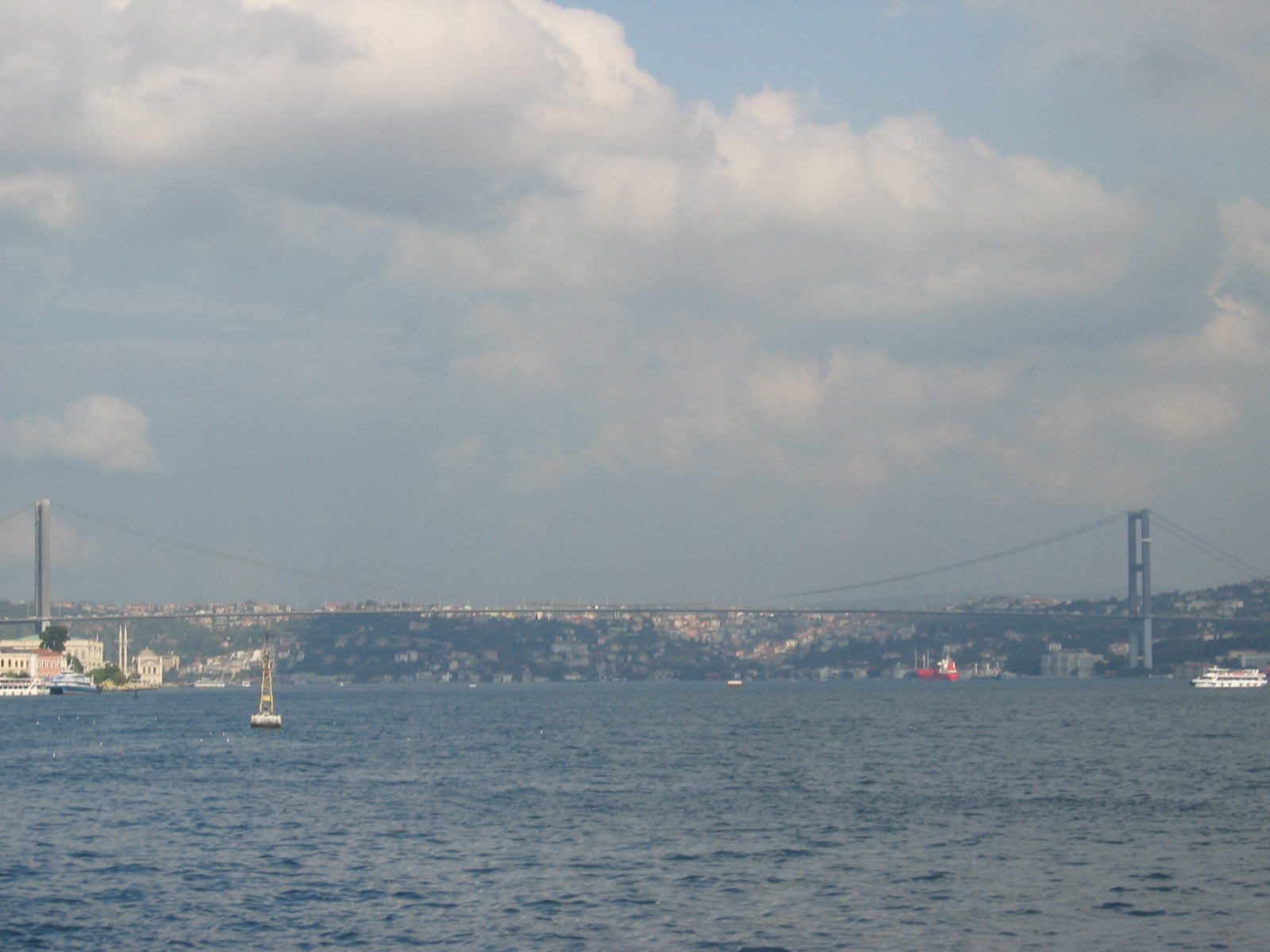
In Turkey you’ll find, on the one hand, the motorway toll and, on the other, the charges for the Bosphorus tunnel and the Bosphorus bridges.
As a traveller in Turkey with a vehicle not registered there, you pay the motorway toll using the HGS system. In its basic principle this is similar to the toll boxes already familiar. It is a sticker strip for the windscreen or a chip card. This is topped up with credit, which you can load, for example, at service areas and individual Shell filling stations.
Northern Europe mustn’t be missing either, as some dream destinations lie here
Denmark
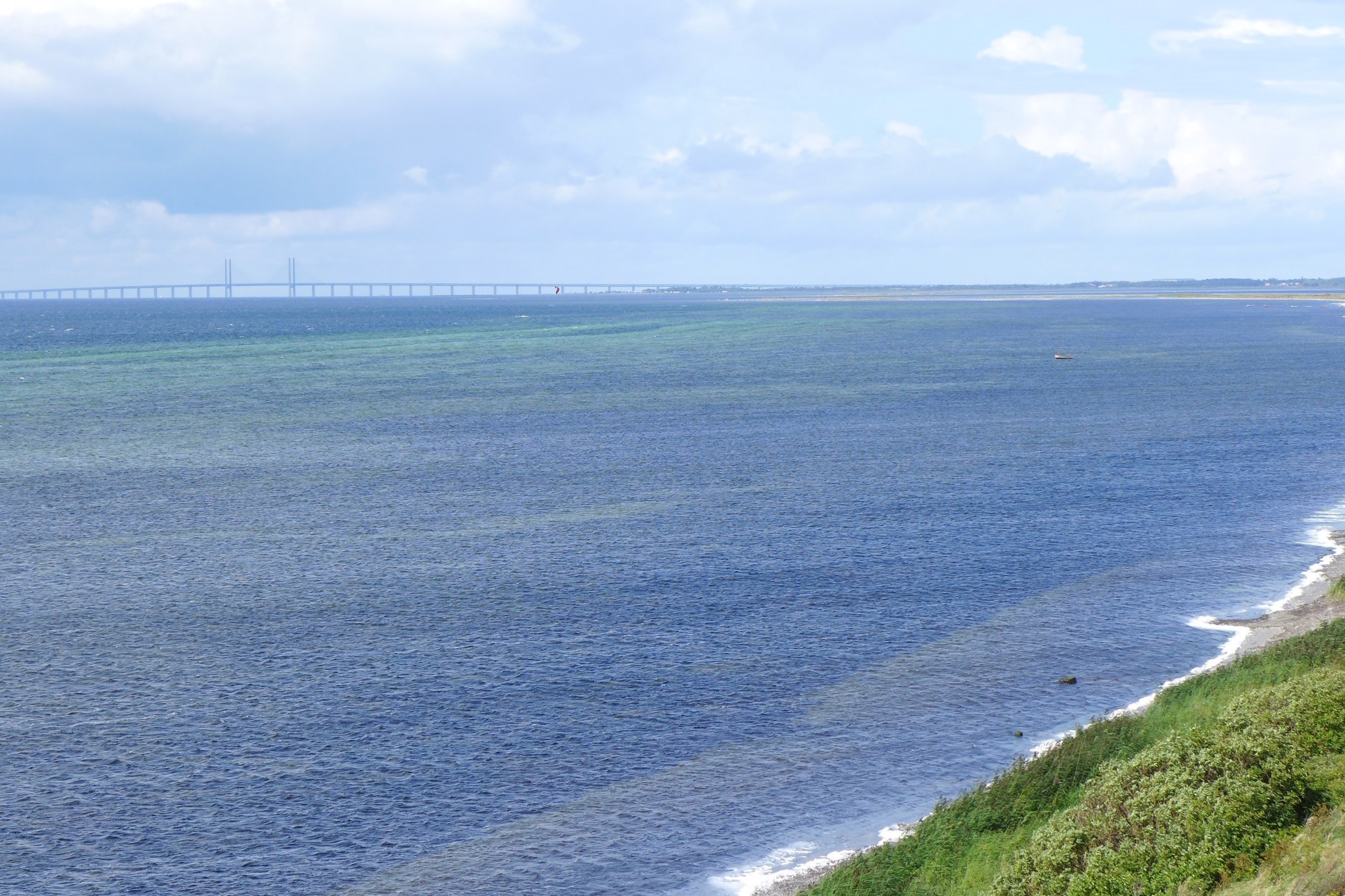
In Denmark it’s very simple. There is no general toll or vignette requirement, you have an almost clear run. Fees apply for the Øresund Bridge and the Storebælt Bridge. These can be paid directly on site.
Norway
In Norway tolls are also due for tunnels and other sections. The routes in question are signalled early by signs. On top of that, in some cities like Oslo or Bergen there is also a city toll. The prices depend, among other things, on the time you pass through (in the rush hour the toll can be considerably more expensive) and the type of drive (diesel, petrol, electric) of the vehicle used. On many routes in Norway, as in Sweden, the number plate is registered by video monitoring and after a while you get the invoice sent to you. As mentioned, you can register with ePass24 or AutoPASS.no and view and pay your toll charges online. AutoPASS is the name of the Norwegian toll system, and another option is to take out a contract. Then you get a chip sent to you and the tolls are settled through it. Something for frequent Norway drivers.
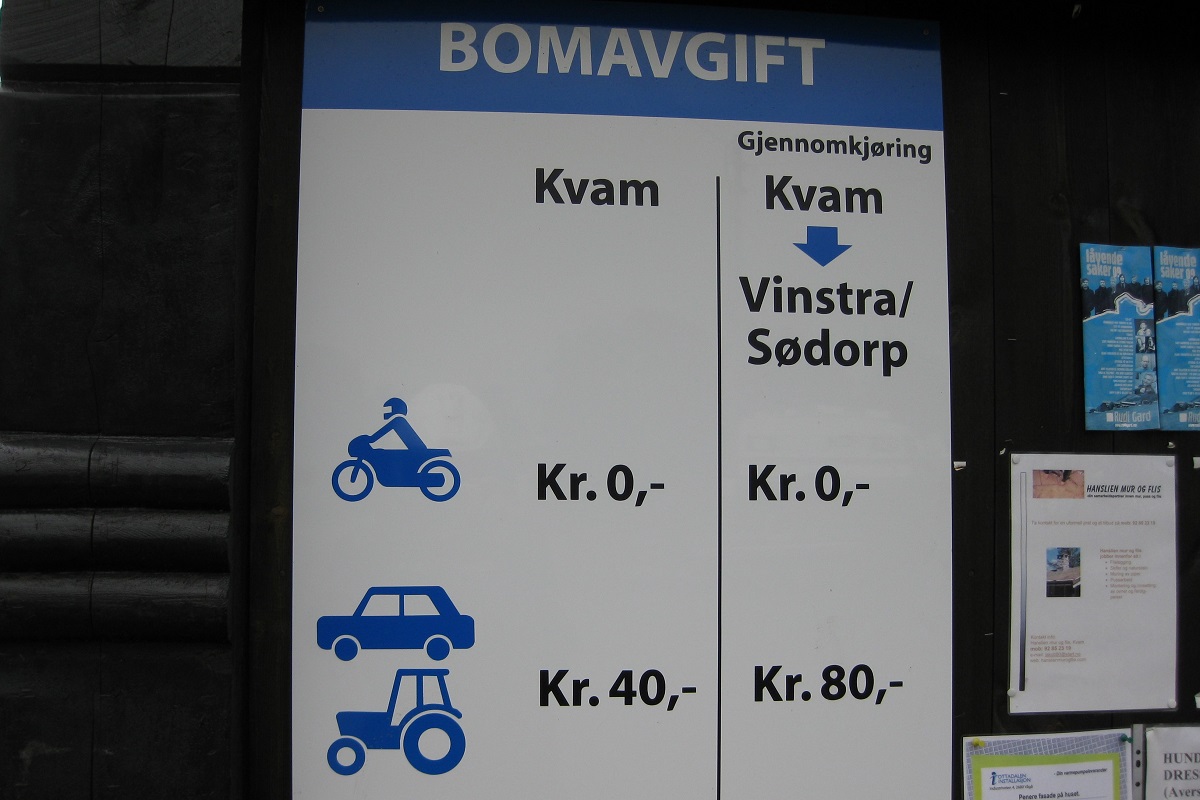
On top of that come the inland ferries in Norway’s fjords and private toll roads. Here the staff usually only record the number plate and billing is done as described above. There is one more little special feature in Norway. The private toll roads. Here you’ll see quite different billing systems. The cash boxes on a trust basis have largely disappeared. More often you’ll now find automatic barriers where you pay by credit card, or number-plate recognition and subsequent online payment of the toll due. In some cases payment is set up with the Norwegian payment app Vipps. To use it you need a Norwegian bank account/credit card, a Norwegian identity number and a Norwegian phone number. So it’s a good idea to carry some cash in the local currency. That way you can perhaps ask a friendly Norwegian to pay the toll for you by app.
Sweden
There is no general toll or vignette requirement in Sweden. Some bridges are subject to tolls and are paid on site at toll stations. For other bridges the toll is charged similarly to the city toll described below. Because there is a city toll in the cities of Stockholm and Gothenburg. When you pass a city-toll recording point, your number plate is registered with the Swedish transport authority, the invoice is sent to the vehicle keeper and payment is made via the site ePass24, where you can optionally set up an account for easier payment. By the way, the platform is shared with other operators and you can partly pay the toll and domestic ferries in Norway through it too.
Iceland
Iceland has no general road user charge, but there are a few sections that are subject to fees. In Iceland a toll is due in the north in the Vaðlaheiðargöng tunnel. This also has to be paid online by credit card.
Finland
A clear run! There are no road user charges of any kind here.
To finish, let’s hop over to the islands in Western Europe
United Kingdom
In the United Kingdom, so Wales, Scotland, England and Northern Ireland, there is no nationwide toll. Some individual sections, such as tunnels and bridges, are subject to charges. Some cities have a city toll, as we know it from other European cities. In some cases these charges, you’ve guessed it, have to be paid digitally within a time window (e.g. internet, phone).
One special feature is a section of the M6, where there is a toll arrangement. You can pay the cost for it at the respective toll stations in cash or by credit card. Beyond that, there is also the option in the UK of getting an electronic tag. You have to hire this for a fee and top it up with prepaid credit. This tag is attached to the windscreen. Probably only worthwhile if you visit the island more often. By the way, these tags often pay off financially too, because they sometimes grant a price advantage on the road user charges, as in the UK.
Ireland
The motorways on the beautiful green island are generally subject to charges. Here too there are tunnels and bridges. On the motorways you can sometimes pay by distance directly on site, or, similar to the Freeflow system mentioned several times, afterwards within a deadline at pay points or online. Please watch for the relevant signage.
So much for our little toll and vignette tour of Europe
You can see there is a great variety of different systems for paying road tolls in Europe. Distance-based, vehicle-based, time-based, closed and Freeflow systems, toll booths, electronic vignettes, sticker vignettes, cards, sticker strips and much more. Sometimes you’ll also find toll charges for smaller private roads, which are perhaps even paid in cash into a small box on a trust basis, though this has become rare.
We’ve concentrated here on the main rules and systems and hope that, despite the confusion, we’ve shed a little light on the toll and vignette jungle with this summary.
In some cases, systems usable across borders make getting around easier. Be careful when buying vignettes online and make sure to get them from the official sites, so you get the right vignette and don’t pay too much.
And one more tip for the trip: sometimes the time spent between two toll stations is limited to a certain period, this is the case at the Brenner or in Portugal, for example. Bear that in mind for an overnight stop, so you don’t pay double toll for a route unnecessarily.
And don’t worry, on site it usually all turns out much simpler. There are helpful people everywhere who are happy to help when you’re stuck. The author fondly remembers standing at a toll station in the United Kingdom years ago without the necessary change. The kind Jaguar driver behind him got out, threw the required coins into the machine’s hopper and wished him a nice day and a good onward journey.
Besides road tolls in Europe, please also think about the low emission zones and the relevant stickers, registration requirements, charges and access rules when you’re out and about. There too there is a wealth of different rules and systems. We’ll take a closer look at how that looks in Europe soon.
You’ll get even more tips on travelling here on Matsch&Piste on our trip preparation topic page. We wish you a good trip!
© Photos: Björn Eldracher; title photo: Valentin Schneider