
Advertisement: New off-road tyres are due and you’re wondering which tyres to buy. In this article you’ll learn everything about the differences between road, AT and MT tyres, when which tyre makes sense, what the snowflake is about and which off-road tyres you may run in winter.
- What’s the difference between road tyres, AT tyres and MT tyres?
- What properties do AT tyres have?
- What properties do MT tyres have?
- How do I recognise an off-road winter tyre?
- The Maxxis RAZR AT-S, an AT winter tyre
- Which tyre pressure is ideal for which terrain?
- What can I do to enjoy my tyres for a long time?
- Do tyres have to be registered with the TÜV?
- When should off-road tyres be changed?
- How do I find out how old my tyre is?
- What is the load index on tyres?
- What does the speed index on tyres mean?
- What should you watch for when buying off-road tyres?
What’s the difference between road tyres, AT tyres and MT tyres?
Road tyres are developed specially for everyday use on paved roads. Their tread and rubber compound are designed to offer optimal grip and high driving stability in various weather conditions, from rain to dry roads to light snow. They stand out for a quiet, comfortable ride and low rolling resistance, which means you use less fuel. Road tyres also offer a longer life, as they wear less, as long as they’re used on level, paved surfaces.
All-terrain (AT) tyres combine the properties of road and off-road tyres and are therefore ideal if you’re often on the road but also on gravel tracks or forest paths. The tread is coarser than on pure road tyres, which gives them better traction off-road, but without giving up too much comfort and handling on paved roads.
Mud-terrain (MT) tyres are designed specially for demanding terrain, especially muddy, rocky or sandy ground. Their aggressive, deep tread means they offer enough grip and traction even in extreme conditions. Even though MT tyres have a big advantage in mud and muck, they aren’t the best choice on wet or slippery roads.
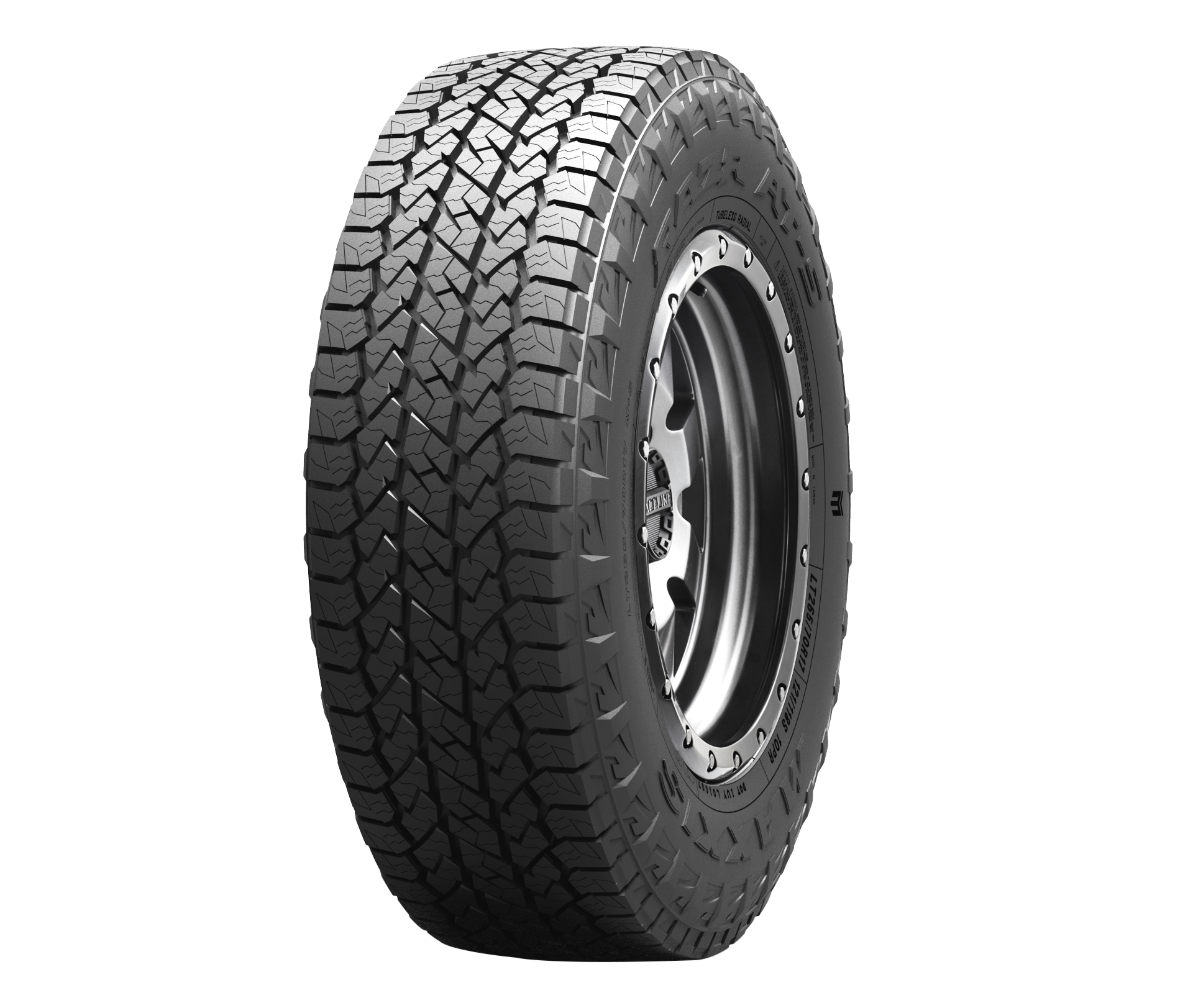
What properties or advantages do AT tyres have on off-road vehicles?
AT tyres offer an ideal mix of off-road ability and ride comfort on the road. They stand out for improved traction on unpaved tracks, which makes them the perfect choice for drivers who often switch between tarmac and gravel or farm tracks. Compared with road tyres, AT tyres offer clearly more grip and stability on loose ground, like gravel or sand, as well as on muddy or uneven surfaces. So AT tyres are best suited to light to medium off-road use, like gravel, sand, grass and light mud.
Another advantage of AT tyres is the higher ride comfort on paved roads compared with the coarser mud-terrain tyres. Although they perform well on unpaved tracks, they still offer a quiet, pleasant driving experience on tarmac. AT tyres score especially on noise: they’re clearly quieter than MT tyres, as their tread is less aggressive and deep. That means you have less noise in the cabin on long road drives and so reach your destination more relaxed.
On top of that, AT tyres have a longer life than MT tyres. As they were developed for combined road and off-road use, they’re designed to withstand both the loads of off-road use and the wear on tarmac. So they wear more slowly than MT tyres.
What properties or advantages do MT tyres have?
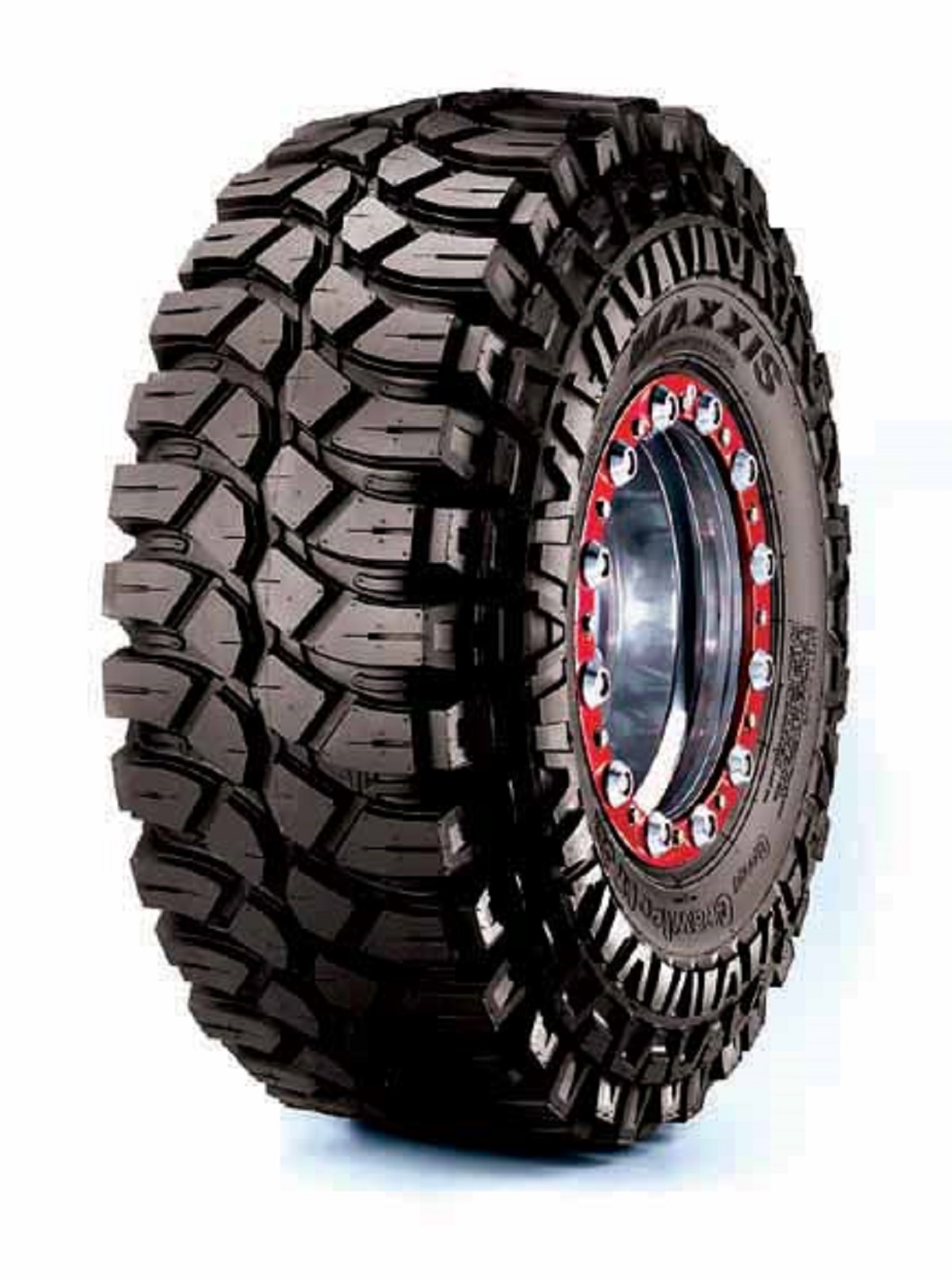
Mud-terrain tyres, MT tyres for short, stand out above all for their especially coarse tread pattern. This deep, chunky tread provides outstanding traction in mud and on soft, uneven ground like sand, muck or scree. Thanks to the large void ratio of the widely spaced tread, mud and dirt are efficiently flung off, so the tyres don’t clog and the traction is kept even under difficult conditions. MT tyres are best suited to difficult terrain like deep mud, rocks, desert and extreme off-road conditions. That makes MT tyres the first choice if you’re often out on demanding off-road terrain and only rarely drive the vehicle on the motorway. So rather not for a daily driver.
Another advantage of MT tyres are the reinforced sidewalls, which provide extra stability and increase puncture resistance. The thicker rubber layer on the sidewalls protects the tyres from sharp stones off-road. The sturdy sidewalls also allow reducing the air pressure to 1 bar or even less. One of the most important measures for getting through off-road. This extra toughness gives MT tyres a higher load capacity, so they can better withstand the harsh conditions off-road.
On the road, you have to accept some compromises. The coarse tread and stiff build of MT tyres lead to loud rolling noise that you can clearly hear while driving. The noise gets louder the more worn the tyres are. Because the tread blocks get harder and harder over time and so cause noise and sometimes even noticeable vibration, especially at slow speed. Ride comfort suffers too with MT tyres, as they’re less springy and comfortable than their all-terrain or road-tyre counterparts. The rougher properties that benefit them off-road lead to a harder, bumpier ride on tarmac.
Another disadvantage of MT tyres is the shorter life compared with AT and road tyres. As the soft rubber compound and the coarse tread are mainly designed for off-road use, they wear much faster on paved roads. For drivers who are often on the road, this could lead to more frequent tyre changes, which causes higher costs in the long run.
How do I recognise an off-road winter tyre?
AT tyres are basically designed for year-round use. If they had an M+S marking (“Mud and Snow”), you could run them in winter too. But currently you have to watch for an important change: since 1 October 2024, only tyres with the Alpine symbol (3PMSF) may be run in winter conditions in Germany. The Alpine symbol shows a snowflake in a mountain pictogram and is the new standard for winter capability.
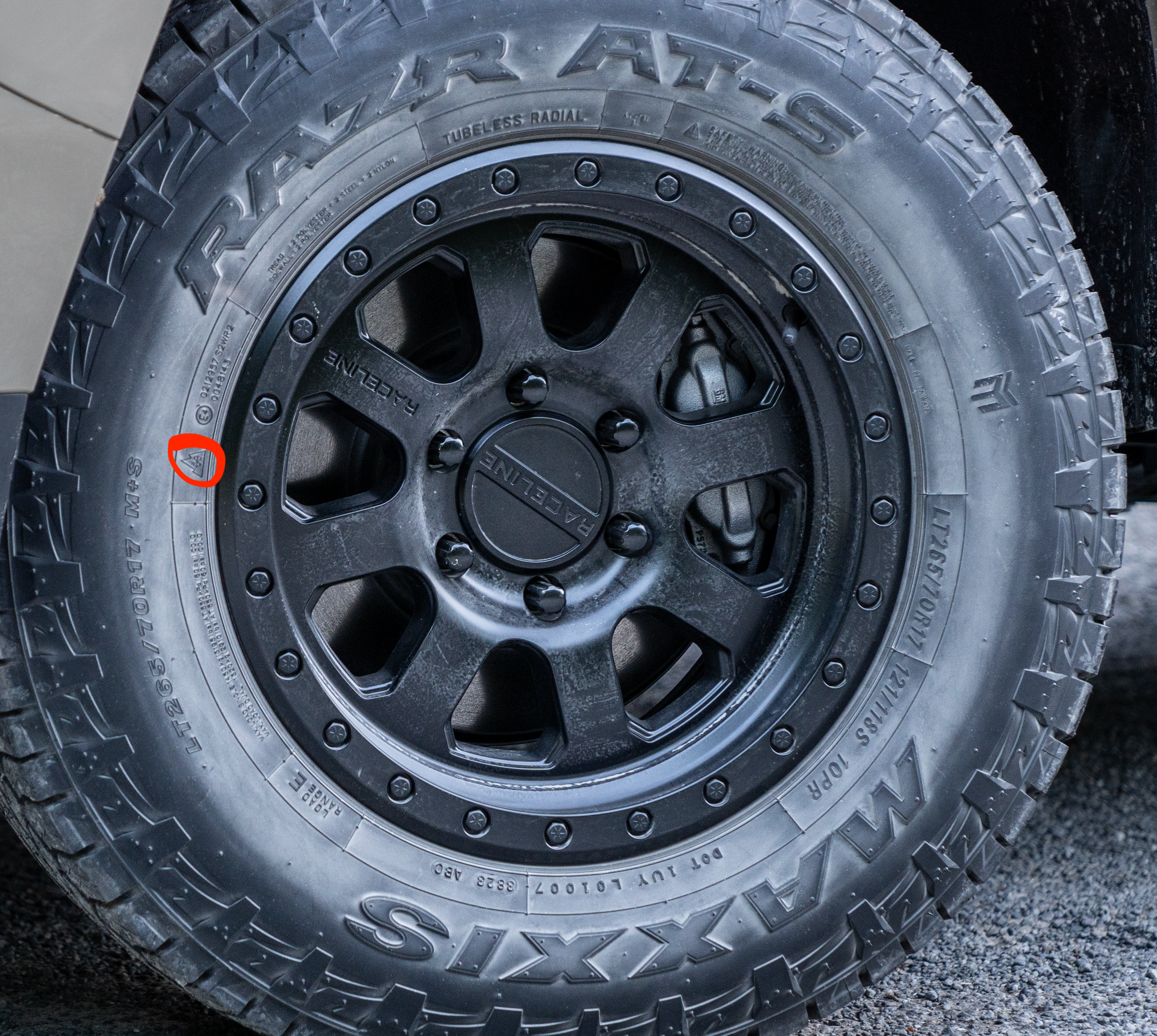
The older M+S marking is no longer enough from now on. Anyone still out with tyres marked only M+S in winter road conditions risks a fine of at least 60 euro and a penalty point in Flensburg. You even have to reckon with higher penalties if other road users are hindered or endangered.
So when buying, make sure your AT tyres have the Alpine symbol, to be safe and legal in snow and ice too. That way you’re on the safe side, on the motorway and off-road alike.
On the topic of winter tyres there’s a separate article in our magazine: Winter tyres for off-roaders
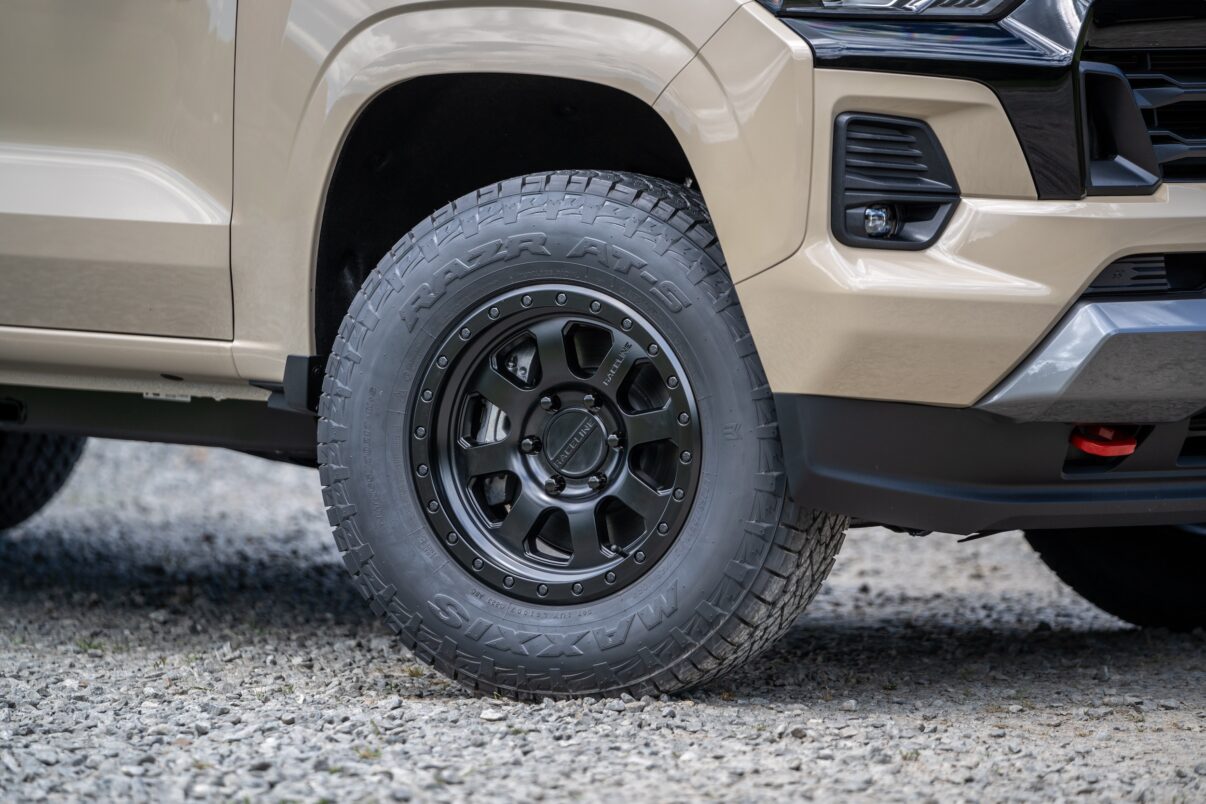
The Maxxis RAZR AT-S, an AT tyre that’s also approved as a winter tyre
A new AT tyre you can run all year round is the Maxxis RAZR AT-S, because it has the mountain-and-snowflake symbol (3PMSF) and so meets the rules for winter use in force since 1 October 2024. The RAZR AT-S is the ideal choice for you if you need excellent performance both on the road and off-road. In snow, wet or dry, this tyre offers reliable traction in any weather, a hard-wearing rubber compound and pleasantly quiet handling, even on longer drives on paved roads. The AT tyre was developed by Maxxis for light commercial vehicles and has a newly optimised tread.
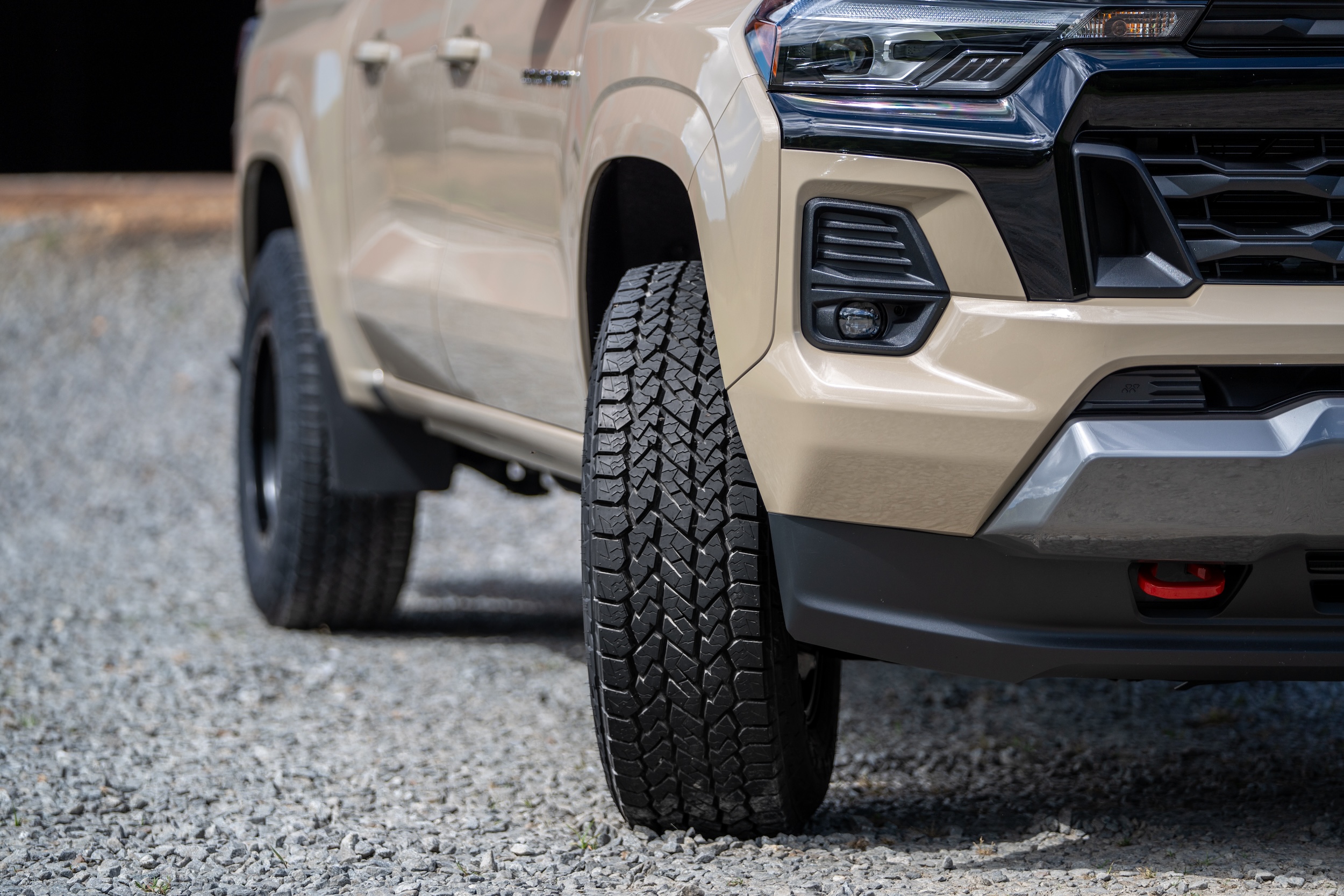
The S-shaped centre blocks of the tread offer increased stability and improve traction on the most varied terrain, on gravel, sand, snow or wet surfaces. These special blocks make sure the tyre grips safely even in difficult terrain situations. The optimised tread arrangement also helps reduce the noise emissions, which makes for clearly quieter handling on the road.
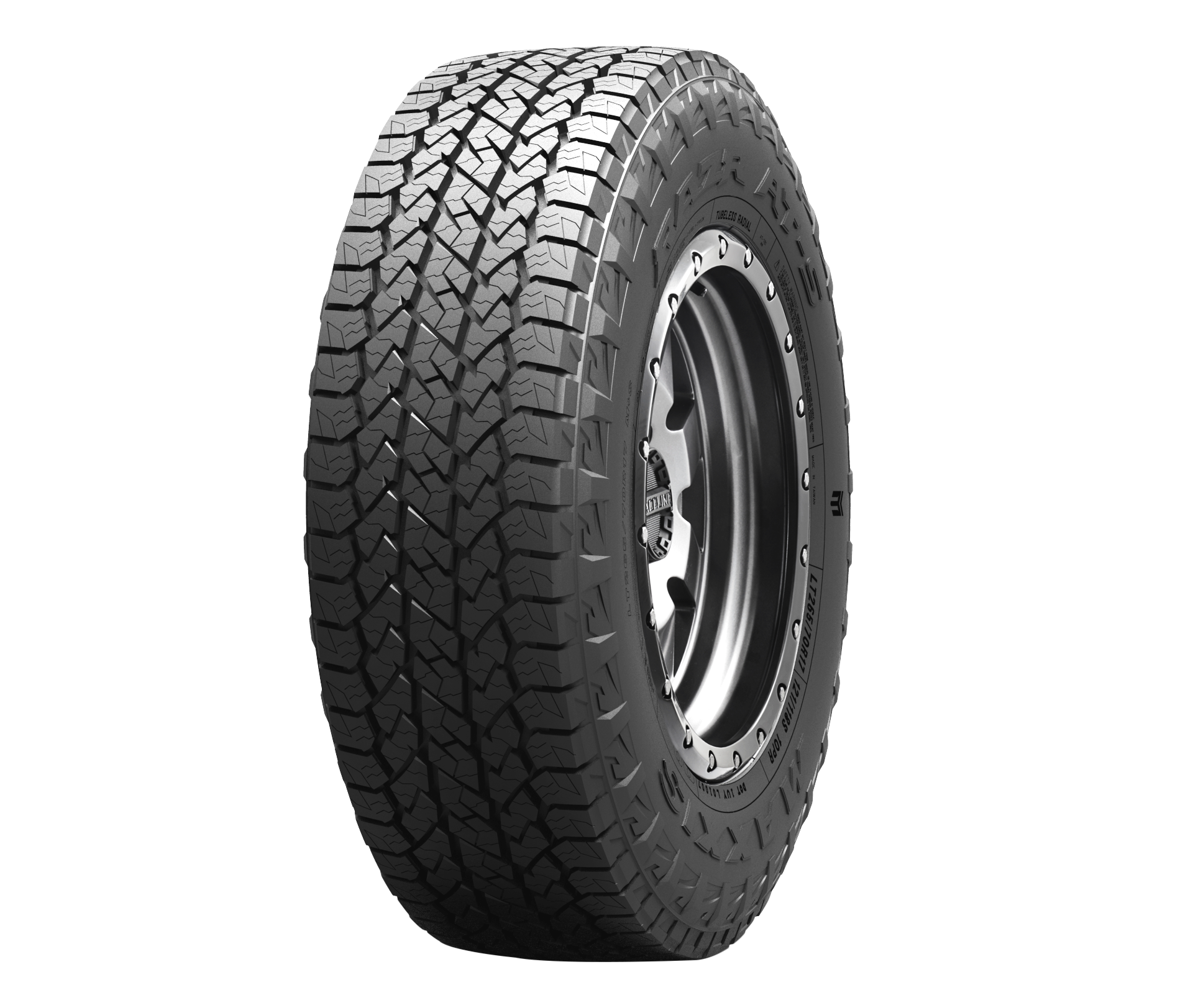
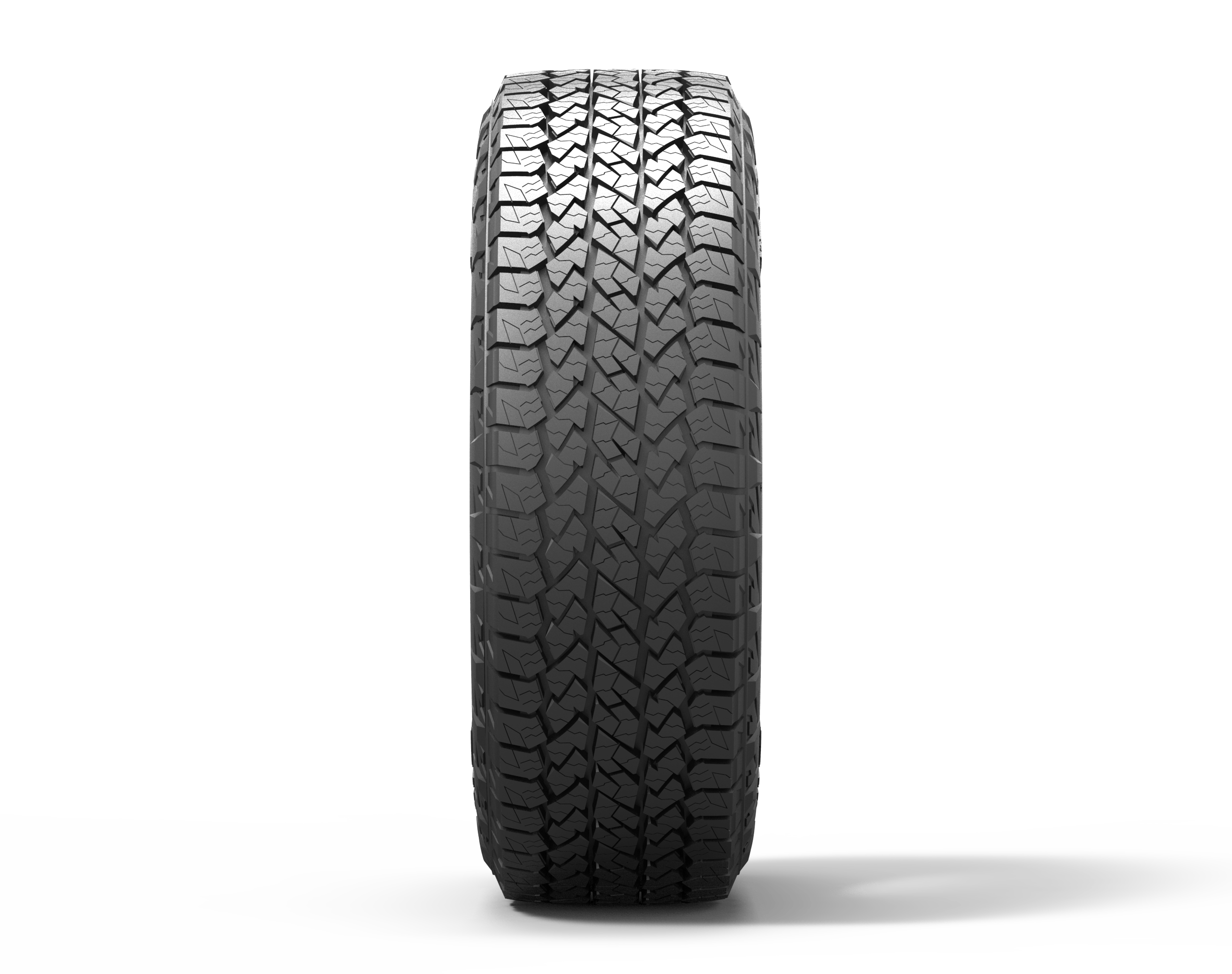
Another highlight of the Maxxis RAZR AT-S is the sturdy sidewall design, which offers extra protection in demanding off-road situations. Especially if you often move in rocky or stony terrain, you benefit from this reinforced construction, which protects the tyre from damage and extends its life.
Here you’ll find an overview of the available sizes of the RAZR AT-S:
- 235/75 R 15
- 205/70 R 15
- 255/70 R 15
- 245/70 R 16
- 255/70 R 16
- 265/70 R 16
- LT265/70 R 17
- 225/65 R 17
- 245/65 R 17
- 265/65 R 17
- 265/60 R 18
- 275/55 R 20
Further sizes will be in the Maxxis range in 2025.
Which tyre pressure is ideal for which terrain?
The right tyre pressure plays a decisive role for your driving safety and performance, especially when you switch between different surfaces. The optimal pressure varies depending on the terrain, to ensure the best possible traction and stability. Here’s an overview of how you adjust the tyre pressure to the respective conditions:
Road: On paved roads you should always keep to the tyre pressure values recommended by the vehicle maker. These values are designed specially to give you optimal driving stability, low tyre wear and the best possible comfort. The correct tyre pressure on the road also improves fuel consumption and makes for even tyre wear.
Light terrain: If you’re on gravel or farm tracks, it can make sense to lower the tyre pressure slightly. A tyre pressure reduced by about 10 to 20% means the tyres adapt better to the uneven ground and offer improved traction. With the slightly relieved tyres you have more contact area, which gives you more stability and control in light terrain, without having to give up too much ride comfort.
Heavy terrain: In demanding off-road terrain, like in sand, mud or rocky terrain, you can lower the tyre pressure even further to achieve maximum traction and grip. Here it’s recommended to reduce the pressure by up to 50%. Through the lower pressure the tyre’s contact area with the ground grows, which delivers the necessary traction in extreme situations like deep sand or mud. But make sure you don’t reduce the pressure too much, to avoid damage to the rim or the tyre. And find out beforehand whether your tyre can take it. MT tyres like the Maxxis Creepy Crawler cope quite well with low pressures, AT tyres less well. As soon as you switch back to the road, you should adjust the tyre pressure back to the normal value to ensure a safe drive.
What can I do to enjoy my tyres for a long time?
So that your tyres last a long time and accompany you reliably through the terrain and on the road, there are a few important points you should watch. These measures help extend the life of your tyres and keep their performance at a high level:
Check the tyre pressure regularly: The right tyre pressure is one of the most important factors when it comes to the longevity and performance of your tyres. Pressure that’s too low or too high can impair ride comfort and also lead to uneven and premature wear. This wear even affects your axle differential, because different air pressure also makes for different wheel speeds, which the differential has to balance out. So check the tyre pressure regularly, ideally once a month and before every longer drive. Make sure the pressure is within the limits recommended by the vehicle maker, to ensure an optimal balance between ride comfort, traction and tyre wear.
 The Maxxis AT tyre RAZR-AT-S on a Mercedes Sprinter
Ensure even wear: So that your tyres wear evenly, it’s advisable to have them rotated regularly. Rotating the tyres, about every 5,000 to 10,000 kilometres, helps make sure all the tyres are stressed evenly and no one-sided wear forms. This is especially important with off-road tyres, which are often stressed to different degrees depending on the ground you’re on. Don’t forget to include the spare wheel in the rotation cycle too, if you have one! That way you extend the overall life of your tyre set and ensure even handling.
Tyre inspection: A regular visual inspection of your tyres is essential to spot potential damage early. Examine your tyres for cracks, cuts, bulges or foreign objects that may have lodged in the tread. Think of the surfaces facing the vehicle’s inside too, not just the outer ones. Cracks can shorten the life of your tyres and, in the worst case, lead to a puncture. If a tyre is damaged, either have it repaired or replace it at once, to avoid further damage to the vehicle and ensure your safety.
Do tyres have to be registered with the TÜV?
In Germany it’s required that tyres differing from the vehicle’s standard tyres be signed off by the TÜV and entered in the vehicle registration document. The sign-off takes the form of an individual approval under § 21 StVZO. The TÜV inspector usually requires a report for it. This concerns above all tyres that are larger, wider or fitted with a different rim size than the factory models. The registration is necessary to ensure the chosen tyres meet the legal requirements and pose no safety risks for you or other road users.
At the TÜV sign-off, the inspector checks whether the new tyres, in combination with your vehicle, meet the rules, including aspects like enough room in the wheel arch, enough clearance to the brakes and other suspension components, and general driving safety. The wheels must not stick out beyond the wheel arch and must not rub anywhere in any position. It also has to be ensured that the steering copes with any changed steering forces, and with tyres of larger diameter that the brakes are still enough. The new tyre then has to be able to carry the vehicle weight and to suit the maximum vehicle speed. And depending on the case, you may even have to have a speedo adjustment done.
When should off-road tyres be changed?
For safety reasons it’s important to check your off-road tyres regularly and change them in good time, to ensure good handling and traction. There are some clear signs of when it’s time for a tyre change:
Tread depth under 1.6 mm: In Germany the legal minimum tread depth is 1.6 mm. If your tyres have reached this limit, you should replace them as soon as possible. This applies to road traffic and especially off-road, where enough tread depth is decisive for traction. Off-road tyres with too little tread can quickly lose grip in mud, sand or on loose ground and so increase the risk of an accident. So it’s advisable, for off-road use, to think about a change already at a tread depth of about 3 mm.
Ageing of the tyres: Even if the tread depth is still enough, tyres should be changed because of their age. Rubber ages over time, even if the tyre wasn’t used much. Through natural material fatigue the tyres lose elasticity and grip, which can lead to poorer performance and increased wear. It’s sensible to replace the tyres at the latest after 10 years, regardless of how much tread is left or how often they were used. So watch how long a tyre has already sat in the shop before you buy it.
How do I find out how old my tyre is?
You can determine the age of your tyres easily from the so-called DOT number (Department of Transportation) printed on the tyre sidewall. This number contains important information on the tyre’s manufacturing date. The key figure is a four-digit number at the end of the DOT number. The first two digits of this number give the production week, the last two digits stand for the production year. So you can tell at a glance how old your tyres are.
For example, the DOT number 2422 means the tyre was made in the 24th week (so around June) of 2022. This simple method lets you quickly tell whether your tyres are already at an age where a change should be considered.
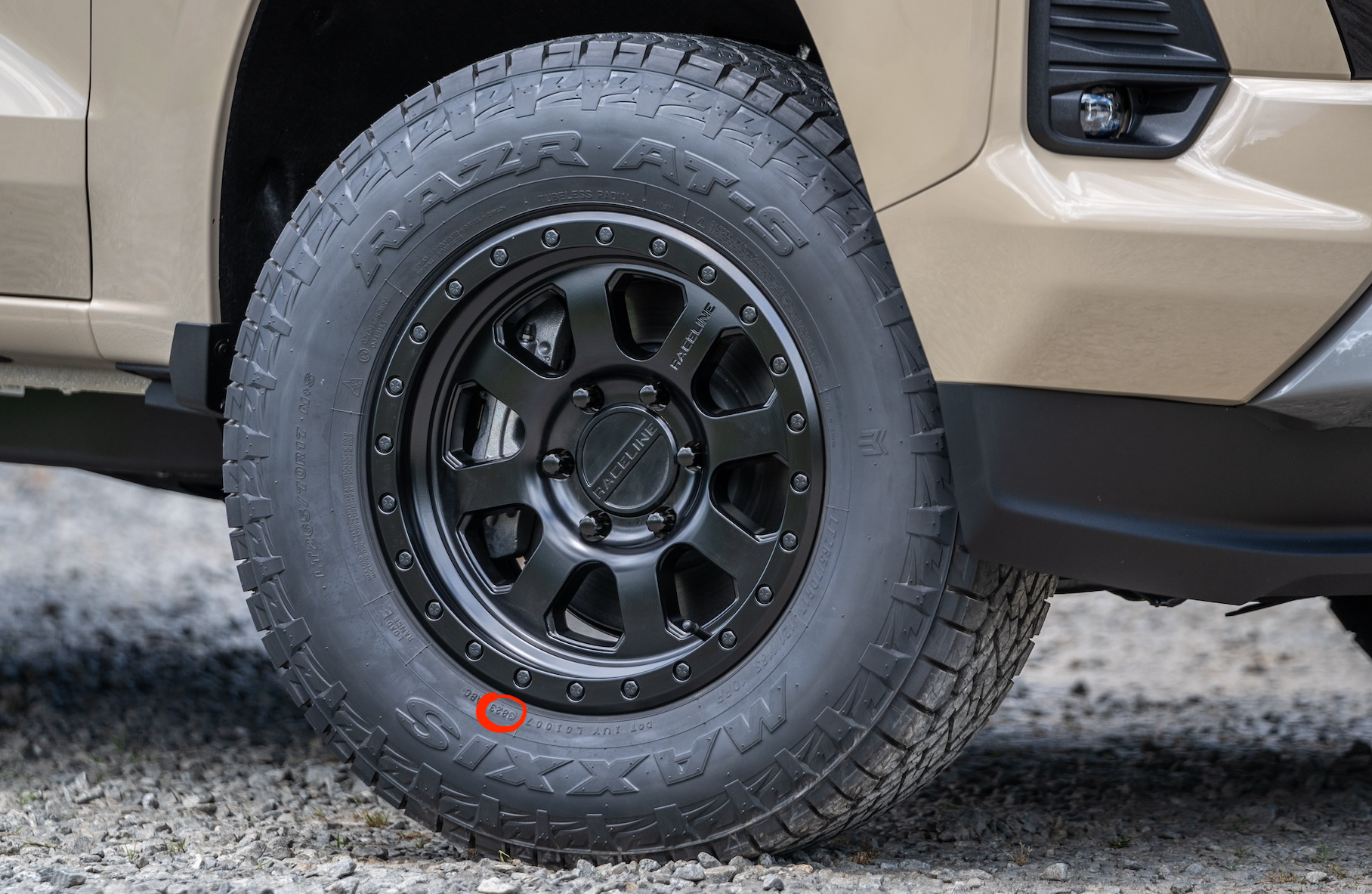
If you don’t find a four-digit number at the end of the DOT number on your tyres, but instead a three-digit one, these are tyres made before the year 2000. In this case you should absolutely replace the tyres, as they’re already well past their shelf life (see above).
What is the load index on tyres?
The load index, also known as the load rating, gives the maximum load capacity of a tyre. This figure is decisive to ensure your tyres can safely carry the weight of the vehicle. A load index like 103/100 means the tyre has two different load capacities, depending on the type of use:
103: With a load index of 103, the tyre can carry a maximum load of 875 kg (1930 lbs) per tyre. This value usually applies to single tyres, when only one tyre is fitted on each axle side.
100: A load index of 100 stands for a maximum load capacity of 800 kg (1764 lbs) per tyre. This refers to dual tyres, where two tyres are fitted per axle side to ensure a higher overall load capacity.
When buying tyres you should absolutely make sure the load capacity of the tyres suits the gross weight of your vehicle. Overloaded tyres wear faster, have poorer handling and increase the risk of a blowout. To find out the exact load capacity of your tyres, you can look up the load index in a special load index table. You’ll find the load index itself on the tyre sidewall after the rim size figure. Of course you’ll find the load index before buying in the online shop’s description too, or you ask your trusted tyre dealer.
What does the speed index on tyres mean?
The speed index, also known as the speed rating or speed class, is a letter given on the tyre that states the maximum permitted speed at which you can drive safely. This value is decisive, because above this top speed the tyre can no longer safely carry the stated load. If you drive faster than the speed index allows, the tyre can overheat. In extreme cases this could lead to the tread separating from the carcass, which can lead to serious accidents.
Each letter of the speed index corresponds to a certain top speed in kilometres per hour (km/h). So you can tell at a glance what speeds the respective tyre is designed for. You can look up the right speed index for your vehicle in the vehicle registration document or read it directly on the tyre after the load index.
An example: a tyre with the speed index “S” is designed for a maximum speed of 180 km/h. Tyres with this index are often used on off-road vehicles, vans or light commercial vehicles designed for off-road use or for drives at moderate speed.
What should you watch for when buying off-road tyres?
Now you’ve read everything worth knowing about tyres and may be wondering how to choose the right tyre for your vehicle and your needs. Here are a few tips that can help you choose the right off-road tyres:
Size and type: Make sure to buy tyres that are approved for your vehicle and suit the requirements of the terrain you mainly want to drive on. Off-road tyres, as described above, are available in various sizes and types, like all-terrain (AT), mud-terrain (MT) or special off-road tyres for certain conditions.
Quality and brand: Go for good-quality tyres from reputable makers like Maxxis, which offer good performance and durability. Tyres from well-known brands usually have better quality control and often offer a longer warranty.
Tread: The tread design is decisive for the traction and off-road ability of your off-road tyre. Watch for a sturdy, coarser tread that’s deep enough to grip well in mud, sand or rock if you mainly want to drive off-road. The coarser treads are annoying, though, if you’re also on normal roads a lot. There they can quickly get too loud or uncomfortable.
Load capacity and speed index: Make sure the load capacity and the speed index of the tyres suit the requirements of your vehicle. The load capacity states how much weight the tyre can carry, while the speed index states the maximum permitted speed of the tyre.
Value for money: It’s not always advisable to buy the cheapest tyres. Compare prices and quality to get the best value for money. Consider the life of the tyres and the warranty offered by the maker too.
Reviews and recommendations: Read reviews from other off-road enthusiasts or ask in forums and with friends about their experiences with certain tyre models. This can help you make an informed decision and choose the best off-road tyres for your needs.
» Buy tyres: Maxxis Razr AT at ReifenDirekt*
* These are affiliate links. Buying through them doesn’t cost you a cent more, but we get a small commission and go splashing through the next mud puddle with a big grin. That’s how you help keep the magazine free for everyone. Thanks a lot!