

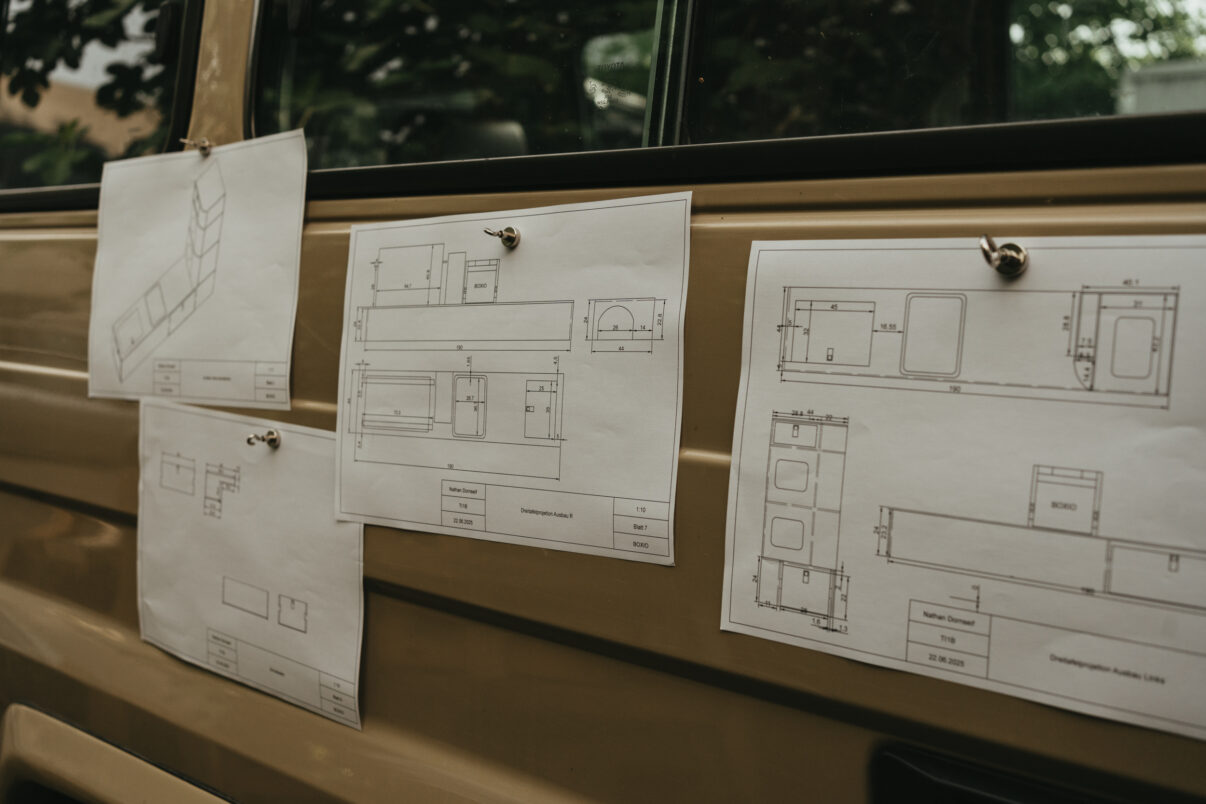

Advertisement: Nathan now knows the Toyota Land Cruiser HZJ78 inside out. This is already the second build he has carried out for the vehicle. He built the first interior two years ago, just before he started his apprenticeship as a joiner. Now, in his second year, he was able to put a lot of what he has learned into the new build. This time it mattered to him to have a system into which he could integrate the BOXIO sink and stove.
You build a house three times
Nathan, now in his second year as a joiner, had finished the first build before his apprenticeship even began. It was made of classic flight-case material. Toughly coated thin plywood panels framed with aluminium profiles, the kind you know from the events industry. A typical, quick build for off-road vehicles. Back then he ordered all the materials from 4×4-Innenausbau and cut them to size with the usual DIY tools.
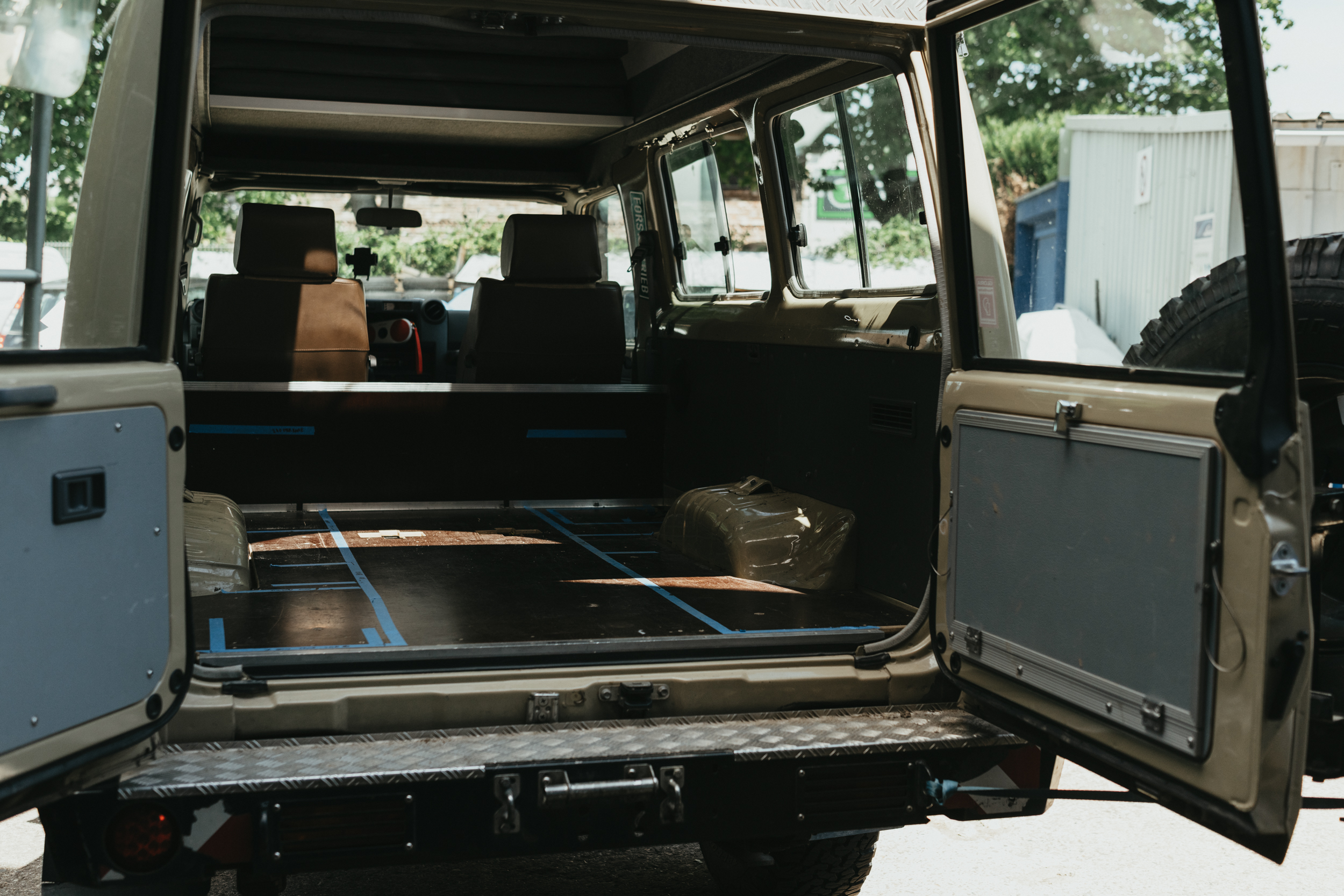
The first build was functional, but by now Nathan had learned a good deal and wanted to see what he can do today. A bit of it was about pride, of course: he could not leave the first build as it was. Just as the saying goes: “You build the first house for your enemy, the second for your friend and the third for yourself.”
The goal: a modular, sturdy system
The goal was clear: a functional build for two people that works perfectly with the Auer boxes and the BOXIO modules. Nathan wanted a solution that works day to day as well as on trips, with plenty of cleverly used storage and quick access. A permanently integrated sink mattered to him especially. On trips he had always missed the chance to just quickly wash his hands.
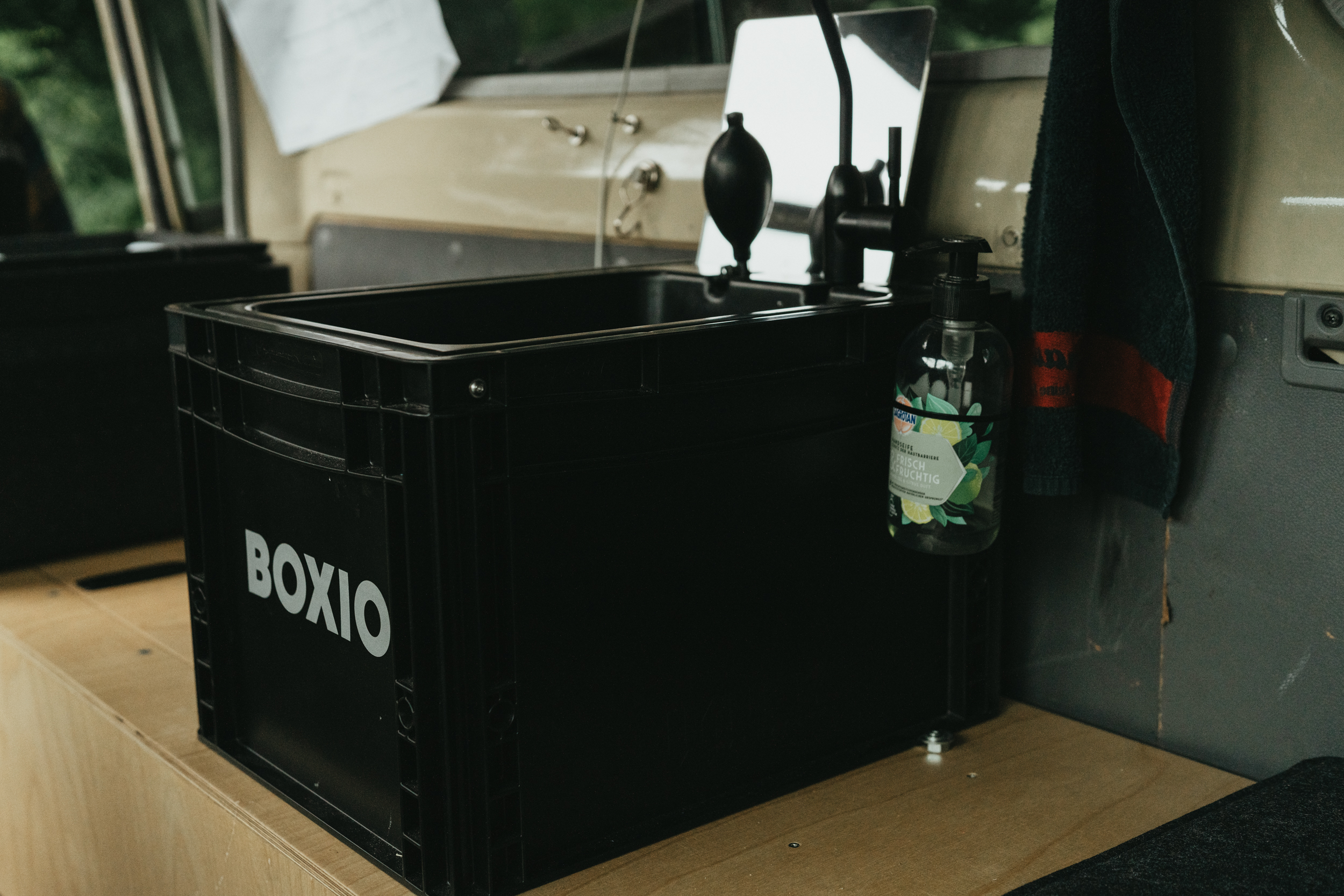
But washing your hands also needs: soap. So it does not fly around the vehicle or have to be stowed under the sink, Nathan came up with a clever solution. For now the liquid soap is still fixed to the side of the BOXIO Wash with cable ties. But with a 3D printer he has designed a holder into which he can screw the bottle, fixed to the box with two screws, so the soap bottle stays put perfectly.
BOXIO Wash: the mobile hand basin
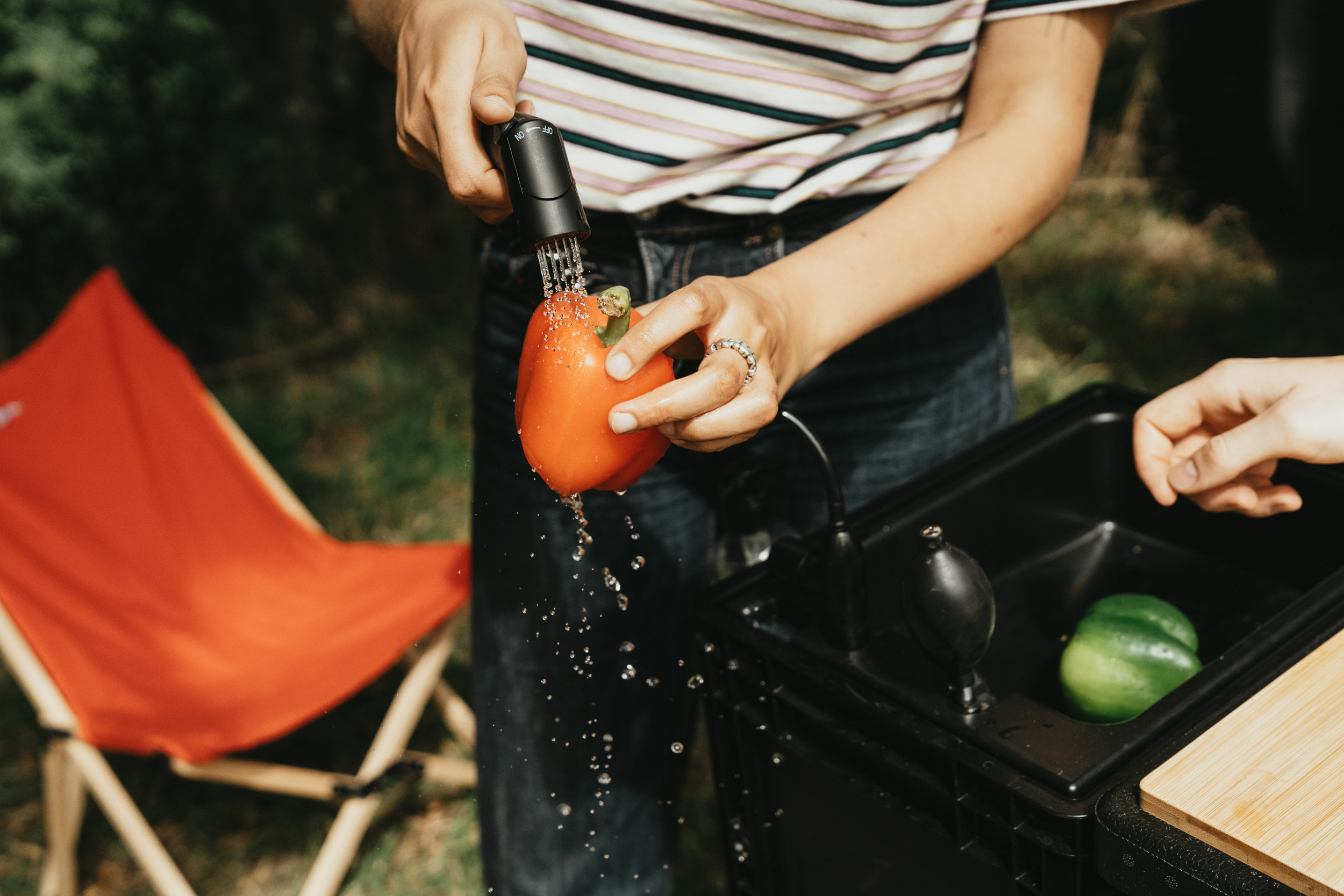
With the BOXIO Wash, a mobile sink, he has now found the perfect solution. It works self-sufficiently with a hand pump, without any power, and is light, compact and tough. Pump a few times and the water flows. The sink has a 5-litre fresh-water tank and a separate waste-water can. You can also connect the BOXIO Shower, a flexible shower hose. The coiled hose is 100 cm when stretched out, for when shoes need cleaning or anything else that does not fit under the sink.
Planning and building the conversion for the HZJ78
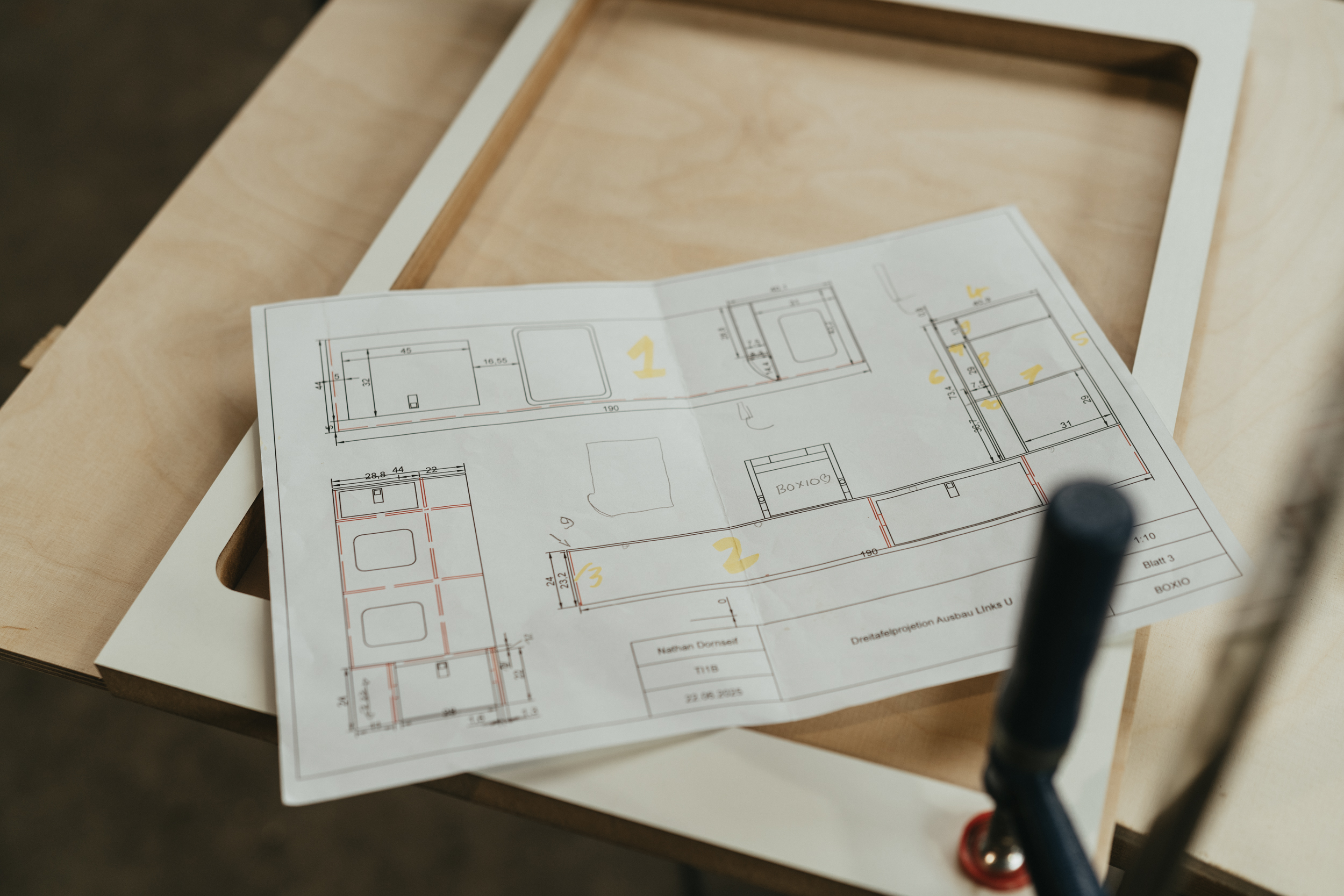
Unlike the first attempt, this build is more precise, more solid and much more thought through. He planned the whole build in advance in a 3D program and cut the basic structure to size at work, with the assembly done in the Matsch&Piste hall. For the joints he used a biscuit jointer, and the panels are 9 mm birch plywood. That makes the build solid, light and bright in appearance.
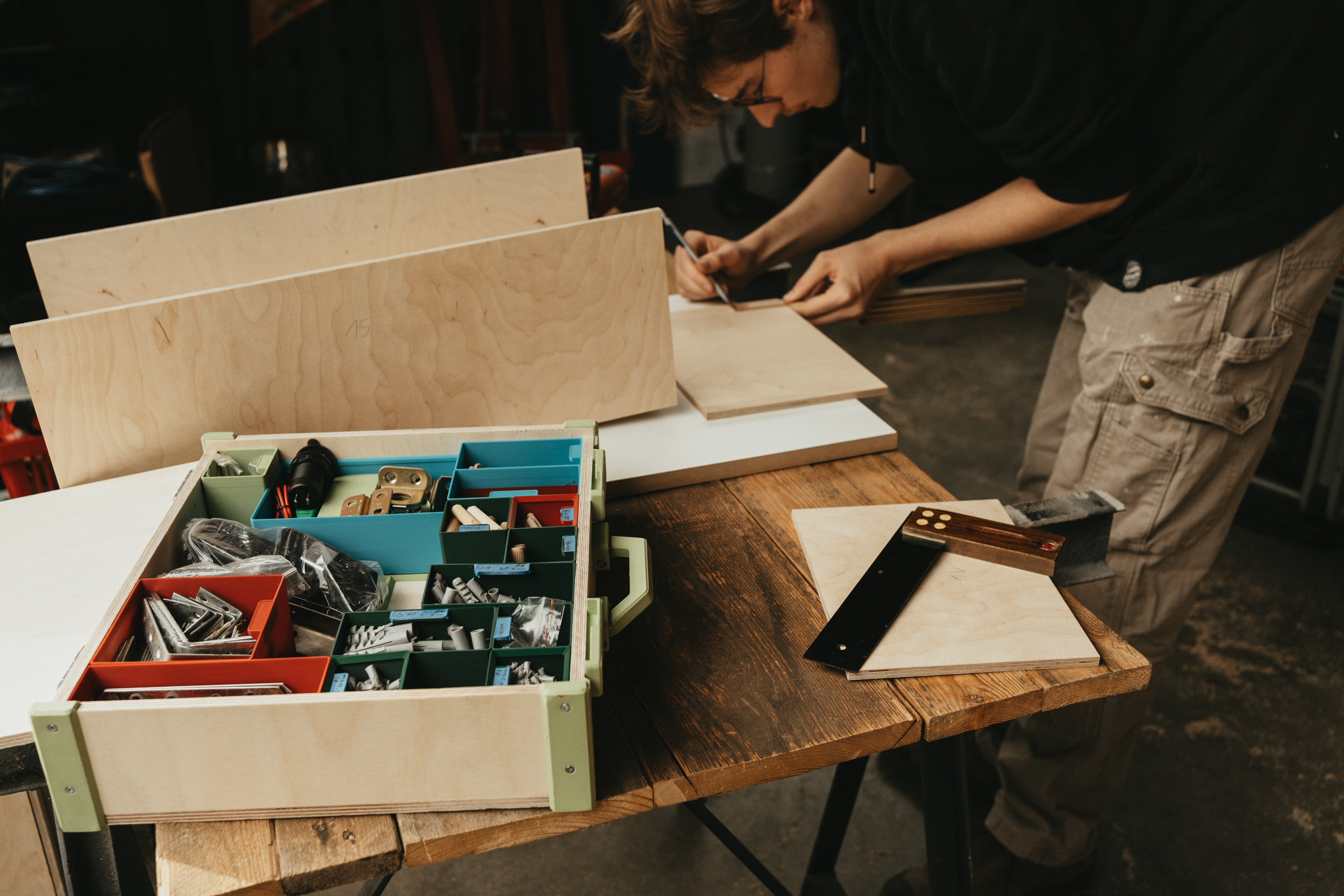
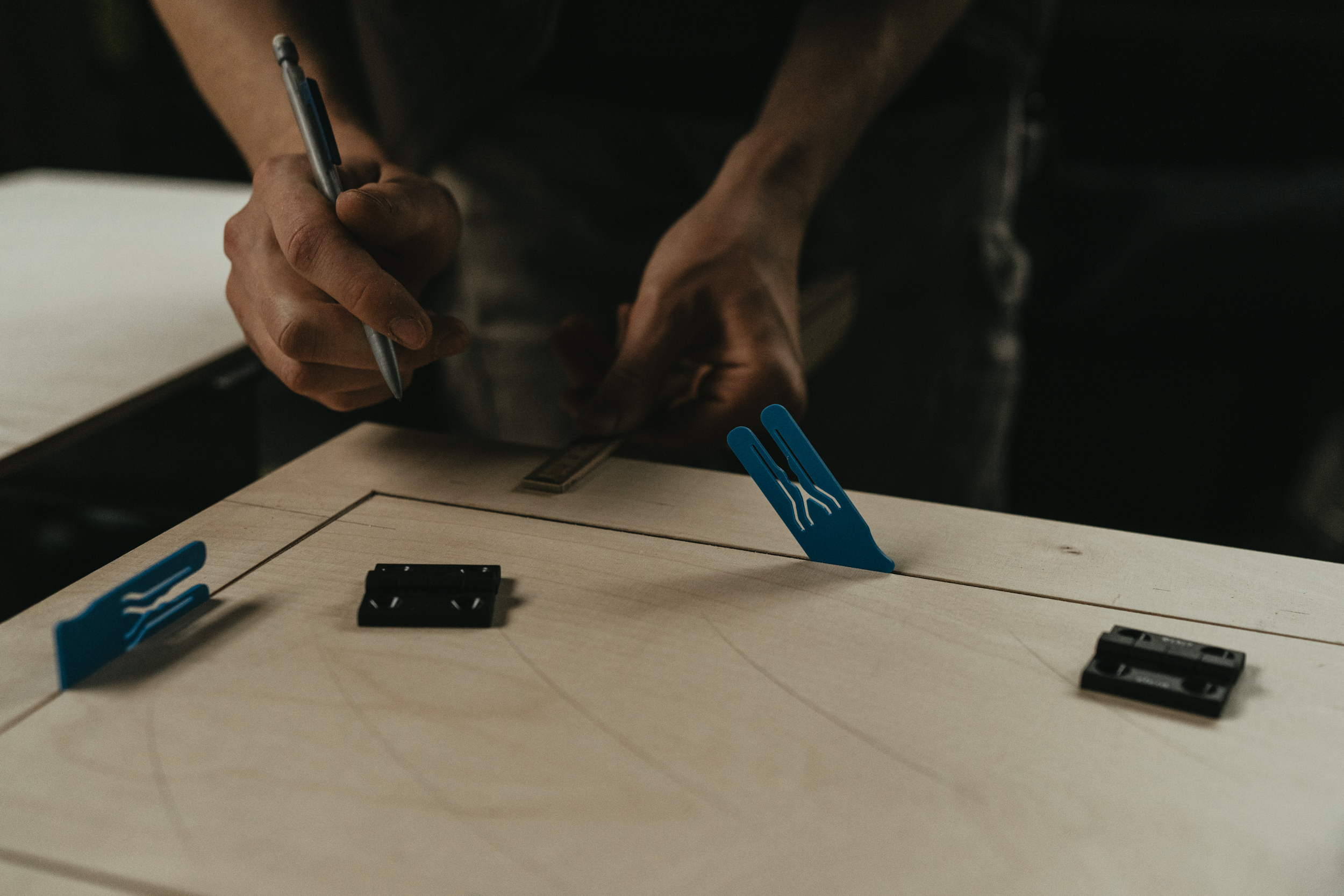
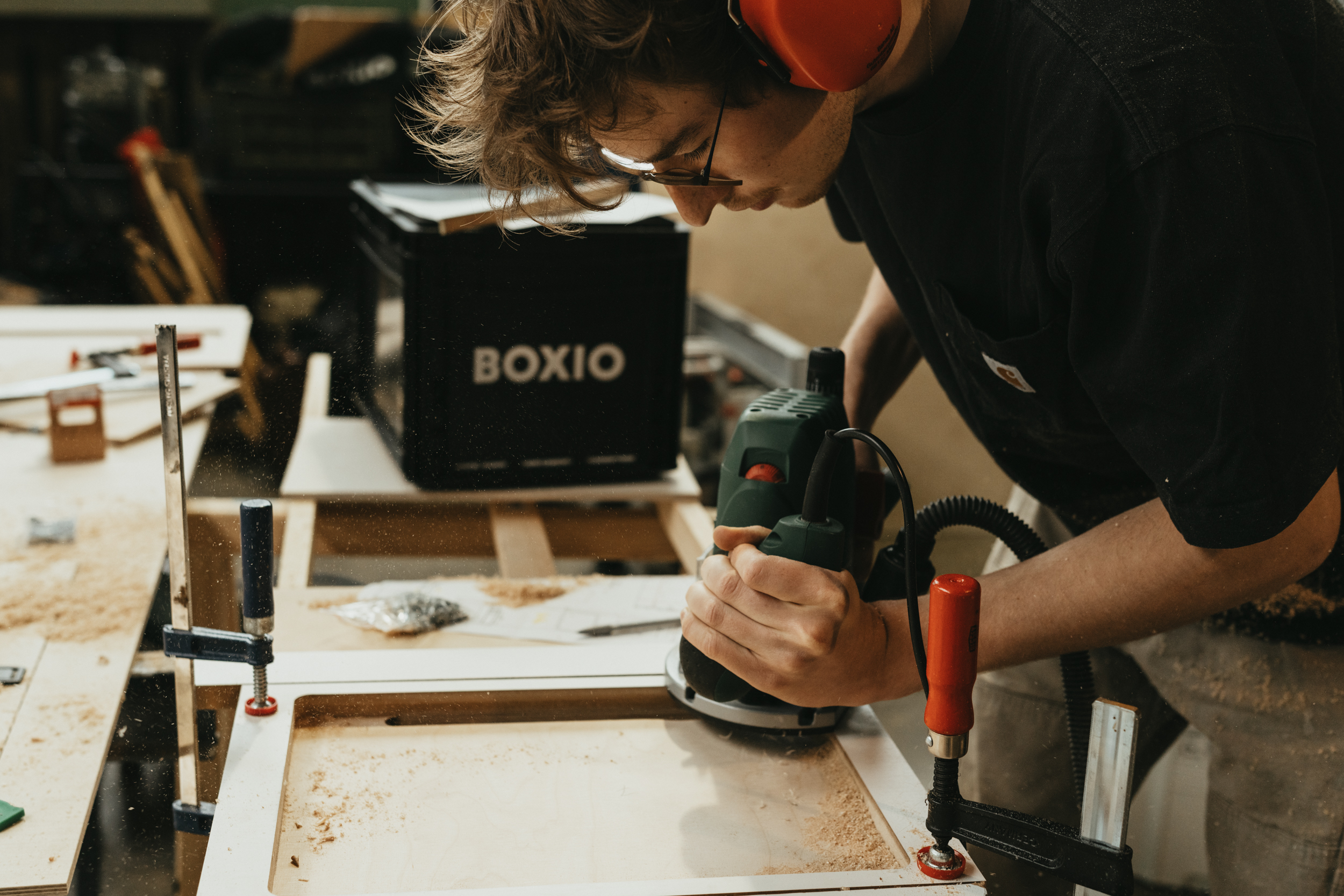
Only the black lever catches from 4×4-Innenausbau have stayed from the last build. They are really handy and perfect for bumpy off-road tracks too, where everything stays shut. He treated the surfaces with oil twice. Nathan cut all the large openings for the BOXIO boxes with the help of a template and a router.
Sleeping in the pop-top roof
Nathan changed nothing about the Land Cruiser’s sleeping area. You still sleep in the pop-top roof, which was already fitted by Toms Fahrzeugtechnik before he bought it. There is enough room up top for two people, so the interior stays completely usable for the build and storage.
Special features of the build
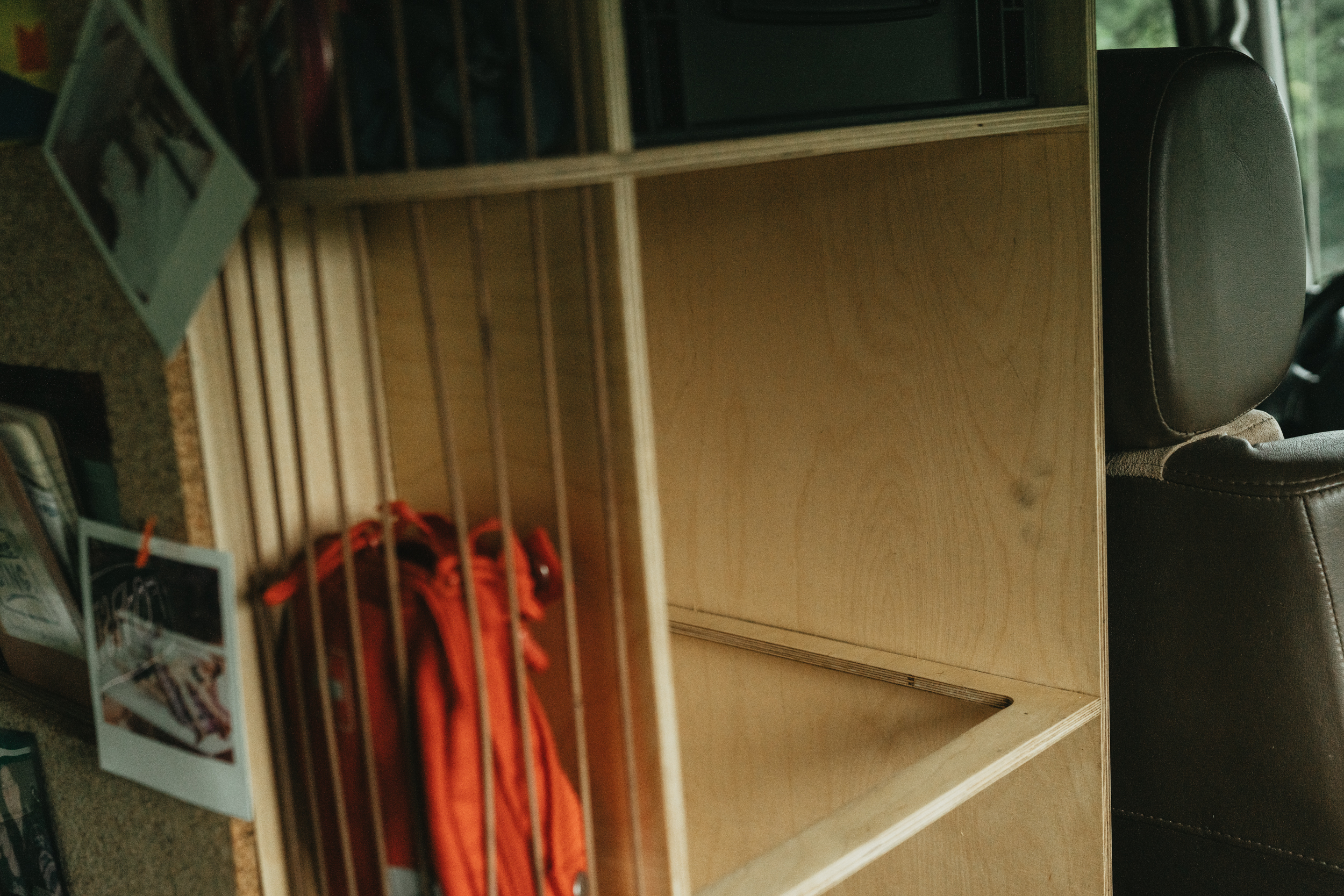
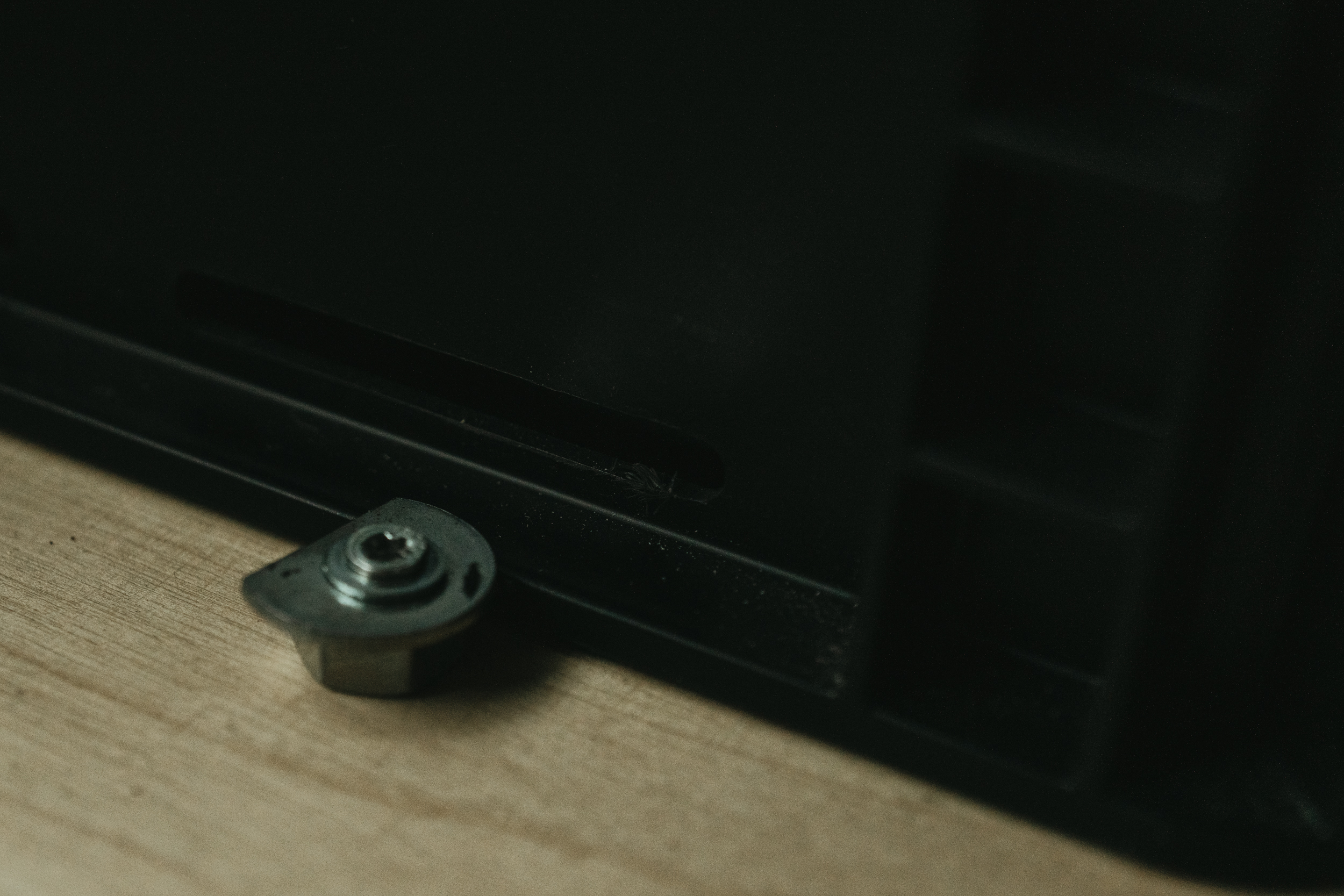
What is special about Nathan’s build is the perfect integration of the Auer boxes. They are not simply set on shelves and held with straps. No, all the panels the boxes sit on have a routed recess into which the boxes fit perfectly and cannot slide about. In case things do get a bit rough on the tracks, he has also secured the boxes with nuts and half washers that you can turn to the side, which then release the box.
 BOXIO COOK: the stove in the box
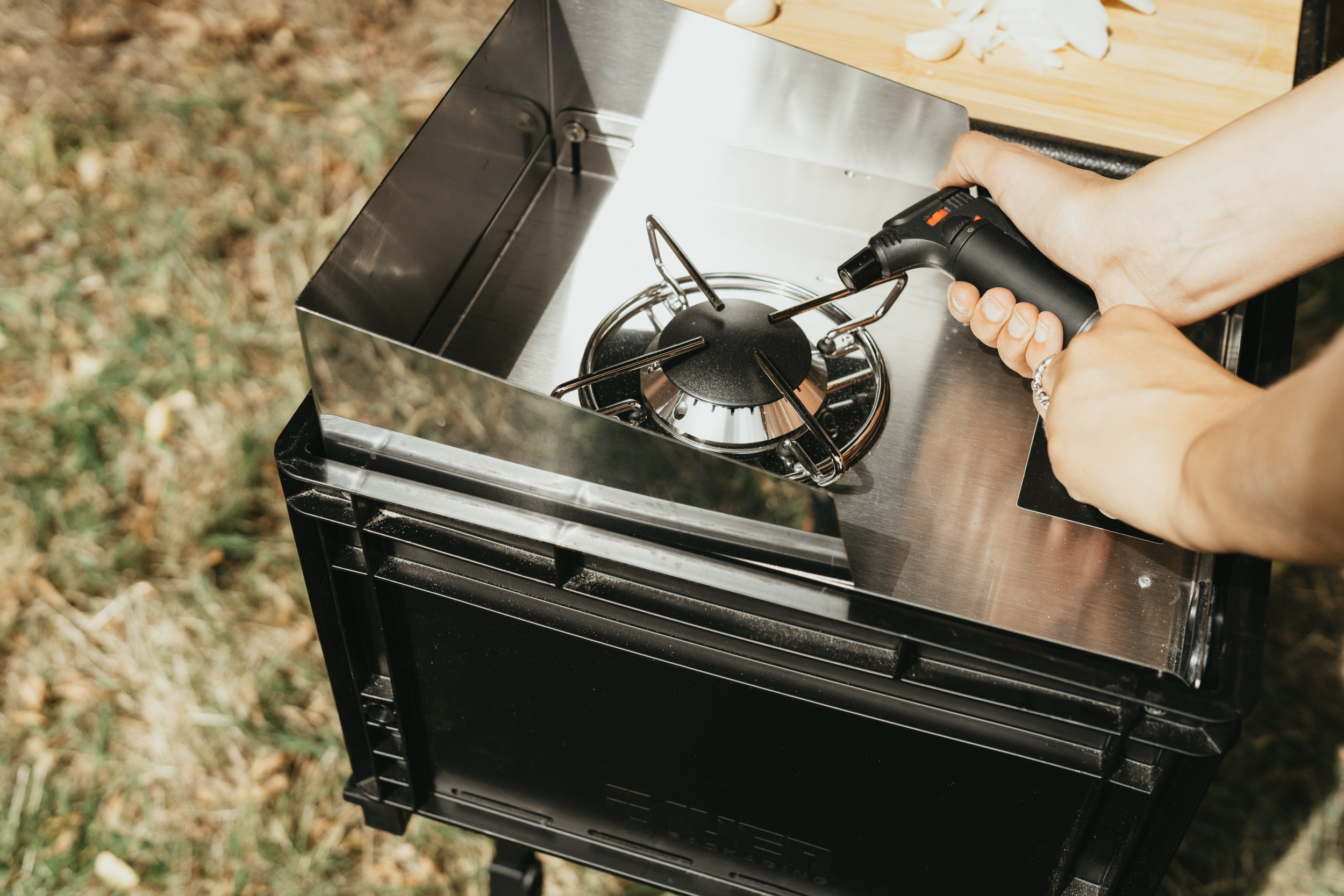
The BOXIO COOK gas stove is firmly integrated too. The gas stove in the Eurobox has a solid stainless-steel construction, an adjustable gas flame and storage for cartridges and utensils. Tough enough for wild tracks and compact enough for everyday use at the same time.
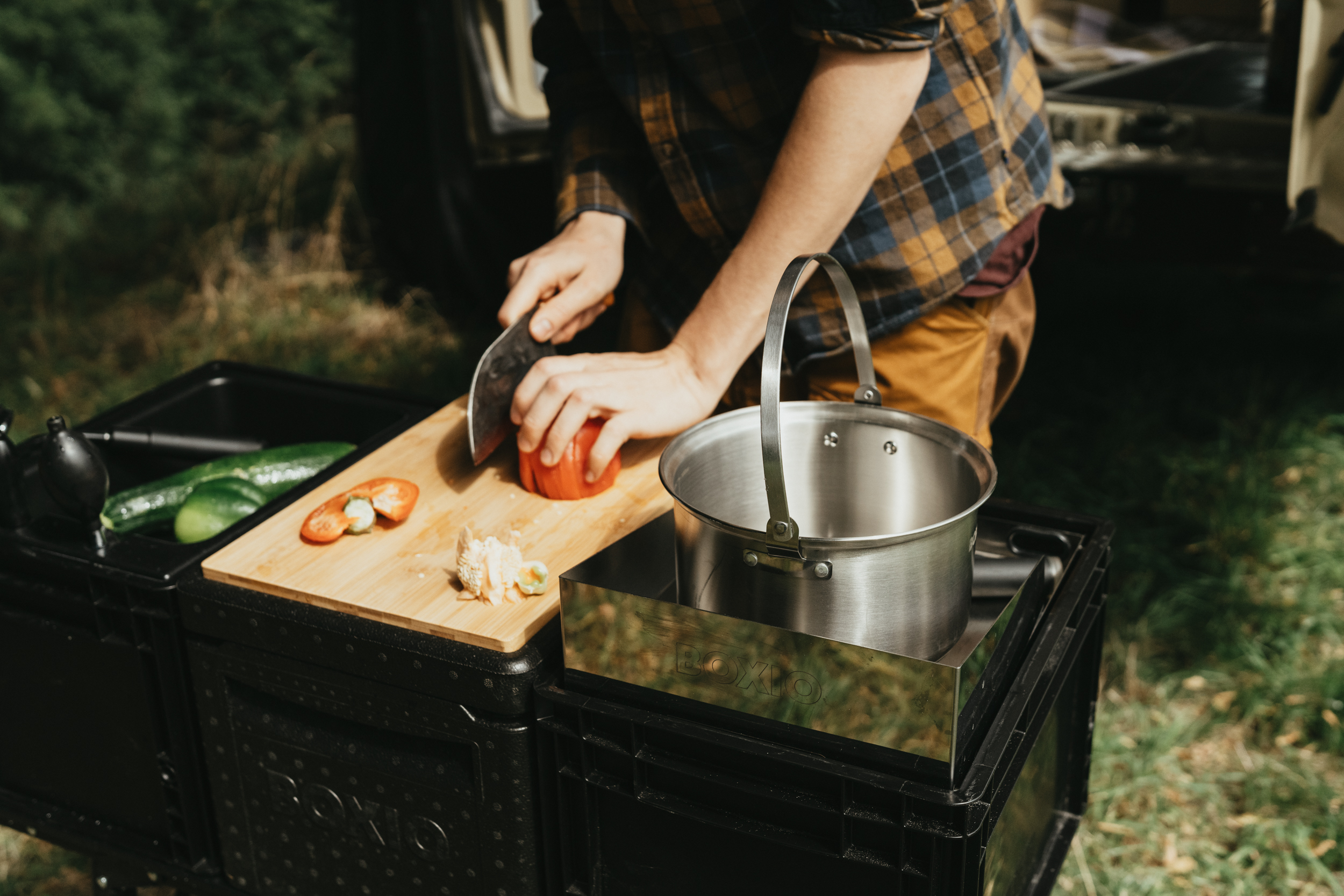
It goes with the BOXIO COOKWARE, a pot set of pots, a pan and a kettle in stainless steel, stackable to save space and secured with magnetic pads. What is especially handy is that the cookware has a perfect spot in the box under the stove.
Space used perfectly and accessible from several sides
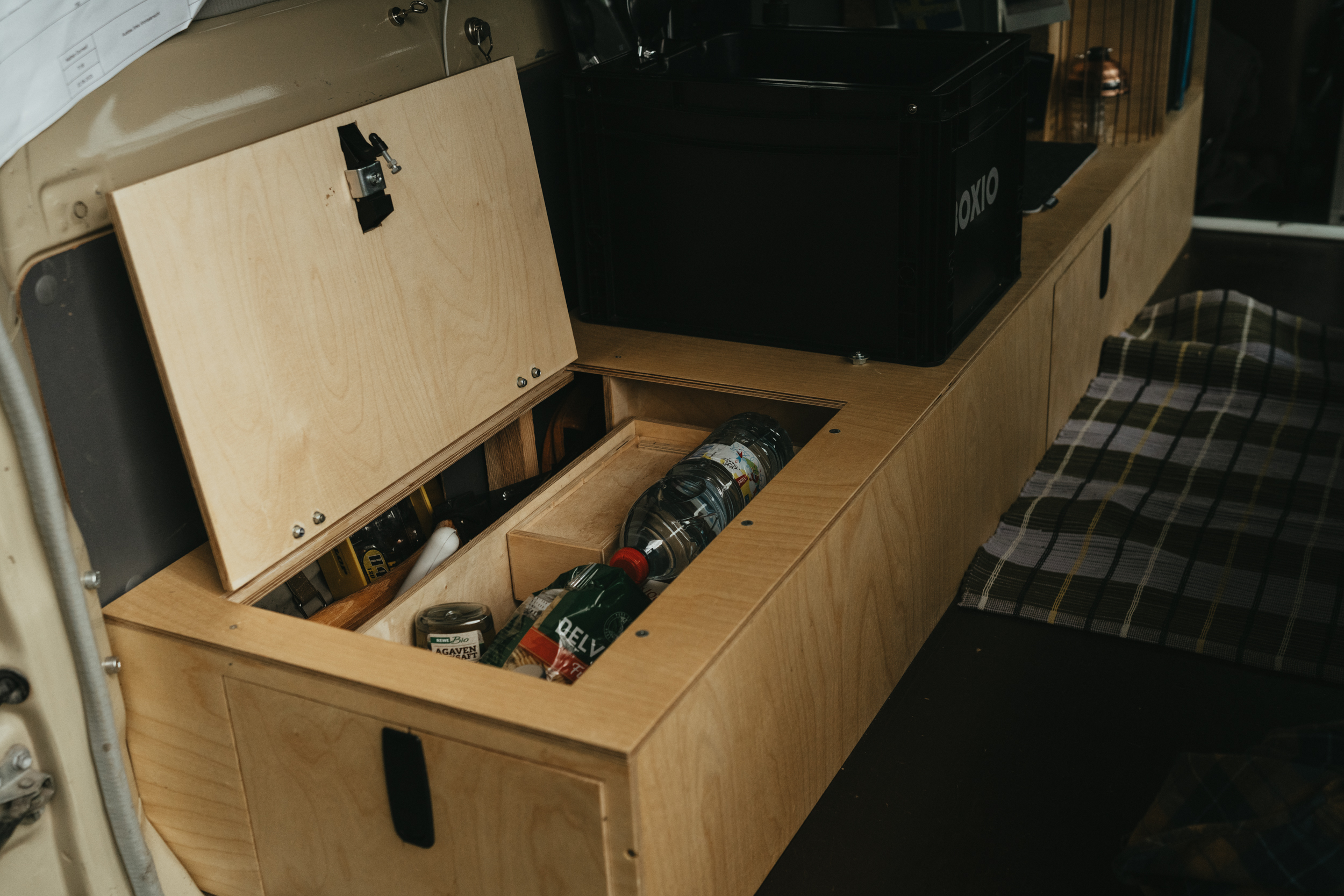
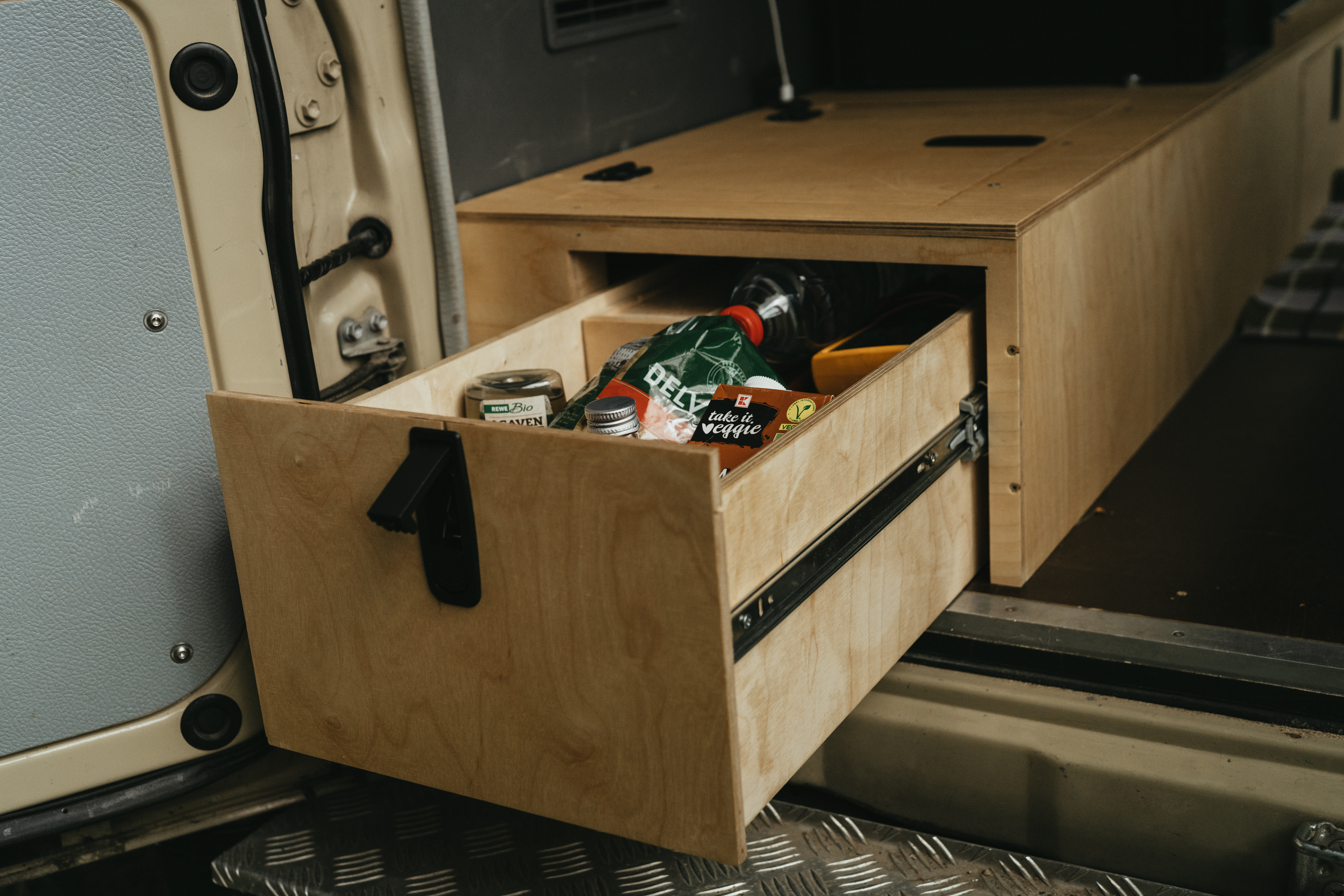
Alongside the perfect integration of the boxes, Nathan put a lot of thought in and built many practical details into his conversion. At the rear he built a drawer that pulls out backwards, where cooking gear and food are kept. Above the drawer there is also a flap on top, so you can reach the drawer’s contents from inside too.
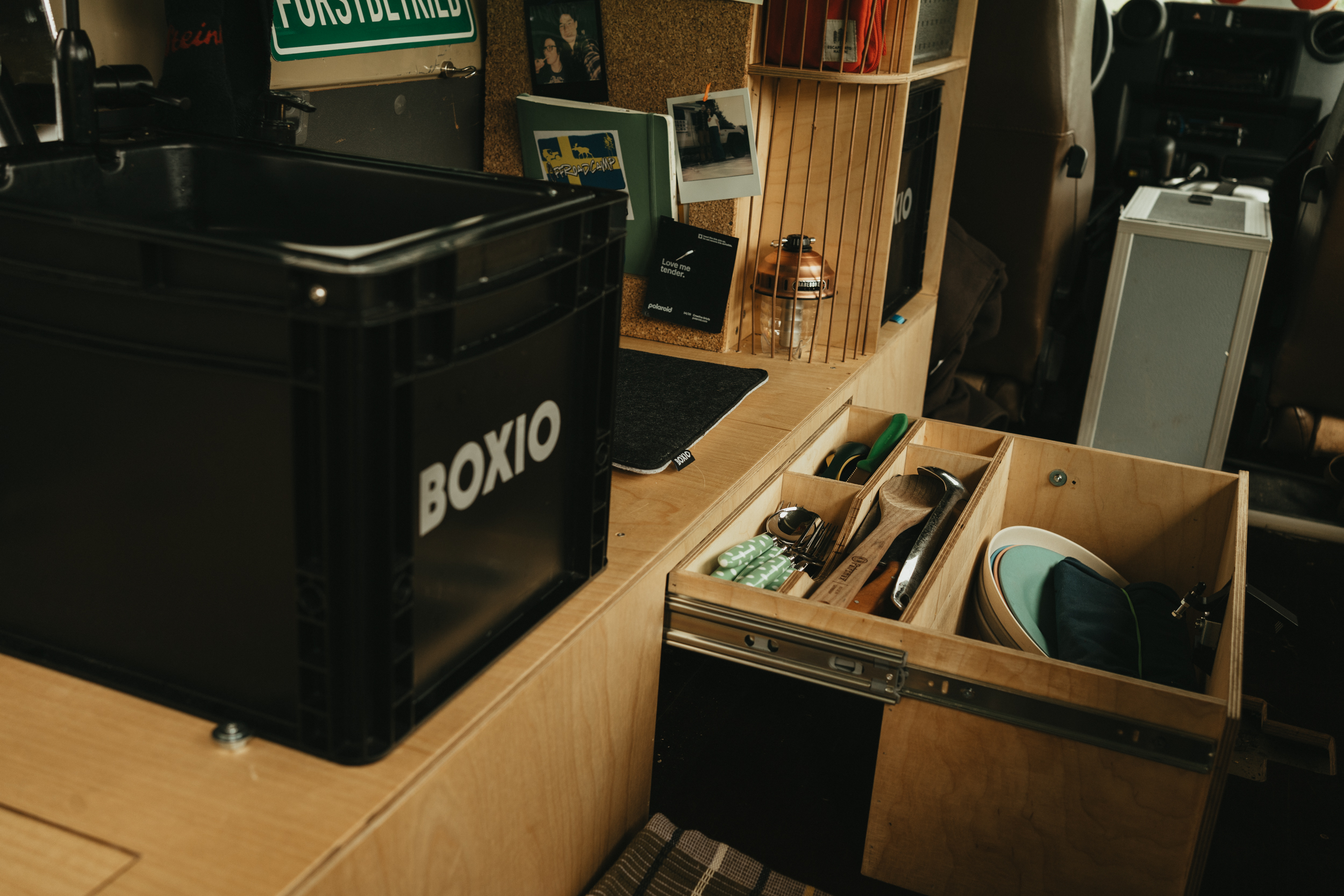
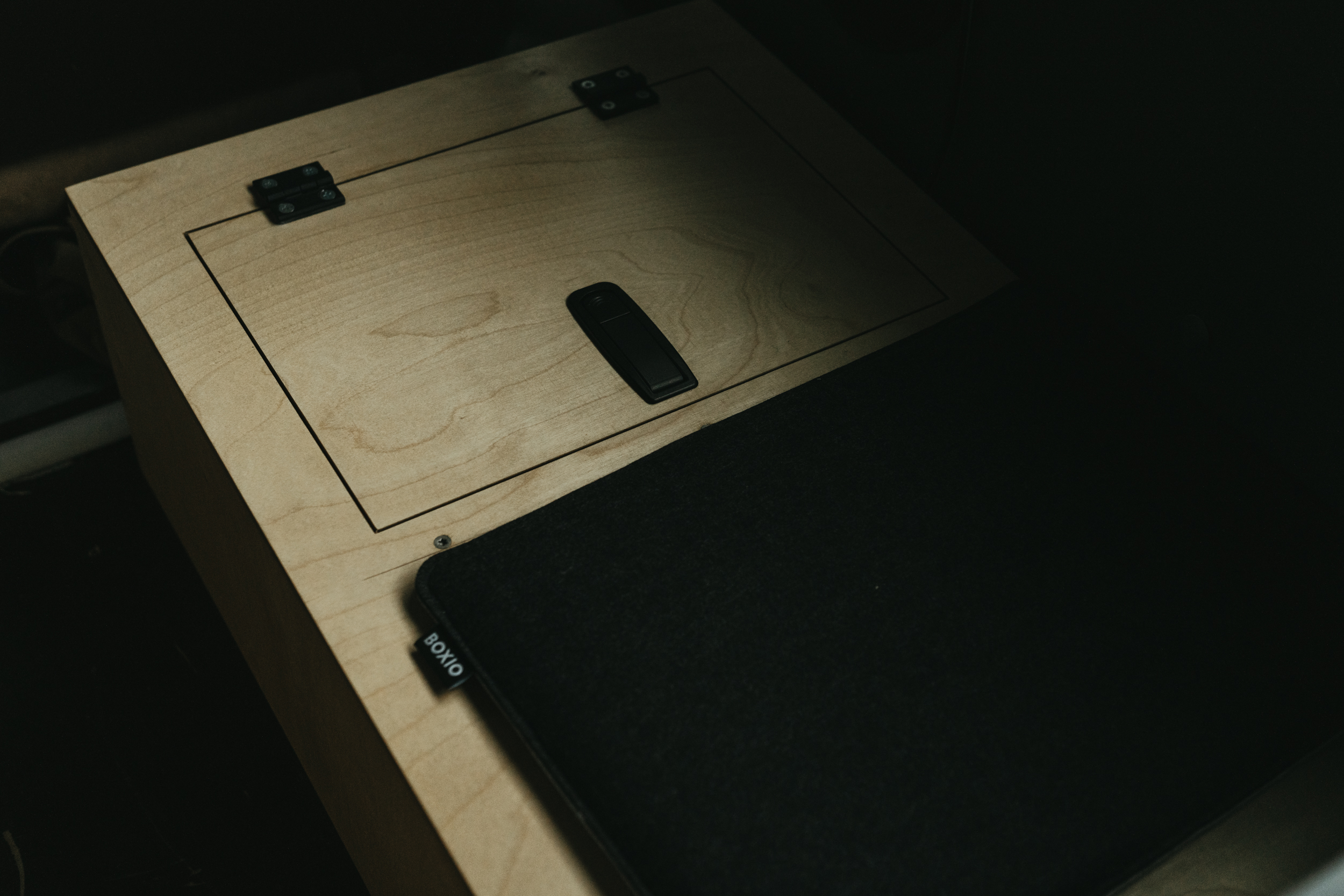
In the middle Nathan built another drawer, which was a bit trickier to pull off. The drawer makes perfect use of the space over the wheel arch and gets lower towards the back. At the front he has put the crockery, and at the back the cutlery fits in perfectly. On the opposite side there is another flap with enough room for clothes.
BOXIO SIT
On both sides, Nathan and his girlfriend can sit comfortably in the vehicle if the weather outside gets really nasty. The comfort comes from the BOXIO SIT seat cushions, which also fit perfectly on the BOXIO, on Euroboxes or a beer crate. The cushions are made sustainably from recycled material and have a 2-in-1 design. One side anthracite, the other light grey.
The tall cabinet: for big boxes, odds and ends and memories
Nathan’s favourite part of the build is definitely the tall side-cabinet module. On one side it is a shelf with room for three more boxes. Here the BOXIO TOILET, the separating toilet, is housed, the BOXIO COOL, a passive cool box, and another box.
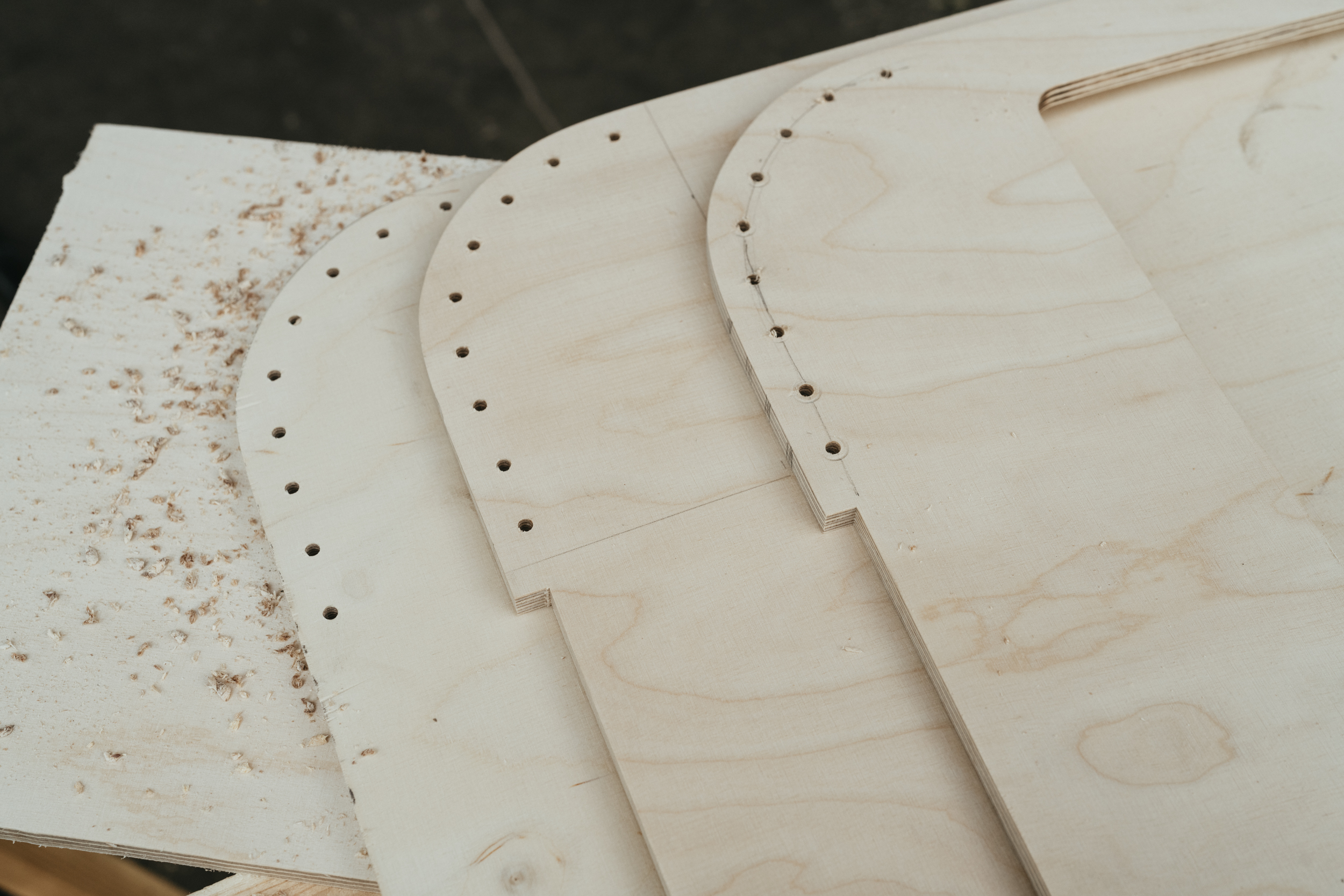
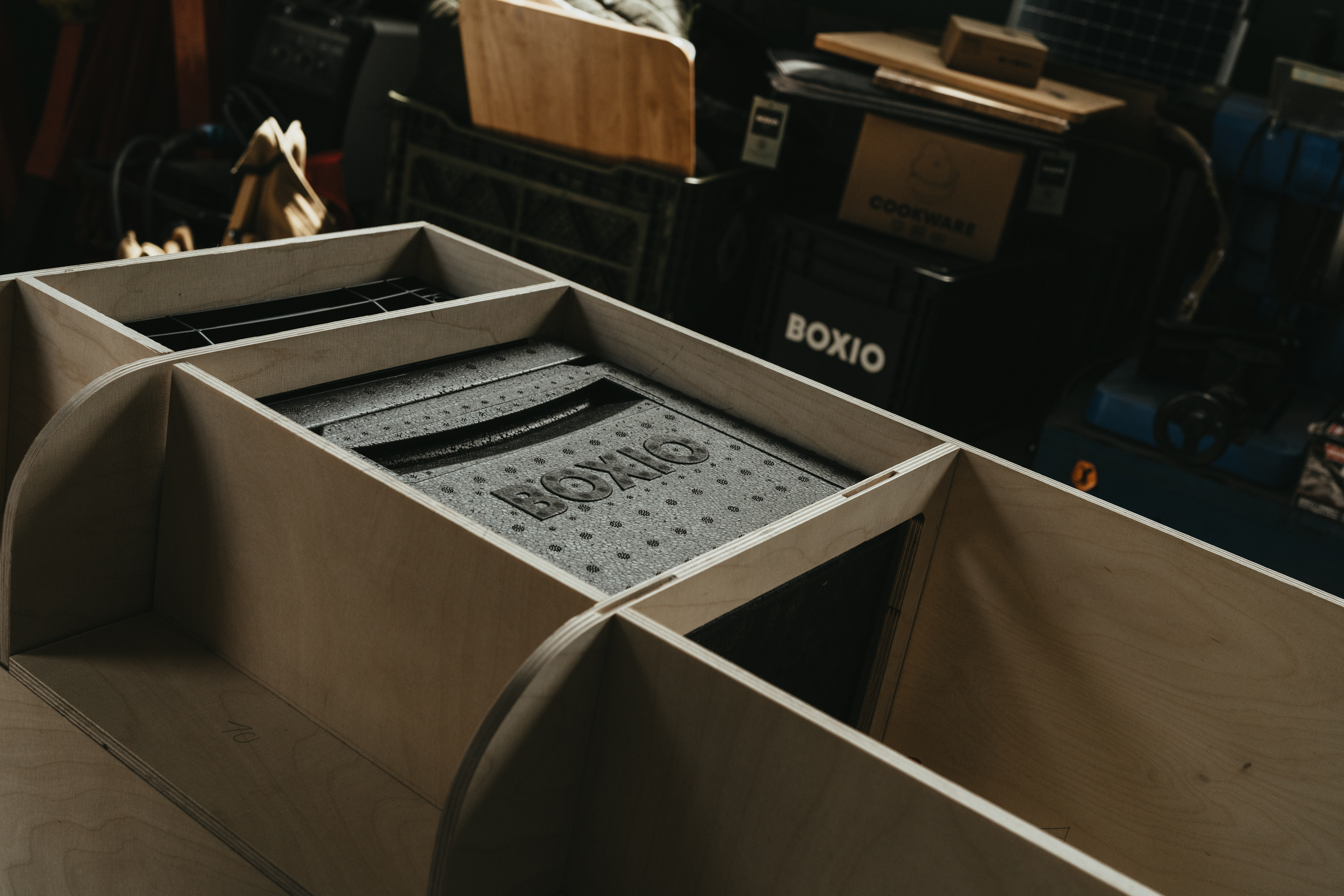
For the cabinet, Nathan took inspiration from Ellie Overland, whose Toyota build he had seen at the 4×4 rhein-waal. The curve on the outside really appealed to him back then, and so did the run of elastic bands. Behind the elastic bands you can quickly stow small items like tissues or a first-aid kit. On the outside of the cabinet Nathan fitted a cork panel. Behind it are small compartments for books, maps and notebooks. The cork works rather like a pinboard, and photos and postcards already hang on it.
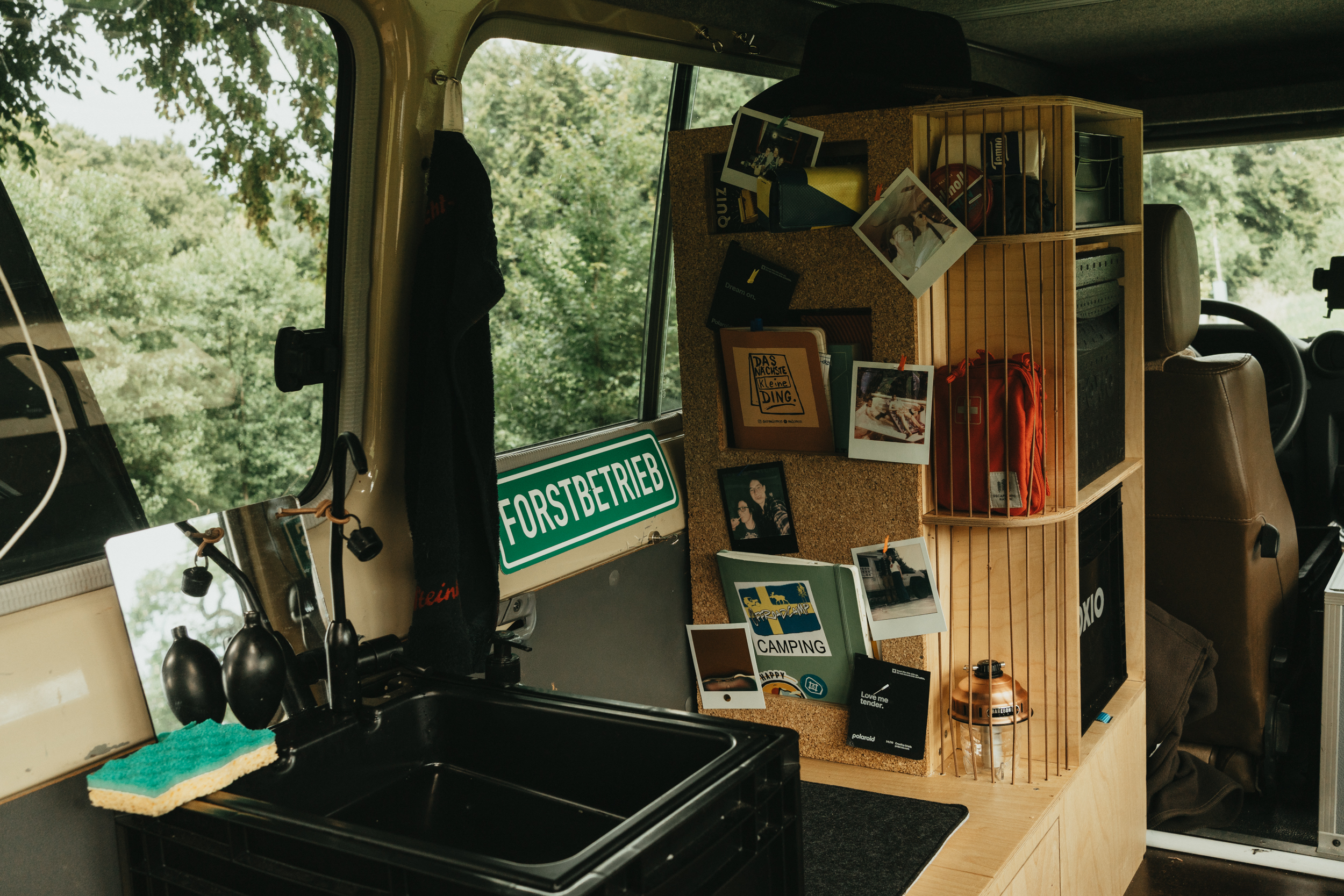
BOXIO COOL
Even though Nathan and his girlfriend use a classic Engel compressor cool box, they find the little BOXIO cool box really handy. Because in the BOXIO COOL, a passive cool box, you can nicely keep fruit and vegetables fresh that no longer fit in the main cool box, if that is full of cold drinks, for example. The box can be split into different cooling zones with the ice packs. And the nice thing is, it is small and, at an empty weight of less than 1 kg, extra light, and can be taken down to the beach in a moment too.
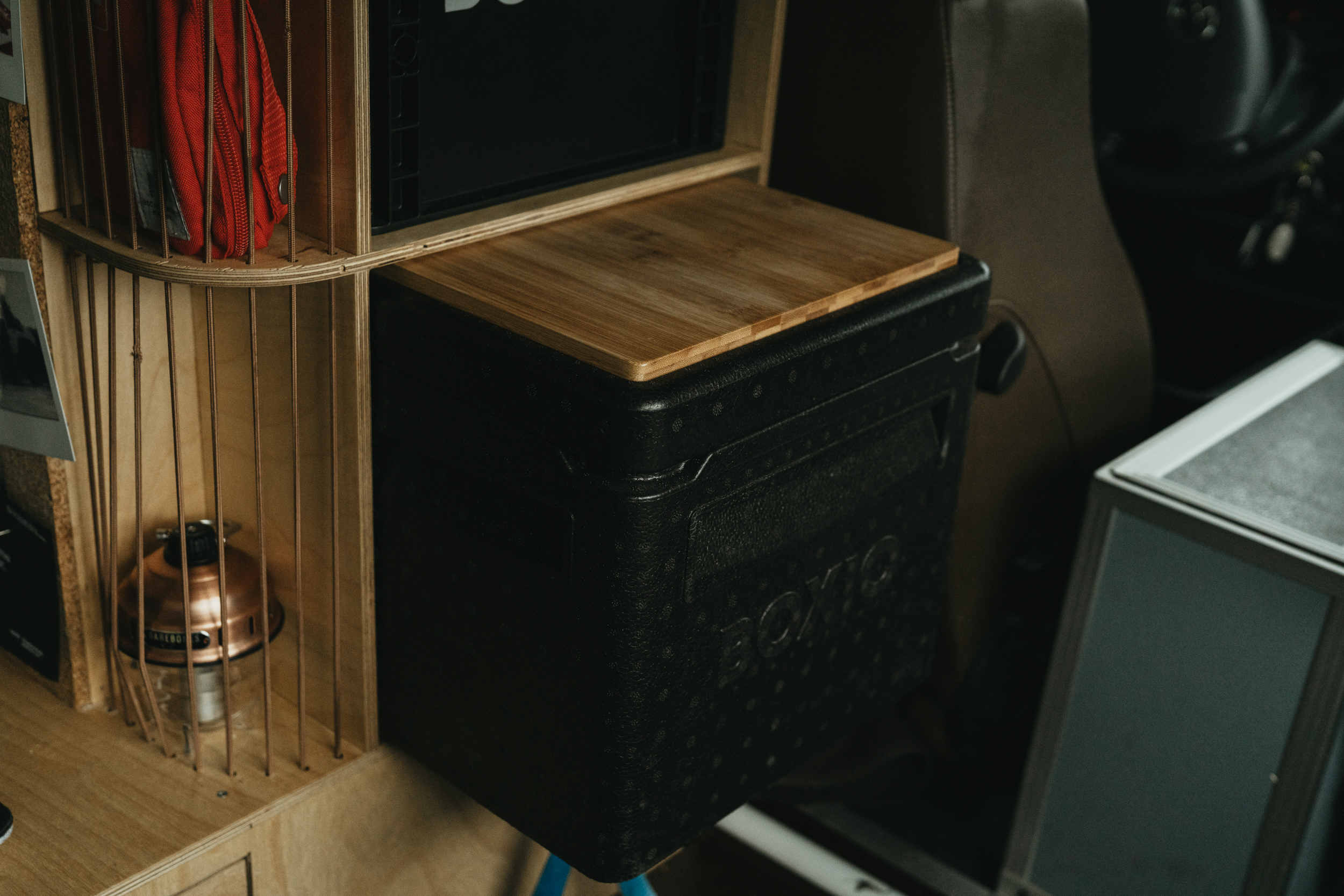
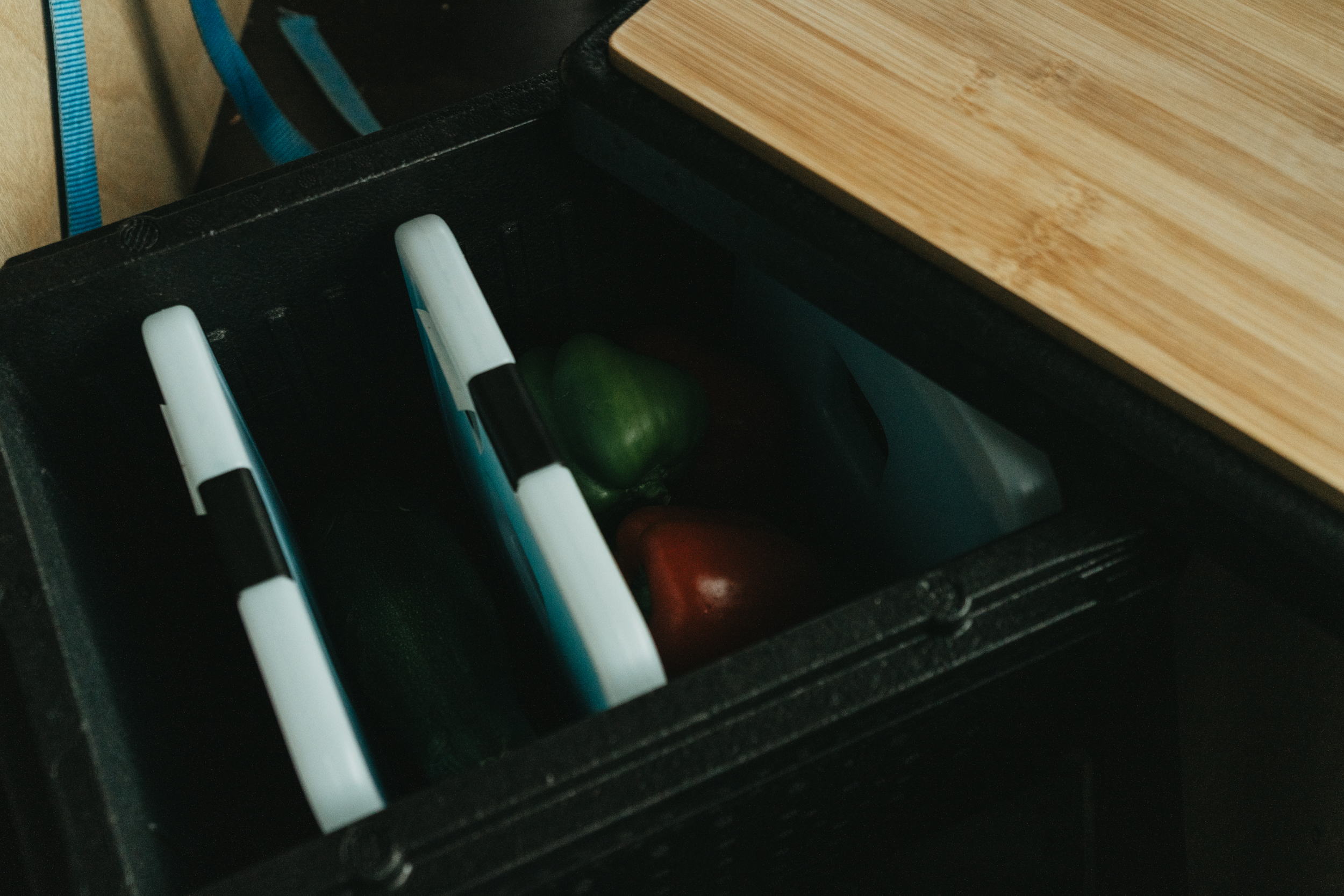
The BOXIO TABLE in use
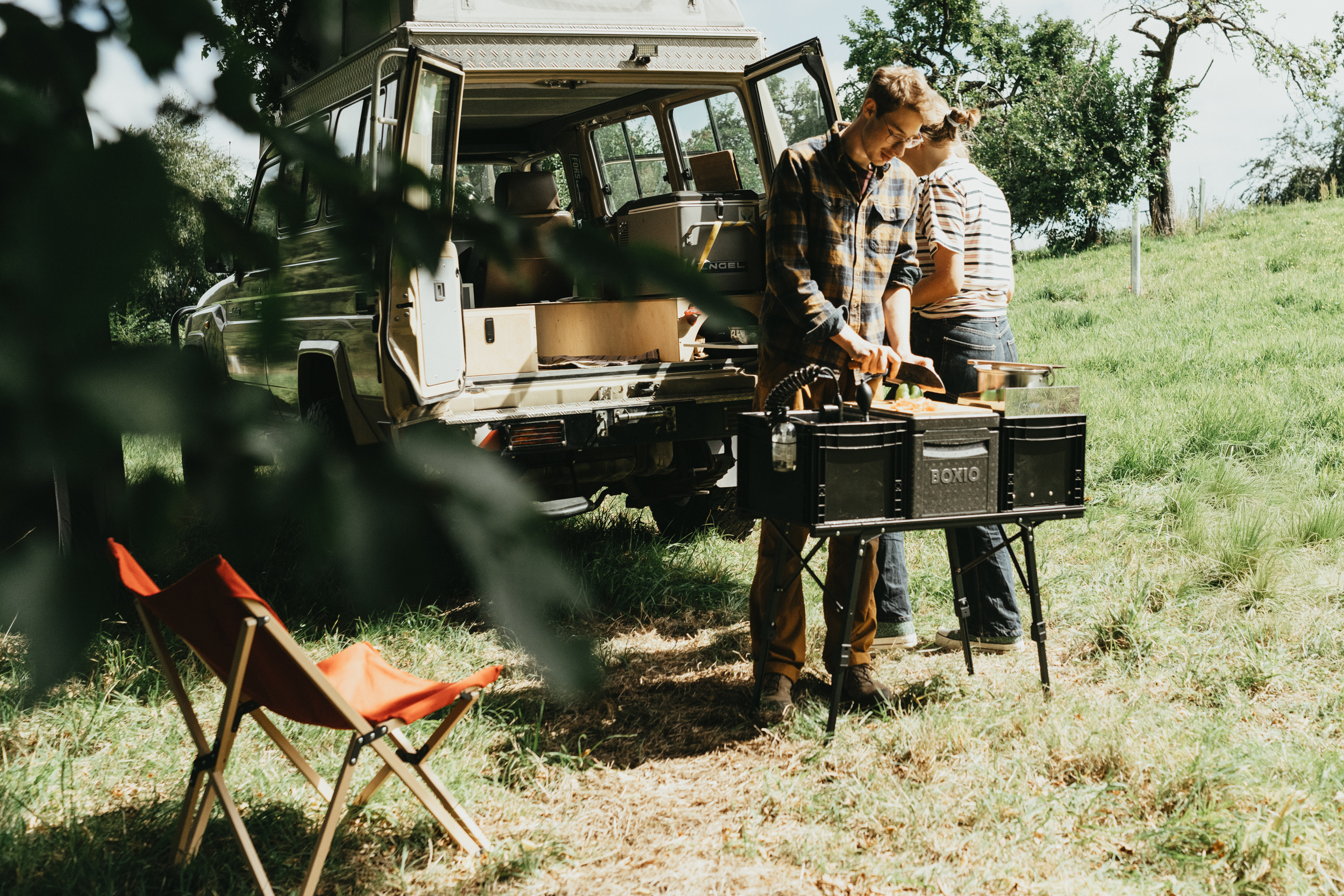
When Nathan cooks together with his girlfriend, the two are glad that the BOXIO TABLE integrates the BOXIO boxes just as perfectly as the HZJ78 build does. Nathan uses it as a mobile cooking station, a washing-up spot or for eating. The stove and sink fit exactly on the table. Between the BOXIO COOL and the stove fits the BOXIO Board, a small chopping board, which fits perfectly as a lid on the cool box.
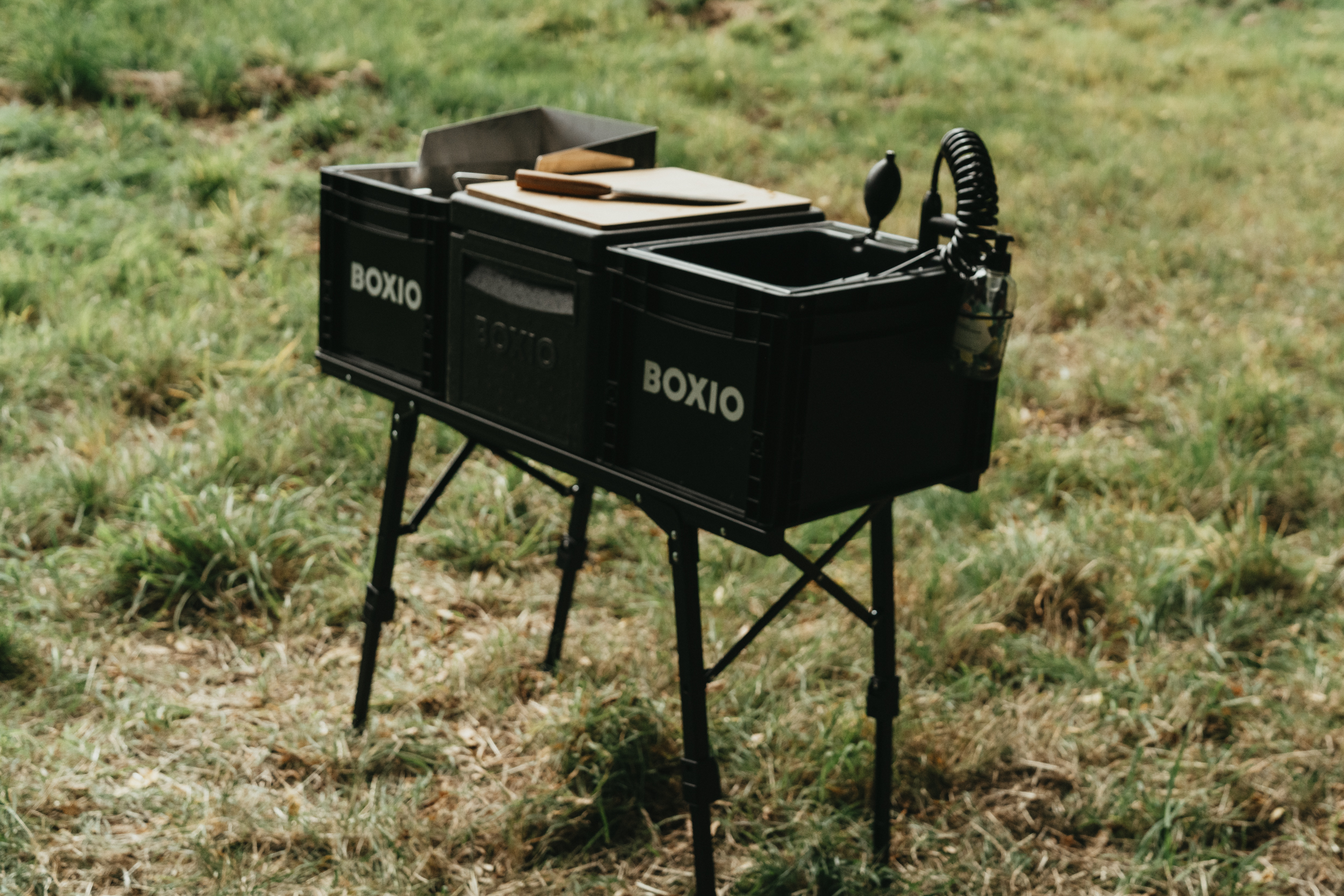
The BOXIO TABLE is compatible with up to three BOXIOs, adjusts in a flash and carries up to 30 kg. Packed up it weighs less than 4 kg, ideal for travel with little space. When it is not being used together with the boxes, it can serve as a normal table for eating or sitting comfortably.
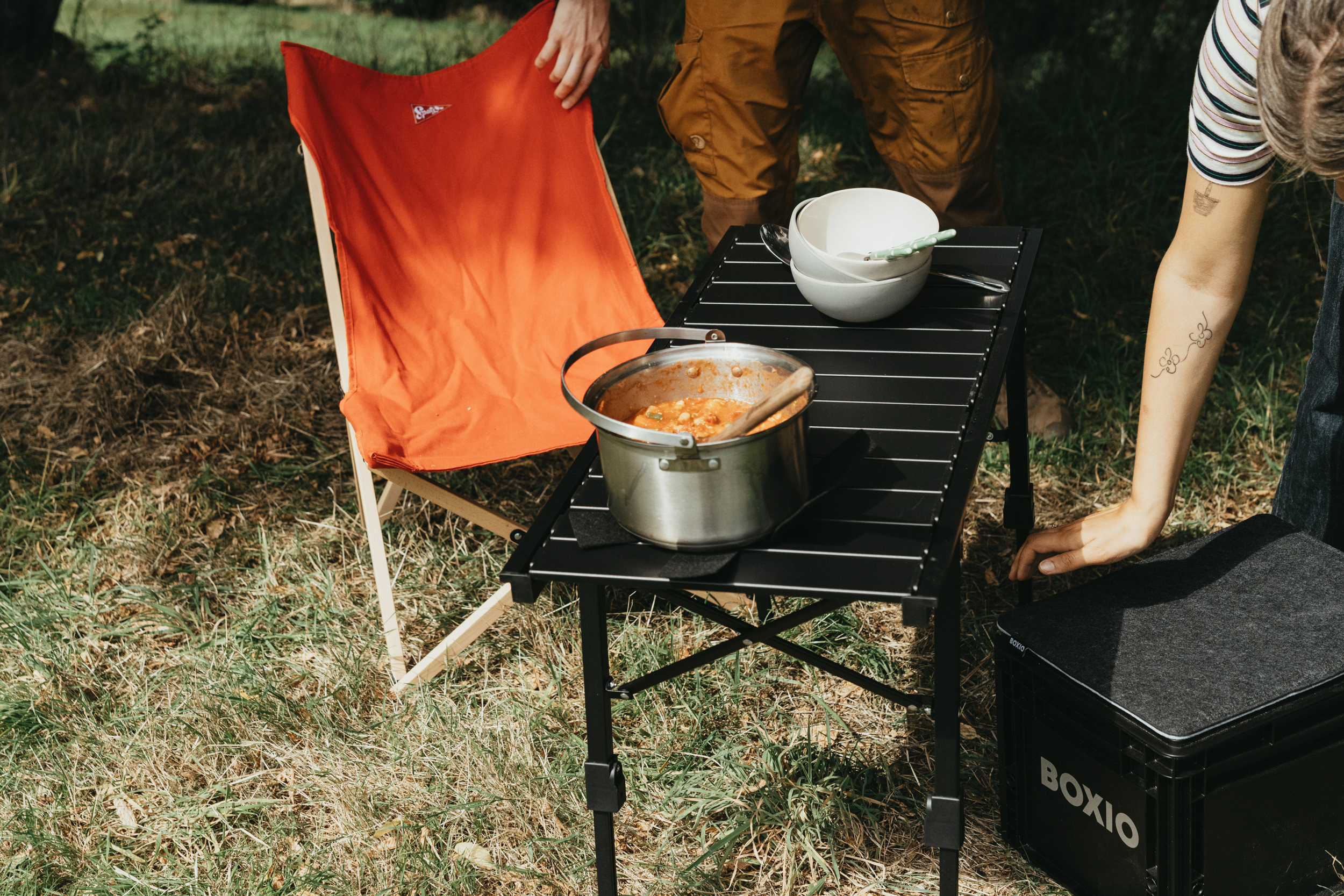
The table and chairs are stowed in the “mouse hole”. That is what the two call the round opening under the bench at the rear, which is reminiscent of an oversized mouse hole from the Tom&Jerry episodes.
Materials, time and details
Nathan worked on his build for about three months. Whenever there was a bit of time between vocational school and his job, he cut the parts to size in the workshop. The fine work and the fitting he did over two long weekends. For the materials he deliberately went for simplicity: birch plywood, black fittings, push-button catches and, as the centrepiece, the BOXIO modules.
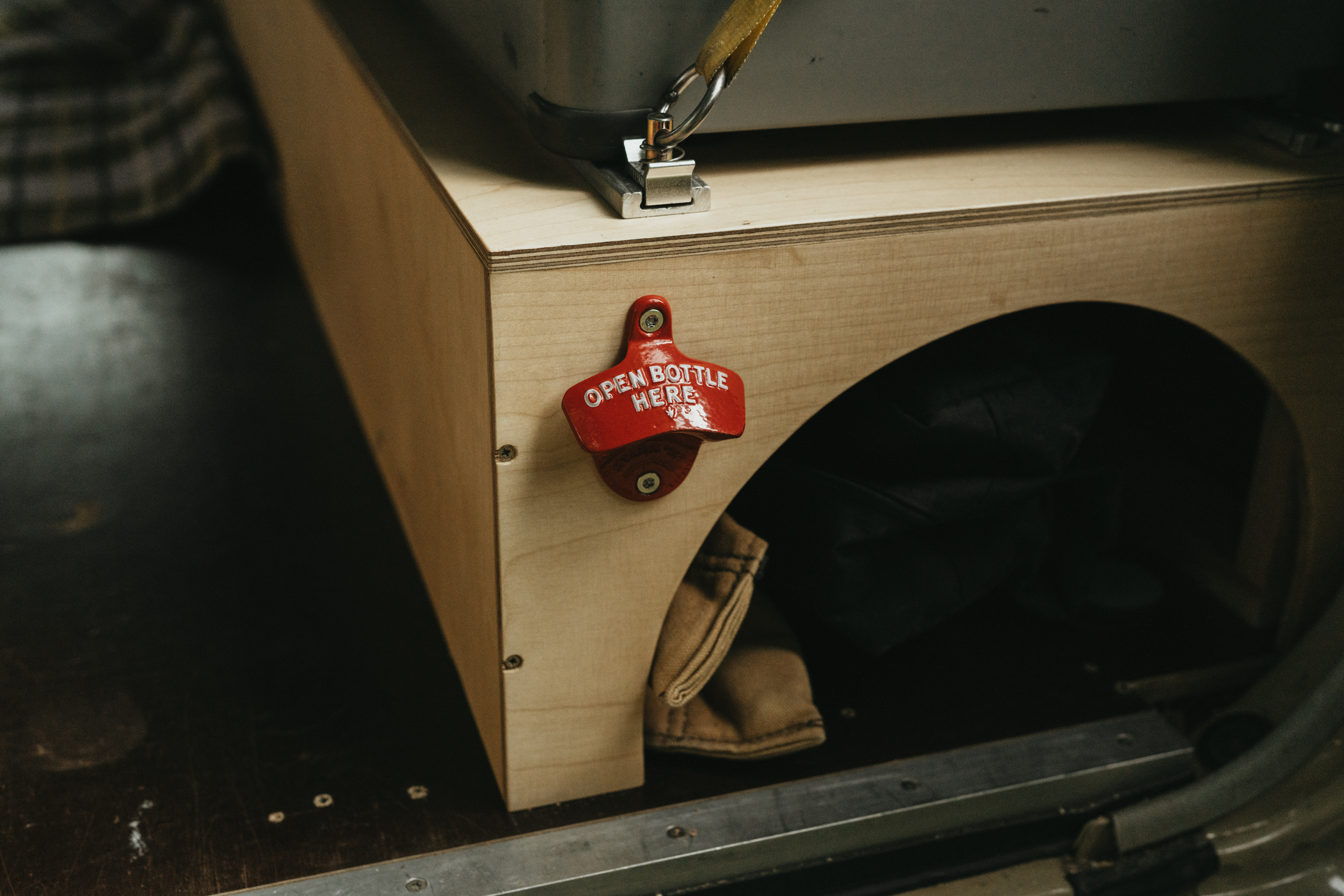
The tall cabinet with the elastic straps and the cork, and the small details like a USB charging point by the bed, the holder for the soap, a bottle opener at the rear or the drawer over the wheel arch, show just how much thought went into every single detail.
First test trip with the build
In summer Nathan spent four weeks in Sweden with the finished build. Four weeks almost without a sunset, the perfect proving ground for everyday usability. The build held up, the system works, and the combination of craft and BOXIO has proven itself.
But Nathan already has a few ideas for the next build. Because as the saying goes: this will not have been his last interior build for the Toyota Land Cruiser.