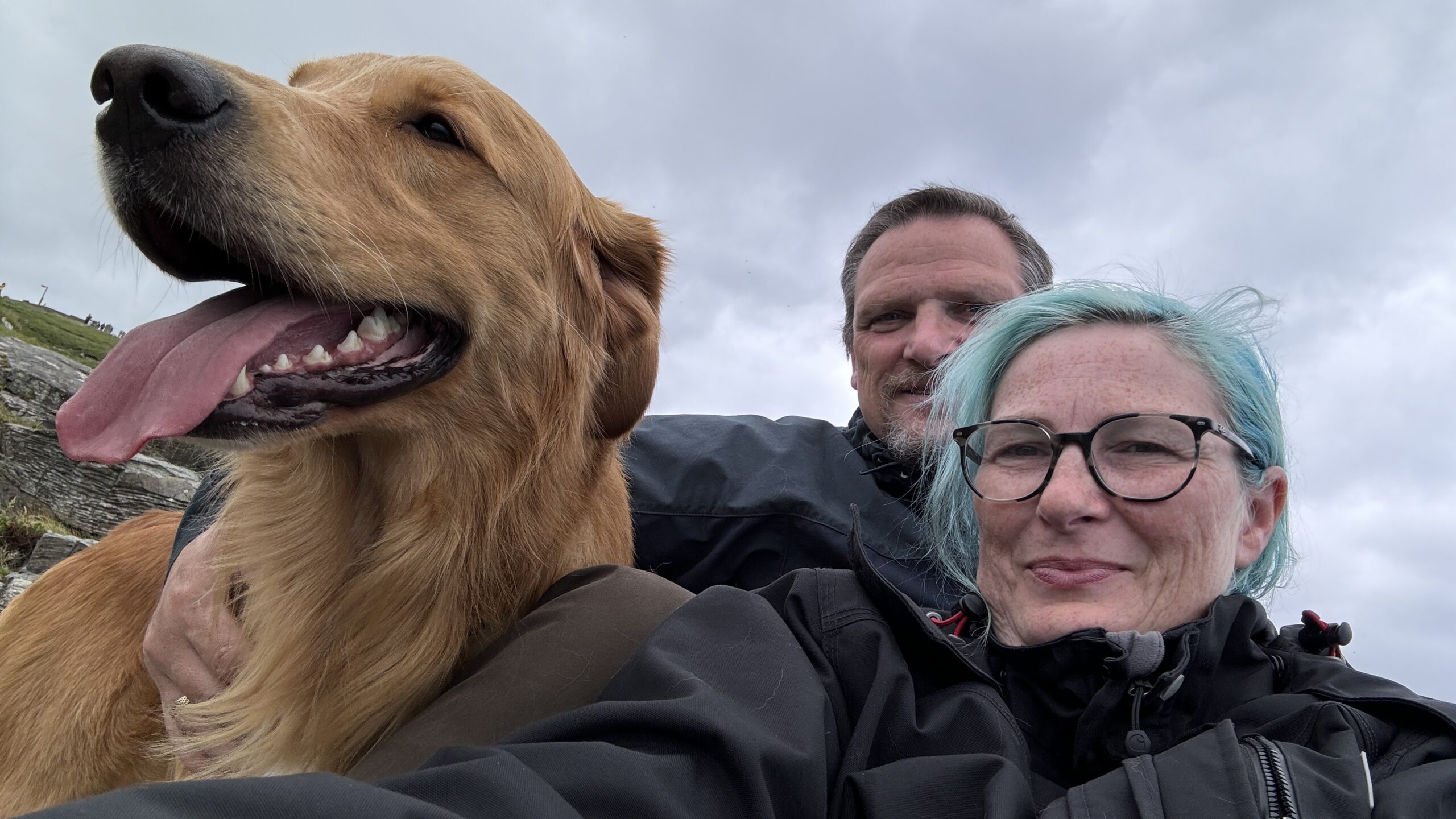


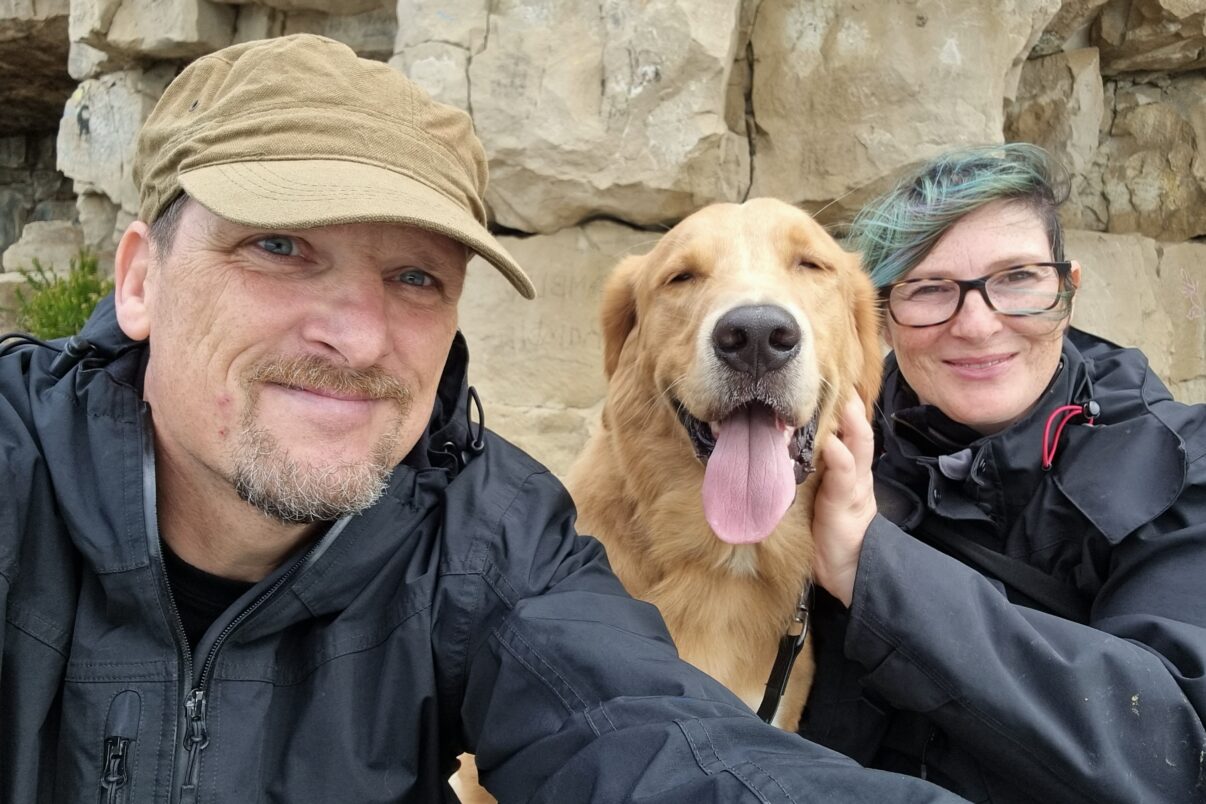

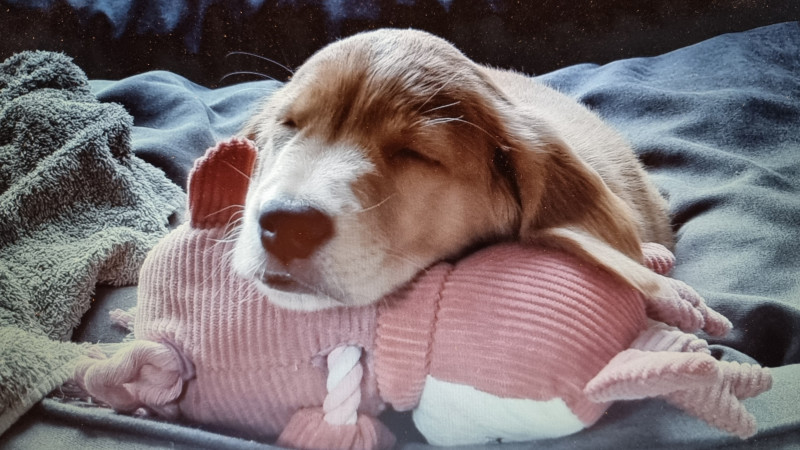
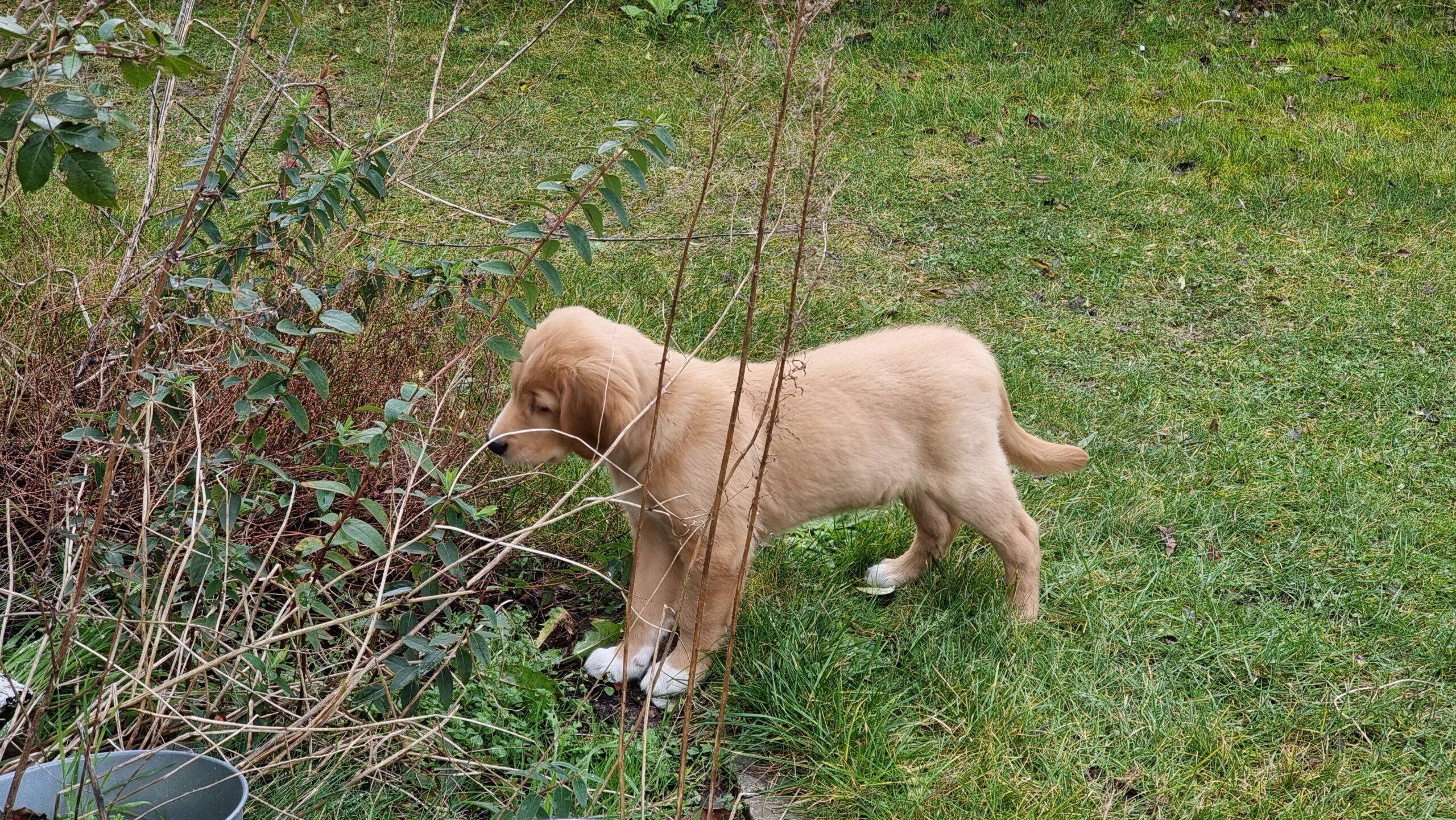
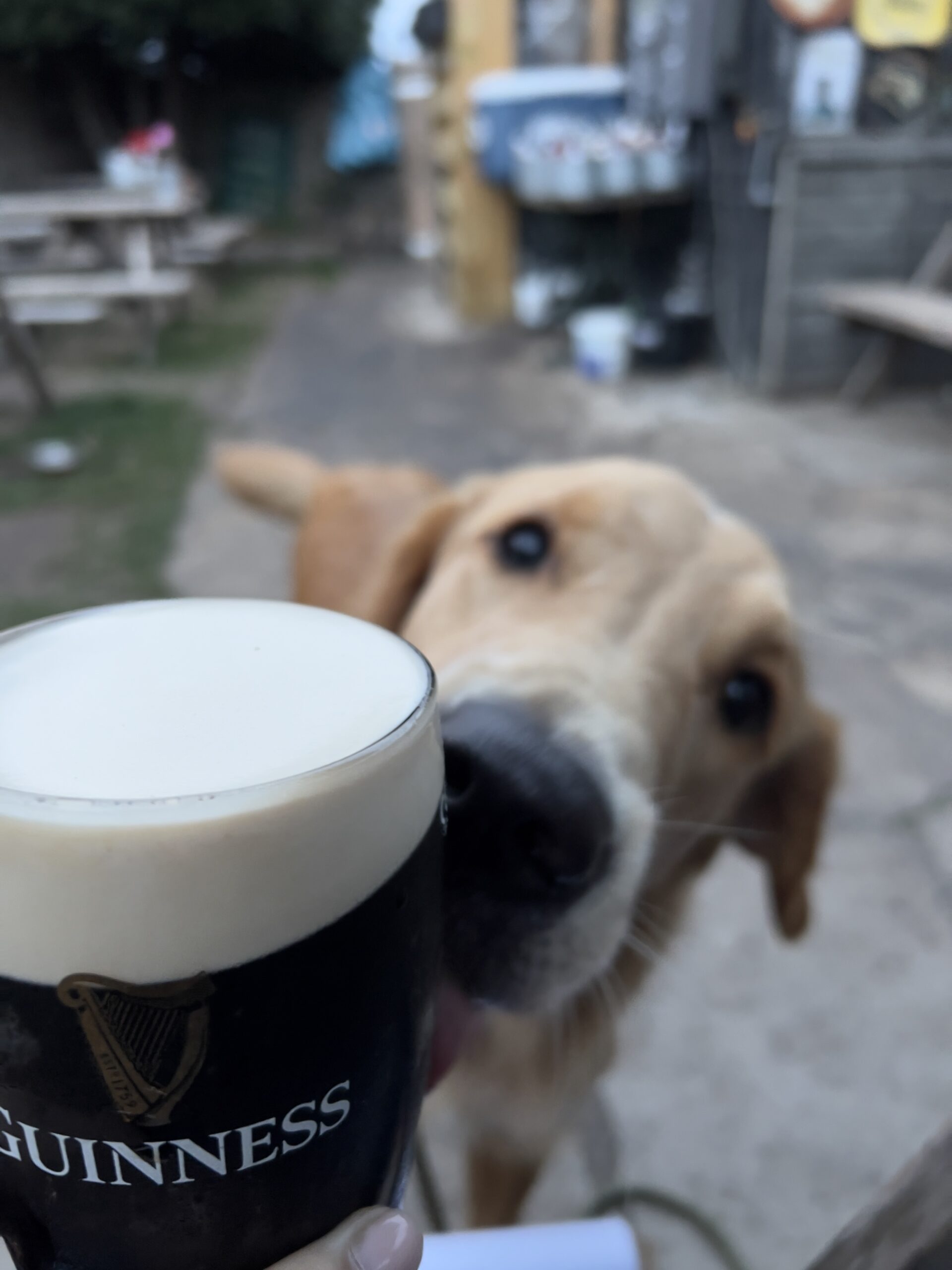
In January 2022 our Guinness joined the family. A small, soft bundle of fur. Clumsy and cute back then. Today our Golden Retriever is grown up and lively. He brings a lot of joy, but also changes, especially when it comes to travelling in our 4x4s.
From the very first day, having a dog in the family had consequences. When Guinness lay next to Nik in his crate that first night in January 2022, anxious, shaking and terribly worked up, one thing was clear: we would not be doing the Six Dunes of the OF-Series. The tour’s destination was Morocco. We had wanted to do it the year before, but COVID-19 got in the way. Now it was off for us in 2022 as well.
A trip with such a young Golden Retriever into a country we do not know and that carries various risks for dogs was too uncertain for us. On top of that, it would have been our first trip with a dog. We had no experience yet, and we did not know how the dog would take to travelling. He needed to gain full trust in us first. And at that point we could not even have done the necessary titre test that is required to bring dogs into the European Union. That is only possible from the dog’s seventh month.
But that was absolutely fine by us. We chose the dog, so from now on it is about making compromises, if you even want to call them that. Looking back, we have not really experienced any restriction for us and our way of travelling. Travelling has not got worse than before, quite the opposite. The not-so-little rascal wins people over, and our loyal companion brings us a lot of joy.
Preparations
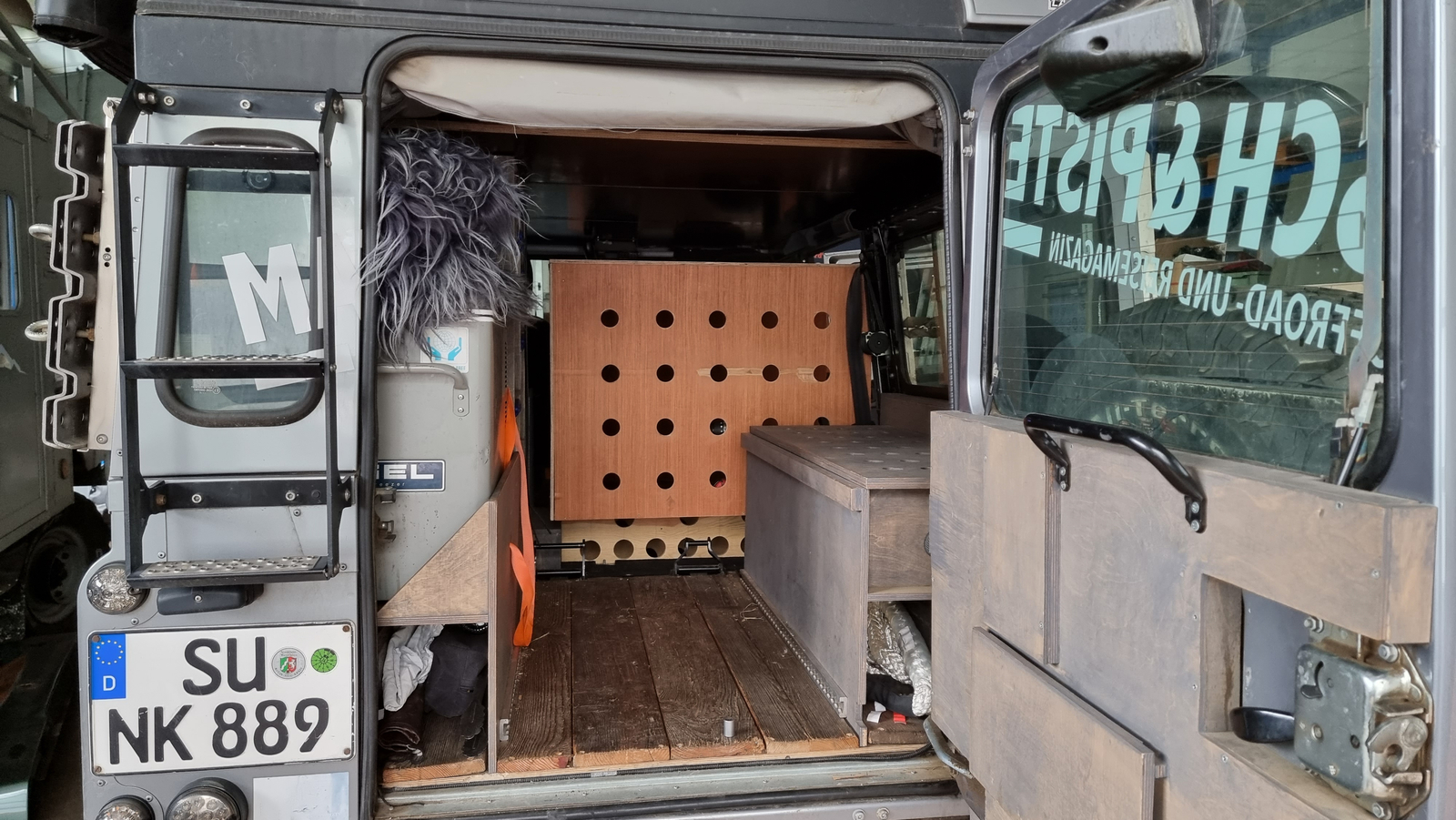
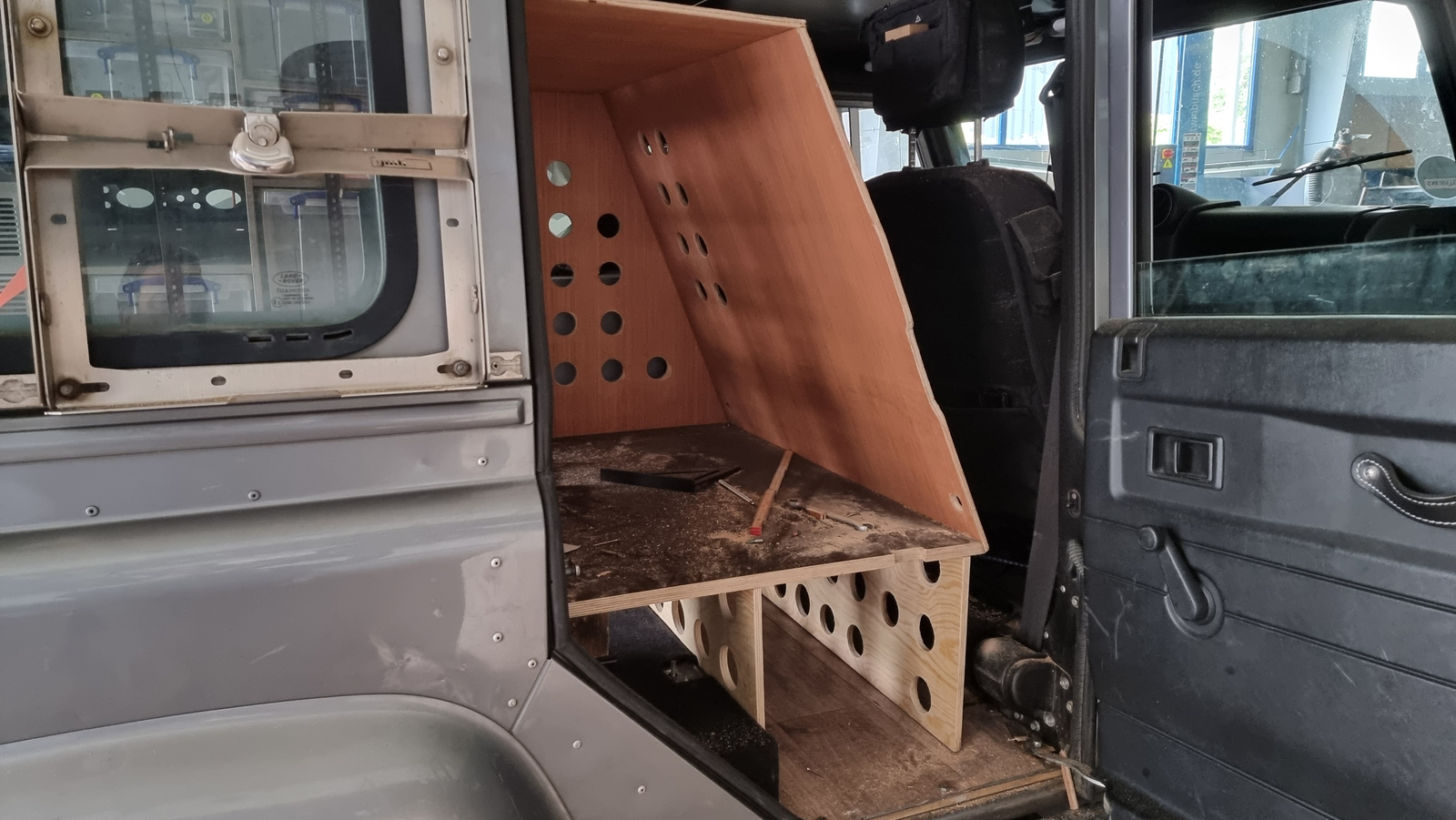
Instead of Morocco, it became the Pyrenees. We decided to stay in Europe, because we did not yet know how Guinness would cope with longer drives in a car. We wanted the option of driving home without any fuss if problems came up. Naturally, the first thing we did was build him a spot in the car. That did throw our freshly fitted vehicle layout into disarray, but so what? Until then we could sleep in our 110 Defender both up in the pop-top roof and down below. With two people at a pinch, but on your own in any case. We gave up the lower sleeping spot for the dog crate.
Guinness is a travel dog, lucky us
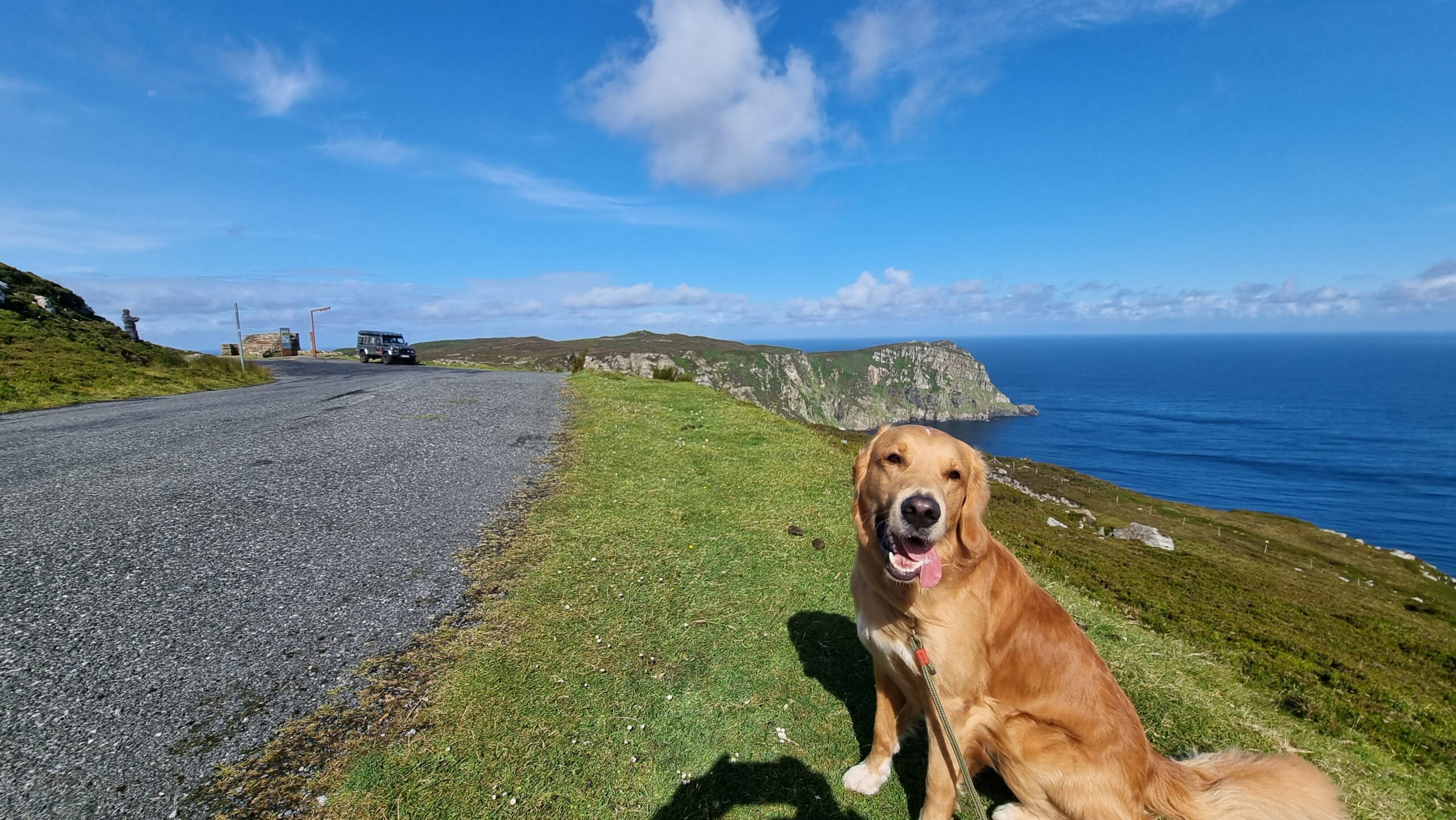
On this trip it turned out that he is a very relaxed, calm passenger. The only thing, and this has settled down by now, was that he did not like to move too far from the car when we were not both with him. The car has become his safe place, his den. Even today he lets us know when he would rather disappear into his crate, when things get too hectic and too loud for him. He simply stands in front of the car door until someone opens it for him. In the end, his need for peace and safety wins out over his curiosity.
Fixed times and rituals give security
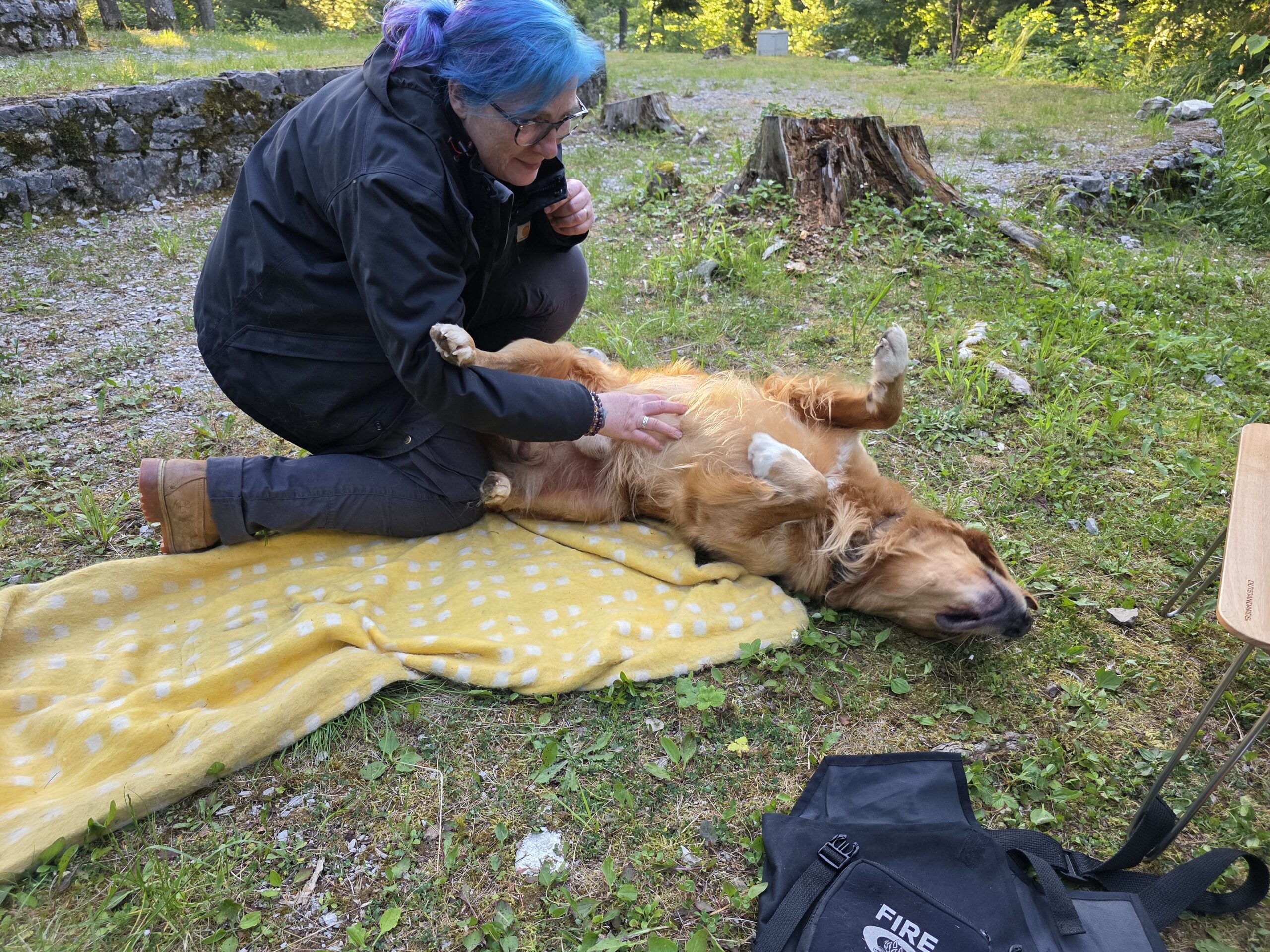
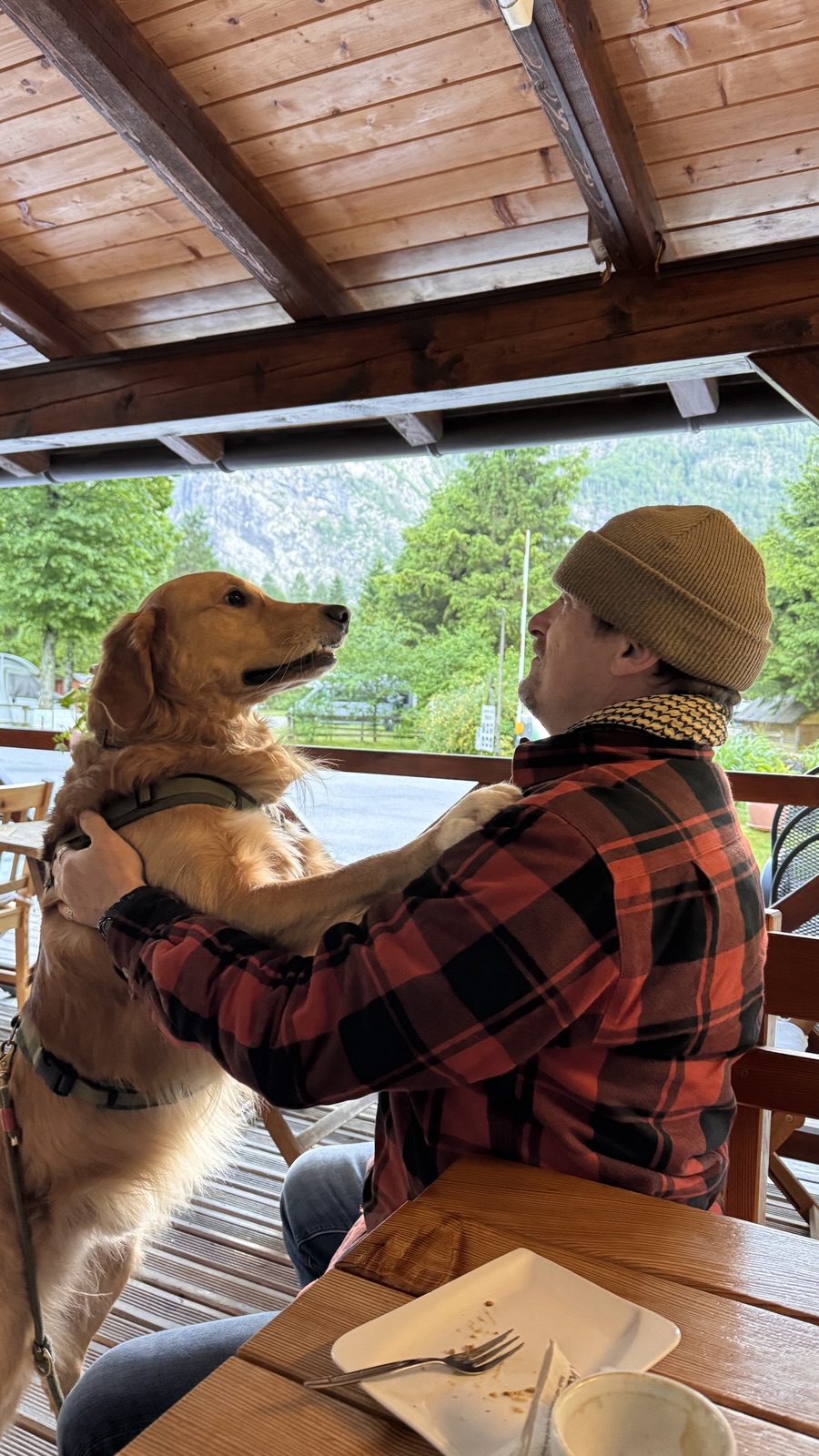
At home and on the road, we try to keep the same times for feeding and small rituals. That includes cuddle time. We have a cuddle with Guinness then, and he laps it up. He especially likes it when we rub his belly. It is a fixed part of the day. It matters for building deep trust and a strong bond. He can let go completely, because he has learned that he is safe with us.
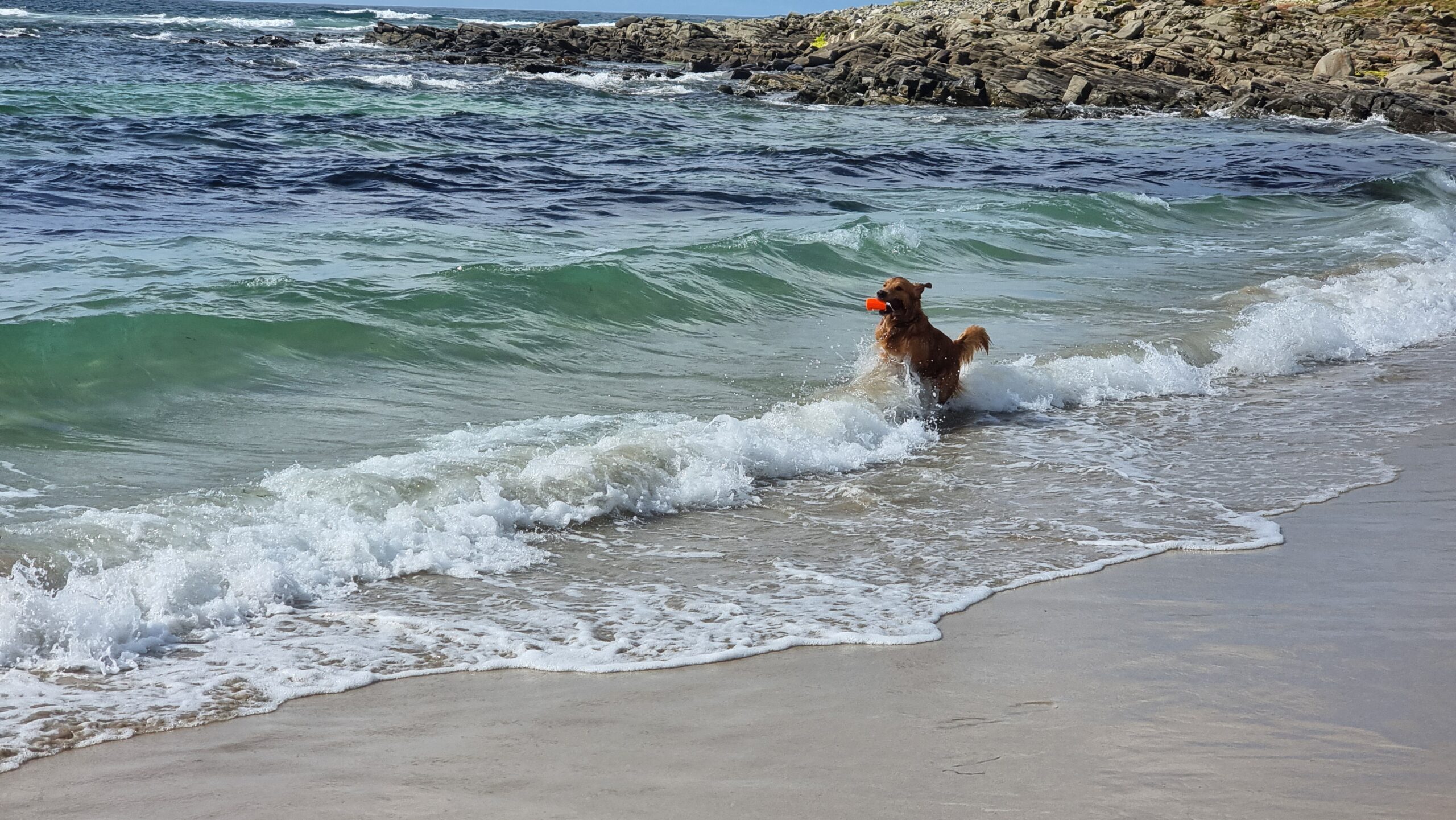
Another important thing is that he gets something to do, that we feed his instincts. As a Golden Retriever from the working line, he wants to work with his nose, sniff and search. He loves doing that with his dummies, and if he can get into the water while he is at it, there is no holding him. Whenever we can, we try to keep him busy with it.
We work with one, sometimes two dummies, which we have named. We can tell him which dummy to search for and find first, then send him on to the second. When the surroundings allow, we also place the dummies higher up, which challenges him even more. Left to himself, he always searches the ground first. If he picks up a scent but cannot find the dummy, his head goes up. It gets even harder for him then, he has to concentrate fully. But so far he has always found everything again. Maybe we should have called him “Google”.
Work does not get short shrift either
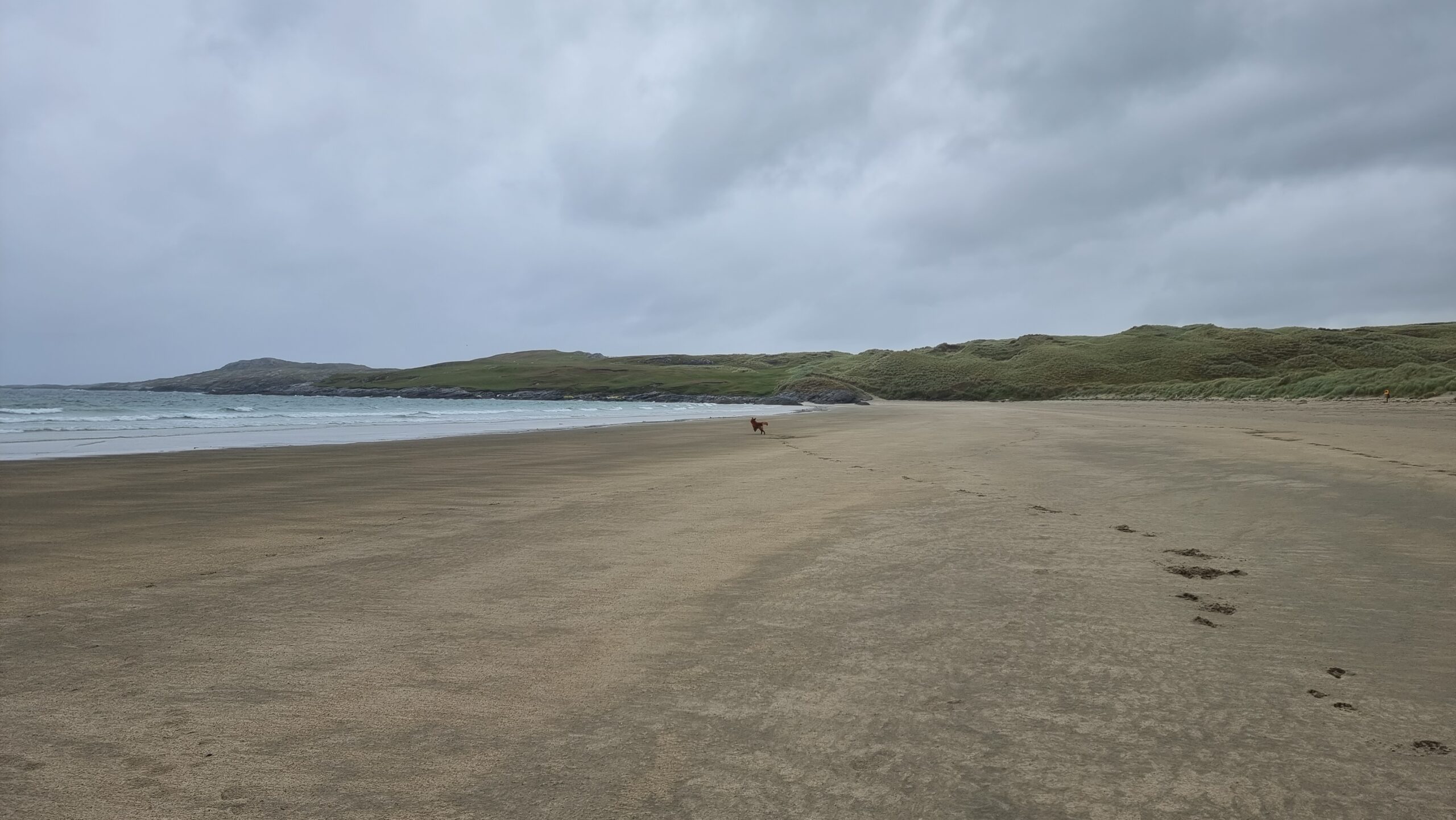
When we found a beach like that, which was not so hard, we worked and played with Guinness at length. The damp, soft sand cushions everything well, and he can run, jump and leap really well there. On the long beaches of Ireland we could also send him out really far. Since nose work challenges dogs far more than running, we use the dunes for intensive searching.
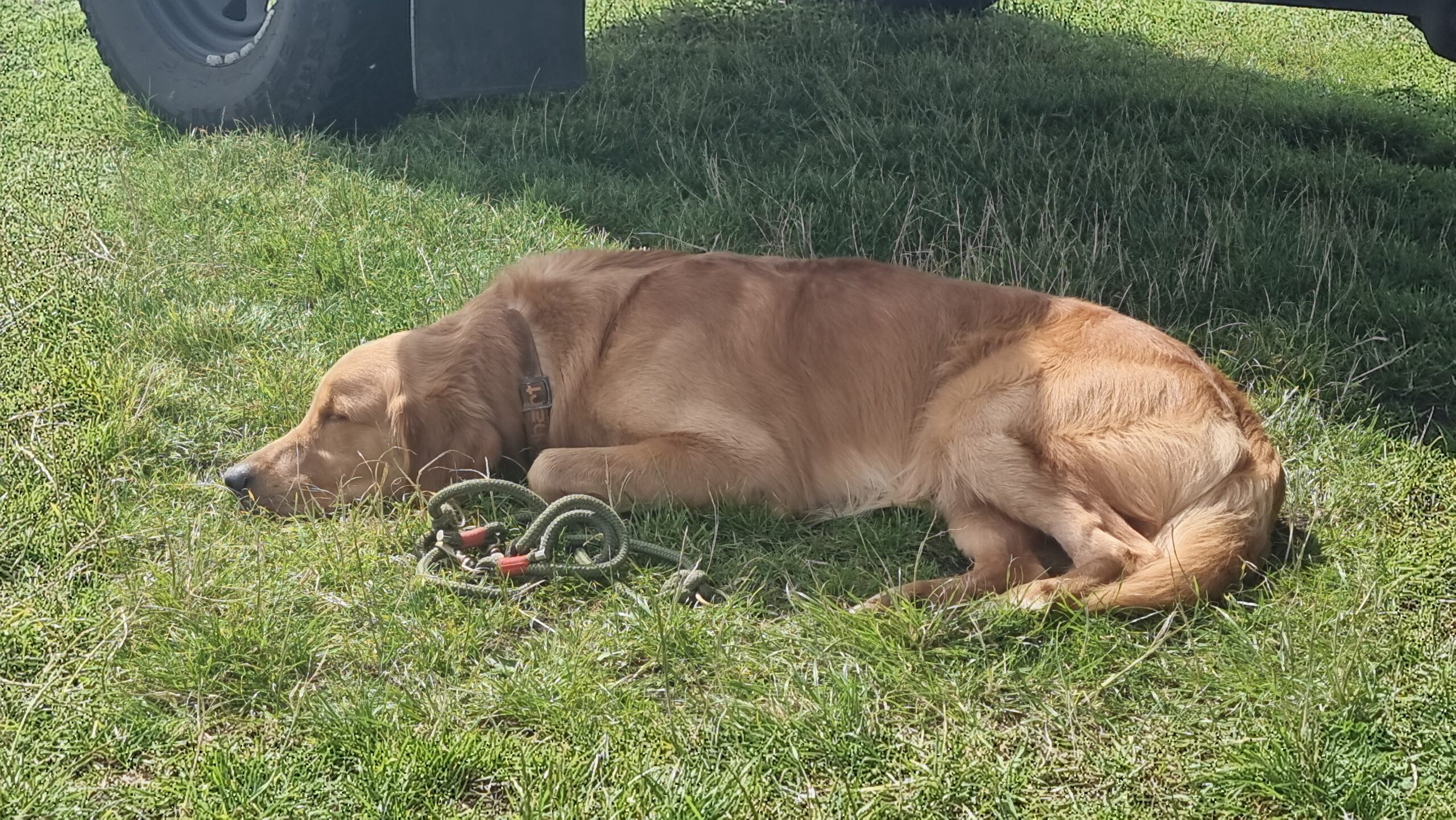
The mental work is tiring, and the raised breathing rate (up to 300 times a minute) and the involvement of the limbic system via his extra scent organ on the palate (the vomeronasal organ) push the dog to its limit. The result is a tired but also very contented dog. On the drive that follows, he is then always, quite literally, “dog-tired”, and that makes the journey more relaxed again.
Always keeping the dog’s welfare in mind
Every session of work and play ends with a drink. On longer drives too, we stop again and again, let him do his business and have something to drink. He tends to let us know late, even when he is obviously thirsty. If he is in contact with us then, he gently places his paw on us. That is how we know he needs something. While we are driving that is not possible. So we think ahead for him here.
If he has his favourite dummy with him, he will not drink either. He guards the ball until he knows it is safe. After a walk or some work, we let him carry his “prey” to his spot, rest for a moment, then we ask him to bring the ball and we put it away. Then he drinks.
Swimming
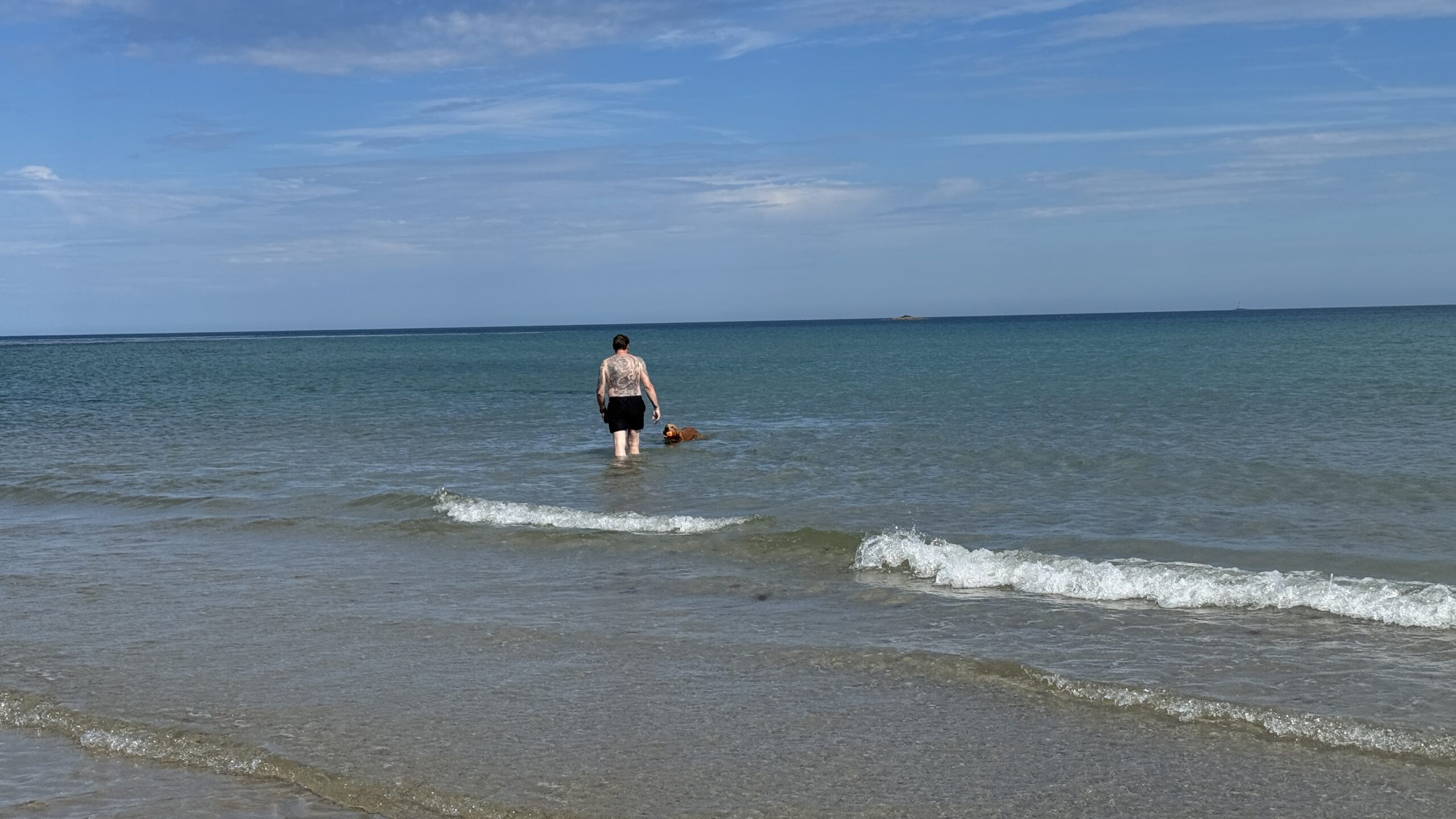
When it comes to swimming, we are especially careful. Guinness tends to throw himself into everything. Literally. But some dangers lurk in the water. Branches sticking up, rubbish, broken bottles, submerged stones and rocks. I am amazed again and again at how surefooted the dog is, almost uncannily so. But I have no feel for whether he takes it all in or whether there is a lot of luck involved. They say retrievers are pretty skilful, but can he really see everything that lies underwater?
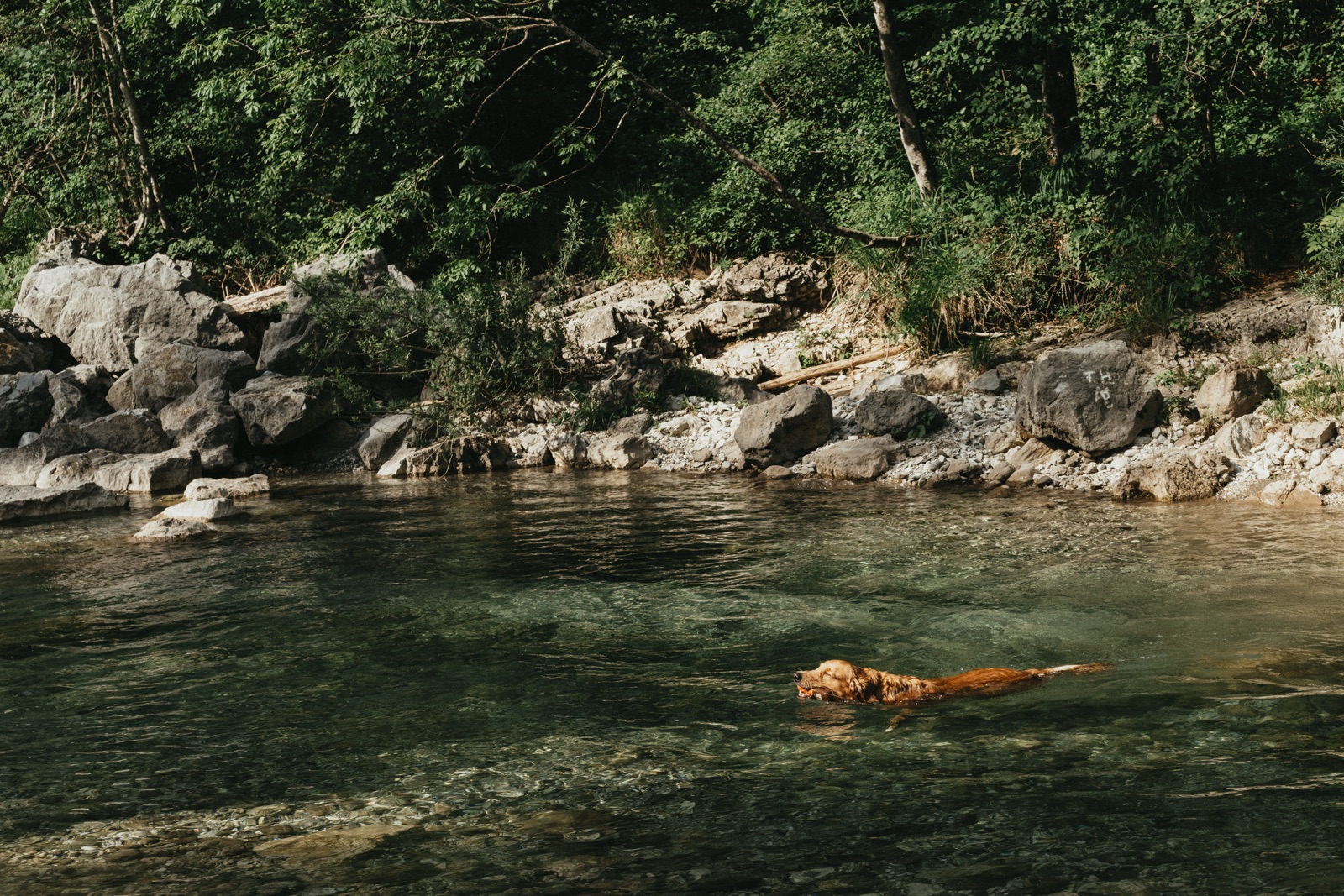
That is why I always look at the water myself beforehand and try to spot dangers and, where possible, remove them. A residual risk will always remain, though. We also never let him swim alone. I am always close to him, either on the bank, ready to go into the water at once, or I swim right along with him. Since he does not know when to stop, we have to watch out and see the signals when he is exhausted. We would rather take a break too early and too often than risk anything.
Heat protection
The Blidimax privacy mats have proven really good. They actually keep the inside of the vehicle noticeably cooler than the outside temperature. When we park and go shopping, for example, the dog has to stay in the car. As a first measure, we always try to park his side of the vehicle in the shade or away from the sun. If that cannot be avoided, we put a Blidimax privacy mat over his window, both when parked and while driving. And of course, when parked, several windows are left open a suitable crack too.
Limits, and setting limits
But there are limits. Very often it is simply a lead requirement, dog bans or unsuitable places. There is nothing we can do about that. Another reason is the temperature. A Golden Retriever often does not know his own limits. He would work, run and swim until he drops, as long as we ask it of him. So it is very important that we set the limits for him, even if he does not like it at first.
It is especially hard for him when we are by the sea. Too much salt water gives him diarrhoea, which is why we do not let him swim for too long. When there are jellyfish, he is not allowed in the water at all. But when it comes to beaches, Ireland has turned out to be a dream land for Guinness. Cool temperatures and big, lonely beaches, often shallow water.
What dog gear we take along
The essential things are a blanket to lie on, bowls, a harness and lead and dummies. For lying down we take two blankets. When it is colder, we use the wool blanket from Heldberg, which sadly is no longer available. One side is wool, the other is waxed cotton. With that side the blanket can lie on damp ground too. But Guinness happily ignores all that and mostly hunts out a cool spot to lie on instead. He is also still so agile and active that as soon as there is any movement, he mostly gets up straight away, because he might miss something.
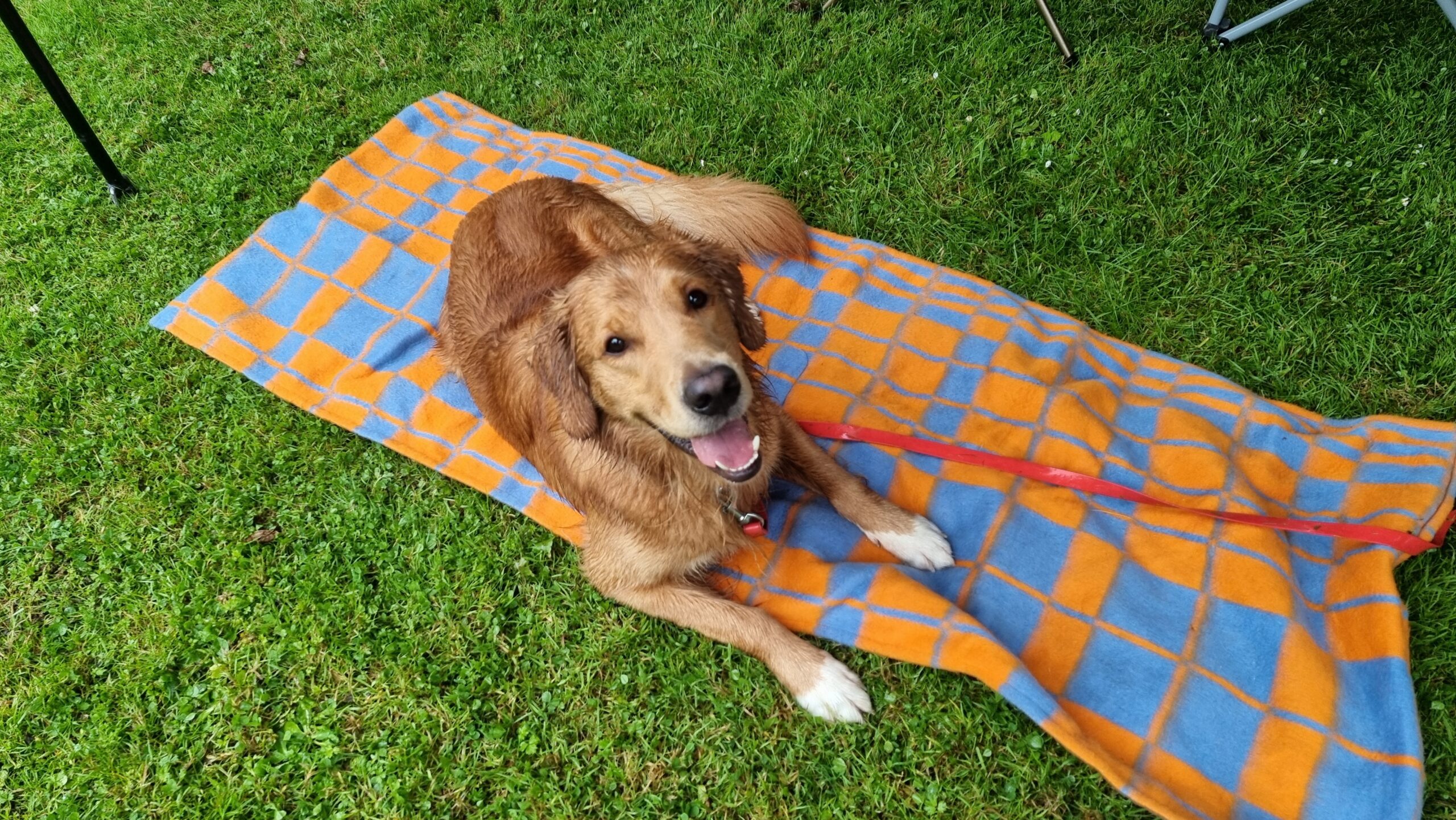
When it is warm, he likes to lie on the Nakatanenga dog blanket in 70 x 70 cm. It is light, thin, PU-coated against moisture and does not take up much space.
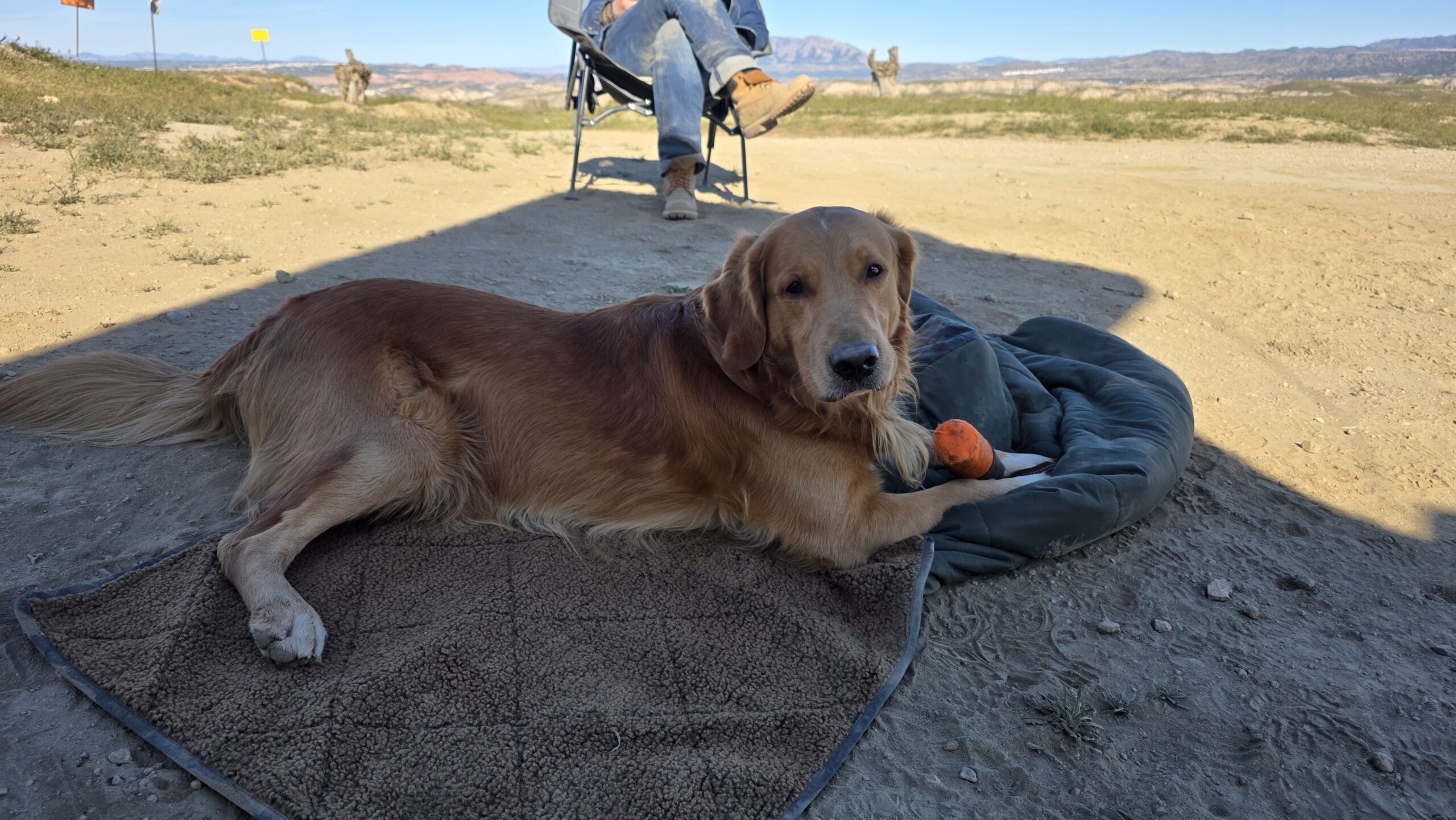
As at home, he then has two bowls, for food and water. For that we use the YETI Boomer bowls. They sit well on the ground, because Guinness used to push the small plastic bowls we used before all over the place with his nose while eating, and they got knocked over too quickly.
As a harness, for working and rough play, we use the Anny-x chest harness. It has a ring for clipping in, but we also use the second ring, which is not actually meant for it, when we want more control. When we head into town and the dog needs to be kept closer, we use the nylon collar from Carhartt with a metal buckle.
That brings us to the leads. There is a long, rubberised trailing lead from petlando for when we are out in nature, and a shorter, adjustable lead. I can wear that one slung across my body. That way I always have Guinness close to me and both hands free.
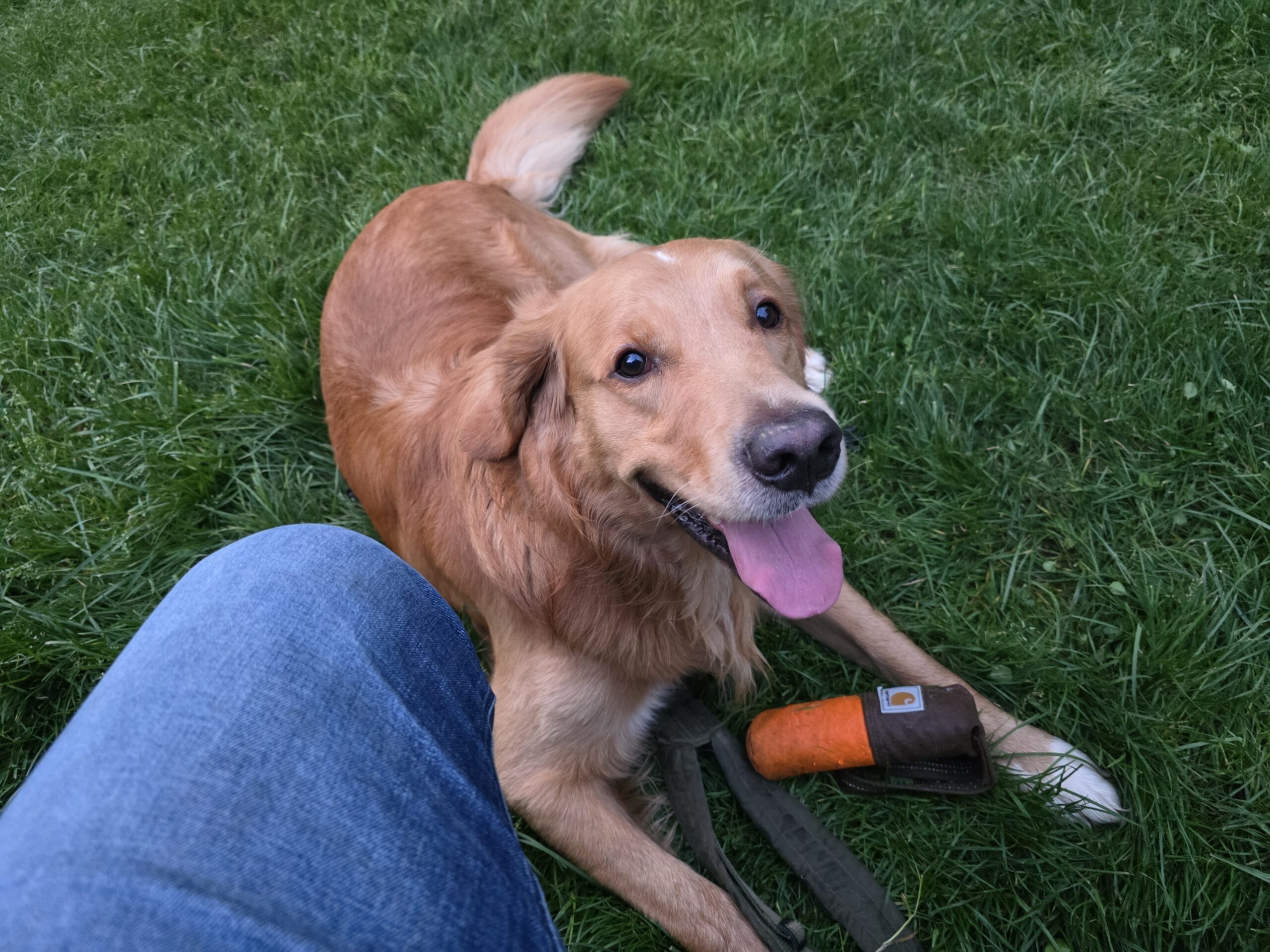
As the standard dummy for working, we use the Carhartt retrieving dummy. It throws well and the dog keeps a loose bite. The outer material is tough nylon that washes off easily.
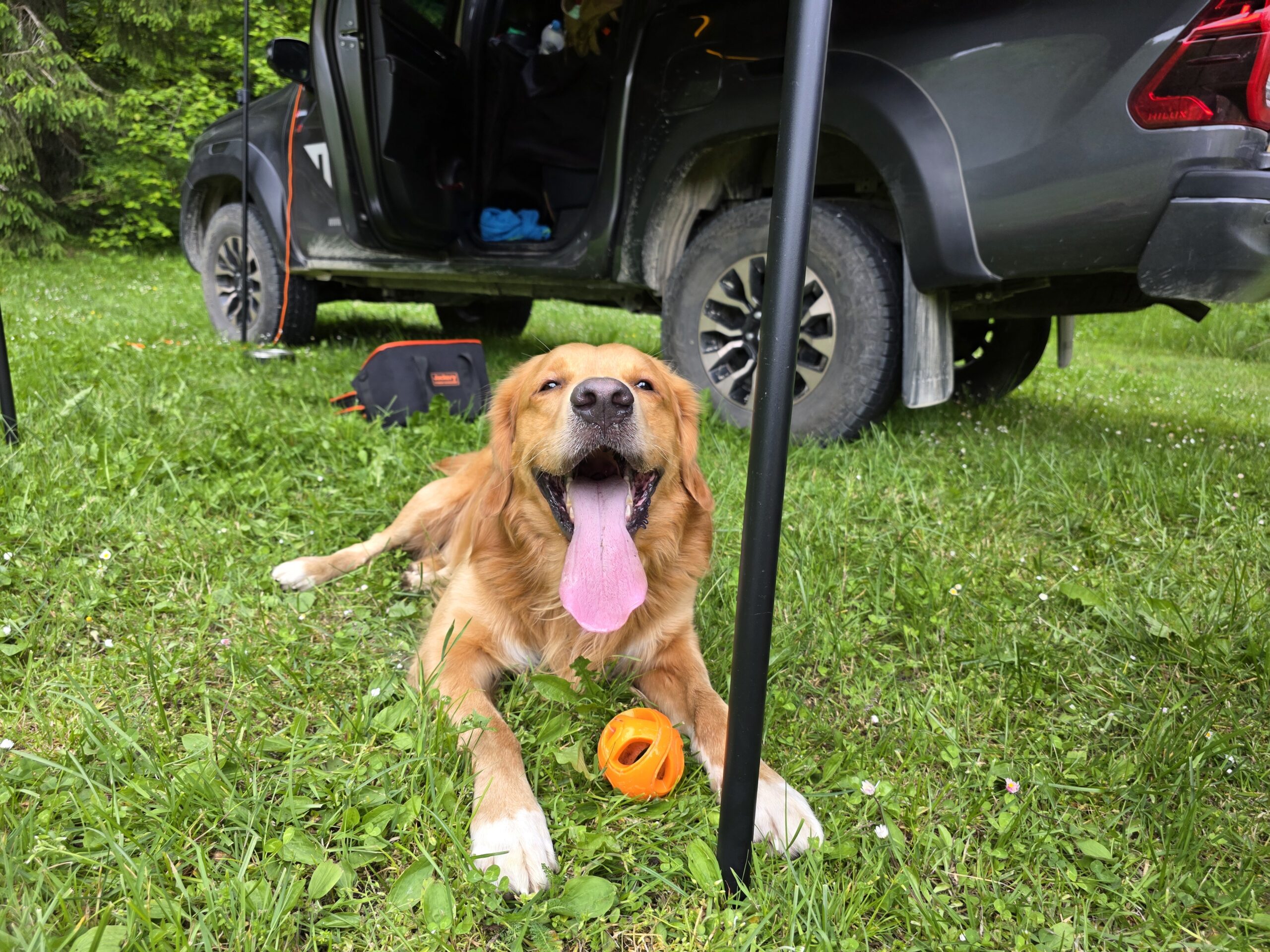
His absolute favourite, which we only play with now and then, is the Dogs Creek Airflow. For that, Guinness drops everything. The ball is big enough that he does not swallow it. It is light, so he can snatch it up at full speed, and it is open, so the dog can breathe through it without much effort. That way he can “enjoy” it and still keep breathing and cooling down.
The right spot for the dog
We did our first trips with the dog in the Land Rover Defender. There the dog has his crate. It is not too big and gives him something to brace against. Otherwise he just slides around in corners. He has a blanket in his crate, but he mostly bunches it up in a corner and then simply lies on the wooden board. What we have noticed: he likes his crate and enjoys being in there.
The first time we drove the Toyota Hilux, we noticed that Guinness never settled. He kept switching between lying and standing, panted, seemed nervous. His spot was on the rear bench seat. We had installed the Dog Rest fabric tray from Delta Bags there. But somehow he did not feel comfortable.
Compared with the dog crate in the Defender, it soon became clear that, for one thing, he was lying at an angle in the Toyota, because a bench seat has a sloping surface, and that it was too soft for him. For the next trip we put wedge cushions under the Delta Bags fabric tray and slid a thick piece of cardboard into the tray’s dedicated compartment. That was exactly what did the trick. Now Guinness lies flat and firmer, just as he likes it. On the trip to southern Spain he was then relaxed again, just as we know him.
Lessons we have learned about Golden Retrievers
The dog sees the world differently and picks his own way through it. That was a harsh but important realisation. I was standing on a jetty with Guinness’s dummy, while he waited with Nik on the higher car park by the wreck of the Port Lairge in the south-east of Ireland. Once I had the dummy clean, I showed it to Guinness, who set off. But not the way we humans would choose the route, along the side to the jetty and then down the jetty. No. He launched into a jump over the wide, high front of the breakwater, big stones piled up on the shore. My heart stopped, because to me it was clear, this was it. He could not yet be stopped back then, and I could not imagine this young dog making it. I saw him crashing down between the stones, with everything broken that you can break. But he landed safely and softly on the little beach and ran to me as if nothing had happened.
Maybe I do not credit the Golden Retriever with enough, maybe for him there was no question that he would make it, but that is how I learned that I have to think ahead for the dog. Where might he want to run, where are the dangers and, finally: when do I call him? At home I have also worked with him on the stop at all times, even when he has already been given the command to go or has a dummy in his sights. That works well now, but you can never be sure.