

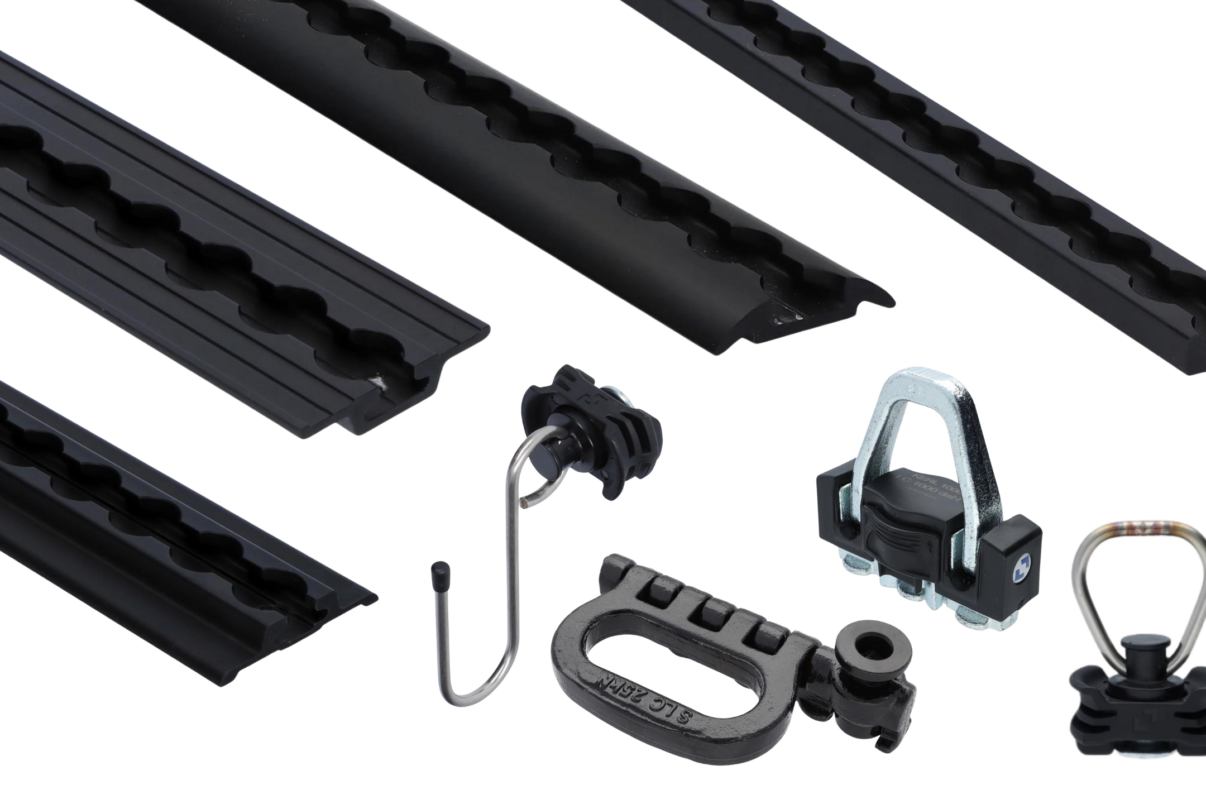

ADVERTISEMENT: Airline rails are a versatile, tough system for securing loads. They flex to fit all sorts of load sizes, and they keep your gear where it belongs, safely inside your vehicle. But do you actually know how best to fix the rails in your vehicle, and how much you can hang off an airline rail in the first place? We have put together the most important questions on the subject of airline rails for you.
What are airline rails?
Airline rails originally come from aviation, where they held freight and equipment securely in aircraft. For years now they have also become established for securing loads in trucks, vans and 4x4s. In aircraft you often find them on walls and floors, where they act as anchor points for seats, luggage systems, seat belts and more.
What makes airline rails special is their build: they give you a grid of fixing points, so you can place your lashing points wherever you need them.
Are airline rails the same everywhere?
The original airline rail, designed for the global transport sector, has a one-inch grid, which works out to 25.4 mm. This format is standardised across a wide range of countries and regions around the world and is used above all in aircraft and international cargo holds.

Alongside this international version there is also a variant developed specifically for the European market, with a 25 mm grid spacing. This version is particularly common in Europe and favoured by manufacturers, which is why it is often called the “European grid”.
Whatever grid an airline rail uses, it has to meet certain standards set by regulators worldwide. But those standards can differ from country to country.
What loads can airline rails take?
How much an airline rail can carry depends on the mounting method and the fitting you use. Bolted rails can take up to 2 tonnes depending on the type, riveted rails up to 1.5 tonnes, and bonded rails are better suited to light loads. The load rating also depends on which fittings you use.
As a rule, airline rails come in three versions: Light, Standard and Heavy Duty.
Light airline rail
The Light airline rail stands out for its compact dimensions, which let you fit it into almost any space. Good for anyone who values flexibility. Its thin walls let it follow different vehicle contours, while the balanced design keeps a reliable load rating despite the light build. That makes it a perfect fit where every gram counts. Depending on the mounting and the fitting, it takes up to 1,000 kilos, or 1,000 daN.
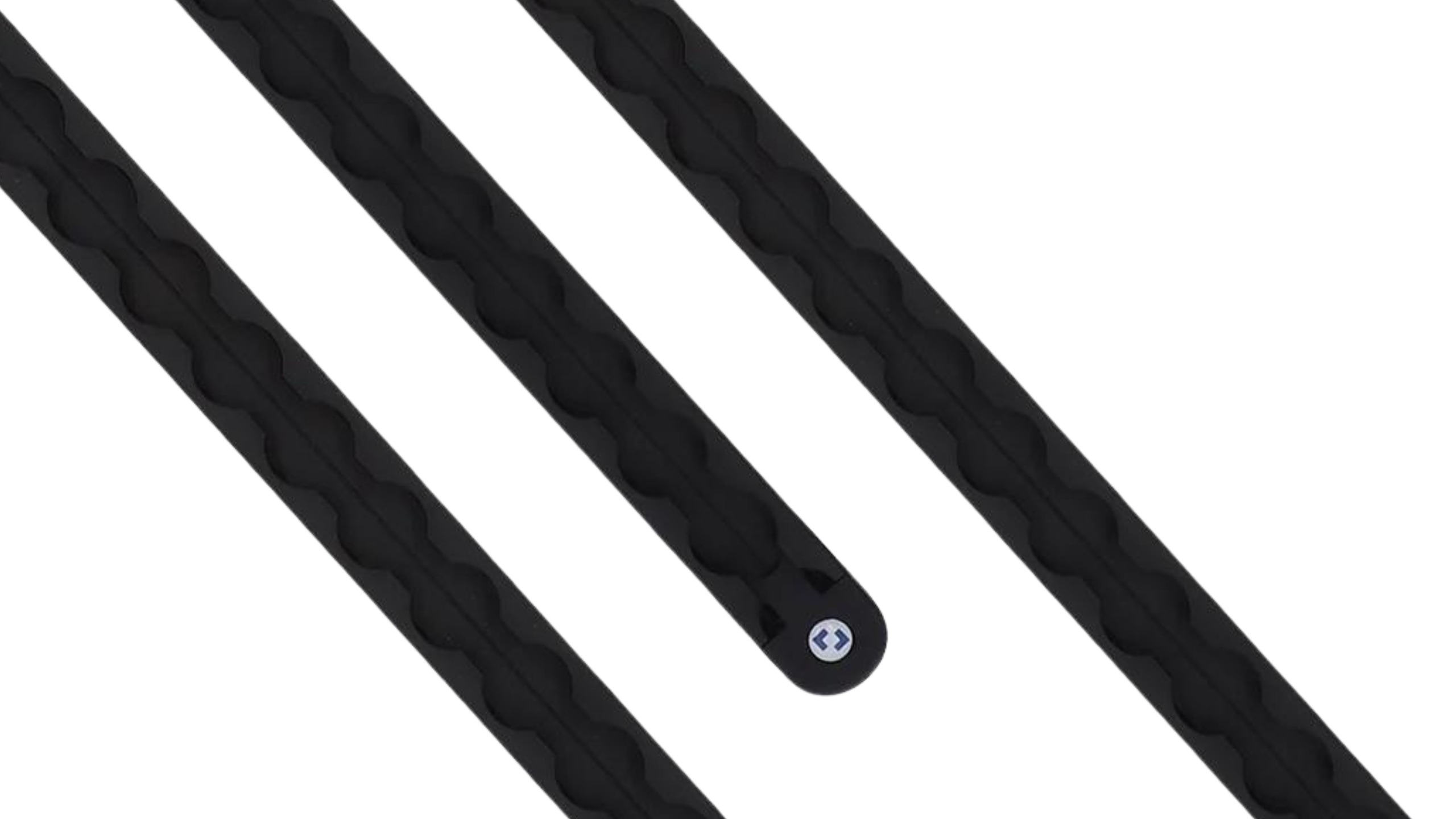 Light airline rail in black anodised finish with end caps
A quick note on daN: with airline rails it is the breaking load that gets measured, given in daN (decanewtons). 10 newtons (N) make 1 decanewton and come to roughly 1 kg. So 1 daN is about the breaking load of 1 kg.
Standard airline rail
The Standard airline rail in high-strength aluminium pairs a high load rating with low weight and suits industrial use well. Thanks to a wide choice of profiles, you can find the right solution for anything. Depending on the mounting and the fitting, it takes up to 2,000 daN.
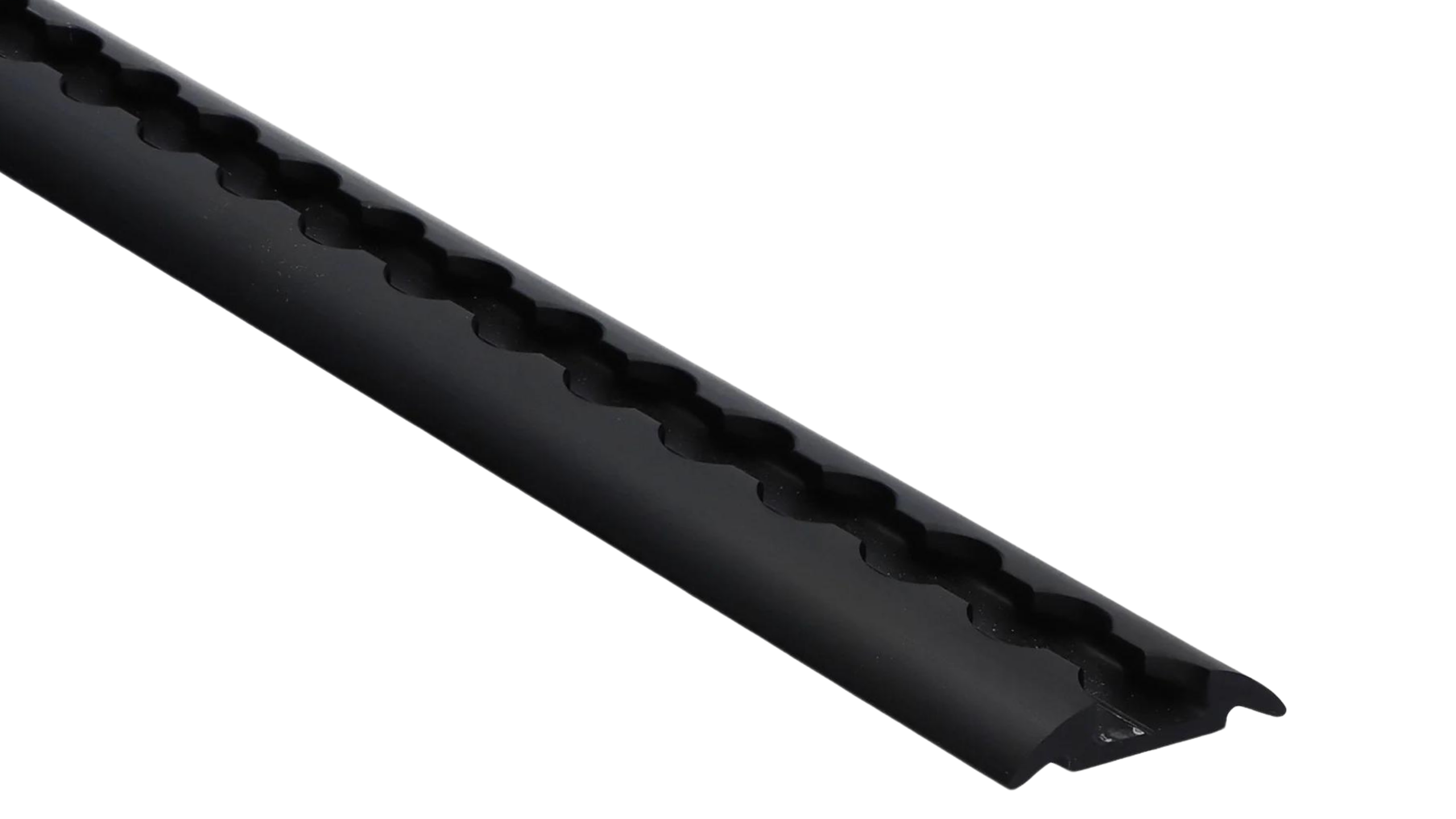 Standard half-round airline rail in black anodised finish
Heavy Duty airline rail
The Heavy Duty version is made from a special alloy. It was developed specifically for moving the heaviest loads, such as wheelchairs, and stands up to the toughest demands. That makes it a strong choice for securing motorbikes, seats or other heavy goods. Depending on the mounting and the fitting, it takes up to 2,000 daN.
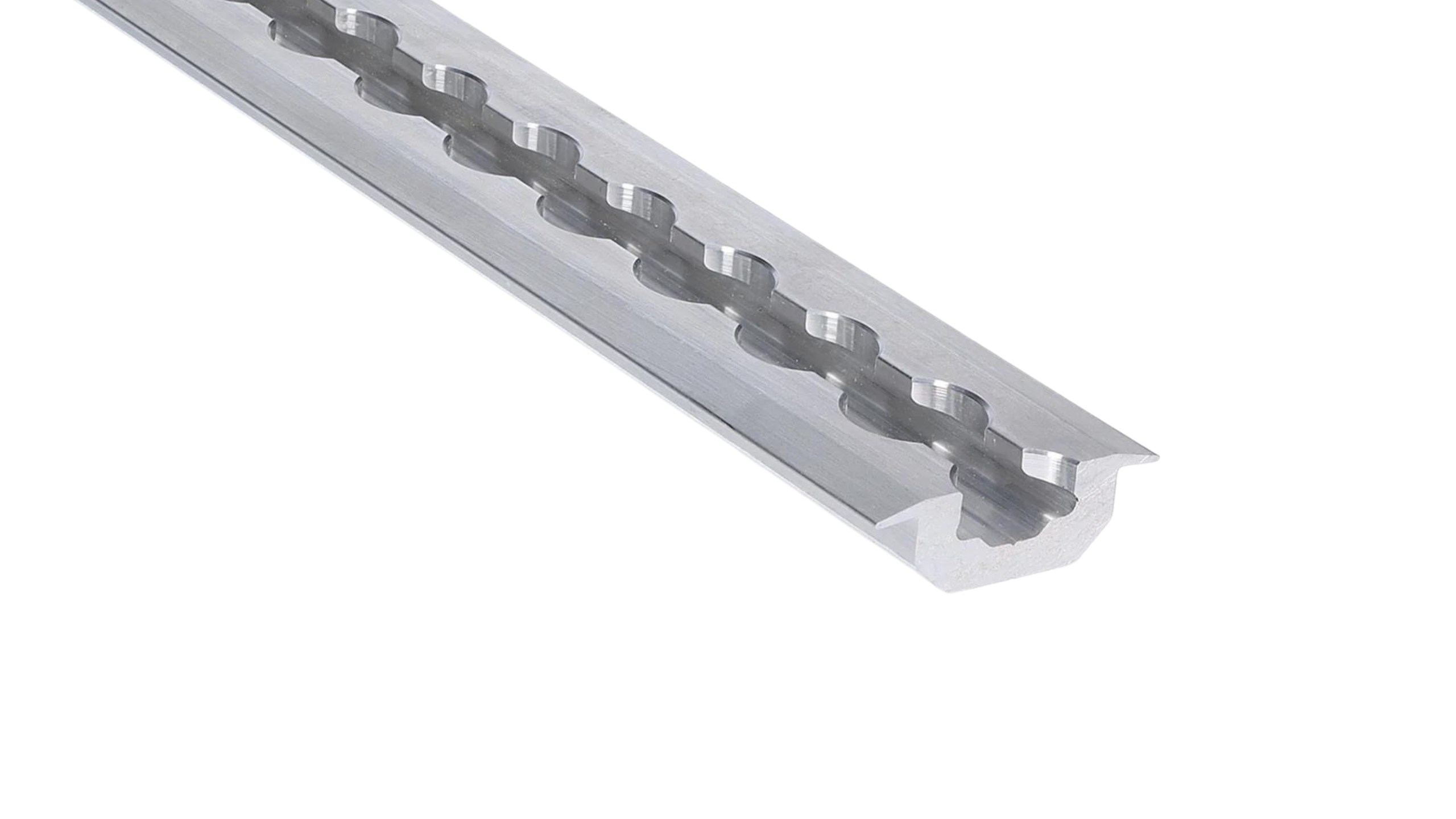 Heavy Duty airline rail, recessed
What types of fittings are there?
Which fitting suits which job? The choice is almost endless, and it keeps growing. Think of an airline rail system as a kit you can adapt to your own needs. The rail itself is not the only thing that matters, but the higher the load you want in the end, the more solidly the rail has to be fixed to the surface underneath. What you fix to the airline rail, and how, comes down to the fittings.
Single-stud fittings
Among the simplest fittings are the single-stud fittings , which fix at a single point in the airline rail. This is the classic, and you can use it to attach hooks or straps. For straps the triangular shape works best, because the strap sits cleanly inside it.

You can use single-stud fittings in all sorts of ways. They are great for securing camping gear outside, for tool holders inside, and as an anchor point in the rear garage of your motorhome or car. The load rating sits between 300 and 500 daN, depending on the fitting, the rail and the mounting.
Double-stud fittings
The double-stud fitting anchors into two grid points at once. That design raises its load capacity, but it also takes up more room. Its sturdy build, made from galvanised steel, makes it well suited to medium-duty jobs and gives it a strong grip. At best you can lash up to one tonne to it.
 Double-stud fittings
Triple-stud fittings
Triple-stud fittings fix at three points of the airline rail at once and can therefore take loads of up to 1,000 daN, depending on the install and the airline rail. For extra-heavy loads you can use quattro-stud fittings. These take up to 2,000 daN. Here too it naturally comes down to the airline rail and how it is fitted.
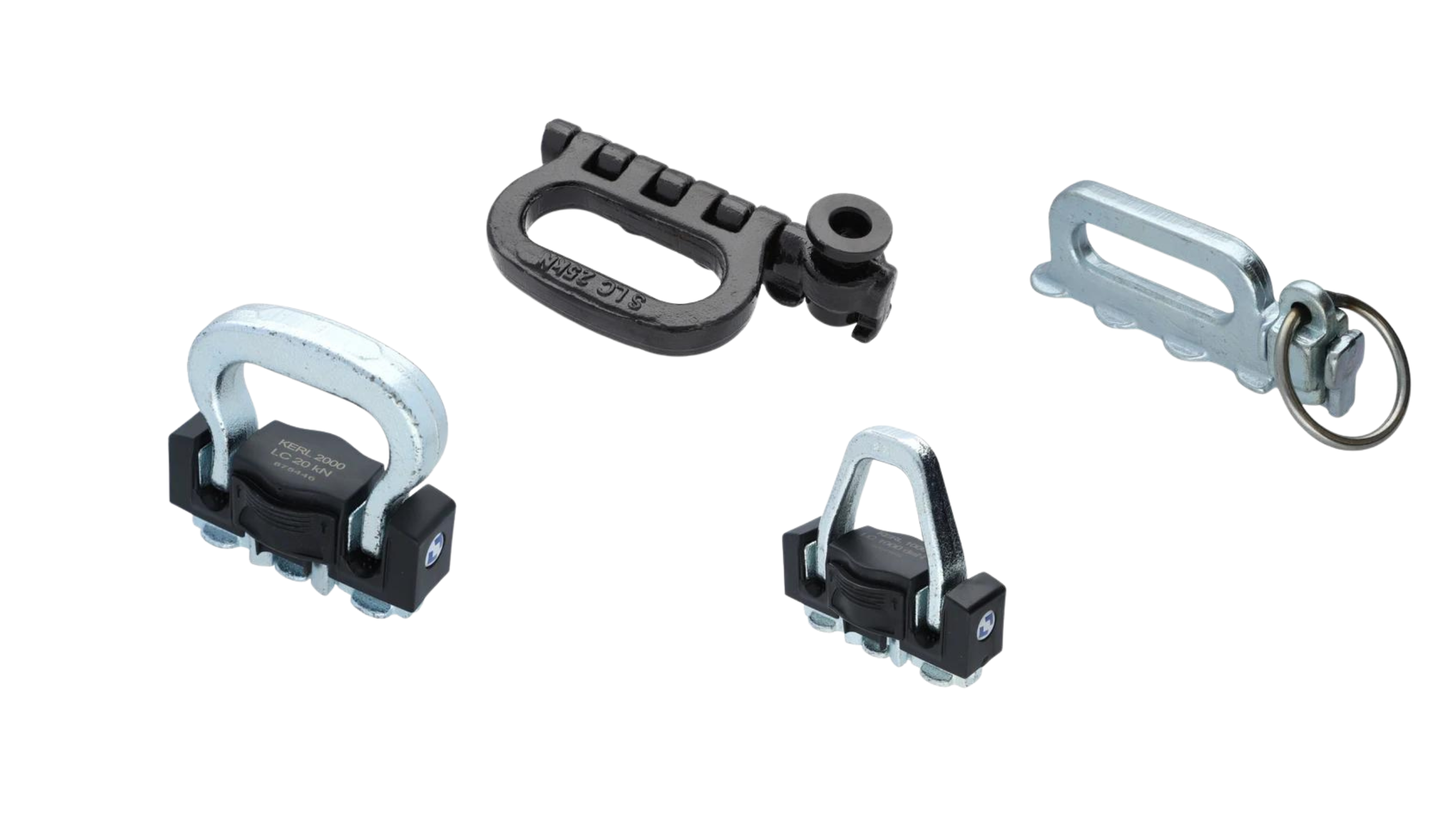 Triple and quattro-stud fittings
By the way, you can find more on the load ratings of airline rails and fittings in the airline rail shop’s blog.
Do all fittings fit all airline rails?
Most airline rails and fittings are based on a 25 mm standard, which keeps them compatible. But there are also imperial sizes, as mentioned above, especially internationally, that can differ slightly. Single-stud fittings should fit everywhere, because the holes are the same size and the rails differ only in the spacing between the holes. Double, triple and quattro-stud fittings then do not fit, because of the different hole spacings.
What is the best way to mount airline rails?
Airline rails can be mounted by bolting, riveting or bonding. The classic and most solid method is bolting, which allows loads of up to two tonnes depending on the rail and the fittings. Riveting is a good option when bolting is not possible. At best, riveted rails hold up to 1.5 tonnes. Bonding suits light applications, where professional adhesives like Sika 554 are recommended on surfaces such as GRP, aluminium and sheet metal.
Which option you choose depends on the nature of the surface underneath, the spot you pick and the pulling force later on. By the way, there are also airline rails made specifically to be recessed into wooden boards. On top of that there are some that bond particularly well, because they are designed with a hollow shape on the underside that bonds beautifully with the special adhesive.
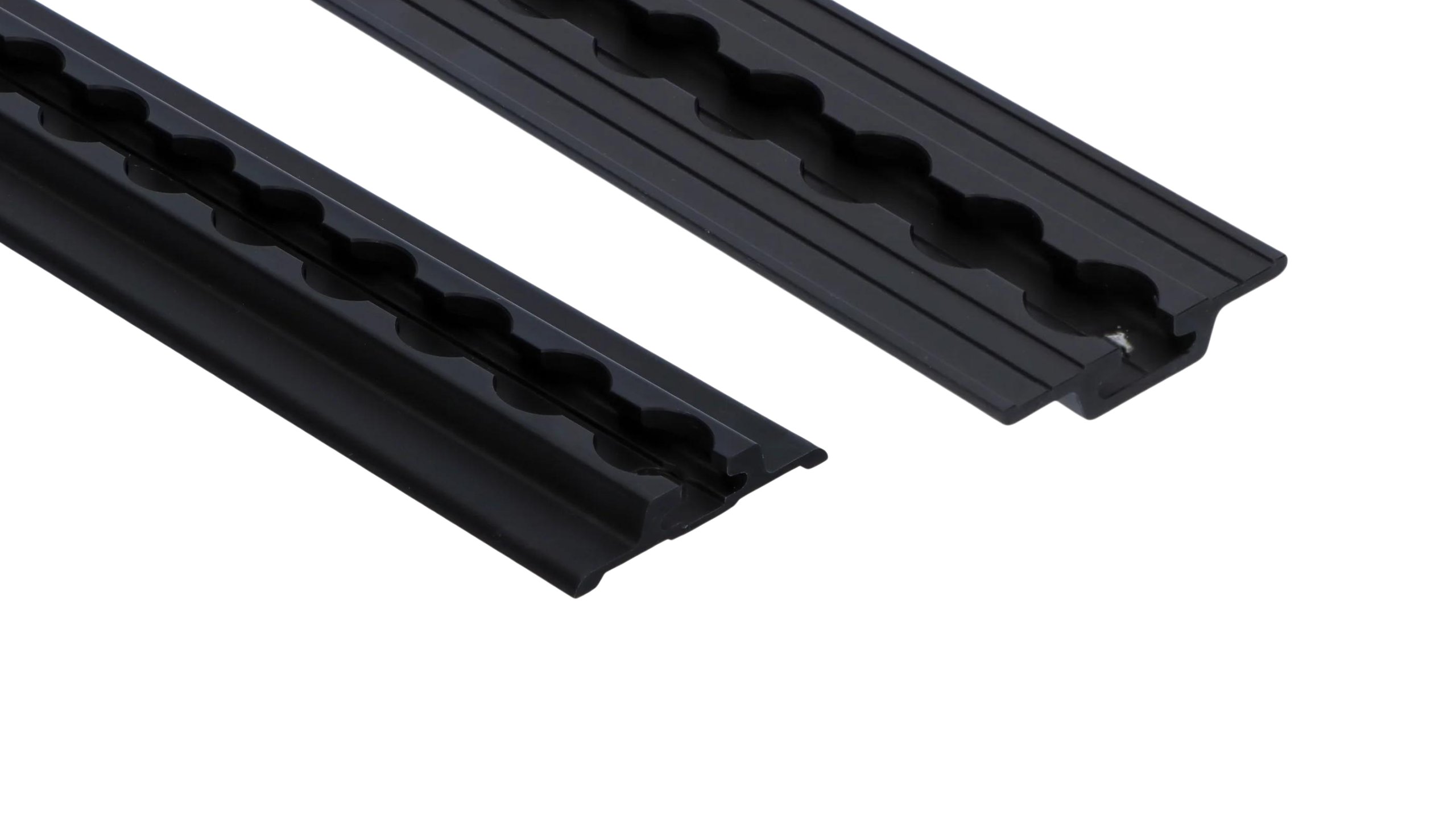 Airline rail for bonding and airline rail for recessing
Bonding an airline rail
If you want to bond the airline rail, you can choose the Light version of the rails or the Standard version with special recesses for the adhesive. The Light version is enough in most cases, when you want to fix the rail to GRP or other smooth surfaces and you do not plan to hang heavy loads on it. A good adhesive is Sika 554, which comes in white or black.
To prepare the surface as well as possible for the adhesive, give it a light sanding if needed. After that you can clean the surface with Activator 205. This bonding cleaner reacts with moisture and creates an adhesion-ready surface. You then get the best possible bond with Primer 210, which is used as a base coat for the adhesive. It is best to check the pre-treatment tables to find the perfect combination for your project. You will find these tables to download on the product detail pages.
To bond the rails you should use the adhesive recommended by the maker, Sika 554, because that is the only way to be sure it stands up to the pulling forces and does not crumble after a while. On top of that, the adhesive grips and dries fast.
Riveting an airline rail
To rivet an airline rail you need a special tool: a rivet gun. The rivets bond the airline rail firmly to the surface underneath, so you cannot just take it off again. You can, but it is quite a job. The Light and the Standard airline rails are both suitable for riveting.
Bolting an airline rail
Bolting an airline rail is the safest way to fix it, and it lets you load the rails and fittings to the maximum. Bolts work on all surfaces, wood included. The big advantage of bolting is that you can easily remove the rail again. If you want to hold the airline rail in place before bolting, you can of course bond it down first. When bolting, make sure you use countersunk screws, so the heads do not get in the way inside the rails and you can place the fittings anywhere.
Are cheap airline rails any good?
Original airline rails, especially ones “Made in Germany”, stand out for high quality and tested load ratings. With very cheap airline rails, the material quality, the finish and the load rating can vary. Certificates and test reports give you a guide to quality and safety.
What is the best way to clean airline rails?
Airline rails should be cleared of dirt and dust regularly with a brush or compressed air. A toothbrush helps to get into the small spots. You do not need any special cleaner for this, a simple pH-neutral cleaner does the job. If you have black anodised airline rails, though, you should not use cleaners with chlorine bleach or vinegar, because over time those can do damage.
Are end caps worth it for airline rails?
End caps are an accessory that fits onto the ends of the airline rails. You will find them in a range of shapes and materials such as plastic, metal or rubber. You simply push the end caps on. Most of them can also be bolted on as well. That makes sense whenever the rails are under high loads or mounted on the outside of the vehicle.
 End caps for airline rails
End caps matter most, of course, in areas where you often come into contact with the rails, for example in the rear or on the outside of your off-road camper. Anywhere you reach in often and where a moment’s carelessness can easily lead to an injury. And end caps look good too!
Still got questions about airline rails? Or do you need the right accessories for yours?
For more detailed information or proper advice, take a look at airlineschienen-shop.de .