
We met Julian and Tim in Dornbirn, the two have been the new heads behind horntools for a good 1.5 years now. Since then quite a bit has changed: new logo, new web shop, new products, and the quality? It’s made a real leap forward. But it’s not just about fine-tuning, it’s about a strong vision: horntools is to become one of the leading off-road outfitters in Europe. Their goal? High-quality, affordable gear for everyone who wants to experience real adventures with their vehicle, whether in an off-roader or on a family holiday in a van. They told us in the interview what’s happened so far and what they’re still planning.
How did you two meet?
Tim: Rewinding right back: we’re childhood friends, we’ve known each other since school and grew up together in a small village. Even though we were later out and about in different corners of the world, we never lost contact. We always had the goal of doing our own thing one day.
In our early 30s we then said: if not now, when? No kids at home, no obligations, so the perfect chance to take the leap into self-employment.
We both started out in different industries, but the off-road scene grabbed us both at some point. Julian was already deeper in, I sort of slid into it, but in the end it all came together.

Julian: We already knew horntools beforehand, I’d stood at the door as a customer myself once, because I wanted to buy a roof tent. Even then I noticed: the company has an incredible amount of potential. When the founder was looking for a suitable successor, it was quickly clear, this is our chance. We got on well right away on a personal level, and the deal was sealed quickly. Since then we’ve moved quite a bit, but there’s more to come!
But had Sven, the founder of horntools, advertised it officially? Or did you stumble across it by chance?
Tim: No, that was planned. Sven wanted to sell the company and had hired people to take care of it. A sales process like that is no small thing, there’s quite a bit of effort behind it.
The people who organised the whole thing already knew us, because we’d signalled in the past that we’d be interested in taking over a company. That’s how the contact came about, so no coincidence, more the right moment with the right people.
Okay, but the off-road thing? You had little to do with that at first, didn’t you?
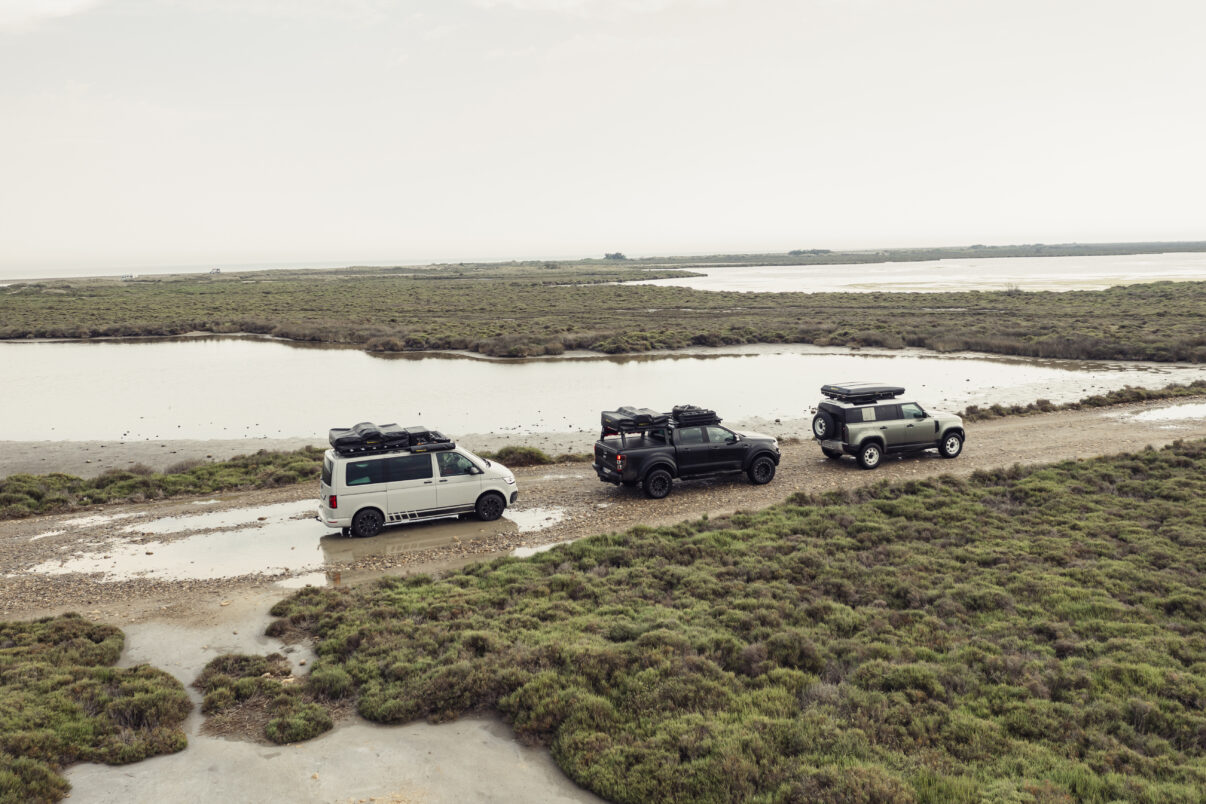
Julian: Well, hardcore off-road, no. But outdoor travel was always a thing for me. Hiking, backpacking through Iceland, once from north to south. That’s where I first came into contact with off-road. At some point I then bought myself a Defender and dived into the scene. That’s also how I came across horntools. The step from passion to business was then almost logical.
By now we combine our trips perfectly with the company, of course. Last summer we were off-road in Albania, with a roof tent, naturally. And as managing directors, content production and adventure can of course be combined wonderfully.
And you’ve divided up your areas of responsibility. Who does what?
Tim: Definitely! We’re pretty different characters. I often say jokingly: Julian spends the money, I bring it in and make sure it stays. And that’s a good thing! It’s a bit like yin and yang.
No, Julian takes care of everything that’s visible to the outside: sales, marketing and product development. That’s cost-intensive too, of course. I, on the other hand, keep the shop running in the background, purchasing, quality assurance, staff, finances and the whole administrative side. On top of that come major projects, so collaborations with vehicle builders, special builds for government agencies, the military or security forces.
In the past horntools products came mainly from China. Have you changed that strategy?
Tim: Yes and no. A large part of our products still comes from Asia, not just from China, but from other countries too. And it’ll stay that way, because some products in the quality we need you simply can’t get from Europe or the USA.
But what has changed: we’ve deliberately moved parts of our production to Europe. Our roof racks, for example, are now made almost entirely in Europe. Other products come from the USA or South Africa.
In short: we’ve long stopped being a pure China importer, as it may have appeared in the past. Even the products that come from Asia are largely our own developments. We create CAD drawings, define standards and have them manufactured to our specifications.
And bringing production to Europe, was that more an economic or a quality decision?
Tim: Both, but more besides. One important point is speed: developing new products is simply faster in Europe. At the moment the sea route from Asia takes three months, because the ships have to go around Africa. Within Europe it’s often just a few days to a week. That saves time and nerves.
Then comes the security aspect. If you have everything produced in just one or two countries, you’re pretty dependent, and the state of the world is, well, let’s say, unpredictable. Who knows what’ll happen tomorrow? If you spread production across several locations, you stay more flexible and always have alternatives if something snags somewhere.
And economic reasons play a role too, of course. Duties and tariffs are constantly being raised, the costs go up. At the same time it also makes sense, for sustainability reasons, to produce more locally or at least closer to our markets.
In short: it was a mix of pragmatism, risk hedging and sustainability.
You’ve been running horntools for 1.5 years now. What’s changed in that time?
Julian: The most obvious thing for most people is surely the new brand identity, from the logo through the web shop to the entire outward appearance. But behind the scenes at least as much has happened.
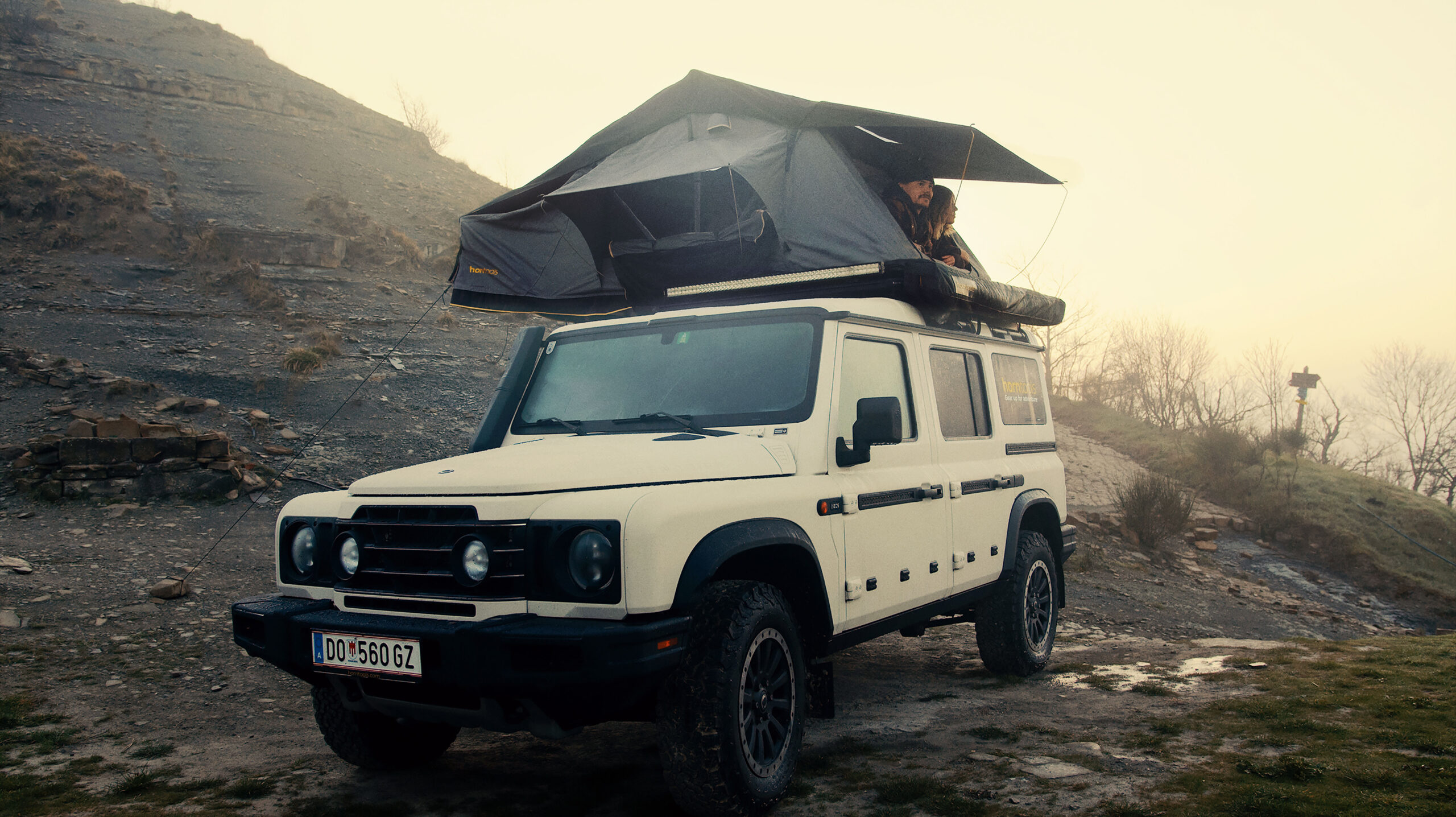
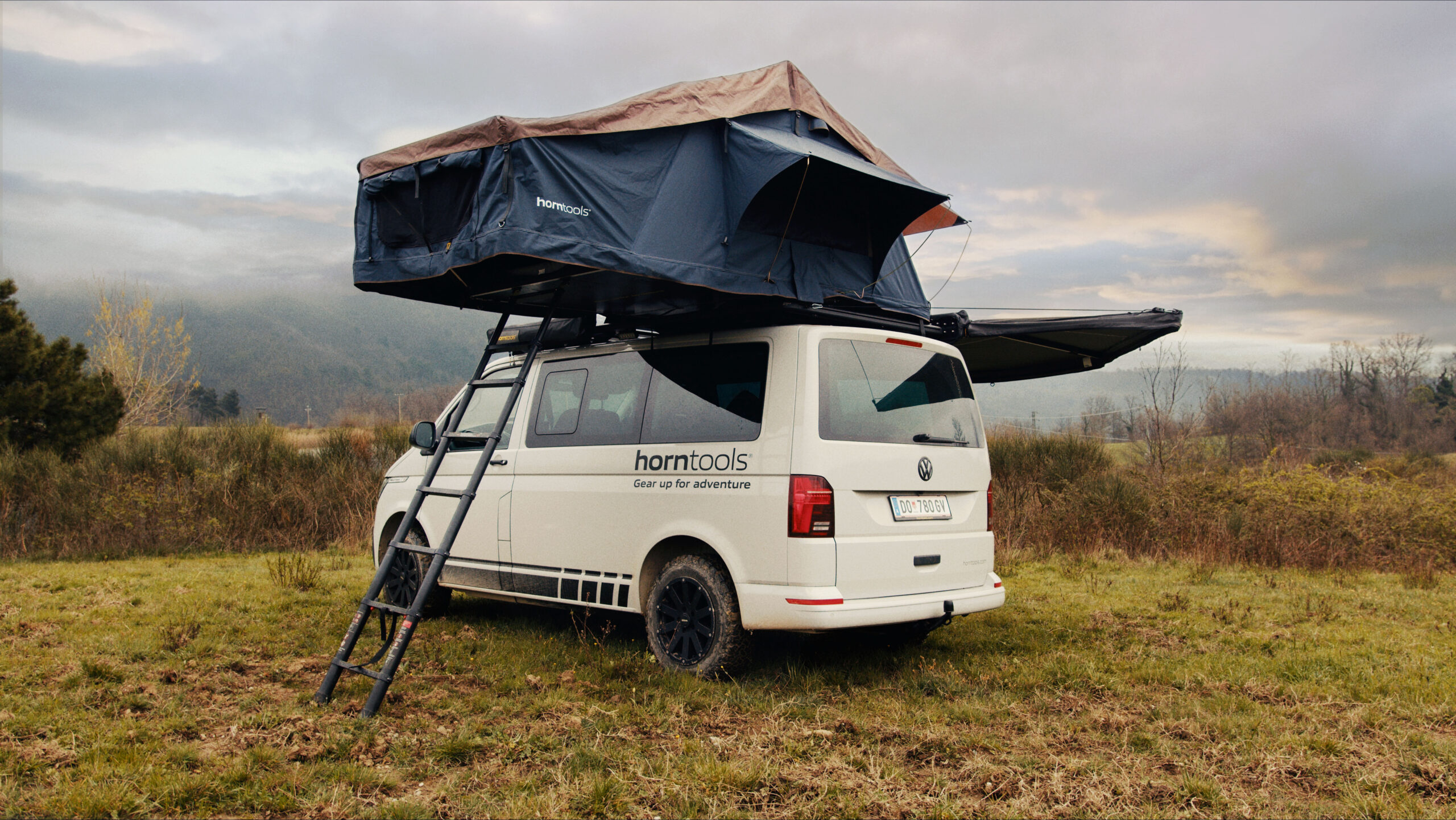
We’ve invested massively in new systems, expanded the product range and brought some real innovations to market. Many of our new products were really well received, some are even award-winning or sold out straight away. The best example: our self-supporting Horizon awning (180° and 270°), ultra-light at just 18 kilos, no support legs needed, an unbeatable price from 999 euros. At the moment we’re working on expanding the entire roof rack segment further, completely made in Europe.
Our team has developed too. In every department there are now specialists working with a lot of experience and passion to push horntools further forward. The last year and a half was intense, but it was worth it, and we’ve still got a lot planned.
In the past horntools products sat in the lower price segment, and perhaps weren’t always right at the top in terms of quality either. Has that changed, or do you want to offer different tiers?
Julian: Our goal is always to offer an attractive alternative. We’ll never be the most expensive, because we want to make off-road adventures accessible to as many people as possible. But: cheap doesn’t mean shoddy. We’ve invested in the quality and place great value on our products being not just affordable, but durable and functional too.
A big difference from many competitors: we have our own development department working daily to improve existing products and develop new ones. We don’t just drive to China, pick out a roof tent and stick our logo on it. Instead, we’re currently designing a completely new roof tent from the ground up, with innovations that we’ll even be filing patents for.
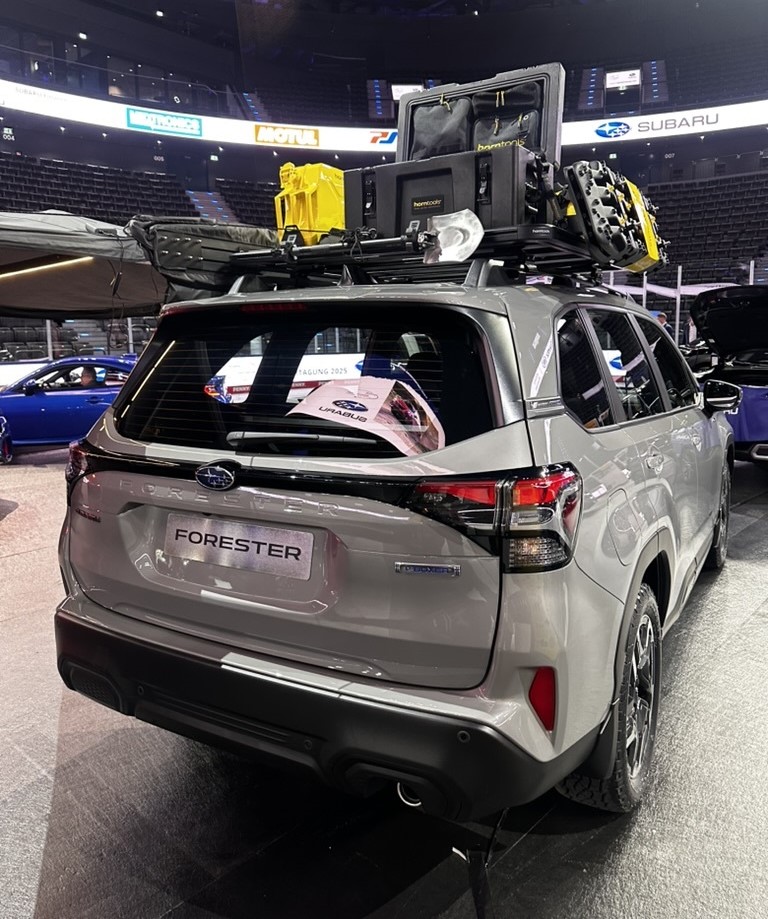
Tim: The fact that we now play in a completely different league in terms of quality than five or ten years ago is also shown by the collaboration with vehicle manufacturers. They now actively approach us, and not just from the off-road segment, but from the classic car world too. For example, we’re now listed in the catalogue of the new Subaru Forester.
What’s your vision for horntools in ten years?
Julian: Our goal is clear: horntools is to become one of the leading suppliers of off-road and overlanding gear in Europe. We started out in Austria, established ourselves in the DACH region and now notice how big the demand is across Europe.
It’s not just about growth for us, but about what we stand for: top quality at a fair price. In a G-Class or a Dacia, our customers should choose horntools because they’re convinced by the quality, not just because of the price.
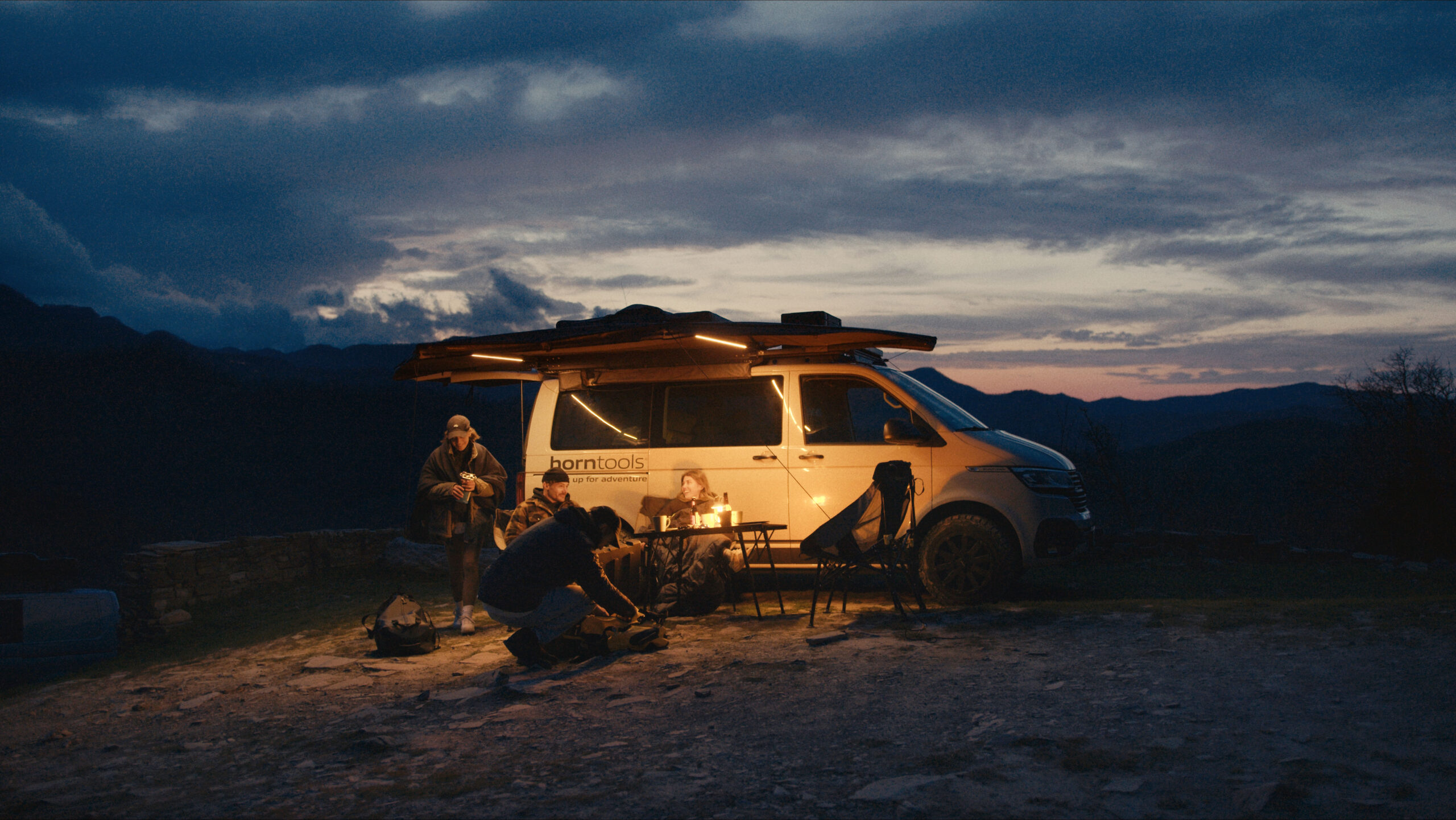
We also want to set our community up more broadly. In the past it was mainly off-roaders, and we’ll keep offering good products for them. But we also want to appeal to new target groups: families who drive to the seaside in a car with a roof tent, or into the mountains in their van, simply everyone who fancies freedom and outdoor experiences.
What else is on the plan for this year?
Julian: A big topic for us is expanding our roof rack and platform segment. That also includes new cross bars that we’re bringing to market this year. We’ve got loads of new vehicle models in the portfolio, from the Caddy through the new Defender to the Ford Transit and G-Class.
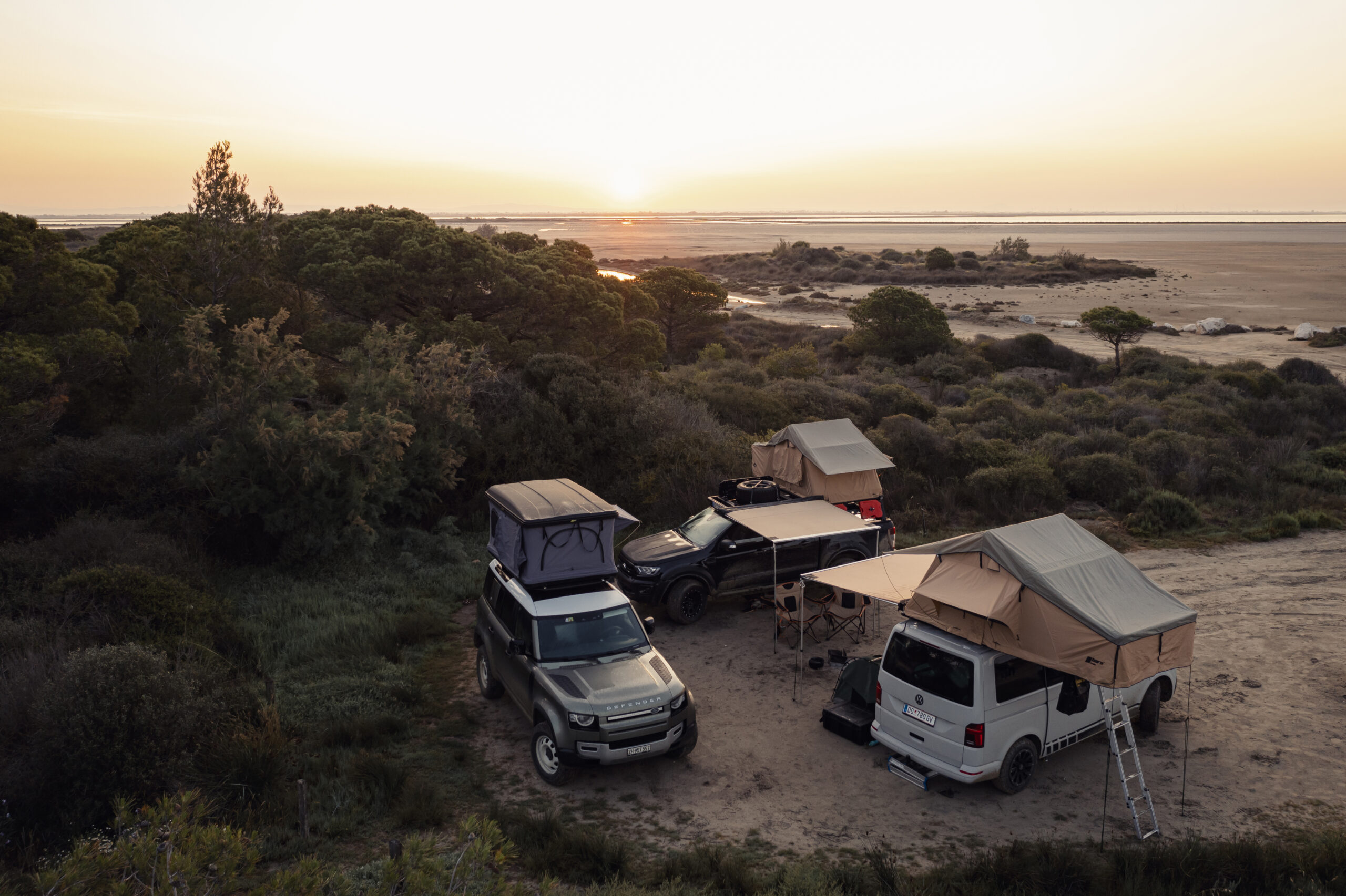
We’re also expanding our most successful segment further: awnings. A new self-supporting Straight awning is already in the works. And if everything goes to plan, a completely new roof tent model will hit the market this year too. In short: 2025 will be exciting!
At which fairs will people be able to meet you this year?
Julian: We’re still trying out different fair formats, but there are of course a few classics that are firmly in the calendar. At the same time we’re testing new events to see where our products and our community fit together best. Last year, for example, we were at government fairs and at the Jagen & Fischen. This year, alongside the off-road and overlanding fairs, a few events for vehicle builders and accessories are also in focus.
Specifically, we’ll be at the: 4×4 rhein-waal, Abenteuer & Allrad, Adventure Northside & Adventure Southside and Offroad Berlin. And there’s sure to be more added.
But what especially pleases us this year: we’re opening four shops of our own! In Berlin, Hamburg, Munich and North Rhine-Westphalia our customers will soon be able to test our products directly on site, try out roof tents, have winches fitted or simply browse at their leisure. Fairs are great, but a permanent store gives our customers the chance to visit us any time and really experience the products up close.
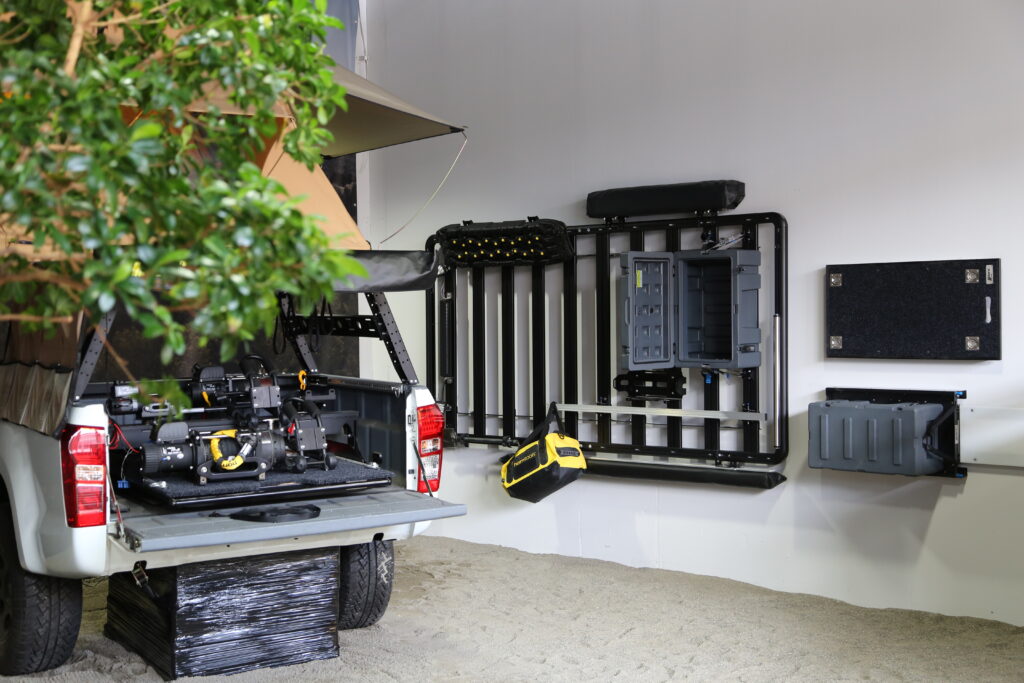
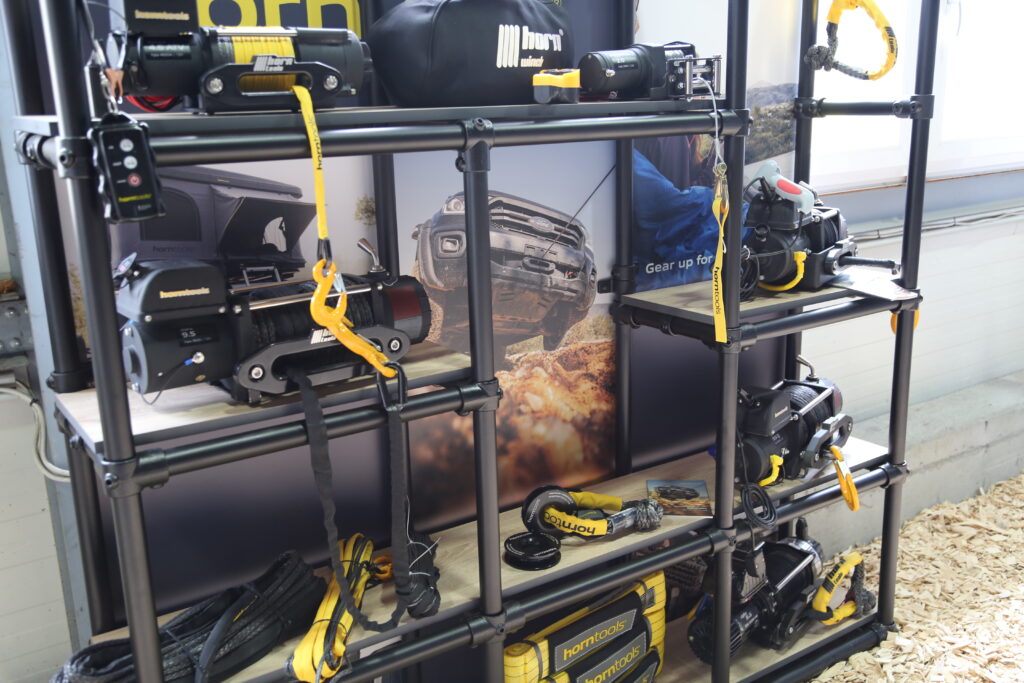
On top of that there’s our newly designed showroom in Dornbirn, which is being really well received. Our storage capacity, with over 3,000 pallet spaces, means we can deliver quickly, spare parts are there, service is on site, and our customer service team of four is reachable five days a week: by phone, WhatsApp or email.
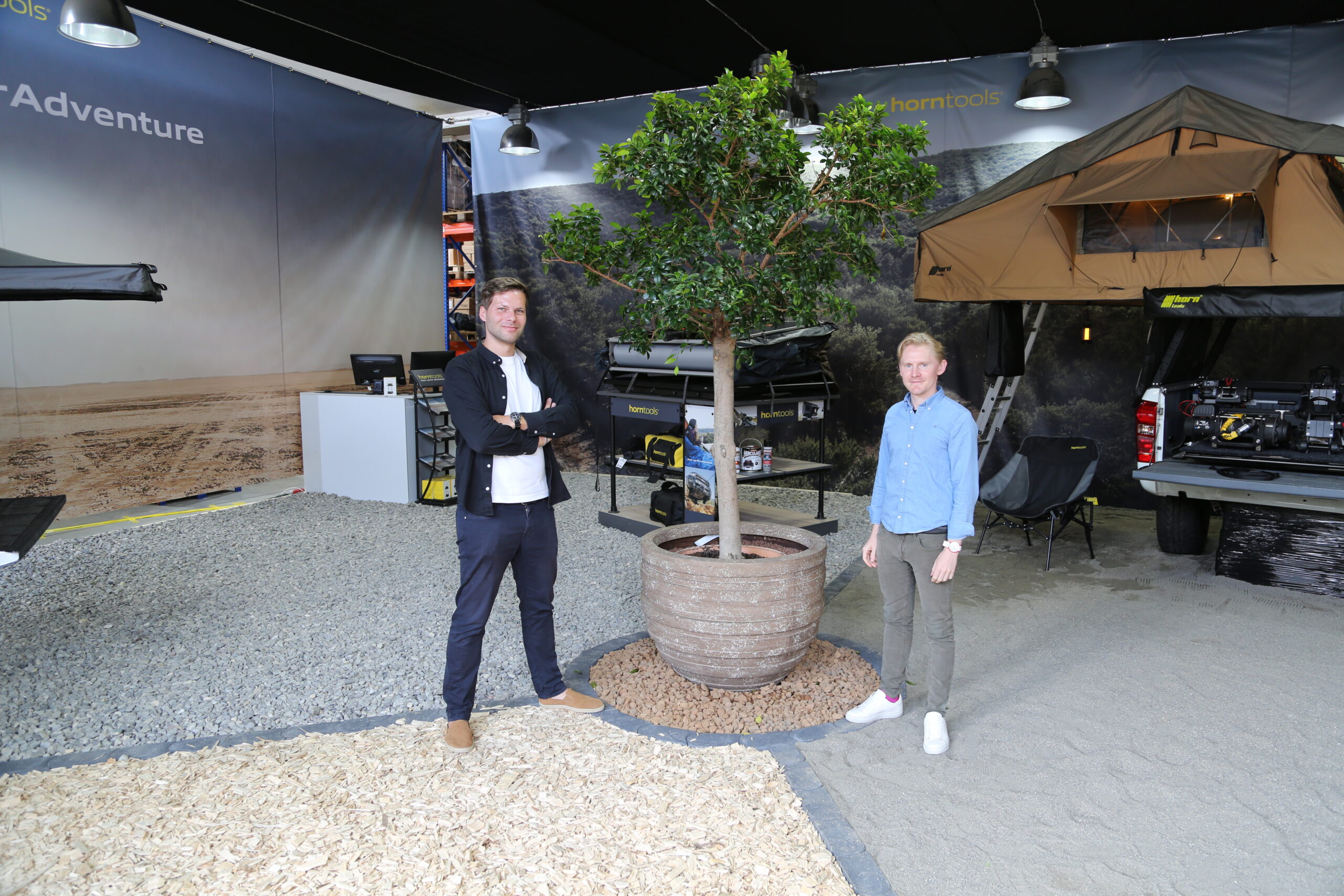
Tim: And one more thing: we’re growing! When we started we were twelve people, now we’re heading towards 20. We also welcome speculative applications. So anyone who fancies a dynamic team with a lot of love for the product, do get in touch.