


How do oil viscosity and the internal engine lubrication connect? What decides whether the engine runs with lots of, little or no wear? We’ve looked at the connections for you and give you tips on how you can do something for the engine’s lifespan.
Everyone wants their engine to last as long as possible and give good performance. Of course the lubrication of the engine plays a decisive role in that. So the conscientious owner changes the oil regularly and sticks to the specs.
From our own bitter experience, we know that even when all the change intervals are kept and the oil always matches the specs, serious, expensive damage can still happen that comes down to poor lubrication. How can that be?
Expensive damage
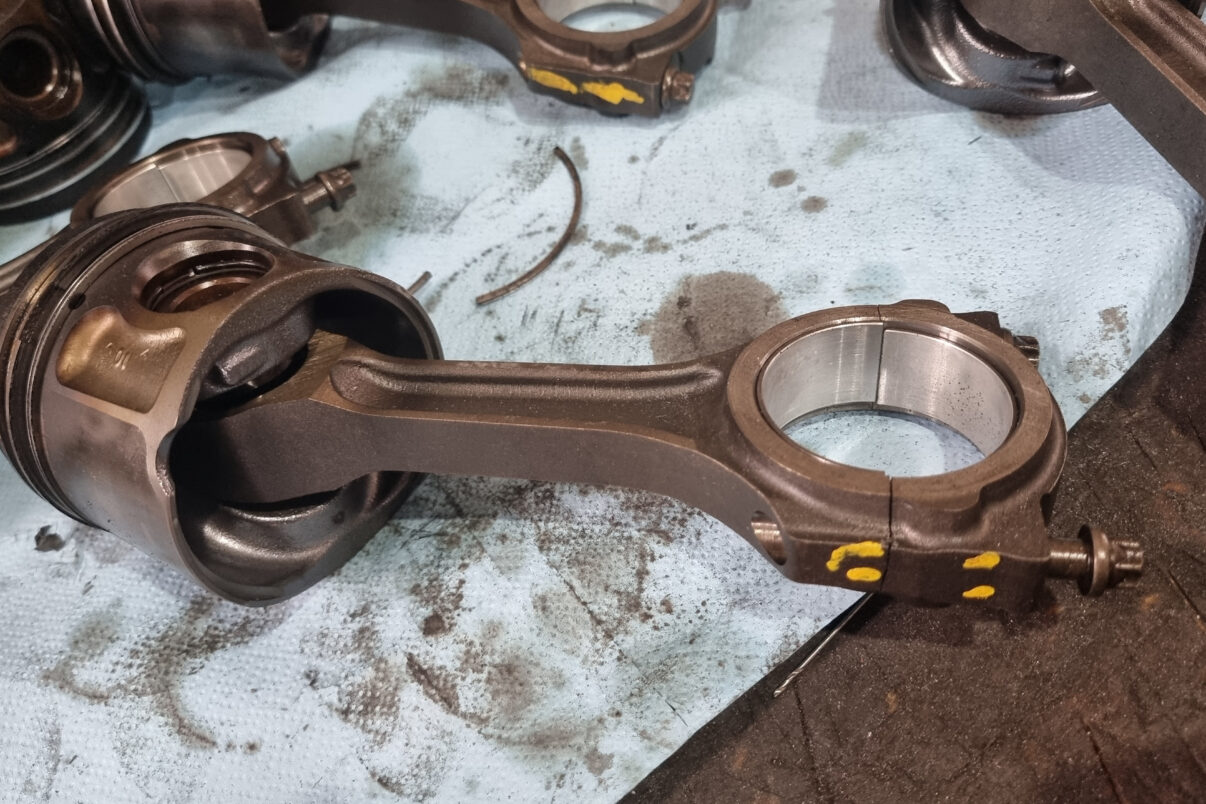
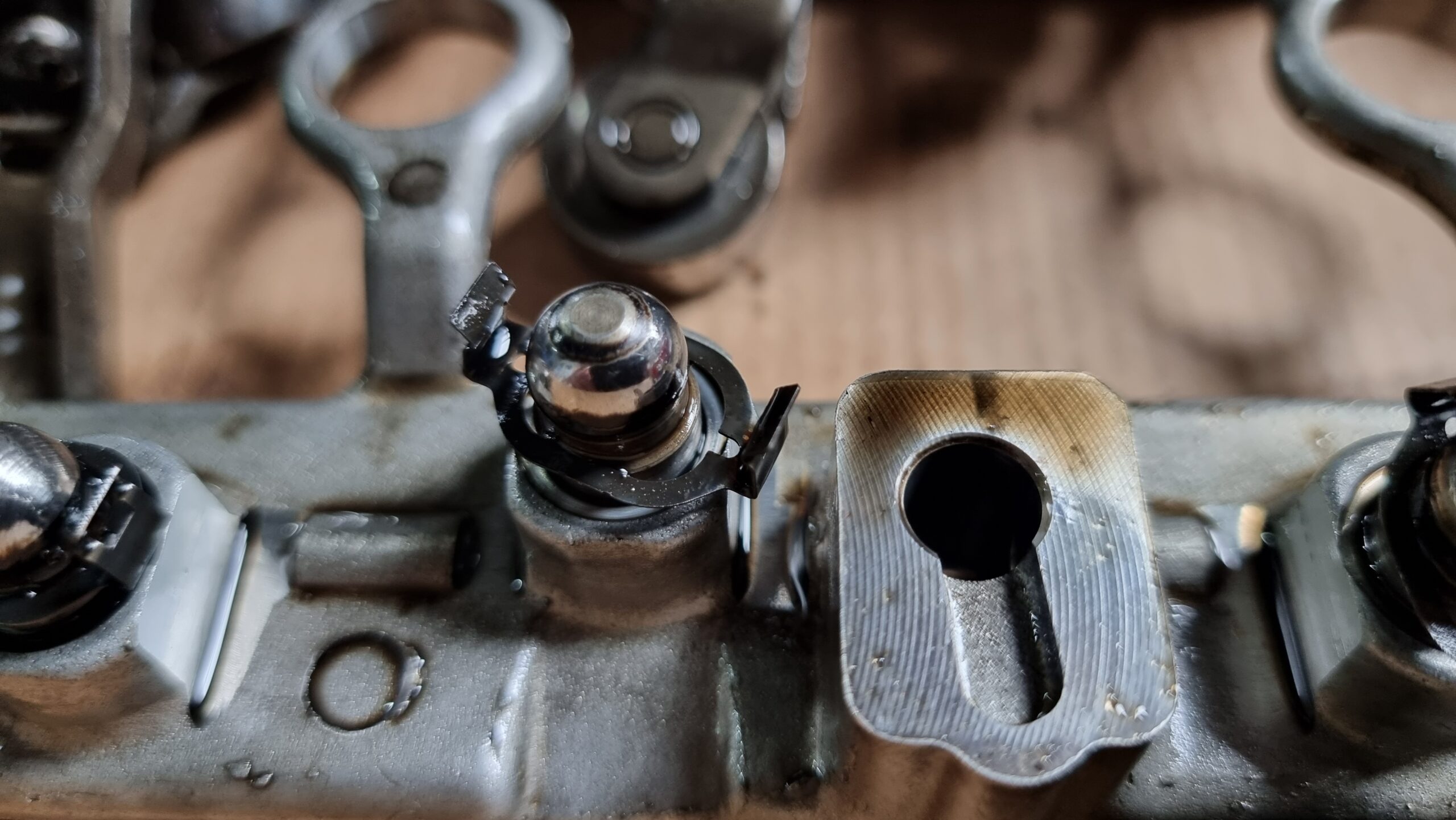
We’ve experienced it ourselves: on one of our vehicles there was damage that came down to poor lubrication. It showed up as a clacking noise that finally turned out to be piston slap. On the way to finding the damage, a series of other problems came to light: a stretched timing chain, worn timing gears and a wrecked rocker shaft. When the cylinder head was finally off, it carried on. Three of four pistons had play on the gudgeon pin, and where the piston was already rocking, the pin had already seized on the conrod and was rubbing in the gudgeon-pin bores. That gave the piston so much play that its skirt knocked against the cylinder wall. Hence the clacking noise.
A pretty disastrous diagnosis for a vehicle that had its oil and filter changes regularly to the required interval and spec. But also no unknown problem for this engine, as we found out later. Later in this article we talk about the operating range an engine is allowed to move in. With this engine type it seems to be too narrow.
We learned that this engine should be driven at higher revs as often as possible to keep the oil pressure stable. Diesels have piston cooling jets that, above a certain pressure, start spraying oil into the pistons from below to cool them and lubricate the gudgeon pin. They’re also the biggest oil users in the engine, so they reduce the oil pressure when they kick in. If you now drive, which was certainly the case with us, in the lower, comfortable and quiet rev range, possibly under high load, various problems can happen. The pistons aren’t cooled enough and the lubrication isn’t as it should be. For short trips and low load that may be fine, with us it certainly wasn’t.
So we asked ourselves how all this connects and how you can help.
Basics of lubrication in the engine
First an understanding of lubrication in the engine has to be built. Essentially we’re dealing with rotating and oscillating parts here. That makes a difference. The rotating parts include the crankshaft and the camshaft in particular. The oscillating ones, the pistons and the gudgeon pins with the conrod.
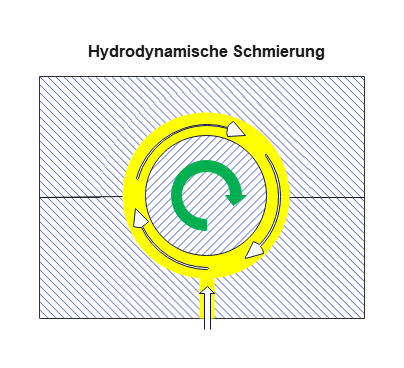
With rotating parts, hydrodynamic lubrication is applied. Through a bore, oil is pumped into a tiny gap between the rotating parts. The parts also carry the oil on into the gap. So an oil film forms all the way around, which lubricates, cools and centres. With oscillating parts, the contact area is constantly wetted with oil to form a film. Three different states of lubrication can arise.
The three states of lubrication
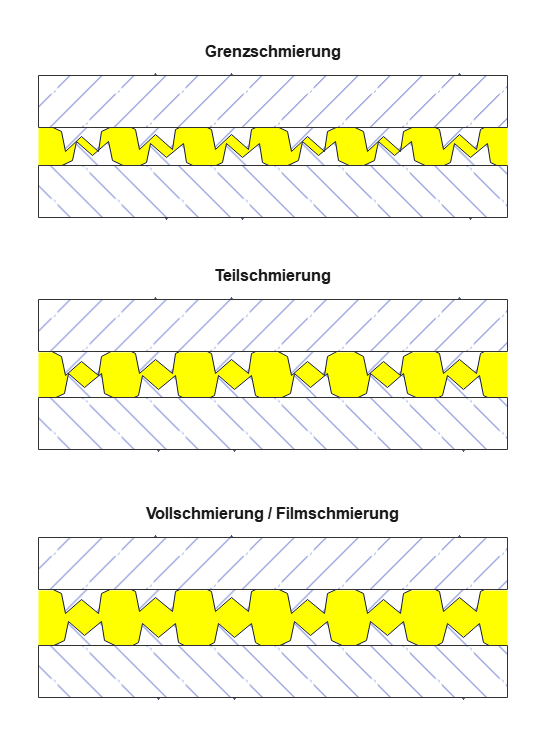
Three types of lubrication are defined: boundary lubrication, mixed lubrication and full-film lubrication (fluid-film lubrication). You also have to know that every surface has structures, peaks and valleys.
With boundary lubrication, wear happens. The mating surfaces clearly touch with their irregularities, which also carry the pressure load. The contact points can weld together. As there’s enough kinetic energy, this weld is torn open again at once. The oil film between the surfaces isn’t enough, the pressure is carried by the contact areas of the surfaces. The classic case for boundary lubrication is the engine start, when there’s no oil pressure yet and the oil film has already run off the surfaces. The oils contain additives that bring about chemical changes at such spots, leading to an improvement and lower friction.
Mixed lubrication occurs on oscillating parts, like the piston. When it changes direction, it slows down, which leads to mixed lubrication at the spots where the direction changes: at top and bottom dead centre. Here the mating surfaces only touch lightly, at the highest irregularities. These peaks and the oil share the pressure load.
The ideal state, to be kept as long as possible, is full-film lubrication. This is found especially on supported rotating parts, like the crankshaft or the turbocharger shaft. There’s no change of direction and the rotational speed is always in the ranges where the oil film fully separates both mating surfaces. The oil carries the pressure load alone. No wear takes place.
Now that you know the three states, let’s look at which factors influence which state occurs. We can say right away that, in the short term, states of boundary lubrication and recurring mixed lubrication can’t be avoided. Especially whenever the engine is started or stopped, and with mixed lubrication continually because of the change of direction of one of the mating surfaces.
The Stribeck curve
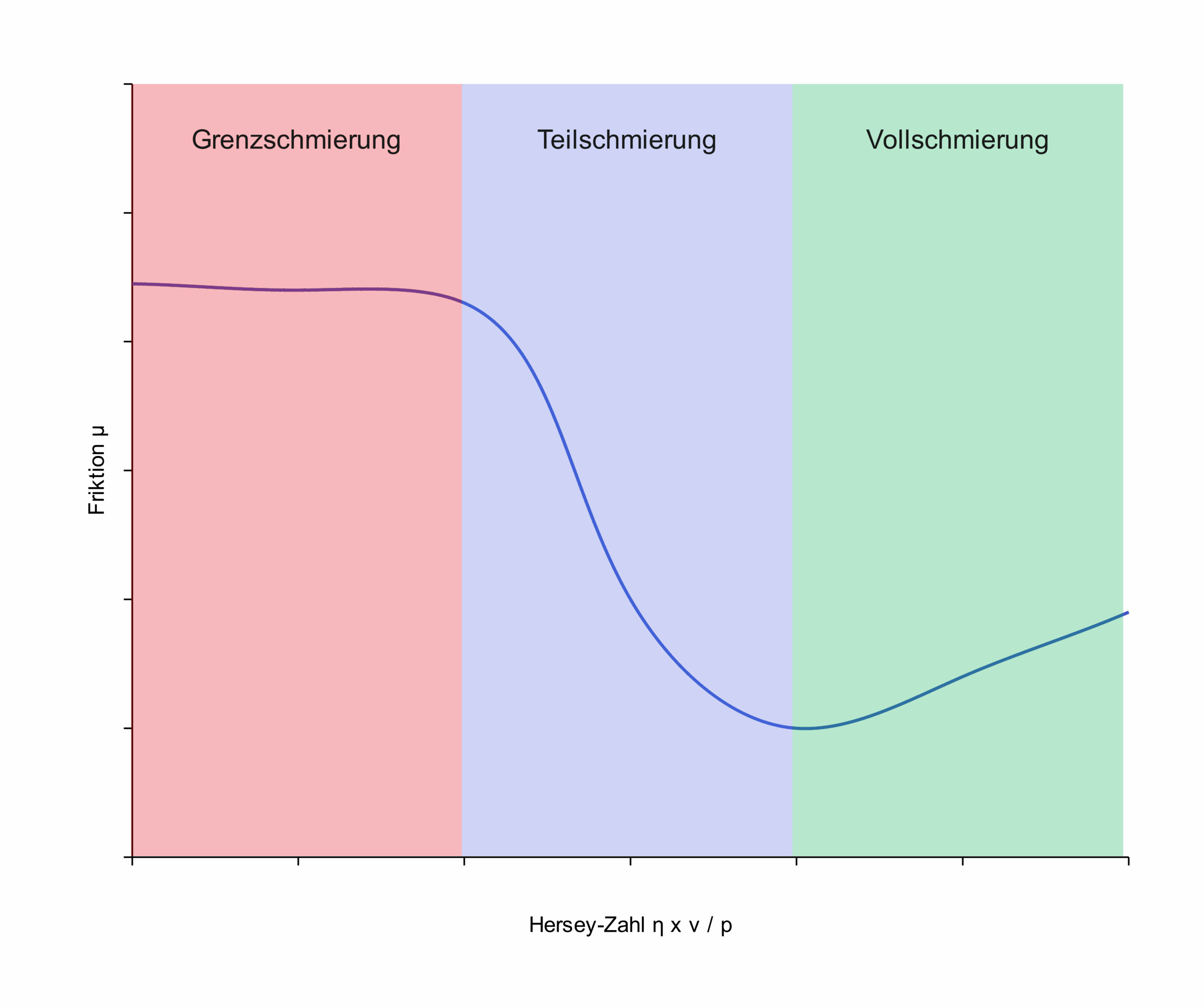
To understand which factors influence the lubrication state, we have to look at the Stribeck curve. The Stribeck curve describes the relationship of the coefficient of friction with a value that describes the operating condition, the Hersey number. The Hersey number is formed from three factors. So it’s the most important value in this context. Here oil viscosity matters.
Hersey number
The Hersey number on the X axis is determined by three values: dynamic viscosity of the oil (η), speed of the mating surfaces relative to each other (v) and pressure on the mating surfaces (p). The formula is: η · v/p.
The coefficient of friction on the Y axis says how hard it is to move the two mating surfaces against each other. The higher the coefficient, the more friction there is.
You notice that the Stribeck curve has three areas. These correspond to the lubrication states named above. Now it’s clear why the Hersey number is so important, because it determines which lubrication state the mating surfaces are in at a given moment. In other words, depending on which parameter you change, viscosity, speed or pressure, the engine moves between boundary, mixed and full-film lubrication.
Let’s go through each parameter:
- η oil viscosity – It’s in the numerator. That means: the higher the viscosity, the bigger the Hersey number and the more it moves along the X axis towards full-film lubrication.
- v speed – Also in the numerator: the faster your engine turns, the higher the speed of the mating surfaces relative to each other. Here too, higher revs take you towards full-film lubrication.
- p pressure – The pressure is in the denominator. So: the lower the pressure, the bigger the Hersey number, the more it moves towards full-film lubrication.
Those are the three parameters viewed in isolation first. It’s important to say that there are limits within which all this moves. That’s the operating range of the engine for which the maker names the right oil specs.
So here we always talk about the limits set by the maker, the specs. For oil there’s a table in the vehicle manual giving the permitted viscosity ranges. Rev and pressure limits are set by the engine’s design.

SAE viscosity figures
With the multigrade oils common for many years, the SAE viscosity figures are not temperature figures in degrees or otherwise directly comparable. No, not even the first and the second number in the figure, e.g. 5W30, are based on the same units. What do they actually mean?
First, the dynamic viscosity gives the flow resistance, or the internal resistance of a fluid. The higher the value, the thicker the fluid and vice versa. The temperature of the oil changes its viscosity, as temperature rises it drops. Thin oil flows better but can take less pressure; thicker oil flows worse but can take more pressure. Those are, broadly, the conditions.
In the past, oils operated in a narrow temperature range. In summer thicker oils were used and in winter thinner ones. The reason is that the colder an oil is, the higher its viscosity. So if the winter oil threatened to get too thin in summer with a hot engine, the summer oil was too thick in winter.
Then came the multigrade oils, which can safely cover a wider temperature span. That’s why these have two figures. The first figure, with the “W” after it, gives the properties for cold temperatures, the second for warm temperatures.
The reason the two values aren’t comparable is that the first value gives how well the oil still flows in the cold, and the second how well it can still take load at high temperatures. Those are two different properties, because in the cold one matters and in the heat the other. They’re based on different tests and so have different units. From these, viscosity grades were formed, classified to today’s SAE J300 standard as follows:
W grades for cold
| SAE grade | Maximum dynamic viscosity (CCS) | Pour point |
|---|---|---|
| 0W | 6,200 mPa·s at −35°C | −40 °C |
| 5W | 6,600 mPa·s at −30°C | −35 °C |
| 10W | 7,000 mPa·s at −25°C | −30 °C |
| 15W | 7,000 mPa·s at −25°C | −25 °C |
| 20W | 9,500 mPa·s at −15°C | −20 °C |
| 25W | 13,000 mPa·s at −10°C | −15 °C |
Grades for heat
| SAE grade | Kinematic viscosity (ν) at 100∘C in mm2/s | Minimum HTHS viscosity (η) at 150∘C in mPa·s |
|---|---|---|
| 8 | 4.0 to 6.1 | 1.7 |
| 12 | 5.0 to 7.1 | 2 |
| 16 | 6.1 to 8.2 | 2.3 |
| 20 | 6.9 to 9.3 | 2.6 |
| 30 | 9.3 to 12.5 | 2.9 |
| 40 | 12.5 to 16.3 | 2.9 or 3.7 |
| 50 | 16.3 to 21.9 | 3.7 |
| 60 | 21.9 to 26.1 | 3.7 |
Practical scenarios and their effect on the Stribeck curve
Let’s go through a few scenarios that make this clearer. Of course we can’t know here exactly where the lubrication state of a given engine will be in a particular situation. Hopefully always within the tolerable limits. But we can explain very well what the effect of the three parameters is.
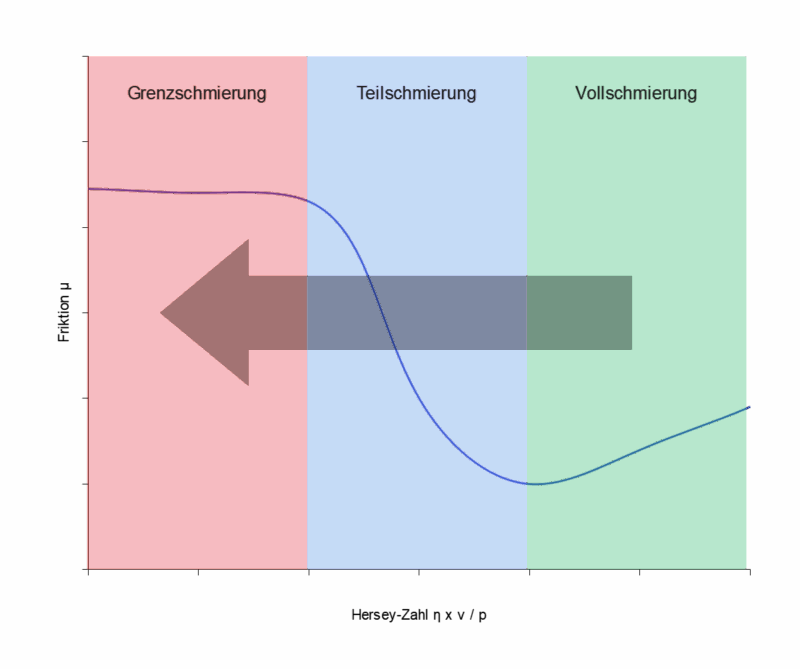
Scenario 1) Towing, uphill, low revs
In this case the operating state shifts to the left. The speed (v) of the mating surfaces relative to each other is small, the pressure (p) is high. So the Hersey number drops. That doesn’t mean full-film lubrication is necessarily left, because that depends of course on the starting point, the oil temperature and the design features of the engine. But it also becomes clear that this isn’t the best idea, to drive like that.
Scenario 2) Towing, uphill, higher revs
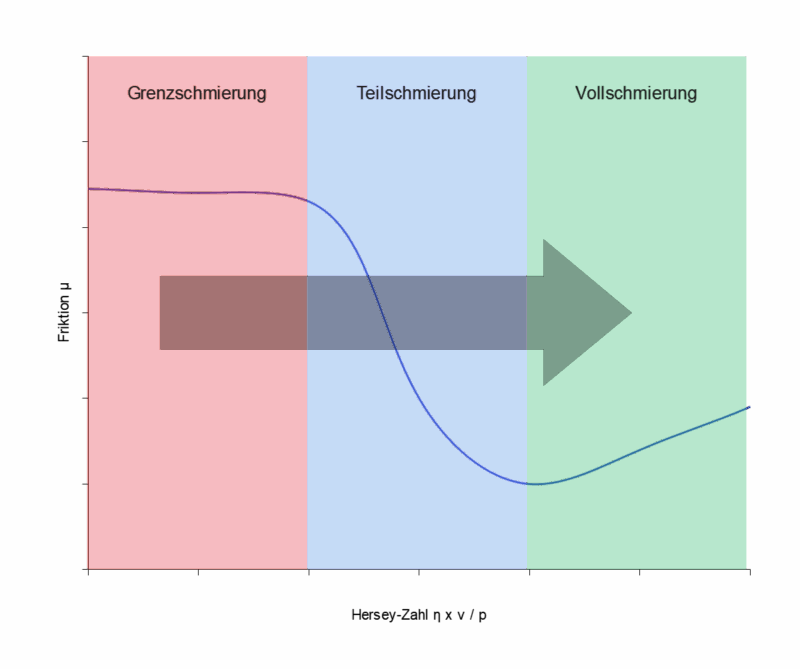
Now you’ve changed down a gear, the revs and so the speed (v) rise. If the other parameters stay the same, the operating state moves to the right.
Scenario 3) You switch from 5W30 oil to 5W40
The new oil raises the viscosity. That also makes the Hersey number rise. So the lubrication state shifts generally to the right.
Changing the oil viscosity
Unlike the revs and the pressure, changing the viscosity is a permanent change. After all, you can’t pull away from a standstill at 3,000 rpm or stay permanently above 2,500 rpm. The load too is more determined by the cargo, the road, the wind and so on. In other words, the most lasting effect is achieved by oil with higher viscosity. So it can considerably shorten the periods in which the engine, with a thinner oil, may work more often in the mixed-lubrication range, because it starts further to the right on the Stribeck curve. The figures in the graphic are of course assumed and only meant to show the basic effect.
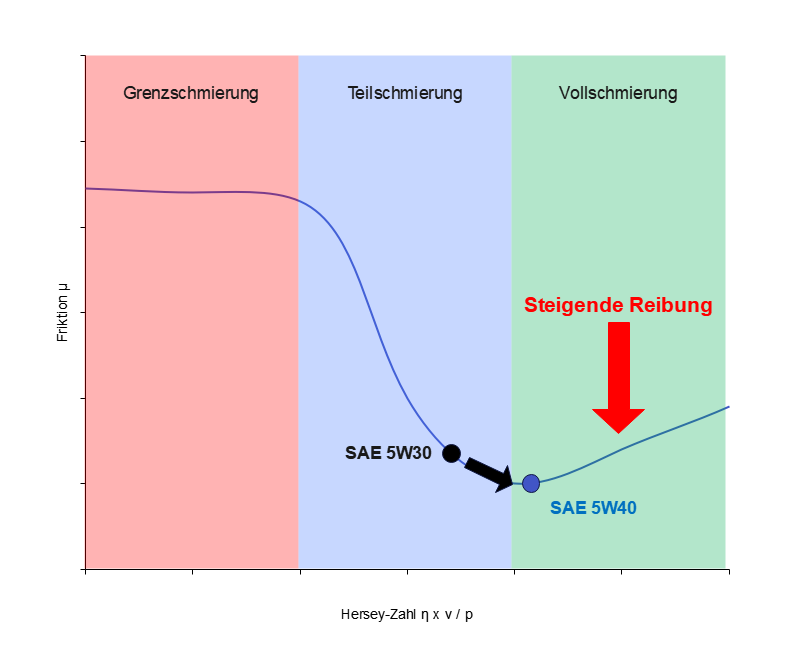
But simply taking thicker and thicker oil isn’t the solution either, sadly. Because if you look at the area of the Stribeck curve in the full-film range, you notice that the friction rises again. In other words, if you’re mostly in the full-film range with one oil, an even thicker oil gives you no improvement in wear protection (full-film lubrication is already there), only an increase in friction from the thicker oil itself.
That again causes higher consumption, less power and can even lead to lubrication problems and damage, if the oil can’t be pumped through small channels fast enough. Then it can lead to a loss of the lubricating film or insufficient cooling. A good example of this is the turbocharger with its very fine and small floating bush bearing.
That brings us to an interesting reverse conclusion. If you stay mostly in the full-film range with a thinner oil, you can save fuel and use more power by switching from a thicker to a thinner oil.
But how are we supposed to know when and how long an engine is in one state or the other? In the vast majority of cases that won’t be possible to find out, unless you have damage like we described above, where the problems came to light.
Changes that work
What does work is making general statements on how you can adjust your oil within the maker’s specs without taking a risk. This is about the lower and upper viscosity value of today’s multigrade oils.
The basic rule is always that for the first number, for the cold state, the highest permitted value isn’t exceeded, and the second value, for the warm state, isn’t undercut. Let’s assume the following oils are allowed:
- 5W30
- 5W40
Then you shouldn’t switch to a 10W30 or a 5W20. The current viscosity of the oil depends on the temperature, after all. So there’s the maximum permitted viscosity in the cold range and the minimum permitted viscosity in the hot range, which mustn’t be exceeded or undercut respectively. If you raise the lower value, the oil is too thick in the cold state. That can mean it can’t be delivered fast enough and the lubrication stays poor for a while at cold outside temperatures. Conversely, in the hot range it would be too thin and could no longer take the pressure. In both cases the permitted operating range (blue) is left (red).
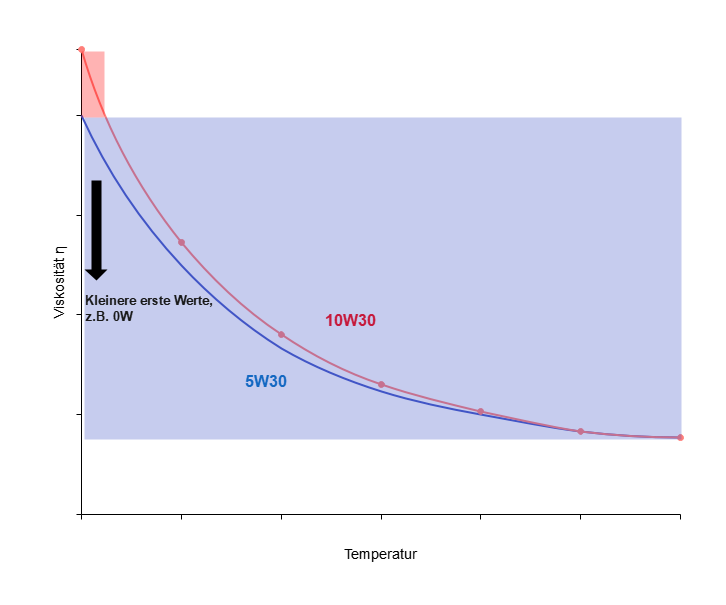
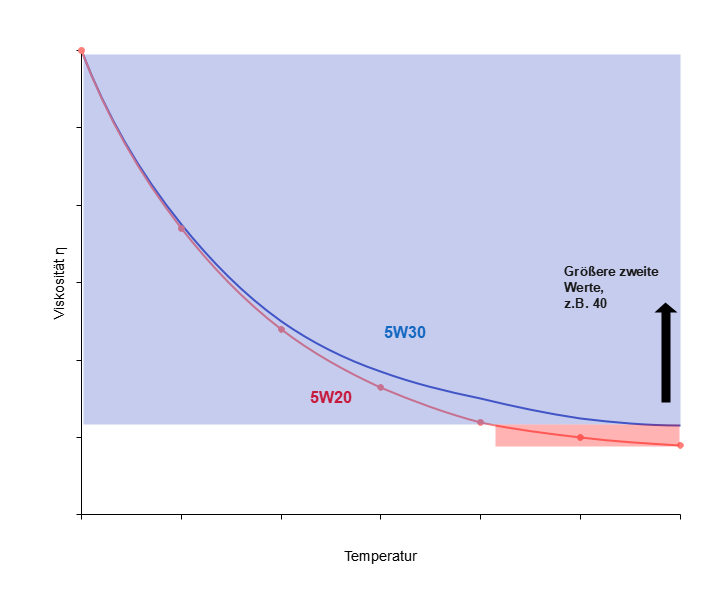
In relation to the example above, you can switch to a 0W30 or a 5W50, but not to a 10W40 or 0W20.
Verdict
We were surprised that the engine let us down despite correct care and servicing. That can happen when the operating parameters are set too tightly and you unknowingly leave the safe limits in normal driving. Does this maybe have to be reckoned with on more modern engines? Tight limits are demanded in all sorts of areas. In the end it’s always about reducing emissions. The measures in lubrication aim at that too: lower internal friction through thinner oils, lower-power oil pumps and so on. That saves fuel and emissions.
Is your own engine affected? No one can say from the outside. But you’re not completely helpless. There are ways to gain a bit of control over it. Let’s recap briefly: viscosity and engine revs help stay in the wear-free range as long as possible. Even if you can’t see for yourself when you’re in this range, you can at least make sure the piston cooling jets are in action as often as possible and the oil pressure is above the pressure needed for it. If your engine allows several viscosities, you can try whether it’s easier to keep the oil pressure high enough with a higher viscosity.
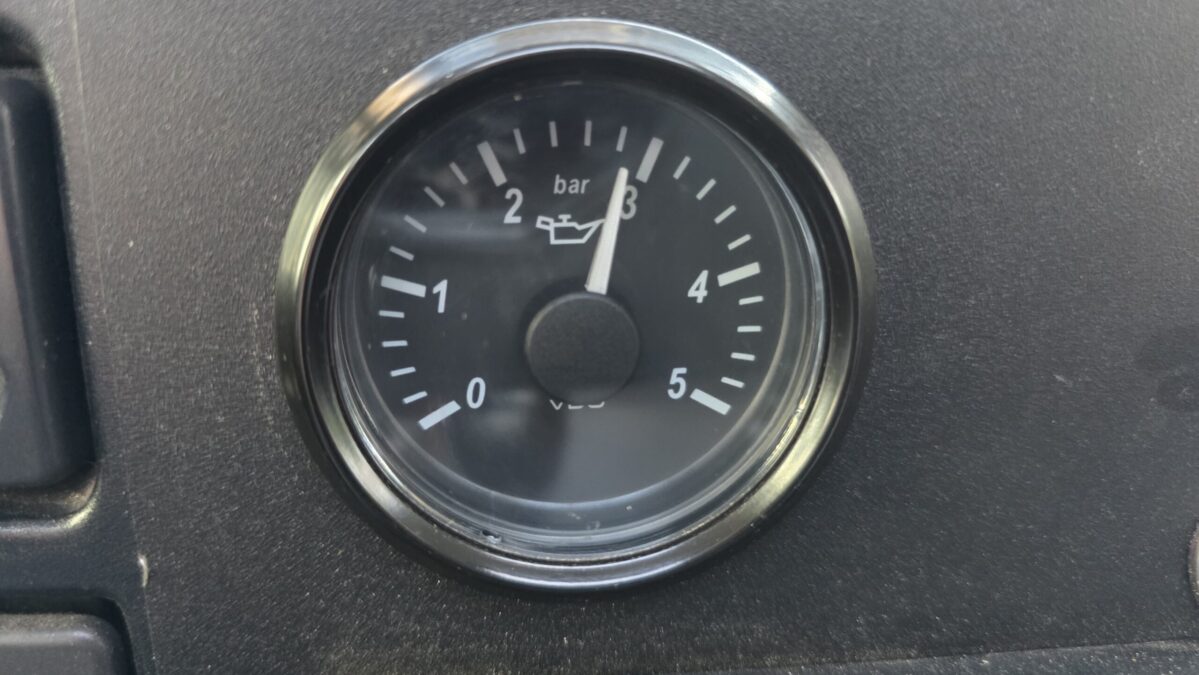
With our engine we have to reach 2.1 bar oil pressure for that. We now make a point, while driving, of staying above this oil pressure as often and as long as possible. We can’t do more.
With the oil viscosity you have to stay within the given specs, we’ve shown that. With the revs the rev counter helps and, much more important, an oil pressure gauge. Now you only have to know when the piston cooling jets kick in on your engine.