


A jack should be in every 4×4, because it’s more than just a breakdown tool. But which jacks are there and what are they used for? We give you an overview and decision aids on the off-road jack, plus practical tips.
Hydraulic jacks, bottle jacks, scissor jacks, crank jacks, trolley jacks, pneumatic jacks, High-Lift or Farm Jacks, lifting bags, and more, the list of different jacks seems almost endless. On top of that there’s plenty of useful, practical accessories. Let’s get an overview first.
Different types and how jacks work
In what follows we first introduce various jacks by use case. We go into how each works, describe pros and cons and show you examples.
Hydraulic bottle or ram jack
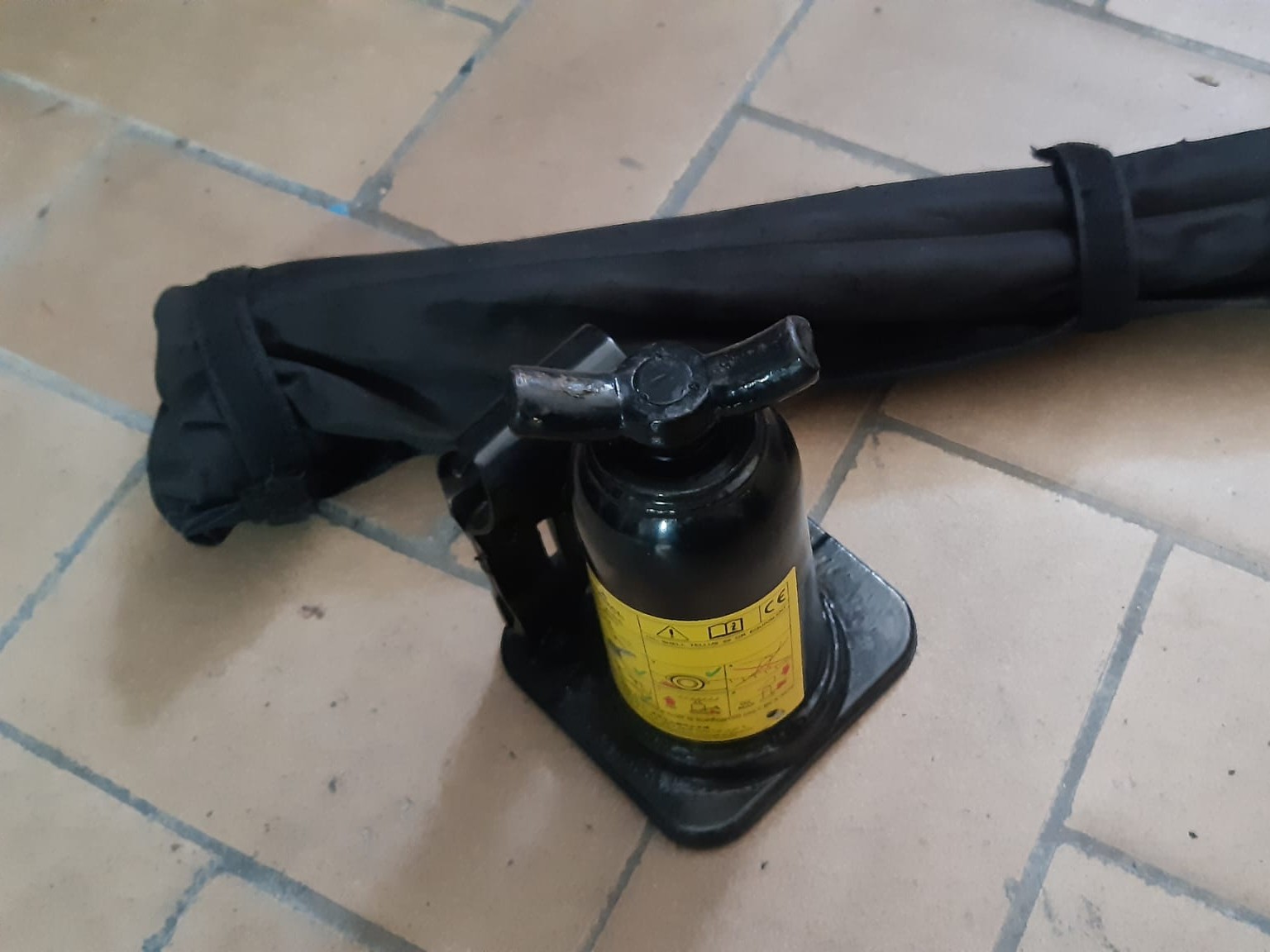
Hydraulic jacks are widespread, especially the bottle-shaped ones, also called ram jacks. As the name says, these are hydraulically driven, by a mechanical pump worked with a hand lever. By moving the lever up and down, you pressurise the hydraulic fluid inside with the pump piston and drive the working piston upwards. That lifts the vehicle. As the working piston in this closed system is much larger than the pump piston, the force multiplies. A simple principle known as Pascal’s law. It goes down, usually, by controlled opening of a release screw, which lets the hydraulic oil flow back to the starting position.
Often the models extend in two stages and, at relatively compact dimensions and manageable weight, reach lift heights useful even for 4x4s of about 30 centimetres, which can then equal a total height of around half a metre, like with this Weber Hydraulik AT 3-225. The saddles are either flat or banana-shaped. The latter has the advantage that such a jack can be set well and safely under a round axle casing. Often there are adapters for this type of jack, rubber adapters for example, so you get a smooth contact surface you can set against the chassis. We’ll come to the various accessories later, because a jack isn’t just a breakdown tool.
Scissor jack
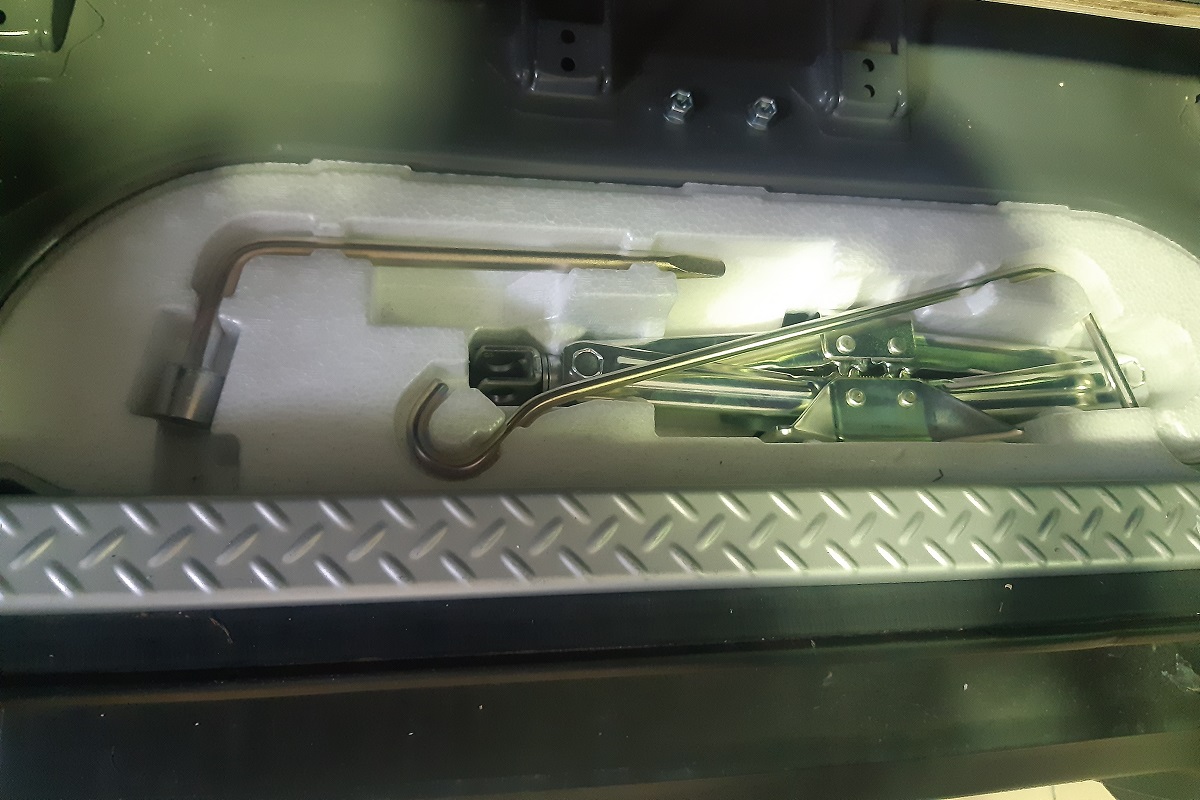
The mechanical scissor jack is also a classic among jacks and widespread. The principle is simple. With a crank you drive a spindle, which in turn pulls the scissor arms apart. The load to be lifted goes up. Turn the crank, and so the spindle, the other way, and the scissor arms pull back together and the load lowers. Here you often have to put in clearly more effort than with the hydraulic bottle jack described above. The scissor jack is, by the way, occasionally also available in a hydraulic version, where a hydraulic cylinder then moves the scissors.
Crank jack
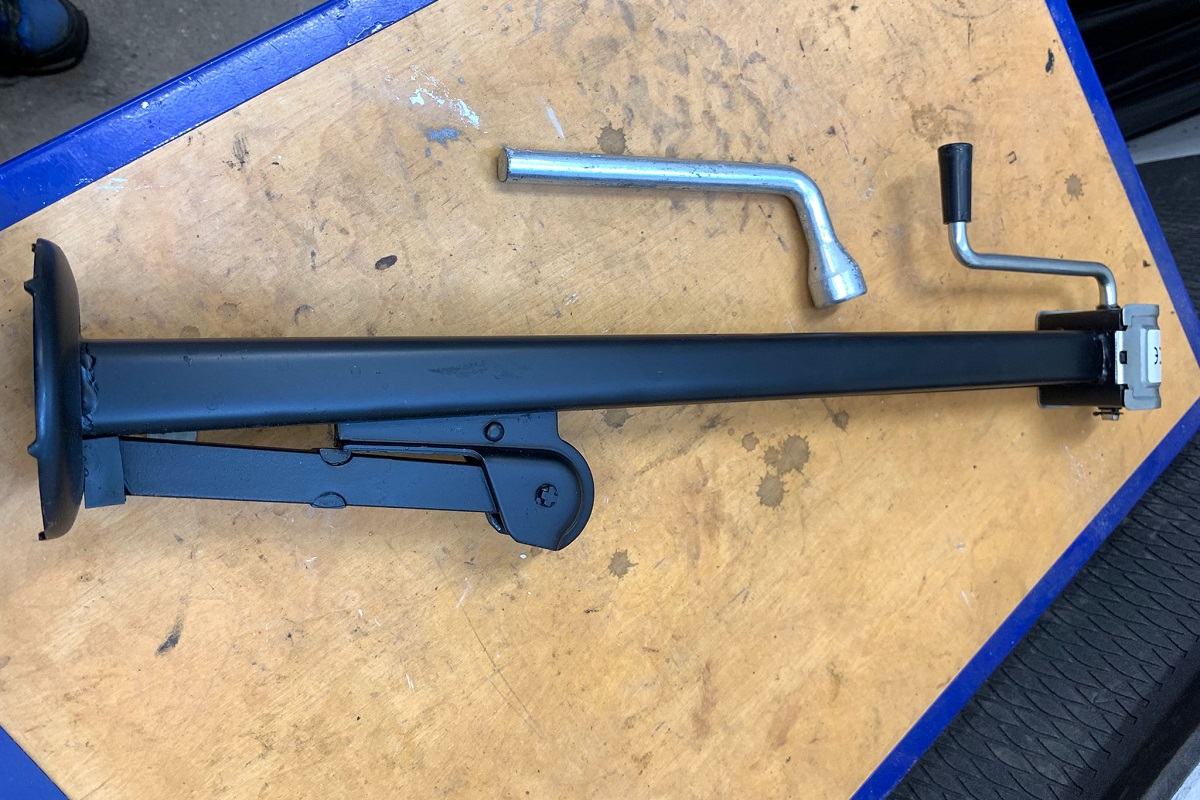
Who still knows the crank jacks from classics like the Beetle or Trabant? Jacks of this type are also found in the original on-board toolkits of 4x4s, in the Lada Niva for example. With a crank jack the height is adjusted with a crank. Often these jacks belong more in the wobbly-candidate category, as with the Niva, and should be swapped for something else.
Trolley jack
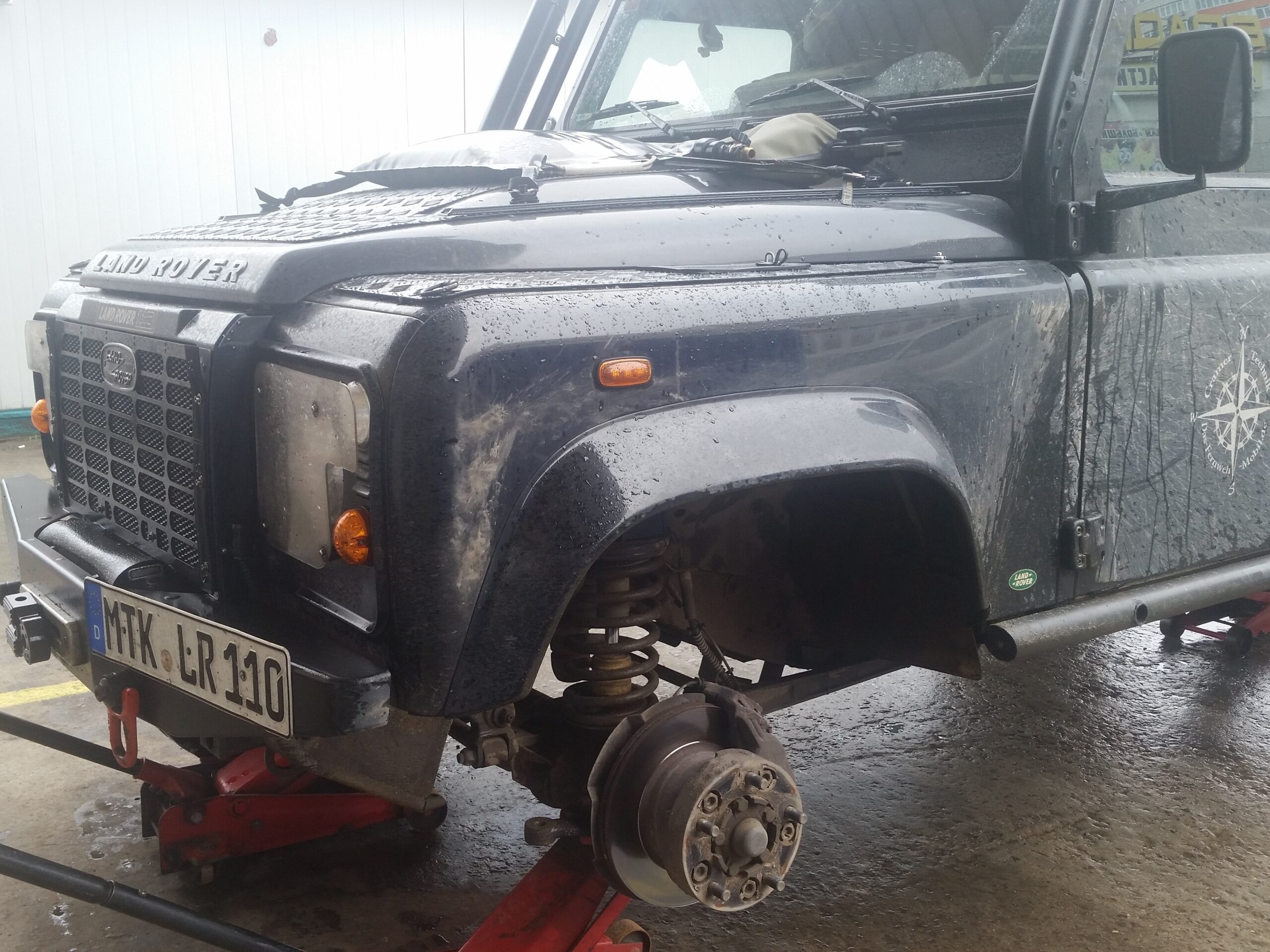
Trolley jacks are often found in workshops. With these the vehicle can be raised and lowered hydraulically by means of a scissor mechanism, and the jack can also be moved. For that the trolley jack has four rollers, two fixed rollers and two that turn about their vertical axis (much like a skateboard). The saddle on the vehicle is usually a small pad. With a trolley jack you can lift the vehicle itself, and also lift out parts like a gearbox, perhaps. But careful with actions like this, we’ll come to safety tips later, better use a tool meant for it where the part can be set down safely, a gearbox jack for example.
Pneumatic jack
Also more likely found in workshops is the pneumatic jack. It works with compressed air rather than hydraulic fluid. The compressed air inflates an air cushion and so pushes the vehicle to be lifted upwards. It goes down again by controlled release of the pressure. For a jack like this you need a sufficiently sized compressor, because depending on the capacity and model it does take a pressure of 10 bar and more. Operation is comparatively simple, takes less effort from the user than a hydraulic jack with a manual pump, and the lifting goes very quickly. There are also versions with a ram instead of an air cushion, and combinations of compressed air and hydraulics are possible too.
High-Lift or Farm Jack off-road jack
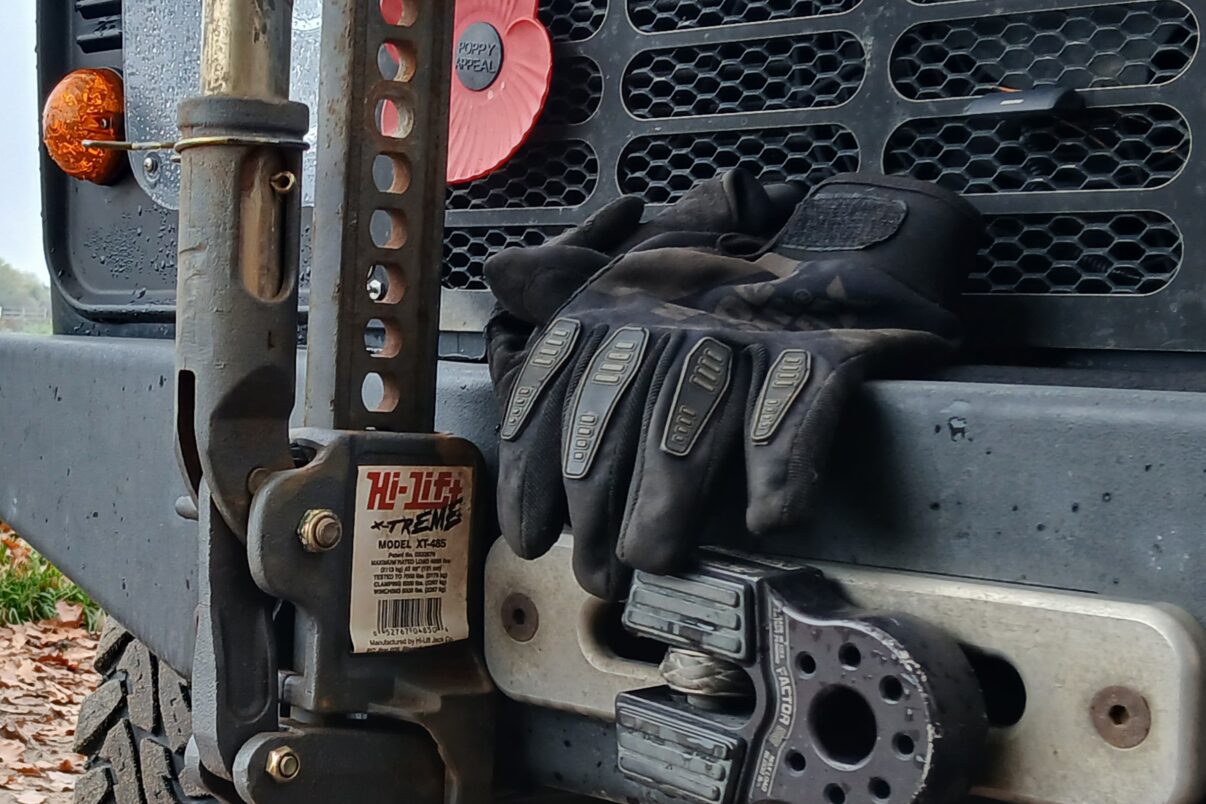
Let’s get to the off-road jacks. You’ve surely seen a so-called High-Lift jack, also called a Farm Jack, on a 4×4 before. But how does this device actually work? Well, the mechanism behind it is, in principle, quite simple and effective. This jack basically consists of a beam with a base plate and a movable, mechanical lifter with lever operation. Each time you work the lever, a pin engages the next hole in the beam, locks in, and the lifter moves one step further. With a switch lever you decide which way it should go. Careful, without a load on the jack it often goes very fast in one direction, namely down, because then the lifter can simply slide down the beam.
This type of jack is available in simple forms like the JackAll jack or also modified versions like the Hi-Lift XT 485 Xtreme with extra functions. You also get the High-Lift jacks in various lengths, like the Hi-Lift jack HL605 with a lift height of around 1.3 metres.
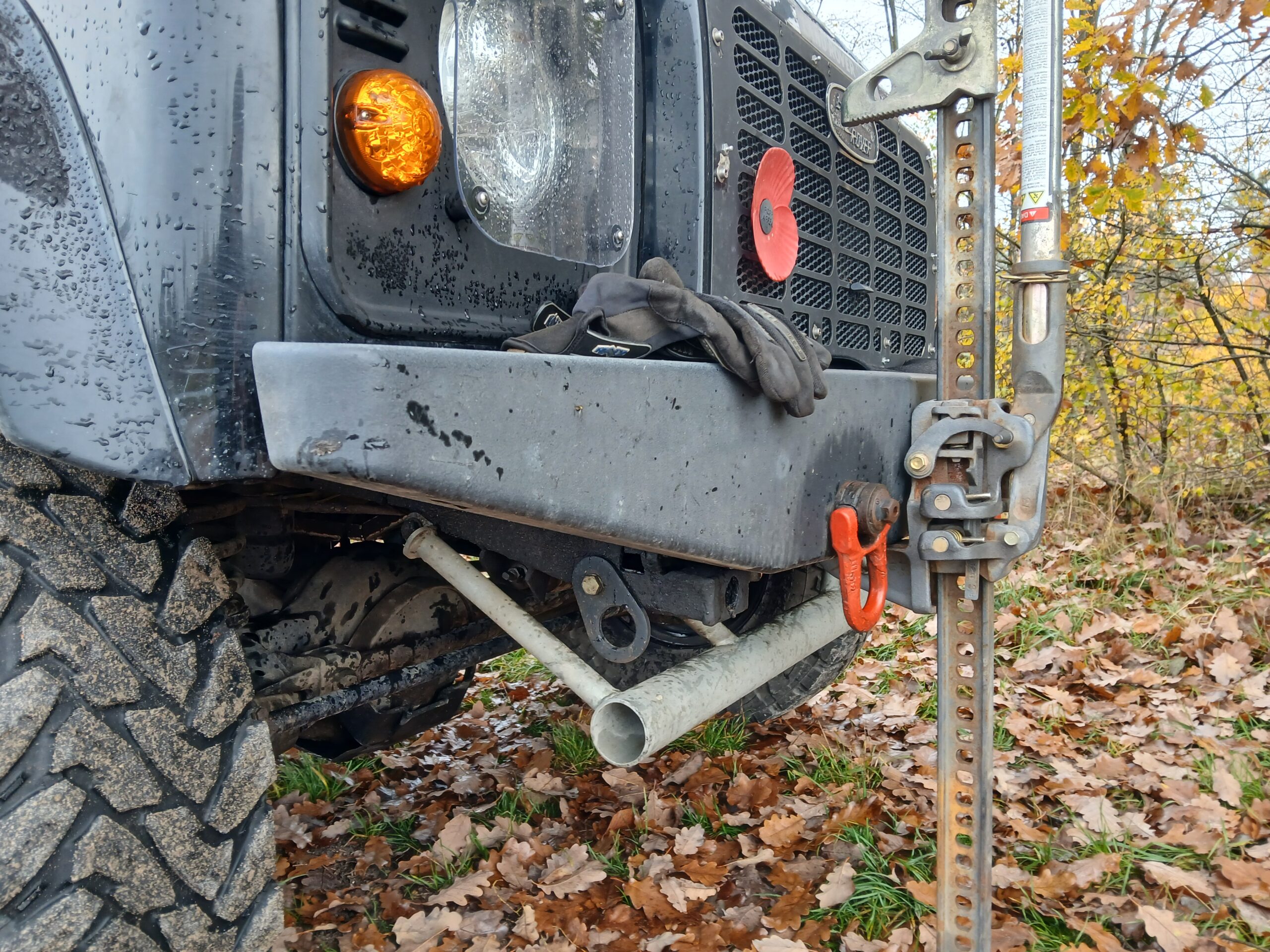
With jacks like this you can of course lift a vehicle much higher than with many standard jacks. This can be useful especially with lifted vehicles and in off-road recovery situations. Further advantages of this form of jack are that they’re purely mechanical and need no fluids, but above all the many options they offer. For one in terms of the lift points on a vehicle, and for another in the ways they can be used. A disadvantage, depending on the vehicle, can be the comparatively bulky pack size and the high weight. We’re talking weights of about 15 kilograms here. On pack size, one more
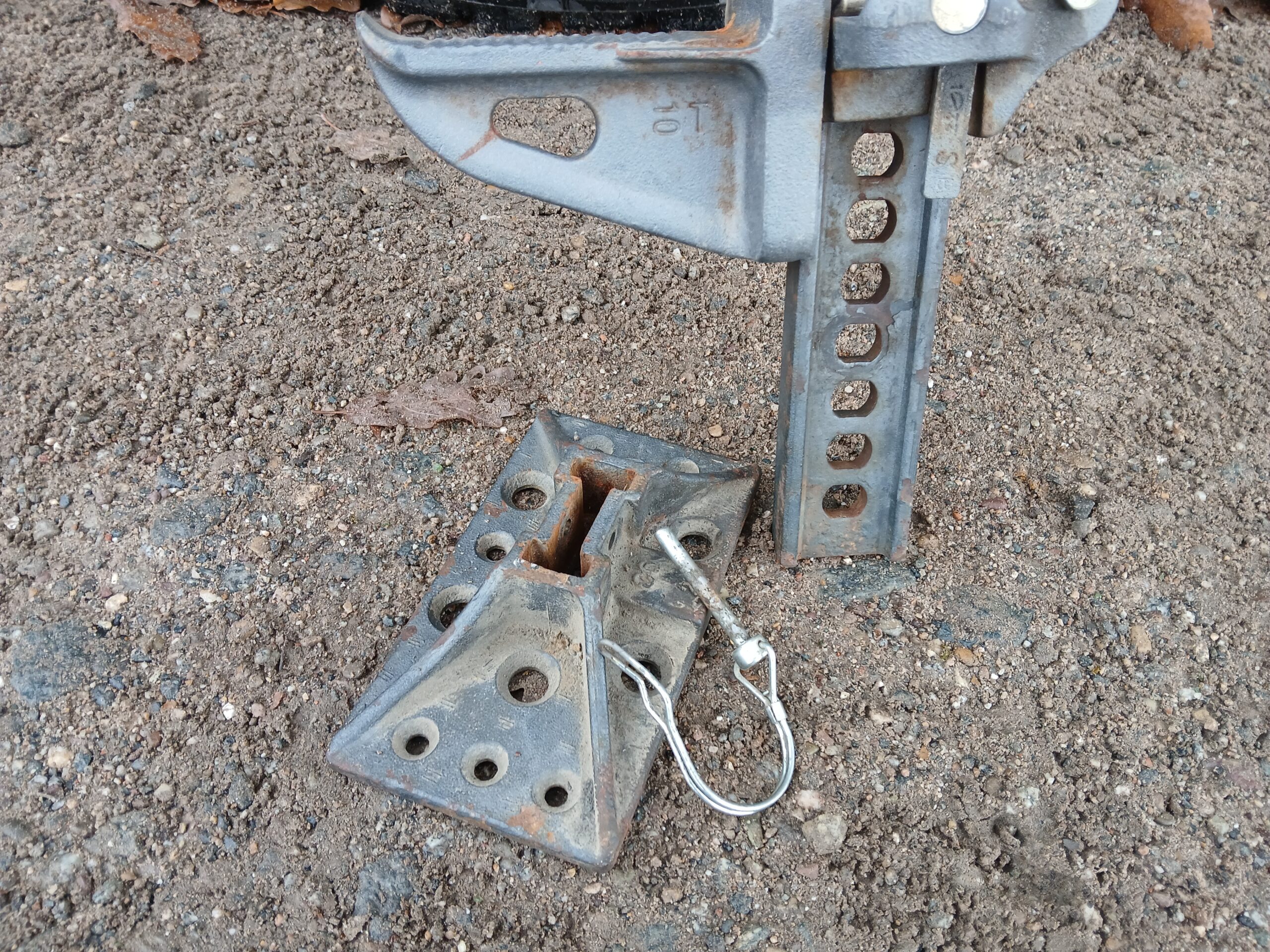
 Practical tip: you can take the High-Lift jacks apart into their components, that is separate the lever, the carriage or lifter and the beam from each other and stow them separately. There are versions where the base plate can also be quickly removed on top of that.
Add-ons for the High-Lift or Farm Jack off-road jack
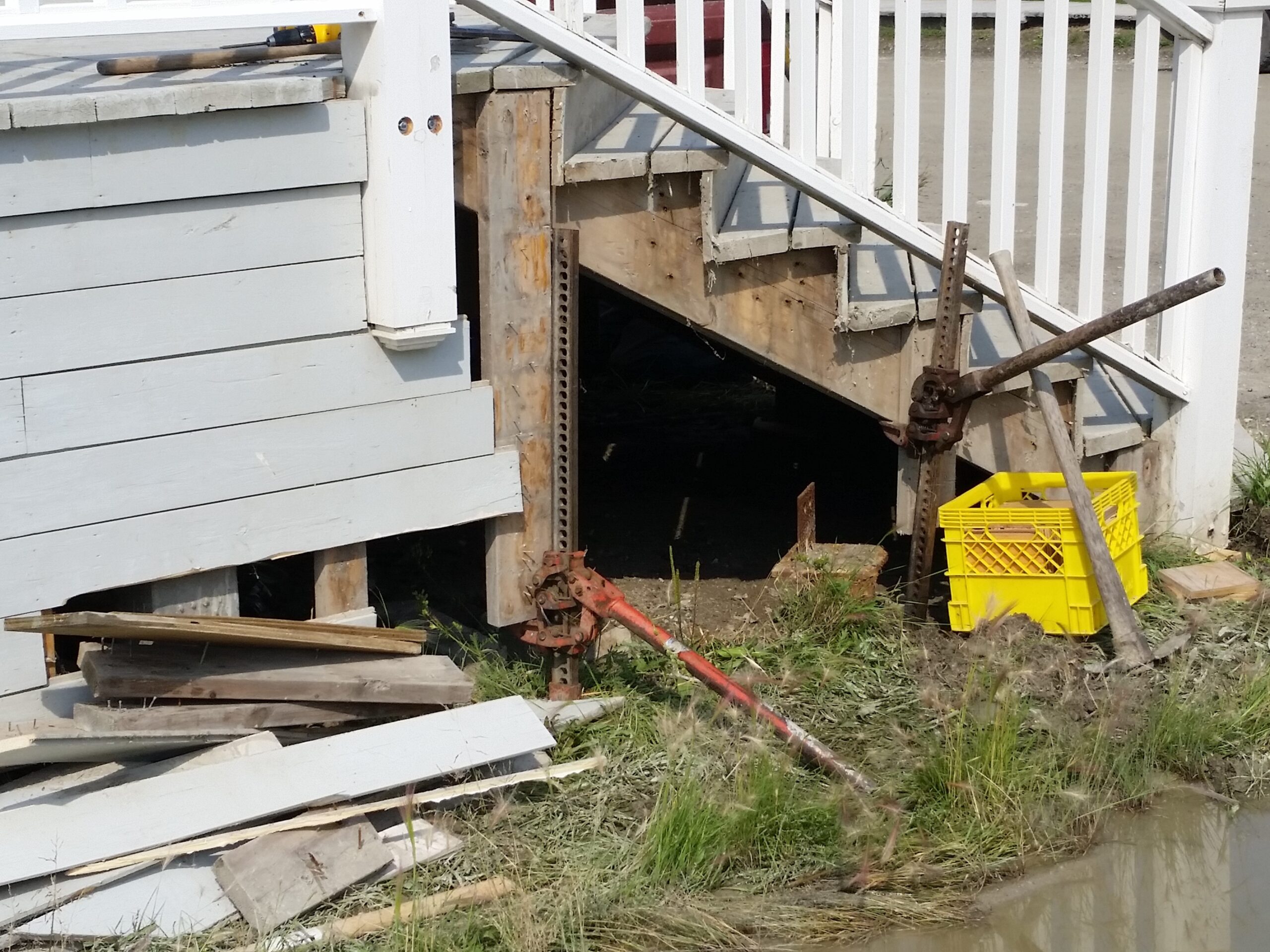
Anyone who’s travelled in North America knows that this type of jack is widespread there and used for far more than just jacking, on farms, building sites or with rescue services for example. We’ll go into the accessories and add-on options for the High-Lift or Farm Jacks in detail later.
Hydraulic off-road jacks
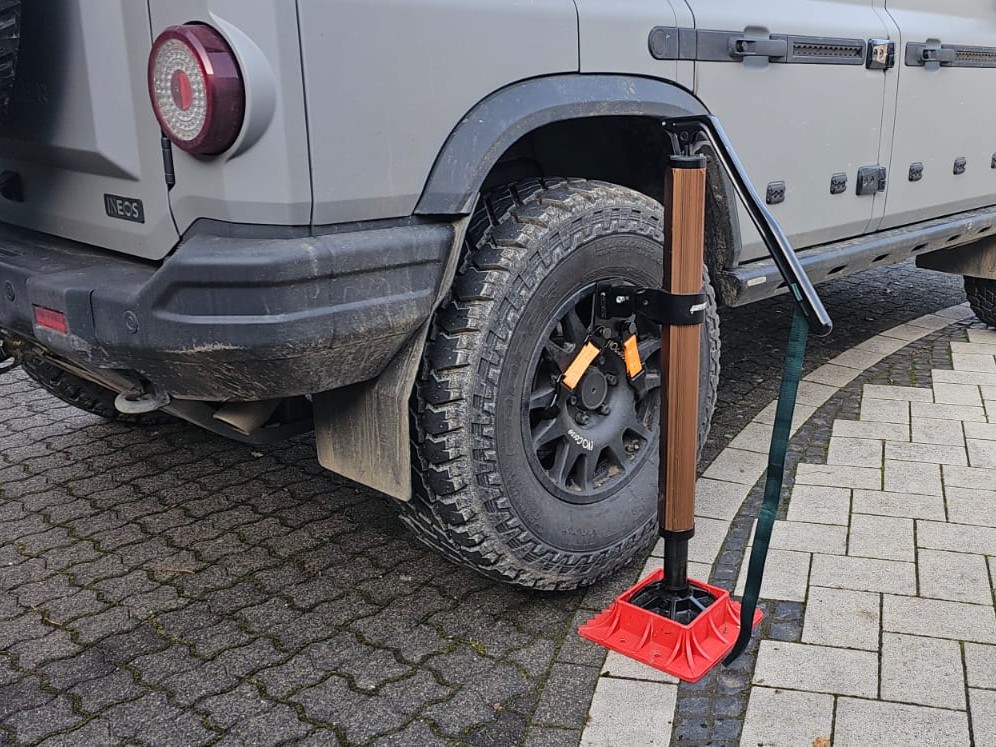
By now there are several hydraulic off-road jacks on the market that use a similar principle to the High-Lift or Farm Jacks. With these hydraulic off-road jacks you can also lift your vehicle very high. They also usually have a height-adjustable contact point to make the most of the hydraulic cylinder. Thanks to the hydraulic drive, the user needs little effort and can raise and lower the vehicle in a controlled way. Some of these jacks even have two stages for lowering the load, a slow stage and a quick-release function, depending on the situation. Like the High-Lift jacks, the hydraulic off-road jacks have a fairly large pack size.
A hydraulic jack like this is available from the renowned maker ARB or from other makers with a comparable way of working.
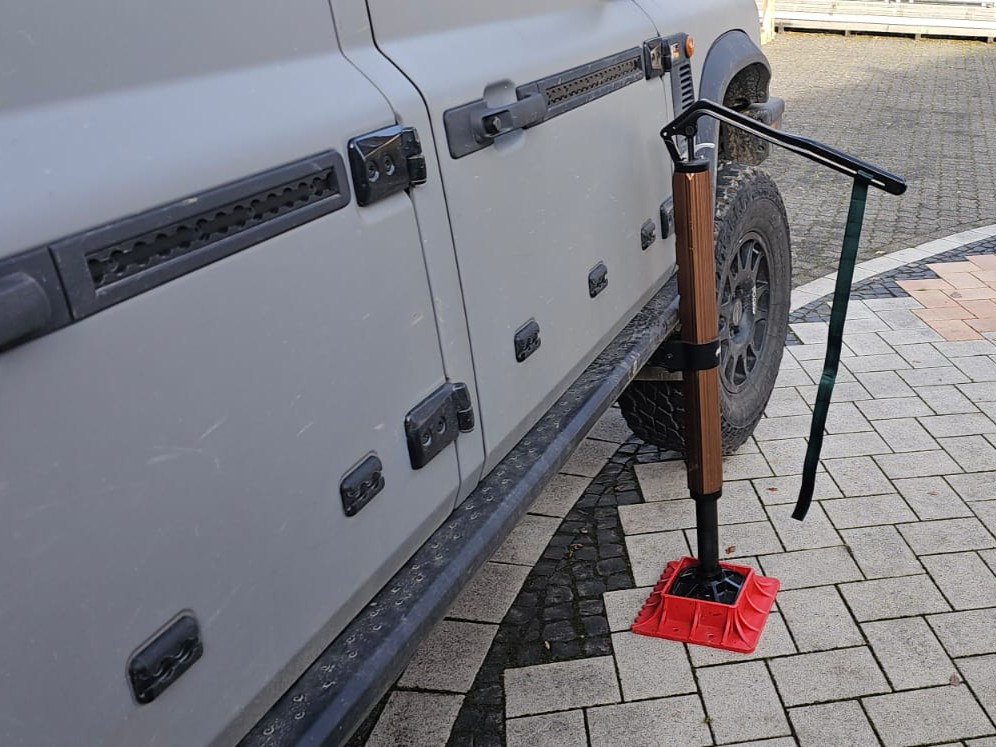
Another way to lift a vehicle is lifting bags
Lifting bags are used in technical rescue by the fire brigades or in civil and disaster protection, and can serve us well in the off-road field. They can, for example, be set under an axle to lift the vehicle. To fill the bag you need compressed air, which many off-roaders have on board anyway in the form of a mobile or fixed compressor, or even a complete compressed-air system. To raise the vehicle the bag is filled with compressed air, to lower it the air is let out again.
An advantage of these lifting bags is the flat pack size. You shouldn’t underestimate the weight of the bags and accessories, though. And when lifting with bags you have to take particular care of a secure footing and of protecting the bag from damage by sharp edges, pointed objects and hot parts. So it usually takes some extra equipment too.
In this video from the Krelingen fire brigade, the use of this type of lifting bag is well explained and the safety advice isn’t neglected:
Balloon or exhaust jacks as extra kit
A balloon jack is, as the name describes, a jack in balloon or cylinder form. Often these jacks are made from nylon or similar, and they’re filled via a hose with the vehicle’s exhaust gases. The jacks reach quite a respectable lift height and have the advantage of the wide, adaptable footprint. The latter can be very helpful in sand, for example. A balloon jack is more to be seen as extra help, in recovery situations for example.
When the balloon jack isn’t in use, it folds flat. Here you should take particular care, though, because inside there are after all vehicle exhaust gases, which contain toxic components! And, as with the lifting bags, you need to protect the balloon material from cuts, punctures and heat, from the exhaust for example. Sometimes one or more protective mats are included, or there are optional adapters for filling with an air compressor as an alternative to the exhaust gas.
Use cases for jacks
Wheel change and workshop
In terms of use cases, we first distinguish a situation where a wheel change is needed, say a puncture or the seasonal summer-to-winter tyre change common in our latitudes, and a recovery situation. Later on we’ll look at extended uses too.
For the simple wheel change at a breakdown, standard jacks are recommended. They’re simple and safe to use, reliable, have a manageable pack size and work perfectly in most of these situations. A hydraulic bottle jack is recommended for this. So a jack like this shouldn’t be missing from any 4×4.
Practical tip: With a hydraulic bottle jack, using the vehicle’s help, you can also press tyres into the rim well, if a removal for repair is needed. You’ve surely seen something like this at tyre-repair workshops or videos online. Yes, it really works. But with actions like this you should always keep the safety of everyone involved in mind. Of course, on extreme tours it can become necessary to improvise, but using a tool for something other than its purpose is often not a good idea.
And one more
Practical tip: By the way, because of its compact build in height, the scissor jack can be superior to the hydraulic bottle jack in more demanding situations. If your axle is resting almost on the ground due to a fault or another reason, the scissor jack is often easier to place under the vehicle.
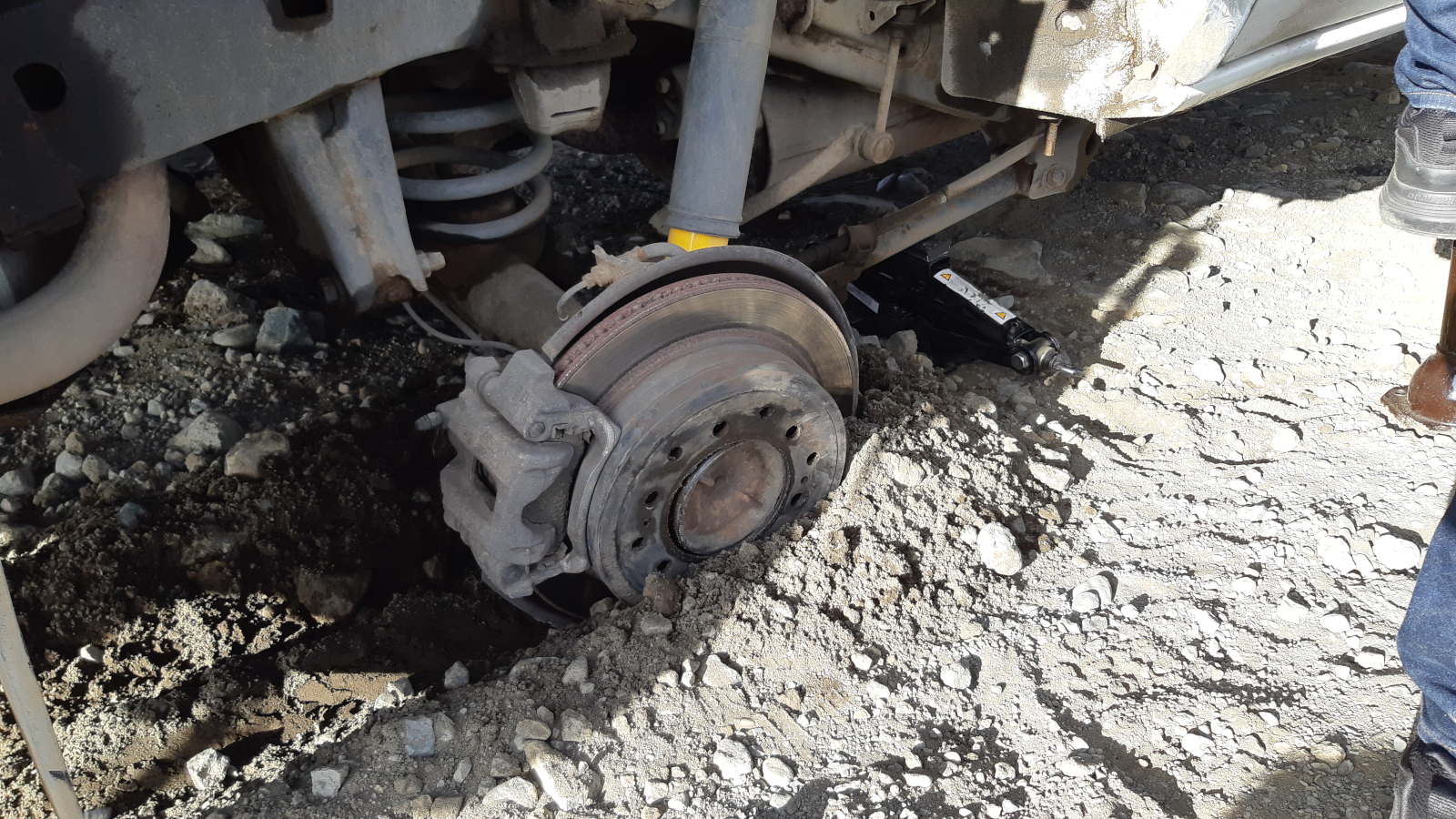
For your home workshop or garage you could also get a trolley jack. Too bulky for the road, but a handy help at home. That way you don’t always have to unpack the jack from your vehicle.
Recovery with the off-road jack and more
If you head off-road, it’s well worth looking at other jacks as part of your recovery kit. Widespread among the off-road jacks are the High-Lift jacks already explained. Here you’ll often hear arguments against them, especially on safety. But it’s like with all tools and equipment: through proper use, care and the necessary safety awareness, the risk of an accident can be effectively reduced. Of course such an off-road jack of this principle tends to hold more dangers than a simple hydraulic bottle jack. But give up its possibilities because of that? Probably not.
It’s better to get really familiar with using it and be careful when you do. With a mechanical High-Lift jack, among other things you should keep reminding yourself that the weight bears on the lever arm. So don’t put yourself in danger, for example by moving body parts between lever and beam, or even carelessly just letting go of the lever, because then it goes down out of control. We’ll come back to safety later.
When setting such an off-road jack, think carefully about where and how you position it safely on the vehicle. Sometimes it’s not just add-on parts in the way, there’s also the danger, if the vehicle starts to move, tips sideways or rolls away for example, of damage to the vehicle from the jack hitting it.
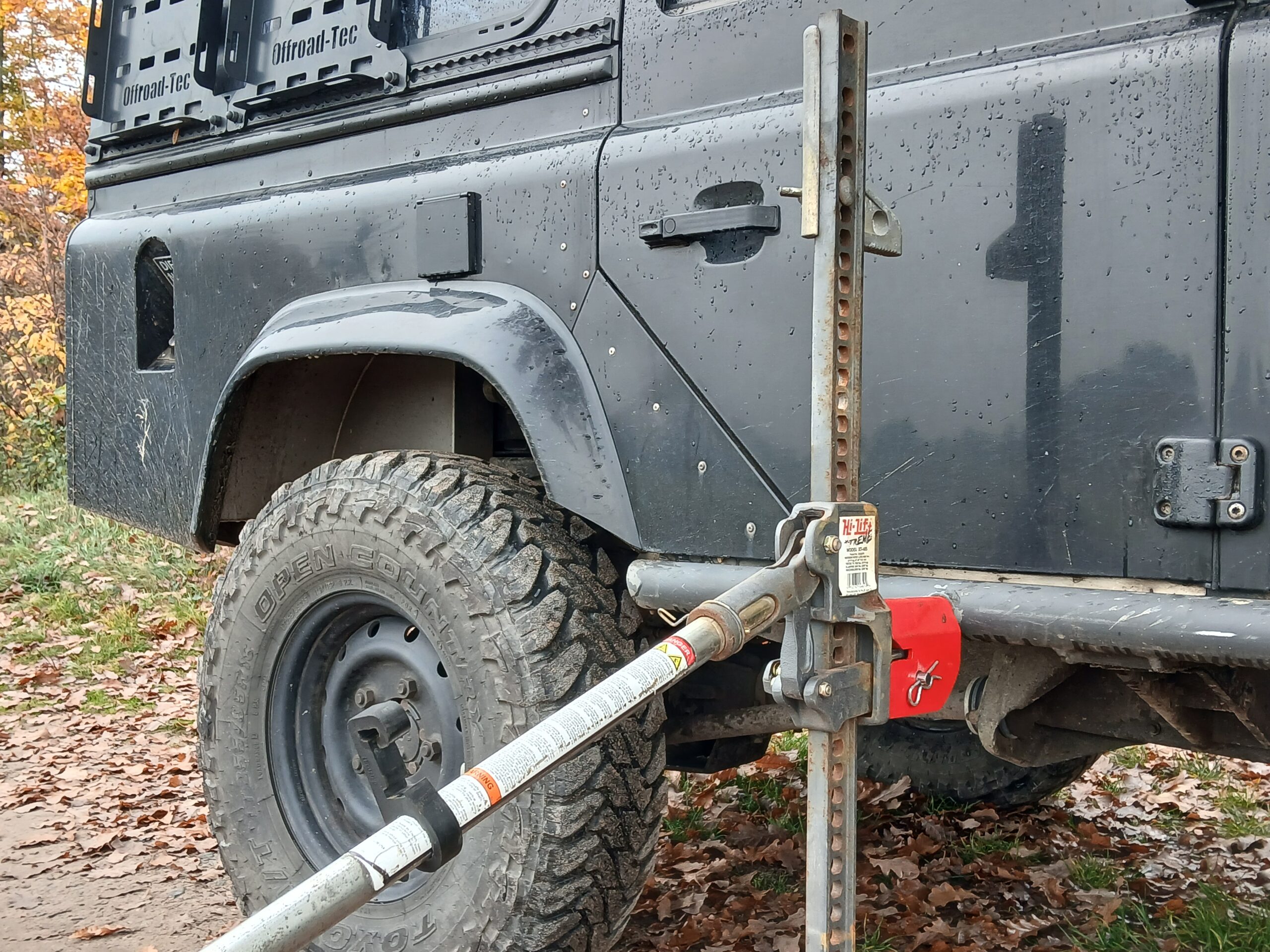
With the necessary care, an off-road jack like this is a very versatile tool for recovering vehicles and more. You can use it, for example, to lift your vehicle out of a deep rut, build material underneath, or even move the vehicle out sideways, and much more. Bear in mind that with a vehicle sunk into sand or mud, you first have to lift the car out of its suspension before a wheel even moves upwards at all. The off-road jack helps with that thanks to its big lift height. So an off-road jack is a worthwhile addition to the on-board tools or recovery gear.
For the off-road jacks, a mechanical High-Lift or a hydraulic off-road jack alike, there’s also plenty of useful accessories for recovery or tyre repair that make your jack a real multi-purpose tool.
Accessories for off-road jacks
There’s a fair bit of useful accessory you can kit your jack out with depending on use and situation. We’ll look at some of it in the following.
A secure footing
First of all you should give your jack a secure footing. Various base plates are suitable for this, available for the respective jacks. As an alternative, depending on the design, you can use a recovery board you might have with you anyway. By now there’s even a combination of both on the market. Maxtrax, the maker known for its reliable recovery boards, offers the Jaxbase, a base plate that can be combined with various Maxtrax recovery boards. For the hydraulic off-road jacks you’ll find similar base plates, like for the ARB Jack. Depending on the situation, you may be able to improvise something safe with a very sturdy wooden board.
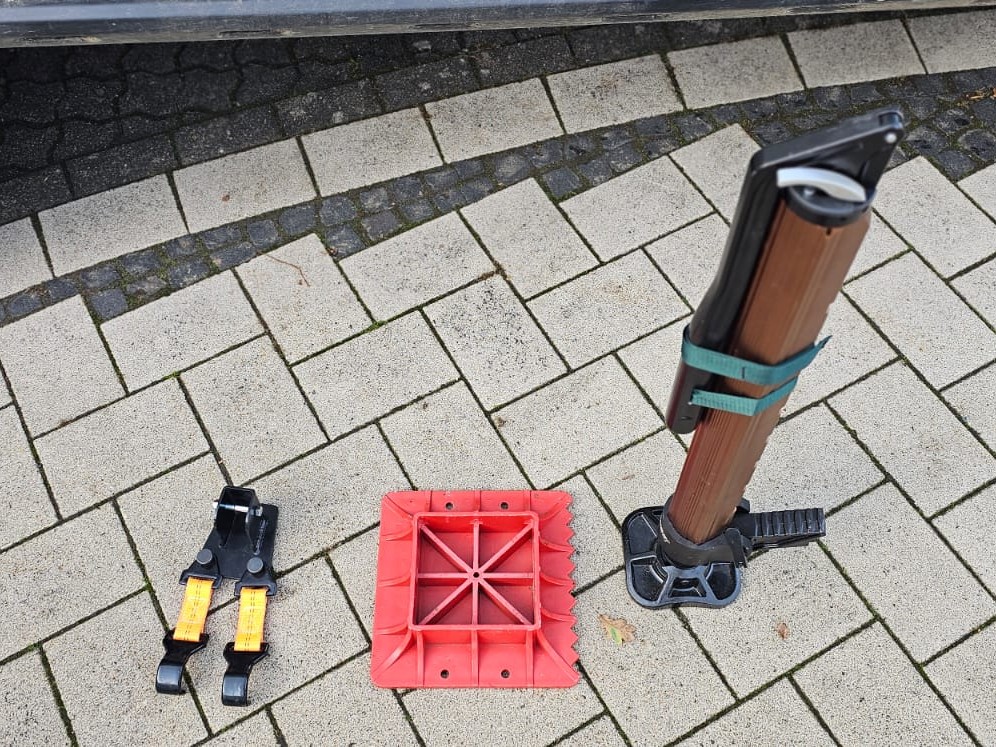
Protection
Protective bags always make sense when the jack comes into contact with sand, dust, mud and the like. And you know, sand creeps into the vehicle and into every crack. For the High-Lift off-road jacks there are, for example, protective bags you can pack the jack into completely. That’s a good thing when the jack is carried inside the vehicle and you don’t want the mud in the car after use. As an alternative there are, for this form of jack, protective covers that only protect the carriage mechanism, for when the jack is carried outside.
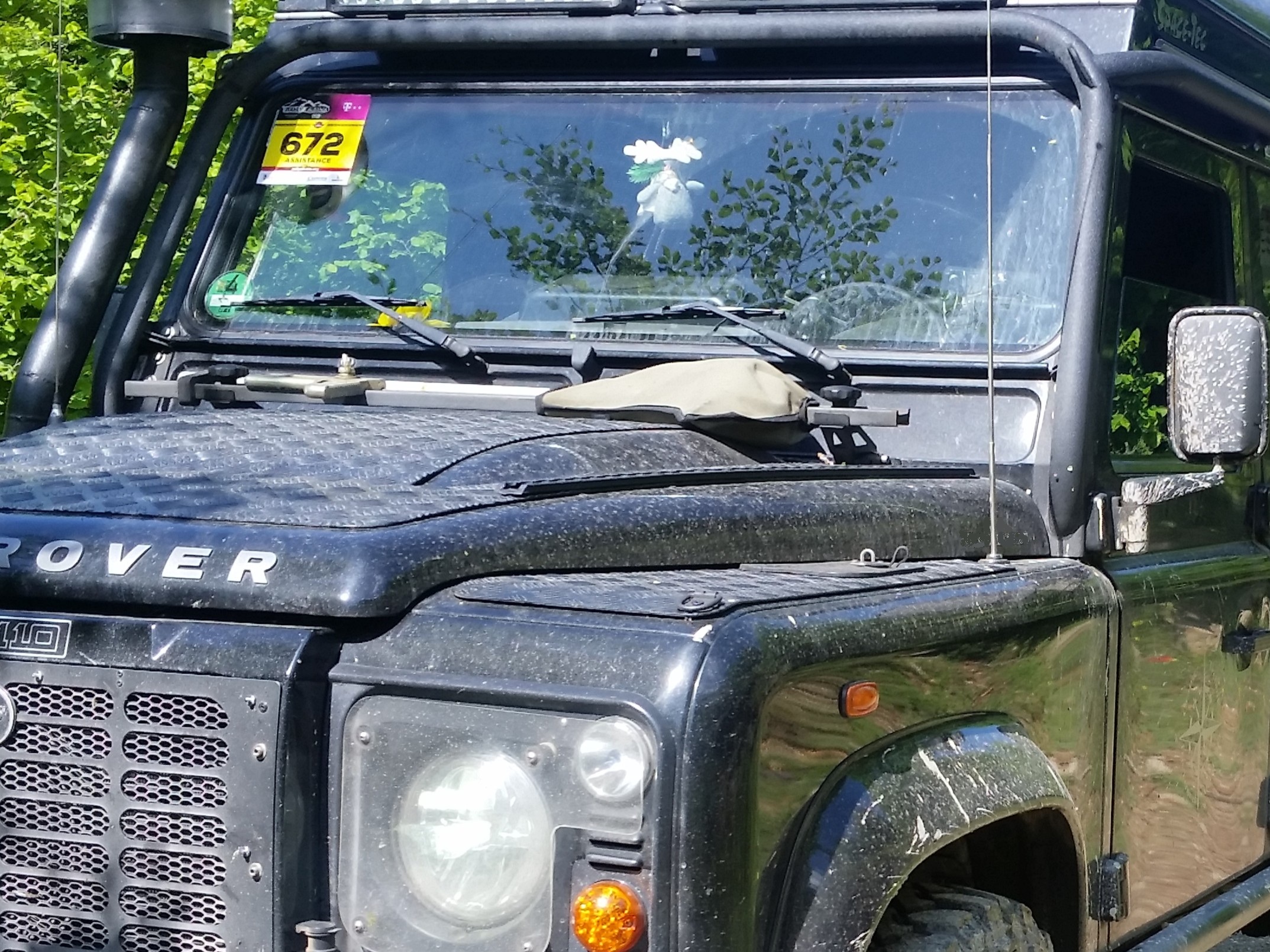
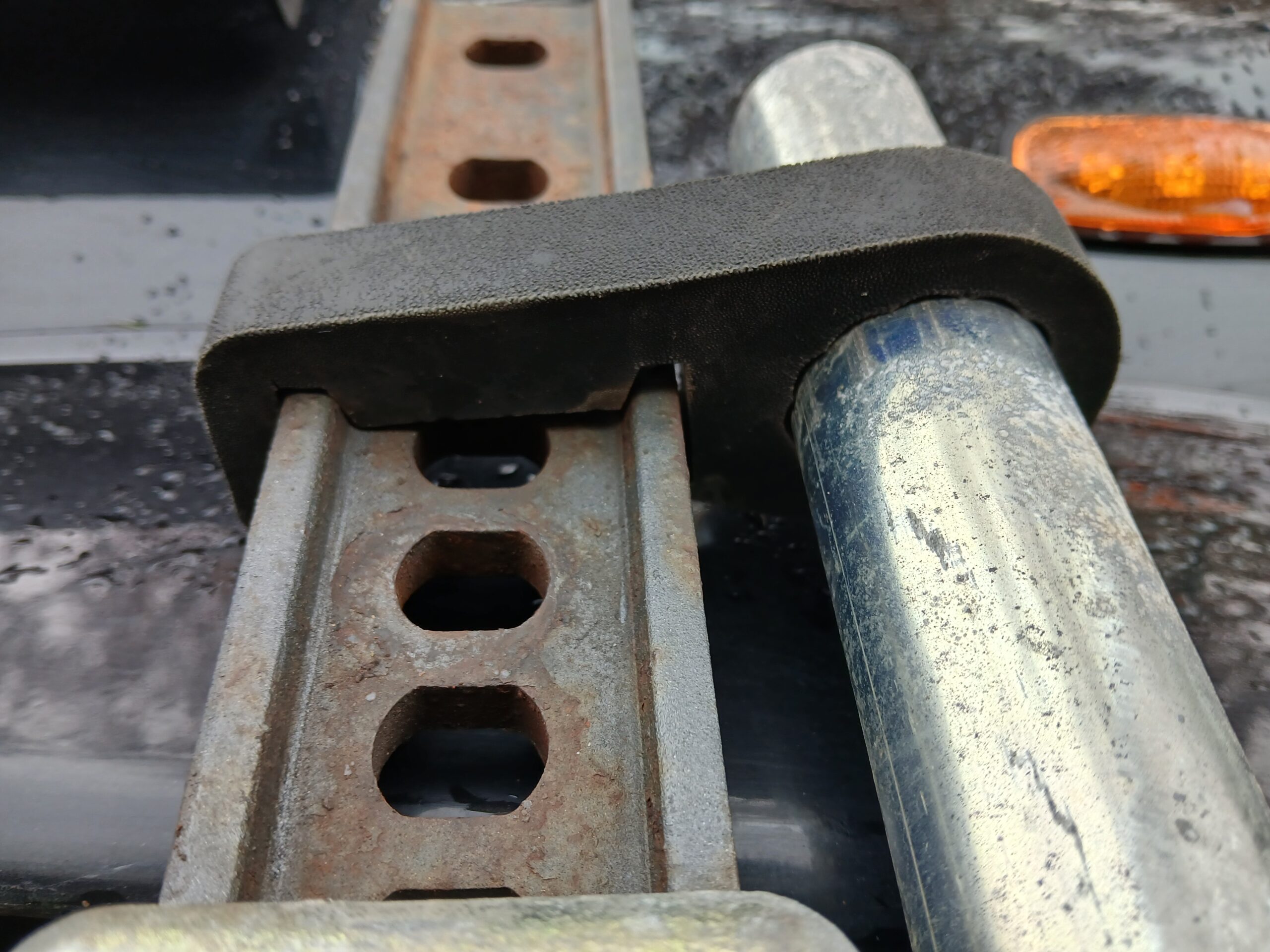
What’s recommended for users of a High-Lift jack is a transport lock for the lever. Some High-Lift jacks already have a metal clip to clip the lever to the carriage. But the rubber lock has a further advantage. It prevents the lever swinging out by accident, and it can also stop annoying rattling.
Vehicle saddles
For safe handling, the jack should always have a good saddle on the vehicle. With the hydraulic bottle jacks you’ll find various saddles, like these rubber saddles. With the off-road jacks there’s an even bigger choice. These range from vehicle adapters like the adapter for the classic Defender. With that, using an attachment with a round bar, the jack can be fixed in openings on the front of the chassis, on the rear crossmember or, with suitable rock sliders, on the side.
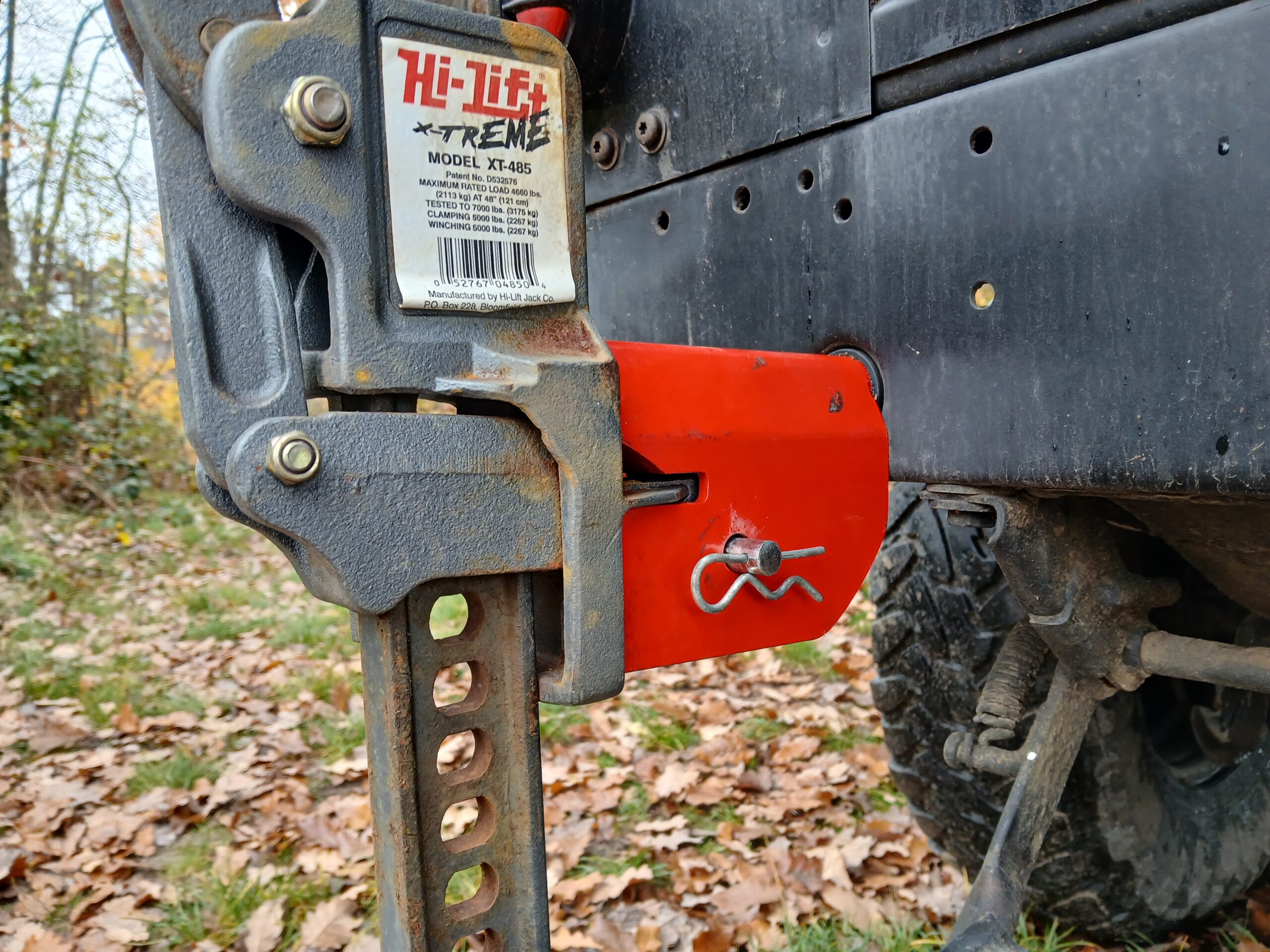
There are also various bumper adapters, a special adapter for the ARB bumper, wheel adapters and much more.
Recovery accessories for off-road jacks
As mentioned, such an off-road jack can be extended further. With a High-Lift in combination with shackles and a recovery strap, or a separately available chain or recovery sets, you can in principle winch short distances. How that can work, Michael Scheler has already explained in detail in this article here on Matsch&Piste.
Transport
Now the jack has to be transported somehow. For the hydraulic bottle jacks or scissor jacks, usually included in the original on-board toolkit, your vehicle probably already has a mount. Make sure the jack is stowed securely. For the off-road jacks there’s a wealth of mounts. These are often meant for the outside, like these bonnet mounts for the Defender or universal tube mounts to maybe build something yourself. More on storage now.
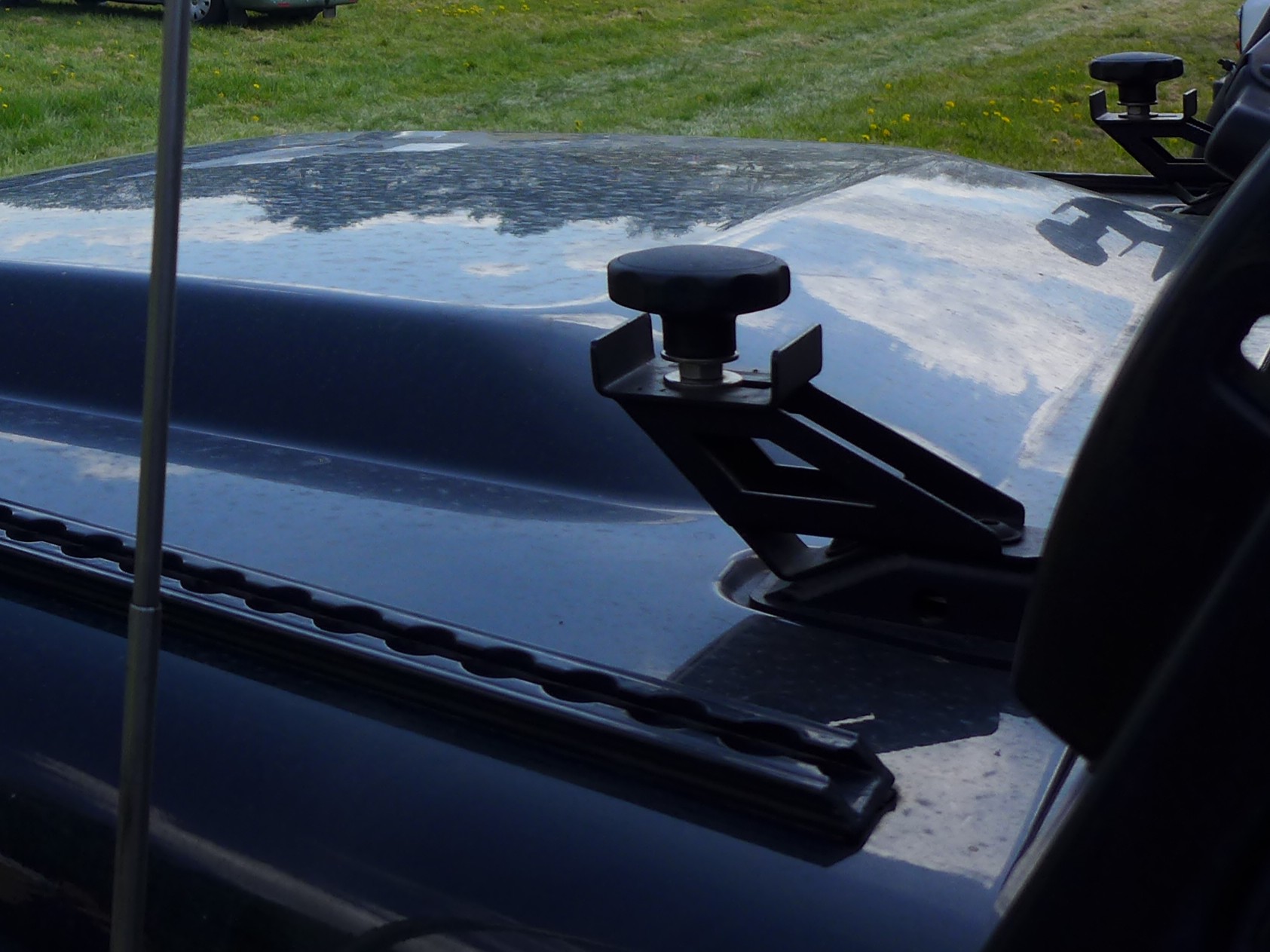
Storing the jack
Off-road jacks in particular, if carried on the outside of the vehicle, look the expedition part of course, like shovels and other kit. But here they’re exposed to the elements, and UV radiation can cause damage to your kit. And the kit, when it comes to be used, is at least dirty, if not stiff or even unusable. So it’s better to stow such things inside or to protect them accordingly.
Practical tip: If you mount something outside, go for simple solutions. Complicated locking mechanisms can fail under the weather and usually can’t be repaired on the road with on-board means.
It’s important that kit like the jack is easy to reach, and that you stow, lash or bolt everything down securely. Experience shows that anything not properly stowed either makes itself known by rattling or even, during off-road driving or in an accident, holds an enormous risk of injury or even death. You should also weigh up anything that goes on the roof rack with an eye on roof load, vehicle height, centre of gravity and so ultimately the handling and driving safety, and consider whether it makes sense. Heavy kit like off-road jacks in particular should not be carried on the roof, but better low down for a good centre of gravity. If you want to learn more about load securing, have a look at our article series on it.
Servicing and care
Check your kit carefully and regularly, or before and after every tour, so it’s always ready to use. That includes a thorough clean and care. If something is faulty, fix the damage or have it fixed promptly. Faults can have serious consequences with more than just tools. Moving parts should, where it makes sense and the maker doesn’t specify otherwise, be greased for good movement. Here, where possible, take care to use oils or greases that don’t attract dirt. If you want to learn more about prep and follow-up, read our article on the vehicle check on it.
Handling the jack safely
Last of all we want to come back to the topic of safety. You know workplace safety from the job, but measures to protect health matter in private life too, and so in our hobbies. Wearing gloves and sturdy footwear when handling the jack is part of that.
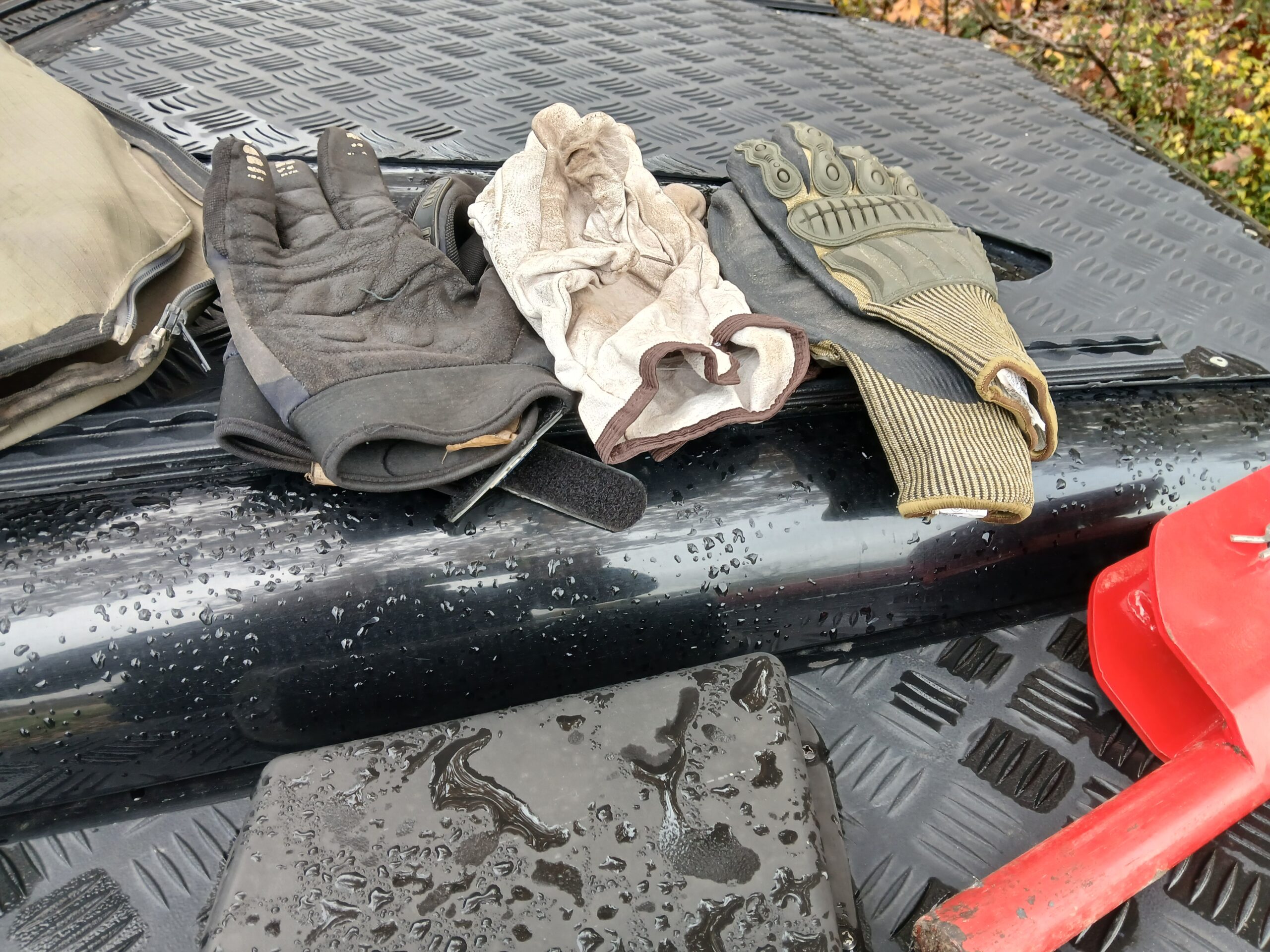
Secure danger spots well before you undertake repairs, and never put yourself in danger in breakdown and recovery situations. Watch for a secure footing of the vehicle and the jack, and secure the vehicle against rolling away. For that you should get really familiar with the drivetrain of your vehicle. Are there open differentials, for example, that can mean the handbrake has no effect after lifting a wheel or an axle?
Never get under rising, lowering or suspended loads, but secure them first, by building underneath or with extra supports using suitable materials. And no one should be in the vehicle being lifted, not even the travelling pet. For one, uncontrolled movements can lead to slipping on the jack, or a slip or tip of the vehicle can become a danger to the people or the animal itself.
Practical tip: Get familiar with your jack beforehand, and at a breakdown or when the vehicle is stuck, first get an overview of the situation and then decide what to do, or briefly think before each individual task about what can happen and remove the risks you’ve identified. Don’t get flustered if something doesn’t work first time. More force isn’t always helpful, not for you and not for your kit and your vehicle.
We’ve already looked at these important topics in great detail, and you can read numerous tips on them in our article on safety for the hobby spanner.
Verdict on the off-road jack
You can see that the choice of jack depends heavily on your tour and use profile. As a minimum, there should be an easy-to-use hydraulic bottle jack with a sufficient or extra base plate for a secure footing in the vehicle, so you can help yourself with a puncture or other faults that need a safe lift of the vehicle. Off-road jacks like a High-Lift or hydraulic jack, plus lifting bags or balloon jacks, can be extra help especially in recovery situations.
Whichever jack you choose, in any case make sure when buying jacks and accessories that you buy good-quality products that suit your use case and the weight or size of your vehicle. In case of doubt your vehicle stands on it, and it depends on it whether the vehicle can be lifted or recovered safely and without damage.
© Photos: Björn Eldracher, unless otherwise stated with the images