



Artificial intelligence is on everyone’s lips. And more and more these days we hear and read that more and more people use AI in overlanding too. But what is it actually and how can we use it for our hobby and usefully combine artificial intelligence and overlanding? Reason enough to look at it a bit more closely.
Artificial intelligence, AI for short, or KI in German. It’s a discipline of information technology where machines are taught to solve all sorts of tasks the way a human would.
To start, a bit of background to put it in context
To put this in practical terms, let’s look at something each of you uses almost daily. You’ve surely noticed the CAPTCHA method in forums or online shops. It’s meant to check whether a human or a machine is sitting at the computer. You then pick, for example, from a selection of images the ones with a certain feature, e.g. all images with trains. This is very easy for a human, at least tricky to, at first, impossible for a computer.
CAPTCHA stands for “Completely Automated Public Turing test to tell Computers and Humans Apart”. So it’s a fully automated, public Turing test to tell computers and humans apart. But what is a Turing test? This kind of test goes back to Alan Turing. As far back as 1950 he developed a method to find out whether a computer could have a human-like ability to think, and he already tried to tell human and computer apart when solving tasks.

Alan Turing
Alan Turing was the maths genius who worked at the top-secret British Bletchley Park on decrypting radio messages of the German forces during the Second World War. With the help of a kind of mechanical computer, he and his team managed to decrypt the messages encoded with the Enigma, considered extremely secure, faster. With the capture of U-110 under the command of Lieutenant Commander Fritz-Julius Lemp, the British then came into possession of the code books and one of the versions of the cipher machine.
So how can we picture this?
During such a Turing test, a human holds a conversation via keyboard and screen, but without hearing or seeing them, with two conversation partners unknown to them. One of them is a computer, the other a human. The computer has then passed the test if the person holding the conversation can’t say, by its end, which of the two is the human and which the computer. The latter is then credited with the same intelligence as the human.
Back to the CAPTCHA test. The information can also be used to feed an AI, which then, given enough data, is at some point able to tell, for example, trains from other means of transport and so can also successfully solve, or get around, a CAPTCHA test.
So we make the computer smart. And how can we use that as overlanders now?
Where can artificial intelligence and overlanding be usefully combined
We asked ourselves in which area artificial intelligence and overlanding already make a good fit, where AI is already used and where it could be of use in future.
The first thing many will think of is probably the AI-generated images or videos of nicely staged travel vehicles. Well, a nice enough idea, sometimes lovely to look at too, but the use is probably very limited. Thought further, though, this would be something interesting for vehicle development or DIY projects too, simply to generate ideas and see in advance how this or that could look. Let’s look at more examples.
Trip planning with artificial intelligence
How about research ahead of trips, route planning, discovering nice destinations, researching rules and the like? Well, AWo and I tried it out and it’s astonishing how quickly, without your own research, a travel plan with worthwhile destinations can be put together with AI. And the quality of the information is sometimes even really good. This is surely an area where AI can be usefully and well applied. Applications like the chatbot ChatGPT, for example, can help with route planning and suggest worthwhile destinations, give country-specific tips, name sights and much more. That can simply ease and speed up your own research. But is that really so? More on that later.

If the traveller now wants to know something about culture, geography, history, wildlife and plants and other country specifics, AI can support well here too. Instead of ploughing through pages of guidebooks and encyclopaedias or trawling through other people’s reports, just ask the AI. Here too the AI is of course only as good as the underlying information. But that’s exactly the difficulty we have with a guidebook or travel report too. There we can only read what the author wrote, after all.
Trip planning often involves getting to grips with entry rules and documents
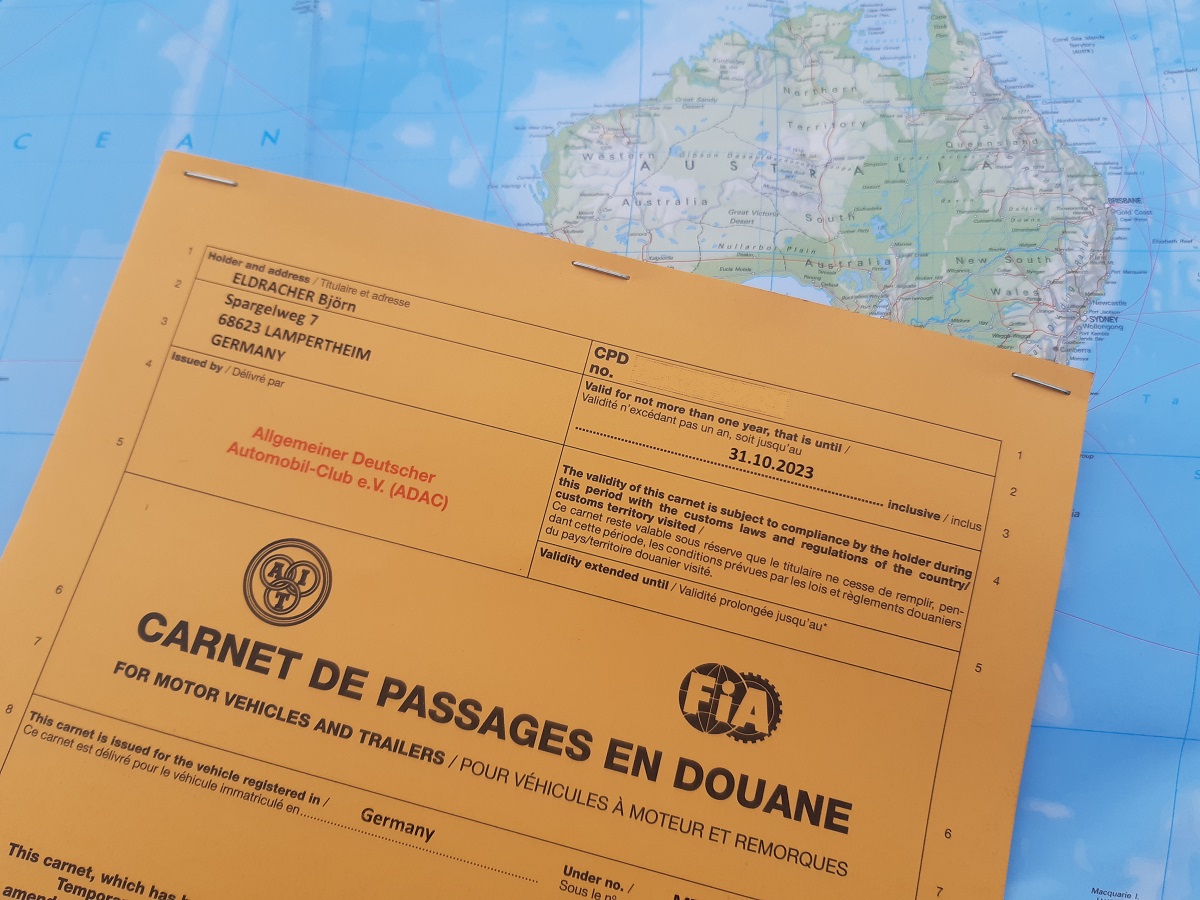
We did the test and asked ChatGPT how a Carnet de Passages works and where we need it. The information it spat out basically helps, but isn’t as thorough as the author feels the traveller should have it. Our article here on Matsch&Piste on the Carnet de Passages, by the way, gives a lot more at a glance. With other documents it’s similar. It’s much the same with entry rules, where particulars or temporary restrictions, which some countries simply have, aren’t necessarily given. Here your own research is needed after all.
Vehicle builds and DIY projects
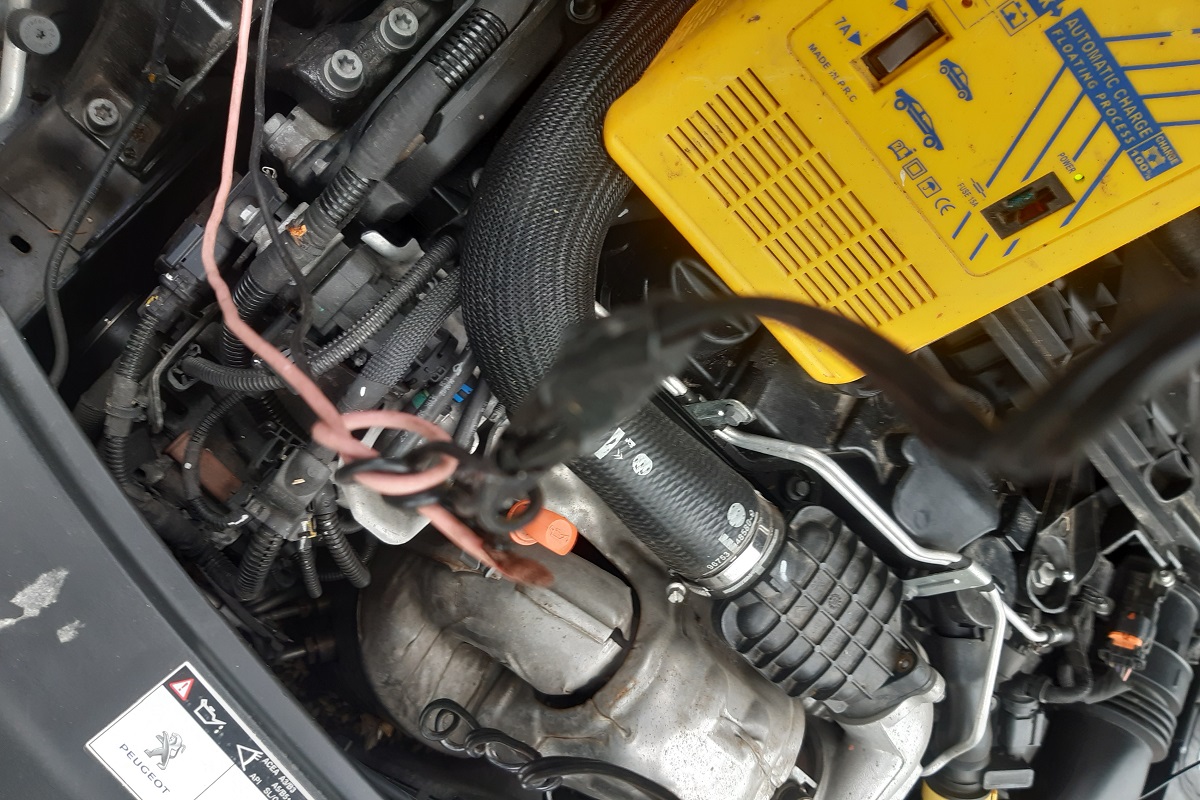
In the area of vehicle builds, some now turn to AI too, to find out how various things are repaired or installed. Why not? But can we really rely on the information? Just as we can already see many things in numerous blog posts, YouTube videos and so on, especially in the area of electrics, that are surely not done properly, the AI probably brings a lot of that to light in compressed form. And here too the user, who doesn’t know the right solution after all, can only proceed with caution. As the author of this article I have to admit: there I’m rather “old school”, I’d rather ask people I know and trust and build on their professional expertise.
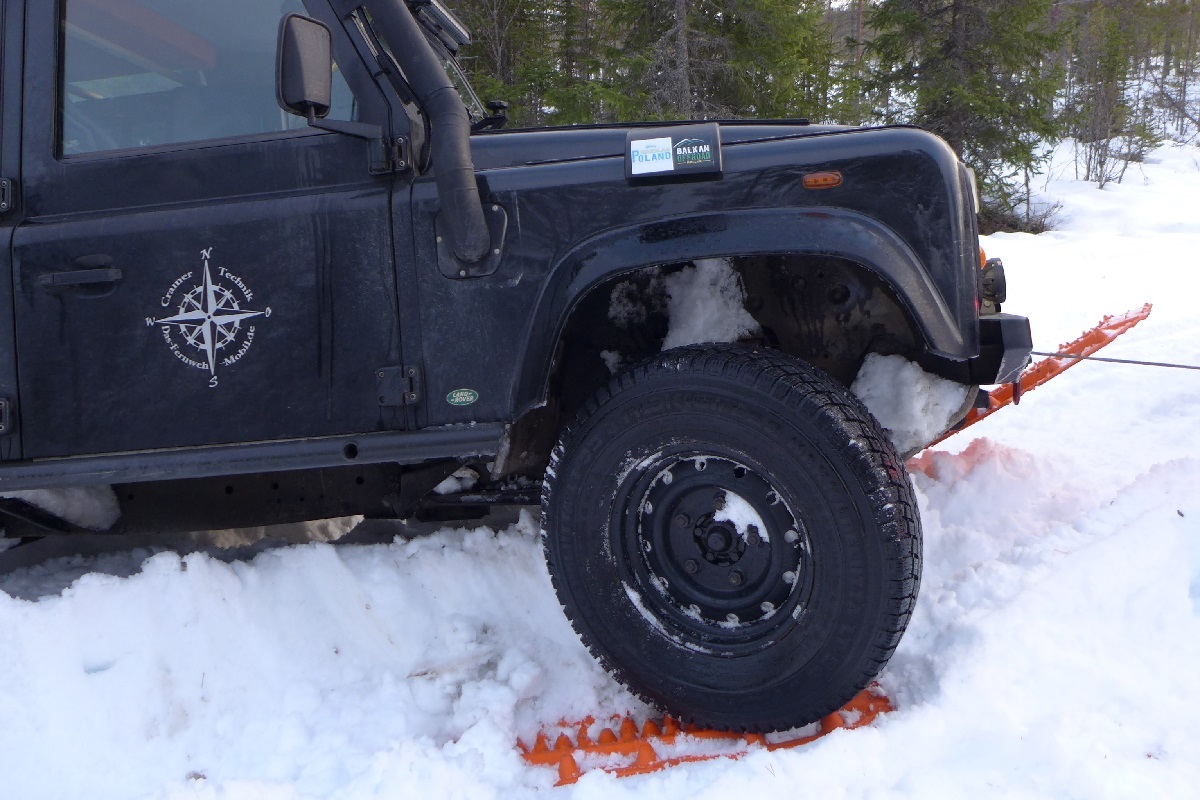
With kit advice, though, AI can play its strengths again, a good way to access as much information as possible and get to know various products. The user of course has to form an opinion themselves here too. But given the wealth of kit, AI can help beginners in particular get a good overview. Just ask a chatbot like ChatGPT or Google Gemini for an overview of recovery boards. You’ll probably be amazed how thorough the overview of the various products, including their pros and cons, provided in seconds is.
How does a chatbot like ChatGPT actually work?
ChatGPT is an abbreviation and stands for chat and “generative pre-trained transformer”. What’s behind it? Well, with this chatbot from the software company OpenAI, or those of other providers like Google Gemini, the user can communicate much like with a human. The basis is a language model trained with a large number of documents. No programming language is needed, the questions or the conversation can be held in completely normal sentences, just like in conversation with humans.
AI-based driver assistance systems
Artificial intelligence is making its way even into the tech of our vehicles in the area of driver assistance systems, for example to foresee dangerous situations.
We humans who’ve driven for a long time have a lot of experience in this area. Every second we register situations in traffic and draw our conclusions and measures from them. Even so, accidents keep happening. And accidents don’t just happen, they’re caused. So something went wrong between registering a situation and acting or not acting. AI-based driver assistance systems can also register situations and then help in driving the vehicle, for example make a steering correction or step in with braking.
Here, for example, the images of the front camera can be evaluated and individual objects told apart, and measures derived and triggered. So the emergency brake assistant, for example, should not step in if the system recognises a vehicle ahead at the same speed, but very much so if the object registered is a pedestrian who suddenly steps onto the road.
So in the end we’re back at the Turing test. The systems have to be fed or trained for it. So they get ever more accurate, even if not yet error-free. The AI too can possibly interpret the wealth of data wrongly, or there could even be a hacker attack from outside. That these systems don’t always work optimally yet is known to anyone who drives modern vehicles often. Even so, it’s especially helpful at this point and can, used correctly, contribute to safety in traffic.
Further possible uses on the road
Often we’re in countries where we don’t, or don’t sufficiently, speak the language. Gone are the days when we carried little yellow dictionaries and leafed through them eagerly on the road. Today almost everyone has a smartphone with them and uses various translation programs and apps. An AI-supported translation tool is especially good at capturing a whole text and turning it into the local language or the other way round. The results are really good by now. So extensive texts can be translated, even photographed signs or the menu. These are really helpful functions for the road. The more thorough the AI’s language model, the better the results. You don’t even have to be online any more for it, many already offer offline translation, e.g. Google Translate.
On the last evening of the trip you have a few ingredients left over and don’t quite know what to do with them? Ask a chatbot what you can cook with them.
ChatGPT or Google Gemini, by the way, also deliver lightning-fast answers to first-aid questions. Is that sensible? Maybe, depending on the situation. But there are things, and first-aid knowledge is among them, that you should master and refresh regularly anyway, so you can apply them safely in practice in an emergency too. A question on stopping a bleed was answered fully and by the book. But when haste is needed, you should already have mastered all the necessary moves. For research on non-life-threatening things it can perhaps be helpful.

We took a closer look at various AI
ChatGPT is, as explained before, a chatbot you can communicate with and question as a user, much like with a human, e.g. via text messages. ChatGPT was already presented in 2022 by the US software house OpenAI. The basis is an extensive language model that was trained. ChatGPT can be used in a browser version or as an app.
Google Gemini is the AI from the well-known internet company Google. It’s, like ChatGPT, a chatbot. You can also reach Google Gemini via a browser version or Android app on various Samsung devices and the Pixel smartphones. Gemini can be used across various apps, so a photo or video can be analysed directly from the gallery, for example. There’s a Circle to Search function too, and much more besides.
The Circle to Search function should be interesting for off-road travellers, to usefully combine artificial intelligence and overlanding. With it you can simply mark an object on the tablet or smartphone, that can be a bit of kit in a photo for example, the Galaxy AI function then starts a web search and you get information on this product. The possibilities are extensive and keep growing.
To test this AI and find out how artificial intelligence and overlanding can be combined as usefully as possible, we came up with various test scenarios. You’ll find our experiences, results and practical tips in further articles on trip planning with AI, coming up soon here on Matsch & Piste. Next Tuesday it’s about ChatGPT from OpenAI and the week after about Google Gemini.
- To the ChatGPT article
- To the Google Gemini article
- To the Samsung AI article
Verdict on artificial intelligence and overlanding
Here tradition and modernity meet. It’s like the age-old campfire discussion of whether an old vehicle is better suited to travel than a newer one, all discussions almost as old as travel itself. One person is just more into tech, the other goes for proven approaches. What’s certain, though: these technologies will arrive.
And in trip planning in particular, tips and current experiences from fellow travellers you’re friends with are often more helpful than what we learn online or in guidebooks, and so in the end from the AI too. With these own bits of research and conversations we often also get valuable extra information we maybe hadn’t even thought of before, and that the AI consequently wouldn’t ask about. And what’s nicer for trip preparation than swapping plans at the campfire ahead of a trip or browsing travel reports on long winter evenings?
But here and there the AI can at least already usefully support us in our hobby too and present a lot of important information in a very short time. The two authors still have the feeling, though, of having to check the AI’s result, which means double the work. Maybe we’ll never fully switch to AI and leave that to the younger ones.
What experiences have you had with artificial intelligence and overlanding? Do you already use something from the area? What are your experiences with it? Write to us, we look forward to your comments and reports on it.
© Photos (except the title image): Björn Eldracher