

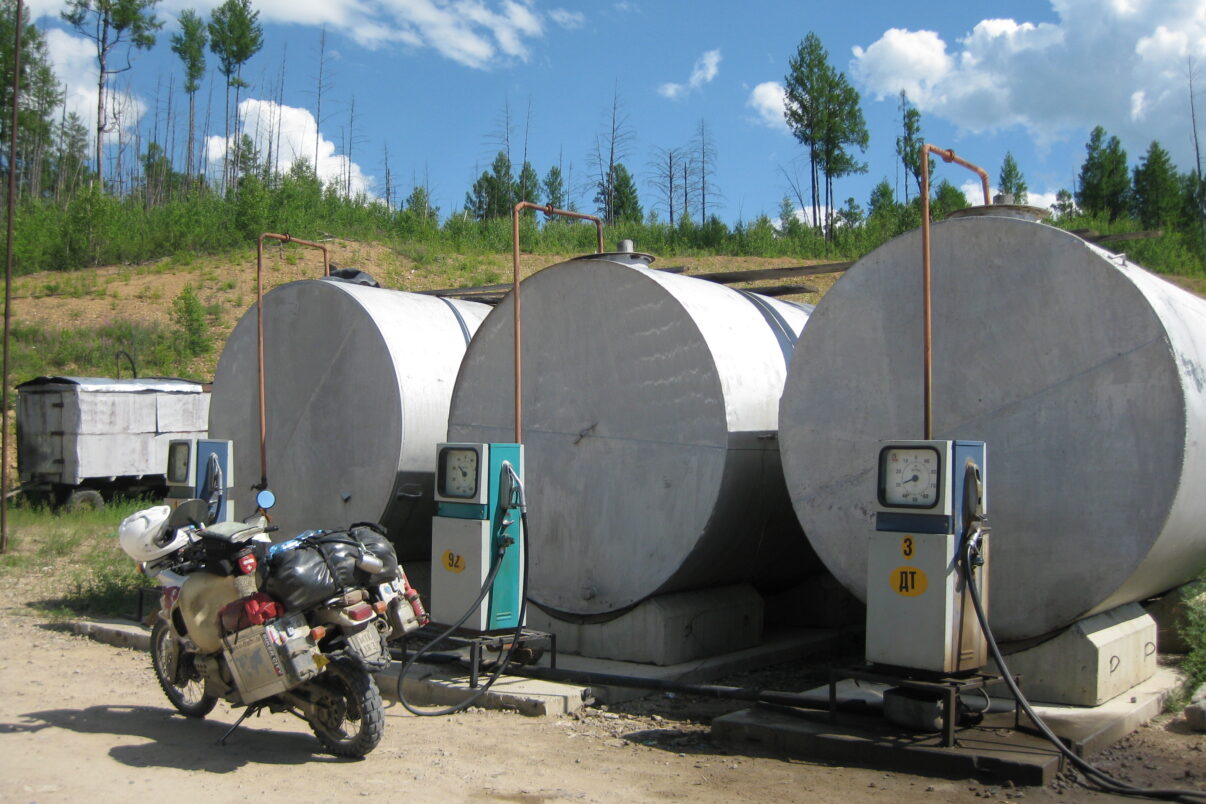

Diesel fuel – named after the inventor of the diesel engine, Rudolf Diesel – comes today in a great many different forms, and through forums and the media, information about the new and old fuel types keeps drifting around.
In the last few weeks the subject has become more intense, since HVO100 may now also be sold to anyone at the pumps in Germany. HVO-what? Right, we’ve taken a closer look at the subject for you.
Diesel fuel is standardised
To understand what it’s even about, we should first deal with the various terms and standards. Conventional fossil diesel fuel is standardised. In Europe, for example, by DIN EN590. Or in the USA by ASTM D975, or GOST R52368 in Russia. Some of you have surely seen that on a pump at some point.
Diesel is a mixture of kerosene, various distillates and admixtures, e.g. additives. In Germany we have two diesel fuels that meet DIN EN590, standard diesel and “premium diesel” with various admixtures, which we’ll come to later. The “biodiesel content” that may also still be present should be mentioned here too. That will also be a topic in what follows.
The DIN standard EN590 in detail
DIN EN590 regulates all matters of the diesel fuel at the pumps here. This ensures that safe function is guaranteed across all engines. Engines have advanced considerably in the last 20 years, especially with regard to environmental protection technology and emissions avoidance. This concerns combustion chamber shapes, improved injection nozzles and their shapes, exhaust gas recirculation and exhaust gas cleaning. On top of that come new materials and coatings used in the engine and in the exhaust tract.
All of that also has to be taken into account in fuel development. One of the best-known steps is surely the reduction of the sulphur content. To this day, old views about the lubricity of diesel then and now persist stubbornly here in particular. More on that later.
Let’s go into the EN590 in detail first. It was introduced in the course of the European emissions standards as the first version in 1993 and replaced the DIN 51628 valid until then. Over the years and with the ever stricter emissions regulations, the EN590 too was repeatedly adapted.
It defines the ingredients and required properties. In the descriptions of the standard you’ll find the effects of the individual parameters. The standard caps these within limits to guarantee safe operation in all operating states and for all injection systems. So if you read that something can have a negative effect, that doesn’t mean this effect actually occurs. That’s exactly what the standard is there for, so that precisely that doesn’t happen.
Cetane number
The cetane number expresses the readiness to ignite. The extremely ignition-ready n-hexadecane (= cetane) is assigned the value 100. By contrast, methylnaphthalene is assigned 0, since it’s very sluggish in terms of ignition.
To determine the cetane number, a standardised single-cylinder test engine is used. In it the compression can be varied. For the test fuel, the compression ratio is now varied until a specified ignition delay is reached. Now n-hexadecane and methylnaphthalene are mixed until the same ignition delay occurs. With that the mixing ratio and the cetane number are determined.
The minimum cetane number of 51 required in the EN590 means nothing other than that the diesel has to show the same ignition delay as 51% n-hexadecane and 49% methylnaphthalene mixed.
Cetane index
The paraffinic components in the diesel raise the cetane number, the added aromatics reduce it. So that the cetane number isn’t set by an excess of ignition improvers, the cetane index was introduced. Diesel that is brought to the cetane number with ignition improvers behaves differently from diesel that naturally already has a high cetane number. That depends on the type of oil. The cetane index limits the addition of ignition improvers. The cetane index is a calculated figure that results from the density and the boiling curve of the diesel.
Boiling range / distillation
The boiling range, called distillation in the standard, is the temperature range at which the fuel evaporates. This range depends on the composition of the diesel. If the range is on the low side, the diesel is well suited to the cold, but the cetane number and the lubricating properties suffer from it. A high boiling range, on the other hand, promotes soot formation and the coking of the injection nozzles. That’s because of components in the diesel that are only difficult to vaporise and therefore remain in the combustion chamber for a long time.
The standard here requires a volume fraction of less than 65% from 250 degrees Celsius and at least 85% from 350°C. At 360°C, 95% have to have evaporated.
Flash point
The flash point defines the temperature at which a substance gives off so much vapour that an ignition source can ignite this vapour. For safety reasons, the diesel should be able to be assigned to hazard class AIII. That requires a flash point of at least 55°C (up to 100°C). Even the smallest amounts of petrol in the diesel lower its flash point to room temperature!
Fuel density
The density describes the energy content in relation to the volume. The denser the diesel is, the more energy it carries in itself at the same volume. That’s important for the metering of the injection quantities. If the density fluctuates strongly, the combustion mixture shifts and engine power and soot formation fluctuate likewise. Therefore a narrow range is defined within which the density has to lie.
It’s set in DIN EN590 at 825 to 840 kg per cubic metre at 15°C. That’s the only point where HVO100 diesel doesn’t comply with DIN EN590. We’ll go into that in more detail shortly.
Viscosity
You know viscosity from oil. It indicates how viscous a substance is, which has an effect on the pumpability and quantity per time. The viscosity has a direct effect on leakage losses during injection. Those are residual drops at the injection nozzles that have a considerable influence on the combustion, exhaust values and soot formation. The spray pattern changes likewise, the droplets are less fine when the viscosity is high.
Diesel types blended with FAME – fatty acid methyl esters, that is the well-known bio component in diesel – also show, with rising FAME content, a rising viscosity. If the injection system isn’t pressure-controlled (e.g. unit-injector systems), at high combustion temperatures there’s a rise in the peak pressure in the cylinder.
Lubricity
Diesel pumps in the passenger-car sector are now lubricated only by the fuel. In the past, and today with large and stationary engines, that can still be different. There the injection pump is lubricated via the engine oil circuit or entirely externally. The nowadays ultra-fine nozzles, together with the high pressures, also benefit from good lubricating properties that keep wear low. To maintain lubricity after the elimination of the sulphur, additives are mixed into the diesel, and FAME is one of them.
There’s a special test for this, the HFRR test (High Frequency Reciprocating Rig), in which a firmly clamped steel ball is rubbed back and forth at high frequency and under pressure on a steel pan filled with diesel. The flattening in micrometres (µm) of the ball is the measure of the lubricity WSD (Wear Scar Diameter). The flattening must not be more than 460 µm.
Sulphur content
Officially, diesel is a sulphur-free fuel. In fact, however, up to 10 mg per kg of diesel are permitted. This limit value has applied since 2009. The sulphur is naturally bound in the crude oil in varying proportions and is removed by an elaborate process with pressure and water during distillation.
Too high a sulphur content, which you may well still encounter in other countries, damages catalytic converters and systems for NOx after-treatment. A high sulphur content also leads to the increased formation of aggressive acids in the engine, which have to be bound by the engine oil.
Coking tendency
Coking, the formation of permanent combustion residues, is a problem at the injection nozzles that should be avoided. The components responsible for this arise primarily in the fuel during manufacture at the end of boiling.
The maximum is 0.3% of 10% of the distillation residue, measured before the addition of ignition improvers.
Contamination
This summarises all solids, especially the hard silicates that occur in dust. With the very tight clearances and the fine nozzles that are possible today, these react very sensitively to increased amounts. Typical values for fuels in Europe are at 100,000 particles in 100 ml of diesel. Modern diesel filters have to hold back the particles of 6 to 7 µm in particular.
Water
In one kilogram of diesel, up to 100 grams of water can dissolve. The exact amount is determined by the precise composition of the diesel and its temperature. DIN EN590 permits up to 200 grams per kilogram.
The problem here, however, is the precise recording. Samples usually show significantly less water than 200 grams. That doesn’t mean the diesel isn’t contaminated with water after all. The water can lie undissolved, settled at the tank bottom or on the walls. This undissolved water poses the greatest threat to the injection system.
FAME content
FAME stands for fatty acid methyl esters and is the already known bio component in diesel. It may currently be up to 7% in DIN EN590.
While FAME represents an excellent lubricating substitute for the sulphur, it harbours another problem. The viscosity is higher than that of the diesel oil. That limits the possible FAME content, especially for quantity-controlled and non-pressure-controlled injection systems, like the unit-injector system. The peak pressure is significantly increased at high temperatures and the spray pattern changes, the droplets become bigger. That has consequences for the emissions and the power.
The FAME upper limit doesn’t, however, affect other hydrocarbons that are blended in as bio components, such as HVO. These may be blended in in any proportions, as long as the end product meets all the requirements of the standard. More on FAME in what follows.
DIN EN590 as of 2022
| Property | Value | Unit |
|---|---|---|
| Cetane number | >=51 | |
| Cetane index | >=46 | |
| Boiling range up to 250°C up to 350°C 95% point |
. 65 min. 85 max. 360 |
. % (V/V) % (V/V) °C |
| Flash point | >55 | °C |
| Density | 820 – 845 | kg/m3 |
| Viscosity | 2.0 – 4.5 | mm2/s |
| Lubricity | max. 460 | µm |
| Sulphur content | max. 10 | mg/kg |
| Ash content | max. 0.01 | % (m/m) |
| Coking tendency | max. 0.3 | % (m/m) |
| Water content | 200 | mg/kg |
| FAME content | 7 | % (V/V) |
Biodiesel FAME according to DIN EN14214
The biodiesel FAME itself is also standardised. FAME, as already said, stands for Fatty Acid Methyl Esters. And exactly that already hints at the content, or rather the manner of manufacture. It’s a so-called fatty acid methyl ester. In the chemicals industry, FAME diesel is produced through a transesterification, a chemical reaction, of fats and oils with alcohols. Chemically speaking, we have here a completely different substance from conventional diesel according to DIN EN590.
The advantages over conventional diesel fuel lie in the reduction of emissions and the biological origin, or rather degradability. The extraction from components of renewable raw materials can of course also have a disadvantage; the extraction may compete with food production (soya, rape, palm, coconut oil, depending on the region). In addition, a high demand can lead to monocultures and forest clearances in the cultivating countries, which likewise has harmful effects on the environment.
FAME can occur in various blends. These range from a two-percent share (B2) to B100, that is 100% bio. A 7% admixture, that is B7, is the blend currently used in Germany and also other European countries that you get at the pump. It may also be that this diesel is sold under other names, namely depending on which source is the basis for the esterification, e.g. RME (rapeseed oil methyl ester) and SME (soya oil methyl ester).

For a large number of vehicles, or rather engines, manufacturers have granted approvals for diesel with FAME content. That there’s often no approval for older models is surely self-explanatory. Damage to rubber or plastic components such as seals and fuel hoses may possibly occur when using this fuel. But what’s the alternative, given that here we mostly only get B7 diesel at the petrol stations. Besides, hardly any examples of damage are known from practice, and if so, these are as a rule easy to remedy, e.g. by replacing a fuel hose or a seal with a replacement made from suitable materials.

Practical tip: Bear in mind here your accessories and retrofitted installations too. Because, for example, seals on the caps of jerry cans or lines from retrofit tanks could be affected here.
HVO100 diesel according to DIN EN15940
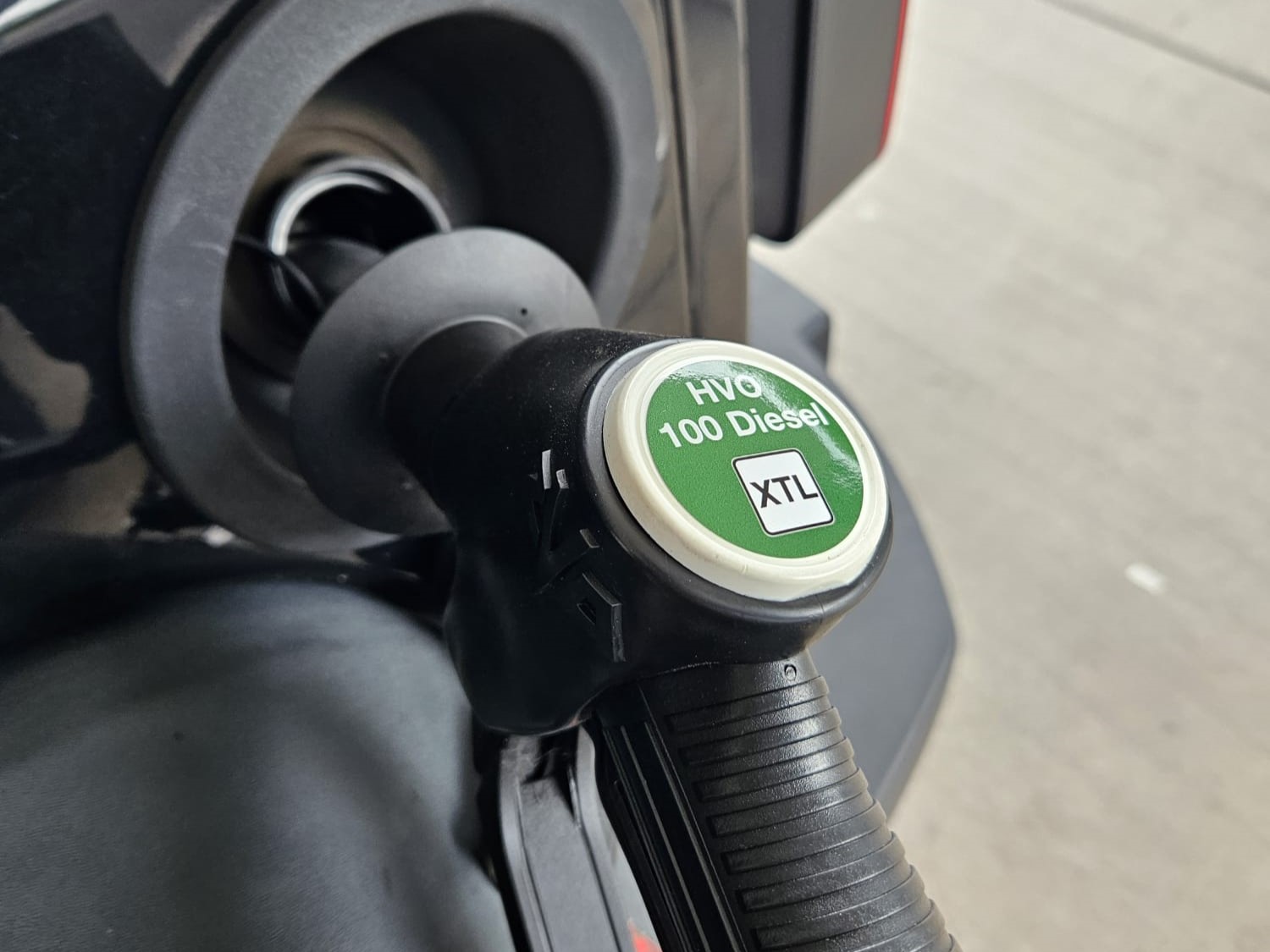
There we have it. Recently freely available at petrol stations in Germany too. HVO100 diesel. What is that? Well, HVO stands for Hydro Treated Vegetable Oil, or hydrogenated vegetable oil. HVO is made from waste oils and fats, such as industrial frying oil and fat and oil waste from the catering trade. This goo then of course still has to be filtered and processed in a so-called pyrolytic gasification process. The resulting gas is cleaned and goes through a synthesis process. The result is the finished diesel fuel. The 100 stands – similar to FAME – for 100% HVO diesel. The advantage is that with this manufacturing process the requirements on the base substances are considerably lower than with the well-known FAME biodiesel. But HVO100 must not be confused with the latter, because the chemical composition and production process are different.
HVO100 had previously been available to anyone in some European countries and partly in the USA, but in Germany the associated standard DIN EN15940 had long not been implemented and only diesel that meets DIN EN590 was allowed to be sold at petrol stations. The implementation of DIN EN15940 has now taken place and for a number of vehicles the manufacturers have already granted approvals. HVO100 is miscible with conventional diesel. So it’s conceivably simple in use. And so we’ll surely see HVO100 soon, as an admixture as in the so-called R33 diesel, and increasingly as pure HVO diesel at the pumps too. All the more so as, through increased environmental awareness, the demand for more sustainable fuels could rise.
HVO100 diesel meets almost all the requirements of the DIN EN590 described further above. It only shows a somewhat lower density, which is compensated by a higher cetane number. Nevertheless, a slightly increased consumption is to be expected.
Is palm oil processed into HVO100?
For the production of HVO100, various base materials come into question, as already explained. Again and again, ideas and opinions surface in internet forums that HVO100 isn’t sustainable because palm oil is processed into the new fuel. We of course looked into the matter. A spokesperson for the BMDV (Federal Ministry for Digital and Transport) told us on enquiry:
“For the production of HVO, a large number of base materials basically come into consideration. These are always oil-containing and come from biogenic sources. The HVO currently available on the market is produced above all from used cooking oil and animal fats. According to the Federal Immission Control Act, palm oil as a base material for biofuels is excluded from being counted towards the greenhouse-gas reduction quota. To that extent there’s no incentive for the fuel manufacturers to produce HVO based on palm oil. If HVO is produced from sustainably certified waste and residual materials – as is predominantly the case at present – around 90% of greenhouse gases are saved compared with fossil diesel.”
R33 diesel according to DIN EN590
R33 diesel – also called Blue Diesel – is EN590-compliant and a mixture of 67% fossil diesel, 26% HVO and 7% FAME diesel. The R33 is therefore derived from the 33% share of regenerative, non-fossil diesel.
You’ve been able to obtain this fuel in Germany for a relatively long time at selected petrol stations, since it’s marketed as premium diesel and compliance with the EN590 standard is meant to ensure that it can be used in any diesel engine. R33 diesel is likewise meant to achieve a significant reduction of CO2 emissions.
Where you can fill up HVO100 and R33 diesel you can find out, for example, on this map.
Background information on the manufacturing processes of synthetic fuels
Synthetic fuels carry the designation XtL, that is X to Liquid. Behind that is nothing other than the description of the conversion process from a solid or gaseous energy carrier into a liquid energy carrier, ultimately the finished blend.
The whole thing is, by the way, nothing new and already in the 1920s the chemical industry in Germany obtained synthetic fuels, for example through coal liquefaction. The advantage is obvious – independence from the international crude oil market. And even today coal liquefaction has a high importance, for example in Asian countries. Such a synthetic fuel obtained from coal is also designated CtL, that is Coal to Liquid. Further abbreviations are GtL – that stands for the processing of gaseous energy carriers into synthetic fuels. BtL – that is biomass to liquid fuel. Or even PtL – Power to Liquid, a complex process that produces fuels by means of electrical energy, CO2 and water. The latter is still in research and trials.
The conversion process basically always follows a similar scheme:
First the original product is converted into a gas and then processed for further distribution. This intermediate product is further processed into more complex hydrocarbons and ultimately into the finished fuel.
While at the beginning of the development of synthetic fuels the focus was above all on self-sufficiency, today the advantages lie in the area of independence from fossil raw materials as well as lower emissions.
Further technical classification of the alternative diesel fuels
Sulphur content
The sulphur content of diesel fuel has, for environmental protection reasons, been lowered ever further in many regions of the world in recent years. You’ve surely seen a sticker “low” or “ultra low sulfur diesel” at pumps at some point. The lubricity of the fuel that drops with it, for the injection pump for example, has to be compensated elsewhere. That happens through the admixture of additives or FAME biodiesel. In countries where the sulphur content is still very high, this can lead to problems with the exhaust after-treatment systems, but that’s another subject.
Lubricity of biodiesel
Contrary to claims often voiced in forums that biodiesel has worse lubricity than conventional diesel, that is – as already mentioned – not the case. And exactly that makes itself felt positively when low-sulphur diesels are used, which is the case in many countries today. Regarding lubricity, one or another person often feels called to intervene to improve the lubricity, e.g. by adding two-stroke oil. That’s completely unnecessary. Basically it doesn’t matter how the lubricity comes about, because diesel according to DIN EN590 has to prove its lubricity again and again in a standardised process. We already published an article on this years ago, which you can read here if interested.
Until 1999 a maximum sulphur content of 500 mg/kg applied. In long-term measurements in the HFRR test, wear already occurred. To catch that, high-pressure additives were subsequently added to the diesel. Those are often polar organic substances that deposit on the metal and thus offer wear protection. These additives are not infrequently based to over 90% on vegetable oils, especially rape. The remaining ingredients mostly serve to improve the cetane value, which was lowered by the vegetable oil. What came into the diesel as an additive back then is today already added at the factory in the form of FAME.
If diesel already contains 1% FAME, a considerable improvement can be determined in the HFRR test. That’s why FAME diesels contain no lubricity improvers at all any more. Numerous freely accessible technical documents from universities, institutes and industry confirm the excellent properties of plant-based lubricants.
HFRR comes from Bosch
The history of the diesel injection pump is firmly linked with the Bosch company. As early as 1927 Bosch invented the inline injection pump, which managed without air compressors and could thus be built very small. With that the diesel engine made its way first into trucks and then also into cars.
In 1997 Bosch managed, after some millions of Deutschmarks had been put into research and development, to establish the HFRR test internationally as an ISO standard for the lubricity of diesel and to make it a standard. A year later the determined value of 460 µm made its way into the national diesel standard DIN EN590 and into the international standard ISO 12156-2.
To get a handle on the higher wear caused by the increased injection pressures of modern engines through unit-injector and common-rail systems, Bosch even recommended the admixture of 5% RME biofuel.
Ignition ability of the diesel
So that the engine runs well and without damage, the diesel fuel needs, as already explained, the right ignition ability. In Germany standard diesel has a cetane number of > 51 and with the premium diesel fuels significantly higher still. This is comparatively high by international comparison. Those of you who have travelled in North America know cetane numbers from 40 upwards. This can, depending on the engine, make a significant difference in starting and running behaviour. Because more modern direct-injection diesel engines with high and very high injection pressures need a very ignition-ready diesel, that is a high cetane number. Not for nothing are cetane boosters, for example, often available for purchase in North America in car accessories and at petrol stations. But beware, if you drive an old pre-chamber diesel, then with diesel of too high ignition ability it could come to too early an ignition and consequently to damage.
Advantages and disadvantages of the new fuel types
FAME
FAME diesel can act aggressively on seals and hoses, with which one or another person has surely already become acquainted. Likewise it’s not as stable at cold temperatures as a DIN EN590 diesel and can lead to problems with the fuel filter. The poor temperature stability leads in winter to premature clogging of the fuel filters. Therefore FAME diesel is as a rule only used as an admixture to keep the effects low.
FAME has polar properties. That makes it on the one hand a good lubricant, on the other it’s readily water-soluble. So FAME can itself absorb a lot of water, the saturation level is 1,500 mg/kg. As an admixture to the diesel it of course brings these properties with it and potentially increases the water content in the diesel. Studies from 2015 by the Federal Office for Information Security on diesel storage for emergency power generators have also shown that FAME isn’t long-term stable and forms water and acids when it decomposes. The water formed during decomposition, together with the oxygen, also promotes the formation of microorganisms, the well-known “diesel bug”. Undecomposed FAME, on the other hand, forms a food source for these organisms.
Problems with lubrication caused by the FAME bio components in the fuel stem from this instability. Everywhere that diesel is exposed to long standing times of several months or longer, for example in agriculture or with emergency power generators, this comes to light as a disadvantage of FAME. With the decomposition the lubricating properties are also lost.
That’s one reason why in many emergency power generators heating oil or a diesel/heating-oil mixture is used, which is also permitted for tax purposes. Heating oil, through the missing bio component, can be stored much longer. However, this is about storage times of months and years. The problems that occur will never occur with normally moving vehicles.
HVO100
The advantages of HVO100 lie, compared with vehicles run on conventional diesel, in the significantly lower emission of CO2 and hydrocarbons (HC). This because the CO2 emitted during combustion had previously been withdrawn from the environment through photosynthesis, for example by the plant that serves as the basis of the fuel, the plant fat. A further reason is the high cetane number, since this means fewer emissions, especially during cold start and in the lower load range, than with FAME or fossil diesel. Other emissions, such as the particulate emission, through missing aromatics and nitrogen oxides, are also meant to be reduced with it. The synthetic fuel is also odour-neutral.
And the HVO100 diesel can claim still further advantages for itself. It absorbs no water and no oxygen. The diesel bug feared during longer storage or standing times should thus be a thing of the past. It’s frost-safe down to -22°C. For the many stationary emergency power generators too, a not-to-be-neglected advantage.

By the way, although the HVO100 litre currently costs somewhat more than conventional diesel, the CO2 tax (and with it the share of VAT attributable to it) doesn’t apply for HVO diesel. Further reductions can’t be ruled out in future.
A disadvantage with HVO100 is the need for hydrogen for its manufacture, which, at least currently, is largely obtained through fossil energy carriers (natural gas/methane). The poor biological degradability conditioned by the oxidation stability, which on the other hand makes up the good storability. Compared with fossil diesel, about 1% to 2% more fuel volume is also needed to expect the same performance. That’s owing to the lower density. Provided the engine has been calibrated for it, this disadvantage doesn’t apply.
For whom are the new diesel fuels suitable and who should better keep their hands off them?
Conventional diesel, including that with a certain FAME content as well as R33 diesel, which are all regulated in DIN EN590, should be left out here. Because the standard precisely caps the limit values to guarantee operation for all diesel engines. To that extent we focus in what follows on the new HVO100 diesel, which, we recall, is regulated in the standard DIN EN15940.
In your travel vehicles you’ll surely find the most varied development stages of diesel engines. So, old pre-chamber diesel engines, unit-injector engines or common-rail engines for example. Besides other technical differences there are therefore the most varied injection pressures. While an old pre-chamber diesel engine perhaps shows an injection pressure of just over 100 bar, with unit-injector or common-rail engines we see pressures of partly well over 2,000 bar. The various systems each place quite different demands on the fuel. In the exhaust after-treatment present in more modern and modern vehicles too, demands on the diesel fuel arise.
The cleaner combustion should have a positive effect on exhaust after-treatment systems like the EGR or particulate filters, and can likewise reduce coking on injection valves or in the intake tract. Here, with conventional diesel, problems more frequently occur in operation, especially in short-distance traffic.
Many manufacturers have already granted approvals for HVO100 diesel for their current models
Among them numerous renowned manufacturers, also from the professional sector, e.g. of goods transport. On the website of the well-known fuel producer Neste, pioneering statements from vehicle manufacturers can also be found on this. Among other things, you’ll also find there an overview of the manufacturer approvals. Likewise numerous logistics companies have already converted their fleets to the new fuel. This to promote sustainability, more emission-free deliveries, as well as to play a pioneering role on the way there. Let’s imagine what it would mean if a haulier’s fleet failed because of the fuel, then it’s obvious that the use of HVO100 in these vehicles has to be harmless.

Neste goes even further and sees no concerns about filling up Neste HVO100 diesel even in older vehicles. There are now also field reports with older vehicles, which are consistently positive. The engines are said to run more smoothly, the responsiveness better. Both should be due, among other things, to the high cetane number. HVO100 diesel has a cetane number beyond 70, that is significantly higher than with conventional diesel. If you drive a very old pre-chamber diesel, then, as already mentioned, with too high an ignition ability of the fuel it could come to too early an ignition and consequently to damage.
Are the new fuels the salvation for the combustion engine?
HVO100 in particular is seen as an important building block on the way to CO2 reduction. With the high number of existing vehicles with combustion engines, HVO100 can bridge the time until other drive energies have replaced the combustion engines in sufficient numbers.
Surely this isn’t the sole solution to lower the CO2 footprint and emissions. But fuels that contribute to the reduction of emissions can be a building block in climate protection. The advantage of HVO100 diesel is obvious, given that it can be used in many existing vehicles without any conversions. And more than that, it’s miscible in every ratio with conventional diesel according to EN590. A further advantage in everyday life. So why not make conventional diesel engines a little more climate-friendly through the use of this fuel. The production capacities are, however, limited.
All the more important is it to follow various developments. We’re staying on it and you’ll soon get an article here on Matsch&Piste on the subject of hydrogen.
Text: Andreas Woithon and Björn Eldracher
Photos: Mathias Kreicker, Andreas Woithon, Björn Eldracher