

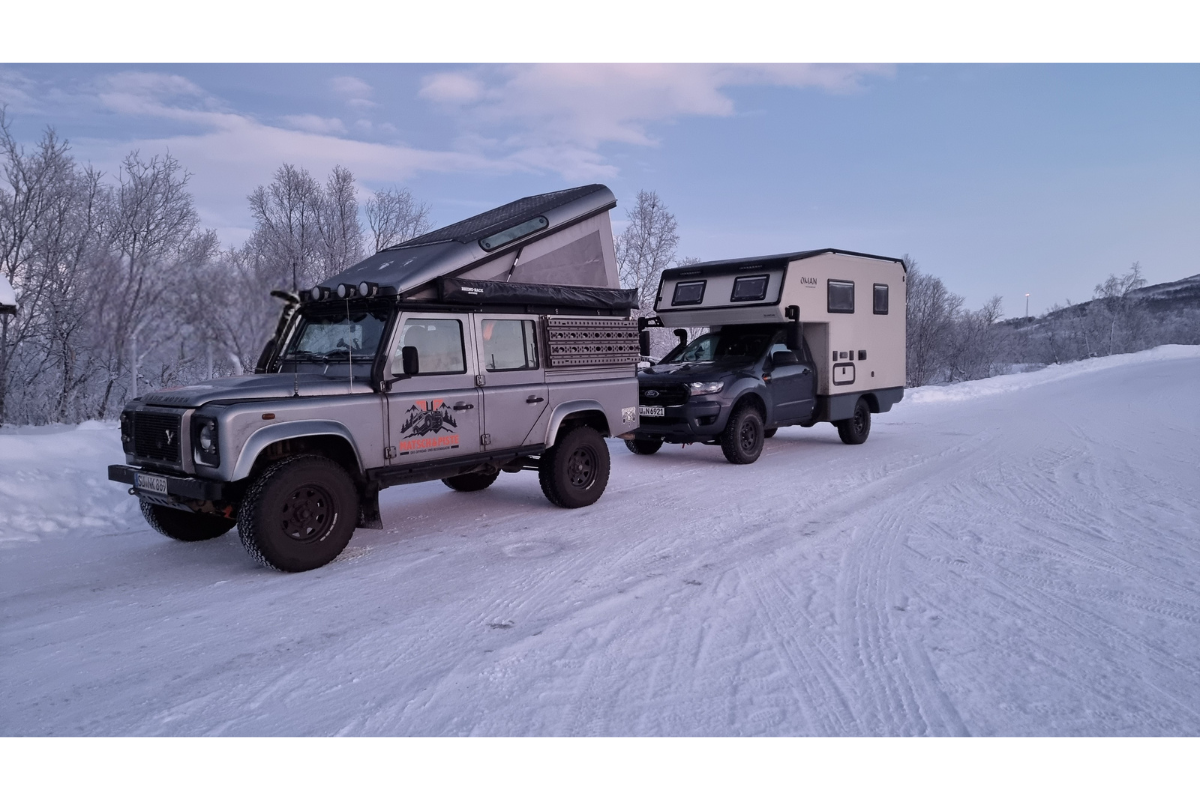

Updated 10/2025 – More and more overlanders are discovering winter travel and winter camping for themselves. A trip to the far north of Europe or the Alps, or a little tour into the low mountain ranges when there’s enough snow: winter camping is good fun, and with good preparation, camping in winter is a great outdoor pleasure. Fairy-tale winter landscapes make up for the cold.
In many of our guide articles we’ve already given you some tips on winter tours. If you want to read up on that, have a look for example at the tips on off-road travel in winter and on getting your vehicle ready for winter. You’ll find all these articles around the topic of winter on our winter topic page.
In this article we introduce a selection of useful kit for camping in winter. A lot depends, of course, on the kind of winter camping. Bivvying, ground tent, roof tent, pop-top, insulated cabin and many other options. But there are a few bits of winter camping kit that every winter camper can use. Plus you’ll find a few practical tips on winter camping here.
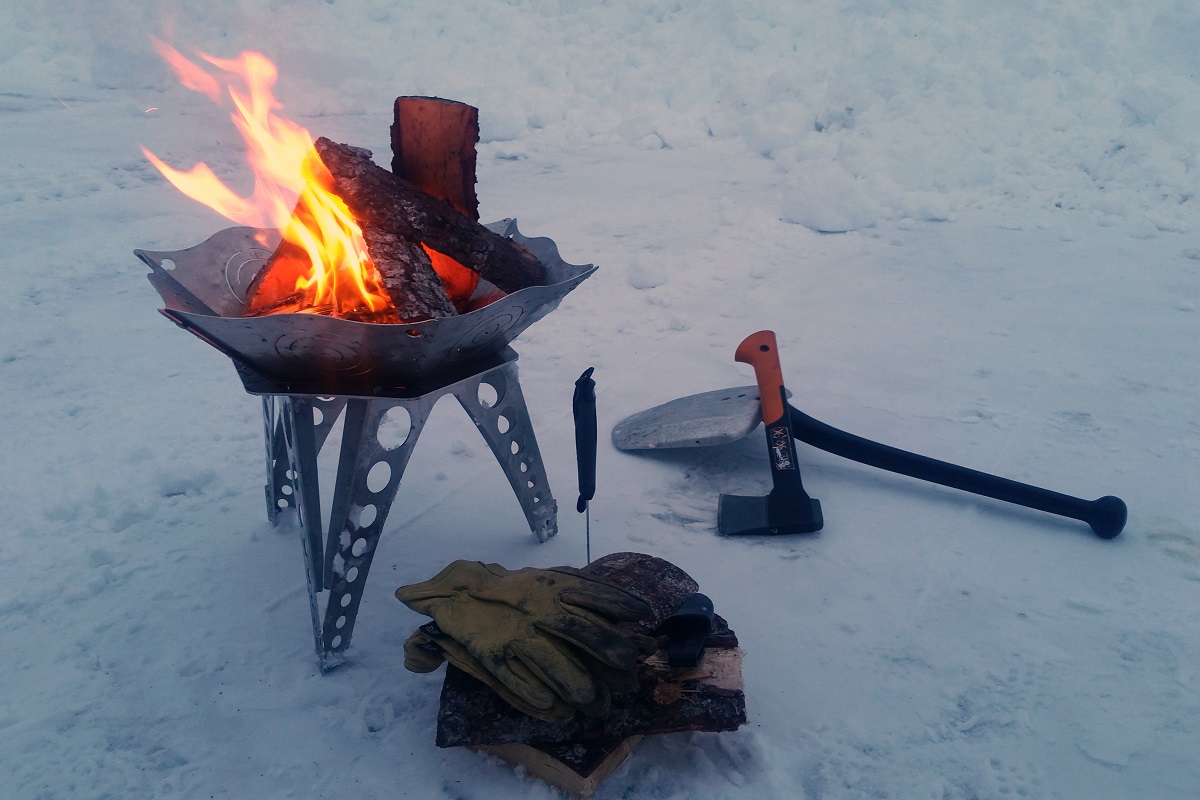
Around the warming campfire
You’ve barely arrived at the winter camp and the warm, cosy campfire is already crackling. But wait, it’s not that quick. First the firewood gets made. That warms you up. And with the right tools it’s even fun.
The Hultan trekking axe from the traditional Swedish forge Hultafors and the Gerber FREESCAPE CAMP SAW folding saw are really good for this. Because both have a small pack size and are still powerful. You’ll find the Hultan trekking axe, for example, in the Mehari-Offroad shop. You can also order the saw mentioned there there.
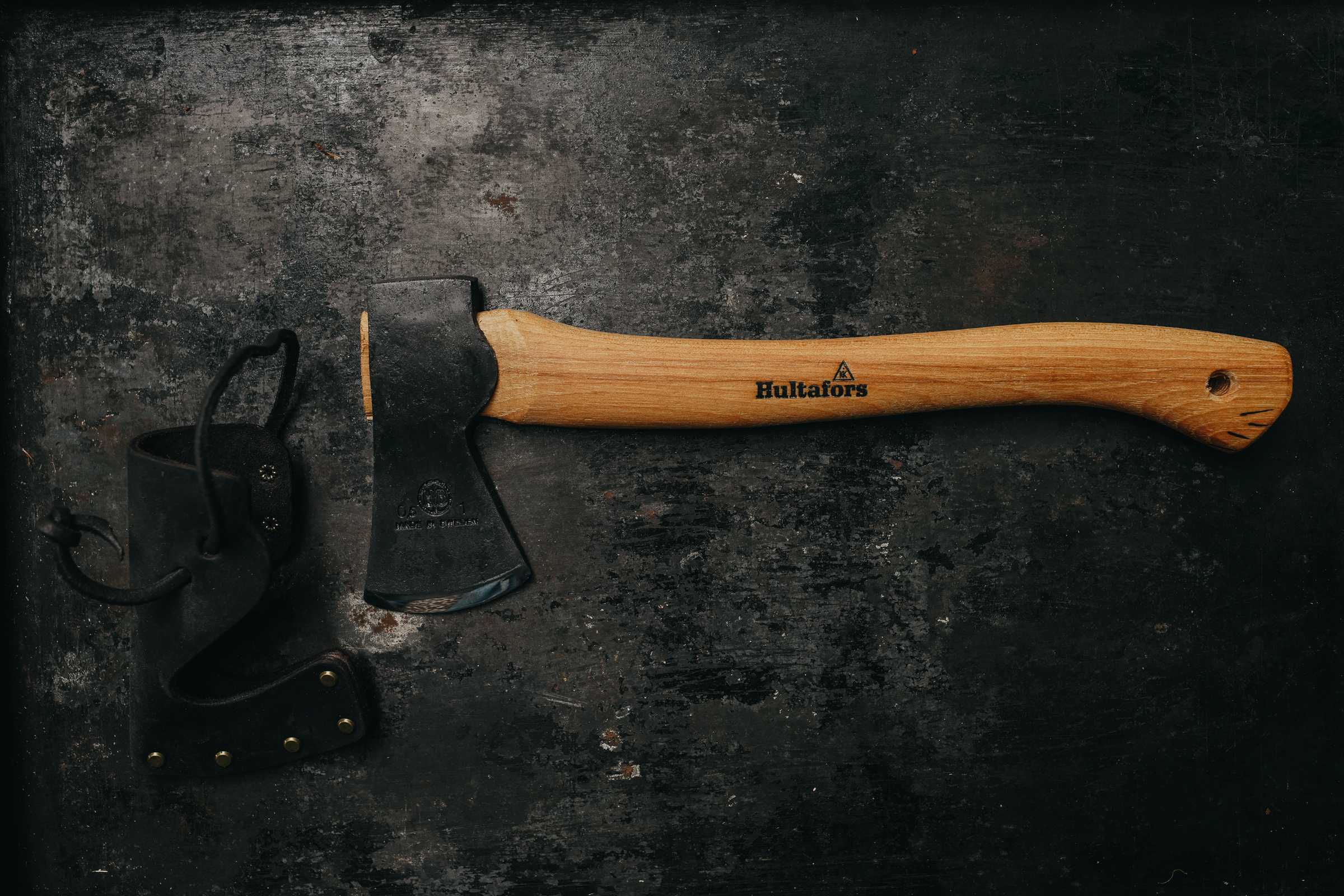
Photo: © Draussenliebe GmbH
We recently took a closer look at both tools and a few more in our article Axes and saws for overlanders. Enjoy the browse.
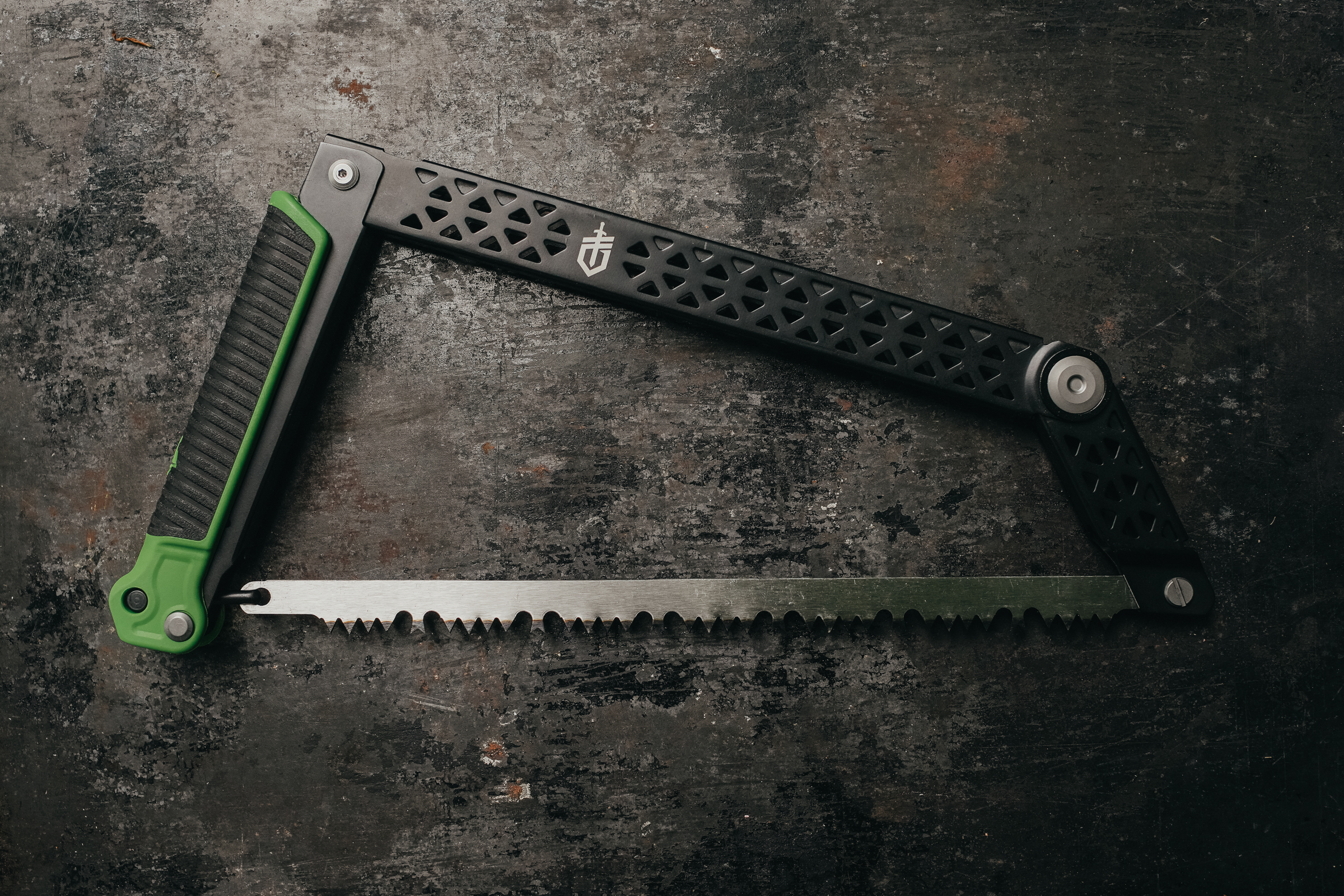
Photo: © Draussenliebe GmbH
Really handy and even smaller in pack size are pocket chainsaws like the Nordic Pocket Saw, which is available in various versions, among others at Globetrotter*.
The fire won’t quite get going? We have a tip for that too. Namely the Petromax fire kit, and a fire steel can’t be missing, of course. You can get a fire steel for example at Globetrotter* or Amazon*
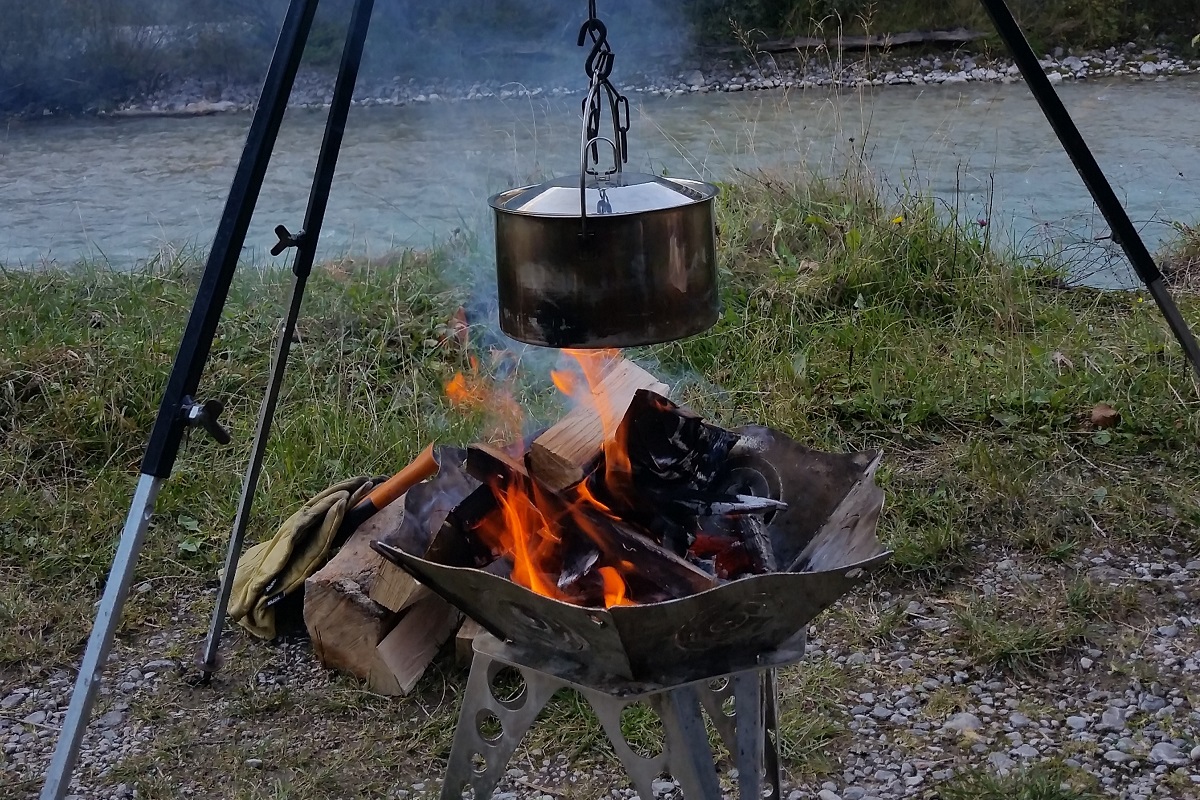
You’ll find more around the topic of making fire in our guide The Big 4×4 on making fire.
Have you been winter camping before? No, well, I can tell you that you often have to clear away a lot of snow before you can even set up your camp. A spade, of the kind we off-roaders often carry, only helps so much here. Here you need a shovel with a big blade, similar to tours in sand. The Fiskars all-purpose shovel*, available at Amazon, has such a wide blade. I’ve used it myself for years and the shovel has proven itself on numerous winter tours.
Handy and good for safety are then a pair of work gloves, in winter ideally lined, like the Mechanix winter gloves*.
Good light in camp matters
The headtorch is part of the basic kit of every off-roader and overlander. A small yet powerful headtorch is handy in many situations, whether working on the vehicle, at a breakdown on the road, fitting snow chains in the dark or setting up camp in the dark. One such powerful headtorch is the Ledlenser H5R Work head torch. It carries the IP67 protection class and so is protected against dust and temporary submersion. The torch is available, for example, here at Scheinwerfer-LUXX.
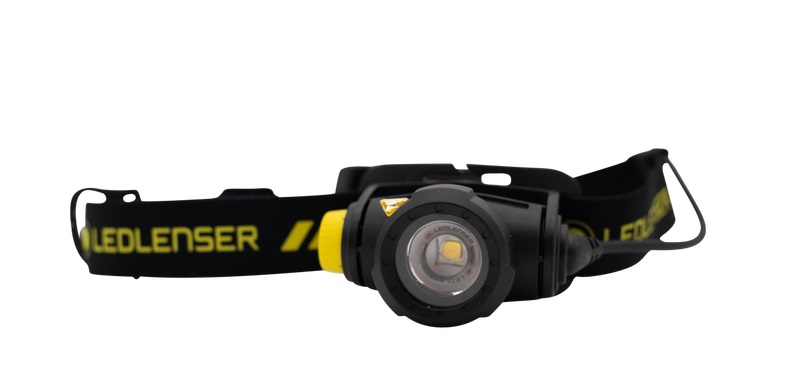
Photo: © Draussenliebe GmbH Scheinwerfer LUXX
Speaking of light. Vehicle lighting is extremely important in winter too. For one it’s about all the lights working correctly, and about good illumination itself. What’s there to bear in mind with vehicle lighting, and what’s recommended? We tell you in our article No more flying blind, see and be seen. Have a look!
Comfort shouldn’t fall short in winter camping
In winter especially, pack a blanket into the car, in case things take longer. But a blanket also makes for cosiness round the campfire in the evening.
Speaking of blankets. For emergencies you surely have emergency blankets on board anyway. You’ll find these in every DIN 13164 vehicle first-aid kit. Another way to be ready for a surprise cold night, at a breakdown for example, are emergency bivvy bags. The Mountain Equipment ULTRALITE BIVI from Globetrotter* has room for one person and is meant to prevent you cooling down in wind and weather. Thanks to the small pack size and low weight, you can take it anywhere.
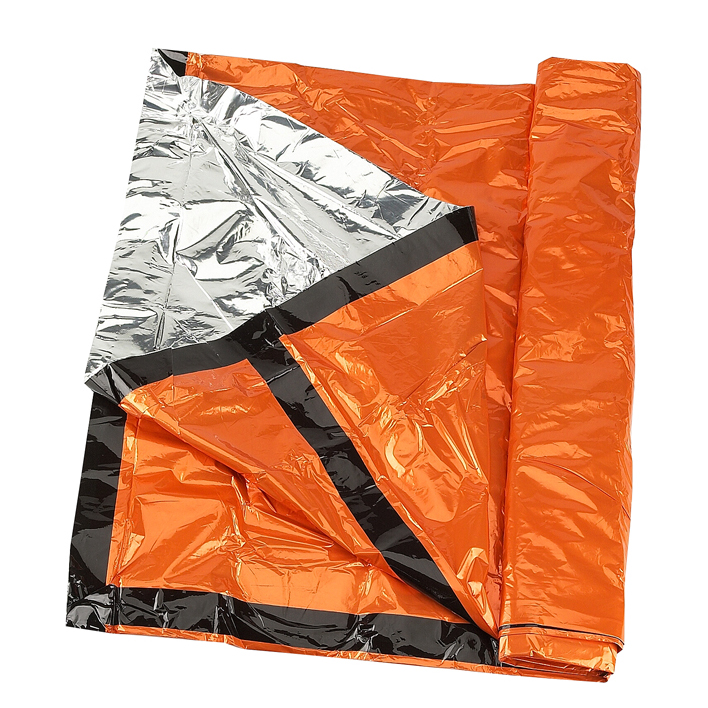
Photo: © Globetrotter Ausrüstung GmbH
Good coffee, mulled wine or punch, or tea are simply part of a winter tour. That means you need a flask on board! The Stanley flask is by now a classic. The Stanley flasks keep drinks hot for many hours and come in various sizes. Over the cap sits a cup that’s insulated too. Just the thing for a winter tour.

Photo: © Draussenliebe GmbH
By the way, you should have enough drinking water on board in winter too. Depending on your camping setup, you have to bear in mind that drinking water could freeze. If a night heater is fitted, routing the warm-air hoses near the canisters could make sense.
Outdoor kitchen and co.
In the cold, the body needs quite a bit of energy to hold its temperature. That means for you that you have to provide enough calories. So food, and best of all warm.
Just as important is fluid intake. Not against the cold in camp, but because of the dry air more often found in winter. That leads to a higher fluid need in the body.
For boiling water for coffee or tea on the road, a small kettle is ideal. With it you can also warm water for a hot water bottle. More on that later. As always with kit, the question of pack size and weight comes up here, and of course the kettle should be light and relatively small in pack size. The Primus LITECH kettle is a small and comparatively light kettle made from anodised aluminium. The kettle available at Globetrotter* comes in two sizes and is supplied with a handy mesh bag for stowing. I’ve used it myself for many years and even use the kettle on the campfire, but careful, the handle is coated in plastic, so don’t let the handle get too close to the flames.

Photo: © Globetrotter Ausrüstung GmbH
By the way, for storing ground coffee, instant coffee, sugar and tea, plus tea bags, wide-neck or screw-top tins work very well. I’ve had good experience with the screw-top tins from Hünersdorff. They stay dry inside and the aroma keeps. You can get these tins in various sizes at Globetrotter*.
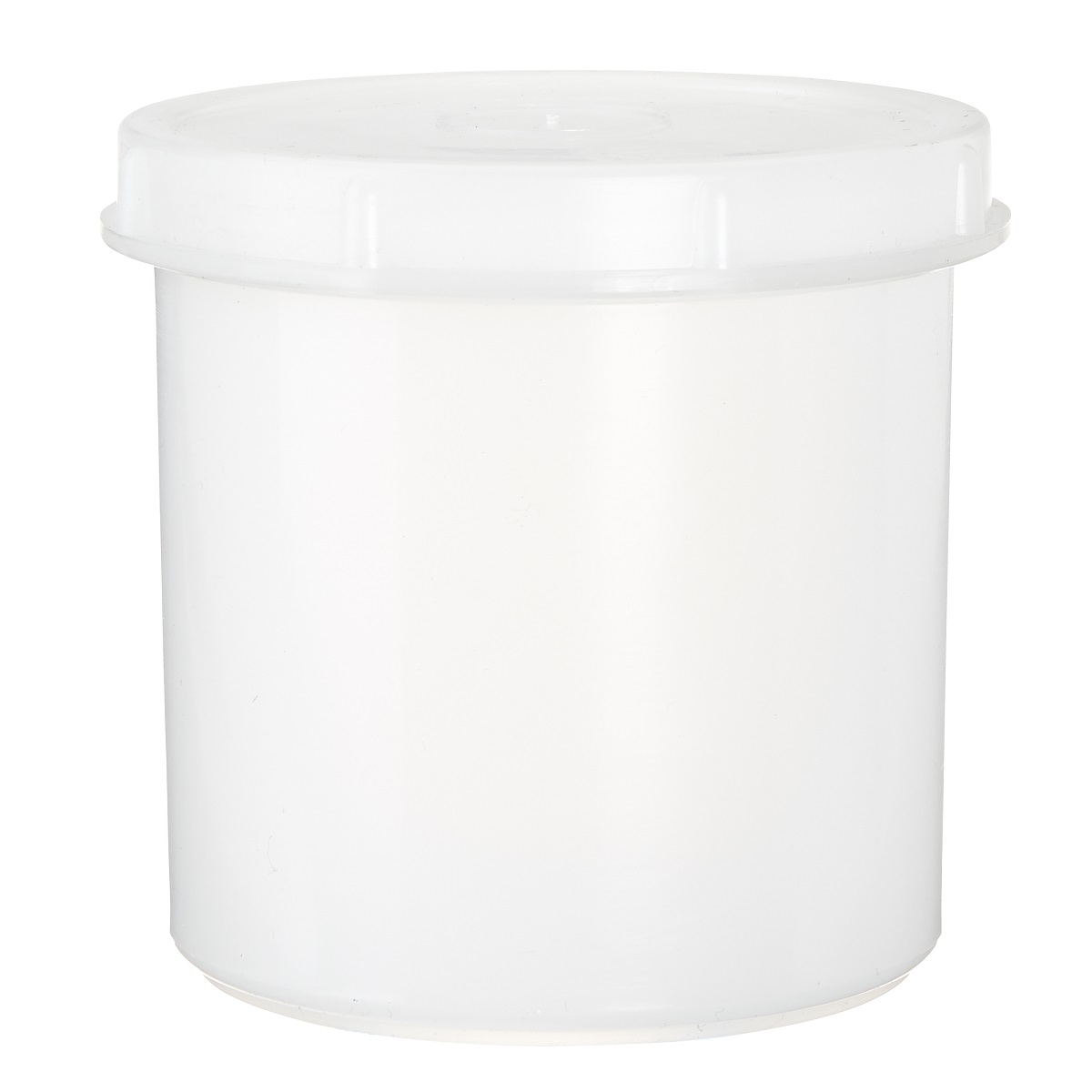
Photo: © Globetrotter Ausrüstung GmbH
What about the gas stove in winter?
If you’d rather use a stove than the campfire, you can choose between various fuels. For many years petrol and spirit stoves had the advantage, because gas stoves didn’t work well, or at all, in the cold. Today there are solutions and gas mixes for that, so you can cook with your gas stove in winter too. When it gets really cold, with the Primus winter gas for example. This canister offers even better cold properties than the 3-season gas. This is achieved by the mesh material in the canister itself. The paper material increases the surface area needed during evaporation for the change of state. So the liquid gas changes its state from liquid to gas faster. A handy thing that works very well in practice. Although it only becomes important at comparatively very low temperatures. You can order the screw canisters with the Primus winter gas in various sizes, for example at Mehari-Offroad.
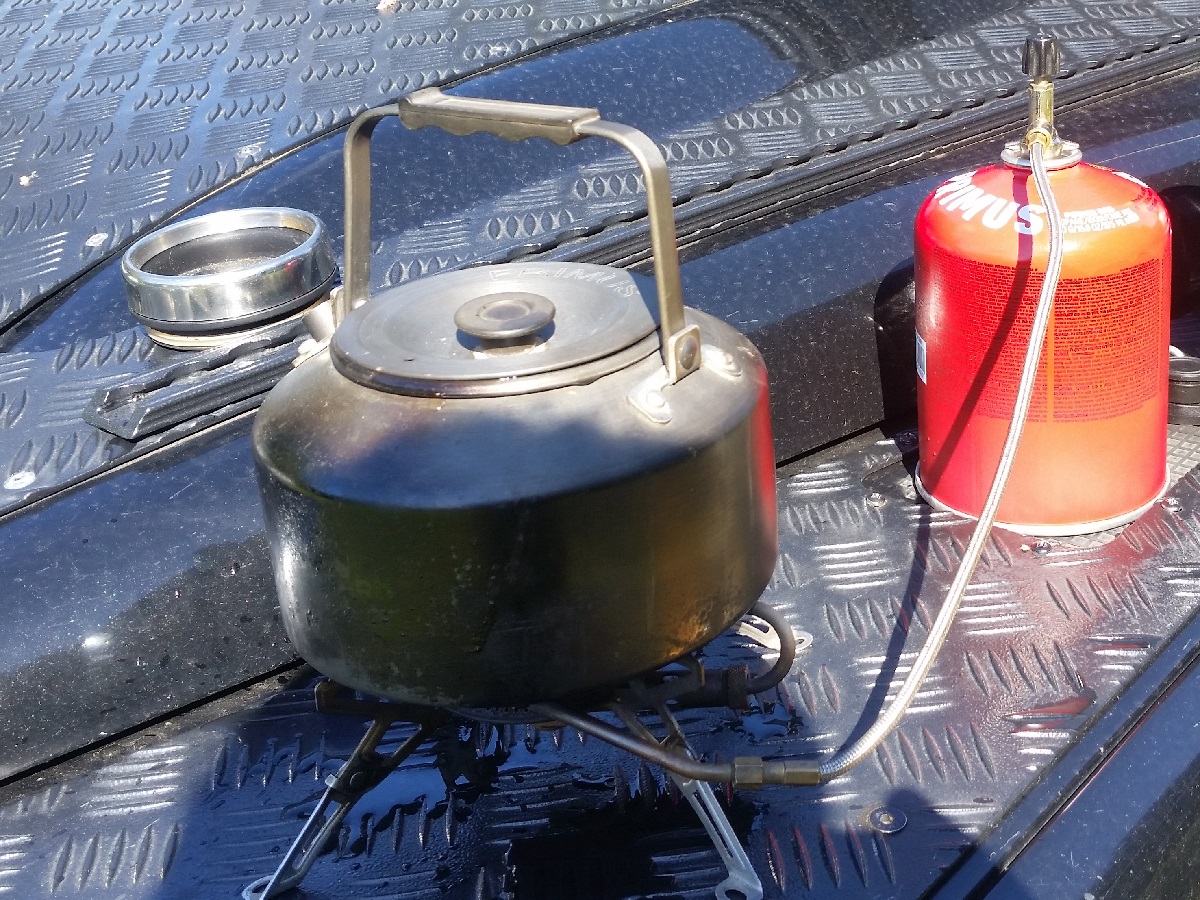
And if the kit does fail, a classic Esbit pocket stove* works well as an emergency stove. It also stows away well in your rucksack on a hike.

Practical tip: Please think about other fluids in the vehicle too, like fresh and waste water tanks. There are various solutions and additives for that in camping supplies. You also have to make sure, of course, that you have winter diesel in the tank in frosty temperatures, or use a flow improver. More on that in our article Getting your vehicle ready for winter.
Sleeping warm in winter camping
Freezing at night is no fun of course, and on top of that you start the day in a bad mood. But luckily there’s a remedy for that.
In the form of a night heater, for example. In our market overview of night heaters we’ve covered the topic in great detail and put together many tips. Especially attractive are mobile night heaters, which are increasingly coming as DIY solutions too. The heater, along with battery and tank and other parts, is built into an easy-to-carry box. That makes you very flexible and you can use a mobile night heater as a tent heater, for example. Such a solution is offered, for example, by Nakatanenga with the mobile night heater with alu box in various versions or tigerexped with the Travel Box 2.0*.
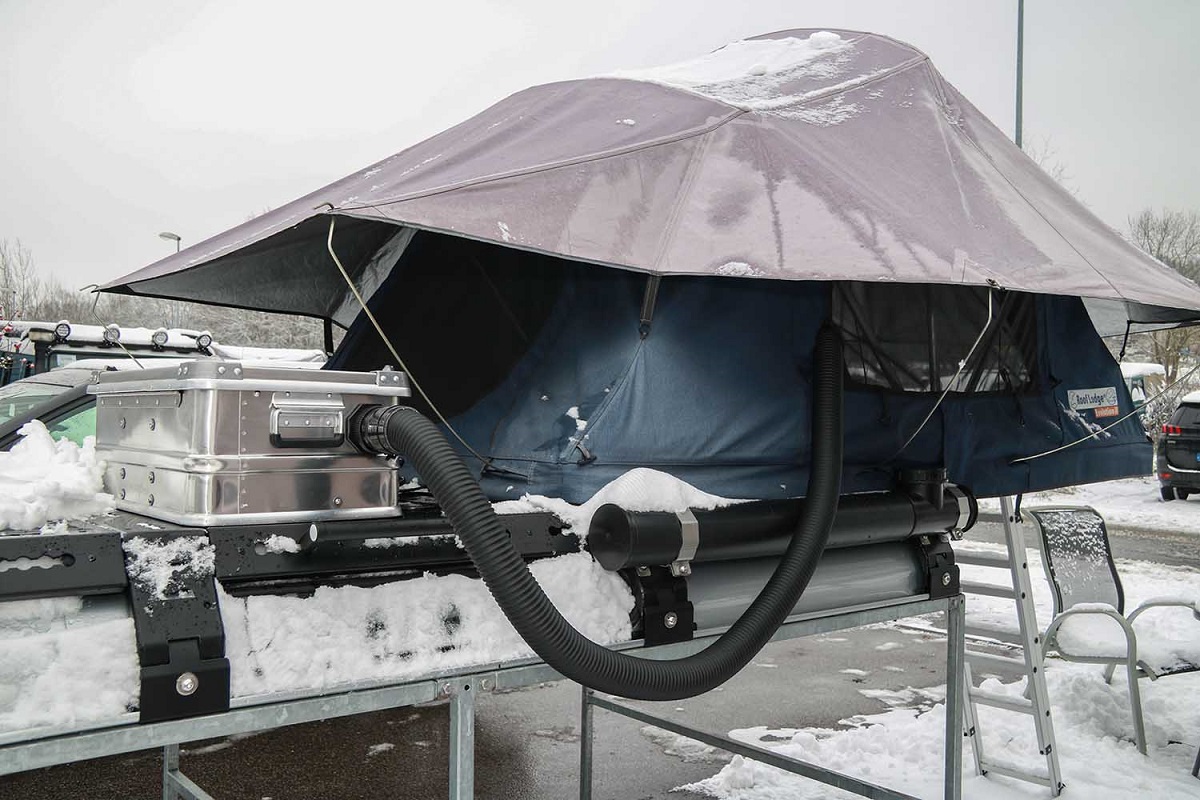
Photo: © Nakatanenga 4×4-Equipment
Practical tip: If you don’t heat it, only open the roof tent or pop-top shortly before sleeping. That way the air inside isn’t so chilled through. It really does make a difference. Try it out. A sleeping bag, though, can happily be rolled out early so the filling, especially with down bags, can loft up well.
By the way, not everyone likes sleeping in a sleeping bag. And if it doesn’t get too cold, or you’re heating anyway, then a good blanket, combined with good insulation from below, can make for great sleeping comfort too.
Insulation in winter camping
If you sleep in the vehicle, good insulation matters of course. That’s not just the walls. A nice and very functional solution for your vehicle’s windows is offered by Blickdicht-Manufaktur GmbH. The well-made BlidimaX window mats insulate in winter and summer, and they’re also opaque. Each of these thermal insulation mats is made by hand and individually at the BlidimaX workshop.
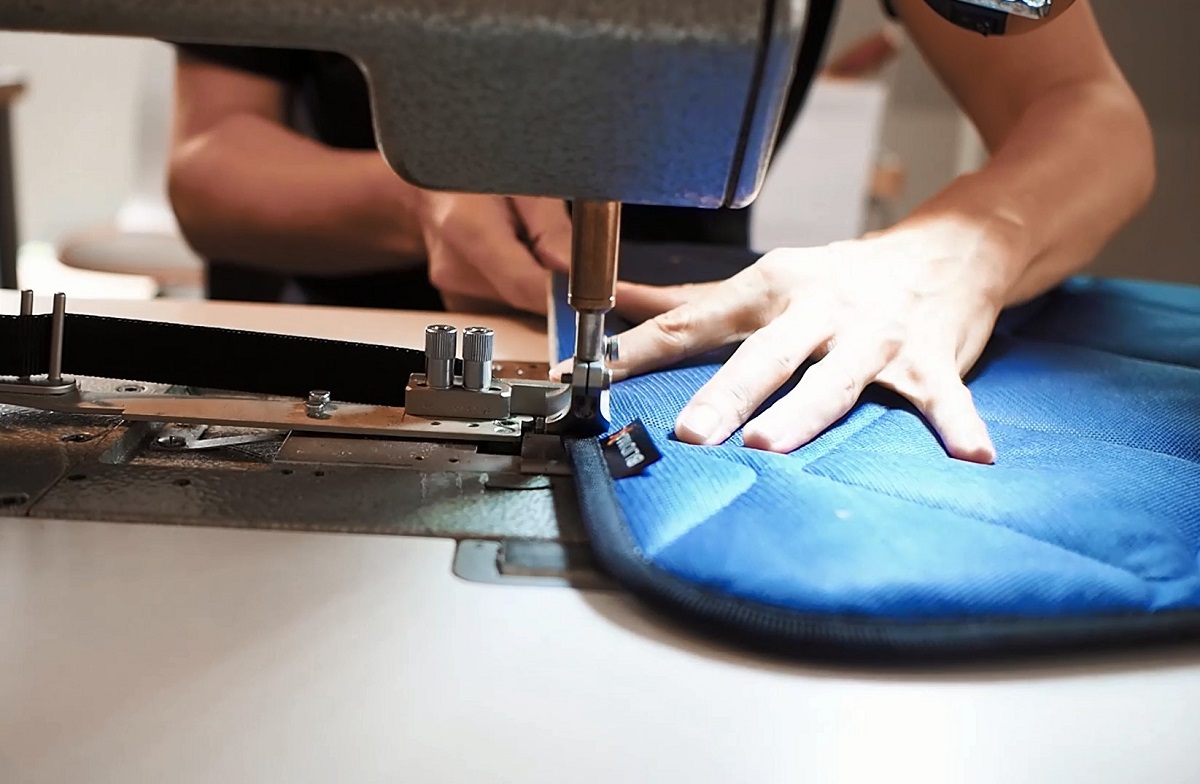
Photo: © Blickdicht-Manufaktur GmbH
Insulation is especially important in the roof tent or pop-top. The market now offers many options for that. Horntools, for example, has a thermal inner tent*. You can simply hang this inner tent inside the roof tent and fix it with hook-and-loop fasteners. The zips still let you open windows and entrances to ventilate or let daylight in. Horntools offers the thermal inner tent in various versions for various roof tents.
The insulation layer also matters a lot if you sleep in a ground tent, on a camp bed or in a hammock. Especially if it isn’t a ground tent, the wind can also flow under your sleeping spot and add to the cold. Simple self-inflating mats often reach their limits in frost. A closed-cell foam mat or a fleece blanket as an underlay can give better shielding here. Without enough insulation below, the cold ground basically draws the warmth out of your body.
Practical tip: Your sleeping bag or a blanket has no heat source of its own, it reflects your body heat. So you should go to bed nicely warmed up. That’s true above all if you sit outside under the starry sky by the campfire and then sleep in the tent or roof tent without heating. To do that, you can warm up at the campfire shortly beforehand or do a few exercises.
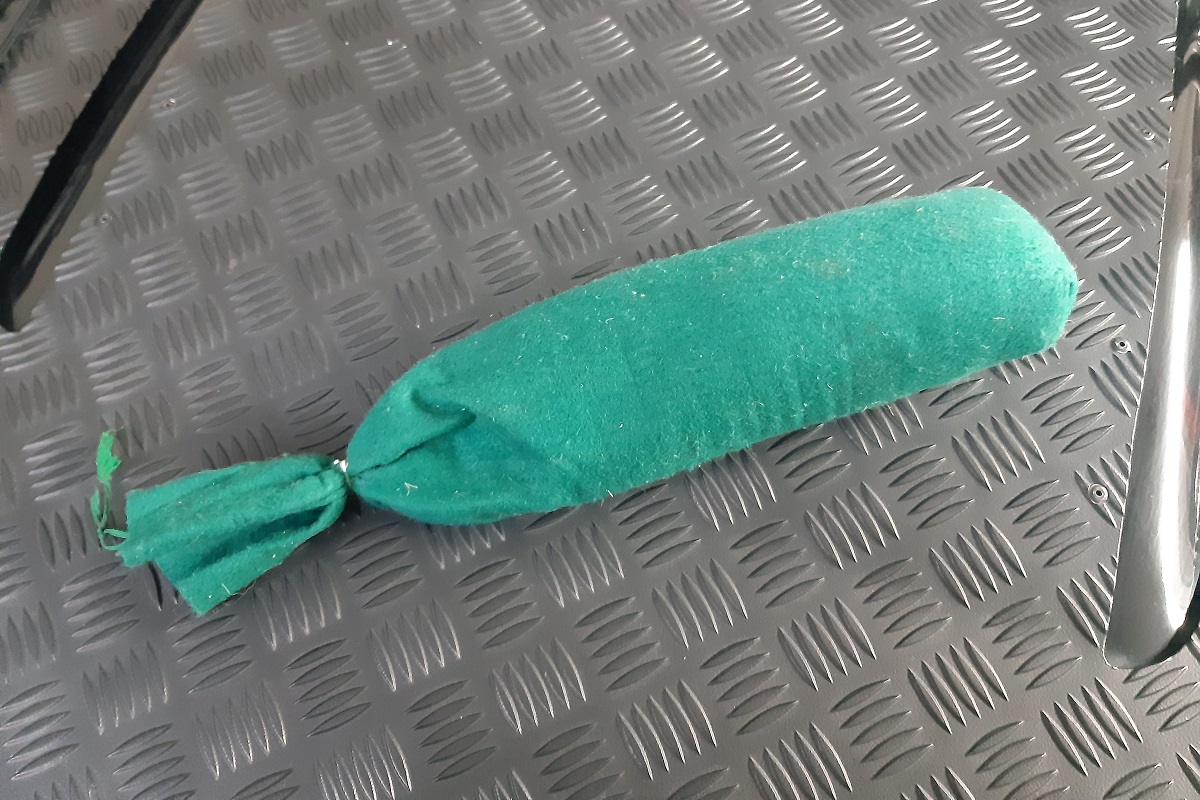
As important as the insulation is good ventilation to avoid condensation. Dehumidifiers help when laying up for winter, and also when you’re on the road. You can get this rechargeable dehumidifier, for example, at Mehari-Offroad.
Clothing in the sleeping bag
As the sleeping bag works on the reflection principle, you should wear no, or only very little and thin, clothing in the sleeping bag. Only that way can the reflection of body heat work properly. But people are often inclined to keep on the clothing that’s still warm at that point. The problem is that this does the exact opposite and undoes the sleeping bag’s reflection principle, because the shielding effect of the clothing means the air in the bag isn’t warmed. The layers of clothing also shrink the air space the bag needs to work properly too much. The result: it’ll be a cold night! By the way, it’s not a good idea to throw a jacket or blanket over the sleeping bag, because that shrinks the insulation layer unnecessarily by compressing it.
A large choice of winter sleeping bags* is at the outfitter Globetrotter. When choosing, good advice and a test lie-down are strongly recommended. Because you want to feel comfortable in your sleeping bag and the kit to be ideally matched to its use.
Practical tip: Clothing in the sleeping bag is a good idea in so far as packing your clothes for the next day at the foot end. Then they’re pleasantly pre-warmed in the morning and not frozen and stiff. You can also take battery-powered things like the headtorch or the phone into the sleeping bag. That’s easier on the battery.
A hot water bottle in the sleeping bag spreads cosy warmth, which makes falling asleep much more pleasant. On the road, a PET bottle or similar that you already have works for this. But careful: risk of burns.
Practical tip: If you take the water bottle into the sleeping bag, your drinking water won’t freeze and the drinking temperature in the morning is more pleasant.
Staying warm and dry in winter camping
Staying warm and dry, that’s the be-all and end-all, and quite simple to manage. Namely through the right clothing. The important thing is that you create a layer of warm air with the clothing, because clothing, just like a sleeping bag, has no energy source of its own, it reflects the heat given off by the body.
Warm socks are part of the basic kit. The Nakatanenga merino winter socks are 57% merino wool combined with synthetic fibres. The three-quarter-length socks are made especially for the cold season. A hat is just as important, of course.
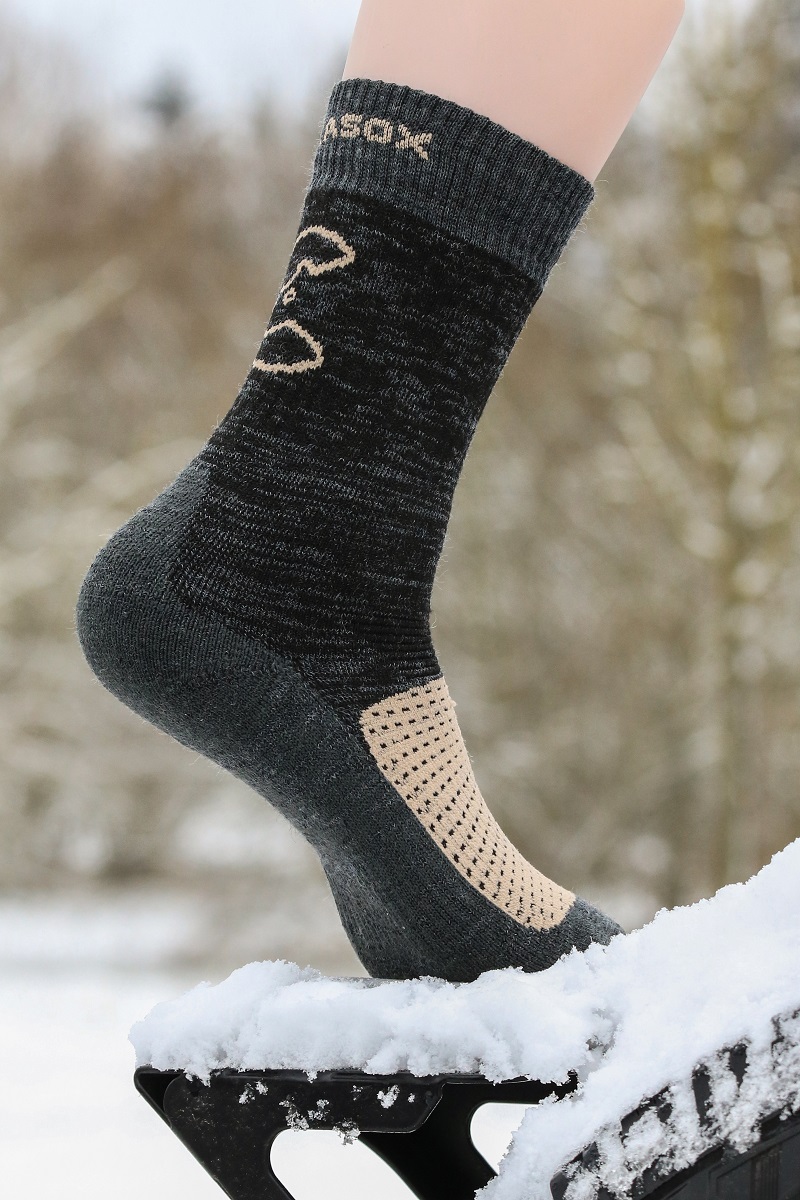
Photo: © Nakatanenga 4×4-Equipment
Practical tip: You’ve surely read or heard that people lose a large part of their heat through the head. Well, today it’s not just science that knows this isn’t so. But if all body parts are covered and the head sticks out, then of course you lose quite a lot of heat there. If you’ve zipped your sleeping bag up high, for example, a part still escapes via the head. A hat simply fixes this.
Feet and head are well protected from heat loss with warm socks and a hat, but cold fingers are unpleasant. The outfitter Globetrotter has a handy solution with the Basicnature Magic Heat hand warmer*. The hand warmer is activated by flexing a metal disc and warms for about one to one and a half hours. Afterwards you reactivate it by boiling it in hot water. It can be reused many times.
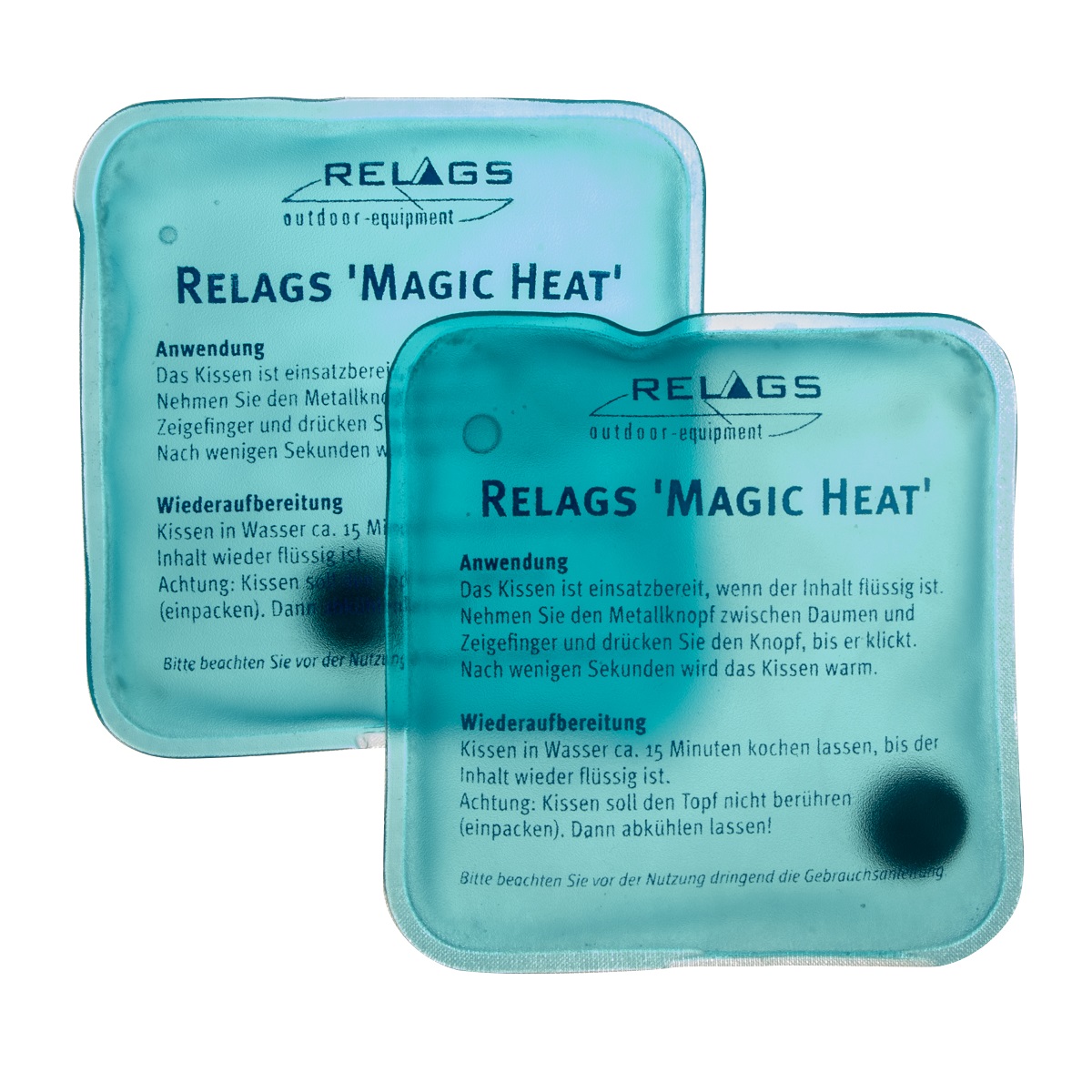
Photo: © Globetrotter Ausrüstung GmbH
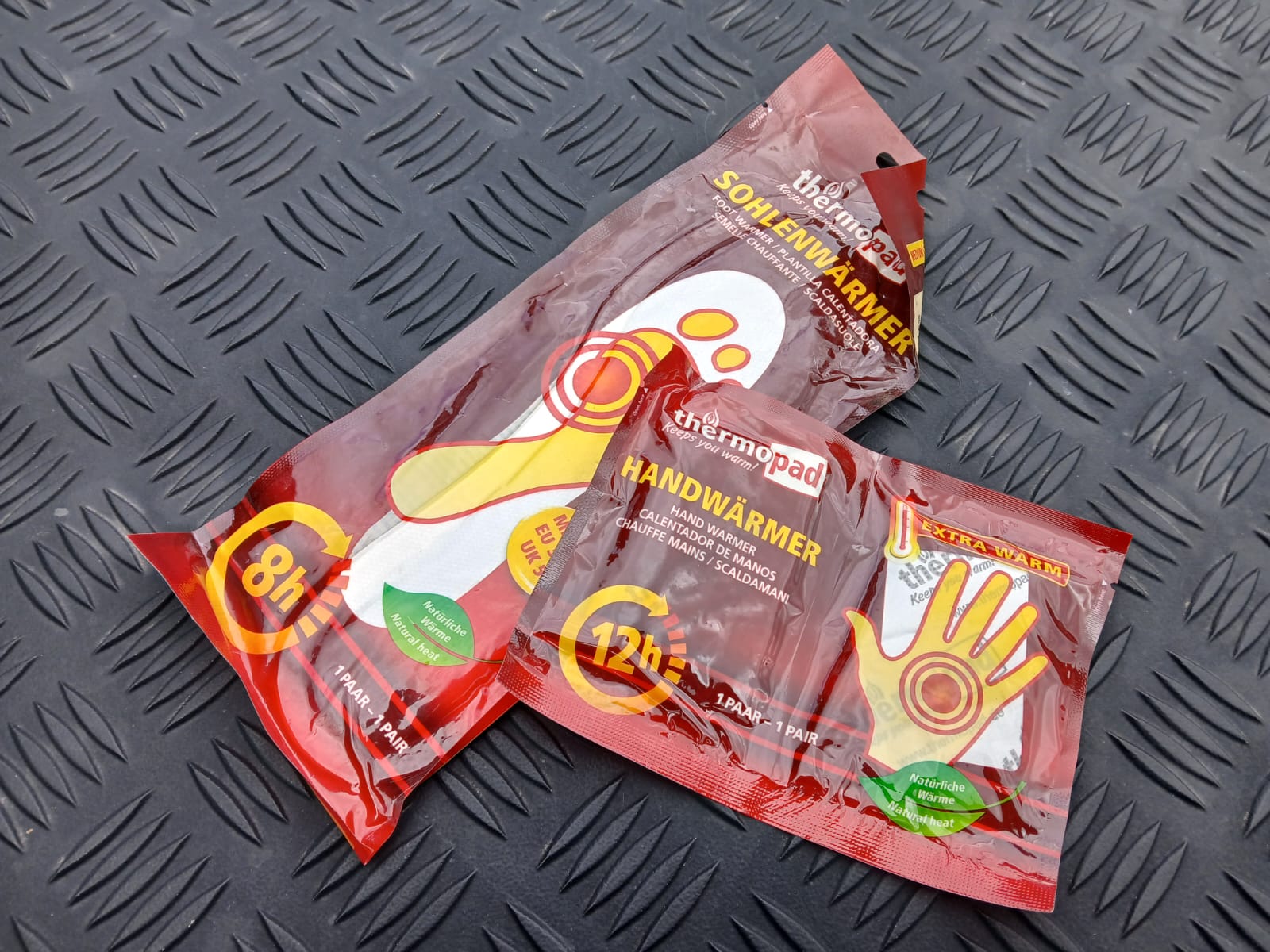
If reactivating on the road is too much effort, or you want to save water, you can go for good single-use products here. The Thermopad warmers activate after unpacking on contact with the surrounding air. They come in many different versions and sizes. You get these handy hand warmers, for example, at Amazon*.
Layering matters especially in winter camping
Please don’t wrap up too warm, especially during outdoor activities, because then you start to sweat, this moisture evaporates and drives the warmth away from the body, and so you get cold. You’ve surely heard of layering in this context, that is pulling on various thin layers of clothing on top of each other. That way you can adapt more easily to different temperatures. One part of this layering in winter is base layers. These should be close-fitting and breathable. They go under other layers of clothing without restricting freedom of movement.
Staying dry is, as mentioned, especially important in winter. And that’s why, to stay dry, you pull on a waterproof layer last. And don’t forget a change of clothes. One more
Practical tip: Your shoes matter too. Besides good insulation, you shouldn’t choose them too tight, so the blood circulation isn’t reduced, which makes you cold.
Your sensitivity to cold can be trained, by the way
It’s not just extreme-sports people who regularly expose their body to the cold for this. You can build a certain amount of cold training into your everyday life, for example through cold showers, foot baths or contrast baths, or simply through regular exercise, because that too can activate the so-called brown fat tissue, which uses calories to generate heat through thermogenesis. A positive attitude to the situation can help you too. Instead of telling yourself how cold it is, you can think warm thoughts. Sounds odd, but try it out, it works.
And one more delicate topic: you’ve barely made yourself comfortable in the sleeping bag and almost dozed off, and you have to go to the toilet. And that means: out of the warm sleeping bag, get dressed, out into the cold, back in and so on. No, you’d rather try to ignore it and fall back asleep, right? And suddenly you get cold. This is simply because the body burns calories in sleep to hold its temperature. And in this case it also has to heat the volume of the full bladder on top. So no matter how bad it is, better to get up once.
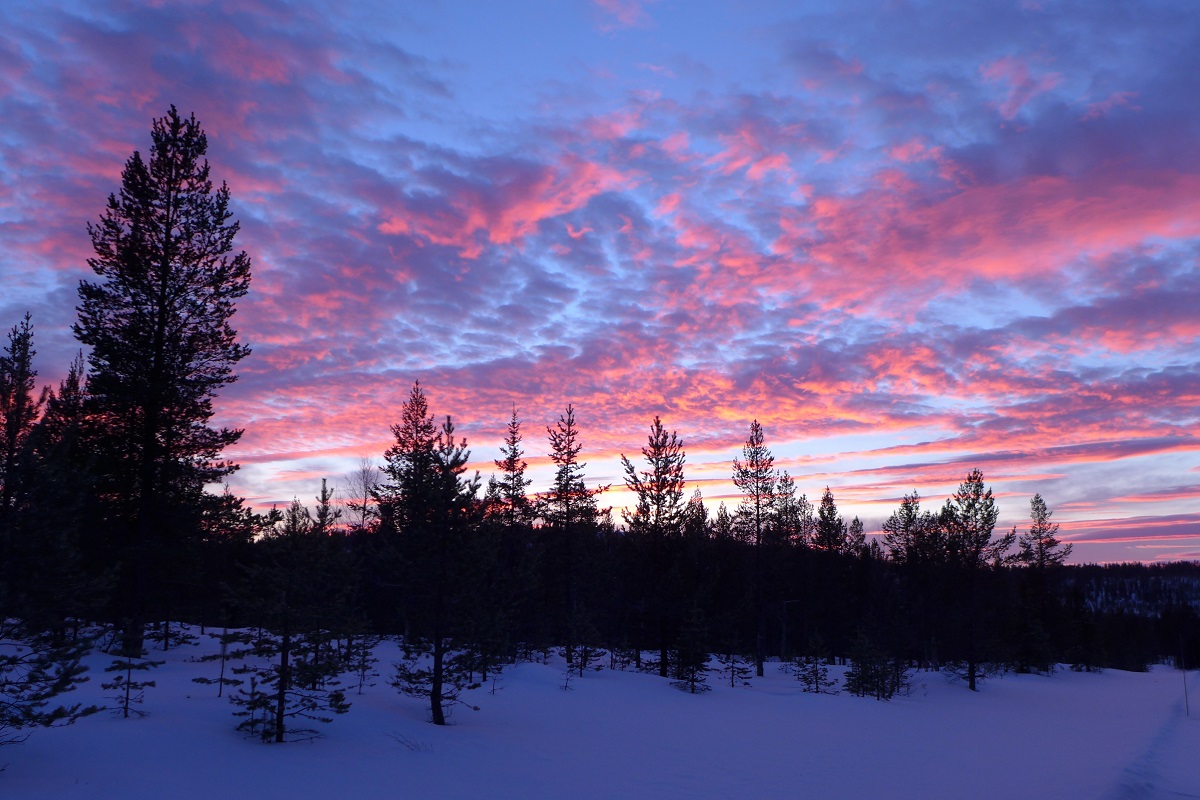
Have you got a taste for it now and are looking for ideas for winter camping? Then have a browse through our travel reports on it. AWo was out in Scandinavia in winter at the start of 2024 and shares his experiences in this report. Or fancy heading to the North Cape in winter? Then maybe the matching travel report by Björn is something for you.
Do you enjoy winter camping? What experiences have you had with camping in winter? What tips against the winter cold in camp do you have up your sleeve? Write to us. We’re keen to hear!
© Photos unless otherwise stated: Björn Eldracher
*Affiliate links: If you like the products and order them through the affiliate link, we get a small commission. It doesn’t cost you a cent more, but we’re very glad of your contribution to our free magazine.