

Landys are as popular in the scene as ever. They serve as travel vehicles, workhorses, everyday cars. The vehicles are often as individual as their owners. So it is always worth taking a closer look at one of these off-road icons. In the portrait today: a travel Landy.
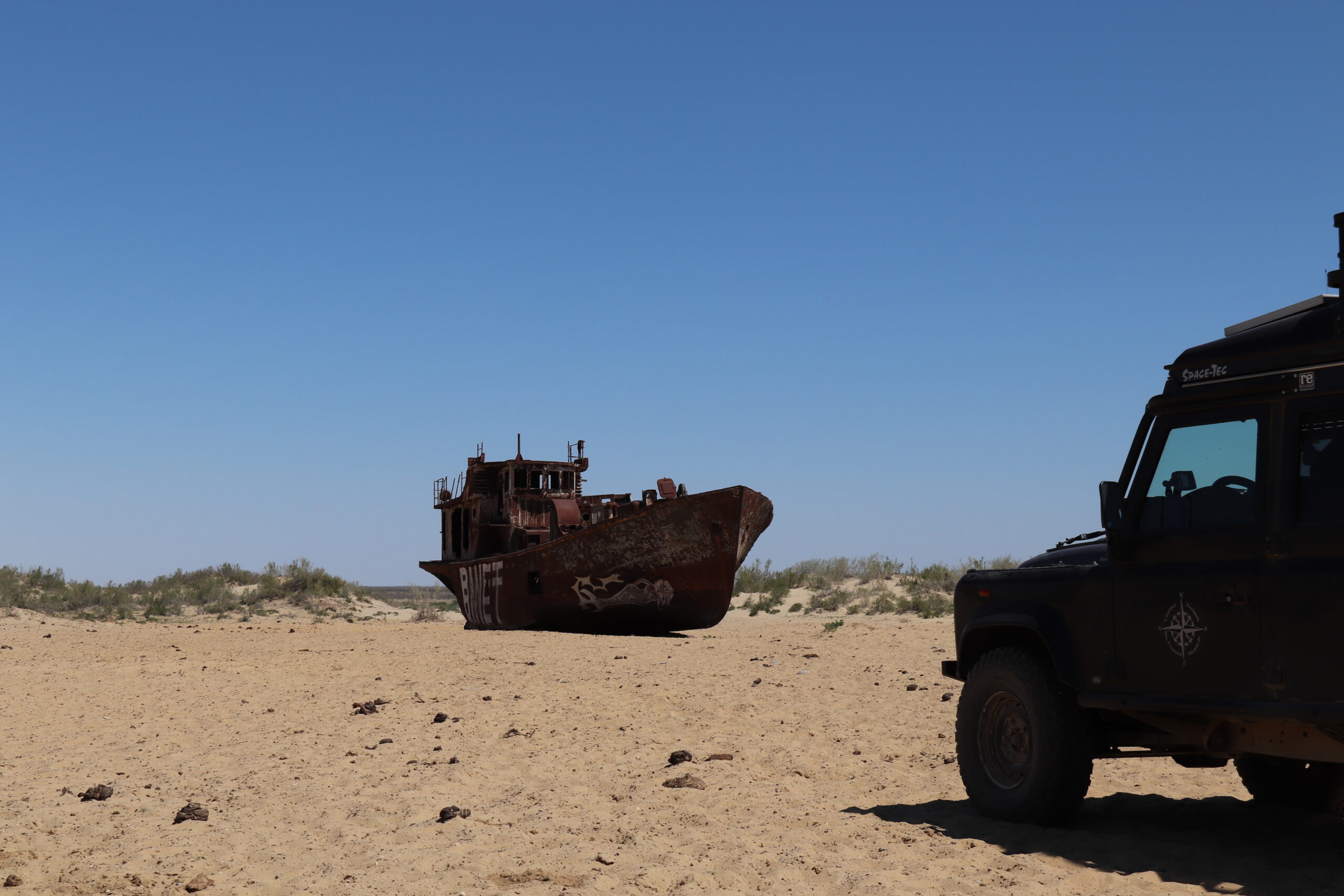
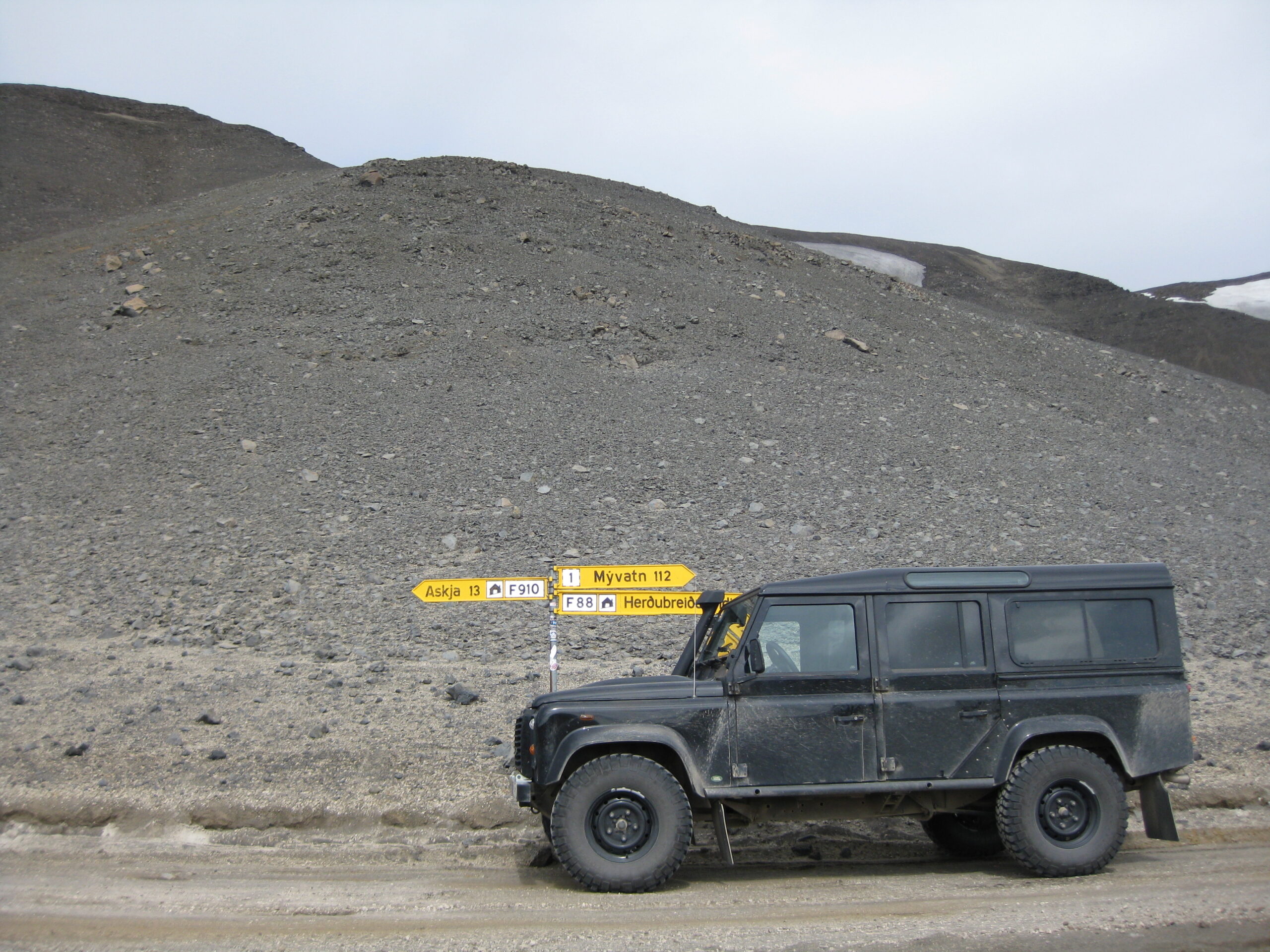
Today we are introducing you to a 110 Defender that has already seen a good bit of the world. Björn’s travel Landy. It is a 110 Station Wagon with the 2.4-litre engine, so a Defender TD4. Over the past years Björn has been on the road with this vehicle in Europe, Africa, North and Central Asia and North America, and has visited many beautiful places.
Björn has been a globetrotter and adventurer since birth
He came into contact with camping and travel early on and, even as a little lad, got to go along to many great places in this world. With his driving licence, his own range of action expanded dramatically, which he immediately made ample use of. The trips grew ever longer, further and more challenging, to more distant places on this beautiful planet Earth. At first Björn was on the road with travel enduros in Europe, Asia and Africa, and from 2010 with this Landy.
The vehicle base for the travel Landy
The base of this vehicle is, as already mentioned, a Land Rover Defender 110 2.4 TD4 built in 2010. So a so-called “Puma” with the 2,401 cc, 122 hp / 90 kW Ford engine. It is a 5-door Station Wagon and one of the rare “Experience” special models, of which only 150 were delivered. Its special equipment includes very comfortable, good Recaro sports seats, a smaller leather steering wheel, which for tall Landy pilots almost counts as essential kit, air conditioning, the very practical winter package with a heated windscreen and a few more little things.
The modern alloy wheels of this special model had to give way, still before leaving the showroom, to a set of Land Rover HD “Wolf” wheels with suitable Mud Terrains in size 255 85 R16, combined with 33 mm wheel spacers per side. The plastic bull bar also stayed at the dealer’s.
The original fuel capacity is about 75 litres. That was a little too little for various trips. Björn has therefore retrofitted a flow-through tank from gmb-mount holding 47 litres. Rarely, and when needed, a 20-litre reserve canister is added, secured with a bracket and airline rails. That way a range of a good 1,000 kilometres and more is never a problem.
Good drivetrain technology and a sturdy chassis are essential for a long-distance travel vehicle
The Defender comes as standard with permanent four-wheel drive, a selectable low range and a manual, 100% lockable centre differential. So it is already very well set up from the factory. Björn has additionally retrofitted his Defender with 100% pneumatic lockers on the front and rear axles. The choice fell on a proven and internationally widespread product from ARB. So the supply of spare parts for it is well assured on the road too. Admittedly the front axle locker is certainly something that comes into use rather less on a travel vehicle. But with it the travel Landy is hard to stop off-road either.
Since a compressor was on board anyway because of the lockers, Björn expanded it straight into a full compressed-air system. On the driver’s and passenger’s side there is an air outlet each on the seat console. A standard 7.5-litre air tank sits protected behind the right front frame outrigger. The matching air-pressure gauge in the cockpit is naturally not missing either. For letting air out or pumping up, the Indeflate has proven itself for Björn.
The transfer case got an upgrade too
The transfer case is fitted with a bigger oil pan, which provides a higher oil volume, hence lower oil temperatures and more reliability. Lastly, a wish held for a while was fulfilled. Namely an additional Torsen lock in the centre differential. The Defender does have a 100% manual lock in the centre differential, but a Torsen lock like this has a lot of advantages.
So even on a travel vehicle we can imagine situations where we need the lock for the sake of drive and to spare the material, yet where it is not ideal to have the lock permanently engaged. A winding gravel track, for example, where speed differences arise between the front and rear axle, but the car is partly easier to control without the lock engaged, or on winter trips and the rapid changes that come with them between sections of snow, ice, or good grip. Such an automatic lock also has the advantage that it reacts far more precisely and quickly than a lock switched by the driver, while behaving completely inconspicuously on the road.
Since it seemed sensible to Björn anyway, given the mileage, to take a closer look at the transfer case, an excuse was quickly found to do the job properly. There followed a professional overhaul of the transfer case, during which barely any wear was found, and with it the fitting of the additional lock at the same time. The clever part of this conversion: the 100% manual lockability is retained.
The chassis was likewise adapted to the demands
On the chassis, Björn went the way of a good balance between proven original parts, which are easy to get as replacements while travelling, and “high performance accessories”. So for the springs he reached into the original parts shelf and fitted his 110 with HD springs from the manufacturer, from the larger 130 and other 110 models. Added to that were the inner springs on the rear axle, also typical of the 130 Defender.
The Landy is damped with Radflo shock absorbers with a reservoir at the front and rear. These are individually tuned to the vehicle and the demands on it. These chassis components are complemented by blue poly bushes all round, a reinforced and cranked track rod that lies protected behind the axle, open-pored axle bump stops and cranked trailing arms at the rear. A reinforced drag link Björn threw out again and replaced with an original part, since experience shows that a reinforced component only unnecessarily increases the forces acting on the steering box. A less strong original drag link, on the other hand, is easy to hammer straight again with on-board means.
With this chassis setup, this 110 offers more than enough reserves even at high loads, such as on trips lasting several months.
Björn’s 110 Landy camping setup
Our travel vehicles often go through various stages of evolution. Björn, as mentioned, came to the Landy from a motorbike. The amount of room in the car is therefore huge by comparison. A few weeks after buying the vehicle, a rudimentary build went into the rear area, and the first test drive was to Iceland. Having found it good, Björn set off the next evolutionary stage and expanded the interior. Always with an eye to keeping it as simple as possible. Numerous trips with this setup followed, in Europe and a few months through North America. Before a Central Asia trip in 2018, the pop-top came onto the Landy.
The combination of a pop-top and a simple DIY interior has proven itself
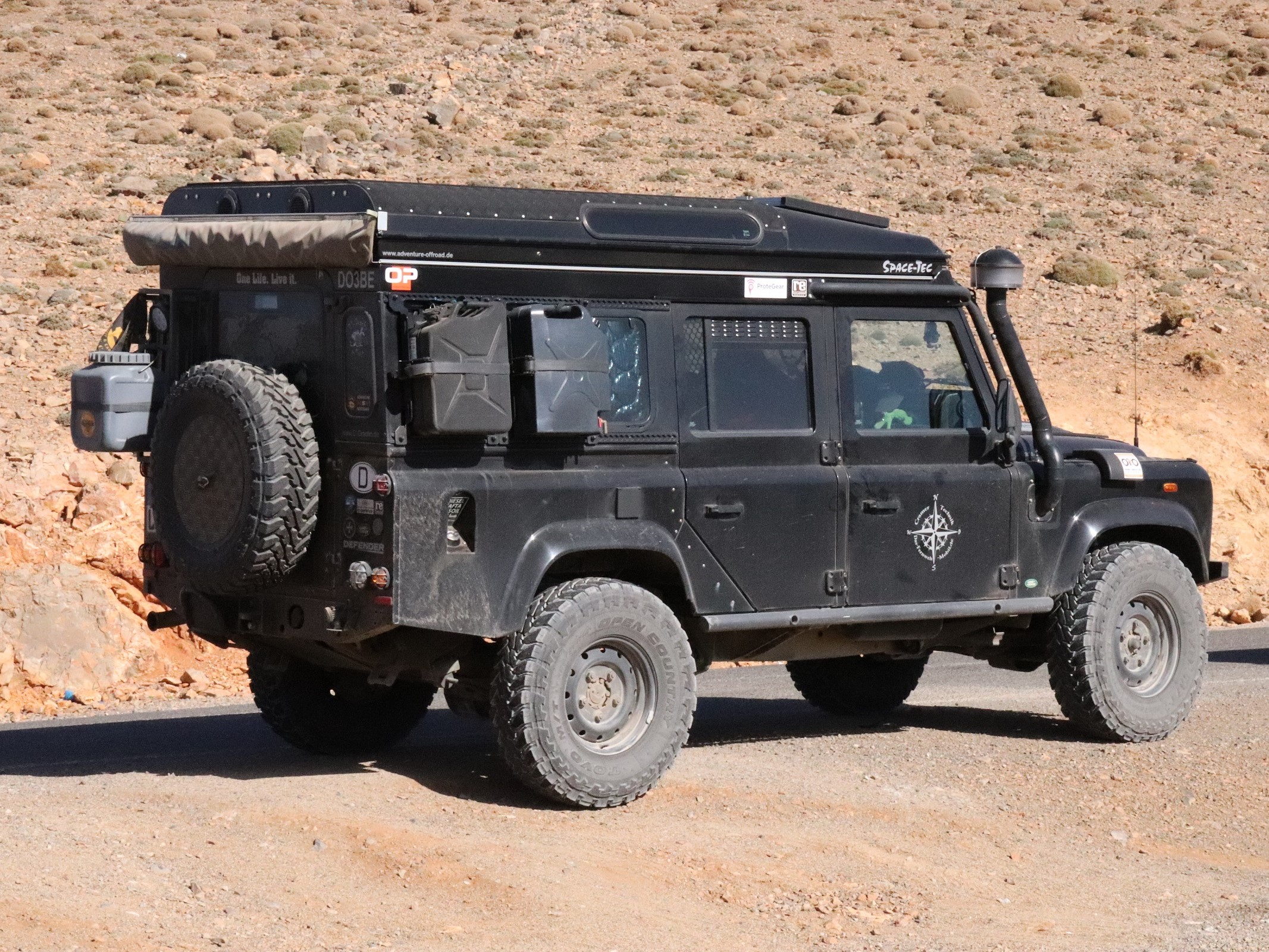
At the heart of the camping setup today are the Ex-Tec pop-top and a DIY interior of birch multiplex board. Sleeping is usually done up top in the pop-top; below there are seating options and, above all, plenty of storage. But the lower area can also be converted into a sleeping surface, for example in bad weather. The living space can, if needed, be quickly extended with a Howling Moon rear awning with side panels or a side tarp, drawn quickly into keder rails.

The storage in the boxes is complemented by several bags from Fernweh-Mobil, which are likewise mounted on keder rails. The decision was made deliberately against tall cabinets, which only raise the centre of gravity unnecessarily and shrink the sense of space.
The water supply is ensured with canisters. Björn deliberately does without a fixed water tank in order to stay flexible. On top of that, the canisters are easy to clean, and a comparatively small canister can be filled almost anywhere. If a shower is ever needed, a Swiss Army water bag is available. In this black bag the water warms up quickly. It has its place on the bonnet, secured to airline rails.
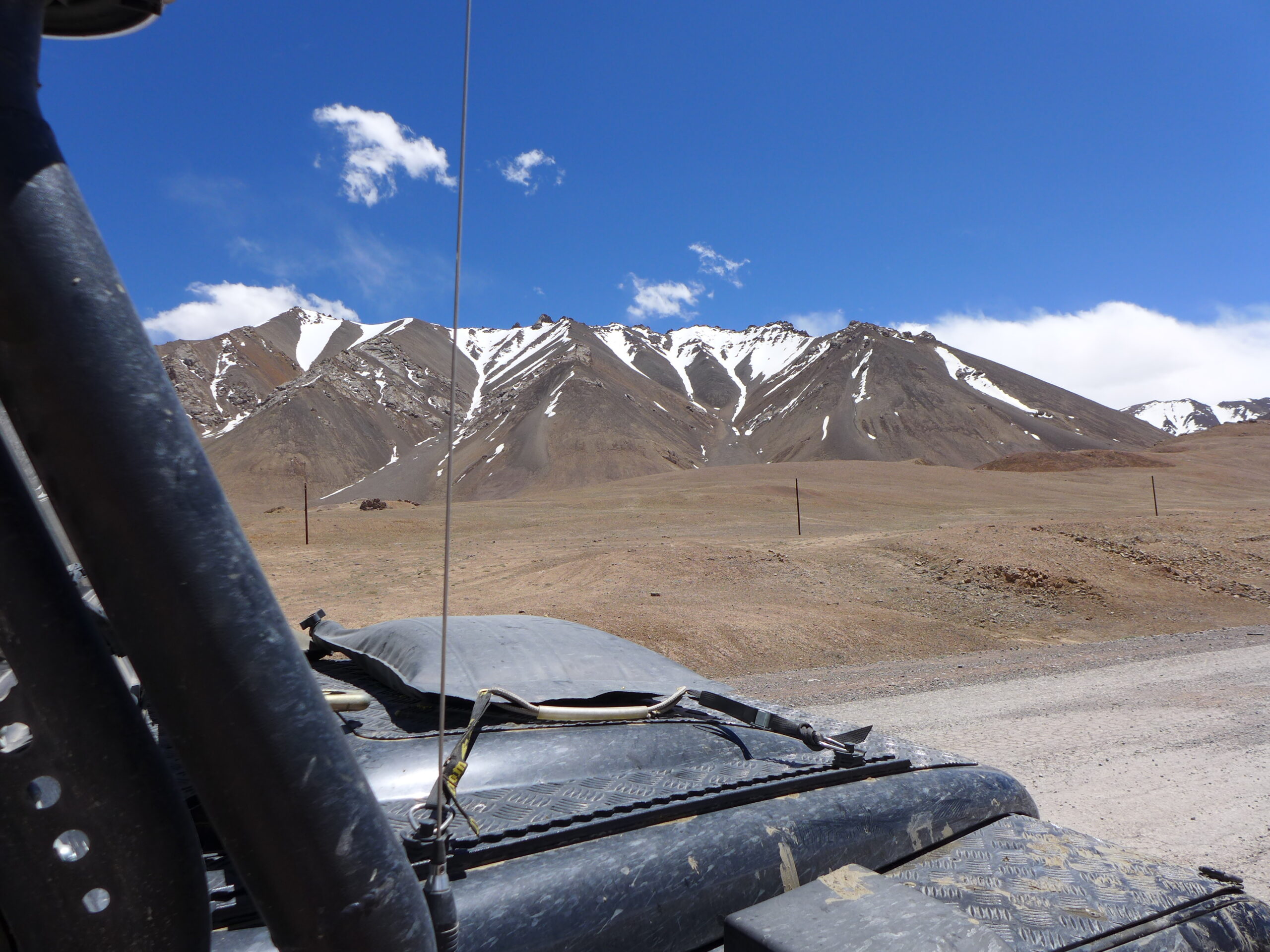
The simple camping setup is rounded off with a 27-litre Engel compressor cool box. Power comes from an auxiliary 95 Ah AGM battery, fed via a 100-watt solar panel and an MPPT controller. Cooking is done outside on the gas stove or the campfire. Most of the time, life on the road takes place outdoors anyway.
Communication is the key to success, and knowing where to go is just as important when travelling
That is why an extensive communication and navigation setup is used in this travel Landy. The following has proven itself for Björn.
Navigation is done with a Garmin 278 GPSMap with an external antenna. It is more than 15 years old and has seen well over half a million kilometres on the roads and tracks of this world, and yet it is still very sturdy and absolutely reliable. And that, after all, is what matters on the road: reliability. Added to that is a 10-inch tablet, on which the app Oruxmaps with OSM-based map material, as well as the Overland Bound app, runs for navigation. The tablet gives a good overview, is easy to use and there are a lot of options for navigation and more. A clear weakness, and here the old Garmin with its buttons is far ahead, is the touchscreen. Touchscreens and off-road really do not get along, and when it gets really dusty and rough, operating it is sometimes difficult.
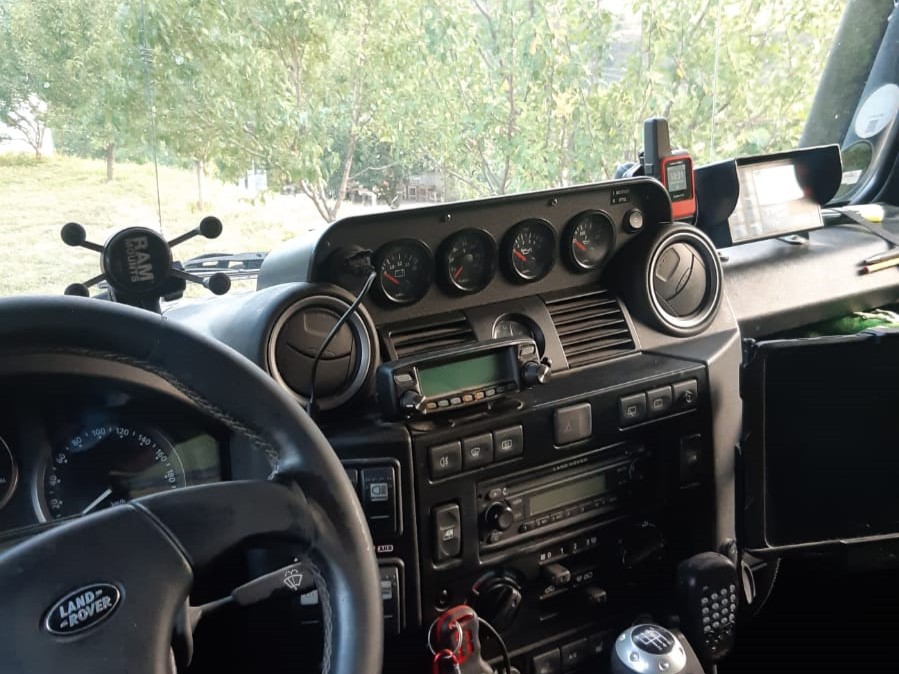
For tracking, sending messages where there is no mobile coverage, and as an SOS device, a Garmin inReach Mini 2 with a flexible contract from Protegear is used. It has proven itself on several trips; the message sending and tracking are very reliable. When driving by roadbook, Björn also uses an already older Terratrip 202, which gets its signal from the propshaft. But the classic paper maps are also still on board, and not merely as a backup; they get plenty of use. That is why a map-reading light is installed in the cockpit too.
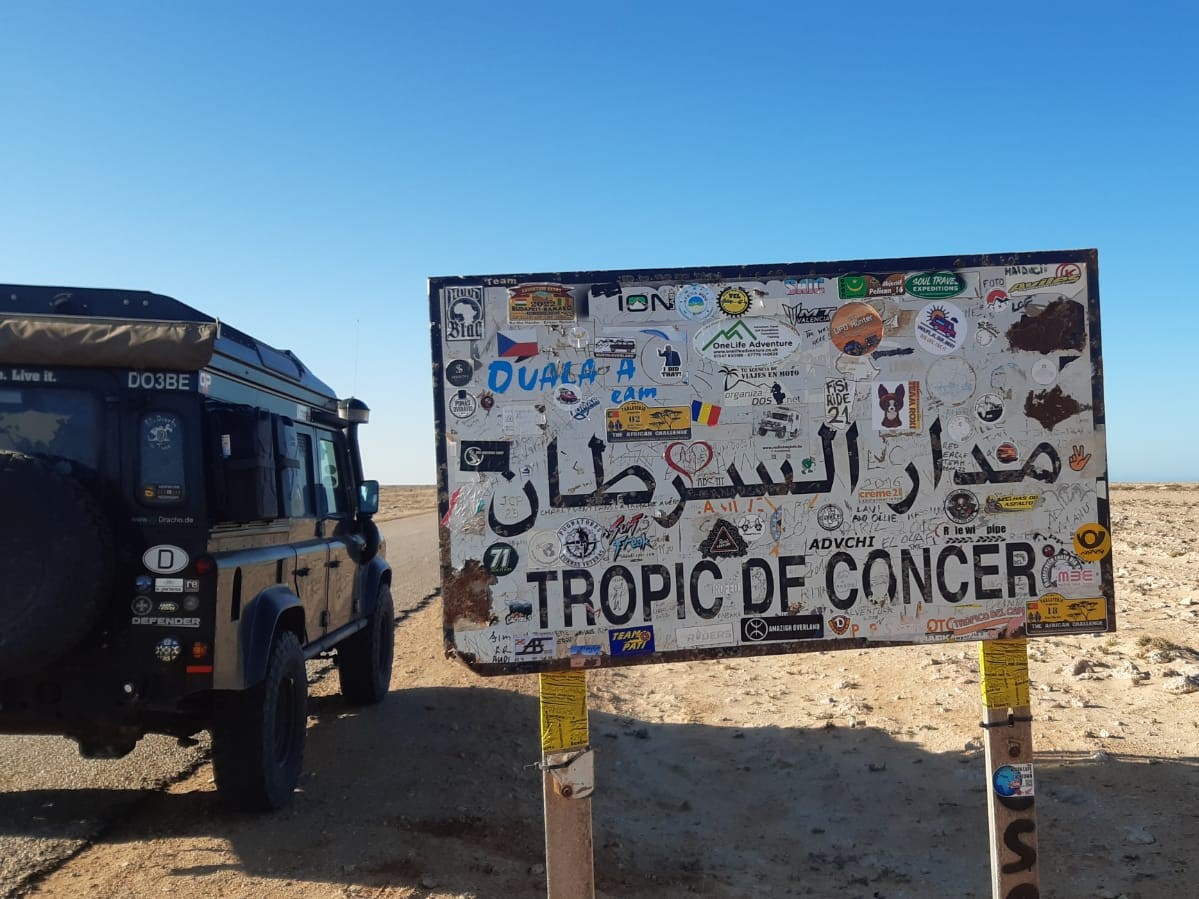
The radio equipment consists of a proven President CB radio. Björn is also a licensed radio amateur and uses a 2 m / 70 cm band Yaesu ham radio in the vehicle. His call sign, by the way, is DO3BE. In addition, there is a CB and a VHF handheld radio each.
Vehicle and occupants should be well protected
Besides the standard equipment for an off-road vehicle, such as diff guards, rock sliders and a skid plate, a few special things have been done on this Defender.
The first thing to catch the eye is the external protective cage at the front. The A- and B-pillars are a critical point on the Defender in the event of a rollover. Even laying it on its side can be enough here for comparatively major damage. As part of the pop-top conversion, a good solution was needed. Björn looked around the market. Adapting a ready-made cage was quickly ruled out, since what was available did not meet his demands. Björn found what he was after at re-suspension. The cage braces against the front bulkhead and is adapted at the top to the pop-top. The B-pillars are massively reinforced inside and connected to the pop-top. This creates good safety while at the same time not restricting the interior too heavily.
If we look under the vehicle, the heavily reinforced front axle catches the eye. This was a conversion born more out of necessity. On a tour in northern Russia, at a brisk pace on a tricky track, Björn saw a deep cross-gully too late against the low sun. The impact was heavy, the axle bent. Ultimately down to the fact that at that time original dampers and bump stops were still doing their work in the vehicle. But to blame the driving error on the equipment now is not fair either. So better to make a virtue of necessity and straighten the axle housing while reinforcing it at the same time.
The air intake is done through a raised air intake from Ex-Tec with a Mann Hummel cyclone pre-filter. This way the air filter is stressed less on desert tours.
The drivetrain can, by the way, be monitored from the cockpit by means of various additional gauges, such as displays for engine oil temperature, oil temperature in the transfer case, oil pressure, voltage and temperature.
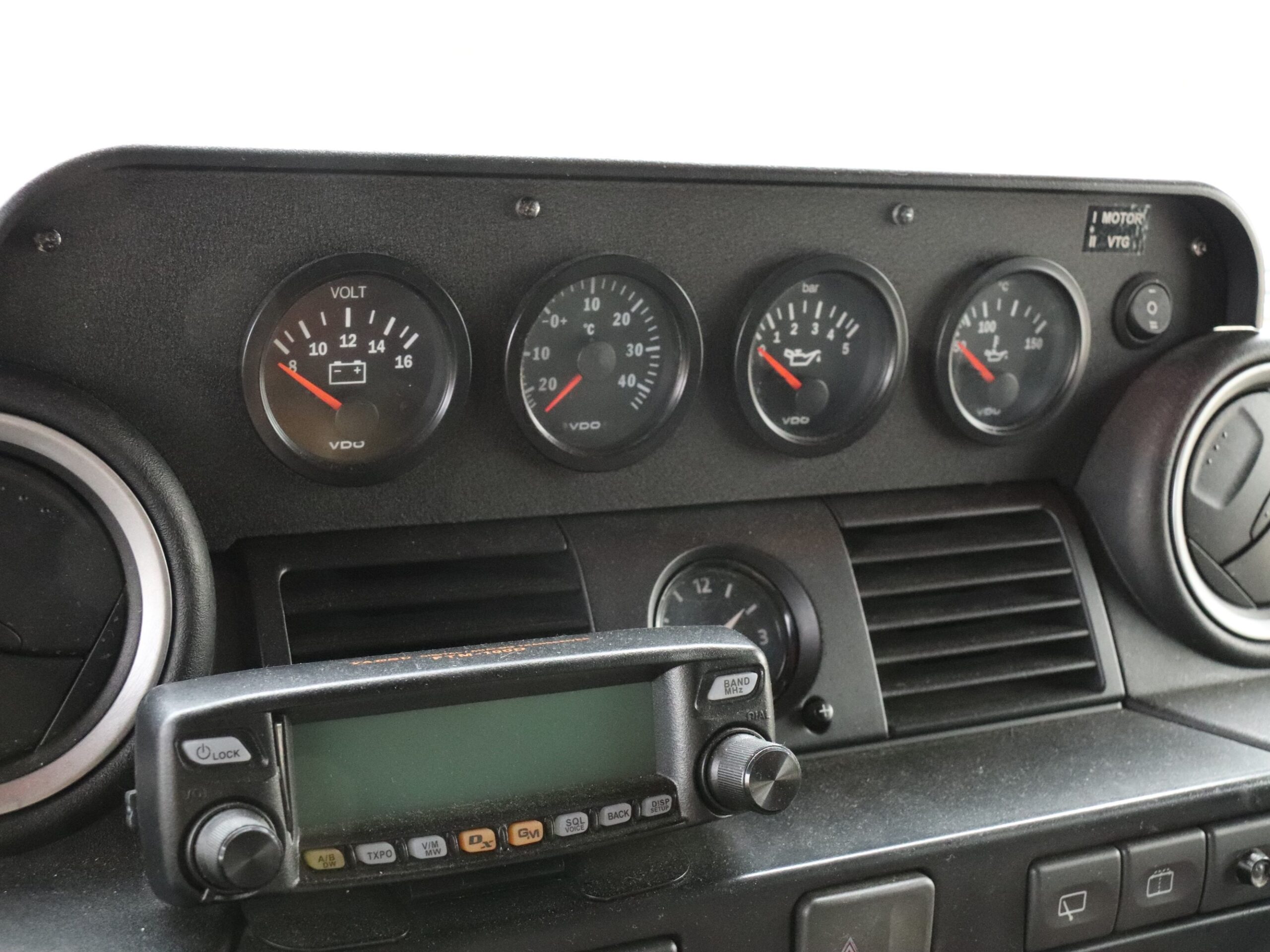
A vehicle like this, as we all know, is never quite finished
The Experience special model came with a closed skid plate in plate form. It has served well over all these years. But it had long been a thorn in Björn’s side that with this version the cooling air flow barely reaches the oil pan and the gearbox. Skid plates in tube construction can be a solution here. And so the old guard recently had to give way to a sturdy skid plate from Offroad-Partner in tube form. With this guard the measured oil temperatures are actually up to 20 degrees Celsius lower. The transfer case will not be the only thing to benefit from that. On loose terrain like sand or snow, this guard offers another advantage, since it does not lift the vehicle too much. Another advantage of the tube construction, not to be underestimated, above all during checks and repairs at the roadside, is the easy access to the steering linkage and the steering damper.
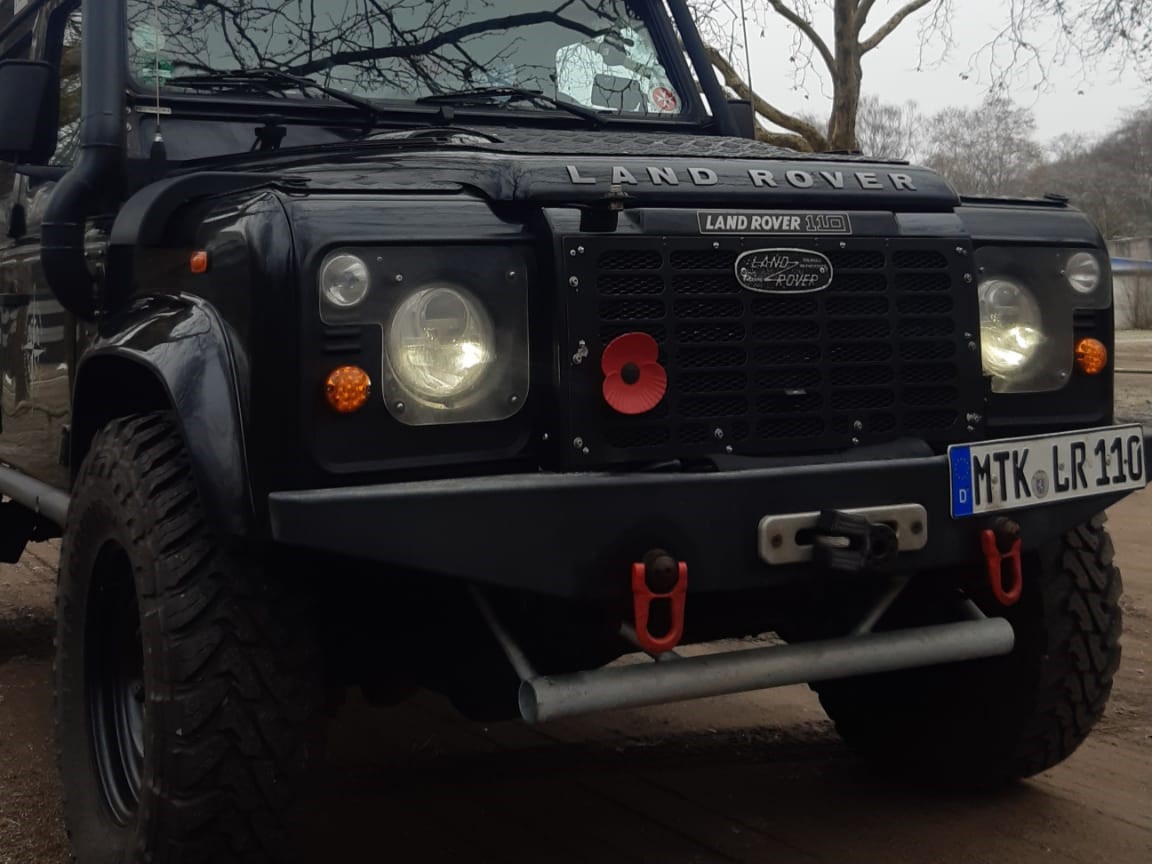
When it no longer goes on under its own power, the recovery gear helps
For that, a 4.5-tonne Warn winch with synthetic rope and a Factor 55 Flatlink is mounted in an Ex-Tec winch bumper. Above the winch, Björn has fitted a small LED light too, so that the spooling rope is clearly visible in the dark. As anchor points there are massive recovery eyes at the front and a sturdy recovery eye from the former Australian small-series maker Nuggetstuff at the rear.

Added to that is extensive recovery gear with a shovel, a spade, a snatch block, various static and kinetic straps as well as steel and soft shackles and a set of snow chains. So the crew is well equipped for any situation. Large parts of this kit are stowed in a side dust box.
For traction aids, Björn relies on classic sand ladders. These are attached in simple brackets on the outside of the vehicle and so are quick to reach. On top of that they still fit in the bracket when they are slightly bent from a recovery. Such simple constructions are, in experience, to be preferred on trips, since they are durable and easy to repair.
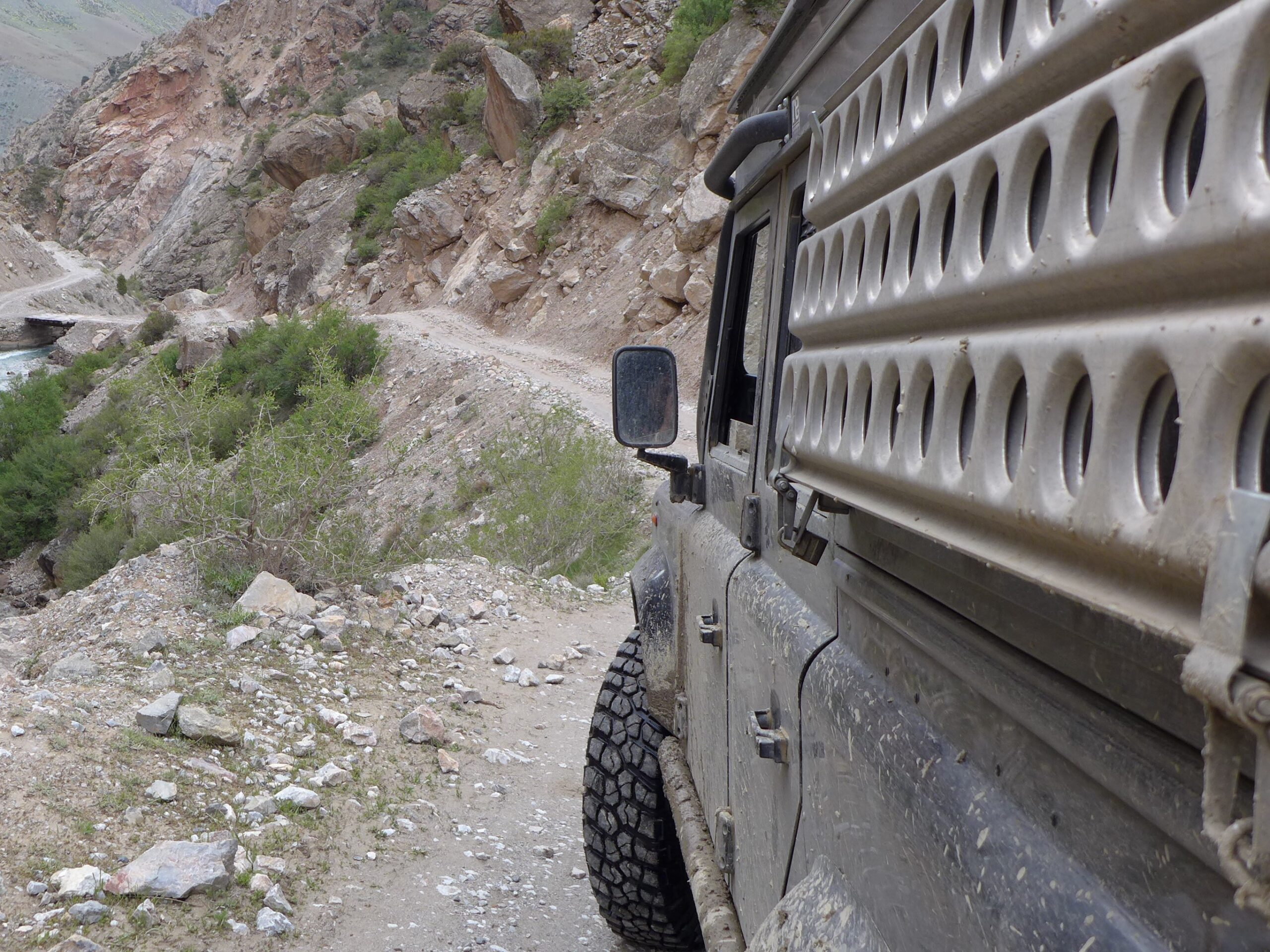
Extensive first-aid equipment, a fire extinguisher and a fire blanket are of course on board too.
Whoever is out a lot needs good light
Even though overlanders should avoid driving in the dark in unknown terrain, it can nonetheless be necessary now and then. Then good vehicle lighting is extremely important. Björn has been an absolute light and LED fan for years!
And so the weak original headlights were swapped early on for 7-inch Nolden LED main headlights. Instead of the original sidelights, a small spotlight each was fitted. The latter are still designed as halogen headlights, since nothing suitable has been found here yet. But as if that were not light enough, Björn has fitted two VisionX light bars with a total of 150 watts in the 10-degree spot version onto the roll cage, and that makes a proper amount of light!
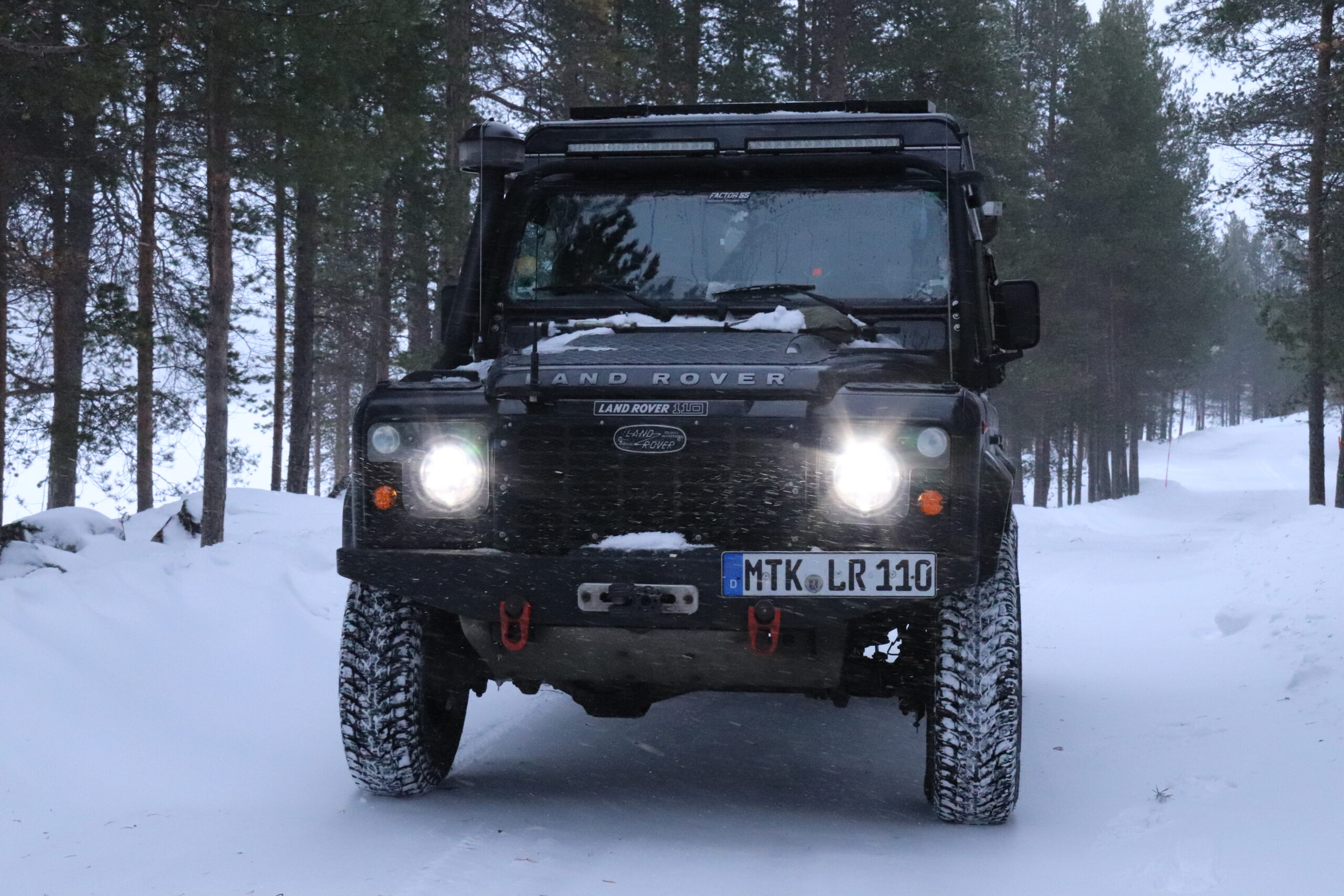
For better vision to the rear and when manoeuvring, off-road and in camp, an LED auxiliary light and a 35-watt VisionX work light are used. All signal lights have also been converted to LED technology.
Tools and spare parts have to come along too
On trips there is a good selection of tools in the car. This includes various standard tools, LR special tools such as the famous 52 mm wheel-bearing socket, a Nanocom and OBD reader, a tyre repair kit and tyre levers, a multimeter, a jump-start power bank and jump leads, a hydraulic trolley jack and, depending on the area, a Hi-Lift for recovery. Consumables come along on tour too, since good maintenance is important, even on the road. These include a diesel filter, oil filter, air filter, and top-up containers for all the operating fluids.
On top come spare parts depending on the tour profile and travel region. Always along for the ride is various material for improvising (cable ties, wire, adhesives, gaffer tape, screws, threaded rods, offcuts of metal, plugs, electrical installation material, pieces of cable, pieces of hose, connectors and so on).
A few more special features on this travel Landy
A classic platform roof rack fitted before had to give way again, since Björn is no friend at all of large roof loads and a raised centre of gravity. That only affects driving dynamics, off-road ability and, ultimately, safety negatively. The 110 Defender offers enough storage for two people, even for trips of several months, anyway.
Instead of the roof rack, the original roof was fitted over a large area with an aluminium chequer-plate panel and airline rails from the Odenwald Landy-parts forge WM Parts. This raises the vehicle only minimally, makes the roof walkable and, at a pinch, something can still be carried on it. Elsewhere too we see a good bit of Landy-typical chequer plate on the bonnet and wings of this vehicle. And since there was no rear ladder on the market that met Björn’s demands, a friend simply built him a suitable one himself.
For extended winter tours in Scandinavia, heated mirrors, a Webasto water heater, a 220-volt OWL preheater for the engine cooling circuit and a Defa interior heater are installed. In Scandinavia the travel Landy rolls in winter on studded winter tyres in size 235/85 R16. For the pop-top, Björn sewed insulation mats himself in a small DIY project. These already proved themselves well on the last winter tour.

During the conversion, particular attention was also paid to the electrics
Reliability, and if it does happen anyway, easy fault-finding on the road, are important features for a travel vehicle. Often, and here too, extensive accessories are retrofitted that require electrical wiring. This should be done professionally and safely. For this Björn built a small box from Offroad-Tec into the seat box. In it, easy to reach, is the additional electrical wiring. Since electrics are not one of Björn’s fields, he got help from a professional here and had the wiring installed professionally by the company Offroad-Partner. The result is really something to be proud of.
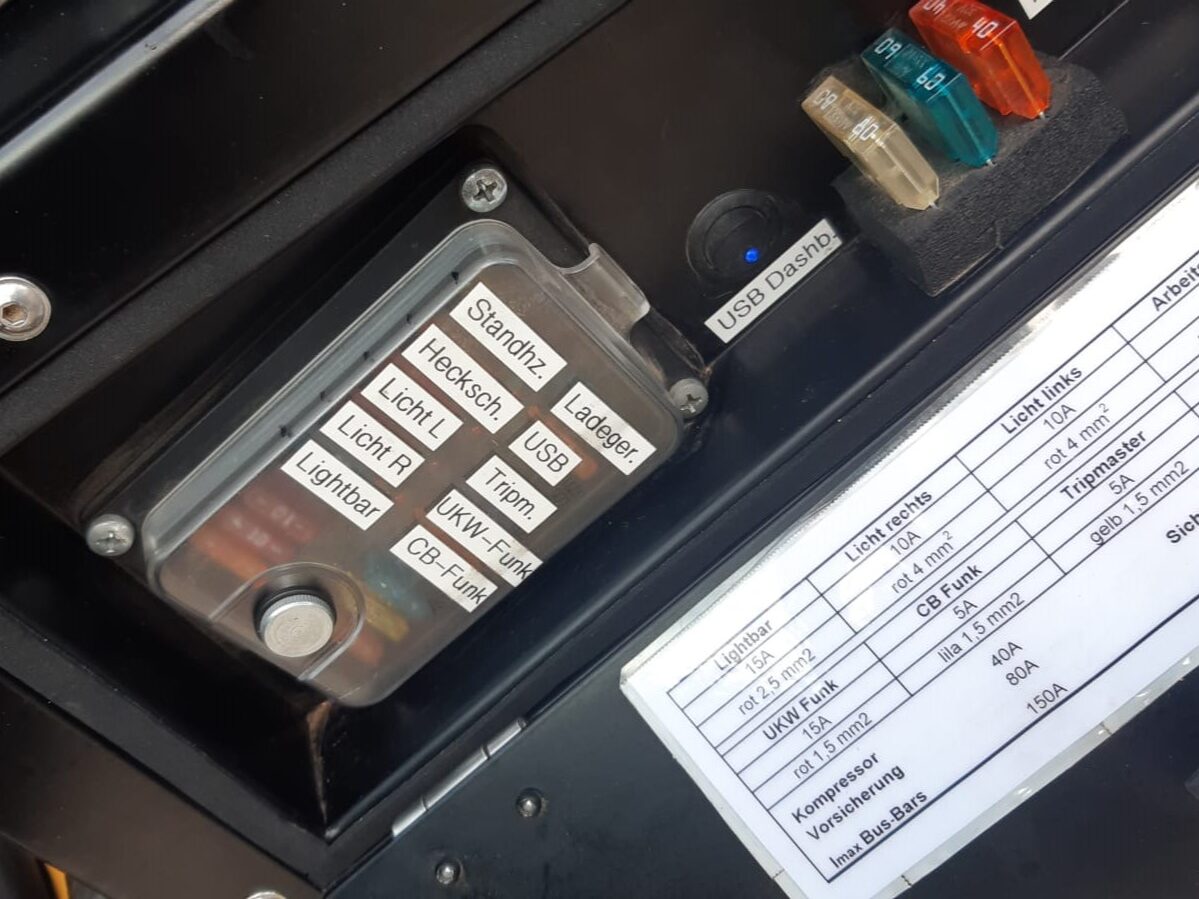
Many further details round off the travel setup sensibly. Be it a maintenance hatch for the fuel pickup, a self-built manifold for the breathers in the engine bay, magnets to attach the radio microphones in the cockpit easily, or stowage nets for maps and other small parts in the interior, and much more.

With this setup, Björn’s travel Landy has proven itself superbly
Be it on a North America tour right across the USA and Canada up to Alaska or on the lonely Trans-Labrador Highway, along the Afghan border through the Pamir up to almost 5,000 m in altitude, along the Silk Road and on the tracks in Mongolia, on the way to Vladivostok, in the icy winter cold of down to minus 30 degrees on the way to the North Cape or in the brutal heat of the Mauritanian desert. Björn was on the road only recently for three months between Occident and Orient and reported on his experiences. And many more great trips will follow, since Björn has ideas enough for them.
More about Björn and his travels can be found in numerous reports here on Matsch&Piste, on his website, or on Instagram.
© Photos: Björn Eldracher and Moritz Jung