
Many of you head off on tour with an off-road-capable vehicle. Why not take an off-road trailer along too? The idea isn’t new. And the market has plenty to offer, from the simple load mule to the fully equipped off-road caravan. What speaks for or against a trailer on tour? You’ll find all that in our off-road trailer overview.
Off-road trailers, like pick-ups with various bodies, are now a fixture in many regions of the world and hold a significant place in the overlanding scene too. In Europe these trends have arrived over the last few years as well, though more in waves, and the concept of off-road-capable vehicle plus trailer hasn’t quite caught on yet. But the market has a fair bit to offer here too. Add to that interesting DIY solutions. Reason enough to take a closer look, weigh up the pros and cons and put together an off-road trailer overview for you.
What speaks for an off-road trailer…
Have you also toyed with the thought of buying an off-road trailer, or maybe even building one yourself? What speaks for such an attachment on the off-roader, what against?
A few advantages are obvious. The trailer gives more storage or even living space on trips, or in everyday life. It’s handy for carrying sport and leisure gear like bikes, surf and kite boards, diving kit, firewood and much more. On top maybe a roof tent fits, which for families can be an interesting alternative to buying another, larger vehicle or even a second roof tent on the tow vehicle. If we look at larger off-road trailers, we find small and large caravans here too. That extends the living and sleeping space on the road enormously, of course. More on that later.
… what else?
Another obvious advantage is the option of parking the off-road trailer as a base camp for a few days and taking smaller tours into the surroundings with the 4×4. This without having to pack everything up again. That’s also a real advantage when the tow vehicle is an extremely modified off-roader or a 4×4 with a short wheelbase that isn’t so suited to travelling, or when you don’t want to spoil the good off-road ability with a roof tent that raises the centre of gravity.
If you use your off-roader in everyday life and so need the storage space and all the seats, then it may be easier to use an off-road trailer for travelling. It can always stand ready for use. When you set off, just hitch up and go. No packing, nothing forgotten, just drive off. It maximises the time on tour and minimises the time for loading and packing. Another advantage of the trailer option is when the car with a roof tent would no longer fit in the garage.
Larger off-road trailers also offer a weather-protected retreat on trips, it’s not everyone’s thing to be outside in wind and weather, each to their own. An off-road trailer with living space can offer more comfort there. And when you change vehicle, the trailer stays.
… and what maybe speaks against
Like many things, an off-road trailer has a flip side too. For one, it puts extra load on the tow vehicle, especially off-road. Stress on the drivetrain, brakes and other components of the tow vehicle is increased. Then there’s of course the matter of turning around or reversing. Ask yourself how often you couldn’t or didn’t want to drive on along a track, and put yourself in the position of now having to reverse with a trailer or turn around off-road.
Depending on your travel philosophy, the off-road trailer can therefore restrict you when it comes to the range of action and the tracks you can drive. On top of that, the off-road trailer is another vehicle in the fleet that needs servicing and causes running costs. Also a factor not to underestimate when choosing your travel setup. And the off-road trailer has to find a parking spot at home somewhere too.
We asked around in the scene
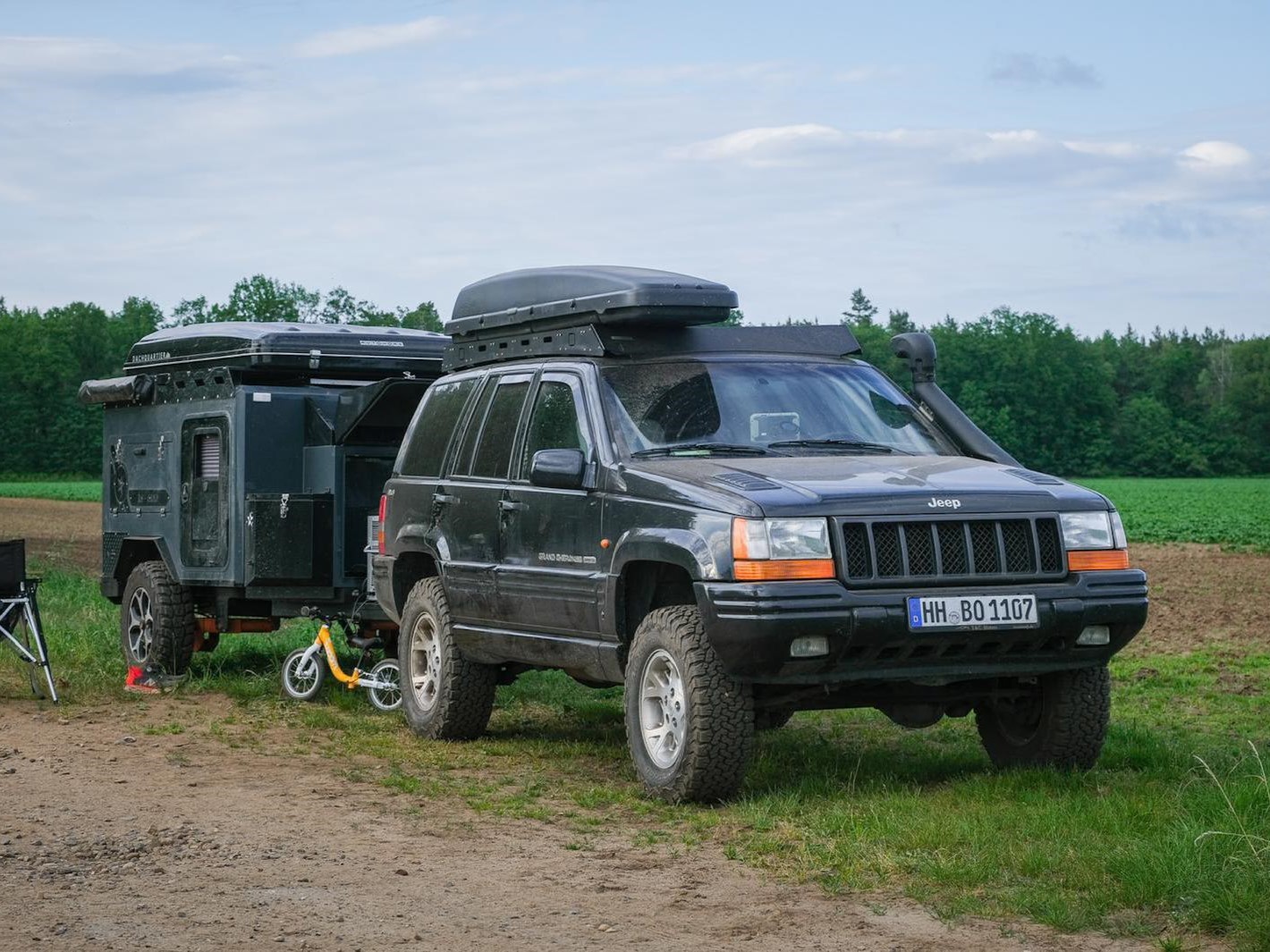
On the pros and cons we spoke, among others, with Benni Kühn. Especially interesting: he’s gone the way from travelling with a 4×4 to a setup with an off-road trailer and recently to a 4×4 panel van. He told us that the biggest advantage of travelling with the off-road trailer is the option of setting it up as a base camp and doing tours from there.
At first he and his wife were out with a roof tent on a Range Rover Sport. They came to that rather by chance. A project to have a panel van converted had fallen through at first, and so for a south-of-France holiday something else had to be found at short notice. And ideally fast and relatively cheap. The roof tent was the obvious choice. A nice holiday with this combination followed. Thanks to consistently fine weather and a 270-degree awning. Another tour to Corsica followed. With a small child on board, the three of them. Here a heavy storm meant the three of them got properly soaked, no nice situation, especially when a tour is undertaken with a child and the responsibility that brings. Here it was clear that a different solution was needed.
It was to be an off-road trailer offering a protected interior and a bit more comfort. The spec sheet essentially had a large sleeping surface, good ventilation options, because here roof-tent travellers are spoiled, and a bit of comfort with water and power supply. The choice fell on a small 750 kg off-road caravan.
Was it a big adjustment then to have a trailer along?
The biggest adjustment was the sudden comfort. Anyone who travels with a roof tent quite deliberately goes without comfort, and suddenly all these things are there, almost like at home.
What’s better with the trailer than with a 4×4 and roof tent?
A really decisive advantage is that the camp doesn’t have to be packed up to explore the surroundings. The extra costs for insurance, tax and servicing are manageable, even if the wear on the tow vehicle rises.
What doesn’t work so well on the road with the trailer than with a 4×4 and roof tent?
The combination needs a larger spot and suitable pitches are harder to find. Another disadvantage is the higher cost for ferry crossings, which are often much higher for the long combination.
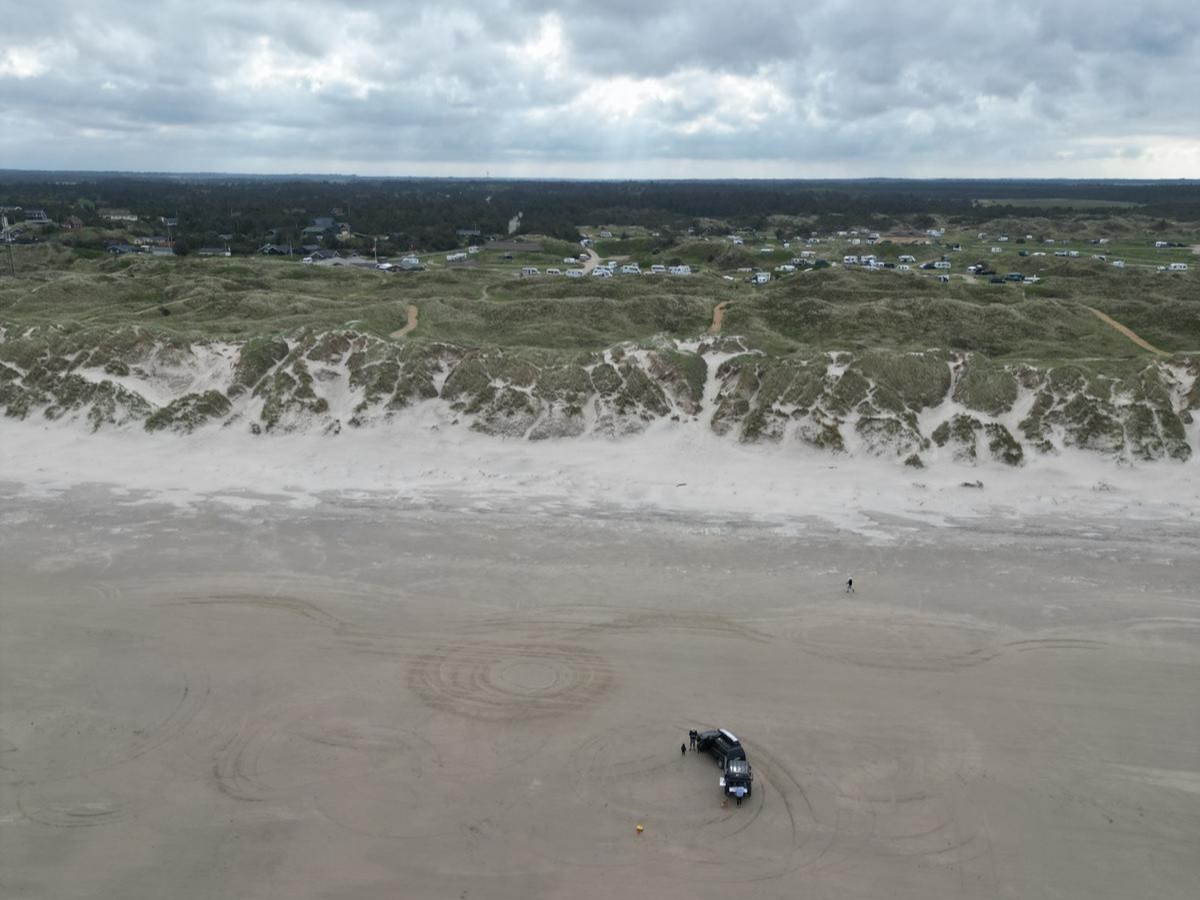
Did the trailer restrict you on tours, and did you have situations where you’d have been glad not to have the trailer along?
With the off-road trailer we also took on tracks like parts of the TET. In narrow passages, turning around with the trailer would have been tricky to impossible. Reversing often took a long time. Manoeuvring a trailer in tougher terrain takes a lot of practice and a good feel for the combination. The load on the tow vehicle is high, the wear rises. A reversing camera would be helpful off-road.
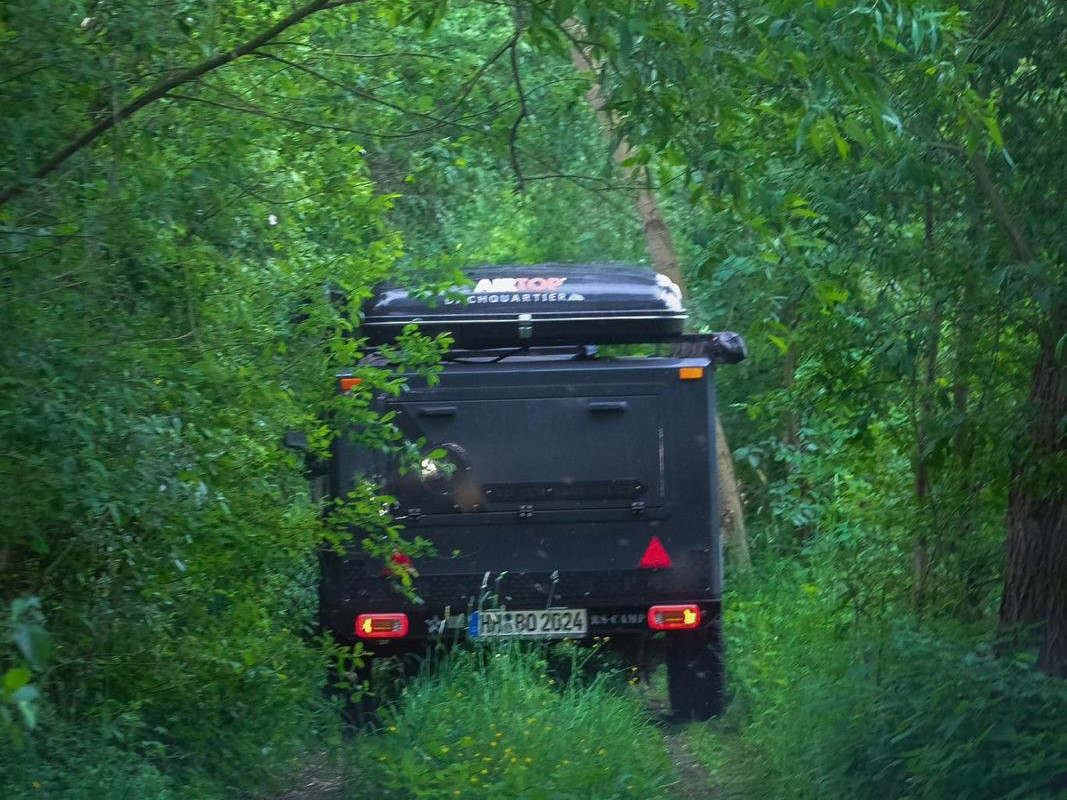
Why the step away from the trailer to the 4×4 panel van?
With two children the off-road trailer simply no longer offered enough room and we wanted something with standing height. If you now look around in the off-road trailer field for something suitable, the trailers are quickly in a size that can no longer be driven on a class B car licence, and price-wise too you reach a segment where the step to a panel van isn’t a big one any more.
What’s better about that than being out with a trailer? Is there also something where the trailer was perhaps the better choice in hindsight, and that you now miss?
The big 4×4 panel van offers a clear gain in comfort and a big gain in space with still-good off-road ability. Miss? Clearly, the option of setting it up somewhere, getting everything in place and doing tours from there with one vehicle. The combination with the small trailer was also easier to handle than the panel van.
Thanks to Benni for the field report. If you want to learn more about his tours, have a look on Instagram at Benni Explores.
So where can an off-road trailer be usefully employed and where rather not
An off-road trailer can play its advantages well if you don’t drive on every day, but rather set up a camp and explore the area from there on off-road tracks. An off-road trailer is more suited to long distances, tracks too, than to technical off-road terrain. Exceptions prove the rule here, of course, as there are extreme off-road trailers on the market too that can already manage quite a lot off-road, given a suitable tow vehicle. We’ll come to that later.
Off-road trailer overview, basic concepts
So it’s to be an off-road trailer. Let’s look at the various basic concepts briefly. Essentially we see three basic setups in the off-road trailer market: off-road trailers for carrying loads and kit, tent trailers with a roof tent, and off-road caravans of various sizes. Tent trailers and off-road trailers for carrying loads are often found in combination too, luggage below, roof tent on the lid.
For better understanding we divide the off-road trailers into three main categories. These are off-road trailers for carrying loads and kit, tent trailers and off-road caravans. The latter range from smaller teardrops or squaredrops, through medium-sized, to large off-road caravans.
With the smaller off-road trailers we often see pure trailers meant for carrying kit or loads. That can be the trip into the woods to make firewood or carrying sports gear, diving gear and the like. You’ll also find versions here that have a kitchen, fridge, second battery and so on on board. With that, a larger ground tent stows away nicely and the off-road camp setup is complete. In this field and with the tent trailers you also more often find home-builds, which we’ll come to over the course of this article.
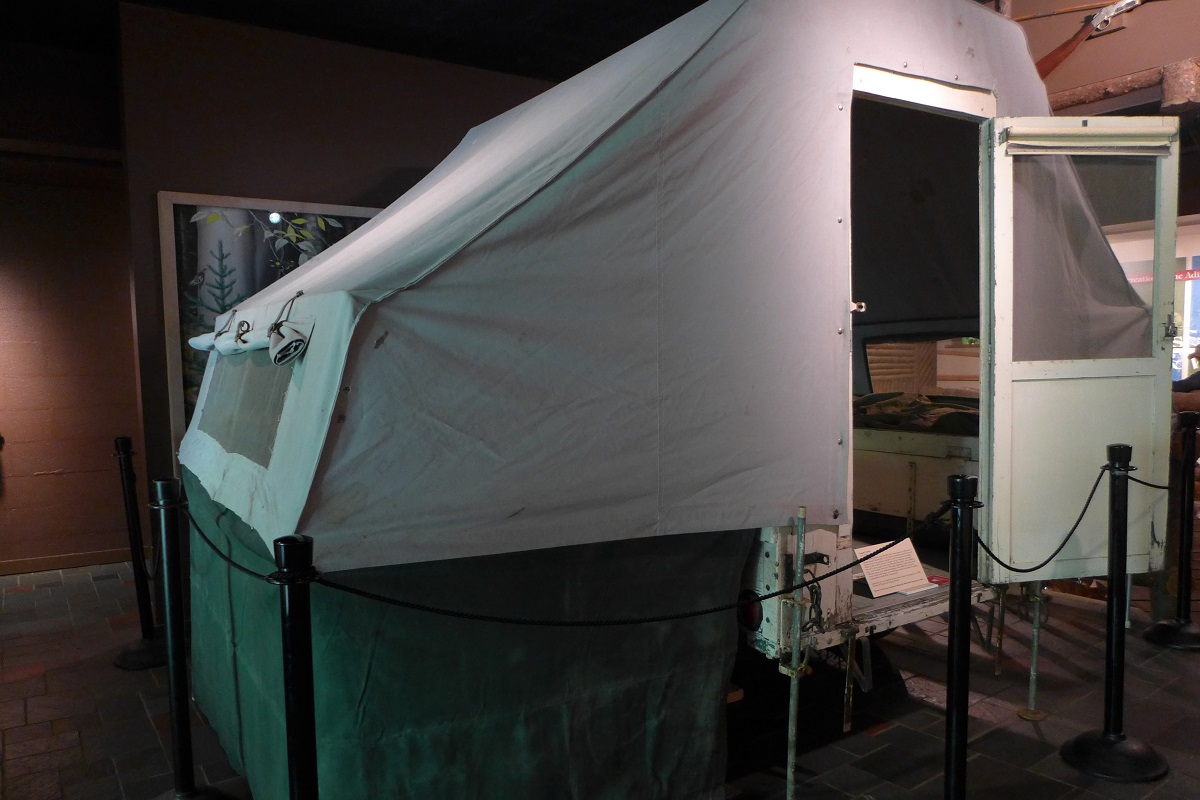
Tent trailers are a handy thing and no new invention of the off-road travel industry. So why not simply put a roof tent on an off-road trailer, an extension of the pure load trailer. We’ve already shown you this version in our big market overview of roof tents. Because an exhibit from the dawn of motorised travel stands in the Adirondack Museum in the north-eastern USA. More on that in the extensive Matsch&Piste market overview of roof tents.
If you’re looking for a larger off-road trailer offering more comfort and an enclosed interior, you’ll probably land at off-road caravans. These come in various sizes, from the cute teardrop trailers through to huge off-road caravans, some even with tandem axles.
Example makers and models
North America, southern Africa and Australia aren’t only paradises for off-roaders, no, both regions also have a wealth of very different off-road trailers. At this point we want to stick to the European, or German, market, so essentially show a few off-road trailers in our overview as examples that you can also get from the dealers here.
Off-road trailers for carrying loads and kit
TPV trailers
If you want to carry loads and kit in the trailer, off-road-capable flatbed or box trailers are a good fit. TPV has such off-road trailers in various versions in its product range. TPV has been a maker of light trailers up to 3,500 kg since 1989, since 2002 as a joint project with the Böckmann vehicle works.
The box version has a handy lid that opens upwards, lockable and splash-proof, so the kit can be stowed safely and protected. On the lid’s roof rail, boxes can be carried in addition. Thanks to the off-road tyres this trailer has more ground clearance than conventional trailers, and the reinforced wings can be stood on. For an extra charge the trailers are available with coloured powder coating too. Various add-on accessories are available.
Tent trailers
Especially handy is a combination of a utility trailer for the kit or for transport before or after the trip and a roof or trailer tent.
CAMPWERK tent trailer
Today there’s a range of tent trailers. One example of an off-road-capable tent trailer are the trailers from the well-known roof and trailer tent maker CAMPWERK. This trailer is a lifted special build of a box trailer with a sturdy AL-KO chassis. As standard these trailers have a coupling for the ball head and so fit any standard tow hitch. From the factory you can even have them swapped for a NATO eye. The body of the tent trailer is made entirely from aluminium and stainless steel components, so it’s tough on one hand and, at 340 kilograms unladen, comparatively light on the other.
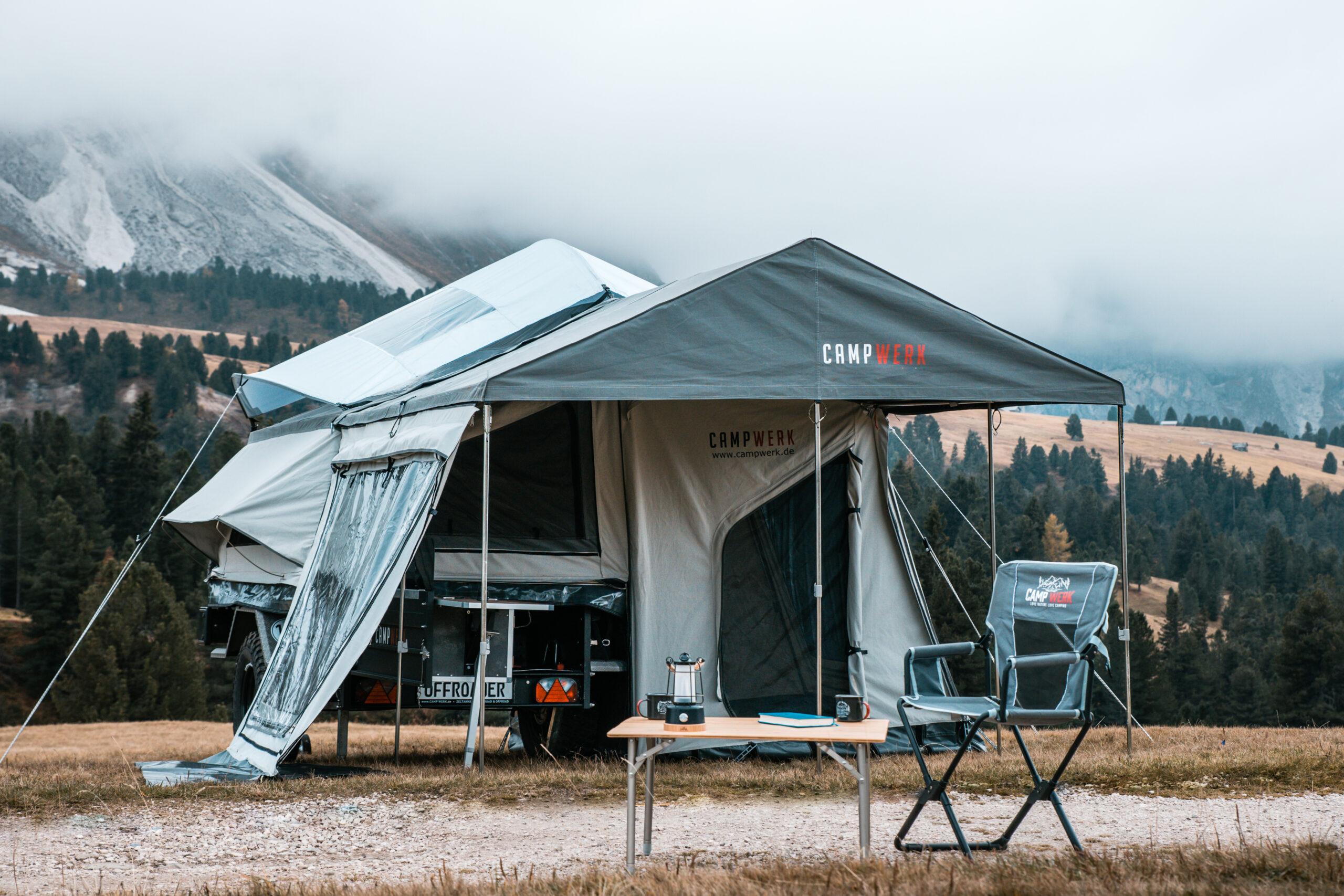
While the kit finds its place in the trailer, you sleep in the trailer tent. Both the CAMPWERK Economy trailer tent and the larger Family trailer tent fit on this off-road trailer. As tyres, aggressive mud-terrain tyres are used, which can also be matched to the tow vehicle’s tyres on request. Further add-ons are possible, for example spare canisters on the wings.
The trailer can be used as a utility trailer before and after the holiday. All braked trailers from CAMPWERK are approved as standard for a speed of 100 km/h on German roads.
TPV Minicamper
The maker TPV mentioned before also has a tent version, the so-called TPV Minicamper with a hard-shell roof tent. These are single-axle box trailers with a lockable, splash-proof lid that opens upwards, with a rail. Various models, and depending on the version braked or unbraked trailers, are in the range. Here too the kit and camping equipment find their place in the trailer, well protected with a lid with roof rail and damper. The hard-shell roof tent is mounted on the lid and is easy to put up and take down again using four gas struts.
The hard-shell roof tent mounted on the lid is less wind-prone thanks to its aerodynamic design and is rain- and splash-proof. It’s easy to put up and take down again within a few minutes using 4 gas struts. It has room for two adults and has a side entrance with a roll-up entry and mosquito net. You get in via a telescopic ladder. For good ventilation there’s a pop-out window opposite the entry and further windows at the front and back.
Off-road caravans
With the off-road trailers with living space inside, we see a wide range from compact off-road caravans through to large off-road caravans with a tandem axle.
Kuckoo Max
A very compact off-road caravan is in the range from Kuckoo. Some time ago we already presented the Kuckoo Bruno, which was shown as a novelty at the 4×4 Rhein-Waal 2022. Now Kuckoo has developed a new compact off-road caravan, the Max. It’s available from spring 2025 and can already be ordered now.
Maximum camping fun in minimal space, that’s the motto of this new mini caravan from Kuckoo Camper. With its weight from 400 kg, Max is the perfect companion for anyone seeking the great freedom without being restricted by bulky trailers. As a classic mini camper or with a pop-up roof for up to four sleeping places, the Max has pretty much everything covered.
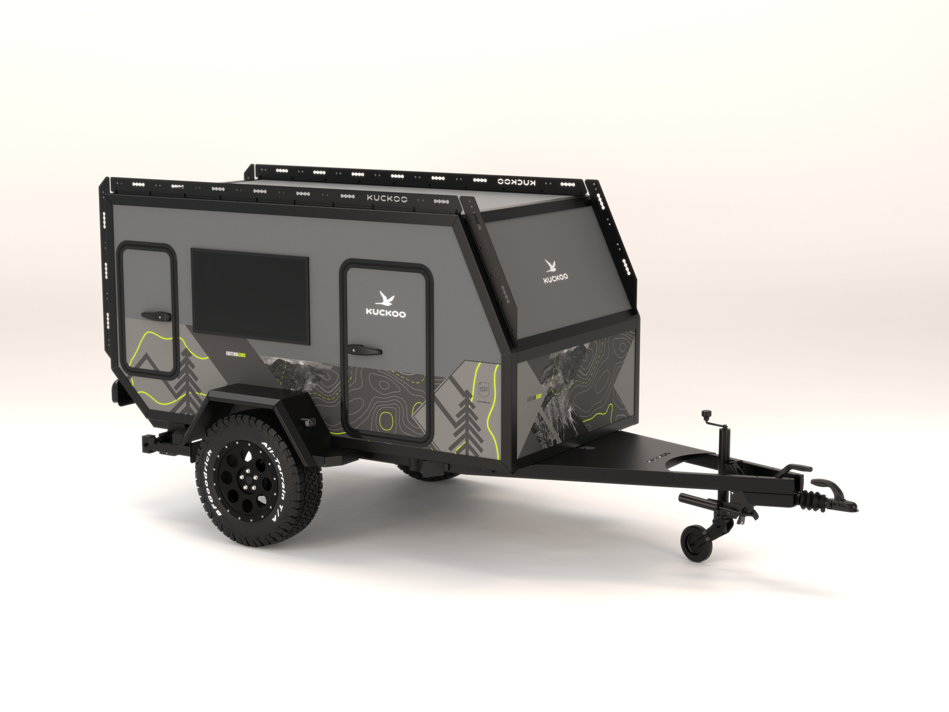
The trailer is compact with its dimensions of 4.3 × 2 × 2 m and offers many storage options as well as, thanks to the squaredrop shape, comparatively a lot of room inside. The highlight is the outdoor kitchen, which can also be operated from inside. So even bad weather is no obstacle to culinary enjoyment. Want to take your bikes along? No problem! Up to three bikes can be carried on the drawbar. The maker deliberately did without complicated equipment like a gas system, water installation and extensive onboard electrics, because what isn’t on board can’t break, as we know.
Made with love of detail in Germany, the Max combines high quality with a design that unites function and aesthetics. The trailer is also available empty without an interior for a self-build.
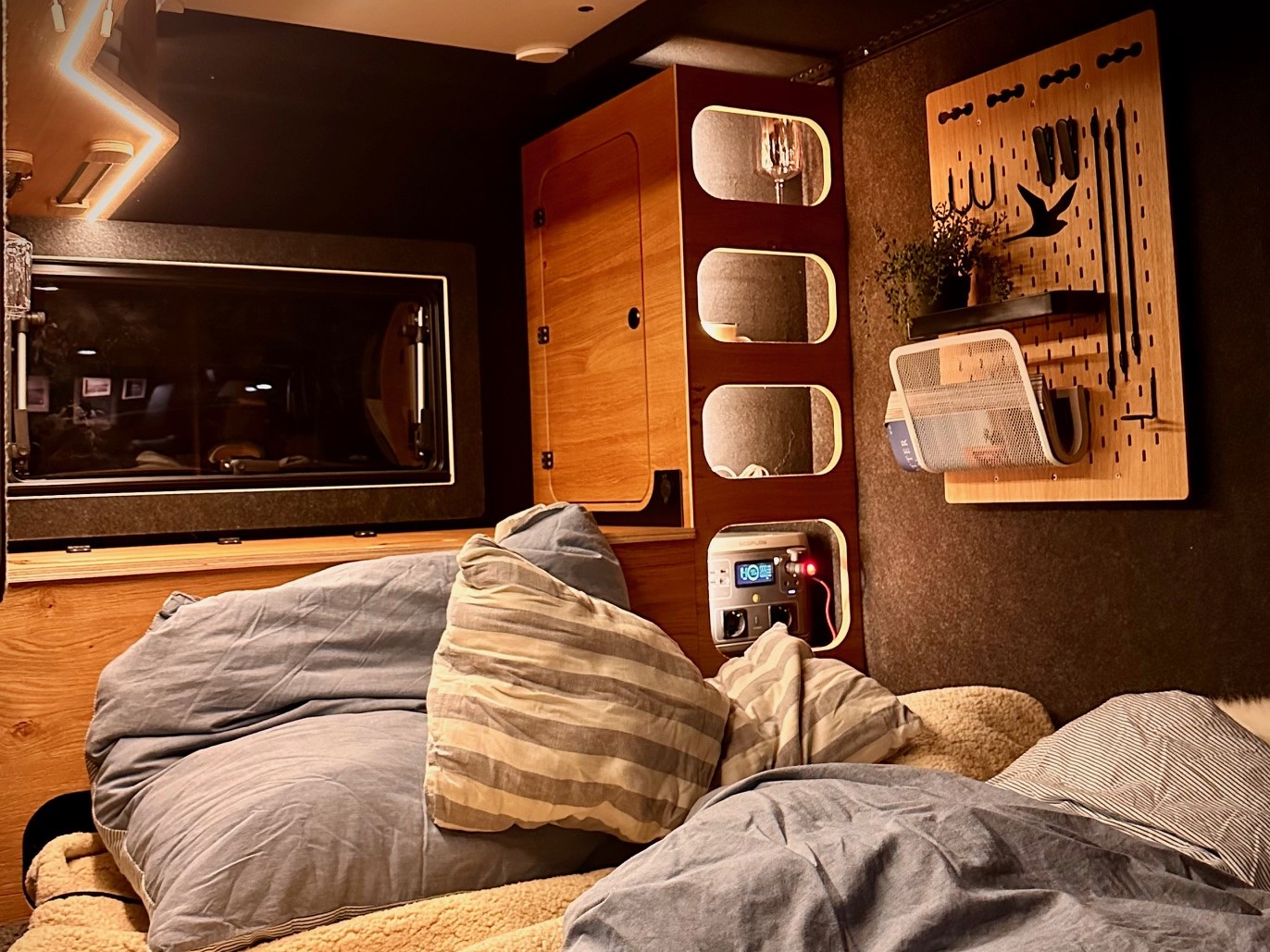
BruderX
Always a standout: the off-road trailers from the Australian maker Bruder. The size alone stands out, since the large models rival larger standard caravans for space. But so do the tech and the kit, especially the suspension. Bruder’s trailers are built to withstand even the harshest conditions. Bruder’s EXP trailers have a patented suspension system with 300 mm of travel.
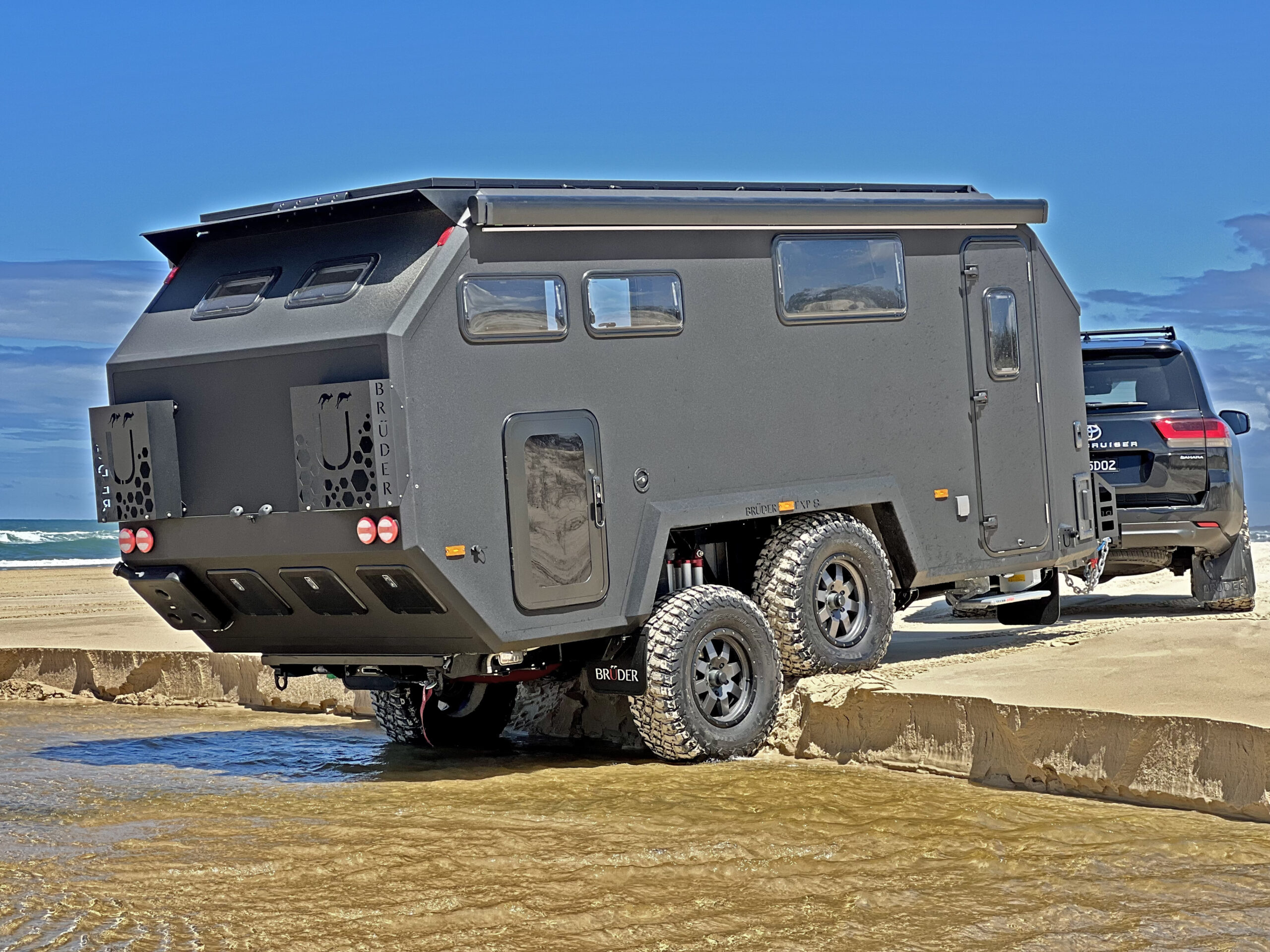
Bruder offers a range of expedition trailers that combine luxury, durability and function, from the compact trailer to the huge off-road caravan. The maker has years of experience in the leisure off-road segment and also builds trailers for expeditions and the defence sector. Bruder’s designs stand out for their worldwide patented innovations. Unlike most conventional off-road trailers, the Bruder trailers are fitted with a 48-volt power system. Combined with more than 1600W of solar power and over 20kW of lithium battery storage and other kit, the Bruder trailers are fully self-sufficient.
This video of the model EXP-8 shows clearly what league these trailers play in:
© Photo/video: Bruder
The good news for fans of such Australian off-road trailers: Camp Impuls in Karlsruhe distributes the Bruder trailers in Europe and has various models on site to view by appointment.
As food for thought, let’s risk a look at other regions of the world after all
Patriot Campers
Patriot Campers from Australia will be familiar to many. These off-road trailers too play in another league and are built for high demands. The product range runs from tent trailers for carrying kit and a trailer tent through to very luxurious off-road caravans. Patriot Campers recently presented a new off-road trailer at the well-known SEMA 2024 show in Las Vegas. The Supertourer™ ST5 Finke Edition. This rugged special model of the off-road camping trailer was inspired by the Finke Desert Race in Australia.
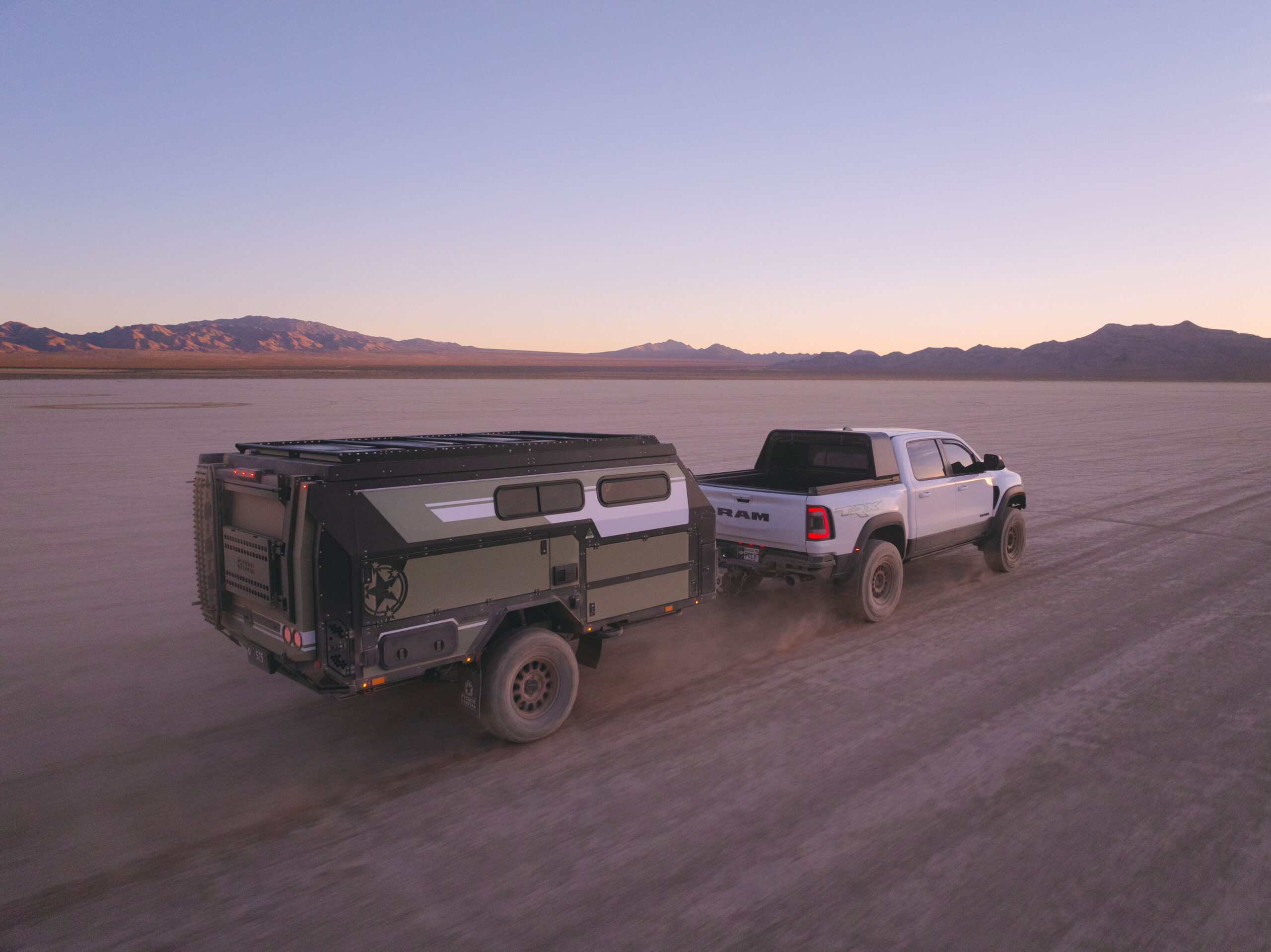
The Patriot Campers Supertourer™ ST5 is a 5.2-metre-long, 1,750 kg off-road camper that combines light weight with advanced technology. This includes a sophisticated suspension with 250 mm of travel and 33-inch off-road tyres.
Inside there’s, among other things, a fold-out queen-size bed and a wet room. The extensive kit is rounded off by an outdoor kitchen, 800 watts of solar panels that feed lithium batteries with a capacity of 460Ah, and an enormous 1,500 litres of storage. There’s currently no importer or dealer in Europe, but Patriot Campers offers shipping.
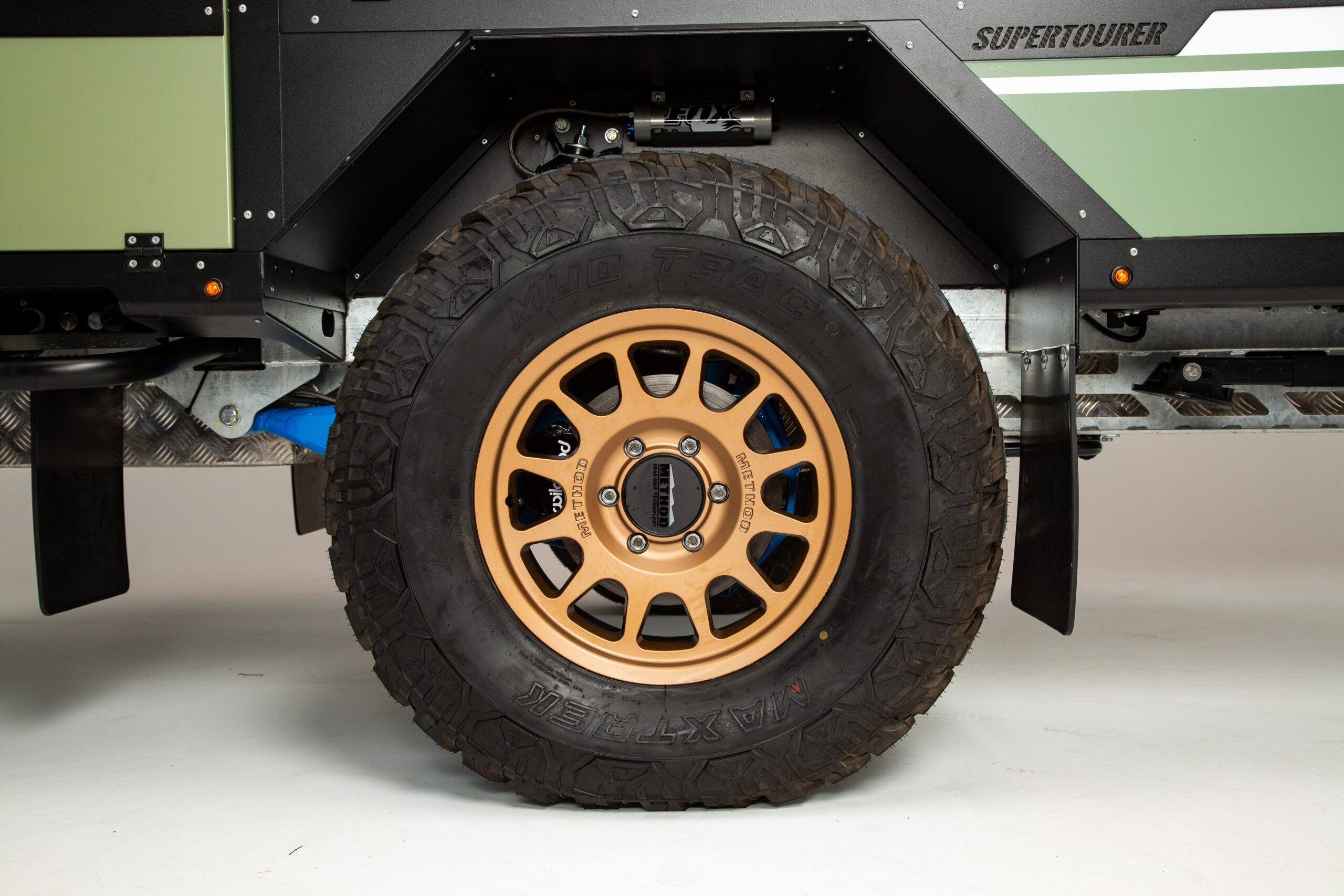
ARB Earth Camper
Recently we also presented the new off-road trailer from ARB. With the ARB Earth Camper, the well-known Australian maker chose a very special design. The trailer has an exoskeleton of 90-millimetre tube frame with 3-millimetre wall thickness. Part of the frame is even built like a roll cage. The suspension stands out too. It’s fitted with Old Man Emu coil-over dampers. On top of that, the trailer comes with numerous off-road and camping features. We’re keen to see whether it’ll be available in Europe.
Home-builds and conversions
As mentioned, the home-build is an alternative to the ready-bought off-road trailer. Off-road-capable trailers from military stock often serve as a basis, like the Sankey popular with Landy drivers, the Willys Bantam ¼-tonne trailer with Jeep fans or similar trailers from former military use. These are solid and sturdy, but often already quite heavy when empty. Other DIY solutions take the reverse route and put a standard trailer or caravan on larger wheels. Among pick-up fans, a load bed identical to the tow vehicle is often used as the bed. A complete home-build is of course possible too with more effort. Numerous individual parts for trailer building are available on the market.
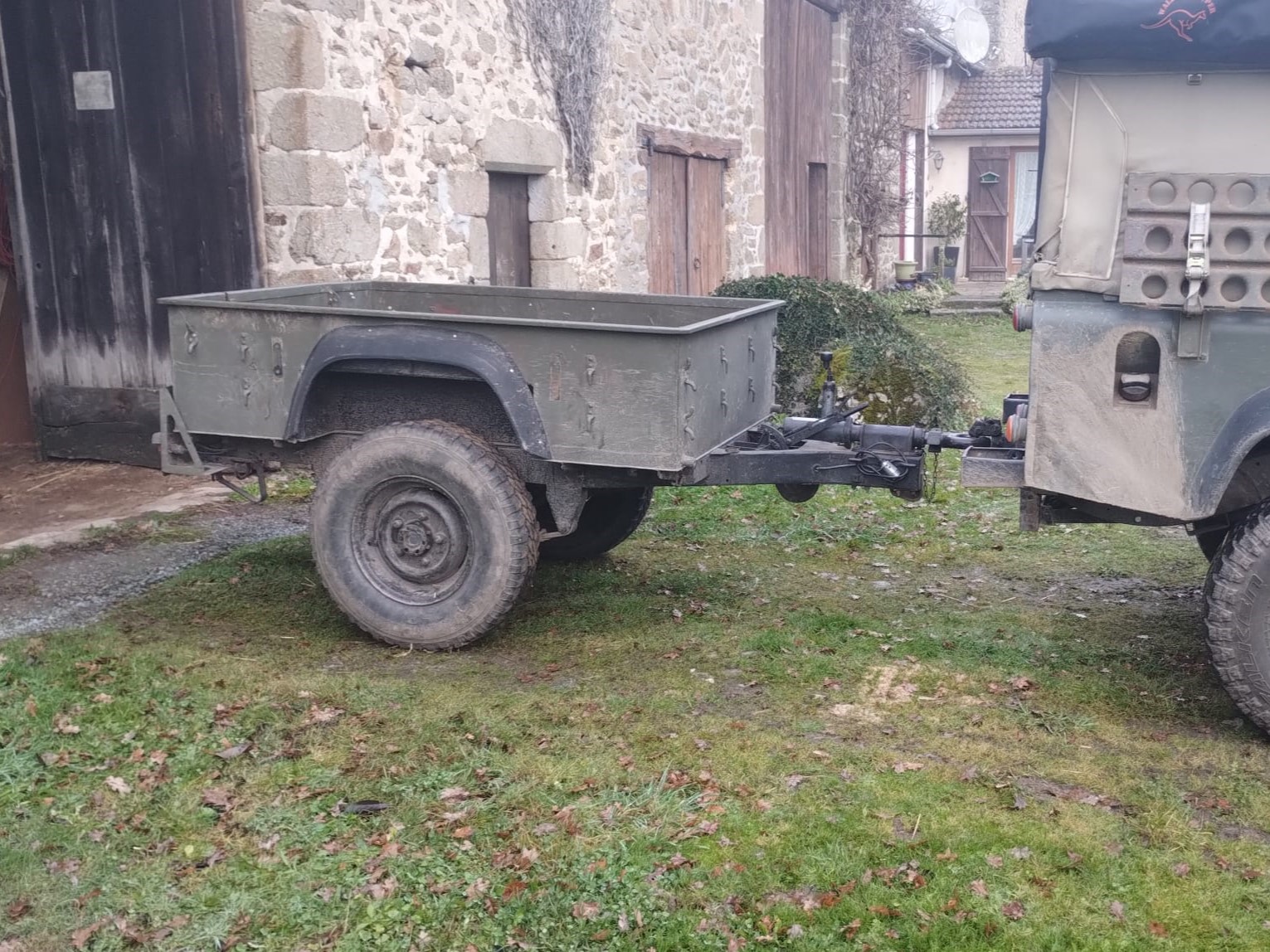
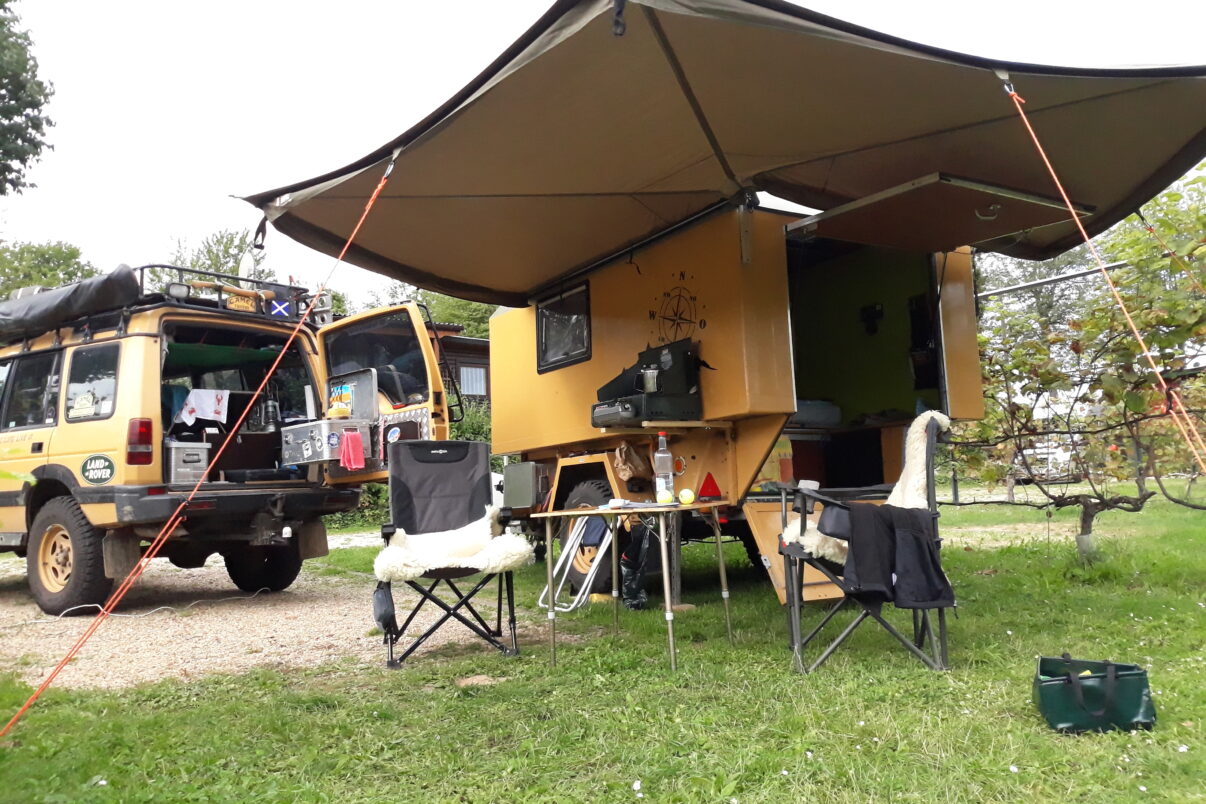
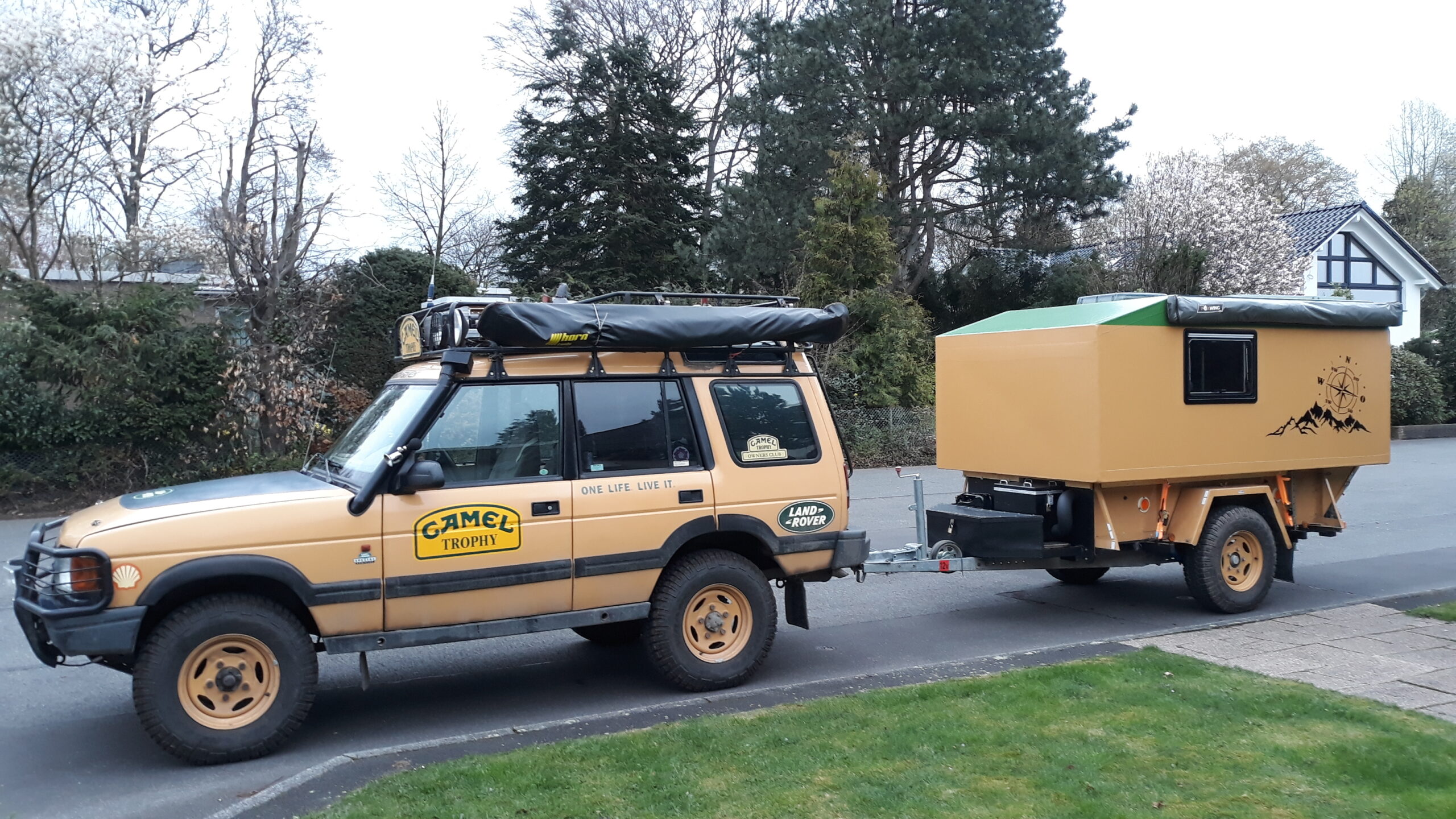
As inspiration, here we show you the home-built off-road caravan from Kai Kowitz
The basis for this off-road trailer is also a military trailer. Namely a British Rapier missile trailer. The Rapier is a surface-to-air missile developed for the British Army that can be fired from a trailer. The previous owner had already modified this trailer and replaced the comparatively heavy original chassis with an AL-KO axle and drawbar. The advantages of this chassis lie in the lower weight and the modern, safe technology, above all the brakes. The permitted gross weight is therefore 1,300 kg. The unladen weight is 800 kg, so there’s still a decent payload available.
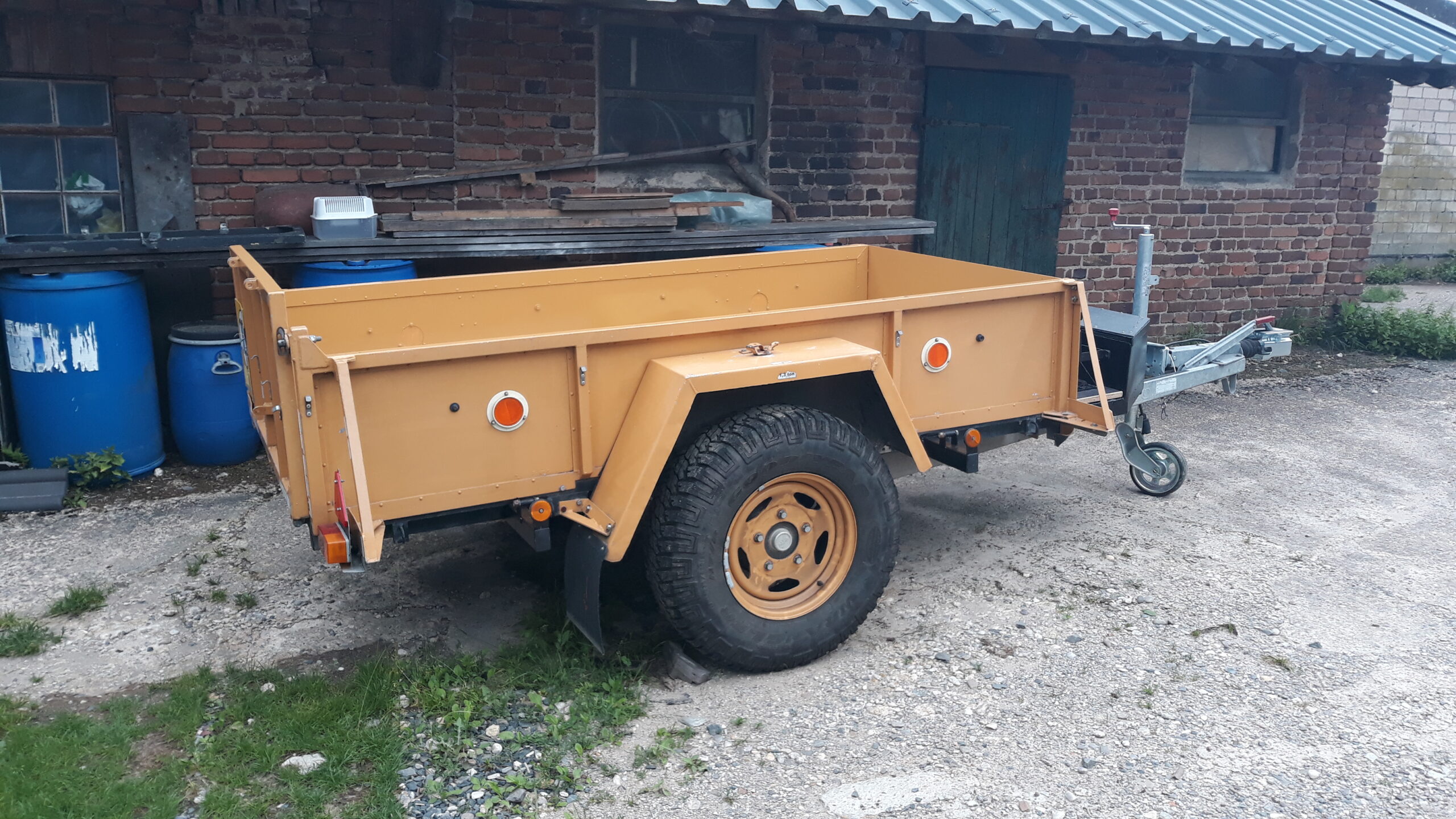
As Kai has a Discovery 1 300 Tdi Camel Trophy as a tow vehicle, another of the previous owner’s modifications came in handy, namely the conversion to original Land Rover rims. This looks better, and it also lets you fit off-road tyres like on the tow vehicle and swap wheels with the tow vehicle, in a breakdown for example.
The conversion to an off-road caravan
As the trailer serves as a small caravan for camping tours, a body was needed. Kai basically first built a box in stud construction on the trailer’s load tub and clad the basic structure with plywood. Finally he laminated a GRP outer skin, so the living body is weatherproof. Inside there’s a large sleeping surface measuring about 1.6 x 2.0 metres and a camping toilet. The beds fold up and below there’s plenty of storage for camping kit.
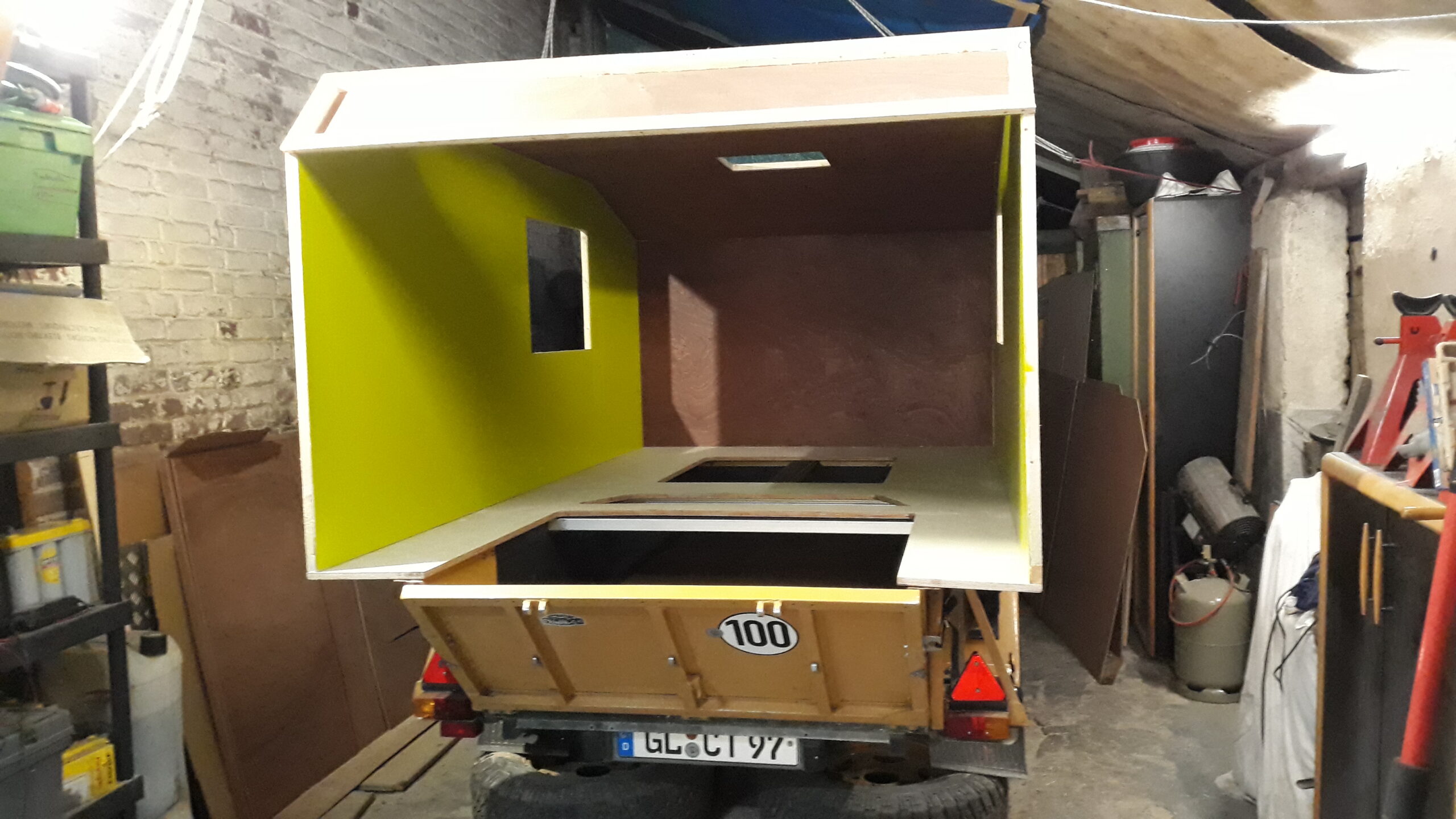
Good ventilation is important, and especially in small trailers with living space it’s nice to have lots of light in the living or sleeping area. So he built in a window on the left and right each, and on the roof there’s a roof hatch too.
On the drawbar there’s an aluminium box. It houses a 2KW warm-air night heater. The electrical supply comes from a 12V / 100Ah LiFePo4 battery, which is in turn fed by two solar modules on the trailer’s roof. The special trick with the solar modules: Kai mounted them so they can be folded up similar to a pop-top, and at that point there’s then standing height in the trailer. A 270-degree awning and an outdoor kitchen stowed in the tow vehicle round off the camping setup, so Kai can set up a good base camp with his trailer and explore the area from there.

More comfort wasn’t even wanted, because the spec sheet for this conversion said the combination has to get through everywhere the Disco as a tow vehicle gets through. So the whole trailer, in its dimensions of width and height, is kept no bigger than the tow vehicle.
The decision process, which is the right off-road trailer for me and what else should I watch for when choosing
In the end a lot first depends on the use of the trailer. Will it be parked at a camp more, or do you actually want to drive off-road with it? Then you should basically think about what you need. So a trailer to carry kit, a sleeping option or even a trailer you can stay in.
If you go for an off-road trailer that also offers a sleeping option or living space, then the choice depends on the area you travel, the trip length and your own comfort needs, as well as the number of fellow travellers. If you’re out in warm climes, then the off-road trailer with roof tent version may be more in question, for winter or longer trips a closed body. That often has something to do with personal preferences. Ask yourself, do you prefer to stay outside or inside?
 Practical tip: On long-term trips in particular, it’s sensible to look at the quality of the materials, how sturdy the build is, and how easy it is to repair. Special designs are often harder to repair than standard connections.
Further questions are whether you need a self-sufficient trailer, then further kit like a second battery, water tanks or canisters or a solar system come in. Watch for payload reserves all the same. This helps if you want to take sports gear, and it helps driving dynamics and safety too. You’ll find more on driving safely with a trailer and on choosing the tow vehicle in this article here on Matsch&Piste.
Cargo and a trailer mean more stress for the tow vehicle and its drivetrain
This especially when it goes off-road. You should keep that in mind with a view to buying an off-road trailer. Weight is a very important factor here. The tow vehicle should have enough reserves and the permitted gross weight should under no circumstances be even nearly maxed out. Just imagine what some off-road passages already demand of your tow vehicle alone. With an attachment that gets much harder and more demanding on the material again. Here you should absolutely watch for reserves.
Practical tip: When choosing the off-road trailer, make sure the tow vehicle offers enough reserves for the trailer and that permitted loads, especially off-road, aren’t even nearly maxed out.
Helpful when driving and manoeuvring are of course compact dimensions too. Make sure the trailer’s dimensions stay within reason compared with the tow vehicle, that the trailer doesn’t go too far beyond the dimensions of the towing vehicle. This is sensible especially on tricky terrain passages with overhangs, vegetation and the like.
Practical tip: Compact dimensions help when manoeuvring, and off-road too.
On top of that come further factors that can make driving with a trailer easier, especially away from made roads. Where possible, make sure the trailer has the same track width as your tow vehicle. Once the tow vehicle has drawn a track in loose ground, the trailer only has to roll along it and presents no great extra resistance.
Practical tip: Even better would of course be an identical wheel/tyre combination. On tour this offers a further advantage not to be underestimated, namely the interchangeability of the wheels or spare wheels between tow vehicle and trailer.
Which tow hitch is suitable for the off-road trailer?
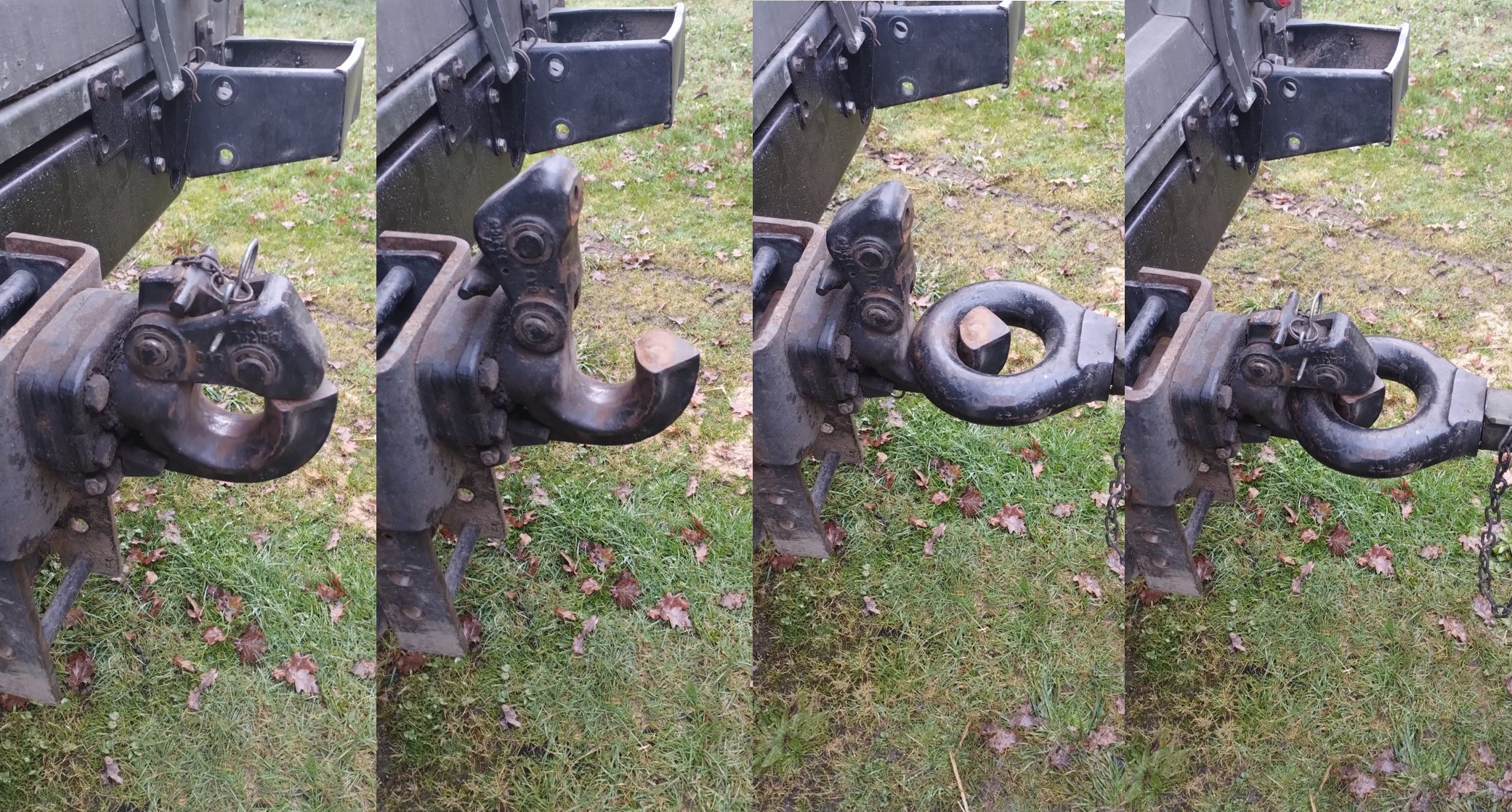
Various systems come into question here. In Germany these are usually, for one, a standard ball coupling like you know from ordinary car trailers, or pintle hitches or eyes as used in the military or agricultural field, for example the “76mm NATO coupling”. The latter is built very solidly and reliably. Not without reason it’s used in the military field.
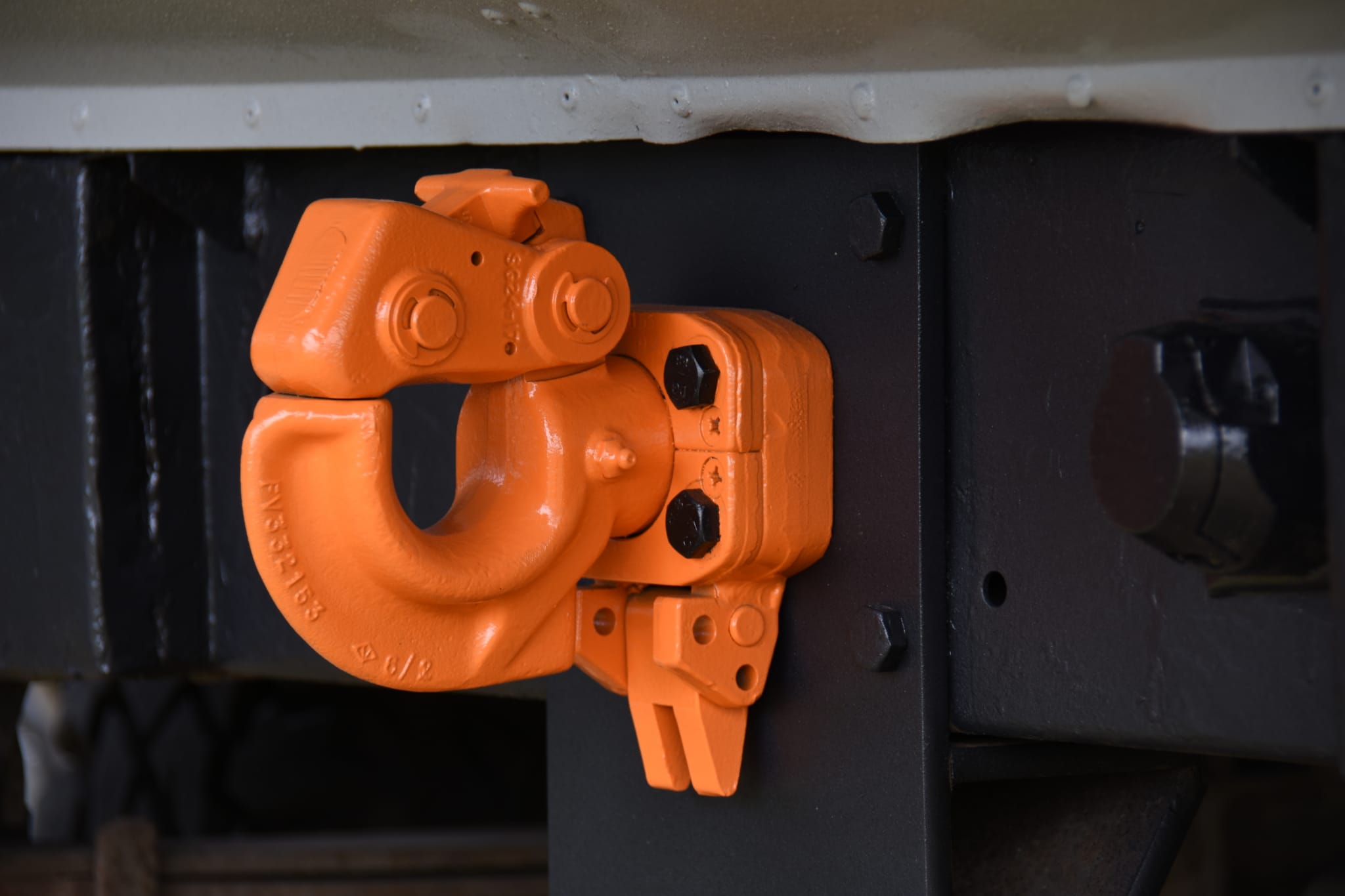
Eye and coupling form a secure connection between tow vehicle and trailer even in difficult off-road situations. This because the freedom of movement is much higher than that of a ball-head connection. Especially when the coupling can also rotate. Disadvantages are the higher weight, noise, the restriction on which trailers can be pulled, the price, depending on the vehicle the mounting options and any hurdles with registration in the vehicle papers.
Maybe you’ve also seen couplings on off-road trailers in other regions of the world, here there are many different versions, for example the drop-on couplings from Australia. These too are very tough and perform very well, especially when it comes to twisting. With this version that’s achieved by a cross joint in the coupling.
Pros and cons of the standard ball coupling
For most use cases an ordinary, proven ball coupling will be enough. But if you want to pull a former military trailer, you won’t get around a pintle hitch or, alternatively, converting the trailer. For more extreme off-road use too, a look at alternatives to the standard ball coupling is worth it. A problem with the ball coupling off-road can be in particular the lower vertical freedom of movement, which can be a problem on steep climbs and descents, crests or crossing deep gullies. The well-known maker AL-KO, for example, has a pivoting coupling in its range for the Australian market.
Have a look at our FAQ on that too: What do I have to bear in mind when retrofitting a tow hitch on a 4×4.
By the way, something applies to the tow hitch too that applies to off-road kit and accessories in general: the more fiddly connections, locks, clips and so on, the less practical the whole thing is off-road and on trips too. Operating it gets harder, and the product itself usually gets more vulnerable when it comes into contact with dust, water, sand and mud. It’s usually harder to repair on the road too. When choosing your accessories and kit, look for sturdy yet simple solutions.
The chassis
The basis of a trailer is the frame. It should be made sturdy and durable enough, because in off-road and travel use different loads act on the trailer than if you only use it to nip round the corner to the dump with the green waste. You should pay special attention to the chassis too. Lighter, simpler trailers in particular often have only a standard chassis with a rubber suspension axle and a standard jockey wheel. If you want to drive seriously off-road with the trailer, or long distances on tracks while travelling, it’s well worth looking out for a performant chassis with good springs and good-quality dampers. Just like with the tow vehicle.
Further useful kit for driving off-road
When manoeuvring on and off-road, a reversing camera helps you, on the tow vehicle and on the trailer too. Good lighting is just as important on the off-road trailer as on the tow vehicle. On the trailer this concerns lighting to the rear in the form of good reversing and work lights, as well as to the side. Extra marker or position lights make driving and manoeuvring in the dark easier. There should be marker lights up at the corners too, so you can better judge the height in the dark or in a dim wood and don’t drive into a thick branch. When manoeuvring, the spotter also plays a very important role. Best practise this before a tour with your passenger, and have a look at our article on proper spotting of a vehicle with hand signals.
Practical tip: A reversing camera on the trailer makes manoeuvring easier. Good lighting matters in the dark, and not only off-road.
If you park the trailer regularly, then put value on good-quality, sturdy supports. The off-road trailer should also have a suitable jockey wheel, tyred for off-road enough that the trailer can still be pushed well at least in light terrain. Further add-ons can be a drawbar box for recovery gear and holders for canisters and recovery boards on the outside. Here there are almost no limits to your equipment wishes.
The practised, correct handling of the trailer matters
Get to know the combination calmly before the first tour and have someone show you how to move it safely off-road. A special off-road training is a good fit for that. Have a look at our article on off-road trailer driver training with the GAVON expedition trailer.
Verdict on the off-road trailer overview
If you drive on every day on your tours or take on even the toughest tracks, then a lot speaks against a trailer, and more for the roof tent or a pop-top on the off-roader, or quite classically the ground-tent version. If you like to settle in for several days, then an off-road trailer helps you set up a great base camp and explore the area from there.
You can see there’s a lot that speaks for an off-road trailer and a fair bit against too. In the end the decision depends on the purpose and travel style. Surely many popular off-road travel routes will be driveable with a suitable off-road trailer, others not, or you’re at least heavily restricted with the attachment.
The market is varied and there’s something for every need. And if not, there’s always the option of building something yourself or having it custom made. With off-road trailers too, there are few limits to the imagination.
Do you have an off-road trailer? What are your experiences with it? And maybe you’d like to present your combination here at Matsch&Piste? We look forward to your feedback.
© Photos: unless otherwise stated with the photos: Andreas Woithon, Benjamin Kühn, Björn Eldracher, Kai Kowitz, Paul Newbold